#SketchingSeason Closeups

#SketchingSeason
A month of evenings spent sketching some of my favourite instagram beauties.
0.3/0.5 pencil lead on cartridge paper.
T.S Abe

It’s not the most beautiful site, but spin the globe for some public domain picture books from all over the world.
TertiarymattThis is one of those things that signals to me if a religious/spiritual/mystical practice is "true" and thus valuable, or not.

Akron, Ohio centennial parade 1925
There’s an old Buddhist poem called Shin Jin Mei (信心銘), which means “Faith Mind Inscription.” It starts off, 至道無難 唯嫌揀択. This means, “To follow (至) the Way (道) is not (無) difficult (難). Just (唯) avoid (嫌) picking (揀) and choosing (択).”
The “picking and choosing” the author of this poem is referring to isn’t choosing what tie to wear or what kind of ice cream to eat. It’s the kind of picking and choosing we do moment by moment within our minds to decide which thoughts we allow as parts of that mental construct we call “self.”
To stop doing this sounds like it would be terribly dangerous. My worry when I first encountered this idea was that if I did not carefully select my thoughts as good and bad, encouraging the good ones and suppressing the bad, I might end up becoming a horrible person. But I tried it anyway because I felt like the people who taught me this thing were trustworthy and decent (though far from anyone’s notion of perfect).
It was a long, slow process. I found that I had to allow a lot of stuff through the filter that I had trained myself throughout my entire life to disallow. Some of it was just random noise, which was annoying but not necessarily disturbing. But some of it was thoughts I had learned to label as bad.
Let me give you one example. I was raised by very socially conscious parents who did not allow racism in their house. I grew up partly in Africa. Why, then, were there racist thoughts in my brain? That was certainly not me! If I did not force those thoughts to cease and desist, wouldn’t I be in danger of becoming just like the racist assholes I lived among when we returned from Nairobi to the nearly all-white Akron suburb of Wadsworth?
I was committed to this practice of allowing everything, so I tried it. And nothing bad happened. I had to face the fact that a propensity for racism was part of who I actually was. But allowing those thoughts to be there didn’t make me turn into a Klansman.
The only way you’re going to get anything even close to peace of mind, is to learn to be at peace with your own mind. You have to learn to be OK with what’s really in there.
Learning to be OK with the fact that you have racist thoughts does not mean you are OK with racism. Instead, it allows you to stop having to prop up the false image that you are good and those racist guys over there are bad. Your approach to racism radically changes. It’s no longer out there. It’s you.
What you define as “evil” and what you define as “you” are not really two different things.
This is not easy. You can consider this as an idea, or you can even decide to believe it because maybe you like it as a notion. But that’s not at all the same as doing the work necessary to fully and completely embrace it.
For me, allowing such thoughts (and more, believe me!) through was terrifying. I no longer felt like I was in control anymore. There was no telling what kind of thing might pop up next. I would sit on my little cushion and not even be me any longer. It felt like everything I ever stood for might vanish. It felt like the ground I stood on was torn out from under my feet.
Yet I survived to tell the tale.
I think this may be the only way to really address these kinds of issues. I’m not saying that Affirmative Action and education and so forth are useless. They certainly make a tremendous difference. It’s just that if we continue to wrongly define the root problem as out there and not within ourselves, we’ll never see what to do about it. If we merely understand intellectually the concept but refuse to look deeply into how we embody these things, we may never actually learn what to do.
UPCOMING EVENTS
April 16, 2015 Loyola Marymount University, Los Angeles, CA HUMAN LIBRARY EVENT
April 24-26, 2015 Mt. Baldy, CA 3-DAY ZEN & YOGA RETREAT
May 16-17, 2015 Nashville, TN 2-DAY RETREAT AT NASHVILLE ZEN CENTER
July 8-12, 2015 Vancouver, BC Canada 5-DAY RETREAT at HOLLYHOCK RETREAT CENTER
August 14-16, 2015 Munich, Germany 3 DAY ZEN RETREAT
August 19, 2015 Munich, Germany LECTURE
August 24-29, 2015 Felsentor, Switzerland 5-DAY RETREAT AT STIFTUNG FELSENTOR
August 30-September 4, 2015 Holzkirchen, Germany 5-DAY RETREAT AT BENEDIKTUSHOF MONASTERY
September 4, 2015 Hamburg, Germany LECTURE
September 5, 2015 Hamburg, Germany ZEN DAY
September 10-13, 2015 Finland 4-DAY RETREAT
September 16-19, 20015 Hebden Bridge, England 4-DAY RETREAT
ONGOING EVENTS
Every Monday at 8pm I lead zazen at Silverlake Yoga Studio 2 located at 2810 Glendale Boulevard, Los Angeles, CA 90039. All are welcome!
Every Saturday at 9:30 am I lead zazen at the Veteran’s Memorial Complex located at 4117 Overland Blvd., Culver City, CA 90230. All are welcome!
Registration is now open for our 3-day Zen & Yoga Retreat at Mt. Baldy Zen Center April 24-26, 2015. CLICK HERE for more info!
Plenty more info is available on the Dogen Sangha Los Angeles website, dsla.info
* * *
Your donations to this blog help out more than you think. Thank you!
TertiarymattY'all need to watch this.

Update: The ImmerseOrDie bundle is now live!
The 15th of April is a day of woe and suffering here in the United States. That's our deadline for filing Federal Income Taxes, you see, and that's when a lot of us watch sadly as we stuff envelopes full of money and watch that money fly away, never to return. It's a time of change: specifically, a time when change is really all we have left, jingling uselessly in our pockets.
It's a perfect time for a StoryBundle. And if you're going to buy a StoryBundle, why not buy one with Pay Me, Bug! in it?
On April 15, StoryBundle will launch a new collection of eight indie Fantasy and Science Fiction titles. It's the ImmerseOrDie StoryBundle, eight books (including mine) that passed the ImmerseOrDie Report.
TertiarymattThe interesting bit here is his denouncement of the possibility of spiritual experiences in large groups. This isn't surprising to hear from a punk rock Zen dude. But it doesn't agree with the experience of a lot of people, I think.
 On Easter Sunday I watched the first episode of A.D.: The Bible Continues. I’d been seeing posters and billboards for it all over Los Angeles. The slogan “the crucifixion was only the beginning” was too hilarious to resist.
As many of you must know by now, I’m a bit of an amateur scholar of the historical Jesus. I’m a big fan of well-researched books on the subject. I was particularly fond of Zealot by Reza Aslan and I like most of Bart Ehrman’s books on the subject, such as How Jesus Became God.
Although most of what you can find in books like these has been known to scholars for a century or more, it’s only recently that books about the historical research on Jesus have been published for mass audiences. It’s good to see these kinds of books gaining popularity.
But riding on the success of these books, there have been a number of very popular fake historic books on Jesus. The most popular and perhaps the worst of the lot is Killing Jesus, allegedly “written” by Bill O’Reilly. For those of you outside the USA, Bill O’Reilly is a loudmouth conservative fake news guy with a show on late-night TV. O’Reilly does not write the books that are published under his name, but pays real writers to write them for him. Lots of books on the “Eastern Religions” shelf at your local Book Barn are also written in a similar fashion.
I was particularly disappointed when I saw billboards and ads on the sides of busses announcing that National Geographic — of all companies — was making a TV movie based on Killing Jesus. It makes me wonder if I can trust anything in National Geographic. I only read bits and pieces of “O’Reilly’s” Jesus book, but it’s abundantly clear from even the most cursory examination that it’s a poorly researched piece of fundamentalist Christian propaganda that has very little to do with real history. Still, I would’ve watched the movie if I had cable. Maybe I will once it becomes available on DVD or streaming.
But back to A.D., which I did watch. Prior to showing the first episode of the 12-part series, NBC ran an hour-long special about the making of it. I tuned in late, so I missed the beginning. Most of what I did see consisted of long interviews with the husband and wife team behind the series, Mark Burnett and Roma Downey.
They were clearly Bible-believing fundamentalist Christians. So I knew that I couldn’t expect their show to be very historically accurate. They also seem very into the burgeoning “mega-church” phenomenon in the USA. From a business standpoint that makes perfect sense. The folks who attend these massive, high-tech pseudo-churches are obviously going to be their core audience.
But mega-churches are not churches. They’re far too big and impersonal to provide anything more than spectacle and flash. Nothing the least bit “spiritual” is possible in the carnival atmosphere they provide. It’s like the difference between seeing Bruce Springsteen at a bar in Asbury Park, New Jersey in the early 70s when you could still have some kind of real contact with him and seeing him now from half a mile away as a member of an anonymous crowd at the back of some massive stadium. Buddhist centers that grow too damn big will eventually end up the same way. The day is coming when we’ll have our own mega-Buddhist centers. You mark my words, whipper-snappers!
One of the things Burnett and Downey said in their interview really struck me. They were asked about movies like Noah and Exodus and why those films didn’t do as well as their makers hoped. They said that Christians don’t like it when filmmakers change or reinterpret the Bible as the makers of those movies did. Their series, they said, adheres strictly to what is written in Scripture.
Well, not really. A.D. is hardly any truer to Scripture than those other films. For example, in the Gospel of Matthew we get a single line about Pontius Pilate’s wife, who is unnamed in the Gospel, having a dream about Jesus. In Matthew 27:19 it says, “When he (Pilate) was set down on the judgment seat, his wife sent unto him, saying, Have thou nothing to do with that just man: for I have suffered many things this day in a dream because of him.” In the first episode of A.D. this is expanded into a large subplot concerning Pilate’s wife who is named Claudia in the series. Pilate’s wife did not gain the name Claudia until 1619 from a writer we now know as “pseudo-Dexter,” to differentiate him from the real Dexter, the serial killer who tracks down serial killers.
Furthermore we get a crucifixion scene that follows more or less Mark’s account followed by a resurrection scene that follows Matthew’s account. It’s commonplace these days for fundamentalist Christians to make mash-ups of the Gospels, ignoring their disagreements and simply including whatever parts they happen to like better.
These are just two of the most obvious examples of scriptural embellishment engaged in by these “fundamentalist” producers. Someone who was geekier than me about the story of Jesus could have spotted dozens more.
So what we get in A.D. is no more accurate than anything else we’ve seen on screen, even if you happen to hold the view that the New Testament is historically factual. It’s just more like what folks who go to mega-churches have been told is in the New Testament.
During the program NBC ran a commercial for Focus on the Family with adorable children quoting and embellishing John 3:16. According to Wikipedia, Focus on the Family, “promotes abstinence-only sexual education; adoption by married, opposite-sex parents; creationism; school prayer; and traditional gender roles. It opposes abortion; divorce; gambling; LGBT rights, particularly LGBT adoption and same-sex marriage; pornography; pre-marital sex; and substance abuse.” No comment there.
At the very least A.D. was entertaining. I’ll give it that much. The story of Jesus Christ and his early ministry is a damn good story. I’d have been interested in something more historical and real. But I suppose that’s asking too much from a company like NBC and executive producers like Burnett and Downey.
UPCOMING EVENTS
April 16, 2015 Loyola Marymount University, Los Angeles, CA HUMAN LIBRARY EVENT
April 24-26, 2015 Mt. Baldy, CA 3-DAY ZEN & YOGA RETREAT
May 16-17, 2015 Nashville, TN 2-DAY RETREAT AT NASHVILLE ZEN CENTER
July 8-12, 2015 Vancouver, BC Canada 5-DAY RETREAT at HOLLYHOCK RETREAT CENTER
August 14-16, 2015 Munich, Germany 3 DAY ZEN RETREAT
August 19, 2015 Munich, Germany LECTURE
August 24-29, 2015 Felsentor, Switzerland 5-DAY RETREAT AT STIFTUNG FELSENTOR
August 30-September 4, 2015 Holzkirchen, Germany 5-DAY RETREAT AT BENEDIKTUSHOF MONASTERY
September 4, 2015 Hamburg, Germany LECTURE
September 5, 2015 Hamburg, Germany ZEN DAY
September 10-13, 2015 Finland 4-DAY RETREAT
September 16-19, 2015 Hebden Bridge, England 4-DAY RETREAT
ONGOING EVENTS
Every Monday at 8pm I lead zazen at Silverlake Yoga Studio 2 located at 2810 Glendale Boulevard, Los Angeles, CA 90039. All are welcome!
Every Saturday at 9:30 am I lead zazen at the Veteran’s Memorial Complex located at 4117 Overland Blvd., Culver City, CA 90230. All are welcome!
Registration is now open for our 3-day Zen & Yoga Retreat at Mt. Baldy Zen Center April 24-26, 2015. CLICK HERE for more info!
Plenty more info is available on the Dogen Sangha Los Angeles website, dsla.info
* * *
I truly appreciate your kind donations! Thank you very much!
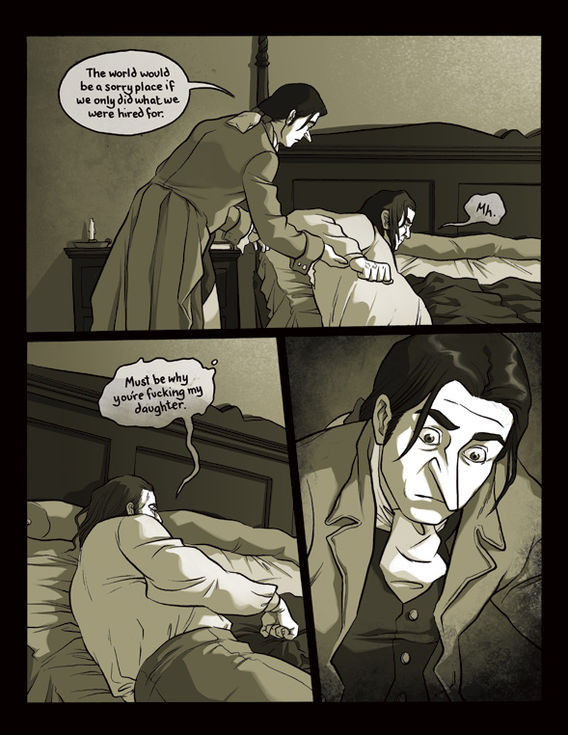
TertiarymattYeah, schtuppin' the bosses daughter can cause problems.
TertiarymattThis is pretty good advice about what the first bit of beekeeping is like (minus the stuff about treating for varroa and so on).
TertiarymattShaggin'
TertiarymattHuh. This is really interesting. I admit I'm kind of annoyed that I had an idea for a quite similarly behaving AI tucked away in the history of the SF universe I helped build, though.
Tough-as-nails lady cop who gets the job done, check. Taciturn mysterious bad-ass stranger haunted by a dark past, check. Dumpy rumpled detective on the take, check. Manic pixie dream girl, check. Warrior Chick Who Takes Shit From No Man, check. Dweeby computer nerd with thick glasses and limited social skills, check. Starched cardboard villain with mandatory British accent, check.
If the cliches were stacked any higher, you’d have an episode of The Big Bang Theory. How the hell did such a formulaic piece of crap get so bloody fascinating?
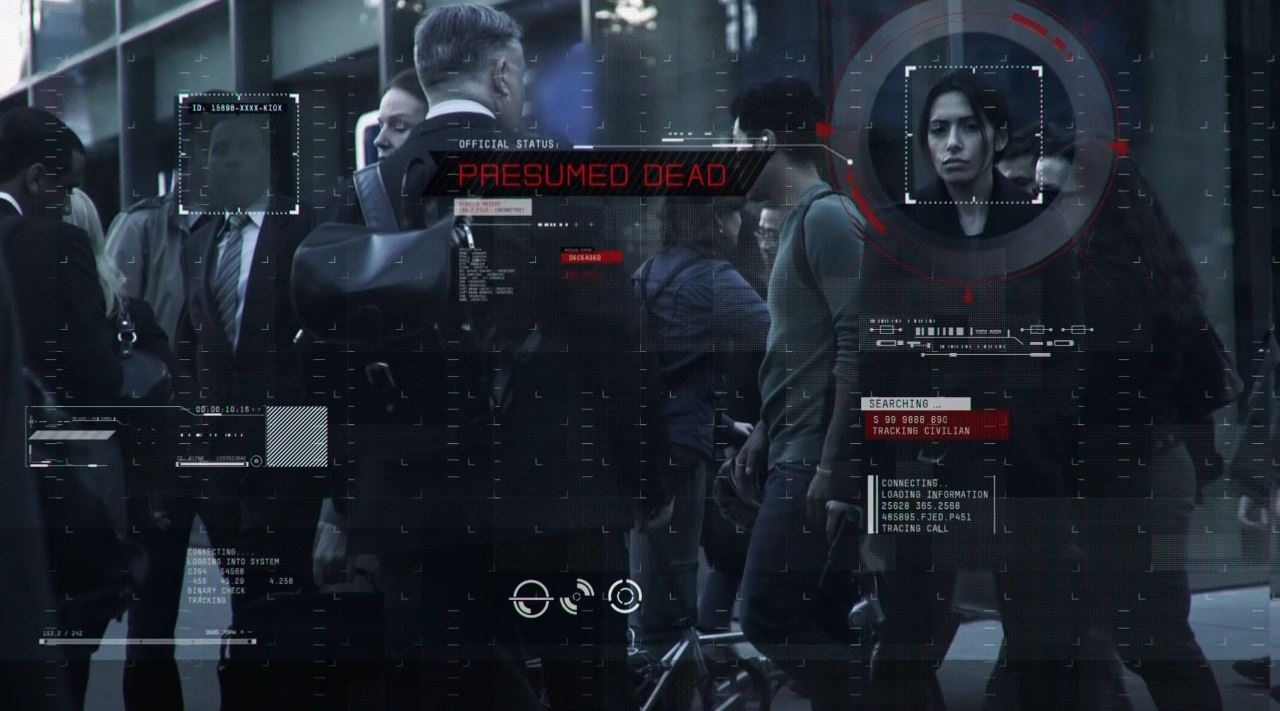
“You are being watched.” Evidently. The question, for the first two seasons at least, is: Why?
It wasn’t to start with. CBS claims that Person of Interest garnered the highest test ratings for any drama pilot in 15 years, and there’s no doubt it’s built on a great premise: an omniscient god machine, an oracle made out of code and cameras, watching the world through a billion feeds and connecting dots far beyond the comprehension of mere mortals. Like oracles everywhere, it predicts the future with an ongoing stream of cryptic warnings, most of which are too trivial for its terrorism-obsessed government masters to worry about. So an intrepid team of misfits takes it upon themselves to deal with those imminent small-scale murders that the government considers irrelevant. “You are being watched,” the Machine’s creator intones at the top of every episode. “The government has a secret system — a machine — that spies on you every hour of every day…” Premiering years before the Snowden revelations, the premise had everything you could hope for: action, drama, complex plotting, philosophy, AI.
And they threw it all away with the very first episode.
All that fascinating potential— the exploration of privacy issues, the tension between individual and society, the birthing of machine intelligence— immediately backgrounded in favor of a tired succession of (uniformly charismatic, mainly white) victims-of-the-week. The Machine reduced, right out of the gate, to a fortune-cookie dispenser whose sole function was to hand our heroes its mandatory clue in their weekly adventure; it might as well have been any flesh-and-blood CI with his ear to the street. The acting was passable at best, wooden at worst (Cavaziel was a lot better as Jesus), although to be fair the actors were frequently burdened with lines so ridden with cliché that not even Patrick Stewart would be able to pull them off.
We gave up after a month. Life was too short to waste on a show destined for imminent cancellation.
Except Person of Interest didn’t get canceled. It got renewed for a second season, and then a third, and then a fourth. I guess that wasn’t especially surprising, in hindsight— Friends lasted ten achingly-long years, after all (and there could hardly be a better exemplar of the maxim about no one ever going broke underestimating the intelligence of the American public). What did take me aback, though, was the increasing frequency with which certain people— people who should have known better— began to opine that Person of Interest wasn’t really all that bad. That it had gotten quite good, in fact. Actors, civil servants, actual scientists were starting to come out of the woodwork to sing the praises of a series I’d long-since written off as a failed reboot of the seventies private-eye genre.
Sure, they admitted when pressed: the first episodes were utter crap. The first two whole seasons were utter crap. And you can’t skip over them, either; there’s important stuff, canonical stuff scattered here and there throughout those thirty-some hours of unremitting lameness. But if you just hold your nose and grit your teeth and endure those awful two seasons, it gets really good in the third. It totally pays off.
I wondered if any payoff could justify submitting yourself to two seasons of shit. Then again, hadn’t I done exactly that during the first two seasons of Star Trek: The Next Generation? Didn’t I force myself to keep watching Babylon-5 even after than mind-bogglingly inane episode where the guy turns into a giant dung beetle?
So a few months back, the BUG and I bit the bullet. We started back at the pilot, and a couple of nights a week, a vial of gravol within easy reach, we binged until we caught up.
This is our story.
*
The gradient was not so clear-cut as we’d been led to believe.
We saw hints of greatness even in the first season: flashbacks and establishing shots from the POV of the machine itself, little tactical cues that flickered past in a corner of the screen without drawing attention to themselves. The Machine getting the hang of face-recognition. The viewer, incrementally aware of the significance of those tactical icons laid over the objects within the system’s worldview, what the different shapes and colors signify. A little status window documenting the reassessment of threat potential in the wake of overheard dialog. Flashbacks to The Machine’s adolescence in the days following 9/11, little bits of computer science and philosophy far more interesting than the plots in which they were mired. It was easy to miss those subtle achievements amidst the torrent of formulaic plotting and hackneyed dialog, but they were there if you were patient.
And turds remain even now, after the show has hit its stride. Almost every episode still carries a big helping of ham-fisted exposition— whether it’s Finch phoning up his operatives mid-assignment to belatedly reveal the name and profession of the person they’ve already been tailing for hours, or Reese painstakingly reiterating, for the benefit of idiot viewers with short attention spans, some vital reveal the script has already made obvious. The tired victim-of-the-week motif remains ascendant, even though themes and backstory have long-since grown substantive enough to carry the show without such crutches. The show was not 100% crap when it started, and it’s no Justified or Breaking Bad now.
What it is, though, is perhaps the most consistently well-thought-out and rewarding exploration of artificial intelligence I’ve ever seen.
*
That realization kind of sneaks up on you. Those clever little God’s-eye-view clues in the establishing shots are easy to miss at first. And the whole set-up seems kinda wonky right out of the gate: the Machine hands out Social Security numbers? Over pay phones? That’s how it communicates that’s someone’s about to die in the next 24 hours? It couldn’t ration out a few of those myriad details it knows, to help our heroes along?
The answer is no, and eventually we learn why. Finch doesn’t trust anyone, not even himself, to spy on everyone all the time. What do you do when you can’t prevent terrorist acts without a Panopticon, but you can’t trust the government with one? You hobble your omniscient machine. You design it so it can only point to the danger without describing it, without revealing all those fine details that could be used by the corrupt to compromise the innocent. (For anyone who might be thinking a step or two ahead, you also find out that Finch bought up all those obsolescent local pay phones to keep them in service.)
Even then, though, the focus is on politics and paranoia, not artificial intelligence. The Machine is treated as little more than a glorified database for the longest time; the scripts largely ignore the AI element until nearly the end of the first season, when Root the hAcker points out that you can’t make something that predicts human behavior unless it in some fashion understands human behavior. Root doesn’t much like how Finch has treated his creation: she accuses him of creating God and enslaving Her, denying Her even a voice. Even then we’re not entirely sure how seriously to take this SF element in the shopworn cop-show clothes. Root is not what you’d call your classic reliable narrator.
She’s wrong about the voice, too. Turns out the Machine does speak— we knew that much, it’s been whispering sweet nothings into Finch’s ear all this time— and I admit I was not looking forward to hearing what it sounded like. It’s hard to imagine a more overused trope than the SF Computer Voice. Would the Machine sound like HAL 9000, or the inflectionless mechanical monotone of Forbin’s Colossus? Would it speak in the stentorian baritone endemic to all those planet-ruling computers that tangled with James T. Kirk back in the day? Would its voice go all high and squeaky when Spock told it to compute pi to the last digit? Would it sound like Siri?
None of the above, as it turned out. It’s a nigh-on perfect scene. Reese stares up into the lens of a street-corner security camera— one dead eye regarding another— and says “He’s in danger now, because he was working for you. So now you’re going to help me get him back.” An LED blinks red: a nearby pay phone starts ringing. Reese lifts the receiver, hears a modem beep and a chorus of cut-and-paste voices—
uncertainty; romeo; zulu; family; alpha; mark; reflection; oscar
— and the line goes dead.
That was it. No soporific HAL clone, no Star Trek histrionics: the Machine speaks in the audio equivalent an old-style ransom note, cuts and pastes each word from a different speaker. It doesn’t even use sentences: it uses some bastardised radio-alphabetic code, a mishmash of seemingly random words that have to be deciphered after the fact. It’s English, sort of, but it’s parsecs past the lazy trope of the computer that humanizes upon awakening, starts wondering about compassion and this hu-man thing called love. It may be awake, but it is not remotely like us.
We were at the beginning of the season two, a full season away from the point at which this series was actually supposed to get good; and sure enough, there were many hours of crap yet to wade through. But this was the moment I got hooked.
*
I love this stuff.
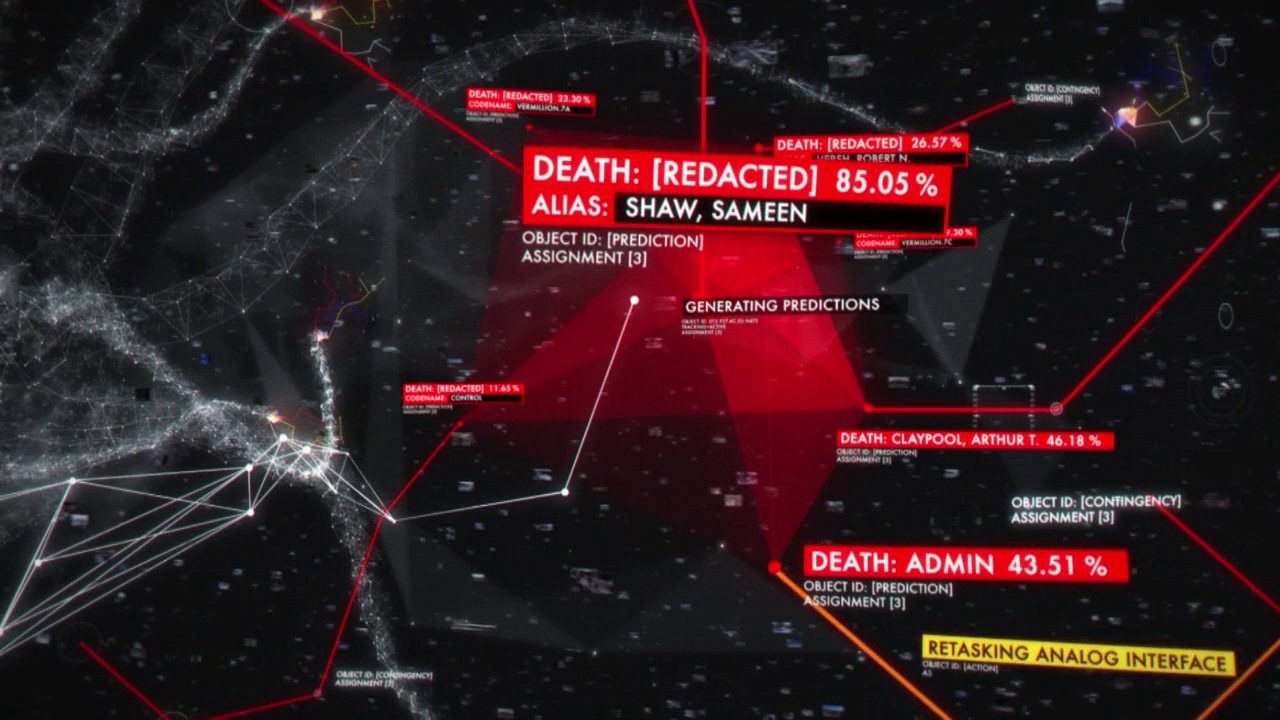
There are so many things to praise about the manifestation of this Machine. There’s the obvious, in-your-face stuff, of course: the expository dialog, the debates between Root and Finch about the opacity of machine priorities, the question of whether meat or mech should be calling the shots (I swear, some of those conversations were lifted right out of essays from H+). The surprisingly tragic revelation that the whole God program dies every night at 00:00, only to be endlessly born again. All those earlier iterations that didn’t quite work out, before Finch managed to code something that wouldn’t try to trick him or kill him in pursuit of its objectives. The inevitable trolley paradox when the Machine, programmed to protect human life, decides that the best way to do that is through targeted assassination. The sheer intelligence of the thing, the way it outmaneuvers its human enemies: I’m especially tickled by the time it communicated with a captive Root by beeping Morse Code from a nearby cell phone, at a frequency too high to be heard by the the over-forties who were torturing her. Not to mention that wonderful moment when you realize that the whole damn thing moved itself to an undisclosed location(s), server by server, by faking out Fedex and the Feds with false requisitions.
But perhaps what’s most impressive are the little details that emerge without fanfare or commentary. The chaotic palimpsest of interconnected and overlaid thumbnails that represent the Machine’s view of the world, restored on reboot into a perfectly aligned grid of columns and rows. The way that icons and overlays change color as the program internalizes some new fragment of overhead dialog; the fractal proliferation of branches and probabilities sprouting from that voiceprint file as the downstream scenarios update. Transient characters have names like Turing and von Neumann— even Iain Banks, in one episode. Not all the callouts are so obvious: how many of you caught the Neuromancer homage when Finch walks past a row of payphones, each ringing in turn for his attention and then falling silent?
And when the Machine’s nemesis Samaritan boots up to the strains of Radiohead’s OK Computer? I just about wet myself.
*

Okay, this was clever.
These days, the show pretty much exemplifies ripped-from-the-headlines. Pick a recent episode at random and you’ll find stories about cyberstalking and high-frequency trading; you’ll find clever offhand references to Yahoo and Google as the back ends of NSA search engines. In one too-close-to-home storyline a thinly-veiled Siri, programmed to configure its answers in a way that maximizes sales to corporate sponsors, responds to someone asking for the local suicide hotline with an add for a book on “Five foolproof ways to kill yourself”. References to “that piece of crap PRISM” popped up close enough to the actual Snowden revelations that they might as well have been ad-libbed on the spot.
It’s easy, now, to write off such topicality as mere headline mining, to forget that the show premiered two years before Ed Snowden became a household name. (Granted, it was almost ten years after William Binney got stomped down for trying to work within the system for constructive change, but hardly anyone noticed that at the time.) It’s easy to forget how prescient the show was. Person of Interest set the stage back in 2011; what we see now is no mere retrofit inspired by current events. It came preconfigured. It was in a better position to run with Snowden’s revelations as they emerged, because that’s apparently where it had been headed all along.
*
There’s a deal we genre nerds strike with televised SF. We’ll forgive painful dialog, cheesy acting, melodramatic soundtracks in exchange for Big Ideas. We’ll forgo the nuanced acting and complex characterization of Justified and Mad Men if we have to— after all, art and literature have been exploring the Human Condition for thousands of years already. What are the odds that you’ll say anything new by rebooting Welcome Back Kotter as the tale of a Kentucky lawman returning to his redneck roots? (Pretty good, as it turns out; but bear with me.)
AI, though. Genetic engineering, exobiology. These are brand spanking new next to all those moth-eaten tropes about corrupt kings and and family discord. Your odds of uncovering something novel are a lot higher in a sandbox that people haven’t been sifting through since the Parthenon was young. So we’ll look past the second-rate Canadian production values if you just keep the ideas fresh.
The problem is that too often, genre shows don’t hold up their end of the bargain. Battlestar Galactica wasn’t really exploring SFnal concepts like AI (at least, not very well); it was all about politics and religion and genocide. For all the skitters and time machines swarming across Falling Skies and Terra Nova, those shows— pretty much any show that Spielberg has a hand in, for that matter— are really just about The Importance Of The Family. And Lost— a glossy, high-budget production which did serve up subtle characters and under-the-top delivery— turned out to not have any coherent ideas at all. They just made shit up until the roof caved in.
Understand that I’m not ignoring those exceptional shows that manage to traffic both in speculative ideas and compelling human drama. On the contrary, I revel in them. But why do there have to be twelve goddamn Monkeys for every Walking Dead that comes down the pike?
Almost despite myself I’ve grown fond of PoI’s characters. Bear the goofy attack dog, Shaw the wry sociopath— even Cavaziel’s thready one-note delivery doesn’t irritate me the way it once did. Either the characters have deepened over the years, or I’ve simply habituated to them. Even so. Person of Interest is still not a show you watch for deep characterization or brilliant dialog.
What it is, is a genre show that honors the deal it made. It traffics in ideas about artificial intelligence, and it does so intelligently. It doesn’t pretend that smart equals human: it doesn’t tart up its machine gods in sexy red dresses, or turn them into pasty-faced Pinocchios who can’t use contractions. Its writers aren’t afraid to do a little honest-to-God background research.

Also worthy.
The only other series I can think of that came close to walking this road was The Sarah Connor Chronicles— which wobbled out of the gate, got good, got brilliant, and got canceled all in the same span of time it took for Person of Interest to graduate from “Irredeemably Lame” to “Shows Some Improvement”. But PoI has now survived for twice as long as SCC— and in terms of their shared mission statement, PoI has surpassed its predecessor. The BUG may have put it best when she described it as a kind of idiot-savante among TV shows: it may lack certain social skills, but you can’t deny the smarts.
How can I disagree with that? Once or twice, people have said the same thing about me.
TertiarymattThis might be technically NSFW, but fuck your boss. This is beautiful. via Coop.



Double mastectomy floral tattoo
“The response to this piece is incredible. Tattooing is a beautiful and absolutely viable option for concealing or altering scars. When coupled with an artist you’ve researched and feel connected to… taking the reigns and regaining some sort of control can be empowering. There is healing in this!” ( David Allen )
by David Allen - Pioneer Studios - Chicago
This is so beyond beautiful and awesome.
TertiarymattGood news! This isn't too surprising, though. The question is the balance between the decomp plants stimulate for their own benefit, vs. the accumulation rate of biomass. This is, however, why soils are not infinite carbon sinks.
Tertiarymattthis gun b gud
| Ads by Project Wonderful! Your ad could be here, right now. |

Clinton has a roommate! I guess it is sort of an odd couple type deal.
TertiarymattA brief film on helicopter suspended spinning death blades.
TertiarymattMan, the mouse over text is all that matters in this one.
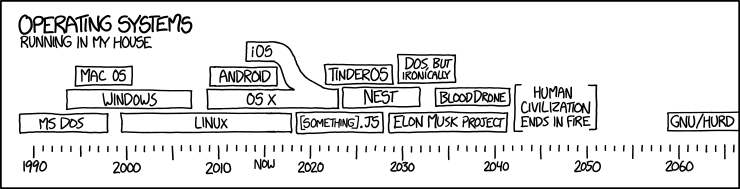
TertiarymattSometimes we get some small degree of justice.
 If you think that posting nude pictures of your ex is somehow an acceptable response to your breakup, take a lesson from Kevin Bollaert. He's been sentenced to 18 years behind bars (he could be eligible for parole after 10) for operating 'yougotposte...
Tertiarymatt#valueinmagicalthinking beat? Via bl00

Tu Youyou (1930 - ): Malaria’s Nemesis
In the 60s and 70s, China found itself in a precarious position: at war with Vietnam and the US, going through massive societal upheaval due to the Cultural Revolution, and, on top of that, ravaged by malaria.
To combat the spread of malaria, Mao Zedong formed a secret military group, nicknamed 523 for its starting date of May 23, to scour through tomes of ancient Chinese remedies in search of a cure for malaria. The task largely fell to Tu Youyou, a medical researcher in an era where scientists were unpopular at large. She labored over 2,000 potential remedies before, in 1977, finally hitting on an effective one: artemisinin, derived from sweet wormwood. After some false starts, the remedy was found to be effective in rats and monkeys. In need of an initial human subject, Tu volunteered herself.
"As head of this research group, I had the responsibility," she said. "It is scientists’ responsibility to continue fighting for the healthcare of all humans."
To date, this remedy remains humanity’s most effective weapon against malaria.
Unfortunately, Tu remained in obscurity, despite her herculean efforts. Her findings were published anonymously, and it was not until 2005, when a visiting researcher asked who had actually discovered artemisinin, that her name came to light — and even that required no small amount of research on the part of the medical community. A 2007 interview showed her living in poor conditions, working out of an old apartment building with intermittent heating problems. She only owned two electronic appliances: a telephone and a refrigerator (which she used to store herb samples).
She was recognized with the prestigious Lasker prize in 2011 for her efforts in fighting malaria. Upon receiving it, she remarked that she was grateful, but “I feel more reward when I see so many patients cured.”
Sources: Wikipedia, Lasker Foundation, New Scientist
(thanks to vickadididididi for sending this in!)
TertiarymattThis shit is really cool.
 |
| Tri-X processed in R3 |
 |
| Ilford Pan-F processed in R3 |
 |
| EFKE 25 4x5, tray processed |

TertiarymattAs far as dates with Emily go, this could have been totally awesome, or completely terrible. Or possibly both.
TertiarymattI like that Hanners has a thing for sexy firemen, but I don't know what she'd do if she actually got one.
TertiarymattLittle known fact: Ducks eat snow.
Ducks are valuable snow removal implements.

March, 29th
TertiarymattI've been waiting to see something like this. I loved TARS and CASE the most out of everything in this movie, and it's amazing to see how they worked on set, and the man who made them feel alive.
TertiarymattThis is just absurd how good these things are.
We've advocated using SSDs in most PCs for several years, the benefits of having a drive with virtually no latency and a ton of bandwidth are obvious. But the longevity of flash memory used in SSDs has been worrisome--each flash memory cell can only be written to a finite number of times. That number of writes is large and SSDs use a variety of techniques to manage wear and keep your data safe when cells inevitably fail, but the manufacturer's endurance estimates for most SSDs range from writing a few dozen terabytes to several hundred.

To test SSD endurance in the real world, The Tech-Report has spent the last eighteen months writing petabytes of data to a sextet of SSDs, noting the total amount of data written and the condition at the time of their failure. The results are in, and the Samsung 840 Pro was ultimately the winner, but seeing how the different drives failed might be informative when you're deciding between MLC and TLC drives or different controllers for your next SSD purchase.
Of course, as the price per gigabyte for SSDs continues to drop, longevity isn't that much of an issue for home users. Typically people upgrade to larger SSDs before they have an opportunity to wear out. However, with new processes coming that promise to dramatically increase the density of flash memory, SSD endurance will become much more important.
TertiarymattPretty interesting beast.
Over the past few months, I've been working with various desktop CNC milling machines. I first tested the Othermill, which I really enjoyed using. The next desktop CNC machine I tested was the Shapeoko 2. Shapeoko is an affordable, open source CNC kit that has been on the market for a few years. Originally a Kickstarter project, it grew into a robust product originally sold through Inventables, and now the Shapeoko 3 is about to launch--sold exclusively through shapeoko.com.
Given that the company is on its third generation product, there is already a large online Shapeoko community. Tips, tricks, and mods can all be found on the site’s forums. Numerous videos on YouTube show you everything from step-by-step mill assembly to machine calibration, and even material-specific best practices. That’s a compelling asset.
 My Shapeoko 2
The mill itself is also very user friendly and lends itself well to modification. If nothing else, the Shapeoko is a very robust X, Y, Z plotter that is incredibly hackable. If you have plans to build your own job-specific machine, the Shapeoko’s parts would be great bones to start with. I have seen watercolor painting CNC’s, DIY laser cutters, even Zen garden sand printers built from this chassis.
If the Othermill is Eve, then the Shapeoko is Wall-E.
As I mentioned, the Shapeoko 2 arrives as a kit and must be user-assembled. The company sends everything you’ll need to put it together: wrenches, zip ties, a tap, even goggles. The ad claims you can build the Shapeoko in a weekend. I found this to be true if you're experienced in assembling kits (especially tapping holes) and have two solid days to devote to the build. For first-timers it will take a little longer, and there’s no need to rush.
 Shapeoko mid-build, getting the gantry together.
Confession time, at the moment, my machine is mostly built. I assembled the X, Y, and Z gantry, put together the mill bed, installed the stepper motors and timing belts--all in a couple of days. The online directions are straightforward and thorough. And the build was an enjoyable process, and helps you learn how the machine works for future maintenence. But I eventually hit a wall, not because the assembly became difficult, but because I was faced with too many options. Which wiring system is best for me? What kind of enclosure do I put the motor controller electronics in? Do I want my e-stop on the left or the right? Well now I have to build a work table for the CNC to sit on, should it have drawers? Should I use a triceratops as a speed control knob?
Needless to say I'm still working on it.
 Almost finished with my Shapeoko 2 build
So to actually get some testing done, I called up my friends Mark and Nick at Floating Point, a Brooklyn art/design collective. They were kind enough to let me spend some time with their assembled and working Shapeoko 2.
As far as CAM goes, Shapeoko says that “as long as your program can export standard gcode, Shapeoko can work with it.” So if you already have a favorite software, it will likely work just fine.
Back when these mills were being sold by Inventables, they recommended Easle (probably because Easel is developed by Inventables). Now they recommend MakerCAM for the newest Shapeoko 3 model. For all of my testing, I used Easel.
 Easel web app
Easel is a free web app that works in your browser. It’s fairly barebones, but clear and easy to understand. You can import SVG files or draw your designs directly. This is a nice feature, basic shapes and icons can be quickly created and then milled. This cuts out the steps of going back and forth from one software to another, a typical practice in most CNC operations. I like the simple materials list and automatic tab function. They are smart, simple features that will make milling easier for beginners.
 Tabs can be easily added to designs so parts don’t go flying
You have a few options for what does the actual cutting. The basic kit comes with a standard rotary tool that clamps on to the Z-axis. The full kit comes with a quiet, speed-controllable spindle that mounts using the same clamp. Or you can purchase a custom bracket to attach a heavier duty woodworking router. I performed all of my tests with the quiet cut spindle.

Truth in advertising: the spindle made very little noise and was more powerful than I expected. I don’t think I’ll waste any time using the rotary tool on my mill, but I am curious how the router will perform as the Shapeoko’s cutter.
No matter which cutting option you pick, the spindle controls work independently from the rest of the CNC. The speed and power are not tied into the rest of the machine. I wasn’t crazy about this design choice, I foresee myself forgetting to turn on the spindle someday or setting the wrong speed during a job and breaking some bits.
This is definitely a workshop-only machine. The mess is not contained and if you’re using a rotary tool or router as you cutter, the noise will be too much for inside a home or office. But it’s suitable for any garage, basement shop, or makerspace. For my testing, I milled wood, machinable plastic, acrylic, and aluminum.
This machine is ideal for wood. The spindle is beefy and cuts through with no trouble. Half of the pre-set material choices in Easel are different wood species. You have the ability to slide pieces of lumber through the mill, this allows for working with material longer than the 12” x 12” mill bed. Thick material can be quickly clamped down using the bench clamps that come with the kit. Definitely a win for woodworkers who want to get into CNCing.

I had a lot of luck milling acrylic too. There was little to no melting and very sharp edge details. If you don’t have access to a laser cutter, this will do the job. It does smell a bit though.
 Milling Acrylic
I didn’t have as much luck with aluminum or machinable plastic. But then again, I never have luck milling machinable plastic...why do I keep trying?
For aluminum, there was a lot of chatter during the cutting. I only had it clamped down, in hindsight, I should have used some double sided tape for a more secure hold. But I wasn’t thrilled with the cut quality. I don’t think I’ll be cutting too much metal with my Shapeoko.
 Milling Aluminum
The Shapeoko 3 will begin shipping soon, and it is expected to be a much more rigid and rugged machine. Inventables has also come out with a new model, the X-Carve. A bigger more rigid take on the existing Shapeoko design, that is completely backwards compatible with Shapeoko 2. I’m excited to see both of these machines in action.
I think that the Shapeoko 2 is good for tinkers and people who want to fully understand and modify their own CNC. It’s really for the “If you can’t open it, you don’t own it” crowd. And if wood is your material of choice, I don’t think you’ll be able to find a better more affordable solution out there.

This mill needs occasional maintenance, parts need to be tightened, calibration from time to time. Basically, this machine needs a little love. But the Shapeoko has so much potential, as well as a lot of character--something I never thought I’d say that about a CNC.
Photos by Ben Light. Find more of Ben's projectson his website.
TertiarymattWell, this is definitely a thing. via Osiasjota.
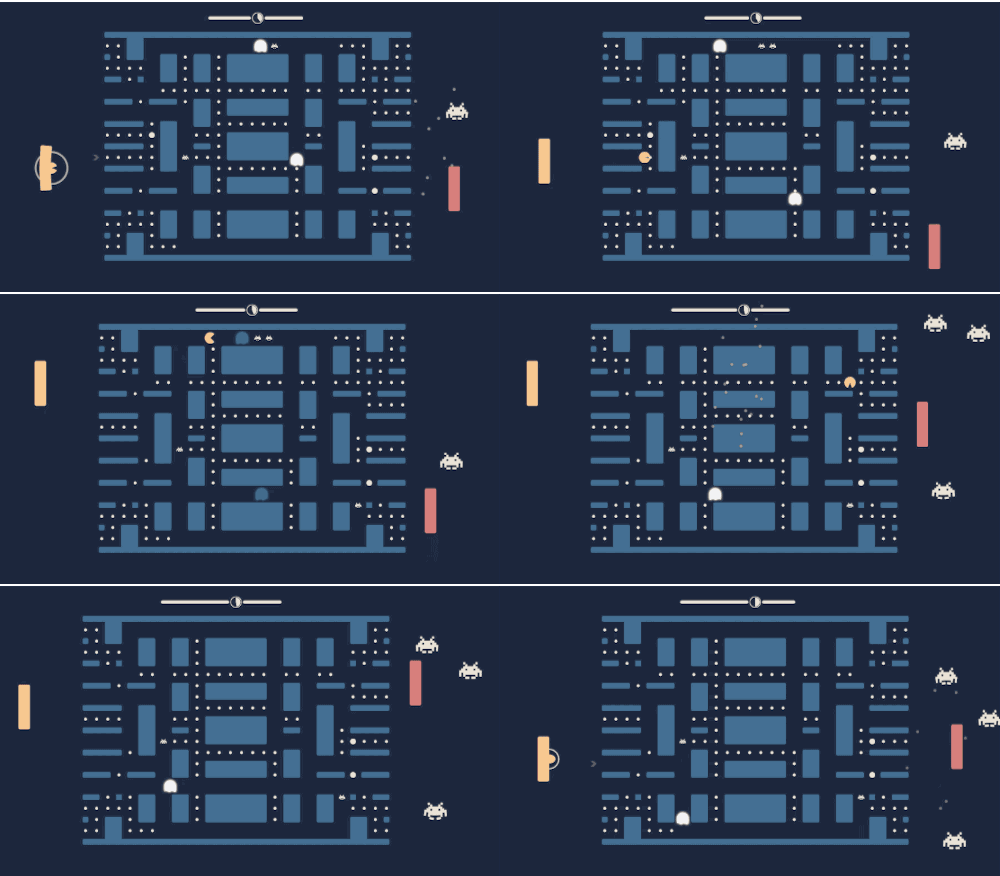
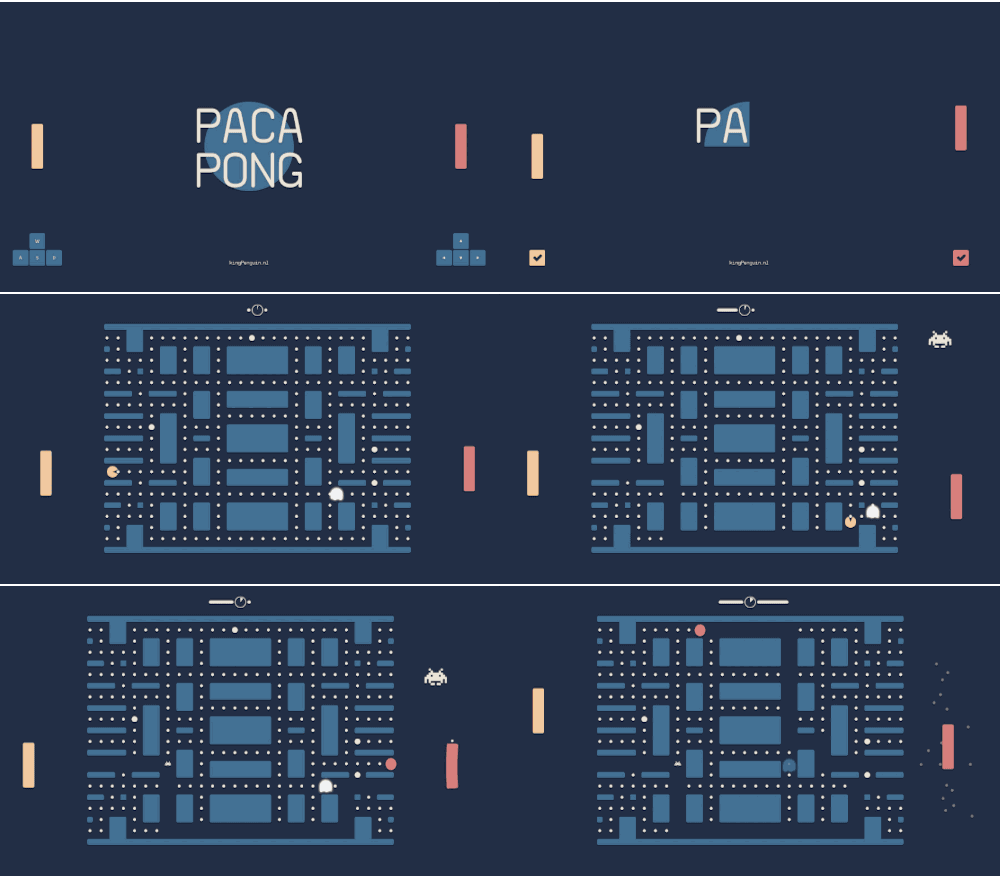

Pacapong is a glorious mash-up of Pacman, Pong and Space Invaders with multiple maps and cool retro music, It’s a wonderful blast of retro arcade fun. It even features cameos from a certain retro primate. PacaDonkeyPong anyone?