Shared posts

05 Jul 14:04

11 Spectacular Sunset Views Around The Globe

by Simona Ganea

The sunset and the sunrise are basically very simple and very common phenomena. However, they have always impressed us with their colors. The sunset is usually more impressive. It’s because sunset colors are typically more brilliant than sunrise colors as evening air contains more particles than morning air.

The sun sets over Santorini and gives us a glimpse at the stunning surrounding landscape

It’s these vibrant colors such as the intense orange or the red shades that mesmerize us and turns something as simple as the daily disappearance of the sun below the horizon into a magical moment.Even the most beautiful views in the world seem better at sunset. The colors completely change the atmosphere. Of course, it all differs with the location and this experience is always unique.

In Cape Town, South Africa, the best place to admire the sunset is the harbor

Stunning sunset views from Gordon’s Bay, South Africa

Head to the beach to admire the South African sunset in its entire splendor

The Doya rice terraces from Japan becomes magical under sunset light

In the famous Cinque Terre region from Italy, both the sunrise and the sunset are magical

The entire La Paz city becomes flooded in orange at sunset

Rome is even more stunning with the sun disappearing in the distance

The picturesque Venice bursts with color as the sun sets at the horizon

A stunning capture of the New York sunset in the busy city

Darkness falls across California as the sun leaves behind traces of color

Although there’s a very logical scientific explanation for the amazing colors and visual effects that we see every day, we are all just hypnotized by their beauty and stop everything just to admire them. This is a collection of amazing sunset views from across the world, each showcasing the beauty of this spectacular moment.

Picture sources: 1, 2, 3, 4, 5, 6, 7, 8, 9.

Subscribe to Homedit's Feed to get constant updates of our Awesome Posts!

© Homedit- Daily interior design ideas ! | Permalink to 11 Spectacular Sunset Views Around The Globe

The post 11 Spectacular Sunset Views Around The Globe appeared first on Home Decorating Trends.

04 Jul 21:14

nevver: Toothpaste For Dinner

04 Jul 20:17

Who Makes Below Minimum Wage in the Mechanical Turk Sweatshop?

Why do so many reasonably well-off Americans choose to work for below minimum wage?

Read The Blog Post Here »

04 Jul 20:09

What Marshmallows Tell Us About Silicon Valley

Adam Victor Brandizzi

Este post provavelmente estará entre os melhores do Priceonomics. Inclui inclusive a explicação mais clara do Why Nations Fail que eu vi até agora.

To understand why Silicon Valley keeps pumping out new companies and technologies, we suggest starting with a number of experiments run by Stanford psychologists in the sixties and seventies involving children and promises of marshmallows.

Read The Blog Post Here »

04 Jul 19:36

Seeing this xkcd, I chuckled. Then I gave it a second… and...


Seeing this xkcd, I chuckled. Then I gave it a second… and realized that I am not this sort of geek. I’m not talking about exercise specifically, though that’s also true (I haven’t been able to “unlock” anything when it comes to exercise.) I mean that I have no particular interest in “leveling up”, in the classic RPG sense, or translated to most other activities. 

In fact, I’ve come to the realization that I may not be a geek at all. Perhaps it’s time to admit that what I really am is an art student with a for loop.

04 Jul 19:36

[paintrain]

04 Jul 17:31

Shhhh!

by Greg Ross
Adam Victor Brandizzi

Pras amigas bibliotecárias :)

http://commons.wikimedia.org/wiki/File:Conrad_Buno02.jpg

To amuse themselves in 1907, librarians Edmund Lester Pearson and John Cotton Dana published The Old Librarian’s Almanack, a pamphlet they alleged to have been written originally in 1773 by Jared Bean, “curator or librarian of the Connecticut Society of Antiquarians,” and evidently a man of strong opinions:

So far as your Authority will permit of it, exercise great Discrimination as to which Persons shall be admitted to the use of the Library. For the Treasure House of Literature is no more to be thrown open to the ravages of the unreasoning Mob, than is a fair Garden to be laid unprotected at the Mercy of a Swarm of Beasts.

Question each Applicant closely. See that he be a Person of good Reputation, scholarly habits, sober and courteous Demeanour. Any mere Trifler, a Person that would Dally with Books, or seek in them shallow Amusement, may be Dismiss’d without delay.

The book was reviewed seriously in the New York Sun, the New York Times, the Hartford Courant, Publisher’s Weekly, the Newburyport Daily News, the Providence Sunday Journal, and even the Library Association Record, which asked “what librarian would not at times in his secret soul sympathize” with Bean’s irritation with patrons who disturbed his reading time.

Finally Helen E. Haines of the Library Journal discerned the hoax, and the library community realized it had been had. Public Libraries wrote, “We congratulate the author of the book on being so clever to project himself into the past, as to deceive even the very elect. The book is well worth owning and reading. Let us be thankful that one with humor, imagination and sympathy has created for us dear old Jared with his gentle comradeship and his ardent love of books.”

04 Jul 17:22

allcreatures: Photo: Ed Oudenaarden/AFP/Getty Images


allcreatures:

Photo: Ed Oudenaarden/AFP/Getty Images

04 Jul 15:45

Comic for July 4, 2013

Dilbert readers - Please visit Dilbert.com to read this feature. Due to changes with our feeds, we are now making this RSS feed a link to Dilbert.com.
04 Jul 15:44

iraffiruse: Frozach Submitted

04 Jul 15:42

Presidenta continua diálogo com sociedade civil e receberá movimentos do campo e lideranças indígenas

by Tiago Falqueiro
Adam Victor Brandizzi

Finalmente, hein? Nada como um susto.

A presidenta Dilma Rousseff continua a se reunir com representantes de diversos segmentos da sociedade civil. O próximo encontro será com movimentos sociais do campo nesta sexta-feira (5), no Palácio do Planalto. Já na próxima quarta-feira (10), a presidenta recebe organizações e lideranças indígenas.

O ministro-chefe da Secretaria-Geral, Gilberto Carvalho, disse que também estão previstos encontros com grupos de representantes de evangélicos, de cultura digital e blogs, de movimentos sociais que defendem a reforma política, movimento de mulheres e de luta contra a desigualdade social.

“A presidenta irá receber sistematicamente representantes da sociedade civil principalmente para discutir a situação do país”, disse Gilberto Carvalho, que afirmou que as consultas serão permanentes.

04 Jul 15:33

Photo


04 Jul 15:33

Photo


04 Jul 13:05

Photo


04 Jul 13:01

Photo


04 Jul 01:20

An Ex-Muslim’s Tale of Discovering Her Freedom

by Hemant Mehta

Marwa,” an ex-Muslim woman from Lebanon, moved to the United States a year ago. On her website, she’s written an incredible and emotional account of what that transition has been like:

I have keys to my own front door and I can open this front door and walk down the street whenever I want to.

I can walk down the street without being watched through the windows and without anyone calling my parents and telling them I am roaming loose on the street.

I can walk down the street, sit down on a bench under a tree, and eat an iced cream cone. Then I can stand up and walk back home.

There will be nobody waiting for me at my house to ask me where I have been, refuse to let me in, call me a liar, and use my walk as renewed incentive to rifle through all of my possessions for proof that I am doing something wrong.

Because the simple desire to take a walk cannot but hide something deviant.

Because there is no good reason why a woman should want to walk down the street just to walk, and expose herself to the questioning and predatory eyes of the neighbors and strange men.

Read the whole thing. It’s powerful stuff.

(image via Shutterstock)

03 Jul 21:20

Photo


03 Jul 20:45

Mr. Chan and the Machine

by thuudung
Adam Victor Brandizzi

Bela crônica em Hong Kong.

A tale of ink and grease. In Hong Kong, a half-century old printing press – “The Windmill” – continues to churn out pages. “It sounds like a woman gasping”… more»

03 Jul 15:08

Photo

Adam Victor Brandizzi

Animal photobomb antigo, internet? É isso que vai me trazer hoje?
* * *
Ok, então. OBRIGADO :)


03 Jul 14:14

Atheist and Christian Monuments, Side by Side

by Robert Long
Adam Victor Brandizzi

Uma excelente tática.

The first atheist monument on government property in America was unveiled earlier this week in front of a courthouse in rural Florida, and a creationist preacher would be glad to see more like it pop up.

More atheist monuments would be “great,” Eric Hovind told The Christian Post, because “It’s opening up dialogue and providing a place for people to come and reason together…”

Hovind‘s attitude is admirable, not everyone was in such a socratic mood on the monument’s inaugural day:

As a small group of protesters blasted Christian country music and waved “Honk for Jesus” signs, the atheists celebrated what they believe is the first atheist monument allowed on government property in the United States. …

About 200 people attended the unveiling. Most were supportive, though there were protesters, including a group from Florida League of the South that had signs that said “Yankees Go Home.”

How the monument—a bench attached to a granite pillar inscribed with quotes from Thomas Jefferson, Benjamin Franklin, and Madalyn Murray O’Hair, the founder of American Atheists—came to be there, echoes other cases where non-believers have used an “us too!” tactic when challenging religious displays.

The Ten Commandments statue was installed in 2005 by a local Christian group called Community Men’s Fellowship. A local named Daniel Cooney enlisted the help of American Atheists, a ” friend with a big stick,” as he put it, to challenge it. According to a settlement agreement between Florida’s Bradford County and American Atheists, the area is a free speech zone, so any group may post a display.

This isn’t the first time a challenge to a religious display has brought not removal but counter-display, opening something of a Pandora’s box.

When a Pennsylvania school district allowed the Ten Commandments to be posted in school libraries, they were soon joined by the Wiccan “Cycle of the Goddess,” a history of gay rights, the Baha’i “Golden Rule,” and a pamphlet on atheism.

This summer,  American Atheists questioned the presence of Gideon’s Bibles at a Georgia state park cabin. Gov. Nathan Deal defended their “firm legal footing” thus:

“These Bibles are donated by outside groups, not paid for by the state, and I do not believe that a Bible in a bedside table drawer constitutes a state establishment of religion…In fact, any group is free to donate literature.”

As in the Florida free speech zone, the group took Deal at his word, and is currently collecting atheist materials such as God is Not Great and Why I am Not a Muslim to donate.

American Atheists admits that if they could, they would have no monuments at the courthouse rather than many, no books in the cabins rather than a whole library. The “me too” tactic is meant merely to push back against a defense of public displays of religion solely on free expression grounds.

Whether this tactic represents a temporary tactic or long-term trend, it’s certainly creating some interesting scenes along the way. And while the Southern League’s antics are more likely to attract national attention, hopefully more people will follow the example of Community Men’s Fellowship, who wrote:

We want you all to remember that this issue was won on the basis of this being a free speech issue, so don’t be alarmed when the American Atheists want to erect their own sign or monument. It’s their right. As for us, we will continue to honor the Lord and that’s what matters.

Follow @rgblong

03 Jul 13:53

The Fallacy of Human Freedom

by thuudung
Adam Victor Brandizzi

Duas coisas que nos faltam: mostrar o horror por trás da farsa do "progresso" e mostrar o horror na denúncia da farsa do "progresso". Este livro aparentemente faz muito bem a primeira parte.

The doctrine of progress – humanity is changing for the good – may be the most powerful idea in Western thought. The most pernicious, too… more»

03 Jul 13:22

15 Puzzle

by Greg Ross

A problem from the 1999 Russian mathematical olympiad:

Show that the numbers from 1 to 15 can’t be divided into a group A of 13 numbers and a group B of 2 numbers so that the sum of the numbers in A equals the product of the numbers in B.

Click for solution …

03 Jul 11:07

Kyoshi Warriors @ SakuraCon


Kyoshi Warriors @ SakuraCon

03 Jul 01:38

love attack

03 Jul 01:26

A diferença entre o Rio de Janeiro e São Paulo

by Pedro Sette-Câmara
Adam Victor Brandizzi

Nossa, mas ficou muito bom esse texto (embora eu não conheça São Paulo de verdade).

*Nota: este texto terá muitas generalizações. Se você se sentir ofendido por uma generalização…

Há alguns anos venho explicando a amigos em conversas pessoais o que penso ser a diferença entre o Rio de Janeiro e São Paulo. Pois uma vez uma senhora numa mesa ao lado da minha já se levantou para me cumprimentar pelo brilhantismo de minha explicação; e eu mesmo sinto que é hora de registrá-la por escrito, para que a humanidade a conheça e, mais importante, não a atribua a outra pessoa. Afinal, há algum tempo descobri que David Foster Wallace usou a mesma imagem que eu mesmo (em minha peça) para falar do sujeito que se jogou do World Trade Center no dia 11 de setembro; e eu, que nunca nem li mais do que meio ensaio de Wallace, agora passarei por plagiário, ou, o que é mais grave, praticante da intertextualidade.

Admito que amigos me ajudaram na formulação dos conceitos e sobretudo nos exemplos, mas a fórmula que enuncia a grande diferença veio desta minha privilegiada cachola. E lá vai: a diferença entre o Rio e São Paulo é que o Rio é uma sociedade aristocrática, com os vícios e as virtudes de uma sociedade aristocrática, e São Paulo é uma sociedade burguesa, com os vícios e as virtudes de uma sociedade burguesa.

O Rio, é claro, foi a capital do Império e depois da República. Ou seja: uma cidade de burocratas, uma sociedade baseada no privilégio. Privilégio que começa com os famosos “PR” inscritos nas portas das casas para anunciar que aquelas propriedades seriam usadas pelo Príncipe Regente. A população interpretava o “PR” como “ponha-se na rua”. (E não falei que “PR” são as iniciais de “privilégio” para evitar a leminskização do cosmos.) Mas eis que cá estamos, todos nos achando privilegiados. Privilégio significa “lei privada”. Por isso o Rio deve ser a capital mundial dos concurseiros, que têm algo como zero de espírito de serviço público, e cem de espírito de obtenção dos privilégios da burocracia. Por isso também o Rio é uma cidade onde absolutamente tudo é pessoal. Para você ir num restaurante e ter uma boa experiência, é preciso conhecer o maître, os garçons, ou ao menos ter aquele clique inicial de simpatia na hora de chegar. Não existe nenhum atendente no Rio, do setor público ou do privado, que acredite que sua obrigação é atender, gostando ou não de quem será atendido. Por isso o Rio é a cidade da afetação perpétua de intimidade, que só direi que esconde um enorme desprezo se o leitor aceitar que esse desprezo significa que o outro de fato é imediatamente esquecido.

Mais ainda, no Rio de Janeiro é preciso conhecer as pessoas. Nosso elitismo é em parte de classe, em parte grupal. Nossa classe está aberta a quem imitar nossos trejeitos. Daremos tudo a um dos nossos, mesmo que seja uma besta, e negaremos tudo a quem não for um dos nossos. Quantas vezes não vi, nas duas faculdades de Letras que frequentei, na PUC e na UFRJ, alunos talentosos que desconheciam certas regras de traquejo social – que, em suma, traíam sua origem social pobre – serem desprezados por professores – sem que nem soubessem que estavam sendo desprezados? Esses pobres alunos não entendiam que fazer a pose era mais importante do que estudar.

Mas há as virtudes, claro, e a primeira virtude é que no Rio de Janeiro a ideia de cultura não é estranha à vida, porque para um aristocrata ela é normal – tão normal que ele não precisa ficar falando dela. Jamais um carioca vai convidar você para ver quantos livros ele tem. Ele tem livros. Por quê? Você não tem? Que coisa. Isso tudo faz com que a discussão no Rio seja mais leve ou ao menos mais fluente. Se estamos discutindo, é porque naquele momento somos iguais. Não estamos questionando um as credenciais do outro, estamos só falando daquilo que pensamos, não esperamos que venha daí nenhuma consequência prática. Por isso o carioca fala o que pensa e nunca interpreta isso como arrogância. Nosso parâmetro é outro. (Não que aquilo que o carioca pensa seja necessariamente mais bem pensado.)

Outra virtude é que o carioca está sempre à vontade. As pessoas podem achar que eu sou intelectual, e olha que eu até tenho um par de óculos com aro mais grosso, mas é muito difícil encontrar alguém no Rio que queira ostentar uma identidade. O sujeito é surfista no verão, um dia corta o cabelo punk, vai em todos os lugares, e entende que tudo isso é meio que só de brincadeira. Em São Paulo não. Em São Paulo há punks. De verdade. Que acreditam no punk. Um carioca pensa nisso, diz “hã?” e esquece.

E essa é a chave para pegar o que há de burguês em São Paulo. Se no Rio todo mundo parece filho de um aristocrata decadente, em São Paulo todo mundo parece filho do dono do armazém, mesmo que seja bilionário. São burgueses que se ilustram e não conseguem deixar de se orgulhar de sua ilustração, de querer alardeá-la. Cultura é outro objeto que se adquire e que se ostenta. É como um Porsche, que, bem, você não compra para deixar na garagem.

Por isso também, como falei, o paulista tem uma identidade. Ele é um hipster, ou não gosta de hipsters. É punk, ou skinhead, ou não gosta deles. Ele estudou “na Poli” ou “no Largo de São Francisco” e acha isso o máximo. (Não estou dizendo que não seja.) Aqui no Rio a gente não tem orgulho de onde a gente estudou. Porque nós somos deuses. Já éramos especiais e o lugar é que ficou mais especial com a nossa presença. É por isso também que emporcalhamos tudo. Um deus não liga para nada. (Ver, a esse respeito, a cena de O Leopardo em que o Príncipe de Salina explica por que as estradas sicilianas são tão sujas.)

O GattopardoO Leopardo

Por ser burguês, o paulista sabe o quanto as coisas custam. Sabe que sua posição no mundo é frágil, e depende de ele não criar muitos problemas. Isso é verdade, não estou negando. Mas essa atitude leva a uma diplomacia extremada nas relações. Vou dar um exemplo. Certa vez, há muitos e muitos anos, dei um breve curso em São Paulo, e os alunos me perguntaram o que eu achava de tal livro. Peguei o livro, dei uma olhada, e no dia seguinte falei: “Acho uma fraude. Ele pegou trechos de um livro antigo, que eu conheço muito bem, traduziu e não deu crédito. Aliás, ele reproduziu a fraude de outro autor que já tinha feito a mesma coisa com o mesmo livro. Gente, traduzir e dizer que é seu é fraude.” Pois o diretor do lugar onde dei o curso – uma pessoa boníssima, sem a menor ironia – veio dizer que minha postura era “agressiva”. Mas, caramba, agressão é você vender gato por lebre. A lição que levei foi que em São Paulo estamos sempre pisando em ovos. Mesmo quando o interlocutor diz que não estamos, que podemos falar abertamente.

Claro que o melhor lado de São Paulo é a eficiência. O paulista compreende bem as relações impessoais. Todos os garçons do Brasil deveriam ser paulistas, ou ter treinado em São Paulo. Mais ainda, o paulista busca realmente a qualidade. Você vê isso porque o nível médio de tudo é mais alto em São Paulo. O Rio é uma cidade de extremos; num dia é perfeita, no outro dia é um inferno, e você nunca sabe qual personalidade ela vai assumir. São Paulo ao menos é constante. O que é bom é bom, o que é ruim é ruim, e você já conhece.

O paulista também é um manso, em comparação com o carioca. Há não tanto tempo cheguei numa estação de metrô umas seis da tarde. Tinha gente demais. Cheguei a pensar em desistir. Porém, na minha perplexidade fiquei olhando aquela gente toda e… percebi que as pessoas estavam ordeiramente organizadas numa fila. Era apertado, mas pacífico. No Rio, qualquer aglomeração daquelas no metrô me daria praticamente a certeza de uma convulsão social. Por isso também o trânsito em São Paulo pode ser de maneira geral muito mais intenso, mas também é muito mais civilizado. Porque o paulista, burguês cioso, não vai arriscar suas propriedades como o carioca, esse divino temerário.

O Rio é essencialmente um balneário, mas nós cariocas estamos convencidos de que é o melhor lugar do universo. Quando vou à praia no Posto 6 e tiro a cabeça d’água e vejo as montanhas de Niterói num dia sem névoa, é isso que eu penso. Nós, cariocas, somos aristocratas decadentes e meio delirantes. O Rio é nossa droga, é a cidade que nos maltrata e também nos estonteia. Sua beleza não é nosso mérito: já destruímos praticamente todos os prédios bonitos da cidade (na orla, não consigo pensar em nenhum entre o Copacabana Palace e a Barra da Tijuca). São Paulo é uma megalópole de negócios. Pode impressionar, mas ficar em São Paulo será sempre uma decisão racional, e não pelo menos meio irracional, como ficar no Rio.

Mesmo que no Rio chova muito mais do que se conta. O que é muito chato.


03 Jul 01:12

Photo


02 Jul 13:12

pleatedjeans: he retired this year. [article]


pleatedjeans:

he retired this year. [article]

02 Jul 12:26

Insight

by Greg Ross

http://commons.wikimedia.org/wiki/File:Georg_Christoph_Lichtenberg_Big.jpg

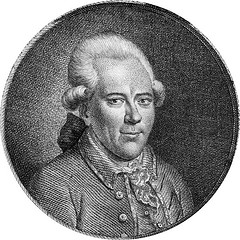
Still more wisdom from German aphorist Georg Christoph Lichtenberg (1742-1799):

  • “That man is the noblest creature may also be inferred from the fact that no other creature has yet contested this claim.”
  • “If people should ever start to do only what is necessary, millions would die of hunger.”
  • “I am convinced we do not only love ourselves in others, but hate ourselves in others too.”
  • “Erudition can produce foliage without bearing fruit.”
  • “Nothing is judged more carelessly than people’s characters, and yet there is nothing about which we should be more cautious. Nowhere do we wait less patiently for the sum total which actually is the character. I have always found that the so-called bad people gain when we get to know them more closely, and the good ones lose.”
  • “Completely to block a given effect requires a force equal to that which caused it. To give it a different direction, a trifle will often suffice.”
  • “Undeniably, what we call perseverance can lend the appearance of dignity and grandeur to many actions, just as silence in company affords wisdom and apparent intelligence to a stupid person.”
  • “The sure conviction that we could if we wanted to is the reason so many good minds are idle.”
  • “There were honest people long before there were Christians and there are, God be praised, still honest people where there are no Christians. It could therefore easily be possible that people are Christians because true Christianity corresponds to what they would have been even if Christianity did not exist.”
  • “He who knows himself properly can very soon learn to know all other men. It is all reflection.”
  • “It is certain, it seems, that we can judge some matter correctly and wisely and yet, as soon as we are required to specify our reasons, can specify only those which any beginner in that sort of fencing can refute. Often the wisest and best men know as little how to do this as they know the muscles with which they grip or play the piano. This is very true and deserves to be pursued further.”

See Diamonds and Pearls, From the Notebooks, and The Sage of Göttingen.

02 Jul 12:14

“Somaliland is a republic that exists:” Amina Duale profile

by Joshua Errett
Adam Victor Brandizzi

Taí algo que sempre me perguntei: por que a maioria dos países simplesmente não reconhece a Somalilândia como um país independente? Qual a vantagem de tentar construir um retalho dela, da Puntlândia e do caos que se dá ao sul?

Without Wikipedia, Amina Duale wouldn’t be able to point out her country on a map. Literally, her father’s place of birth does not appear on many maps, atlases, globes or even Google Maps.

Amina Duale

The Republic of Somaliland is an autonomous state in the northwest of Somalia, with its own functional parliament, constitution and armed forces. But it is not always recognized by the international community, and good information on the unofficial country is relatively scant.

“If you Google Somaliland, you’ll find it on Wikipedia,” says Duale. “Without that, nobody really gets to know that Somaliland is a republic that exists.”

That’s why Duale, who works as a business consultant with non-profit and non-governmental organizations in South Sudan, Somaliland, Puntland, and other new and contested nations in Africa, donates to Wikipedia.

The article on Somaliland is, as Duale says, one of the few comprehensive, independent sources on the first few pages of Google. But the connection she feels to the site is more personal.

“I thank God for Wikipedia because my life is in it. I am represented,” she says, counting herself as one of the 3.5 million inhabitants of Somaliland.

Like many regions that make up the Horn Of Africa, Somaliland’s recent history has been turbulent. In the early part of the 20th century, it was an area controlled by the British. But since there was no abundance of natural resources, Britain used Somaliland as a stopover on trips to India, and ceded control over the territory in 1960.

That year, British Somaliland merged with Italian Somaliland to form the independent Somali Republic. It was a short-lived country brought down by a military coup d’etat in 1969, which installed Major General Mohamed Siad Barre, then head of the military, as president.

Siad Barre controlled Somalia for 21 years, but became increasingly authoritarian as his tenure continued. Another coup d’etat in 1991, staged by a variety of different factions in region, resulted in the Somali Civil War. In 1991, the war brought down Siad Barre, and a new country, present-day Somalia, would be formed.

Somaliland, conceived by one of the several groups who fought in the civil war, would declare its independence from Somalia that same year. Since then, the would-be nation has been relatively safe and stable compared to southern Somalia – a little known fact outside of the region, according to Duale.

“There are safer places in Somaliland, but you don’t hear about that on mainstream media,” she says. “And that is really a crime, because you’re saying that almost half of a population does not exist.“

Indeed, Al-Shabaab, the Somali sect of the militant Islamist group al-Qaeda, is not a threat in Somaliland, and the gangs of pirates centered around Mogadishu have limited presence there too.

“The crucial part is that Wikipedia talks about places that are not mentioned in mainstream media. If you go to BBC or CNN or many of these mainstream media, they hardly talk about Somaliland. They report that Somalia has been without a government since the 1991 Civil War, which is not true,” she complains.

“It has been a very long and painful history and just to know that we are recognized in Wikipedia, for me that’s an honor really.”

Duale decided to repay that honor when she saw Wikipedia’s fundraising drive last year. In order for the Wikipedia page on Somaliland to compete with what she considers misinformation in the commercial press, she needed to donate.

“For me, Wikipedia is one of the few places I can go to get accurate and independent information. I don’t mind sending $10 or $20 every month. Wikipedia belongs to all of us, and it’s our duty as a community to keep it going.”

Profile by Joshua Errett, Wikimedia Foundation Communications volunteer
Interview by Victor Grigas, Wikimedia Foundation Storyteller

02 Jul 02:01

Reviving “The Great Agnostic”

by Robert Long
Adam Victor Brandizzi

De Ingersoll, só conheço o clássico "Why I an agnostic". Não sabia que foi tão relevante! É legal ver sua valorização.

High school student Sarah Henry came from Kentucky to Washington, DC, to preach blasphemy this past Sunday.

“The improved man will believe only in the religion of this world,” she told an audience of some fifty heathens at James Hoban’s Irish Bar near Dupont Circle:

He will have nothing to do with the miraculous and supernatural. He will find that there is no room in the universe for these things. He will know that happiness is the only good…and that to do the things (and no other) that add to the happiness of man is to practice the highest possible religion. His motto will be: “Sufficient unto each world is the evil thereof.”

It was Henry’s first time competing in the Robert G. Ingersoll Oratory Contest, in which contestants deliver the speeches of nineteenth-century America’s “Great Agnostic.”

Ingersoll was a Civil War veteran, Republican power broker, and vocal critic of organized religion. You probably haven’t heard of him, but the purpose of the contest is to fix that. Steve Lowe, who started the annual contest in 2009, says he and other DC-area secularists want to revive the legacy of a great American “freethinker” who has been unjustly forgotten by history.

A superstar on the lecture circuit, Ingersoll was quite probably the most-heard speaker of the Gilded Age, surpassing even Mark Twain and presidents. His “Plumed Knight” endorsement speech for James Blaine in 1876 became the gold standard for nominations. He packed lecture halls with angry clergy, curious Congressmen, and common folk alike.

As eleven contestants took to the podium on such subjects as “The Liberty of Man, Woman, and Child” and “Is the Old Testament Inspired?” it became clear why Ingersoll was so popular: his speeches are high-minded without being overwrought, and shot through with a humanist humor and joie de vivre that are scarce in the New Atheist polemics, now that Christopher Hitchens is gone.

In the voice of contestant Mike Schmidtmann, Ingersoll took an editor’s pen to the 10 Commandments: “If Jehovah had been civilized he would have left out the commandment about keeping the Sabbath, and in its place would have said: ‘Thou shalt not enslave thy fellow-men.’”

In Ms. Henry’s chosen speech, Ingersoll preached Front Porch Republicanism:

The Improved Man will find his greatest joy in the happiness of others and he will know that the home is the real temple. He will believe in the democracy of the fireside, and will reap his greatest reward in being loved by those whose lives he has enriched.

In the spirit of the great socializer Ingersoll, once winners were decided—Ms. Henry, the youngest contestant, snagged 1st place and $250—the group retired to the bar.

Ingersoll’s star is on the rise, with the recent publication of Susan Jacoby’s widely reviewed The Great Agnostic: Robert Ingersoll and American Freethought (Alan Jacobs tweaked it here at TAC). As Jacoby notes in the book, one of Ingersoll’s lasting intellectual contributions was to restore the godless Thomas Paine (“that filthy little atheist” to Teddy Roosevelt) to prominence among the founding fathers.

Jacoby also wants to peg Ingersoll as a modern progressive; however, Dan McCarthy and Robert Nisbet, no less, have seen him as part of a long-standing conservative secular tradition including William Graham Sumner and David Hume.

Whoever claims Ingersoll today, in his own day he accumulated so much political favor that when he died in 1899, many obituaries admitted that he would have been a credible candidate for President of the United States were he not such an outspoken infidel. One editor noted

Hypocrisy in religion pays. There will come a time when public men may speak their honest convictions in religion without being maligned by the ignorant and superstitious, but not yet.

As America’s secularists aim to bring that day closer, to convince their deeply suspicious fellow-citizens that irreligion is not a subversive, alien, British-accented anomaly, but a proud part of the American tradition, they could certainly pick a worse hero than the affable, quotable Ingersoll.

Follow @rgblong