No Natal de 2012, Stevie Wonder se apresentou no Rio de Janeiro, na Praia de Copacabana. O espetáculo era público e gratuito, mas havia uma imensa área VIP entre o “resto” e o palco. O solo estava reservado ali por cortesia do poder público, para convidados, produtores, artistas e patrocinadores. Aconteceu. O show foi feito. As barreiras ficaram de pé.
No 13/07/2013, a neta de um magnata dos transportes se casou no Centro da mesma cidade, com o filho de um ex-deputado. E então, de novo, Copacabana: mais de mil convidados passaram pela festa de alto luxo que, na tradição da já assentada contestação matrimonial carioca, teve protestos nos arredores. (Nunca morrerá o cartaz de “Não Procriem” erguido diante de outro casamento, de dois herdeiros da política fluminense.) Desta vez, manifestantes fizeram barulho, convidados responderam; houve palavrão, aviãozinho de dinheiro e até cinzeiro voador, num espetáculo de alegria e fúria guardado pela polícia militar. Uma festa de alto luxo para mil pessoas.
(Certos casamentos no Brasil valem mais do que 500 reuniões de diretoria. Protestar na porta de um deles é menos um excesso do “pessoal é político” do que um ato de coerência atmosférica.)
O primeiro evento era público, e colonizado pelo privado. O segundo era privado, e garantido pelo público. Em ambos, pulsava uma utopia: a do Atacadão dos Poucos, o lugar onde o exclusivo inclui. O Atacadão dos Poucos é o reino onde, numa virada alquímica, o ouro faz as pazes com a pedra no toque de uma pulseirinha (ou de um convite, ou de um abadá). É o que vem depois do “reconhecimento”, do “mérito”, seja lá o que isso queira dizer entre nós.
O Atacadão dos Poucos é o Éden anunciado na nossa ordem de privilégios, a imagem a animar desde os sonhos dos pequenos funcionários até os novos “campeões nacionais” da indústria. O Atacadão dos Poucos é um planalto habitado por “muita gente bonita”, terra onde a fidalguia se resolve num bufê a quilo.
Mas o Atacadão dos Poucos nunca chega, e nem poderia. É uma árvore negada pela raiz. É sempre adiado ou complicado por sua própria promessa: a imigração para seus domínios é inseparável do barramento. O Atacadão dos Poucos só pode raiar como possibilidade em pequenos intervalos, em cercadinhos no espaço e no tempo: como uma demarcação do Belo nos abismos da Feiura, como uma mesa lotada para a degustação de maná, como uma miragem tumultuada e sofisticada.

Que prosperem pistas premium do tamanho de estádios, que se realizem festas a um só tempo reservadas e multitudinárias, isso diz muito sobre a régua das nossas ambições. Filhos do compadrio, nós nos medimos pela “qualidade” dos nossos encontros. Precisamos estar na companhia de “homens bons” para que nos percebamos além do “cidadão” saído da boca do policial. Sob o pano de fundo de direitos e deveres belamente redigidos, nossas pulseirinhas berram “não fui engambelado”, “nunca confiei nessa baboseira”. E o jogo segue, do furão que se jura rebelde ao governador que, de tão pulseirado, caminha e voa como se fosse a área VIP de um homem só.
(Há uma mal disfarçada nostalgia pela distinção nobiliárquica. Deixássemos solto o Passat da Nacionalidade, veríamos pipocar barões de Osasco e viscondes do Andaraí. Ainda assim, não vejo terreno para a causa monárquica, pelo menos não como a ela nos acostumamos no Brasil, com seu bafo de penteadeira de velha cruzado com gel republicano de direita. Para que tenha chance, a defesa do trono deve levar um banho de carnaval, de erupção do absurdo. Só a Casa de Bornay pode triunfar, e mesmo assim com a sorte de um pierrô bêbado na manhã de uma cama alheia. Até esse dia improvável, quando os títulos de nobreza seriam reformulados como “de luxo” e “de criatividade”, restarão as pulseirinhas.)
******
Comentário de Oto Vale:
Poderíamos adotar um novo sistema de monarquia não hereditária: o Rei ou Rainha seria eleito entre aqueles que já chamamos de Rei ou Rainha (Pelé e Roberto Carlos, p.ex.). Teriam direito àquilo que já têm direito pela fortuna que têm, mais um palácio Real qualquer entre os vários palácios (o Alvorada já tem um desenho de coroa). Perderíamos a Presidência, e, com isso, ficaríamos livres da discussão sobre quem é o menos pior dentre os candidatos e poderíamos nos preocupar com coisas mais interessantes.
Leandro Godinho:
Ainda chegaremos no dia em que teremos uma área exclusiva dentro da área VIP, porque VIP que é VIP não pode sambar encoxado. Vai começar após algum filho de bacana vomitar Veuve Clicquot no decote de uma primeira dama, mesmo que seja uma primeira dama oficiosa, não de direito. A Sociedade vai comentar escandalizada na piscina do Country Club, na Vieira Souto, e já vai soar o boato de que o pai do vomitador, quando jovem, surrupiava Rolexes dentro de camarotes durante o carnaval, para pagar sua entrada no Baile do Vermelho e Preto.
A área exclusiva dentro da área VIP será o supra-sumo do exclusivo, não aceitará ninguém, nem pobre, nem bilionário. 30 metros quadrados guardados por mastodontes do UFC onde um chão de mármore quedará branco e impávido, ostentando uma geladeirinha de frisantes e um cinzeiro eternamente intocados. Vai ser a democracia absoluta, onde ninguém terá voz.
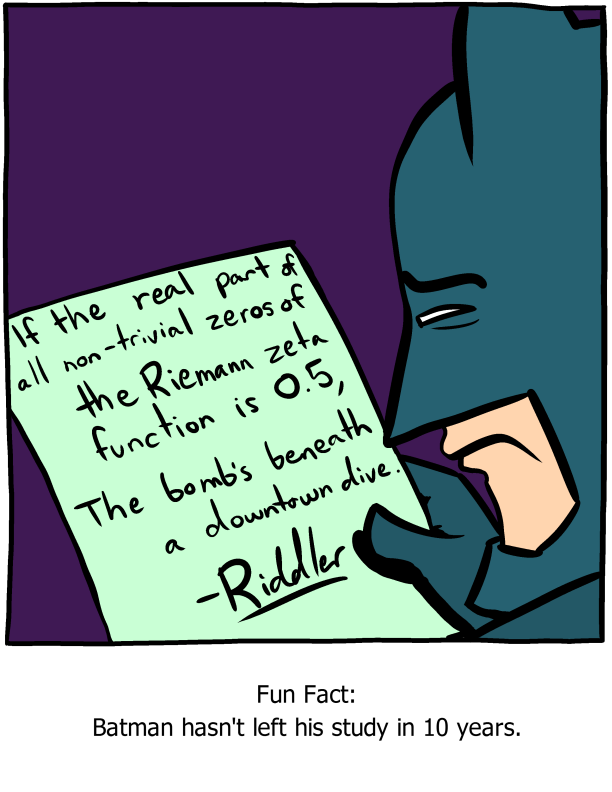
Adam Victor BrandizziPor um lado, demorei a entender. Por outro, me sinto mal por achar engraçado. Mas realmente o Weiner acertou...


O momento em que você percebe que é tarde demais para correr
O blog voltou, mas num ritmo Dorival Caymmi com preguiça. Então, para não deixá-lo parado, publico um post antigo, acho que de 2009. Em tempo de inflação alta, especialmente dos serviços, ele continua a fazer sentido – acho que apenas os preços ficaram muito defasados, uma vez que a política monetária tem sido muito frouxa. Prometo voltar a postar em breve.
A história ocorreu com um amigo meu há alguns anos, num táxi em Belo Horizonte. Quando o motorista percebeu que ele era de São Paulo, não se conteve:
– Mas São Paulo é muito cara, como é que vocês conseguem viver lá?
Antes que o meu amigo dissesse alguma coisa, ele continuou:
– Estive lá no fim de semana. Uma chupetinha custa R$ 50. Aqui, eu pago R$ 15!
Sempre que me lembro dessa história edificante sobre as diferenças do custo de vida nas grandes metrópoles brasileiras, eu penso em como seria importante incluir nos índices de preços a cotação do boquete. Imagine as manchetes: Preço do boquete dispara e IPCA de julho é o mais alto desde 2005. Os telejornais poderiam explorar a diferença de preços nas grandes metrópoles, entrevistando clientes e fornecedoras – e fornecedores – do serviço.
Carlos Alberto Sardenberg, na CBN, não teria nenhuma dúvida: “O BC tem que aumentar os juros. O preço da chupetinha não para de subir. É a inflação de serviços em alta, o que mostra como a demanda está forte, sancionando o aumento de preços.” Fica a sugestão para IBGE, FGV e Fipe. Seria um ganho de qualidade para as medidas de inflação incorporar um serviço tão importante para os brasileiros.
Uma pena que o boquete é non tradable – se tradable fosse, eu gostaria muito de ver um Blow Job Index, uma versão do que a The Economist faz com o Big Mac Index, um modo informal de medir a paridade do poder de compra entre várias moedas*. Ou não seria instrutivo para o viajante saber quanto custa a chupetinha em São Paulo, Nova York, Tóquio, Oslo, Xangai e Bangcoc?
* O próprio Big Mac reflete o custo de itens non tradables, como mão de obra e aluguel. O problema é que o boquete não tem nada tradable. Mas às favas com esses escrúpulos. Que alguém tenha coragem de criar o Blow Job Index
Marcos Matamoros


Adam Victor BrandizziParece até mentira!
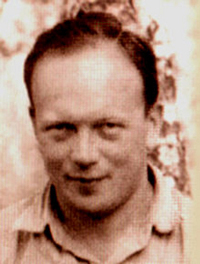
Physician Eugene Lazowski was practicing medicine in the Polish town of Rozwadów when he discovered that injecting healthy patients with dead bacteria could cause them to test positive for epidemic typhus without experiencing any symptoms.
Working secretly with his friend Stanislaw Matulewicz, Lazowski began injecting thousands of Poles in the surrounding villages, deliberately creating the appearance of an epidemic. Fearful of a contagious illness, the Nazis quarantined the affected villages rather than sending their residents on to concentration camps.
Lazowski’s efforts saved an estimated 8,000 men, women, and children who would otherwise have been sent to prisons, slave labor camps, or death camps. He survived the war and moved to the United States in 1958, where he taught medicine in Illinois.
“He’s why I became a doctor,” one of the spared villagers, Jan Hryniewiezki, told the Chicago Sun-Times in 2000. “He was a patriotic hero because he wasn’t afraid to do what he did during very bad times.”
“The basic duty of a physician is to preserve life,” Lazowski explained, “and this was a way of saving lives.”

Watson’s avatar
The Association for the Advancement of Artificial Intelligence (AAAI) has chosen IBM Research’s Watson team as the recipient of the 2013 Feigenbaum Prize. Watson is recognized as one of the most impressive results of AI research in the past several years, famously winning in the quiz show Jeopardy! against former grand champions Brad Rutter and Ken Jennings in February 2011. Watson is now being put to work in areas such as healthcare, finance and retail.
In recognition of the role Wikipedia played in the success of Watson in the Jeopardy! Challenge, the IBM team has asked AAAI to donate the award prize of $10,000 accompanying the Feigenbaum Prize to the Wikimedia Foundation. IBM Research said they were motivated to donate the prize to recognize and support the Wikimedia Foundation’s work, especially on Wikidata, which aims to become a part of providing everyone – whether human or machine – with easier access to the sum of all knowledge.
“Watson embodies a paradigm shift in artificial intelligence by applying a novel architecture to aggregate data and information from many different sources, including the full text of Wikipedia,” said Chris Welty of IBM Research.
The text and structured content of Wikipedia was analyzed using natural language processing methods. In addition, structural elements of Wikipedia – links, infoboxes, categories – were extracted and added to the massive knowledge base that Watson drew on during the game of Jeopardy!
We’re grateful to IBM for their kind consideration and look forward to seeing what remarkable new feats the Watson team accomplishes next.
Matthew Roth
Wikimedia Foundation Global Communications Manager
I’d like to cancel my subscription to Menstrual Cycle Monthly
I’m sorry, it appears you’ve taken out a fifty-sixty year subscription. However, we can pause it for nine months as long as you sign a contract that says you’ll take out a subscription to Baby Daily for at least eighteen years
Damn those Terms and Conditions.
Adam Victor BrandizziComo alguém disse, é a Chiquinha fazendo cosplay de Comandante Marcos (ou vice-versa).
Resisti aos Mascaristas Anarcados muitos recomendaram. Agora eu entendo por quê.

In “Newsworthy News That The Newsroom Will Smugly Cover On News Night” news: George Zimmerman, not guilty. We’ll leave the finer points of the controversial trial/verdict to the experts, experts like Olivia Munn and Dumber (or is he Dumb?), but needless to say, people are not happy, including David Simon, who’s usually such a regular Johnny Chuckles. On his blog, The Wire creator shared his well-reasoned opinions on Martin and Zimmerman, all written like the grimmest “white people be like this, black people be like that” joke I’ve ever heard.
You can stand your ground if you’re white, and you can use a gun to do it. But if you stand your ground with your fists and you’re black, you’re dead.
In the state of Florida, the season on African-Americans now runs year round. Come one, come all. And bring a handgun. The legislators are fine with this blood on their hands. The governor, too. One man accosted another and when it became a fist fight, one man — and one man only — had a firearm. The rest is racial rationalization and dishonorable commentary.
If I were a person of color in Florida, I would pick up a brick and start walking toward that courthouse in Sanford. Those that do not, those that hold the pain and betrayal inside and somehow manage to resist violence — these citizens are testament to a stoic tolerance that is more than the rest of us deserve. I confess, their patience and patriotism is well beyond my own.
Behold, the lewd, pornographic embrace of two great American pathologies: Race and guns, both of which have conspired not only to take the life of a teenager, but to make that killing entirely permissible. I can’t look an African-American parent in the eye for thinking about what they must tell their sons about what can happen to them on the streets of their country. Tonight, anyone who truly understands what justice is and what it requires of a society is ashamed to call himself an American.
Should I ever meet Simon, remind me not to ask him, “How many Lee Greenwood songs are on your iPod?”
(via Getty Image) (Via David Simon)


lamorchemoveilsoleelaltrestelle:
Beauty has no age
Yohji Yamamoto, ‘Cutting Age’ Fashion Show in Berlin, 25th April 2013
Recomendo vivamente que assistam isso.
Funny Interpretative Dance: ‘Don’t Stop Me Now’ - Fast and Loose Episode 6, preview - BBC Two (by BBC)
Since writing about the plight of the Atlantic City gaming industry last week, I unexpectedly found myself, as fate would have it, in a casino in western Pennsylvania—exactly the kind of cozy venue that is putting the screws to New Jersey’s depressed island gambling getaway.
Open for little more than a week, it was like a glittering magnet in the rural highlands. I found a parking spot not far from the front entrance. And yet a stretch golf cart materialized to save my wife and me the trouble of walking. Once inside, the vibe of favorable first impressions lingered. The dealers at my blackjack table were raw and inexperienced. But the players seemed forgiving and jovial, freely dispensing advice from the blackjack “book.” For my part—I’m hardly an ace at blackjack, if you’ll pardon a pun—I enjoyed the low-intensity setting.
The whole experience struck me as a mostly positive exercise in dynamism. Whatever one’s opinion of the morality of gambling—I am not opposed, in principle, any more than I oppose drinking alcohol, while recognizing the massive potential for abuse in both cases—a business had clearly provided a product that people want. Which is another way of saying that it had created wealth. And it had created jobs in a state where unemployment remains higher than the national average, and is actually climbing.
And yet once is forced to admit: we’re talking about a tightly controlled and compromised sort of dynamism. A casino in the mountains is an attraction because there is nothing like it for hundreds of miles. The thing it supplies—legal gambling—appears to be in high demand because state laws have created an artificial scarcity.
Listen to Adam Davidson of NPR’s Planet Money, writing about a possible casino venture in the Catskills region of New York:
Whatever you think of gambling, its regulations are mesmerizing. Gambling is outlawed in one way or another in all 50 states, but almost all — except Hawaii (surprisingly) and Utah (less so) — have exceptions. Most offer state-run lotteries. Thirty allow Indian casinos. Seventeen have full-scale non-Indian casinos (New York and Massachusetts are poised to join that group.) In each case, government officials limit the number of casinos and determine where they will be located.
Economically speaking, these anticasino regulations are the single greatest profit generator for casino operators. By limiting the number and location, and therefore artificially keeping the market underserved, governments essentially guarantee outsize profits for those in business. (The New York City Taxi and Limousine Commission, which limits cab licenses, ensures a similar regulatory oligopoly, as do many state liquor-distribution regulators.) If there were unlimited licenses, each casino operator would have to compete — like every restaurant or movie theater — with all the others.
We actually have some idea how casinos fare when they’re forced to operate in something more like a free-market environment: and it’s the aforementioned example of Atlantic City. Where once it shared a duopoly over casino gambling with the state of Nevada, it is now swarmed by competition in Connecticut, Pennsylvania, Delaware, and Maryland. The result is an ugly picture of declining revenue and layoffs. According to the Philadelphia Inquirer, Pennsylvania itself has found it’s not immune to the effects of increasing supply: the state “reported its first year-over-year decrease in gross slots revenue in June—down nearly 2.0 percent, from $2.48 billion to $2.43 billion.”
The incremental ramp-up of casino gambling has lent the industry the benefit of novelty and curiosity. But as they become more commonplace, the novelty will wear off—and with it, casinos’ ability to generate new jobs and wealth and government revenue.
Adam Victor BrandizziQue quadro bonito!
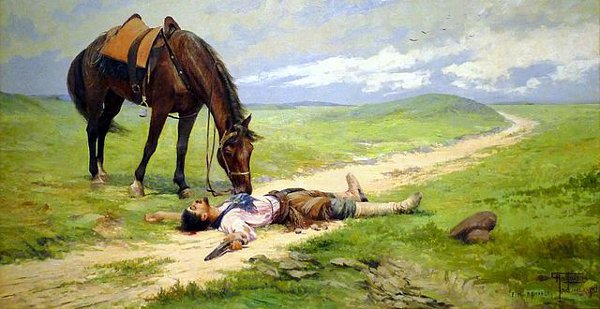
“The mode of death is sadder than death itself.” — Martial

And here’s some regular old catnip.
Adam Victor BrandizziSó acrescentaria um atenuante: que a complexidade do modelo continental pode ser (embora mais frequentemente seja) a manifestação de espetáculo e estilo literário, que são valores por si só. Mas é só um adendo, também prefiro mil vezes o estilo analítico (exceto por Zizek, o mestre da zuêra)
An important concept in psychoanalytic theory is castration anxiety, the fear of emasculation. The French theorist Jacques Lacan, one of the titans of 20th-century philosophy, used the imaginary unit i to elucidate this idea:
The erectile organ can be equated with the √-1, the symbol of the signification produced above, of the jouissance [ecstasy] it restores–by the coefficient of its statement–to the function of a missing signifier: (-1).
In Europe, intellectuals such as Lacan, Foucault, and Sartre have traditionally enjoyed a much more prominent place in public life than intellectuals in America. They go on TV shows. Or the cameras come to them and they hold forth, shirtless, in bed. On the continent, especially France, philosophers can be celebrities. It’s also true that European philosophers (and those working in “continental” philosophy) are typically more abstruse and obscure than America and England’s analytic philosophers, who prize clarity of argument.
The Open Culture blog flags the Lacan passage above as part of a fantastic post, wherein they suggest that it’s no coincidence that continental philosophers are both celebrated and ferociously difficult to understand. Instead, the obscurity is part of the reputation. So argues the American philosopher Martha Nussbaum in a critique of Judith Butler, who writes in the French poststructuralist style:
Some precincts of the continental philosophical tradition, though surely not all of them, have an unfortunate tendency to regard the philosopher as a star who fascinates, and frequently by obscurity, rather than as an arguer among equals. When ideas are stated clearly, after all, they may be detached from their author: one can take them away and pursue them on one’s own. When they remain mysterious (indeed, when they are not quite asserted), one remains dependent on the originating authority. The thinker is heeded only for his or her turgid charisma.
Nussbaum and Open Culture are on to something important. Far too many bewildered undergraduates are made to suss out the arguments of thinkers who, in all likelihood, have not made a good faith effort to put forth a coherent argument. If you can’t understand Lacan above, the odds are it’s not your fault: it’s Lacan’s.
Although it may be delightful to see thinkers like Lacan and Slavoj Zizek savaged, it’s also important to note that there is a necessary and proper place for obscurity and difficulty. There’s no rule of reality that says everything should be explicable in simple, precise language. The world is complicated, so our theories will have to be complicated–quantum mechanics comes to mind. But what is important is the good-faith effort to make yourself understandable, to make claims that can be defended or refuted.
Daniel Dennett calls for an appropriate balance between continental showmanship and the austere analytic style in his latest book, Intuition Pumps and Other Tools for Thinking:
There is a time and a place in philosophy for rigorous arguments, with all the premises numbered and the inference rules named, but these do not often need to be paraded in public. We ask our graduate students to prove they can do it in their dissertations, and some never outgrow the habit, unfortunately. And to be fair, the opposite sin of high-flown Continental rhetoric, larded with literary ornament and intimations of profundity, does philosophy no favors either. If I had to choose, I’d take the hard-bitten analytic logic-chopper over the deep purple sage every time. At least you can usually figure out what the logic-chopper is talking about and what would count as being wrong.

Essa é uma daquelas histórias adoráveis para recuperar sua fé na humanidade. Leighton Naylor tem um peixe de estimação chamado Einstein. Ele fez um colete salva-vidas para seu pet depois que ele desenvolveu uma doença que o impedia de nadar. Sim, um peixe que não pode nadar!
A doença do pobre Einstein fazia com que ele virasse de ponta-cabeça e afundasse em seu aquário, mas seu dono salvou sua vida. Usando alguns tubos reciclados, fez uma estrutura flutuante para que o peixe conseguisse manter-se imerso, mas sem afundar. É também pelos tubos que Einstein come, porque não consegue atingir a superfície para pegar a ração. Uma história de amolecer até os corações mais duros!

Via Felipe Ramos
Ler a matéria na íntegra | Curta A Boa Notícia do Dia | Siga no Twitter


Apparently this is happening at the Texas State Senate right now.
They aresearching bags.

VOGUE VOGUE
LET YOUR BODY MOOOVE TO THE MUSIC
MOOOOOOVE TO THE MUUUUUUSIC