We need to talk about the calendar I found in New Hampshire
Adam Victor BrandizziNão vi e nem devo ver mas, ainda assim, muito excelente esse comentário sobre os comentários.

Remember Metafilter’s most favorited user and former Partial Objects webmaster Pastabagel? This is the kind of emails I get from him, regularly and thankfully. The one below was in response to a link about easter eggs in the movie Man Of Steel. The shame is he doesn’t write posts anymore, I assume because of his blood pressure.
—
The easter eggs in this article (except for the soldier Farris) are literally impossible to see when you watch the movie, because the camera is moving too fast and the shots are so quick. Even in the still shot, the words Lexcorp are extremely hard to read. You barely have time to register the satellite in space, let alone take the time to spot a logo on it.
In fact, there is a much easier to spot reference to Lexcorp, which is during one of the interminably long and pointless fight scenes, superman is pushed into a stopped freight railcar with the words LEXCORP emblazoned neatly on it.
Finally, I find it very hard to accept that people are studying frames of Man of Steel for references like Blaze comics and then searching that out and lauding it online as a clever Easter egg, and yet these same flavor-profile fanboys somehow missed the literally hundreds of art, architectural, and philosophical references in Inception, historical references in Avatar, and literary references in the works of Kubrick. Or worse, when you point those things out to them, they accuse you of reading to much into it. Really? The name of the security officer in Avatar is Miles Quaritch, which is a reference to Miles Standish and and the 19th century book published about his genocide of Indians by the firm Bernard Quaritch. Oh, but I guess that’s just a coincidence, because James Cameron isn’t that smart even though he designed his own submarine to go to the bottom of the oceans. Instead, let’s have man-child hold a seminar about Blaze Comics, which as everyone knows is a famous publisher of openly gay comic books, as opposed to the closeted gay ones published by DC and Marvel.
Notice that in all this Easter Egg talk, it’s all fanboy bullshit. There was a pod that was open, so you conclude that it was Supergirl? Because it’s impossible to image that the filmmaker invented a new character that wasn’t already the subject of a six-color kid’s picture book.
No reference on the internet anywhere to all the (badly) cribbed Nietzsche in the film, like where someone tells superman “You are a bridge,” even though Nietzsche meant that man was the bridge on the way to superman, “man is a bridge, not the end.” Or how about all the soft-core religion “You will be like a God, etc” even though the point of Nietzsche declaring man to be the bridge is that God is dead, God has held man back, and for man to evolve, he must abandon God and religion. But this is Warner Bros and Zack Snyder, and the last thing Hollywood wants to do is rock the boat that keeps the money rolling in.
Or how about the fact that with all the God and Country in Kansas treacle, the movie basically revives the original conception of Superman as a jewish hero. Krypton is basically a failed totalitarian state which perfected Eugenics. Zod is a Nazi caricature, trying to revive the master race on the ashes of a mud race (recall Zod’s many references to the dirt, and human crawling out of mud, etc.) Superman’s real name is Kal-El, his dad is Jor-El. In hebrew, El means, you guessed it, God, or “the highest”. Kal-el and Jor-el, like Samu-el, Dani-el and Emmanu-el are servants of God.
All this makes the Nietzschean references dropped to the film even more incongruous. Now, there could have been a very interesting film here if this was explored, in the way that the Dark Knight deeply probed the “liberty vs security” issue. E.g. if Zod set himself up as God to the people of earth (like how Jor-El said his son would be viewed), and Superman destroyed him (thereby killing God and freeing the people, which is exactly what they did in Superman II–“”God help us…” “Not God. Zod.”).
But they didn’t do this, and in fact Zod wasn’t even that bad of a bad guy. He wanted to rebuild Krypton on Earth, but he was genetically engineered to want to do that (as he says at the end of the film), which sort of excuses his behavior. But Superman also wanted to rebuild Krypton, he just wanted to do it somewhere else so that the people of earth wouldn’t die. But the truth is that superman and Zod are exactly what we would call gods, and Gods can be excused for wanting to build their cities on top of humans, much like we are okay with building our houses on top of rabbit holes, birds nets, anthills etc. We only care because we’re looking at it from the perspective of the ants (this environmental question is another path they could have gone down especially given that Krypton exploded because they used up the planet’s last natural resource, the core. But they didn’t).
These are hard questions that are upsetting to the masses, which is precisely what art is for. The fight scenes are pointless because the ideological stakes don’t matter. The end of Star Wars has considerably less kinetic action than most modern action films, but it feels more dramatic because it’s really important to us that Luke win. Luke vs. Vader is rural vs urban, domestic vs foreign, freedom vs tyranny, US vs Russia, the allies vs. the nazis, innocence vs corruption. The stakes matter.
In Superman, the stakes don’t matter. In the movie, if Zod wins he destroys the earth, but Zod isn’t a metaphor for anything real. We know superman will win just like we know Luke and the Rebels will win. But we want Luke to win because we want freedom to win over tyranny. But what is Zod? In today’s world? If you can’t answer immediately, the movie failed.
What is the Joker in the Dark Knight? The Joker is terrorism. Not a particular terrorist, but the phenomenon itself. The chaos that erupts without justification or explanation. The Joker is 9/11 unfolding on TV.
If they make the story matter to me living here and now, I’ll sit through dogfights in the Death Star trenches 50 times over and over. Make the story matter and I’ll be on the edge of my seat the fifth time I see IED’s go off in the city of Gotham.
But dodge the tough questions? Then I’m bored after Superman throws the first CGI punch. I know Superman is going to win, but it’s meaningless to me. This is also why Tron failed. There, they set up a great philosophical question, God as creator in a hierarchy vs emergent phenomena blooming from within: which is better, or gets you closer to truth? But then Disney wet its pants about scripture-loving folk not buying RC lightcycles, so they waved their hands and defaulted to the traditional position “Yup, it’s God, nevermind that other bit! Look over here! Vinyl tits!”
None of this is on the internet. But oh, look! A sign on building says Lexcorp! You mean there’s a reference to Superman’s archenemy in a Superman movie? No way! Let’s all grab our acne cream and have Dorito-bespittled debates about who is stronger, the Flash or AIDS.
No related posts.


Dicas para espantar o Marcos Feliciano do Congresso
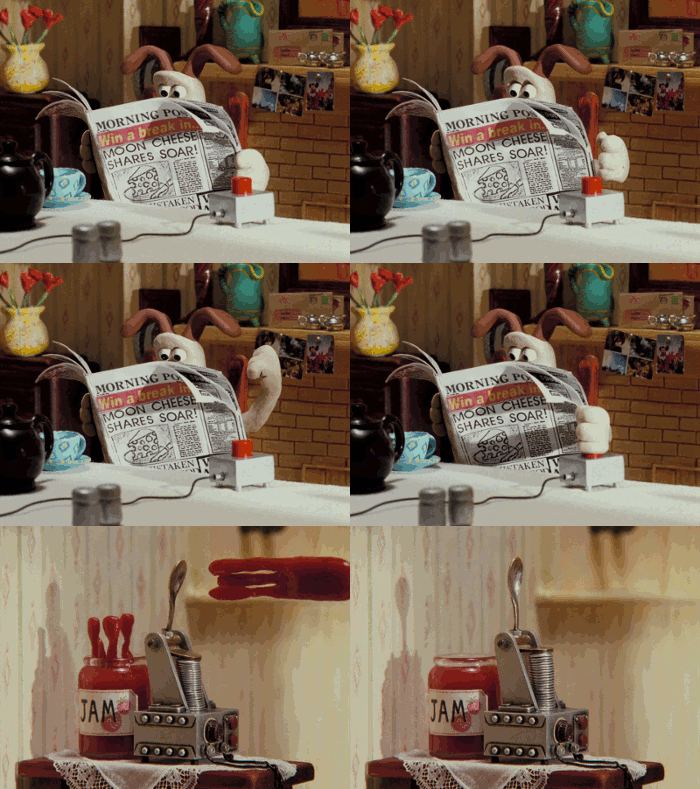
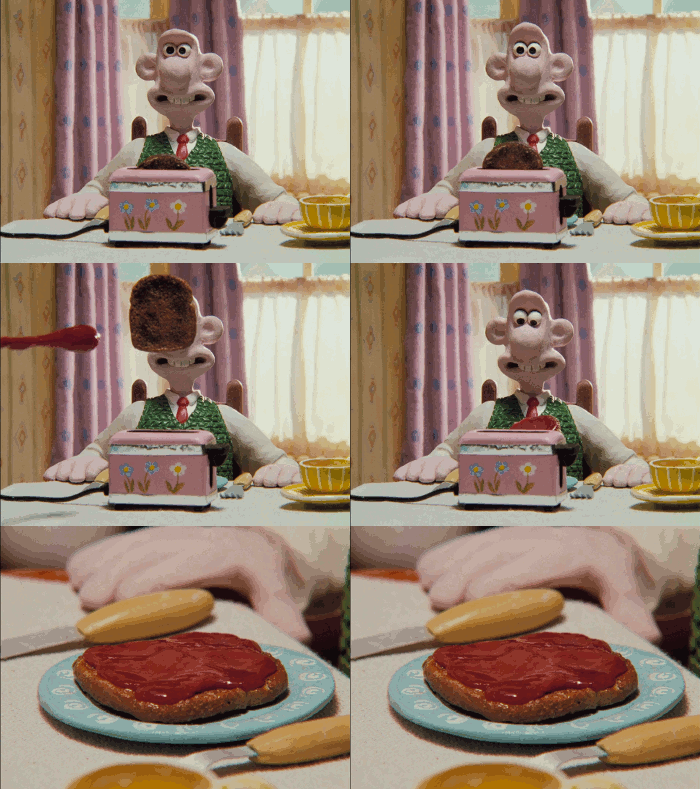
Now that’s a motherfucking gifset.
I USED TO LOVE THESE I’VE BEEN WAITING FOR THIS MY ENTIRE LIFE
Adam Victor BrandizziPorque convém que toda explicação sobre o Oriente Médio sempre mostre como na verdade tá tudo confuso mesmo.
Meu comentário sobre a Síria no Jornal das Dez da Globo News
O Oriente Médio não vive uma luta de sunitas contra xiitas ou de religiosos contra seculares. Hoje, por exemplo, vou me focar no caso do Egito, já que abordei esta questão envolvendo a Síria no passado.
Primeiro, precisamos lembrar que no Egito praticamente inexistem xiitas. São 90% de muçulmanos sunitas, com diferentes graus de religiosidade, e 10% de cristãos, majoritariamente coptas. Atualmente, os egípcios se dividem em quatro principais grupos políticos que não seguem estas linhas sectárias, diferentemente do Líbano ou do Iraque – as Forças Armadas, os liberais, os salafistas e a Irmandade Muçulmana. A deposição de Mohammad Morsy contou com a mobilização dos três primeiros grupos, o que inclui, portanto, os ultra-religiosos salafistas e membros da elite secular.
Além disso, no campo externo, também existem dois blocos de países no mundo sunita que se dividem em relação aos recentes acontecimentos no Egito. A Arábia Saudita, Kuwait e Emirados Árabes (todos religiosos) apoiaram a deposição, darão US$ 12 bilhões em ajuda financeira e são aliados dos militares (seculares). Já a Turquia, Tunísia (mais moderados) e Qatar foram contra e são mais próximos da Irmandade (religiosos).
Não preciso nem me aprofundar para as pessoas entenderem que o regime travestido de monarquia saudita é infinitamente mais religioso do que o governo turco e, ainda assim, está ao lado dos supostos seculares. E Ancara, por sua vez, defende a Irmandade.
E não venham me dizer que o governo de Recep Tayyp Erdogan seja radical islâmico. Sem dúvida, para padrões da Turquia, ele é conservador. Mas, na Arábia Saudita, seria talvez o líder político mais liberal de toda a história.
Portanto, insisto, as crises no Oriente Médio são motivadas por interesses de cada um dos países, que atuam de forma realista. A Arábia Saudita, por exemplo, tem medo do islamismo político, pois este pode servir de alternativa ao regime dos Saud, por exemplo. O mesmo se aplica aos Emirados Árabes. A questão para eles não é secular versus religião.
Apenas para esclarecer
Arábia Saudita, Emirados e Kuwait (RELIGIOSOS) = Forças Armadas do Egito (SECULARES)
Turquia e Tunísia (MODERADOS) = Irmandade Muçulmana (RELIGIOSA)
Guga Chacra, comentarista de política internacional do Estadão e do programa Globo News Em Pauta em Nova York, é mestre em Relações Internacionais pela Universidade Columbia. Já foi correspondente do jornal O Estado de S. Paulo no Oriente Médio e em NY. No passado, trabalhou como correspondente da Folha em Buenos Aires
Comentários islamofóbicos, antisemitas e antiárabes ou que coloquem um povo ou uma religião como superiores não serão publicados. Tampouco ataques entre leitores ou contra o blogueiro. Pessoas que insistirem em ataques pessoais não terão mais seus comentários publicados. Não é permitido postar vídeo. Todos os posts devem ter relação com algum dos temas acima. O blog está aberto a discussões educadas e com pontos de vista diferentes. Os comentários dos leitores não refletem a opinião do jornalista
Acompanhe também meus comentários no Globo News Em Pauta, na Rádio Estadão, na TV Estadão, no Estadão Noite no tablet, no Twitter @gugachacra , no Facebook Guga Chacra (me adicionem como seguidor), no Instagram e no Google Plus. Escrevam para mim no gugachacra at outlook.com. Leiam também o blog do Ariel Palacios



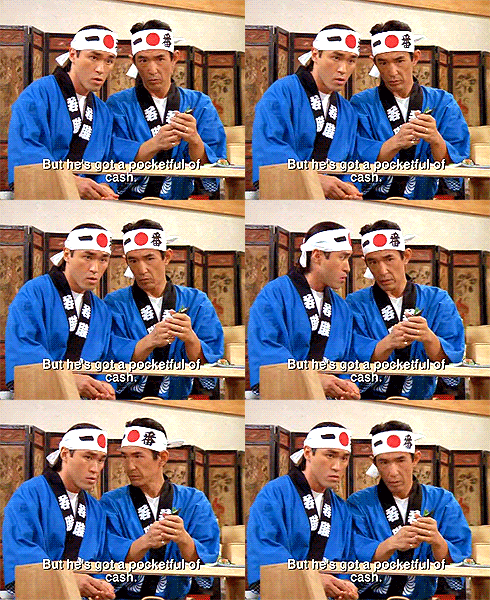


SERVE SALEM SUSHI FOR THE LOVE OF GOD!!!!


Read more of this story at Slashdot.


Comedian Kurt Braunohler raised $6,000 on Kickstarter to “hire a man in a plane to write stupid things in the sky”.
Foi na Folha que eu aprendi que notícia é quando a velhinha morde o cachorro, não quando o cachorro morde a velhinha. Imagine como fiquei surpresa quando o jornal veio logo depois da onda de protestos e publicou todo cheio de si: “Jornalismo domina rede social durante protestos pelo país”. O que a Folha esperava? Que a NINJA, de um ano e meio, já lhe sobrepusesse? Esperava ser ultrapassada por blogs de esquerda que lançam perdigotos de raiva na cara dos leitores? Pela fanpage do MPL, atualizada em média uma vez a cada dois dias com um mero bloco de texto? Parece que o jornal, que sempre foi cachorro, de repente se ufana de ser velhinha.

Fabio Malini, professor de Comunicação Social da Universidade Federal do Espírito Santo, fez um texto interessante dizendo que os grandes veículos — os antigos cachorros — até têm autoridade sobre as notícias veiculadas na internet, mas não têm o que ele chamou de centralidade. Centralidade é a capacidade de “coordenar uma ação” pela rede.
Discordo de vários pontos do texto de Malini. Não quero, por exemplo, viver em um mundo em que o perfil de um jornal discuta comigo pelo Twitter. Nem acho que os veículos queiram — ou mesmo possam de um jeito minimamente ético — ter centralidade sobre protestos ou sobre coisa alguma. Na teoria, o jornalista abdica de qualquer centralidade em nome do fetiche de acompanhar e reportar o que acontece. Obviamente, fotos de Instagram de repórteres abraçados a músicos, tomando chope com autores e jogando carteado com assessores de imprensa dos assuntos que eles cobrem estão aí para não deixar ninguém acreditar que a maioria dos jornalista tenha as manhas de abdicar da ilusão de centralidade quando ela pisca em sua direção.
A cobertura dos protestos de junho foi particularmente complexa. Os grandes veículos fizeram mudanças repentinas de posição que deixaram os jornalistas confusos e desacreditados. Por motivos variados, a maioria deles bastante torpe, manifestantes se direcionavam contra a imprensa não apenas no sentido de registrar seu repúdio a um canal ou aos jornalistas em geral, mas no sentido de impedir o trabalho, a presença e a integridade física de repórteres.
Dá para ver que os manifestantes conseguiram de fato colocar os veículos na defensiva. Essa matéria esquisita da Folha comprova o comportamento defensivo. A jornalista da Globo News que passou a se incluir na massa manifestante e usar a primeira pessoa também. Em dado momento, a imprensa passou a mostrar serviço para os manifestantes, a tentar provar que, olha, de vez em quando a gente até que reporta o lado de vocês.
Meu palpite é de que entre escoriados e baleados os grandes veículos tenham se dado bem, afinal, seu produto é notícia e as manifestações catapultaram o valor dessas notícias. Algumas coberturas — como a do Jornal da Cultura e da TV Folha — foram particularmente bem sucedidas, mas isso não encobre o dilema que coloquei no começo do post: o de que a Grande Imprensa se reconhece hoje como velhinha em relação a um cachorro que ainda nem mostrou as garras.
Uns acham que esse cachorro virá de iniciativas como a NINJA — fotos bonitas, texto-legenda e nenhuma preocupação com a imparcialidade. Na reportagem de Ronaldo Bressane na piauí deste mês, um dos fundadores da NINJA diz que eles “dão voz direta aos personagens, sem intermediários”. Ainda fabricam pessoas com esse grau de ingenuidade? Ele acha mesmo que o ato de fotografar, editar, escrever e subir na rede permite a ausência de intermediários?
O meu cachorro imaginário é o fantasma dos jornalistas demitidos e mal pagos pela mais falada do que lida Grande Imprensa. Nos meus sonhos mais bobos tenho essa ideia de que parte desse pessoal um dia vai lançar um site colaborativo que vai resultar num imenso conglomerado de mídia financiado e composto por seus próprios jornalistas e leitores. Não será foto-legenda e pode apostar que vai ter intermediário. Seremos só nós e a notícia que a gente quiser cobrir.

Adam Victor BrandizziAinda assim, mais útil que a maioria dos usos de QR Code a que esperam nos submeter.

Adam Victor BrandizziDe fato, todos os textos perigam até virar clássicos. Quem não leu, fica aí o convite de novo.