Adam Victor Brandizzi
Shared posts
14 Feb 13:26
Seymour Hoffman em Lisboa
Se o ator Philip Seymour Hoffman morasse em Portugal, ele teria morrido com uma overdose de heroína? A pergunta pode parecer absurda. Mas ela foi formulada por um colega do "métier", Russell Brand, em artigo para o "Guardian".
Tese de Russell Brand: o grandioso Seymour Hoffman morreu como normalmente morrem os viciados no produto. Só. Escondido. Longe de amigos e familiares. Isso se deve ao fato de os Estados Unidos continuarem a criminalizar a posse e o consumo de drogas, fazendo do viciado um pária.
Exatamente o contrário do que acontece em Portugal, onde só o tráfico é punido criminalmente. A posse e o consumo deixaram de habitar o planeta criminal e são hoje uma infração administrativa, que termina muitas vezes com o tratamento do viciado.
Leia mais (02/11/2014 - 03h02)
Tadeu, Adam Victor Brandizzi likes this
13 Feb 00:51
Porta dos Fundos: DURA
by O Criador
 |
|
Se não entendeu, veja esse vídeo do Porta Dos Fundos e depois essa matéria =)
|
Adam Victor Brandizzi, Tadeu likes this
12 Feb 19:12
Ainda Localistas X Globalistas
by Leonardo Monasterio
Uma banho de chuveiro depois eu me toquei que a diferença de opinião sobre programa Primeira Chance poderia ser interpretada como o velho dilema eficiência X desigualdade. Se para você identificar talentos e transferi-los para as boas escolas particulares é bom, então eficiência está acima de tudo. Por outro lado, você pode criticar o programa pelo aumento da desigualdade. As crianças das escolas ruins ficam ainda piores (porque perdem o efeito contágio dos bons alunos) e as melhores escolas ficam ainda melhores. O principal problema dessa interpretação é que eu perco o meu exemplo da polêmica "Localistas" X "Globalistas".
Vamos a outro exemplo mais apropriado então: inventam um jeito que faz com que o número de golfinhos mortos por redes de pescadores de atum caia 50%. Localistas comemoram: "Menos 50% de vítimas!". Globalistas: "Nenhum golfinho deve morrer. Essa invenção é uma enganação".
(Notem que não é exatamente uma diferença entre pragmáticos e idealistas. De qualquer modo, imagino que alguém já deva ter feito a distinção "Localistas" X "Globalistas", eu só não tenho temposaco de procurar.)
Vamos a outro exemplo mais apropriado então: inventam um jeito que faz com que o número de golfinhos mortos por redes de pescadores de atum caia 50%. Localistas comemoram: "Menos 50% de vítimas!". Globalistas: "Nenhum golfinho deve morrer. Essa invenção é uma enganação".
(Notem que não é exatamente uma diferença entre pragmáticos e idealistas. De qualquer modo, imagino que alguém já deva ter feito a distinção "Localistas" X "Globalistas", eu só não tenho tempo
Marlon.fr.alves, Adam Victor Brandizzi likes this
12 Feb 18:43
Qual o programa do PSOL
by mansueto
Adam Victor BrandizziChega a ser engraçado...
Acho que em uma democracia é bom ter vários partidos que defendam posições e ideias diferentes. Estimulado por um amigo meu simpatizante do PSOL, resolvi entrar no sitio do partido na internet para conhecer suas propostas (clique aqui). Ao contrário do meu amigo que gosta de falar mal de pessoas, em especial políticos, como se […]
12 Feb 14:31

Fixing Dates
by Greg Ross
In 1899, British statistician Moses B. Cotsworth noted that recordkeeping could be greatly simplified if each month contained a uniform number of whole weeks. He proposed an “international fixed calendar” containing 13 months of 28 days each:
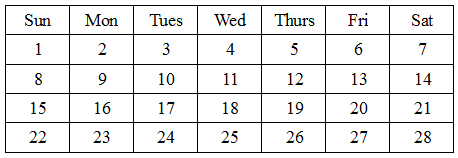
This makes everything easier. The 26th of every month falls reliably on a Thursday, for example, and statistical comparisons between months are made more accurate, as each month contains four tidy weeks with four weekends. (Unfortunately for the superstitious, every one of the 13 months contains a Friday the 13th.) A new month, called Sol, would be wedged between June and July, and an extra day, “Year Day,” would be added at the end of the year, but it would be independent of any month (as would Leap Day).
In 1922 the League of Nations chose Cotsworth’s plan as the most promising of 130 proposed calendar reforms, but the public, as always, resisted the unfamiliar, and by 1937 the International Fixed Calendar League had closed its doors. It left one curious legacy, though: George Eastman, the founder of Eastman Kodak, was so pleased with Cotsworth’s scheme that he adopted it as his company’s official calendar — and it remained so until 1989.
Tadeu, Adam Victor Brandizzi and -1 others like this
12 Feb 12:48

Season’s Greetings
by Greg Ross

Apparently bored in December 1936, the eccentric Gerald Tyrwhitt-Wilson, 14th Baron Berners, placed an advertisement in the personals column of the London Times:
“Lord Berners wishes to dispose of two elephants and one small rhinoceros (latter house-trained). Would make delightful Christmas presents.”
When a newspaperman telephoned, Berners took the call himself, pretending to be the butler. “Actually, I haven’t seen the rhino, myself, sir,” he said, “but it’s often about the house. It’s quite gentle, I’m told. The weather was getting too cold for the elephants, so I’m glad they’ve gone. They went on Saturday. I understand Mr. Harold Nicolson has bought one and Lady Colefax the other. I hope they have good homes.”
A bewildered Nicolson found himself insisting, “I have NOT bought an elephant! I do not intend to buy one! I do not want an elephant, and I have nowhere to put an elephant! This looks like a joke. I have known Lord Berners for twenty-five years, but I don’t feel friendly to him this morning. I do not want an elephant, have never wanted one, and I have not bought one.”
mkvande, Adam Victor Brandizzi likes this
12 Feb 12:01
Old Testament Armed Forces
by Philip Giraldi
Adam Victor BrandizziSobre o belicosismo dos fundamentalistas.
The connection between America’s wars in the Middle East—and its wars more generally—with the more fundamentalist forms of Christianity in the United States is striking. Opinion polls suggest that the more religiously conservative one is, the more one will support overseas wars or even what many might describe as war crimes. Fully 60 percent of self-described evangelicals supported torturing suspected terrorists in 2009, for example. That is somewhat puzzling, as Christianity is, if anything, a religion of peace that only reluctantly embraced a “just war” concept that was deliberately and cautiously evolved to permit Christians—under very limited circumstances of imminent threat—to fight to defend themselves.
To be sure, some Christian conservatives who might be described as Armageddonists regard America’s Asian wars as part and parcel of the precursor events that will lead to the Second Coming of Christ, which they eagerly look forward to. Also, a non-interventionist friend of mine who comes from a religiously conservative background explained to me how the contradiction partly derives from the fact that many evangelical Christians hardly relate to the New Testament at all. While they can recite scripture and verse coming from the Old Testament, they are frequently only marginally conversant with the numerous episodes in the New Testament that attest to Jesus’s extolling the virtues of peacemaking and loving one’s neighbor. If true, that means that many evangelicals are much more imbued with the values of an eye-for-an-eye or smiting Philistines than they are with the Sermon on the Mount.
There has undeniably been pushback coming from some evangelical leaders as well as from many younger religious conservatives against America’s constant diet of God-anointed warfare, but given that those who describe themselves as evangelical Christians tend to disproportionately support America’s wars, it is perhaps no surprise to learn that fundamentalist viewpoints prevail in certain quarters in the military. There has indeed been considerable media reporting on the impact of evangelical Christians on the armed services, to include a bizarre account of US military sniper sights being inscribed with citations from the Bible, leading one critic to suggest that the soldiers were being issued “Jesus rifles.”
A prominent General, William Boykin, was until recently the best known Christian fundamentalist in the U.S. military. Boykin held prayer breakfasts when he commanded Delta Force and, when Deputy Undersecretary of Defense for Intelligence under George W. Bush, was widely criticized for appearing in churches and other public gatherings in his uniform. He would describe his personal war against Islam, claiming that “My God is bigger than yours,” possibly suggesting that size really does matter, at least in theological circles. He also called the Islamic God an “idol.” At some church gatherings Boykin would produce a photo taken in Mogadishu which, he claimed, included a mysterious dark shadow that he described as a “demonic presence,” adding that “spiritual enemies will only be defeated if we come against them in the name of Jesus.” Boykin, who advocates “No Mosques in America,” is currently Executive Vice President of the Family Research Council, which lobbies the Pentagon to complain that there is a “war on Christianity” within the military.
Boykin was not unique. Several other generals and a number of additional senior officers have appeared at church sponsored events or made videos while in uniform, frequently extolling the religious nature of America’s wars in the Middle East. They were perhaps encouraged from the top, by born-again President George W. Bush’s overt religiosity and his description of Jesus Christ as his “favorite philosopher.” Be that as it may, the shock of 9/11 let the evangelical genie out of the bottle in anticipation of the conflict of civilizations that some Armageddonists were welcoming, with the Pentagon even livening up its daily Worldwide Intelligence Update by using biblical verses as captions for war images. Bush had himself initially described the global war on terror as a “crusade,” though he quickly regretted using the expression after being educated to the fact that many of Washington’s potential allies against terrorism were, in fact, Muslims.
The U.S. military, aware of the constitutional restraints on promoting any religion, generally attempts to rein in outward expressions of religiosity on the part of its officers, but the open defiance of those efforts has been increasing as fundamentalists become both more assertive and better represented at senior levels in the officer corps. Fully one-third of military chaplains are currently evangelicals and the percentage is increasing. Many fundamentalists assert that a good officer has to be “moral,” by which they mean “religious,” in the belief that it is impossible to be ethical without a relationship to God. As many of the evangelicals also believe they possess the absolute truth in terms of their own definitions of religiosity, there is little room for alternative viewpoints.
The soldiers who promote their faith dodge the military’s restrictions on their actions by claiming that they are only “evangelizing the unchurched,” not proselytizing. When they hand out bibles to Afghans they describe it as providing “gifts.” General David Petraeus, when head of the Central Command was well known for his strong commitment to “spiritual fitness” as a sine qua non for his officers, providing a top level sanction for including religion in one’s professional development. In 2007 Petraeus endorsed Christian rock concerts on military bases. A year later, senior Army chaplain William McCoy took the argument for spirituality one step further, explaining how the non-religious soldier, having no protection against sin, might cause the failure of his unit. Petraeus blurbed McCoy’s book Under Orders: A Spiritual Handbook for Military Personnel, recommending that it be in every backpack for those times when a soldier needs “spiritual energy.” A senior chaplain in Afghanistan also enthused about how leading by example produces positive results, with 85 percent of the 22 officers reporting to Petraeus engaging in “dynamic Bible study,” though one has to wonder if they might have been doing so to enhance their promotion prospects.
A notorious, long running dispute at the United States Air Force Academy over the proper role of “spirituality” has generally resulted in little or no change in the promotion of evangelical Christianity at many levels, a process aided and abetted by a series of Superintendents who were themselves fundamentalists. Even the Air Force football team was not immune, with a large banner in the locker room proclaiming “I am a Member of Team Jesus Christ.” Captain MeLinda Morton, an Air Force Lutheran chaplain who actually complained about the over the top proselytizing was initially ignored and then reassigned.
Why should all this be important, since it is surely up to the individual to decide what he or she does or does not believe? It matters for a number of reasons. Believers who do not create a firewall between their faith and their professional responsibilities, which for a soldier should include all Americans and not just the ones that think the same way he or she does, will inevitably favor coreligionists, particularly if it is being argued that religiosity is an essential ingredient for soldiering. Many Christian fundamentalists understandably believe that their first duty is to God, not necessarily to their country or to their fellow citizens, but they fail to see how such a view might be considered unacceptable in someone who chooses to work for the government.
Just how God before country works in the military context might best be illustrated by one aspect of the Air Force Academy’s struggle with proselytizing on campus. Groups of cadets had been gathering in commons rooms in dorms and libraries to have Bible study sessions. An understanding that public spaces at the academy were just that and the ad hoc use of a room by a group would discourage or prevent others from using it appeared to carry the day until the academy’s second in command, an evangelical Christian named Johnny Weida who had previously advised cadets that they were “accountable first to your God,” stated flatly that the practice would continue: “You wanna have a Bible study in a cadet TV room? No problem.”
The increase in highly visible religiosity among U.S. soldiers also has real life consequences by becoming a propaganda tool for groups like al-Qaeda and strengthening the widespread belief that Washington is actually mounting a new crusade against Muslim regimes. Efforts to have soldiers distribute Bibles in Afghanistan’s languages, encouraged by some military chaplains, have been noted by both the local and international media, a practice that runs counter to both military regulations and specific general orders for the Afghan theater of operations.
And then there is the strange tale of Pat Tillman, the National Football League player who volunteered for the Army after 9/11. Tillman, an Army ranger, was shot dead by his own comrades on a patrol in Afghanistan in April 2004, resulting in an elaborate military cover-up relating to his death. Tillman was apparently an outspoken non-believer and there is some evidence that he also had turned against the wars in Iraq and Afghanistan. Credible speculation by both the Tillman family and also by former General Wesley Clark suggests that he was murdered, three bullet holes in his forehead indicating that he might have been shot by an M-16 at close range. His fellow soldiers also uncharacteristically burned his clothing and his body armor after he died, and Tillman’s personal diary went missing. A criminal investigation was requested but turned down by Army brass. When the family complained, the leading investigating officer Lt. Col. Ralph Kauzlarich commented that they were venting because the Tillmans were all non-believers, saying “…if you are an atheist and you don’t believe in anything, if you die, what is there to go to? Nothing. You are worm dirt.”
There is a cliché about soldiers, atheism, and fox holes which is probably as true or untrue as most clichés. That the United States military appears to be increasingly a professional force that has few links to the general population is by itself disturbing. That it also might be developing a warrior class ethos that includes a certain kind of evangelical religiosity as a key element only serves to increase the distance between soldiers and most civilians, apart from the constitutional issues that it raises.
My own exposure to holy war courtesy of the U.S. Army was somewhat different, but it was a draftee experience, long ago. In basic training back during Vietnam a chaplain who was, as I recall, both a Colonel and an unmistakable Irish Catholic came storming through our barracks spewing fire and brimstone. He delivered a pretty good impression of Pat O’Brien playing Father Francis Duffy of the Fighting 69th before he disappeared followed by a cloud of cigar smoke, growling something about “killing commies.” A couple of kids from Chicago followed in his wake crying out “Fatha, Fatha,” evidently in need of spiritual solace of some kind, but his pastoral visit was apparently over. Mission Accomplished.
Philip Giraldi, a former CIA officer, is executive director of the Council for the National Interest.
Adam Victor Brandizzi likes this
12 Feb 01:22

The water bear. Paul Souders, USA.

Lucky Pounce. Connor Stefanison, Canada.

Freeze frame. Etienne Francey, Switzerland
nevver: Wildlife Photographer of the Year 2013
The water bear. Paul Souders, USA.
Lucky Pounce. Connor Stefanison, Canada.
Freeze frame. Etienne Francey, Switzerland
Tadeu likes this


11 Feb 21:52


http://odyr.wordpress.com/2014/02/11/odiocor-jpg/
by odyr

Adam Victor Brandizzi likes this



11 Feb 04:21
did you know if you google "horse facts" you will find websites devoted entirely to facts about horses?? what kind of person would dream about, then build, then maintain such a site?? signed, the guy with the site about talking dinosaurs.
Adam Victor BrandizziOlha, até parece uma boa ideia.
| archive - contact - sexy exciting merchandise - cute - search - about | |||
 |
|||
| ← previous | February 10th, 2014 | next | |
|
February 10th, 2014: We did Facts About Giraffes back in 2010 and now that we've all had three years to digest that material it's time for some NEW FACTS!! Guys check out this book that David Malki did. I for one am appalled. One year ago today: i wanna be his friend too :( – Ryan 
| |||
Gus, Damiani.guilherme and one other like this

11 Feb 04:13

Sim, às vezes relaxo descansando no sofá, mesmo com a casa...
Sim, às vezes relaxo descansando no sofá, mesmo com a casa bagunçada.
Albener Pessoa, Tadeu and one other like this




10 Feb 01:48
honkshu: The Grief of the Pasha, 1882 - Jean Leon Gerome...


Adam Victor Brandizzi likes this
09 Feb 15:49
Retalhos da verdade
by Míriam Leitão
Tem sido um longo caminho até a verdade, que talvez nunca se conheça inteiramente. Agora, é um general aposentado que admite o que todos sabiam, mas é fundamental que ele confesse: que o Exército montou uma farsa para culpar grupos de esquerda pelo desaparecimento...
Assine O Globo e receba todo o conteúdo do jornal na sua casa
Adam Victor Brandizzi likes this

08 Feb 17:46

Advance and Retreat
by Greg Ross
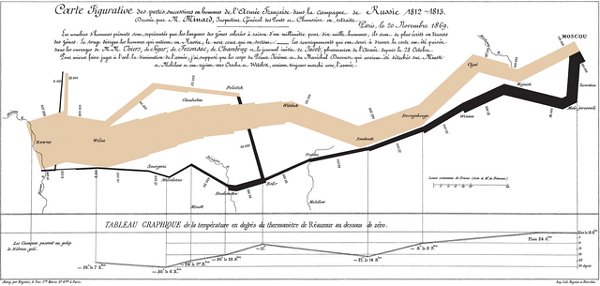
This chart, devised in 1869 by French civil engineer Charles Minard, illustrates the disastrous toll suffered by Napoleon’s army on its foray into Russia in 1812. 615,000 men marched east, and 10,000 emerged five months later.
In a single image the map shows the path of the army, its geographical coordinates, its dwindling size, and the weather conditions (the graph at the bottom shows the plunging temperature during the retreat from Moscow, when “Generals January and February” killed thousands of starving soldiers). Yale political scientist Edward Tufte said Minard’s illustration “may well be the best statistical graphic ever drawn.”
Adam Victor Brandizzi likes this
08 Feb 00:07

Kerpow!
February 03, 2014
Adam Victor BrandizziPara mim, geralmente quem aparece é o horrific tragedy gnome.
Kerpow!
Tadeu, Doug Wibby and -1 others like this
07 Feb 23:38
Bargain
by Doug
Adam Victor BrandizziAgora é só contrabandear para a Venezuela com ágio.

Sofía Henao, David Pelaez likes this
07 Feb 23:34


misswallflower: American Apparel’s newest model, age 62. There...
Adam Victor BrandizziGeralmente esse tipo de campanha imagem 'olha, modelo real, nuussa que revolucionário' me entedia mas no caso caiu muito bem.
American Apparel’s newest model, age 62.
There was something so compelling about Jacky’s look and energy when we first spotted her in a New York restaurant this winter, we introduced ourselves and pulled up a chair. During a long discussion that touched on everything from career choices and nutrition to insights on relationships, age and beauty, we asked if she would consider being photographed by us. We were thrilled when she agreed.
rnas, Adam Victor Brandizzi likes this