Adam Victor Brandizzi
Shared posts
18 Feb 22:41
O belo nascimento do menino Miguel
Foi o poeta João Cabral de Melo Neto quem disse: "Não há melhor resposta que o espetáculo da vida". É raro que ocorram episódios comoventes na esfera privada de políticos brasileiros. A imediata divulgação, pelo governador Eduardo Campos, de que seu quinto filho nasceu com a síndrome de Down e a forma com que ele e sua mulher, Renata, lidaram com isso justificam a transcrição da mensagem que postaram na quarta-feira:
"Hoje os médicos confirmaram o que já estava pré-diagnosticado há algum tempo. Miguel, entre outras características que o fazem muito especial, chegou com a síndrome de Down. Seja bem-vindo, querido Miguel. Como disse seu irmão, você chegou na família certa! Agora, todos nós vamos crescer com muito amor, sempre ao seu lado".
Esse tipo de comportamento revela não só o afeto de uma família, como serve de exemplo. Crianças nascidas com essa síndrome às vezes inibem os pais, infelicitando-lhes as vidas. Houve época em que eram raros os casos como o de Charles de Gaulle, cuja filha Anne nasceu com ela. O general que liderou a Resistência Francesa e governou o país por mais de dez anos, até 1969, era conhecido por sua reserva pessoal. Raramente ria ou brincava, salvo se estivesse com Anne.
Leia mais (02/02/2014 - 02h00)
Adam Victor Brandizzi likes this
13 Feb 14:38

The Ulysses Contract
by Greg Ross
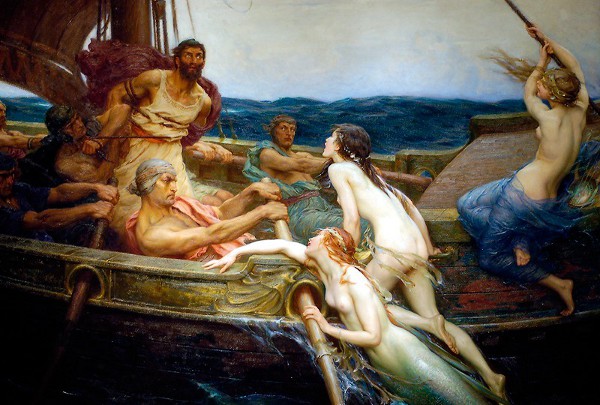
In 1982, 24-year-old schizophrenic patient J.S. faced a difficult decision: The neuroleptic drug Prolixin relieved his psychotic symptoms, but it produced tardive dyskinesia, a progressive disorder that caused uncontrollable movements of his legs, arms, and tongue.
His therapist learned of an experimental program that might reduce this side effect, and J.S. signed consent forms to enter treatment. But the first step was to stop all medications, and without the Prolixin he descended again into psychosis and refused the experimental medication.
This produces an impossible dilemma: Does J.S.’ “sane” self have the right to overrule his “insane” self, if the two disagree? Can Dr. Jekyll bind Mr. Hyde? Such a directive is sometimes called a Ulysses contract, after the Greek hero who ordered his men to disregard his commands as they sailed past the sirens. If a patient directs his caregivers to ignore his own future requests, can the caregivers follow these orders?
In J.S.’ case, the answer was no. The research unit’s legal counsel decided that his earlier consent did not override his later refusal, and he was withdrawn from the program. When he resumed his antipsychotic medication and learned what had happened, he begged for another chance to try the experimental medication. Had they been wrong to refuse him?
(Morton E. Winston, Sally M. Winston, Paul S. Appelbaum, and Nancy K. Rhoden, “Can a Subject Consent to a ‘Ulysses Contract’?”, The Hastings Center Report, 12:4 [August 1982], 26-28)
jasonegghead, Damiani.guilherme likes this
12 Feb 11:52
Beyond the Bike Lock Incident: Vigilante Justice in Brazil
by Rio Gringa
Flamengo is a picturesque middle-class neighborhood in Rio that sits on the Guanabara Bay with tree-lined streets and upscale apartment buildings. There's a big park on the water filled with joggers and bikers, and soccer games going on at all hours of the day and night. In this area, you can catch breathtaking views of the bay and Sugarloaf Mountain, and Corovado looming above the water. But on January 31, a Flamengo resident came upon a completely unexpected sight in this neighborhood--a sight that sparked national furor. It was a young black man stripped naked, beaten, and chained to a post with a bike lock around his neck. It wasn't only shocking, but it brought to mind the type of scene you'd see during the slavery age. And like the rolezinhos, the incident represents a perfect storm related to issues of race, class, and security.
Slowly, details emerged about the incident. The young man is only 15 years old. According to Folha, he said that a group of 30 men, some of whom were on motorcycles and one of whom was armed, surrounded him and three other young men. Two got away, but he and the other man were beaten; he said the men threatened to kill him. The young man is from an impoverished part of the city's West Zone, and claims he was kicked out of his house, where he was living with his mother, by the militias, armed paramilitary-like groups that emerged as vigilantes and as criminals in their own right. He said he's been homeless and has been living on the streets and in a shelter. He's been arrested three times for robbery, reports G1.
The woman who found him, who happens to work with at-risk kids, called the fire department to have the young man freed; he was later taken to the hospital. She took a photo of the young man and shared it on Facebook to denounce the incident. But some of the reactions were undeniable: they praised the people who did this, saying the man deserved it. And some people directed their wrath toward her, leading her to close her personal Facebook account.
Reports emerged about a group of middle-class vigilantes who were responsible for the incident. Around 14 people were detained by police. They denied being part of the "Justiceiros," a vigilante group operating in Flamengo and other middle class neighborhoods in the city to "take justice into their own hands." The group is also suspected of beating two young men in another part of the city. The suspects were all freed by police.
O Dia reports that these kind of vigilante incidents have become "routine" and cited two other incidents of alleged thieves getting chased and beaten in Copacabana and Centro in the last two weeks. In Centro, a policeman told the paper, it's common for suspects to be apprehended by civilians before they're turned over to police.*
The reactions were divided among those who denounced the incident and those who defended the vigilantes. "The first victim of a vigilante is the democratic idea of justice. Any justifiable pretense is an inherent shortcut to barbarity," wrote the Rio state attorney general on Twitter.
A primeira vítima de um justiceiro é a idéia democrática de justiça. Toda razão pretensamente justificadora embute um atalho para a barbárie
— Fabio Seghese (@FabioSeghese) February 5, 2014
Similarly, Átila Roque, the executive director of Amnesty International Brasil, said that Rio cannot tolerate vigilantes at the risk of creating more violence. "It's another sign of how much we can sink as a society when public institutions are unable to respond to the state of social emergency in which we live," he said.
On the other hand, there were those who came to the defense of the vigilantes. Controversial pundit Rachel Sheherazade initially praised the vigilantes, saying they acted in "legitimate collective defense" against "an endless state of violence." Later, facing criticism, she backpedaled, saying she is against violence. But her supporters continued to stand up for her, including infamous evangelical pastor Pastor Silas Malafaia, who wrote on Twitter that Sherazade "defends Christian values."
The incident also saw support from some in the Flamengo area. After a shoot-out in neighboring Botafogo this week, passers-by who saw suspects getting arrested shouted "Chain them up!"
It's important to understand both views on the incident, because it encompasses a much larger issue about vigilantism in a country that continues to struggle with crime, impunity, and rule of law.
Let's start on the local level. In Flamengo, muggings more than doubled from 2012 to 2013. Just last week, a cyclist was stabbed during a mugging in Flamengo's Aterro park, even though it was full of people. In Rio, crime is on the rise after a period of improvements. In the first nine months of 2013, muggings went up 15 percent, and after three years of a decline in homicides, murders are on the uptick. In the first ten months of last year, the number of shooting victims rose 27 percent. This week, a man was executed in broad daylight in Rio's gritty Belford Roxo area, and in the city's working class North Zone, a hospital experienced a mass mugging as ten armed gunmen robbed patients and staff alike. And believe it or not, it's the second time in a month that this hospital has been robbed in this manner.
There's also the anger that comes from getting robbed in a country where the tax burden is over 36 percent of GDP, where taxes mean many consumer goods are prohibitively expensive, and where a rising cost of living continues to erode salaries both for the working and middle classes. In a country where a professional can spend a month's salary on a smartphone, it's no wonder there's a lot to lose in a mugging.
Finally, there's the issue of the criminal and judicial system. With tenuous rule of law, an inefficient and corrupt police force, and a slow and problematic criminal justice system, some Brazilians just want to see swift results because they've come to expect failures by the state. Also, because minors under 18 cannot be tried as adults, they won't go to prison even if they commit serious crimes like murder. And even if an adult commits murder, he's unlikely to go to prison: less than 10 percent of homicides in Brazil end in an arrest. Impunity is too often the rule rather than the exception, and when crimes do get solved, the court cases can drag on for years, even a decade.
If you ask Brazilians if they've experienced vigilantism, they may be cautious in revealing details, but it's an issue that touches people across the socioeconomic spectrum and across the country, whether they have seen it, heard about it, or even been a part of it. Whether it's chasing after a thief, hunting down a suspect, or seeing a criminal nearly getting lynched by a crowd, you'll find examples even in the country's biggest cities. In fact, an erroneous report was circulating on social media this week of a second incident of a youth getting stripped and chained to a post, this time in Botafogo. This event actually took place in 2010, so this week's incident isn't a first. And while the Flamengo ocurrence may not be rare, it was exceptionally brazen and unusually cruel.
Beyond these factors, Brazil has a long history of vigilantes, particularly in the country's Northeast, an area traditionally run by strongmen in a feudalistic manner. It was something of the Wild West, and outlaws like Lampião and Maria Bonita who robbed and killed in defiance of the powerful landowners have become folk heroes. Where there is a lack of authority and a strong state presence, Brazilians have created their own form of justice. Even today, Rio's criminal groups, be it the drug traffickers or militias, continue to fill a power vacuum, acting as judge and executioner in the areas they control.
Incidents like this one may be shocking, but they''ll continue to happen until Brazilians not only trust the police to do their job, but also trust the country's institutions to bring criminals to justice.
Image: AV4Rice/Flickr.
*Updated 2/8 with details on 2010 Botafogo incident and other vigilante incidents in 2014, as well as Pastor Malafaia tweet.
Adam Victor Brandizzi likes this


08 Feb 19:49

Pete Amachree peteamachree.deviantart.com

Pete Amachree peteamachree.deviantart.com

sketchboook.deviantart.com
nevver: The future was fantastic
Pete Amachree peteamachree.deviantart.com
Pete Amachree peteamachree.deviantart.com
sketchboook.deviantart.com
Tadeu likes this
08 Feb 16:01

Capa da antiga revista Ilustração Portuguesa, representando a...
Capa da antiga revista Ilustração Portuguesa, representando a relação entre Brasil e Portugal perto do centenário da independência. Via São Paulo Antiga.


08 Feb 00:12
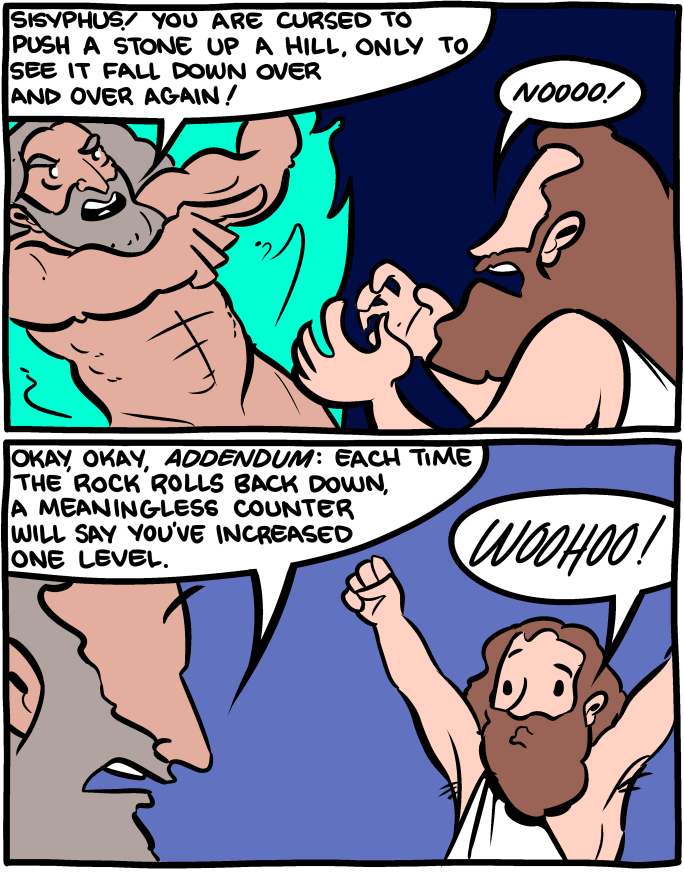
Dr. Ed Chung's theory of GEEK Evolution:

February 05, 2014
Dr. Ed Chung's theory of GEEK Evolution:
Silas Talbot, Adam Victor Brandizzi and 3 others like this
07 Feb 23:56

joqatanarama: lonelygrey: explosivemarbles: YOU HAVE NO IDEA...
YOU HAVE NO IDEA HOW SATISFYING THIS GIF IS TO ME
life answers
provided by tumblr
one by one
This is Knotworking…
07 Feb 23:55


theslipperiestbutt: bapgeek: littlemyakovsky: paperalphabet: ...
My feelings.
SAME
Nice.
"Nobody wants a hero when there isn’t something to save."
I forget where I read that, and I’m probably paraphrasing, but that just stuck with me. Post War Useless and Unwanted Harry makes sense, not that its his fault, really. But heroes in peaceful times are trouble.
Adam Victor Brandizzi, Albener Pessoa likes this




03 Feb 11:12
stinkdude: ash i am a foot tall mouse and that is some godzilla...


Adam Victor Brandizzi likes this



02 Feb 16:39
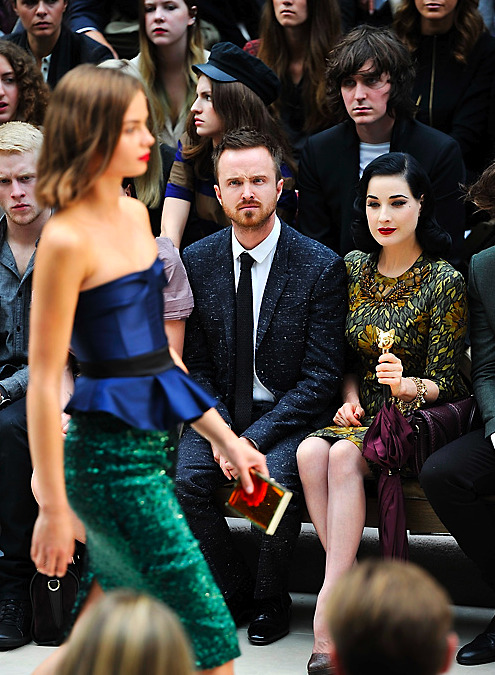
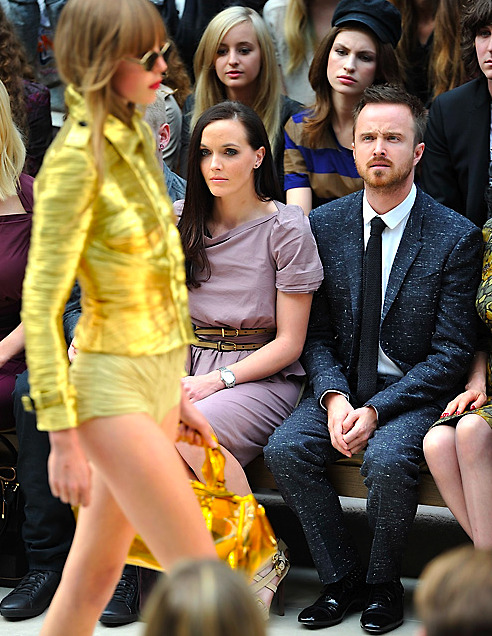
Aaron Paul being confused by fashion
Aaron Paul being confused by fashion
Tadeu likes this
31 Jan 12:01
Puxar o cabelo para sair do chão
Dilma Rousseff ontem fez festa com os números do emprego. Publicou vários "tuítes", no Twitter, a respeito da baixa do desemprego, do aumento da ocupação e das várias melhorias qualitativas do mercado de trabalho. É tudo verdade.
A presidente comparava, de resto, os números de agora aos de 2003, "quando assumimos [o PT] o governo".
Nos últimos dois anos do governo FHC (2001-02) e nos dois primeiros de Lula (2003-04), a taxa de desemprego teve picos horríveis de 13%. O desemprego ainda flutuaria em torno de 10% até meados de 2007. Foi então que a taxa começou a descer a ladeira até chegar aos minúsculos 4,3% de dezembro passado, ou de 5,4% na média do ano, as menores da história conhecida (desde 2002).
Leia mais (01/31/2014 - 03h00)
Adam Victor Brandizzi likes this
31 Jan 10:22
143. The DALAI LAMA: We are all human beings
by Gav

I’ve been wanting to do a real Dalai Lama quote ever since I discovered that my previous attempt was misattributed. This quote is taken from the Dalai Lama’s Nobel Peace Prize acceptance speech in 1989.
Normally when creating a comic, I start with a quote and work out a story from there. On the rare occasion, I’ve got the whole story figured out and then find a quote that suits it. This comic is one of those, where the story came to me while I was on holiday in Myanmar. The scenery and attractions I came across (along with all the Buddhist monks that walk the streets) sparked an idea for a story featuring my lil’ Shaolin Monk character. I plotted and storyboarded the whole comic before searching for a suitable Dalai Lama quote to match what I had drawn. The quote was perfect, as it not only matched the story, it was exactly what I was experiencing while traveling and meeting so many new people – we really are all the same under the surface.
You can see my previous Shaolin Monk comics here: Always Be Prepared. The Brick Walls. Sympathy For The Devil.
Robson Assis, mp and one other like this




31 Jan 10:19
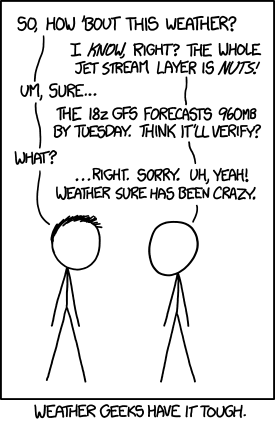
Weather
Adam Victor BrandizziComigo, acontece quando perguntam "E esse governo, hein?"
John.c.clarke, Ashley Reather and 4 others like this