Submitted by: (via CountryWorkshop Etsy Shop)
Shared posts
21 Aug 00:29
Together
by Doug

Today I’m breaking from this week’s bird theme to make a double-dedication to two Happy Tree fans… Happy birthday to Giuseppe today! And a very belated happy birthday to Sam!
Albener Pessoa, Sofía Henao and 2 others like this


18 Apr 21:01
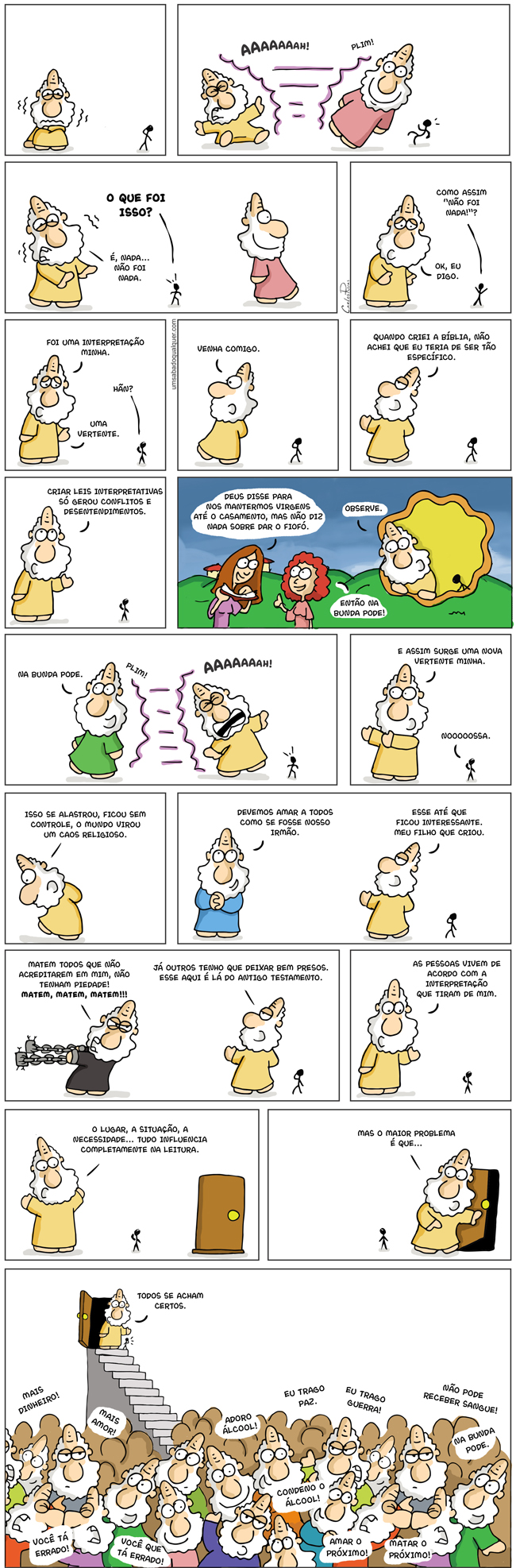
1357 – As mil Interpretações Bíblicas
by Carlos Ruas
Marianajsmello, Albener Pessoa and 3 others like this
15 Apr 23:43
Together
by Doug
Today I’m breaking from this week’s bird theme to make a double-dedication to two Happy Tree fans… Happy birthday to Giuseppe today! And a very belated happy birthday to Sam!
Albener Pessoa and -1 others like this
14 Apr 18:24


Venezuela: Até cinco anos para aquisição de um carro novo no país
by Ricardo de Oliveira

A vida não está fácil na Venezuela. Aqui, o consumidor pode até reclamar de uma fila de espera de dois ou três meses para ter um carro 0 km na garagem. No entanto, o país vizinho enfrenta talvez a maior crise automotiva de sua história. Lá, dependendo do modelo e marca, a espera por um automóvel novo pode chegar a cinco anos!
Como o governo local impede a emissão de dólares para fora, necessários para aquisição de autopeças e matéria-prima para produção de veículos, os fabricantes fazem cada vez menos carros e não dão conta da demanda do país. A Venezuela acumulou 1.721 carros produzidos em janeiro e fevereiro, o que representa queda de 77,83% em relação ao mesmo período de 2013, quando 7.762 saíram das linhas de montagem.
Hoje, as fábricas da Iveco, Toyota e Chrysler estão completamente paradas desde o começo do ano por falta de componentes. Assim, o comércio do país vive uma absurda situação, em que um carro usado custa mais do que um 0 km, pois o consumidor migrou para este setor, embora sem muito resultado prático, conforme veremos mais adiante.

Escassez de peças
As listas de espera em vários concessionários do país possuem centenas e até milhares de pedidos, sendo que existe até loja que parou de registrar reservas desde outubro do ano passado. Para termos uma ideia da crise no setor, a Toyota vendeu apenas 4 carros novos nos três primeiros meses de 2014, enquanto em 2008, no mesmo período, a marca japonesa emplacou 800 veículos.
Sem carros para vender, os concessionários praticamente estão parados, mesmo no pós-venda, onde a escassez de peças impede a manutenção regular dos automóveis. Os fabricantes recomendam que os consumidores comprem peças no exterior ou por qualquer outra via, fazendo o reparo em mecânicos particulares, pois a rede não pode fazer o serviço de forma legal. No ano passado, uma bomba de óleo custava 58 bolívares (R$ 20,50) e hoje sai por 500 bolívares (R$ 176,65).
Com filas que variam de dois a cinco anos de espera nas marcas mais famosas, o consumidor venezuelano tem somente duas saídas. A mais viável é a aquisição de carro usado. No entanto, as ofertas particulares encontradas nos sites de vendas da internet superam em muito os preços cobrados pelas montadoras. O governo proíbe o comércio de automóveis usados com valores acima dos sugeridos pelos fabricantes.

Preços absurdos
No entanto, a lei só atinge as revendas de carros usados, que estão recusando a compra de mais veículos para revenda, pois os donos querem repassar com valores que estão sendo cobrados no mercado e não pelos impostos pelo governo. Assim, as vendas do setor caíram 40% em comparação com 2013. A saída para alguns é vender carros da Audi, BMW e Mercedes, bem como o americano Ford Mustang, que possuem pouca saída e naturalmente são mais caros.
Outra via de escape é a importação pessoal, liberada pelo governo em dezembro. No entanto, até agora não há registro de quantos consumidores conseguiram adquirir veículos dessa forma. Indo pelo mesmo caminho, uma empresa local se destaca. Uma importadora de carros das chinesas Zotye, Brilliance e Kawei chamada La Venezolana, afirma que consegue um carro importado 0 km com filas de espera de “somente” quatro meses. Mesmo assim, é necessário uma série de requisitos legais para a compra.
Apesar da facilidade aparente, há um bom número de clientes reclamando nas redes sociais. Eles dizem que chegam a esperar sete meses por um carro 0 km. Em comparação com as marcas instaladas no país, até que dos males é o menor… Enfim, a Venezuela tem enorme demanda reprimida, onde os fabricantes não podem produzir e os consumidores não podem comprar. O que lhe parece essa situação?
[Fonte: O Globo/El Nacional]
A noticia Venezuela: Até cinco anos para aquisição de um carro novo no país foi publicada no site Notícias Automotivas - Carros.


13 Apr 00:16
→ NSA Said to Exploit Heartbleed Bug for Years
The U.S. National Security Agency knew for at least two years about a flaw in the way that many websites send sensitive information, now dubbed the Heartbleed bug, and regularly used it to gather critical intelligence, two people familiar with the matter said.
Of course they did. Assholes.
I’m with Joel Housman on this one. Obama’s campaign was so unbelievably full of shit that I regret ever having supported it. I thought I was voting against Bush-era principles, but I was foolish to believe that I was being presented with any real choice.
It’s a shame that the American people are so easily distracted by media fads and planted political non-stories to understand the real ways that our actual rights, our actual freedom, and our actual national security are being destroyed by our own government while the idiots are all kept busy arguing about which minorities they want to persecute next.
If an organized hacker ring sabotaged security standards and major tech infrastructure for years, compromising the security of hundreds of millions of people and many governments including our own (and potentially causing billions of dollars in damages when these exploits were found by others), and exploited any flaws they found or created to spy on millions of people in the world including our own citizens, what should they be charged with?
Mass criminal sabotage, cybercrime, cyberwarfare, and computer fraud? Obviously.
Terrorism? Maybe, but not quite.
At what point do the NSA’s actions qualify as treason?
I’d say they’re well past that point.
12 Apr 19:39
Os bastidores de Psicose
by Gian Danton/Ivan Carlo
Alfred Hitchcock já era um diretor consagrado quando dirigiu Psicose, em 1960. Seu nome num cartaz era quase certeza de sucesso de crítica e de público. Mas com essa obra, um filme barato e despretensioso, transformou-se num deus do cinema, ficou milionário e provocou verdadeira histeria coletiva. É a história dos bastidores desse sucesso inesperado que Stephen Rebello conta no livro Alfred Hitchock e os bastidores de psicose (Iluminuras).
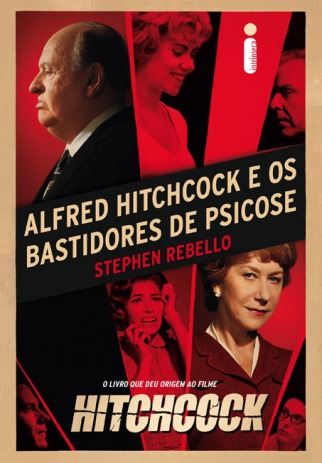 A obra é um relato amplo de todas as circunstâncias relacionadas ao filme, a começar pela história do serial killer Ed Gein, que, no final dos anos 1950 assassinou várias mulheres na região rural de Wisconsin. Gein era um solteirão de 51 anos que vivia de pequenos biscates (entre eles tomar conta dos filhos dos casais da região), excêntrico, mas aparentemente inofensivo. Um dia o assistente do xerife foi visitar a sua mãe e encontrou a loja da qual ela era proprietária fechada. Ao lembrar que Gein mencionara que iria na loja naquele dia, resolveu visitar a fazenda do cinquentão. O que ele e os demais policias encontraram era um verdadeiro filme de horror: entre produtos para embalsamento e embalagens para comida, havia dois pares de lábios humanos pendurados num cordão, alguns narizes em cima da mesa da cozinha, um bolsa e braceletes feitos de pele humana, quatro cadeiras estofadas de carne, um tambor feito com pele humana, uma vasilha de sopa feita com um crânio, as peles descarnadas de quatro rostos de mulheres, com ruge e maquiagem presos à parede. Na estufa, o assistente do xerife encontrou sua mãe: estava nua, pendurada pelos calcanhares como um porco, e estripada.
O fato chocou a pequena localidade, principalmente depois que o assassino declarou à imprensa que nunca havia atirado em um cervo (e muitos se lembraram da deliciosa carne de veado que haviam ganhado dele).
Os jornais trataram Gein como o "açougueiro louco" e noticiaram seus assassinatos e suposto canibalismo, mas, com pudor, esconderam o travestismo, o roubo de cadáveres e a possível relação incestuosa com a mãe.
A 63 quilômetros dali, um escritor de 41 anos, discípulo e apadrinhado de H. P. Lovecraft, chamado Robert Bloch, procurava um tema para seu novo livro quando se deparou com uma pequena nota sobre um homem que fora preso após assassinar a dona de um armazém e pendurá-la, estripando-a como um cervo. Ele ficou intrigado com o fato de que um homem que nunca fora suspeito de nada e vivia numa pequena cidade do interior (em que, se alguém espirrasse no lado norte, alguém no lado sul diria saúde) acabara se revelando um assassino em série. Incrivelmente, as informações que conseguia sobre o fato eram mínimas, o que o fez usar mais a imaginação do que os fatos.
Na época, Freud estava em alta e Bloch decidiu dar ao seu personagem uma motivação psicológica bem ao gosto do criador da psicanálise: "Pensei: e se ele cometesse esses crimes num surto amnésico, sob controle de outra personalidade?". Essa outra personalidade, seria, claro, a mãe, fechando a relação edipiana. Para funcionar, a mãe deveria estar morta, mas "não seria legal se ela estivesse realmente presente de alguma forma? Foi quando me veio a ideia de que ele mantinha o corpo dela preservado". Segundo Rebello, ao usar a taxidermia como elemento principal da trama, Bloch cruzou a linha divisória entre o refinado mistério de salão do tipo "quem matou" e o puro terror. O livro seria revolucionário em mais um sentido: o escritor criou uma heroína simpática, deu a ela um problema, fez com que o leitor gostasse dela e a matou no primeiro terço da história, rompendo totalmente com o paradigma das histórias convencionais, em que os protagonistas sempre conseguem se safar das maiores dificuldades.
Bloch teria mais uma inspiração que seria fundamental para o filme: matar a heroína no chuveiro: "Eu tinha a opinião de que uma pessoa nunca está tão indefesa quanto no chuveiro".
Quando o livro já tinha sido publicado e era um sucesso, Bloch soube de todos os detalhes do caso e percebeu o quanto seu romance era semelhante com a história real: "Ao inventar meu personagem, cheguei muito perto da personalidade real de Ed Gein. Fiquei horrorizado em pensar como eu podia imaginar tais coisas".
Se de um lado Bloch estava assustado, do outro, Hitchcock se sentia obsoleto com o sucesso comercial e de crítica do thriller francês As diabólicas, de Henri-Georges Clouzot. Ele queria uma história diferente, para um filme tipicamente "não-hitchcockiano". Foi um assistente de produção que descobriu o livro, graças a uma resenha, e o apresentou ao diretor. Hitchcock ficou fascinado especialmente com a cena do assassinato no chuveiro. Além disso havia o acréscimo da heroína que morria no primeiro terço da história. Sem falar na esperteza do recurso do travestismo. O diretor viu ali uma ótima oportunidade para um filme de suspense que superasse a película francesa. Tanto que, quando os executivos da Paramount se negaram a financiar o projeto ele bateu o pé. "Você não vai conseguir o orçamento a que está habituado para fazer uma coisa assim. Nada de technicolor, nada de grandes atores. "Tudo bem eu dou um jeito", retrucou ele.

Uma das soluções foi utilizar a barata equipe de seu programa de TV, que já estava habituada a filmar diversas cenas por dia. Para escrever o roteiro, contratou o iniciante James Cavanagh e, quando este não conseguiu desenvolver a trama (na primeira versão havia até mesmo uma história romântica para desviar a atenção do assassinato da mocinha), contratou outro ainda mais novato: Joseph Stefano, um ex-ator que antes de começar a escrever episódios para TV nunca tinha nem mesmo lido um roteiro. Para interpretar o vilão contratou o astro em ascensão Antony Perkins, por apenas 40 mil dólares. Era o salário mais alto de todo elenco, ironicamente a exata quantia que a heroína Mary Crane surrupia de seu patrão no filme.
Os custos de produção eram tão baixos que durante muito tempo acreditou-se que ele estivesse produzindo um episódio para televisão.
Contrariando as expectativas dos produtores, o filme foi um sucesso absoluto, faturando quinze milhões de dólares apenas no mercado americano no seu primeiro ano de exibição e transformando seu diretor em um milionário.
Psicose foi mais do que um sucesso. Foi uma febre. Por causa dele a venda de cortinas de opacas de banheiro caiu nos EUA, assim como o número de hospedes de motéis de beira de estrada.
É essa história que o escritor e roteirista Stephen Rebello destrincha em uma prosa agradável. Um livro de mais de 200 páginas, mas que se devora em um tapa, em especial se o leitor for fã de cinema.
Texto originalmente publicado no Digestivo Cultural
O fato chocou a pequena localidade, principalmente depois que o assassino declarou à imprensa que nunca havia atirado em um cervo (e muitos se lembraram da deliciosa carne de veado que haviam ganhado dele).
Os jornais trataram Gein como o "açougueiro louco" e noticiaram seus assassinatos e suposto canibalismo, mas, com pudor, esconderam o travestismo, o roubo de cadáveres e a possível relação incestuosa com a mãe.
A 63 quilômetros dali, um escritor de 41 anos, discípulo e apadrinhado de H. P. Lovecraft, chamado Robert Bloch, procurava um tema para seu novo livro quando se deparou com uma pequena nota sobre um homem que fora preso após assassinar a dona de um armazém e pendurá-la, estripando-a como um cervo. Ele ficou intrigado com o fato de que um homem que nunca fora suspeito de nada e vivia numa pequena cidade do interior (em que, se alguém espirrasse no lado norte, alguém no lado sul diria saúde) acabara se revelando um assassino em série. Incrivelmente, as informações que conseguia sobre o fato eram mínimas, o que o fez usar mais a imaginação do que os fatos.
Na época, Freud estava em alta e Bloch decidiu dar ao seu personagem uma motivação psicológica bem ao gosto do criador da psicanálise: "Pensei: e se ele cometesse esses crimes num surto amnésico, sob controle de outra personalidade?". Essa outra personalidade, seria, claro, a mãe, fechando a relação edipiana. Para funcionar, a mãe deveria estar morta, mas "não seria legal se ela estivesse realmente presente de alguma forma? Foi quando me veio a ideia de que ele mantinha o corpo dela preservado". Segundo Rebello, ao usar a taxidermia como elemento principal da trama, Bloch cruzou a linha divisória entre o refinado mistério de salão do tipo "quem matou" e o puro terror. O livro seria revolucionário em mais um sentido: o escritor criou uma heroína simpática, deu a ela um problema, fez com que o leitor gostasse dela e a matou no primeiro terço da história, rompendo totalmente com o paradigma das histórias convencionais, em que os protagonistas sempre conseguem se safar das maiores dificuldades.
Bloch teria mais uma inspiração que seria fundamental para o filme: matar a heroína no chuveiro: "Eu tinha a opinião de que uma pessoa nunca está tão indefesa quanto no chuveiro".
Quando o livro já tinha sido publicado e era um sucesso, Bloch soube de todos os detalhes do caso e percebeu o quanto seu romance era semelhante com a história real: "Ao inventar meu personagem, cheguei muito perto da personalidade real de Ed Gein. Fiquei horrorizado em pensar como eu podia imaginar tais coisas".
Se de um lado Bloch estava assustado, do outro, Hitchcock se sentia obsoleto com o sucesso comercial e de crítica do thriller francês As diabólicas, de Henri-Georges Clouzot. Ele queria uma história diferente, para um filme tipicamente "não-hitchcockiano". Foi um assistente de produção que descobriu o livro, graças a uma resenha, e o apresentou ao diretor. Hitchcock ficou fascinado especialmente com a cena do assassinato no chuveiro. Além disso havia o acréscimo da heroína que morria no primeiro terço da história. Sem falar na esperteza do recurso do travestismo. O diretor viu ali uma ótima oportunidade para um filme de suspense que superasse a película francesa. Tanto que, quando os executivos da Paramount se negaram a financiar o projeto ele bateu o pé. "Você não vai conseguir o orçamento a que está habituado para fazer uma coisa assim. Nada de technicolor, nada de grandes atores. "Tudo bem eu dou um jeito", retrucou ele.
Uma das soluções foi utilizar a barata equipe de seu programa de TV, que já estava habituada a filmar diversas cenas por dia. Para escrever o roteiro, contratou o iniciante James Cavanagh e, quando este não conseguiu desenvolver a trama (na primeira versão havia até mesmo uma história romântica para desviar a atenção do assassinato da mocinha), contratou outro ainda mais novato: Joseph Stefano, um ex-ator que antes de começar a escrever episódios para TV nunca tinha nem mesmo lido um roteiro. Para interpretar o vilão contratou o astro em ascensão Antony Perkins, por apenas 40 mil dólares. Era o salário mais alto de todo elenco, ironicamente a exata quantia que a heroína Mary Crane surrupia de seu patrão no filme.
Os custos de produção eram tão baixos que durante muito tempo acreditou-se que ele estivesse produzindo um episódio para televisão.
Contrariando as expectativas dos produtores, o filme foi um sucesso absoluto, faturando quinze milhões de dólares apenas no mercado americano no seu primeiro ano de exibição e transformando seu diretor em um milionário.
Psicose foi mais do que um sucesso. Foi uma febre. Por causa dele a venda de cortinas de opacas de banheiro caiu nos EUA, assim como o número de hospedes de motéis de beira de estrada.
É essa história que o escritor e roteirista Stephen Rebello destrincha em uma prosa agradável. Um livro de mais de 200 páginas, mas que se devora em um tapa, em especial se o leitor for fã de cinema.
Texto originalmente publicado no Digestivo Cultural
12 Apr 19:33
Privacy - The Diamond Principle
by Kevin Murray
Privacy is a multifaceted gem. Like a diamond, the sum of its part is what makes the whole. Lose clarity, lose value. Lose the right color, lose value. Lose weight, lose value.
Electronic surveillance privacy is only one facet of your privacy diamond. Get to know the folks make up some of privacy's other angles...
Why Is Privacy So Damn Important Anyway?
Privacy is so much more than the right to keep information secret within yourself. It provides the right to express yourself and expose yourself within small groups of trusted associates precisely because confidentiality is respected within the group. The current collection of online executives belittle privacy as no longer relevant in the new digital age. And they are precisely the ones who protect their privacy with the most vehemence. Look how revealing Mark Zuckerberg is not, on his own Facebook page. He sued in Massachusetts to keep information about his career secret.
 Privacy is essential for mental health, for a quality of life. And so it is not about whether you “don’t have anything to hide.” It’s about all of us, and the value to society in having autonomous, assertive individuals with the opportunity to learn and take risks and make good decisions in dignity and uninterrupted contemplation. Call it privacy.
~Robert Ellis Smith, author / publisher, expert witness on privacy, credit reporting, surveillance, medical confidentiality, Social Security numbers, and identity theft. Keep current on privacy topics with his newsletter Privacy Journal, and all of his books. (more)
 Ultimate Privacy... How to Become Invisible.
In 1959, J. J. (Jack) Luna sold his outdoor advertising business in the Upper Midwest and moved with his wife and small children to the Canary Islands off the coast of West Africa. Outwardly, he was a professional writer and photographer. Secretly, he worked underground in an activity that was at that time illegal under the regime of Generalissimo Francisco Franco.
In 1970 Franco yielded to intense pressure from the western world and moderated Spain's laws, leaving Luna free to come in from the cold. By that time, however, privacy had become an ingrained habit. In the years that followed he started up various one-person low-profile businesses, built them up and then sold them.
Luna is especially interested in designing and building secret spaces and hiding places. He currently has a 3300-square foot three-level safe house for sale that is set in an almost-invisible location despite being within city limits. The exterior is complete but the interior is unfinished, awaiting a buyer who will decide which spaces or rooms are to have secret entrances. The approximate price, when finished according the buyer’s instructions, will be $795,000, plus (if desired) the cost of a secret escape tunnel into the adjoining forest. The location is in the Pacific Northwest. (...or so we are told. Remember, we are dealing with the Invisible Man here.) (more)
~JJ Luna, International Privacy Consultant, and author — How to Become Invisible.
Electronic surveillance privacy is only one facet of your privacy diamond. Get to know the folks make up some of privacy's other angles...
Why Is Privacy So Damn Important Anyway?
Privacy is so much more than the right to keep information secret within yourself. It provides the right to express yourself and expose yourself within small groups of trusted associates precisely because confidentiality is respected within the group. The current collection of online executives belittle privacy as no longer relevant in the new digital age. And they are precisely the ones who protect their privacy with the most vehemence. Look how revealing Mark Zuckerberg is not, on his own Facebook page. He sued in Massachusetts to keep information about his career secret.
~Robert Ellis Smith, author / publisher, expert witness on privacy, credit reporting, surveillance, medical confidentiality, Social Security numbers, and identity theft. Keep current on privacy topics with his newsletter Privacy Journal, and all of his books. (more)
In 1959, J. J. (Jack) Luna sold his outdoor advertising business in the Upper Midwest and moved with his wife and small children to the Canary Islands off the coast of West Africa. Outwardly, he was a professional writer and photographer. Secretly, he worked underground in an activity that was at that time illegal under the regime of Generalissimo Francisco Franco.
In 1970 Franco yielded to intense pressure from the western world and moderated Spain's laws, leaving Luna free to come in from the cold. By that time, however, privacy had become an ingrained habit. In the years that followed he started up various one-person low-profile businesses, built them up and then sold them.
Luna is especially interested in designing and building secret spaces and hiding places. He currently has a 3300-square foot three-level safe house for sale that is set in an almost-invisible location despite being within city limits. The exterior is complete but the interior is unfinished, awaiting a buyer who will decide which spaces or rooms are to have secret entrances. The approximate price, when finished according the buyer’s instructions, will be $795,000, plus (if desired) the cost of a secret escape tunnel into the adjoining forest. The location is in the Pacific Northwest. (...or so we are told. Remember, we are dealing with the Invisible Man here.) (more)
~JJ Luna, International Privacy Consultant, and author — How to Become Invisible.
12 Apr 16:08
In-Flight Wi-Fi: Privacy Going GoGoing Gone
by Kevin Murray
The NSA is harvesting the online data of millions of airline passengers who use inflight WiFi across the U.S., a secret letter has revealed.
Gogo, the main supplier of WiFi to airlines in the U.S., are among a host of network providers that have been handing over information gleaned from air travelers' browsing history.
 The news has enraged privacy campaigners who say the data exchange may be in violation of U.S. law.
A letter, leaked to Wired, Gogo admitted violating the Communications Assistance for Law Enforcement Act (CALEA) - a 1994 wiretapping law that gave a backdoor to government agencies to monitor telecom and broadband activity.
But Gogo states in the letter that it added a raft of new measures to its service that made spying on users easier for the authorities. (more)
Gogo, the main supplier of WiFi to airlines in the U.S., are among a host of network providers that have been handing over information gleaned from air travelers' browsing history.
A letter, leaked to Wired, Gogo admitted violating the Communications Assistance for Law Enforcement Act (CALEA) - a 1994 wiretapping law that gave a backdoor to government agencies to monitor telecom and broadband activity.
But Gogo states in the letter that it added a raft of new measures to its service that made spying on users easier for the authorities. (more)
12 Apr 16:04
Special ed student records proof of bullying, threatened with charges of wiretapping
by Kevin Murray
PA - A special education high school student made an audio recording of a bullying incident and was later threatened with charges of wiretapping.
School administrators agreed to reduce the sentence, and March 19 the student, from South Fayette High School in McDonald, Pa., was charged with disorderly conduct.
The student and his mother, Shea Love, testified in front of District Judge Maureen McGraw-Desmet that he had been repeatedly shoved and tripped at school, and that a fellow student had even attempted to burn him with a cigarette lighter. (more)
School administrators agreed to reduce the sentence, and March 19 the student, from South Fayette High School in McDonald, Pa., was charged with disorderly conduct.
The student and his mother, Shea Love, testified in front of District Judge Maureen McGraw-Desmet that he had been repeatedly shoved and tripped at school, and that a fellow student had even attempted to burn him with a cigarette lighter. (more)
12 Apr 14:29
Fruit Flies, Fighter Jets Use Similar Evasive Tactics When Attacked
by Soulskill
vinces99 writes: "When startled by predators, tiny fruit flies respond like fighter jets – employing screaming-fast banked turns to evade attacks. Researchers at the University of Washington used an array of high-speed video cameras operating at 7,500 frames a second to capture the wing and body motion of flies after they encountered a looming image of an approaching predator (abstract). 'We discovered that fruit flies alter course in less than one one-hundredth of a second, 50 times faster than we blink our eyes, and which is faster than we ever imagined.' In the midst of a banked turn, the flies can roll on their sides 90 degrees or more, almost flying upside down at times, said Florian Muijres, a UW postdoctoral researcher and lead author of the paper. 'These flies normally flap their wings 200 times a second and, in almost a single wing beat, the animal can reorient its body to generate a force away from the threatening stimulus and then continues to accelerate,' he said." 


Read more of this story at Slashdot.
Ronald.phillips and -1 others like this
12 Apr 14:22
Can You Buy a License To Speed In California?
by Soulskill
Hugh Pickens DOT Com writes: "Alex Mayyasi reports that in the parking lots of Silicon Valley's venture capital firms, expensive cars gleam in the California sun and a closer look reveals that the cars share a mysterious detail: they nearly all have a custom license plate frame that reads, 'Member. 11-99 Foundation.' Are the Bay Area's wealthy all part of some sort of illuminati group that identifies each other by license plate instead of secret handshakes? The answer is the state highway patrol — the men and women that most people interact with only when getting ticketed for speeding. A number of the frames read 'CHP 11-99 Foundation,' which is the full name of a charitable organization that supports California Highway Patrol officers and their families in times of crisis. Donors receive one license plate as part of a $2,500 'Classic' level donation, or two as part of a bronze, silver, or gold level donation of $5,000, $10,000, or $25,000. Rumor has it, according to Mayyasi, that the license plate frames come with a lucrative return on investment. As one member of a Mercedes-Benz owners community wrote online back in 2002: 'I have the ultimate speeding ticket solution. I paid $1800 for a lifetime membership into the 11-99 foundation. My only goal was to get the infamous 'get out of jail' free license plate frame.' The 11-99 Foundation has sold license plate frames for most of its 32 year existence, and drivers have been aware of the potential benefits since at least the late 1990s. But attention to the issue in 2006-2008 led the foundation to stop giving out the frames. An article in the LA Times asked 'Can Drivers Buy CHP Leniency?' and began by describing a young man zipping around traffic — including a police cruiser — and telling the Times that he believed his 11-99 frames kept him from receiving a ticket. But the decision was almost irrelevant to another thriving market: the production and sale of fake 11-99 license plate frames. But wait — the CHP 11-99 Foundation also gives out membership cards to big donors. 'Unless you have the I.D. in hand when (not if) I stop you,' says one cop, 'no love will be shown.'" 


Read more of this story at Slashdot.
Mike and -1 others like this
12 Apr 14:12
More on Heartbleed
by schneier
This is an update to my earlier post.
Cloudflare is reporting that it's very difficult, if not practically impossible, to steal SSL private keys with this attack.
Here's the good news: after extensive testing on our software stack, we have been unable to successfully use Heartbleed on a vulnerable server to retrieve any private key data. Note that is not the same as saying it is impossible to use Heartbleed to get private keys. We do not yet feel comfortable saying that. However, if it is possible, it is at a minimum very hard. And, we have reason to believe based on the data structures used by OpenSSL and the modified version of NGINX that we use, that it may in fact be impossible.
The reasoning is complicated, and I suggest people read the post. What I have heard from people who actually ran the attack against a various servers is that what you get is a huge variety of cruft, ranging from indecipherable binary to useless log messages to peoples' passwords. The variability is huge.
This xkcd comic is a very good explanation of how the vulnerability works. And this post by Dan Kaminsky is worth reading.
I have a lot to say about the human aspects of this: auditing of open-source code, how the responsible disclosure process worked in this case, the ease with which anyone could weaponize this with just a few lines of script, how we explain vulnerabilities to the public -- and the role that impressive logo played in the process -- and our certificate issuance and revocation process. This may be a massive computer vulnerability, but all of the interesting aspects of it are human.
EDITED TO ADD (4/12): We have one example of someone successfully retrieving an SSL private key using Heartbleed. So it's possible, but it seems to be much harder than we originally thought.
And we have a story where two anonymous sources have claimed that the NSA has been exploiting Heartbleed for two years.
EDITED TO ADD (4/12): Hijacking user sessions with Heartbleed. And a nice essay on the marketing and communications around the vulnerability
EDITED TO ADD (4/13): The US intelligence community has denied prior knowledge of Heatbleed. The statement is word-game free:
NSA was not aware of the recently identified vulnerability in OpenSSL, the so-called Heartbleed vulnerability, until it was made public in a private sector cybersecurity report. Reports that say otherwise are wrong.
The statement also says:
Unless there is a clear national security or law enforcement need, this process is biased toward responsibly disclosing such vulnerabilities.
Since when is "law enforcement need" included in that decision process? This national security exception to law and process is extending much too far into normal police work.
Another point. According to the original Bloomberg article:
http://www.bloomberg.com/news/2014-04-11/nsa-said-to-have-used-heartbleed-bug-exposing-consumers.html
Certainly a plausible statement. But if those millions didn't discover something obvious like Heartbleed, shouldn't we investigate them for incompetence?
Finally -- not related to the NSA -- this is good information on which sites are still vulnerable, including historical data.
Strider_short likes this
12 Apr 14:11
Police Disabling Their Own Voice Recorders
by schneier
This is not a surprise:
The Los Angeles Police Commission is investigating how half of the recording antennas in the Southeast Division went missing, seemingly as a way to evade new self-monitoring procedures that the Los Angeles Police Department imposed last year.The antennas, which are mounted onto individual patrol cars, receive recorded audio captured from an officer’s belt-worn transmitter. The transmitter is designed to capture an officer’s voice and transmit the recording to the car itself for storage. The voice recorders are part of a video camera system that is mounted in a front-facing camera on the patrol car. Both elements are activated any time the car’s emergency lights and sirens are turned on, but they can also be activated manually.
According to the Los Angeles Times, an LAPD investigation determined that around half of the 80 patrol cars in one South LA division were missing antennas as of last summer, and an additional 10 antennas were unaccounted for.
Surveillance of power is one of the most important ways to ensure that power does not abuse its status. But, of course, power does not like to be watched.
11 Apr 23:29
Avião deixa ‘cemitério’ em Viracopos para virar restaurante em Minas
Empresário de Poços de Caldas está desmontando avião avandonado comprado em leilão para abrir restaurante de comida mineira e japonesa
11 Apr 23:25
Sorvete de Viagra é testado em festa na Inglaterra
Sorveteiro conhecido por sabores exóticos desenvolve produto a pedido de cliente e agora pensa em lançamento comercial


11 Apr 14:20
 Earlier this week, a report suggested Apple was planning a "dramatic overhaul" of its iTunes Music store to combat declining music downloads, which could include an on-demand streaming music service and an Android version of iTunes.
Apple may also be planning to add high resolution audio downloads to iTunes as part of the revamp, allowing users to download lossless 24-bit audio files. According to music blogger Robert Hutton, who cites an unspecified source, Apple is going to roll out hi-res iTunes music downloads in early June, possibly at WWDC.
High-definition 24-bit downloads are said to offer better detail, greater depth, and a deeper bass response compared to traditional 16-bit music downloads, but the file sizes are much larger.
Though Apple only offers 16-bit audio files at present, the company does encourage artists to submit music in a 24-bit 96kHz resolution, which it uses to "create more accurate encodes." Apple accepts the audio files as part of its Mastered for iTunes program, an initiative that has produced higher quality music for the iTunes Store. Because Apple has already accepted 24-bit files for years, it does, presumably, have a large catalog of high quality audio files that could be offered for sale, reportedly at a premium of $1 over traditional iTunes tracks.
Hi-res audio has been gaining popularity in recent years, with music sites such as HDtracks securing deals with multiple major record labels. Recently, musician and song writer Neil Young launched a Kickstarter project for the PonoPlayer, a $399 digital music player designed to play high resolution audio files.
Thus far, the project has earned over $5.7 million, suggesting there is indeed a sizable demand for hi-res audio. Should Apple choose to begin selling 24-bit audio tracks, it could quickly dominate competing sites given its existing user base and boost its digital downloads by appealing to audiophiles unhappy with the current quality of iTunes tracks.
Thanks Phil


High Definition iTunes Music Downloads May Be on the Horizon
by Juli Clover
Earlier this week, a report suggested Apple was planning a "dramatic overhaul" of its iTunes Music store to combat declining music downloads, which could include an on-demand streaming music service and an Android version of iTunes. Apple may also be planning to add high resolution audio downloads to iTunes as part of the revamp, allowing users to download lossless 24-bit audio files. According to music blogger Robert Hutton, who cites an unspecified source, Apple is going to roll out hi-res iTunes music downloads in early June, possibly at WWDC.
For several years, Apple have been insisting that labels provide files for iTunes in 24 bit format - preferably 96k or 192k sampling rate. So they have undeniably the biggest catalog of hi-res audio in the world.Apple has been working on offering music in a 24-bit format for several years, with a 2011 report suggesting the company was in talks with record labels to increase the quality of iTunes Music. Currently, Apple sells audio files on iTunes in 16-bit lossy AAC format encoded at 256 kbps to minimize file size.
And the Led Zeppelin remasters in high resolution will be the kick off event - to coincide with Led Zep in hi-res, Apple will flip the switch and launch their hi-res store via iTunes - and apparently, it will be priced a buck above the typical current file prices.
That's right - Apple will launch hi-res iTunes in two months.
High-definition 24-bit downloads are said to offer better detail, greater depth, and a deeper bass response compared to traditional 16-bit music downloads, but the file sizes are much larger.
Though Apple only offers 16-bit audio files at present, the company does encourage artists to submit music in a 24-bit 96kHz resolution, which it uses to "create more accurate encodes." Apple accepts the audio files as part of its Mastered for iTunes program, an initiative that has produced higher quality music for the iTunes Store. Because Apple has already accepted 24-bit files for years, it does, presumably, have a large catalog of high quality audio files that could be offered for sale, reportedly at a premium of $1 over traditional iTunes tracks.
Hi-res audio has been gaining popularity in recent years, with music sites such as HDtracks securing deals with multiple major record labels. Recently, musician and song writer Neil Young launched a Kickstarter project for the PonoPlayer, a $399 digital music player designed to play high resolution audio files.
Thus far, the project has earned over $5.7 million, suggesting there is indeed a sizable demand for hi-res audio. Should Apple choose to begin selling 24-bit audio tracks, it could quickly dominate competing sites given its existing user base and boost its digital downloads by appealing to audiophiles unhappy with the current quality of iTunes tracks.
Thanks Phil