French researchers claim to have found indisputable evidence that Coco Chanel worked as a spy for the Nazis during the Second World War.
A written record made public for the first time in a documentary broadcast on French television last night is said to prove that the late fashion designer was a member of Abwehr - Adolf Hitler's secret military intelligence agency. (more)
A leftist Russian lawmaker has prepared a bill recommending all MPs to stop using iPhones and iPads to protect themselves from eavesdropping by foreign special services.
Dmitry Gorovtsov, of the center-left Fair Russia party, told the Interfax news agency that his suggestion applied primarily to politicians who had access to classified information...
“In principle, the MPs know that using the most primitive mobile phones, those that cost no more than $20, is a guarantee not only against the theft of your own financial data or spying on your e-mail, but also against bugging,” Gorovtsov said. (more)
Gaslighting is a sophisticated manipulation tactic which certain types of personalities use to create doubt in the minds of others. Here’s how it works and what to watch out for.
In a stage play and suspense thriller from the 1930s entitled “Gas Light,” a conniving husband tries to make the wife he wishes to get rid of think she is losing her mind by making subtle changes in her environment, including slowly and steadily dimming the flame on a gas lamp. In recent years, the term “gaslighting” has come to be applied to attempts by certain kinds of personalities, especially psychopaths — who are among the personalities most adept at sophisticated tactics of manipulation — to create so much doubt in the minds of their targets of exploitation that the victim no longer trusts their own judgment about things and buys into the assertions of the manipulator, thus coming under their power and control.
Effective gaslighting can be accomplished in several different ways. Sometimes, a person can assert something with such an apparent intensity of conviction that the other person begins to doubt their own perspective. Other times, vigorous and unwavering denial coupled with a display of righteous indignation can accomplish the same task. Bringing up historical facts that seem largely accurate but contain minute, hard-to-prove distortions and using them to “prove” the correctness of one’s position is another method. Gaslighting is particularly effective when coupled with other tactics such as shaming and guilting. Anything that aids in getting another person to doubt their judgment and back down will work.
Gaslighting is just one of the many weapons in the arsenal of personalities hell-bent on having their way, even if it means doing so by subtle and covert means of conning others. One of the most important points I make in all my articles, books, and other writings about the narcissistic and most especially, the aggressive personalities, is that they will do whatever it takes to secure and maintain a position of advantage over others. And some of the most effective means at their disposal are tactics that conceal their malevolent intent while simultaneously prompting their “target” to accede to their desires. I outline the most common ones covertly aggressive folks use to manipulate others in my book In Sheep’s Clothing [Amazon-US | Amazon-UK]. But it would be virtually impossible to fully list all of the various tactics expert manipulators use.
Deception is often the key ingredient in manipulation. Deception can be accomplished by outright denial, distortion of key aspects of events, and a variety of other methods, especially the more sophisticated lying techniques. And, as I have mentioned in a prior post (see “Lying: The Ultimate Manipulation Tactic”), a really accomplished liar can deceive another person by merely reciting a litany of absolutely true things — while deliberately and cleverly leaving out one or two crucial elements that would change the entire character of what they’re trying to make you believe. But a common element among all the tactics manipulators use is that they cause the person being targeted to doubt their gut instincts about what’s going on. Their gut tells them they’re under attack or that someone is trying to get the better of them, and they intuitively go on the defensive. But because they often can’t find any clear, direct, objective evidence that the other person is merely trying to disadvantage them, they start doubting and questioning themselves. This is the real secret of effective manipulation. If the “target” were solidly convinced they were in the process of being done in, they’d more likely put up more resistance instead of capitulating. Manipulators know this. They win by getting the other person to back down or give in.
Gaslighting has come to some prominence lately because several authors have highlighted it as one of the more crafty tactics psychopaths use to disadvantage their victims. But many character-disturbed individuals, most especially the aggressive personalities, are prone to using numerous tactics, including covert techniques, to get the better of their targets. Their goal is always to win or secure whatever it is they want. And they’ll do whatever they have to do to get it. Sometimes the most effective way to do that is to avoid red-flagging their intentions but rather get the other person to unwittingly but voluntarily surrender. Instill shame, instill guilt, instill fear, or instill great doubt, and the other person will likely back off the stance they really wanted to take.
I have written a series of articles on the manipulation tactics of covertly-aggressive and other disturbed personalities (see my Series on Manipulation Tactics). In that series, many of the most common manipulation tactics are revealed and discussed. Regretfully, I didn’t originally include a post on “gaslighting”. Hopefully, this post will serve to help remedy that omission.
Mozilla's Firefox browser may soon make its way to iOS, according to a statement made by Firefox VP Jonathan Nightingale at an internal Mozilla event. Relayed by Firefox release manager Lukas Blakk and shared by TechCrunch, Nightingale reportedly told Mozilla employees "We need to be where our users are so we're going to get Firefox on iOS."
The statement about releasing Firefox for iOS marks a major shift in ideology for Mozilla, as the company has, in the past, repeatedly said that it would not offer a version of Firefox for iOS because of Apple's refusal to allow third-party browsers to use their own web engines. In 2013, then VP of product Jay Sullivan said that Moziila didn't "feel like it could build the browser it wants" on Apple's platform, and that it had "no plans" for an iOS version of Firefox.
One of the major points of contention for Mozilla was Apple's refusal to allow the Firefox browser to carry over its rendering and JavaScript engines to iOS, as Apple imposes strict restrictions on third-party browsers and limits them to the company's own JavaScript engines. Prior to iOS 8, this meant that third-party browsers were slower than Apple's Safari, but with iOS 8, Apple began allowing third-party browsers to take advantage of previously unavailable features like the JavaScript Nitro Engine.
An inability to provide custom web engines along with the lack of an option to set a third-party browser as the default browser makes it difficult for companies like Chrome, Opera, and Firefox to create satisfactory browsing experiences on Apple's platform. Though little is known about Firefox's plans for iOS at the current point in time, it is likely Mozilla will need to continue to work within Apple's limits.
Though Mozilla's Firefox browser for iOS will be subjected to Apple's restrictions, key Firefox features like accounts, customizable home panels, and data syncing will translate to iOS, helping Firefox users achieve a more seamless browsing experience on a range of devices.
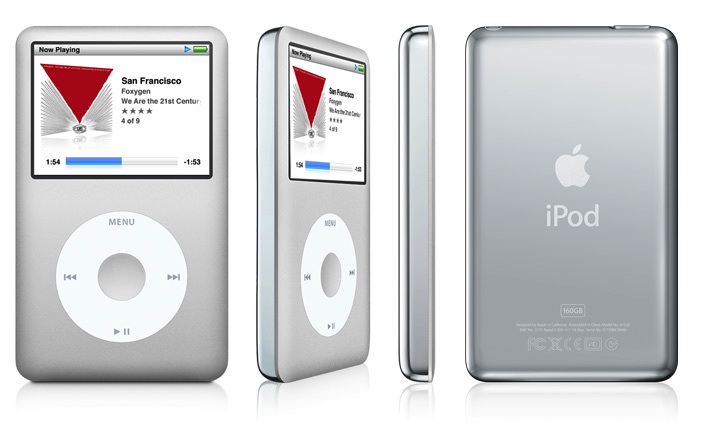
Apple this week is battling a decade-old class-action lawsuit by iPod owners angry that their media players were locked to Apple's iTunes ecosystem. Key pieces of evidence in the trial include email conversations among Apple executives and a videotaped deposition of Steve Jobs, both of which were made public for the first time this week as part of the court proceedings.
According to CNN Money and Reuters, the question-and-answer session with Steve Jobs focused on Apple's response to RealNetworks and its Harmony music service. In 2004, RealNetworks created this competing music service that allowed users to download songs and play them on any media device, including the iPod.
RealNetworks' iPod support incensed Apple, which published a press release accusing RealNetworks of hacking the iPod. Apple adopted this strategy following a series of emails between Apple marketing head Phil Schiller and CEO Steve Jobs.
"How's this?" Jobs wrote. "We are stunned that Real is adopting the tactics and ethics of a hacker and breaking into the iPod."
"I like likening them to hackers," Apple marketing chief Philip Schiller responded.
When asked if this response to RealNetworks was "strong and vehement," Jobs replied, "They don't sound too angry to me when I read them," adding that, "A strong response from Apple would be a lawsuit."
During the deposition, Jobs reportedly was snarky, asking "Do they still exist?" when referring to RealNetworks. Jobs also was evasive in his testimony, responding 74 times with "I don't remember," "I don't know" or "I don't recall."
When he did answer questions, Jobs painted Apple as a company being held hostage by the major music labels, which required digital rights management (DRM) on iTunes music as part of their contract terms. Apple claimed it had to repeatedly update iTunes to patch holes in its DRM or risk forfeiting these contracts.
The class action case started earlier this week and is being heard in the U.S. District Court in the Northern District of California. Apple marketing head Phil Schiller and senior vice president of Internet Software and Services Eddy Cue are expected to testify as part of the ongoing court proceedings.
O ídolo do futebol Pelé, de 74 anos, além de ter deixado a UTI e caminhar pelo quarto, já está dando declarações polêmicas sem a ajuda de aparelhos. Um enfermeiro, que não quis se identificar, contou que o ex-jogador levantou da cama dizendo que apoiava a decisão da Fifa de incluir na disputa pela Bola de Ouro de 2014 um goleiro no lugar de Neymar.
Ainda de acordo com o profissional do hospital, logo após o café da manhã, Pelé teria dito que o Brasil deveria ser dividido em duas partes, cada um com um governante não eleito pelo povo. Ele teria sugerido que o Brasil do Sul e o Brasil do Norte tivessem um rei em vez de presidente. “No Sul, o rei poderia ser Pelé. No Norte, o rei poderia ser o Edson, entende?”, teria declarado o ex-atleta. A assessoria do hospital Alberto Einstein não confirmou as declarações de Pelé.
I think that if you look only at males in isolation, you will see this in the data. That is, men are working much less than they used to. For some men, this leisure is very welcome, but for others it is not. In that sense, I think that we should look at the [technological unemployment] fears of the early 1960s not as quaint errors but instead as fairly well borne out.
For women, the story since the 1960s is different. In the economy as a whole, the share of labor devoted to preparing food, washing clothes, and cleaning house has gone down. Also, a higher share of the remaining work in these areas is coming from the market, via restaurants and cleaning services, rather than from unpaid female labor. The upshot is that, from the 1960s to about 2000, we saw a continuation of the trend for women to increase their share of market work and reduce their non-market labor. So, while men were increasing their leisure, women were increasing their market work. Combining men and women, you would not see a decline in market work.
It seems that around 2000, the trend for more market work by women reached its peak, making the trend toward technological unemployment more visible. From now on, what was happening to men before will be what happens to the total labor force. That is, leisure will go up, and some of it will be less than voluntary.
Those are the topics of the job market paper (pdf) from Frank Schilbach of Harvard:
High levels of alcohol consumption are more common among the poor. This could have economic consequences beyond mere income effects because alcohol impairs mental processes and decision-making. Since alcohol is thought to induce myopia, this paper tests for impacts on self-control and on savings behavior. In a three-week field experiment with low-income workers in India, I provided 229 individuals with a high-return savings opportunity and randomized incentives for sobriety among them. The incentives significantly reduced daytime drinking as measured by decreased breathalyzer scores. This in turn increased savings by approximately 60 percent. No more than half of this effect is explained by changes in income net of alcohol expenditures. In addition, consistent with enhanced self-control due to lower inebriation levels, incentivizing sobriety reduced the impact of a savings commitment device. Finally, alcohol consumption itself is prone to self-control problems: over half of the study participants were willing to sacrifce money to receive incentives to be sober, exhibiting demand for commitment to increase their sobriety. These findings suggest that heavy alcohol consumption is not just a result of self-control problems, but also creates self-control problems in other areas, potentially even exacerbating poverty by reducing savings.
Callisto, an online sexual assault reporting system under development by a nonprofit called Sexual Health Innovations, aims to change this and provide better options for victims of sexual assault on college campuses.
The project builds on the idea of “information escrows” proposed by Ian Ayres and Cait Unkovic in a 2012 Michigan Law Review article. Mr. Ayres, an economist at Yale’s law school, and Ms. Unkovic, a graduate student at the University of California-Berkeley, suggest that reporting of misbehavior that is difficult or costly for victims to disclose might be increased if people had the option to report that information to a third party who would make the disclosure only if others also reported misconduct by the same individual.
In 2006, the year after the storm, wage and salary income for the average Katrina victim in our sample is roughly $2,200 lower than their matched counterparts. Remarkably, the earnings gap is erased the following year, and by 2008, the hurricane victims actually have higher wage income and total income than control households.
That is from a new NBER working paper by Tatyana Deryugina, Laura Kawano, and Steven Levitt. I agree with this claim:
…strong ties to a place, especially a place with limited economic opportunities such as New Orleans, have adverse economic consequences. When forced by an exogenous shock to migrate, people are able to choose from a wide range of possible locations to move to, and they seem to choose places that offer them better economic opportunities.
“When I was a freshman, my sister was in eighth grade. There was a boy in two of her periods who would ask her out every single day. (Third and seventh period, if I remember correctly.) All day during third and seventh she would repeatedly tell him no. She didn’t beat around the bush, she didn’t lie and say she was taken—she just said no.
One day, in third period, after being rejected several times, he said; “I have a gun in my locker. If you don’t say yes, I am going to shoot you in seventh.”
[[MORE]]
She refused again, but right after class she went to the principal’s office and told them what happened. They searched his locker and there was a gun in his backpack.
When he was arrested, some of my sister’s friends (some female, even) told her that she was selfish for saying no so many times. That because of her, the entire school was in jeopardy. That it wouldn’t have killed her to say yes and give it a try, but because she was so mean to him, he lost his temper. Many of her male friends said it was “girls like her” that made all women seem like cockteases.
Wouldn’t have killed her to say yes? If a man is willing to shoot someone for saying no, what happens to the poor soul who says yes? What happens the first time they disagree? What happens the first time she says she doesn’t want to have sex? That she isn’t in the mood? When they break up?
Years later, when I was a senior, I was the only girl in my Criminal Justice class. The teacher, who used to be a sergeant in the police force, told us a story of something that had happened to a girl he knew when she was in high school. There was a guy who obviously had a crush on her and he made her uncomfortable. One day he finally gathered up the courage to ask her out, and she said no.
The next day, during an assembly, he pulled a gun on her in front of everyone and threatened to kill her if she didn’t date him.
He was tackled to the ground and the gun was taken from him. When my teacher asked the class who was at fault for the crime, I was the only person who said the boy was. All the other kids in the class (who were all boys) said that the girl was, that if she had said yes he would’ve never lost it and brought a gun and tried to kill her. When my teacher said that they were wrong and that this is what is wrong with society, that whenever a white boy commits a crime it’s someone else’s fault (music, television, video games, the victim) one boy raised his hand and literally said; “But if someone were to punch me and I punched him back, who is at fault for the fight? He is, not me. It’s self-defence. She started it, so anything that happens to her is in reaction to her actions .It’s simple cause and effect.”
Even though he spent the rest of the calss period ripping into the boys and saying that you are always responsible for your own actions, and that women are allowed to say no and do not have to date them, they left class laughing about how idiotic he was and that he clearly had no idea how much it hurt to be rejected.
So now we have a new school shooting, based solely on the fact some guy couldn’t get laid, and I see men, boys, applaudin him, or if they’re not applauding him, they’re laying blame on women as a whole. Just like my sister’s friends did. Just like the boys in my Criminal Justice class did.
This isn’t something that’s rare. This isn’t something that never happens, or that a select group of men feel as if they are so entitled to women that saying no is not only the worst possible thing a woman can do, but is considered a form of “defence” when they commit a crime upon them (whether it be rape or murder-as-a-reaction-towards-rejection).
Girls are being killed for saying no to prom invites. Girls are being killed for saying no to men. They are creating an atmosphere where women are too scared to say no, and the worst part is? They are doing it intentionally. They want society to be that way, they want women to say yes entirely out of fear. Even the boys and men who aren’t showing up to schools with guns are saying; “Well, you know, I wouldn’t do that, but you have to admit that if she had just said yes …”
If you are a man and you defend this guys’ actions or try to find an excuse for it, or you denounce what really happened, or in any way lay blame on women, every girl you know, every woman you love, has just now thought to themselves that you might lose your shit and kill them someday for saying no. You have just lost their trust. And you know what? You deserve to lose it.”
"Wouldn’t have killed her to say yes? If a man is willing to shoot someone for saying no, what happens to the poor soul who says yes? What happens the first time they disagree? What happens the first time she says she doesn’t want to have sex? That she isn’t in the mood? When they break up?" -vampmissedith.tumblr.com
Publicado em 29 de abril de 2014 |
por Partice Béconne and Jason Iannone
Meu nome é Partice Beconne. Eu cresci na Romênia comunista sob o olhar despótico do presidente Nicolae Ceausescu. Eu vi meu país ser reduzido a farrapos – e não o vi se recuperar. Provavelmente você consegue imaginar os elementos mais óbvios de uma sociedade comunista – os blocos cinzentos implacáveis que não conseguem se passar por arquitetura, as filas sem fim até mesmo para os produtos mais básicos, o humor subversivo, porém compreensível de Yakov Smirnoff – mas houve um lado muito mais estranho em nossa sociedade comunista que ninguém menciona. Por exemplo …
#5. J.R. Ewing do seriado Dallas foi a primeira pessoa a nos apresentar à liberdade
Embora os romenos oficialmente tenham deixado o comunismo para trás no final de 1989, nós ansiamos por uma vida melhor antes disso. Por que desejamos o que não podíamos ter? Vai saber? Talvez o espírito humano saiba o que significa ser livre; talvez as pessoas soubessem que o sistema trabalhava contra nós; ou talvez um dos grandes burocratas se enganaram e acidentalmente nos mostraram algo da TV americana uma vez.
É. Foi principalmente o último.
Se esse show tivesse existido em 1787, nossa Constituição seria … basicamente a mesma coisa.
Ceausescu não permitia nada estrangeiro em nosso país, com algumas excessões bem raras. Uma delas foi a série Dallas, que ele liberou por pura propaganda. O personagem principal, J. R. Ewing, era um barão do petróleo sociopata e sem piedade, que não se importava em destruir seus amigos e família se isso significasse ganhar um dólar. Ele explorava políticos, atormentava seus conhecidos, traía sua esposa, e geralmente parecia um cachorro-quente enrugado em um chapéu de caubói. Em geral, ele representava o capitalismo em seu pior. Que maneira melhor de nos voltar contra seus inimigos que nos mostrando a encarnação viva do Malvado Porco Capitalista?
Toda vez que você vê esse rostinho, um anjo coloca US$ 350 milhões em uma conta bancária no exterior.
Ceausescu estava levando tão a sério a ideia de usar Dallas para retratar os males do capitalismo que ele chegou ao ponto de pagar Larry Hagman, o ator que representava J. R., pelo direito de colocar sua foto sorridente em um outdoor gigante na lateral de um prédio residencial no centro de Bucareste. Desse modo as pessoas veriam todo santo dia a pior versão de um americano malvadão.
Depois da queda da União Soviética, Ewing continou tão popular que o usaram para vender óleo lubrificante russo. Em 1999.
Enfim, essa era a teoria. Na realidade, assistimos Dallas e nos apaixonamos por tudo que o seriado mostrou. Ao invés de rolar em desgosto sobre a prova da ganância americana, nos maravilhamos por todas as coisas legais que os americanos tinham – mesmo os personagens secundários que supostamente eram “pobres” e “explorados”. E a simples ideia que as pessoas podiam vir do nada e de fato tornarem-se ricas? Aquilo nos deixou absolutamente de boca aberta. A maioria de nós nem mesmo considerava a riqueza como uma opção antes de um ditador perdido chegar e dizer: “Estão vendo? Essas são as desvantagens de ser magnificamente rico!”. Depois de várias temporadas testemunhando uma boa vida, todos nós coletivamente nos perguntamos, “Por que não nós, também?”. Após alguns passos lógicos, tivemos uma revolta sangrenta e violenta.
Claro, a revolução romena e a queda do Império Soviético foram questões vastas e complexas – mas ainda assim, de uma forma bem sutil e pequena, é correto dizer que J. R. Ewing nos ajudou a derrubar o comunismo.
J. R. Ewing e o bolo daquele cara.
#4. Uma mulher aleatória era responsável por praticamente todo o nosso entretenimento
Ceausescu baniu todos os seriados não-texanos da TV, como também filmes, video games, música, e qualquer coisa que você pudesse colocar os olhos e achar engraçado. A maioria de nós não podia bancar um videocassete, e de qualquer modo a TV romana não tinha muito o que gravar. Em vários momentos você estava destinado a assistir em preto-e-branco um homem perseguindo uma cabra, antes que você trocasse de canal para a reprise de Dallas. Felizmente, nós romenos tínhamos milhares de filmes ilegais para escolher, graças quase que totalmente a uma mulher.
E vários contrabandistas corajosos.
Em 1986, Irina Nistor, até então apenas uma tradutora oficial da TV estatal, foi contratada por vários contrabandistas para traduzir filmes de Hollywood que outras pessoas tinham contrabandeado para o país. Mas ela não traduziu roteiros e os entregou para um elenco variado de dubladores capacitados – o que você pensa que aquilo era, Rollywood? Quem tinha essa quantidade de tempo e dinheiro disponível? Certamente não Irina, então ela apenas dublou por conta própria todas as vozes em inglês em todos os filmes. Ela era literalmente a voz da mídia romena. Quando o comunismo caiu e assistir The Breakfast Club não era mais punível com a morte, ela já havia traduzido e dublado cerca de 3.000 filmes. Somente ela e sua solidão.
Foto de: Marilyn Monroe, Audrey Hepbum, Lon Cheney, John Wayne …
E ela fez a maior parte do seu trabalho às cegas. Ela nunca tinha visto os filmes banidos antes e estava obviamente muito ocupada para sentar e assistir milhares de horas de filme antes e depois gravar suas milhares de horas de locuções. Não havia espaço para ritmo, ou nuances, ou impressões complexas para cada personagem – havia apenas uma mulher romena de meia-idade falando em sua própria voz, com sua própria cadência, preenchendo todos os papéis em todos os filmes que passaram pela gente. Ela era Bruce Lee. Ela era Chuck Norris. Ela era tudo: todos os nossos heróis, nossos vilões, nossas sedutoras sensuais, e nossos Sylvester Stallones eram Irina Nistor.
Sim, até mesmo nossos Tony Montanas.
#3. Trabalho não-assalariado era a lei na Romênia
Na Romênia dos anos de 1980, todos os soldados, professores e estudantes eram obrigados a particpar de algo chamado practica agricola.
Todo o árduo trabalho agrícola sem nada daquela maldita “propriedade de terra”.
Há uma razão para as crianças acima não parecerem muito contentes (mesmo se nós considerarmos a careta padrão que é confundida com o “sorriso comunista”). Practica agricola não era sobre aquela coisa tipicamente comunista de “compartilhar o fardo igualmente” – estava bem mais próximo de trabalho escravo na cara dura. Há uma linha muito tênue separando os dois o tempo todo, e a practica agricola escavou essa linha com uma enxada improvisada e enterrou seus sonhos e esperanças nela. Todos eram forçados a ir em uma dessas “viagens de campo” para fazendas especiais. Uma vez lá, plantava-se sementes o dia inteiro, não importando o clima ou sua riqueza pessoal. Nada atrapalhava – nem escola, nem educação, nem treinamento militar, nem carreira. Meus pais eram engenheiros, o que significava apenas que eles tinham que colher pêssegos e maçãs da maneira mais engenhosamente possível.
O que acaba sendo apenas segurá-las como lágrimas normais e em seguida sufocá-las.
Haviam cotas rígidas para cumprir, o pagamento era inexistente, a situação teria que melhorar muito para ficar péssima e a participação era obrigatória para todos, sem exceção. Se você se recusasse a trabalhar, a punição variava de perda de créditos, perda de trabalho, à perda da vida. Apenas … de sua vida.
#2. Tínhamos pouca noção do mundo exterior
Graças ao bloqueio quase completo de Ceausescu a todas as coisas exceto o comunismo, toneladas de informações sobre o mundo exterior simplesmente passaram batido pela gente. Dia após dia, ano após ano, o noticiário local era apenas o mesmo: um pouco de propaganda pró-commie, talvez alguma boa notícia sobre a cota de colheita sendo alcançada antes do prazo (ou “boas notícias” sobre aqueles que falharam em cumprir a cota não sendo mais um fardo sobre o proletariado).
Graças a esses “limpadores de fardos” garantidos pelo governo.
Enquanto isso, os feitos incríveis do mundo exterior mereceram apenas uma menção passageira. Em 1969, quando o EUA enviou o homem à Lua pela primeira vez, o jornal nacional romeno brevemente mencionou “um grande sucesso para o pensamento científico – o homem na lua!” junto com algumas linhas do telegrama do presidente Nixon. E era isso: cerca de metade do espaço que você esperaria que um tabloide dedicasse ao novo penteado da Beyonce. Isso foi tudo que a porra daaterrissagem na Lua mereceu. O que poderia ter sido uma maior manchete aquela semana? Ceausescu dirigindo um Dacia 1100, é claro!
É como se um Cadillac defecasse um Datsun.
Sim, era a estreia do novíssimo modelo Dacia 1100, e o próprio Ceausescu foi até a fábrica inspecionar o primeiro produzido. Todo aquele negócio da Lua teve tanta atenção quanto um pequeno incêndio na loja de pornôs local teria em um jornal americano atual. Os noticiários daquela semana ignoraram completamente a humanidade colocando o pé em solo extraterrestre pela primeira vez, em prol de um homem fingindo dirigir um carro que provavelmente pegaria fogo se ele desse realmente a partida.
#1. Haviam imitações comunistas “de Marca” de Tudo
Não foi apenas entretenimento estrangeiro que Ceausescu baniu – foi tudo de origem estrangeira. Se não fosse feito por mãos comunistas, não teríamos. Sem bananas, sem cigarros Marlboro, sem camisinhas, sem nada (embora tívessemos laranjas, também conhecidas como “a Dallas do reino das frutas”, por razões que nunca foram completamente explicadas).
Mas hey, infância não faz muito sentido para qualquer um.
Tudo não foi apenas banido, mas trocado por genéricos comunista de baixa qualidade. Café, por exemplo, foi condenado como uma luxúria muito grande para nós camponeses. Bebíamos Nechezol, uma lavagem sem cafeína que era uma parte café e 20 partes lama de sarjeta congelada. Cozinhávamos com óleo fake feito de soja não-refinada, comíamos queijo fake artificialmente remexido com farinha (provavelmente fake), e bebíamos o que eu suspeito que fosse urina do demônio diluída homeopaticamente que chamavam de Cil-Cola. Carne? Esqueça. Se tínhamos algo parecido com isso, tínhamos as dregs, algo tipo garras de galinha, pernas que eram nada além de pele e osso, e salame feito de farinha de ossos. Mmm, você consegue sentir o gosto dos ossos! E sentí-los. Quebrando seus dentes.
Felizmente, a farinha de ossos serve como um bom creme para seu café de mentira.
O Papai Noel também foi banido. Um cara gordo e feliz que traz presentes opulentos para as crianças boazinhas? Soa como uma capitalista corporativista para mim! Mas temos que dar crédito ao governo, eles não se recusaram abertamente a deixar nós, crianças pobres, celebrarem. Não, ainda tínhamos o dia dos presentes, trazido para nós por um homem sisudo vestindo calças compridas e roupão de banho:
Esse é o Mos Gerila. Ele era magro, triste e sisudo, e aparecia em 30 de Dezembro. Quatro dias depois do Papai Noel, mas ao menos seus presentes eram muito, mas muito piores.
// Tradução de Robson Silva. Revisão de Russ Silva e Ivanildo Terceiro. | Artigo Original
My name is Partice Beconne. I grew up in communist Romania under the watchful eye of despotic president Nicolae Ceausescu. I watched my country torn to tatters, and it still hasn't even halfway recovered. You can probably picture the more obvious elements of a corrupt communist society -- the relentless gray blocks that fail to pass for architecture, the perpetual lines for even the most basic of goods, the subversive yet relatable humor of Yakov Smirnoff -- but there was a much weirder side to our particular brand of communist society that nobody mentions. For example ...
#5. It Was Dallas' J.R. Ewing Who First Introduced Us to Freedom
Although Romanians officially put communism in a box to the left back in late 1989, we yearned for a better life way before that. Why did we wish for what we could not have? Who knows? Perhaps the human spirit knows that it is meant to be free; perhaps the people were aware that this system was rigged against us; or perhaps one of the higher-ups screwed up and accidentally showed us something from American TV one time.
It's mostly the latter.
If this show had existed in 1787, our Constitution would look ... pretty much the same, actually.
Ceausescu didn't allow foreign anything into our country, with a couple of very rare exceptions. One of them was the TV show Dallas, which he greenlit for pure propaganda. The main character, J.R. Ewing, was a relentless and sociopathic oil tycoon, not above destroying his friends and family if it meant making a dollar. He exploited politicians, tormented his peers, cheated on his wife, and generally looked like a shriveled hot dog in a cowboy hat. Overall, he represented capitalism at its worst. What better way to turn us against its evils than to show us the living embodiment of the Evil Capitalist Pig-Dog?
Every time you see his face, an angel puts $350 million into an off-shore bank account.
Ceausescu was so serious about using Dallas to portray the evils of capitalism that he even paid Larry Hagman, the actor who portrayed J.R., for the right to plaster his grinning mug on a giant propaganda portrait splayed across the side of a central apartment building in Bucharest. That way, all the people would see the ugly American at his ugliest, every single day.
AP After the fall of the Soviet Union, Ewing remained so popular that they used him to hawk Russian oil. In 1999.
That was the theory, anyway. In reality, we watched Dallas and fell in love with everything it showed us. Instead of recoiling in disgust over proof of American greed, we marveled at all the cool stuff Americans had -- even the peripheral characters that were supposedly "poor" or "exploited." And the mere idea that people could come from nothing and actually become rich? That blew our minds completely. Most of us didn't even consider wealth a thing that was possible before a misguided dictator came in and went "See? There are downsides to being magnificently rich!" After several seasons of witnessing the good life, we all collectively asked ourselves, "Why not us, too?" A few flying logical leaps later, we had ourselves a bloody and violent uprising.
Sure, the Romanian revolution and the fall of the Soviet empire were vast and complicated affairs -- but still, in some very small and petty way, it is accurate to say that J.R. Ewing helped overthrow communism.
#4. One Random Woman Was Responsible for Almost All of Our Entertainment
Hemera Technologies/AbleStock.com/
Ceausescu banned all non-Texan soap opera TV shows, as well as other movies, video games, music, and really anything else that resembled fun if you squinted your eyes and looked at it funny. Most of us couldn't afford a VCR, although it's not like Romanian TV had much we wanted to record anyway. There are only so many times you can watch a man chase a goat in grainy black and white before you switch back to Dallas reruns. Luckily, us Romanians had thousands of illegal films to choose from, thanks almost entirely to one woman.
BananaStock/BananaStock/Getty Images And countless courageous smugglers.
In 1986, Irina Nistor, then an official translator for state-run TV, was tapped by underground pirates to translate Hollywood films that other people had smuggled into the country. But she didn't translate scripts and then hand them over to a varied cast of skilled voice actors -- what was this, Rollywood? Who had that kind of time or money? Certainly not Irina, so she just dubbed herself over every single English-speaking voice in every single movie. She was quite literally the voice of Romanian media. By the time communism fell and sitting down to enjoy The Breakfast Club wasn't punishable by death, she had translated and dubbed over 3,000 movies, all by her lonesome.
StartEvo Pictured here: Marilyn Monroe, Audrey Hepburn, Lon Cheney, John Wayne ...
And she did much of this work blindly. She had never seen the banned movies before and was obviously far too busy to sit down and watch thousands and thousands of hours of film before also recording their thousands and thousands of hours of voice-overs. There wasn't a lot of room for pacing, or informed nuance, or intricate impressions for each character -- there was just a middle-aged Romanian woman speaking in her own voice, in her own cadence, filling in for every single role in every single film that came our way. She was Bruce Lee. She was Chuck Norris. She was everything: All of our heroes, our villains, our sultry seductresses, and our Sylvester Stallones were Irina Nistor.
Yes, even our Tony Montanas.
#3. Unpaid Labor Was the Law of the Land
Thinkstock/Stockbyte/Getty Images
In 1980s Romania, all of the soldiers, teachers, and students were required to participate in something called practica agricola.
Glasrul.ro All the backbreaking labor of farming with none of that pesky "land ownership."
There's a reason those kids above don't look all that happy (even beyond the default scowl that passes for a "communist smile"). Practica agricola wasn't the typical communist "share the burden equally" stuff -- it was closer to straight-up slave labor. There is a very fine line separating the two at all times, and practica agricola dug up that line with a makeshift hoe and buried its hopes and dreams under it. Everybody was forced to take one of these regular "field trips" to special farms. Once there, they harvested crops all day, regardless of the weather or their own personal health. Nothing got in the way -- not school, not education, not military training, not career. My parents both have engineering degrees, which only meant they had to pick peaches and apples in the most efficiently engineered way possible.
Jupiterimages/Stockbyte/Getty Images Which turns out to be just grabbing them like normal and then choking back tears.
There were strict quotas to meet, the pay was nonexistent, they would've had to issue gruel for the conditions to even pass for grueling, and participation was completely mandatory for all. If you refused to work, the punishment ranged from loss of credits to loss of job to loss of you. Just ... all of you.
Goodshoot/Goodshoot/Getty Images
Thanks to Ceausescu's near-complete blackout of all things not communism, there's a ton of information about the world outside that just passed us by. Day after day, year after year, our local papers were pretty much the same: some pro-commie propaganda, maybe some good news about the crop-harvesting quota being reached before the deadline (or "good news" about those who failed to meet quota no longer being a burden on the proletariat).
David De Lossy/Photodisc/Getty Thanks to these government-issue deburdeners.
Meanwhile, the amazing feats of the outside world merited barely a passing mention. In 1969, when America landed men on the moon for the first time, the Romanian national newspaper briefly mentioned "a great success of scientific thought -- men on the moon!" along with a couple of lines from Nixon's telegram. That was it: about half the space you'd expect a tabloid to devote to Beyonce's new haircut. That's how much the friggin' moon landing merited. What could possibly have been a bigger headline that week? Why, Ceausescu driving a Dacia 1100, of course!
Adevarul It's like a Cadillac pooped out a Datsun.
Yes, it was the debut of the brand-new Dacia 1100 model car, and Ceausescu himself was at the factory inspecting the very first one. The whole moon thing got about as much lip service as a small fire at a local porn store would get in a modern-day American paper, and otherwise that week's news completely ignored mankind setting foot on extraterrestrial ground for the first time in favor of a man pretending to drive a car that would probably burst into flame if he actually started it.
#1. There Were Communist "Store Brand" Ripoffs of Everything
Image Source/Photodisc/Getty Images
It wasn't just foreign entertainment that Ceausescu banned -- it was foreign everything. If it wasn't made by commie hands, we couldn't have it. No bananas, no Marlboro cigarettes, no condoms, no nothing (although we did have oranges, also known as "the Dallas of the fruit kingdom," for reasons that were never fully explained).
But hey, childhood doesn't make much sense for anyone.
Everything was not only banned, but replaced with Z-grade commie knockoffs. Coffee, for example, was deemed too much of a luxury for us peasants. We drank Nechezol, a non-caffeinated swill that was one part coffee and 20 parts congealed gutter slime. We cooked with fake oil made out of unrefined soy, ate fake cheese artificially fluffed up with (likely fake) flour, and drank what I suspect was homeopathically diluted demon-urine they called Cil-Cola. Meat? Forget about it. If we got it at all, we got the dregs, like chicken claws, legs that were nothing but skin and bones, and salami made out of bone meal. Mmm, you can really taste the bones! And feel them. Shattering your teeth.
Jupiterimages/liquidlibrary/Getty Images
Fortunately, the bone meal makes pretty good creamer for your Liecoffee.
Santa Claus was banned, too. Fat, happy guy that brings opulent presents to the good children? Sounds like a capitalist crony to me! But to the government's credit, they didn't just outright refuse to let us poor children celebrate. No, we still had Presents Day, brought to us by a stern man in slacks and a bathrobe:
That's Mos Gerila. He was slim, sad, and stern, and he came on December 30. So four days later than Santa, but at least his presents were much, much worse.
Jason Iannone is a Cracked columnist, freelance editor, dick joke journalist, and assistant janitor. Compliment him on how squeaky clean the site is via Facebook, Twitter, and Tumblr.
Always on the go but can't get enough of Cracked? We have an Android app and iOS reader for you to pick from so you never miss another article.


 Dmitry Gorovtsov, of the center-left Fair Russia party, told the Interfax news agency that his suggestion applied primarily to politicians who had access to classified information...



 Mozilla's Firefox browser may soon make its way to iOS, according to a statement made by Firefox VP Jonathan Nightingale at an internal Mozilla event. Relayed by Firefox release manager Lukas Blakk and shared by TechCrunch, Nightingale reportedly told Mozilla employees "We need to be where our users are so we're going to get Firefox on iOS."















.jpg)
 by
by 


