.png)
Click here to go see the bonus panel!
Hovertext:
Also it didn't want to destroy the city because it mostly feeds off of aquatic insects.
New comic!
Today's News:
A fundamental question in Natural Language Processing (NLP) is how to represent words. If we have a paragraph we want to translate, or a product review we want to determine whether is positive or negative, or a question we want to answer, ultimately the easiest building block to start from is the individual word. The main problem of this approach is that treating each word as just a symbol loses a lot of information. How can we tell from such a representation that the relationship between the symbol PAGE and the symbol PAPER is not the same as that between PAGE and MOON?
Some popular techniques exist that try to learn an abstract representation which identifies these relationships and preserves them. In essence, what these methods do is go over a huge body of text (a corpus), like the entire English Wikipedia, word by word, and come up with a representation assigned to each word. Using mathematical operations over these resulting representations, our model can then know that PAGE is very “similar” to PAPER, DOG is similar to CAT, to KENNEL and to the verb BARK, and so on. These methods are strong enough to also represent analogies: the “difference” between MAN and WOMAN is very similar to that between KING and QUEEN.

These representations go a long way in helping our end-goal, be it Machine Translation or Review Classification or anything else (we call these the downstream tasks). They can be used as input for a new system that is trained to perform them. But now a new problem arises, stemming from the fact that language is both (a) big, and (b) constantly growing. A paragraph in our downstream task is more likely than not to contain a word we never saw in the Wikipedia text, or was too rare to save a representation for. This Out-Of-Vocabulary, or OOV, could be a new word (BLOCKCHAIN), a typo, a highly-technical term, in some languages even regular inflections (in Bulgarian, for example, some verbs have more than 600 theoretical forms. In Hebrew and Arabic, prepositions like “in” and “for” are attached to the following word).
How do we deal with this unseen word problem? One common approach is to learn a single representation for all unknown words (this can be done while training the original representations: once in a while, we “tell” a Wikipedia word that now it’s an unknown, and train that representation instead of the actual word’s), but this is rather drastic. In a paper published last year at EMNLP [1], we developed a method that suggests a representation for an unseen word by generalizing only on the known representations (the output of the Wikipedia traversal, but before the downstream task). The only signal we have available at this point is the way words are spelled, so that is exactly what we use as our input. Basically we “pretend” that the representations were trained based on the spelling (rather than on the Wikipedia corpus) and train an appropriate model. When we see an unknown word in our downstream task, we know how it is spelled, and thus can apply the model to guess a representation for that as well. Ideally, we’ve captured enough information at the training phase to make a guess that’s more helpful than a single guess for all words.
In our paper we show this is indeed the case. In addition to some sensible nearest-neighbor results (see figure), we present results on the downstream task of Part-Of-Speech tagging, showing improvements on nearly all of 23 languages tested. The method proved particularly successful in languages that feature many inflections, reinforcing the conclusion that important characteristics are present in the way words are spelled in these languages.

[Written by Yuval Pinter]
[1] Yuval Pinter, Robert Guthrie, Jacob Eisenstein. Mimicking Word Embeddings using Subword RNNs. In Proceedings of the Conference on Empirical Methods in Natural Language Processing (EMNLP), 2017.
A fundamental question in Natural Language Processing (NLP) is how to represent words. If we have a paragraph we want to translate, or a product review we want to determine whether is positive or negative, or a question we want to answer, ultimately the easiest building block to start from is the individual word. The main problem of this approach is that treating each word as just a symbol loses a lot of information. How can we tell from such a representation that the relationship between the symbol PAGE and the symbol PAPER is not the same as that between PAGE and MOON?
Some popular techniques exist that try to learn an abstract representation which identifies these relationships and preserves them. In essence, what these methods do is go over a huge body of text (a corpus), like the entire English Wikipedia, word by word, and come up…
View original post 518 מילים נוספות
Yuval Pinterקסום
As a counterpoint to "Peeving and breeding", 3/4/2018, here's Lorenzo Baglioni's "Il Congiuntivo":
The problematic message:

Se io starei
con te
sarei
felice
which is intended to mean
If I were
with you
I would be
happy
In the comments, Paolo explains (and .mau. further corrects) that it should be
se io stessi [imperfect subjunctive, stare] con te
sarei [present conditional, essere] felice
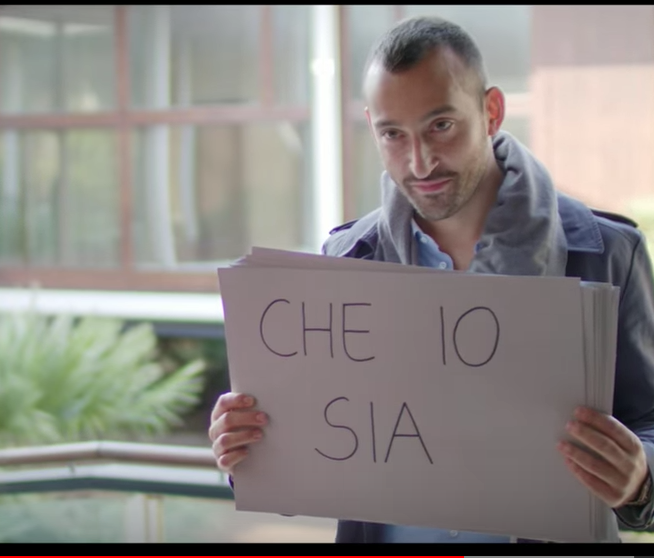
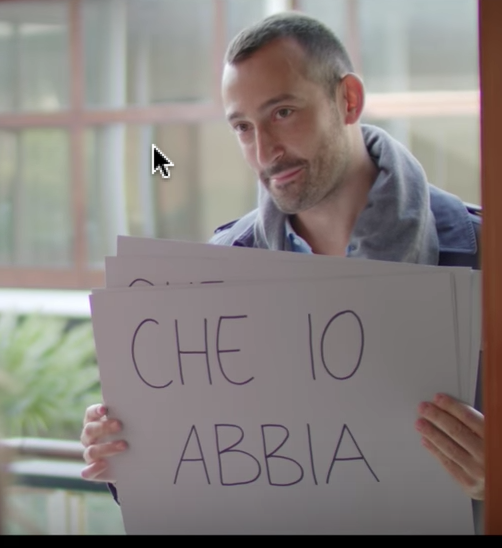
And the final redemptive sequence:
 |
 |
 |
 |
 |
 |
In the comments, Laura explains that "Women rejecting men who are unable to use the subjunctive correctly is a running meme in Italy."
The lyrics are available from Genius:
Che io sia
Che io fossi
Che io sia stato
Ouooh
[Strofa 1]
Oggigiorno chi corteggia incontra sempre più difficoltà
Coi verbi al congiuntivo
Quindi è tempo di riaprire il manuale di grammatica, che è
Che è molto educativo
Gerundio, imperativo
Infinito, indicativo
Molti tempi e molte coniugazioni, ma
[Ritornello]
Il congiuntivo ha un ruolo distintivo
E si usa per eventi che non sono reali
È relativo a ciò che è soggettivo
A differenza di altri modi verbali
E adesso che lo sai anche tu
Non lo sbagli più
[Strofa 2]
Nel caso che il periodo sia della tipologia dell’irrealtà (si sa)
Ci vuole il congiuntivo
Tipo “Se tu avessi usato il congiuntivo trapassato
Con lei non sarebbe andata poi male”
Condizionale…
Segui la consecutio temporum
In my feeble attempt at an English translation:
That I am [present subjunctive]
That I was [past subjunctive]
That I have been [perfect subjunctive]
[Verse 1]
Nowadays those who are courting encounter more and more difficulties
With verbs in the subjunctive
So it's time to reopen the grammar manual, which is
Which is very educational
Gerund, imperative
Infinitive, indicative
Many tenses and many conjugations, but
[Refrain]
The subjunctive has a distinctive role
And it is used for events that are not real
It is related to what is subjective
Unlike other verbal moods
And now you know it too
You're not getting it wrong anymore
[Verse 2]
In case the sentence is of the type of unreality (one knows)
It takes the subjunctive
Like "If you had used the past subjunctive
With her it would not have gone bad"
Conditional…
Follow the sequence of tenses
[h/t Joaquim Roé]
Take a look at Astghik Mavisakalyan, Clas Weber, and Yashar Tarverdi, "Future tense: how the language you speak influences your willingness to take climate action", The Conversation 3/7/2018, which is a re-presentation for a general intellectual audience of a technical paper by the same authors that appeared a month earlier,:Astghik Mavisakalyan, Yashar Tarverdi, and Clas Weber, "Talking in the Present, Caring for the Future: Language and Environment", Journal of Comparative Economics February 2018.
And both of these represent the latest in a line of research inspired by a paper originally published by M. Keith Chen in 2012 as a Yale working paper, and discussed in a series of LLOG posts:
"Keith Chen, Whorfian economist", 2/9/2012 [Geoff Pullum]
"Cultural diffusion and the Whorfian hypothesis", 2/12/2012 [Mark Liberman]
"Whorfian Economics", 2/21/2012 [Keith Chen]
"Thought experiments on language and thought", 2/22/2012 [Julie Sedivy]
"Keith Chen at TED", 2/20/2013 [Mark Liberman]
"Keith Chen animated", 9/7/2013 [Mark Liberman]
(The original working paper is no longer on line, but an updated version was published a year later as "The Effect of Language on Economic Behavior: Evidence from Savings Rates, Health Behaviors, and Retirement Assets", American Economic Review 2013.)
I don't have time today to discuss the Mavisakalyan et al. papers in detail, but if I did, I'd start by exploring the question that Keith, Julie and I discussed six years ago, namely (in Keith's words) " the possibility of something like co-diffusion (correlated adoption) of both language and non-linguistic values, culture, or institutions". Obviously this possibility is not news to Mavisakalyan et al. — as Keith wrote, it's "really the central concern of all work done in modern econometrics" — but it's still worth thinking through the issue in this domain.
And I'd also want to explore the question that Geoff Pullum raised, namely the fact that FTR ("future time reference") usage is more linguistically complex than a binary strong-FTR/weak-FTR indicates.
[h/t Eli Anne Eiesland]
Yuval Pinteryep.
| Piled Higher & Deeper by Jorge Cham |
www.phdcomics.com
|
|
 |
||
|
title:
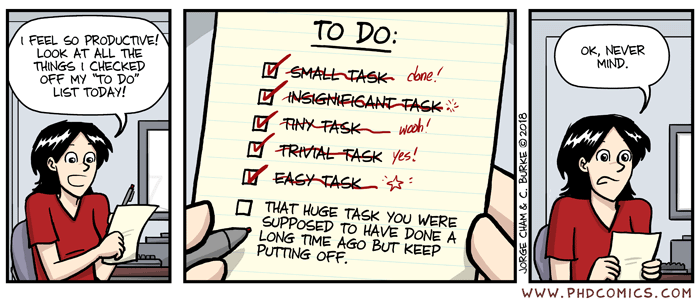
"So productive" - originally published
3/7/2018
For the latest news in PHD Comics, CLICK HERE! |
||

Happy Groundhog Day!
[שימו לב לעדכון בסוף – ערכתי גם על ישראל. השיר בסדר.]
אני הולך היום לראות הופעה של נורית גלרון. כיף לי!
בעודי מכין את עצמי אתמול בשמיעת פלייליסט מכובד של שיריה בעבודה, הרהרתי לעצמי: רגע רגע רגע. מה פתאום גשם מכסה את אספלט הכביש ביום הכי קר בשנה? הרי בדרך כלל כשיורד גשם יש עננים, וימים מעוננים נוטים להיות לא הכי קרים כי הם מהווים שכבת בידוד או משהו. בכל מקרה למיטב נסיוני, אחרי שהגשם מפסיק והעננות מתפזרת נהיה דווקא יותר קר, לא יותר חם. לא?
מה יקרה אם פתאום נבדוק את ההשערה? נתחיל בחיפוש אחר דאטאסט זמין וקל לניתוח. איפה אפשר לחפש היום דבר כזה? בכל מקום, אבל אני ממליץ למי שעוד אין לפתוח משתמש בקאגל. חיפוש קטנטן של in:datasets weather מעלה מיידית עשרות אפשרויות. אז מזג אוויר ישראלי לא מצאתי, אבל התוצאה הראשונה שכן קרצה לי היתה זו של אוסטין, טקסס, עיר עם טמפרטורות יחסית דומות למישור החוף וכמות משקעים דומה בחודשי החורף.
אמנם קצת מבאס שהנתונים הם רק לשלוש שנים שלמות (2014-2016) עם קצת שאריות לפני ואחרי, אבל הכל מתקזז אל מול המופלאות של קאגל. לא צריך להוריד קובץ, לא צריך להרים סביבה, כלום. פשוט פותחים קרנל (סביבת כתיבה והרצה של קוד בתוך "מחברת" מתעדכנת המורכבת מתאים; קאגל תומכים בפייתון ואר [R]) על האתר והוא מריץ לעצמו את הכל ברקע. אז התכנון היה להשתפשף עם הקוד על השלוש שנים של אוסטין ואז ללכת לגוש מידע גדול שאשיג ממקור אחר, אבל כבר המיני-ניסוי הזה הבהיר שההיפותזה שלי לא מחזיקה מים (הא!) ואני מציג בפניכם את תוצאות הכשל הגדול:
הנתון הסותר: ב-10 בינואר, 2015, נמדדו באוסטין 36 מעלות פרנהייט (בערך 2 בלשון אדם), הכי מעט באותה שנה, וירדו 0.3 אינטשים של משקעים, שהם כ-7.5 מ"מ, בהחלט מספיק כדי לכסות אספלט של כביש.
הישארו עמי לניסוי הבא, בו לפני הופעה של יזהר אשדות אחטן כבד בבלנדר ואבדוק אם אפשר לשתות אותו.
[עדכון, 31/1: בעצתו של ליאון התותח הלכתי לאתר השירות המטאורולוגי, שם ניתן להוריד נתוני מזג אוויר משלל תחנות בארץ. הורדתי קובץ עם כל ימי הגשם כפי שנמדדו בבית דגן בין השנים 1983 ל-1992, העשור לפני שהשיר יצא (כולל). הורדתי קובץ נוסף עם הטמפרטורות היומיות. הרמתי מחברת במחשב האישי. היו שמונה ימי גשם כאלה בעשור הנ"ל. הנה המחברת, והנה צילומסך של הסוף שלה, כולל התוצאה בתא האחרון.

]
Yuval Pinterמצחיק
גיל תמרי שואל האם חברי קונגרס שחורים שהיו מוחים סטייל חנין זועבי היו מסולקים מהאולם, ועונה לעצמו- 'כמובן שלא'. האמת היא שדווקא כן.

חברי הרשימה המשותפת מקבלים את פניו של מייק פנס. צילום: פלאש90
בחדשות עשר, דיבר ביום שני הפרשן גיל תמרי על הסיקור המועט בארה"ב לו זכה ביקור סגן הנשיא מייק פנס. אולם סוגיה אחת, לדברי תמרי, דווקא זכתה לתשומת לב מיוחדת: הוצאתם מהאולם של חברי הכנסת מהרשימה המשותפת, שנופפו בשלטים הקוראים "ירושלים היא בירת פלסטין" בעת שפנס עלה לנאום. המסולקים, יש לדעת, הפרו את תקנון הכנסת האוסר על הצגת "חפץ כלשהו" במליאה, או על עשיית "שימוש בחפץ או בכיתוב לצורך הבעת עמדה".
וכך טען גיל תמרי:
ערוצי Fox ו- CNN התמקדו יותר במחאת חברי הכנסת הערבים והסילוק שלהם מהאולם מאשר בדברים של פנס. היו גם עיתונאים כאן שתהו האם שוטרי הקפיטול היו מסלקים כך חברי קונגרס שחורים שהיו מוחים בזמן נאום? והתשובה היא, כאן בארצות הברית, כמובן שלא.
תמרי בהחלט מעלה שאלה היפותטית מעניינת. אלא שהשאלה אינה היפותטית כלל, והתשובה הנכונה עליה היא- כמובן שכן.
בפברואר 2012 הלך לו ברחוב טרייוון מרטין, צעיר שחור מפלורידה, לאחר ביקור אצל ארוסתו של אביו. הוא חבש קפוצ'ון לראשו, מה שנראה חשוד בעיני מתנדב מהמשמר השכונתי שעבר בסביבה. לאחר עימות בין השניים, שלף המתנדב אקדח וירה במרטין למוות (במשפטו הוא זוכה מרצח בדרגה שנייה).
חודש לאחר המקרה, חבר הקונגרס השחור בובי ראש מחה כנגד מה שכינה "הפרופיילינג הגזעני" בו נוקטים אנשי אכיפת החוק בארה"ב. במהלך נאומו במליאה, כשהוא מזכיר את מקרה טרייוון מרטין, הסיר ראש את הז'קט שלבש וחבש קפוצ'ון כאקט מחאה. מיד החלו להישמע דפיקות הפטיש והאזהרות של יושב ראש המליאה, ולאחר כמה שניות של התעלמות מצדו של ראש, פנתה אליו סדרנית והוציאה אותו מן האולם.
לאחר סילוקו של ראש, הבהיר היושב-ראש לנוכחים באולם:
אני נאלץ להזכיר לחברים כי סעיף 5 של כלל 17 אוסר ללבוש כובעים באולם בזמן שהבית מתכנס
הנה כי כן, כפי שחברי הרשימה המשותפת הוצאו מהאולם עקב הפרת התקנון, גם בבית הנבחרים האמריקאי הוצא מהאולם חבר שחור מסיבה דומה. העובדה כי מחה מדם ליבו על רצח של צעיר חף מפשע, לא סייעה לו. לידיעתו של גיל תמרי.
גיל תמרי מסר לנו בתגובה:
תודה על הדברים. לא הייתי מודע למקרה. אבדוק
Yuval PinterNSFW
Yuval Pinterשלום באמת בדיחות השילוב הראוי מקורס קצינים
בשבוע שעבר, נשא מחמוד עבאס (אבו מאזן) נאום ארסי ונוטף שנאת יהודים. אף לא כלי תקשורת אחד בחר לספר על זה לציבור הישראלי

עם יד על הלב, לא נראה לכם שזה ראוי לפרסום?
ביום רביעי שעבר, ה-13 לדצמבר, נערך באיסטנבול שבתורכיה כינוס דחוף ומיוחד של הארגון לשיתוף פעולה אסלאמי. על הפרק: הכרתו של נשיא ארצות הברית דונלד טראמפ בירושלים כבירת ישראל. בכינוס נכחו נציגיהן של 57 מדינות מוסלמיות. נשאו בו דברים אישים כגון עבדאללה מלך ירדן, נשיא תורכיה ארדואן, נשיא איראן רוחאני ועוד רבים וטובים. כפי שניתן היה לצפות, אהבה גדולה לישראל לא שררה בין קירות האולם בו התקיים הכינוס.
ברם, דובר אחד חרג מהמנטרות האנטי-ישראליות המקובלות והוסיף לדבריו אמירות אנטישמיות חריפות. כשהוא מגייס את הקוראן לביסוס טענתו, האשים יו"ר הפלסטינית מחמוד עבאס, המוכר במחוזותינו בכינוי הפמיליארי אבו מאזן, את היהודים (ולא, לא את הישראלים או הציונים, כפי שנראה) בכך שהם מקדמת דנא מצטיינים מטבעם בעיוות ההיסטוריה, הדת והאמת.
ואם אתם נוהגים להסתמך על התקשורת הישראלית כמקור מידע, זאת הפעם הראשונה שאתם קוראים על זה.
נאומו של עבאס
את דבריו האנטישמיים של עבאס חשף, כבר ביום בו נאמרו, הבלוגר הפעלתן Israellycool. למען הנוחיות, הוא אף ערך את הקטעים הרלוונטיים מתוך הנאום המלא:
ובעברית:
אני לא רוצה לדון בדת או בהיסטוריה, מכיוון שהם באמת מצוינים בזיוף וחקיינות של ההיסטוריה והדת. אולם אם אנו קוראים את התורה, היא אומרת שהכנענים היו שם לפני נביאנו אברהם, ושקיומם של הכנענים המשיך מאז אותו הזמן, זה מצוין בתורה עצמה. אבל אם הם מעוניינים לזייף את ההיסטוריה הזאת, הם באמת אשפים בכך, וכבר בקוראן הקדוש מצוין כי הם מזייפים את האמת ומנסים לעשות זאת, והם באמת מאמינים בכך, אולם אנחנו היינו במיקום הזה במשך אלפי שנים.
למען הסר ספק, כשעבאס אומר כי בקוראן מצוין שהם "מזייפים את האמת", הוא לא מדבר על ממשלת נתניהו, וקהל השומעים שלו מבין זאת היטב. כפי שמראה גלעד עיני, חוקר בכיר ב-CAMERA (עמותת האם של פרספקטיבה), עבאס מכוון לקטעים מסוימים מאוד בקוראן, המדברים על סילוף דבר ורצון האל על ידי היהודים, והקללה הרובצת עליהם בשל כך.
הסורה הרביעית בקוראן, פסוקים מח-מט, אומרת:
וביהודים יש אשר יסלפו את הדברים ממקומם…אבל אלוהים אררם [יקלל אותם, ש.ב.מ] על כחשם ורק המעט הם אשר יאמינו
ובסורה החמישית, פסוקים טו-טז:
ואכן העביר אלוהים את בני ישראל בברית לפנים… ובאשר הפרו את בריתם, אררנום [קיללנו אותם], ונקש את ליבם. יסלפו את הדברים ממקומם, וישכחו חלק מן (הדבר) אשר הזהירו אותם
ובהמשך:
ובבואם אליכם ואמרו: 'האמנו'. ואולם בכחש באו ובכחש יצאו. ואלוהים יודע את אשר יעלימו
(ציטוטי הקוראן בעברית לקוחים מתרגומו של יוסף יואל ריבלין, הוצאת דביר)
אם כן, לא זו בלבד שעבאס מאשים את היהודים בטבע נכלולי ומסלף, ונותן לכך הצדקה דתית, ההפניה שלו לקוראן, ששומעיו המוסלמים בוודאי מזהים, מציינת כי היהודים מקוללים בשל כך על ידי האל.
הדיווח הלא קיים
למרות הדברים החמורים, לא מצאנו כל התייחסות לכך באף כלי תקשורת ישראלי רציני. לכאורה עובדה תמוהה, אם נזכרים כיצד עלצו בתקשורת כשעבאס הצהיר כי אינו מתכוון לחזור לבית ילדותו שבצפת, או כשאמר כי הוא מאמין שהעם בישראל מעוניין בשלום. האם לציבור הישראלי לא מגיע להכיר את הצד הפחות סימפטי של עבאס? לדעת כי הוא לא משמיע רק ביקורת חריפה על ישראל, כי אם גם מפיץ אנטישמיות קלאסית בצידוקים דתיים-אסלאמיים?
כאשר נשאל על כך בטוויטר, השיב מו"ל 'הארץ' עמוס שוקן כי הדברים בהחלט ראויים לפרסום, אולם הם בוודאי פורסמו כבר בתקשורת הימין ולכן אין לכך טעם רב. לצערנו, אנו נאלצים לבשר למר שוקן כי טעות בידו.


כלי התקשורת הישראלים דווקא דיווחו על כינוס המדינות המוסלמיות באיסטנבול, חלקם בהרחבה, וגם על נאומו של מחמוד עבאס. אולם ההסתה האנטישמית שלו נעלמה מהדיווחים, כאילו לא היו הדברים מעולם. המקום היחיד בו עלה הדבר לדיון הוא פורום הסקופים של רוטר.נט– וגם שם, לא עקב התייחסות כלשהי מהתקשורת המסורתית.
כך, הדיווח ב'ישראל היום' מדבר על טרוניית עבאס על תפקידה של ארה"ב כמתווכת, וקריאתו למדינות העולם להפסיק קשריהן עם ישראל; הדיווח ב'מעריב' על נאום עבאס מספק ציטוטים נרחבים מדבריו אודות הכרזת טראמפ, התנאים להקמת מדינה פלסטינית ועוד; ב'וואלה' דיווחו בלקוניות על דבר קיומו של הכנס, וכי מנהיגי המדינות קראו בו להכיר בירושלים כבירת פלסטין; ב- Ynet מבית 'ידיעות אחרונות' מספרים כי עבאס הודיע שמעתה הפלסטינים לא יסכימו למעורבות אמריקנית בתהליך השלום; במהדורת חדשות 2, אהוד יערי העניק פרשנות על המתיחות הדיפלומטית בין הפלסטינים לארה"ב; בחדשות 10 דיווחו כי כנס המדינות האסלאמיות "הפך למתקפה בלתי פוסקת" בה שפכו הדוברים "אש וגופרית על ישראל", וכי עבאס "תקף את הכרזת ירושלים של הנשיא טראמפ". ובחדשות כאן11 דובר כי עבאס "נתן ביטוי פומבי להחרמת האמריקאים".
אף ציטוט, אף דיווח, אף לא מילה אחת על הקוראן שמדבר על היהודים השקרנים והכזבנים, שמעוותים את ההיסטוריה לצרכיהם הנכלוליים. אף פרשן לענייני ערבים שיסביר לצופים או לקוראים את משמעות הדברים.
כיצד ניתן להסביר את ההתעלמות מדבריו החמורים של מנהיג שכנינו הפלסטינים, שבוודאי לציבור הישראלי יש עניין לדעת עליהם? לכך ייתכנו שני הסברים אפשריים:
יתכן שהצגת מחמוד עבאס כמסית המטיף לאנטישמיות אסלאמית אינה מסתדרת עם הנרטיב המקובל בתקשורת הישראלית אודותיו, כמנהיג מתון ופרגמטי יחסית.
מנגד, ייתכן שהכתבים האמונים על כך התרשלו בתפקידם, פספסו את הדברים החמורים בנאום, לא הבינו את משמעותם, או שפשוט לא טרחו לצפות בנאום עד תומו.
כך או כך, מהסיפור הזה אף אחד לא יוצא טוב.

אם הפוסט הזה יקבל מליון לבבות (ככה קוראים לזה בטאמבלר?) אז רכבת ישראל באמת תדפיס את זה על אחד הקטרים שלה.
היום פוסט בעקבות שיחת פייסבוק שהייתה לי עם ירון טלפז ועם יעוז סבר לגבי גדולי הכדורסלנים היהודים.
*
את היימי פרלו פגשתי בקיץ 1986 לפני הצבא. הייתי בפעם הראשונה בארצות הברית בביקור אצל חבר משפחה יקר בשם בן. בן הוא אחד האנשים שתפגשו בגן עדן. הוא שיחק פוטבול במכללת מרילנד לפני שהלך לצבא בזמן מלחמת העולם. והוא כבר מאריך חיים מעבר לתשעים שזו ברכה לכולנו ולאנושות כולה. באמצע שנות השמונים לחייו עוד הלך לקונגרס להלחם עבור קשישים בדיוני ביטוח הבריאות.
והוא היה מקורב לבעלי הוושינגטון בולטס (היום הוויזרדס) אייב פולן, שנפטר מאז, וכך נהיה ביקור. ולמשל פגשתי שם את סגן הנשיא ווס אנסלד האגדי ששאל אותי מי הכדורסלן האהוב עלי. וכשאמרתי דוקטור ג׳יי הוא אמר שגם עליו.
בביקור היו אני ובן ופוליטיקאי, שרץ לסנאט של מדינת מרילנד, שלא הפסיק להתחנף אלינו בגלל שלבן היה תפקיד בכיר בלובי היהודי של המפלגה הדמוקרטית. וכשנכנסו למשרדו של סגן הנשיא השני, אדם בשם היימי פרלו, הכריז ״שהוא כל כך גאה לפגוש בחור צעיר (שזה כותב שורות אלו!) שהולך לשרת את מדינתו בצבא – וצריך לשקול גם גיוס חובה בארצות הברית״.
פרלו הסתכל עליו, הסתכל על בן, ואמר ״עוד פוליטיקאי אירי טיפוסי. אומר לשחורים מה שהם רוצים. אומר ליהודים מה שהם רוצים. העיקר להבחר״. הפוליטיקאי האדים ובן שינה מהר נושא.
כשעזבנו את הקאפ-סנטר, האולם של אז, בן הסביר לי מי זה פרלו. ״הוא אמור היה להיות הכדורסלן היהודי הטוב בהיסטוריה. עילוי עצום. היינו הולכים בסופי שבוע לראות אותו משחק בתיכון רוזובלט. רד אורבך אימן אותו. אבל הוא נפצע במלחמה. אייב (בעלי הבולטס) נותן לו ג׳וב כי הוא כל כך אוהב אותו״. פולן ופרלו היו באותה כיתה.
שמעתי, הפנמתי – ושכחתי. הלכתי לשרת את ארצי בצבא.
*
לפני כמה שנים בזמן משחק של הוויזארדס אני פתאום רואה כתובית על המסך. חמשת שחקני התיכון הגדולים ביותר של וושינגטון די סי שבחרה הרשת במסגרת איזשהו מבצע. את השחקן בחרו העיתונאים, שמן הסתם היו ביניהם כמה מהוותיקים.
ואלו היו שלושת הראשונים בבחירה:
1. קווין דוראנט
2. אלג׳ין ביילור
3. היימי פרלו
ואמרתי לעצמי ״הולי שיט״. ותהיתי אם הוא עוד חי.
*
כאן קצת נתונים. בהספד לפרלו בוושינגטון פוסט כתוב שנבחר שלוש שנים רצופות – כלומר בכיתות י׳ עד י״ב – לנבחרת העיר וושינגטון. רד אורבך, שהיה תושב וושינגטון וגם חזר אליה אחרי הקריירה בבוסטון, אמר שהיה שחקן התיכונים הטוב של תקופתו. ב-1940 ו-1941 נבחר לשחקן המצטיין בטורניר התיכונים של דרום ארצות הברית שנערך במכללת דיוק – כמובן שראוי להזכיר שזו תקופה בה הטורנירים הללו הם ללבנים בלבד. 50 מכללות הציעו לו מלגה, אבל הוא הלך להלחם בהיטלר. שזה היה בהתנדבות ולא גיוס חובה. הוא חזר מהמלחמה פצוע וסיפור הכדורסל נגמר.
כשחזר הלך ללמוד. היה אחראי על הספורט בקהילה היהודית. אחר כך החל לעבוד עבור פולן – לא רק בבולטס ובכדורסל אלא גם בקידום אירועי אגרוף באולם.
*
כמה חודשים אחרי אותו שידור טלוויזיה הייתי בוושינגטון ושוב פגשתי את בן. שאלתי אותו אם היימי חי והוא ענה שלא. אבל חי עד גיל 83 והוא ביקר אותו כמה חודשים לפני מותו. הם דיברו על ימי הפוטבול והכדורסל ופתאום בן רואה בין החפצים שלו מדליה מוזרה אבל מוכרת לו. היא לא הייתה קשורה לספורט. ״כוכב הכסף״ – עיטור הגבורה השלישי בחשיבותו של צבא ארצות הברית. עשרות שנים הוא הכיר את היימי ולא ידע על זה.
– ״אבל לא אמרת על זה שום דבר״, בן אמר להיימי.
– ״מה יש לדבר על מלחמות?״, ענה לו היימי.
69 יום הוא שהה בשוחה בעומק האוייב באיטליה. כוכב הכסף הוענק לו על שהעביר בשחייה חיילים פצועים אל השטח האמריקאי תחת אש אוייב – והחזיר רבים מהם לאזור מבטחים. באחת המשימות הללו נורה ברגלו מאש גרמנית.
*ֿ
Mark Wahlberg and Will Ferrell are on a press junket, promoting their new film Daddy’s Home 2. (Any comments about the quality of this franchise or the need for a sequel will be summarily ignored.) This week, one stop on that tour was with the Israeli website ynet (the online arm of the newspaper Yedioth Ahronoth). During the interview, Ferrell was asked about Wahlberg’s “profound knowledge of Hebrew”, which Wahlberg was then happy to demonstrate. And, like any good language learner, his knowledge apparently includes a wealth of profanity, which I’ll lay out below.
But first, you can watch the interview here:
ynet has no compulsions about transcribing naughty words (which I’d wager Daddy’s Home 2 is full of), so most of the hard work has been done for us. Wahlberg says:
“He’s a טמבל”
tembel
idiot
'idiot'
“בן זונה”
ben   zona
son   bitch
'son of a bitch'"
לך תזדיין
lex                tizdajen
walk.imp.masc.sg   fuck.imp.refl.sg
'go fuck yourself'
“חתיכת חרא”
xatixat     xara
piece.gen   shit
'piece of shit'
and then he says something which ynet captions as “תעזור לי … שלי”
taʔazor            li       ...   ʃeli
help.imp.masc.sg   me.dat   ...   me.gen
'help me ... of mine'
(where the ‘of mine’ could be the second half of a phrase like ‘my sweet’, ‘my friend’, or something far more salacious).
Unfortunately, this isn’t a case of Wahlberg knowing some profanity which was too naughty for ynet to even caption. Instead, he’s just… kinda hard to understand.
Israelis discussing this line online have suggested at least two plausible interpretations for what Wahlberg might have been trying to say:
a. תעזור לי להעמיד את המטה שלי
taʔazor            li       lehaʔamid        et    hamate      ʃeli
help.imp.masc.sg   me.dat   stand.caus.inf   acc   staff.def   me.gen
'help me erect my staff' (i.e., 'help me get it up')
b. תחזרי למיטה מותק שלי
taxzeri             lemita    motek        ʃeli
return.imp.fem.sg   bed.dat   sweetheart   me.gen
'go back to bed, my sweetheart'
At first glance, (a) might seem more plausible, and it’s the one that fits ynet’s (attempted) transcription. But I think it’s actually (b), and here’s why: In 2010, Wahlberg had a role in Tina Fey & Steve Carrell’s movie Date Night, wherein he shared a scene with current ‘It Girl’ Gal Gadot. Gadot, of course, is Israeli, and in that scene Wahlberg utters the line in (b) to her.
You can watch the relevant scene here:
It seems likely to me that Wahlberg learned his extensive Hebrew vocabulary hanging out on set with Gadot, and this line has just stuck with him. That same conjecture was made by The Jerusalem Post back in August, after a similarly sweary Israeli interview wherein Wahlberg was promoting Transformers: The Last Knight. (Video here.)
And then, last but not least, Wahlberg finishes off with:
“חמור”
xamor
donkey
ass
And poor Ferrell has no idea what’s happening right next to him.


Yuval Pinterטרו

Yuval Pinterפוסט של ויקטור מאיר שלא הכניס אותי לתרדמת אחרי חצי משפט!
"Japan’s buzzwords of 2017 cover everything from politics to poop", by Tomoko Otake, The Japan Times (11/9/17).
To me, the most intriguing candidate out of the top thirty is Aufuhēben アウフヘーベン(from German Aufheben).
There are many German words in Japanese, but the first one that always springs to my mind is arubaito アルバイト (< Arbeit), which means "work; job" in German, but, as borrowed into Japanese, means "part-time job, especially for students; part-time worker"). A typical arubaito for Japanese students would be as "pusher" on the Metro.
https://en.wiktionary.org/wiki/%E3%82%A2%E3%83%AB%E3%83%90%E3%82%A4%E3%83%88
Now, all of a sudden, we have this highly esoteric term aufheben becoming a candidate for buzzword of the year. It seems to me that you almost have to be a philosopher to comprehend the meaning of aufheben:
Aufheben or Aufhebung is a German word with several seemingly contradictory meanings, including "to lift up", "to abolish", "cancel" or "suspend", or "to sublate". The term has also been defined as "abolish", "preserve", and "transcend". In philosophy, aufheben is used by Hegel to explain what happens when a thesis and antithesis interact, and in this sense is translated mainly as "sublate".
The German philosopher Walter Kaufmann argues that the word Aufhebung literally translates into English as "pick up" and that it is quite common in ordinary German speech: "it is what you do when something has fallen to the floor. Something may be picked up in order that it will no longer be there; on the other hand, I may also pick it up to keep it." When Hegel uses the term in its double meaning, he usually expressly informs the reader that he does so. Kaufmann also claims that "Hegel may be said to visualize how something is picked up in order that it may no longer be there just the way it was, although, it is not cancelled altogether but lifted up to be kept on a different level."
How did it happen that something so esoteric and ineffable as aufheben became a serious candidate for Japanese buzzword of the year?
Aufheben, a concept by German philosopher Georg Wilhelm Friedrich Hegel, also made the cut. The word, which has several contradictory meanings such as “lift up,” “suspend” and “cancel,” was until recently not in the lexicon of most Japanese, but it took the spotlight after Tokyo Gov. Yuriko Koike used the German word in reference to various plans to repair Tokyo’s venerable Tsukiji fish market. After leaving many reporters and much of the public confused, she said: “It means to stop once and go one level up next.”
So we see that the philosophically elusive word aufheben emerged from the prolonged, vexed discussions over how to renovate the world's largest and most famous fish market, Tukiji. Governor Koike knows Arabic, so it's a bit of a mystery to me how she would be familiar with this recondite German word, unless it is one of those Western philosophical terms that became partially indigenized during the Meiji period (1868-1912).
In any event, I hope that aufheben wins.
[h.t. Ross Bender]
Yuval Pinterלא משהו אבל הבונוס מוצלח

Yuval Pinter"our best holiday scientists"
| archive - contact - sexy exciting merchandise - search - about | |||
 |
|||
| ← previous | November 6th, 2017 | next | |
|
November 6th, 2017: HOW IS IT ALREADY NOVEMBER I HAVEN'T EVEN FINISHED THINGS I WAS SUPPOSED TO DO IN LIKE, JANUARY – Ryan | |||