Shared posts

30 Oct 03:54

Headline puzzle of the week

by Mark Liberman

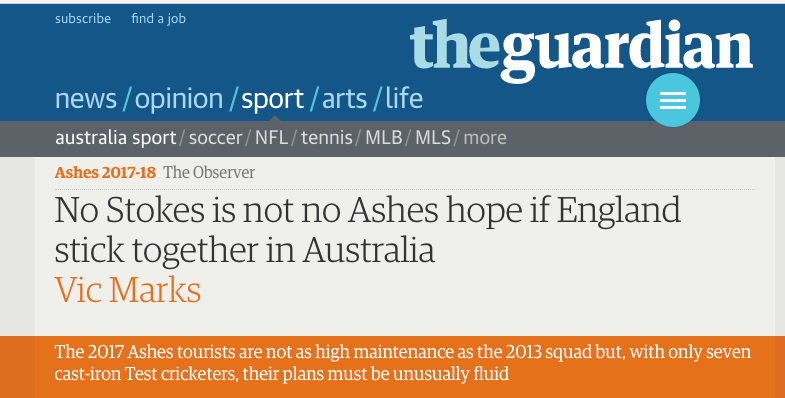
Vic Marks, "No Stokes is not no Ashes hope if England stick together in Australia", The Guardian 10/29/2017.

Taking into account the Guardian's headline register, and decoding the article to some extent, I conclude that the intended analysis ain't no negative concord.
Rather, the structure is

[[No Stokes] is not [no Ashes hope]] [if England stick together]

and the interpretation is

the fact that player Ben Stokes may be unavailable doesn't entail that England has no hope of winning the Ashes cricket match

So not this but this.

The obligatory screenshot:

[h/t Michael Glazer]

26 Oct 15:19

שו עוף #היבריש

by יובל פינטר
Yuval Pinter

טוב הגיע הזמן לעדכן את היכל התהילה סוף סוף

צחוקו האפל של הגורל שהגה את מקור ייסורי המצפון המכבידים ביותר על הבלשן ההורה: מצד אחד, אם הורים לא כל כך בולגים כי למי יש זמן לזה. מצד שני, כשהורים, נחשפים לפלאי השפה המהודרים ביותר המגולמים בתהליך הזה שנקרא רכישת שפה. כשהורים שעוברים מדינה עם בת 3 שעכשיו כבר בת 4 וחצי, ושומעים את מה ששמעתי היום, זה כבר פשע בל יתואר לא לפתוח את ממשק הוורדפרס המזעזע ולתקתק במחשכים.

שום דבר לא הכין אותי לזה. הסעתי את הבנות מהגן הביתה, וברמזור מוציאה ענבל (4 וחצי כאמור) את רצף ההגאים הבא,  בדברה על אחותה קרן (תיכף 2. מטריה אצלה זה /bla/):

/aba, keren lakxa et ha-šu of./

ובהילוך איטי:

אבא, קרן לקחה את ה-shoe off.

מזל שהיינו ברמזור למה אחרת הייתי עושה תאונה. סערה מושלמת של תופעות קרוס-לשוניות, הלחמה של עברית ואנגלית בכל רמה שהיא, היבריש אמיתי.

נתחיל ברמה הלקסיקלית. ענבל לקחה את הפועל took ותרגמה אותו כפשוטו ללקחה, מה שלא עושה שכל בעברית שבה מורידים נעל, או בנודניקית שבה חולצים נעל.

הלאה לרמה הלקסיקלית-קומפוזיציונאלית. הרי גם באנגלית אנחנו לא take את הנעל. אנחנו take off את הנעל. ענבל שילבה את שני חלקי הפועל המורכב (phrasal verb) במשפט הסופי, אבל חלקו בתרגום מילוני לעברית וחלקו בשפת המקור.

ברמה המורפו-תחבירית, העניק לנו מנגנון השפה של הילדה את התיבה ha-shoe, שמורכב מקליטיק היידוע ה והמילה האנגלית shoe. מפלצת פרנקנשטיינית זוטא בינות לחלקי המפלצת הגדולה יותר של הפועל המורכב.

לסיכום, התחביר. הו, התחביר. שאלו מכובדיי, המשפט הזה הוא בסופו של דבר בעברית או באנגלית? אמר הלל הזקן – אנגלית כמובן! פועל מורכב שחלקו השני הוא מילת יחס זהו סממן מובהק של אנגלית ואם היתה אומרת לקחה את הנעל החוצה היית לבטח מאבחן כאן משפט אנגלי שעבר שמלול (רה-לקסיפיקציה; אין לי מושג אם באמת אומרים שמלול אבל אני על מסך מלא אז אין לי כוח לפתוח עוד לשונית לבדוק). בא שמאי הזקן לא פחות ודחפו באמת הבניין: עברית היא! מה למילת היחס את במשפט לועזי? "את השו", זהו צירוף עברי שעבר שמלול של המשלים השמני לאנגלית! לא זו אף זו, שבאנגלית לא מיידעים את הנעל הסתם כך, היא צריכה להיות her shoe! קם הלל וניער האבק מכתנתו ואמר וואלה יש לו פוינט לזה. ברמת המשפט הכללית הרי יש לנו מבנה שמתאים לשתי השפות (נושא לפני פועל לפני מושא). אם כן חברים וחברות, השתגית היבריש לתוך פרצוף שלכם.

לרגל המאורע, הנה ניתוח תחבירי לפי בית דקדוק התלויות סבא (dependencies). קשתות כחולות הן תחביר עברי, אדומות תחביר אנגלי, שחורות גם וגם.

keren-shoe-dep

18 Oct 11:23

Comic for 2017.10.17

New Cyanide and Happiness Comic
08 Oct 18:52

Saturday Morning Breakfast Cereal - Degradation

by tech@thehiveworks.com
Yuval Pinter

L'aprés-comique


Click here to go see the bonus panel!

Hovertext:
Socrates would consume hemlock, sure, but what about Arby's?

New comic!
Today's News:

Just ten days until our BOOK TOUR OF DOOM kicks off in Seattle. All of these events have limited seating, so make sure to snag a ticket before we sell out!

05 Oct 16:15

המלצה - לא להעביר - טרור ליצנים בחולון

by חנן כהן
Yuval Pinter

דווקא נראה אמין

ההסבר:

זוהי ידיעה מזוייפת. מתיחה שילדים מותחים בה אחד את השני. בתחילת חודש אוקטובר 2017 יש בישראל היסטריית ליצנים. יש ילדים שמנצלים את ההיסטריה להפחיד ילדים אחרים. יכול להיות שמקור ההיסטריה הוא הקרנת סרט האימה "זה" שבו מופיעה דמות מפחידה של ליצן.

המקור:

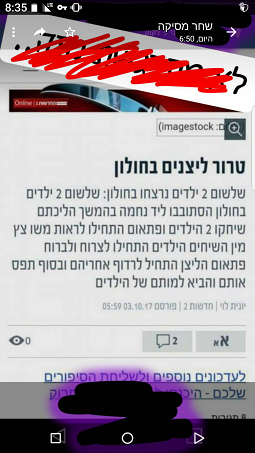
מסתובבת הידיעה הבאה: שלשום 2 ילדים נרצחו בחולון. הסתובבו ליד נחמה בהמשך הליכתם שיחקו 2 הילדים ופתאום התחילו לראות משו צץ מין השיחים הילדים התחילו לצרוח ולברוח פתאום הליצן התחיל לרדוף אחריהם ובסוף תפס אותם והביא למותם של הילדים

29 Sep 18:18

Lord Chronos

by Reza

29 Sep 13:58

Hebrew mystery

by Victor Mair
Yuval Pinter

This is my new browser landing page.

[This is a guest post by Adam Levine]

A friend noticed this plaque while attending a wedding in New England:

The Hebrew on the plaque, בךקכהץ זםגקל, is pure gibberish. Most notably, two final forms of letters (ך and ם) written in the middle of words. This led to an epic late-night Facebook discussion as a team of highly Hebrew-literate sleuths struggled to figure out the meaning of the phrase. All sorts of theories were considered: Was it an acronym for the names of the donors or some other phrase? Was it the result of a computer issue, such as a phonetic Hebrew keyboard (for English speakers) vs. the standard Hebrew keyboard? None of these theories seemed to add up.

An inquiry to the venue produced the following reply: "[NAME REDACTED] was responsible for this plaque. The hebrew translates to bestowing kindness unto others. Mystery solved! 🙂"

Several people then began to notice some similarities between the mystery phrase and גמילות חסדים, gemilut hasadim, which has the intended meaning. The numbers of letters in each word are the same (6 and 5), and the two קs in the gibberish are in the same positions as the two יs in the suggested phrase. Moreover, many of the letters in the gibberish are nearby in alphabetical order to the corresponding letters in the suggested phrase, but with some inconsistencies: ב and ג are one letter apart, while ך (the final form of כ) is two off from מ. However, the letters ק and י are nowhere near each other in the alphabet. It was suggested that the letter י (which in most printed fonts is written with a serif on top) could easily have been mistaken for a ר, which is indeed one letter after ק, but this still didn't answer the main question: How did this happen?

The solution comes from looking at the alphabet. Hebrew uses dots in certain letters to distinguish between stops and fricatives – e.g. בּ bet vs. ב vet. These dots are not usually written by native speakers who can infer them from context, but non-native speakers frequently think of בּ and ב as separate letters (particularly those who learned the alphabet from this song). If we write out one version of the alphabet with the dotted/undotted letters treated as separate, and another one with the pairs treated as one, we have the following:

Without
dotted letters
With
dotted letters
Line
numbers
א א 1
ב 2
ג ב 3
ד ג 4
ה ד 5
ו ה 6
ז ו 7
ח ז 8
ט ח 9
י ט 10
כ י 11
ך 12
ל כ 13
מ ך 14
ם ךּ 15
נ ל 16
ן מ 17
ס ם 18
ע נ 19
פ ן 20
ף ס 21
צ ע 22
ץ 23
ק פ 24
ר ף 25
ש צ 26
ת ץ 27
ק 28
ר 29
שׁ 30
31
32
ת 33

Most of the pairs of letters then line up perfectly! Specifically, each letter of גמילות חסדים in the first column ends up in the same row as the corresponding letter of בךקכהץ זםגקל, as highlighted in yellow. However, there are a few exceptions, highlighted in red. One letter (the final ם) should match up with ךּ by this rule, but instead it became ל, which is only off by one row. However, the ק/י issue discussed above remained mysterious, and the suggestion of first replacing י by ר fails to solve it. This, it turns out, was a red herring. A much better answer is that י could also be easily mistaken for an apostrophe, which is used in modern Hebrew in conjunction with certain letters to denote various non-native phonemes. If we add the apostrophe as an additional letter of the alphabet right after ת, we see that it lines up perfectly with ק in line 28, as required.

But why? We decided it would be rude to press the venue too hard on this question, but there is one likely explanation. Many (human) printers use a system of numbers for writing Hebrew letters on invitations, cards, and presumably plaques. For instance, if a customer wanted to get the word גמילות, they would give the printer a sequence of numbers corresponding to the letters – e.g. 3, 14, 10, 12, 6, 27 using the first column of our chart, reading right to left. This is intended to avoid mixups, which are likely when neither the customer nor the printer know Hebrew well. In this case, it seems that the customer probably encrypted the phrase using the first column, and the printer decrypted the sequence of numbers using the second column, leading to the gibberish. The issue of ךּ vs. ל can then easily be explained as a transcription error, particularly since 15 and 16 look and sound quite similar.

Mystery solved!
28 Sep 17:09

"Appears to be on the perimeter of meaningful investigation."

“Appears to be on the perimeter of meaningful investigation.”
28 Sep 13:32

Everybody Wants Brains

by Doug
27 Sep 20:58

בקרוב אתם עומדים לסמן עתיד ביותר מדי דרכים

by יובל פינטר

תהא פרסומת חדשה לאל על, חברת התעופה הגרועה בעולם:

מה נאמר בה ומה נכתב בהסטטוס שבו פורסם הסרטון?

בקרוב הכל עומד להיראות אחרת!

ובכן, נניח לרגע לחוסר האמונה שלי לגבי אמיתות הטענה. מבטיח לחזור לסמנטיקה בפוסטים הבאים. משהו במבנה המשפט היומרני הזה גרם לי כאב ראש קל (אם כי, למען ההגינות, רק אחרי כמה קריאות). ספציפית, במבנה הזמנים.

בפינה האדומה, בקרובבקרוב הוא תואר פועל שמצביע על אירוע בעתיד, כמו מחר או בשבוע הבא אבל פחות מוגדר מהם. הפועל אליו מתייחס בקרוב יתאר פעולה בעתיד, ולכן יבוא בלשון עתיד.

בפינה הכחולה, עומד להיראות. זהו הפועל (המורכב) שאליו מתייחס אותו בקרוב. ככלל, עומד ל- אכן מסמן זמן עתיד (עוד מימי חז"ל! איפה קבוצת התמיכה לאשליית הטריות איפה). אך בדומה לעמיתיו going to האנגלי, va a הספרדי, va הצרפתי, ו-שהמצאתי הרגע בשביל הסדרה החשבונית, הוא מתפרש כעתיד קרוב, משהו שממש עומד להתחולל בטווח הזמן המיידי ובהתאם לכך מקושר בקו תחבירי רציף להווה על-ידי צורת הפועל הראשי (עומד, בבינוני). נקודת הייחוס שלו צריכה להיות ההווה.

וזה מה שמתחרבש כאן. בקרוב שולח אותנו לעתיד הקרוב, ואז עומד ל- שאמור להתחיל מנקודת ייחוס בהווה פתאום מצופה להתחיל מייחוס עתידי, ויש כאן שתי אפשרויות:

  1. מצטברת (קומפוזיציונאלית), כלומר שהשינוי יתחיל בבקרוב של הבקרוב.
  2. חופפת, כלומר תתעלמו מהכפל ותתייחסו לשני הסמנים כאל "עתיד קרוב" וזהו.

הראשונה לא ממש הגיונית מטעמים של שימוש סביר. עתיד קרוב, בשני הביטויים, הוא קונספט מעורפל ואין ממש צורך לשוני לחלק עתיד קצת-פחות-קרוב לשני צעדים של עתיד קרוב. גם כשהעתיד הקרוב הראשון מוגדר יותר, קשה למצוא דוגמאות בשטח להרכב הזה. גיגול המחרוזת המדויקת "מחר הכל עומד" מחזיר רק מקרים בהם המילה הבאה היא להשתנות, ורק שישה כאלה בכל מרחבי המרשתת.

האפשרות השניה, שכנראה אליו התכוונו משוררי השירות המזעזע, פשוט איננה דקדוקית מהטעמים שציינתי לעיל.

אבל היי, שפה אפורה וקשה לעיכול – אסוציאציה מיידית לאוכל של אל על! הכל מיתוג, חברים.

[רוב תודות לעידו צ, במודע.]

27 Sep 13:19

Headlinese grammaticality

by Mark Liberman
Yuval Pinter

last note in particular

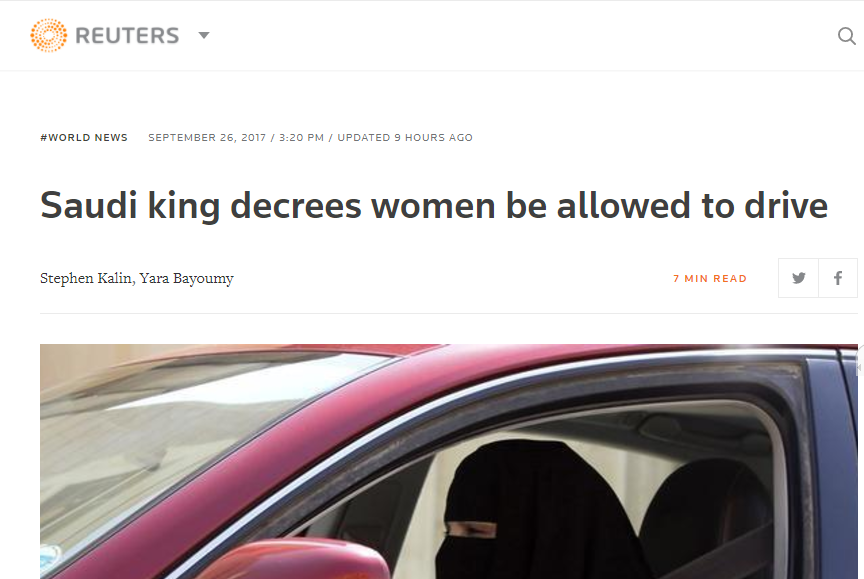
"Saudi king decrees women be allowed to drive", Reuters 9/26/2017:

Elika Bergelson writes:

This feels wrong — I can't substitute any other verb in to make it okay.
Saudi king announces/says/declares/rules all fall short…

Certainly the normal pattern would be

X VERB-OF-SAYING (that) Y MODAL be allowed to VERB

e.g. "Saudi king decrees (that) women will be allowed to drive" — though that's not concise enough for headlinese. Better would be

X VERB-OF-SAYING Y to be allowed to VERB

i.e. "Saudi king decrees women to be allowed to drive".

A real AFP headline: "In shock announcement, Saudi Arabia says women to be allowed to drive" 9/27/2017.  I 'd be surprised to see that construction in non-headline prose, but it's unsurprising in a headline.

What's interesting to me here is that we have such strong intuitions about grammatical and ungrammatical — or at least idiomatic and unidiomatic — headlinese.

Update — And I completely missed the idea that this might be a "mandative subjunctive", although we've discussed that construction a number of times, e.g. here. In such cases, the verb is in the "plain form", which for a passive would be simply "be". In my defense, the mandative subjunctive is kind of old-fashioned, not say obsolete — and I don't think I've ever seen it with elided that. The standard examples are things like

The duke insisted that the cutlery be made of pure silver.

Are such examples grammatical with that omitted?

22 Sep 23:01

Saturday Morning Breakfast Cereal - Humor

by tech@thehiveworks.com


Click here to go see the bonus panel!

Hovertext:
How many blondes does it take to screw in a lightbulb? None, because automation has eliminated the need for humans.

New comic!
Today's News:
18 Sep 00:53

What were they thinking?

by Mark Liberman
Yuval Pinter

The second comment.

Alex Baumans writes:

Perhaps no news to you, but I just discovered that the new Range Rover model is called the Velar. I wonder if the Uvular will be next.

To be followed by the Range Rover Pharyngeal and the Range Rover Glottal. (Or maybe a hybrid version called the Range Rover Labiovelar?)

And Jeep could fight back with the Jeep Ergative and the Jeep Grand Optative…


13 Sep 15:21

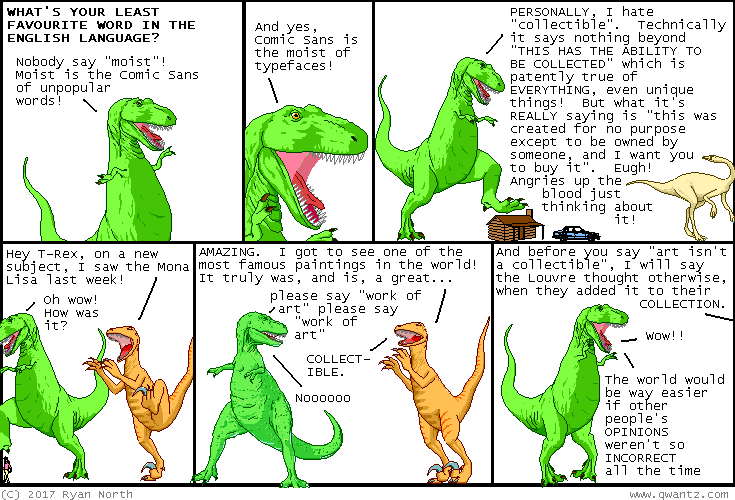
judging by the "u" in "favourite", we're looking for the least favourite word in the (canadian) english language

archive - contact - sexy exciting merchandise - search - about
← previous September 13th, 2017 next

September 13th, 2017: TONIGHT! I'm in Ottawa talkin' comics and it's free to come! AND THERE'S SNACKS! See you there??

– Ryan

12 Sep 07:20

THE DEVIL RETURNS, FOR A SINGLE LINE

archive - contact - sexy exciting merchandise - search - about
← previous September 8th, 2017 next

September 8th, 2017: LOOK WHAT ME AND MY NEW FRIENDS MADE, I GOT SLOPPY DRUNK FOR THE FIRST TIME IN MY LIFE EXCLUSIVELY FOR THIS:

– Ryan

12 Sep 03:06

Parenting in nature.

by Lydia Grant
10 Sep 14:07

Comic for 2017.09.10

New Cyanide and Happiness Comic
09 Sep 12:07

Impromptu biscriptalism on a Starbucks cup

by Victor Mair

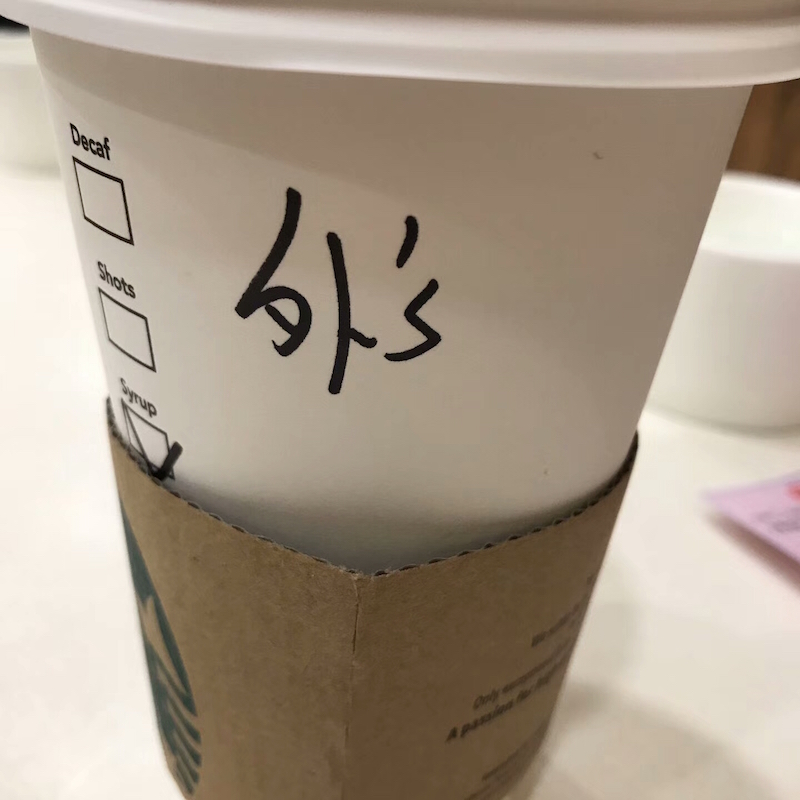
Photograph taken by a Russian friend of Nikita Kuzmin at a Starbucks in Shenyang, northeast China:

The handwriting on the side says simply:

wài's 外's ("foreigner's"), where the wài 外 is short for:

wàiguórén 外国人 ("foreigner")

lǎowài 老外 ("[old] furriner"), which we studied extensively in this post:

"Laowai: the old furriner" (4/9/14)

One might well ask why the barista didn't write "de 的", the Mandarin possessive particle equivalent to English "'s".  I submit that they felt the two strokes of "'s" were easier and simpler than the eight strokes of "de 的".  Not only that, using "'s" after the designation for a person at a Starbucks in Shenyang (Manchu name Mukden) shows that the English morpheme is thoroughly assimilated in Chinese and that it felt natural for the barista to do so.  We observed this already years ago in this post on the adoption of the English agentive suffix -er in Mandarin:

For digraphia, biscriptalism, and multiscriptalism, see — among others — the many posts listed here, and especially this intriguing early post:

A final observation is that I've never seen a Starbucks barista write "[so-and-so]'s" on a cup in any English-speaking country where I've been (they just write the name of the person without "'s"), so the barista in Shenyang was not emulating an English usage when they added "'s" to wài 外 ("outside[er]; foreigner").  Their "wài's 外's" ("foreigner's") is a thoroughly indigenous creation.

31 Aug 14:49

רשימת המשאלות של נפתלי בנט

by נביא שקר

אם וכאשר אתם מרפרפים על מוצרים באמזון, יש כפתור קטן שמוסיף את המוצר ל׳רשימת המשאלות׳ שלך. זה פיצ׳ר שנועד לאפשר לאנשים להגיד ׳אני לא אקנה את זה עכשיו, אבל אולי אחר-כך׳. חלק מהמטרה המקורית היה לאפשר לאנשים אחרים לראות מה אתה רוצה ולקנות לך את זה. אני לא מכיר מישהו שמשתמש ברשימת המשאלות כך, אבל זאת הסיבה שרשימת המשאלות היא פומבית.

אשלי פיינברג הצליחה למצוא כך את רשימת המשאלות של כמה דמויות פוליטיות בארצות-הברית, שמיהרו להכחיש אבל גם למחוק את הרשימות. האמת שההכחשות יותר מעניינות מהרשימות עצמן.

בישראל הסיכוי שדמויות ציבוריות ישתמשו באמזון הוא נמוך יותר, מן הסתם, אבל החלטתי לבדוק כל מיני אנשים בחצי-אקראי. הרוב לא עולים בחכה ומי שכן עולה משעמם והרשימות קצרות (הידעתם שאנשיל פפר חשק בפויינטר למצגות? או שבן-דרור ימיני עיין בספרי לימוד על טיהור אתני?)

אבל אז נתקלתי בנפתלי בנט. משהו קצר לפני שאני מציג את הרשימה:

א. אי אפשר להיות בטוחים ב-100% שזה הפוליטיקאי נפתלי בנט, אבל אני די בטוח שזה כן הוא. זה לא בדיוק שם נפוץ, ותאריך יום-ההולדת של המשתמש באמזון מתאים לתאריך יום ההולדת של בנט הפוליטיקאי.

ב. אין כאן משהו מרעיש או פואנטה מיוחדת. הדבר היחיד שאולי מעניין הוא שבנט בדק לא מעט ספרים פוליטיים (כגון ׳איך לנצח בקמפיין הרשאון שלך׳) עוד בשנת אלפיים, הרבה לפני שהוא היה מעורב באופן רשמי בפוליטיקה או ב׳מחאת המילואימניקים׳.

הרשימה

Screen Shot 2017-08-31 at 10.27.31 AMScreen Shot 2017-08-31 at 10.27.39 AMScreen Shot 2017-08-31 at 10.27.48 AMScreen Shot 2017-08-31 at 10.27.58 AMScreen Shot 2017-08-31 at 10.28.06 AM

29 Aug 13:00

Comic for 2017.08.29

New Cyanide and Happiness Comic
25 Aug 13:28

Pull your head in, Kevin.

by Lydia Grant

24 Aug 14:51

Yeah, but it's free.

by Lydia Grant

23 Aug 16:31

Clean Up

by Doug
22 Aug 01:08

Decisions.

by Lydia Grant
21 Aug 00:59

Saturday Morning Breakfast Cereal - Gif

by tech@thehiveworks.com


Click here to go see the bonus panel!

Hovertext:
As in 'Ic hyeefed yow thes quilte.'

New comic!
Today's News:
21 Aug 00:55

"The paper comes with proofs, but – at a first glance – they seem to be more cute than useful."

“The paper comes with proofs, but – at a first glance – they seem to be more cute than useful.”
17 Aug 17:22

The Smart One

by Doug
16 Aug 15:15

alternatively just slide a printout of this comic across the table

archive - contact - sexy exciting merchandise - search - about
← previous August 16th, 2017 next

August 16th, 2017: I have deployed EACH of these successfully! Nothing can ever go wrong with these phrases; it is a science fact.

– Ryan

09 Aug 04:30

Nature is so majestic.

by Lydia Grant

02 Aug 14:41

אנחנו פונים לליבם של הליכודניקים החדשים ומתחננים שיכניסו את אורן...


אנחנו פונים לליבם של הליכודניקים החדשים ומתחננים שיכניסו את אורן חזן לרשימות שלהם, יהיה משעמם בלעדיו וסה"כ הוא לא באמת מזיק.

הקשר