
Vjuliao
Shared posts
24 May 20:19


http://cartunistasolda.blogspot.com/2011/04/gazeta-do-povo_26.html
by Luiz Solda


Gazeta do Povo

24 May 20:11
ladysnowblood: imalittleredtorvette: #I AM IN LOVE WITH A 72...


Russian Sledges, Balint and 2 others like this
24 May 20:07


The First Image Ever of a Hydrogen Atom's Orbital Structure
by George Dvorsky

What you’re looking at is the first direct observation of an atom’s electron orbital — an atom's actual wave function! To capture the image, researchers utilized a new quantum microscope — an incredible new device that literally allows scientists to gaze into the quantum realm.
    
|
Digitman801, Jarrod Keone Montoya and 2 others like this
24 May 20:07


Watch 9 months of Curiosity on Mars in a one-minute time-lapse video
by Amanda Yesilbas
This fascinating time-lapse video shows nine months of the Mars Curiosity Rover digging and moving its way across the red planet, in just one minute. Unlike the typical Mars beauty shots, the video shows the rover actually getting its work done.
|
|
firehose and -1 others like this

24 May 12:31
Spaceship art by Ridwan Chandra
by Igor Tkac
meganerid on CGHUb.

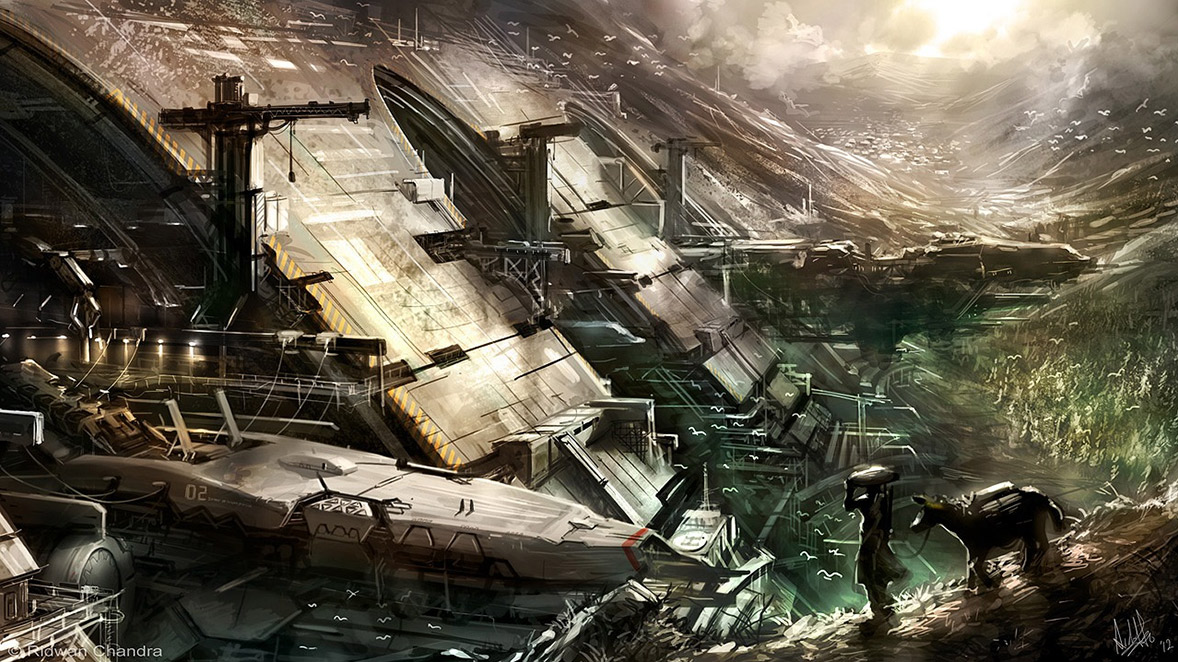

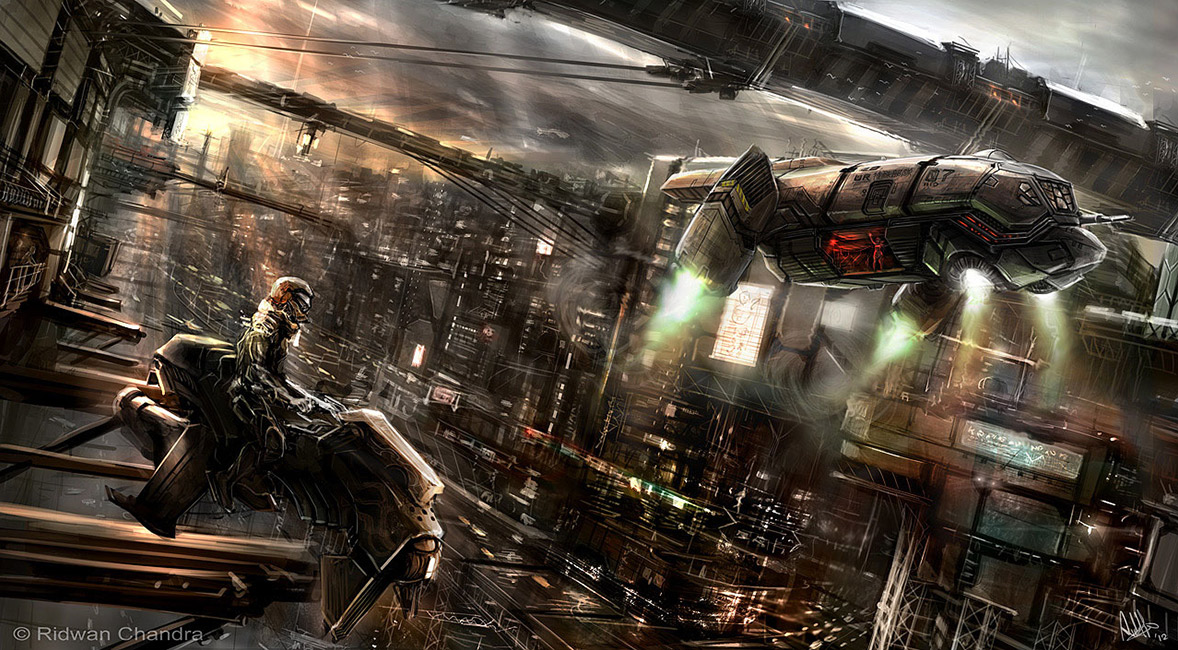
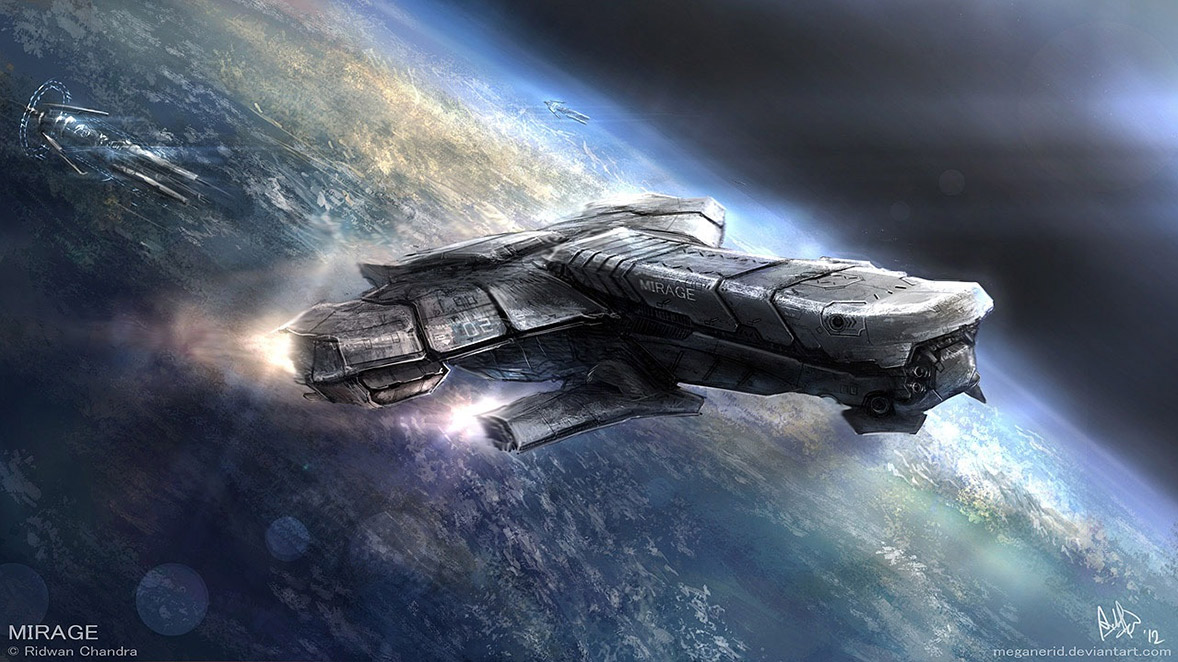
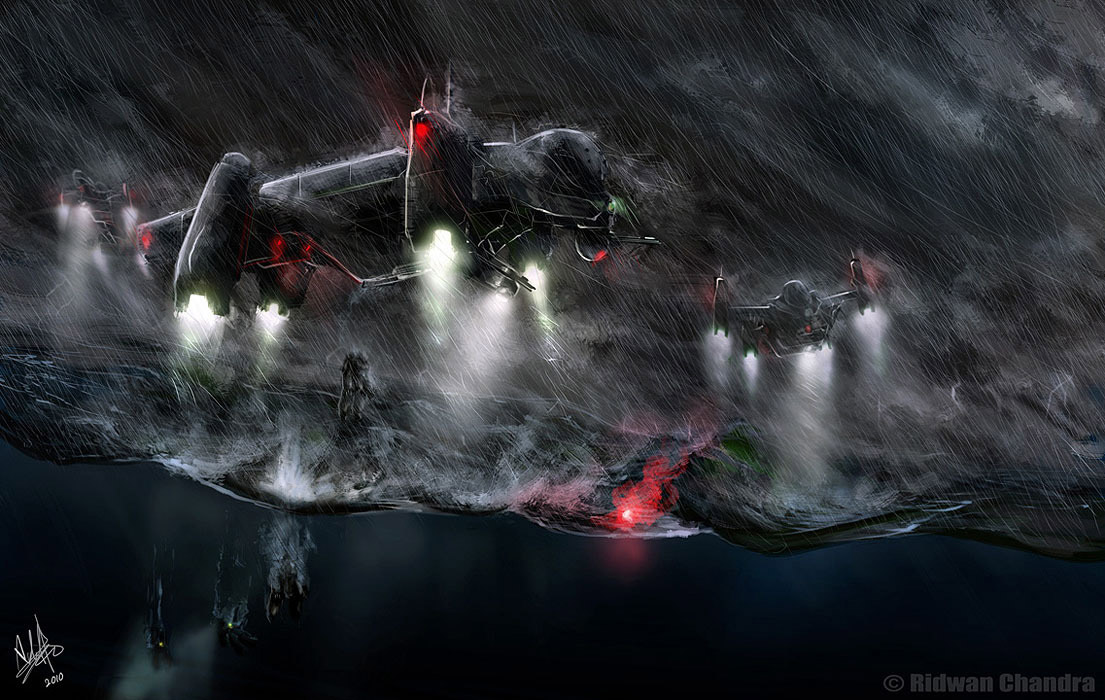




Keywords: 2d two dimensional digital tablet spaceship concept art designs environments sci-fi science fiction scenes by ridwan chandra meganerid on cghub lucasarts singapore
Keywords: 2d two dimensional digital tablet spaceship concept art designs environments sci-fi science fiction scenes by ridwan chandra meganerid on cghub lucasarts singapore
Marceloliberatto likes this
24 May 12:30


proudlybigotedmisandrist: defranco: edwardspoonhands: tyleroak...
Oops.
lolololol
hehehe
ignore the part with tyler oakley


24 May 12:25
heyoscarwilde: candid behind the scenes photos from The Muppet...


firehose and -1 others like this
24 May 12:24


Feast your eyes on the first global topographical map of Titan
by Robert T. Gonzalez

For the first time ever, planetary scientists have created a topographical map of Titan, the largest of Saturn's many moons, and the second-largest in the entire solar system. The map is a boon to researchers who study Titan, a mysterious moon that is arguably the most Earth-like body in our solar system – and it's beautiful, too.
|
|
firehose and -1 others like this





22 May 20:49
Guy Shaves His Facial Hair to Look Like the Batman Logo
by Justin Page

A hero that Gotham deserves has risen thanks to redditor chrismusaf and a photo he posted of his friend’s facial hair shaven in the shape of the Batman logo. Previously we wrote about another great attempt at a facial hair Batman logo.
photo via chrismusaf
via Blastr, The Mary Sue

22 May 20:31

Working in the Belly of the Beast.
Working in the Belly of the Beast.
Cooper Griggs, David Pelaez and -1 others like this
22 May 20:30


“you want me to finish him?” ” no no no, we...
“you want me to finish him?” ” no no no, we got it.”
David Pelaez, Anaís Ferrer and -1 others like this
22 May 20:28

New Cloned Video GIFs from Erdal Inci
by Christopher Jobson


Last year I featured a number of amazing gifs from Istanbul-based artist Erdal Inci (previously) who clones sections of video to create hypnotic animated loops. His work has since popped up all over the web and will soon find its way into a gallery space. Above are some of his latest clips depicting numerous copies of Inci himself parading through the frame like a cloned robot army, though he also flashlights to create even more complex effects. If you happen to be in Italy you can catch his work firsthand at Action Gallery in Milano on May 25 and in Naples on May 30.

22 May 20:26

New Hyperrealistic Sculptures by Ron Mueck
by Christopher Jobson

Ron Mueck’s Studio, January 2013. Photo by Gautier Deblonde.

Photo by Thomas Salva courtesy Fondation Cartier pour l’art contemporain.

Photo by Thomas Salva courtesy Fondation Cartier pour l’art contemporain.

Photo by Thomas Salva courtesy Fondation Cartier pour l’art contemporain.

Photo by Thomas Salva courtesy Fondation Cartier pour l’art contemporain.

Photo by Thomas Salva courtesy Fondation Cartier pour l’art contemporain.
Hyperrealist sculptor Ron Mueck works in the realm of the ultra-real where he spends hundreds of hours perfecting the shape of the human form, the appropriate color of skin, and the most realistic hair texture. All of his efforts culminate in incredibly lifelike figurative sculptures with one small (or large) exception: the artworks are often gigantic or miniaturized, resulting in an uncomfortable “does not compute” moment when trying to comprehend exactly what you’re looking at. Each sculpted person is as bizarre as it is amazing, in part because of the raw intimacy portrayed in their faces, as if we are somehow witnessing the documentation of a private moment.

Ron Mueck’s Studio, January 2013. Photo by Gautier Deblonde.

Photo by Thomas Salva courtesy Fondation Cartier pour l’art contemporain.

Photo by Thomas Salva courtesy Fondation Cartier pour l’art contemporain.

Photo by Thomas Salva courtesy Fondation Cartier pour l’art contemporain.

Photo by Thomas Salva courtesy Fondation Cartier pour l’art contemporain.
Like several other hyperrealist sculptors Mueck began his sculpting career in entertainment where he started work as a puppeteer, creating models and puppets for children’s movies and TV shows. Most notably he worked on Jim Henson’s film Labyrinth and even provided the voice for the character Ludo. In 1996 he made the switch to fine art and quickly rose to prominence with exhibitions at the Royal Academy and the National Gallery in London.
Last month Mueck unveiled three new works at the Fondation Cartier in Paris as part of an exhibition that runs through September 29th, including the extraordinary Couple Under an Umbrella shown above. You can watch the video to get a little more perspective on just how large this artwork really is. All images above courtesy Fondation Cartier. (via my amp goes to 11)
Sofía Henao and -1 others like this
22 May 20:20
Eye-Poppingly Gorgeous Underground Stations from Around The World
by Vincze Miklós

The history of rapid-transit began 150 years ago, with the opening of the Metropolitan Railway in London in 1863. In the next century and a half, dozens of architects and engineers have worked on underground tunnels and stations. Some are abandoned now, but others are as good as new. Here are some of the most wonderful underground railway stations.
Rådhuset, Stockholm, Sweden
Rådhuset (Court House) station was opened in 1975 as a part of the Stockholm rapid transit system, one of the best examples of organic architecture. Pictured above.
(via Tobias Lindman/Flickr)
T-Centralen Station, Stockholm, Sweden

The only place where all three of Stockholm's metro lines meet has this really wonderful one platform station, opened in 1975.

(via Paolo Rosa/Flickr and Erzsébet)
Solna Station, Stockholm, Sweden (1975)

(via Wikimedia Commons/Wargklo)
Stadium Station, Stockholm, Sweden (1973)


(via Skye Christensen/Flickr and Wikimedia Commons/Allgau)
Westfriedhof Station, Munich, Germany

This station was opened in 1998, but the 11 large lamps (with red, blue, and yellow lights) were installed three years later.

(via Hannes Maurer 1 - 2)
Marienplatz Station, Munich, Germany

Marienplatz Station is one of the most frequently used stations in Munich, and was opened as part of the new S-Bahn network for the 1972 Summer Olympics.


(via Jaw3, Flickr/MrOmega and Wikimedia Commons/FloSch)
St.-Quirin-Platz Station, Munich, Germany (1997)


(via Wikimedia Commons/Florian Schütz, Wikimedia Commons/FloSch and Ian Fisher/Flickr)
Brudermühlstrasse Station, Munich, Germany (1989)

(via Jaw3)
Olaias Station, Lisbon, Portugal

Olaias Station was designed by Tomás Taveira and opened shortly before the Expo 1998. Walk through the station on 360cities.


(via IngolfBLN/Flickr)
Drassanes Station, Barcelona, Spain

This station was opened in 1968, but was completely renovated between 2007 and 2009 with GRC (Glass Reinforced Concrete) panels and interesting details designed by the Barcelona-based ON-A Architects.


(via buildtonet)
Budapest Metro Line 3, constructed in the 1970s and 1980s

(via Hype and Hyper)
Avtovo Station, Saint Petersburg, Russia

This highly ornate white marble station was opened in 1955 and designed by Y. A. Levinson.


(via Wikimedia Commons/Sbarichev, Wikimedia Commons/Florstein and Andrew L. Moore)
Elektrozavodskaya Station, Moscow, Russia

Elektrozavodskaya Station was named after an electric light bulb factory nearby and opened in May 1944 during the WWII. It's famous for its decorations, designed by Vladimir Schuko, Vladimir Gelfreich and Igor Rozhin.
(via Wikimedia Commons/Eugeny1988)
Komsomolskaya Station, Moscow, Russia

Opened in 1952 and designed by Alexey Shchusev and Viktor Kokorin, this station has some mosaics, red granite, marble and other artistic decorations.


(via 3 years in Moscow, Chaos In Patterns and Wikimedia Commons/Lite)
Kiyevskaya Station - Koltsevaya Line Hall, Moscow, Russia

The richly decorated hall was opened in 1954 and has a quasi-baroque style with large mosaics by A.V. Myzin and gold-colored trim.


(via Wikimedia Commons/Antares 610)
Slavyansky Bulvar Station, Moscow, Russia

The station, designed by S. Volovich and opened in 2008, has green Cuban marble on the walls, and grey granite with darker (Gabbro granite) marble edges.


(via Wikimedia Commons/VanHelsing.16, Jaime Silva/Flickr and somebody_/Flickr)
Zoloti Vorota Station, Kiev, Ukraine

The Orthodox cathedral-like Zoloti Vorota was opened on December 30, 1989 as the part of the first stage of the Syretsko-Pecherska Line. Designed by Boris and his son Vadim Zhezherin, S.Adamenko, and M. Ralko.


Puhŭng and Yonggwang Station, Pyongyang, North Korea

Puhŭng
Many foreign tourists were allowed to travel only between Puhŭng Station and Yŏngwang Station (both opened in 1987) on the Chŏllima Line. The Pyongyang Metro is the deepest in the world–the track runs 360 ft (110 m) underground.

Puhŭng

Puhŭng

Yŏngwang

Yŏngwang
(via Wikimedia Commons/Gilad Rom, Wikimedia Commons/John Pavelka, Geolocation.ws/afchagen, Flickr/John Pavelka 1 - 2)
Museum Subway Station, Toronto, Canada

This station was redesigned by Diamond and Schmitt Architects in 2008.

(via architecture NOW)
O'Hare Station, Chicago, Illinois

This station, with its curved and luminous walls made of glass, is located at O'Hare International Airport. It was designed by Murphy/Jahn and opened in 1984.

(via Wikimedia Commons/Daniel Schwen and Eden Politte/Flickr)
Arts et Métiers Station, Paris, France

The steampunkish underground station near the Musée des Arts et Métiers was opened in 1904, but was redesigned by the famous Belgian comics artist François Schuiten in a style inspired by the works of Jules Verne.


(via Pathien/Flickr, Steve Calcott/Flickr and RG1033/Flickr)
Formosa Boulevard Station, Kaohsiung, Taiwan

This transfer station was built for the 2009 World Games, but opened in September 2008. It has the largest glass work in the world, designed by Narcissus Quagliata, covering an area of 23,465 sq ft (2180 sq m) with 4,500 glass panels.

(via Wikimedia Commons)
The stations of the Line A, Prague, Czech Republic

The colorful opened Dalek skirts with hemispheres on the walls make these stations from the 1970s look really fantastic.


(via Flickr/Brad Ackerman, Flickr/ian LF and Kristin Esteves)
Bockenheimer Warte Station, Frankfurt am Main, Germany

The construction was finished in 1986, but it was expanded in 2001 under the leadership of Zbigniew Peter Pininski.


(via Wikimedia Commons/Jcornelius, Bobanac Andreas/fotocommunity, Christine Moje/fotocommunity, mibi55/fotocommunity and Jürg Stuker/Flickr)
David Pelaez, Cooper Griggs and 3 others like this
22 May 20:05

Recycled Bike Part Chandeliers Under a Texas Overpass
by Christopher Jobson


Ballroom Luminoso is a series of six chandeliers designed by artists Joe O’Connell and Blessing Hancock currently installed in San Antonio, Texas. Made from custom made structural steel, custom LEDs and recycled bicycle parts, the lights project colorful silhouettes of sprockets and other pieces onto the otherwise drab cement underpass. From the artist’s statement about the project:
Ballroom Luminoso references the area’s past, present, and future in the design of its intricately detailed medallions. The images in the medallions draw on the community’s agricultural history, strong Hispanic heritage, and burgeoning environmental movement. The medallions are a play on the iconography of La Loteria, which has become a touchstone of Hispanic culture. Utilizing traditional tropes like La Escalera (the Ladder), La Rosa (the Rose), and La Sandía (the Watermelon), the piece alludes to the neighborhood’s farming roots and horticultural achievements. Each character playfully rides a bike acting as a metaphor for the neighborhood’s environmental progress, its concurrent eco-restoration projects, and its developing cycling culture.
If you liked this project you might also enjoy Carolina Fontoura Alzaga’s bike chain chandeliers. Images above courtesy photographer Fred Gonzales. (via lustik)
Garciasantiago.etc, Clifford.carpenter and one other like this
22 May 20:02


Por que algumas línguas são faladas mais rapidamente que outras?
by Wagner Brenner

Imagine que você está em um aeroporto. Ao seu lado, um casal conversa em uma língua que você não conhece.
Apesar de não entender nada, uma coisa é clara: eles falam rápido, muito rápido.
-”Piripipipi bóbóbóbó, firififi, pererepépé…”. Soam animadíssimos, como se estivessem conversando sobre algo realmente incrível.
Isso já aconteceu antes, naquela reunião com os gringos. Parece até que combinaram de falar bem rápido, só pra dificultar a sua vida.
Por que os espanhóis parecem falar sempre a 200km/h? E os Italianos a 250 km/h?
Por que o japonês parece uma metralhadora de sílabas como onomatopéias de filmes de karatê? Raiá, rói, chimbará, hup.
Para resolver esse mistério, pesquisadores da Universidade de Lion, na França, convocaram 59 homens e mulheres com línguas nativas diferentes (inglês, espanhol, japonês, françês, alemão, italiano e mandarin) para um teste.
01. Cada participante leu 20 textos, em sua língua.
02. Depois, os pesquisadores contaram o número de sílabas em cada língua e criaram uma relação entre o número de sílabas e o volume de informação ou significado contido nelas.
Ou seja, conseguiram atribuir um valor de “densidade” ou “prolixidade” (se é que existe essa palavra) para cada língua.
Algumas falam muito para dizer pouco, outras falam pouco para dizer muito.
Por exemplo, um “aiá” em mandarin pode significar “o homem que subiu a montanha para pegar uma flor”.
E um “hofdtanggerlishstrassesprunkt” em norueguês pode significar “oi” (palavras obviamente inventadas, só pra você entender o espírito da coisa).
03. Os resultados:

04. Conclusão I: quanto mais densa uma língua (onde cada sílaba tem muito significado embutido), mais lentamente é falada.
05. Conclusão II: essa é um mistério, mas todas as línguas entregam mais ou menos a mesma quantidade de informação no mesmo tempo. Só que as mais densas precisam falar menos e a menos densas, mais. Em um filme chinês legendado em espanhol, os atores falariam pouco, mas seriam muitas legendas.
06. Conclusão III: explicando o mistério do começo do post, em que os gringos soam sempre muito rápidos, é justamente por causa da baixa densidade de informação. Um fenômeno psicológico, você não entende nada, as sílabas viram apenas sons e você não consegue decodificar nenhuma informação e acha que está tudo muito rápido.
E essa é história por trás das diferentes densidades das línguas. Já as diferenças entre a densidade de cada pessoa, bom, aí já é outro post.
|
|
Snorkmaiden, Adam Victor Brandizzi likes this



22 May 19:46

Como Chris Hadfield fez com que voltássemos a nos importar com astronautas
by Casey Chan
Foi um simples vídeo de 31 segundos enviado ao YouTube em janeiro – um relógio balançando ao redor do pulso de quem o usava, o primeiro vídeo enviado pelo Comandante Chris Hadfield a bordo da Estação Espacial Internacional. Sem explicação, sem contexto, apenas um relógio de metal ao redor de um braço canadense peludo. Este, e dezenas de outros que vieram depois, mostram como Chris Hadfield se tornou o astronauta mais importante em décadas.
Por muito tempo, nós não nos importamos muito com as pessoas da Terra que vivem em outro espaço. É estranho; você deve pensar que devíamos nos importar. Mas de alguma forma ao longo dos anos, deixar o nosso planeta para ocupar os céus se tornou algo ordinário. E precisamos de Chris Hadfield e de um canal no YouTube para lembrar como isso é estúpido.
Em apenas alguns meses de vídeos bobos e atualizações no Facebook, Hadfield, que retorna para a Terra hoje, adicionou fantasia e admiração à ideia de pessoas irem ao espaço como não tivemos nos últimos trinta anos. E agora o espaço parece algo novo outra vez.
Em 21 de dezembro do ano passado, o Comandante Hadfield e sua equipe (Expedition 35) chegaram à ISS após um voo de dois dias a bordo da Souyz TMA-07M, e começaram a sua missão. Parecia um assunto bastante mundano. Existem imagens disponíveis, aquelas cenas incríveis, mas chatas, da NASA mostrando uma sala de controle e gráficos estilo PowerPoint misturados com câmeras que mostram a espaçonave se movendo muito rápido. A rotina disso tudo esconde o quão divertida a missão foi. E o fato de ser rotina mostra o como estamos cansados de algo que é incrível.
Após o vídeo do relógio, Hadfield começou a soltar mais. Cortar as unhas no espaço. Lavar as mãos, fazer um sanduíche, chorar lágrimas que não caem, escovar os dentes, ficar enjoado. Coisas normais, MAS NO ESPAÇO! Por pelo menos cinco meses ele se tornou uma celebridade.
A coisa certa
Hadfield foi o primeiro a perceber, em larga escala, que nós não queremos palestras, só queremos coisas legais. Então ele nos falou de coisas legais feitas no espaço. Ele teve resultados também. Seu vídeo mais popular teve mais de 7 milhões de views no YouTube, e muitos outros na casa dos milhões ou centenas de milhares. Ao redor do Twitter e Facebook, mais de um milhão de pessoas seguem suas contas. Ele não é o primeiro a mostrar vídeos do espaço no YouTube, nem o primeiro a fazer isso com sucesso. Mas, pelo primeira vez, os vídeos dele não tinham conversas com o comando ou câmeras ruins. De certa forma, é mais um caso de valor de produção vencendo, uma lição de um estilo mais exigente.
Estilo acompanha esperteza. O motivo da popularidade por trás de Hadfield está em como ele pensou bastante na audiência. Uma conversa com William Shatner vai te fazer ganhar muitos fãs. Isso é mais do que uma forma oportunista – quanto mais pessoas observam as coisas legais que você faz, maiores são as chances de verem o trabalho impressionante que está sendo feito no espaço. E se o sentimento público ficar ao lado dos astronautas, pode ser que o financiamento público aumente.
Hadfield definiu as linhas entre professor e artista, especialista e um cara com uma câmera de vídeo muito bem. Ele recebeu um pedido de alunos do ensino fundamental e fez o vídeo com nozes no espaço. Nunca se levou muito a sério, mas sempre foi sério o suficiente para passar informações relevantes, até mesmo em algo tão idiota como o comportamento de uma lata de nozes na ausência de peso.
Os efeitos da gravidade em minhocas e os hábitos de acasalamento de tartarugas são importantes, é claro. Mas para o público, a vida no espaço se tornou algo distante, para cientistas e experiências e técnicos de laboratórios. E ninguém jamais foi inspirado ao observar imagens de um circuito fechado de televisão com técnicos de laboratório.
O espaço que perdemos
Mesmo uma genuína emergência na estação espacial, como o vazamento de amônia deste final de semana, chamou pouca atenção. É uma imagem de como não damos muita atenção para a existência de astronautas.
Claro, nós vemos uns lançamentos e aterrissagens de naves de vez em quando, mas nunca vamos muito além disso. O limite da nossa fascinação não vai muito além da maravilha tecnológica de mandar humanos para o espaço e depois trazê-los de volta com segurança. Ainda vemos isso como um espetáculo. Mas o ato de realmente viver no espaço – viver! como o futuro! – para as pessoas na Terra foi, por anos, reduzido a algumas cenas de câmeras que são mostradas em noticiários ou em conversas com o Presidente.
Em vários sentidos, isso é natural. Todas as questões imediatas são respondidas na escola. Sim, você flutua. Não, você não toma banho, não exatamente. Nojento, é isso que eles comem? Individualmente, nós não devemos saber o que acontece com o corpo humano no espaço com muitos detalhes, mas nós sabemos que as respostas estão a algumas pesquisas na Wikipedia de distância. Nós podemos descobrir como eles fazem cocô, se quisermos. E não há grande curiosidade no que podemos encontrar facilmente.
Nossa atenção ao olhar para o céu caiu, e telescópios mais recentes e poderosos revelam partes do universo que nunca tínhamos visto, e ainda existem projetos como o Curiosity da NASA. Artifícios mecânicos nos mostram os segredos do universo sem precisarmos sair de casa. Isso é justificável, mas longe do que deveria ser a alma da NASA: a corrida para levar a humanidade o mais longe possível – e de preferência com humanos juntos.
O canal de Hadfield foi algo parecido com um correspondente de guerra, ou, melhor ainda, um amigo nos falando exatamente como é a vida no espaço. Mesmo as coisas irrisórias nos impressionaram. O espaço sempre deveria se parecer com isso, mas por muito tempo, ele não foi assim. Por isso, temos muita gratidão pelo que Chris Hadfield fez.
Hadfield provavelmente continuará envolvido em várias missões, e a sua biografia oficial já parece um livro dos sonhos para nerds. Ele estará por aqui. Mas ainda assim, vamos sentir falta de ter um amigo no espaço que podem nos responder questões que não importam, mas que ainda não sabemos qual é a resposta.
Albener Pessoa and -1 others like this