Thanks Mike (from Spain)
Thanks Mike (from Spain)


Sameer Parekh era um contador em Wall Street que resolveu largar o emprego e fundar a Falkor Systems, uma empresa centrada em desenvolvimento de novas tecnologias de drones autônomos. Seu desejo é simples: eliminar a necessidade de um controlador, permitindo que os drones mapeiem e sigam seu rumo seguindo apenas seus algoritmos de inteligência artificial.
O protótipo apresentado no vídeo abaixo é um Parrot AR.Drone 2.0 modificado, programado para seguir a imagem estampada na camisa que o rapaz está usando. Seus algoritmos fazem com que ele mantenha uma distância segura elegantemente, mas seguindo a pessoa fielmente – quase como um cachorrinho.
A ideia de Parekh é refinar a IA dos drones de modo que eles reconheçam seus donos sem a necessidade de acessórios, o que poderia ser um produto interessante para atletas extremos, como base-jumpers. Eu consigo imaginar esses drones acompanhando um maratonista por exemplo, ou até mesmo um repórter numa zona de conflito. Claro, algumas alterações seriam necessárias nesses casos, mas se os drones conseguirem no futuro escanear e reconhecer um rosto, mover o foco para outro ponto é fichinha.
Fonte: PopSci.

 |
 |
Vi dados recentes de uma pesquisa sobre religiões e ateísmo e resolvi compartilhar com vocês:

Fontes: Pesquisas de Phil Zuckerman (2007), Richard Lynn (2008) e Elaine Howard Ecklund (2010), ONU, adherents.com, American ReligiousIdentification Survey, The Pew Research Center, Gallup Poll, The New York Times, Good, Nature, Live Science e Discovery Magazine.
Isso me lembra uma tirinha…

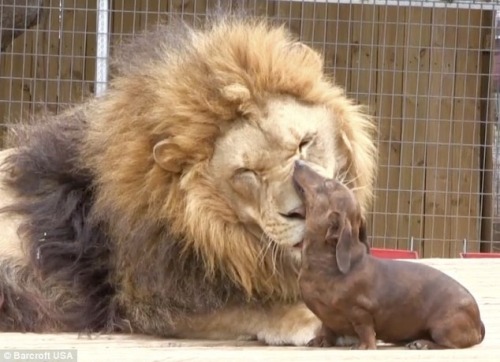
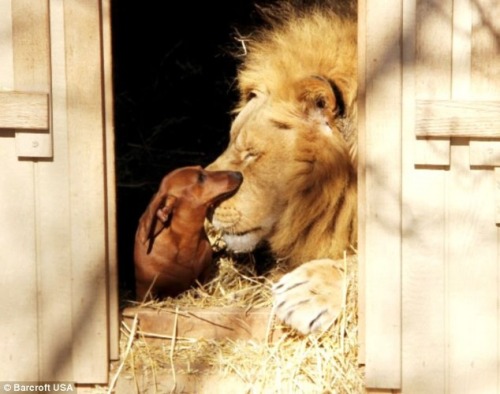
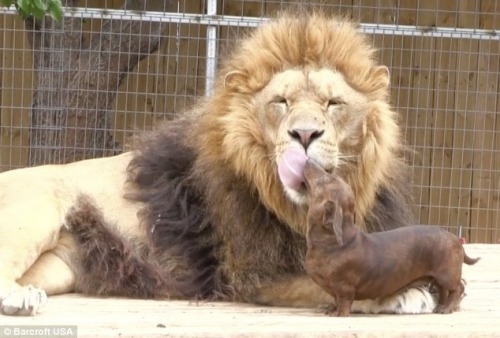
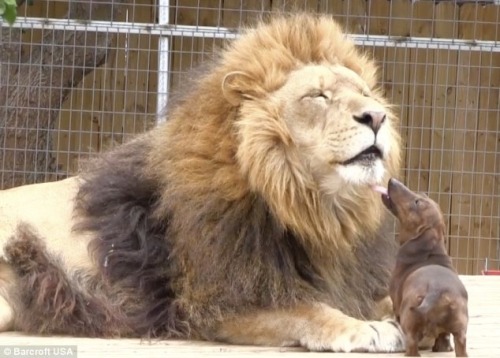
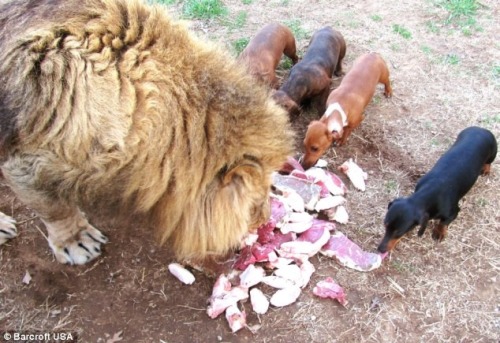
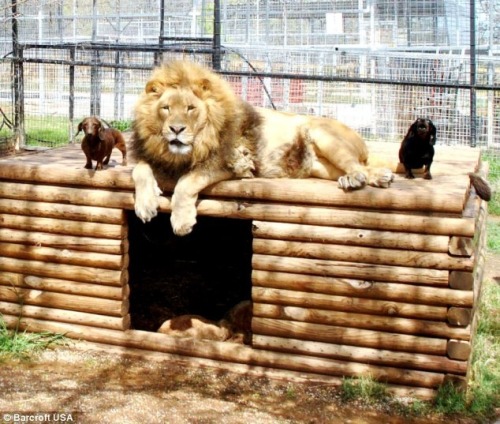
A lion and a miniature sausage dog have formed an unlikely friendship after the little dog took the king of the jungle under his wing as a cub.
Bonedigger, a five-year old male lion, and Milo, a seven-year old Dachshund, are so close that Milo helps the lion clean his teeth after dinner.
The 500lbs lion dwarfs little Milo, yet after the dog took the disabled lion into his protection as a cub, Bonedigger has rarely left his side.
Opera’s popular e-mail feature is to be removed from the browser and released as a standalone application, developers have announced.
The decision to remove the feature, which was first added in 2000, is part of several major changes planned for Opera 15. The next generation version of the browser, currently available for testing as ‘Opera Next’, sees Opera swap out its Presto rendering engine in favour of Google’s new Webkit-fork ‘Blink’.
But rather than ditch with the integrated e-mail client, called M2, entirely Opera developers have decided to package it up and release it as a separate, standalone product.

Not on Linux Yet – Opera Mail RC on Mac OS X
“It’s almost ready, so today we want to introduce to you, the first release candidate of Opera Mail,’ the Opera’s Adam Minchinton writes on the desktop team blog, ‘So please download it and send us your feedback.”
Now for the not so good news. Downloads of Opera Mail’s Release Candidate are currently only available for Windows and Mac OS X, though – thankfully – Opera devs have confirmed that the app will be coming to Linux.
Following Mozilla’s axing of direct development on Thunderbird, and the lightweight mail app Geary failing to get funding, some users may have felt that the future of the desktop e-mail client was looking doomed.
But this news, along with that of innovative app Inky’s plans for Linux, means mail app fans need not worry just yet…
The post Standalone Opera Mail Client Coming to Linux appeared first on OMG! Ubuntu!.


“Scientist Mohamed Babu from Mysore, India captured beautiful photos of these translucent ants eating a specially colored liquid sugar. Some of the ants would even move between the food resulting in new color combinations in their stomachs.”
Very cool!

Gaboon viper showing off its fangs. Credit: Brimac The 2nd
“It’s like, how much more black could this be? And the answer is none. None more black.” – Nigel Tufnel, This is Spinal Tap.
The Gaboon viper is a fairly docile creature, and that’s where the good news ends. It also has the longest fangs of any snake—2.2-inch-long weapons that swivel forwards like switchblades. The fangs are connected to such huge glands that they deliver more venom than any other snake—a cocktail of toxins that thin the blood, trigger massive internal bleeding, and can stop hearts.
And to make things much, much worse, the Gaboon viper is virtually impossible to see.
From above, its head looks like a dead leaf. Its five-foot-long body is patterned with rectangles and hourglasses, and shaded in cream, yellow, brown and black. Against the leaf litter of its forest home, the viper simply fades away.
Now, Marlene Spinner from Kiel University has discovered one of the secrets to the Gaboon viper’s exceptional camouflage: The black on its body is really, really black. Not just black, but black. Ultra-black. None more black.

Credit: Spinner et al. 2013. Scientific Reports.
These dark patches also have the texture of velvet, so they’re evenly black from every possible direction. There’s no gloss to them, which creates an illusion of depth. The patches don’t seem to be part of the same surface as the rest of the viper. This, together with the geometric shapes and sharply contrasting colours, break up the snake’s outline and aid its camouflage.
Spinner studied the West African Gaboon viper (Bitis rhinoceros). It’s one of two snakes that people thought were the same, until genetic studies showed that they are dissimilar enough to qualify as separate species.
She looked at the snake’s scales under a powerful electron microscope, which requires samples to be covered in a thin layer of gold. As a result, the pale parts of the viper’s scales developed a light metallic sheen. But the black areas still looked black. That’s a clue—it means that the colour isn’t just produced by a dark pigment, but also by the structures of the scales themselves.
Spinner caught a glimpse of these extraordinarily intricate structures down the microscope. The dark parts of the scale are covered in small ridges, like leaves standing on end (a, below). There are around 1,900 of these leaves in every square millimetre of scale, and each is just 30 micrometres (millionths of a metre) tall.
Spinner zoomed in a thousand times closer, and saw that each leaf was itself covered in a network of even thinner ridges, each just 60 nanometres (billionths of a metre) thick (c). They form a branching pattern like a fingerprint (b). And even the areas between the leaves are covered in hair-like projections (d). The gaboon viper’s black scales contain the most intricate of patterns, in spaces barely wider than a human hair.


When light hits the dark scales, it gets repeatedly reflected and scattered by the tiny leaves and ridges. As it bounces back and forth, it gets increasingly absorbed by dark pigments. In the end, less than 11 percent of any incoming light gets reflected away. This is why the viper’s black patches look so damn black, and evenly so from any viewing angle.
Other closely related vipers don’t use the same nano-scale trick, but there’s a butterfly that does. The Ulysses butterfly (Papilio ulysses) has wings with eye-catching electric blue centres, but their edges are ultra-black for the same reason as the Gaboon viper’s scales. They have a hierarchy of ridges upon ridges that repeatedly reflect incoming light onto absorbing pigments.
Spinner suggests that these tricks could be useful to engineers who work with machines that want to retain as much light as possible, such as solar panels. Admittedly, we have already created blacker-than-black materials that surpass even the viper’s scales. The current record-holder is a surface covered in carbon nanotubes that reflects just 0.045 percent of the light that falls on it. However, it’s extremely fragile. The Gaboon viper might reflect more light, but its black surfaces can cope with months of slithering through rough undergrowth.

Ulysses butterfly. Credit: Notafly.
Reference: Spinner, Kovalev, Gorb & Westhoff. 2013. Snake velvet black: Hierarchical micro and nanostructure enhances dark colouration in Bitis rhinoceros. Scientific Reports. http://dx.doi.org/10.1038/srep01846
Also: Credit to Alok Jha for the Spinal Tap reference
More on structural colours:
Um pouco mais rápido e pega fogo os dedo tudo.
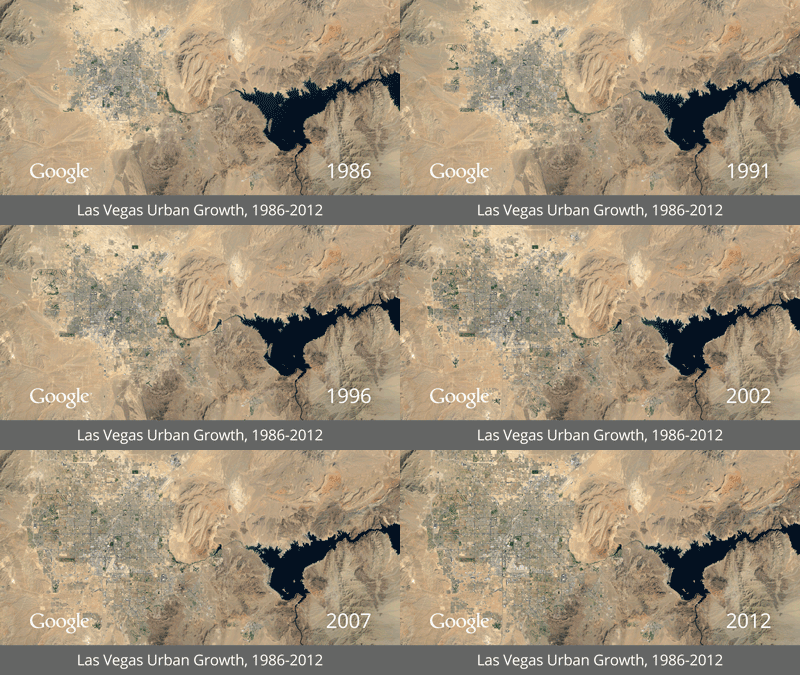
Roughly four years ago, Google engineers started working with the US Geological Survey to create what it's now calling Google Earth Engine. Thanks to NASA satellite imagery obtained as part of the Landsat program, the USGS has decades of historic images of the Earth from space, totaling somewhere in the neighborhood of 900TB of data. Google has now combed through these pictures, finding a series of consecutive images that collectively cover much of the planet's land surface. All of the images were chosen specifically for being cloud-free and having good lighting conditions.
To highlight some of the more dramatic changes, Google has made a few time lapse images of specific sites. The human touch is explicit in images like the deforestation of Brazil and the sprouting of palm-shaped islands off Dubai. But it's also present in the vanishing of the Aral Sea due to the diversion of its sources and the shrinking of Alaska's Columbia Glacier, which has been driven into a dramatic retreat by climate change.
So far, there are only eight image sets available, with no word on when we might expect further time lapses to appear. Because this is Google Earth, however, you can zoom and pan to any area of the globe you want. By centering on Lower Manhattan, it's possible to get a hint of the changes going on at the World Trade center site, and the greening of the new Brooklyn waterfront park is visible across the river.
Read 1 remaining paragraphs | Comments
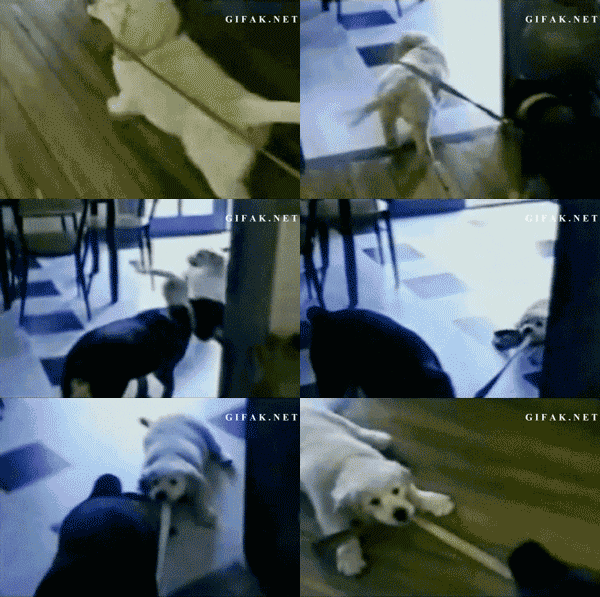
i want to cry
He tried so hard. And got so far. But in the end. It doesn’t even matter.


Cómo hacer una minitarta de chocolate con un toque de sabor a naranja al estilo hombre de las cavernas.
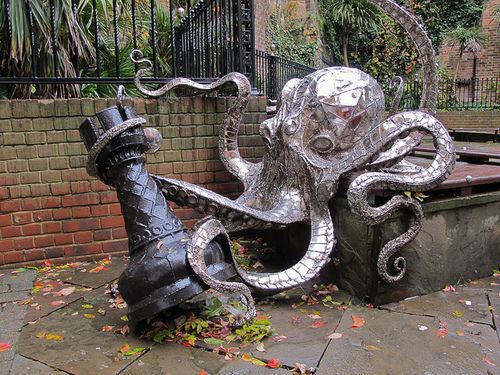
“Any ideas for the new park sculpture?”
“How about a giant, metallic octopus attacking a rook?”
“Perfect.”
Is anyone else seeing a Game of Thrones reference here… ???
This is… so unusual.
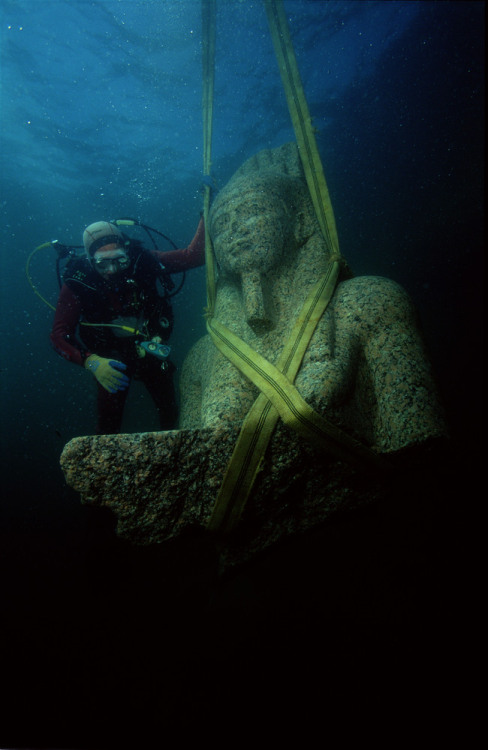
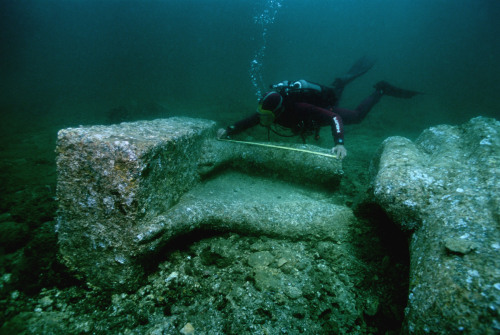
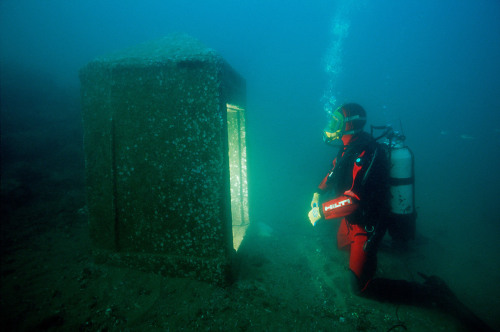
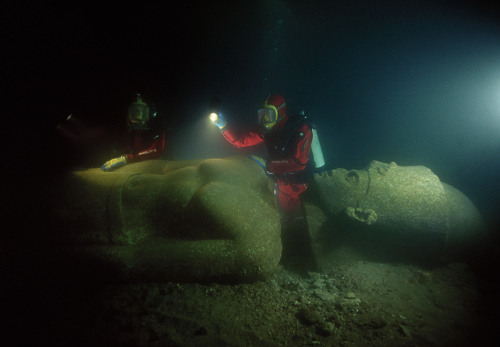
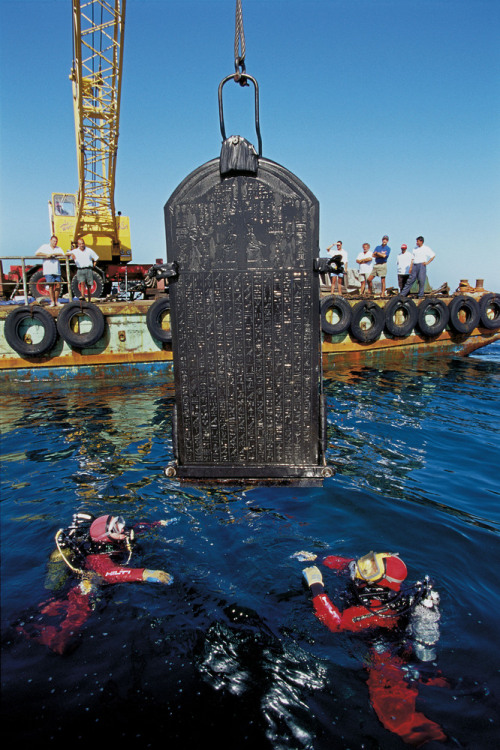
Heracleion, Lost Egyptian City Revealed After 1,200 Years Under Sea.
That last shot of the stone stela coming out of the water. Wow. I was expecting it to be covered with sediments and other sea life stuff, but no! It’s pristine looking!
That topmost image looks like cover art for something.

Sexo e gênero são coisas distintas. Ser masculino não depende da constituição biológica de cada um, mas, sim, da construção de uma identidade. Ou seja, é algo intangível. São as convenções sociais que fazem com que nos enquadremos em algum gênero. E é a moda, o vestuário, uma das principais formas que sempre tivemos de nos expressar socialmente. Porque nós, seres humanos, somos muito limitados para lidar com o intangível.
I am now tired of talking about the Xbox One. At least until E3 when I hope there will be some actual information to talk about.
Instead, it is Friday, and the weekend awaits us. So I'm going to leave you with a couple of things to start you off right. First, a trailer for Wildstar. I've been following this game for a long time, I've talked about it here a few times... right now, for me, it stands as the lone hope of every getting back into an MMO again. Since I left WoW for the last time shortly after Cataclysm, I haven't been able to get truly invested in any other MMO. Perhaps I'm just burned out on the genre, perhaps the right one hasn't come along. I'm hoping Wildstar is that right one, and everything I've seen about it thus far says it is.
And finally... puppy! Korra is now three weeks old. Both her and her mom Khloe are doing really well, and we're thrilled to be helping them out.

Here's a biiiiig yawn. She's like a little polar bear.

Have a great weekend everyone!


 With an iron set to the appropriate temperature for your fabric (likely the cotton setting), iron the paper pieces to the tote, shiny side down. The iron will very slightly melt the plastic coating, sticking the paper to the canvas. Give the pieces an initial quick, light press to make sure they're where you want them. If not, peel them up and reposition. Then press down firmly with the iron and make sure all the edges are sealed so no dye will seep under them. Once they're stuck down, the pieces are really stuck, and will probably tear if you try to peel them off.
 If there are any areas you're worried about getting dye— you know, if you tend to lose your mind a little and start painting outside the lines— mask those off with painter's tape. Place a piece of freezer paper inside the tote to prevent any dye from soaking through to the back side.


Damn, B-Real is gonna kill himself. Slow it down homie.
According to TMZ
B-Real proved he’s insane in the brain last night — by rolling a joint filled with 6 OUNCES of weed yesterday … and then taking a photo to prove it!!
And now it’s time for some SUPER FUNTIME POT MATH!
According to our amateur marijuana experts, an ounce usually runs around $300 … so 6 ounces would be roughly $1,800.
BUT … we’re told people who buy in bulk usually get a discount — like, “buy 5 ounces, get the 6th ounce free” kinda stuff … so let’s go ahead and call it $1,500.
Bottom line — that’s a lotta weed. Your move, 2 Chainz …
Yo B-Real hook us up with a pack of those animal cookies (that good sticky icky).
Instagram/Wenn

WARNING: Some language in this video, as well as a dangerous amount of mankind's most feared predator: The trampoline.
Submitted by: Unknown