
There's something really unnerving about this little snail eating lunch. It's too gross to be adorable, but too adorable to be gross. Are his little antennae an emotional reaction?
There's something really unnerving about this little snail eating lunch. It's too gross to be adorable, but too adorable to be gross. Are his little antennae an emotional reaction?
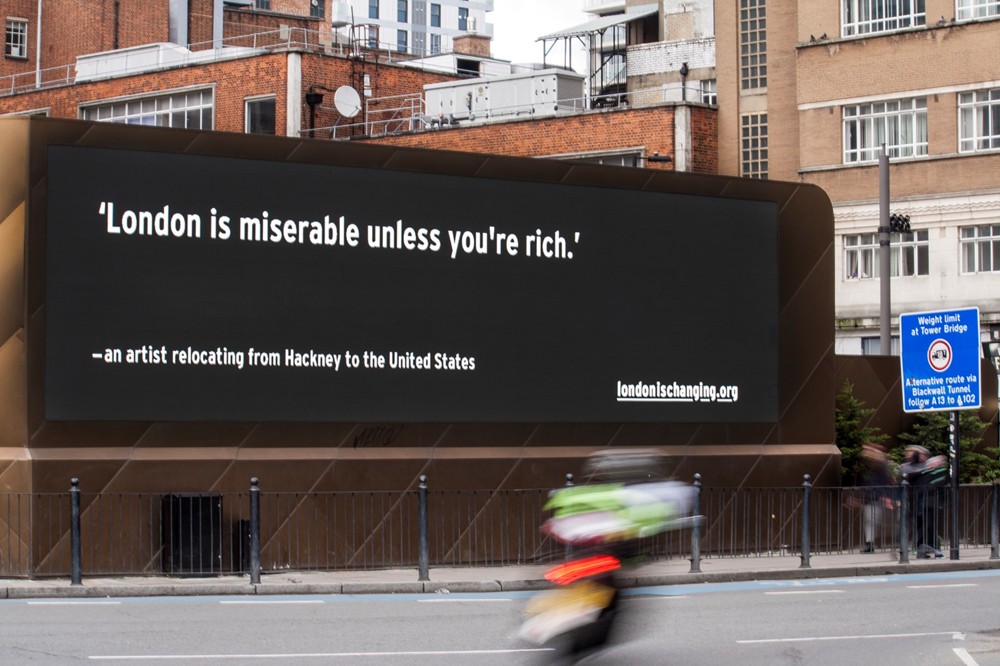
The London is Changing project collects the personal stories of professional people who are leaving the city because it has been remade as a playground for the global rich.
Read the rest

by Nathan
Is he pouring tea (or some other beverage), or is he stretching putty?
[via]
I always knew that George Orwell was on to something. Sure, he was a little off on the year when it would all go down–1984 was more the year of the big hair band than Big Brother (not that this wasn’t equally terrifying in its own right).
And today’s Thought Police do not use Orwell’s Telescreens to monitor us for thought crimes. They use Twitter.
Part of Dove’s recently launched #SpeakBeautiful campaign involves monitoring women’s tweets for negative comments about their own appearances, then replying to these tweets with suggestions for more positive Party-approved language.
That’s right, ladies. Smile. BIG SOAP IS WATCHING YOU.
And of course, the propaganda Dove uses to support policing women’s opinions about our own bodies has the usual terrible charts.
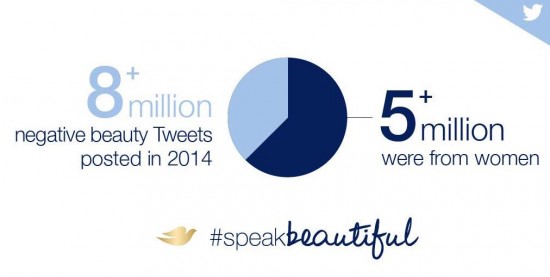
All the positive thinking in the world is not going to make 8+ million less than 5+ million. A pie chart doesn’t make sense for this information in the first place since they are not two separate parts of the whole. One number is a subset of the other.
But the other major problem with this chart, the focus on demonizing women, is present throughout the campaign messaging. All these “negative beauty” tweets about women are coming primarily from women, not men, because women are such catty bitches, amirite? I wonder, though, when putting together their keywords to find these tweets, did they include “fuckable” and “rapeable” and other pretty obviously negative words used to describe women’s “beauty” and bodies? I mean, if we’re talking about negativity that actually harms women, it seems like “you’re too fat to be rapeable” might rank in there with “I hate my hair.”
But it gets even worse. Not only are most of the (narrowly defined) negative beauty tweets coming from women, they are coming from INSIDE THE HOUSE!
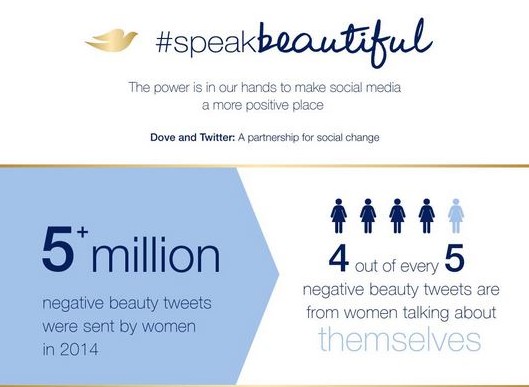
(You can tell the chart shows women by the skirts. You know, in case that wasn’t clear.)
Is Dove implying that it would be better if a larger percentage of tweets were focused on other women instead of ourselves? I don’t think so, but clearly this is supposed to be the next level of revelation. We not only tweet negative things about beauty, we tweet them about ourselves! Dove clearly thinks women being negative at all is the problem. That women are the problem. If you have any doubt that women are to blame, just remember how untrustworthy we are:

Patronizing, policing, and insulting women to get them to change their behavior–Dove’s campaign uses methods straight out of the pick-up artist’s playbook. This isn’t surprising considering, as many have pointed out, that Dove’s parent company, Unilever, also owns Axe, known for its sexist, rapey ads targeted at men, such as this gem.
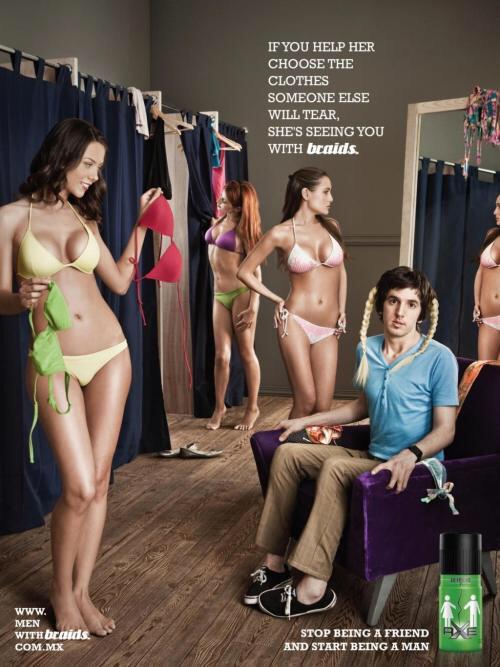
But the Dove campaign isn’t ironic coming from the company that markets Axe in this way. There’s no doublethink here. The two companies are perfectly consistent in their messaging: policing gender roles, encouraging women to be positive and compliant and men to be aggressive, and defining women’s value solely based on our bodies. The “self-esteem” #SpeakBeautiful purports to be attempting to raise in women focuses on women’s appearance, our “beauty and body image,” as though our bodies were the only parts of us that were important to esteem. If only we viewed our bodies more positively, everything else would fall into place because our bodies are the most important part of who we are.
The Dove campaign is ironic in that it so completely embodies the societal view of women’s value and women’s bodies that is at the root of negative body image while claiming to be fighting against the problem. As with so many other issues women speak out about, the moment we speak negatively, it’s our speech that’s the problem, not what we’re speaking about. The reaction to a problem becomes the problem. The effect becomes the cause. 2 + 2 = 5.
In recent years, LEGO set design has been going from strength to strength. However, as far as I am concerned, some of the sets I had as a child are really hard to beat. Build techniques have obviously moved on and new parts have been introduced, but particularly city sets from the late seventies and early eighties were design marvels. They may have been fairly simple and built using primary colours, but they also had lots of character.
We haven’t featured models by Are Heiseldal (L@go) very often, but in recent years he has been steadily building his own updated interpretations of some of these classic sets from his (and my) childhood, of which I am going to share a few favourites. LEGO set 675 “Snack bar” was released in 1979.

I never actually owned the oddly-named set 6694 “Car with Camper”, but remember poring over the 1984 catalogue to work out how to build the caravan. Are’s updated version seems to offer somewhat more privacy to the occupants.

Finally, the latest model that he has uploaded is a modern reinterpretation of set 6689 “Post Station”.

These models may not be spectacular in terms of build techniques, but I love them. There is enough of the original in them to ensure that a single glance is enough to trigger nostalgia. Furthermore, like the originals, if you look closely you’ll see that they are chock full of clever features. If you too get a warm and fuzzy feeling about these, I suggest you check out Are’s flickr album with more of his updated classics.
Luke.stirlingI appreciate the intent, but I'm a little concerned the author of the article may have used 'irregardless' without any irony.
 Due to complicated licensing agreements Netflix is only available in a few dozen countries, all of which have a different content library.
The same is true for many other media services such as BBC iPlayer, Amazon Instant Video, and even YouTube.
These regional blockades are a thorn in the side of Andrus Ansip, Vice-President for the Digital Single Market in the European Commission. In a speech this week he explained why these roadblocks should be abolished.
“Far too often, consumers find themselves redirected to a national website, or blocked. I know this from my own experience. You probably do as well,” Ansip said.
“This is one of many barriers that needs to be removed so that everyone can enjoy the best Europe has to offer online. It is a serious and common barrier, as well as extremely frustrating,” he added.
The Commissioner is targeting an issue that lies at the core of the movie and TV industries, who license content per location. Ansip specifically mentions BBC’s iPlayer, but other services including YouTube, Amazon and Netflix have the same restrictions.
The geoblocking restrictions are demanded by content creators, who want to sell the streaming rights on a regional basis. To enforce these licenses, users from outside of the designated countries are blocked.
The Commissioner believes that this is an outdated concept which he likens to discrimination. If people want to pay for content, they should be able to, regardless of where they live.
“In the offline world, this would be called discrimination. In the online world, it happens every day,” Ansip noted. “I want to pay – but I am not allowed to. I lose out, they lose out.”
“How can this be a good thing? We put up with the situation because there is not much alternative. Now it is time to do something about it,” he added.
The artificial restrictions are not a market issue according to the Commissioner, but a matter of rights. These rights should be enjoyed equally and not just by the happy few who happen to live in a ‘licensed’ country.
“There should be no exceptions. Everyone should be treated the same. This is a key principle that underpins everything we want to achieve,” Ansip said.
The EU is currently discussing how copyright legislation in Europe should be overhauled and the Vice-President for the Digital Single Market hopes that measures against geoblocking will be part of the new rules.
Source: TorrentFreak, for the latest info on copyright, file-sharing, torrent sites and anonymous VPN services.
 During September 2014, the Digital Citizens Alliance and Netnames teamed up to publish a brand new report. Titled ‘Behind The Cyberlocker Door: A Report How Shadowy Cyberlockers Use Credit Card Companies to Make Millions,’ it offered insight into the finances of some of the world’s most popular cyberlocker sites.
The report had its issues, however. While many of the sites covered might at best be considered dubious, the inclusion of Mega.co.nz – the most scrutinized file-hosting startup in history – was a real head scratcher. Mega conforms with all relevant laws and responds quickly whenever content owners need something removed. By any standard the company lives up to the requirements of the DMCA.
“We consider the report grossly untrue and highly defamatory of Mega,” Mega CEO Graham Gaylard told TF at the time. But now, just five months on, Mega’s inclusion in the report has come back to bite the company in a big way.
Speaking via email with TorrentFreak this morning, Gaylard highlighted the company’s latest battle, one which has seen the company become unable to process payments from customers. It’s all connected with the NetNames report and has even seen the direct involvement of a U.S. politician.
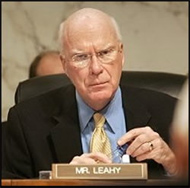 According to Mega, following the publication of the report last September, SOPA and PIPA proponent Senator Patrick Leahy (Vermont, Chair Senate Judiciary Committee) put Visa and MasterCard under pressure to stop providing payment services to the ‘rogue’ companies listed in the NetNames report.
Following Leahy’s intervention, Visa and MasterCard then pressured PayPal to cease providing payment processing services to MEGA. As a result, Mega is no longer able to process payments.
“It is very disappointing to say the least. PayPal has been under huge pressure,” Gaylard told TF.
The company did not go without a fight, however.
“MEGA provided extensive statistics and other evidence showing that MEGA’s business is legitimate and legally compliant. After discussions that appeared to satisfy PayPal’s queries, MEGA authorised PayPal to share that material with Visa and MasterCard. Eventually PayPal made a non-negotiable decision to immediately terminate services to MEGA,” the company explains.
 What makes the situation more unusual is that PayPal reportedly apologized to Mega for its withdrawal while acknowledging that company’s business is indeed legitimate.
However, PayPal also advised that Mega’s unique selling point – it’s end-to-end-encryption – was a key concern for the processor.
“MEGA has demonstrated that it is as compliant with its legal obligations as USA cloud storage services operated by Google, Microsoft, Apple, Dropbox, Box, Spideroak etc, but PayPal has advised that MEGA’s ‘unique encryption model’ presents an insurmountable difficulty,” Mega explains.
As of now, Mega is unable to process payments but is working on finding a replacement. In the meantime the company is waiving all storage limits and will not suspend any accounts for non-payment. All accounts have had their subscriptions extended by two months, free of charge.
Mega indicates that it will ride out the storm and will not bow to pressure nor compromise the privacy of its users.
“MEGA supplies cloud storage services to more than 15 million registered customers in more than 200 countries. MEGA will not compromise its end-to-end user controlled encryption model and is proud to not be part of the USA business network that discriminates against legitimate international businesses,” the company concludes.
Source: TorrentFreak, for the latest info on copyright, file-sharing, torrent sites and anonymous VPN services.
It’s perfectly okay to dislike my books, but don’t disrespect teen girls. It’s so tired. It’s so easy. And it’s so unfair.
Teen girls are pushing culture toward openness and fairness. Teen girls are making the art and music and fanfiction that has reshaped contemporary media and art. You know who donated most of the $1,400,000 raised by this year’s Project for Awesome? Teen girls. You know who were the first supporters and collaborators for online video projects from Lonelygirl15 to Brotherhood 2.0 to Five Awesome Girls? Teen girls.
This whole teen-girls-are-stupid-and-vapid shit is just so played out. Teen girls are human beings. They are not inferior to other human beings. Their lives and contributions are as interesting and as complicated and as meaningful as anyone else’s.

I’ve been getting emails from folks asking me what I thought about and/or to comment on this article from K.T Bradford*, the headline of which is “I Challenge You to Stop Reading White, Straight, Cis Male Authors for One Year.” As with many headlines, it’s an unnuanced take of what the article actually is about, which is, as I saw it, to have readers challenge themselves by mindfully reading within a group of authors they may not been reading much of before, to experience different writing and to gain perspective on defaults in the publishing world. That said, part of doing that is moving away from a default set of authors, i.e., straight white male authors (Tempest also includes “cis,” in that formulation, meaning in this case males whose gender identity conforms to general social expectations of maleness).
As I am generally accepted to be straight and white and male and cis, I think people are interested in whether I see this as a broadside against my identity and livelihood as a writer, and whether I myself would cut out straight white cis male writers from my reading diet for a year.
Let me answer the second part first: No, I won’t be cutting straight white cis males out of my reading, for two reasons:
1. As a straight white cis male professional writer, it’s literally impossible for me not to read in that category, unless I decide not to write for a year, which I won’t be doing, because I need to eat. Note that this is a highly specific reason for not participating that applies only to a very specific subset, of which I am a member.
2. I grok that the article is not aimed at me, who already and mindfully reads a widely varied diet of authors as a matter of course. I flatter myself (erroneously or otherwise) to think I’ve always done this, primarily because as a reader I think it’s interesting to get inside of the head of someone who is not like you; also I’ll admit when I was (much) younger I would walk around ostentatiously with books by unexpected authors because I wanted credit for being that kind of reader. I got over that part of it by my late 20s, mostly, even as I kept reading the books themselves.
It also helped that when I entered into the SF/F community I fell in with a pretty diverse crowd of writers and fans, which a) meant that when I was reading my friends I was reading all sorts, b) when they raved about the writers they loved, they tended to be a diverse group as well. Having diverse, literate peers is a pretty good shortcut to diverse reading.
And yes, I am also mindful if I’m reading too much of the same old, same old, because like anyone I can lapse into it if I’m not careful. When I’m aware of doing that, I mix it up (mind you, this awareness is key, too, and needs to be cultivated). Doing so doesn’t require that much effort, and I find that it doesn’t limit the amount of interesting reading I can find out there, because why would it.
(Note well that in my particular case I get sent literally dozens of books on a weekly basis, from publishers and authors, so I don’t find it difficult to find books by diverse authors I might be interested in — they come to my door unbidden. I recognize that this is also an advantage I have others don’t. I am in many ways a not especially useful case for Tempest’s point.)
So that’s why I won’t be cutting straight white cis male authors from my reading diet – or, more accurately, reading only from a specific group of authors, the demographics of which by practical necessity would exclude straight white cis male authors.
But if someone else does, for a year? Well, you know. I generally support reading more and different authors. If digging down specifically into a group of authors you’ve previously neglected or who were swamped out by other authors means you leave other writing aside for a while, I think that’s fine. Readers don’t owe any particular author a sale or even a read; they also don’t owe that author a sale or a read at a particular time.
Also, some things to be made clear:
1. Tempest here isn’t saying never read another book by a straight white cis male ever again in this life or any other, which is a thing that seems to be strangely overlooked, with regard to this suggestion of hers.
2. She’s also not saying The Official Year of Not Reading Straight White Cis Male Authors begins March 1 at which point no one will read anything by these dudes. She’s suggesting a general idea which may be done — or not! — at the individual reader’s convenience. Even if a large number of people endeavor to read diversely, it will be on their own schedule.
3. Are any of us under the illusion that Tempest’s suggestion will galvanize the entire reading population of the world?
So simply as a practical matter, if the article convinces some people to read outside their usual habits for a year, then what that means is that someone like me won’t make a sale from that one person for a particular timeframe, but might possibly at some other point. Meanwhile, other people will still be available for potential sales.
Which already happens. I’m very sad to say that not everyone in the world buys the hardcover edition of my books when they come out. Some people don’t know I and/or my book exist; some people do know but don’t like me/my writing; some people like me/my writing but can’t afford the book in hardcover; some people can afford it in hardcover but choose to spend their money on something else; and so on.
Over time, some of those people who don’t buy my book when it comes out might buy it later. Which, again, already happens. It’s why I have a backlist. I like backlist sales. So does my publisher; they don’t have to spend a lot of time or money promoting my backlist, so the profit margins are nice. Honestly, spend money on me now, spend money on me later: It’s all good from my point of view. I’ll have use for that money whenever it gets to me, I assure you.
But — cutting out straight white male authors for a year is bigotry! Eh. Again, speaking as the proverbial straight white cis male author, I’m not feeling it, for the reasons noted above. Or at the very least I see no reason to feel threatened; maybe it’s because I believe that even if the advantage of a reader’s implicit default to authors like me is challenged or taken away, what I write will still be able to compete in both the stream of commerce and the marketplace of ideas. I don’t fear competition, and philosophically speaking, I would rather have readers who range far and wide and still choose my work, then ones who pick my work because they just don’t know any better. I’m not afraid to be set aside for a bit, while a reader explores works by other authors, and by other authors who are not like me. I figure they’ll be back, in which case our author-reader bond is even tighter. Hooray! If they don’t come back, it’s probably for a good reason. In which case: Too bad for me, but there are lots of other potential readers about there.
What if someone only or primarily reads from [Insert whatever combination of not white and/or straight and/or male and/or cis] authors? Would you have them set those authors aside to read only white straight cis male authors for a year? If that’s what they wanted to try, sure. Get out of whatever reading rut you’re in, I say! But note that (at least as I see it), Tempest’s formulation of reading is highly intersectional; someone who only reading [whatever combination of not white and/or straight and/or male and/or cis] doesn’t have to go all the way to “white straight cis male” to shake up their reading lists. And also, and again as a practical matter, the number of people only or primarily reading [whatever combination of not white and/or straight and/or male and/or cis] is likely relatively small compared to those reading only/primarily straight white cis males, which is to the point about bias in the system, and is worth thinking about, rather than sort of eliding in a rush to get to another point entirely.
Speaking personally, I think one can build more diversity into one’s reading without entirely dropping straight white cis males from one’s reading diet for a year, if that strikes one as simply too harsh to folks like me; make a “buddy system,” for example, in which every book you read by a straight white cis male is followed up by one written by someone who is not. Being mindful of your reading biases, and the practice of reading widely, are things that are beneficial however you do it.
But however you do it, at the end of the day, if you find more writers who speak to you, move you and make you think more widely, your life is going to be better. Find a way to bring in a wider set of authors to your reading diet, in a way that works for you. If it means taking a year off from me and writers like me, then good luck, have fun and remember we’ll be here when you get back. We’ll have stories to tell you when you do.
*Disclosure: I know K.T. Bradford (“Tempest”) and have for years, and consider her a friend. Note she calls me out from time to time, and we occasionally disagree on things, sometimes very widely. You can do that with your friends.


Swedish builder LegoJalex‘s ongoing exploration of the mundane trappings of the 70s and 80’s continue to fascinate me. They are almost like brick-built, still-life photo studies of life before we worried about such things as “ergonomics” and “NSFW”.

If seeing a computer on every desk seems anachronistic for a 70’s office, remember these wouldn’t have been desktop computers, they’d have been simple mainframe terminals, and you would have only seen something like this if you worked in a futuristic thing called a “data processing center”.

The builder also created this cityscape, which I think complements the above interior nicely. It’s subtle, but the attention to detail in this scene is amazing, especially all the surface textures on the parking structure. And the Volvo grill is a nice touch!
Blame the Romans. (It's Okay To Be Smart)
Physics Girl demonstrates a neat trick with a stack of balls. [via]

|
|



Taking inspiration from both the designs of crop circles and the colors of the fields on which the mysterious formations lie, Anatoliy Omelchenko of Triangle Tree designed a set of crop circle towels with the patterns woven right into each towel. A Kickstarter campaign is currently running to help fund the production of the project, and backers can choose from a variety of towel set combinations.
Whether the media-hungry farmer or a media-shy extraterrestrial are responsible for these giant works of art, you can own your own mysterious Crop Circle Towel. Unlike the cornfields, the crop circles will not disappear with the season!


images via Kickstarter
via CNET
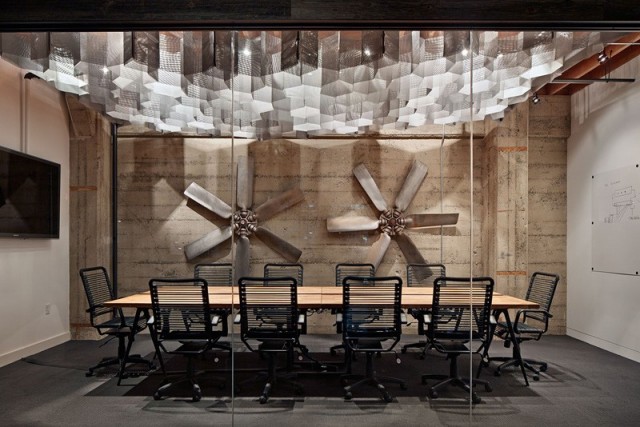
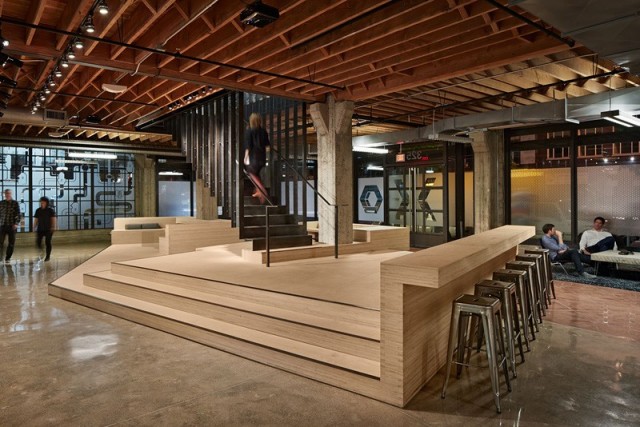
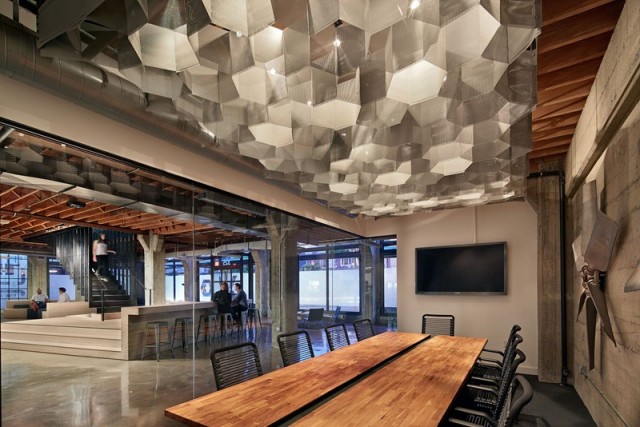
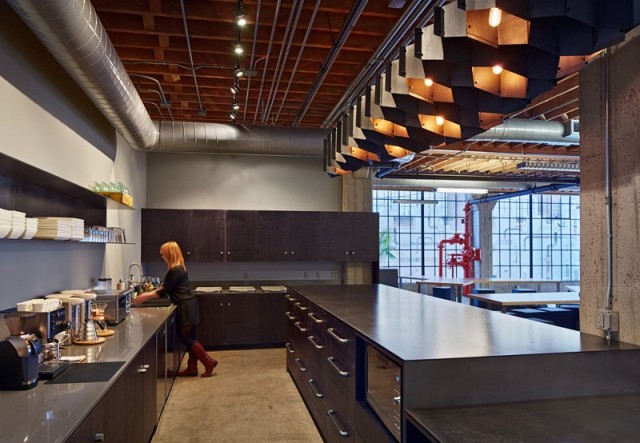
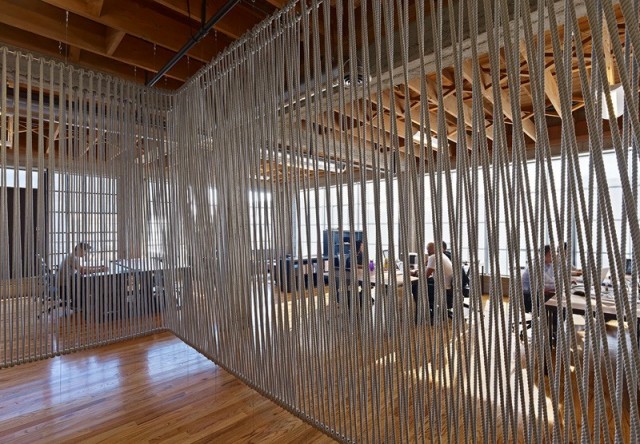
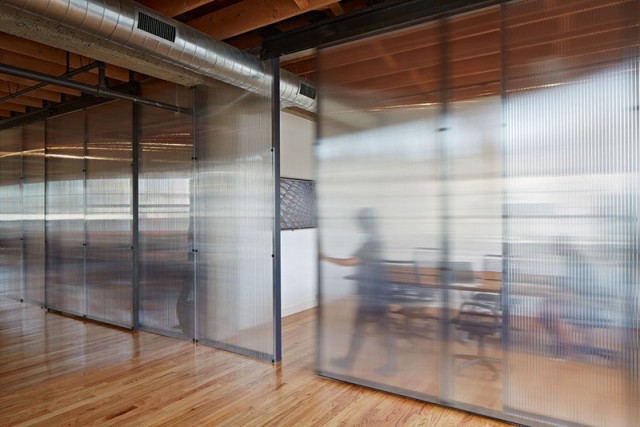
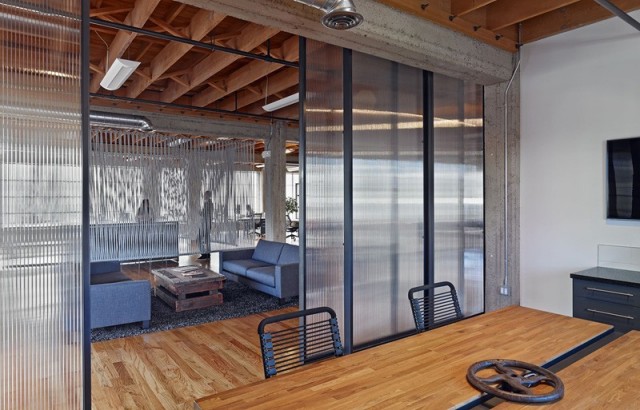
Amotoscott Architecture a conçu les bureaux de Heavybit Industries, situé dans le quartier de SOMA à San Francisco, en Californie. Le studio a remis sur pied un immense entrepôt pour en faire un open space flambant neuf principalement fait de matériaux brutes comme le métal, le béton et le bois.

























"There’s a lot to be said for making people laugh. Did you know that that’s all some people have? It isn’t much, but it’s better than nothing in this cockeyed caravan."









 When all things are hackable, all things will be hacked