Shared posts

14 May 05:18

Where are all the aliens? Video about the Fermi Paradox

by Mark Frauenfelder

A great explainer video from the folks at Kurzgesagt.

The universe is unbelievably big – trillions of stars and even more planets. Soo… there just has to be life out there, right? But where is it? Why don’t we see any aliens? Where are they? And more importantly, what does this tell us about our own fate in this gigantic and scary universe?

13 May 23:38

ditto

by Author

ditto

13 May 22:18

New book: Thing Explainer

New book: Thing Explainer!


13 May 22:06

Reader Request Week 2015 #6: Me and Republicans

by John Scalzi

G.B. Miller asks:

From what I’ve read, you seem to be progressive Democrat with a distaste for Republicans. Has there/will there be a time where a Republican, on any level, will do something that might momentarily soften your distaste for the Republican party?

Heh.

One, I’m not a Democrat. I’ve been registered as an independent for as long as I’ve been a voter. Two, I’ve voted for Republicans as recently as the last election, for local offices where I believed they were the best-qualified candidates. Three, the last actual politician I donated money to was Jon Huntsman, in the belief that even if I was not a Republican, as a citizen of the US, it behooved me to encourage the Republicans to nominate for president someone who was not ridiculously out there. It didn’t do him much good, alas, nor the Republicans.

Four, I’m not at all sure I qualify as a genuine “progressive.” I will certainly allow that to folks on the right, I look like a progressive, but then, for a lot of folks on the right, Obama looks like dyed-in-the-wool socialist, rather than what he is, which is a technocratic centrist with just a little lean to the left. Obama being called a socialist causes actual socialists a nasty case of hives, as I understand. With the exception that I was for same-sex marriage well before he was, overall I’m probably a smidge to the right of Obama. As I am fond of saying to people, in the days of yore, the politics I have today would have qualified me to be a “Rockefeller Republican.” Which is to say I didn’t leave the GOP; the GOP left me. When I was, like, eleven.

(If you want another perspective on my politics, ask lefties from outside the United States, i.e., where there is still a genuine political left, if I seem like a lefty to them. I suspect most of them would position me as center-to-center-right; in other words, the guy who is wrong in a lot of his politics but doesn’t make an ass of himself about it at family gatherings.)

What marks me as a “progressive” these days is the fact I’m for same-sex marriage and am pro-choice, which are positions that could be equally “libertarian,” if “libertarian” hadn’t somehow transmuted itself into “reactionary conservative” here in the US lately, and the fact that I am both for having the United States have a slightly better social net and infrastructure than it does (which is a “liberal” position) and that it should actually pay for those services/infrastructure rather than deficit finance them (which is a “conservative” position), and that probably the best way to do that is punt up the marginal rate a bit on the high end because those of us on the high end (Hi! I’m the 1%!) can afford it. There are other fiddly details but that’s the gist of it.

Bluntly: if that’s a “progressive” viewpoint, there’s something very wrong with the definition of “progressive.” In a world where the politics of the moment weren’t ridiculously skewed, these positions would be “moderate” at best. Equally bluntly: I’m a well-off, white, middle-aged dude who likes being comfortable and likes his country genially middle-class. I should not be seen as anywhere near the vanguard of leftist politics in this country. That I am seen to be so really is a problem, both for the left and for the right.

The county I live in is overwhelmingly Republican and/or conservative; I get along with nearly everyone here on a day-to-day basis, even if I vote differently than many of them do. I have Republicans and/or conservative friends and family members and business associates; I get along well with them too. By and large they don’t have to do anything to make me think better of them; I think well of them as it is.

That said, and to be blunt again, there’s very little chance I’ll be voting for GOP candidates for jobs above the local level anytime soon, because at the state and national party level, I don’t see a lot of rationality when it comes either to individual rights or the proper role of the government with regard to services/infrastructure or taxes. I also think the party’s been blinded by frankly incomprehensible hatred of Obama, which almost certainly does have a racial element to it, thanks for asking, added on top of a general howling outrage that a Democrat is in the White House at all. I like many Republicans but I actively dislike the policies and strategies (such as they are) of the Republican Party on the state and national levels.

If the GOP ever wants me to vote for it above the local level — and who knows? Maybe they don’t! — then they will need to ditch the Gingrich/Atwater philosophy of painting anyone of differing politics as heretics to be burned and never to be negotiated with, and they’ll have to have a serious rethink of how they approach taxation and services. I think it’s possible to believe in low(ish) taxation and constrained government coupled with a robust private sector while still recognizing that some things really do need to be handled by government, and paid for. I’d also like to see evidence they believe civil rights are indeed for everyone, not just the straight, white and/or embryonic.

But — and this is significant — there is no reason for the GOP to change its current strategy. If you’ve not noticed, it holds both the House and Senate at the national level, and a whole lot of state executive and legislative branches. What it’s doing is pretty successful, and when it’s not (2008, 2012), the strategy simply to double down and do it harder has not been a bad one for them (2010, 2014). So I don’t see the GOP doing anything it needs to do to win my vote — or even to lessen my overall dislike of it — on the state or national level anytime soon.

Which I’m sure they think it fine. They don’t, in fact, need my vote. By the time they ever do, I suspect it might be too late for them.


13 May 10:47

As people get older, they listen to less hot music: the "Coolness Spiral of Death"

by Clive Thompson
coolnessspiralofdeath Data from Spotify appear to confirm why your parents are so out of it: As people get older, they listen to less hot music of the moment, and instead just queue up the oldies. Read the rest
13 May 10:17

Martian sunset [photo]

by Mark Frauenfelder

"NASA's Curiosity Mars rover recorded this view of the sun setting at the close of the mission's 956th Martian day, or sol (April 15, 2015), from the rover's location in Gale Crater.This was the first sunset observed in color by Curiosity. The image comes from the left-eye camera of the rover's Mast Camera (Mastcam)."

If you look closely, you can see Tars Tarkas leading a tribe of Tharks into battle.

13 May 10:14

Feminist Lisa Frank wants to 'dismantle patriarchy, one rainbow kitten at a time'

by Laura Hudson
tumblr_nnjs5yxhFb1urwngso1_500

In the great tradition of Tumblr mash-up memes, Feminist Lisa Frank juxtaposes neon animals and quotes by Gloria Steinem, Shonda Rhimes, and more. Read the rest

13 May 10:04

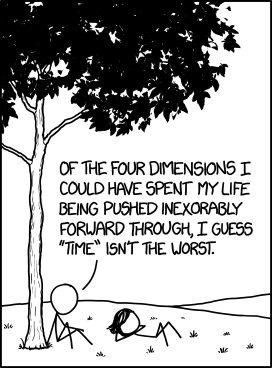
Dimensions

I would say time is definitely one of my top three favorite dimensions.
12 May 13:17

Wot I Think: Invisible, Inc.

by Quintin Smith

Invisible, Inc. [official site] is a game of “tactical espionage” from the creators of Mark of the Ninja, immediately understandable as XCOM meets Mission Impossible. You control a tiny team of sleuths working to rob the procedurally-generated vaults, server farms and detention centres of four high-tech corporations. In just 72 hours you’ll be taking on a fittingly impossible mission, and failure is not an option. Here’s wot I think.

… [visit site to read more]

12 May 07:23

Dieter Rams wouldn't do it again if he could start over

by Rob Beschizza

Interviewed by Fast Co Design, the famed designer talks about his architectural influences, his design philosophy, and how industrial design has changed in the last 50 years.

Read the rest
12 May 04:01

NASA releases amazing pics of Ceres

by Rob Beschizza

PIA19547_ip

PIA19547_fig1_thumb

From JPL. Those white spots are an intriguing mystery. Read the rest

12 May 04:01

Watch a singer realize the impact of his music mid-concert

by Caroline Siede
12 May 03:55

Elon Musk's email to an employee who missed work event to witness birth of own child

by Rob Beschizza
11 May 22:08

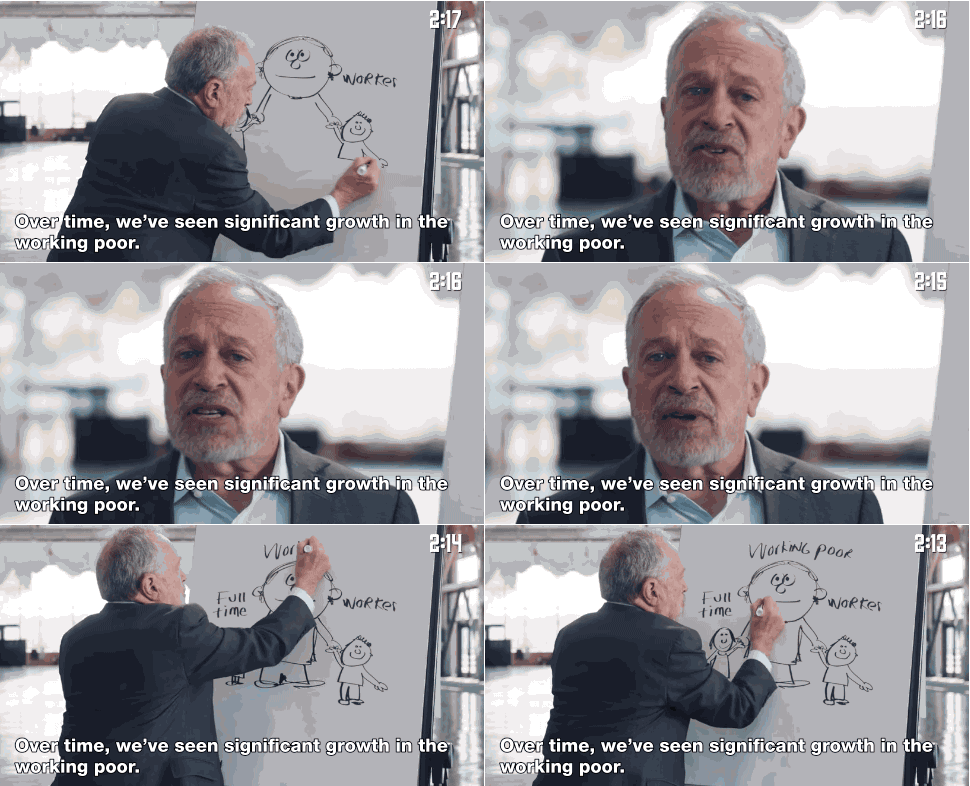
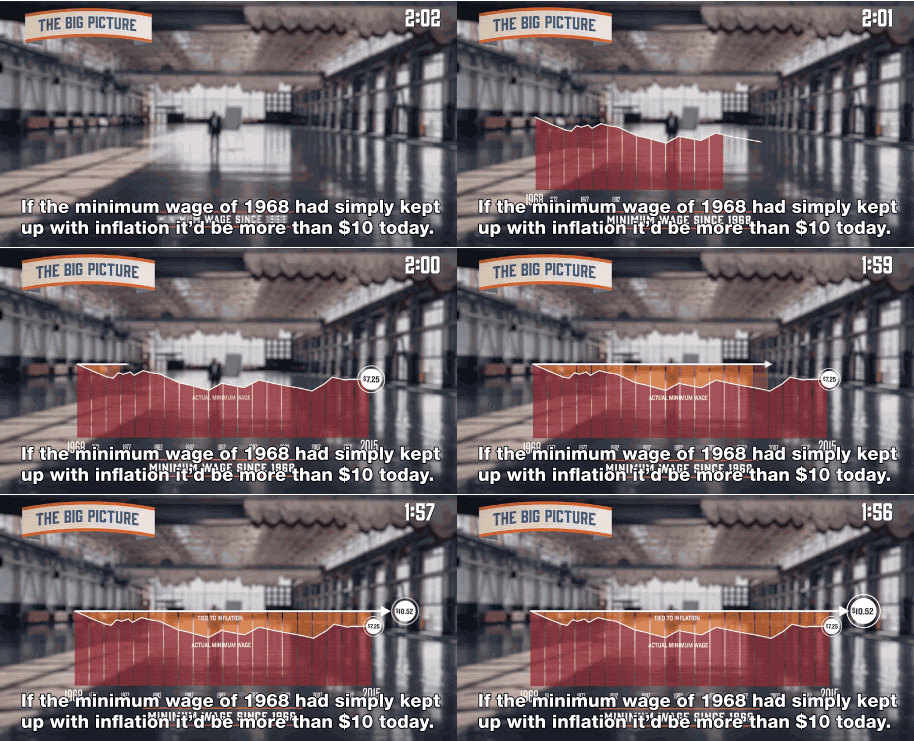
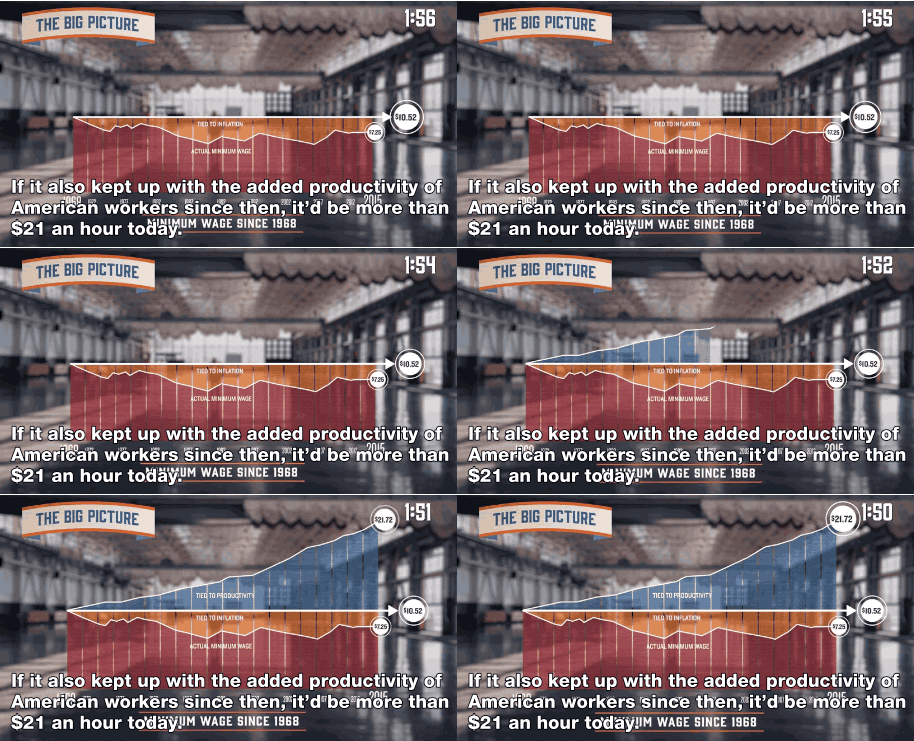
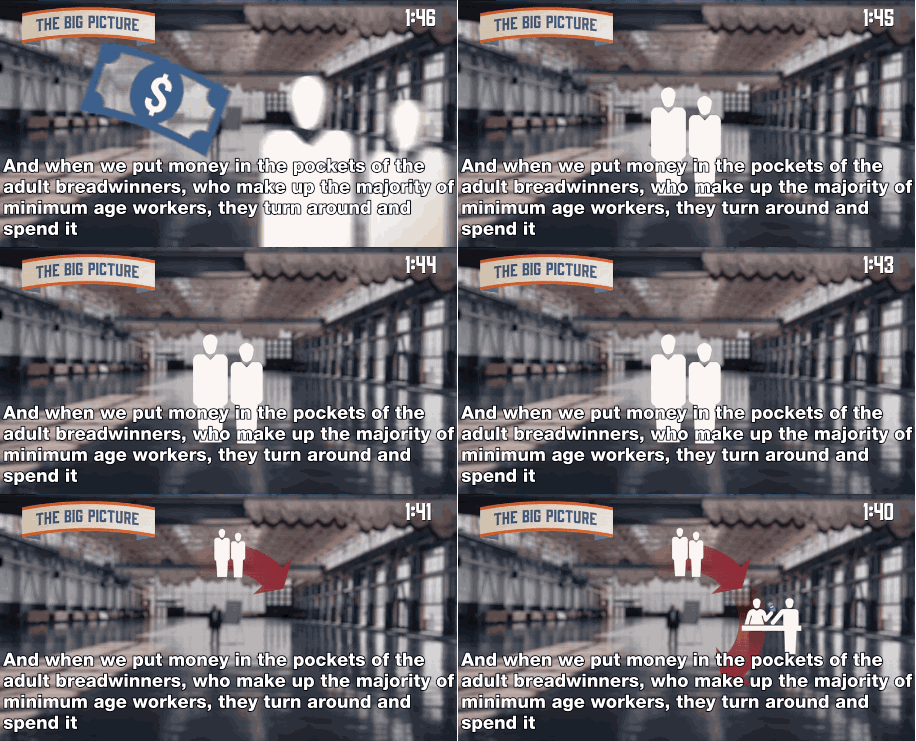
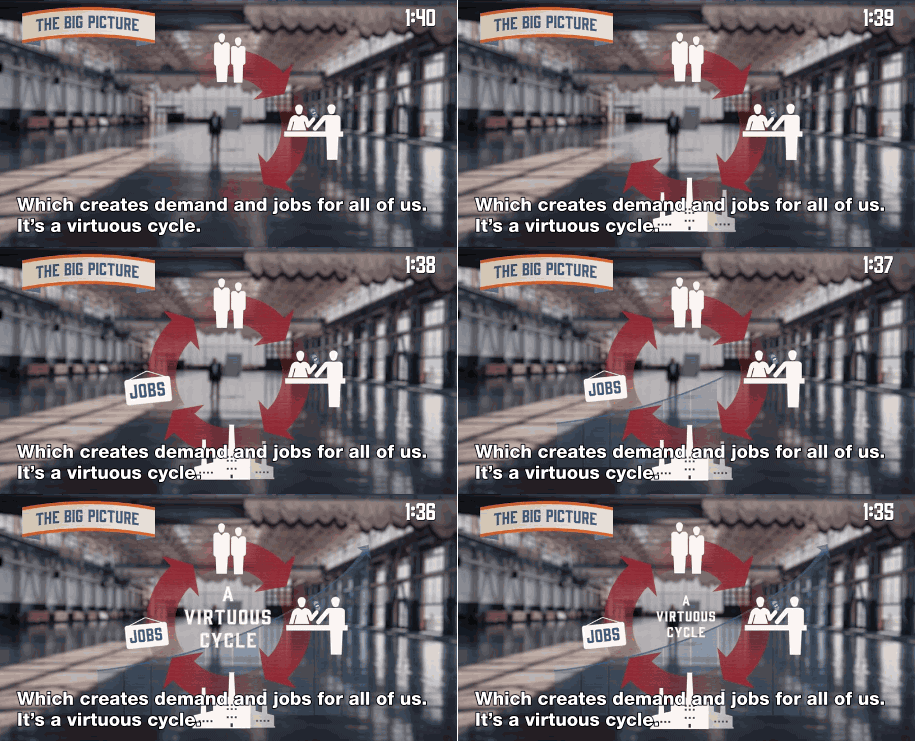
salon: Watch Robert Reich explain why we need to raise the...

11 May 22:02

I really, truly hope it didn’t save the space program

by PZ Myers

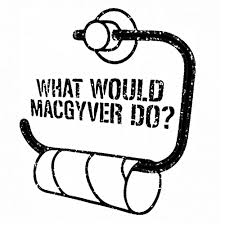
wwmd

Don’t get me wrong — the space program is important, I support it fully, but this claim that a single book may have saved it is a bit much. Especially since that book was The Martian.

“The Martian” doesn’t make a compelling political or budgetary case for sending humans to Mars. But it does make a human landing and perhaps even colonization of Mars seem plausible at the nuts-and-bolts, airlocks-and-solar-panels level. Sure, it would be wildly expensive, and there’s that whole EDL (Entry, Descent and Landing) issue, but remember, the story is set in the future, where people are smarter, and the duct tape still just as reliable.

Aaaaargh.

I read The Martian. I even sort of kinda liked it — it’s a page-turner and the story kept rolling along. But here’s the problem.

The Martian is a Mary Sue for engineers.

It’s complete nonsense. It’s about a man left stranded on Mars who then mcgyvers his way through every little crisis to survive and eventually…OK, no spoilers. But telling you it’s a Mary Sue is a major hint to the predictable conclusion. If I’d written it, he’d be dead after the first chapter, but then, that’s why I’m not getting hundreds of thousands of dollars and a movie deal.

But if you’re arguing that this book makes Mars colonization seem plausible, we’ve got a problem. It was wildly, majestically, extravagantly implausible at every step. You are not going to survive on Mars by scavenging junked probes and strapping them together with baling wire and duct tape.

If The Martian makes living on Mars plausible, then Harry Potter makes magic plausible, and I’m going to go make a magic wand out of a twig, some chewing gum, and a feather. And that worries me that Americans think a blatant fantasy is a good justification for colonizing Mars.

11 May 22:00

I’m going to need a bigger throne, then

by PZ Myers

satan

I’ve finished up my semester here, and now the NY Times tells me I’ve failed. My students didn’t revere me. They didn’t look at me as their moral guide. They have no desire to become my disciples. Gosh.

It hasn’t always been this way. “I revered many of my teachers,” Todd Gitlin said when we met at the New York Public Library last month. He’s a respected professor of journalism and sociology at Columbia, but in the 1960s he was a fiery working-class kid at Harvard before becoming president of Students for a Democratic Society.

I’ve been doing everything wrong. Next fall, I’m stomping into the classroom and demanding reverence, goddamnit.

Naturally, students looked to professors for moral and worldly understanding. Since then, though, finding meaning and making money have traded places. The first has plummeted to 45 percent; the second has soared to 82 percent.

I teach cell biology and genetics. I have a lot of material to cover and too little time to do it in. Now I have to lecture them on morality, too?

Most of my students aren’t in it for the money, either — yes, they’d like to get a reasonable job once they’re done here, and that seems like a good and practical desire, but they’re largely here because they like biology. If you want to go after the money-makers, go lecture the business schools.

We may be 50-year-olds at the front of the room with decades of reading, writing, travel, archives or labs under our belts, with 80 courses taught, but students don’t lie in bed mulling over what we said. They have no urge to become disciples.

I don’t even…I don’t run a cult of personality here. I know my students put in late hours trying to understand genetics or biochemistry or developmental biology — I hope like hell they aren’t lying up late pondering me. What is wrong with this guy? Is he pining for the days of tweed jackets with patches at the elbow, a pipe, a desk, and a power structure that required his underlings to suck up to him? Because that was great for old professors’ egos, but not so great for learning.

Fortunately, the Tattooed Professor offers a great rebuttal.

So if you’re a Tenured Erudite Professor teaching a course per term at an elite school, and you’re of a mind to write a piece about how academia’s doing it wrong, let me give you some advice. There’s plenty wrong with higher ed, no one’s doubting that, but don’t miss the target. Don’t distract from the real work that needs to be done by pedantically lecturing at the people actually doing it. Don’t begin with an idealized example and then scorn any deviations from it. Life is messier outside the campus fence; teach the students you have instead of pining for the ones you want. Use your privileged position and voice for what we really need in order for professors to matter: condemn the adjunctification of higher education. Hell, treat your own adjunct faculty with fairness and dignity. (Do you know their names? Are you sure?) Help open the faculty ranks to those who may not have taken their Ph.D.s from an ivy–I promise, we can do cool things, too. Argue for a return of public and political respect for our colleges and universities, and the funding that goes with it. Advocate for the less-privileged; these 4-4 loads don’t leave much time for writing national op-eds. Lobby your administration to embrace financial empowerment programs for students. Be a part of building the spaces (literal and figurative) on your campus where students and faculty can be present with one another in a variety of ways (including, if necessary, online). Recognize that your perceptions may embed privileged assumptions that are alien to many current and potential students–and faculty! Help the rest of us do the work that is ours to do in today’s difficult climate.

Or, tell us to get off of your lawn. Whatevs.

The NY Times ought to run that. Those are the real problems, not the lack of sufficient reverence among our students.


Here’s another good response, which looks at the NYT’s terrible past record on writing about higher ed. It seems Harvard is the only college in America, with a few expensive satellites here and there.

If an Elite R1 prof wants to take to the NYT to tell other elite R1 profs that they should concentrate more on teaching, please proceed. If you feel like writing an essay that punches down at the rest of us in any way, or worst doesn’t seem to recognize that the rest of us even exist, that there’s any kind of academic experience outside your own, just keep it to yourself.

11 May 12:12

Why are the stories in video games so bad?

by Leigh Alexander

People often say they are enthusiastic about games because "they can tell stories", or because they enable narrative moments not possible in other media. But although there are numerous flashes of brilliance in games, this potential often feels like something they circle, but never attain. Read the rest

10 May 21:57

You Can’t Defend Public Libraries and Oppose File-Sharing

by Rick Falkvinge

Public libraries started appearing in the mid-1800s. At the time, publishers went absolutely berserk: they had been lobbying for the lending of books to become illegal, as reading a book without paying anything first was “stealing”, they argued. As a consequence, they considered private libraries at the time to be hotbeds of crime and robbery. (Those libraries were so-called “subscription libraries”, so they were argued to be for-profit, too.)

British Parliament at the time, unlike today’s politicians, wisely disagreed with the publishing industry lobby – the copyright industry of the time. Instead, they saw the economic value in an educated and cultural populace, and passed a law allowing free public libraries in 1850, so that local libraries were built throughout Britain, where the public could take part of knowledge and culture for free.

In other words, they made explicit exceptions to the copyright monopoly for the benefit of public access to culture and knowledge. In most copyright monopoly legislation today, it says explicitly that monopoly holders to not have any kind of right to object to their works being displayed, read, and lent from public libraries. This can be traced back to the insights of 1850.

So how is this different from file-sharing? From manufacturing your own copies of knowledge and culture from others’ sources? Is it different at all?

Yes, it is different. It differs in efficiency. Where public libraries can educate one citizen at a time from one original book, file-sharing has the potential to educate millions at a time with the same effort spent.

Libraries and file-sharing do not differ in payment to copyright monopoly holders. You would frequently hear that authors are paid royalties when their books are borrowed from a library. This claim is not true. Authors do indeed get some slush money in most European countries, and this is based on library statistics, but it is no form of compensation for that library activity. The difference is crucial.

Rather, that money “from libraries” is a unilateral cultural grant that happens to use library statistics for data. It is not true that authors get money when their books are borrowed from libraries. In some cases, they do, but that’s mostly a coincidence. When Harry Potter in Swedish is borrowed from a Swedish library, for example, J.K. Rowling does not get a single penny for that. (The translator does, though. It’s a grant to promote culture availability in the local language, not to reward the author.) So the equivalence – the connection between lending and compensation – can be trivially disproven through examples.

Libraries and file-sharing do not differ in principle. The purpose of libraries was – is – to make culture and knowledge available to as many as possible, as efficiently as possible, for free – simply because of the greater socioeconomic benefit of an educated and cultural populace. How is this not file-sharing?

So we can observe that public libraries and file-sharing differ in scale and efficiency – and only in scale and efficiency. Quite a bit, even. But that’s a quantitative difference, not a qualitative difference. I sometimes hear people trying to defend the copyright monopoly by saying that file-sharing makes public libraries too efficient, and therefore cannot be allowed.

I can’t do anything but shake my head at that.

That has to be a first in the public debate: Are those people actually standing up and demanding that public services, such as public libraries, be made less efficient, to have less output for the tax money spent on it?

No. That does not make sense. And they deserve to hear it, to hear the absolute silliness of their own argument.

You just cannot defend public libraries and oppose file-sharing at the same time. They are one and the same phenomenon. One is just vastly more efficient.

In a quote from the 1850s that went past my information flow in February 2009, I noted that a publisher of the time had argued, paraphrased, that “you cannot possibly allow people to read books for free! If you pass this law, no author will ever make a penny from books again! Not a single more book will be written if you pass this law!”

(Sadly, I have lost the source of that quote. If somebody recognizes it, I would love to re-source it.)

Indeed, no book has been written since 1850. And no movie or piece of music has been created since large-scale file sharing with the Internet arrived around 1999. Either that, or these arguments are completely bogus, and there are only gains to be had from enabling the largest library ever created.

History does repeat itself. As do the people trying to defend obsolete guild-like privileges, even across centuries.

We have built the most amazing public library ever created. All of humanity is able to access the collective culture and knowledge of all of humanity, twenty-four by seven, as well as contribute to that collective pool. All the tools are already in place, all the infrastructure already rolled out, all the training already completed. Not a single tax penny needs to be spent to accomplish this. The only thing we need to do is to remove the ban on using it.

Why are we letting a cartoon industry stand in the way of this?

About The Author

Rick Falkvinge is a regular columnist on TorrentFreak, sharing his thoughts every other week. He is the founder of the Swedish and first Pirate Party, a whisky aficionado, and a low-altitude motorcycle pilot. His blog at falkvinge.net focuses on information policy.

Book Falkvinge as speaker?

Follow @Falkvinge

Source: TorrentFreak, for the latest info on copyright, file-sharing, torrent sites and anonymous VPN services.

10 May 05:31

‘E-Book Backup’, A Photocopied Hardbound Edition of a Kindle E-Book

by E.D.W. Lynch

E-Book Backup by Jesse England

In his 2012 project E-Book backup, artist Jesse England (previously) used a photocopier to create a physical copy of an Amazon Kindle e-book. England created each page of the “backup” by simply placing the Kindle on the photocopier’s scanner. The reader thus has the experience of reading a photocopied image of each digital page from the e-book. For the project England chose an e-book of George Orwell‘s classic book Nineteen Eighty-Four–as England notes the book was the subject of a controversial e-book recall by Amazon back in 2009. For good measure, England also uploaded a digital version of his paper backup to his Kindle. He does note that the E-Book backup “is best viewed in paper format.”

E-Book Backup by Jesse England

E-Book Backup by Jesse England

E-Book Backup by Jesse England

E-Book Backup by Jesse England
“The backup is best viewed in paper format.”

photos by Jesse England

10 May 05:30

Minimalist Hut in Austrian Forest

by Léa

Le cabinet d’architecture autrichien Raumhochrosen a réalisé un modèle de cabane minimaliste dans la célèbre forêt de Wienerwald. La construction est faite majoritairement à partir de bois brut, de manière à rester le plus proche possible de la nature, et ce, avec le moins de mobilier possible.

minimalisthut10 minimalisthut9 minimalisthut8 minimalisthut7 minimalisthut6 minimalisthut5 minimalisthut4 minimalisthut3 minimalisthut2 minimalisthut1
10 May 05:30

sixpenceee: The Rosy Maple Moth is a very common moth in North...


sixpenceee:

The Rosy Maple Moth is a very common moth in North Carolina. It belongs to the silkmoth family Saturniidae, which includes several of the world’s largest and showiest moths.  

These moths are forest dwellers, as the caterpillars feed on a variety of trees, including maples. While the larvae are sometimes considered pests of trees due to their leaf munching habits, the adults are completely harmless. In fact, they do not feed at all. Adult Rosy Maple Moths rely entirely on the fat reserves they build up as larvae. (Source) 

10 May 05:25

stare-me-down: Just a kind reminder for cops right on the LAPD...

Courtney shared this story from Super Opinionated.


stare-me-down:

Just a kind reminder for cops right on the LAPD building.

10 May 05:15

sturmtruppen:the person pretended to be a goat so the goat...


sturmtruppen:

the person pretended to be a goat so the goat pretended to be a person

10 May 02:47

Newswire: Stephen Colbert offers to fund $800,000 worth of projects for South Carolina schools

by Katie Rife

Now that he’s free of his conservative alter ego Stephen Colbert, Stephen Colbert is free to act like the bleeding-heart, public-school-loving liberal he really is. (The other Stephen Colbert presumably believes in shutting down public schools and letting students fight for spots at private ones in gladiator-style fighting pits.) Case in point: according to The Associated Press, Colbert surprised teachers in his native South Carolina today by announcing that he would fund every single classroom project listed by teachers from the state on the crowdfunding website DonorsChoose.org, a gift valued in excess of $800,000.

Funds for the donation will come from the sale of Colbert’s desk and fireplace from The Colbert Report—which were raffled off online late last year—with matching funds from ScanSource and The Morgridge Family Foundation’s Share Fair Nation. Colbert, who is a member of the DonorsChoose.org board, made the ...

10 May 02:45

Заброшенный коксохимический завод. Стаханов, Луганская...


Abandoned coke-chemical plant. Stakhanov, Lugansk region


Заброшенный коксохимический завод. Стаханов, Луганская область. часть 3.
здесь 1-я и 2-я части
10 May 02:44

sandandglass: The Nightly Show, May 5, 2015(By the way, that’s...


sandandglass:

The Nightly Show, May 5, 2015

(By the way, that’s “Comedy Central’s lawyer” in the background)

10 May 02:38

pumpkaboohoo: spaos-case-marine: poppopcrocker: I CANNOT...


pumpkaboohoo:

spaos-case-marine:

poppopcrocker:

I CANNOT BELIEV

HOW DUMB IS TEXAS

image

10 May 01:51

condommodel: STOP


condommodel:

STOP

10 May 01:51

plant-strong:Scooby Doo has great life lessons to teach:If something evil is happening, it’s...

plant-strong:

Scooby Doo has great life lessons to teach:

If something evil is happening, it’s probably an old white man trying to make money.

10 May 01:50

(via tastefullyoffensive:sympson2612)