Drone wars in Tokyo

‘Might a commitment strategy allow you to pay yourself to go to the gym?’
How are those resolutions going? Still going to the gym? If not, you’re not alone.
Let’s think about incentives. If some benevolent patron had paid you a modest sum — a few pounds a day, perhaps — for keeping your resolution throughout January, would that have helped you keep fit now that January is behind us?
The answer is far from clear. An optimistic view is that by paying you to look after yourself in January, your mysterious patron would have encouraged you to form good habits for the rest of the year. The most obvious case would be if you were trying to give up cigarettes; paying you to get through the worst of the withdrawal period might help a lot. Perhaps diet and exercise would be similarly habit-forming.
Yet some psychologists would argue that the payment is worse than useless, because payments can chip away at our intrinsic motivation to exercise. Once we start paying people to go to the gym or to lose weight, the theory goes, their inbuilt desire to do such things will be corroded. When the payments stop, things will be worse than if they had never started.
The idea that external rewards might crowd out intrinsic motivation is called overjustification. In a celebrated study in 1973 conducted by Mark Lepper, David Greene and Richard Nisbett, some pre-school children were promised sparkly certificates as a reward for drawing with special felt-tip pens. Others were given no such promise. When the special pens were reintroduced to the nursery classrooms a week or so later, without any reward on offer, the researchers found that the children who had previously been promised certificates for their earlier drawing now spent half as much time with the pens as their peers. Only suckers draw for free.
There’s a big difference between exercising and colouring, however: while many children like felt-tips, many adults do not like exercising. A payment can hardly crowd out your intrinsic motivation if you don’t have any intrinsic motivation in the first place. Systematic reviews of the overjustification effect suggest that incentives do no harm for activities that people find unappealing anyway.
So perhaps the idea of paying people to exercise is worth thinking about after all. In 2009, two behavioural economists, Gary Charness and Uri Gneezy, published the results of a pair of experiments in which they tried it. Some of their experimental subjects were paid $100 to go to the gym eight times in a month, while those in two alternative treatment groups were either paid $25 for going just once, or weren’t asked to go to the gym at all.
The results were a triumph for the habit-formation view. The payments worked even after they had stopped. In one study, the subjects were exercising twice as often seven weeks after the bonus payments stopped than before they started; in the other, the increase was threefold 13 weeks after payments had stopped. People who were already regular gym-goers didn’t change their behaviour — so there was no crowding-out — but there was a surge in exercise from people who hadn’t previously done much. A later study by Dan Acland and Matthew Levy found a similar habit-forming effect among students, although, alas, the good habits often failed to survive the winter vacation. In other experiments, incentive payments have been shown to be modestly successful at helping smokers to give up.
There is much to be said for a benign patron who pays you to stay healthy while you form good habits. But where might such a person be found? Take a look in the mirror — your patron might be you.
Inspired by the ideas of Nobel laureate Thomas Schelling, economists have become fascinated by the idea of commitment strategies, where your virtuous self takes steps to outmanoeuvre your weaker self before temptation strikes. A simple commitment strategy is to hand £500 to a trusted friend, with instructions that they are only to return the cash if you keep your resolution.
Might a commitment strategy allow you to pay yourself to go to the gym? It might indeed. Economists Heather Bower, Mark Stehr and Justin Sydnor recently published the results of a long-term experiment conducted with 1,000 employees of a Fortune 500 company. In this experiment, some employees were initially paid $10 for each visit to the company gym over a month. Some of them were then offered the opportunity to put money into a commitment savings account: if they kept exercising, the money would be returned; otherwise it would go to charity. The approach was no panacea: most people did not take up the option, and not everyone who did managed to stick to their goals. But even three years later, those who had been offered commitment accounts were 20 per cent more likely to be exercising than the control group.
That chimes with my experience. I once wrote a column about sending $1,000 to a company called Stickk, which promised to give it away if I didn’t exercise regularly. The contract was for a mere three months — and I succeeded. Eight years after my money was returned, I’m still sticking to the habit.
Written for and first published at ft.com.
(You can unsubscribe at any time)
Email Address

Yield, 54″ x 72″, oil and varnish on canvas, 2014.
When encountering paintings by artist Samantha Keely Smith (previously) it’s nearly impossible to escape the mystery and gravity depicted by a violent clash of abstract brush strokes. Ocean waves crash atop foreboding bodies of water, plumes of fire seem to battle clouds in the sky, and swirling storms shield distant secrets just over the horizon. Smith refers to her paintings as ‘internal landscapes,’ part of an ongoing examination of an externalized inner conflict. “My newer works try to boldly portray the struggle I’ve always tried to address in my work between order and chaos, dark and light, and positive and negative impulses,” Smith shares, “along with addressing what feels like a shifting and unpredictable landscape due to global warming.”
You can see a gallery of her most recent paintings on her website and follow progress in her studio via Instagram.

Headlong, 56″ x 72″, oil and varnish on canvas, 2015.

Crux, 50″ x 60″, oil and varnish on canvas, 2015.

Interference, 56″ x 60″, oil and varnish on canvas, 2015.

Manifold, 60″ x 72″, oil and varnish on canvas, 2015.

Clearing, 56″ x 72″, oil and varnish on canvas, 2015.

Issue, 60″ x 72″, oil and varnish on canvas, 2015.

Pulse, 60″ x 72″, oil and varnish on canvas, 2016.

Samantha in the studio working on Kindred, 2011. Photo by Thomas Feiner.


This entry passed through the Full-Text RSS service - if this is your content and you're reading it on someone else's site, please read the FAQ at fivefilters.org/content-only/faq.php#publishers.
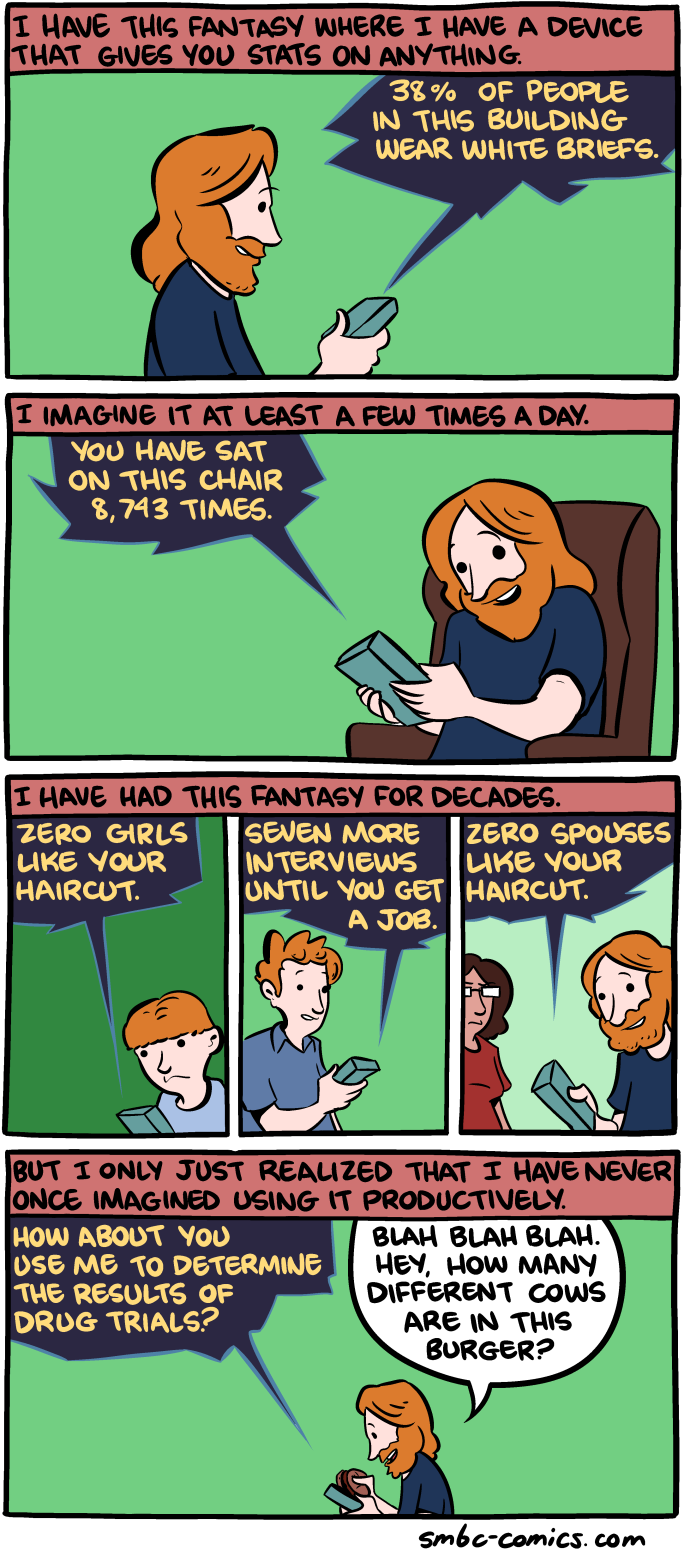
Hovertext: It can violate conservation of information, but it can't have rounded corners.
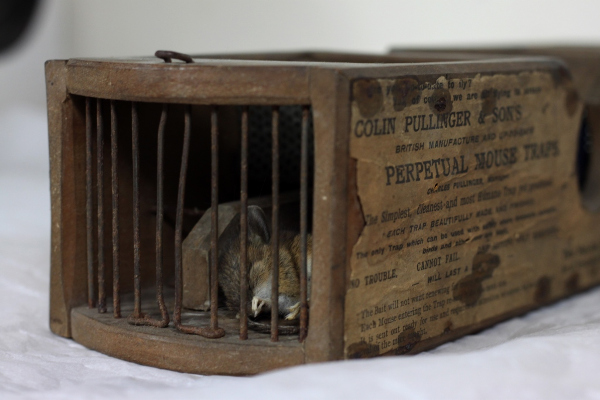
The Museum of English Rural Life got a surprise on Wednesday — a 155-year-old mousetrap there managed to catch a mouse:
So, this retired rodent had managed to sneak past University of Reading security, exterior doors and Museum staff, and clambered its way up into our Store. Upon finding itself there it would have found the promised land; a mouse paradise laid before it full of straw, wood and textiles. Then, out of thousands of objects, it chose for its home the very thing designed to kill it some 150 years ago: a mouse trap.
The trap was patented in 1861; it bills itself as a “perpetual mouse trap” that “will last a lifetime.” More at the museum’s blog.
(Thanks, Djerrid.)
Please support Futility Closet on Patreon!
Adam Victor BrandizziConclusões bem elegantes!
O governo chinês anunciou hoje que testará mosquitos contaminados com a bactéria Wolbachia para intensificar seu combate à dengue e, teoricamente, evitar contágios pelo zika vírus no país. O teste foi anunciado pelo infectologista Xi Zhiyong, que chefia as pesquisas sobre o assunto na Universidade Sun Yat-sen, na cidade de Guangzhou. Segundo agência estatal Xinhua, o processo deve ser levado a campo no início de março.
O uso de Aedes aegypti infectados com a Wolbachia para combater a transmissão de vírus foi iniciado após pesquisas da Universidade de Monash, na Austrália. A atuação da bactéria nos mosquitos, de acordo com os pesquisadores australianos, teria capacidade de impedir que o vírus da dengue se instale nos tecidos do organismo. Além disso, a bactéria ajudaria a reduzir a população de mosquitos, já que ovos de fêmeas saudáveis fecundados por machos contaminados não prosperam.

Quadro ilustrativo da situação reprodutiva dos mosquitos infectados com Wolbachia (Crédito: Comunicação/Instituto Oswaldo Cruz)
A China ainda não registrou casos de zika, mas surtos de dengue são comuns no país – especialmente no sudoeste, onde as temperaturas mais altas persistem ao longo do ano e as chuvas são mais frequentes e abundantes, mantendo ambientes propícios à proliferação do Aedes aegypti e do Aedes albopictus, como mostra, por exemplo, um estudo publicado pelo Centro Nacional de Controle de Doenças chinês a respeito da presença do Aedes albopictus no país.
Em 2015, a Província de Guangdong registrou 791 casos de dengue. Em 2014, o número foi quase 90% maior. Apesar da queda, Pequim demonstra preocupação com o zika, entre outros aspectos, pela intensa movimentação portuária e aeroportuária nas regiões com maior população de mosquitos.
No Brasil, a Fundação Oswaldo Cruz (Fiocruz) iniciou, em 2012, adesão à estratégia internacional “Eliminate Dengue: Our Challenge” para testar o uso dos mosquitos infectados com Wolbachia. A soltura dos animais infectados foi iniciada em 2014 e, até o ano passado, cerca de 200 mil já haviam sido liberados no Rio de Janeiro.
Adam Victor BrandizziI swear, Subnormality is the most amazing, greatest, most avant garde webcomic ever. This one is incredibly amazig. It is like, dunno, War and Peace, immense etc. Hard to read, but very worth it.
Adam Victor BrandizziBut it would surely be an amazing fungus.

This is another comic I really like, and I always regretted that I didn’t find other excuses to use the drawing in panel three.
Looking at the drawing now, I probably could have freaked the kid out by just showing him my jacked up right pinky. You may laugh, but I know a guy with a jacked-up pinky, and he does use it to freak people out, so there is precedent.
Note from Missy: the guy with the jacked-up pinky? Plays the role of the Emperor of the Moon’s number-one moon minion. And yeah, his pinky is totes freaky.
You can comment on this comic on Facebook.
As always, thanks for using my Amazon Affiliate links (US, UK, Canada).

Image provided by Isana Yamada

Image provided by Isana Yamada
Japanese artist Isana Yamada' s project Samsara is composed of six translucent whales mounted on thin pedestals that give each of the sculptures an illusion of movement. The whales, illuminated from within, provide a window to strange worlds locked inside their resin-coated bodies: churning submarine volcanoes, fluffy white clouds, and even polar bear skeletons that float within. The project, staged at Tokyo University of the Arts, references the circle of existence found in Buddhist traditions with each whale displaying a separate scene. The whale that represents the human dimension contains a sunken sailboat, imagery that symbolizes a difficult voyage or plight.
Yamada’s work will also be shown in an exhibition of sculptural works at the Artcomplex Center of Tokyo from March 1st through 6th. You can see more of his work on his Facebook page here. (via My Modern Met)

Images by @muzintansaki

Image provided by Isana Yamada

Image provided by Isana Yamada

Image provided by Isana Yamada
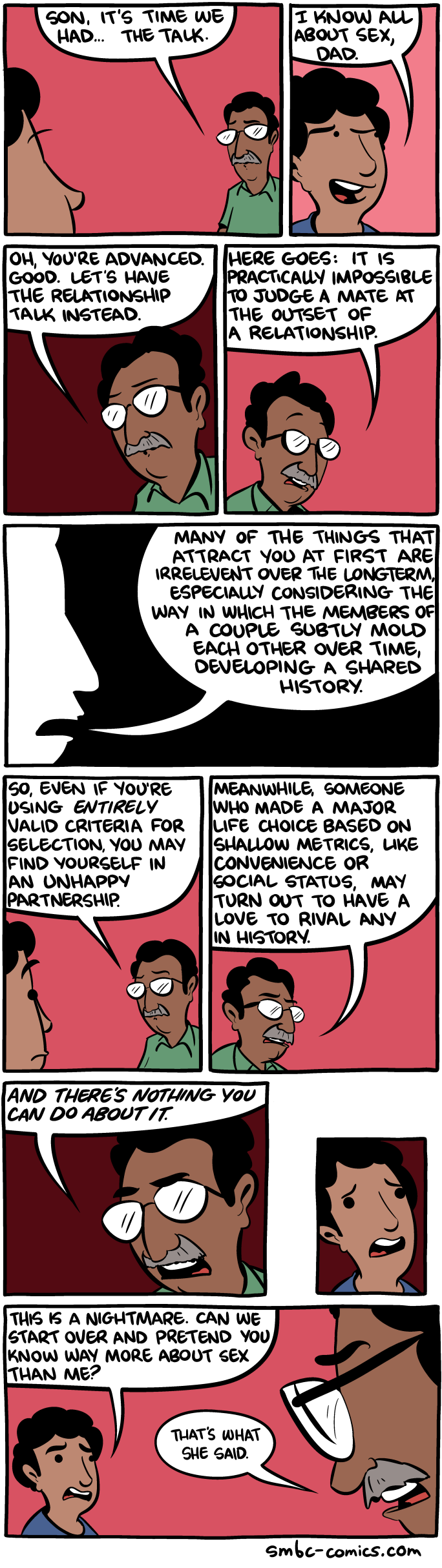
Hovertext: Now, let's have the talk about how individual effort may matter less than other people's inherent ability.
After 800 people pointed out my crappy base-11 number line (that's what I get for doing base-11 before bed), I have altered to votey. So, please press z to go back and give it a look!