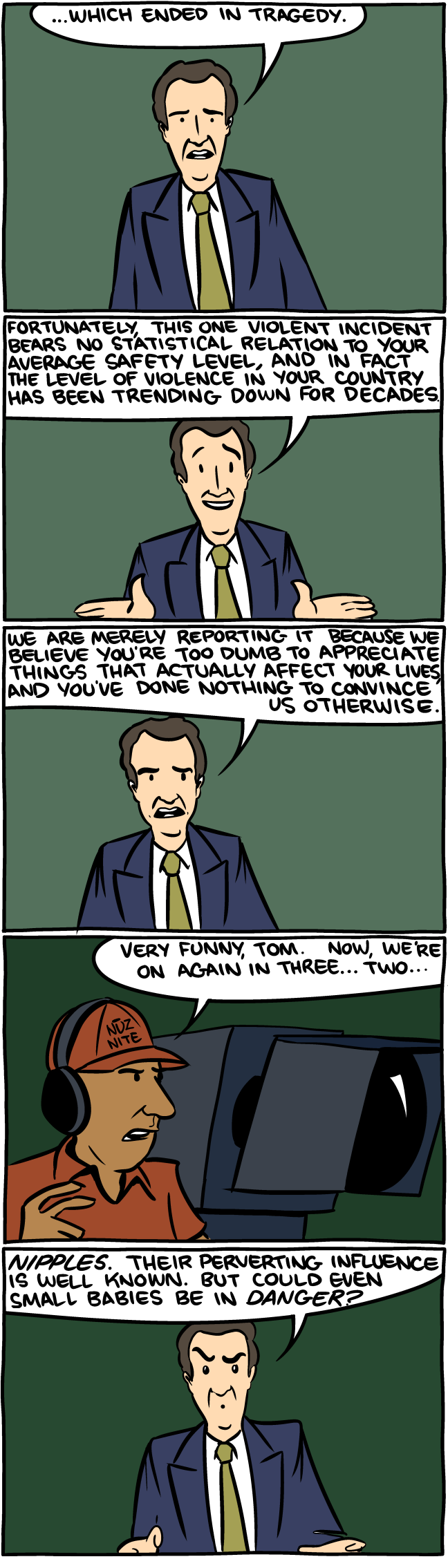
OLD MAN WEINERSMITH SHAKES HIS FIST AT THE NEWS










Jessica Williams proposes applying New York’s Stop and Frisk policy to Wall Street bankers.
Adam Victor BrandizziDe fato (mas acho que praticamente todo mundo que conheço já saiu dessa vibe, só n00bs caem nessa - como deve ser).
At least once per year, I fly to Las Vegas and completely blow my tubes out for forty eight hours. Alternative realities give you new perspectives on things, so I justify it as personal development.
After uncounted hours of punishment at a craps table, I was in no mood to be placated with complimentary cocktails. My friend Gabe and I left the casino, willing to pay for our own drinks, if only just to pay the rent for a quiet hour of liquor.
There was a nearby bar that served Pappy Van Winkle’s Family Reserve Bourbon Whiskey, the best Bourbon in the world. The place was quiet and empty - just the environment I wanted at the time - so we sat and ordered our drinks.
As we drank, we chatted with Max, the bartender. This is a man who is truly at the top of the game in barcraft. Pappy Van Winkle Bourbon is incredibly rare, and he taught us about its lineage; we learned that several distilleries acquired casks of the stuff through some odd business transactions and sell it under a different brand name.
Max showed us his specialty cocktail list, things that he’s invented but are off the menu. One of the drinks listed smoke as an ingredient, not liquid smoke flavoring, but actual smoke. Watching Max prepare this drink was almost as amazing as the drink itself - he fired a piece of charcoal - charcoal from the inside of a bourbon cask - with a propane torch and covered it with the glass as it smoked, some of the residue remaining on the inside of the glass.
More people are filtering into the bar now, and as we’re enjoying Max’s expertise, a Bro, sunglasses-on-indoors, hat-sideways, popped-collar and all, comes up to the bar and, entirely unprompted by the bartender, orders his drink.
LEMME GET A CAPTAIN AND COKE BRAH.
Max turns to him and smiles, "sure, coming right up".
And we watched as Max made the hell out of that Captain and Coke. The Bro paid and strutted off to his crew.
We asked Max how he felt about making a Captain and Coke, considering how talented a bartender he is, and how the customer was even kind of a dick.
His response was the personal developmental lesson I took from this Vegas trip.
"No, it doesn’t bother me. If the customer orders Pappy and can talk about fine whiskey, I’ll pour Pappy and talk about fine whiskey. But if the customer orders a Captain and Coke, I’ll make the best Captain and Coke I can."
This guy is truly a master of his craft. He know all the technical details of the domain, and is creative enough to invent fantastic drinks. But beyond all that, most importantly, he knows that barcraft is fundamentally about giving the customer what they want. My friends and I wanted to talk about high end bourbon. Brody McBroderson wanted to get hammered.
The true master obliges both.
I’ve mastered the Python language, and very nearly mastered PostgreSQL’s every in, out, and what-have-you. Since being acquired by eBay, I’ve been pushing to write all new code in Python, pushing to get PostgreSQL officially supported, pushing in every direction, so long as it was away from Java.
That has been a mistake.
I know Java well enough, so I haven’t been resisting because of my skill set, I resisted Java because it’s enterprisey. Because I thought it was an inferior technology. Because I had a chip on my shoulder about technical superiority.
That’s not mastery, that’s just being a prick, and I’m done with it.
For the last week, I’ve given up Emacs, and am writing Java code in eBay’s modified version of Eclipse, and I don’t hate it. Sure, it has its warts, but it’s not that bad. It’s just different. And I’ve actually been quite productive because there’s so much infrastructure already set up around Java at eBay.
I’m still trying to master the craft, but giving up language bigotry is a huge part of it. I’m not working to make the most efficiently coded, concise solution, I’m working to deliver business value in context. And I’ve found that the vast majority of that work is simply understanding the context.
Now, this may seem obvious. “If you’re working inside a company that’s all Java, of course you should code in Java!” But there’s a more subtle point here:
If you’ve coded in Ruby, Python, or any modern framework language, would you take a job at a Java shop?
I suspect that a lot of people wouldn’t, because of programming language bigotry. I would take a job at a Java shop (I did, in fact, even though I resisted it for two years) because I feel orders of magnitude more useful delivering business value than I feel delivering code.
I’m not there yet, but a software master delivers value, the code is just part of the way there.

This is probably the coolest GIF I’ve ever seen.
now there’s some perspective.
I once saw a storm roll like this once. It was beautiful.
i love watchin rain roll in

Dmitry quería sacar una tarjeta de crédito, escaneó los contratos y le modificó los términos del servicio. Le sacó el límite y le puso una tasa de interés al 0% y explicitaba que en caso de que el banco no cumpla estas reglas debía pagar una multa de alrededor de u$s 90.000. Y si el banco decidía rescindir el contrato tenía que ponerse con u$s 200.000.
Tinkoff – el banco – aceptó (obviamente sin leer los términos) el contrato y le envío la tarjeta de crédito a Argakov. Ahí empezó la novela.

(Un contrato es un acuerdo entre 2 partes… que no se puede romper… que no se puede romper…)
Al parecer (esta es la parte que me llama la atención sobre cómo lo hizo) el ruso se avivó cambió los papeles en el momento de la firma y en el banco firmaron los contratos. Listo, el tipo se convirtió en un cliente preferencial y si quería, podía comprarse un Lamborghini en cuotas sin interés y el banco, calladito, pagar.
Por primera vez, al menos que yo recuerde, un tipo logró que un banco no haya leído la letra chica del contrato. Al principio y cómo es lógico bloqueó la tarjeta y cada vez que el usuario no podía usarla el banco era avisado legalmente. Desde el banco lanzaron un arsenal jurídico contra el cliente, denunciándolo por estafa. Sin embargo en primera instancia las cortes de ese país dictaminaron fallaron a favor del señor Argakov. Tinkoff había firmado el contrato y fue a la corte por no cumplirlo… “Firmaron los documentos sin leerlos, lo mismo que hacen muchos clientes que luego no cumplen, son intimados a través de la ley por los bancos y luego juzgados por la corte, esto es al revés”.
Debido a estos problemas legales, el ruso de 42 años demandó al banco por alrededor de u$s 7.000.000 por romper el acuerdo. Por su lado el millonario banquero ruso lo demandó por estafa.
Obviamente el título es bastante tendencioso con mi forma de pensar sobre los bancos, sufrí indirectamente del corralito y de muchas otras cosas con los bancos. Así que en parte me alegra que un ciudadano de los miles de millones del mundo se la haya puesto, y con calidad. Seguramente las cosas terminen mal para el cliente y bien para el poderoso, pero bueno, que fue un “Fuck the system”.
Me despido con una frase de Henry Ford:
Vía: The Telegraph.
Puede interesarte:
Terrorism is essentially a force multiplier, enabling a weaker insurgent to exhaust much stronger government forces hamstrung by needing to provide comprehensive security for a civilian population against an elusive enemy capable of striking anywhere. The terrorists know they cannot win on the battlefield so they instead seek to make the conflict so expensive and damaging that their opponent collapses under the strain. Osama bin Laden clearly understood that principle and more than once alluded to his desire to see the United States impoverish itself and squander its resources in its struggle to defeat him.
Washington’s overly muscular response to 9/11 has included two major wars in Asia in which 6,749 Americans and more than a hundred thousand locals have died. Lesser conflicts span the globe, including the Philippines, Yemen, and Uganda while predator drones regularly carry out missions in Pakistan and Somalia. The global war on terror has resulted in the doubling of the size and cost of the federal government, the creation of a huge new bureaucracy in the Department of Homeland Security, and the militarization of police forces at every level throughout the United States. It is difficult to tabulate the actual cost in dollars as the legacy expenses, including medical care for veterans, will continue for many more years, but the two wars alone will have consumed between $4 and $6 trillion if and when they are ever actually paid off. Unquantifiable collateral damage from the war on terror has also been considerable, with the United States now reviled in much of the world even as fundamental liberties have been eroded at home.
9/11 was spectacular and demanded a devastating response, but terrorism also plays out in smaller ways, as it did last week. Twenty-two U.S. embassies and consulates in the Middle East and the Horn of Africa were closed, many for the entire week, and all nonessential personnel at the Embassy in Yemen were evacuated. The closure was ordered because al-Qaeda’s de facto leader Ayman al-Zawahiri reportedly sent a message via intermediaries to Nasir al-Wuhayshi, head of the franchise operation al-Qaeda in the Arabian Peninsula (AQAP), calling for an attack against unspecified western targets. The message was obtained by the CIA and there might even have been an intercepted al-Qaeda conference call relating to it shortly before the security alert was issued. AQAP is widely believed to be al-Qaeda’s most capable affiliate and the suggestion for the attack might have actually been initiated by al-Wuhayshi rather than by the group’s leadership in Pakistan. A flurry of chatter on websites and through communications channels believed to be used by militants also occurred, suggesting that an attack might be imminent. The Yemeni branch of al-Qaeda is best able to strike at home and elsewhere in the Arabian Peninsula but its potential reach also extends to neighboring states, including Egypt and the Emirates, as well as to the Horn of Africa.
The U.S. intelligence community regarded the threat as “credible and specific” enough not to ignore. But the decision to close the embassies was purely political in that a risk-averse White House did not want to revisit a Benghazi type situation where an unfortunate incident would be carefully dissected by the Republicans to obtain political advantage. Indeed, in this case, Republican spokesmen strongly and uncharacteristically endorsed the move by the president.
Which is not to say that there wasn’t considerable dissent in the National Security Council. Some believed that there was no actual attack impending, that the intercepted message and chatter were deliberate moves to confuse Washington and force it to overreact. Others argued that if the instructions actually came from al-Zawahiri they might well be ignored by AQAP. State Department Security stated its belief that most of the potentially targeted embassy and consulate buildings were secure against anything but an overwhelming number of heavily armed attackers, which was highly improbable. Unlike the facility in Benghazi, Inman plan embassies, the norm in the countries affected, are designed for security and are more like fortresses than government buildings or offices. They have an outer perimeter fence or wall that is usually protected by local security forces and contract guards, barriers on driveways that can stop a truck, a setback before one reaches the actual building to protect against car bombs, a thick wall angled to deflect and force of an explosion, and shatter-proof armored windows on all sides of the building facing any public street or road. Marines inside the building are armed with automatic weapons and there is a containment space which doubles as a killing field inside the main entrance which can be sealed off even if someone does manage to break through the outer security. In the depths of the building there is normally a safe haven with its own power supply, food and water, as well as an independent communications system.
And some of the more creative minds on the NSC saw the terrorist threat as an opportunity to draw the most effective cadres of AQAP out of hiding and crush them in an attack on an embassy building that would be anticipated, planned for, and met with overwhelming force. The Pentagon suggested stationing a quick reaction force offshore to provide whatever muscle might be needed while CIA was prepared to send an incident response team into Sana’a to coordinate a counter-strike using drones. The only problem with those proposals was one could easily find oneself with all the resources stacked up in the wrong place, given that the target of the attack might not be the U.S. Embassy in Sana’a. But the evidence suggested Yemen’s capital as the most likely target, an assumption that was apparently confirmed—though not independently verified—when it was learned that the Yemeni security services believed that “dozens” of suspected al-Qaeda militants had entered the country. The embassy was subsequently closed with all non-essential personnel evacuated while all American citizens were also advised to leave. The British Embassy also closed and all personnel were flown home.
Apart from a number of CIA drone strikes and an uncorroborated Yemeni-claimed disruption of a possible complex plot directed against oil pipelines and ports, nothing happened last week in spite of the terrorism panic and the story is already disappearing down the memory hole. Assuming the federal government acted in good faith and the entire incident was not a fabrication to serve as a justification for National Security Agency spying, closing the embassies proved not to be a solution to anything. Inevitably, it seems, the White House came up with a compromise response that kicks the can down the road regarding its ability to deal with a terrorism threat. One might even consider the U.S. action to be damaging, as it put paid to White House claims that al-Qaeda is increasingly a spent force, increasing its appeal in places like Yemen. By virtue of an errant message which might, in fact, have been deliberate disinformation, the group shut down most of the United States diplomatic facilities in the Middle East as well as in much of Africa. The lesson learned for al-Qaeda is that faking a transparent threat is a disruptive technique that can be employed over and over again against a politically vulnerable President Barack Obama. Indeed, the closure of the U.S. Consulate General in Lahore, Pakistan and a travel warning for the entire country at the end of last week might have been precisely such a fabricated threat.
If the al-Qaeda terrorist threat was indeed real, Ayman al-Zawahiri may have also learned, from an apparent White House leak, that his communications have been intercepted, meaning he will change the way he does things, and the next time around there might not be any forewarning. From an operational point of view, shutting down embassies does not make a problem go away, it only postpones it. An August attack becomes a September attack with the White House attempting to anticipate what might be coming, constantly playing catch-up in a game in which the enemy can dictate all the moves.
Philip Giraldi, a former CIA officer, is executive director of the Council for the National Interest.
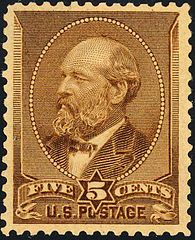
In 1881, as the nation was mourning James Garfield’s assassination, the following advertisement appeared in 200 newspapers:
I have secured the authorized steel engravings of the late President Garfield, executed by the United States Government, approved by the President of the United States, by Congress and by every member of the President’s family as the most faithful of all portraits of the President. It was executed by the Government’s most expert steel engravers, and I will send a copy from the original plate, in full colors approved by the Government, postpaid, for one dollar each.
Each reader who sent in a dollar received the promised engraving — on a 5¢ postage stamp.
Adam Victor BrandizziOs pontos levantados são relevantes, e a série toda é muito boa. Obrigado ao José Bruno Barbarroxa que apresentou o blog.
While this series was being written, from June 2013, Edward Snowden began leaking top-secret documents from the United States National Security Agency, showing that the agency was capable of Internet surveillance on a massive scale with the PRISM surveillance system and with the XKeyscore interface into their amassed data. The fact that covert government surveillance was possible and was taking place does not come as particularly surprising news to network engineers and conspiracy theorists, but the revelations have finally given the general, non-technical public an idea of how badly the proprietary systems around which they have built much of their digital lives can be used to harm them and compromise their privacy.
Concerned people in the United States will be only too aware of how the secret abuse of power to exercise this surveillance and the failed motions to curtail it by the United States Congress has dented their trust in their own government. However, the leaks’ implications are international as well. The foreign intelligence agency in my own country of New Zealand, the Government Communications Security Bureau, was earlier this year accused of illegally spying on New Zealand citizens, and diplomatic cables from WikiLeaks show the GCSB is potentially already cooperating with the NSA. In spite of this, new legislation is set to extend the GCSB’s powers, despite independent reviews condemning the bill from both a legal and human rights perspective, even after amendments. The scandal and the anger over surveillance abuse extends to the United Kingdom, Germany, Sweden, and many other countries.
I do hold out some hope for the efforts such as the Electronic Frontier Foundation’s class action suit to curtail the surveillance or at the very least to register the public’s anger about this unwarranted intrusion into private lives. However I am concerned not just by the possibility of the rise of a global surveillance state, but by the implications this has for the right to secure communications using cryptography for authentication and encryption.
It’s no secret that cryptography and encryption presents a problem to the NSA’s surveillance systems, and that they expend a great deal of effort in attempting to circumvent it, including demanding private keys from businesses for applications like HTTPS. My concern is this: If it becomes publically accepted that governments spy warrantlessly on international networks and that this is justified or necessary, then we may reach a point where the legality of the general public’s use of cryptography itself may again be called into question.
Computing professionals of my generation likely did not begin their careers until after the United States’ cryptographic export controls were relaxed in 1999, perhaps prompting us to take for granted the availability of algorithms like RSA and AES with high key sizes for cryptographic purposes. A world where a government agency would actively attempt to curtail the use of such technology may seem very far-fetched to us — perhaps less so to those who remember that Pretty Good Privacy was a radical new idea that caused its activist creator Phil Zimmermann real legal trouble.
I believe that computing enthusiasts and users of free software operating systems, not just cryptographic experts, are in a special position to assist their concerned friends and family with defending their online privacy and securing their communications, and that if we value both freedom and security of information as good hackers do, then we in fact have a responsibility to do so. I believe that people need to be aware of not just the implications of massive surveillance on a global scale, but also how to exercise their rights to fight against it. If the legality of cryptography is ever called into question again as the result of its impeding warrantless surveillance, then its pervasiveness and the public’s insistence on its free availability should make restricting its use not just impractical, but unthinkable.
This is why I support the Electronic Frontier Foundation, the Free Software Foundation, and anyone else who supports the freedoms and rights of everyone to use technology safely and privately. I hope anyone reading this will consider doing the same.

She brings it with her everywhere
| archive - contact - sexy exciting merchandise - cute - search - about | |||
 |
|||
| ← previous | August 13th, 2013 | next | |
|
August 13th, 2013: Yesterday's comic about reincarnation got me a few emails saying "Hey if you like that idea you should check out Riverworld!" so if you liked that idea you should check out Riverworld! One year ago today: my other interests include how come this site is so bad at getting me dates – Ryan 
| |||
Should women “opt out” of the workforce, or – in author Sheryl Sandberg’s words – “lean in”? Several journalists have discussed the issue this week, most championing women’s right to career acclaim. An August 8 New York Times story profiled women who left prestigious jobs to start families, but are now trying to re-enter the workforce. The story prompted a plethora of contributors to ask whether women should always put career first, or whether there are benefits to “opting out.”
The Times article said it was difficult – if not impossible – for women returning to the workforce to procure jobs at a status level previously enjoyed. Forbes writer Deborah Jacobs finds this reasonable:
“I would like to feel empathetic, but find none of this surprising. The corporate world values work experience, and no matter how you spin the story about your PTA service and volunteer work, staying home with the kids is not work experience.”
Jacobs wrote an article on this subject for the Times in 1994, entitled “Back From the Mommy Track.” She described mothers “working their way back from the sidelines,” seeking a career after years at home. The opportunity costs to their years of mothering, she said, were extensive. Now, she believes women “must be prepared to live with our decisions.”
But does “leaning in” guarantee the alternative gratification these women imply? Perhaps not: the Times also published a story Saturday, analyzing whether prestigious jobs truly enrich women’s lives. Their findings generally demonstrated that women derive less pleasure from career power than men:
“Men tend to perceive more intrinsic rewards either from feeling influential or from having authority. For women, by contrast, both conditions seem to be necessary to get this reward. This matters. For women, just having authority may not be enough (as it seems to be for many men). And so even when women do occupy the ‘corner suite,’ so to speak, they aren’t guaranteed the personal and professional rewards men garner.”
The authors blame most of this dissatisfaction on “broader societal norms” and “stigma” that harm women’s ability to “lean in.” They call this a “psychosocial rewards gap,” and suggest it may dissuade women from pursuing high-powered careers.
Most of these stories paint “opt out” women as discontent with their place “on the sidelines,” pursuing the thankless work of motherhood. Yet many of these mothers – who unfortunately possess a less vocal position in the media – enjoy their life and find it worthwhile. In contrast, those who pursue a career do not always find ultimate fulfillment, either: even if they attain that “corner suite,” they may be disappointed with the rewards. In that moment, they may wish they “opted out” of the office and “leaned in” a little to their families.
It is important to note this decision faces fathers, as well. Even if men face less stigma than women in the workplace, they must choose between home-centric and career-centric pursuits. This is not to suggest that women never face a “psychosocial rewards gap.” Rather, it is possible that this very gap exists for men as well in the inverse: they may feel pressure to build career achievement rather than family involvement.
Regardless of the vocation pursued, there are opportunity costs involved. Whether pursuing a life of “opting out,” or striving for the top-dog position at a Fortune 500 company, one must decide what costs are worth paying.

Adam Victor BrandizziRealmente, é impressionante o quão pouco conhecemos!

A 2011 entry from the Museum of Sex by Melodiousmsm explores the internal anatomy of the clitoris, whose extent wasn't fully mapped until 2005, when Royal Melbourne Hospital urologist Helen O'Connell published her groundbreaking MRI studies. The clitoris forks internally like a wishbone, and then ramifies further. As Melodiousmsm notes, this suggests that the argument over vaginal versus clitoral orgasm has been misplaced, since the clitoris runs through the vulva and vagina.
The most interesting part of this article are the longstanding misperceptions about clitoral anatomy, the fact that science understood so little about such a significant organ for so long. The clitoris, after all, is the only organ that exists purely for the purpose of conveying pleasure, and has as much erectile tissue as a penis, but somehow it was mostly missed for literally millennia.
The glans is connected to the body or shaft of the internal clitoris, which is made up of two corpora cavernosa. When erect, the corpora cavernosa encompass the vagina on either side, as if they were wrapping around it giving it a big hug!
The corpus cavernosum also extends further, bifurcating again to form the two crura. These two legs extend up to 9cm, pointing toward the thighs when at rest, and stretching back toward the spine when erect. To picture them at rest, imagine the crura as a wishbone, coming together at the body of the clitoris where they attach to the pubic symphysis.
Near each of the crura on either side of the vaginal opening are the clitoral vestibules. These are internally under the labia majora. When they become engorged with blood they actually cuff the vaginal opening causing the vulva to expand outward. Get these puppies excited, and you’ve got a hungrier, tighter-feeling vaginal opening in which to explore!
    
|
Adam Victor BrandizziHahah, mas esse caso só melhora. O cara tirou a sorte grande mesmo.
Às moças, ele é bem boa pinta, né?
Antes de mais nada, meus parabéns ao Movimento Passe Livre. Eu consideraria o aumento justo, e não sou, a princípio, a favor o passe livre. Ainda assim, após anos de trabalho, o MPL conseguiu impor reivindicações ao Estado e levar suas propostas do delírio adolescente à discussão nacional. A ideia do passe livre era absurda; agora, é pensável, plausível até. É um resultado excelente, ainda mais para um movimento grassroots sobre um tema que é, via de regra, considerado secundário. O momento foi crucial para seu sucesso mas o movimento agiu com competência.
"@Estadao: Movimento Passe Livre volta atrás e diz que protestos em SP não vão parar: http://t.co/bJKh0BTy9V" volta o cão arrependido
— Lyla (@meansfreedom) June 22, 2013
Dito isto, o MPL tornou-se um detalhe, como indica sua ambivalência e a rejeição de sua pauta pelos manifestantes. O responsável pelo crescimento dos protestos foi, provavelmente, a Polícia Militar do Estado de São Paulo, ao reprimir violentamente os manifestantes. Não é novidade que a Polícia Militar é violenta, mas sua reação nesses dias foi de uma brutalidade surpreendente. Qual o propósito, por exemplo, de atacar jornalistas? A truculência tornou-se incompreensível; atacar a imprensa não foi apenas criminoso, revelou-se também estúpido, contraprodutivo até mesmo para os propósitos da polícia. Infelizmente, para tentar “mostrar seu valor”, a PM simplesmente se negou a fazer seu trabalho nos dias seguintes, permitindo que o caos tomasse as manifestações.

Como justificar um tiro de borracha em uma jornalista?
O que deveria, então, a polícia fazer? Deveria deter os vândalos que agiram nos primeiros dias, ao invés de atacar os manifestantes. Deveria também deter os vândalos dos dias seguintes, ao invés de se omitir. Que os defensores da PM tentem nos forçar uma falsa escolha entre a brutalidade e o caos apenas nos mostra sua limitação intelectual. Imagine se um cirurgião plantonista esquece um bisturi dentro de um paciente e, ante as reclamações, se recusa a trabalhar. Se este cenário é inaceitável, por que a polícia pode escolher entre trabalhar mal ou não trabalhar?

Por que quem defende a revolução na democracia…
Outras reações foram bem engraçadas. Muitos que viam com naturalidade dos vândalos nos primeiros dias entraram em pânico ante o crescimento dos protestos; viam neles uma “ameaça às instituições”. Só que o vandalismo dos primeiros dias também era uma ameaça às instituições. Se turbas puderam quebrar agências bancárias nossas instituições já estavam sob ataque: ali golpeava-se o Estado de direito, o direito de ir e vir, a segurança e a propriedade privada. Ali também se negava o valor da democracia: se o direito à manifestação pacífica não era suficiente, então de que ela nos serve?

…esperava algo além do autoritarismo?
Se a minimização dos atos violentos dos dias iniciais foi um erro, mais absurdo foi o exagero em relação aos dias posteriores. Aparentemente, aqui povo na rua é início de golpe. Houve equívocos nas manifestações, como a presença de idealizadores da ditadura militar, skinheads (aparentemente, ao menos) e rejeição a partidos. Entretanto, exceto pelo último, estes provaram ser movimentos minoritários entre os manifestantes. Se tivéssemos, porém, de confiar nas descrições mais temporãs, acreditaríamos que no mínimo metade dos manifestantes usavam braçadeiras com o sigma e tanques já se aproximavam das sedes de governo. Felizmente as únicas evidências do Golpe Militar eram alguns cartazes e comunidades no Facebook. Talvez devêssemos, além de vetar suas candidaturas, controlar o acesso dos militares a cartolinas e Internet?
No Brasil agora é assim, manifestação passa ao lado de base militar do Exército e os boatos chegam à repetição de 64 em duas horas.
— Vinícius Melo Justo (@relances) June 23, 2013
Talvez seja injusto caçoar tanto desses prospectos: nunca presenciei um golpe no Brasil, talvez comecem assim. Entretanto, se a ideia de golpe já me parecia absurda naqueles dias e mostrou-se absurda posteriormente. Não só as Forças Armadas respeitaram a democracia como ficou claro que o manifestante não quis golpe algum, mas mudanças na democracia. Quando via essas pessoas inteligentes denunciando o Golpe Militar, o irmão socialista do Golpe Comunista, da Ditadura Gay e da Teocracia, tive a mesma sensação de ver um comunista hoje em dia. Que a velha esquerda nos parece anacrônica, já sabemos; será que podemos pôr, também, uma esquerda mais recente, moldada pela ideia do golpe, na caixa dos paradigmas ultrapassados? Não sei – mas esses dias trouxeram um indício de que a democracia é mais forte do que muitos acreditam.
Passados os protestos, não me surpreenda que tenham sido democráticos. Reconheci a ideologia que os molda: é o que me ensinaram na escola pública. Literalmente tínhamos aulas disso: nos ensinavam que “precisamos lutar por nossos direitos” (sempre indefinidos e sempre se expandindo), mas que “a corrupção é grande” e consome os recursos necessários para garantir nossas reivindicações. Entretanto, nós aprendemos também como a ditadura militar foi trágica e como a democracia, mesmo falha, é importante. O manifestante sabia que, seja como for, a democracia é melhor que um regime que lhe proibisse de ir à rua.
É compreensível que a rejeição aos partidos tenha assustado, mas foi um temor infundado. O despropósito do medo, nós o vemos hoje, mas o que surpreendeu já naqueles dias foi a incapacidade da intelligentsia de aceitar esta rejeição. “Toda democracia moderna tem partidos”, se dizia, e é verdade. Entretanto, esta afirmação maquiava uma questão mais concreta. Toda democracia moderna tem partidos com fundo partidário e monopólio da representação, moldados por peleguismo e corporativismo, sem identidade ideológica? Não, mas é isto que temos e foi isto que os manifestantes rejeitavam. “Sem partido” significava também “sem estes partidos”, “sem esse jeito de ser partido”. É lamentável os manifestantes partidários tenham sido agredidos, mas era previsível; não aconteceria o mesmo se desfraldassem bandeiras do PSDB em uma manifestação petista (ou vice-versa)? Foi um erro de algumas lideranças incentivar suas bases a ir à rua.
Os partidos foram banidos porque o motor de todo o movimento foi uma crise de representatividade. Se a pouca representatividade é um problema dos partidos, não se restringe a eles, porém. Um grande número de setores que se uniu para dizer algo que não conseguiam antes. Havia ali muito da elite reacionária com seus cartazes contra Bolsa-Família e até alguns saudosos da ditadora, mas ali estavam também os movimentos sociais que lutavam contra sexismo, racismo e desigualdade – e havia algo em que concordavam.
Em espcial, havia um grupo mal representado, tão mal representado que sequer tem nome, mas que poderia ser chamado de filhos das diaristas. Nem todos são filhos de diaristas, mas a expressão dá bem a ideia: jovens que cresceram nos anos 90 e anos 2000, filhos e netos de pessoas por vezes muito pobres que foram as principais beneficiadas pela redução de desigualdade resultante do controle da inflação e dos programas sociais. Estes jovens estudaram graças à universalização da educação: por vezes filhos de iletrados, são minimamente instruídos, muitos até em cursos superiores. Por pior que seja a educação que tiveram (e não foi necessariamente tão ruim), ela fez a enorme diferença entre não conseguir ler itinerário do ônibus e conseguir ler um post no Facebook. Eles também sabem o valor dos programas sociais bons em oposição aos assistencialistas (embora não necessariamente consigam entender os detalhes da diferença).
Eles não são representados no debate político. Seus pais são melhor representados, através da defesa de programas sociais. Felizmente, porém, o Bolsa Família não é tão necessária aos filhos; mais útil lhes seriam as duas principais reivindicações vistas nas ruas. Tampouco lhes representa, necessariamente, os movimentos de segmentos sociais, como os que combatem o racismo e o machismo. O filho da diarista não é necessariamente miserável, negro, gay ou favelado, a filha não se sente necessariamente oprimida pelo sexismo e muitos com certeza são religiosos – há uma miríade que não se encaixa nos grupos de interesse do progressismo. Note que eles não são necessariamente contra estes grupos, muito pelo contrário: havia entre os manifestantes muitos que também se sentiam representados por eles. O filho da diarista convive diariamente com amigos destes grupos organizados, os respeita e apoia. A defesa das minorias é mais regra que exceção entre eles. Entretanto, justamente por serem a nova classe média, não há grupo que represente estes jovens.
Neste sentido, o progressismo falhou com eles: focou-se tanto nos pais que se esqueceu dos filhos, focou-se tanto nas minorias que esqueceu a maioria. Tão fascinados estávamos com o avanço social (e devemos estar, mesmo: foi e ainda é um dos problemas mais urgentes do país), tão fascinados estávamos que nos acostumamos a minimizar e caçoar daqueles que reclamavam dos serviços públicos e da corrupção. É um cacoete que adquiriu-se ao responder à elite reacionária, que citavam estes problemas ao mesmo tempo em que criticavam o foco nos mais pobres, mas agora a crítica não vem só dela. Na rua, estavam o jovem do movimento negro, o jovem alimentado pelo Bolsa Família e o jovem pedindo para restringir a cidadania de quem a recebe, e todos tinham pedidos em comum.
O filho da diarista oriundo da escola pública foi apenas parte do movimento, mas me parece o perfil ideal para representá-lo porque torna os protestos inteligíveis. Ele representa a massa de pessoas que literalmente estudou na escola que é preciso protestar por direitos e que a democracia é o melhor caminho. Entretanto, ninguém haveria de se manifestar sozinho: qual o sentido de juntar cem pessoas na frente do Congresso Nacional? Há anos, ele ansiava por se manifestar, mas sem a massa crítica isto não faria sentido.
Por outro lado, os movimentos como a Primavera Árabe, o Occupy e os Indignados, embora nascidos em contextos bem diferentes, excitaram a imaginação do brasileiro. Quem quer que acessasse o Facebook veria reclamações e um clamor por manifestações populares.

O clamor pelas ruas já existia há tempos; só não o levávamos a sério justamente por demorar para ter efeito
Se o desejo de ir pra rua crescia há tempos, e a inspiração estrangeira estimulava os ânimos, os protestos do MPL se tornaram um gatilho por uma curiosa e inesperada sequência de acontecimentos. No primeiro dia, foram muito bem-sucedidos em marcar presença; ainda assim, havia muito poucos participantes comparado com o que viria depois. Ademais, a aprovação dos protestos devia ser bem baixa na população. (Este é um ponto um tanto misterioso: manifestações do MPL já aconteciam há tempos e não juntavam tanta gente, nem ante vários aumentos. Talvez tivessem mais esperança pelo prefeito ser petista? Talvez o achassem hipócrita por isso? Esta é uma boa questão para quem estudar os protestos.)
O mais relevante, porém, foi a brutal repressão da PM. Este também não é um fato bem explicado: que a polícia pode ser truculenta não é novidade, mas também não costuma ser tão violenta e tão desnorteada com a classe média, muito menos em eventos de alta visibilidade em áreas centrais da cidade, sem contar o ataque à imprensa. Será que resquícios da lua-de-mel que se seguiu a Tropa de Elite subiram à cabeça? Ou o “pedido de basta” da imprensa foi a causa? Esta é outra questão digna de atenção.
"a manifestação está sendo pacífica, justa. não tem porquê a polícia estar tão próximo assim. Se degringolar é outra coisa" => DATENA (juro)
— ..:::diandra:::.. (@diandra) June 13, 2013
Se não compreendemos bem a causa, porém, a consequência da brutalidade foi clara: muito mais pessoas decidiram ir aos protestos, nem tanto para apoiar as causas do MPL, mas sim para se opor à incompetência ao lidar com os manifestantes. Deste modo, um movimento que já tinha alguma massa começou a ganhar ainda mais, de maneira espontânea. O espectador que via as manifestações em outros países e lamentava que “o povo é alienado” passou então a crer que finalmente chegara a Primavera Brasileira. Estas pessoas não tinham muitas pautas em comum – na verdade, discordam muito mais do que concordam – mas ainda assim passaram a ir às ruas junto com os outros manifestantes, enfim aplicando o que lhes fora ensinado. À medida que mais pessoas iam, mais pessoas ainda se sentiam impelidas a ir, e cada um levava sua cartolina. Enfim, tínhamos a nossa Primavera.
Sem um alvo fácil, como uma ditadura ou má economia, as demandas variaram mais que nos outros protestos ao redor do mundo. Ainda assim, duas se destacaram: melhores serviços públicos e o fim da corrupção. São pedidos naturais, posto que os serviços públicos ainda deixam muito a desejar, e há essa percepção geral de que no Brasil há muita corrupção. Eu, porém, acredito que o Brasil tem melhorado espetacularmente no que tange à corrupção e impunidade desde os anos 90. Há ainda impunidade, mas vem se reduzindo notavelmente. O abuso do poder não é mais, necessariamente, a principal causa impunidade, mas sim a justiça, lenta e opaca. Se nossa justiça fosse um pouco mais eficiente, a Lei da Ficha-limpa não seria necessária, por exemplo. Infelizmente, os manifestantes focaram pouco no Judiciário, provavelmente por ignorância mesmo.
Os serviços públicos são um caso um tanto diferente pois, nesta área, a melhoria talvez possa ser mais veloz. Ainda assim, a qualidade de alguns serviços é resultado de uma escolha muito sábia, que foi universalizar antes de aprimorar. É o caso da educação e da saúde, casos em que se mostra a sabedoria da escolha: pessoas que, se sobrevivessem à diarreia na infância, cresceriam analfabetas hoje não morrem mais por doenças facilmente preveníveis e têm uma educação fraca mas significativa. Muito se reclama da qualidade da educação, e são reclamações válidas, mas é preciso ser justo: universalizá-la foi um ato hercúleo que fez capaz de usar a Internet pessoas que não conseguiriam, sem a universalização, ler uma placa. Parece pouco, mas foram estas pessoas que usaram o Facebook que sustentaram os protestos, foram as aulas precárias de História que as ensinaram a protestar. Alguns serviços parecem não ter melhorado porque se expandiram primeiramente – mas expandir é um avanço, logo os serviços melhoraram, sim.
No geral, as propostas que ecoaram nas ruas foram ruins. Um bom exemplo é a reserva de fração do PIB para educação e saúde. O problema de reservar um valor antecipadamente é que, se o valor for pouco, não pagará as contas, e se for muito, haverá desperdício. Alguém realmente acredita que um número redondinho como “10%” é exatamente o que é preciso para melhorar educação ou saúde? O problema talvez esteja mais na má gestão do que na falta de recursos. A melhoria da qualidade levará um aumento de custo considerável pois muitas pessoas que optam pelo serviço privado migrariam para o público, mas a melhoria em si não depende um valor reservado.
Muito mais se pode criticar sobre os pedidos das ruas, mas a crítica mais comum talvez seja a mais simples: são pedidos corretos demais. Afinal, quem não pediria melhores serviços e menos corrupção? Ser contra a corrupção é quase tão inócuo quanto ser contra o Mal; ser a favor de melhores serviços é quase tão inerte quanto ser a favor do Bem. Ainda assim, estas são demandas válidas. Se hoje o Egito é um caos, há um ano atrás as multidões foram às ruas pedir a queda de um ditador. Oras, quem é contra a queda de ditadores? Seria justo dizer que pediam uma platitude? Certamente não – e o mesmo pode ser dito do que pediram as ruas aqui no Brasil.
Que no Brasil os poderosos acostumaram-se à impunidade é um fato tão conhecido quanto lamentável; que os serviços são péssimos também é fato notório. Infelizmente, porém, nosso ato reflexo era ver nessa denúncia um ato retrógrado. Por isso as Duas Semanas de 2013 foram tão importantes: falaram alto o que estávamos nos acostumando a esquecer. É importante que gritem o óbvio quando nossas análises, mesmo que corretas, o escondem de nós. Se alguém nos diz – uma, duas, três vezes – que dois mais dois são quatro, nos diz uma obviedade; se nos diz pela quarta vez, porém, talvez nós devamos rever nossos cálculos.
Em resumo, se as propostas de como fazer vindas dos manifestantes não são boas, mais importante são as reivindicações sobre o que fazer. Mesmo com todos os avanços, é preciso retornar ao problema da corrupção e dos maus serviços. Já avançamos muito no combate à corrupção, na expansão dos serviços públicos e até em sua qualidade, em certos aspectos, mas a mensagem das ruas é que isto precisa avançar mais rápido. Para os que entendem um mínimo de política e economia, tão acostumados a olhar o povo de cima, a tarefa é propor como fazer isso. Não importa que as opções apresentadas pelas ruas sejam ruins; foram os primeiros rascunhos de possíveis soluções. As outras propostas devem ser defendidas, argumentadas ante e para o grande público. Se algo ficou claro, é que o povo pode e quer participar da política. Se discordamos do que, em massa, os brasileiros querem, tentemos convencê-los de nossas posições.
Não será fácil. Muitos dos avanços implicarão em sacrifícios que não queremos fazer. Persevera a ideia, falsa, de que, eliminando a corrupção e cortando gastos, teremos recursos suficientes. A solução, porém, passa pelo debate mais amplo. É preciso que as boas ideias sejam mais inteligíveis. Não é possível nem necessário escrever um só artigo que convença a todos, mas sim que se desmonte este clube fechado dos que discutem economia e política. É um trabalho de anos; agora, o importante é começar.
Adam Victor BrandizziNão vi o vídeo, mas o paralelo entre comunismo e islamismo político é assombroso.
One can read thousands of words about Egypt and have less sense of the culture of the military coup than one gleans through this video. It’s quite a piece of work, isn’t it? But what does it say? One take is that Egypt is going through something like the experience of Italian fascism of the 20′s and 30′s; there seems to me a kind of similarity in the cultural style—the sensuality, the military worship tropes (for an army that has never had much actual success in the field). The combination of the two—sex and the allure of men with shiny boots. But of course other interpretations are possible.
My old prof Robert Paxton once said that fascism was essentially hard measures taken by a frightened middle class. The fear back then, in Italy, Spain, and also in France and Germany, was of communism. Here the secular middle class fears the Muslim brothers, and sharia plays the role of the Soviet future as aspiration for some and terror for others. I can’t say for certain where my own sentiments would be faced with that dreadful choice. Where are most of Egypt’s secular, Western oriented, “liberals?” Right now, backing the coup. Is their fear of Morsi and Egypt’s Islamic population justified or overwrought?
In any case, I submit this clip as an apt representation of how Egypt’s secular liberals are rallying to their man on horseback.
Adam Victor BrandizziTheir “fate” is determined by those who invest and intervene despite – not because of – the numbers.
To what extent can science predict the future? Both TIME Magazine and Aeon Magazine looked at predictive scientific studies this week. Their stories described more ethically questionable research, perhaps, than most: one calculated the “fate” of first-graders, the other neurological tendencies in Romanian orphans.
TIME considered an Education Week study that purports to show whether a first-grader will become a high school dropout. The study analyzes predictive factors like behavioral problems, frequent school absences, and below-average reading skills. These weaknesses tend to escalate by third grade. If reading development does not happen here, students may fall into the “fourth-grade slump,” and fall into a vicious cycle of academic straggling. While the study’s author cautioned that his formula only identifies “signs of students who drop out—it doesn’t mean they are dropouts,” it also seems this scientific labeling system could create problems for students who need encouragement in order to succeed. How would you like to know, at seven years old, that you will likely become a high school dropout?
Meanwhile, Aeon described a scientific study hoping to improve Romania’s terrible orphanages. Despite international outcry, Romanian officials “staunchly believed that the behavioral problems of institutionalized children were innate” rather than a result of organizational deficiencies. The report’s scientists sought to prove them wrong. They enrolled 136 institutionalized children, placed half in foster care, and tracked their physical, psychological, and neurological development. “They knew from the outset that the project would be ethically precarious,” author Virginia Hughes writes. “Could there be a more vulnerable study population, after all, than orphans with physical and psychological disabilities living in an economically feeble and politically unstable country?”
Nevertheless, scientists proceeded cautiously, and published their findings in Science in 2007. They were able to demonstrate that children placed in foster care “showed significant gains in IQ, motor skills, and psychological development” – but unfortunately, the study did little to change Romania’s orphan situation: an international adoption moratorium was made permanent in 2005. Domestic adoption exists, but with “onerous regulations.” Children in orphanages are often “undeniably miserable.” Nelson, the Romania report’s leading scientist, “has become desensitized, holding on to the idea that scientific data will eventually pave the road for better social policy.”
Both reports strive to help vulnerable or troubled children succeed in life. However, one must ask: What good can this data actually do in improving subjects’ circumstances? The Romanian project hoped to pave the way to a national foster care system. But Romania’s most destructive policies are still in place. Telling a first-grader’s parents that their child is likely to fail could motivate action. But what of the parents who see this as a scientifically-determined outcome? What of students who believe they are marked out for failure?
Consequentalist studies, though useful, cannot ultimately create change. Life is made up of human choices that are unpredictable and unprecedented. Patterns of destruction can be broken – even in Romania. In a 2005 article, the Guardian shared one Romanian orphan success story:
“She tells of a mother of four children, all by different husbands, who had abandoned the first three one after another. Then the mother arrived at the day-care centre with her fourth. ‘She didn’t want to touch the baby. She wouldn’t kiss her. We had to teach her how. Then she learned to kiss the baby. And now they’re still together.’”
Whether dealing with abandoned orphans or rebellious seven-year-olds, the key is personal investment – not data. Sometimes the vulnerable needed to be taught, nurtured, and encouraged. Their “fate” is determined by those who invest and intervene despite – not because of – the numbers.
Adam Victor BrandizziEscandinávia, lugar onde político não tem mais o que fazer.

Jens Stoltenberg, the Prime Minister of Norway, decided to spend an afternoon working as a secret taxi driver in order to listen to voters, and hear their concerns.
Mr Stoltenberg’s stunt was devised in order to hear from real Norwegian inhabitants, and he stated that he believes taxis are the few place where people discuss their true views on life.
The exchanges occurred in June, and the politician remained incognito by donning a taxi driver’s uniform and large sunglasses. Their discussions were then captured on video, and Mr Stoltenberg only revealed his identity when they arrived at their destination.
The footage was created in collaboration with an advertising company, and it has since been uploaded to the prime minister’s Facebook page. It will also be used to help Mr Stoltenberg’s re-election campaign, which will be decided in September.
Mr Stoltenberg told various media outlets that it was integral for him to listen to what individuals really think, before adding, “And if there is one place people really say what they think about most things, it’s in the taxi.” The passengers were either randomly picked up from taxi ranks, or told to wait in the spot specifically.
Some individuals realised instantly that their driver was the Norwegian prime minister, with one stating, “From this angle you really look like Mr Stoltenberg.” While another person stated that this was a lucky coincidence, because she had planned to send him a letter.
Most of the time the discussion immediately turned to politics, with Mr Stoltenberg asking one passenger, “The main point is to make sure good students have something to stretch for, and to give those who struggle extra help,” when talking about his stance on education.
None of the passengers were charged for the journey, but Jens Stoltenberg, who hadn’t driven for 8 years, was criticised for his ability behind the wheel. The Norwegian Prime Minister is currently lagging behind in the polls.
Norway Prime Minister Jens Stoltenberg Works As Secret Taxi Driver To Listen To Voters [Video] is a post from: The Inquisitr