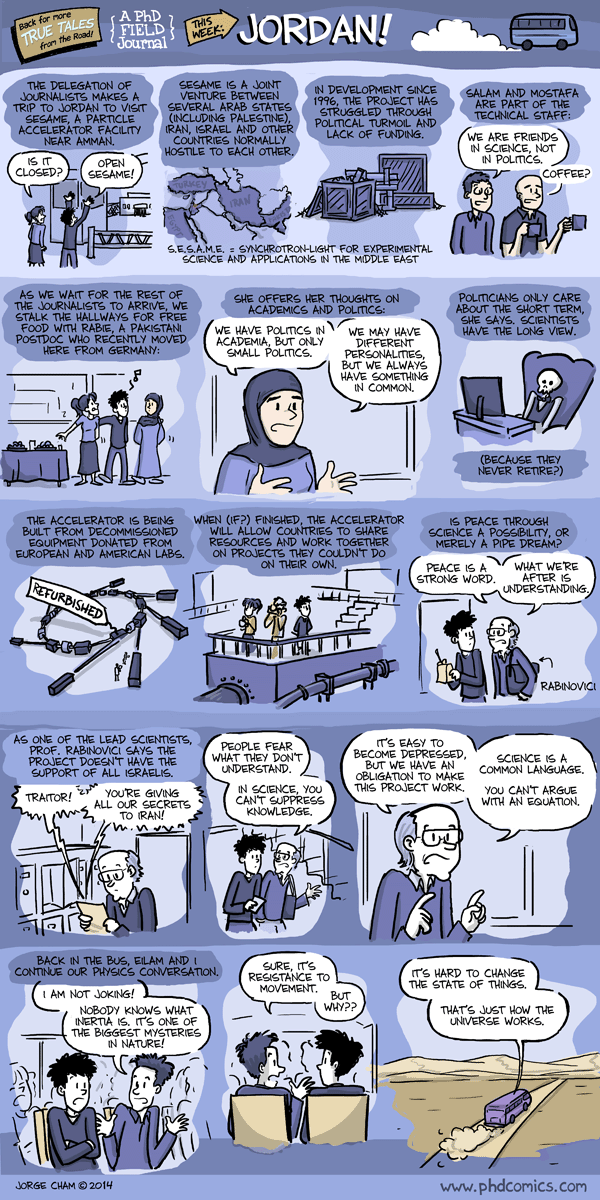
| Piled Higher & Deeper by Jorge Cham |
www.phdcomics.com
|
|
 |
||
|
title:
"Open Sesame" - originally published
2/28/2014
For the latest news in PHD Comics, CLICK HERE! |
||
Adam Victor Brandizzi
Shared posts
12 Mar 19:25
02/28/14 PHD comic: 'Open Sesame'
10 Mar 00:32

humansofnewyork: "It’s Chopin.""Why Chopin?""My whole arm is...
"It’s Chopin."
"Why Chopin?"
"My whole arm is covered with things that remind me of Poland."

09 Mar 17:11

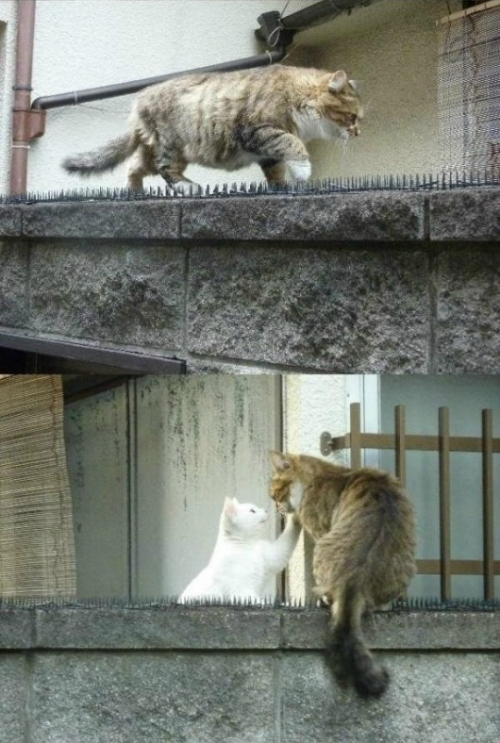
doktorgirlfriend: charmory: this is the most romantic thing...
this is the most romantic thing i’ve seen all day
Nothing can stop true love.
09 Mar 17:10
Devil's Dictionary of Programming
With apologies to Ambrose Bierce
simple — It solves my use case.
opinionated — I don’t believe that your use case exists.
elegant — The only use case is making me feel smart.
lightweight — I don’t understand the use-cases the alternatives solve.
configurable — It’s your job to make it usable.
minimal — You’re going to have to write more code than I did to make it useful.
util — A collection of wrappers around the standard library, battle worn, and copy-pasted from last weeks project into next weeks.
dsl — A domain specific language, where code is written in one language and errors are given in another.
framework — A product with the business logic removed, but all of the assumptions left in.
documented —There are podcasts, screencasts and answers on stack overflow.
startup — A business without a business plan.
hackday — A competition where the entry fee is sleep deprivation and the prize is vendor lock in.
entrepreneur — One who sets out to provide a return on investment.
serial entrepreneur — One who has yet to provide a return on investment.
disrupt — To overcome any legal, social, or moral barrier to profit.
Tadeu likes this


08 Mar 18:44
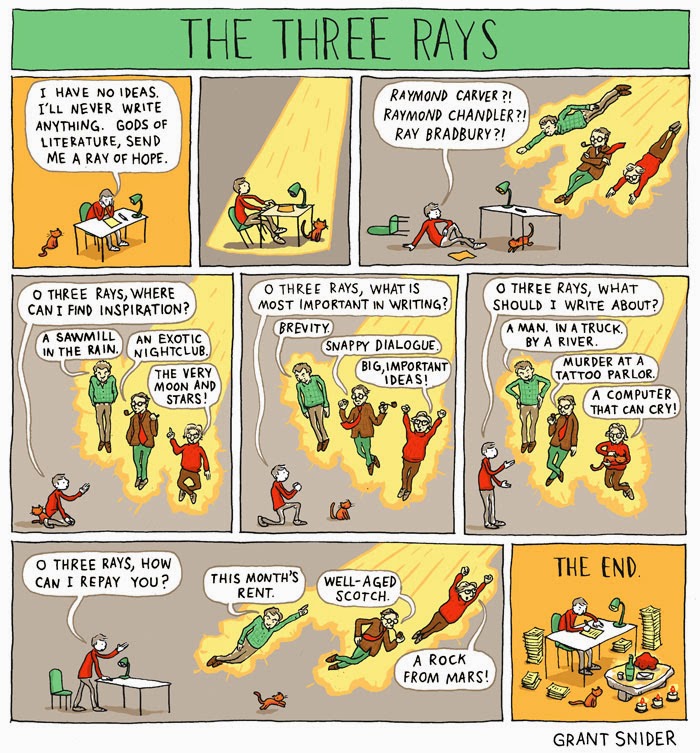
This comic appears in the 3/2/2014 NYT Sunday Book Review. Thanks to editor Pamela Paul and AD Nicholas Blechman!
You can order a poster at my shop.
The Three Rays
by Grant
This comic appears in the 3/2/2014 NYT Sunday Book Review. Thanks to editor Pamela Paul and AD Nicholas Blechman!
You can order a poster at my shop.
dequesi, Damiani.guilherme and one other like this

08 Mar 18:37
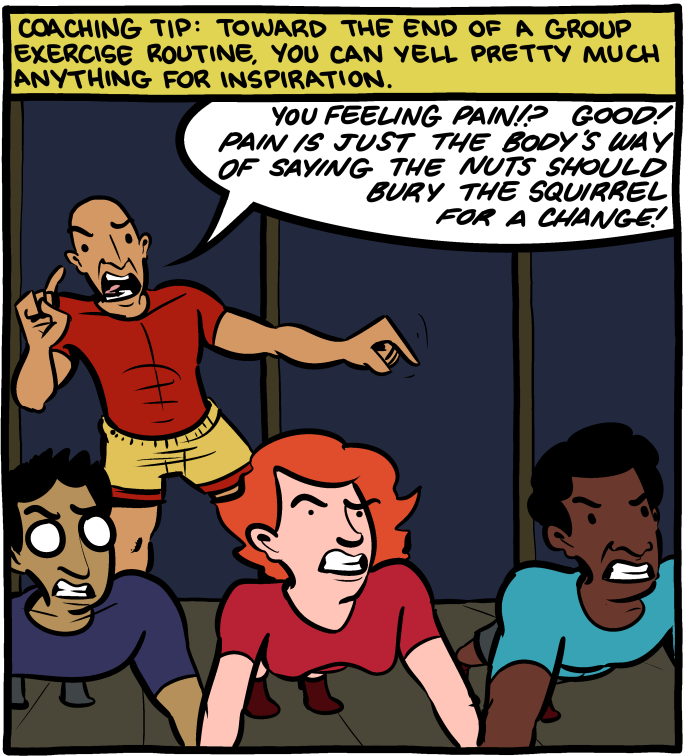
I wrote an eBook for kids, with art by Chris Jones and extra info by Sean Carroll!


March 04, 2014
I wrote an eBook for kids, with art by Chris Jones and extra info by Sean Carroll!
Adam Victor Brandizzi, Doug Wibby likes this

28 Feb 16:35
A Rússia está certa ou errada na Ucrânia e na Síria?
by Gustavo Chacra
Criticam muito a Rússia. E há enormes motivos, especialmente em questões de política doméstica. Em política externa, porém, os russos são realistas, defendem seus interesses e observam os riscos de alguns acontecimentos internacionais, como agora na Ucrânia e também na Síria. Vladimir Putin se posiciona de forma antagônica à atual administração de Barack Obama, que mantém um isolacionismo idealista, no caso da Ucrânia – na Síria, Obama está correto em manter distância e buscar uma saída diplomática.
Na Síria, por exemplo, a Rússia, corretamente, não caiu no conto das manifestações “pró-democracia”. Primeiro porque não ocorreu absolutamente nenhuma em Damasco até hoje (sim tiveram protestos populares pró-democracia em Hama). Isso mesmo que vocês leram. Os protestos na capital síria, no início da crise, reuniam centenas de milhares de pessoas a favor de Bashar al Assad. Em segundo lugar, porque a Rússia sabia da presença de radicalismo islâmico ligado à Al Qaeda entre os rebeldes. Para completar, Moscou considera a Síria sua zona de influência, com importante população cristã ortodoxa, um regime cliente na compra de armas e uma razoável comunidade russa.
Agora, imagine a Ucrânia, ex-integrante da União Soviética, com cerca de um quarto do país tendo o russo como primeira língua, e controlando metade do território? Era óbvio que Moscou não deixaria e não deixará barato. A Ucrânia é mais importante para a Rússia do que o Canadá para os EUA. E os russos conhecem como ninguém os meandros de Kiev.
Primeiro, a Rússia, desde o início, sabia dos riscos de apoiar os manifestantes cegamente na Ucrânia, frisando que parcela importante deles é fascista. Em segundo lugar, porque o presidente deposto Yanukovych foi eleito democraticamente em 2010. Não houve fraude. Ele não era um ditador como muitos dizem. Sem dúvida, era um governante com um desempenho ruim e acusações de corrupção. Não muito diferente de alguns na América do Sul.
Por último, Yanukovych tinha total direito de se aproximar mais da Rússia em detrimento de um acordo com a União Europeia. Afinal, o Brasil não fez o mesmo com o Mercosul, em vez de se aproximar da Aliança do Pacífico. Pode ser um erro político e econômico. Mas não um crime para merecer deposição. O melhor era votar contra ele nas urnas.
Certo, tiveram também as mortes de dezenas de pessoas nas ruas. Estas deveriam ter sido investigadas e os responsáveis punidos, inclusive Yanukovych. Mas noto que os EUA, por exemplo, seguem dando ajuda bilionária ao regime do general Sissi, no Egito, que não foi eleito e matou mais de mil, além de prender milhares.
A proposta de uma saída negociada, com convocação de eleições para o final do ano, era a melhor existente. Yanukovych aceitou. Mas os manifestantes hoje no poder, não. Agora a Ucrânia corre o risco de ter uma guerra civil ou mesmo o separatismo na Crimeia e outras áreas com maiorias étnicas russas. Por último, acho que chegou o momento de nos perguntarmos se protestos devem ter mais poder do que o voto.
Guga Chacra, comentarista de política internacional do Estadão e do programa Globo News Em Pauta em Nova York, é mestre em Relações Internacionais pela Universidade Columbia. Já foi correspondente do jornal O Estado de S. Paulo no Oriente Médio e em NY. No passado, trabalhou como correspondente da Folha em Buenos Aires
Comentários islamofóbicos, antissemitas, antocristãos e antiárabes ou que coloquem um povo ou uma religião como superiores não serão publicados. Tampouco ataques entre leitores ou contra o blogueiro. Pessoas que insistirem em ataques pessoais não terão mais seus comentários publicados. Não é permitido postar vídeo. Todos os posts devem ter relação com algum dos temas acima. O blog está aberto a discussões educadas e com pontos de vista diferentes. Os comentários dos leitores não refletem a opinião do jornalista
Acompanhe também meus comentários no Globo News Em Pauta, na Rádio Estadão, na TV Estadão, no Estadão Noite no tablet, no Twitter @gugachacra , no Facebook Guga Chacra (me adicionem como seguidor), no Instagram e no Google Plus. Escrevam para mim no gugachacra at outlook.com. Leiam também o blog do Ariel Palacios
28 Feb 16:32
North Korea: “More to Be Pitied Than Feared”
by Gracy Olmstead
North Korea’s atrocities were thrown back into the public discourse last week, after a new report by the United Nations Commission of Inquiry on Human Rights stirred up international outcry. The report details the extent of human rights violations currently known in the country—crimes including “extermination, murder, enslavement, torture, imprisonment, rape, forced abortions and other sexual violence, persecution on political, religious, racial and gender grounds, the forcible transfer of populations, the enforced disappearance of persons and the inhumane act of knowingly causing prolonged starvation.”
In sum, the commission says, North Korea’s crimes against humanity do not “have any parallel in the contemporary world.”
The report’s release came hand-in-hand with a Gallup poll’s revelation that Americans hate North Korea more than any other country in the world. Though Kim Jong-Un is often portrayed in a childish and almost teasing manner by American media, many are realizing this seeming childishness lends itself to an extremely brutal dictatorship.
Yet figuring out the best response to the North Korean situation is a troubling question—one without a clear or compelling answer, as of yet. For the U.S., as a South Korean (Republic of Korea, or ROK) ally, diplomacy will be tricky in days to come.
North Korea’s government could hardly be more restrictive, isolated, or ruthless. Any autonomous religious activity in the country is “now almost nonexistent; government-sponsored religious groups exist to provide an illusion of religion freedom,” says the CIA. The country’s prison camps have been compared to Nazi concentration camps: according to multiple firsthand reports from defectors, prisoners are subjected to executions, starvation, and extreme torture. In a Wednesday Telegraph piece, former prison guard Ahn Myong-Chol said “more than 90 percent” of prisoners he talked to said they had no idea why they were in the camp.
“People in the camps are not treated as human beings… They are like flies that can be crushed,” Ahn told the newspaper.
National Geographic wrote a piece about the perils facing North Korean refugees in 2009. Those who cross the border without permission may be thrown into a prison labor camp for three to five years. Conspiring to reach South Korea “is considered treason, with offenders starved, tortured, and sometimes publicly executed.” Yet China refuses to honor international agreements to treat North Koreans as refugees, maintaining instead “the defectors are illegal ‘economic migrants.’” The UN’s report has already prompted some pushback from China, according to The Telegraph:
The UN panel has warned China’s government that it might be “aiding and abetting crimes against humanity” by sending migrants and defectors back to North Korea to face torture and execution. It said that Beijing had in some cases forwarded to Pyongyang “information about the contacts and conduct” of North Korean nationals, despite knowing that they would almost certainly face torture if repatriated. China has hinted that it will use its UN security council veto to prevent the International Criminal Court indicting Kim Jong-un. However, a separate ad hoc tribunal could be convened.
Additionally, the country is experiencing rampant economic disrepair. The CIA shares some of the country’s chronic problems: industrial capital stock is “nearly beyond repair,” military spending has cut off needed resources for civilians, there are chronic food shortages due to weather and collective farming practices (amongst other systemic issues), and “industrial and power output have stagnated for years at a fraction of pre-1990 levels.”
The country’s situation is incredibly tenuous—indeed, the RAND Corporation released a report last year claiming that North Korea is a “failing state. Its government could collapse in the coming months or years, causing an immense humanitarian disaster and potentially other, even more serious consequences.” Looking at a map quickly reveals why such a collapse could have major repercussions. North Korea separates South Korea from the rest of the continent. While ROK has a strong economy at present, the dissolution of North Korea would have a variety of consequences—economic and cultural, as well as political—for its southern neighbor.
Could the two countries unify, or might a North Korean faction attempt to assemble a new government? How would China and ROK respond to either case? Unification would obviously have serious cultural, economic, and political ramifications. Serious diplomatic frictions would also be likely, and considering the U.S. population and military bases currently positioned in ROK, it’s unlikely we would avoid cost. “Even if stabilization of the North succeeds, ROK and U.S. forces could suffer tens of thousands of fatalities and far more casualties,” the RAND report says.
Leon Hadar wrote a piece for TAC in 2009, calling for the U.S. to “help achieve a stable balance of power in the Korean Peninsula … by providing incentives to the Chinese to stop making excuses for the North Koreans … and to start ‘doing something’ about North Korea.” How to encourage such incentives? North Korea currently carries little cost and considerable benefit to China. But Hadar suggested a plan for nuclear military disarmament of North Korea, part of a larger deal involving economic assistance and diplomatic détente. The alternative? The U.S. would give a “green light” to Seoul and Tokyo to “take all the necessary steps to protect their security—including the nuclear military option.” Such a prospect may prompt China to take some responsibility for North Korea. Granted, Hadar wrote the piece before Kim Jong-Un came to power. But the plan could still be feasible, considering the country’s situation remains similar—if a bit more fragile.
Considering the peril facing North Korean refugees, it seems one practical and non-militaristic way to help is in the private sphere. There are a variety of organizations—The North Korea Freedom Coalition, Crossing Borders, and Durihana, to name a few—all dedicated to helping North Korean refugees.
Peter Hitchens wrote a compelling piece for TAC about a visit to North Korea in 2007. I strongly encourage you to read it. His ending speaks to the need for a thoughtful, compassionate response to North Korea—and it sums up the needs of the country better than I could, so I’ll end with this:
North Korea is a small, isolated, stagnant pond left over from the flood of Marxism-Leninism, which long ago receded. But it has nowhere to drain away. Far too many people, not all of them in Pyongyang, have an interest in keeping it as it is. It still has the capacity to do terrible things but mainly to its own citizens. A serious policy would aim to find a way to help it escape from the political and economic trap in which it finds itself. Threats, name-calling, and the pretence that this shambles of a country is a serious world power are unlikely to achieve this. It is more to be pitied than to be feared.
28 Feb 15:25
617 – Siga Seus Sonhos!
by gomba

Eu sempre me incomodei como que toda hora aparece um quadrinho/imagem/motivacional/meme mencionando que você deve largar seu emprego e ir fazer o que você ama. De boa. Concordo. Mas é sempre alguém largando um emprego de escritório e indo ser desenhista/músico/artista genérico. Mas se você amar segurança fiscal? Ou amar ter um salário bom? Ou sei lá, amar contabilidade. Só porque a gente nunca cogitaria fazer o que outra pessoa faz, não que dizer que ela não ame aquilo que nos incomoda. Não criticando a mensagem, só pedindo um pouco de variação nas representações.
Vinícius, Adam Victor Brandizzi and 3 others like this
28 Feb 08:07

Always reblog.
Adam Victor BrandizziAlways reshare.
Always reblog.
Narcélio likes this

27 Feb 12:46
Fatos e experimentos econômicos no Brasil
by Luciano Sobral
Em um de seus últimos ensaios para a New York Review of Books, em 1996, Isaiah Berlin escreveu (tradução livre minha):
“Se os fatos – isto é, o comportamento de seres humanos vivos – são recalcitrantes a tal experimento, o experimentador irrita-se e tenta alterar os fatos para que se encaixem na teoria, o que, na prática, significa um tipo de vivissecção de sociedades até que elas se tornem o que a teoria originalmente declarou que o experimento deveria ter causado que elas fossem.”
O Brasil sempre foi um território fértil para experimentos econômicos – seja pelas circunstâncias herdadas, que, de fato, muitas vezes pediam experimentalismo e ousadia para serem dobradas ou por um tipo peculiar de excepcionalismo, que insiste em pregar que, dentro de nossas fronteiras, práticas testadas e estudadas funcionam de forma diferente, muitas vezes opostas ao que dizem a teoria consagrada e o senso comum.
Nos últimos anos, como tem gostado de frisar o PT, o Brasil abandonou uma fase “neoliberal” e abraçou o “desenvolvimentismo” – pesar a mão do estado nas decisões de investimento e consumo e tentar induzir uma aceleração do crescimento, antes de tentar qualquer grande mudança estrutural. Na prática, isso significou um progressivo desprezo ao sistema de preços de mercado e tentativas de, primeiro, ousar e, depois, como teria previsto Berlin, distorcer os fatos para que a teoria não se mostre derrotada.
Exemplos não faltam: quando a inflação começou a flertar com o teto da meta definida pelo Conselho Monetário Nacional, o governo correu para conseguir um meio de baixar tarifas elétricas. As tarifas baixaram, mas não por magia: substituiu-se um problema de inflação por um fiscal e uma deterioração no ambiente de investimentos no setor. De modo similar, os preços de combustíveis ficaram congelados mesmo enquanto o preço do petróleo em reais disparou, o que transformou a Petrobras em uma “Eletrobras do petróleo”, ou a única petrolífera do mundo que não comemora quando o preço do barril sobe no mercado internacional. A medida oficial de inflação, porém, segue dentro da meta, como “prova” da teoria que diz que o Brasil não tem um problema inflacionário.
Essa mesma teoria levou o Banco Central a ousar mudar os juros de patamar enquanto a inflação acumulada em doze meses estava 0,7% acima do teto da meta (em agosto de 2011). Se a ideia era mostrar que o nível dos juros era uma aberração e poderia ser levados a um patamar mais próximo da média internacional sem afetar a inflação (teoria ousada, mas não totalmente estapafúrdia – equilíbrios múltiplos existem, e requerem choques para serem alterados), faltou reconhecer os outros elementos por trás da alta de preços e tentar controlá-los. Ocorreu o contrário: a expansão fiscal e do crédito concedido pelos bancos estatais atuaram na mesma direção do afrouxamento monetário, e a inflação segue só mostrando alívio quando os preços de alimentos, altamente imprevisíveis, colaboram.
No campo fiscal, a tentativa de alterar os fatos é mais explícita: na incapacidade de conter gastos e com um crescimento da arrecadação menor do que o projetado usando premissas de crescimento do PIB excessivamente otimistas (não custa lembrar que, no início do mandato de Dilma, Guido Mantega disse esperar que o país crescesse, em média, 5,9% ao ano), ganharam espaço e fama os “alquimistas”. A habilidade contábil de gerar receitas extraordinárias e adiar despesas substituiu qualquer tentativa de reforma ou reconhecimento explícito de um problema. As metas de superávit, ainda que reduzidas, foram entregues. O custo da “esperteza” aparece a poucos meses da eleição, em tentativas pouco convincentes de “reconquistar confiança” dos investidores enquanto as mesmas ideias e pessoas que geraram o problema continuam em seus cargos.
O último grande experimento que se sustenta é a expansão do crédito público, baseado na teoria de que o setor privado avalia mal riscos de empréstimos e que é desejável criar “campeões nacionais” em alguns setores. A consequência imediata, além da decepção com a avaliação do mercado para os tais “campeões”, é um aumento da dívida bruta – que incomoda as agências de classificação de risco e pode ter causado um aumento no custo de financiamento da dívida pública. O teste final para a teoria ainda está por vir, quando a expansão do balanço dos bancos estatais seguir gerando lucros ou requerer novas injeções de capital.
Durante os últimos anos, os responsáveis pela política econômica do governo Dilma esforçaram-se em implementar suas teorias e criar medidas que as comprovem, com pouquíssimo espaço para humildade e reconhecimento de erros. Não trata-se de simplesmente acreditar que a teoria econômica, como a física, tem aplicação universal e não requer adaptações ou tentativa-e-erro. Porém, insistir em experimentos que seguem não produzindo bons resultados é mais do que uma forma de loucura, é uma cruel imposição para uma sociedade.
Este artigo foi publicado originalmente na AE-News/Broadcast
27 Feb 11:46

In a Word
by Greg Ross
effigiate
v. to represent by a picture or sculpture
Adam Victor Brandizzi likes this


26 Feb 17:42
On Ukraine, Cool the Triumphalism
by Scott McConnell
I don’t recall ever feeling such ambivalence about a major political event. Of course it is impossible to not feel exhilarated at the toppling of a corrupt and mendacious Ukrainian autocrat Victor Yanukovich, his flight to parts unknown with his much younger mistress in tow, impossible not to enjoy the press accounts of Ukrainians free to wander about and ogle his palace—the gold toilet, the imported exotic birds, the private golf course, the ridiculous furniture—this caricature of vulgarity, and given the circumstances which financed it, robbery as well. Of course there is much to admire in the young men and women who both waited it out and fought in Kiev’s Maidan, eventually triumphing when the police were no longer willing to defend the Yanukovich presidency. Most Ukranians—a distinct majority—want to move their country towards Europe; they see, and rightly so, post-communist Poland as a huge success. More naively, they believe that the West is a big candy mountain of capitalist plenty, ready to envelop their country into a cornucopia of prosperity.
Ukraine of course had its anti-Russian revolutions before, only ten years ago in fact. The makers of the Orange Revolution made such a mess of things with infighting and corruption that Yanukovich was legitimately voted into power in 2010. Now he has been ousted by young revolutionaries, but if you are a Russian-speaking Ukranian,—perhaps a third of population—you might well think of the Maidan crowds as street mobs with no legitimacy.
Today I attended a lunch forum, a Ukraine policy debate of sorts, at the Council for the National Interest. Speaking for Russia’s perspective was Andranik Migranyan, a “unofficial” advisor to the Putin government and director of a Russian foundation in New York. Representing the American side was Paula Dobriansky, a former ambassador under George W. Bush who in today’s Times lamented the Obama administration’s “absence of strategic vision, disinterest in democracy promotion, and an unwillingness to lead.”
Dobriansky was essentially using Weekly Standard talking points 101. Trouble is, there really is no more certainty that Ukraine would be any more democratic than Iraq. I suspect, without being prepared to debate the point, that Max Blumenthal is far too broadly negative in his portrayal of the Ukranian revolutionary movement as honeycombed with modern day neo-Nazis. But the fact is that Ukraine, for most of its recent history, has had a frightful political culture: basically the country has served as a hothouse and battleground to most some of the brutal forces in world history—communist and fascist both. The title of Timothy Snyder’s celebrated Bloodlands: Europe Between Hitler and Stalin gives a reasonable impression.
That history by itself would make the triumphant integration of “democratic” Ukraine into Western Europe an unlikely proposition. That would be the case whether Europe abrogated its own membership rules to give Ukraine membership on a fast track or left the country on an indeterminate candidate membership period.
But there’s another problem: much of Ukraine, perhaps a third of it, identifies not with the West, but with Russia. And vice versa. William Pfaff concisely portrays the depth of this association by observing that Europe’s maneuvering to draw the Ukraine into the EU
required rupturing Ukraine’s medieval and modern association with Russia, whose people are held to have been Christianized by Ukraine’s Byzantine Saints Cyril and Methodius in the ninth century, thereby laying the foundation of Russian civilization.
In other words, by messing with the connection between Ukraine and Russia, Europe and Washington’s diplomats and armchair strategists are playing with something that cuts to the core identities of Russians and many Ukrainians both. Perhaps this is why the Russian speaker at today’s forum, a learned and witty man, reminded his powerlunch audience that he appreciated a quotation he had once heard from Alexander Haig: “There are some things worse than war.” He also made it crystal clear, indeed repeating several times, that the Russian fleet was based in the Crimean (i.e Ukranian) port of Sevastopol, and that the Russian leadership could not and would not ignore it if their Russian brethren in the east and south of Ukraine asked for assistance.
There is perhaps a slim middle path between a Ukraine “won” by the EU and the West and one which falls into civil strife and provokes Russian intervention. Zbigniew Brzezinski pointed to it in the Financial Times: an independent and undivided Ukraine which will “practice policies toward Russia similar to those so effectively practiced by Finland”—i.e. economic ties to both East and West, and no military associaiton with any group perceived, by the Russians, to be anti-Russian. “Finlandization” was a neocon bugaboo during the Cold War, not because it was bad for Finland, which it obviously wasn’t, but because Finlandization for Europe as a whole would have been a strategic victory for Moscow. But clearly a neutralized Ukraine—more difficult to achieve of course because Ukraine is not Finland—would be bad for nobody. Significantly, Angranik Mingranyan had kind words for Brzezinski’s formulation, significant because Zbig, a veteran cold warrior, is generally perceived as cool if not hostile to Russia.
In the end I would conclude that despite my distant admiration for the Maidan revolutionaries and contempt for the kleptocrat Yanukovich, I want a solution Russia can feel comfortable with. There’s much in the present neocon and neoliberal churning over Ukraine that’s based on yearning for another “Western” victory—especially desired by those deprived of one in Syria, Iraq, and of course, Iran. One bad but quite plausible outcome to the present crisis is an unruly revolution, a plea for help from the Russian-speaking Ukranians, followed by a Russian military intervention which puts Russia in the global doghouse for a generation and reignites a new version of the Cold War. This would be a great loss for Russia, but for most of us as well. If I had to think about it, I would consider Putin the best Russian leader to have existed in my lifetime and perhaps for hundreds of years before. An autocrat, certainly, a dictator—arguably. But not a totalitarian dictator, and not, like his predecessor, an alcoholic pushover who lost track of what was going on in his own country. With Putin’s Russia, as the phrase goes, we can certainly do business. When one considers the weighty issues on which the United States and Russia can clash or cooperate: China, climate change, Islamic terrorism, nuclear proliferation, and whatever else emerges in the next decades—I see no advantage whatsoever in trying to squeeze out a win over Moscow from the Ukraine situation.
26 Feb 11:32
App-pocalypse Now
I'm getting pretty sick of being nagged to install your damn apps.
XKCD helpfully translates:
Yeah, there are smart app banners, which are marginally less annoying, but it's amazing how quickly we went from "Cool! Phone apps that finally don't suck!" to this sad, eye rolling, oh-great-of-course-you-have-an-app-too state of affairs.
"Would you like to install our free app?!?" is the new "It looks like you're writing a letter!"
— Jeff Atwood (@codinghorror) January 9, 2013
Four years, give or take a few months, if you were counting. So what happened?
Millions of pointless apps
Your platform now has a million apps? Amazing! Wonderful! What they don't tell you is that 99% of them are awful junk that nobody would ever want.
Let's start with the basics. How do you know which apps you need? How do you get them installed? How do you keep them updated? How many apps can you reasonably keep track of on a phone? On a tablet? Just the home screen? A few screens? A dozen screens? When you have millions of apps out there, this rapidly becomes less of a "slap a few icons on the page" problem and more of a search problem like the greater web. My son's iPad has more than 10 pages of apps now, we don't even bother with the pretense of scrolling through pages of icons, we just go straight to search every time.
The more apps out there, the more the app stores are clogged with mediocre junk, the more the overall noise level keeps going up, which leads directly to this profligate nagging. Companies keep asking how can we get people to find and install our amazing app instead of the one question they really should have asked.
Why the hell are we building an app in the first place?
I want to know who exactly is going to all the trouble of installing the McDonalds app on their device instead of simply visiting the McDonalds website in the browser as needed. What problem does that app solve for french fry enthusiasts that it needs to be permanently installed on your device? Why are they giving away free Big Macs just to get people to install this thing?
Fragmentation into parallel and incompatible app worlds
It was so much easier when iOS was totally dominant and the iPhone was the only player. Before the iPad and tablets. Before Android got decent in 4.0 and Google standardized the Play store. Now there are, at minimum, four radically different mobile platforms that every serious app player has to support:
- Android phone
- iOS phone
- iOS tablet
- Android tablet
(For extra credit: how many of these are actually "mobile"?)
Unless you're careful to build equivalent apps in all those places, it's like having multiple parallel Internets. "No, sorry, it's not available on that Internet, only the iOS phone Internet." Or even worse, only on the United States iOS phone Internet.
If you're feeling generous, we should technically include Windows 8 and Windows Phone in here too. All with different screen dimensions, development stacks, UI guidelines, and usage patterns. Oh and by the way, that's assuming no other players emerge as serious contenders in the computing device market. Ever.
At the point where you find yourself praying for a duopoly as one of the better possible outcomes, that's … not a good sign.
Paying for apps became a race to the bottom
Buying an app is the modern Support Your Favorite Small Software Vendor Day. I was always fine with dropping ten or twenty bucks on software I loved. I'm a software engineer by profession; apps are cheaper so I can buy even more of them.
Have you ever noticed that the people complaining about apps that cost $3.99 are the same people dropping five bucks on a cup of fancy coffee without batting an eyelash? Me too, and I'm with the coffee people. $3.99 for your app? Outraaageous!
Now, contrast this with your app, Mr. Developer. I don’t know you from Adam. You’re pitching digital Instant Refresher Juice 1.0 to me in the form of a new app. The return I’m going to get is questionable at best. I already have 30 apps on my phone, some of them very good. Do I need another one? I don’t use the 30 I have. The experience I’m going to get from adding one more app is not trustable. I’m assured of nothing. Last week I bought an app for 99 cents and it was terrible. I used it once, for 15 seconds. I could be shoving $1 straight down the toilet again for all I know. Your app, good sir, is a total gamble. Sure, it’s only a $1 gamble… but it’s a gamble and that fact matters more than any price you might place on it.
For some reason I don't completely understand, mobile app review systems are frequently of questionable value, so all you really have to go on are the screenshots and a bit of text provided by the developer.
Imagine you bought your coffee, only to open the lid and find it was only half full, or that it wasn't coffee at all but lemonade. If only 1 in 5 cups of coffee you bought actually contained coffee, a $3.99 price for that coffee starts to seem unreasonably high. When you buy an app, you don't really know what you're going to get.
Turns out, the precious resource here isn't the money after all. It's your time. In a world of millions of apps, free is the correct and only price for most apps except those rare few of extreme, easily demonstrable value – probably from well known brands of websites you already use daily. So hey, everything is free! Awesome! Right? Well…
When apps are free, you're the product
I know, I know, I'm sick of this trite phrase too. But if the market is emphatically proving that free is the only sustainable model for apps, then this is the new reality we have to acknowledge.
Nothing terrifies me more than an app with no moral conscience in the desperate pursuit of revenue that has full access to everything on my phone: contacts, address book, pictures, email, auth tokens, you name it. I'm not excited by the prospect of installing an app on my phone these days. It's more like a vague sense of impending dread, with my finger shakily hovering over the uninstall button the whole time. All I can think is what shitty thing is this "free" app going to do to me so they can satisfy their investors?
For the sake of argument, let's say the app is free, and the developers are ethical, so you trust that they won't do anything sketchy with the personal information on your device to make ends meet. Great! But they still have to make a living, don't they? Which means doing anything useful in the app requires buying three "optional" add-ons that cost $2.99 each. Or there are special fees for performing certain actions. Isn't this stuff you would want to know before installing the app? You betcha. Maybe the app is properly tagged as "offering in-app purchases" but the entire burden of discovering exactly what "in-app purchases" means, and how much the app will ultimately cost you, is placed completely on your shoulders. You, the poor, bedraggled user.
The app user experience is wildly inconsistent
Have you ever tried actually using the Amazon app on iOS, Android, and Windows? iOS does the best, mostly because it's been an app platform for longer than the others, but even there, the Amazon app is a frustrating morass of missing and incomplete functions from the website. Sure, maybe you don't need the full breadth of Amazon functions on your phone, though that's debatable on a tablet. But natural web conveniences like opening links in new tabs, sharing links, the back button, searching within the page, and zooming in and out are available inconsistently, if at all.
The minute you begin switching between platforms – say you use an iOS tablet and an Android phone and a Windows 8 touch laptop, like I do – you'll find there are massive differences between the Amazon apps (and the eBay apps, and the Netflix apps, and the..) on these different platforms. At some point, you just get fed up with all the inconsistencies and oddities and quirks and say to hell with these apps, can I please just use the website instead?
Now, if your website is an awful calcified throwback to 2003, like eBay, then the mobile apps can be a valuable opportunity to reinvent your user interface without alienating all your existing users. If there's one thing I love about tablet and phone design it's that their small screens and touch interfaces force people to think simpler. This is a good thing. But if you don't eventually take those improvements home to the mothership, you're creating two totally different and incompatible UIs for doing the same things.
It seems like a fool's errand to dump millions of dollars of development time into these radically different, siloed app platforms when Amazon could have spent it improving their website and making that experience scale a bit better to every device out there.
The World Wide App
But that's not an option, because apparently the web is dead, and mobile apps are the future. I'm doing my best to resist a sudden uncontrollable urge to use my Ledge Finder app to find the nearest ledge to jump from right now.
The tablet and phone app ecosystem is slowly, painstakingly reinventing everything I hated about the computer software industry before the web blew it all up. Even fans are concerned:
I’m waiting for something that will unify the world of apps and make manually going to an App Store to find a new app as weird as typing in a URL to find a new website. My bet is that this won’t be Facebook. Instead, I would not bet against some young upstart, perhaps one inspired upon reading about a $19 billion deal, to go heads-down and come up with something crazy.
I'll have more to say about this soon, but I expect there to be an explosion of new computing devices all over the world in the next few decades, not a contraction. Sometimes the craziest solution is the one that's been right there in front of you the whole time.
| [advertisement] Hiring developers? Post your open positions with Stack Overflow Careers and reach over 20MM awesome devs already on Stack Overflow. Create your satisfaction-guaranteed job listing today! |
26 Feb 08:21
In Mauritania, 1 of 5 People Is a Slave

The North African country houses as many as 680,000 slaves. Tradition and poverty keep the trade afloat.



25 Feb 08:38

artmonia: I Can’t Paint by Aarti Shinde Model:...
Model: Rutam
Photography: Rohan
Art Direction: Priyanka + Aarti Shinde
25 Feb 08:38


fer1972: Today’s Classic: Medusa 1. By Peter Paul Rubens 2. By...
Today’s Classic: Medusa
1. By Peter Paul Rubens
2. By Caravaggio
3. By Franck Von Stuck
4. By Arnold Böcklin
5. By Laura Dreyfus Barney
6. By Maxmilian Pirner
Me lembra que perdi a oportunidade de ver a de Caravaggio em Brasília :(