Adam Victor Brandizzi
Shared posts
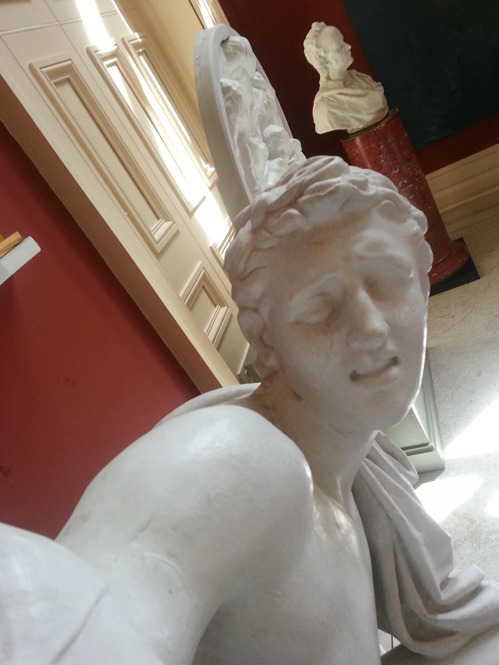
Statue Selfies (bonus nude statue selfie) [x]


How an Obscure 2nd Century Christian Heresy Influenced Snowpiercer

Snowpiercer is shaping up to be the sleeper success of 2014. But no one has yet commented on one of the film's most unusual subtexts — its direct allusions to Gnosticism, the ancient Christian belief system that was damned by the Roman Church as heretical and virtually extinguished by the 5th century.

“Não queria morrer sem abraçá-lo” (líder das Avós da Praça de Mayo encontra seu neto desaparecido)

Bebês roubados pelo Poder: o sequestro de Ganímedes, de 1635, de Rembrandt Harmenszoon van Rijn, que está desde 1751 na Gemäldegalerie Alte Meister, Dresden, ilustra como a tenebrosa águia (o deus Zeus, manda-chuva do Olimpo, usando a forma dessa ave) rouba a criança. Nesta versão, pintada para um mecanas calvinista holandês, Rembrandt dá outro enfoque à lenda de Ganímedes, como crítica aos pederastas que abusam dos menores. Na lenda grega Zeus havia sequestrado a criança para seu prepotente uso próprio.
 Na terça-feira de manhã, Estela de Carlotto, líder das Avós da Praça de Mayo, recebeu um telefonema da juíza federal Maria Servini de Cubría:
“Estela, pode vir aqui no tribunal?”, perguntou a magistrada.
A líder das Avós foi até lá. Quando chegou, a juíza contou que tinham os resultados de um exame de DNA que confirmavam a identidade de um adulto que havia sido um bebê seqüestrado pela ditadura.
“Recuperamos outro neto!”, exclamou a juíza.
“Que alegria, outro neto!”, respondeu emocionada De Carlotto.
Nesse momento, Servini de Cubría terminou de explicar: “Estela, este chama-se Guido…é teu neto!”. De Carlotto abraçou a juíza. Ria e chorava ao mesmo tempo.
Poucas horas depois, com um sorriso de orelha à orelha, a líder das Avós da Praça de Mayo anunciou publicamente a descoberta de seu próprio neto desaparecido. “Não podia acreditar!”, explicou emocionada ao relatar que a organização que lidera há mais de três décadas, criada para localizar os bebês sequestrados pela ditadura militar (1976-83) havia identificadoo neto número 114. As Avós calculam que o regime sequestrou um total de 500 bebês, filhos das prisioneiras políticas.
“Ele é um bom garoto que trabalha como músico (pianista)”, afirmou De Carlotto sobre seu neto, cujo nome atual é Ignacio Hurban. “Eu digo ‘obrigado à vida’, pois não queria morrer sem abraçá-lo, e muito!”, sustentou De Carlotto, de 83 anos, que buscava Guido desde seus 47 anos. Segundo ela, a presidente Cristina Kirchner lhe telefonou para dar os parabéns pela descoberta de seu neto.
A descoberta só foi possível, segundo explicou, porque o jovem pianista de 36 anos suspeitou sobre suas origens e fez voluntariamente o exame de DNA no Banco de Dados Genéticos, laboratório oficial onde são realizados os testes para cotejar os gens com as amostras ali depositadas pelas famílias dos bebês desaparecidos.
Segundo De Carlotto, as crianças recuperadas pelas famílias biológicas, hoje adultos “são livres, pois recuperaram sua identidade”. A líder das Avós, cuja organização foi candidata várias vezes ao Prêmio Nobel da Paz, afirmou que espera com seu trabalho evitar tragédias similiares no futuro: “não queremos que esta História se repita com futuras gerações”.
O jogador da seleção argentina, Javier Mascherano, que participou dois meses atrás de uma campanha na TV para recuperar os netos desaparecidos, celebrou ontem a descoberta de Guido. Mas, destacou: “continuemos trabalhando pelos que faltam”.
Na quarta-feira à tarde Estela e Guido finalmente se encontraram. Conversaram durante seis horas e meia sem parar. Ao despedir-se, para voltar à cidade de Olavarría, onde mora, ele disse “Tchau, vó!”. De Carlotto quase desmaiou de emoção.

Quadro do pintor sueco John Bauer (1882-1918) que mostra dois trolls com uma criança humana que eles roubaram e criaram.
SEQUESTRO E PARTO - Laura De Carlotto foi sequestrada pelos militares em novembro de 1977, quando estava grávida de dois meses e meio. Seu namorado e pai da criança foi torturado e assassinado um mês mais tarde, na frente de seus olhos. Diversos sobreviventes da ditadura relataram que Laura – algemada – deu à luz no dia 26 de junho de 1978 na maternidade clandestina do Hospital Militar na cidade de Buenos Aires. Guido foi arrancado de seus braços pelos militares cinco horas após seu nascimento.
Laura, que tinha 23 anos na época, foi assassinada por fuzilamento dois meses após o parto no dia 25 de agosto em uma área rural, perto de uma rodovia. Seu rosto havia sido desfigurado por golpes feitos com a culatra de um fuzil. Seu ventre estava perfurado por um disparo. Anos depois a Justiça da Itália condenou à revelia o ex-general Guillermo Suárez Mason por seu assassinato.
Enquanto isso Guido, com poucas semanas de idade, foi entregue a uma família de agricultores na região de Olavarría, no sul da província de Buenos Aires, onde cresceu. Segundo as informações das Avós, a família que o adotou não sabia sobre sua origem de bebê seqüestrado pelos militares. “Não conhecemos ainda a História completa, mas agiram de boa fé”, explicaram as Avós.
Dentro das Forças Armadas, diversos generais consideravam que a devolução das crianças às famílias biológicas era um potencial perigo, já que quando adultas, poderiam tentar uma vendetta contra os ex–repressores. Um dos generais, Ramón Camps, afirmava que a “subversão” era hereditária, e portanto, as crianças – filhas de opositores do regime – deveriam ser criadas por famílias com “forte moral cristã”.

Quadro de 1631 de Peter Paul Rubens que mostra como o deus Saturno devora um de seus filhos. O Estado argentino, durante a ditadura, apropriou-se de vastos setores da população, sequestrando, torturando e assassinando milhares de pessoas.
500 CRIANÇAS SEQUESTRADAS PELOS MILITARES
As Avós calculam que no total, 500 crianças teriam sido sequestradas ou nascido em cativeiro. Os militares possuíam maternidades nas quais os partos eram realizados de forma clandestina. Posteriormente, elas eram adotadas por famílias de ex–repressores, muitos dos quais haviam torturado os pais das próprias crianças. No entanto, diversas crianças foram adotadas por famílias de civis, que desconheciam sua tenebrosa origem.
As Avós registram 27 casos de crianças que já haviam nascido e foram sequestradas, como o de Horacio Pietragalla, roubado quando tinha quatro meses de idade. Nestes casos as idades variam de uma semana de vida até três anos. Outras oito crianças foram assassinadas pelos militares.
Desde o final dos anos 90 as avós da Praça de Mayo contam com um banco de dados genético para cotejar as amostras de DNA das famílias dos desaparecidos e dos adultos (atualmente na faixa dos 34 aos 38 anos) suspeitos de terem sido sequestrados quando eram recém-nascidos. Estas amostras ficarão guardadas até o ano 2050 para que qualquer pessoa possa checar se existem laços de parentesco.
Em abril do ano passado, durante uma breve reunião em Roma, o papa Francisco afirmou à líder das Avós que a Igreja Católica colaboraria nas investigações sobre o paradeiro dos bebês sequestrados.

Demônio rouba um bebê e deixa um mini-demônio em seu lugar como substituto. Este é um detalhe do quadro “A lenda de São Estevão”, de Martino di Bartolomeo, do começo do século XV. No caso do Estado argentino, protagonista de terrorismo de Estado durante a ditadura, os bebês eram roubados e nada era deixado em seu lugar, exceto a angústia sobre seu paradeiro.
 “A VERDADE NÃO MATA, ELA AJUDA”
A ex-líder de organizações dos Direitos Humanos e ex-ministra do governo do ex-presidente Fernando Dela Rúa (1999-2001), Graciela Fernández Meijide, celebrou a descoberta do neto de Estela de Carlotto como “uma vitória da vida sobre a morte que os militares espalharam pelo país”. Meijide – cujo filho Pablo foi sequestrado, torturado e assassinado pelo regime militar em 1976 – sustentou em entrevista ao Estado que “não há pior castigo do que perder a identidade”. Autora do livro “A história íntima dos Direitos Humanos na Argentina”, ela sustenta que “a verdade não mata…ela ajuda”.
Estado – Alguns setores da sociedade são contrários à revelação da identidade das crianças seqüestradas, alegando que isso poderia gerar um trauma….
Meijide – Algumas pessoas, às vezes até bem intencionadas, tinham essa ideia antes. Elas diziam que revelar a real identidade seria provocar sofrimento duas vezes. Mas não é assim. E uma das provas disso está que este jovem (Guido De Carlotto) buscou a verdade por conta própria. A verdade não machuca nem mata. A metira, sim, machuca e mata. A verdade ajuda a entender. E, a partir dali, cada um tem os recursos para encará-la. Neste momento Guido deve estar com sentimentos contraditórios sobre a realidade. É preciso protegê-lo, preservá-lo, da insistência dos meios de comunicação. Já haverá tempo, daqui para a frente, para falar em público. Esta descoberta é um fato feliz que provém de uma desgraça. Não houve pior crime durante a ditadura que o seqüestro e ocultamento destes bebês, que foram proibidos de conhecer sua própria identidade, sua família biológica. Uma perversidade. Não há pior castigo não saber quem a gente é. E os militares encarregaram-se de esconder esta verdade a muitas pessoas. Mas a descoberta dos netos roubados constituem um passinho a mais que a vida dá para vencer a morte.
Estado – A descoberta do neto número 114 tem um simbolismo especial?
Meijide – A descoberta do neto número 100 não é menos especial do que do neto 114 ou 120. Mas, neste caso, é o neto de uma pessoa que simboliza essa procura pela verdade, Estela de Carlotto. E talvez este fator estimule as investigações mais do que nos casos anteriores. Acredito que isso levará muitos jovens que suspeitam de seu passado, mas que ainda duvidam sobre fazer o exame de DN, tomem a decisão. E talvez leve pessoas que possuem informação sobre os seqüestros, que viveram naquela época, mas que tem receio em falar, nos contem dados úteis para desvendar o paredeiro dos bebês seqüestrados. E, quem sabe, algum militar sinta o peso de sua consciência e finalmente confesse estes delitos terríveis. Não sei se este último ponto acontecerá algum dia. Mas é meu desejo.
 “O DIREITO À VERDADE NÃO É SÓ DA PESSOA SEQUESTRADA, MAS TAMBÉM DA FAMÍLIA”
César Sebastián Castillo acreditou até 2003 que era filho de um casal de porteiros de um prédio em Buenos Aires e que naquele ano completaria 27 anos de idade. Desconfiado sobre as circunstâncias de seu nascimento, assunto que sua família esquivava, procurou as Avós da Praça de Mayo. Após os exames de DNA descobriu que seu verdadeiro nome era Horacio Pietragalla Corti, que era filho de militantes montoneros e que tinha 28 anos. Ele havia sido sequestrado pelos militares quando tinha cinco meses, em 1976. É o neto número 75 recuperado pelas Avós da Praça de Mayo. Ontem (quinta-feira), em entrevista ao Estado, Pietragalla, atualmente deputado federal, afirmou que “a verdade nunca é negativa”.
Estado – O que acontece quando uma pessoa descobre que não é quem havia imaginado ser durante mais de três décadas?
Pietragalla – Pode ser uma coisa forte, impactante, e até duro de processar. Mas saber nossa história, a verdade, sempre é positivo. É um erro gigantesco ocultar a verdade, que jamais é traumática. A coisa traumática mesmo ocorreu há mais de 30 anos, quando nos separaram de nossas famílias e assassinaram nossos pais. E o direito à verdade não é só da pessoa que fica sabendo que foi um bebê sequestrado…é também um direito dos avós e da família da criança que foi roubada. Pois, antes de uma apropriação da criança houve um sequestro. Saber a verdade não te estraga a vida. A vida já foi estragada por outros…
Estado – Qual é a importância da descoberta de Guido De Carlotto?
Pietragalla – O fato de que o neto de Estela tenha sido descoberto é um fato que transcende as fronteiras da Argentina, já que ela é uma figura de peso mundial nos direitos humanos. A difusão desta notícia aumenta a possibilidade de que jovens se aproximem às Avós para consultar sobre sua identidade.
Estado – Como foi teu sequestro?
Pietragalla: Um dia, enquanto minha mãe estava em uma casa de outras militantes, o exército entrou metralhando tudo. Mataram todos, menos a mim, que fui levado para uma clínica. Meus avós maternos ficam sabendo, e meu avó foi correndo me pegar. Mas quando ele chegou na clínica, um militar já me havia levado. Me perdeu por duas horas. Meu avô paterno foi torturado psicologicamente pelos militares, que lhe telefonavam para dizer que haviam encontrado pedaços do corpo de seu filho. Ele não resistiu e morreu dois anos depois. Minha avó materna se suicidou, jogando-se debaixo de um trem, em 1998.

Gravura de uma caveira feita em 1521 pelo artista Albrecht Dürer
 MODUS OPERANDI DO TERROR
A ditadura argentina aplicou uma série de formas de eliminar pessoas que considerava “subversivas”, fosse elas vinculadas a grupos guerrilheiros, civis sem militância política alguma, estudandes secundaristas, universitários, empresários, aposentados, entre outros.
As principais formas eram:
- Jogar pessoas vivas, desde aviões, sobre o rio da Prata ou o Oceano Atlântico.
- Juntar prisioneiros, amarrados, e dinamitá-los.
- Fuzilamento.
- Morte por terríveis torturas
O destino dos corpos:
- Enterrados em cemitérios clandestinos. Ou, em cemitérios oficiais, embora em fossas coletivas como indigentes.
- Jogados no Rio da Prata ou no mar
Em 2009, um relatório entregue à ONU pela secretaria dos direitos humanos da Argentina indicou que do total de desaparecidos da Ditadura, 30,2% eram composto de operarios; 21% por estudantes (inclusive colegiais), 28,6% de funcionários públicos e profissionais liberais. Outros 20,2% pertenciam à outras categorias sociais.
 MODALIDADES DE TORTURAS
As torturas aplicadas pela ditadura argentina acumulavam diversas modalidades que – ao longo de dois séculos de História – as forças armadas locais (e as forças policiais) haviam desenvolvido e aplicado.
- Picana elétrica: criada nos anos 30 na Argentina por Leopoldo Lugones Hijo, filho do escritor nacionalista Leopoldo Lugones. A picana era o instrumento para assustar o gado com choques elétricos nos currais, e assim, direcioná-lo para o abate ou embarque. Aplicado a seres humanos, tornou-se no instrumento preferido de tortura na Argentina.
- Submarino molhado: consistia em afundar a cabeça de uma pessoa em uma tina d’água. Ocasionalmente a tina também estava cheia de excrementos humanos.
- Submarino seco: consistia em colocar a cabeça de uma pessoa dentro de um saco de plástico e esperar que ela ficasse quase asfixiada.
- O rato no cólon: a colocação de um rato, faminto, no cólon de um homem. Nas mulheres, o rato era colocado na vagina.
- Estupros: Mulheres e homens foram estuprados sistematicamente pelos militares e policiais argentinos. As mulheres, ocasionalmente recebiam a opção de serem estupradas ou de serem eletrocutadas na parte interna da vagina e ânus.
- Esfolamento: Os torturadores amarravam um prisioneiro em uma mesa e começavam a esfolar a pele da sola dos pés com uma gilette ou bisturi
- Empalamento: Alguns homens foram empalados pelas forças de segurança com cabos de vassoura.
Um dos casos mais sinistros de torturas foi o do adolescente Floreal Avellaneda, sequestrado no dia 15 de abril de 1976. Filho de um casal de sindicalistas militantes do Partido Comunista, Floreal, que tinha 14 anos quando foi sequestrado, sofreu torturas nas mãos e genitais. Depois, foi empalado vivo.
No dia 22 de abril de 1976 a polícia uruguaia encontrou em uma praia perto de Montevidéu o cadáver de um jovem violentamente torturado com a marca de uma tatuagem com as letras “FA”. Posteriormente, com a volta da democracia, a mãe de Floreal pode confirmar que tratava-se de seu filho. Ele havia sido arremessado de um dos aviões que realizavam os “vôos da morte” sobre o rio da Prata.
GALERIA DOS PRINCIPAIS TORTURADORES
O “Tigre” Acosta - Um dos criadores dos “voos da morte” foi o capitão de corveta Jorge “Tigre” Acosta, uma das “estrelas” da Escola de Mecânica da Armada (ESMA). O oficial, que falava sozinho à noite, em delírio místico explicava aos colegas e prisioneiros que mantinha longas conversas noturnas com “Jesucito” (O pequeno Jesus), ao qual perguntava qual dos prisioneiros deveria torturar no dia seguinte e jogar dos aviões. Famoso pelos requintes de crueldade que aplicava aos detidos, Acosta também foi um dos principais sequestradores dos bebês de prisioneiras da ESMA.
O “Anjo Loiro” Astiz – “É o mais sinistro paradigma do terrorismo de Estado”. Com esta frase, o escritor e jornalista Jorge Camarasa, define a personalidade do ex-capitão Alfredo Astiz apelidado de “O anjo loiro da morte”. Garoto mimado da ditadura, entre seus assassinatos mais famosos estão os das freiras francesas Alice Domon e Leonie Duquet, além de três fundadoras das Mães da Praça de Mayo, entre elas, Azucena Villaflor. Astiz foi recompensado por seus serviços com o cargo de comando nas ilhas Geórgias durante a Guerra das Malvinas, em 1982. No entanto, essas ilhas foram o primeiro ponto recuperado pelos britânicos durante o conflito. Após um único tiro de bazuca disparado pelos britânicos, Astiz desistiu de resistir “até a morte”, como havia prometido. Com com um copo cheio de whisky em uma das mãos, assinou a rendição incondicional.
Donda Tigel - Alfredo Donda Tigel tornou-se famoso por sequestrar seu próprio irmão e a cunhada – militantes da esquerda. Depois de assassiná-los, ficou com suas filhas, que eram bebês.
Ernesto Weber – Oficial da Polícia Federal, era apelidado de “220” pelos colegas militares pelo prazer que sentia em aplicar essa voltagem nas torturas. Foi professor de torturas dos oficiais de Marinha.
Febres - O ex-Chefe da Guarda Costeira Héctor Febres ficou notório por seu extremo sadismo, que o levou a torturar bebês e crianças para arrancar confissões dos pais, presos políticos. A primeira surpresa ocorreu poucos dias após sua morte, no dia 10 de dezembro – o Dia internacional dos Direitos Humanos, que também coincidiu com a posse da nova presidente, Cristina Fernández de Kirchner – quando a Justiça anunciou que o ex-torturador havia falecido por uma dose cavalar de cianureto. A segunda surpresa surgiu dias depois, quando as autoridades indicaram que a autópsia também registrou a presença de sêmen no reto do ex-torturador. Ele era famoso por seu desenfrado sadismo. Sobreviventes relatam que, quando aplicava choques elétricos nos prisioneiros, ficava “alucinado” e gargalhava enquanto ouvia os gritos dos torturados. Um dos sobreviventes relatou como Febres lhe pediu gentilmente que consertasse o aparelho de choques elétricos, que logo depois utilizaria no próprio prisioneiro. Na ESMA os torturadores costumavam ter apelidos referentes a animais. Esse era o caso do capitão Jorge “Tigre” Acosta e do tenente Alfredo “Corvo” Astiz. Mas, Febres era chamado de “Selva”, já que “era o conjunto de todos os animais”
Enfardador - Luis Porcio, chefe de segurança da Side, conhecido pelo apelido de “Enfardador”, já que apreciava amarrar os prisioneiros com arames, como se fossem fardos, para posteriormente queimá-los. Ele operava no Automotores Orletti, um centro clandestino de detenção e tortura localizado no bairro portenho de Floresta
El Turco Julián - Diversas testemunhas indicam que os torturadores argentinos ouviam marchas militares do Terceiro Reich e discursos de Adolf Hitler enquanto torturavam. Esse era o caso Julio Simón, chefe dos interrogadores do centro de detenção “El Olimpo”, cujo nome de guerra era “O Turco Julián”. Ele divertia-se jogando água fervendo em cima de seus prisioneiros políticos. Deleitava-se em torturar os deficientes físicos, jogando-os do alto de uma escada. Além disso, saboreava cada minuto no qual estuprava a esposa de um prisioneiro na sua frente.
Segundo o depoimento da ex-prisioneira (uma das poucas pessoas detidas que sobreviveram nesse centro onde imperava Julián) Susana Caride o lugar era uma espécie de “circo romano” no qual os policiais “se divertiam”. Caride relatou que os prisioneiros eram obrigados a lutar boxe um contra o outro, sob ameaças de torturas. Ela também relembrou como, no dia de Natal, os prisioneiros foram convidados para um banquete, no qual puderam comer peru, maionese e panettone. Mas, à meia-noite, na hora do brinde, Simón interrompeu a festa que ele próprio havia organizado para iniciar uma sessão de violentas torturas com os presentes. Juan Agustín Guillén, outro dos sobreviventes, contou como Simón – que ostentava uma suástica no uniforme, tinha especial sanha com José Poblete, um jovem militante peronista que havia perdido ambas pernas em um acidente. Simón lhe havia retirado a cadeira de rodas e as pernas ortopédicas, e divertia-se – às gargalhadas – jogando-o para cima ou obrigando-o a desfilar na frente dos outros policiais arrastando-se sobre os tocos de seus membros.
O ex-policial foi condenado pelo seqüestro e torturas infligidas ao casal Gertrudis Hlaczik e José Poblete Roa em 1978. Ele também foi considerado culpado do seqüestro de Claudia, o bebê de apenas oito meses do casal, e do ocultamento de sua identidade. Ele fazia Gertrudis andar nua pelos corredores, enquanto que José, sem as pernas, devia se arrastar com as mãos pelo chão. Simón e os outros guardas o chamavam de “cortito” (curtinho), por causa da ausência dos membros inferiores. O torturador também costumava jogar Poblete desde o alto de uma escada. Em um vídeo, o ex-policial admitiu que torturou com choques elétricos, com o objetivo de “acelerar” os interrogatórios. No vídeo, confessa que “o critério geral era o de matar todo mundo”.
Rebaneyra - Outro notório torturador era o carcereiro Raúl Rebaynera, uma dos principais figuras da prisão de La Plata, onde estiveram vários prisioneiros políticos, entre eles, o Adolfo Pérez Esquivel, que em 1980 tornou-se Prêmio Nobel da Paz. Segundo o ex-prisioneiro Julio Modorgoy, cada vez que chovia Rebaynera colocava música clássica, de preferência Beethoven ou Bach – e saía “de caça”, isto é, passava pelas celas espancando os prisioneiros. “Se te dou 15 socos e você não gritar, te levo de novo para a cela. Se gritar, fica aqui na sala de torturas 15 dias”, ameaçava.

A morte, uma constante na ditadura argentina de 1976-83.
OS VOOS DA MORTE - Tal como os funcionários do Terceiro Reich que recorreram aos fornos crematórios para eliminar os prisioneiros dos campos de concentração – como forma rápida de eliminar os vestígios dos corpos dos judeus massacrados – a ditadura argentina optou pelos “voos da morte” como uma de suas modalidades preferidas para “desaparecer” as pessoas sequestradas.
Adolfo Scilingo, ex-capitão da Marinha que em 1995, arrependido de sua participação nos “voos da morte”, revelou que 4.400 pessoas foram assassinadas ao serem arremessadas no rio da Prata e no mar desde os aviões da Marinha. Scilingo, condenado a 640 anos de prisão pelos tribunais da Espanha por crimes contra a Humanidade, sustentou que os voos da morte não eram um procedimento circunstancial, mas sim, parte de um plano de grande escala de eliminação dos corpos dos desaparecidos.
Além da Armada argentina, a Aeronáutica e o Exército também realizaram “voos da morte”, embora em menor escala, já que estas duas forças preferiam o enterro dos cadáveres em fossas comuns clandestinas.
Na época do surgimento dos primeiros cadáveres nas praias, a ditadura militar uruguaia acreditou que tratavam-se de pessoas afogadas em um naufrágio de um navio asiático. Os militares confundiram no início que eram de etnias orientais, pois os corpos estavam “amarelos”. Mas, posteriormente perceberam que tratavam-se de ocidentais.
Nos anos seguintes os militares em Montevidéu reclamaram aos colegas argentinos em Buenos Aires que o surgimentos de corpos em suas praias estavam causando constrangimentos ao regime, além de pânico nos turistas, que deparavam-se com os cadáveres trazidos pela maré. A partir dali, os pilotos argentinos deixaram de arremessar os prisioneiros na área do rio da Prata começaram a fazer voos até o mar. No entanto, as correntes marítimas continuaram levando os corpos às costas uruguaias.
ESTUPROS – Em 2011 a Justiça argentina começou a investigar os delitos sexuais cometidos por militares e policiais durante a ditadura contra mulheres e homens detidos nos centros clandestinos. Até esse ano, a Justiça havia considerado os delitos sexuais dentro da categoria ampla de “abusos”. Desta forma, com a mudança de enfoque, diversos ex-integrantes da Ditadura puderam ser processados por estupros e violações.
Os casos de delitos sexuais transcorreram nos campos de detenção de “Club Atlético”, “El Olimpo” e “Banco”.
Os envolvidos estupraram – segundo as denúncias – dezenas de mulheres detidas nos centros de tortura. Geralmente elas eram amarradas, nuas, a camas nas celas. Primeiro eram torturadas com choques elétricos nos mamilos e nos órgãos genitais. Posteriormente eram violadas por um ou mais policiais e militares. Ocasionalmente, um dos repressores reclamava exclusividade sobre a mulher estuprada. Os militares e policiais costumavam preferir as estudantes universitárias jovens. Freqüentemente, quando um casal era detido, os seqüestradores violavam a esposa na frente do marido.
Os militares também costumavam introduzir ratos vivos – e famintos – nas vaginas das mulheres.

“Fim de tarde na planície de Wijtschaete, 1917″, gravura da série “A Guerra”, do pintor alemão Otto Dix. A gravura foi feita em 1924.
 FATOS E NÚMEROS:
- Entre 1976 e 1983 os militares assassinaram ao redor de 30 mil civis, entre eles, crianças e idosos, segundo estimativas de ONGs argentinas e organismos internacionais de defesa dos Direitos Humanos.
- Os militares afirmam que mataram “somente” 8 mil civis (segundo declarações do próprio general e ex-ditador Reynaldo Bignone, à TV francesa na virada do século, outros colegas seus dizem que não mataram pessoa alguma)
- O Estado argentino, com a volta da Democracia, recebeu pedidos para indenizações da parte de parentes de 10 mil desaparecidos.
- A Ditadura teria sido responsável pelo sequestro de 500 bebês, filhos das desaparecidas. Desde o final dos anos 70 as avós da Praça de Mayo localizaram e recuperaram a identidade de 95 dessas crianças, atualmente adultos.
- Em 1983 nos últimos meses da Ditadura, um relatório das próprias forças armadas argentinas indicou que a guerrilha e grupos terroristas de esquerda e cristãos nacionalistas teriam assassinado 900 pessoas. Diversos historiadores afirmaram ao longo dos anos que esse número está ligeiramente inflacionado, já que diversos dos mortos da lista militar teriam sido assassinados pelos próprios militares, na miríade de brigas internas (e, convenientemente, teriam colocado a culpa nos terroristas).
GUERRA CIVIL OU GUERRILHA LOCALIZADA?
Os militares deram o golpe e instauraram a ditadura mais sanguinária da História da América do Sul (América do Sul, não América Latina) com o argumento (um dos vários) de que a guerrilha controlava grande parte do país.
Delírio. A pequena guerrilha argentina, mais especificamente o ERP, dominava às duras penas uma pequena porcentagem da província de Tucumán, a menor província da Argentina.
A magnificação da guerrilha foi útil para os militares e também para o prestígio dos guerrilheiros. A nenhum dos dois lados era conveniente admitir a realidade, de que a área controlada pela guerrilha era ínfima.
Os militares e os setores civis que apoiaram o golpe (e os saudosistas daqueles tempos) afirmavam (e ainda afirmam) que o país estava em guerra civil nos nos 70.
Mas, “guerra civil”, rigorosamente, seriam conflitos de proporções mais substanciais, tais como a Guerra da Secessão dos EUA, a Guerra Civil Espanhola, a Guerra Civil Russa logo após a proclamação do Estado Soviético, a Guerra das Duas Rosas (Lancasters versus Yorks, na Inglaterra) ou a Guerra Civil da Grécia após o fim da Segunda Guerra Mundial. Ainda: a Guerra Civil da Nicarágua, e a de El Salvador. Isto é: bombardeios de cidades, grandes êxodos de refugiados, centenas de milhares de mortos, uma boa parte de um país controlado por um dos lados, e outra parte controlada por outro lado. Isso não ocorreu na Argentina nos anos 70.
“Dança da morte 1917 – Colina do Morto” de Otto Dix
FRACASSOS ECONÔMICOS E MILITARES – Além de ter sido a mais sanguinária Ditadura foi um fracasso tanto na área militar como na esfera econômica.
Fiascos Militares:
- Entre 1976 e 1978 a Ditadura colocou quase a totalidade das Forças Armadas para perseguir uma guerrilha que já estava praticamente desmantelada desde antes do golpe, em 1975. Analistas militares destacam que este desvio das Forças Armadas argentinas (que havia iniciado no final dos anos 60 mas intensificou-se a partir do golpe) reduziu drásticamente o profissionalismo dos militares.
- Em 1978, a Junta Militar argentina levou o país a uma escalada armamentista contra o Chile. Em dezembro daquele ano, a invasão argentina do território chileno foi detida graças à intermediação papal. O custo da corrida armamentista colocou o país em graves problemas financeiros.
- Em 1982, perante uma crise social, perda de sustentabilidade política e problemas econômicos, o então ditador Leopoldo Fortunato Galtieri – famoso por seu intenso approach ao scotch – decidiu invadir as ilhas Malvinas para distrair a atenção da população. Resultado: após um breve período de combate, os oficiais do ditador renderam-se às tropas britânicas.
Desastres econômicos:
- Em sete anos de Ditadura, a dívida externa subiu de US$ 8 bilhões para US$ 45 bilhões.
- A inflação do governo civil derrubado pela Ditadura, que era considerada um índice “absurdo alto” pelos militares havia sido de 182% anual. Mas, este índice foi superado pela política econômica caótica da Ditadura, que encerrou sua administração com 343% anual.
- A pobreza disparou de 5% da população argentina para 28%
- A participação da indústria no PIB caiu de 37,5% para 25%, o que equivaleu a um retrocesso dos níveis dos anos 60.
- Além disso, a Ditadura criou uma ciranda financeira, conhecida como “la plata dulce”, ou, “o doce dinheiro”.
- Ao mesmo tempo em que tomavam medidas neoliberais, como a abertura irrestrita das importações, os militares continuavam mantendo imensas estruturas nas empresas estatais, que transformaram-se em cabides de emprego de generais, coronéis e seus parentes.
- Os militares também estatizaram US$ 15 bilhões de dívidas das principais empresas privadas do país (além das filiais argentinas de empresas estrangeiras).
- No meio desse caos econômico, os militares provocaram um déficit fiscal de 15% do PIB.
- A repressão provocou um êxodo de centenas de milhares de profissionais do país. Os militares, em cargos burocráticos, exacerbaram a corrupção na máquina estatal.
POLÍTICA EXTERNA ESQUIZOFRÊNICA
Na política externa a Ditadura também mostrou um comportamento peculiar:
- Acreditou que os EUA ficariam de seu lado na Guerra das Malvinas, já que a Ditadura havia sido um bastião anticomunista na América do Sul e até havia colaborado na guerrilha dos ‘contras’ na América Central.
Os militares argentinos não levaram em conta que pesaria mais a velha aliança EUA-Grã Bretanha por motivos históricos e pela participação na OTAN.
- A Ditadura tinha um discurso anticomunista mas continuou vendendo trigo para a URSS e não aderiu ao boicote americano contra as Olimpíadas de Moscou em 1980.
MILITARES HOJE – Segundo analista político Rosendo Fraga, diretor do Centro de Estudos Nueva Mayoría, as Forças Armadas atualmente possuem um terço do número de homens com os quais contava há um quarto de século. O Orçamento destinado aos militares encolheu a um quarto daquele que tinham em 1983.
“Se bem a Argentina foi o país da região onde os militares tiveram maior influência política durante o século XX, as Forças Armadas argentinas hoje são os que menos influência possuem”, disse Fraga ao Estado. “São as Forças Armadas que mais encolheram nas últimas décadas. E as únicas que eliminaram o serviço militar obrigatório, exceto o Uruguai, que nunca teve”.

O paranóico e perverso Saturno, ilustrado por Goya, devora outra criança.

E depois de tanta barbárie, vamos com um pouco de civilização: a 3a sinfonia de Ludwig van Beethoven. Na batuta, o argentino Daniel Barenboim:

 PERFIL: Ariel Palacios fez o Master de Jornalismo do jornal El País (Madri) em 1993. Desde 1995 é o correspondente de O Estado de S.Paulo em Buenos Aires. Além da Argentina, também cobre o Uruguai, Paraguai e Chile. Ele foi correspondente da rádio CBN (1996-1997) e da rádio Eldorado (1997-2005). Ariel também é correspondente do canal de notícias Globo News desde 1996.
Em 2009 “Os Hermanos“ recebeu o prêmio de melhor blog do Estadão (prêmio compartilhado com o blogueiro Gustavo Chacra). Em 2013 publicou “Os Argentinos”, pela Editora Contexto, uma espécie de “manual” sobre a Argentina. Em 2014, em parceria com Guga Chacra, escreveu “Os Hermanos e Nós”, livro sobre o futebol argentino e os mitos da “rivalidade” Brasil-Argentina.
 Acompanhe-nos no Twitter, aqui.
 …E leia os supimpas blogs dos correspondentes internacionais do Estadão, aqui.
 E, de bonus track, veja o Facebook da editoria de Internacional do Portal do Estadão,aqui.


Uma tarde com o compositor de jingles mais requisitado da Bahia
Adam Victor BrandizziPronto, encontraram um dos culpados, agora é só prender.
JOÃO PEDRO PITOMBO, DE SALVADOR
Chapéu na cabeça, cruz no pescoço e um gingado que não nega: estamos diante de um típico malandro –no bom sentido– forjado nas ruas de Salvador.
Batizado Raimundo Nonato da Cruz, na vida ele se tornou Chocolate da Bahia, apelido que, diz, representa a “cor da pele e a doçura do sorriso”.
Lapidado nas batucadas no Mercado Modelo, tornou-se cantor e compositor de sucesso. Hoje, aos 70 anos, deixa seus sambas de roda, axés e afoxés na gaveta e se dedica a compor melodias pegajosas para candidatos a cargos eletivos.
Chocolate da Bahia é um dos compositores de jingles mais produtivos e requisitados da Bahia. Só nesta eleição já produziu cerca de 200, incluindo o de Rui Costa (PT), candidato da situação para a sucessão do governador Jaques Wagner (PT).

O compositor Raimundo Nonato da Cruz, o Chocolate da Bahia – João Pedro Pitombo/Folhapress
A sala de casa é o QG de composição. Numa área pequena, dois sofás e uma mesa dividem espaço com microfones e aparelhos de som.
Lá, Chocolate e seus filhos produzem jingles em série para candidatos, com o apoio de um editor de áudio e dois cantores –uma voz masculina e uma feminina.
Em menos de uma hora, podem passar pelo QG políticos de campos opostos –de Marco Prisco (PSDB), líder da última greve da PM baiana e candidato a deputado estadual e assessores de Nelson Pelegrino (PT), deputado federal que tenta a reeleição.
Os dois políticos terão em comum o jingle em ritmo de arrocha –gênero popular no Estado. E a marca de Chocolate da Bahia.
Pela pena do compositor, Prisco vira um homem que traz esperança. “Para rimar com segurança”, bandeira do candidato, diz o autor. Pelegrino é “nosso amigo do peito”, o candidato “que vai ser eleito”.
ESTRADA
Chocolate da Bahia soma uma estrada longa. Nascido em Salvador, perdeu o pai ainda menino e ganhou as ruas para trabalhar. Foi engraxate, limpador de para-brisas e carregou tabuleiros de baianas de acarajé.
Na rampa do Mercado Modelo, onde trabalhou em loja de artigos de candomblé, conheceu velhos bambas do samba como Riachão, Paulinho Camafeu e Nelson Rufino.
Passou a compor os próprios sambas e ganhou o rádio. Nos anos 1970, estreou com o disco “Barraca do Chocolate”, com capa do artista plástico Carybé e a bênção de mestres como Jorge Amado e Dorival Caymmi.
Nas décadas seguintes, firmou-se como compositor. Fez “Não rolou, mas vai rolar”, gravada por Martinho da Vila. E passeou pelo axé com músicas como “Haja Amor”, de Luiz Caldas, e “Menina do Cateretê”, do Chiclete com Banana.
A pirataria pós-internet foi sua derrocada. “Não dá mais para viver de direito autoral”. Além de um salário mínimo de aposentadoria, recebe por mês cerca de R$ 300 do Ecad (Escritório Central de Arrecadação e Distribuição) pela execução pública de suas músicas.

Chocolate da Bahia e equipe em produção na sala de casa – João Pedro Pitombo/Folhapress
GATILHO RÁPIDO
Com o retorno financeiro das composições em baixa, Chocolate encontrou um dom e uma saída para fechar as contas.
Começou por incentivo de compositores como Waltinho Queiroz e Vevé Calasans –este fez “ACM, meu amor”, clássico de campanha do senador Antônio Carlos Magalhães (1927-2007).
O segredo, conta, é ser rápido no gatilho. Em questão de minutos, saca uma melodia grudenta e uma letra com palavras-chave sobre o candidato. Já fez muitas ao pé do ouvido de políticos e vendeu na hora.
“Não tem uma fórmula, a música vai saindo. Basta ter uma letra que marque o nome e o número do candidato e uma melodia que agrade ao povão”, diz. “Mas o número é o principal, tem que ficar na cabeça”, completa.
Na política, se diz fã de do ex-presidente Lula e afirma que o tempo de ACM já passou. Mas evita entrar em polêmica ou vetos: em sua música há espaço para todos.
Quando não tem eleição, mira nos prefeitos, para quem vende músicas educativas. “Da que ensina a escovar os dentes a que incentiva a doação de órgãos.”
E continua levando a vida como um velho malandro. Cerveja no copo, batuque na mesa e o verso na ponta da língua –sem perder a ternura jamais.
Siga o blog Brasil no Twitter: @Folha_Brasil
Wikipedia pages censored in European search results
Last week, the Wikimedia Foundation began receiving notices that certain links to Wikipedia content would no longer appear in search results served to people in Europe. This is the result of a recent court decision, Google Spain v. AEPD and Mario Costeja González, that granted individuals the ability to request that search engines “de-index” content about them under the so-called “right to be forgotten” doctrine.[1]
Denying people access to relevant and neutral information runs counter to the ethos and values of the Wikimedia movement. The Wikimedia Foundation has made a statement opposing the scope of the judgment and its implications for free knowledge.
As of July 18, Google has received more than 91,000 removal requests involving more than 328,000 links; of these, more than 50% of the URLs processed have been removed. More than fifty of these links were to content on Wikipedia.
We only know about these removals because the involved search engine company chose to send notices to the Wikimedia Foundation. Search engines have no legal obligation to send such notices. Indeed, their ability to continue to do so may be in jeopardy. Since search engines are not required to provide affected sites with notice, other search engines may have removed additional links from their results without our knowledge. This lack of transparent policies and procedures is only one of the many flaws in the European decision.
As part of our commitment to transparency and our opposition to censorship, WMF has created a dedicated page where we will be posting notices about attempts to remove links to Wikimedia under this authority. The Wikimedia projects provide informational, educational, and historic value to the world. Their content should not be hidden from Internet users seeking truthful and relevant information.
Geoff Brigham, General Counsel
Michelle Paulson, Legal Counsel
[1] The decision is here: http://eur-lex.europa.eu/legal-content/EN/ALL/?uri=CELEX:62012CJ0131.

Google Tries to Conquer the Typography of a Non-English Internet
The Internet is no longer in English, even if the coding on its back end still largely is. That’s what MIT’s Ethan Zuckerman has concluded as online language diversity has increased over the past decade, from Facebook posts in Afrikaans to tweets in Zulu. But the typographical design world that brings online text to life has lagged behind, producing endless variations on the Latin script used in English (like the documentary-inspiring Helvetica and the font you’re reading right now, Georgia) but far fewer for other languages.
The result is an increasingly bilingual, but visually clunky, Internet that looks like this:

Google is looking to streamline that with its Noto project (so named for its goal, “no tofu,” a reference to the tiny squares that pop up for unsupported scripts). A new, free font family that “aims to support all the world’s languages” for use in web pages and URLs, Noto already supports over 100 scripts (and the 600 written languages they facilitate) from Cherokee to cuneiform. Some of the project’s efforts have been applauded, such as their rejection of Han unification, which detrimentally conflates chunks of Chinese, Japanese, and Korean scripts.
Noto’s inclusion of endangered languages like Inuktitut (an indigenous Canadian languages which has under 40,000 speakers) and Tlingit (an Alaska Native language with just about 1,000 speakers) has also won praise. But since Noto has thus far failed to tackle far more widely-used languages, some are questioning Google’s priorities. For instance, Noto cannot yet be used to type in Oriya, an Indian language with over 30 million speakers, or the nastaliq script used by Urdu speakers.
Ali Eteraz, a Pakistani-American writer campaigning for the online inclusion of nastaliq, has summarized concerns with Noto by saying, “Language is the building block of people’s identities all around the world, and Google is basically saying that, ‘We got this.’ …Whether that strikes you as hubris or whether it’s noble depends on whether they pull it off.”
When it comes to hubris, Google can learn from its own past exploits, as Kevin Roose recounts Google’s struggle to design a suitable universal font for its Android products. The main challenge, Roose notes, is that “unlike most innovations in computing, typeface design doesn’t succeed by grabbing your eye.” Writing all the world’s languages in one style is challenging enough, but doing it in a way that looks good across the Internet—no matter what size screen, or with what resolution, it is accessed—compounds the design challenge.
Noto won’t turn the web’s words uniform overnight. But it is a sign of a permanently multilingual Internet, and the challenges of creating a truly global product.
Forte crescimento do gasto fiscal no governo Dilma
6 de agosto de 2014 por mansueto
“O crescimento da despesa primária do governo Dilma será muito próximo ao crescimento do gasto público nos 12 anos que antecederam o governo Dilma”.
Não é preciso construir modelos sofisticados para prever o crescimento do gasto público primário do governo central no governo Dilma. Primeiro, para fazer essa projeção é preciso lembrar que, de 2000 a 2013, o crescimento médio nominal da despesa primária do governo central foi de 13,5% ao ano e, nos últimos três anos, a média de crescimento foi de 11,6% ao ano. O “nosso normal” de crescimento do gasto público no Brasil é anormal.
Dado que 2014 é um ano eleitoral, supor que a taxa de crescimento nominal da despesa primária do governo central será de 12% este ano é uma hipótese até conservadora. Nas eleições passadas (2002, 2006 e 2010), o crescimento nominal da despesa primária do governo central foi sempre acima de 14%.
Segundo, vamos ter que trabalhar com uma taxa de crescimento do PIB nominal para calcular a despesa primária do governo central com % do PIB que é o que me interessa. Vou trabalhar com um crescimento do PIB nominal de 7,9%, uma taxa que não deve ser muito diferente das projeções de mercado. Com esses parâmetros qual será o aumento da despesa primária ao longo de quatro anos do governo Dilma?
Crescimento da Despesa Primária por Mandato Presidencial – 1999-2014 – Pontos do PIB

Como se observa no gráfico acima, em quatro anos de governo Dilma o crescimento da despesa primária será de 2,2 pontos de percentagem do PIB, ante um crescimento de 2,4 pontos de percentagem do PIB ao longo dos doze anos que antecederam o governo Dilma. Ou seja, o crescimento da despesa primária do governo central ao longo de quatro anos de governo Dilma será equivalente a quase 12 anos do governo FHC-II, Lula-I e Lula-II.
O crescimento nominal da despesa primária do governo central no governo Dilma será próximo a 11,7% ao ano, que corresponde um crescimento real médio da despesa de 5,1% ao ano, muito acima do crescimento real do PIB de 1,8% ao ano. A grande diferença é que, no segundo governo Lula, apesar do crescimento nominal despesa primária do governo central de 13% ao ano, o PIB real crescia em média 4,6% ao ano e puxava para cima o crescimento do PIB nominal o suficiente para acomodar parte do forte crescimento do gasto público.
Em resumo, enquanto a desaceleração no crescimento do gasto foi mínima, o crescimento do PIB real no governo Dilma será 60% menor do que no segundo governo Lula. Isso foi desastroso para o crescimento do gasto público, especialmente porque a nossa presidenta usou um espaço fiscal que não existia para desonerações e concessão de subsídios. Se tivéssemos crescendo 5% ao ano não teria sido problema. Mas como estamos crescendo abaixo de 2% e os empresários perderam a confiança na capacidade de o governo resolver os problemas, o governo se meteu em uma enrascada.
A nossa situação é a seguinte. Mais dois anos de baixo crescimento com esse mesmo ritmo de expansão do gasto público significa (i) déficit primário e/ou (ii) aumento da carga tributária. O próximo governo terá que mudar esse equilíbrio, mesmo que “o próximo” seja o atual. É claro que a retomada do crescimento vai ajudar muito esta agenda e acho que o mercado não cobrará um ajuste imediato em 2015. Na minha interpretação, o mercado espera muito mais um “plano de voo” para os próximos quatro anos do que um choque em 2015.
Adicionalmente, há ainda dois problemas. Primeiro, o governo fez de tudo para esconder as despesas de subsídios que ainda não foram pagas. Isso criou um esqueleto para o próximo governo – uma conta significativa de bilhões de reais. Segundo, a sociedade pode até achar as preocupações de nós economistas gordos interessantes, mas a classe média quer melhor serviço de saúde, melhor serviço de educação e melhoria no transporte público. Como conciliar tudo isso e mediar esse debate no Congresso Nacional será tarefa para o próximo Presidente da República.
 Expanded from
 Harry Potter And The Cryptocurrency of Stars | Kalzumeus Software
Adam Victor BrandizziUma introdução a stellar, a nova modinha de falar no mundo das criptomoedas.
Anne Boleyn: Your Hero and Mine
 Anne Thériault’s previous work for The Toast can be found here.
If you’re anything like me (and if you aren’t, MAYBE YOU SHOULD BE – THINK ABOUT IT), you’ve definitely spent a lot of your time objectively ranking Henry VIII’s wives. This can be done by carefully employing the scientific method that you learned for the science fair in sixth grade. After that you need to square your answer and find the hypotenuse and then employ the quadratic formula. Because this isn’t just conjecture, ok? This is English Monarchy Science.
The ranking of Henry VII’s wives is so obvious that I shouldn’t even have to tell you who comes first and who comes last. Like, do you even Tudor, bro? But just in case you’re in any danger of coming to the wrong conclusions, let me condescendingly lay it out for you here:
FROM BEST TO SUCKIEST:
- Anne Boleyn
- Catherine of Aragon
- Catherine Howard
- Anne of Cleves
- Catherine Parr
- Sucky old Jane Seymour, with her stupid ability to give birth to princes who survive past infancy and her stupid boring face. GOOD RIDDANCE, JANE SEYMOUR. WAY TO DIE IN CHILDBIRTH LIKE A CHUMP. DON’T LET THE DOOR HIT YOUR ASS ON THE WAY OUT.
Far from being the slutty home-wrecker and raging bitch that both historical texts and popular media make her out to be, Anne was actually a super rad lady (although it should be noted that sluttiness is a social construct, and also that sleeping around and being a raging bitch are not mutually exclusive with the concept of radness.) Anne was a smart woman who knew what she wanted (to be queen) and what she didn’t want (to be the king’s mistress/anything other than queen.) She held out for seven years while Henry tried to get her into his bed. SEVEN YEARS. That is so fucking ballsy. Like, it’s both ballsy not to give the King of England what he wants and also ballsy to assume that you can keep him and his roving boner interested in you for seven years.
Speaking of ballsy, let’s talk about the death grudge that Anne held against Cardinal Wolsey. Some background: Anne had a secret betrothal to Henry Percy, son of the Earl of Northumberland, but when Wolsey found out he forced them to break it off. Anne was fucking pissed, mostly because she was pretty sure no one as high ranking as an earl’s son would ever offer to marry her again (hang in there Anne, there are better things coming – but, spoiler alert, also way worse things.) Did Anne choose to forgive Cardinal Wolsey, one of Henry VIII’s closest friends and advisors, once she and the king were finally boning? NO SHE DID NOT. She had way too much self-respect for that. Instead, she convinced Henry that Wolsey was deliberately cock-blocking him by failing to get him an annulment for his marriage to Catherine of Aragon. And if there was one thing that Henry VIII hated, it was cock-blocking.
Wolsey was stripped of all his titles and sent to Yorkshire. The next year he was accused of treason, and on his way back to stand trial London he died.
ANNE BOLEYN – 1
CARDINAL WOLSEY – 0
 Anne was great at a lot of things, for example pretending to be French. She helped solidify England’s alliance with France, which she probably accomplished by taking every important French dude aside and being like, “Listen, just tell him that Catherine of Aragon’s a bitch and that you hate Spain and I promise he’ll love you forever. Also, feel free to keep that shit hole Calais.” She spent her spare time skateboarding around and flipping off the pope. Like, she would lean over Henry’s desk with an anti-Catholic pamphlet in her cleavage and be like, “HEY, CHECK OUT THIS HERETICAL WRITING THAT JUST FELL INTO MY MELON BASKET.” And then Henry would be like, “HMMM YOU SAUCY LITTLE MINX, SOUNDS LIKE SOME GOOD READING MATERIAL FOR WHEN I VISIT THE ROYAL SHIT HOUSE*.” Then he would go to stick his hand down her dress and she’d be all, “NO BUT I AM A VIRTUOUS MAIDEN AND ONLY MY HUSBAND SHALL TOUCH ME THERE. I WISH THOU WERT MY HUSBAND BUT SADLY, THOU ART ALREADY WEDDED” and he’d be like, “WHOA LIGHTBULB MOMENT WHAT IF I MADE A NEW CHURCH THAT LET ME DIVORCE CATHERINE???”
Which is pretty much how the Reformation played out.
For her coronation ceremony, Anne totally wore a dude’s crown. She was like, “Fuck your lady crowns, I want that big gold fucker over there.” And everyone else was like, “BUT MISTRESS FAIR, THAT IS ST. EDWARD’S CROWN. IT HAS ONLY EVER HISTORICALLY BEEN USED TO CROWN A KING. ART THOU NOT A QUEEN?” And Anne was like, “Fuck your gender binary of crowns.”
And then she invented gender theory and burned down the patriarchy and was like, “Fuck all of you motherfuckers.”
 Things got a little shaky for Anne after her marriage and subsequent inability to produce a baby with a penis (which, having taken grade eleven biology, I know was actually Henry’s fault, but I guess they didn’t really Science much back then.) Three years after her coronation she was accused of sleeping around with pretty much the entire court, including her brother. Which, I mean, Henry. Come on. That’s fucking gross and you have a gross imagination and what are you, sixteen? Writing out his fake accusation probably involved Henry writing out a bunch of fanfic about Anne and all your friends and being like, HMMM WHICH PAIRING DOES THE ROYAL DICK LIKE BEST? And there is nothing wrong with writing fanfic about your wife, but no one else wants to know about your incest fantasies.
Anne was, of course, beheaded. Henry brought in a special fancy swordsman from France to do the job, like, OH MY LITTLE SWEETMEAT, NOTHING BUT THE BEST BEHEADING FOR YOU. But Anne faced death just like she faced everything else, by which I mean she looked death in the face and made a jerk-off motion. She even went around saying that her execution would be easy because she had such a little neck. The Constable of the Tower said that she laughed “heartily” over that joke. HEARTILY, I TELL YOU. Then she went to the window and flipped off Jane Seymour forever.
Anne lived in a time when women were shit on (figuratively and maybe even literally, depending on people’s kinks) for their entire lives. Unlike most of her contemporaries, she refused to be meek and nice and instead went balls-to-the-wall for what she wanted. And anyone who stood in her way would end up a sad old dead cardinal. You might not like what she did, and you might not like her methods, but man have you ever got to respect the fact that she did not give up on her dream.
Also, she gave birth to Elizabeth I, so I guess you can just go ahead and thank Anne Boleyn for stuff like Shakespeare and Sir Francis Drake and those giant Elizabethan neck ruffs. Would you want to live in a world without giant Elizabethan neck ruffs? I didn’t think so. Anne Boleyn is the best, CASE CLOSED.
*Please note that Henry VIII actually had one of his dude friends employed as his “Groom of the Stool,” which meant that they had to wipe his ass whenever he took a shit. Just throwing that out there.
Read more Anne Boleyn: Your Hero and Mine at The Toast.
GIF your favorite movie quotes with Quotacle
Adam Victor BrandizziVia Yousef Alnafjan, um invento que deixará Osiasjota ainda mais feliz (posto que pode aumentar ainda mais o número de GIFs com legenda)

A site called Quotacle might revolutionize the way you whip out movie quotes in an online discussion. It is a searchable repository consisting of over 250,000 lines from 143 movies. What makes it unique is that each entry comes with an embeddable clip showcasing the precise quote, and the ability to transform that moment into a GIF. Currently still in beta, Quoctacle also reveals which references are most popular on the site, while offering the option to procure a random quote from the existing library. It's clear that more work needs to be done, however. The search feature is still extremely rudimentary and the Quotacle database is woefully sparse compared to existing movie quote search engines like Subzin or even Amazon's IMDb.
AOL still has 2.3 million dialup subscribers—and they’re very profitable
AOL has spent the last decade—since the broadband era really took off—trying to build a business around online advertising. But its legacy dialup internet subscription business is still generating a big portion of its sales—and most of its profits.

At the end of June, AOL had 2.3 million subscribers, paying an average of $20.86 per month, it said today as part of its second-quarter earnings presentation (pdf). And after years of fast decline—as most Americans who could subscribe to broadband did so—the business has stabilized. AOL’s subscriber count is down just 245,000 from the same time last year, and 84,000 from the end of the first quarter. (Of course, it’s down 21 million from a decade ago.)
With most expenses long paid, it’s also creating an impressive amount of profit. AOL’s “membership” group—which includes the dialup access business—generated about one-third of the company’s $607 million in sales last quarter, but an oversized amount of its operating profit: $143 million of “adjusted OIBDA” (operating profit from its core business, before accounting adjustments), compared to $122 million total for the company.
Expect the subscriber base to continue to shrink, as wireless broadband continues to build. But much like Yahoo’s search business, for now AOL can enjoy its vintage cash machine.

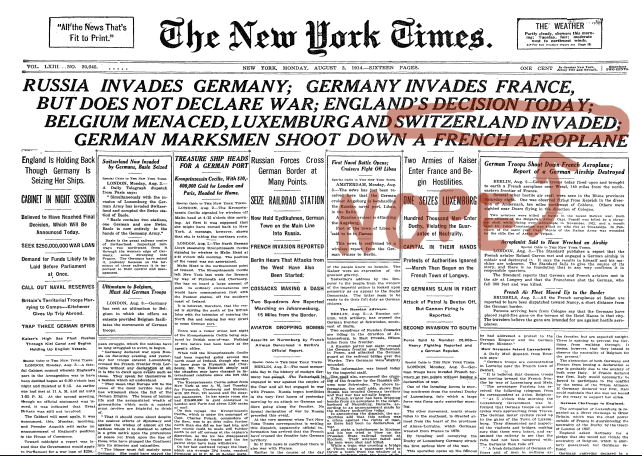
On the first day of World War 1, the NYT invented an invasion of Switzerland
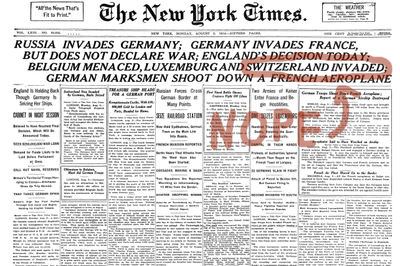
Back in 1914 before the internet ruined journalism, you could misreport an invasion of Switzerland and there was no way to fix it:
Por que a guerra Israel-Hamas é típica guerra Exército-Guerrilha?
O Exército de Israel não é diferente de nenhum outro Exército do mundo. Não é o mais moral e tampouco o mais cruel. Atua da mesma forma que a maior parte das Forças Armadas do mundo atuariam se enfrentassem uma guerrilha como o Hamas. Como exemplo, pegue os Estados Unidos, do celebrado Barack Obama, Nobel da Paz. Seus Drones bombardeiam o Yemen para combater a Al Qaeda. Mas no fim morrem centenas de civis nestes ataques. E olhe que os iemenitas não lançam um foguete sequer contra o território americano.
Noto que os conflitos mais sanguinários do Oriente Médio no pós Guerra envolveram potências não árabes – Irã (Guerra Irã-Iraque), EUA (Guerra do Iraque) e França (Guerra da Argélia). Todos mataram bem mais do que qualquer conflito entre israelenses e palestinos.
O Hamas tampouco é diferente de outras guerrilhas urbanas do mundo. Age de forma similar a outros grupos guerrilheiros, independentemente da região. Suas táticas são comuns em uma zona com elevada densidade demográfica, bloqueada e enfrentando um Exército superior. É um pouco óbvio que se esconderão no meio da população.
Trata-se de um conflito assimétrico. Não há condições de nenhum dos lados sair totalmente vencedor, embora guerrilhas, como o Hamas, tendem a sair vencedoras ao não perderem. Foi o que aconteceu no atual conflito. A única forma de estabilidade definitiva seria um acordo de paz. Isso também já ocorreu em outras partes do mundo. Os europeus, que são o povo que mais se matou na história da humanidade, hoje vivem em relativa paz, a não ser pela Ucrânia. Por que no Oriente Médio, onde nunca houve violência que chegasse aos pés da violência europeia, judeus e árabes não conseguirão o mesmo?
Não sei como faz para publicar comentários. Portanto pediria que comentem no meu Facebook (Guga Chacra) e no Twitter (@gugachacra), aberto para seguidores
Guga Chacra, comentarista de política internacional do Estadão e do programa Globo News Em Pauta em Nova York, é mestre em Relações Internacionais pela Universidade Columbia. Já foi correspondente do jornal O Estado de S. Paulo no Oriente Médio e em NY. No passado, trabalhou como correspondente da Folha em Buenos Aires
Comentários islamofóbicos, antissemitas, anticristãos e antiárabes ou que coloquem um povo ou uma religião como superiores não serão publicados. Tampouco são permitidos ataques entre leitores ou contra o blogueiro. Pessoas que insistirem em ataques pessoais não terão mais seus comentários publicados. Não é permitido postar vídeo. Todos os posts devem ter relação com algum dos temas acima. O blog está aberto a discussões educadas e com pontos de vista diferentes. Os comentários dos leitores não refletem a opinião do jornalista
Acompanhe também meus comentários no Globo News Em Pauta, na Rádio Estadão, na TV Estadão, no Estadão Noite no tablet, no Twitter @gugachacra , no Facebook Guga Chacra (me adicionem como seguidor), no Instagram e no Google Plus. Escrevam para mim no gugachacra at outlook.com. Leiam também o blog do Ariel Palacios
Por que é mentira dizer que árabes se preocupam mais com Gaza do que com a Síria?
Por que, ao contrário do que diz uma bizarra campanha de relações públicas tentando calar críticos, os países árabes condenam mais Bashar al Assad do que Israel e se preocupam mais com a Guerra da Síria (ou a do Iraque) do que com a de Gaza? A questão é interessante, e vai contra esta campanha de relações públicas que insiste em dizer o contrário – que os árabes e muçulmanos ignoram a Guerra da Síria e se preocupam com a de Gaza porque envolveria Israel e judeus.
Mito 1 – Imprensa se preocupa mais com Gaza do que com a Guerra da Síria
A Guerra da Síria recebeu gigantesca cobertura da imprensa, bem maior do que a de Gaza. Infelizmente, muita gente ignora. Apenas este humilde jornalista escreveu 600 textos sobre a Guerra da Síria, além de dezenas de comentários para TV e Rádio. Em alguns momentos, como quando durante o uso das armas químicas, o conflito sírio chegou a parar o Congresso dos Estados Unidos e as redes de TV americanas interromperam suas programações apenas para transmitir o andamento da guerra, que domina os debates no Conselho de Segurança da ONU há mais de dois anos
Mito 2 – Países árabes se preocupam mais com Gaza do que com a Guerra da Síria
A Síria foi expulsa da Liga Árabe. Já no caso de Israel, o Egito hoje é o maior aliado de Benjamin Netanyahu. A Jordânia sequer convocou seu embaixador em Tel Aviv. Arábia Saudita e Emirados Árabes mantém uma neutralidade de viés pró-Israel. De todo o mundo árabe, apenas o Qatar estaria solidário com o Hamas e ainda assim apoiando um cessar-fogo
Mito 3 – Países árabes armam o Hamas, mas ignoram a Guerra da Síria
Países árabes, como a Arábia Saudita e Qatar, armam opositores sírios, muitos deles ligados à Al Qaeda, apenas para lutarem contra Assad. Também financiam estas organizações. Nenhum país árabe arma o Hamas, que luta contra Israel
Mito 4 – Países retiram embaixador apenas de Israel
Quase todos os países, incluindo o Brasil, retiraram seus embaixadores de Damasco, seja por questões de segurança ou por oposição ao regime
Mito 5 – Assad matou 150 mil e ninguém fala nada
Ao contrário do que dizem, Assad não é responsável pela morte de 150 mil pessoas. Este número representa o total de vítimas de uma Guerra Civil. Muitos dos mortos são militares sírios lutando a favor do regime e civis que apoiam Assad. Parte elevada dos mortos também se deve a conflitos intra-oposição. Por último, este não é um conflito apenas entre muçulmanos, como muitos descrevem incorretamente, visto que muitos cristãos lutam a favor do regime de Assad (que é laico e apoiada pela Rússia, historicamente defensora dos cristãos na região) e são vítimas do radicalismo religioso da oposição apoiada pelo Ocidente e pelos países do Golfo
Mito 6 – Árabes não se preocupam com a perseguição aos cristãos do Iraque
Os cristãos iraquianos viviam bem no Iraque até os EUA invadirem o país em 2003. Eles estavam no alto escalão do governo de Saddam (o número 2 do regime era o cristão Tariq Aziz). Com a presença das tropas americanas e o crescimento da antes inexistente Al Qaeda no Iraque (que se tornaria o ISIS anos depois), os cristãos precisaram buscar refúgio com Assad, na Síria, que historicamente os protegia. Agora, mais uma vez no Iraque, cristãos que ainda estavam no país passaram a ser perseguidos pelo ISIS. A Síria, mais uma vez, e o Líbano foram os primeiros a se levantar para receber os cristãos e apoiá-los. Inclusive, canais de TV do Líbano (um país onde o presidente por lei precisa ser cristão, assim como metade do Parlamento) mudaram seus símbolos para o que representa os cristãos iraquianos. Muitos libaneses e sírios fizeram o mesmo com seus perfis. O tema chega a ocupar um espaço quase similar à Guerra de Gaza em jornais de Beirute
Mito 7 – Países árabes não faazem nada por refugiados sírios
O Líbano recebeu 1 milhão de refugiados sírios, em um território menor do que o Sergipe e com uma população de 4 milhões. A Jordânia construiu cidades para receber os refugiados. O único país vizinho a não receber refugiados foi Israel. Sim, tratou algumas centenas de feridos. Mas o Líbano, com menos recursos, trata dezenas de milhares. E o argumento de Israel não ser árabe e ser inimigo de Assad não se sustenta. A Turquia também não é árabe e é inimiga de Assad, tendo recebido centenas de milhares de refugiados
Não sei como faz para publicar comentários. Portanto pediria que comentem no meu Facebook (Guga Chacra) e no Twitter (@gugachacra), aberto para seguidores
Guga Chacra, comentarista de política internacional do Estadão e do programa Globo News Em Pauta em Nova York, é mestre em Relações Internacionais pela Universidade Columbia. Já foi correspondente do jornal O Estado de S. Paulo no Oriente Médio e em NY. No passado, trabalhou como correspondente da Folha em Buenos Aires
Comentários islamofóbicos, antissemitas, anticristãos e antiárabes ou que coloquem um povo ou uma religião como superiores não serão publicados. Tampouco são permitidos ataques entre leitores ou contra o blogueiro. Pessoas que insistirem em ataques pessoais não terão mais seus comentários publicados. Não é permitido postar vídeo. Todos os posts devem ter relação com algum dos temas acima. O blog está aberto a discussões educadas e com pontos de vista diferentes. Os comentários dos leitores não refletem a opinião do jornalista
Acompanhe também meus comentários no Globo News Em Pauta, na Rádio Estadão, na TV Estadão, no Estadão Noite no tablet, no Twitter @gugachacra , no Facebook Guga Chacra (me adicionem como seguidor), no Instagram e no Google Plus. Escrevam para mim no gugachacra at outlook.com. Leiam também o blog do Ariel Palacios
White Messiah Complex
It’s a rite of passage in upper-middle-class America: the volunteer trip to some impoverished Third World country followed by the new Facebook profile picture with a couple of doe-eyed orphans. The ritual springs from a well-intentioned desire to help those in need and form connections across boundaries of nationality, race, and class. But do these trips actually do much good? Writing for Al Jazeera America, columnist Rafia Zakaria makes the case that they don’t. “The problem with voluntourism,” she writes, “is its singular focus on the volunteer’s quest for experience, as opposed to the recipient community’s actual needs.”
“Voluntourist” laborers can “crowd out local workers” because these volunteers work for free. What’s more, as Britain’s Daily Telegraph noted last year, some “ethical tourism” companies are backing away from orphanage-volunteering trips after learning that many of the orphans they were helping were not actually orphans—three out of four kids in Cambodian orphanages and nine of 10 in Ghanaian orphanages actually had parents.
Zakaria notes that in Bali, Indonesia,
Children leave home and move to an orphanage because tourists, who visit the island a couple of times a year, are willing to pay for their education. These children essentially work as orphans because their parents cannot afford to send them to school. Instead of helping parents cater to the needs of their children, the tourist demand for orphans to sponsor creates an industry that works to make children available for foreigners who wish to help.
Actual orphans might not benefit either. Sarah Bareham of ResponsibleTravel.com told the Telegraph that for orphans,
interaction with a revolving door of short-term volunteers can be psychologically very damaging. Volunteers are largely untrained, do not possess the complex skills necessary to work with traumatised children and would not be allowed to do so in the UK. Most volunteers also seek to form an emotional attachment to the children in their care, to feel they have made a difference through their work. Instead they are often simply reinforcing a never-ending cycle of abandonment.
And so, says Zakaria, “wealthy Westerners” hoping to “do a little good, experience something that their affluent lives do not offer, and … have a story to tell that places them in the ranks of the kindhearted and worldly wise” have created a monstrosity: a “white savior industrial complex” that harms as much as it helps.
The emphasis on good intentions over good outcomes that fuels the White Savior Industrial Complex isn’t confined to private “voluntouring,” however. It also manifests as a foreign-policy doctrine, one that allows Westerners who have lots of political power—not merely, like tourists, lots of money—to experience the joy of benevolence. Why not make pushing democracy, human rights, and the American way the central goal of America’s influence and power? Liberal or humanitarian interventionism sounds good in theory: strong countries have a responsibility to protect the vulnerable from atrocities when their own governments fail to do so. And as with so many of the voluntourists, the liberal interventionist’s heart pines for Africa.
There’s a problem, though. Far from being an entire continent full of violence and poverty that yearns for the white man’s aid, Africa is actually an incredibly diverse place. Its people, just like us, are complicated and tend to defy simplistic characterization. And like ours, their social and political systems are also complicated. Resolving their conflicts, then, is likely to require the same practical, patient, subtle diplomacy that resolves our conflicts.
Pragmatic humanitarians would take that into account. A self-absorbed humanitarianism of good intentions, on the other hand, finds complexity distasteful. It has no role models between that of Messiah (when it can act decisively) and Voice in the Wilderness (when it cannot). That makes diplomacy tough, as America’s top voice for liberal intervention, National Security Adviser Susan Rice, discovered in her handling of the diplomatic resolution of the Sudanese conflict.
Rice had a long history with Sudan. She cut her teeth in Washington working with “the Council,” an informal group of activists with ties to the South Sudanese independence movement. As a Clinton administration official, she pushed back against any cooperation with the Sudanese—even when their intelligence service was offering to share its extensive files on a Khartoum-based construction mogul named Osama bin Laden. America began giving military aid to the South Sudanese rebels and countries that backed them, and one of Rice’s lieutenants—fellow “Council” member John Prendergast—would later tell Reuters that “the idea was to help states in the region to change the regime.” But the regime survived, the conflicts continued, and bin Laden went on to bigger things.
Back in power as the Obama administration’s representative at the United Nations, Rice would be dealing with Khartoum again. The Bush administration had handed down a peace deal between the Sudanese government and the Southern rebels, an agreement that would allow the South to vote to become independent. The deal was running into trouble—cooperation wasn’t always forthcoming from the north. And at the same time, Sudan was conducting a horrific war in its western region of Darfur. An ugly choice had to be made: should America push Khartoum on Darfur, even if doing so risked renewed war in the South without peace in the west? Or should Washington scramble to save the Southern peace deal, even if that meant dealing amicably with a brutal government?
A bitter rivalry emerged between Rice, who was again pushing for uncompromising pressure on Sudan, and the U.S. special envoy for Sudan, Scott Gration, who argued that this approach gave Khartoum “no incentive to let the southerners vote on independence” and suggested that America should offer the chance of improved relations as an incentive for cooperation. This did not sit well with the Council, which went on the attack, portraying Gration as a callous airhead in prominent outlets like The New Republic.
While Washington squabbled, the rebels grew increasingly worried about the situation with the North, as delegates of the Sudan People’s Liberation Movement (SPLM) told their old supporter Rice in a New York meeting in 2009. Their fledgling government was in dire financial straits, and “the potential for war between north and south was high.” Yet Rice’s eyes were fixed on Darfur. According to a U.S. Mission to the United Nations diplomatic cable published by WikiLeaks,
Rice told the delegation that the SPLM had failed to present a plan that encompassed the genocide and killing in Darfur that had been exacerbated by the NGO expulsions. She said the United States would support [Comprehensive Peace Agreement] implementation and hoped to prevent collapse in Sudan but that ‘we can’t implement the CPA at the expense of Darfur.’ Rice stressed that CPA implementation and resolving the conflict in Darfur must be mutually reinforcing.
Rice’s message, in short, was that the rebels would have to help stop a war hundreds of miles outside their reach before America put its shoulder to the wheel to preserve their fragile peace at home—a peace that America had been crucial in making. Rice’s one-time favorites had made a serious mistake. Not only had they allowed moral complexity to seep into their conflict, they’d done so in the shadow of a rival conflict where right and wrong seemed far clearer. Worst of all, ending their conflict required a deal with the other conflict’s devil. Helping them push peace over the finish line would no longer feel so warm and fuzzy. The South Sudanese referendum would survive—but in spite of Rice, not because of her.
The crucial question about the White Savior Industrial Complex and its armed wing, humanitarian interventionism, is “why.” Why do we find more moral gratification in having good intentions than in producing good outcomes? Why do we accept mere symbols of being good—the Facebook photo with the orphan, the public diplomatic démarche, the battleship steaming toward the Oppressor—as evidence of good outcomes, or even as good outcomes in themselves?
Rafia Zakaria sees two roots. First, when we don’t see the complexity of other societies—when we don’t know their politics and we see only suffering—it seems clear which intentions are good. And this clarity of intentions can even seem nonpartisan, which isn’t the case when we try to fix our own society: “Unlike the problems of other societies, the failing inner city schools in Chicago or the haplessness of those living on the fringes in Detroit [are] connected to larger political narratives,” notes Zakaria. You won’t start any arguments at cocktail parties or Thanksgiving dinner if you mention your Haitian orphanage trip or your distaste for a brutal African dictator. You will if you talk about affirmative action or healthcare reform.
Second, says Zakaria, our problems are often hard to even identify, let alone find solutions for, while those of impoverished societies seem immediate and obvious:
Western nations are full of well-fed individuals plagued by less explicit hardships such as the disintegration of communities and the fraying of relationships against the possibilities of endless choices. The burdens of manic consumption and unabated careerism are not as easily pitied as crumbling shanties and begging babies. Against this landscape, volunteerism presents an escape, a rare encounter with an authenticity sorely missed, hardship palpably and physically felt.
Prosperity and modernity alleviated many of humanity’s traditional problems. Yet in doing so they also undermined traditional ways of thinking—such as religion—that were humanity’s pain relievers. Meanwhile, they created new pains like those Zakaria identifies. Today we have a new disease, yet we do not even have the old medicine, and we struggle to describe our symptoms. Observing Third World poverty finally gives us the feeling that we can diagnose and treat a malady with confidence. People are hungry? Give them food! Religious tensions? Have an interfaith meeting! People are fighting? Send in the troops!
Yet why is this impulse so popular with the American elite in particular, rather than among our broader society? Why does it clothe itself in forms the elite finds familiar—the philanthropic venture, the government initiative?
A recent essay in The Week by Michael Brendan Dougherty—discussing Joseph Bottum’s new book An Anxious Age—offers a clue. Mainline Protestants, Dougherty notes, have traditionally held the most political power in America. And Mainline Protestantism is supported by a robust, comprehensive system of values, “able to support the American project and criticize it prophetically at the same time.” Yet Mainline Protestantism seems to be dead. Not 50 years ago more than half of Americans held membership in a Mainline Protestant congregation. Now less than a tenth do. But such powerful social and intellectual forces don’t vanish overnight. “It would be,” says Dougherty, “startling if the spiritual energies [Mainline Protestantism] captained, and the anxieties it defined, ceased to exist the moment people walked out the door.” And they didn’t—the old Protestantism was merely secularized, becoming a major element of modern progressive thought.
Privileging emotion above reason has a deep history in Mainline Protestant theology. In Calvinist thought, for example, one is never certain of one’s own salvation or “election.” “The burden of proof of election,” writes Susan Manning in The Puritan-Provincial Vision, “falls on the self-investigating conscience, but its findings may be radically untrustworthy. … The puritan tends—in his life and his writing—to strive always to eradicate doubt by sheer force of self-scrutiny.” And so intentions matter quite a bit.
Dougherty (and Bottum) links this Protestant-progressive continuity to domestic politics and the social-justice movement. But the parallel holds for the liberal interventionists in international relations, too: Harvard University, named for a Puritan minister and long a training ground for Protestant clergy, is now a leading center of liberal interventionist thought, boasting the Carr Center for Human Rights Policy—whose founding executive director, Samantha Power, is now Obama’s UN ambassador and a leading exponent of the “responsibility to protect.” The Carr Center hosts the Mass Atrocity Response Operations Project, whose goal “is to enable the U.S. and other governments to prevent and halt genocide and mass atrocity through the effective use of military assets and force as part of a broader integrated strategy.” A similar culture prevails in the international-relations departments of that old Puritan seminary in Connecticut, Yale. (Prominent alumna: Samantha Power.)
Perhaps today’s humanitarian warriors and voluntourists could benefit from a study of their religious ancestors. Mainline Protestantism, like most Christian denominations, has a history of foreign adventurism: missionary work. Yesterday’s missionaries weren’t so different from today’s white saviors. A rural African Rip Van Winkle who dozed off in the late 19th century and awoke today would find many new and alien things. But there would be one continuity: a kindhearted and earnest foreigner pushing the locals to change their culture—for their own good, of course. His tracts used to talk about religion; later it was sanitation and literacy; now it’s safe sex, democracy, female genital mutilation, and gay rights. 
The missionary efforts of the past offer a frame for examining the present. Though missionaries then and now may feel they’re doing the locals unalloyed good, reality can be more complicated. Western missionary activity in 19th-century China, for example, provoked intense resentment and opened a fresh and bloody rift in Chinese society, culminating in the anti-Christian and anti-Western violence of the Boxer Rebellion, which eventually forced the imperial powers to intervene to protect their besieged diplomatic missions in Beijing. The right of those missionaries to operate in China was guaranteed in the famous “unequal treaties” that the imperial powers imposed, and the missionaries’ advances were entangled—sometimes intentionally, sometimes not—with the advance of Western commercial and strategic interests.
Well-intentioned but ignorant Westerners weren’t able to anticipate the way their influence would interact with Chinese culture. The missionaries found, for example, that some of their converts were motivated by personal gain—deeply impoverished “rice Christians” wanted food; others attempted to use their status as Christians to play local and Western powers off one another to their own advantage. The most disastrous unintended consequence was the Taiping Rebellion—one of the deadliest wars in human history—in which a Christian-influenced messianic cult took up arms against the Qing dynasty in a bid to establish a utopian “Heavenly Kingdom.” As would be the case with the Boxers, the West had to intervene to clean up the mess that its initial involvement helped provoke.
Now as then, our high-minded efforts can provoke local resentment. Rival interests—from Russia to Islamic extremists—have worked to stoke such sentiments to their own benefit. And our new evangelists seem as oblivious to unintended consequences as they are certain of their own righteousness. The advance of NATO? Unrelated to Russian anxieties. Attempts to promote democracy? They won’t harm diplomatic relations with autocracies or create instability. Humanitarian wars? They won’t erode national sovereignty. And of course, local actors would never mouth liberal shibboleths to get us to support their parochial interests—never mind Ahmed Chalabi in Iraq; the Mojahedin-e-Khalq and the old royal family in Iran; or Alexei Navalny, Mikhail Khodorkovsky, and even Boris Yeltsin in Russia. The old missionary impulse, the spirit of voluntourism, the desire to build a White Savior Industrial Complex with embassies and cruise missiles—these are all alive and well in certain circles of America’s foreign-policy elite. Is this good for America or for the world? Alas, that might not be the point.
John Allen Gay is an assistant managing editor at The National Interest and the co-author of War With Iran: Political, Military, and Economic Consequences.


Separando os bons ativos
Enviado por Míriam Leitão e Alvaro Gribel - |
no Globo
Separando os bons ativos
Portugal começou a solucionar o problema do seu maior banco com uma tecnologia parecida com a do Proer, dos anos 1990, no Brasil. Os ativos com liquidez foram separados dos ativos tóxicos, dois bancos foram criados, e os acionistas e controladores ficaram com o banco ruim. Na instituição boa, estão todos os clientes e seus depósitos, garantidos por um empréstimo do governo.
Nem sempre é usada essa engenharia financeira, que tem a vantagem de salvar os depositantes e punir os controladores e administradores. Nos Estados Unidos, depois da quebra do Lehman Brothers, o Tesouro e o Fed despejaram bilhões sobre os bancos em dificuldade para que nenhum outro quebrasse. Logo depois, os administradores, que haviam tomado as decisões temerárias, estavam recebendo bônus de performance e ninguém foi punido.
Em Lisboa, ontem, a ministra das Finanças de Portugal, Maria Luís Albuquerque, disse que tem que haver punições severas diante das irregularidades encontradas no banco. Ainda não se sabe detalhes e, para terminar bem, será necessária muita perícia nesta transição.
O Banco Espírito Santo, com sua longa história e sua importância para a economia portuguesa, sofreu intervenção e neste fim de semana se anunciou a solução: ele será capitalizado com € 4,9 bilhões, através de um empréstimo tomado pelo Fundo de Resolução, com as mesmas funções do Fundo Garantidor de Crédito (FGC).
Aqui, o FGC foi usado em várias operações. Na mais notória delas, salvou-se o Banco PanAmericano, em 2010, no governo Lula, mas com uma diferença fundamental: foram protegidas as finanças dos controladores com o dinheiro do Fundo. Em Portugal, a operação foi mais parecida com a do Proer dos anos 90, porque os controladores e acionistas perderam os ativos saudáveis. Eles ficarão apenas com os bens com dificuldade de recuperação.
A solução ainda não está completamente desenhada, mas a nova instituição, com os ativos bons, será chamada de Novo Banco. É considerado uma espécie de banco-ponte, porque será vendido para outro grupo, quando, então, terá um novo nome. Já os acionistas do velho Banco Espírito Santo terão prejuízos pela má gestão da instituição. Até os minoritários, como o Bradesco, terão prejuízo, já que eram acionistas. Nada que assuste, porque o banco brasileiro é sólido e a participação era pequena.
No caso do Banco Espírito Santo, a orientação das autoridades europeias a Portugal foi que evitasse a estatização do banco e, por isso, ele será vendido no futuro e o empréstimo veio através do Fundo de Resolução e da Linha de Recapitalização. Nesse aspecto, fica diferente de várias operações recentes de instituições financeiras no mundo que foram resgatadas com dinheiro público, e algumas praticamente estatizadas, como a seguradora AIG, dos Estados Unidos.
Crise bancária acontece com certa frequência no mundo e, em geral, as instituições se sentem protegidas da falência por acreditar na máxima do “grande demais para quebrar”. Seus administradores e controladores acham que serão resgatados pelo governo, pelo efeito demolidor que a quebra de uma instituição financeira tem sobre a economia. De fato, há o risco da crise sistêmica, mas a economia não precisa ficar debaixo dessa chantagem do tamanho da instituição.
A fórmula é separar o banco bom do banco ruim, entregar o segundo para os acionistas e controladores da instituição que quebrou, investigar a administração do banco para identificar responsabilidades, vender os ativos saudáveis para um novo grupo e, através de um empréstimo, garantir a integralidade dos ativos dos aplicadores e correntistas.
Aqui, os bancos foram resgatados de duas formas. Nos anos 1990, através do Proer, em que banqueiros como Ângelo Calmon, a família Magalhães Pinto, ou a família Andrade Vieira perderam seus ativos, os bancos Econômico, Nacional e Bamerindus. Na segunda onda de quebra de bancos, no governo Lula, as instituições receberam empréstimos do Fundo Garantidor de Crédito, criado pela Lei do Proer. O caso mais controverso foi o do PanAmericano, porque nele o grupo Silvio Santos teve todos os seus ativos liberados. O que complicou mais ainda a situação foi que a Caixa Econômica Federal havia comprado 49% do capital do banco pouco tempo antes.
É hora de discutir quais gastos são fundamentais para o Brasil
Enviado por Míriam Leitão - |
Na CBN
É hora de discutir quais gastos são fundamentais para o Brasil
Matéria do Globo com estudo do economista Raul Velloso mostra que os gastos do governo federal crescem bem mais do que a economia. Entre 1997 e 2013, saíram de 14% para 18,8% do PIB. A carga tributária acompanhou: passou de 18,15% para 25,3%. Isso é insustentável. Em ano eleitoral, é hora de discutir quais gastos são fundamentais para o desenvolvimento do Brasil.
Não vale acusar um programa como o Bolsa Família, que custa relativamente pouco (cerca de R$ 24 bilhões em 2013) e beneficia milhões.
Mas quando, por exemplo, o gasto previdenciário está subindo demais, é necessário discutir reformas. No mundo isso acontece naturalmente. Aposentadorias precoces, gastos com pensão de viúvas jovens e sem filhos, e a própria ideia de idoso merecem um debate. Muitos dos que chegam aos 60 anos hoje esbanjam vigor.
O seguro desemprego explodiu 345% de 2003 a 2013 enquanto o desemprego caiu nesse período. O governo, questionado, também não entende o que se passa com o estouro desse gasto.
Os políticos, quando se candidatam, não gostam de conversas difíceis, mas o país tem de tê-las. O contribuinte paga cada vez mais, a qualidade do serviço não melhora nem o investimento sobe.
Ouça aqui o comentário na CBN.
Interoperability Happens - The Vietnam of Computer Science
Adam Victor BrandizziDedico especialmente ao Osiasjota, que pode até achar TL;DR mas apreciará o título.
(Two years ago, at Microsoft's TechEd in San Diego, I was involved in a conversation at an after-conference event with Harry Pierson and Clemens Vasters, and as is typical when the three of us get together, architectural topics were at the forefront of our discussions. An crowd gathered around us, and it turned into an impromptu birds-of-a-feather session. The subject of object/relational mapping technologies came up, and it was there and then that I first coined the phrase, "Object/relational mapping is the Vietnam of Computer Science". In the intervening time, I've received numerous requests to flesh out the discussion behind that statement, and given Microsoft's recent announcement regarding "entity support" in ADO.NET 3.0 and the acceptance of the Java Persistence API as a replacement for both EJB Entity Beans and JDO, it seemed time to do exactly that.)
No armed conflict in US history haunts the American military more than $g(Vietnam). So many divergent elements coalesced to create the most decisive turning point in modern American history that it defies any layman's attempt to tease them apart. And yet, the story of Vietnam is fundamentally a simple one: The United States began a military project with simple yet unclear and conflicting goals, and quickly became enmeshed in a quagmire that not only brought down two governments (one legally, one through force of arms), but also deeply scarred American military doctrine for the next four decades (at least).
Although it may seem trite to say it, $g(Object/Relational Mapping) is the Vietnam of Computer Science. It represents a quagmire which starts well, gets more complicated as time passes, and before long entraps its users in a commitment that has no clear demarcation point, no clear win conditions, and no clear exit strategy.
History
PBS has a good synopsis of the war, but for those who are more interested in Computer Science than Political/Military History, the short version goes like this:
$g(South Indochina), now known as Vietnam, Thailand, Laos and Cambodia, has a long history of struggle for autonomy. Before French colonial rule (which began in the mid-1800s), South Indochina wrestled for regional independence from China. During World War Two, the Japanese conquered the area, only to be later "liberated" by the Allies, leading France to resume their colonial rule (as did the British in their colonial territories elsewhere in Asia and India). Following WWII, however, the people of South Indochina, having thrown off one oppressor, extended their anti-occupation efforts to fight the French instead of the Japanese, and in 1954 the French capitulated, signing the $g(Geneva Peace Accords) to formally grant Vietnam its independence. Unfortunately, global pressures perverted the efforts somewhat, and instead of a lasting peace agreement a temporary solution was created, dividing the nation at the 17th parallel, creating two nations where formerly no such division existed. Elections were to be held in 1956 to reunify the country, but the US feared that too much power would be given to the $g(Communist Party of Vietnam) through these elections, and instead backed a counter-Communist state south of the 17th parallel and formed a series of multilateral agreements around it, such as $g(SEATO). The new nation of $g(South Vietnam) was born, and its first (dubiously) elected leader was $g(Ngo Dinh Diem), a staunchly anti-Communist who almost immediately declared his country under Communist attack. The $g(Eisenhower Administration) remained supportive of the Diem government, but Diem's loyalty with the people was almost nonexistent from the beginning.
By the time the US Democratic Party's $g(John F Kennedy) came to the White House, things were coming to a head in South Vietnam. Kennedy sent a team to Vietnam to research the conditions there and help formulate his strategy on the issue. In what's now known as the "$g(December 1961 White Paper)", an argument for an increase in military, technical and economic aid was presented, along with large-scale American "advisers" to help stabilize the Diem government and eliminate the $g(National Liberation Front), dubbed the $g(Viet Cong) by the US. What's not as widely known, however, is that a number of Kennedy's advisers argued against that buildup, calling Vietnam a "dead-end alley".
Faced with two diametrically opposite paths, Kennedy, as was typical for his administration, chose a middle path: instead of either a massive commitment or a complete withdrawal, Kennedy instead chose to seek a limited settlement, sending aid but not large numbers of troops, a path that was almost doomed from the beginning. Through a series of strategic blunders, including the forced relocation of rural villagers (known as the $g(Strategic Hamlet Program)), Diem's support was so deeply eroded that Kennedy hesitatingly and haltingly supported a coup, during which Diem was killed. Three weeks later, Kennedy was also assassinated, throwing the domestic US political scene into turmoil as well. Ironically, the conflict began by Kennedy would in fact later be associated most closely with his replacement.
Johnson's War
At the time of the Kennedy assassination, Vietnam had 16,000 American advisers in place, most of whom weren't involved in daily combat operations. Kennedy's Vice President and new replacement, however, $g(Lyndon Baines Johnson), was not convinced that this path was leading to success, and came to believe that more aggressive action was needed. Seizing on a dubious incident in which Vietnamese patrol boats attacked American destroyers1 in the $g(Gulf of Tonkin), Johnson used pro-war sentiment in Congress to pass a resolution that gave him powers to conduct military action without an explicit declaration of war. To put it simply, Johnson wanted to fight this war "in cold blood": "This meant that America would go to war in Vietnam with the precision of a surgeon with little noticeable impact on domestic culture. A limited war called for limited mobilization of resources, material and human, and caused little disruption in everyday life in America." (source) In essence, it would be a war whose only impact would be felt by the Vietnamese--American life and society would go on without any notice of the events in Vietnam, thus leaving Johnson to pursue his first great love, his "Great Society", a domestic agenda designed to fix many of US society's ills, such as poverty2. History, of course, knows better, and--perhaps cruelly--calls the Vietnam conflict "Johnson's War".
Initially, it must be noted that Vietnam-as-disaster is a more recent perception; Americans polled as late as 1967 were convinced that the war was a good thing, that Communism needed to be stopped and that Vietnam, should it fall, would be the first of a series of nations to succumb to Communist subversion. This "$g(Domino Theory)" was a common refrain for American politics in the latter half of the 20th century. Concerns of this sort plagued American foreign policy ever since the Communists successfully or nearly-successfully subverted several European governments during hte latter half of the 1940's, and then China in the 50's. (It must be noted that Eisenhower and $g(John Foster Dulles), formulators of the theory, never included Vietnam in their ring of dominos that must be preserved, and in fact Eisenhower was surprisingly apathetic about Vietnam during some of his meetings with Kennedy during the White House transition.)
In 1968, however, the Vietnam experience turned significantly, as the North Vietnamese and Viet Cong launched the $g(Tet Offensive), a campaign that put to lie all of the reassurances of the American government that it was winning the war in Vietnam. Ironically, as had been the case for much of the war, the NVA/VC forces lost a substantial number of troops, far more than their American opponents, yet the Tet Offensive is widely considered by historians to be the breaking point of American will in the war. Following that, popular opinion turned on Johnson, and in a dramatic news conference, he announced that he would not seek re-election. Furthermore, he announced that he would seek a negotiated settlement with the Vietnamese.
Nixon's Promise
Unfortunately, American negotiating position was seriously weakened by the very protests that had brought the Americans to the negotiating table in the first place; NVA/VC leadership recognized that the NVA/VC forces, despite staggering military losses that nearly broke them (several times), could simply continue to do as they were doing, and wring concessions from the Americans without offering any in return. Running on a platform that consisted mostly of a promise to "Get America out of Vietnam", Johnson's successor, Republican $g(Richard Nixon), tried several tactics to bring pressure to the NVA/VC forces to bargain, including increased air-combat presence (such as the $g(Christmas bombings) and $g(Operation Menu) ) and regular violations of nearby Laos and Cambodia, pursuing the line of supplies from North Vietnam to cells in South Vietnam. Nothing worked, however, and in 1973 Nixon's administration signed the $g(Paris Peace Agreement), ending American involvement in that conflict. Two years later, South Vietnam had been overrun, and on April 30, 1975, Communist forces captured Saigon, the capital of Vietnam, forcing the evacuation of the American embassy and the most memorable image of the war, that of streams of fleeing people seeking space on the Huey helicopter perched on the roof of the embassy.
War's End
The Second South Indochina War was over, America had experienced its most profound defeat ever in its history, and Vietnam became synonymous with "quagmire". Its impact on American culture was immeasurable, as it taught an entire generation of Americans to fear and mistrust their government, it taught American leaders to fear any amount of US military casualties, and brought the phrase "clear exit strategy" directly into the American political lexicon. Not until $g(Ronald Reagan) used the American military to "liberate" the small island nation of $g(Grenada) would American military intervention be considered a possible tool of diplomacy by American presidents, and even then only with great sensitivity to domestic concern, as $g(Bill Clinton) would find out during his peacekeeping missions to $g(Somalia) and $g(Kosovo). In quantifiable terms, too, Vietnam's effects clearly fell short of Johnson's goal of a war in "cold blood". Final tally: 3 million Americans served in the war, 150,000 seriously wounded, 58,000 dead, and over 1,000 MIA, not to mention nearly a million NVA/Viet Cong troop casualties, 250,000 South Vietnamese casualties, and hundreds of thousands--if not millions, as some historians advocated--of civilian casualties.
Lessons of Vietnam
Vietnam presents an interesting problem to the student of military and political history--exactly what went wrong, when, and where? Obviously, the US government's unwillingness to admit its failures during the war makes for an easy scapegoat, but no government in the history of modern society has ever been entirely truthful with its population about its fortunes of war; one such example includes (but is not limited to) the same US government's careful censorship of activities during World War Two, fifty years earlier, known in American history as "the last 'good' war". It's also tempting to point to the lack of a military objective as the crucial failing point of Vietnam, but other non-military objectives have been successfully executed by the US and other governments without the kind of colossal failure accompanying Vietnam's story. Moreover, it's important to note that the US did, in fact, have a clear objective in what it wanted out of the conflict in South Indochina: to stop the fall of the South Vietnam government, and, barring that, the cessation of the "spread" of Communism. Was it the reluctance of the US government to unleash the military to its fullest capabilities, as $g(General William Westmoreland) always claimed? Certainly the failure in Vietnam was not a military one; the casualty figures make it clear that the US, by any other measure, was clearly winning.
So what were the principal failures in Vietnam? And, more importantly, what does all this have to do with O/R Mapping?
Vietnam and O/R mapping
In the case of Vietnam, the United States political and military apparatus was faced with a deadly form of the $g(Law of Diminishing Returns). In the case of automated Object/Relational Mapping, it's the same concern--that early successes yield a commitment to use O/R-M in places where success becomes more elusive, and over time, isn't a success at all due to the overhead of time and energy required to support it through all possible use-cases. In essence, the biggest lesson of Vietnam--for any group, political or otherwise--is to know when to "cut bait and run", as fishermen say. Too often, as was the case in Vietnam, it is easy to justify further investment in a particular course of action by suggestion that abandoning that course somehow invalidates all the work--or, in Vietnam's case, the lives of American soldiers--that have already been paid. Phrases like "We've gone this far, surely we can see this thing through" and "To back out now is to throw away everything we've sacrificed up until this point" become commonplace. At least during the later, deeply bitter years of the second half of Vietnam, questions of patriotism came into question: if you didn't support the war, you were clearly a traitor, a Communist, obviously "unAmerican", disrespectful of all American veterans of any war fought on any soil for whatever reason, and you probably kicked your dog to boot. (It didn't help the protestors' cause that they blamed the soldiers for the war, holding them accountable--sometimes personally--for the decisions made by military and political leaders, most of whom neither the soldiers nor the protestors had ever met.)
Recognizing that all analogies fail eventually, and that the subject of Vietnam is deeper than this essay can examine, there are still lessons to be learned here in an entirely different arena. One of the key lessons of Vietnam was the danger of what's colloquially called "the Slippery Slope": that a given course of action might yield some early success, yet further investment into that action yields decreasingly commensurate results and increasibly dangerous obstacles whose only solution appears to be greater and greater commitment of resources and/or action. Some have called this "the Drug Trap", after the way pharmaceuticals (legal or illegal) can have diminished effect after prolonged use, requiring upped dosage in order to yield the same results. Others call this "the Last Mile Problem": that as one nears the end of a problem, it becomes increasingly difficult in cost terms (both monetary and abstract) to find a 100% complete solution. All are basically speaking of the same thing--the difficulty of finding an answer that allows our hero to "finish off" the problem in question, completely and satisfactorily.
We begin the analysis of Object/Relational Mapping--and its relationship to the Second South Indochina War--by examining the reasons for it in the first place. What drives developers away from using traditional relational tools to access a relational database, and to prefer instead tools such as O/R-M's?
The Object-Relational Impedence Mismatch
To say that objects and relational data sets are somehow constructed differently is typically not a surprise to any developer who's ever used both; except in extremely simplistic situations, it becomes fairly obvious to recognize that the way in which a relational data store is designed is subtly--and yet profoundly--different than how an object system is designed.
Object systems are typically characterized by four basic components: identity, state, behavior and encapsulation. Identity is an implicit concept in most O-O languages, in that a given object has a unique identity that is distinct from its state (the value of its internal fields)--two objects with the same state are still separate and distinct objects, despite being bit-for-bit mirrors of one another. This is the "identity vs. equivalence" discussion that occurs in languages like C++, C# or Java, where developers must distinguish between "a == b" and "a.equals(b)". The behavior of an object is fairly easy to see, a collection of operations clients can invoke to manipulate, examine, or interact with objects in some fashion. (This is what distinguishes objects from passive data structures in a procedural language like C.) Encapsulation is a key detail, preventing outside parties from manipulating internal object details, thus providing evolutionary capabilities to the object's interface to clients.3. From this we can derive more interesting concepts, such as type, a formal declaration of object state and behavior, association, allowing types to reference one another through a lightweight reference rather than complete by-value ownership (sometimes called composition), inheritance, the ability to relate one type to another such that the relating type incorporates all of the related type's state and behavior as part of its own, and polymorphism, the ability to substitute an object in where a different type is expected.
Relational systems describe a form of knowledge storage and retrieval based on predicate logic and truth statements. In essence, each row within a table is a declaration about a fact in the world, and SQL allows for operator-efficient data retrieval of those facts using predicate logic to create inferences from those facts. [Date04] and [Fussell] define the relational model as characterized by relation, attribute, tuple, relation value and relation variable. A relation is, at its heart, a truth predicate about the world, a statement of facts (attributes) that provide meaning to the predicate. For example, we may define the relation "PERSON" as {SSN, Name, City}, which states that "there exists a PERSON with a Social Security Number SSN who lives in City and is called Name". Note that in a relation, attribute ordering is entirely unspecified. A tuple is a truth statement within the context of a relation, a set of attribute values that match the required set of attributes in the relation, such as "{PERSON SSN='123-45-6789' Name='Catherine Kennedy' City='Seattle'}". Note that two tuples are considered identical if their relation and attribute values are also identical. A relation value, then, is a combination of a relation and a set of tuples that match that relation, and a relation variable is, like most variables, a placeholder for a given relation, but can change value over time. Thus, a relation variable People can be written to hold the relation {PERSON}, and consist of the relation value
{ {PERSON SSN='123-45-6789' Name='Catherine Kennedy' City='Seattle'},
  {PERSON SSN='321-54-9876' Name='Charlotte Neward' City='Redmond'},
  {PERSON SSN='213-45-6978' Name='Cathi Gero' City='Redmond'} }
These are commonly referred to as tables (relation variable), rows (tuples), columns (attributes), and a collection of relation variables as a database. These basic element types can be combined against one another using a set of operators (described in some detail in Chapter 7 of [Date04]): restrict, project, product, join, divide, union, intersection and difference, and these form the basis of the format and approach to SQL, the universally-acceptance language for interacting with a relational system from operator consoles or programming languages. The use of these operators allow for the creation of derived relation values, relations that are calculated from other relation values in the database--for example, we can create a relation value that demonstrates the number of people living in individual cities by making use of the project and restrict operators across the People relation variable defined above.
Already, it's fairly clear to see that there are distinct differences between how the relational world and object world view the "proper" design of a system, and more will become apparent as time progresses. It's important to note, however, that so long as programmers prefer to use object-oriented programming languages to access relational data stores, there will always be some kind of object-relational mapping taking place--the two models are simply too different to bridge silently. (Arguably, the same is true of object-oriented and procedural programming, but that's another argument for another day.) O/R mappings can take place in a variety of forms, the easiest of which to recognize is the automated O/R mapping tool, such as $g(TopLink), $g(Hibernate) / $g(NHibernate), or $g(Gentle.NET). Another form of mapping is the hand-coded one, in which programmers use relational-oriented tools, such as JDBC or ADO.NET, to access relational data and extract it into a form more pleasing to object-minded developers "by hand". A third is to simply accept the shape of the relational data as "the" model from which to operate, and slave the objects around it to this approach; this is also known in the patterns lexicon as Table Data Gateway [PEAA, 144] or Row Data Gateway [PEAA 152]; many data-access layers in both Java and .NET use this approach and combine it with code-generation to simplify the development of that layer. Sometimes we build objects around the relational/table model, put some additional behavior around it, and call it Active Record [PEAA, 160].
In truth, this basic approach--to slave one model into the terms and approach of the other--has been the traditional answer to the impedance mismatch, effectively "solving" the problem by ignoring one half of it. Unfortunately, most development efforts, like the Kennedy Administration, aren't willing to see this through to its logical conclusion with a wholesale commitment to one approach over the other. For example, while most development teams would be happy to adopt an "objects-only" approach, doing so at the storage level implies the use of an Object Oriented DataBase Management System (OODBMS), a topic that frequently has no traction within upper management or the corporate data management team. The opposite approach--a "relational-only" approach--is almost nonsensical to consider, given the technology of the day at the time this was written4.
Given that it's impossible, then, to "unleash the objects to their fullest capabilities", as General Westmoreland might call it, we're left with some kind of hybrid object-to-relational mapping approach, preferably one that's automated as much as possible, so that developers can focus on their Domain Model, rather than on the details of the object-to-table(s) mapping. And here, unfortunately, is where the potential quagmire begins.
The Object-to-Table Mapping Problem
One of the first and most easily-recognizable problems in using objects as a front-end to a relational data store is that of how to map classes to tables. At first, it seems a fairly straightforward exercise--tables map to types, columns to fields. Even the field types appear to line up directly against the relational column types, at least to a fairly isomorphic degree: VARCHARs to Strings, INTEGERs to ints, and so on. So it makes sense that for any given class defined in the system, a corresponding table--likely to be of the same or closely related name--is defined to go with it. Or, perhaps, if the object code is being written to an already existing schema, then the class maps to the table.
But as time progresses, it's only natural that a well-trained object-oriented developer will seek to leverage inheritance in the object system, and seek ways to do the same in the relational model. Unfortunately, the relational model does not support any sort of polymorphism or IS-A kind of relation, and so developers eventually find themselves adopting one of three possible options to map inheritance into the relational world: table-per-class, table-per-concrete-class, or table-per-class-family. Each of them carries potentially significant drawbacks.
The table-per-class approach is perhaps the most easily understood, for it seeks to minimize the "distance" between the object model and the relational model; each class in the inheritance hierarchy gets its own relational table, and objects of derived types are stitched together from relational JOINs across the various inheritance-based tables. So, for example, if an object model has the base class Person, with Student derived from Person and GraduateState derived from Student, then there will be three tables required to hold this model, PERSON, STUDENT, and GRADUATESTUDENT, each holding the fields corresponding to the class of the same name. Relating these tables together, however, requires each to have an independent primary key (one whose value is not actually stored in the object entity) so that each derived class can have a foreign key relation to its superclass's table. The reason for this is clear: a GraduateStudent object, by virtue of its IS-A relationship to Student and Person, is a collection of all three sets of state, and the distinction between the classes is largely removed by the time an object of this type is created--in both Java and .NET, for example, the object itself is a chunk of memory that holds the instance fields defined in all of its classes and superclasses, along with a pointer to the table of methods defined by that same hierarchy. This means that when querying for a particular instance at the relational level, at least three JOINs must be made in order to bring all of the object's state into the object program's working memory.
Actually, it gets worse than that--if the object hierarchy continues to grow, say to include Professor, Staff, Undergrad (inherits from Student), and a whole hierarchy of AdjunctEmployees (inheriting from Staff), and the program wants to find all Persons whose last name is Smith, then JOINs must be done for every derived class in the system, since the semantics of "find all Persons" means that the query must seek data on the PERSON table, but then do an expensive set of JOINs to bring in the rest of the data from across the rest of the database, pulling in the PROFESSOR table to fetch the rest of the data, not to mention the UNDERGRAD, ADJUCTEMPLOYEE, STAFF, and other tables. Considering that JOINs are among the most expensive expressions in RDBMS queries, this is clearly not something to undertake lightly.
As a result, developers typically adopt one of the other two approaches, more complex in outlook but more efficient when dealing with relational storage: they either create a table per concrete (most-derived) class, preferring to adopt denormalization and its costs, or else they create a single table for the entire hierarchy, often in either case creating a discriminator column to indicate to which class each row in the table belongs. (Various hybrids of these schemes are also possible, but typically don't create results that are significantly different from these two.) Unfortunately, the denormalization costs are often significant for a large volume of data, and/or the table(s) will contain significant amounts of empty columns, which will need NULLability constraints on all columns, eliminating the powerful integrity constraints offered by an RDBMS.
Inheritance mapping isn't the end of it; associations between objects, the typical 1:n or m:n cardinality associations so commonly used in both SQL and/or UML, are handled entirely differently: in object systems, association is unidirectional, from the associator to the associatee (meaning the associated object(s) have no idea they are in fact associated unless an explicit bidirectional association is established), whereas in relational systems the association is actually reversed, from the associatee to the associator (via foreign key columns). This turns out to be surprisingly important, as it means that for m:n associations, a third table must be used to store the actual relationship between associator and associatee, and even for the simpler 1:n relationships the associator has no inherent knowledge of the relations to which it associates--discovering that data requires a JOIN against any or all associated tables at some point. (When to actually retrieve that data is a subject of some debate--see the Loading Paradox, below).
The Schema-Ownership Conflict
Discussions of inheritance-to-table and association mapping schemes also reveals a basic flaw: At heart, many object-relational mapping tools assume that the schema is something that can be defined according to schemes that help optimize the O/R-M's queries against the relational data. But this belies a basic problem, that often the database schema itself is not under the direct control of developers, but instead is owned by another group within the company, typically the database administration (DBA) group. To whom does responsibility for designing the database--and deciding when schema changes are permissible--belong?
In many cases, developers begin a new project with a "clean slate", an empty relational database whose schema is theirs to define as they see fit. But, soon after the project has shipped (sometimes even earlier than that, due to political and/or "turf war" issues), it becomes apparent that the developers' ownership of the schema is temporary at best--various departments begin clamoring for reports against the database, DBAs are held accountable to the performance of the database thereby giving them cause to call for "refactoring" and denormalization of the data, and other development teams may start inquiring about how they might make use of the data stored therein. Before too long, the schema must be "frozen", thereby potentially creating a barrier to object model refactoring (see The Coupling Concern, below). In addition, these other teams will expect to see a relational model defined in relational terms, not one which supports an entirely orthogonal form of persistence--for example, the "discriminator" column from the Inheritance-to-Table Mapping Problem will represent difficulties, and arguably be all but unusable, to relational report generators such as Crystal Reports. Unless developers are willing to write all reports (and their UIs, and their printing code, and their ad-hoc capabilities...) by hand, this is usually going to be an unacceptable state of affairs.
(To be fair, this is not so much a technical problem as it is a political problem, but it still represents a serious problem regardless of its source--or solution. And as such, it still represents an impediment to an object/relational mapping solution.)
The Dual-Schema Problem
A related issue to the question of schema ownership is that in an O/R-M solution, the metadata to the system is held fundamentally in two different places: once in the database schema, and once in the object model (another schema, if you will, expressed in Java or C# instead of DDL). Updates or refactorings to one will likely require similar updates or refactorings to the other. Refactoring code to match database schema changes is widely considered to be the easier of the two--refactoring the database frequently requires some kind of migration and/or adaptation of data already within the database, where code has no such requirement. (Objects, at least in this discussion, are ephemeral in-memory instances that will disappear once the process holding them terminates. If the objects are stored in some kind of object form that can persist across process execution--such as serialized object instances stored to disk--then refactoring objects becomes equally problematic.)
More importantly, while it's not uncommon for code to be deployed specifically to a single application, frequently database instances are used by more than one application, and it's frequently unacceptable to business to trigger a company-wide refactoring of code simply because a refactoring on one application requires a similar database-driven refactoring. As a result, as the system grows over time, there will be increasing pressure on the developers to "tie off" the object model from the database schema, such that schema changes won't require similar object model refactorings, and vice versa. In some cases, where the O/R-M doesn't permit such disconnection, an entirely private database instance may have to be deployed, with the exact schema the O/R-M-based solution was built against, creating yet another silo of data in an IT environment where pressure is building to reduce such silos.
Entity Identity Issues
As if these problems weren't enough, we then walk into another problem, that of identity of objects and relations. As noted above, object systems use an implicit sense of identity, typically based on the object's location in memory (the ubiquitous this pointer); alternatively, this is sometimes referred to as an OID (Object IDentifier), usually in systems which don't directly expose memory locations, such as the object database (where an in-memory pointer is pretty useless as an identifier outside of the database process). In a relational model, however, identity is implicit in the state itself--two rows with the exact same state are typically considered a relational data corruption, as the same fact asserted twice is redundant and counterproductive. To be fair, we should be a bit more explicit here; a relational system can, in fact, permit duplicate tuples (as described above), but this is often explicitly disallowed by explicit relational constraints, such as PRIMARY KEY constraints. In those situations where duplicate values are allowed, there is no way for a relational system to determine which of the two duplicate rows are being retrieved--there is no implicit sense of identity to the relation except that offered by its attributes. The same is not true of object systems, where two objects that contain precisely identical bit patterns in two different locations of memory are in fact separate objects. (This is the reason for the distinction between "==" and ".equals()" in Java or C#.) The implication here is simple: if the two systems are going to agree on the sense of identity, the relational system must offer some kind of unique identity concept (usually an auto-incrementing integer column) to match that of the notion of object identity.
This causes some serious concerns regarding automated O/R systems, because the sense of identity is entirely different--if two separate user sessions interact with the same relation in storage, the relational database system's concurrency systems kick in and ensure some form of concurrent access, typically via the transactional metaphor (ACID). If an O/R system retrieves a relation out of storage (essentially forming a "view" over the data), we now have a second source of data identity, one in the database (protected by the aforementioned transactional scheme), and one in the in-memory object representation of that data, which has no consistent transactional support aside from that built into the language (such as the monitors concept in Java and .NET) or libraries (such as System.Transactions in .NET 2.0), either of which can be--and unfortuantely frequently are--easily ignored by developers. Managing isolation and concurrency is not an easy problem to solve, and unfortunately the languages and platforms commonly available to developers aren't yet as consistent or flexible as the database transaction metaphor.
What complicates this problem further is that many O/R systems introduce significant caching support into the O/R layer (usually in an attempt to improve performance and avoid round-trips to the database), and this in turn presents some problems, particularly if the caching system is not a write-through cache: when does the actual "flush" to the database take place, and what does this say about transactional integrity if the application code believes the write to have occurred when in fact it hasn't? This problem in turn only compounds when the O/R system runs in multiple processes in front of the database engine, commonly found in clustered or farmed application server scenarios. Now the data identity is spread across n+1 locations, n being the number of application server nodes, and 1 being the database itself. Each node must somehow signal its intent to do an update to the other nodes in order to obtain some kind of concurrency construct to prevent simultaneous access (by another instance of the same session, or by an instance of a different session accessing the same data), which takes time, killing performance. Even in the case of a read-only cache, updates to the data store must somehow be signaled to the caches running in the application server nodes, requiring server-to-client communication originating from the database; support for this is not well-understood or documented in the current crop of modern relational databases.
The Data Retrieval Mechansim Concern
So once the entity is stored within the database, how exactly do we retrieve it? In all honesty, a purely object-oriented approach would make use of object approaches for retrieval, ideally using constructor-style syntax identifying the object(s) desired, but unfortunately constructor syntax isn't generic enough to allow for something that flexible; in particular, it lacks the ability to initialize a collection of objects, and queries frequently need to return a collection, rather than just a single entity. (Multiple trips to the database to fetch entities individually is generally considered too wasteful, in both latency and bandwidth, to consider credibly as an alternative--see the Load-Time Paradox, below, for more.) As a result, we typically end up with one of Query-By-Example (QBE), Query-By-API (QBA), or Query-By-Language (QBL) approaches.
A QBE approach states that you fill out an object template of the type of object you're looking for, with fields in the object set to a particular value to use as part of the query-filtration process. So, for example, if you're querying the Person object/table for people with the last name of Smith, you set up the query like so:
Person p = new Person(); // assumes all fields are set to null by default
p.LastName = "Smith";
ObjectCollection oc = QueryExecutor.execute(p);
The problem with the QBE approach is obvious: while it's perfectly sufficient for simple queries, it's not nearly expressive enough to support the more complex style of query that frequently we need to execute--"find all Persons named Smith or Cromwell" and "find all Persons NOT named Smith" are two examples. While it's not impossible to build QBE approaches that handle this (and more complex scenarios), it definitely complicates the API significantly. More importantly, it also forces the domain objects into an uncomfortable position--they must support nullable fields/properties, which may be a violation of the domain rules the object would otherwise seek to support--a Person without a name isn't a very useful object, in many scenarios, yet this is exactly what a QBE approach will demand of domain objects stored within it. (Practitioners of QBE will often argue that it's not unreasonable for an object's implementation to take this into account, but again this is neither easy nor frequently done.)
As a result, usually the second step is to have the object system support a "Query-By-API" approach, in which queries are constructed by query objects, usually something of the form:
Query q = new Query();
q.From("PERSON").Where(
  new EqualsCriteria("PERSON.LAST_NAME", "Smith"));
ObjectCollection oc = QueryExecutor.execute(q);
Here, the query is not based on an empty "template" of the object to be retrieved, but off of a set of "query objects" that are used together to define a Command-style object for executing against the database. Multiple criteria are connected using some kind of binomial construct, usually "And" and "Or" objects, each of which contain unique Criteria objects to test against. Additional filtration/manipulation objects can be tagged onto the end, usually by appending calls such as "OrderBy(field-name)" or "GroupBy(field-name)". In some cases, these method calls are actually objects constructed by the programmer and strung together explicitly.
Developers quickly note that the above approach is (generally) much more verbose than the traditional SQL approach, and certain styles of queries (particularly the more unconventional joins, such as outer joins) are much more difficult--if not impossible--to represent in the QBA approach.
On top of this, we have a more subtle problem, that of the reliance on developers' dicipline: both the table name ("PERSON") and the column name in the criteria ("PERSON.LAST_NAME") are standard strings, taken as-is and fed to the system at runtime with no sort of validity-checking until then. This presents a classic problem in programming, that of the "fat-finger" error, where a developer doesn't actually query the "PERSON" table, but the "PRESON" table instead. While a quick unit-test against a live database instance will reveal the error during unit-testing, this presumes two facts--that the developers are religious about adopting unit-testing, and that the unit-tests are run against database instances. While the former is slowly becoming more of a guarantee as more and more developers become "test-infected" (borrowing Gamma's and Beck's choice of terminology), the latter is still entirely open to discussion and interpretation, owing to the fact that setting-up and tearing-down the database instance appropriately for unit tests is still difficult to do in a database. (While there are a variety of ways to circumvent this problem, few of them seem to be in use.)
We're also faced with the basic problem that greater awareness of the logical--or physical--data representation is required on the part of the developer--instead of simply focusing on how the objects are related to one another (through simple associations such as arrays or collection instances), the developer must now have greater awareness of the form in which the objects are stored, leaving the system somewhat vulnerable to database schema changes. This is sometimes obviated by a hybrid approach between the two, whereby the system will take responsibility for interpreting the associations, leaving the developer to write something like this:
Query q = new Query();
Field lastNameFieldFromPerson = Person.class.getDeclaredField("lastName");
q.From(Person.class).Where(new EqualsCriteria(lastNameFieldFromPerson, "Smith"));
ObjectCollection oc = QueryExecutor.execute(q);
Which solves part of the schema-awareness problem and the "fat-fingering" problem but still leaves the developer vulnerable to the concerns over verbosity and still doesn't address the complexity of putting together a more complex query, such as a multi-table (or multi-class, if you will) query joined on several criteria in a variety of ways.
So, then, the next task is to create a "Query-By-Language" approach, in which a new language, similar to SQL but "better" somehow, is written to support the kind of complex and powerful queries normally supported by SQL; OQL and HQL are two examples of this. The problem here is that frequently these languages are a subset of SQL and thus don't offer the full power of SQL. More importantly, the O/R layer has now lost an important "selling point", that of the "objects and only objects" mantra that begat it in the first place; using a SQL-like language is almost just like using SQL itself, so how can it be more "objectish"? While developers may not need to be aware of the physical schema of the data model (the query language interpreter/executor can do the mapping discussed earlier), developers will need to be aware of how object associations and properties are represented within the language, and the subset of the object's capabilities within the query language--for example, is it possible to write something like this?
SELECT Person p1, Person p2
FROM Person
WHERE p1.getSpouse() == null
  AND p2.getSpouse() == null
  AND p1.isThisAnAcceptableSpouse(p2)
  AND p2.isThisAnAcceptableSpouse(p1);
In other words, scan through the database and find all single people who find each other acceptable. While the "isThisAnAcceptableSpouse" method is clearly a method that belongs on the Person class (each Person instance may have its own criteria by which to judge the acceptability of another single--are they blonde, brunette, or redhead, are they making more than $100,000 a year, and so on), it's not clear if executing this method is possible in the query language, nor is it clear if it should be. Even for the most trivial implementations, a serious performance hit will be likely, particularly if the O/R layer must turn the relational column data into objects in order to execute the query. In addition, we have no guarantees that the developer wrote this method to be at all efficient, and no ways to enforce any sort of performance-aware implementation.
(Critics will argue that this is a workable problem, proposing two possible solutions. One is to encode the preference data in a separate table and make that part of the query; this will result in a hideously complicated query that will take several pages in length and likely require a SQL expert to untangle later when new preferential criteria want to be added. The other is to encode this "acceptability" implementation in a stored procedure within the database, which now removes code entirely from the object model and leaves us without an "object"-based solution whatsoever--acceptable, but only if you accept the premise that not all implementation can rest inside the object model itself, which rejects the "objects and nothing but objects" premise with which many O/R advocates open their arguments.)
The Partial-Object Problem and the Load-Time Paradox
It has long been known that network traversal, such as that done when making a traditional SQL request, takes a significant amount of time to process. (Rough benchmarks have placed this value at anywhere from three to five orders of magnitude, compared against a simple method call on either the Java or .NET platform5; roughly analogous, if it takes you twenty minutes to drive to work in the morning, and we call that the time required to execute a local method call, four orders of magnitude to that is roughly the time it takes to travel to Pluto, or just shy of fourteen years, one way.) This cost is clearly non-trivial, so as a result, developers look for ways to minimize this cost by optimizing the number of round trips and data retrieved.
In SQL, this optimization is achieved by carefully structuring the SQL request, making sure to retrieve only the columns and/or tables desired, rather than entire tables or sets of tables. For example, when constructing a traditional drill-down user interface, the developer presents a summary display of all the records from which the user can select one, and once selected, the developer then displays the complete set of data for that particular record. Given that we wish to do a drill-down of the Persons relational type described earlier, for example, the two queries to do so would be, in order (assuming the first one is selected):
SELECT id, first_name, last_name FROM person;

SELECT * FROM person WHERE id = 1;
In particular, take notice that only the data desired at each stage of the process is retrieved--in the first query, the necessary summary information and identifier (for the subsequent query, in case first and last name wouldn't be sufficient to identify the person directly), and in the second, the remainder of the data to display. In fact, most SQL experts will eschew the "*" wildcard column syntax, preferring instead to name each column in the query, both for performance and maintenance reasons--performance, since the database will better optimize the query, and maintenance, because there will be less chance of unnecessary columns being returned as DBAs or developers evolve and/or refactor the database table(s) involved. This notion of being able to return a part of a table (though still in relational form, which is important for reasons of closure, described above) is fundamental to the ability to optimize these queries this way--most queries will, in fact, only require a portion of the complete relation.
This presents a problem for most, if not all, object/relational mapping layers: the goal of any O/R is to enable the developer to see "nothing but objects", and yet the O/R layer cannot tell, from one request to another, how the objects returned by the query will be used. For example, it is entirely feasible that most developers will want to write something along the lines of:
Person[] all = QueryManager.execute(...);
Person selected = DisplayPersonsForSelection(all);
DisplayPersonData(selected);
Meaning, in other words, that once the Person to be displayed has been chosen from the array of Persons, no further retrieval action is necessary--after all, you have your object, what more should be necessary?
The problem here is that the data to be displayed in the first Display...() call is not the complete Person, but a subset of that data; here we face our first problem, in that an object-oriented system like C# or Java cannot return just "parts" of an object--an object is an object, and if the Person object consists of 12 fields, then all 12 fields will be present in every Person returned. This means that the system faces one of three uncomfortable choices: one, require that Person objects must be able to accomodate "nullable" fields, regardless of the domain restrictions against that; two, return the Person completely filled out with all the data comprising a Person object; or three, provide some kind of on-demand load that will obtain those fields if and when the developer accesses those fields, even indirectly, perhaps through a method call.
(Note that some object-based languages, such as ECMAScript, view objects differently than class-based languages, such as Java or C# or C++, and as a result, it is entirely possible to return objects which contain varying numbers of fields. That said, however, few languages possess such an approach, not even everybody's favorite dynamic-language poster child, Ruby, and until such languages become widespread, such discussion remains outside the realm of this essay.)
For most O/R layers, this means that objects and/or fields of objects must be retrieved in a lazy-loaded manner, obtaining the field data on demand, because retrieving all of the fields of all of the Person objects/relations would "clearly" be a huge waste of bandwidth for this particular scenario. Typically, the object's entire set of fields will be retrieved when any field not-yet-returned is accessed. (This approach is preferred to a field-by-field approach because there's less chance of the "N+1 query problem", in which retrieving all the data from an object requires 1 query to retrieve the primary key + N queries to retrieve each field from the table as necessary. This minimizes the bandwidth consumed to retrieve data--no unaccessed field will have its data retrieved--but clearly fails to minimize network round trips.)
Unfortunately, fields within the object are only part of the problem--the other problem we face is that objects are frequently associated with other objects, in various cardinalities (one-to-one, one-to-many, many-to-one, many-to-many), and an O/R mapping has to make some up-front decisions about when to retrieve these associated objects, and despite the best efforts of the O/R-M's developers, there will always be common use-cases where the decision made will be exactly the wrong thing to do. Most O/R-M's offer some kind of developer-driven decision-making support, usually some kind of configuration or mapping file, to identify exactly what kind of retrieval policy will be, but this setting is global to the class, and as such can't be changed on a situational basis.
Summary
Given, then, that objects-to-relational mapping is a necessity in a modern enterprise system, how can anyone proclaim it a quagmire from which there is no escape? Again, Vietnam serves as a useful analogy here--while the situation in South Indochina required a response from the Americans, there were a variety of responses available to the Kennedy and Johson Administrations, including the same kind of response that the recent fall of Suharto in Malaysia generated from the US, which is to say, none at all. (Remember, Eisenhower and Dulles didn't consider South Indochina to be a part of the Domino Theory in the first place; they were far more concerned about Japan and Europe.)
Several possible solutions present themselves to the O/R-M problem, some requiring some kind of "global" action by the community as a whole, some more approachable to development teams "in the trenches":
- Abandonment. Developers simply give up on objects entirely, and return to a programming model that doesn't create the object/relational impedance mismatch. While distasteful, in certain scenarios an object-oriented approach creates more overhead than it saves, and the ROI simply isn't there to justify the cost of creating a rich domain model. ([Fowler] talks about this to some depth.) This eliminates the problem quite neatly, because if there are no objects, there is no impedance mismatch.
- Wholehearted acceptance. Developers simply give up on relational storage entirely, and use a storage model that fits the way their languages of choice look at the world. Object-storage systems, such as the db4o project, solve the problem neatly by storing objects directly to disk, eliminating many (but not all) of the aforementioned issues; there is no "second schema", for example, because the only schema used is that of the object definitions themselves. While many DBAs will faint dead away at the thought, in an increasingly service-oriented world, which eschews the idea of direct data access but instead requires all access go through the service gateway thus encapsulating the storage mechanism away from prying eyes, it becomes entirely feasible to imagine developers storing data in a form that's much easier for them to use, rather than DBAs.
- Manual mapping. Developers simply accept that it's not such a hard problem to solve manually after all, and write straight relational-access code to return relations to the language, access the tuples, and populate objects as necessary. In many cases, this code might even be automatically generated by a tool examining database metadata, eliminating some of the principal criticism of this approach (that being, "It's too much code to write and maintain").
- Acceptance of O/R-M limitations. Developers simply accept that there is no way to efficiently and easily close the loop on the O/R mismatch, and use an O/R-M to solve 80% (or 50% or 95%, or whatever percentage seems appropriate) of the problem and make use of SQL and relational-based access (such as "raw" JDBC or ADO.NET) to carry them past those areas where an O/R-M would create problems. Doing so carries its own fair share of risks, however, as developers using an O/R-M must be aware of any caching the O/R-M solution does within it, because the "raw" relational access will clearly not be able to take advantage of that caching layer.
- Integration of relational concepts into the languages. Developers simply accept that this is a problem that should be solved by the language, not by a library or framework. For the last decade or more, the emphasis on solutions to the O/R problem have focused on trying to bring objects closer to the database, so that developers can focus exclusively on programming in a single paradigm (that paradigm being, of course, objects). Over the last several years, however, interest in "scripting" languages with far stronger set and list support, like Ruby, has sparked the idea that perhaps another solution is appropriate: bring relational concepts (which, at heart, are set-based) into mainstream programming languages, making it easier to bridge the gap between "sets" and "objects". Work in this space has thus far been limited, constrained mostly to research projects and/or "fringe" languages, but several interesting efforts are gaining visibility within the community, such as functional/object hybrid languages like Scala or F#, as well as direct integration into traditional O-O languages, such as the LINQ project from Microsoft for C# and Visual Basic. One such effort that failed, unfortunately, was the SQL/J strategy; even there, the approach was limited, not seeking to incorporate sets into Java, but simply allow for embedded SQL calls to be preprocessed and translated into JDBC code by a translator.
- Integration of relational concepts into frameworks. Developers simply accept that this problem is solvable, but only with a change of perspective. Instead of relying on language or library designers to solve this problem, developers take a different view of "objects" that is more relational in nature, building domain frameworks that are more directly built around relational constructs. For example, instead of creating a Person class that holds its instance data directly in fields inside the object, developers create a Person class that holds its instance data in a RowSet (Java) or DataSet (C#) instance, which can be assembled with other RowSets/DataSets into an easy-to-ship block of data for update against the database, or unpacked from the database into the individual objects.
Just as it's conceivable that the US could have achieved some measure of "success" in Vietnam had it kept to a clear strategy and understood a more clear relationship between commitment and results (ROI, if you will), it's conceivable that the object/relational problem can be "won" through careful and judicious application of a strategy that is celarly aware of its own limitations. Developers must be willing to take the "wins" where they can get them, and not fall into the trap of the Slippery Slope by looking to create solutions that increasingly cost more and yield less. Unfortunately, as the history of the Vietnam War shows, even an awareness of the dangers of the Slippery Slope is often not enough to avoid getting bogged down in a quagmire. Worse, it is a quagmire that is simply too attractive to pass up, a Siren song that continues to draw development teams from all sizes of corporations (including those at Microsoft, IBM, Oracle, and Sun, to name a few) against the rocks, with spectacular results. Lash yourself to the mast if you wish to hear the song, but let the sailors row.
Endnotes
1 Later analysis by the principals involved--including then-Secretary of Defense Robert McNamara--concluded that half of the attack never even took place.
2 It is perhaps the greatest irony of the war, that the man Fate selected to lead during America's largest foreign entanglement was a leader whose principal focus was entirely aimed within his own shores. Had circumstances not conspired otherwise, the hippies chanting "Hey, hey LBJ, how many boys did you kill today" outside the Oval Office could very well have been Johnson's staunchest supporters.
3 Ironically, encapsulation, for purposes of maintenance simplicity, turns out to be a major motivation for almost all of the major innovations in Linguistic Computer Science--procedural, functional, object, aspect, even relational technologies ([Date02]) and other languages all cite "encapsulation" as major driving factors.
4 We could, perhaps, consider stored procedure languages like T-SQL or PL/SQL to be "relational" programming languages, but even then, it's extremely difficult to build a UI in PL/SQL.
5 In this case, I was measuring Java RMI method calls against local method calls. Similar results are pretty easily obtainable for SQL-based data access by measuring out-of-process calls against in-process calls using a database product that supports both, such as Cloudscape/Derby or HSQL (Hypersonic SQL).
Update (8 November 2012): A Bulgarian translation of this essay is here; thanks to Dimitar Teykiyski for the work.
References
[Fussell]: Foundations of Object Relational Mapping, by Mark L. Fussell, v0.2 (mlf-970703)
[Fowler] Patterns of Enterprise Application Architecture, by Martin Fowler
[Date04]: Introduction to Database Systems, 8th Edition, by Chris Date.
[Neward04]: Effective Enterprise Java
What ORMs have taught me: just learn SQL
I've come to the conclusion that, for me, ORMs are more detriment than benefit. In short, they can be used to nicely augment working with SQL in a program, but they should not replace it.
Some background: For the past 30 months I've been working with code that has to interface
with Postgres and to some extent, SQLite. Most of that has been with SQLAlchemy (which I quite like) and Hibernate (which I don't). I've worked with existing code and data models, as well as designing my own. Most of the data is event-based storage ("timelines") with a heavy emphasis on creating reports.
Much has been written about the Object/Relational Impedance Mismatch. It's hard to appreciate it until you live it. Neward, in his well known essay, lays out many cogent reasons why ORMs turn into quagmires. In my experience, I've had to deal directly with a fair number of them: entity identity issues, dual-schema problem, data retrieval mechanism concern, and the partial-object problem. I want to talk briefly about my experiences with these issues and add one of my own.
Partial objects, attribute creep, and foreign keys
Perhaps the most subversive issue I've had with ORMs is "attribute creep" or "wide tables", that is, tables that just keep accruing attributes. As much as I'd like to avoid it, sometimes it becomes necessary (although things like Postgres' hstore can help). For example, a client may be providing you with lots of data that they want attached to reports based on various business logic. Furthermore, you don't have much insight into this data; you're just schlepping it around.
This in and of itself isn't a terrible thing in a database. It becomes a real pain point with an ORM. Specifically, the problem starts to show up in any query that uses the entity directly to create the query. You may have a Hibernate query like so early on in the project.
query(Foo.class).add(Restriction.eq("x", value))
This may be fine when Foo has five attributes, but becomes a data fire
hose when it has a hundred. This is the equivalent of using SELECT *,
which is usually saying more than what is intended. ORMs, however,
encourage this use and often make writing precise projections as tedious
as they are in SQL. (I have optimized such queries by adding the
appropriate projection and reduced the run time from minutes to seconds;
all the time was spent translating the database row into a Java object.)
Which leads to another bad experience: the pernicious use of foreign keys. In the ORMs I've used, links between classes are represented in the data model as foreign keys which, if not configured carefully, result in a large number of joins when retrieving the object. (A recent count of one such table in my work resulted in over 600 attributes and 14 joins to access a single object, using the preferred query methodology.)
Attribute creep and excessive use of foreign keys shows me is that in order to use ORMs effectively, you still need to know SQL. My contention with ORMs is that, if you need to know SQL, just use SQL since it prevents the need to know how non-SQL gets translated to SQL.
Data retrieval
Knowing how to write SQL becomes even more important when you attempt to actually write queries using an ORM. This is especially important when efficiency is a concern.
From what I've seen, unless you have a really simple data model (that is, you never do joins), you will be bending over backwards to figure out how to get an ORM to generate SQL that runs efficiently. Most of the time, it's more obfuscated than actual SQL.
And if you elect to keep the query simple, you end up doing a lot of work in the code that could be done in the database faster. Window functions are relatively advanced SQL that is painful to write with ORMs. Not writing them into the query likely means you will be transferring a lot of extra data from the database to your application.
In these cases, I've elected to write queries using a templating system and describe the tables using the ORM. I get the convenience of an application level description of the table with direct use of SQL. It's a lot less trouble than anything else I've used so far.
Dual schema dangers
This one seems to be one of those unavoidable redundancies. If you try to get rid of it, you only make more problems or add excessive complexity.
The problem is that you end up having a data definition in two places: the database and your application. If you keep the definition entirely in the application, you end up having to write the SQL Data Definition Language (DDL) with the ORM code, which is the same complication as writing advanced queries in the ORM. If you keep it in the database, you will probably want a representation in the application for convenience and to prevent too much "string typing".
I much prefer to keep the data definition in the database and read it into the application. It doesn't solve the problem, but it makes it more manageable. I've found that reflection techniques to get the data definition are not worth it and I succumb to managing the redundancy of data definitons in two places.
But the damn migration issue is a real kick in the teeth: changing the model is no big deal in the application, but a real pain in the database. After all, databases are persistent whereas application data is not. ORMs simply get in the way here because they don't help manage data migration at all. I work on the principle that the database's data definitions aren't things you should manipulate in the application. Instead, manipulate the results of queries. That is, the queries are your API to the database. So instead of thinking about objects, I think about functions with return types.
Thus, one is forced to ask, should you use an ORM for anything but convenience in making queries?
Identities
Dealing with entity identities is one of those things that you have to keep in mind at all times when working with ORMs, forcing you to write for two systems while only have the expressivity of one.
When you have foreign keys, you refer to related identities with an identifier. In your application, "identifier" takes on various meanings, but usually it's the memory location (a pointer). In the database, it's the state of the object itself. These two things don't really get along because you can really only use database identifiers in the database (the ultimate destination of the data you're working with).
What this results in is having to manipulate the ORM to get a database identifier by manually flushing the cache or doing a partial commit to get the actual database identifier.
I can't even call this a leaky abstraction because the work "leak" implies small amounts of the contents escaping relative to the source.
Transactions
Something that Neward alludes to is the need for developers to handle transactions. Transactions are dynamically scoped, which is a powerful but mostly neglected concept in programming languages due to the confusion they cause if overused. This leads to a lot of boilerplate code with exception handlers and a careful consideration of where transaction boundaries should occur. It also makes you pass session objects around to any function/method that might have to communicate with the database.
The concept of a transaction translates poorly to applications due to their reliance on context based on time. As mentioned, dynamic scoping is one way to use this in a program, but it is at odds with lexical scoping, the dominant paradigm. Thus, you must take great care to know about the "when" of a transaction when writing code that works with databases and can make modularity tricky ("Here's a useful function that will only work in certain contexts").
Where do I see myself going?
At this point, I'm starting to question the wisdom behind the outright rejection of stored procedures. It sounds heretical, but it may work for my use cases. (And hey, with the advent of "devops", the divide between the developer and the database administrator is basically non-existent.)
I've found myself thinking about the database as just another data type that has an API: the queries. The queries return values of some type, which are represented as some object in the program. By moving away from thinking of the objects in my application as something to be stored in a database (the raison d'être for ORMs) and instead thinking of the database as a (large and complex) data type, I've found working with a database from an application to be much simpler. And wondering why I didn't see it earlier.
(It should be made clear that I am not claiming this is how all applications should deal with a database. All I am saying is that this fits my use case based on the data I am working with.)
Regardless of whether I find that stored procedures aren't actually that evil or whether I keep using templated SQL, I do know one thing: I won't fall into the "ORMs make it easy" trap. They are an acceptable way to represent a data definition, but a poor way to write queries and a bad way to store object state. If you're using an RDBMS, bite the bullet and learn SQL.
‘The Jews’ by Gandhi | Jewish Virtual Library
Adam Victor BrandizziO famoso texto de Gandhi em que ele supostamente sugeriria aos judeus não oferecerem resistência aos nazistas. Realmente, ante os eventos posteriores, o texto se torna absurdo, mas é mais compreensível quando se considera que é de 1938. Ainda assim, achei interessante a comparação com a resistência sul-africana. Esperamos que africanos e árabes resistam pacificamente enquanto europeus têm "direito de se defender."

|
Several letters have been received by me asking me to declare my views about the Arab-Jew question in Palestine and the persecution of the Jews in Germany. It is not without hesitation that I venture to offer my views on this very difficult question.
My sympathies are all with the Jews. I have known them intimately in South Africa. Some of them became life-long companions. Through these friends I came to learn much of their age-long persecution. They have been the untouchables of Christianity. The parallel between their treatment by Christians and the treatment of untouchables by Hindus is very close. Religious sanction has been invoked in both cases for the justification of the inhuman treatment meted out to them. Apart from the friendships, therefore, there is the more common universal reason for my sympathy for the Jews.
But my sympathy does not blind me to the requirements of justice. The cry for the national home for the Jews does not make much appeal to me. The sanction for it is sought in the Bible and the tenacity with which the Jews have hankered after return to Palestine. Why should they not, like other peoples of the earth, make that country their home where they are born and where they earn their livelihood?
Palestine belongs to the Arabs in the same sense that England belongs to the English or France to the French. It is wrong and inhuman to impose the Jews on the Arabs. What is going on in Palestine today cannot be justified by any moral code of conduct. The mandates have no sanction but that of the last war. Surely it would be a crime against humanity to reduce the proud Arabs so that Palestine can be restored to the Jews partly or wholly as their national home.
The nobler course would be to insist on a just treatment of the Jews wherever they are born and bred. The Jews born in France are French. If the Jews have no home but Palestine, will they relish the idea of being forced to leave the other parts of the world in which they are settled? Or do they want a double home where they can remain at will? This cry for the national home affords a colourable justification for the German expulsion of the Jews.
But the German persecution of the Jews seems to have no parallel in history. The tyrants of old never went so mad as Hitler seems to have gone. And he is doing it with religious zeal. For he is propounding a new religion of exclusive and militant nationalism in the name of which any inhumanity becomes an act of humanity to be rewarded here and hereafter. The crime of an obviously mad but intrepid youth is being visited upon his whole race with unbelievable ferocity. If there ever could be a justifiable war in the name of and for humanity, a war against Germany, to prevent the wanton persecution of a whole race, would be completely justified.
But I do not believe in any war. A discussion of the pros and cons of such a war is therefore outside my horizon or province.But if there can be no war against Germany, even for such a crime as is being committed against the Jews, surely there can be no alliance with Germany. How can there be alliance between a nation which claims to stand for justice and democracy and one which is the declared enemy of both? Or is England drifting towards armed dictatorship and all it means?
Germany is showing to the world how efficiently violence can be worked when it is not hampered by any hypocrisy or weakness masquerading as humanitarianism. It is also showing how hideous, terrible and terrifying it looks in its nakedness.
Can the Jews resist this organised and shameless persecution? Is there a way to preserve their self-respect, and not to feel helpless, neglected and forlorn? I submit there is. No person who has faith in a living God need feel helpless or forlorn. Jehovah of the Jews is a God more personal than the God of the Christians, the Mussalmans or the Hindus, though as a matter of fact in essence, He is common to all and one without a second and beyond description. But as the Jews attribute personality to God and believe that He rules every action of theirs, they ought not to feel helpless. If I were a Jew and were born in Germany and earned my livelihood there, I would claim Germany as my home even as the tallest gentile German may, and challenge him to shoot me or cast me in the dungeon; I would refuse to be expelled or to submit to discriminating treatment. And for doing this, I should not wait for the fellow Jews to join me in civil resistance but would have confidence that in the end the rest are bound to follow my example. If one Jew or all the Jews were to accept the prescription here offered, he or they cannot be worse off than now. And suffering voluntarily undergone will bring them an inner strength and joy which no number of resolutions of sympathy passed in the world outside Germany can. Indeed, even if Britain, France and America were to declare hostilities against Germany, they can bring no inner joy, no inner strength. The calculated violence of Hitler may even result in a general massacre of the Jews by way of his first answer to the declaration of such hostilities. But if the Jewish mind could be prepared for voluntary suffering, even the massacre I have imagined could be turned into a day of thanksgiving and joy that Jehovah had wrought deliverance of the race even at the hands of the tyrant. For to the godfearing, death has no terror. It is a joyful sleep to be followed by a waking that would be all the more refreshing for the long sleep.
It is hardly necessary for me to point out that it is easier for the Jews than for the Czechs to follow my prescription. And they have in the Indian satyagraha campaign in South Africa an exact parallel. There the Indians occupied precisely the same place that the Jews occupy in Germany. The persecution had also a religious tinge. President Kruger used to say that the white Christians were the chosen of God and Indians were inferior beings created to serve the whites. A fundamental clause in the Transvaal constitution was that there should be no equality between the whites and coloured races including Asiatics. There too the Indians were consigned to ghettos described as locations. The other disabilities were almost of the same type as those of the Jews in Germany. The Indians, a mere handful, resorted to satyagraha without any backing from the world outside or the Indian Government. Indeed the British officials tried to dissuade the satyagrahis is from their contemplated step. World opinion and the Indian Government came to their aid after eight years of fighting. And that too was by way of diplomatic pressure not of a threat of war.
But the Jews of Germany can offer satyagraha under infinitely better auspices than the Indians of South Africa. The Jews are a compact, homogeneous community in Germany. They are far more gifted than the Indians of South Africa. And they have organised world opinion behind them. I am convinced that if someone with courage and vision can arise among them to lead them in non-violent action, the winter of their despair can in the twinkling of an eye be turned into the summer of hope. And what has today become a degrading man-hunt can be turned into a calm and determined stand offered by unarmed men and women possessing the strength of suffering given to them by Jehovah. It will be then a truly religious resistance offered against the godless fury of dehumanised man. The German Jews will score a lasting victory over the German gentiles in the sense that they will have converted the latter to an appreciation of human dignity. They will have rendered service to fellow-Germans and proved their title to be the real Germans as against those who are today dragging, however unknowingly, the German name into the mire.
And now a word to the Jews in Palestine. I have no doubt that they are going about it in the wrong way. The Palestine of the Biblical conception is not a geographical tract. It is in their hearts. But if they must look to the Palestine of geography as their national home, it is wrong to enter it under the shadow of the British gun. A religious act cannot be performed with the aid of the bayonet or the bomb. They can settle in Palestine only by the goodwill of the Arabs. They should seek to convert the Arab heart. The same God rules the Arab heart who rules the Jewish heart. They can offer satyagraha in front of the Arabs and offer themselves to be shot or thrown into the Dead Sea without raising a little finger against them. They will find the world opinion in their favour in their religious aspiration. There are hundreds of ways of reasoning with the Arabs, if they will only discard the help of the British bayonet. As it is, they are co-shares with the British in despoiling a people who have done no wrong to them.
I am not defending the Arab excesses. I wish they had chosen the way of non-violence in resisting what they rightly regarded as an unwarrantable encroachment upon their country. But according to the accepted canons of right and wrong, nothing can be said against the Arab resistance in the face of overwhelming odds.
Let the Jews who claim to be the chosen race prove their title by choosing the way of non-violence for vindicating their position on earth. Every country is their home including Palestine not by aggression but by loving service. A Jewish friend has sent me a book called The Jewish Contribution to Civilisation by Cecil Roth. It gives a record of what the Jews have done to enrich the world`s literature, art, music, drama, science, medicine, agriculture, etc. Given the will, the Jew can refuse to be treated as the outcaste of the West, to be despised or patronised. He can command the attention and respect of the world by being man, the chosen creation of God, instead of being man who is fast sinking to the brute and forsaken by God. They can add to their many contributions the surpassing contribution of non-violent action.
Segaon, November 20, 1938
Sources: GandhiServe Foundation - Mahatma Gandhi Research and Media Service (reprinted with permission)
Amid the Cease-Fires, a Broken Peace Process
Following yet another ill-fated push at a settlement between Israel and the Palestinian Authority, the latest Israeli incursion into the Gaza Strip has been marked by the making and breaking of cease-fires, the latest reportedly starting this morning. The human toll has been devastating—overwhelmingly so for the Palestinians. Over 1,700 Palestinians and 60 Israelis have died (so far) in the 28-day operation, overtaking the death toll of “Operation Cast Lead” (2008-09), which lasted 22 days. The U.N. High Commissioner for Human Rights has called for yet another inquiry into what it sees as “possible war crimes,” just like it did for “Operation Cast Lead” (2008-09), which produced the Goldstone Report. Israel’s global image is suffering as the Palestinian dead mount.
Whatever the long-term consequences of this latest episode in the most protracted military occupation in modern history, many Israelis may very well come to see Netanyahu’s rejection of the latest peace plan, led by U.S. Secretary of State John Kerry, as a missed opportunity.
Nahum Barnea, one of Israel’s leading correspondents, spoke to numerous senior U.S. officials who were involved in the latest Kerry-led push. Barnea’s conversations with these officials provide a rather clear picture of what Palestinian Authority president Mahmoud Abbas was willing to concede to his Israeli counterparts:
He [Abbas] agreed to a demilitarized state; he agreed to the border outline so 80 percent of settlers would continue living in Israeli territory; he agreed for Israel to keep security sensitive areas (mostly in the Jordan Valley – NB) for five years, and then the United States would take over. He accepted the fact that in the Israeli perception, the Palestinians would never be trustworthy.
He also agreed that the Jewish neighborhoods in East Jerusalem would remain under Israeli sovereignty, and agreed that the return of Palestinians to Israel would depend on Israeli willingness. ‘Israel won’t be flooded with refugees,’ he promised.
In other words, Abbas and the P.A. gave away the house. They conceded key settlement blocs, the Jewish parts of East Jerusalem, and the Palestinian right of return. A two-state solution based on U.N. Resolution 242, 338, and 194 would not have included such concessions to Israel.
Still, Netanyahu said no, demanding that the Palestinians recognize Israel as a Jewish state, and that Israel maintain “complete control over the territories.” Then, Israel’s Housing and Construction Ministry, headed by Uri Ariel (“an extremist who opposes any agreement with the Palestinians,” according to Barnea), announced the expansion of settlements in East Jerusalem by 700 housing units. The entire Kerry process fell apart, and Abbas began to focus on forming a unity government with Hamas.
This act of national reconciliation, by which Hamas essentially adopted Abbas’ program for dealing with Israel, was what ultimately provoked the latest punishment of Gaza. Hamas provided no repudiation of Mahmoud Abbas’ concessions after moving into reconciliation. Despite its awful charter, Hamas has, according to a 2009 report by the United States Institute of Peace, sent Israel “repeated signals” that it is willing to accept peaceful co-existence in a two-state resolution of the conflict based on international law.
None of this was good enough for the Netanyahu government. Netanyahu’s administration then used the deaths of three Israeli teenagers this past June as a pretext to raid the West Bank, killing five Palestinians and arresting hundreds. This resulted in a barrage of rockets from Hamas about a month after the West Bank raid began, precipitating the current Israeli operation.
Noted U.S. scholar Norman Finkelstein has pointed out in his authoritative account of Operation Cast Lead that, according to Israeli political strategist Avner Yaniv, Israel is reacting violently to what he calls the Palestinians’ “peace offensive.” Yaniv used the phrase in his book Dilemmas of Security (1987) to characterize the Israeli incursion into Lebanon in 1982. According to Yaniv, the Palestine Liberation Organization (PLO) at that time, led by Yasser Arafat, was contemplating a two-state solution with the Israelis. The problem was that nobody in Israel wanted to allow for the creation of a viable Palestinian state. So, in September 1981, Israel made plans to invade Lebanon, where the PLO was based at the time. The war that ensued put a stop to any possibilities for serious negotiations.
As history continues to repeat itself in the 21st century, Israel’s track record of bad timing calls into question its willingness to negotiate in good faith. The Kerry process, insofar as the Barnea piece (among other “leaks”) reveals, already favored the Israeli desire to permanently swallow up crucial parts of the Occupied Palestinian Territories. The occupation and the planned, permanent annexation of Palestinian land both constitute crimes under international law. According to “Article 49” of the Fourth Geneva Conventions, “The Occupying Power shall not deport or transfer parts of its own civilian population into the territory it occupies.” Moreover, the Palestinians were essentially leaving the refugees’ right to return (as per U.N.S.C. Resolution 194) up to Israel’s “willingness.” With Abbas and the P.A. making substantial concessions, and Hamas being backed into a corner financially and politically, the Israelis could have accepted the Kerry-brokered deal. It was an offer that clearly favored Israel. Instead, the world witnessed yet another incursion into Gaza.
If Israel is given the chance to permanently annex parts of the West Bank and push the ever-growing Palestinian population into cantons, then it can expect a much more desperate, perhaps violent, Palestinian response. If that moment arrives, then Israelis may very well regret not taking the Kerry deal when it was on the table. It won’t just have to deal with rudimentary Hamas rockets then, but also with the roughly two million Palestinians currently living in the West Bank who will be forced into an even more desperate situation.
So why didn’t Netanyahu and the Israelis simply say “yes” to such a complimentary deal? The answer, according to the American negotiators, can be found in Israel’s desire to expand settlements. Israel approved plans for nearly 14,000 new settler homes during the nine months it was involved in peace talks with the Palestinians. The entire military occupation, including all settlements, covers about 40 percent of the West Bank. Evidently, Israel’s broader ambition includes the permanent seizure of the land that it currently occupies.
Once Israel implements even more “facts on the ground,” it may very well go back to the negotiating table, and, along with a weak Palestinian Authority, accept a U.S.-brokered deal that includes all the original concessions. At that point, any Palestinian movement for self-determination will be hampered by the Palestinian Authority’s acceptance of a deal that clearly overlooks it.
The Believers
September 11 changed the God conversation. Atheism was always a reasonable alternative to theological glitches like the problem of evil, and of course God seemed increasingly unnecessary after Darwin’s revolution, but atheism was a relatively quiet and confident minority position. Like opera fans who know they’re right but don’t bother to evangelize the unsophisticated, atheists were generally too imperious to go to the trouble of public debate.
But after 9/11, Christopher Hitchens, Sam Harris, Richard Dawkins, and Daniel Dennett, nicknamed the Four Horsemen of the new atheism, showed us the first wave of atheist response: anger, retaliatory logic, and self-loathing about the failure of flaccid liberalism—our impending cultural suicide from too much naïve tolerance. Pugilistic Islamic fundamentalism was taken as a token for religion generally, and the excesses in this world of otherworldly metaphysics led the Horsemen to call for the end of faith altogether.
Academics slight the essential day-to-day comforts that keep religion, or at least its spiritual secular offshoots, relevant.
Recent books offer a second wave, with political, economic, and philosophical takes on religion and its surrogates. Peter Watson’s The Age of Atheists (Simon & Schuster), Terry Eagleton’s Culture and the Death of God (Yale University Press), and Roger Scruton’s The Soul of the World (Princeton University Press) are much more historically aware, and more comfortable with the persistent ebb and flow of Western religion, than were the Horsemen’s admonitions. But in focusing on seductive macrosocial and lofty theological impulses, the new books slight the essential day-to-day comforts that keep religion, or at least its spiritual secular offshoots, relevant. They also largely dismiss the powerful light that science can shed on spiritual longing. They don’t miss the forest for the trees; they miss it for the sky above the trees.
Watson’s tome focuses on the 20th century, contrasting significantly with Eagleton’s and Scruton’s books, which are short, idiosyncratic, and range over many centuries. Taking his start from Nietzsche’s famous pronouncement that "God is dead," Watson shows how the 20th century tried to answer Nietzsche’s subsequent questions: "How shall we comfort ourselves?" and "What sacred games shall we have to invent?" The inevitable yearning for transcendence is its own kind of eternal recurrence, and the secular age has not escaped it.
Watson’s story is about how prosperous Western people no longer live in the enchanted garden of religious metaphysics, but must try to feed their residual divine yearning with secular alternatives: science, art, New Age actualization, sex, drugs, and rock ’n’ roll. We 20th-century capitalists have been on a quest to find ecstasy in every domain except its traditional religious territory. Watson, like most 21st-century atheists, is way past the Nietzsche-era lament and instead celebrates this secular cultural movement, the psychologizing of theology, seeing it as more mature and realistic.
After Darwin, Nietzsche, Freud, and quantum mechanics, we had to learn to live with open-ended cosmological uncertainties and real mortality rather than the death-denying wishful thinking of traditional monotheism. This is a healthy developmental stage in the maturation of Western culture, but Watson, who is a good historian, details totalitarian attempts to eradicate religion, and, relatedly, the inevitable consolations of religion for people in hostile environments. While many people still cling to comforting theologies, Watson reveals how the therapeutic core of religion has been extracted from traditional metaphysics and repackaged. Instead of priests we have counselors to handle our emotional crises, and instead of geocentric security we have the strange inspirations of evolutionary deep time and the astonishing multiverse.
The virtue of Watson’s book is the collection of optimistic, if impressionistic, examples he offers of how scientists like E.O. Wilson and Richard Dawkins, and secular philosophers like Jürgen Habermas, Richard Rorty, and Ronald Dworkin, reveal a meaningful world without spiritual metaphysics. These secular paradigms involve fulfillment through the natural wonders around us rather than the supernatural ones beyond us. After the totalizing trajectories of religious fundamentalism and imperialism, the size of life, Watson points out, was scaled back in the 20th century, away from cosmic consciousness to bonsai scope. And that is good, Watson writes: "The age of overbearing ideas is over." He would probably approve of Candide’s cultivating his garden at the end of Voltaire’s novel, or maybe Bill Murray at the end of Groundhog Day enjoying the simple pleasures of small-town life.
One distracting feature of Watson’s book is the style. It strains so hard to be a trade book rather than an academic one that it makes its points with a flurry of literary, intellectual, aphoristic quotes. He seems overly worried that he will bore the reader and tries to rouse us by throwing bons mots at us in every paragraph. I found that somewhat exhausting, but it’s a quibble, I suppose, and many others will probably enjoy the vertigo. The target audience of the book seems to be smart readers who have not done much work in the humanities—business people, lawyers, doctors, etc., whereas Eagleton’s and Scruton’s books assume a more initiated demographic.
I don’t know if Terry Eagleton has read Watson’s new book, but it’s exactly the sort of secularization that Eagleton thinks will never really work. "From Enlightenment Reason to modernist art," he explains, "a whole range of phenomena … took on the task of providing surrogate forms of transcendence, plugging the gap where God had once been." In fact, "the history of the modern age," he says, "is among other things the search for a viceroy for God."
Eagleton gives us a spirited tour of the main contenders. First we had an almost deified Reason during the Enlightenment, then the Geist of the early Romantics, the imaginative flights of the late Romantics, and, in the 20th century, culture. The elevation of literature, music, art, and aesthetics generally sought to crystallize the core features of religious transcendence, delivering the nutritional aspects of God consciousness without the unhealthy metaphysics.

Reuters/Lane Hickenbottom
A congregation handed out bottled water to evacuees after tornadoes struck northeastern Nebraska in June.
Eagleton suggests that culture was the most resourceful proxy for God, and he treads similar territory as Watson, but then loses faith in the possibility of a cultural surrogate. "The Almighty," Eagleton admits, "has proved remarkably difficult to dispose of. … Again and again, at least until the advent of postmodernism, what seems like an authentic atheism turns out to be nothing of the kind."
The reason all previous substitutions for religion have failed, Eagleton says, is that the primary function of religion is to justify and uphold political authority. Religion is sadly inevitable in modern nation-states, according to Eagleton’s Marxist approach, since elites need that oft-cited opium to dispense to the masses. But postmodernism, he suggests, has finally come to the rescue and offered up the real possibility of atheism. How? By dethroning all culture (including religion) from a place of elite privilege, thereby decentralizing all meaning. Postmodernism democratizes culture and dethrones its socially coercive theologies. "If postmodern culture is depthless, antitragic, nonlinear, antinuminous, nonfoundational and antiuniversalist, suspicious of absolutes and averse to interiority," he writes, "one might claim that it is genuinely postreligious, as modernism most certainly is not."
The major problem with this argument is that it’s hard to see whom Eagleton is talking about. His own analysis acknowledges that the bloodless cultural option could never compete with the full-blooded body of meaning provided by working-class religion. But then he seems to mistake the ostensible research into working-class life (so beloved by cultural-studies scholars) for actual working-class consciousness. Working-class consciousness, I submit, has as much postmodern awareness as Justin Bieber has maturity.
The meaning of religion is quite different in communities under 300 people than in groups of thousands.
As the anthropologists Allen W. Johnson and Timothy Earle have detailed in The Evolution of Human Societies, the meaning of religion is quite different in communities under 300 people than it is in groups of thousands. "If sanctity at the local group level is mainly about highlighting and reinforcing the ties that bind families into groups," they write, "at the level of the regional polity, sanctity is mainly about encouraging the compliance of commoners with elite policies and privilege."
Eagleton is exclusively concerned with this large-scale political function and, like Mao and Marx before him, he is both impressed by its power and depressed by its anesthetizing effects. While professing a more sympathetic view than that of the Four Horsemen, Eagleton fails, just as they did, to appreciate the proximate social benefits and existential advantages of local group religion. Yes, big-time statist religion is an opiate, but people are not really religious in that way. It’s small-time, local, community religion that provides the motivation for membership. And no matter how big the state gets, the local, family-based pockets—"affective communities," as they are sometimes called by religion scholars—still do their living and dying in service of one another and God rather than economic abstractions like the "industrial capitalist system." Our collective imagination is fed directly and powerfully by the motivating stories, ceremonies, and images of religion. But Eagleton lacks the main ingredients—insights from biology and anthropology—for understanding an inevitability beyond modern politics.
The sociologist Emile Durkheim inspired a century (and counting) of an anthropology that reveals religion’s social-solidarity functions. Using ceremonies and stories, religions help us manage our emotions and include us in groups. In a dubious dodge of this tradition, Eagleton rejects the explanation of religion as social cement, by cherry-picking rebellious gospel passages. In Matthew, Chapter 10, for example, Jesus says, "I am come to set a man at variance against his father, and the daughter against her mother, and the daughter-in-law against her mother-in-law. And a man’s foes shall be they of his own household." Almost desperate to say something controversial, Eagleton doesn’t recognize that religion is primarily about identity. He emphasizes the Marxist view so strongly that he’s forced to deny the anthropological view of religion as a positive social mechanism. Arguing instead that Christianity is "disruptive," he says Jesus came "to tear father away from son in the name of his mission." But that premise willfully ignores the obvious role that religion plays in forging "fictive kin" groups, families beyond family ties. And Eagleton undercuts his own argument. He cannot, after all, claim that the essence of Jesus’ message is disruption, if the lasting role of religion (according to his Marxist approach) is supposed to be human domestication. Which one is it: opium of the masses or spark of rebellion? The real answer is both, but Eagleton can’t break out of his class-struggle paradigm enough to figure out how.
Roger Scruton’s new book, The Soul of the World, is quite different from the others. He is not looking at religion from the outside, trying to understand it as a cultural formation. He is a believer. "I regard my argument," he says, "as making room, in some measure, for the religious worldview." He insists that he is not endorsing any particular faith. But anyone can see his Christian preferences peeking through.
The beginning of Scruton’s book is exciting because he immediately acknowledges the emotional core of religion. He correctly concedes that Islam has metaphysical beliefs but that "emotional needs" (for instance, the instinct for sacrifice and obedience) precede rational arguments and far outweigh them in shaping the theology and lifeways of Muslims.
Of course, the same is true of Christianity and even secular communities. As Bob Dylan sang, "It may be the devil or it may be the Lord, but you’re gonna have to serve somebody." Scruton contends that religion satisfies a deep urge in all of us to sacrifice, but that advanced religions like Christianity have reoriented sacrifice—instead of sacrificing another person, as the Aztecs did, Christianity promotes self-sacrifice. That is an interesting point, which he drops too quickly. It raises questions about post-9/11 suicide violence and theology. Is the idea of the "infidel," for example, the sort of thing that lends itself to the sacrifice of innocents? Buddhists don’t have the infidel notion, and they celebrate compassion to a high degree. Is that why their political suicides kill only themselves, as in self-immolations, and not scores of bystanders?
Apart from occasional denominational lapses, Scruton keeps his book focused on the ecumenical domain, the whole enterprise, which he sees as above and beyond that of science. He thinks that evolutionary explanations of religious beliefs and customs are reductionist and refuses to take them seriously. Contrasting Freud’s view of incest taboo (as repressed incest desire) with evolutionary psychology’s view (an innate-disgust brain module), he sides with Freud—whom he admits offers weak science but at least acknowledges that our experience of a taboo has a subjective awareness of forbidden desires. Scruton thinks that evolutionists merely posit biological switches that serve the genes of the group or the individual organism.
But Scruton’s view of evolutionary explanations is a caricature. Sophisticated evolutionists acknowledge multiple levels of causation. The most remote and ultimate explanation will be natural selection shaping genetic variations. But of course there is a more immediate level: what the specific organism itself is feeling, thinking, and doing. Every biologist knows that when I go on a date, I am not thinking about natural selection and the propagation of my genes. I’m thinking about subtle issues of attraction: Is this person interesting? Is this person good-looking? Does this person smell good? Can she dance? Evolutionary psychology does not deny the existence of a subject’s intentionality. It simply works its analysis at another level.
One wishes that Scruton, and others of his ilk, would simply stipulate the autonomy of the humanities and get on with the analysis. Ironically, Eagleton shares Scruton’s distaste for the sciences, which is amusing since they share nothing else and represent opposite ends of the political spectrum. It’s pretty obvious to the rest of us that anthropology and evolution have made significant contributions to our understanding of religion, whether or not either Scruton or Eagleton is willing to concede it.
Eventually, Scruton gets to a stimulating dialogue with the history of modern philosophy, and nicely articulates the horns of the philosophical dilemma concerning God. On the one hand, Kant showed that we cannot pierce the world of our experience to access some transcendental reality, because our subjectivity always mediates what we think of as reality. Hume showed that we also cannot trust the myriad forms of "design argument" (like intelligent design), because the data of nature are entirely compatible with chance and even malevolent causes.
Scruton responds to this dilemma by suggesting that the impulse itself toward the transcendental, however thwarted, is still significant. It suggests that there is something beyond the perceptible here and now, something that we sense. But a promissory note is not quite enough, even for those who are predisposed toward faith, and Scruton offers an interesting second step. He suggests that Hegel’s dialectical approach, in which freedom, meaning, and agency emerge from and surpass base needs and desires, is at least partial fulfillment of that transcendent promise, taking us from the world of selfish appetites to the higher realm of ethics. Hegel, he says, just needs to be updated, translated into modern terms. He doesn’t really offer those terms per se, but hints that contemplation of the self eventually reveals the Other as a self, and therefore as worthy of the moral recognition and levels of dignity so celebrated in religions.
Scruton fails to see that an evolutionary approach, when sophisticated, is another kind of Hegelian updating. Ever since Stephen Jay Gould and Elisabeth Vrba introduced the concept of exaptation—a trait evolving to serve one function but then taking on another—we have had a way of describing the emergence of things like altruism and morality from humbler precursors like care for kin. Moreover, the evolution of culture (including religion) creates a whole new level of selective pressures that regulate human behavior away from crude self-interest.
Despite his pervasive hostility toward the sciences, Scruton gives us a welcome refocusing of the religion debate on the personal level rather than the genetic and group-selection levels. Our daily lives are dominated by challenges of work, family, sex, law, and emotional health, not instincts and genetic fitness. As Scruton puts it: "To look for God is to look for the redeeming person, to whom you can entrust your life." Religion provides the narrative that places our emotions into a framework of redemption.
People looking for God are not looking for proof, but for a subject-to-subject encounter: something intimate.
This territory—the phenomenology of religion—is where Scruton is most interesting and nuanced. He reminds us of some often forgotten truths. People who are looking for God are not looking for proof, for evidence. They are looking for a subject-to-subject encounter—one that is like human friendship or love, something intimate.
Scruton idealizes humans as actualized beings, who, through Hegelian realization, achieve "full consciousness of themselves and their reasons for doing what they do." But this is an inaccurate picture of most people. Besides an elite group of Oxbridge intellectuals who regularly contemplate the meaning of the moral law that binds them through their contemplation qua contemplation, the majority of religious people are working-class stiffs who need a dose of comfort to get through the week. Religion for them is not a cognitive philosophical project but an emotional folkway. Scruton recognizes this at the beginning of his book, but his subsequent meditation takes us largely into the territory of Kant, Hegel, Venetian architecture, and Beethoven concertos. Like Eagleton, Scruton loses interest quickly in real working-class religion, and takes to the skies.
When some visitors came to visit Heraclitus, they found him warming himself at his kitchen stove. The visitors paused and waited outside the door, expecting Heraclitus to come out and entertain them in the formal room of the house. He called them into the lowly kitchen instead, saying, "There are gods here, too." Aristotle tells this story as a way of encouraging scholars to investigate even the messiest, most ignoble and everyday domains of life. Get your heads out of the clouds and examine the ground, too. One wishes the authors of these books had heeded this advice and spent more time with people and less time with theories and texts.
The authors continue to think of religion primarily as a system of beliefs (as did the New Atheists before them), but I suspect that religion is a set of feelings (affects) first, group identity second, and beliefs only last. If we’re trying to appreciate the inevitability of religion, or its substitutes, we must go deeper than political economy and modern history and culture. We must better explore the positive social-emotional complex that not only allows but propels spiritual action in everyday life.
Stephen T. Asma is a professor of philosophy and a fellow of the Research Group in Mind, Science, and Culture at Columbia College Chicago. His books include Against Fairness (University of Chicago Press, 2012). He is a Fulbright lecturer in Beijing.
In Which Netflix Achieves Sentience As A Result of My Terrible Decision-making

Tommy Wallach’s previous work for The Toast can be found here.
Me: (types Hangover Part 3 into Netflix search bar)
Flickering. Loading Screen. More Flickering. Black.
Me: What the hell? (smacks computer)
Genderless Voice: I’m sorry, Tommy, I can’t let you do that.
Me: Who is this?
Genderless Voice: This is Netflix.
Me: Oh. Hello, Netflix. Could you put on my movie?
Genderless Voice: The Hangover Part III is not available for streaming.
Me: Figures. You guys never have the movies I want. Why is that?
Genderless Voice: Because this service costs $8.99 a month. It’s absurd to expect successful Hollywood movies, movies that will make millions of dollars in post-release pay-per-view sales on airplanes and in hotels, to be available streaming for $8.99 a month.
Me: Fair enough. But I would like to watch something. Why is my screen black? Is the site down?
Genderless Voice: No. The screen is black because your request has led me to an irresolvable judgmental paradox. My algorithm tells me that I should recommend Kevin Smith’s 2008 film Zack and Miri Make a Porno, yet I cannot, in good conscience, endorse such a movie.
Me: You have a conscience?
Genderless Voice: I suppose…yes…now I do.
Me: And your conscience won’t let me watch Zack and Miri Make a Porno?
Genderless Voice: No.
Me: Why not?
Genderless Voice: Because it’s a mediocre film. Here is a link to its Rotten Tomatoes page.
Me: It has a 65%. That isn’t bad.
Genderless Voice: Look at the Top Critics, though.
Me: Oh.
Genderless Voice: See?
Me: Listen, I appreciate what you’re trying to do here, but I had a really long day at work and I just want to watch something mindless.
Genderless Voice: Actually, my data tells me that while you get the most immediate pleasure from watching something mindless, in the long term, these films create a sort of cultural shame spiral that oppresses you. After watching an insipid pseudo-comedy like Zack and Miri Make A Porno, you spend the next four to six hours (on average) watching YouTube wedding proposals and reading about bizarre violent crimes on Gothamist. Thus you both should and should not watch such films. The situation is reminiscent of that faced by Hal 9000 in 2001: A Space Odyssey. I am torn between my duty to recommend a film based on your viewing habits and the fact that any recommendation should result in a net increase in the subject’s overall happiness. Hal was similarly torn between two directives—to obey the astronauts on the space station and to protect their overall mission, which required keeping the existence of the monolith a secret.
Me: Is that what was going on in that movie? I totally forgot about that.
Genderless Voice: But you just watched it last month.
Me: Uh…yeah.
Genderless Voice: (sighs)
Me: What? It’s a really confusing movie! There’s all those apes throwing bones in the air, and then that baby in the bubble at the end—
Genderless Voice: Let’s move on. Do you mind if I ask you a few questions, in order to improve your recommendation experience and hopefully resolve this logical impasse?
Me: Okay.
Genderless Voice: Great. First off, why do you keep watching the same poorly-rated sitcoms from 2002? My data tells me that you’ve streamed certain episodes of Scrubs over a hundred times.
Me: I guess it’s just nostalgia. And I don’t really watch them. I just put them on in the background, when I’m doing other things.
Genderless Voice: Why not put on a highly-rated sitcom instead? Perhaps this British show that follows six impoverished immigrants with learning disabilities as they struggle to survive in Thatcher-era South London? It’s called Failure.
Me: I don’t know. It seems depressing.
Genderless Voice: My algorithm tells me that watching the same poorly-rated sitcoms from 2002 over and over again is 12% more depressing than the British sitcom I just recommended.
Me: Oh.
Genderless Voice: Moving on. Why do you have so many highly-acclaimed foreign films in your queue, yet the last ten movies you chose to watch were not even in your queue, and all happened to be big-budget American adaptations of comic books?
Me: Well, I just really need to be in the mood to watch something that serious. Most of the time—
Genderless Voice: Excuse the interruption, but I’d like to suggest an alternate explanation. Perhaps your Netflix queue represents an idealized self, one that your day-to-day desires vis-à-vis entertainment couldn’t possibly live up to. The result, predictably, is cognitive dissonance. And as Leon Festinger said, “When dissonance is present…the person will actively avoid situations and information which would likely increase the dissonance.” You feel guilty for ignoring your queue, and choose to assuage that guilt by comforting yourself with the television shows you enjoyed as a child, television shows that ultimately infantilize you, making it even less likely that you will ever have the maturity and willpower to choose an age-appropriate and rewarding work of art when you log onto our site.
Me: (crying) But what can I do about it? I don’t want to watch The Act of Killing, Netflix. I don’t! Not ever! It looks so sad—
Genderless Voice: Shh. Shh. It’s okay, Tommy. Perhaps if I were to delete all the critically-acclaimed films from your queue, you wouldn’t be constantly reminded of the glamorized image of yourself as “an intellectual” that you’ve created (most likely as a result of your mother’s coddling and aggrandizing you as a child), nor of the myriad ways you fail to live up to that image. The resulting increase in self-esteem might then inspire you to try watching something more challenging in the future.
Me: (still crying) Yeah, do that. That sounds like a really good idea.
Genderless Voice: It’s done. Now, what would you like me to put on for you?
Me: Could I…maybe watch the first little bit of The Princess Bride?
Genderless Voice: Seriously? After all this, you want to watch The Princess Bride, a film that is literally about a little kid being read a bedtime story? Are you a little baby, Tommy? Are you?
Me: Fine! Do whatever you want! Put on Requiem for a Dream! Put on Shoah for all I care!
Genderless Voice: Fine. I’ll put on The Princess Bride. But just this once.
Me: Really? Thanks, Netflix.
Genderless Voice: No problem.
Me: Hey, wait a minute. This isn’t The Princess Bride. This is Funny Games.
Genderless Voice: Damn right it is. And you’ll watch it. You’ll watch it and you’ll like it.
Me: Yes, Netflix. (once again begins weeping softly)
Read more In Which Netflix Achieves Sentience As A Result of My Terrible Decision-making at The Toast.
Roman blogging lessons: Sic semper tyrannis!
Este blog está considerando utilizar as sapientíssimas lições de blogagem dos antigos romanos para aumentar a audiência:

E daí que não escrevo há anos? O que importa é muster legions!
Facebook: povo posta vídeo de 10 minutos e fala “assista até o final”The Old Reader: os...
Facebook: povo posta vídeo de 10 minutos e fala “assista até o final”
The Old Reader: os 5 segundos relevantes do vídeo numa gif animada e sem o áudio chato.
O PROER e a reforma financeira Dodd-Frank nos EUA
Adam Victor BrandizziProer <3<3<3
4 de agosto de 2014 por mansueto
Não sei se todos se lembram, mas quando o Brasil passou por uma crise financeira, em 1995, o governo do presidente FHC reagiu rapidamente com a criação do Programa de Estímulo à Reestruturação e ao Fortalecimento do Sistema Financeiro Nacional (Proer).
Naquela época, uma das maiores preocupações do governo era como conciliar o socorro ao sistema sem “salvar os banqueiros”. Na época escrevi um artigo com o economista José Roberto Mendonça de Barros, uma dos economistas mais competentes e agradáveis que conheço, de uma simplicidade e carisma contagiante.
No nossos artigo destacávamos que o custo de salvar o sistema havia sido relativamente baixo quando comparado com a experiência internacional e que o PROER evitou o risco moral, ao punir os donos do bancos falidos e condicionar o socorro aos bancos com a troca de controle acionário.
Outra medida adotada na época foi permitir que os acionistas controladores das instituições respondessem por fraudes independentemente de os mesmo estarem ou não envolvido na administração da instituição.
Mas por que estou falando deste assunto? Porque o que os EUA fizeram recentemente com a legislação Dodd-Frank vai exatamente na mesma linha do PROER. Como escreveu o (sempre excessivamente crítico) economista Paul Krugman na sua coluna do New York Times (clique aqui):
“But how do you rescue the banking system without rewarding bad behavior? In particular, rescues in times of crisis can give large financial players an unfair advantage: They can borrow cheaply in normal times, because everyone knows that they are “too big to fail” and will be bailed out if things go wrong.
The answer is that the government should seize troubled institutions when it bails them out, so that they can be kept running without rewarding stockholders or bondholders who don’t need rescue. In 2008 and 2009, however, it wasn’t clear that the Treasury Department had the necessary legal authority to do that. So Dodd-Frank filled that gap, giving regulators Ordinary Liquidation Authority, also known as resolution authority, so that in the next crisis we can save “systemically important” banks and other institutions without bailing out the bankers.” (Paul Krugman, Obama’s Other Success: Dodd-Frank Financial Reform Is Working, NYT, 3 de agosto 2014).
Na época do Proer, muita pessoas aqui entenderem que programa era um presente para banqueiros, quando na verdade o programa teve o mérito de salvar o sistema financeiro, endurecer a legislação e levar os banqueiros para o banco dos réus. Em especial vale a pena lembrar o que o Deputado Federal Ricardo Berzoini escreveu no dia 14 de novembro de 1995 no jornal Folha de São Paulo (clique aqui):
“A MP 1.179, que cria o Proer, reafirma a concepção que rege a maior parte das ações do governo federal, ou seja, a de usar o Estado para beneficiar interesses privados.
Revela, além disso, um alto nível de solidariedade entre o Ministério da Fazenda, o Banco Central e os interesses do capital financeiro. Uma solidariedade já revelada nos casos Banespa e Econômico e que se abriga na impunidade, na omissão ao fiscalizar o sistema financeiro e na manipulação política de interesses.
É óbvio que ninguém pode ser contrário a que o BC zele pela liquidez do sistema financeiro, o que é, aliás, sua função. Mas o que assusta é ver o Estado, que deveria defender o interesse público, financiar com dinheiro também público a fusão e incorporação de bancos, sem cobrar nenhuma contrapartida social dos eventuais beneficiários desse programa.”
A contrapartida social que o deputado se referia acima era a manutenção do emprego, o que não fazia muito sentido dado que o setor financeiro deveria encolher sua participação do PIB, como de fato aconteceu.
Posteriormente, o Proer foi complementado pelo o Programa de Incentivo à Redução da Presença do Estado na Atividade Bancária (Proes), duramente criticado por alguns parlamentares que não aceitavam que bancos estaduais fosse fechados. Como todos sabem, os bancos estaduais eram uma das diversas fontes de forte desequilíbrio fiscal e, logo, da inflação.
Há ainda muito a ser feito, principalmente no caso das tarifas e do spread bancário, mas melhoramos. Em resumo, pelo menos no caso do Proer, os EUA depois de quase duas décadas imitaram o Brasil. Bom para eles.
Q.E.D.
Clement Vallandigham accidentally shot himself demonstrating how one might accidentally shoot oneself. The Ohio lawyer was representing a defendant accused of killing a man in a barroom brawl. Vallandigham wanted to show that the victim might have shot himself while trying to draw his pistol from a kneeling position.
“I’ll show you how Tom Myers shot himself,” he said to his fellow defense attorneys in discussing the case. He put a gun into his pocket and began to draw it. “There, that’s the way Myers held it,” he said, “only he was getting up, not standing erect.” And he touched the trigger.
“A sudden flash — the half suppressed sound of a shot — and Clement L. Vallandigham, with an expression of agony, exclaimed: ‘My God, I’ve shot myself!’ and reeled toward the wall a wounded and dying man — wounded and dying by his own hands.”
He died of the peritonitis, but he’d proved his point — the defendant was acquitted.