

Ross Anderson has an important new paper on the economics that drive government-on-population bulk surveillance:
My first big point is that all the three factors which lead to monopoly – network effects, low marginal costs and technical lock-in – are present and growing in the national-intelligence nexus itself. The Snowden papers show that neutrals like Sweden and India are heavily involved in information sharing with the NSA, even though they have tried for years to pretend otherwise. A non-aligned country such as India used to be happy to buy warplanes from Russia; nowadays it still does, but it shares intelligence with the NSA rather then the FSB. If you have a choice of joining a big spy network like America's or a small one like Russia's then it's like choosing whether to write software for the PC or the Mac back in the 1990s. It may be partly an ideological choice, but the economics can often be stronger than the ideology.
Second, modern warfare, like the software industry, has seen the bulk of its costs turn from variable costs into fixed costs. In medieval times, warfare was almost entirely a matter of manpower, and society was organised appropriately; as well as rent or produce, tenants owed their feudal lord forty days’ service in peacetime, and sixty days during a war. Barons held their land from the king in return for an oath of fealty, and a duty to provide a certain size of force on demand; priests and scholars paid a tax in lieu of service, so that a mercenary could be hired in their place. But advancing technology brought steady industrialisation. When the UK and the USA attacked Germany in 1944, we did not send millions of men to Europe, as in the first world war, but a combat force of a couple of hundred thousand troops – though with thousands of tanks and backed by larger numbers of men in support roles in tens of thousands of aircraft and ships. Nowadays the transition from labour to capital has gone still further: to kill a foreign leader, we could get a drone fire a missile that costs $30,000. But that's backed by colossal investment – the firms whose data are tapped by PRISM have a combined market capitalisation of over $1 trillion.
Third is the technical lock-in, which operates at a number of levels. First, there are lock-in effects in the underlying industries, where (for example) Cisco dominates the router market: those countries that have tried to build US-free information infrastructures (China) or even just government information infrastructures (Russia, Germany) find it’s expensive. China went to the trouble of sponsoring an indigenous vendor, Huawei, but it’s unclear how much separation that buys them because of the common code shared by router vendors: a vulnerability discovered in one firm’s products may affect another. Thus the UK government lets BT buy Huawei routers for all but its network’s most sensitive parts (the backbone and the lawful-intercept functions). Second, technical lock-in affects the equipment used by the intelligence agencies themselves, and is in fact promoted by the agencies via ETSI standards for functions such as lawful intercept.
Just as these three factors led to the IBM network dominating the mainframe age, the Intel/Microsoft network dominating the PC age, and Facebook dominating the social networking scene, so they push strongly towards global surveillance becoming a single connected ecosystem.
These are important considerations when trying to design national policies around surveillance.
Ross's blog post.
or Why you need to read Le Système international d’unités (8e édition)
How do you write very large or very small numbers? How, for example, would you write the speed of light out in full?
If you would write c = 299,792,458 m/s then please stop, because you’re doing it wrong. You can argue all you want about tradition, and “the way things have always been done” but you are still totally, absolutely, unequivocally wrong. There is a right way, an official, standardised way, to write very large and very small numbers, and it’s not with commas in them.
“Following the 9th CGPM (1948, Resolution 7) and the 22nd CGPM (2003, Resolution 10), for numbers with many digits the digits may be divided into groups of three by a thin space, in order to facilitate reading. Neither dots nor commas are inserted in the spaces between groups of three.”
The correct way to write the speed of light is c = 299 792 458 m/s. Ideally you’d use a special Unicode character, known as “NARROW NO-BREAK SPACE (U+202F)”, which stops text from wrapping around half-way through a number, but this isn’t very well supported, so the better-supported “THIN SPACE (U+2009)” or even just a normal space will do.
The reason for this is that the decimal point isn’t always a decimal point. Only 60% of countries use a full stop, whereas other countries use other marks. For example, a number that would traditionally be written in the UK as 123,456,789.01 would be written in France, Germany, Spain and many other countries as 123.456.789,01 and in Canada as either, depending on whether you’re working in English or French. This confusion (see this for example) was deemed undesirable and as such the scientific community declared in 2003 that:
The 22nd General Conference [of the BIPM],
considering that a principal purpose of the International System of Units is to enable values of quantities to be expressed in a manner that can be readily understood throughout the world …
reaffirms that “Numbers may be divided in groups of three in order to facilitate reading; neither dots nor commas are ever inserted in the spaces between groups”, as stated in Resolution 7 of the 9th CGPM, 1948.
Remember that thousand separators are also used when dealing with very small numbers. I’ve provided some examples below if you’re struggling to get your head around them.
| Incorrect | Correct | Incorrect | Correct |
| 123 | 123 | 0.123 | 0.123 |
| 1234 | 1234 | 0.1234 | 0.1234 |
| 12,345 | 12 345 | 0.12345 | 0.123 45 |
| 123,456 | 123 456 | 0.123456 | 0.123 456 |
| 1,234,567 | 1 234 567 | 0.1234567 | 0.123 456 7 |
| 12,345,678 | 12 345 678 | 0.12345678 | 0.123 456 78 |
ArnvidrFrom a different article I read, some people said the EU needs to increase its power to stay relevant, interesting that Hollande goes the other way (I guess to try to hang on to some power).
Aw, adorable! This was the beginning of a beautiful friendship.
ArnvidrShared for Father Ted.
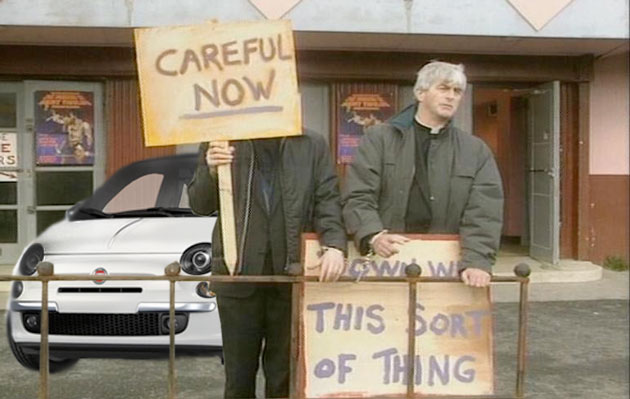
If a company convinces you not to buy its products, it's normally destined for a spot on some "Worst Business Decisions" list. Sergio Marchionne, however, is a master of the art when it comes to dissing his own electric vehicle. The Fiat Chrysler CEO isn't a fan of the law that requires car makers to produce EVs, and has again gone on record to ask people not to buy the Fiat 500e. Last year, he told press that the company lost $10,000 on each compliance car that's sold, and now that figure's apparently bumped up to $14,000. This time out, the executive added that as soon as the EV has sold the minimum quantity required by law, it'll be withdrawn - or the Fiat Chrysler would soon be going back to Washington looking for another bailout. Then again, telling people not to do something could be a very dangerous tactic, since we all know how that worked out for Barbra Streisand.
Filed under: Transportation
Via: Slashgear
Source: Reuters
ArnvidrNot sure what to think of this, the article doesn't really make it clear why hunting seals are worse than any other kinds of hunt (as long as the hunting method supposedly is humane at least). The argument seems to be that "seals are cute"? With no one being close to reach their quotas there doesn't seem to be any danger to the seal population.
Then again, I have no idea what products are made from seals, so a ban wouldn't necessarily impact me at all.
ArnvidrRight up my ally.
ArnvidrSmart words from Oculus and Sony. Belief in VR happening this century slightly increased.

Palmer Luckey can hardly take a step without being stopped for pictures, questions or just friendly handshakes. I'm not surprised; we're at the Silicon Valley Virtual Reality Expo, and Luckey just closed a speculative panel on the future of VR. Here, he's a celebrity, and with good reason -- the Expo floor is littered with Oculus headgear, almost without competition. As we make our way to a more quiet area, Luckey tells me that his hardware isn't enough. "What we have that's impressing all these hardcore gamers and technology enthusiasts isn't good enough to be a consumer product."
"People don't have experience with this technology," he explains further. "When it arrives, it has to be good." Nothing's a sure thing, Luckey tells us, and a poor consumer launch could spoil the milk. "I think really bad VR is the only thing that can kill off VR. That's why we've been so careful to say that 'these are devkits, do not buy, do not buy!'" Luckey quickly corrects himself, saying that he doesn't think that the Oculus DK2 couldn't be a consumer product; he just wants VR to hit the consumer space with its best foot forward. It's part of the reason Oculus decided to join Facebook.

"It lets us make the first version really, really good, and use a lot of custom components that wouldn't have been possible otherwise." Without Facebook, he continued, Oculus might have been forced to release more expensive iterative headsets to fund the envisioned consumer model. "Maybe it doesn't sell and we actually hurt the VR market overall because it wasn't good enough." Luckey is relieved its a scenario he didn't have to live. "This [Facebook] lets us have as good of a shot as we're ever going to have at making consumers believe in virtual reality."
Staving off the danger of "bad VR" also makes Luckey reluctant to push for virtual reality hardware standards -- it might stifle innovation. "If you talk to people who are actually doing things that are very novel and different from what we're doing, most of them are not very pro-standard," he explains. "The standard is going to end up being defined by whoever sells the most headsets, and it would not be a good thing for them if the standard is games that don't include motion control, or games that require a very high field of view or that absolutely require position tracking." It wouldn't help Oculus much either. "If we were to lock into a standard now, what happens when we want to make big changes that vastly improve the performance of our device and requires a complete retooling of the SDK?" The hardware isn't good enough to set a standard, he says, just like it isn't good enough for consumers yet. Still, he admits that it's good time to start thinking about what those standards might be. Eventually, the industry is going to need them.

In the meantime, Luckey is thinking about the Rift's retail launch -- if consumers are going to believe in VR, they need to have good experiences. That means games. "The biggest public challenge is going to be software. We've been talking a lot about how the Facebook deal gives confidence to content makers of all kinds, but people shouldn't take that to mean there's going to be this slam dunk of AAA content that's going to be available at launch. It doesn't mean that. Content takes a long time." While Luckey says he expects a healthy pipeline of innovative software, he admits that making good games in VR is difficult. The platform's first big hit might not be there at launch.
Before SVVR ended, I caught up with Sony's Richard Marks -- the man behind Project Morpheus. He too had his concerns about bad software hurting VR adoption. "There's no AAA title yet," he said "Most of the world asks 'when will Call of Duty be on VR,' but that's not the right answer." Hopefully, the VR community will figure out what is the right answer soon.
ArnvidrA modern day horror story.
ArnvidrHard to resist these genocides.
ArnvidrThere's no joke in here. You will laugh.
ArnvidrWell, there you go!
Arnvidr"I like my women how I like my coffee. A lot."
I like it.

UPDATE: You guys demanded it, so the Transformers shirt in the last panel is a real thing now.

Of course comic Joel is reacting to the shirt he saw in THIS COMIC in the only way he knows how: with equal measures of drawing dumb stuff and righteous indignation. That’ll show the world.
COMMENTERS: What’s the most ignorant of offensive t-shirt you’ve ever seen? It doesn’t have to be within the context of geek culture, but that might help to keep things in context. Please don’t get into political tees. That will open up a whole thing I don’t really want to get into on this site. What about the most right on, inclusive or inspirational tee you’ve seen?
Fancy Patrons got to see this comic a day early (albeit in a rough draft fashion).

Arnvidr#parenting

Here’s more quality parenting.
ArnvidrUse the people wasting their time on all the stupid DMCA complaints.


Read more of this story at Slashdot.

ArnvidrYaaay!
ArnvidrFuck yes, Elon Musk, stepping up.
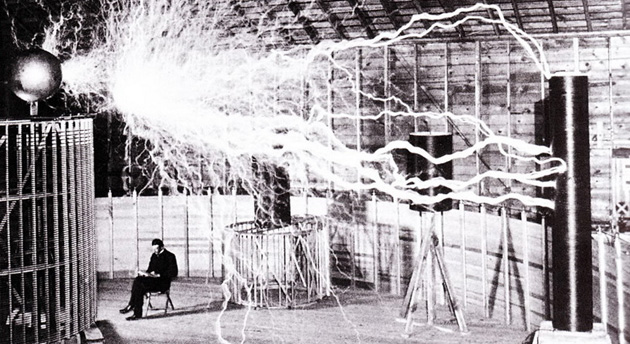
You may recall The Oatmeal's (aka Matthew Inman's) fundraising campaign to save Nikola Tesla's former lab and get a museum built in the electrical pioneer's honor. Well, it only partly succeeded; while the money was enough to rescue the property, Inman realized that it would take at least $8 million to build and maintain an actual museum. Thankfully, a little serendipity is coming his way. Following a public plea from Inman, Tesla Motors chief Elon Musk now says that he'll be "happy to help" make the museum a reality and pay tribute to his company's namesake.
The electric car maker tells us that it doesn't have any more details to share at this stage, but Inman is understandably over the moon; he and many others feel that Thomas Edison stole the limelight that Tesla deserves. Tesla is responsible for discovering alternating current, resonant frequencies and the technology that ultimately led to the modern electric vehicle. In that respect, Musk's support for a museum is bringing things full circle and giving credit to the man that made his business possible.
[Image credit: Dickenson V. Alley/Wikipedia]
@elonmusk THANK YOU SO MUCH! I want to hug you so hard right now it causes mild brain damage!
- Matthew Inman (@Oatmeal) May 14, 2014
Filed under: Transportation, Science
Via: Autoblog
Source: Elon Musk (Twitter)
ArnvidrYeah. This kind of validates why me and Annie moved over to a different service.
ArnvidrOh, I should have read this earlier, had my first run-in with them on my door this morning.

Weee! Here is a comic strip that hopefully won’t alienate the remainder of Jehova’s Witnesses readers I might have left. (Oh, and it animates. Just a head’s up in case you’re looking at this strip through an RSS reader or something.)
In addition to turning the Internet into a worldwide surveillance platform, the NSA has surreptitiously weakened the products, protocols, and standards we all use to protect ourselves. By doing so, it has destroyed the trust that underlies the Internet. We need that trust back.
Trust is inherently social. It is personal, relative, situational, and fluid. It is not uniquely human, but it is the underpinning of everything we have accomplished as a species. We trust other people, but we also trust organizations and processes. The psychology is complex, but when we trust a technology, we basically believe that it will work as intended.
This is how we technologists trusted the security of the Internet. We didn't have any illusions that the Internet was secure, or that governments, criminals, hackers, and others couldn't break into systems and networks if they were sufficiently skilled and motivated. We didn't trust that the programmers were perfect, that the code was bug-free, or even that our crypto math was unbreakable. We knew that Internet security was an arms race, and the attackers had most of the advantages.
What we trusted was that the technologies would stand or fall on their own merits.
We now know that trust was misplaced. Through cooperation, bribery, threats, and compulsion, the NSA -- and the United Kingdom's GCHQ -- forced companies to weaken the security of their products and services, then lie about it to their customers.
We know of a few examples of this weakening. The NSA convinced Microsoft to make some unknown changes to Skype in order to make eavesdropping on conversations easier. The NSA also inserted a degraded random number generator into a common standard, then worked to get that generator used more widely.
I have heard engineers working for the NSA, FBI, and other government agencies delicately talk around the topic of inserting a "backdoor" into security products to allow for government access. One of them told me, "It's like going on a date. Sex is never explicitly mentioned, but you know it's on the table." The NSA's SIGINT Enabling Project has a $250 million annual budget; presumably it has more to show for itself than the fragments that have become public. Reed Hundt calls for the government to support a secure Internet, but given its history of installing backdoors, why would we trust claims that it has turned the page?
We also have to assume that other countries have been doing the same things. We have long believed that networking products from the Chinese company Huawei have been backdoored by the Chinese government. Do we trust hardware and software from Russia? France? Israel? Anywhere?
This mistrust is poison. Because we don't know, we can't trust any of them. Internet governance was largely left to the benign dictatorship of the United States because everyone more or less believed that we were working for the security of the Internet instead of against it. But now that system is in turmoil. Foreign companies are fleeing US suppliers because they don't trust American firms' security claims. Far worse governments are using these revelations to push for a more isolationist Internet, giving them more control over what their citizens see and say.
All so we could eavesdrop better.
There is a term in the NSA: "nobus," short for "nobody but us." The NSA believes it can subvert security in such a way that only it can take advantage of that subversion. But that is hubris. There is no way to determine if or when someone else will discover a vulnerability. These subverted systems become part of our infrastructure; the harms to everyone, once the flaws are discovered, far outweigh the benefits to the NSA while they are secret.
We can't both weaken the enemy's networks and protect our own. Because we all use the same products, technologies, protocols, and standards, we either allow everyone to spy on everyone, or prevent anyone from spying on anyone. By weakening security, we are weakening it against all attackers. By inserting vulnerabilities, we are making everyone vulnerable. The same vulnerabilities used by intelligence agencies to spy on each other are used by criminals to steal your passwords. It is surveillance versus security, and we all rise and fall together.
Security needs to win. The Internet is too important to the world -- and trust is too important to the Internet -- to squander it like this. We'll never get every power in the world to agree not to subvert the parts of the Internet they control, but we can stop subverting the parts we control. Most of the high-tech companies that make the Internet work are US companies, so our influence is disproportionate. And once we stop subverting, we can credibly devote our resources to detecting and preventing subversion by others.
This essay previously appeared in the Boston Review.