Depois de milhares de reclamações que os restaurantes aguentaram porque as fotos de seus garçons são ruins, eles resolveram investir pesado: “Mais importante do que saber servir é saber fotografar.” Segundo João Emanoel da Silveira, líder do sindicato dos garçons, o século XXI veio com novas exigências: “as pessoas querem ir para um restaurante para aparecer no Facebook e não necessariamente para comer bem e ser bem atendido. Sendo assim, é fundamental que os garçons estejam preparados para essas novas demandas do ofício.”
Os principais problemas que os clientes relatam é de fotos embaçadas, dificuldades em saber onde apertar para bater a foto, péssimo enquadramento e má utilização da luz. Com o curso obrigatório, espera-se que os dez por cento do garçom passem de fato a valer a pena, já que a é a única profissão, além de Deus, que exige esse pagamento.
O Google apresentou uma estatística do mês de novembro e mostra que o termo “FERIADOS DE 2015″ passou assustadoramente o termo “sexo”, geralmente o mais procurado do Google. O mais interessante é que usuários entrevistados se disseram mais felizes com o resultado do termo “feriados 2015″ do que com o resultado de “sexo”.
A equipe do Sensacionalista entrevistou alguns usuários do Google, a maior parte deles disse que sexo é uma coisa que já estão cansados de ver, que já está banalizada, porém os feriados de 2015 são uma grande novidade que podem ser, inclusive, revertidos para a própria prática do sexo, ou, muito melhor, para ficar na internet.
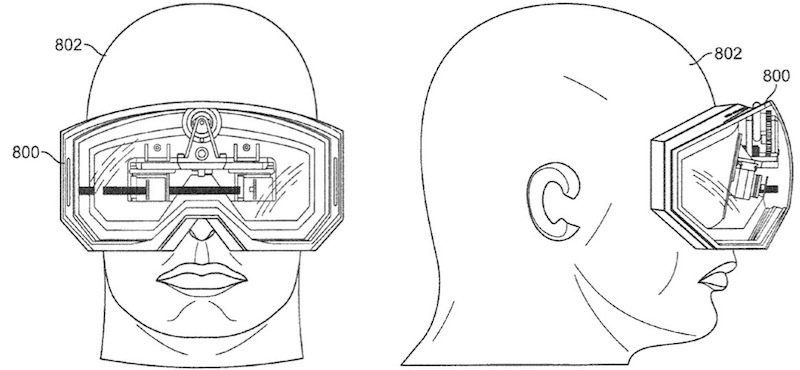
While many companies are following in the footsteps of Oculus VR and have already introduced virtual reality hardware, there has been little to no hint that the technology mentioned in Apple's numerous patents will ever come to fruition.
Apple's interest in the virtual reality arena does not appear to have waned, however, and it may even be picking up. A new job posting on Apple's site for an "App Engineer" (via 9to5Mac) suggests that the company is continuing to explore virtual and augmented reality, at least on the software side. The job listing seeks a software engineer to help the company "create next generation software experiences" designed to integrate with "Virtual Reality systems."
We are looking for a software engineer to develop UI and applications to create next generation software experiences. The individual must be able to participate in collaborative and iterative UI design through the implementation phases & complete performant user experience code for product delivery. This engineer will create high performance apps that integrate with Virtual Reality systems for prototyping and user testing.
It is not clear, of course, what Apple means by "Virtual Reality systems," which could refer to a full-on hardware experience, an augmented reality app experience, or something else entirely, but augmented reality and virtual reality have become increasingly important areas for development. Headsets like the Oculus Rift are beginning to catch on, and Google has been experimenting with augmented reality, both in its Ingress game for iOS and Android and with "Project Tango," an ambitious experimental smartphone that will provide 3-D mapping capabilities and immersive augmented reality games.
Apple is in possession of technology that's quite similar to what's used in Google's Project Tango, which Apple acquired in 2013 with the purchase of 3-D mapping company PrimeSense. PrimeSense famously developed the original Kinect, and its technology could be used as the backbone for virtual/augmented reality interfaces and games.
Você parou para observar o que está passando na televisão quando o seu filho a está assistindo? Ou já parou para refletir nos motivos que levaram um novo shopping a ser erguido perto da sua casa? Ou mesmo já se questionou sobre a real razão para a pré-escola dizer que está preparando o seu filho para o mercado de trabalho?
Não é novidade para ninguém que a organização da sociedade possui o formato de uma pirâmide onde os que estão na base sustentam aqueles que estão no topo. Enquanto no topo existem poucos lugares, na base existem muitos para serem ocupados, sendo natural que quem esteja em cima queira manter aqueles que estão em baixo onde estão para não perderem suas posições no topo.
Apesar de nascermos livres, durante a construção da nossa personalidade (da infância a fase adulta) vamos nos identificando progressivamente com essa lei e ficando cada vez mais “parados” conforme ela se torna a realidade do nosso modo de agir.
Não importa se nossa origem é uma família com muito ou pouco dinheiro. O que define se uma pessoa é escrava ou não é a maneira como ela lida com o mundo: se obedecendo a lei da escassez ou a lei da abundância.
Obedecendo a lei da escassez, nós temos medo e culpa. Medo do desconhecido (futuro, relações ou oportunidades) e culpa pelo passado (o que não foi feito, o que deu errado ou o que fizeram conosco). Agimos como vítimas e sempre estamos sofrendo por algo. Por isso precisamos atacar. Quem está em cima ataca quem está embaixo e quem está embaixo ataca quem está em cima.
Mas o que importa para o desenvolvimento pleno do ser humano e da humanidade não é que nossos filhos escalem a pirâmide social, se tornem pessoas ricas habitando o topo da pirâmide e mantenham as pessoas que estão embaixo afastadas das suas posições. O importante é que eles se libertem dessa pirâmide e das “regras naturais” contidas na sua estrutura.
Abaixo, fica o convite para reflexão sobre 12 sinais de que você está criando seu filho para ser escravo:
Você matriculou seu filho em uma escola que o prepara para o mercado de trabalho
Ou uma que vai do maternal ao vestibular. Não importa. Se o seu filho está matriculado em uma escola que o prepara para o mercado de trabalho, você está preparando o seu filho para o passado e não para o futuro, para o mundo que vai existir daqui a 20 anos quando ele sair da escola. Você está preparando seu filho para se encaixar no mundo e não para criar um mundo para ele.
Você leva seu filho no shopping para passear
Shopping não é para passear. Shopping é para comprar ou então se distrair para comprar ainda mais. O objetivo do shopping é vender mais e por isso é tão importante para seus proprietários agregar serviços como praças de alimentação e espaço para as crianças com brinquedos eletrônicos e pequenos parques dentro dos seus estabelecimentos. Quanto mais próximas dos shoppings as crianças estiverem, melhor retorno financeiro o shopping terá no longo prazo. O impacto deste mau hábito pode levar seu filho a sempre querer consumir para se manter feliz.
Você permite que ele tenha mais coisas que o necessário
Presentes são as distrações do presente. Com milhares de roupas, tênis e brinquedos seu filho começa a perceber que fica feliz sempre que recebe alguma coisa nova e molda a sua cultura para isso. Desta forma, quando ele ficar triste novamente e não enxergar nada de novo à sua volta, acreditará que está com esse mau humor porque não tem nada novo para se distrair. Desde cedo eduque seu filho a compreender que ele não depende de coisas para ser mais feliz. No dia que seu filho fracassar e não tiver coisa alguma, se sentirá ainda mais infeliz por não tê-las e levará ainda mais tempo para retomar seu rumo.
Você acredita que ajuda seu filho quando executa tarefas simples pra ele
Dar comida na boca, amarrar o sapato, abotoar a camisa, dar banho, entre outras tarefas simples são coisas que os pais estão fazendo por mais tempo pelos seus filhos. Quando eles crescerem e estiverem adultos o mundo cobrará deles independência e disposição para realizar tarefas fora de suas zonas de conforto se eles quiserem se libertar. Tendo sido criado em uma redoma seu filho terá que lutar ainda mais para conquistar as coisas que deseja.
Você ensina seu filho a valorizar as coisas pelas marcas que elas carregam
Não basta comprar um caderno, precisa ser um caderno de uma determinada marca ou com um determinado motivo daquele desenho animado ou daquele filme que ele tanto adora. Não seja tolo. Você está agindo justamente da forma que o dono da marca daquele filme quer que você aja. Que tal explicar para o seu filho que o caderno sem marca nenhuma tem a mesma utilidade que o caderno com marca e que ele pode ser até melhor em qualidade que o outro. Ensine-o a valorizar as coisas pelo real valor delas e não pela marca que a coisa carrega. O significado de sucesso não é medido pela capacidade de adquirir acessórios das marcas mais caras como se fossem badges da vida real.
Você não ensina seu filho a receber doações
Conheço pais que não admitem que seus filhos recebam uma peça de roupa ou um tênis de uma outra criança só porque aquilo que era recebido já tinha sido usado. Não existe coisa mais digna e natural do que aprender a receber. Isso, inclusive é até mais importante que aprender a dar porque para receber você precisa ser humilde e nobre. Ensine-o a receber doações e ele se tornará livre por acreditar que o mundo dá as coisas para ele ao invés de visualizar um mundo cheio de perigos e apuros onde todos só pensam em tirar-lhe as coisas.
Você faz da alimentação por frutas e legumes algo pontual
O natural para o ser humano é comer frutas, legumes e verduras, enquanto refrigerantes, doces e outras guloseimas não é natural. Estes últimos “alimentos” é que devem ser apresentados ao seu filho como um evento pontual. Não há problema comer doces, biscoitos e bolos uma vez ou outra se o hábito da criança for comer coisas saudáveis, mas fazer da alimentação saudável algo esporádico é transformar o próprio filho em colecionador de problemas de saúde no futuro.
Você o deixa ver televisão
Assista televisão com o seu filho durante uma hora e notará nas entrelinhas uma série de comerciais educando-o a permanecer escravo do sistema. Enquanto mulheres feministas brigam pelos seus direitos nas ruas, um comercial de um brinquedo infantil, treina meninas para o consumo vendendo uma caixa registradora que aceita cartão de crédito de brinquedo onde sua filha pode fazer compras à vontade na lojinha da amiga. Desligue a televisão e veja o seu filho libertar a imaginação com amigos imaginários, pistas de corrida feitas com caixas de papelão ou simplesmente cantando a esmo dentro de casa.
Você não educa seu filho com uma medicina preventiva
Medicina preventiva é alimentação somada ao conhecimento do próprio corpo. Além de receberem alimentos ruins para o corpo, os pais não incentivam seus filhos a conhecerem suas dores e seus próprios males, curando toda e qualquer perturbação com algum medicamento invasivo que inibe o sintoma, mas não acaba com o problema. O autoconhecimento começa pelo conhecimento do nosso próprio corpo.
Você incentiva que seu filho tenha ídolos
Ter ídolos nos escraviza tanto quanto ter algozes. Tendo ídolos, seu filho começa a competir com outras crianças para medir se aquilo que idolatra é melhor ou pior que aquilo que os outros idolatram, seja uma personalidade, um atleta, um time de futebol, um músico, etc. Ele coloca todas as suas expectativas naquela pessoa, saindo de si para querer se tornar o outro o que normalmente termina em uma grande frustração quando ele verifica que o outro possuía as mesmas idiossincrasias que ele.
Você ensina as suas crenças para ele
Religião, trabalho, riqueza, modo de vida, enfim, você deposita no seu filho toda a sorte de crenças e medos cultivadas em você tirando a capacidade dele mesmo refletir sobre o que serve e o que não serve para ele. Você não ensina filosofia para ele e não o faz questionar e observar que talvez você e ele estejam errados a respeito das suas certezas. Que existem outras religiões diferentes da sua no mundo, assim como outros tipos de trabalho, outras formas de gerar riqueza e também outras maneiras de viver. Esclareça para o seu filho que a forma como você vive e a maneira como você pensa é a sua maneira, mas não a mais correta. Não ate-o a amarras que o deixem presos em qualquer área da vida. Leve-o a sua religião, ensine-o sobre ela, mostre a forma como você trabalha e a sua maneira de gerar riqueza. Traduza tudo isso e o seu modo de vida como apenas mais um modo de se viver, mas fortaleça-o para que ele faça a sua própria busca, deixando claro que irá lhe abraçar no caminho de volta pra casa.
Você não coloca em prática o que ensina para ele
E o principal e mais violento sinal de que você está criando o seu filho para ser escravo acontece quando você demonstra para ele que não se esforça para se libertar colocando em prática aquilo que ensina para ele.
Você continua indo ao shopping para passear.
Você continua vendo televisão.
Você continua torcendo para o seu time do coração com fanatismo.
Você cultua marcas, nomes e famosos.
Você se coloca como vítima da vida.
Você pode ter errado em tudo, mas não pode se dar o direito de errar em não assumir os próprios erros para acertar. Temos que ensinar esta nobreza para os nossos filhos se quisermos que eles se libertem desta pirâmide social na qual a maior parte da sociedade está inserida para viver a sua própria vida da maneira que ele acredita ser a ideal.
Entendo que alguns sinais colocados aqui afetam estruturalmente as suas crenças, mas te convido a fazer um exame em cada uma delas para verificar porque elas realmente existem em você e como elas podem estar moldando a vida que você tem hoje. Se você está preso, liberte-se e leve seus filhos junto, pois se todos os pais fizerem isso, libertaremos o mundo.
(Recomendo a visita ao artigo de origem para a observação dos mais de 500 comentários gerados pelo texto além, é claro, do conhecimento de outros artigos do autor)
___________________________________________
Precisa de ajuda com seus filhos?
Suporte e Orientação para Pais Psicoterapia Infantil Diagnóstico dos Transtornos do Desenvolvimento Psicoterapia Psicanalítica
Condomínio que, segundo vidente, seria atingido por avião no dia 26 de novembro
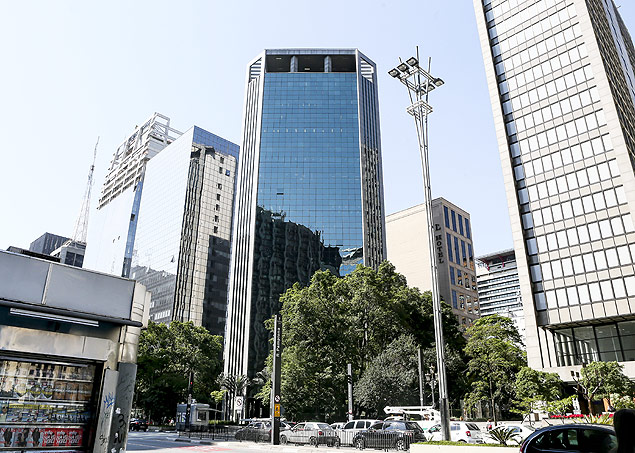
Após provocar medo com a previsão de que um avião cairia nesta quarta-feira (26) em um prédio entre a avenida Paulista e a alameda Campinas, na região central da capital paulista, o vidente Jucelino Nóbrega Luz, 54, voltou atrás e disse nesta terça (25) que não há mais risco de a tragédia acontecer.
Luz afirma que a premonição sempre foi verdadeira. "Só mudou porque a companhia aérea trocou o avião, que cairia por problemas na turbina. A empresa ligou para mim na segunda-feira (24) para avisar a troca", afirmou.
A TAM, empresa apontada nas supostas previsões do vidente, não confirmou a informação. Na semana passada, a companhia aérea havia alterado o número do voo.
O prédio que seria atingido, o edifício Bonfiglioli, fica no número 1.048 da Paulista. "Estou assustado com a repercussão que isso gerou, só fiz o comunicado porque sou responsável pelo prédio, não queria alarmar ninguém", disse o vidente.
Luz diz que agora as pessoas poderão trabalhar com tranquilidade. Ele diz estar feliz pelo desfecho da história. "Não me considero responsável por salvar a vida dessas centenas de pessoas, foi Deus quem salvou. Sem ele eu não teria o sonho."
Luz afirma que, em 2005, sonhou com a imagem do avião chocando-se contra o prédio. Desde então, diz, alertava a companhia aérea.
DOCUMENTO
No mesmo ano, segundo o vidente, foi feito um registro do sonho em cartório. O documento, divulgado por ele em seu site, possui selo de reconhecimento de firma e autenticação de cópia.
De acordo com o presidente do IRTDPJ-SP (Instituto de Registro de Títulos e Documentos e de Pessoas Jurídicas do Estado de São Paulo), Robson Alvarenga, o registro do vidente pode ser falso.
"Ao fazer o registro no tabelião, a pessoa pode colocar somente o cabeçalho e a assinatura em uma folha, que recebe o reconhecimento de firma. Depois, pode colocar qualquer informação na folha, sem registrar novamente", afirma Alvarenga.
São Paulo - O Conar (Conselho Nacional de Autorregulamentação Publicitária) está investigando as empresas Diletto (sorvetes) e Do Bem (do Suco do Bem).
Os processos, abertos no dia 3 de novembro, investigam as histórias contadas sobre as marcas, criadas por elas próprias - o chamado "storytelling".
Eles citam a reportagem publicada na revista Exame "Toda empresa quer ter uma boa história. Algumas são mentira", da jornalista Ana Luiza Leal.
Os consumidores reclamam que há informações nas embalagens e em peças publicitárias que não são verdadeiras.
A Diletto diz, por exemplo, que os picolés da marca nasceram com Vittorio Scabin, avô do fundador da marca. Dizem que ele fabricava sorvetes na Itália e veio para o Brasil fugindo da Segunda Guerra Mundial.
Mas, como a reportagem de Exame mostra, o tal Nonno Vittorio nunca existiu. “Reconheço que posso ter ido longe demais na história", disse Leandro Scabin, fundador da empresa.
Essa técnica de criar ou divulgar histórias envolvendo a empresa e a marca é conhecida como "storytelling". As narrativas criam tons humanizados para as marcas, comovem consumidores, promovem valores - assim, elas se destacam no mercado entre tantos concorrentes.
A Do Bem também está sendo investigada por suas histórias. A empresa diz que as laranjas são fresquinhas e vêm, por exemplo, da fazenda do senhor Francesco, do interior de São Paulo. Muitos consumidores se identificam com o lado "orgânico" e "familiar" da marca. "Eco-friendly".
Exame mostra, contudo, que gigantes como Brasil Citrus fornecem as laranjas para a Do Bem - e também para várias outras empresas do ramo.
Os consumidores, nesse caso, reclamam que a propaganda é enganosa, porque parece que pequenos agricultores estão sendo diretamente beneficiados pela Do Bem.
Diletto e Do Bem serão notificadas e terão dez dias para encaminhar suas defesas, que devem ser julgadas na reunião de 11 de dezembro.
Caso o resultado seja positivo para o consumidor, ambas serão notificadas com "recomendações", para se adequarem. Por exemplo, mudança na embalagem e nas ações de marketing.
Mas o Conar não tem poder judicial. As empresas seguem o conselho por estarem associadas à instituição, que promove a autorregulamentação do mercado.
A Diletto se defendeu em uma nota oficial, dizendo que divulga uma história "lúdica" para transmitir os valores da empresa.
A Do Bem diz que os agricultores que fazem parte da comunicação da Suco do Bem de fato existem e são colaboradores atuais. Mas, pelo crescimento nos últimos anos, outros fornecedores foram incorporados.
Branca de Neve, Cinderela, Marge Simpson e Olívia Palito, além de outras famosas dos desenhos animados, com narizes e bocas sangrando, olhos roxos e um olhar muito infeliz. Carimbadas com a palavra coward (“covarde”, em inglês), elas têm nas mãos imagens de quem as agrediu: seus companheiros nas histórias de fantasia infantil.
Esse foi o jeito que o artista italiano Alexsandro Palombo, conhecido pelas versões adultas e provocadoras de personagens das animações, encontrou para denunciar a violência sofrida por milhares de mulheres diariamente. Em seu blog, o "Humor Chic", ele também já mostrou como seriam as princesas da Disney com deficiências físicas e após uma mastectomia.
“Desvirtuar as clássicas personagens dos cartoons é uma característica típica do meu trabalho, os transformo para contar histórias que dizem respeito a realidades da nossa sociedade. Desde sempre me ocupo de temáticas sociais importantes”, explicou o artista em entrevista ao Portal da Band.
A série de desenhos, iniciada em março deste ano pelo italiano, está alinhada com o alerta do Dia Internacional para a Eliminação da Violência contra a Mulher, que é celebrado nesta terça-feira (25). Segundo a ONU, que criou a data, uma em cada três mulheres no mundo já foi alvo de violência física ou psicológica, na maior parte das vezes cometida pelos seus parceiros. Das vítimas de feminicídio, metade foi morta por seus companheiros ou familiares.
Palombo está ciente dos números assustadores e cita que uma mulher é morta na Itália a cada dois dias – segundo dados de 2013 do Ipea, no Brasil são 15 assassinadas a cada 24h. “É um mal social inaceitável, me envergonho como homem do comportamento daqueles que usam de violência contra as mulheres, eles não são homens, mas seres desprezíveis”, afirma o desenhista. “Cabe aos homens verdadeiros perseguir e combater estes covardes.”
O artista não se preocupa que os pequenos possam ficar chocados ao verem as personagens desfiguradas pela violência. “Acho terrível imaginar o que veem as crianças na família, porque é muito mais forte e cruel da que as minhas obras mostram. Em muitos casos, quando um homem mata a própria companheira, faz isso em casa e frequentemente na frente dos próprios filhos", justifica Palombo, que ressalta a necessidade de que os pais ensinem os meninos a respeitatem as meninas desde cedo. "Desse modo, existiriam mais homens de verdade", argumenta.
Questionado sobre qual é sua personagem nascida no mundo dos cartoons preferida, ele não tem dúvidas. "Com certeza Marge Simpson, porque representa perfeitamente todas as mulheres. Em cada mulher existe uma Marge Simpson."
“É provável que bifes sobrevivam ao romper a barreira do som. Se o bife estivesse só parcialmente congelado, ele iria se estilhaçar muito fácil. Contudo, se ele aterrissar na água, na lama ou em folhas, talvez fique ok.[1]“
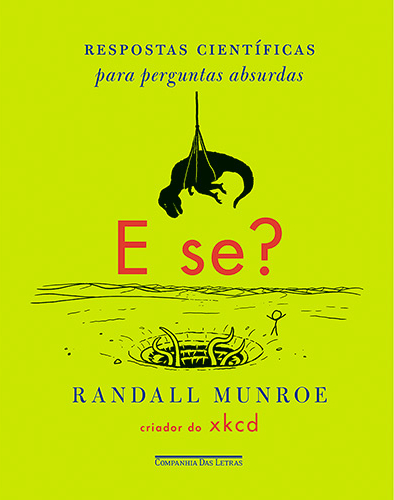
Plasma incandescente, petabits por segundo, gotas de chuva de um quilômetro de diâmetro, escala Richter negativa, cozimento gravitacional, quantos mortos existem no Facebook, o sinal UAU! e um secador de cabelos indestrutível. Este livro é, sem sombra de dúvidas, o meu filão.
Sem se manter numa mesma linha de raciocínio por mais de dois parágrafos, Randall Munroe, autor do sempre (estatisticamente) excelente XKCD, responde perguntas hipotéticas (e algumas aparentemente nem tanto) de seus leitores com um rigor científico encontrado apenas nas mais bem conceituadas instituições de publicação de webcomics. Afinal, apesar de ser roboticista, Randall é um cartunista humorista (ou “roboticisto”, “cartunisto” e “humoristo”, como o jornalisto Jô Soares acredita ser correto).
Foto do autor
Um dos melhores capítulos é o que fala sobre o que aconteceria com a órbita terrestre se todas as pessoas se juntassem num mesmo lugar e pulassem ao mesmo tempo. E não digo isso porque o Scienceblogs é citado (é a matriz, afinal, mas está valendo) mas pela reviravolta épica que me pegou de surpresa. Pensamento lateral daqueles que caem para fora da página. E ainda me lembrou um texto épico meu.
Um livro extremamente divertido, fácil de ler (para mim foram três ou quatro horas de pura empolgação) e de acompanhar (as contas mais pesadas ele guarda para si e não “mostra o trabalho”, só dá a resposta). Divulgação científica de primeira com inúmeras piadinhas discretas espalhadas por todo lugar (incluindo no verso da folha de rosto que, quando trabalhei num jornal, chamavam de “serviço”) que certamente causarão gargalhadas em quem as encontrar dentre as 300 e poucas paginas.
Eu achei muito erro de tradução[2] e até alguns de gramática (e uns mistos, como muito uso de vírgula que sobrou do original mesmo não existindo em português). Mas não acho que a maioria das pessoas realize ou se incomode, com essas coisas.
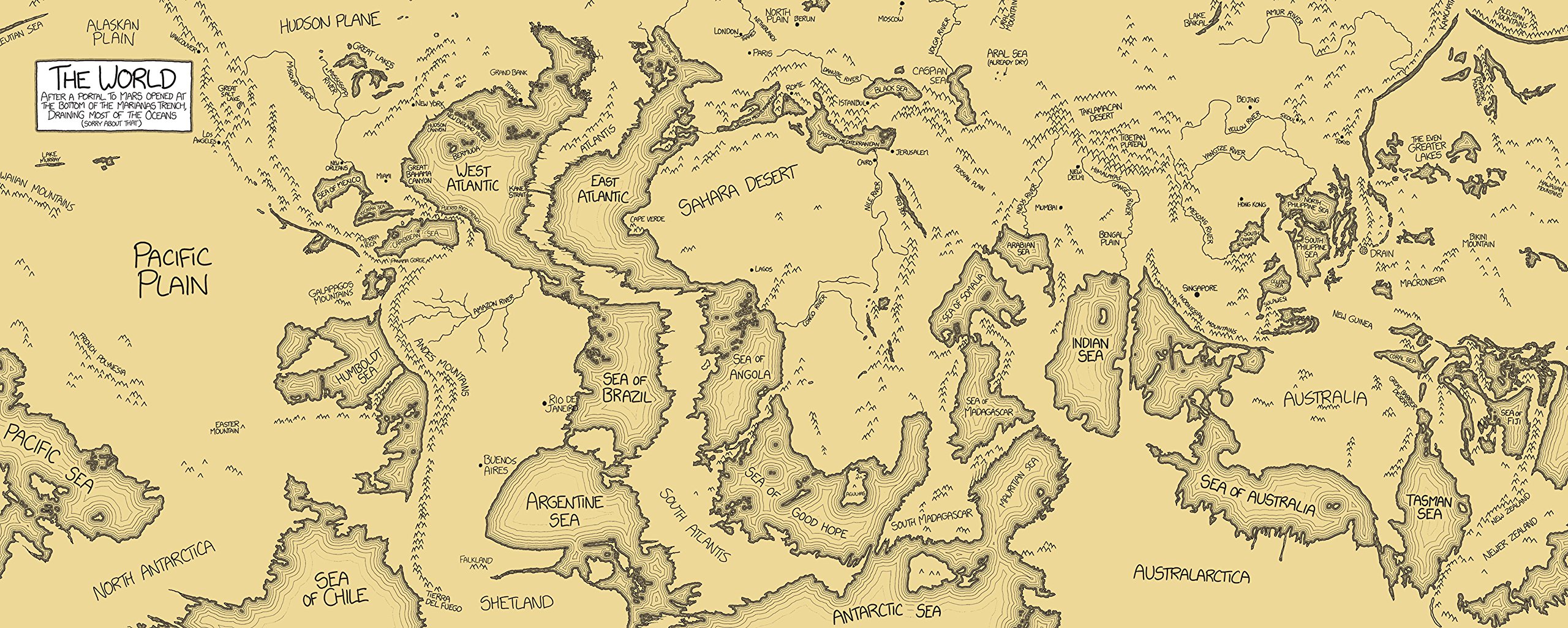
A minha cópia é da primeira edição e tem uma diagramação esquisita no inicio, onde um mapa com os oceanos do mundo esvaziados ficou praticamente sem África e Europa, que se perderam dentro da lombada. Mas, como sou gente boa, eis aqui o desenho original.
Em E Se?, lançado aqui pela Companhia das Letras, você também vai descobrir uma nova solução para a máxima do copo meio vazio, quanto custaria morrer num quebra-molas e, com a ajuda de girafas empilhadas, como uma criança de cinco anos pode destruir a lógica de um físico e a força de um arremessador profissional.
Minha cópia me foi enviada pela editora, mas é o tipo de livro que eu compraria sem hesitar. Recomendo fortemente para você que lê o 42. e não volta para casa com confusão mental. E, se você é fã do XKCD, nem sei porquê está lendo isto.
Ah, e para quem estiver lendo isto a tempo e precisar saber até sexta-feira:
[2] Porém, preciso parabenizar o tradutor que teve a ideia de traduzir “flyover state” para “estado janelinha”. A melhor manobra tradução que vi desde que “blaster” virou “explosor” nos anos 70.
A Comissão de Ciência, Tecnologia, Inovação, Comunicação e Informática (CCT) do Senado tem reunião marcada para as 9h de terça-feira, 25. Entre outras propostas, o colegiado pode votar projeto que torna obrigatória e gratuita a identificação do código de acesso originador das chamadas telefônicas.
O objetivo é evitar a prática de crimes por meio das redes de telefonia e coibir abusos nas práticas dos serviços de telemarketing e de cobranças. De acordo com a Agência Nacional de Telecomunicações (Anatel), o código de acesso é o conjunto de números que permite a identificação de assinante, de terminal de uso público ou de serviço a ele vinculado.
O PLS 433/2013, apresentado pelo senador Vital do Rêgo (PMDB-PB), estabelece que as prestadoras de serviços de telefonia fixa ou móvel oferecerão aos usuários, sem custo adicional, o serviço de identificação do código de acesso originador da chamada. Também proíbe a oferta de serviços ou equipamentos que impossibilitem ou obstruam a identificação dos códigos de acesso telefônico pelos usuários.
Mais projetos
Outro projeto que pode ser votado pelos senadores é o PLS 54/2014, que permite a dedução de valores investidos nas chamadas start-ups - empresas inovadoras, com alto potencial de crescimento e geralmente criadas por jovens - da base de cálculo do Imposto de Renda das Pessoas Físicas. A ideia do senador José Agripino (DEM-RN) é ampliar as possibilidades de investimentos nas start-ups , para aumentar sua competitividade e chance de sucesso.
A CCT examina ainda o substitutivo ao PLS 18/2012, do senador Ciro Nogueira (PP-PI), que impõe nova regra à oferta de descontos nas tarifas e preços dos serviços de telecomunicações, como telefonia, banda larga e TV por assinatura. Conforme o projeto, os usuários beneficiados com descontos deverão ser informados sobre o término do incentivo com antecedência mínima de 30 dias.
Na pauta do colegiado, constam ainda 63 projetos de decreto legislativo (PDL) com outorgas ou renovação de outorgas a serviços de radiodifusão em várias cidades do país. A reunião da CCT ocorrerá na sala 7, da Ala Alexandre Costa.
While cruising the internet I ran into this recent working paper (pdf) by Daniel Benjamin, James J. Choi, and Geoffrey Fisher:
We randomly vary religious identity salience in laboratory subjects to test how identity effects contribute to the impact of religion on economic behavior. We find that religious identity salience causes Protestants to increase contributions to public goods. Catholics decrease contributions to public goods, expect others to contribute less to public goods, and become less risk averse. Jews more strongly reciprocate as an employee in a bilateral labor market gift-exchange game. Atheists and agnostics become less risk averse. We find no evidence of religious identity-salience effects on disutility of work effort, discount rates, or generosity in a dictator game.
In the recent hullaballoo, it has been forgotten that perhaps the best paper on whether religion is good for you was written by Jonathan Gruber.
This article investigates the effects of National Football League (NFL) games on crime. Using a panel data set that includes daily crime incidences in eight large cities with NFL teams, we examine how various measurements of criminal activities change on game day compared with nongame days. Our findings from both ordinary least squares and negative binomial regressions indicate that NFL home games are associated with a 2.6% increase in total crimes, while financially motivated crimes such as larceny and motor vehicle theft increase by 4.1% and 6.7%, respectively, on game days. However, we observe that play-off games are associated with a decrease in financially motivated crimes. The effects of game time (afternoon vs. evening) and upset wins and losses on crime are also considered.
Is it that a game works up everyone’s excitement, but the playoff games the criminals actually watch? That is via the excellent Kevin Lewis.
A new study from the University of Japan has confirmed this, showing that although pet cats are more than capable of recognising their owner’s voice they choose to ignore them - for reasons that are perhaps rooted in the evolutionary history of the animal.
Carried out by Atsuko Saito and Kazutaka Shinozuka, the study tested twenty housecats in their own homes; waiting until the owner was out of sight and then playing them recordings of three strangers calling their names, followed by their owner, followed by another stranger.
The researchers then analysed the cats’ responses to each call by measuring a number of factors including ear, tail and head movement, vocalization, eye dilation and ‘displacement’ – shifting their paws to move.
When hearing their names’ being called the cats displayed “orientating behaviour” (moving their heads and ears about to locate where the sound was coming from) and although they showed a greater response to their owner’s voices than strangers’, they declined to move when called by any of the volunteers.
“These results indicate that cats do not actively respond with communicative behavior to owners who are calling them from out of sight, even though they can distinguish their owners’ voices,” write Saito and Shinozuka. “This cat–owner relationship is in contrast to that with dogs.”
The study, published by Springer in the Animal Cognition journal, suggests that the reason for cats’ unresponsive behaviour might be traced back to the early domestication of the species, contrasting this with the relationship of humans to dogs.
Recent genetic analysis has revealed that the common ancestor of the modern housecat was Felis silvestris, a species of wildcat that first came into contact with humans around 9,000 years ago. As early societies developed agriculture, these cats moved in to prey on the rodents that were attracted to stores of grain. In the words of the paper’s authors, they effectively “domesticated themselves”.
“Historically speaking, cats, unlike dogs, have not been domesticated to obey humans’ orders. Rather, they seem to take the initiative in human–cat interaction.” This is in contrast to the history of dogs and humans, where the former has been bred over thousands of years to respond to orders and commands. Cats, it seems, never needed to learn.
It’s unlikely, however that this will dismay cat owners (or indeed, be of any surprise) and the paper notes that although “dogs are perceived by their owners as being more affectionate than cats […] dog owners and cat owners do not differ significantly in their reported attachment level to their pets”.
The study concludes by observing that “the behavioural aspect of cats that cause their owners to become attached to them are still undetermined.”
Your data is telling a story about you. Maybe the story's a good one: you vote at every election, you pay your bills on time, you do your job well and get to work on time each day. But there are now so many data brokers -- buyers and sellers of data -- that databases may be defaming you without you even knowing it. Consider the following examples:
1) You could get classified as a meth dealer
ChoicePoint is a data broker that maintains files on nearly all Americans. It mistakenly reported a criminal charge of "intent to sell and manufacture methamphetamines" in an Arkansas resident's file. ChoicePoint corrected the information when notified about the error, but other companies that had bought Taylor's file from ChoicePoint did not automatically follow suit. The free-floating lie ensured rapid rejection of her job applications, and she could not even obtain credit to buy a dishwasher. Some companies corrected their reports in a timely manner, but Taylor had to nag others repeatedly and even took one to court.
She found the effort to correct all the meth conviction entries overwhelming. "I can't be the watchdog all the time," she told the Washington Post. It took her four years to find a job, even after the error was uncovered, and she was still rejected for an apartment. Taylor ended up living in her sister's house and says the stress of the wrongful accusation exacerbated her heart problems. As Elizabeth DeArmond has observed, the "power of mismatched information . . . to disrupt or even paralyze the lives of individuals has grown dramatically." For every Catherine Taylor -- who became aware of the data defaming her -- there may be thousands of other victims entirely unaware of dubious scarlet letters besmirching their digital dossiers.
2) Buy cable "plus package," get classified as plus-sized
Health status can be attributed (if not definitively discovered) with reference to records from far outside the medical system. If you're a childless man who shops for clothing online, spends a lot on cable TV and drives a minivan, we know certain data brokers are going to assume you are overweight. Recruiters for obesity drug trials will happily pay for that analysis, and that could lead to some good health outcomes for the people they reach. But how far might the data go?
3) Watch out for that coffee cup!
The Presidential Commission for the Study of Bioethical Issues issued a report in 2012 that brought up some of the novel threat scenarios involved in probabilistic analyses of genomic information:
In many states, someone could legally pick up a discarded coffee cup and send a saliva sample to a commercial sequencing entity in an attempt to discover an individual's predisposition to neurodegenerative disease. That information might then be misused, for example, by a contentious spouse as evidence of unfitness to parent in a child custody case. Or the information might be publicized by a malicious stranger or acquaintance without the individual's knowledge or consent in a social networking space, which could adversely affect that individual's chance of finding a spouse, achieving standing in a community or pursuing a desired career path.
Even more bizarrely, malicious gossips may claim First Amendment protection for spreading such information. As long as it's true, there's very little you can do to stop them.
The coffee cup example may seem speculative. But translated to the digital world, it's a business model for many big companies. As Anil Dash has observed:
Someone could make off with all your garbage that's put out on the street, and carefully record how many used condoms, pregnancy tests or discarded pill bottles are in the trash, and then post that information up on the web along with your name and your address. There's probably no law against it in your area. Trash on the curb is public. . . . [Online,] the business models of some of the most powerful forces in society are increasingly dependent on our complicity in making our conversations, our creations and our communities public whenever they can exploit them.
We now need to consider whether the types of social norms that keep companies from picking up trash bags and analyzing their contents should also apply to our online lives. The "digital exhaust" from internet use might be just as embarrassing and largely irrelevant to society as the refuse in our waste baskets. And just as no one should be forced to move to a building with an incinerator to keep their trash private, so too might we want to live in a world where there's no pressure to keep up with the latest in encryption technology to keep one's secrets.
4) A depressing use of pharmacy data
Companies are not shy about using and distributing certain information. For those in the individual insurance market, the risk of runaway health data has already been realized. Patients who purchased antidepressants were later denied insurance repeatedly, thanks to a dossier sold to insurers.
Consider, for instance, the plight of a Louisiana couple who sought insurance while in their fifties. Paula had taken an antidepressant as a sleep aid and occasionally used a blood pressure medication to relieve some swelling in her ankles. Humana, a large insurer based in Kentucky, refused to insure the couple based on that prescription history. They were not able to find insurance from other carriers, either. No one had explained to them that a few prescriptions could render them uninsurable. Indeed, the model for blackballing them may still have been a gleam in an entrepreneur's eye when Mrs. Shelton obtained her drugs. The Affordable Care Act makes things better now, since health insurers cannot deny coverage for preexisting conditions. But who knows who else is using such data?
5) Get tracked by many different sources
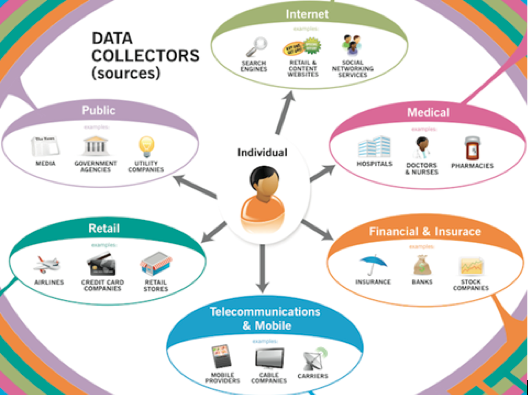
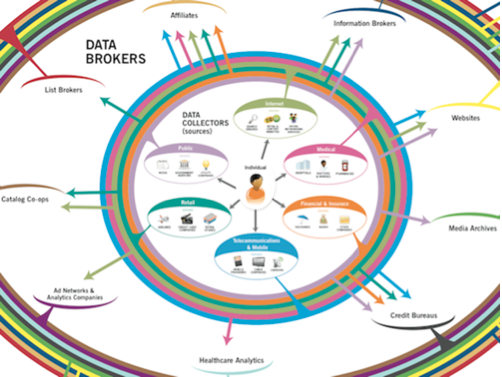
One thing is becoming clear with data brokers: it is almost impossible to keep track of where they're getting their data. Consider all the sources that could collect "health-inflected" information, such as bills for pills or GPS records of an emergency room visit:
And how far data brokers could go to combine and recombine those sources:
Images Credit: Federal Trade Commission
Keeping track of all these uses of data is nearly impossible -- it could turn into a full time job.
6) Opportunity -- and peril -- on new social networks
Social networks can now be organized around personal health records. One is PatientsLikeMe, which provides novel and powerful opportunities to address health issues and to form communities, but also opens the door to other data uses. While addressing frequently asked questions, PatientsLikeMe has stated that "you should expect that every piece of information you submit (even if it is not currently displayed) may be shared with our partners and any member of PatientsLikeMe."
While the company might be relied on to vet partners, its customers may have no idea about how easily information can spread. The Wall Street Journal reported that "Nielsen Co., [a] media-research firm . . . was 'scraping,' or copying, every single message off PatientsLikeMe's private online forums." Health attributes connected to usernames (which, in turn, can often be linked to real identities) could have spread into numerous databases. Many are not required to report to any entity on either the origin or destination of their data.
7) Perplexing personality tests
In an era of persistently high unemployment, even low-wage cashier and stocking jobs are fiercely competitive. Firms use tests from companies like Kronos, Inc. to determine who would be a good fit for a given job. You may be penalized for only agreeing "strongly" rather than "totally" in response to this statement: "All rules must be followed to the letter at all times." Consider how you might respond to statements like these, given four possible multiple-choice responses: "strongly disagree, disagree, agree and strongly agree:"
• You would like a job that is quiet and predictable
• Other people's feelings are their own business
• Realistically, some of your projects will never be finished
• You feel nervous when there are demands you can't meet
• It bothers you when something unexpected disrupts your day
• In school, you were one of the best students
• In your free time, you go out more than stay home
What is the right response for a would-be clerk, manager or barista confronted with these statements, which come from recent tests? It's not readily apparent. Moreover, the tests' authors refuse to release the "right answers," and who knows if they could. Companies like CVS and Circuit City may want different attitudes from different staff. Despite its indeterminacy, the test has important consequences for job seekers. Test takers with a "green score" have a decent shot at full interviews; those in the "red" or "yellow" zone are most likely shut out.
A glimmer of hope...
Although the new data landscape is scary, it makes sense to use some existing ways of protecting yourself. For example, under HIPAA, you can at least demand to see your medical records. You even have the right to see whom your health providers disclosed them to. Similarly, with FCRA, you can try to assure that your credit records are accurate. And you can order copies of your credit report from annualcreditreport.com. You can find out where other files about you are kept by consulting this site, maintained by the Consumer Financial Protection Bureau.
But even in these areas, it pays to be careful! For example, after federal law required credit bureaus to release a free copy of credit histories to consumers annually, credit bureaus created a number of websites with names like "freecreditreport.com" which ultimately charged for the report, or only released it when the requestor bought other services. Forced to establish the site www.annualcreditreport.com to release credit histories, the bureaus "blocked web links from reputable consumer sites such as Privacy Rights Clearinghouse and Consumers Union, and from mainstream news web sites," according to one complaint. Enforcers at the Federal Trade Commission had to intervene, and sued when bureaus made their call centers difficult to reach. Even when data is regulated, it pays to be very careful in how you access it.
Unfortunately, most data isn't covered by FCRA or HIPAA. So we're going to need new laws to help rein in the worst abuses of the new data landscape. Data brokers need to document where they get their data from, and to whom they sell it. We deserve the right to access all files kept on us and the right to correct them. Until that happens, the brave new world of runaway data will continue to threaten our reputations, opportunities and livelihoods.
When tourists visit sub-Saharan Africa, they often wonder “Why there are no historical buildings or monuments?”
The reason is simple. Europeans have destroyed most of them. We have only left drawings and descriptions by travelers who have visited the places before the destructions. In some places, ruins are still visible. Many cities have been abandoned into ruin when Europeans brought exotic diseases (smallpox and influenza) which started spreading and killing people. The ruins of those cities are still hidden. In fact the biggest part of Africa history is still under the ground.
In this post, I’ll share pieces of informations about Africa before the arrival of Europeans, the destroyed cities and lessons we could learn as africans for the future.
The collection of facts regarding the state of african cities before their destruction is done by Robin Walker, a distinguished panafricanist and historian who has written the book ‘When We Ruled’, and by PD Lawton, another great panafricanist, who has an upcoming book titled “The Invisible Empire”.
All quotes and excerpts below are from the books of Robin Walker and PD Lawton. I highly recommend you to buy Walker’s book ‘When We Ruled’ to get a full account of the beauty of the continent before its destruction. You can get more info about PD Lawton work by visiting her blog: AfricanAgenda.net
Many drawings are from the book African Cities and Towns Before the European Conquest by Richard W. Hull, published in 1976. That book alone dispels the stereotypical view of Africans living in simple, primitive, look-alike agglomerations, scattered without any appreciation for planning and design.
In fact, at the end of the 13th century, when a european traveler encountered the great Benin City in West Africa (present Nigeria, Edo State), he wrote as follows:
“The town seems to be very great. When you enter into it, you go into a great broad street, not paved, which seems to be seven or eight times broader than the Warmoes street in Amsterdam…The Kings palace is a collection of buildings which occupy as much space as the town of Harlem, and which is enclosed with walls. There are numerous apartments for the Prince`s ministers and fine galleries, most of which are as big as those on the Exchange at Amsterdam. They are supported by wooden pillars encased with copper, where their victories are depicted, and which are carefully kept very clean. The town is composed of thirty main streets, very straight and 120 feet wide, apart from an infinity of small intersecting streets. The houses are close to one another, arranged in good order. These people are in no way inferior to the Dutch as regards cleanliness; they wash and scrub their houses so well that they are polished and shining like a looking glass.” (Source: Walter Rodney, ‘How Europe Underdeveloped Africa, pg. 69)
Sadly, in 1897, Benin City was destroyed by British forces under Admiral Harry Rawson. The city was looted, blown up and burnt to the ground. A collection of the famous Benin Bronzes are now in the British Museum in London. Part of the 700 stolen bronzes by the British troops were sold back to Nigeria in 1972.
Here is another account of the great Benin City regarding the city walls “They extend for some 16 000 kilometres in all, in a mosaic of more than 500 interconnected settlement boundaries. They cover 6500 square kilometres and were all dug by the Edo people. In all, they are four times longer than the Great Wall of China, and consumed a hundred times more material than the Great Pyramid of Cheops. They took an estimated 150 million hours of digging to construct, and are perhaps the largest single archaeological phenomenon on the planet.” Source: Wikipedia, Architecture of Africa.” Fred Pearce the New Scientist 11/09/99.
Here is a view of Benin city in 1891 before the British conquest. H. Ling Roth, Great Benin, Barnes and Noble reprint. 1968.
Did you know that in the 14th century the city of Timbuktu in West Africa was five times bigger than the city of London, and was the richest city in the world?
Today, Timbuktu is 236 times smaller than London. It has nothing of a modern city. Its population is two times less than 5 centuries ago, impoverished with beggars and dirty street sellers. The town itself is incapable of conserving its past ruined monuments and archives.
Back to the 14 century, the 3 richest places on earth was China, Iran/Irak, and the Mali empire in West Africa. From all 3 the only one which was still independent and prosperous was the Mali Empire. China and the whole Middle East were conquered by Genghis Kan Mongol troops which ravaged, pillaged, and raped the places.
The richest man ever in the history of Humanity, Mansa Musa, was the emperor of the 14th century Mali Empire which covered modern day Mali, Senegal, Gambia, and Guinea.
At the time of his death in 1331, Mansa Musa was worth the equivalent of 400 billion dollars. At that time Mali Empire was producing more than half the world’s supply of salt and gold.
When Mansa Musa went on a pilgrimage to Mecca in 1324, he carried so much gold, and spent them so lavishly that the price of gold fell for ten years. 60 000 people accompanied him.
He founded the library of Timbuktu, and the famous manuscripts of Timbuktu which cover all areas of world knowledge were written during his reign.
Witnesses of the greatness of the Mali empire came from all part of the world. “Sergio Domian, an Italian art and architecture scholar, wrote the following about this period: ‘Thus was laid the foundation of an urban civilisation. At the height of its power, Mali had at least 400 cities, and the interior of the Niger Delta was very densely populated.’
The Malian city of Timbuktu had a 14th century population of 115,000 – 5 times larger than mediaeval London.
National Geographic recently described Timbuktu as the Paris of the mediaeval world, on account of its intellectual culture. According to Professor Henry Louis Gates, 25,000 university students studied there.
“Many old West African families have private library collections that go back hundreds of years. The Mauritanian cities of Chinguetti and Oudane have a total of 3,450 hand written mediaeval books. There may be another 6,000 books still surviving in the other city of Walata. Some date back to the 8th century AD. There are 11,000 books in private collections in Niger.
Finally, in Timbuktu, Mali, there are about 700,000 surviving books. They are written in Mande, Suqi, Fulani, Timbuctu, and Sudani. The contents of the manuscripts include math, medicine, poetry, law and astronomy. This work was the first encyclopedia in the 14th century before the Europeans got the idea later in the 18th century, 4 centuries later.
A collection of one thousand six hundred books was considered a small library for a West African scholar of the 16th century. Professor Ahmed Baba of Timbuktu is recorded as saying that he had the smallest library of any of his friends – he had only 1600 volumes.
Concerning these old manuscripts, Michael Palin, in his TV series Sahara, said the imam of Timbuktu “has a collection of scientific texts that clearly show the planets circling the sun. They date back hundreds of years . . . Its convincing evidence that the scholars of Timbuktu knew a lot more than their counterparts in Europe. In the fifteenth century in Timbuktu the mathematicians knew about the rotation of the planets, knew about the details of the eclipse, they knew things which we had to wait for 150 almost 200 years to know in Europe when Galileo and Copernicus came up with these same calculations and were given a very hard time for it.
The old Malian capital of Niani had a 14th century building called the Hall of Audience. It was an surmounted by a dome, adorned with arabesques of striking colours. The windows of an upper floor were plated with wood and framed in silver; those of a lower floor were plated with wood, framed in gold.
Malian sailors got to America in 1311 AD, 181 years before Columbus. An Egyptian scholar, Ibn Fadl Al-Umari, published on this sometime around 1342. In the tenth chapter of his book, there is an account of two large maritime voyages ordered by the predecessor of Mansa Musa, a king who inherited the Malian throne in 1312. This mariner king is not named by Al-Umari, but modern writers identify him as Mansa Abubakari II.” Excerpt from Robin Walker’s book, ‘WHEN WE RULED’
Those event were happening at the same period when Europe as a continent was plunged into the Dark Age, ravaged by plague and famine, its people killing one another for religious and ethnic reasons.
Here below are some depiction of the city of Timbuktu in the 19th century.
“Kumasi was the capital of the Asante Kingdom, 10th century-20th century. Drawings of life in Kumasi show homes, often of 2 stories, square buildings with thatched roofs, with family compounds arranged around a courtyard. The Manhyia Palace complex drawn in another sketch was similar to a Norman castle, only more elegant in its architecture.
“These 2 story thatched homes of the Ashanti Kingdom were timber framed and the walls were of lath and plaster construction. A tree always stood in the courtyard which was the central point of a family compound. The Tree of Life was the altar for family offerings to God, Nyame. A brass pan sat in the branches of the tree into which offerings were placed. This was the same in every courtyard of every household, temple and palace. The King`s representatives, officials, worked in open-sided buildings. The purpose being that everyone was welcome to see what they were up to.
“The townhouses of Kumase had upstairs toilets in 1817.This city in the 1800s is documented in drawings and photographs. Promenades and public squares, cosmopolitan lives, exquisite architecture and everywhere spotless and ordered, a wealth of architecture, history, prosperity and extremely modern living” – PD Lawton, AfricanAgenda.net
Winwood Reade described his visit to the Ashanti Royal Palace of Kumasi in 1874: “We went to the king’s palace, which consists of many courtyards, each surrounded with alcoves and verandahs, and having two gates or doors, so that each yard was a thoroughfare . . . But the part of the palace fronting the street was a stone house, Moorish in its style . . . with a flat roof and a parapet, and suites of apartments on the first floor. It was built by Fanti masons many years ago. The rooms upstairs remind me of Wardour Street. Each was a perfect Old Curiosity Shop. Books in many languages, Bohemian glass, clocks, silver plate, old furniture, Persian rugs, Kidderminster carpets, pictures and engravings, numberless chests and coffers. A sword bearing the inscription From Queen Victoria to the King of Ashantee. A copy of the Times, 17 October 1843. With these were many specimens of Moorish and Ashanti handicraft.” – Robin Walter
The beautiful city of Kumasi was blown up, destroyed by fire, and looted by the British at the end of the 19th century.
Here below are few depictions of the city.
In 1331, Ibn Battouta, described the Tanzanian city of Kilwa, of the Zanj, Swahili speaking people, as follows ” one of the most beautiful and well-constructed cities in the world, the whole of it is elegantly built”. The ruins are complete with `gothic` arches and intricate stonework, examples of exquisite architecture. Kilwa dates back to the 9th century and was at its peak in the 13th and 14th centuries. This international African port minted its own currency in the 11th -14th centuries. Remains of artefacts link it to Spain, China, Arabia and India. The inhabitants, architects and founders of this city were not Arabs and the only influence the Europeans had in the form of the Portuguese was to mark the start of decline, most likely through smallpox and influenza.” – Source: UNESCO World Heritage Centre, excerpt from “The Invisible Empire” by PD Lawton
In 1505 Portuguese forces destroyed and burned down the Swahili cities of Kilwa and Mombasa.
The picture below shows an artist’s reconstruction of the sultan’s palace in Kilwa in the 1400’s, followed by other ruins photographs.
“A Moorish nobleman who lived in Spain by the name of Al-Bakri questioned merchants who visited the Ghana Empire in the 11th century and wrote this about the king: “He sits in audience or to hear grievances against officials in a domed pavilion around which stand ten horses covered with gold-embroidered materials. Behind the king stand ten pages holding shields and swords decorated with gold, and on his right are the sons of the kings of his country wearing splendid garments and their hair plaited with gold. The governor of the city sits on the ground before the king and around him are ministers seated likewise. At the door of the pavilion are dogs of excellent pedigree that hardly ever leave the place where the king is, guarding him. Around their necks they wear collars of gold and silver studded with a number of balls of the same metals.” - http://en.wikipedia.org/wiki/Ghana_Empire#Government – the source of the quote is given on wikipedia as p.80 of Corpus of Early Arabic Sources for West Africa by Nehemia Levtzion and John F.P. Hopkins)
Here below are few depictions of Ghana Empire.
In 15th when the Portuguese, the first europeans who sailed the atlantic coasts of Africa “arrived in the coast of Guinea and landed at Vaida in West Africa, the captains were astonished to find streets well laid out, bordered on either side for several leagues by two rows of trees, for days thet travelled through a country of magnificant fields, inhabited by men clad in richly coloured garments of their own weaving! Further south in the Kingdom of the Kongo(sic), a swarming crowd dressed in fine silks’ and velvet; great states well ordered, down to the most minute detail; powerful rulers, flourishing industries-civilised to the marrow of their bones. And the condition of the countries of the eastern coast-mozambique, for example-was quite the same.”
For example the Kingdom of Congo in the 15th Century was the epitome of political organization. It “was a flourishing state in the 15th century. It was situated in the region of Northern Angola and West Kongo. Its population was conservatively estimated at 2 or 3 million people. The country was fivided into 6 administrative provinces and a number of dependancies. The provinces were Mbamba, Mbata, Mpangu, Mpemba, Nsundi, and Soyo. The dependancies included Matari, Wamdo, Wembo and the province of Mbundu. All in turn were subject to the authority of The Mani Kongo (King). The capital of the country(Mbanza Kongo), was in the Mpemba province. From the province of Mbamba, the military stronghold. It was possible to put 400,000 in the field.” – Excerpt from “The Invisible Empire” by PD Lawton
Below is an depiction by Olfert Dapper, a Dutch physician and writer, of the 17th century city of Loango (present Congo/Angola) based on descriptions of the place by those who had actually seen it.
Depiction of the City of Mbanza in the Kongo Kingdom
King of Kongo Receiving Dutch Ambassadors, 1642 DO Dapper, Description de lAfrique Traduite du Flamand (1686)
Portuguese Emissaries Received by the King of Kongo, late 16th cent Duarte Lopes, Regnum Congo hoc est warhaffte und eigentliche , Congo in Africa (Franckfort am Mayn, 1609)
Until the end of 16 century, Africa was far more advanced than Europe in term of political organization, science, technology, culture. That prosperity continued, despite the european slavery ravages, till the 17th and 18th century.
The continent was crowded with tens of great and prosperous cities, empires and kingdoms with King Askia Toure of Songhay, King Behanzin Hossu Bowelle of Benin, Emperor Menelik of Ethiopia, King Shaka ka Sezangakhona of South Africa, Queen Nzinga of Angola, Queen Yaa Asantewaa of Ghana, Queen Amina of Nigeria.
We are talking here about Empires, Kingdoms, Queendoms, Kings, emperors, the richest man in the history of humanity in Africa.
Were these Kings and Queens sleeping on banana trees in the bushes? Were they dressed with tree leaves, with no shoes?
If they were not sleeping in trees, covered with leaves, where are the remainder of their palaces, their art work?
The mediaeval Nigerian city of Benin was built to “a scale comparable with the Great Wall of China”. There was a vast system of defensive walling totalling 10,000 miles in all. Even before the full extent of the city walling had become apparent the Guinness Book of Records carried an entry in the 1974 edition that described the city as: “The largest earthworks in the world carried out prior to the mechanical era.” – Excerpt from “The Invisible Empire”, PD Lawton, Source-YouTube, uploader-dogons2k12 `African Historical Ruins`
“Benin art of the Middle Ages was of the highest quality. An official of the Berlin Museum für Völkerkunde once stated that: “These works from Benin are equal to the very finest examples of European casting technique. Benvenuto Cellini could not have cast them better, nor could anyone else before or after him . . . Technically, these bronzes represent the very highest possible achievement.”
In the mid-nineteenth century, William Clarke, an English visitor to Nigeria, remarked that: “As good an article of cloth can be woven by the Yoruba weavers as by any people . . . in durability, their cloths far excel the prints and home-spuns of Manchester.”
The recently discovered 9th century Nigerian city of Eredo was found to be surrounded by a wall that was 100 miles long and seventy feet high in places. The internal area was a staggering 400 square miles.” Robin Walter
Loango City in the Congo/Angola area is depicted in another drawing from the mid 1600`s. Yet again, a vast planned city of linear layout, stretching across several miles and entirely surrounded by city walls, bustling with trade. The king`s complex alone was a mile and a half enclosure with courtyards and gardens. The people of Loango had used maths not just for arithmetic purposes but for astrological calculations. They used advanced maths, linear algebra. The Ishango Bone from the Congo is a calculator that is 25 000 years old. “The so-called Ishango bone`s inscriptions consist of two columns of odd numbers that add up to 60,with the left column containing prime numbers between 10 and 20, and the right column containing both added and subtracted numbers.” Source: Ta Neter Foundation. It is on view in a museum in Belgium. – Excerpt from “The Invisible Empire” by PD Lawton
The beautiful city of Loango was destroyed by European fortune hunters, pseudo-missionaries and other kinds of free-booters.
“On the subject of cloth, Kongolese textiles were also distinguished. Various European writers of the sixteenth and seventeenth centuries wrote of the delicate crafts of the peoples living in eastern Kongo and adjacent regions who manufactured damasks, sarcenets, satins, taffeta, cloth of tissue and velvet. Professor DeGraft-Johnson made the curious observation that: “Their brocades, both high and low, were far more valuable than the Italian.”
On Kongolese metallurgy of the Middle Ages, one modern scholar wrote that: “There is no doubting . . . the existence of an expert metallurgical art in the ancient Kongo . . . The Bakongo were aware of the toxicity of lead vapours. They devised preventative and curative methods, both pharmacological (massive doses of pawpaw and palm oil) and mechanical (exerting of pressure to free the digestive tract), for combating lead poisoning.”
In Nigeria, the royal palace in the city of Kano dates back to the fifteenth century. Begun by Muhammad Rumfa (ruled 1463-99) it has gradually evolved over generations into a very imposing complex. A colonial report of the city from 1902, described it as “a network of buildings covering an area of 33 acres and surrounded by a wall 20 to 30 feet high outside and 15 feet inside . . . in itself no mean citadel”.
A sixteenth century traveller visited the central African civilisation of Kanem-Borno and commented that the emperor’s cavalry had golden “stirrups, spurs, bits and buckles.” Even the ruler’s dogs had “chains of the finest gold”.
One of the government positions in mediaeval Kanem-Borno was Astronomer Royal.
Ngazargamu, the capital city of Kanem-Borno, became one of the largest cities in the seventeenth century world. By 1658 AD, the metropolis, according to an architectural scholar housed “about quarter of a million people”. It had 660 streets. Many were wide and unbending, reflective of town planning.
The Nigerian city of Surame flourished in the sixteenth century. Even in ruin it was an impressive sight, built on a horizontal vertical grid. A modern scholar describes it thus: “The walls of Surame are about 10 miles in circumference and include many large bastions or walled suburbs running out at right angles to the main wall. The large compound at Kanta is still visible in the centre, with ruins of many buildings, one of which is said to have been two-storied. The striking feature of the walls and whole ruins is the extensive use of stone and tsokuwa (laterite gravel) or very hard red building mud, evidently brought from a distance. There is a big mound of this near the north gate about 8 feet in height. The walls show regular courses of masonry to a height of 20 feet and more in several places. The best preserved portion is that known as sirati (the bridge) a little north of the eastern gate . . . The main city walls here appear to have provided a very strongly guarded entrance about 30 feet wide.”
The Nigerian city of Kano in 1851 produced an estimated 10 million pairs of sandals and 5 million hides each year for export.
In 1246 AD Dunama II of Kanem-Borno exchanged embassies with Al-Mustansir, the king of Tunis. He sent the North African court a costly present, which apparently included a giraffe. An old chronicle noted that the rare animal “created a sensation in Tunis”.
In Southern Africa, there are at least 600 stone built ruins in the regions of Zimbabwe, Mozambique and South Africa. These ruins are called Mazimbabwe in Shona, the Bantu language of the builders, and means great revered house and “signifies court”.
The Great Zimbabwe was the largest of these ruins. It consists of 12 clusters of buildings, spread over 3 square miles. Its outer walls were made from 100,000 tons of granite bricks. In the fourteenth century, the city housed 18,000 people, comparable in size to that of London of the same period.
Bling culture existed in this region. At the time of our last visit, the Horniman Museum in London had exhibits of headrests with the caption: “Headrests have been used in Africa since the time of the Egyptian pharaohs. Remains of some headrests, once covered in gold foil, have been found in the ruins of Great Zimbabwe and burial sites like Mapungubwe dating to the twelfth century after Christ.”
On bling culture, one seventeenth century visitor to southern African empire of Monomotapa, that ruled over this vast region, wrote that: “The people dress in various ways: at court of the Kings their grandees wear cloths of rich silk, damask, satin, gold and silk cloth; these are three widths of satin, each width four covados [2.64m], each sewn to the next, sometimes with gold lace in between, trimmed on two sides, like a carpet, with a gold and silk fringe, sewn in place with a two fingers’ wide ribbon, woven with gold roses on silk.”
Apparently the Monomotapan royal palace at Mount Fura had chandeliers hanging from the ceiling. An eighteenth century geography book provided the following data: “The inside consists of a great variety of sumptuous apartments, spacious and lofty halls, all adorned with a magnificent cotton tapestry, the manufacture of the country. The floors, cielings [sic], beams and rafters are all either gilt or plated with gold curiously wrought, as are also the chairs of state, tables, benches &c. The candle-sticks and branches are made of ivory inlaid with gold, and hang from the cieling by chains of the same metal, or of silver gilt.”
Monomotapa had a social welfare system. Antonio Bocarro, a Portuguese contemporary, informs us that the Emperor: “shows great charity to the blind and maimed, for these are called the king’s poor, and have land and revenues for their subsistence, and when they wish to pass through the kingdoms, wherever they come food and drinks are given to them at the public cost as long as they remain there, and when they leave that place to go to another they are provided with what is necessary for their journey, and a guide, and some one to carry their wallet to the next village. In every place where they come there is the same obligation.”
In, 1571 Portuguese forces invade Munhumutapa, and started the destruction of the place. In 1629, Emperor Mavhura becomes puppet ruler of Munhumutapa on behalf of the Portuguese.
Chinese records of the fifteenth century AD note that Mogadishu had houses of “four or five stories high”.
“Gedi, near the coast of Kenya, is one of the East African ghost towns. Its ruins, dating from the fourteenth or fifteenth centuries, include the city walls, the palace, private houses, the Great Mosque, seven smaller mosques, and three pillar tombs.
The ruined mosque in the Kenyan city of Gedi had a water purifier made of limestone for recycling water.
The palace in the Kenyan city of Gedi contains evidence of piped water controlled by taps. In addition it had bathrooms and indoor toilets.
A visitor in 1331 AD considered the Tanzanian city of Kilwa to be of world class. He wrote that it was the “principal city on the coast the greater part of whose inhabitants are Zanj of very black complexion.” Later on he says that: “Kilwa is one of the most beautiful and well-constructed cities in the world. The whole of it is elegantly built.”
Bling culture existed in early Tanzania. A Portuguese chronicler of the sixteenth century wrote that: “[T]hey are finely clad in many rich garments of gold and silk and cotton, and the women as well; also with much gold and silver chains and bracelets, which they wear on their legs and arms, and many jewelled earrings in their ears”.
In 1961 a British archaeologist, found the ruins of Husuni Kubwa, the royal palace of the Tanzanian city of Kilwa. It had over a hundred rooms, including a reception hall, galleries, courtyards, terraces and an octagonal swimming pool.
The Bamilike structures of the Cameroon are of mind-blowing architectural delicateness and beauty. The Bamum and Shomum scripts of the Cameroon are similar to those of Ethiopia. There are over 7000 ancient Bamum manuscripts and the Bamum Palace is still perfectly preserved.” Robin Walter
As historical sources described above the continent was full of monuments. Where are they?
The sad truth is that Europeans invaders have destroyed most of them either as punitive actions or under the scramble for Africa ‘Terra Nullius’ law.
During the scramble for Africa by Europeans, the main way to prove that a land was qualified for colonization or take over was ‘Terra Nullius”, a Latin expression deriving from Roman law meaning “land belonging to no one”, which is used in international law to describe territory which has never been subject to the sovereignty of any state, or over which any prior sovereign has expressly or implicitly relinquished sovereignty. Sovereignty over territory which is terra nullius may be acquired through occupation” http://en.wikipedia.org/wiki/Terra_nullius
Many islands were acquired that way when it was possible to slaughter the small population and easily prove that the land was empty before the arrival of colonial powers.
But very soon, the colonial powers were in difficulty to find “land belonging to no one”. Africa was not a Terra Nullius. Consequently, the terra nullius law was altered to include land inhabited by savages and uncivilized people.
Again, very quickly the colonial power found it difficult to prove that Africa was a land of savages and uncivilized people. Instead they found, as demonstrated above, queendoms and kingdoms with great palaces and highly developed political and social norms.
At this stage, the colonial power have to destroy any sign of civilization.
From then on, the colonial power spent a lot of energy to destroy and burn african historical building and monuments, slaughtered the african elite of engineers, scientists, craftsmen, writers, philosophers, etc.
There is a museum in Paris with 18 000 human heads of people killed by the french colonial troops and missionaries. It’s called “Musée d’Histoire Naturelle de Paris”.
Among the heads are the ones of African kings, kings’ families, african engineers, writers, army officers, spiritual leaders, but also ordinary men, women, children that the french found unusual, exotic enough or interesting to kill to enrich their Museum of natural history where they display mainly animals skulls to represent bio-diversity and evolution.
France was not alone in the european competition to behead the maximum of variety of exotic people. The skulls and heads of many africans still could be found in museums and unusual places around Europe.
Another consequence of the Terra Nullius law defined as a land inhabited by savages, lead to the capture of Africans to display in zoos and public events around Europe, in primitive conditions, to demonstrate the inferiority and barbarism of the African people.
From that moment till now, most europeans still think Africans are savages, inferior, grotesque, unintelligent people. They more an african would display features that would fit that stigma, the more he or she would be liked by them.
Stupid Africans are the best companion of Europeans. A smart and assertive African is something most europeans are still not used to, and would do anything to reject or ostracize.
For example in Paris, the Soninke people from Mali play a lot on that stigma. They will go to the french public administration and play the most stupid African, speaking broken french, displaying sign of unintelligence and dumbness. Suddenly, the public servant would found a long awaited or dormant humanitarian mission to help an uncivilized African to sort out his papers and get his head around even simple things.
In this way, the Soninke often get most of the things they want from the public servants. They represent over 50% of the sub-sahararian africans living in France. An African who will go to the French administration with the posture of a person who is smart and affluent will face lot hurdles, because the instinctive reaction of the servants would be “You want to show us that you are intelligent, we will show you!”.
Reason why you’d see most Africans in Europe weaken themselves voluntary to be accepted. With white people they will act docile, submissive, take-order-and-obey, but would strangely turn angry, aggressive and pedantic with their fellow black people.
Sadly, nothing is left of our ancestors. When Europeans invaded Africa they applied the 4 basic principles of any occupant forces:
1. First, Kill the strong and loot the place
2. Second, Breed the weak
3. Third, Kill, Deport or Exile the smartest and the skilled ones
4. Fourth, Impose the golden colonial rule “My way or the Highway”.
The Kings and their descendants were all killed. Additionally, 3 centuries of transatlantic slavery exported over 12 millions of the finest men and women from Africa to America, tens of millions have died in the process.
Imagine what would happen to any country or civilization when almost all writers, storytellers, engineers, craftsmen, artists, leaders are killed or exiled? And, Any sign of heir past glory and ingenuity destroyed or burned? Their books and records of knowledge stolen or destroyed.
Who will transmit the century accumulated knowledge to the ordinary men and women?
It’s that broken link to knowledge and leadership for the last 3 centuries which has plunged the whole continent into a dark age, its people left without guidance.
Our fearless Warriors and Civilization builders are gone. Our global traders, pyramid, Kingdom and Empire builders are extinct.
Unsurprisingly none of these generations have being nurtured in creating empire, and waging wars, defending their territory, protecting their children and women.
Reason why we don’t have anymore the modern version of the fearless African Warriors and Civilization builders.
When some people ask why are they so poor, we answer they are not poor, they have been made poor.
Today, If you want to see the glory of Africa, you have to go to Europe, where thousands and thousands of stolen arts objects, civilization artifacts are in public museums and private collection (in UK, France, Germany, Belgium, Germany, etc.). If you want to see the wealth of Africa, you have also to go to Europe where they are stored in private and public accounts. 5 centuries of plundering and destruction brought the continent to its knees.
As PD Lawton put it “From Egypt to the Sudan, from Mali to Tanzania, from Zimbabwe to Mozambique, Africa is full of the testimony to her past. In many cases the complete destruction of structures has not been through natural elements but deliberate acts, most notably of the British Empire. The museums of Britain and Europe are full of the results of` pillage and plunder`. There are numerous ancient structures that are in a state of good preservation but in the case of many of Africa`s cities, palaces, temples and trading ports of old we are left with nothing other than the written reports and drawings of traders and travellers from medieval times to the final days of complete destruction in the late 1800s.In terms of beauty and even on occasion scale the architecture of Egypt`s pyramids pale in comparison to other African historical structures. The diversity of architecture from this continent is staggering. The use traditionally of what is termed fractal scaling in building highlights a religious tradition practiced throughout the continent. Fractal scaling is the `Mandelbrot` idea of architecture where the smallest parts of a structure resemble the largest parts. This cultural/religious tradition was/is practised in all aspects of life from weaving, to grinding cereals to the building of homes and palaces and is the incorporation of `history` and explanation of the Universe and our place within it, into everyday lives, lest we forget.” – “Africa Before The 20Th Century” in “Invisible Empire”.
We need to invest time and resources to unearth ourselves the ruins of our old cities to strengthen the faith of a young generation in our ability to rebound.
It’s time we revive in the mind of a new generation of Africans the true nature of their ancestors, the past glory of their empires, the pride of its warriors, conquerors and civilization builders, and clearly make them understand that the 5 “Centuries of Shame” under European occupation shall end with a new generation of Leaders and Builders!
5 century ago, when europeans arrived into africa they found the people were so advanced, wealthier, and were impressed by the abundance of nature and civility of its people. European became so jealous, and bitter, and knew they could conquer the people because the people were so kind, so welcoming, and have no gun or mounted mechanized armies as their.
Africans were exactly like what Christopher Columbus wrote about the Amerindians “They are artless and generous with what they have, to such a degree as no one would believe but him who had seen it. Of anything they have, if it be asked for, they never say no, but do rather invite the person to accept it, and show as much lovingness as though they would give their hearts.”
Therefore, Columbus later wrote what he would do to those good Indians “we shall powerfully enter into your country, and shall make war against you in all ways and manners that we can, and shall subject you to the yoke and obedience of the Church and of their highnesses; we shall take you, and your wives, and your children, and shall make slaves of them, and as such shall sell and dispose of them as their highnesses may command; and we shall take away your goods, and shall do you all the mischief and damage that we can, as to vassals who do not obey, and refuse to receive their lord, and resist and contradict him; and we protest that the deaths and losses which shall accrue from this are your fault, and not that of their highnesses, or ours, nor of these cavaliers who come with us…”
The fate of Africa from then on has been sealed in the evilness of the Devil with blue eyes. They looted what they found worthy, destroy and burned down anything that has worth but couldn’t be taken away.
As we have seen above, at “the apex of Afrikan Civilization, they mastered development of a stable high culture where the arts, sciences and human dignity flourished for thousands of years. BUT they did not develop a solution to the problem of the violent ravenous invading european. Neither did other parts of Afrika or Native America. We and our descendants will have to solve that problem or continue to suffer never ending recyclings of slavery, massacre, second classness, slavery, massacre, second classiness.” Muai-Aakhu Meskheniten
A story said,
When Europeans started killing African writers, craftsmen, philosophers, nobles and kings, a group of young apprentices and courtesans decided to find a place where to hide the books, and manuscripts.
In many part of the continent the europeans have already killed many writers and philosophers, and the few left have to flee. While Europeans were burning the books and manuscripts, a sage passed some sacred manuscripts to two brothers to hide from the invaders.
Before the two brothers was caught and killed by the savages, they succeeded to hide the manuscripts, split them in few parts, gave them to a dozen couriers to bring to sages of other kingdoms on the continent.
The story said that the person who will find these manuscripts will uncover the secret that will finally give the clues for africa renaissance. They contain a coded message, embedded in their lines, which upon reading it will open and enlighten the minds of the African people, connect them to an ancestral power uniquely African.
These manuscripts are reported to contain the secret for Africa to become all powerful once again, and dominate the world. People will come from Europe, Asia, America to bow before African kings. Black people as the original human beings will be first among all nations. People will travel the world seeking their protection and knowledge.
Till, now no one has succeeded to find those manuscripts, but the time has come to try again, and I’m ready to commit my life in search of those documents. I’ve already spent the last 15 years asking around about these documents.
It’s certain these manuscripts exist, and my mission is to find them. I’ll uncover the name of the two brothers, follow their fleeing path, travel the roads of the dozen couriers who carried the dozen chapters, uncover the places the manuscripts have been hidden, and decrypt the message, expose it to every african children as necessary to recover our ancestral glory and build our path to millennial glory and greatness.
I don’t know how long this search will take, but my determination is total and unwavering.