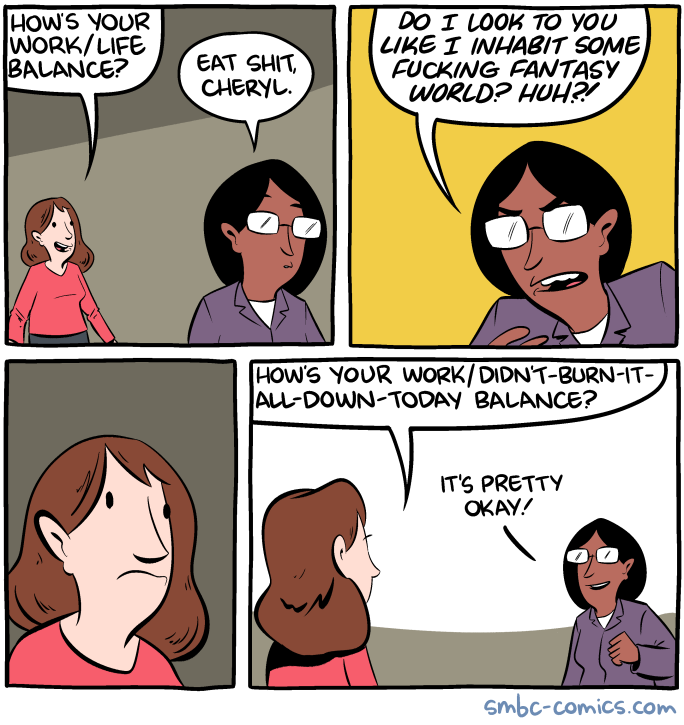
Hovertext:
The important thing is to find the low low bar that works for YOU.
New comic!
Today's News:
I don’t think that you understand that those are the same thing.

Solidarity with everyone walking in a bad dream today. Sites of resistance are all around us: in art, in direct service, in community, in defiant living immigrant/disabled/queer/non-white American bodies. May you find the will for resilience and action amidst hate.


Representation matters!
Source (x)
BEAUTIFUL
This is beautiful. But Ima need him to tag the young ladies that he used in his images. Because I know the little girl in the last picture
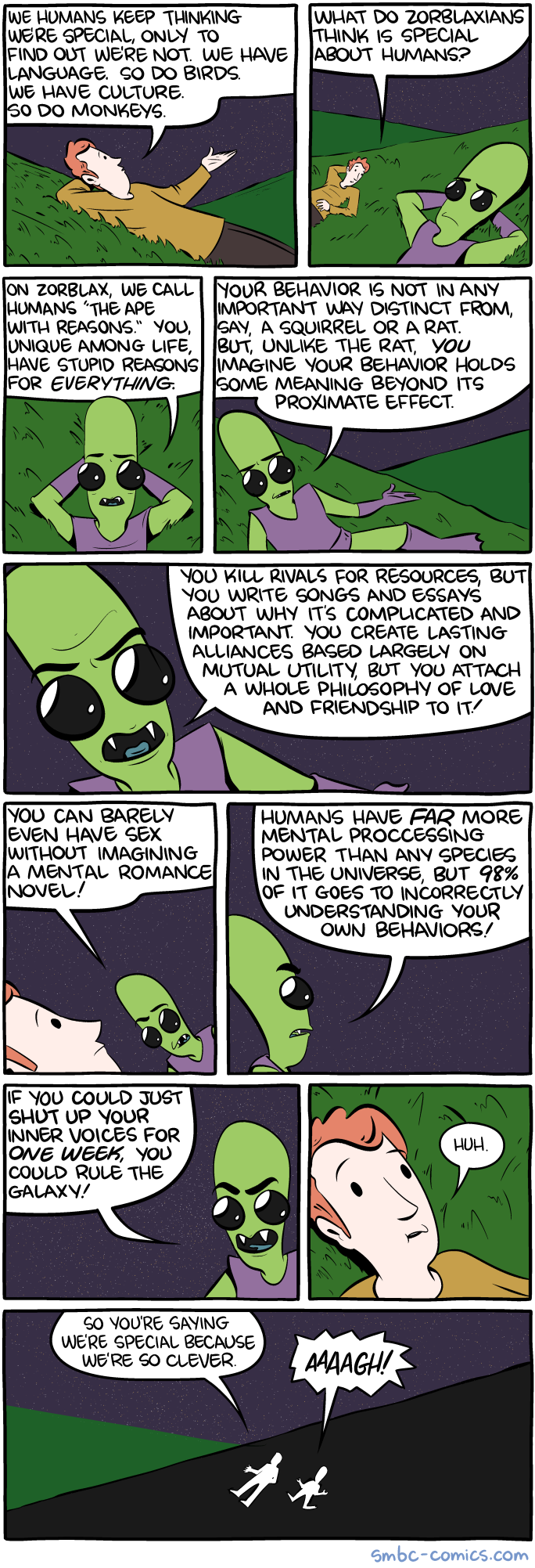
Wednesday Goddamn Book Reviews
John McWhorter is a national treasure. This is a quick book giving a number of interesting explanations of ways language changes over time, as well as ways in which people have lamented its change over time. It’s not a controversial concept among linguists, but it bears repeating to the wide world, and in any case, McWhorter does it so well.
Power to Save the World (Cravens)
The Language Hoax (McWhorter)
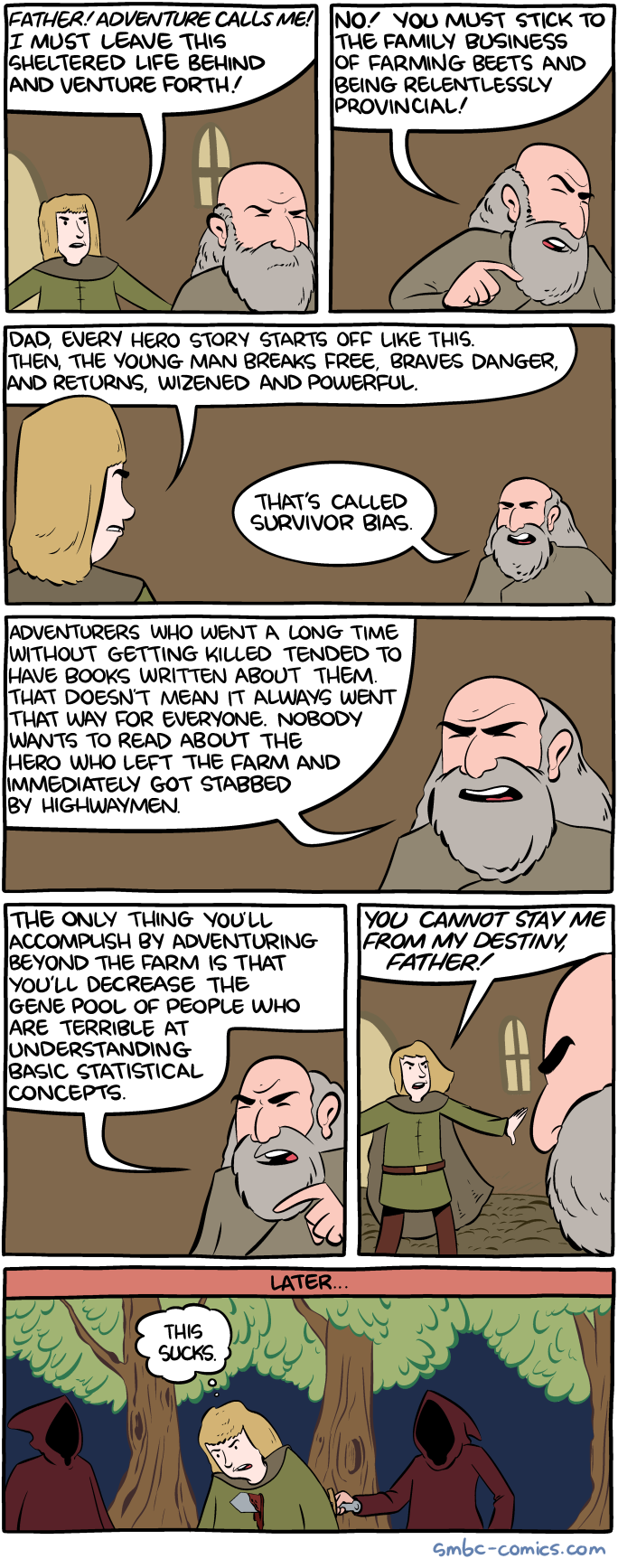
British author Sarah Caudwell wrote four mystery novels without revealing the main character’s gender.
Like Caudwell herself, sleuth Hilary Tamar taught law at Oxford and was witty, erudite, and incisive. In the four novels — Thus Was Adonis Murdered, The Shortest Way to Hades, The Sirens Sang of Murder, and The Sybil in Her Grave — Tamar acts as mentor to four barristers in “legal whodunits” that revolve around the intricacies of the British legal system. Tamar, who serves as both storyteller and detective, writes in the first person, often communicates with the other characters by letter, and is addressed directly when present:
‘So you see, Hilary,’ said Selena, ‘no one’s on holiday. Except Julia, of course. She should be in Venice by now.’
‘Julia?’ I said, much astonished. ‘You haven’t let Julia go off on her own to Venice, surely?’
‘Am I,’ asked Selena, ‘Julia’s keeper?’
‘Yes,’ I said, rather severely, for her attitude seemed to me irresponsible.
“Others speak to Hilary or use the name — one never knows for sure whether Hilary is woman or man,” notes Sally McConnell-Ginet in Greville G. Corbett’s The Expression of Gender. “Caudwell manages this so skillfully that people reading the novels do not always notice the absence of definitive gendering of Hilary: they sometimes mentally provide she or he on the basis of whichever familiar gender assumptions happen to attract their attention.”
“Very few people seemed to notice that there was any doubt,” Caudwell said. “Usually they referred to Hilary as certainly female or certainly male. It’s now mentioned in the jacket copy and, having been tipped off, readers become very angry at me for not resolving it at the end of the book.” But she had determined never to reveal Tamar’s gender. “I think Hilary is sort of a quintessential Oxford don,” she said. “I don’t really regard Oxford dons as being determined by gender.”
This never bothered her fans, who love the books for their brilliance and humor. Writing in The New York Times Book Review, Newgate Callendar praised Caudwell’s “polished, stylized prose,” “a kind of English that has not been around since the days of Oscar Wilde.” Robert Bork once said, “In my opinion, there can’t be too many Sarah Caudwell novels.” Alas, there are only four — she passed away in 2000.

psyched about the new very light (and thin) new macbooks. i do all my work on a 2013 MBP, and it’s holding up pretty good, but i was excited to see if it was worth upgrading. and i guess it’s a lot lighter now, but not a whole lot faster or anything. but it is thin, which was my whole problem.
they also added a very small touch strip at the top of the keyboard so you can “touch” virtual keys that appear there, and those keys have functions dependent on what program is running. sort of like the function keys at the top of my keyboard right now.
still! if anyone can trim off a couple more millimeters, it’s apple. now that’s innovation
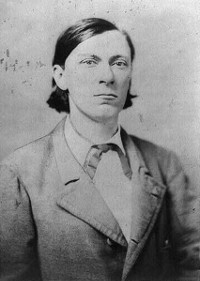
Secessionist Roger A. Pryor was visiting Fort Sumter just before the outbreak of the Civil War when he accidentally drank a bottle of poison. A Union doctor named Samuel Crawford pumped his stomach, saving his life.
“Some of us questioned the doctor’s right to interpose in a case of this kind,” wrote Union captain Abner Doubleday. “It was argued that if any rebel leader chose to come over to Fort Sumter and poison himself, the Medical Department had no business to interfere with such a laudable intention.”
“The doctor, however, claimed, with some show of reason, that he himself was held responsible to the United States for the medicine in the hospital, and therefore he could not permit Pryor to carry any of it away.”
Listen, she at most kind of lists back and forth to a low tempo number clapping on the 1 and 3, but she is also literally the best person to be President.
Wednesday Book Reviews!
Of the three major books written on Gerald Bull’s life, this is probably the least good. It’s not a bad book exactly, but it’s very strange. The author was, at least in the early 90s, a reporter on international arms sales and the associated shady behavior of rogue nations. That’s fine and all, but the book ends up being nominally about Gerald Bull while having enormous tangents about the author’s area of expertise. So, you’ll get somewhat loose biographical details, followed by a remarkably in-depth discussion of particular artillery systems from the mid-80s.
The Science of Cheese (Tunick)
I bought this book thinking it’d be a nice light read on, well, the science of cheese. It’s quite good, but really more of a reference book on types of cheese and the chemistry that produces them. So, if you’re rather nerdily-inclined and want to know more about cheese, this is a great book, but I wouldn’t try to read it all in one sitting unless you happen to be a chemist.
A great little comic book! I mean, also horrifying. Like, really violent and disgusting, but underneath that a very clever story. I’m looking forward to reading the next volume.
The Invention of Science (Wootton)
A fantastic history of the idea of science. I mean, just great. I got this book looking for a sort of light read on early science. It turned out to be a very detailed history on the concept of science as a human behavior, encompassing everything from history to etymology to social science. It’s just absolutely fantastic, and it will probably defy your expectations. I’ve gotten used to books of this sort repeating the same tired sets of moments in scientific history. Wootton not only introduces all sorts of new (to me) parts of history, but he adds more nuance to parts of history you may already be familiar with.
In Milton Lumky Territory (Dick)
Another of Dick’s earlier non-scifi novels. Like the others, it’s good and has good characters, but just seems to be missing something. Honestly, part of what makes his early literary stuff hard to read is that it’s so relentlessly depressing. I don't mind sad novels, but relentlessly sad novels (Updike's Rabbit series springs to mind) always seem to me like they're a palette missing a color.
The other thing is that (perhaps because almost none of it was published), all of these literary novels by Dick hit on very similar territory, almost always concerning themselves with douchey men and crazy women, living dull pointless lives, often starting a pathetic small business of some sort.
That said, it was still a pretty good novel. Reading this early stuff is interesting, because it helps you see Dick’s trajectory toward becoming one of the best science fiction writers of all time.
Edmund Wilson’s 1948 poem “The Pickerel Pond” has a novel feature — backward rhymes:
The lake lies with never a ripple
A lymph to lave sores from a leper
The sand white as salt in an air
That has filtered and tamed every ray;
Below limpid water, those lissome
Scrolleries scribbled by mussels
The floating dropped feathers of gulls;
A leech like a lengthening slug
That shrinks at a touch, ink and orange;
A child’s wrecked Rio Janeiro,
One fortress of which flies a reed
The cleft and quick prints of a deer …
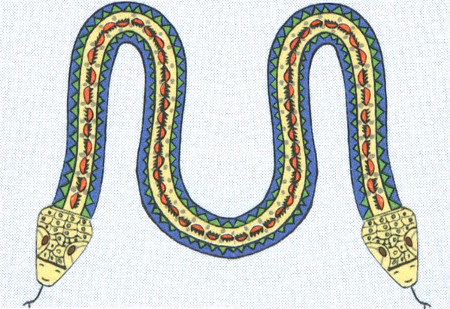
Each pair of line endings (ripple/leper, air/ray) reverse one another in pronunciation, reflecting the pond’s mirror-like surface. They’re called amphisbaenic rhymes, after the amphisbaena, a Greek monster whose two heads allow it to move in either direction. Wilson’s poem contains 70 twisting stanzas of such rhymes.
Just so it’s clear, Hillary is actually the lesser of 5 evils.
I work in client servicing at a reputable international advertising agency in the Middle East. One day, we had to evacuate because there was a fairly major fire in our building. This is the conversation I had with a long-time client when I called to tell him.
Me: Hi! I’m sorry, but we’ve had a fire emergency in our tower and we had to vacate the premises. I apologize, but I will not be able to send you the designs today.
Client: Oh no! Can’t you just email it?
Me: Sorry no. The designer was finishing it when we had to leave, and it isn’t finished.
Client: Can’t he just access his email, download it and finish it?
Me: Sorry, it was on his desktop and, since it was quite a large file, he couldn’t upload it anywhere before evacuating.
Client: Can he go back to the office and send it now?
Me: Are you asking me to send him back to a burning building so he can finish a little more quickly?
Client: Oh, I guess that isn’t possible, is it?
Me: No. We’re all okay, by the way.
Client: What?
Me: Nothing.

“yes, we’re open! but you have to tell me if you’re from the health department”
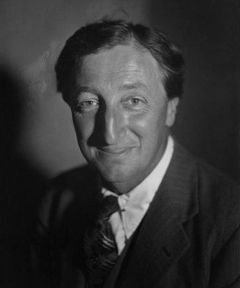
In 1961, irate at receiving a bill for an £85 surtax from the Inland Revenue, A.P. Herbert sent them a check in verse:
Dear Bankers, PAY the undermentioned hounds
The shameful sum of FIVE-AND-EIGHTY POUNDS
By “hounds,” of course, by custom, one refers
To SPECIAL INCOME TAX COMMISSIONERS:
And these progenitors of woe and worry
You’ll find at LYNWOOD ROAD, THAMES DITTON, SURREY.
This is the second lot of tax, you know,
On money that I earned two years ago.
(The shark, they say, by no means nature’s knight,
Will rest contented with a single bite:
The barracuda, who’s a fish more fell,
Comes back and takes the other leg as well.)
Two years ago. But things have changed since then.
I’ve reached the age of threescore years and ten.
My earnings dwindle; and the kindly State
Gives me a tiny pension — with my mate.
You’d think the State would generously roar
“At least he shan’t pay surtax any more.”
Instead by this un-Christian attack
They get two-thirds of my poor pension back.
Oh, very well. No doubt it’s for the best;
At all events, pray do as I request;
And let the good old customs be enforced —
Don’t cash this check, unless it is endorsed.
To his astonishment he received this reply:
Dear Sir,
It is with pleasure that I thank
You for your letter and the order to your bank
To pay the sum of five and eighty pounds
To those here whom you designate as hounds.
Their appetite is satisfied. In fact,
You paid too much and I am forced to act,
Not to repay you, as perchance you dream,
Though such a course is easy, it would seem.
Your liability for later years
Is giving your accountants many tears;
And ’til such time as they and we can come
To amicable settlement on the sum
That represents your tax bill to the State
I’ll leave the overpayment to its fate.
I do not think this step will make you frown:
The sum involved is only half-a-crown.
Yours faithfully,
A.L. Grove
He wrote back:
I thank you, Sir, but am afraid
Of such a rival in my trade:
One never should encourage those —
In the future I shall pay in prose.
In Pale Fire, Nabokov notes an “absolutely extraordinary, unbelievably elegant” verbal curiosity:
A newspaper account of a Russian tsar’s coronation had, instead of korona (crown), the misprint vorona (crow), and when next day this was apologetically ‘corrected,’ it got misprinted a second time as korova (cow).
“The artistic correlation between the crown-crow-cow series and the Russian korona–vorona–korova series is something that would have, I am sure, enraptured my poet,” he wrote. “I have seen nothing like it on lexical playfields and the odds against the double coincidence defy computation.”

Just one premium BAHFest ticket left, geeks!



.png)


