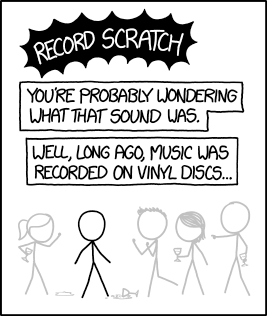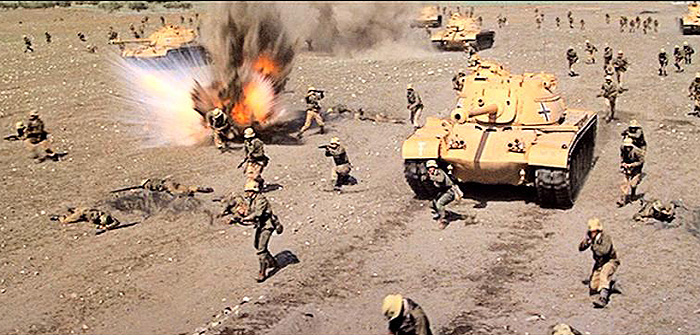
In Sam Peckinpah’s 1977 World War II film Cross of Iron, a soldier hears a rumbling noise, peers out of his trench, and shouts “Tanks! Tanks!”
The French subtitles read, “Merci, merci!”
In Sam Peckinpah’s 1977 World War II film Cross of Iron, a soldier hears a rumbling noise, peers out of his trench, and shouts “Tanks! Tanks!”
The French subtitles read, “Merci, merci!”
In 1942, uncertain whether one of its spies had been replaced by a German impersonator, Britain’s Special Operations Executive hit on a clever plan: After a regular radio communication, the British radio operator signed off with HH, short for “Heil Hitler,” the standard farewell among Nazi operators. His counterpart, “Netball,” responded HH automatically, giving himself away.
They confirmed this at the next session:
Netball was several minutes late for his sked (not significant) and signalled ‘q r u’ (‘I have no traffic for London’). Howell replied ‘q t c’ (‘We have a message for you’), and proceeded to transmit it (the message warned Netball never to send less than 150 letters). Howell then signalled ‘HH’, and Netball immediately replied ‘HH’.
‘Right,’ Nick was heard to say to his companion, ‘that’s it then.’
(From Leo Marks, Between Silk and Cyanide, 2001.)
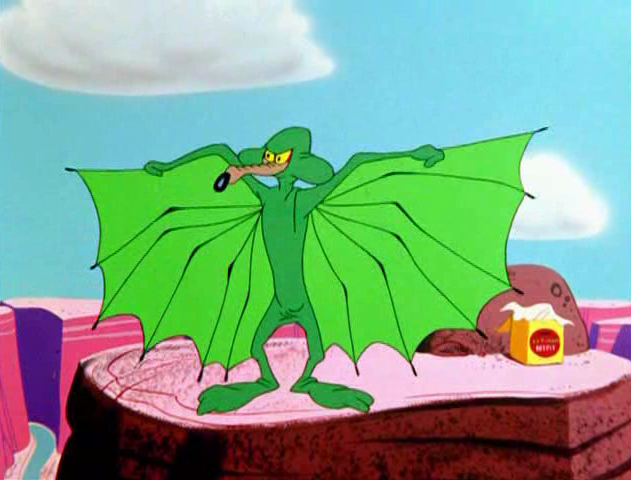
Cartoon laws of physics:
There are 10 laws altogether, including “9. Everything falls faster than an anvil.” As early as 1956 Walt Disney was describing the “plausible impossible.” In Who Framed Roger Rabbit, Eddie Valiant says, “Do you mean to tell me you could’ve taken your hand out of that cuff at any time?” Roger answers, “Not at any time! Only when it was funny!”
Recreations listed in Who’s Who by eccentric Scottish MP Sir Nicholas Fairbairn:
1975: Creative
1976: Creating
1977: Bunking and debunking
1979: Upholding what’s right and demolishing what’s left
1980: Giving and forgiving
1981: The cure and eradication of British tick fever
1983: Being blunt and sharp at the same time
1984: Philanthropy and philogyny
1986: Ornitholatry
1987: Serving queens, restoring castles, debunking bishops, entertaining knights, befriending pawns
1988: Snookering the reds and all other proctalgias
1989: Draining brains and scanning bodies
1990: Growling, prowling, scowling and owling
1991: Loving beauty and beautifying love
1993: Drawing ships, making quips, confounding Whigs and scuttling drips
1995: Languishing and sandwiching
In 1973 he listed his recreations as “Making love, ends meet and people laugh.” He said, “I think most people, if they were honest, will admit that those were their main recreations — apart, perhaps, from Ted Heath, who would probably miss out on the first and third.”
(from Neil Hamilton, Great Political Eccentrics, 1999.)
3 weeks to go, and we've sold 40% of BAHFest tickets. Buy soon or feel shame!

the whole thing is dan’s. all the dimensions too. his roommate had some good ideas about the unit charge of an electron, but like 99.999% of this was dan.
dedicated to my friend liz
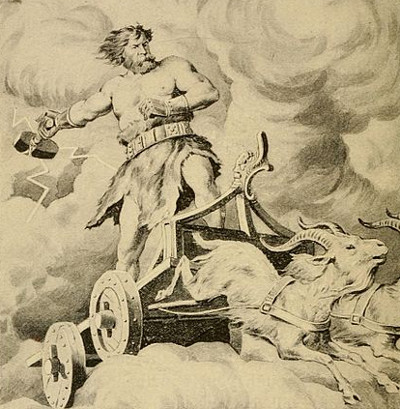
“Blasphemy depends upon belief, and is fading with it. If any one doubts this, let him sit down seriously and try to think blasphemous thoughts about Thor. I think his family will find him at the end of the day in a state of some exhaustion.”
— G.K. Chesterton, Heretics, 1906
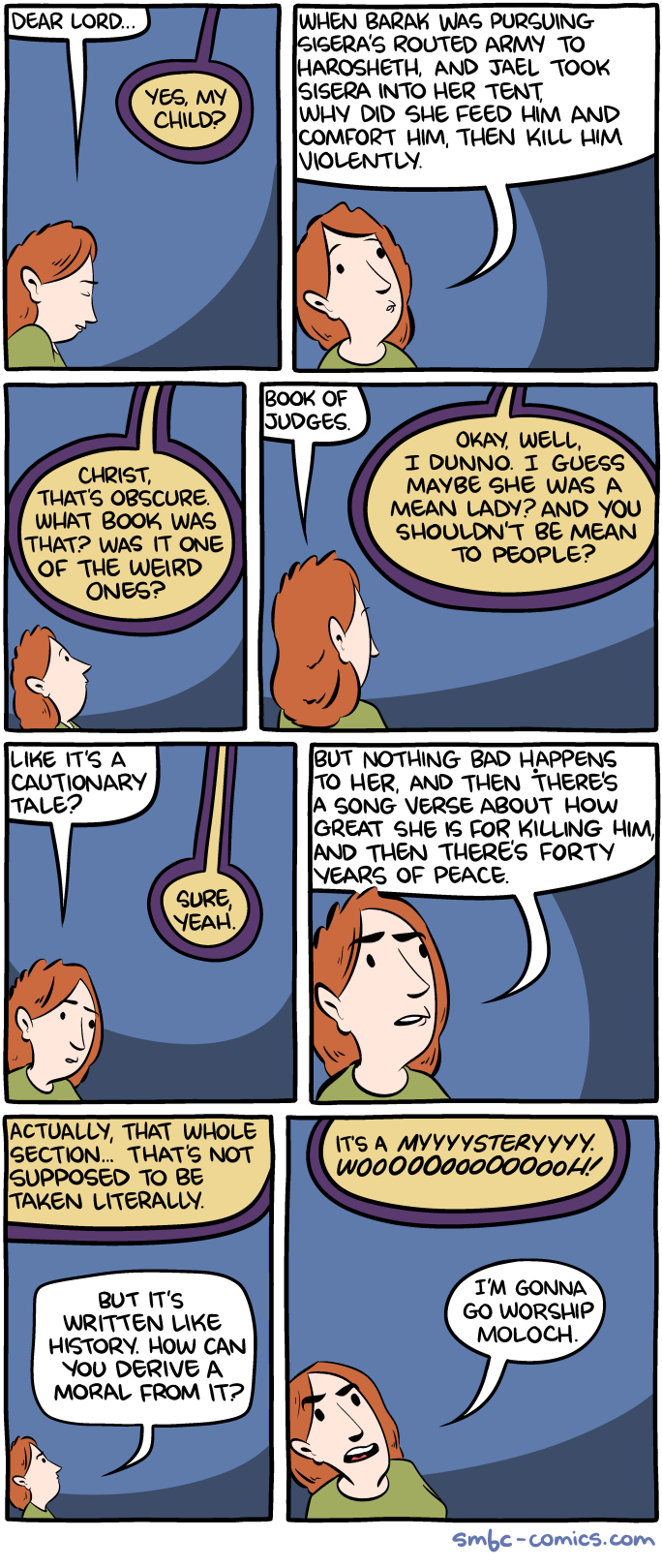
Wednesday Book Reviews! Yong and Stiglitz were particularly good.
Sept 16 - I Contain Multitudes (Yong)
Sept 16 - A Brief History of Misogyny (Holland)
Sept 19 - The Euro (Stiglitz)
Sept 20 - But What If We’re Wrong? (Klosterman)
This book didn’t really do it for me. The idea is basically that we are probably wrong about lots of things, even some of which we are certain of now. After that, it’s a few stories and anecdotes relentlessly restating the premise.

In June 1917, the California Olive Association adopted the following rather terrifying size designations:
Olives counting 120-135 olives per pound: Standard
Olives counting 105-120 olives per pound: Medium
Olives counting 90-105 olives per pound: Large
Olives counting 75-90 olives per pound: Extra Large
Olives counting 65-75 olives per pound: Mammoth
Olives counting 55-65 olives per pound: Colossal
Olives counting 45-55 olives per pound: Giant
Over the years they added Jumbo, Supercolossal, and Special Supercolossal. It wasn’t until the the 1970s that the government stepped in to limit further growth: “The Department of Agriculture feels that most people would not be able to figure out which are the larger olives, except at the range of smaller sizes, whose names are the more straightforward.”
While we’re at it — champagne bottles have some impressive names of their own:
0.1875 liters: Piccolo
0.2 liters: Quarter
0.375 liters: Demi
0.75 liters: Standard
1.5 liters: Magnum
3 liters: Jéroboam
4.5 liters: Réhoboam
6 liters: Methusaleh
9 liters: Salmanazar
12 liters: Balthazar
15 liters: Nebuchadnezzar
18 liters: Solomon
26.25 liters: Sovereign
27 liters: Primat
30 liters: Melchizedek
(Thanks, Drew.)
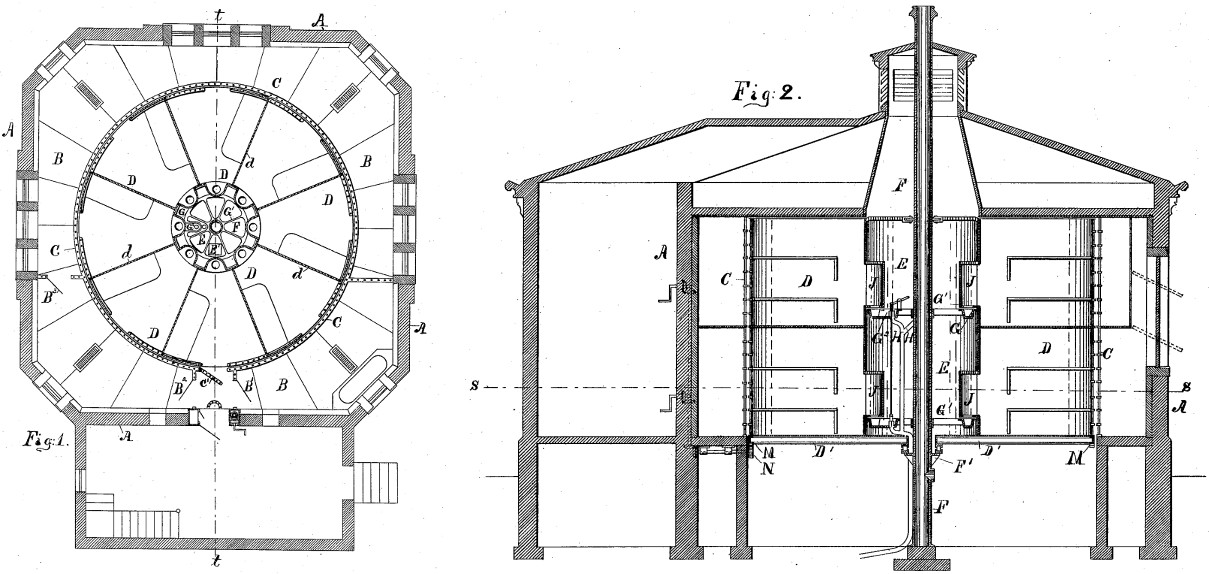
Architect William H. Brown had a curious brainstorm in 1881 — a jail in which moving cells shared a single door:
The object of our invention is to produce a jail or prison in which prisoners can be controlled without the necessity of personal contact between them and the jailer or guard. … [It] consists, first, of a circular cell structure of considerable size (inside the usual prison-building) divided into several cells capable of being rotated, and surrounded by a grating in close proximity thereto, which has only such number of openings (usually one) as is necessary for the convenient handling of the prisoners.
The cell block, supported by ball bearings, could be turned by a single man with a hand crank. While it had a certain efficient appeal, in practice the jail proved dangerous, crushing prisoners’ limbs and raising concerns about safety during a fire. The last rotary jail was condemned in 1939; the only surviving example is in Crawfordsville, Indiana.
(Strangely related: Jeremy Bentham’s Panopticon. Thanks, Jon.)

Just a reminder that BAH West tickets are going fast! As of last night we'd already sold 1/4th of tickets, so we're now expecting to sell out a bit early. Buy soon to lock in a spot! It's going to be a great night!

Hpeckerhaving worked in a factory, this is only the beginning
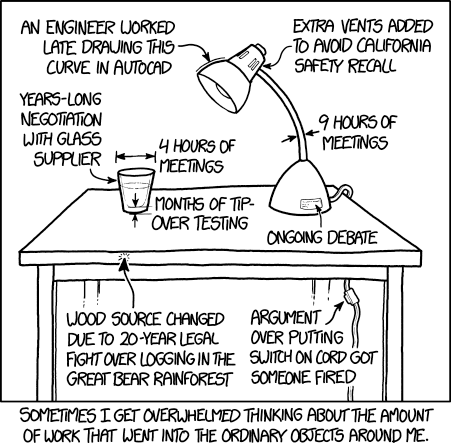
Yeah, I get it. That’s the kind of thing that, at this point, implies that if your reaction to injustice isn’t some kind of personal fear or sadness, it’s not a valid thing. Or that, your reaction to bigotry is viewed through some weak, involuntary offense of your sensibilities. Like all bigotry, it’s interesting (not that interesting) how there’s an implied sense of, like, Victorian femininity being implicitly denigrated with this shit as well, as if being able to power through the “offense” of racism is somehow a desirable, masculine trait. Fuck.
I mean, you’re not cringing because you think you look not racist.
What do you think about it? Doesn’t it feel like that didn’t do anything to make white people any less powerful or human?

Tickets are on sale for BAHFest West! This is our third year doing this, and tickets have sold out the previous two times. To guarantee a spot, please buy soon!

BOOK REVIEWS!
I had to stop the experiment for a bit because I wasn't getting much reading done while finishing up a project. But, I'm back on track, and I'm going to try to run weekly book reviews from here on out.
For transparency: If you click the links below, for the next 24 hours, if you buy something on amazon, SMBC gets a small payment. So, basically, if one of the books below looks tempting, we'd appreciate if you clicked the link before buying.
This is a new thing we're doing, so if you have any thoughts on how it can be improved, please let us know.
A quick bit of history and science on the topic of bringing humans back from the brink of death. It’s a quick read, with a lot of dorky humor injected. It’s not bad, and there are a lot of neat stories and weird science, but it kind of felt like it was Not Quite Mary Roach. Still, fun if you’re interested in the topic.
Verdict: 3/5
An INSANE memoir about Browder’s life in high finance, going on adventures making crazy deals as the Soviet Union collapses and breaks apart. Making deals required him to go to strange places and repeatedly risk being assassinated. He sounds like he’s totally nuts, but it’s a hell of a story.
Verdict: 4/5
An interesting book. It starts with the economic observation that efficiency (which theoretically is good for the environment) often leads to increased consumption (which is probably bad for the environment). Owen suggests that if efficiency tends to lead us to consume more, the only way to save the environment is to reduce our lifestyles.
I don’t buy everything he’s saying, but I think it’s a very interesting argument that’s worth confronting.
Verdict: 3.5/5
Aug 27 - Woe to Live On (Woodrell)
A great novel about a group of Confederate soldiers, written with a lot of realism and depth. An interesting feature of this book is that it’s stylistically very 19th century, but it yet contains the violence and sex that tend to be elided in actual books from that period.
Verdict: 5/5
Sept 1 - How Everything Became War and the Military Became Everything (Brooks)
This was a pretty excellent book. It’s a sort of combination of a memoir of Rosa Brooks’ time in the Pentagon, along with the history and psychology of how (according to her) our relationship to war has changed for the worse in recent times.
Verdict: 3.5/5
Sept 3 - White Trash (Isenberg)
A good historiography of poor whites in the history of the United States, and how they tend to be viewed by cultural elites. I felt like it got a bit less compelling as we got to modern times, but maybe that’s just because I’m more familiar with life now than life 300 years ago.
Verdict: 3/5
Sept 5 - Eye in the Sky (Dick)
Like a lot of these early Philip K Dick novels, I feel like it’s a cool idea and a well-developed world, but the execution is really hokey.
The plot is about a bunch of people who get zapped by a high energy beam, who then somehow start serially inhabiting each other’s consciousnesses. Each such universe contains the strange biases of its consciousness. It’s fun, but it’s really just 1950s pulp stuff, despite the clever premise.
Verdict: 2/5
A fun little book on how interesting ideas often come from what Harford refers to as “messy” situations, in the broad sense of (supposedly) non-ideal creative environments. It contains a lot of fun stories ranging from musicians to scientists.
Verdict: This book is written by an author I have met personally, and I’ve decided my policy on such reviews is that I won’t list a number verdict.
Sept 7 - The Man Who Japed (Dick)
A dystopia story about a sort of puritanical world, only the puritanical culture stems from something like suburban American cultural norms circa 1950. It’s all right. Dick has so many stories about controlling prudish middle-aged women that I’m starting to wonder if the character isn’t based on someone real.
Verdict: 2.5
Sept 9 - The Broken Bubble (Dick)
Now this is something interesting! It’s Philip K Dick, but not science fiction, and it wasn’t published until after his death. Early on in his career, Dick wrote literary fiction, and I would say this is the best one I’ve read so far. It’s not perfect, but it’s pretty good. It’s a story about two couples - one very young and accidentally pregnant, and one divorced because they were unable to conceive. The dynamics are really interesting, but it lacks the subtlety and depth that Dick would later develop. I found myself wishing he had come back to this novel later in life.
Verdict: 3/5
Sept 14 - The End of the Cold War (Service)
A very enjoyable and in depth history of the last six years of the USSR. The only part that was slightly odd was that now and then he seemed to really fanboy over Ronald Reagan. I certainly don’t mind reading history books from people with political views (because the alternative doesn’t exist), but it felt out of place in such a long meticulous work of history. Still, quite good!
3.5/5