Shared posts

22 Jul 01:19

She’s so good that you won’t see it coming

by Sophia, NOT Loren!

I wonder if anyone will ever fall for me who isn’t weighed down by major self-esteem issues? That seems to be the kind of woman I attract.

From my “first love” whose control freak tendencies were only outdone by her verbal and then physical abuse, she was so desperate to make everyone around her small and ordinary so that she could seem brilliant by comparison… to the most recent ex who could not hear her praises being sung by so many for what they were, whose consistent expressions of inadequacy could not be balanced out by my efforts alone, nor by those of so many I enlisted to join me in countering them… or the one boyfriend I’ve had, who began publicly posting suicide threats when I attempted to set and maintain boundaries, who spent much of the time we were together telling me what a bad man he was… or the psycho ex who needed so much to matter that she couldn’t simply be herself — she was Connor Quentin McLeod, an Immortal, a Highlander; she nearly broke my jaw and used me to get herself pregnant… the friend who has been so much to me, but who also consistently martyrs herself so that she can “let me be happy,” as if her happiness and mine were mutually exclusive, that mine comes at the cost of her own…

And the ones who don’t get attached, the ones who are friends-with-benefits but never “girlfriend” — Lime, Plush, Again, SoCal, and others — sometimes more “together,” sometimes not, but it doesn’t matter so much when none of them are the ones who share my life. I may be significant — the “friend” part of “FWB” — but not significant in that way.  And I don’t want to be that kind of significant with most of them, and that’s okay — but I do want to find someone who is that kind of significant, and who wants me to be the same.

And I want that to be a woman who knows how fucking bad-ass she is, and for us both to build each other up in our bad-assery instead of collapsing in on each other like a house of cards outside in a thunderstorm.


Filed under: General
18 Jul 14:21

Assorted Stupidity #77

by Kevin
  • It's illegal in Florida to harass or disturb a manatee, as it should be because the manatee is an endangered species, and as it must be because they can't defend themselves. Neither of those factors applies to alligators. So if somebody wants to jump out of a tour boat to fulfill his lifelong dream of "swimming with the gators," he should be free to do that, or at least not charged with some made-up crime should he somehow survive. So I personally see this arrest as yet another misuse of the vague "disorderly conduct" charge.
  • The report on that item notes that after the incident, the guide "assured the tour guests that the event was highly unusual and continued his tour." I don't know. If you think your tour guests need to be "assured" it's highly unlikely that they, too, will spontaneously leap out of the boat at the first sign of an alligator, you should probably head back to base.
  • Wild blueAlso not sure I agree with pressing "mischief" charges against the Canadian who tied 110 helium balloons to a lawn chair so he could jump out of it while flying over the Calgary Stampede as a publicity stunt. He did have a parachute (although who cares) and he didn't endanger people at the Stampede (because he missed). Supposedly the charges were based on a potential risk to other third parties, because although the guy claimed the stunt followed "months of planning" he apparently didn't consider what might happen to the lawn chair once he jumped out. (As of July 7, its whereabouts were still unknown.) I guess it might have posed a risk to air traffic, and police said they expected the man to be charged under the federal Aeronautics Act as well. So, fine.
  • "Man Robs Bank With Sex Toy," declared most of the headlines on this item, which made me wonder why a teller would give money to someone "armed" with a sex toy. Turned out that he wasn't just waving it around, he used it along with some cables and duct tape to make a fake bomb. My next question was, why a sex toy, but then nothing else really came to mind that would look much like a stick of dynamite if you wrapped it in duct tape (other than a stick of dynamite). I guess all my questions have been answered on that one.
  • Last month a New Mexico man was charged with burglary after a woman found him in her kitchen baking a potato in her microwave. "She asked him what he was doing there, and he told her he was making a potato," said the police report. He had also wiped down a countertop and raked up the leaves in her front yard, so, yeah, not the worst burglary ever.
  • According to this brief report, the Magna Carta, that mighty charter of liberties intended to protect the rights of wealthy nobles to exploit others without too much interference from the King, has been cited over 800 years after its signing to support a Missouri lawsuit contending municipal-court defendants should not have to pay a $3 fee to support the Sheriff's Retirement Fund. That's how the law works, you guys.
18 Jul 14:19

Hidden Artworks That Come with Instructions

by Gabriela Vainsencher
02_Maria_Nordman_FILMROOM-EAT_02

Maria Nordman, “FILMROOM EAT” (1967–present), installation views (all images courtesy Marian Goodman gallery, image cropped by GV)

Maria Nordman’s show is not the first thing you’ll see when you step off the elevator and into Marian Goodman’s midtown space. The main gallery is dedicated to a mostly-male summer show of the gallery’s better-known, minimalist blockbuster artists, like Lawrence Weiner and Gerhard Richter’s very wavy and very straight works, respectively. I would say “don’t miss” Sol LeWitt’s “Wall Drawing #459,” but there is no way you could miss it — it lusciously fills up a central gallery wall en route to Norman’s exhibit.

As your perspective narrows towards the end of a long white hallway, a printed sign on a black metal pedestal awaits your reading. It looks like the kind of sign that is placed there to inform you of your responsibilities, restrictions, and limitations. It reads:

MARIA NORDMAN
FILMROOM EAT 1967–PRESENT

YOU ARE INVITED TO ENTER —
TWO PERSONS AT A TIME.

It is no coincidence that these instructions are the viewer’s first encounter with Nordman’s work. The 71-year-old California-based, German-born artist makes objects, drawings, environments, films, and language-based works that are meant to be intimately experienced and require a highly structured mode of participation in order to be fully appreciated. They are also very often, physically speaking, hidden from view. So with Maria Nordman’s work, before you can see it, you must be told how to see it.

The show’s centerpiece is the aforementioned “FILMROOM EAT,” a two-channel film installation, now transferred into digital video. The work was first shown in 1967, and like all of Nordman’s work, is dated from the year it first screened up to the present moment. This dating practice belies a central tenant of Nordman’s ethos: there is no such thing as a loop, that changeless repetition. Rather, every iteration of a work is different because each encounter of every viewer with a work is unique.

As stated, “FILMROOM EAT” is for two viewers at a time, though one is also allowed. You enter the installation through a swinging door. Once inside, a partition divides the far wall, framing two identically sized, floor-to-ceiling projections. In both of them, at various angles, is a young couple eating dinner from a silverware-laden table. The young diners rip apart a giant carcass of some animal with their hands and knives. The girl has a glossy, pointy-nailed manicure, wears a pearl ring, and her eyes are made up with mascara and eyeliner in a quintessential ‘60s style. The boy sports a mess of a hairdo, shaggy sideburns, a soul patch, and crinkly leather apparel. The diners do not appear to be acting. They are eating. And smoking.

The backstory goes as follows: the young couple had just been introduced to each other and given this meal by the artist and were encouraged to self-direct their actions as they ate the meal together. The film was originally made for their eyes only, and was re-edited for this show — it is the film’s first public viewing since the late ‘60s. It’s fun to watch in a strangely voyeuristic way, precisely because the people in it are as self-aware as any two non-actor strangers would be when asked to share a bunch of food on camera.

Maria Nordman, "Terrestrial Drawing", undated

Maria Nordman, “Terrestrial Drawing” (undated)

My favorite moment in this work happens outside of the theatrical narrative and was only recently added by Nordman: after the screens fade to black, they do not immediately show the dinner scene again, but instead light up in a stark white light — simultaneously illuminating the room that has been in darkness and, like a camera’s slow-motion flash, transforming the room into an image of itself. This image (a monotone room divided in two) is reminiscent of a work Nordman made in 1968, a year after she made “FILMROOM EAT,” that marked Nordman’s decision to abandon electric light in the presentation of her work. Titled “Black Room,” it was an outdoor installation which invited viewers into a cube-like room, seemingly open on both ends. The structure, however, had a dividing segment in it which viewers could enter to find themselves in a pitch-black narrow space, essentially the inside of the dividing wall.

06_Maria_Nordman_Installation

‘Maria Nordman’ installation view (click to enlarge)

From that work on, Nordman has shown her work using only whatever sunlight filters into the room, and the exhibition at Marian Goodman is no different. Next door to the film room is an installation of Nordman’s works on paper as well as what she calls a “terrestrial drawing”: a sci-fi-looking mass of naturally occurring marble that must be seen to be believed.

In keeping with Nordman’s work, the viewing of these drawings is made into a conscious act: the drawings themselves (a total of four double-sided works) are encased and hidden from view in two sliding-door framing contraptions which viewers are directed (another sign on a metal pedestal) to pull out for themselves, curating their own little show out of the various options available. If you didn’t read the instructions, you would be left an uninformed viewer, in a seemingly empty room with two empty frames in it and light coming in the window. Like the show at large, it sounds empty but it feels very full.

Maria Nordman continues at Marian Goodman (24 West 57th Street, Midtown West, Manhattan) through July 31. 

17 Jul 22:12

Friday Reacharound: The Return of Bloom County

by Rude One
If there was ever a fire at Chez Rude, there are precious few items the Rude Pundit would risk his life and lungs to save. Once you get past the stuff in the lockbox and pre-digital photos, there ain't much. Not his phone or laptop because everything is stored on many clouds. Not his well-used Tom of Finland volumes. Not any of the original art he owns, not even the Blue Dog by George Rodrigue. Not his paperback copy of In Cold Blood signed by Truman Capote, not his books signed by Toni Morrison or Michael Chabon or any other authors living and dead. But one thing he would fight past the flames to grab would be a first edition of a children's book, The Wish for Wings That Work, because of this:


It's signed by its author and artist, Berkeley Breathed, who was kind enough to draw Opus, the penguin who starred in the book and the author's classic comic strip, Bloom County.

Bloom County ran from December 1980 until August 1989, or, really, the Reagan administration plus a few months. People sometimes tell the Rude Pundit that he helped them survive the Bush II years, which he's not really sure we survived. But, for him, Bloom County was what allowed him to not go mad during the headiest days of the Gipper's reign of madness. The Rude Pundit was an editor at his college paper in Louisiana, and the town paper refused to carry the best strips of the time. So, screw it, he did, with a line-up that included The Far Side, Calvin and Hobbes, Matt Groening's Life in Hell and Bloom County. When a new sheet of a week's worth of strips arrived, the staff would gather around to read them all. By the time it ended, even though it was followed by the immensely well-drawn but lesser comics Outland and Opus by Breathed, the influence it had had on this blogger was profound.

With muckraking Milo Bloom, computer hacker Oliver, and perpetual worrier Binkley, all children, and wheelchair-bound Vietnam vet Cutter John and sexist pig Steve Dallas, as well as Opus and Bill the Cat, a rancid middle finger to all the comic strips that created cutesy characters to sell shit, Bloom County was Generation X's Doonesbury, a daily reminder of how you could readily and scathingly mock the powerful in hilarious ways, from politicians to the media to the wealthy to the bigots and misogynists to celebrities. Indeed, you could make an argument that the way Breathed constantly attacked a worthless, scandal-mongering press planted the seeds for one of the driving forces of the rise of blogs.


As for politics? To this day, the Rude Pundit can't hear the word "caucus" without thinking "a raucous caucus." Go read some of Breathed's strip collections. They are still hilarious.

This week, Berkeley Breathed decided to return to drawing Bloom County after 25 years, posting so far daily strips on Facebook. Breathed said that, by publishing online, he has freedom and no constraints of editors, censorship, or deadlines. He only needs to draw his comics. He recognizes that times have changed: "There is no media that will allow a Charlie Brown or a Snoopy to become a universal and shared joy each morning at the same moment across the country," he told the Washington Post.  Yes, it's true. We do not have much of a common culture anymore.

But for a generation who came came of age with Bloom County, it is like discovering that a long-lost friend is still alive years after a plane crash. You didn't know you felt a little less whole until that piece returned.

Now all we need is a Far Side restoration and a Calvin and Hobbes resurgence.
17 Jul 20:55

Negotiating a little girl’s knickers down

by tomocarroll

Judging by his obsessive repetition of the phrase “little girl”, and his fixation on getting into their knickers (“I like this issue”), Ross Coulthart may raise some eyebrows when his interview with me eventually goes out on Australia’s 60 Minutes TV programme. Viewers could be forgiven for thinking he was the one who “wants adults to be allowed to have sexual intercourse with children” – itself an expression rammed down my throat with rapacious insistence dozens of times in different variations, heedless of my protests.

As for the word “consent”, there were over 50 mentions. I know because I made my own audio recording. Trigger warning: heretics may find this induces anger and nausea!

Coulthart trained as a lawyer, according to his online profile. While his emotive use of language was pure tabloid rabble rousing, and the lurid conspiracy theory at  the heart of his purported investigation – an alleged Establishment cover-up of “VIP paedophilia” – was just evidence-free speculation, there is also a lawyerly forensic focus to his style that did actually succeed in pinning down one issue worth exploring a bit further here.

We think we know all the arguments over consent because we have been over it a million times. Usually, though, our frame of reference as MAPs is to see consent in a broader context. We know that children who supposedly “cannot consent” to sex often in practice do just that; we know that widely varying ages of consent apply in different legislatures and that where the age is lower there is no discernible problem compared to where it is higher. We also feel that the quality of the relationship is what counts, not the legalistic formality of consent, for which there is no requirement in many non-sexual contexts, even hazardous ones.

I could go on, exploring this broad contextual background. That is precisely what Coulthart was determined to stop me doing. His strategy was to home in, myopically, on a single detail from my book Paedophilia: The Radical Case. As quite a few heretics here will know, there is a whole chapter on consent (Ch. 8). But my interviewer chose to take just three paragraphs from a different chapter (Ch. 3) and focus on less than three sentences cherry-picked from them. These are the paragraphs:

Take, for instance, the little girl who will happily smile at and chatter to a “nice man”, and will sit across his knee with her legs apart. If the man is susceptible to paedophilic feelings, he may be tempted to see this as “seductive” behaviour, when the child in fact may be quite unaware of the way he is interpreting events – she may be exhibiting, in the traditional sense, all the “innocence” of childhood (even though, quite independently, she may also be highly sexed and know how to give herself an orgasm).

The usual assumption is that this potential for misunderstanding is bound to be a bad thing, but this is not necessarily so. Typically, in the formation of a paedophilic attachment, as in those between adults, the actual behaviour of either party develops not precipitately, but step by step: each stage is “negotiated” by hints and signals, verbal and non-verbal, by which each indicates to the other what is acceptable and what is not.

In our example, the man might start by saying what pretty knickers the girl was wearing, and he would be far more likely to proceed to the next stage of negotiation if she seemed pleased by the remark than if she coloured up and closed her legs. Despite “being wrong” about her intentional sexual seductiveness, he might never-the-less be right in gradually discovering that the child is one who likes to be cuddled and who thinks it great fun to be tickled under her knickers.

The bold parts in the above are plain text in the original. I have emphasised them as these are the bits Coulthart concentrated on, to the exclusion of all else.

I had agreed to this interview simply to defend my “VIP” friends Peter Righton and Charles Napier from some outrageous allegations recently made against them. I had no reason to suppose the programme would be interested in my view of consent. I had no wish to avoid the issue, though, so when it was raised in the first few minutes I did not duck away from it, emphasising that the practice is more important than the theory, giving the example of Theo Sandfort’s Netherlands-based research demonstrating that children can consent without harm, and even with beneficial outcomes. I imagine they’ll cut this section out!

When he mentioned the “little girl” scenario in my book, he said:

Nowhere in that paragraph do you even talk about express consent. You talk about implied consent from that poor little girl.

He was right.

Ignoring the blatantly emotive and misleading “poor little girl” rhetoric, I felt the most urgent need was to drag my own 20th century language into the 21st with a nod to the contemporary debate on express or affirmative consent in the context of adult relationships. There was this exchange:

Me: In the light of the debate that has taken place in recent years on that aspect of consent, I am persuaded that maybe, yes, one does need to be a little bit more affirmative than as stated in the text just quoted.

Coulthart: So you no longer believe that implied consent from a child is enough?

Me: It may not be but I have not reviewed…that particular scenario for some time; in the light of the debate on affirmative consent I think I would need to think about that again. But most of all, where I need to think again, is with regard to what happens many years after, because people can be traumatised retrospectively.

It was doubtless a disappointing reply for him. He had hoped for something more scandalous, and tried to provoke it with a further resort to emotive language:

Coulthart: You’ll appreciate that the scenario you describe, of a little girl on a man’s knee, sounds just like the creepy, pederastic child molester scenario of every worst nightmare?

Me: No,  the worst nightmare is far worse than that. The worst nightmare is a child being abducted at knifepoint and raped and killed.

Coulthart: But fundamentally, isn’t this at the heart of the problem, that you have men who want to have sex with children, telling themselves that children are consenting when transparently that child is not consenting and couldn’t possibly consent?

Me: No, I don’t think so. It all depends on how the child feels at the time and whether you’ve got an atmosphere… of hysteria. The way it’s being cranked up is making things worse for children because we are now getting to the stage where children themselves are being accused of being sex offenders. I now see, there’s a police report recently… even four year olds are being taken to task in schools for being “sex offenders”.

This wasn’t what he wanted to hear either so he soon moved on, to the VIP allegations. And there the consent question might have ended. Once we had been over the Righton/Napier stuff, Coulthart said “OK, we’ll stop there”.

With the camera off, as I thought, my immediate response was to say to him “You don’t really believe all that crap, do you?” He admitted some of the allegations were “questionable” and we continued for a while with what I took to be a private conversation between the two of us, including him asking whether I really believed some of the things I had been saying. I was some way into answering before I realised the cameras were still rolling, and then I felt I needed to keep going because it was became quite confrontational and I didn’t want to back down.

So it seems his “OK, we’ll stop there” instruction to the film crew had basically been just a trick to catch me off guard. I shouldn’t have fallen for it, but I am glad we had the exchange that followed, even though it felt sterile and ridiculous at the time on account of its narrowness.

His tactic was to home in very tightly on a single phrase from my book – “each stage is ‘negotiated’ by hints and signals” – and enquire precisely what I meant. What would it take, he demanded to know, for a paedophile to be satisfied that he had the “little girl’s consent to have sex with her”? What words would do it? Or might non-verbal “hints and signals” be enough? If so, what examples could I give? Would I paint a picture for him of how this scenario of the little girl on my knee would play out, leading to “sex” with her? Imagine her, he said, she’s sitting there right now, on your lap. How do you “negotiate” – negotiate! – for this little girl to have sex with you? How do you really know she is consenting?

My answer, broadly, was that the benignly disposed adult will be satisfied with nothing less than an enthusiastic response, whether verbal or not. He will be keen to have the child’s approval and will stop in the face of silence or signs of anxiety. I did not make the mistake of saying clearly expressed verbal consent would be the definitive green light because I don’t think it is. It may work for adults and older minors – I am thinking of the valuable comments made here by “A” – but even verbal assent may be given fearfully. It may mask a lack of real enthusiasm. Any sensitive child-lover can tell when consent is really being given. Also, I pointed out, the consent concept implies one-way traffic: what about kids who take the initiative?

As for the insensitive or manipulative adult, he will run the risk of a later complaint by the child and a criminal conviction. I have never advocated taking away the protection of the criminal law, and neither did the Paedophile Information Exchange.

My use of the word “negotiate” in the book was a tricky one to negotiate in the interview itself. I just ignored Coulthart’s scornful emphasis on the term. Justifying my use of the word would have been tough. I would have insisted he was wrenching it out of context except that I could not remember the context of a passage written 35 years ago! Re-reading it since, I realise I was deliberately being provocative. It is a word from the world of business and diplomacy. We think of hard-nosed  bargaining between experienced players of a tricky game, in which they use all sorts of cunning ruses to get what they want at the other party’s expense. Going beyond the cliché of the hapless, helpless, outmanoeuvred child, though, my book revealed children as potentially skilful and successful negotiators: a “little girl” is often notoriously able to wrap her father around her little finger, as the saying goes. In the end, negotiation is simply about saying what you want, what you like doing, or might like to try out, and agreeing about it. That’s not so hard.

So I believe my argument stood up to intense close scrutiny but I doubt many viewers will see it that way: Coulthart’s emotive language, combined with his softly-spoken air of confident authority will guarantee that – along with editing out my stronger points!

My emphasis on showing real enthusiasm rather than verbal agreement turns out, somewhat to my surprise, to be pretty much what is said by proponents of affirmative consent. But opponents claim that in about a quarter of all states in the US, sex isn’t legal without positive agreement, and “Should we really put people in jail for not doing what most people aren’t doing?” Difficulties identified in a proposed new legal code in the US, are that it is said to consider consent meaningless “under conditions of unequal power” (between adults, that is) and that it would shift the burden of proof from the accuser to the accused.


TRANSLATION CUP RUNNETH OVER

Heretic TOC is delighted to report that there were more than enough volunteers for the task of producing a transcript of my interview with Testimony Films, which was used as the basis for David Kennerly’s film A Decent Life. These volunteers, who each transcribed one or more sections of the 11-part film on YouTube, all completed their work very quickly. Many thanks to each of them for their sterling work!

The project was undertaken following an offer to translate the film into French. This was itself a very generous voluntary gesture by an enthusiast, to whom I again extend my thanks. I am sure David will concur, as I trust will other heretics here who have seen his excellent film.

After all the transcription tasks had been allotted, another volunteer turned up. I found myself thinking: Great, how best to make good use of this wonderful willingness to help? One other task to which more than one person could contribute would be making a subject index of all the Heretic TOC blogs so far. I find I often need to refer back to previous blogs, and as they now number well over 150 the task of locating any particular theme I have written about previously is getting steadily harder and harder. The format for the index needs some careful initial thought, though. I hope to give it some attention very soon and then make a further announcement.


17 Jul 20:44

Beautiful Roman Frescoes Uncovered in the South of France

by Joseph Nechvatal
Detail of one of the newly discovered Roman murals at Bouches-du Rhône (all images courtesy Département des Bouches du Rhône)

Detail of one of the newly discovered Roman murals at Bouches-du Rhône (all images courtesy Département des Bouches du Rhône)

PARIS — In the Bouches-du Rhône in Arles, archaeologists have uncovered a sumptuous ancient treasure in what remains of a Roman villa dating from the 1st century BCE (when Arles was known as Arelate). These previously unknown Roman frescoes (in the second Pompeian style) are speculated to contain images of Pan, one of the members of the entourage of Bacchus, the god of wine, who was frequently represented in ancient Roman homes.

dsdsf

An image of a woman playing an harp is one of the most impressive Roman paintings discovered in Arles.

After spending more than 2,000 years largely underground, the colors are still shimmering, according to reports.

The Arles fresco shows 11 images in total, including one notable fragment that depicts a female musician who plays a stringed instrument resembling a harp, which is depicted in rich Egyptian blues and vermilion pigments.

But these images are only pieces of a vast mural puzzle that archaeologists will patiently rebuild in an assembly that will take years. They come from what was probably the ceremonial room of a luxurious home. The work demonstrates a level of artistic mastery that experts are convinced that it was made by one or more artists from present-day Italy.

Experts at the National Institute of Preventive Archaeological research (Inrap) compare the images to those found in the villa of Boscoreale and the famous Villa of Mysteries in Pompeii, the ancient Roman town near Naples that was preserved under lava from an eruption of the Vesuvius volcano.

A detail of another mosaic discovered in Arles, France.

A detail of another mosaic discovered in Arles, France.


17 Jul 18:23

DranimateProject from ArtFab lets you animate still drawings as...


Dranimate

Project from ArtFab lets you animate still drawings as puppets using a Leap Motion sensor:

mixing hand drawings, with machine vision, with rag-doll animation, with as-rigid-as-possible

The code for this project is available at Github here

17 Jul 18:23

Florida Courthouse

by Erik Loomis

pr24317

Civil War reenactment, Baker County, Florida

It’s nice that not only does the Baker County, Florida have a courthouse mural heroically portraying the Ku Klux Klan, but that said mural was painted in 2001.

Since we all know our racist past and modern politics are totally unrelated, I’ll just note that Baker County was Mitt Romney’s second strongest showing in the state, winning it 79-20.

17 Jul 18:22

Prison for Wage Theft

by Erik Loomis

papa-johns

A great start in New York fighting wage theft:

On Wednesday, the owner of nine Papa John’s franchises in New York City pled guilty to the first criminal case brought by New York Attorney General Eric Schneiderman against a fast food franchisee over wage theft.

According to court documents, including company records obtained by the attorney general’s office, Abdul Jamil Khokhar, the franchisee, and BMY Foods Inc. paid its 300 current and former workers the same base rate for any hours they worked after putting in 40 a week, which under law should be paid time-and-a-half. To get away with paying less, they allegedly paid overtime hours in cash and created fake names for the employees in the timekeeping system. They then filed fraudulent tax returns that left out the cash payments made to employees under the false names.

Khokhar’s sentencing is set for September 21, when he faces 60 days in jail. He also faces paying the employees $230,000 in back wages as well as an additional $230,000 in damages and $50,000 in civil penalties.

BMY Foods Inc. declined to comment. A Papa John’s spokesperson said in an emailed statement, “Papa John’s is aware of the recent incident involving one of our New York franchisees who was taken into custody this morning. These allegations do not reflect our position as a company. We have a strong track record of compliance with the law. We do not condone the actions of any franchisee that violates the law. This particular franchisee has divested itself of most of its restaurants and is in the process of exiting the system. We will continue to monitor the situation closely and take appropriate action.”

More of this. And Papa John’s itself needs to be held legally liable. Franchising exists in no small part so corporate doesn’t have to have any legal accountability for what happens in their stores. They control what they care about and let the little things like workers be on the backs on the franchisee. It’s a model that exists to help the corporation. One way it helps them is provide legal distance from the actual conditions of work. That has to change, and there has been recent signs that it is changing. We already know that Papa John’s CEO John Schnatter is a terrible human being who likes to keep his labor as poor as possible. I don’t know if Schneiderman can go farther up the food chain, but imprisoning a franchisee for wage theft is a good start.

17 Jul 18:20

A New Project Seeks to Erect Statues of Historic Women in Central Park

by Allison Meier
Statue of Columbus in Central Park (all photos by the author for Hyperallergic)

Statue of Columbus in Central Park (all photos by the author for Hyperallergic)

Central Park was designed with just one statue commission: the 1873 “Angel of the Waters,” sculpted by Emma Stebbins for Bethesda Terrace. While this fountain was the first New York City public art commission given to a woman, the sculptures added to the park in the decades after did little to honor women’s contributions to the arts or history. Out of the 29 statues now in the park, not one is of a real woman.

"Angel of the Waters" by Emma Stebbins at Bethesda Terrace in Central Park

“Angel of the Waters” by Emma Stebbins at Bethesda Terrace in Central Park (click to enlarge)

There are allegorical women — such as Stebbins’s angel, which some believe was modeled on her lover Charlotte Cushman; and there are fictional women, all imagined by men, including Lewis Carroll’s Wonderland character Alice and Shakespeare’s Juliet. Not one among them is a historic figure, despite 22 immortalizing real men, from celebrated names like Alexander Hamilton to obscure ones such as Danish sculptor Albert Thorvaldsen. There’s even a historic dog: Balto of the famed 1925 serum run to Nome, Alaska.

The Elizabeth Cady Stanton and Susan B. Anthony Statue Fund is on a mission to add the two suffragist women to the public art of Central Park. The fund got some momentum this week with a New York Times story, in which Chadwick Moore reported that in May the parks department gave its conceptual approval to the statues at the West 77th Street entrance. However, Moore added that the project’s success necessitates a $400,000 to one million endowment to cover its creation, installation, and future maintenance. Now the fund is gathering donations.

Co-vice president of the fund Myriam Miedzian and its secretary and treasurer Gary Ferdman, jointly told Hyperallergic why they selected Elizabeth Cady Stanton and Susan B. Anthony:

They were by far the most obvious and deserving choices. Stanton and Anthony were the most effective and long-lasting leaders of the largest non-violent revolution in our nation’s history. They made enormous intellectual and organizational contributions to the struggle for a wide range of women’s rights. Their achievements should inspire generations of women to come and educate generations of men.

Additionally they hope to include in a monument names for other women who were essential to the suffragist movement’s success. “We think it’s important to make the point that, while Stanton and Anthony were by far most responsible for suffrage and other women’s rights, they were the leaders of a broad and diverse movement,” they stated.

Statue of Shakespeare in Central Park

Statue of Shakespeare in Central Park

A statement from NYC Parks Commissioner Mitchell J. Silver given to Gothamist affirmed that their “administration is fully committed to promoting gender equity across New York City — and that includes our parks. It’s long past time for us to honor the historical contributions Elizabeth Cady Stanton and Susan B. Anthony made to the fight for women’s equality, which is why I’m thrilled to move this effort forward.”

There are only a handful of statues of real women in all of New York City’s parks, with Eleanor Roosevelt and Joan of Arc in Riverside Park, Gertrude Stein in Bryant Park, Harriet Tubman at West 122nd Street and St. Nicholas Avenue, and Golda Meir at Broadway and 39th Street. And it’s only recently Central Park’s statues diversified beyond white men, with Duke Ellington unveiled in 1997 and Frederick Douglass in 2011.

According to a 2011 Washington Post story, of the 5,193 public outdoor sculptures in the United States, just 394 are of women. It’s necessary to point out that private funds, not park commissions, drove the installation of statues since Central Park’s opening. However, for the millions of people who visit Manhattan’s main green space each year, the statues affirm a collective history in bronze, and one where women have been completely left out.

Statues on either side of the Central Park Mall

Statues of Walter Scott and Robert Burns on either side of the Central Park Mall

The Elizabeth Cady Stanton and Susan B. Anthony Statue Fund has additional information and fundraising opportunities on its site

17 Jul 18:19

A Bestiary for the Magnificently Wrong Monsters of Medieval Times

by Allison Meier
Yates Thompson 49, f.34v

St. Anthony and tormenting demons, Yates Thompson 49, f.34v (courtesy The British Library Board)

Beyond the borders of maps, where the limits of exploration fell to imagination, medieval artists and authors created monsters. Humans were deformed into beasts, such as the Panotii with huge ears used for wings and blankets, and the Sciapods — supposedly in China — who held one giant foot above their heads as an umbrella. Unicorns that could only be tamed by virginal women hid in India’s deep forests, and dragons straight from hell tormented distant towns.

Medieval Monsters

Cover of ‘Medieval Monsters’ (courtesy the University of Chicago Press)

With 100 images, Medieval Monsters out this month from the British Library and distributed by the University of Chicago Press explores these strange creatures. Authors Damien Kempf, a medieval historian, and Maria L. Gilbert, senior writer and editor at the J. Paul Getty Museum, write in an introduction that the book “is about how people always imagine that, somewhere in or outside our world, there exists a different category of beings that at once defies the rules of nature and fascinates the human mind.”

It’s a compact volume, following similar British Library titles like Medieval Cats and Medieval Dogs that also dug into obscure corners of the institution’s archives. High-resolution images from medieval maps, religious manuscripts, and travel volumes fill the pages with short text giving context. The selected monsters reveal the unease and curiosity with the unknown, and the influence of religion at a time when demons were believed to visit your deathbed for one last temptation, and Jerusalem was often situated at the center of maps.

Pages from 'Medieval Monsters' (photo of the book for Hyperallergic)

Pages from ‘Medieval Monsters’ (photo of the book for Hyperallergic)

Pages from 'Medieval Monsters' (photo of the book for Hyperallergic)

Pages from ‘Medieval Monsters’ (photo of the book for Hyperallergic)

Some of the more outlandish monsters endured for a surprisingly long time, among them the Blemmyae, a headless humanoid race with their faces in their chests. The beings were described in the 14th-century Travels of Sir John Mandeville, a fictitious work that was nonetheless carried by Christopher Columbus as he made his own voyage into the unknown. Others make sense of the world’s dangers, like the depths and hazards of the ocean, which to this day remains in many ways mysterious. In the 13th century, Guillaume le Clerc described a whale which supposedly disguised itself as a sandy island, luring sailors ashore to rest and build fires. “When the monster feels the heat of the fire which burns upon its back, it plunges down into the depths of the sea, and drags the ship and all the people after it,” he wrote.

Access to travel and global contact reduced to myth the satyrs, sirens, sea monsters, griffons, and even an odd character who looks just like Yoda of Star Wars. Like the recent Strange Creatures exhibition at London’s Grant Museum of Zoology, which looked at the sometimes terribly wrong depictions of exotic animals in art, they recall the gradual expansion of our global connection, and the creativity of the human mind to fill in its gaps.

Royal 10 E.iv

A Yoda-like character, Royal 10 E.iv (courtesy The British Library Board)

Royal 20 B.xx,

The Blemmyae, Royal 20 B.xx, (courtesy The British Library Board)

Add. 18852  f.102

A siren, Add. 18852 f.102 (courtesy The British Library Board)

Stowe 17, f.90v

A unicorn, Stowe 17, f.90v (courtesy The British Library Board)

Add. 62925

Panotii (at right), Add. 62925 (courtesy The British Library Board)

Arundel 484, f.245

A demon at a deathbed, Arundel 484, f.245 (courtesy The British Library Board)

Add. 28162

Demons of avarice, Add. 28162 (courtesy The British Library Board)

Add. 38126

George the dragon slayer, Add. 38126 (courtesy The British Library Board)

Add. 42555

The entrance to hell, Add. 42555 (courtesy The British Library Board)

Add. 54180

Beast from the Book of Revelation, Add. 54180 (courtesy The British Library Board)

Add. 62925

Battling a dragon, Add. 62925 (courtesy The British Library Board)

Add. 18851  f.464

St. Anthony and demons, Add. 18851 f.464 (courtesy The British Library Board)

Add. 18851  f.464

The angel Michael with dragons, Add. 18851 f.464 (courtesy The British Library Board)

Harley 3244  f.59

A dragon, Harley 3244 f.59 (courtesy The British Library Board)

Yates Thompson 13,  f.111v

A demon of avarice, Yates Thompson 13, f.111v (courtesy The British Library Board)

Add. 28162

Beast of the Book of Revelation, Add. 28162 (courtesy The British Library Board)

Medieval Monsters by Damien Kempf and Maria L. Gilbert is out this month from the British Library and the University of Chicago Press. 

17 Jul 18:19

Screenshot taken from onimonkii Tumblr

17 Jul 17:55

Video: Nick Offerman Shows Off His Pizza Farm

17 Jul 17:54

Pluto and other known “not-planets” in our solar system mapped in scale image montage

by Xeni Jardin
Montage by Emily Lakdawalla.


Montage by Emily Lakdawalla.

“Now that I have a reasonable-resolution global color view of Pluto,” writes Emily Lakdawalla, “I can drop it into one of my trademark scale image montages, to show you how it fits in with the rest of the similar-sized worlds in the solar system: the major moons and the biggest asteroids.”

The solar system contains dozens of objects that are large enough for self-gravity to make them round, and yet are not considered planets. They include the major moons of the planets, one asteroid, and many worlds in the Kuiper belt. The ones that we have visited with spacecraft are shown here to scale with each other. A couple of items on here are not quite round, illustrating the transition to smaller, lumpier objects.

It's just an accident that Pluto wound up next to Iapetus and Triton, which I think are the two best analogs for what we can see on Pluto's surface. Yet Pluto stands out for its uniquely ruddy color. Charon, too, is unique, for its dark pole, but there are similarities to the similar-sized worlds on the left side of the diagram: Ariel and Dione in particular.

These are the not-planets. Their non-planetary status is a handicap because these are the worlds that we need to get Earthlings excited about exploring. Titan's strange hydrology -- Enceladus' geysers -- the subsurface oceans of Europa and Ganymede -- the dynamic surfaces of Triton and Pluto. And beyond all the worlds pictured here, there are hundreds of Kuiper belt objects that I would include on this montage if we had ever visited them up close. But we haven't yet. So much undiscovered country yet to explore -- but they're all worlds that much of the public is not familiar with.

Full size here [PNG].
The not-planets” [planetary.org]

Montage by Emily Lakdawalla. The Moon: Gari Arrillaga. Other data: NASA/JPL/JHUAPL/SwRI/UCLA/MPS/IDA. Processing by Ted Stryk, Gordan Ugarkovic, Emily Lakdawalla, and Jason Perry.

Montage by Emily Lakdawalla.


Montage by Emily Lakdawalla.

17 Jul 17:39

The Sandy Beach Architecture of Calvin Seibert

by Christopher Jobson

castle-1

Artist Calvin Seibert (previously) recently completed a new series of his geometrically precise sand castles on the beaches of Hawaii. A professional sculptor, Seibert seems to borrow angular ideas from Bauhaus architecture or the flair of Frank Gehry. How he’s able to control the sand so perfectly is anyone’s guess, it certainly puts my traditional upside down bucket method to shame. You can see more of his work over the last few years here.

castle-2

castle-3

castle-4

castle-5

castle-6

castle-7

castle-8

17 Jul 17:37

ArtStation - Melting Skull, by Randy Cano

17 Jul 17:37

offugu: jem quality master post 


offugu:

jem quality master post 

17 Jul 17:37

Video

by villeashell


17 Jul 17:36

consulting-khanberbatch: so i went to the zoo yesterday and saw the cutest family of otters ever and...

consulting-khanberbatch:

so i went to the zoo yesterday and saw the cutest family of otters ever

and then i checked their names

image

they’re all NAmED aftER fOOD

EXCEPT kEVIN

WHY

WHY WOULD THEY DO THIS

17 Jul 13:39

Space junk collision scare forced ISS crew to evacuate

by Mariella Moon
The ISS crew sure had a rough morning yesterday: a piece of an old Russian satellite came hurtling towards them, and the team didn't have enough time to move the station out of the way. Since they only had an hour and a half to spare, the crew chose ...
17 Jul 13:39

http://www.lememe.com/archives/36432

by eiknarf

17 Jul 02:27

Hillary and The Fight for $15

by Erik Loomis

chi-fight-for-15-20130424

Hillary Clinton won’t come out and support a national $15 minimum wage. That’s too bad, but probably expected. However, this is the sort of issue where we need to put a ton of pressure on her. This is the value of Bernie Sanders. Even if he doesn’t win, he is going to force her left. If we emphasize this and if Sanders emphasizes it, she is going to have to respond. And given the constant centrist Democratic fear of pushing a high minimum wage, which is hard to wrap your head around given that voters in such Maoist states as Arkansas and Nebraska pass ballot measures to do just that, that response may pay off in the fall of 2016.

17 Jul 02:26

Photo


17 Jul 02:26

decentlyexposedjay: fuckyeahcomicsbaby: Would you like to buy...


decentlyexposedjay:

fuckyeahcomicsbaby:

image
image
image
image
image
image
image
image
image
image
image
image
image
image

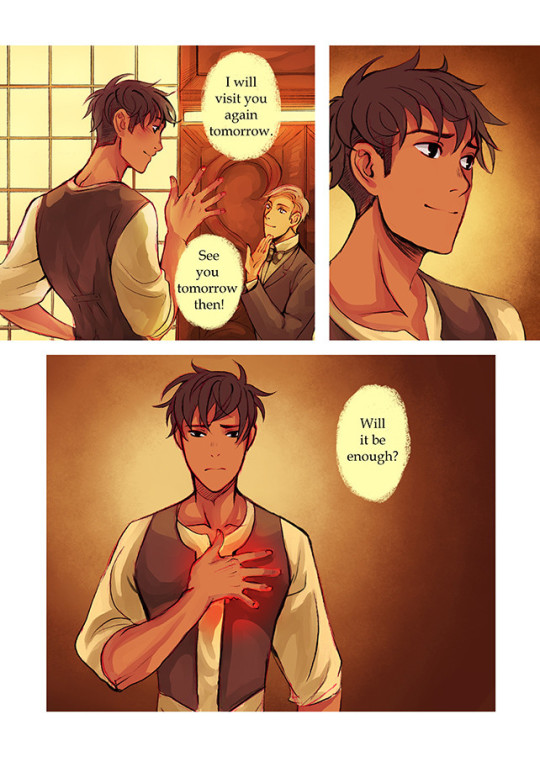
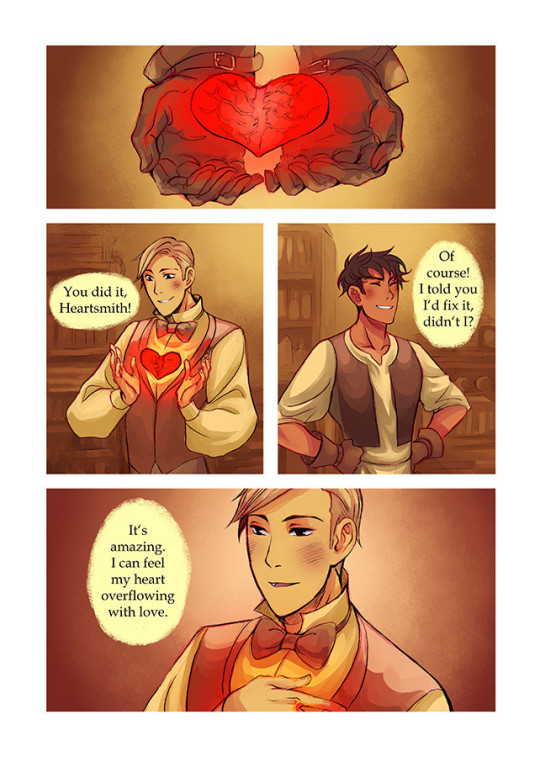
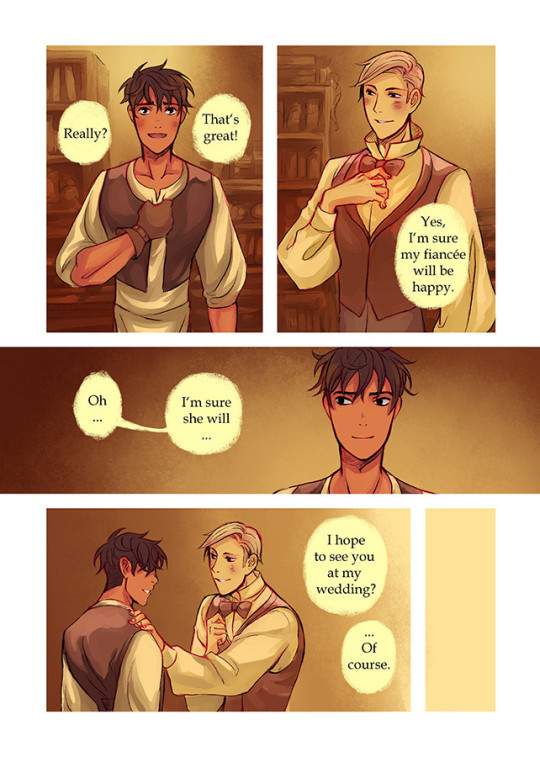
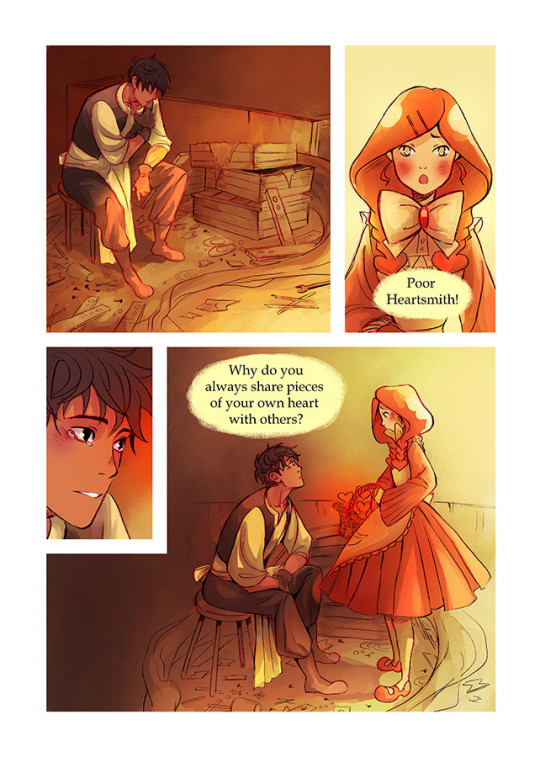
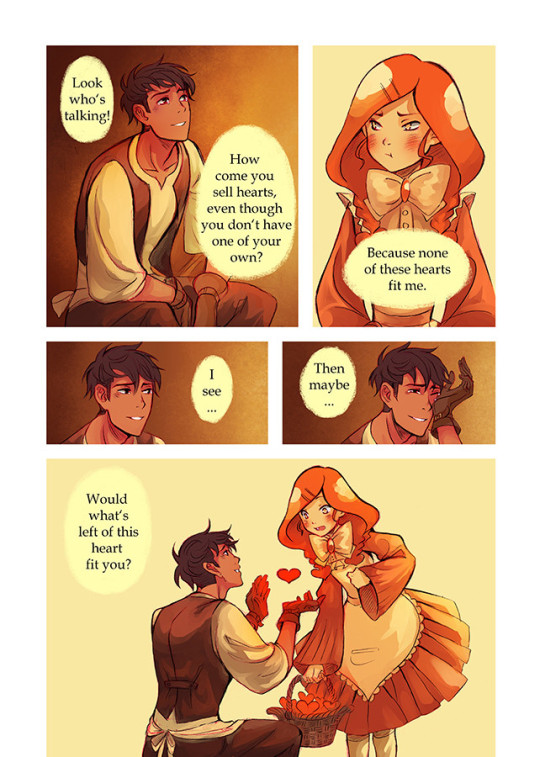
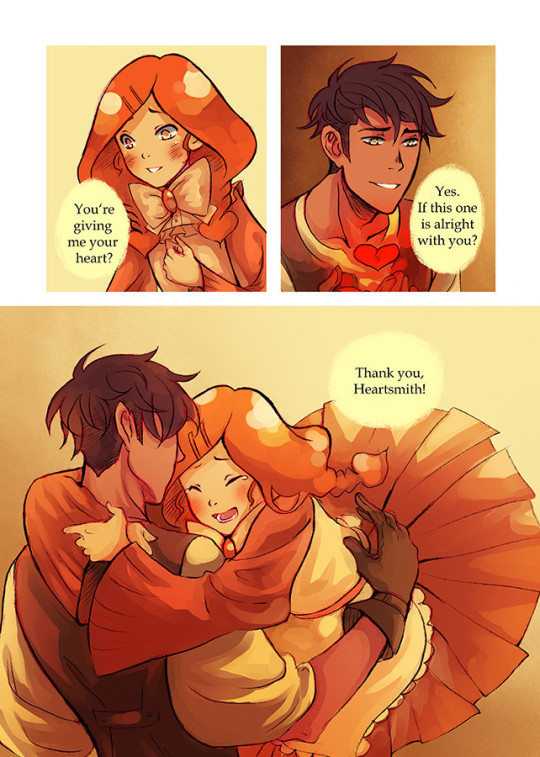
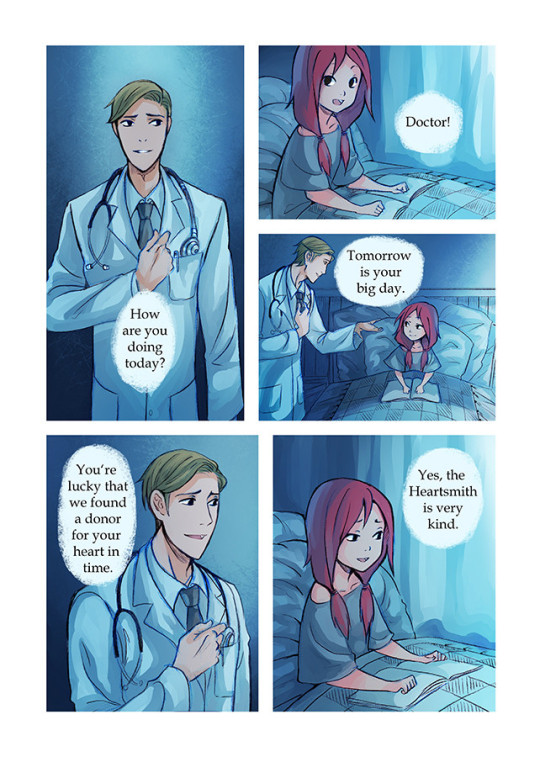
Would you like to buy a heart?

That was amazing!

17 Jul 02:26

outosumi: Two women talking about a transwoman using women’s restroom.Lady A: He is in there only...

outosumi:

Two women talking about a transwoman using women’s restroom.

Lady A: He is in there only to peep on women.

Lady B: Were you there to peep on other women?

Lady A: No.

Lady B: Neither was she.

Lady A: She is a he!

Lady B: Are you a he?

Lady A: No.

Lady B: Neither is she.

Lady A: But he has a penis!

Lady B: Have you seen her penis?

Lady A: Yes!

Lady B: Then I firmly believe you are the one who did the peeping.

17 Jul 02:25

Fuck off, pearl clutchers

by Stabbity

The Belle Jar is great and I won’t stop swearing either. If you’re seriously going to clutch your fucking pearls about the way I talk on my own goddamn blog, stop, click the magical red ex in the corner of your browser, and never come back.

17 Jul 02:25

Oh, Oklahoma, You're So Fucking Not Okay

by Rude One
By now you've seen this photo making it easier to figure out which Oklahomans got dropped on their heads when they were babies:


That's a group of Confederate flag-wielding fucknuts amid another group of loyal Americans who are greeting President Obama as he arrives at his hotel in Oklahoma City. The aforementioned brain-damaged fucknuts insist that their flag of a degraded, defeated nation based on slavery is not racist at all. They'll tell you that the protest was, in fact, organized by a black man. Congratulations. That just means stupid isn't racist, not that racists aren't stupid.

But let's focus in for a moment on this white child standing next to a woman holding a flag:


Now, that child may be there with someone else who has nothing to do with the rebel flag and is excited to see Obama. But, just in case the child's mother or father or other relative is there getting the child to hate on the Negro president, let the Rude Pundit say this to her (?): "Dear child, your parents are terrible human beings who want to see black people chained up, in servitude, and able to be beaten and raped at will. When you are older, you will despise your parents for having brought you here. Or you will have grown up into a terrible human being. If it's the first, then burn your parents' dumb flags, maybe even in front of them. You should probably hide all the guns first."

And now let's look at these two African Americans in the crowd, which had many black people in it to welcome President Obama. This man...


...was standing in the middle of the flags, trying to ignore the insanity around him and catch a glimpse of the arriving limo. Meanwhile, this woman...


...was staring at the flag bearers as if to ask, "What the fuck?" What the fuck, indeed.

The Rude Pundit loves these two people because when they were confronted by a racial hatefulness that was literally in their faces, they turned the other cheek and awaited the President of the United States, a black person himself, spurning the dead hopes of a dead nation worshiped by fools.
17 Jul 02:24

A Twitter Bot That Generates Beautiful, Imaginary Moths

by Claire Voon
archer's-convolvulus-bella moth

Imaginary moths by Loren Schmidt and Katie Rose Pipkin (all images courtesy the artists)

For centuries, devoted lepidopterists such as Vladimir Nabokov have painstakingly gathered and catalogued hundreds of winged arthropods, building impressive collections in glass cases that display moths’ myriad variations. A new project in the form of a Twitter bot has turned that tradition on its head, bringing it wholly into the digital age. Created by artists Loren Schmidt and Katie Rose Pipkin, @mothgenerator is a Twitter account that automatically produces images of make-believe moths, with the structures and colors of the insects’ bodies selected and combined by chance. Randomly generated nomenclatures also accompany each specimen so the resulting Twitter feed — which sends out images a few times each day — exists as a kind of online, Dadaist encyclopedia of moths, making it essential viewing during National Moth Week, which begins Saturday.

There’s the shouldered-signate two chholzi bufalli, a large insect with a zebra-stripe-patterned abdomen and violet-tinged hind wings; the granite-bogus moth mongusii amyelithophane, which has spiked magenta wings; and the sociable-anna moth brsalli approei, whose iridescent wings are attached to a delicate, skinny body. Pipkin said the pair chose moths as their subjects because she found their appearance especially fascinating. “They feel like living pieces of paper or tree bark,” she told Hyperallergic in an email. “They have such an unusual texture. I think they also seem strangely aware—more so than many other insects.”

the great bluish ruby

A selection of imaginary moths by Loren Schmidt and Katie Rose Pipkin

Work on the bot began last month as a satellite project of inflorescence.city, Schmidt’s and Pipkin’s ongoing and evolving vision of an online metropolis that engages with random text and image generation. Written in JavaScript, @mothgenerator has a number of components that include processes to trace antennae and create wing shapes and markings, as Schmidt explained. The project is grounded in hand-drawing rather than in complex programming, however, with most of the work stemming from the pair’s continual refinement of their generated moths’ textures, colors, proportions, and patterns. To yield the mish-mashed names, Pipkin programmed a web crawler to collect around 4,000 real, English moth names and 10,000 Latin ones; while the program often matches whole English nouns with adjectives, the Latin words get spliced into phonemes, shuffled around, and pulled together so the linguistic bits form mostly gobbledygook.

Pipkin has been making other image-spawning Twitter bots for a year, including one that predicts changes in sea levels and another that forms bird’s migratory patterns from unicode. However, @mothgenerator is the first to churn out actual visuals. For her, the timeline is “both a platform and an artwork”; having an autonomous work exist in such a public forum allows for interactions that its makers didn’t anticipate and may not even witness.

“There is also a (relative) ease of access to a digital, and particularly social, artwork that may not be available with more traditional formats,” Pipkin wrote. “This is true both in the sense of being physically able to navigate an art space, but also in the structure of how one approaches engaging with a work.”

Although the moths currently exist primarily online, Schmidt and Pipkin have previously connected the generator to a receipt printer so people could produce moths and print out monochrome iterations of their favorite fictional arthropods to take home. They also have a private bug collection of a very different sort — screenshots of programming errors. “I might be fondest of those,” Pipkin wrote, “simply because after 10 hours into staring at the same articulated leg hair function, what one really needs is a laugh.”

small st.

Imaginary moths by Loren Schmidt and Katie Rose Pipkin (click to enlarge)

the double

Imaginary moths by Loren Schmidt and Katie Rose Pipkin (click to enlarge)

aster moth

Imaginary moths by Loren Schmidt and Katie Rose Pipkin (click to enlarge)

pigritia-streaked

One of Loren Schmidt and Katie Rose Pipkin’s imaginary moths (click to enlarge)

17 Jul 02:22

And a Professor of Ancient Languages at NYU

by Erik Loomis

This is outstanding:

That time Wonder Woman's stereotypical neighbor dropped the hint that she had moved into a gay male boarding house pic.twitter.com/rNs7u0Vrjd

— GayProf (@GayProf) July 15, 2015

I also love Wonder Woman’s glasses

17 Jul 02:19

Screaming For Science: The Secrets Of Crying Babies And Car Alarms

by Jon Hamilton

Why do screams demand our attention like no other sound? The answer seems to involve an acoustic quality called roughness that triggers fear circuits in the brain.

» E-Mail This