Shared posts

10 Aug 08:16

A Photographer in Conversation with William Blake

by John Yau

Emmet Gowin, “Avebury Stone and Rennie Booher, England and Danville, Virginia” (1972), gelatin silver print. Collection of Emmet and Edith Gowin ( all images © Edith and Emmet Gowin and courtesy of Pace MacGill Gallery, New York)

There are at least three exhibitions in Hidden Likeness: Photographer Emmet Gowin at the Morgan currently at the Morgan Library & Museum (May 22–September 20, 2015). The first and largest one consists of Gowin’s photographs and objects, and the various drawings, books, illuminated pages, anonymous snapshots and other items he has selected from the museum’s permanent collection to pair with them.

Within these pairings one can discern a second exhibition, which is a tight survey of Gowin’s work organized by Joel Smith, the Morgan’s curator of photography, from its beginnings in 1965 to a photograph dated 2012, tracing the artist’s growth from the early photographs of his wife Edith, her extended family, and their son, Elijah, to views of “working landscapes,” aerial views of devastated terrain (nuclear test sites) and, most recently, rain forests, where he often photographs at night.

The third exhibition consists of Gowin’s choices for the pairings, which include two drawings by William Blake; a drawing by Domenico Campagnola, “Apocalyptic Scene with Fallen Buildings” (ca 1550); a watercolor and gouache by Samuel Palmer, a charcoal drawing by Odilon Redon; along with ancient seals, manuscripts, printed books and photographs.

Together, these exhibitions, which were sensitively reviewed by Roberta Smith in the New York Times (June 4, 2015), form a dense collage of overlapping thoughts and conversations. For those who were dazzled by this exhibition, as I was, I highly recommend buying the trim exhibition catalogue, Hidden Likeness: Emmet Gowin at The Morgan (2015), which contains a discussion between Smith and Gowin that is a must-read for anyone interested in art, creativity, and photography.

Emmet Gowin, “Tomb, Petra, Jordan” (1982), unique gold-toned gelatin silver print. Collection of Emmet and Edith Gowin

While the three exhibitions borne out of Gowin’s pairings are readily apparent, there are other, smaller narratives within this dense gathering that should be singled out. On a simple level, Gowin’s photographs can be separated into two categories: those photographs that register what he finds in the landscape, whether it is in Petra, Jordan or Danville, Virginia, where he was born and where he still spends time; and those that Roberta Smith characterizes as “an experiment.”

These two sides of Gowin reminded me of the argument between Ansel Adams and William Mortensen, whom Adams dubbed “the Anti-Christ” for his staged photographs. In my Hyperallergic review (October 21, 2012) of Faking It: Manipulated Photography before Photoshop at the Metropolitan Museum of Art (October 11, 2012 – January 27, 2013), I wrote:

In the ensuing argument between Mortensen and the purists, straight photography won out. In his seminal study, The History of Photography from 1839 to the Present (New York: Museum of Modern Art, 1937), Beaumont Newhall left Mortensen out altogether.

It is worth noting that work by Frederick Sommer, who was Gowin’s mentor, was featured prominently in this exhibition.

Are Gowin’s manipulated works “experiments,” as Smith and others have dubbed them, or are they simply (and not so simply) another side of his investigation of photography? The term “experiment” reminds me of the opening of James Agee’s review of the great filmmaker, Jean Vigo: “If you regard all experiment as an affectation…” While Smith isn’t dismissive of Gowin’s so-called experimental works, far from it, I find the term itself problematic. It suggests that the work is a test undertaken in a laboratory in order to prove a hypothesis, and because of these conditions it is removed from life. Personally speaking, I am sick of the term “experiment” and its antitheses, “purist” and “purity,” and all that they imply.

Emmet Gowin, “Copper Ore Tailing, Globe, Arizona” (1988), toned gelatin silver print. Collection of Emmet and Edith Gowin

One overall point I want to make is that the largest photograph in this exhibition is around 13 x 20 inches, and many are less than 10 x 10 inches. Still, despite such a scaled-down format, Gowin is able to palpably register the landscape’s changing surface. He wants to convey both the texture and sight of his subjects, the blemishes and stains made by mankind and time. Another point I want to stress is that, in the photographs involving some form of manipulation, Gowin does not repeat himself. He does not turn what he does into either a style or a product.

In “Edith in Panama, Blakean Conversation” (2007), we see a sheet behind which a nude woman, mostly in shadow, straddles a chair. Her face is covered by the silhouette of a bust, which is looking down at two upside-down, cut-out figures she is holding in one hand.

Emmet Gowin, “Edith in Panama, Blakean Conversation” (2007), gold-toned salt print on handmade paper. Collection of Emmet and Edith Gowin

Who are we and whom do we talk to when we are alone? Who do we summon to our sides when solitariness overtakes us? Who hears us, even when we don’t cry out? This is what Gowin, who could be speaking of his own work, said about Blake: “Blake’s personal vision was what he had to create because the world’s vision didn’t suit him.” In Gowin’s work, as in Blake’s, urgency and necessity converge.

In his discussion of “Edith in Panama, Flight Inside (2003), Gowin tells Smith that he “traced a silhouette from a photograph of Edith […] that he had taken with him “to “Panama.” While there he used a certain bulb to photograph an insect’s flight in front of “rapid flashing [which] produces a stroboscopic effect. It’s something the eye an barely see for itself, but film has no problem recording it.”

In “Edith, (Rain Droplets in a Web)” (2004), which stirred up unexpected associations and memories, Gowin has re-photographed a portrait of Edith with her eyes closed, which he placed behind a spider web laden with raindrops. We see the droplets, but not the web, partially obscuring Edith’s face, the slight tilt of her head echoing the attentive inclination of the Madonna in Byzantine and Renaissance paintings. The interventions of the raindrops brought to mind a day in the mid-80s, in Florence, Italy, where the Italian painter Roberto Barni took me to see a recently uncovered fresco, in which the eyes of the saints had been gouged out before the fresco was covered over. They were not supposed to see what was going to happen to them, he explained. The water droplets also reminded me of other paintings with surfaces blistered by time, water or fire. Another unexpected association was of the blurred photographs of Miroslav Tichý, which often preserve a scarred, deteriorating thing. Beauty and terror melded together, the sheer sensuality of the raindrops in counterpoint to the feeling that the portrait is of someone who has gone blind.

Emmet Gowin, “Edith (Rain Droplets in a Web)” (2004), goldtoned salt print on gelatin coated paper. Collection of Emmet and Edith Gowin

In all of Gowin’s photographs I had the feeling that he was registering the effects of time, both natural and manmade, on the world around him. In doing so, he resisted the crystalline timelessness we associate with certain iconic photographers and photographs (Ansel Adams, for example) – that moment when time is made to stand still so we might contemplate infinity as a thing of sublime beauty – in favor of time as an inescapable process which involves aging, scarring, decay and growth.

Born into a religiously fundamentalist family, and the son of a minister, I don’t think it is farfetched to speculate that Gowin’s preoccupations continue to be spiritual, despite his loss of faith. He is concerned with the materiality of being, as it manifests itself in individuals, families, friendships, and communities. Within these preoccupations, one also sees Gowin honing in on evidence of continuity, regeneration and the apocalyptic. He is a visionary photographer, brimming with intimations of mortality and yearning while poised, peacefully and precariously, on the cusp of infinity – a compelling and often disturbing contradiction.

Hidden Likeness: Photographer Emmet Gowin at the Morgan continues at the Morgan Library & Museum (225 Madison Avenue, Midtown, Manhattan) through September 20.

10 Aug 08:16

When I Was a Kid

by Brandon Hicks
10 Aug 08:14

Required Reading

by Hrag Vartanian
Some striking satellite images found on Google Earth (via Colossal)

Some striking satellite images found on Google Earth from Al Jowf, Saudi Arabia (via Colossal)

This week, considering Hiroshima 70 years later, museums as publishers, the myth of a Brooklyn exodus, Ferguson’s radical knitters, popular vape flavors, and more.

 Last week was the 70th anniversary of one of the world’s most tragic events, the bombing of Hiroshima (today is the day of commemoration for the bombing of Nagasaki). The New Yorker has compiled an archive of writing on the topic, including John Hershey’s August 31, 1946, article “Hiroshima“:

Mr. Tanimoto shoved off again. As the boatload of priests moved slowly upstream, they heard weak cries for help. A woman’s voice stood out especially: “There are people here about to be drowned! Help us! The water is rising!” The sounds came from one of the sandspits, and those in the punt could see, in the reflected light of the still-burning fires, a number of wounded people lying at the edge of the river, already partly covered by the flooding tide. Mr. Tanimoto wanted to help them, but the priests were afraid that Father Schiffer would die if they didn’t hurry, and they urged their ferryman along. He dropped them where he had put Father Schiffer down and then started back alone toward the sandspit.

 The Volta has published a special issue devoted to Hiroshima and Nagasaki. I haven’t finished going through it, but it looks excellent. It includes a story by artist/writer Etel Adnan … which begins:

When did I hear about Hiroshima, when and where? In 1945 I was twenty, and in Beirut. The war had ended with a big bang, so it seemed, and it must have been because of Hiroshima. Some terror had finished the war, a war that for Lebanon represented an economic boom, a participation in adventure. Japan was extremely far from our daily horizon.  Ten years later, in January 1955, I was landing in New York harbor, on my way to UC Berkeley. It’s in Berkeley that I found out the immensity of that ‘event.’ A debate had started about its necessity, as Oppenheimer, one of the two physicists held as most responsible for the making of the atomic bomb, was feeling guilt and speaking around the nation against that ultimate weapon. I saw my first images of the explosion in Hiroshima and the mushroom like white cloud looked to me as a human brain, adding to its terror.

 What do we do when our icons crumble? Three writers (incl. Philip Kennicott) at the Washington Post look at the big picture:

Iconoclasm can be accidental or purposeful, an act of liberation or oppression, and there’s never any guarantee that it will work. Ham-fisted destruction of symbols is a sure sign of the totalitarian mind-set — and an image destroyed in the physical world can have extraordinary longevity and power in the collective conscious. The following is a field guide to the loss of symbols, here and around the world.

 The Whitney Museum’s Sarah Hromack considers the issues facing institutions interested in publishing:

There is a largely unarticulated, yet nevertheless effective class system that governs the kinds of publications institutions produce, and the ways those publications function in public space. While the Internet and the Web began problematizing the publication, conceptually and physically, so many years ago, printed matter still holds its ground within the context of the museum. On its surface, the exhibition catalogue is a historical document. It is the last remaining physical vestige of a show-gone-by: an object, an heirloom, a relic — a conversation piece perched atop book shelves and coffee tables. Whether publishing independently or in collaboration with another institution or publishing house, the museum produces both knowledge and value in the exhibition catalogue, reifying the object-based aesthetics that still govern the physical gallery space while affirming its own desire for cultural, academic, and historical gravitas.

 Is the Brooklyn exodus of artists, writers, musicians, and other creative professionals a myth? According to The Economist, yes:

20150808_USC311_0

 Meet Ferguson’s radical knitters:

“As a black woman, you’re invisible,” says Taylor Payne, a member of the group. “But knitting makes people stop and have a conversation with you. If someone asks me what I’m doing, I say, ‘I’m knitting for black liberation.’ Sometimes they respond and sometimes I just get ‘Oh, my grandma knits,’ like the person didn’t hear me. But at least it opens the door to talking about my experiences.”

 A great review by Lizzie Skurnick of Harper Lee’s new novel that says gender, not race, is the issue of this newly released version of her famous book. Though this passage stopped me in my tracks:

Add Lee writing about Scout breathing in “the warm bittersweet smell of clean Negro,” or admiring Tom as a “black-velvet Negro, not shiny, but soft black velvet,” you see that while Go Set a Watchman is controversial for some, Mockingbird was always pretty controversial for others. (I’m still waiting for the book in which a white character is introduced by his or her color and smell.)

 A new report looks at 700 popular films from 2007 to 2014 and how they represent gender, ethnicity, and sexual identity. It includes some fascinating facts:

  • Across 700 films, a total of 9,522 characters were coded 40‐ to 64‐years of age. Less than a quarter (21.8%) of these characters were women. Only 19.9% of the middle‐aged characters were female across the 100 top films of 2014. This is not different from the percentage in 2007.
  • Of those characters coded for race/ethnicity across 100 top films of 2014, 73.1% were White, 4.9% were Hispanic/Latino, 12.5% were Black, 5.3% were Asian, 2.9% were Middle Eastern, <1% were American Indian/Alaskan Native or Native Hawaiian/Pacific Islander, and 1.2% were from “other” racial and/or ethnic groupings. This represents no change in the portrayal of apparent race/ethnicity from 2007‐2014.
  • Across 4,610 speaking characters in the 100 top films of 2014, only 19 were Lesbian, Gay or Bisexual. Not one Transgender character was portrayed. Ten characters were coded as Gay, 4 were Lesbian, and 5 were Bisexual. Only 14 movies sample wide featured an LGB depiction and none of those films were animated.

 Writing for The Times Literary Supplement, Gabriel Said Reynolds explores the newly discovered Birmingham Qur’an in the context of debate on Islamic origins:

However, the BBC article – like a subsequent New York Times article (also July 22) – misses the most significant point about the dating of this Qur’an manuscript (which contains only a small section of the text: parts of chapters 18, 19, and 20). Islamic tradition reports that Muhammad received revelations from the angel Gabriel between the year 610, when he was forty years old, and his death in 632. But according to Islamic tradition, he did not write down these revelations. Instead, his proclamations were preserved only on various scraps (one tradition speaks of palm leaves, parchment and the shoulder blades of camels), or in versions which some of his companions composed. An official text of the Qur’an was only recorded around 650, during the reign (644–656) of Uthman (the third Caliph, or successor, of the Prophet Muhammad). According to a well-known Islamic tradition Uthman had his “official” text of the Qur’an prepared by a committee, and all variant versions destroyed by fire: “Uthman sent to every Muslim province one copy of what they had copied, and ordered that all the other Qur’anic materials, whether written in fragmentary manuscripts or whole copies, be burnt”.

 The top 50 vape flavors in the US, includes some that offer interesting cultural insights (esp. #4). Here are the top 20; the rest are here:

  1. Cigarette
  2. Widow
  3. Blackberry Leatherman
  4. Confederate Swamp
  5. Tavern On The Green
  6. Dark Chocolate
  7. Beefwater
  8. Neat Dad
  9. Kilgore Trout
  10. Methamphetamine
  11. Adamantium
  12. Shakespeare Lecture
  13. Laundromat Change Machine
  14. Binky
  15. Ukrainian Drought
  16. 1988 Honda Civic Hatchback
  17. Old Marshmallow
  18. Dentist Visit
  19. Student Lounge
  20. Græwood Myst

 What are the chances of a pigeon pooping on you in NYC? This is the answer, but it doesn’t seem right at all, and I say this as an avid walker in NYC who has only been pooped on once in my almost two decades here:

You are 20% likely to be pooped on by a pigeon within 2 hours, assuming you are walking nonstop through New York City, which contains a population
of 1 million pigeons who poop at a rate of every 12 minutes.

 A look at the conventions of gender and travel writing (h/t @dominicumile):

The authors of these narratives talk a lot about how they shouldn’t be on the road because good girls stay at home. Explaining why she was leaving her marriage to travel, Gilbert writes, “Until I can feel as ecstatic about having a baby as I felt about going to New Zealand to search for a giant squid, I cannot have a baby.” Here, the act of travel itself is so subversive to gender norms that the destination almost doesn’t matter. This absolves the writer of responsibility for her choices — where she goes, what she does there, or how she writes about it. Much emphasis is put on how “authentic” their lives are, hence the self-congratulatory title of Newman’s collection of travel writing, What I Was Doing While You Were Breeding (2014). But these books are not so much transgressive as regressive. After all, they obey their gender codes: men go on adventures, women on journeys of self-discovery.

 This happened this week in Charlotte, North Carolina:

Screen Shot 2015-08-07 at 6.47.23 PM

 Business Insider creates a graph showing how much income is taxed around the world:

2007-vs-2014-version-2

 Pretty funny: Why I Deleted Your Promo Email.

Required Reading is published every Sunday morning ET, and is comprised of a short list of art-related links to long-form articles, videos, blog posts, or photo essays worth a second look.

10 Aug 06:36

McDonald's | 6d0.jpg

6d0.jpg
10 Aug 06:36

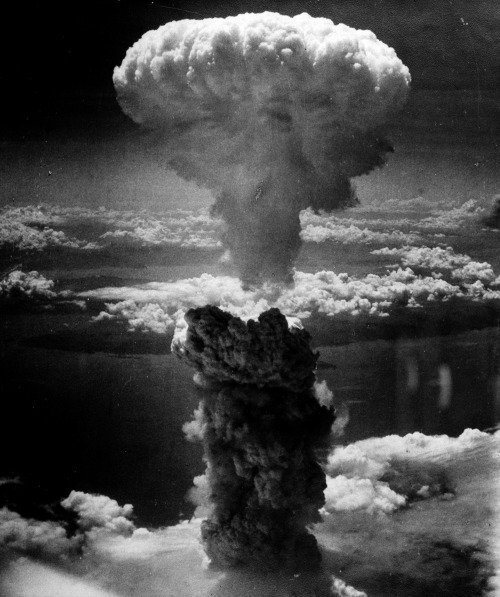
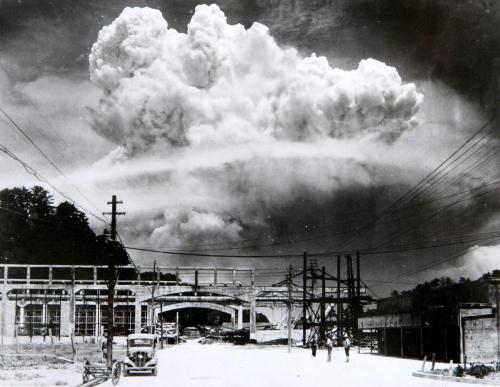
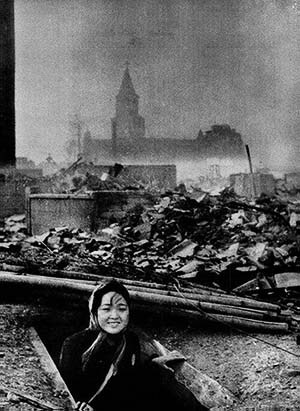
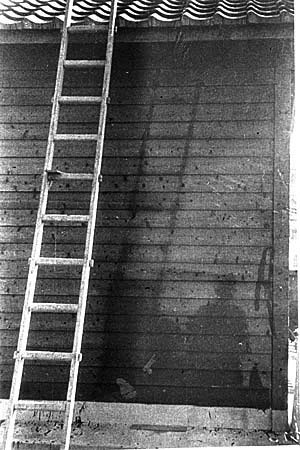
August 9th 1945, Nagasaki bombed “just for the hell of it.”


unknown


Eiichi Matsumoto, asahi.com

August 9th 1945, Nagasaki bombed “just for the hell of it.

10 Aug 06:34

sciencefictiongallery: Virgil Finlay - Devil’s Cargo, 1952.


sciencefictiongallery:

Virgil Finlay - Devil’s Cargo, 1952.

10 Aug 06:34

Photo


10 Aug 06:31

imthecatlady:Okay so here’s the lowdown. I found 4 sets of...


imthecatlady:

Okay so here’s the lowdown. I found 4 sets of medium format negatives while I was thrift shop hunting a few weeks ago. They were sitting in a box of old vintage photographs in these plastic sleeves, and from what I could tell, they had been taken sometime in the 50’s. So obviously I brought them home, and today finally had them scanned in, and holy wow they are beautiful!!

NOW this is where I need the Internet’s help. I would absolutely love to find the women in these photographs/the photographer who took them. The only info I have is that the negatives were found in a thrift store on Hull St in Richmond, VA. They are medium format, and judging by the style of dress, made in 1940-1950. The owner of the thrift store had no idea where they came from. I’m posting the best/clearest scans of the images, so if y'all could reblog the shit out of this, I’m hoping we can find the owners of these amazing images.

10 Aug 06:31

Photo


10 Aug 06:30

geardrops:finally, one of these that speaks to me and my...


geardrops:

finally, one of these that speaks to me and my adoration of the things only found in the cold black sea

10 Aug 05:30

Nicki Minaj | dc7.png

dc7.png
10 Aug 05:29

The Truth About Video Games

10 Aug 05:29

blackberries-and-arsenic: elektrik-eel: underwearandourjackedup...

10 Aug 05:27

Photo


10 Aug 05:25

gilmotoongee: How????Like all her super long dresses at film...


gilmotoongee:

How????Like all her super long dresses at film festivals/awards are gorgeous but so are all her outfits for fashion shows????

LOVE

10 Aug 05:25

leirelatent: Beauty by Rino Stefano Tagliafierro.

10 Aug 05:25

magictransistor: Das Wunderzeichenbuch (The Book of Miracles)....


magictransistor:

Das Wunderzeichenbuch (The Book of Miracles). Augsburg. 1552.  

Contd from here

10 Aug 05:25

morobook: Morocco.Marrakech.Tea Serving.1988


morobook:

Morocco.Marrakech.Tea Serving.1988

10 Aug 05:24

Fashion in art - Italian Renaissance, pt. 2


Fashion in art - Italian Renaissance, pt. 2

09 Aug 07:47

weirdvintage: “Female Perversions–Sex and the Lesbian” by Dr....

Sophianotloren

Wow...

via bernot


weirdvintage:

“Female Perversions–Sex and the Lesbian” by Dr. Albert Reissner, MD.  1965

- Some chapter highlights include:

  • Will marriage cure the lesbian?
  • “Why wasn’t I born a boy?”
  • Lesbians as frigid females (via, and you could buy it used on Amazon!)
09 Aug 07:46

Ugly laugh


Ugly laugh

09 Aug 07:44

Open Tabs

by tengrain
Our maybe-recurring feature of some longish reads that I am finding interesting and have kept open in tabs to dip into and out of this week. Inside the failure of Google+, a very expensive attempt to unseat Facebook – regular … Continue reading →
09 Aug 07:25

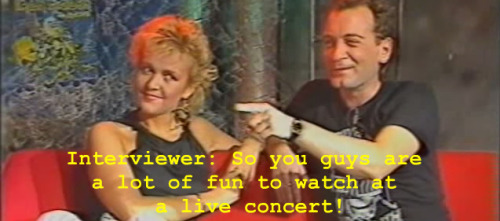
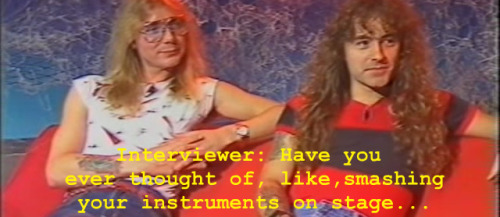
son-of-blackpignotebook: allofthebrucedickinson: “Interviewer:...


son-of-blackpignotebook:

allofthebrucedickinson:

Interviewer: How about a commercial break?”

Up the Irons!

09 Aug 07:23

EyeJapanese music video for group_inou by katsukinogami and...


Eye

Japanese music video for group_inou by katsukinogami and Baku89 uses Google Streetview images to create hyperlapse effect, featuring the band:

Link

09 Aug 07:23

crystalgemsugilite: magicaltophat: drtanner: queenoftheimpala:...


crystalgemsugilite:

magicaltophat:

drtanner:

queenoftheimpala:

image


When they said it might sing, this wasn’t exactly what I had in mind.

I think my dinner is possessed.

THAT IS NOT A “HUMMING NOISE” 

Nothing rouses my appetite like the wails of the damned.

How did they perfectly capture the noise I make when I have to do shit i don’t wanna do

This leaked Silent Hills footage is so wild

09 Aug 07:23

prostheticknowledge: WandermentShort indie game by Andrew Wang...


prostheticknowledge:

Wanderment

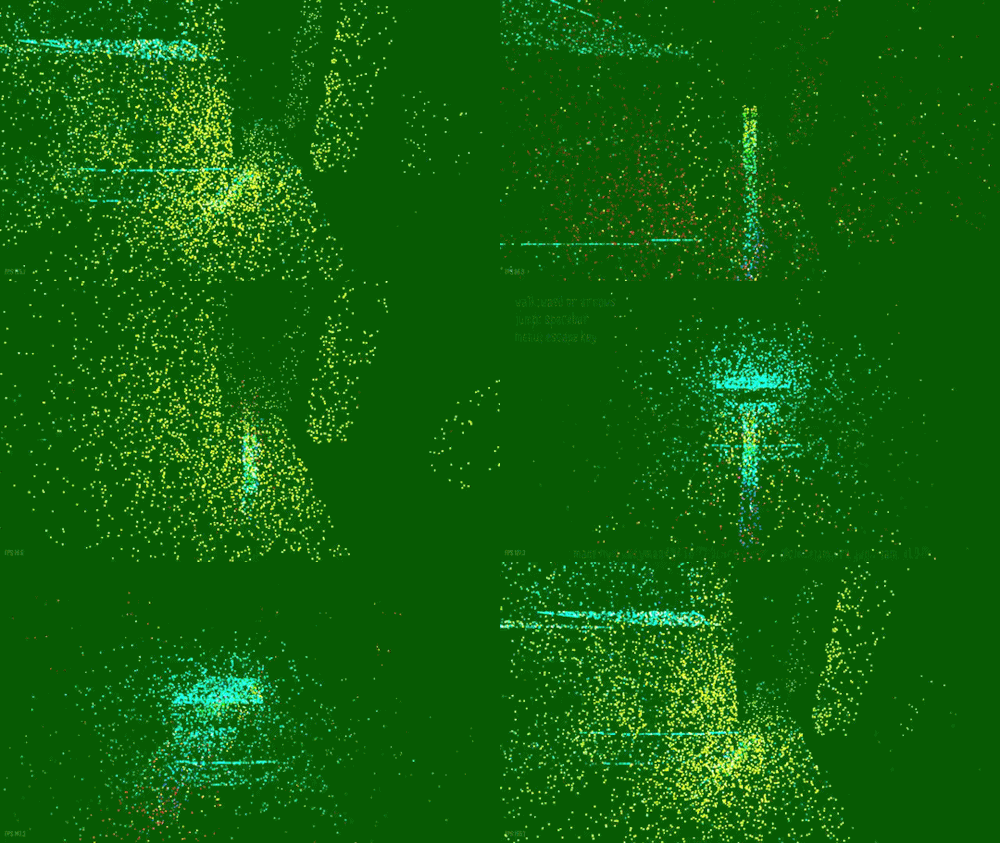
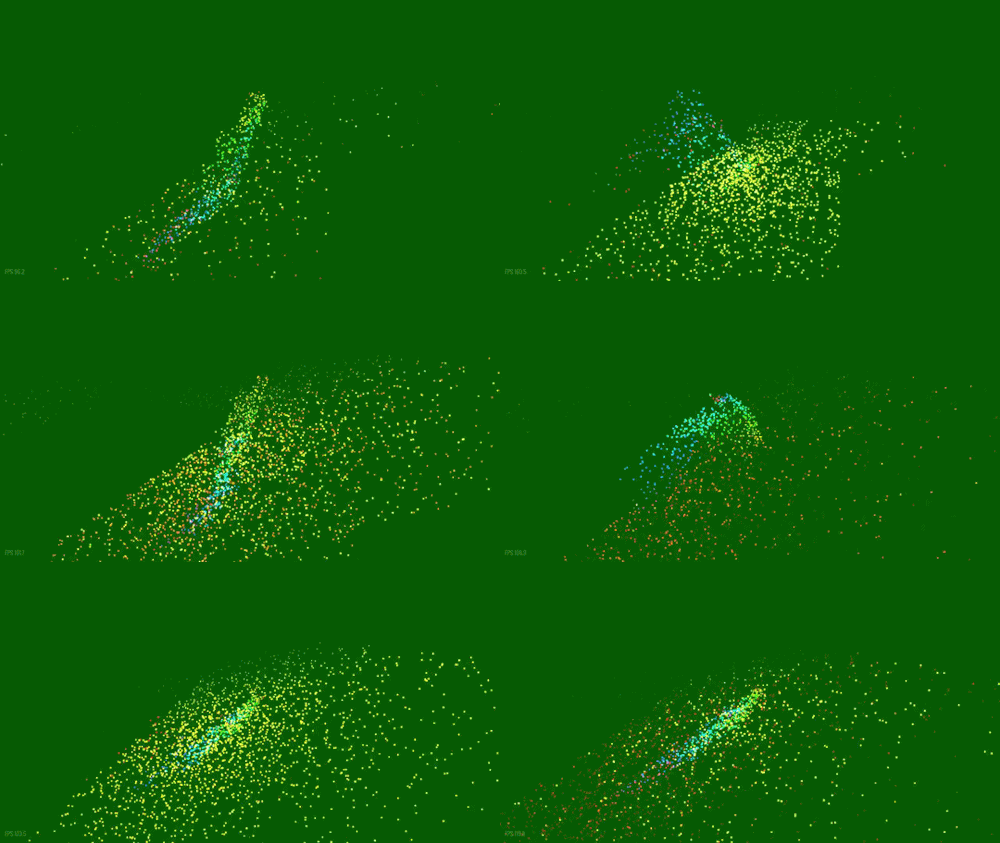
Short indie game by Andrew Wang where you play a blind kitten navigating an envirnoment presented as particles based on your actions (a sort of kitty-sonar). Here is a video review by ToriDori:

Enjoy the adventures of a playful blind kitten journeying across town to find its friend. Particle-based 3D platformer. Sense your surroundings by splashing and walking. Take your time, savor and enjoy the experience.

Made in 72 hours for #CloneJamJord.

You can find out more (and download the game) here

09 Aug 07:22

Photo


09 Aug 07:22

operaqueen: Julie Andrews as Cinderella. CBS, 1957.


operaqueen:

Julie Andrews as Cinderella. CBS, 1957.

09 Aug 07:05

Waiting for Android’s inevitable security Armageddon

by Ron Amadeo

We're on day who-the-heck-knows of the Android Stagefright security vulnerability, and there's really no point keeping track of the days because no one's going to fix it. The Android ecosystem can't deal with security, and it won't change until it's too late.

Android was originally designed, above all else, to be widely adopted. Google was starting from scratch with zero percent market share, so it was happy to give up control and give everyone a seat at the table in exchange for adoption. The sales pitch was simple: "Apple locked you all out of the iPhone and with Microsoft you're just a customer, but on Android, you'll all have a say in the end product." The open source nature of Android allowed anyone to adapt its code to their hardware, and OEMs and carriers could (theoretically) alter or fork it to their hearts' content.

Now, though, Android has around 75-80 percent of the worldwide smartphone market—making it not just the world's most popular mobile operating system but arguably the most popular operating system, period. As such, security has become a big issue. Android still uses a software update chain-of-command designed back when the Android ecosystem had zero devices to update, and it just doesn't work. There are just too many cooks in the kitchen: Google releases Android to OEMs, OEMs can change things and release code to carriers, carriers can change things and release code to consumers. It's been broken for years.

Read 20 remaining paragraphs | Comments

09 Aug 07:04

Snowden wannabe leaked files to 4Chan, but no one believed him

by Daniel Cooper
One person's dream of becoming the next Snowden or Manning was ruined when nobody believed that the classified documents that they posted to the internet were genuine. Michael Scerba was a 21-year-old graduate at Australia's Department of Defense w...