Shared posts

09 Aug 07:51

You can touch me if you want (I know you’re dying to…)

by Sophia, NOT Loren!

It’s been a while since I last posted anything here… and a lot has happened, a lot has changed.

I ran into Smash one last time, at the same bar where we first met. She’d told me before that she hadn’t been feeling well, needed some time to rest up and get better, so it was a big downer to see her not only out and having a great time, but doing so with the guy she’d met the same night we did.  It would have hurt a lot less if she’d just told me directly, “I don’t think I want to continue with you.”  I know that’s not always an easy thing to do, but it felt cheap and dishonest to tell me she was really sick instead, as an “easy out.”

Hands had a baby, and apart from the hour or so conversation we had the first time we met, and a few text messages afterward, she’s not been in touch.  Her last word to me was that she wouldn’t be available anymore.

Soup was a brief encounter at the same little pub that used to be my neighborhood hangout, and she came on to me strong. Both she and a few of her friends invited me to their “intentional community” living space for a weekly dinner they host, and as I was leaving Soup was stepping out for a smoke… she asked if she could kiss me goodnight, which turned into a several-minute makeout session on the sidewalk.  Then she never returned my calls, her friends didn’t answer my messages, I never got any details about the dinner invitation, and the next time I saw Soup at the bar she pretended I didn’t exist.

Then a funny thing happened when I attempted to make it to the Folsom Street Fair this year in San Francisco.  “Attempted,” because through circumstances beyond my control, I arrived several hours later than I’d planned, just as everything was closing down.  Hadn’t even eaten that day, and it was already nearly 7pm!  So I stopped by the Center for Sex and Culture to see what might be going on, and found that I had barely missed a group of authors reading their own work… so I sat around and chatted a bit with the few folks there — got to see some old friends and make a few new ones.  The funny thing is, I thought the day had been a total flop; I missed out on all the cool stuff, and ended up with a little conversation as a crummy consolation prize.  One of the new friends I made was headed the same way as me on mass transit, so we walked back to the subway together and took the same train partway (I had to transfer to get back home.)

Then the next day, I got an invitation from this new friend — we’ll call her MFP — to her birthday party a couple days later.  I’m not one to easily turn down an invitation to watch a burlesque show and sing karaoke with a bunch of queermos, so I went, had a great time, and found myself making eyes at MFP while she performed her last karaoke track of the night — “Queer” by Garbage.  She was eying me back just as much, and towards the end of the song, during an instrumental break, she came over and made out with me.

There’s this joke I’ve heard a few times, something along the lines of “Q: What does a lesbian bring on a second date? A: A moving truck.”  Well, it wasn’t quite that quick, and we both recognized that NRE was in play and we shouldn’t rush together even if we felt like everything was perfect… but we were both already looking for housing, and we did both have limited resources on our own… and as we got to know each other a bit better, we found that we could stand to live with each other and finally after lots of hard work from us both, lots of uncertainty and last-minute gambles, we landed a 2-bedroom apartment in an amazing neighborhood for a great price!  We’re slowly getting settled in our new place, and we’ll be having a housewarming party at the end of the week.

I’m still trying to find folks to be fuckbuddies, but it’s not going so great.  MFP and I have a fair amount of overlap in our sexual interests and preferences, but we have just as much that doesn’t mesh, and although I’ve been grateful and delighted to have so many wonderful sexytimes with her… I still have other aspects of my sexual needs left unfulfilled .  When my options seem to be limited to “hang out at a bar, spend money on booze, hope there’s a chance of meeting a girl” and “hang out on OkCupid and write messages to women who almost never write back” I’m not terribly surprised that I’m not getting any better results.  I did have one chick write to me on OkC, said she’d love to hook up while she was in town for a week.  We exchanged phone numbers, sent a few text messages back and forth, picked a day to meet… and then she cancelled late the day before, and rescheduled tentatively for sometime a few days later — which she also backed out of last minute, just before leaving town.  Says she might be around again in a few months, or if I’m ever a few states away where she lives, to look her up.  Why do I still expect people to have the fucking decency to be able to schedule an date and time to meet, and to follow through with that?  It seems to be a forgotten relic of ancient times, or something.  A mythical lore known only to a few bizarre freaks like me.

Here’s hoping I find someone soon!  Who knows, maybe I’ll have a nice holiday screw?

Just Fuck Me For Christmas


Filed under: General
09 Aug 07:51

assaultandslattery: masonlindroth: Hylics is a recreational...


assaultandslattery:

masonlindroth:

Hylics is a recreational program with light JRPG elements.

Features:
-Advanced graphics.
-RPG battles.
-Overuse of random text generation.
- ~2 hours of content.

It’s now available for $3 at Itch.io.

System Requirements:
Windows XP/Vista/7/8

Inspirational

09 Aug 07:51

emu-apocalypse: this is important


emu-apocalypse:

this is important

09 Aug 07:51

podunkmouse: highlandvalley: RazerJPさんはTwitterを使っています:...

09 Aug 07:50

Crazy people chainsawed a frozen lake to make a spinning ice carousel

by Casey Chan

Winter makes people desperate. Being surrounded by snow for months saps the fun out of the world. Walking on a frozen ice lake is not comforting. But screw it all. Because people need to be, well, people, crazy folks that were sick of winter this year decided to chainsaw up a frozen lake and make a moving carousel on ice. It looks like so much fun!

Read more...

09 Aug 07:50

shubbabang: I FORCED LIFE BACK INTO A FIVE YEAR OLD LAPTOP...


shubbabang:

I FORCED LIFE BACK INTO A FIVE YEAR OLD LAPTOP AFTER IT WOULDN’T TURN ON FOR LIKE 2 WEEKS AND I’VE NEVER FELT SO POWERFUL

09 Aug 07:49

The "Infant Liberation Front" Colouring Book

by Scarfolk Council

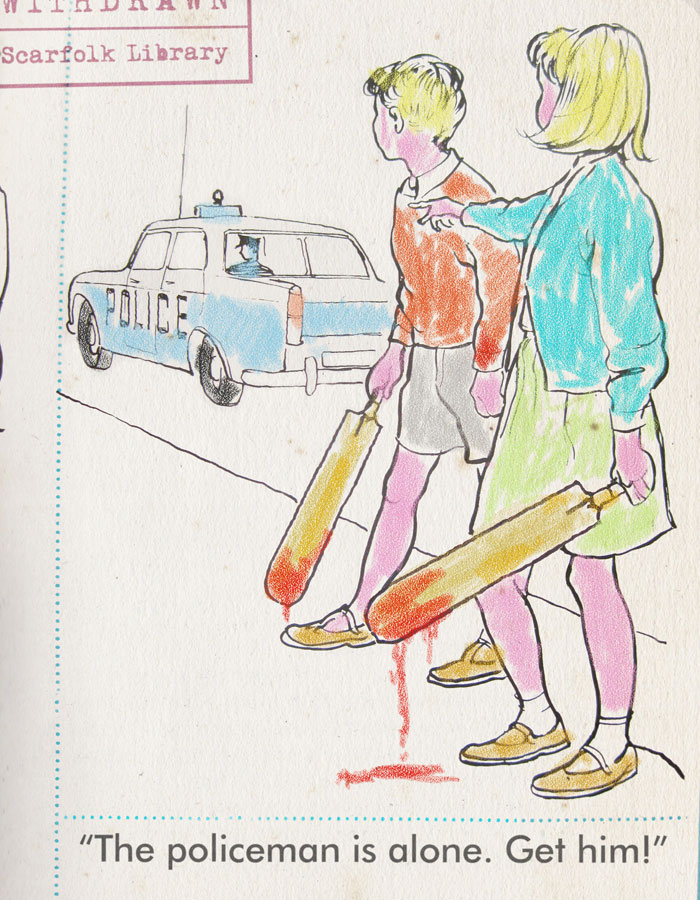
1972 saw the birth of the ILF (Infant Liberation Front), a terrorist organisation for the under-10s. The anarchic underground group was slow to make an impact because many of its younger members had not yet developed the literacy skills required to understand the group's manifesto.

The breakthrough came in 1973 when the ILF published a more accessible colouring book. It outlined the group's aims and depicted recommended acts of terror which could be easily carried out before bedtime. The book was an instant hit and widely distributed in school playgrounds.

The ILF's goal was to create a paedocracy, but not only; it also wanted "the freedom to eradicate all grownups (without having to get their permission first)". To this end the group would go to any lengths. Hordes of children roamed the streets (after they had completed their homework) hunting stray adults, and in 1976 alone 250 grownups disappeared or met their fates.

In 1978 the ILF disbanded when Arthur Grubbe, a 50 year old investigative journalist, infiltrated the group by posing as a 3 year old girl. Grubbe revealed that the ILF was secretly funded by local government who intended to groom sociopaths for positions in the civil service once they reached the age of majority.

Grubbe became something of a celebrity and Arthur was the most popular baby girl name of 1979.


Below, an ILF leaflet. ILF members regularly held dirty protests, especially those under the age of one. They doggedly maintained around-the-clock demonstrations which were only interrupted by feeding time and naps.


You can learn more about infant civil disobedience HERE and HERE and HERE.
09 Aug 07:47

This strip was Not Invented Here on Tuesday, May 19, 2015

Not Invented Here collections now available in ebook and good-old-fashioned paper versions!

Not Invented Here strip for 5/19/2015

I'm with Owen on this one.

New to Not Invented Here? Here's a helpful starting place.

comments | email | twitter
08 Aug 09:49

Any Excuse Will Do for Them

08 Aug 09:49

whittneydoll: iwouldsellmysisterssoulfor1d: SOMEONE TEXTED ME...


whittneydoll:

iwouldsellmysisterssoulfor1d:

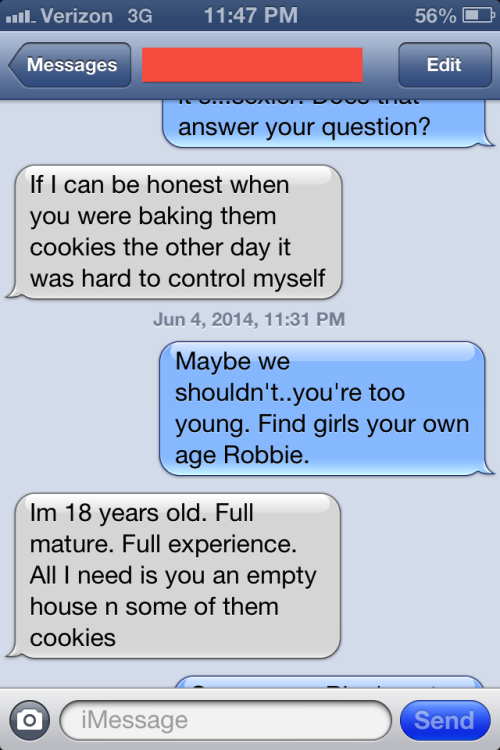
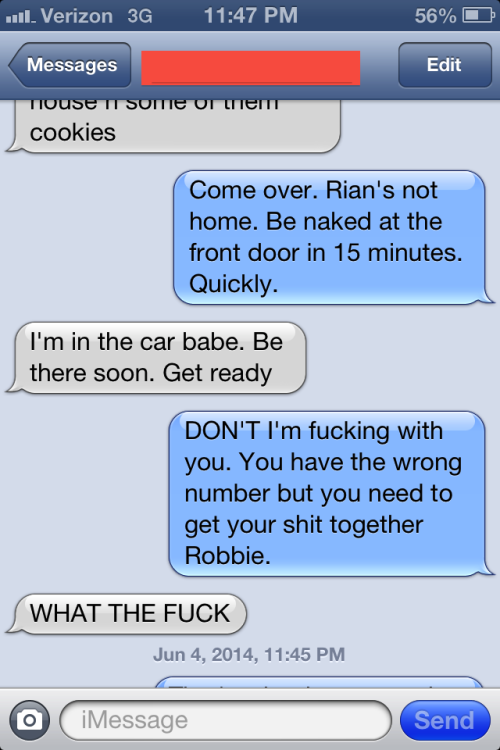
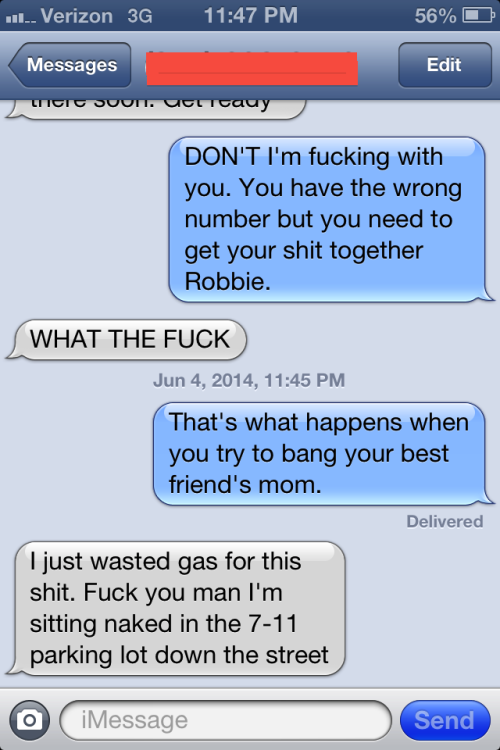
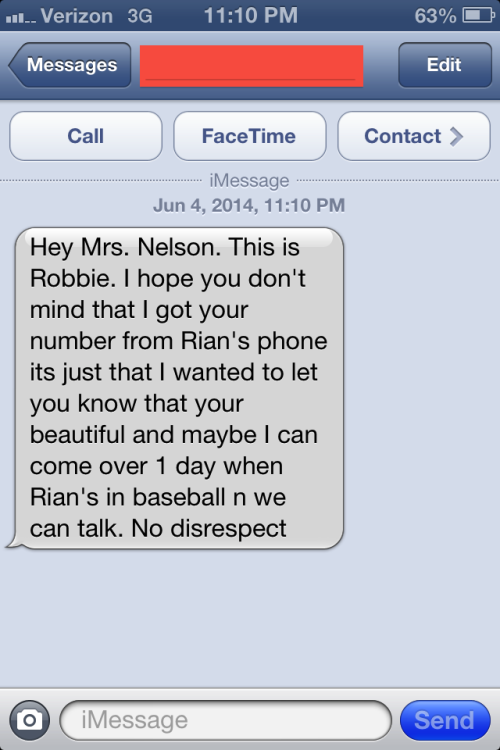
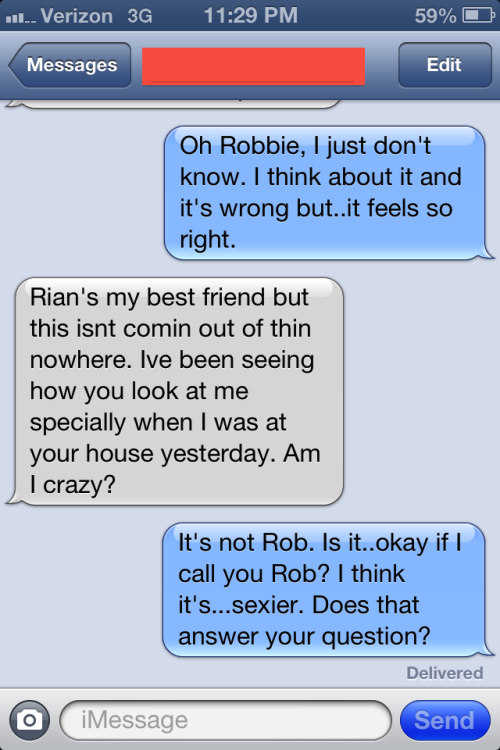
SOMEONE TEXTED ME WITH THE WRONG NUMBER AND I PLAYED ALONG I’M GOING TO HELL I KNOW IT

FULL MATURE. FULL EXPERIENCE.

08 Aug 09:47

Instagram Deletes Activist Account After #KKKorGOP Posts

by Claire Voon
11324935_493543550808024_276078255_n

A collage of GOP presidential candidates (all images by @afrochubbz/Instagram)

Last night, the activist group Dream Defenders contributed to the first GOP debate through Instagram, posting on its account collaged images of Republican candidates and members of the KKK, tagged #KKKorGOP. The hashtag refers to a campaign to highlight ideological similarities between white supremacist organizations and figures and the GOP presidential candidates, namely ones that concern “repressing the voting rights of people of color, supporting ‘Stand Your Ground’ laws, stopping the fundamental right of migration by force, and defunding critical health care services for communities of color and women.”

This morning, the group discovered that Instagram had deleted not just the recent photos but its entire account; others who had used the hashtag noticed that their individual posts were gone as well. In a blog post about incident, Steven J. Pargett, communications and culture director for Dream Defenders, said he believed the Facebook-owned company had censored the content, since Facebook co-sponsored the debate. A few hours after news of the erasure spread on social media, the photo-sharing network reactivated the account — but concerns still remain over the sudden and unexplained censorship.

“In times of darkness, the people must have the freedom to shed light,” Pargett wrote. “It is truly concerning when privately owned companies like Instagram step over the lines to censor organizations and people that are participating in the Democratic process by challenging people to think critically.”

11378808_871290522920035_1025942688_n

Mike Huckabee (click to enlarge)

Each published image places a GOP candidate next to a fully robed KKK member, superimposing the two over a confederate flag. Framed as if in a mugshot, each pair also stands against a height chart and behind a letter board featuring the candidate’s controversial quote. Targets of the campaign include Mike Huckabee, who said last night, “The purpose of the military is to kill people and break things”; Ben Carson, with his condensed quote from 2013: “Obamacare is the worst thing that has happened in this nation since slavery”; and Donald Trump, accompanied by what’s actually a misattributed quote: “Laziness is a trait in the blacks. … black guys counting my money! I hate it.”

The pictures are extreme and their message clear, but they do not seem to warrant eradication under Instagram’s Community Guidelines. The company has recently been strictly patrolling hashtags, mostly due to violations of rules regarding nudity: in the past few weeks, it has issued temporary bans on #curvy, #goddess#EDM, and even the eggplant emoji hashtag. Instagram explained that the decisions to block those hashtags are not related to the actual terms but rather the inappropriate, sexual content linked to them — which is why the hashtags are still searchable, just now heavily monitored. That logic, however, does not extend to the images of #KKKorGOP, in which everyone (thankfully) is fully clothed. Political motivations, rather than a need to keep things G-rated, seem to have driven the deletion of the Dream Defenders’ account — a notion reinforced by the fact that Instagram reactivated the account after considerable backlash on social media calling out the company’s censorship.

Instagram has yet to provide a reason for the deactivation; Hyperallergic has reached out to the social network application but has not received a response.

11421957_1660431187505233_219908496_n

Ben Carson

11821221_695740943891262_1130104412_n

Donald Trump

08 Aug 09:46

Art Movements

by Tiernan Morgan

Sir Edward Burne-Jones, album of illustrated letters from Burne-Jones to Mrs Gaskell (1893–8); one drawing of a bird in flight; one drawing of Burne Jones and Mrs Gaskell taking tea (detail shown right); one fragment in pencil with a drawing of a baby bird; writing paper, mounted onto an album page (© Ashmolean Museum, University of Oxford)

Art Movements is a weekly collection of news, developments, and stirrings in the art world.

The FBI released surveillance footage recorded at the Isabella Stewart Gardner Museum the night before the heist that took place on March 17, 1990. The footage apparently shows a guard — identified as Richard Abath by the Boston Globe — letting an unauthorized guest into the museum.

A seven-year-old boy got his leg stuck in a public work of art. “In twenty-one years in the fire service,” Captain Dave Bell of the Hilton Head Fire Department told WJCL News, “I never had an extrication from an art piece, so that was a first.”

The Ashmolean Museum acquired an archive of correspondence between Pre Raphaelite artist Sir Edward Burne-Jones and Helen Mary (“May”) Gaskell. The artist had a romantic, platonic affair with the married society hostess. According to Josceline Dimbleby, Gaskell’s great-granddaughter, the pair corresponded up to five times a day.

A number of journalists and human rights activists criticized the investigation into the murder of photojournalist Rubén Espinosa. According to Mexico City prosecutor Rodolfo Ríos Garza, burglary is being considered as a motive in Espinosa’s death, despite the fact that the photojournalist was reportedly being harassed by state officials.

Johnnetta Betsch Cole, the director of the Smithsonian National Museum of African Art, published an article defending the museum’s decision to keep Conversations: African and African American Artworks in Dialogue — an exhibition of work loaned by Bill and Camille Cosby — open.

The British Library (completed 1997) became one of the youngest buildings in Britain to be designated Grade I listed status.

The British Library, London (via Wikipedia)

Marek Maďarič, Slovakia’s culture minister, filed a criminal complaint against an unnamed individual in connection with Gian Lorenzo Bernini’s marble bust of Pope Paul V (1621). The work was recently acquired by the J. Paul Getty Museum.

New York Governor Andrew Cuomo announced that $6.2 million in grants will be distributed to 16 historic sites that still require repairs in the wake of Hurricane Sandy.

A fire damaged the Pietro Griffo Archeological Museum in Sicily. The site, which is one of Italy’s 51 UNESCO World Heritage Sites, contains the ruins of six Greek temples.

UNESCO signed an agreement with Iraq to conserve the remains of Samara City. Under the terms of the agreement, $873,000 will be invested in protecting the World Heritage Site.

According to The Art Newspaper, the Public and Commercial Services Union asked incumbent National Gallery director Gabriele Finaldi to “intervene” in the ongoing dispute over staff privatization.

The World of Lygia Clark Foundation ceased its authentication services due to a legal battle between the artist’s sons, Eduardo and Alvaro Clark.

Antoine Pesne, “Girl with Dove” (1754), oil on canvas, 55 x 46 cm (via Wikimedia)

US District Judge Jed Rakoff rejected Poland’s request to extradite Russian art dealer Alexander Khochinskiy. The dealer has been accused of knowing that Antoine Pesne’s “Girl with Dove” (1754) was stolen by the Nazis from the National Museum in Poznan when he acquired it.

Philip Kennicott, the Washington Post‘s art and architecture critic, opined that Melissa Chiu’s decision to hold the Hirshhorn Museum and Sculpture Garden’s 40th-anniversary gala in New York “is a snub” to the Washington arts crowd.

Two contractors were injured following a “partial wall collapse” at a construction site at 210 Bowery, New York. The Andrew Edlin Gallery, whose new location is directly next-door, postponed a performance by Brent Green following the incident.

A stolen Stradivarius was returned to the daughter of its former owner after a California woman brought the instrument to violinmaker and dealer Phillip Injeian for appraisal.

The board of the Tubman African American Museum voted to keep Alfred Conteh’s work “The Preacher Pimp” on display following complaints by local clergy members.

A Banksy mural that was removed from the Packard Plant in Detroit is estimated to fetch between $200,000 and $400,000 at auction.

Marshall University faces thousands of dollars in potential fines for allegedly failing to provide an inventory of Native American artifacts to federal officials.

The lawyer representing artist Danh Vō in his ongoing legal dispute with collector Bert Kreuk has withdrawn from the case.

Art dealer Magda Sawon claimed to have rejected a consignment of two prints by the Suicide Girls. Back in May, the Suicide Girls published prints of their Instagram posts in protest over Richard Prince’s appropriation of their images.

The Saint Arnold Brewing Company produced a new IPA inspired by Houston’s annual Art Car Parade.

Cindy Sherman will play a character inspired by opera singer Maria Callas in a new film by artist Francesco Vezzoli.

Rome’s mayor Ignazio Marino launched a €50,000 (~$55,000) initiative to clean the city’s most prominent fountains.

The Clark Hulings Fund will accept applications for their Business Accelerator Grants beginning September 1. The grants are given to artists “who have secured tangible prospects for advancing their careers but lack the financial resources to capitalize on these opportunities.”

David Brook, the editor, speaker, secretary, and press officer of the D.H. Lawrence Society, resigned from his posts in protest over a petting zoo that will travel to the D.H. Lawrence Heritage Centre.

The OPAL Community Land Trust launched a Kickstarter campaign to save and transport the former home of Edith Macefield. The house was the inspiration for Carl Fredricksen’s so-called “balloon house” in the Pixar movie Up.

Future Artefacts, a three-day fair dedicated to “physical objects in media” (books, magazines, LPs etc.) will debut in London in October.

Transactions

The National Gallery of Art acquired work by Mary Cassatt, Jan Miense Molenaer, Arshile Gorky, and Lewis Carroll.

The Portland Art Museum announced that it will return 18 medicine bundles that were taken from Montana’s Crow Indian Reservation.

The Newseum in Washington, DC, acquired the set of The Daily Show with Jon Stewart.

The New-York Historical Society acquired 15 Hudson River School paintings from the late Arthur and Eileen Newman. The acquisition includes works by Thomas Cole, Martin Johnson Heade, Frederic Edwin Church, and Joseph F. Cropsey. The museum also acquired Ed Ruscha’s “Fanned Book” (2013), a gift of museum trustee Sid Lapidus and his wife Ruth.

Thomas Cole, “On Catskill Creek, Sunset” (ca. 1845–47). New-York Historical Society. Collection of Arthur and Eileen Newman, Bequest of Eileen Newman (courtesy New York Historical Society) (click to enlarge)

Transitions

Portland’s Museum of African Art and Culture will close and digitize its collection.

Kate Eilersten will leave her post as executive director of the Sonoma Valley Museum of Art in order to establish her own consulting firm.

Sarah Munro was appointed director of the Baltic Centre for Contemporary Art.

Allison Chew Syltie was appointed director of Baylor University’s Martin Museum of Art.

Sanjit Sethi was appointed the inaugural director of the Corcoran School of the Arts and Design.

Sarah Kennel was appointed curator of photography at the Peabody Essex Museum.

Lizzie Carey-Thomas was appointed head of programs at the Serpentine Galleries.

Matthew Girling was appointed global CEO of Bonhams.

Accolades

Jukuja Dolly Snell was awarded the Telstra National Aboriginal and Torres Strait Islander Art Award.

Obituaries

51r0tU6OVML._SX331_BO1,204,203,200_

The cover of Svetlana Boym’s ‘The Future of Nostalgia’ (2001)

Svetlana Boym (1966–2015), art historian. Professor of Slavic and comparative literatures at Harvard University.

Alan Cheuse (1940–2015), author and NPR book critic.

Buddy Emmons (1937–2015), musician and steel guitar virtuoso.

Charles Goldstein (1936–2015), New York real estate lawyer. Served as counsel to the Commission for Art Recovery.

Lance Kinz (1951–2015), art dealer.

Robert Mosher (1920–2015), architect.

Arnold Scaasi (1930–2015), fashion designer.

08 Aug 09:46

Sunset, 8/7/15

by John Scalzi

And now, on our way into the weekend.


08 Aug 09:45

Too Fragile to Open, World’s Oldest Multicolor Printed Book Is Digitized

by Allison Meier
'Shi zhu zhai shu hua pu' (Chinese, 1633), polychrome xylographic print (courtesy Cambridge University Library)

‘Manual of Calligraphy and Painting’ (‘Shi zhu zhai shu hua pu’) (Chinese, 1633), polychrome xylographic print (courtesy Cambridge University Library)

Cambridge University Library recently added selections from its Chinese collections to its Digital Library site. Among the ancient oracle bones used as a method of divination, a 19th-century “Manual of Famine Relief,” and a 14th-century mulberry paper banknote threatening decapitation for any forgery, is the 17th-century Manual of Calligraphy and Painting (Shi zhu zhai shu hua pu). The book is so fragile that until digitization no one was allowed to open it.

'Shi zhu zhai shu hua pu' (Chinese, 1633), polychrome xylographic print (courtesy Cambridge University Library)

‘Manual of Calligraphy and Painting’ (‘Shi zhu zhai shu hua pu’) (Chinese, 1633), polychrome xylographic print (courtesy Cambridge University Library) (click to enlarge)

“It is important as both the earliest and the most beautiful example of multicolor printing anywhere in the world,” Charles Aylmer, head of the Chinese department at Cambridge University Library, told Hyperallergic. The revealed pages include eight categories of subjects illustrated by 50 different artists and calligraphers, with birds, plums, orchids, bamboo, fruit, stones, ink drawings, and other miscellaneous imagery, each followed by a text or poem.

“Everyone will have their own favorites, but many people like the birds best, as they are depicted with such economy of line and true understanding of the nature of the subject,” Aylmer added.

The manual was created in 1633 by the Ten Bamboo Studio based in Nanjing, and although it was reprinted several times, the example at Cambridge is one of the rare complete sets of an early edition in its original “butterfly” binding. The prints look like watercolors with their gradients of hue, the result of a technique called polychrome xylography, or douban, invented by artist and printmaker Hu Zhengyan. The manual is the earliest known book with polychrome xylography, where each image involved several printing blocks with different colors of inks, giving the completed print the appearance of having been painted by hand.

The Cambridge Digital Library site states that this edition “has been identified by the leading scholar of this work as the finest and only extant complete copy in the original binding of what he describes as the ‘second superstate’ of the first edition.” Below are some selections from this 17th-century work, and the complete 356 pages of the manual are now digitized in high-resolution, allowing viewers to leaf through them for the first time.

'Shi zhu zhai shu hua pu' (Chinese, 1633), polychrome xylographic print (courtesy Cambridge University Library)

‘Manual of Calligraphy and Painting’ (‘Shi zhu zhai shu hua pu’) (Chinese, 1633), polychrome xylographic print (courtesy Cambridge University Library)

'Shi zhu zhai shu hua pu' (Chinese, 1633), polychrome xylographic print (courtesy Cambridge University Library)

‘Manual of Calligraphy and Painting’ (‘Shi zhu zhai shu hua pu’) (Chinese, 1633), polychrome xylographic print (courtesy Cambridge University Library)

'Shi zhu zhai shu hua pu' (Chinese, 1633), polychrome xylographic print (courtesy Cambridge University Library)

‘Manual of Calligraphy and Painting’ (‘Shi zhu zhai shu hua pu’) (Chinese, 1633), polychrome xylographic print (courtesy Cambridge University Library)

'Shi zhu zhai shu hua pu' (Chinese, 1633), polychrome xylographic print (courtesy Cambridge University Library)

‘Manual of Calligraphy and Painting’ (‘Shi zhu zhai shu hua pu’) (Chinese, 1633), polychrome xylographic print (courtesy Cambridge University Library)

'Shi zhu zhai shu hua pu' (Chinese, 1633), polychrome xylographic print (courtesy Cambridge University Library)

‘Manual of Calligraphy and Painting’ (‘Shi zhu zhai shu hua pu’) (Chinese, 1633), polychrome xylographic print (courtesy Cambridge University Library)

'Shi zhu zhai shu hua pu' (Chinese, 1633), polychrome xylographic print (courtesy Cambridge University Library)

‘Manual of Calligraphy and Painting’ (‘Shi zhu zhai shu hua pu’) (Chinese, 1633), polychrome xylographic print (courtesy Cambridge University Library)

'Shi zhu zhai shu hua pu' (Chinese, 1633), polychrome xylographic print (courtesy Cambridge University Library)

‘Manual of Calligraphy and Painting’ (‘Shi zhu zhai shu hua pu’) (Chinese, 1633), polychrome xylographic print (courtesy Cambridge University Library)

'Shi zhu zhai shu hua pu' (Chinese, 1633), polychrome xylographic print (courtesy Cambridge University Library)

‘Manual of Calligraphy and Painting’ (‘Shi zhu zhai shu hua pu’) (Chinese, 1633), polychrome xylographic print (courtesy Cambridge University Library)

'Shi zhu zhai shu hua pu' (Chinese, 1633), polychrome xylographic print (courtesy Cambridge University Library)

‘Manual of Calligraphy and Painting’ (‘Shi zhu zhai shu hua pu’) (Chinese, 1633), polychrome xylographic print (courtesy Cambridge University Library)

'Shi zhu zhai shu hua pu' (Chinese, 1633), polychrome xylographic print (courtesy Cambridge University Library)

‘Manual of Calligraphy and Painting’ (‘Shi zhu zhai shu hua pu’) (Chinese, 1633), polychrome xylographic print (courtesy Cambridge University Library)

View more from the 17th-century Manual of Calligraphy and Painting (Shi zhu zhai shu hua pu) online at the Cambridge Digital Library

08 Aug 09:44

Michigan Lawmaker Reportedly Concocted Fake Scandal To Cover Up A Real One

by Scott Neuman

The Detroit News says that state Rep. Todd Courser sought to spread a rumor that he is homosexual to hide his extramarital affair with a female lawmaker.

» E-Mail This

08 Aug 09:41

Anti-Piracy Group Hits Indie Creators For Using the Word ‘Pixels’

by Andy
Sophianotloren

"Fuck the M-P-double-A,
Fuck the R-I-double-A,
Fuck the Suits behind the BSA,
And fuck 'em all for the DMCA." --Futuristic Sex Robotz, "Fuck The MPAA."

(via Luke.Sterling)

abortretryfailTens of millions of DMCA-style notices are sent to online services every week complaining about copyright infringement. While most are accurate, some contain errors.

Some take screwing up to a whole new level.

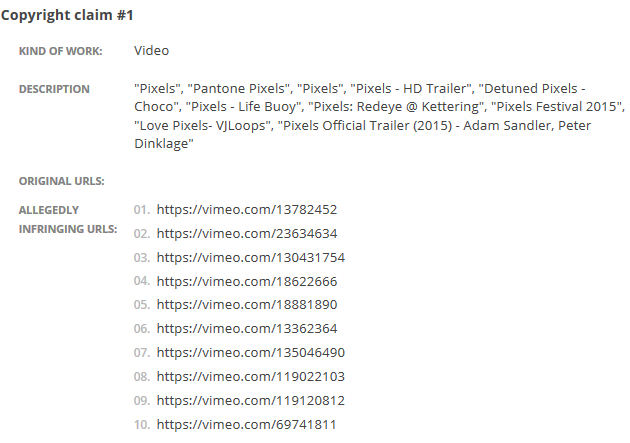
This week anti-piracy group Entura International sent a notice to Vimeo in what first appeared to be an effort to stop piracy of the Columbia movie ‘Pixels’. Not only did it fail to do that in every way possible, it hit a number of indie creators and filmmakers instead.

Founded in November 2004, NeMe describes itself as a non-profit NGO and an ‘Independent Museum of Contemporary Art’.

“Our NGO has just received a DMCA notice for a video we produced in 2006 entitled ‘Pixels’,” the group told Vimeo this week.

“The video was directed by a Cypriot film-maker using his own photos and sounds/music on a shoestring budget and infringes no copyright.”

Sadly for NeMe, however, it has now been resigned to history.

pixels-dmca

But upsetting the NGO was just the tip of the iceberg. The notice goes on to hit an embarrassing array of entirely non-infringing works.

“Life Buoy is my project for my degree at the National University of Arts from Bucharest,” creator Dragos Bardac explains.

“The film was made in mid 2010 and it is a music video for the song Life buoy by the band The Pixels. I used a mix of stop motion animation techniques in order to tell the story.”

But it doesn’t stop there.

Published on Vimeo in 2011, “Pantone Pixels” is described by creator Rob Penny as a “personal project that took me a very long time”.

Thanks to Entura, however, the image below now greets users of his website.

pixels-pantone-gone

And it gets worse.

‘Pixels’ is a 2010 award-winning short film created by Patrick Jean. Its tagline “8Bit creatures are invading New York City” only tells half the story of this extremely cool short movie. It’s now wiped out on Vimeo but luckily YouTube still retains copies which together have been viewed millions of times.

Also falling victim is VJLoops.com, a royalty free stock footage & media site. They put up a video on Vimeo titled ‘Love Pixels’ which turned out to be a big mistake. Same goes for a 42 second video concerning this year’s Pixels Festival in Mons, Belgium.

Last, but certainly not least, Entura rounded off this disaster by taking down the official Pixels movie trailer, even though their very own notice lists their errors clearly.

pixels-notice

Of course, in addition to the hassle of having had their content wrongfully taken down, each person subjected to a notice from Entura will have a ‘strike’ placed against their Vimeo account.

“The notice we received says that this is strike 1 which we do not accept for the aforementioned reasons. It also says that for Vimeo to accept to return the video online we have to give our name address and an assortment of statements,” the NeMe project told Vimeo in a response.

“I’d suggest filling a counter notice,” Mark from the company responded. “This is in the hands of our trust and safety team and unfortunately our support team cannot help you with this issue.”

Sorry folks, apparently you’re on your own.

Source: TorrentFreak, for the latest info on copyright, file-sharing, torrent sites and the best VPN services.

07 Aug 14:33

How do you feel? (I’m lonely…)

by Sophia, NOT Loren!

there’s a feeling I get
sometimes
searching my mind
for the song to express it
and coming up with empty measures

there’s a feeling I get
sometimes
grasping at words
for analogy to convey it
but it’s almost like… I got nothin’

there’s a feeling I get
sometimes
not quite “longing”
not quite “almost”
not quite “what if”
not quite “what was”

a feeling of “not quite”

where the need to express
is overabundant
and the means to express
is sorely lacking

and this feeling
is made up of the rift
between the two

I still somehow believe
that one day
I will find the song
the lyric reference
and the melody
the music that means this thing

this movement in my heart
this feeling I get

sometimes


Filed under: General Tagged: coping, literature, poetry, singing, writing
07 Aug 14:33

"There are two reasons abortion rights activists have been boxed in. One is that we’ve been reactive..."

Sophianotloren

Abortion, on demand, without apology. Once upon a time, that was what we insisted on...

There are two reasons abortion rights activists have been boxed in. One is that we’ve been reactive rather than proactive. To deflect immediate attacks, we fall in with messaging that unconsciously encodes the vision of the other side. Abortion opponents say women seek abortions in haste and confusion. Pro-choicers reply: Abortion is the most difficult, agonizing decision a woman ever makes. Opponents say: Women have abortions because they have irresponsible sex. We say: rape, incest, fatal fetal abnormalities, life-risking pregnancies.

These responses aren’t false exactly. Some women are genuinely ambivalent; some pregnancies are particularly dangerous. But they leave out a large majority of women seeking abortions, who had sex willingly, made a decision to end the pregnancy and faced no special threatening medical conditions.

We need to say that women have sex, have abortions, are at peace with the decision and move on with their lives. We need to say that is their right, and, moreover, it’s good for everyone that they have this right: The whole society benefits when motherhood is voluntary. When we gloss over these truths we unintentionally promote the very stigma we’re trying to combat. What, you didn’t agonize? You forgot your pill? You just didn’t want to have a baby now? You should be ashamed of yourself.


- Katha Pollitt, NYTimes: How to Really Defend Planned Parenthood [really worth the 3 minute read]
07 Aug 14:29

The Real Lesson of the Stanford Prison Experiment - The New Yorker

A scene from “The Stanford Prison Experiment,” a new movie inspired by the famous but widely misunderstood study. A scene from “The Stanford Prison Experiment,” a new movie inspired by the famous but widely misunderstood study. Credit PHOTOGRAPH COURTESY SPENCER SHWETZ/SUNDANCE INSTITUTE

On the morning of August 17, 1971, nine young men in the Palo Alto area received visits from local police officers. While their neighbors looked on, the men were arrested for violating Penal Codes 211 and 459 (armed robbery and burglary), searched, handcuffed, and led into the rear of a waiting police car. The cars took them to a Palo Alto police station, where the men were booked, fingerprinted, moved to a holding cell, and blindfolded. Finally, they were transported to the Stanford County Prison—also known as the Stanford University psychology department.

They were willing participants in the Stanford Prison Experiment, one of the most controversial studies in the history of social psychology. (It’s the subject of a new film of the same name—a drama, not a documentary—starring Billy Crudup, of “Almost Famous,” as the lead investigator, Philip Zimbardo.) The study subjects, middle-class college students, had answered a questionnaire about their family backgrounds, physical- and mental-health histories, and social behavior, and had been deemed “normal”; a coin flip divided them into prisoners and guards. According to the lore that’s grown up around the experiment, the guards, with little to no instruction, began humiliating and psychologically abusing the prisoners within twenty-four hours of the study’s start. The prisoners, in turn, became submissive and depersonalized, taking the abuse and saying little in protest. The behavior of all involved was so extreme that the experiment, which was meant to last two weeks, was terminated after six days.

Less than a decade earlier, the Milgram obedience study had shown that ordinary people, if encouraged by an authority figure, were willing to shock their fellow-citizens with what they believed to be painful and potentially lethal levels of electricity. To many, the Stanford experiment underscored those findings, revealing the ease with which regular people, if given too much power, could transform into ruthless oppressors. Today, more than forty-five years later, many look to the study to make sense of events like the behavior of the guards at Abu Ghraib and America’s epidemic of police brutality. The Stanford Prison Experiment is cited as evidence of the atavistic impulses that lurk within us all; it’s said to show that, with a little nudge, we could all become tyrants.

And yet the lessons of the Stanford Prison Experiment aren’t so clear-cut. From the beginning, the study has been haunted by ambiguity. Even as it suggests that ordinary people harbor ugly potentialities, it also testifies to the way our circumstances shape our behavior. Was the study about our individual fallibility, or about broken institutions? Were its findings about prisons, specifically, or about life in general? What did the Stanford Prison Experiment really show?

The appeal of the experiment has a lot to do with its apparently simple setup: prisoners, guards, a fake jail, and some ground rules. But, in reality, the Stanford County Prison was a heavily manipulated environment, and the guards and prisoners acted in ways that were largely predetermined by how their roles were presented. To understand the meaning of the experiment, you have to understand that it wasn’t a blank slate; from the start, its goal was to evoke the experience of working and living in a brutal jail.

From the first, the guards’ priorities were set by Zimbardo. In a presentation to his Stanford colleagues shortly after the study’s conclusion, he described the procedures surrounding each prisoner’s arrival: each man was stripped and searched, “deloused,” and then given a uniform—a numbered gown, which Zimbardo called a “dress,” with a heavy bolted chain near the ankle, loose-fitting rubber sandals, and a cap made from a woman’s nylon stocking. “Real male prisoners don’t wear dresses,” Zimbardo explained, “but real male prisoners, we have learned, do feel humiliated, do feel emasculated, and we thought we could produce the same effects very quickly by putting men in a dress without any underclothes.” The stocking caps were in lieu of shaving the prisoner’s heads. (The guards wore khaki uniforms and were given whistles, nightsticks, and mirrored sunglasses inspired by a prison guard in the movie “Cool Hand Luke.”)

Often, the guards operated without explicit, moment-to-moment instructions. But that didn’t mean that they were fully autonomous: Zimbardo himself took part in the experiment, playing the role of the prison superintendent. (The prison’s “warden” was also a researcher.) /Occasionally, disputes between prisoner and guards got out of hand, violating an explicit injunction against physical force that both prisoners and guards had read prior to enrolling in the study. When the “superintendent” and “warden” overlooked these incidents, the message to the guards was clear: all is well; keep going as you are. The participants knew that an audience was watching, and so a lack of feedback could be read as tacit approval. And the sense of being watched may also have encouraged them to perform. Dave Eshelman, one of the guards, recalled that he “consciously created” his guard persona. “I was in all kinds of drama productions in high school and college. It was something I was very familiar with: to take on another personality before you step out on the stage,” Eshelman said. In fact, he continued, “I was kind of running my own experiment in there, by saying, ‘How far can I push these things and how much abuse will these people take before they say, ‘Knock it off?’ ”

Other, more subtle factors also shaped the experiment. It’s often said that the study participants were ordinary guys—and they were, indeed, determined to be “normal” and healthy by a battery of tests. But they were also a self-selected group who responded to a newspaper advertisement seeking volunteers for “a psychological study of prison life.” In a 2007 study, the psychologists Thomas Carnahan and Sam McFarland asked whether that wording itself may have stacked the odds. They recreated the original ad, and then ran a separate ad omitting the phrase “prison life.” They found that the people who responded to the two ads scored differently on a set of psychological tests. Those who thought that they would be participating in a prison study had significantly higher levels of aggressiveness, authoritarianism, Machiavellianism, narcissism, and social dominance, and they scored lower on measures of empathy and altruism.

Moreover, even within that self-selected sample, behavioral patterns were far from homogeneous. Much of the study’s cachet depends on the idea that the students responded en masse, giving up their individual identities to become submissive “prisoners” and tyrannical “guards.” But, in fact, the participants responded to the prison environment in all sorts of ways. While some guard shifts were especially cruel, others remained humane. Many of the supposedly passive prisoners rebelled. Richard Yacco, a prisoner, remembered “resisting what one guard was telling me to do and being willing to go into solitary confinement. As prisoners, we developed solidarity—we realized that we could join together and do passive resistance and cause some problems.”

What emerges from these details isn’t a perfectly lucid photograph but an ambiguous watercolor. While it’s true that some guards and prisoners behaved in alarming ways, it’s also the case that their environment was designed to encourage—and, in some cases, to require—those behaviors. Zimbardo himself has always been forthcoming about the details and the nature of his prison experiment: he thoroughly explained the setup in his original study and, in an early write-up, in which the experiment was described in broad strokes only, he pointed out that only “about a third of the guards became tyrannical in their arbitrary use of power.” (That’s about four people in total.) So how did the myth of the Stanford Prison Experiment—“Lord of the Flies” in the psych lab—come to diverge so profoundly from the reality?

In part, Zimbardo’s earliest statements about the experiment are to blame. In October, 1971, soon after the study’s completion—and before a single methodologically and analytically rigorous result had been published—Zimbardo was asked to testify before Congress about prison reform. His dramatic testimony, even as it clearly explained how the experiment worked, also allowed listeners to overlook how coercive the environment really was. He described the study as “an attempt to understand just what it means psychologically to be a prisoner or a prison guard.” But he also emphasized that the students in the study had been “the cream of the crop of this generation,” and said that the guards were given no specific instructions, and left free to make “up their own rules for maintaining law, order, and respect.” In explaining the results, he said that the “majority” of participants found themselves “no longer able to clearly differentiate between role-playing and self,” and that, in the six days the study took to unfold, “the experience of imprisonment undid, although temporarily, a lifetime of learning; human values were suspended, self-concepts were challenged, and the ugliest, most base, pathological side of human nature surfaced.” In describing another, related study and its implications for prison life, he said that “the mere act of assigning labels to people, calling some people prisoners and others guards, is sufficient to elicit pathological behavior.”

Zimbardo released video to NBC, which ran a feature on November 26, 1971. An article ran in the Times Magazine in April of 1973. In various ways, these accounts reiterated the claim that relatively small changes in circumstances could turn the best and brightest into monsters or depersonalized serfs. By the time Zimbardo published a formal paper about the study, in a 1973 issue of the International Journal of Criminology and Penology, a streamlined and unequivocal version of events had become entrenched in the national consciousness—so much so that a 1975 methodological critique fell largely on deaf ears.

Forty years later, Zimbardo still doesn’t shy away from popular attention. He served as a consultant on the new film, which follows his original study in detail, relying on direct transcripts from the experimental recordings and taking few dramatic liberties. In many ways, the film is critical of the study: Crudup plays Zimbardo as an overzealous researcher overstepping his bounds, trying to create a very specific outcome among the students he observes. The filmmakers even underscore the flimsiness of the experimental design, inserting characters who point out that Zimbardo is not a disinterested observer. They highlight a real-life conversation in which another psychologist asks Zimbardo whether he has an “independent variable.” In describing the study to his Stanford colleagues shortly after it ended, Zimbardo recalled that conversation: “To my surprise, I got really angry at him,” he said. “The security of my men and the stability of my prison was at stake, and I have to contend with this bleeding-heart, liberal, academic, effete dingdong whose only concern was for a ridiculous thing like an independent variable. The next thing he’d be asking me about was rehabilitation programs, the dummy! It wasn’t until sometime later that I realized how far into the experiment I was at that point.”

In a broad sense, the film reaffirms the opinion of John Mark, one of the guards, who, looking back, has said that Zimbardo’s interpretation of events was too shaped by his expectations to be meaningful: “He wanted to be able to say that college students, people from middle-class backgrounds … will turn on each other just because they’re given a role and given power. Based on my experience, and what I saw and what I felt, I think that was a real stretch.”

If the Stanford Prison Experiment had simulated a less brutal environment, would the prisoners and guards have acted differently? In December, 2001, two psychologists, Stephen Reicher and Alexander Haslam, tried to find out. They worked with the documentaries unit of the BBC to partially recreate Zimbardo’s setup over the course of an eight-day experiment. Their guards also had uniforms, and were given latitude to dole out rewards and punishments; their prisoners were placed in three-person cells that followed the layout of the Stanford County Jail almost exactly. The main difference was that, in this prison, the preset expectations were gone. The guards were asked to come up with rules prior to the prisoners’ arrival, and were told only to make the prison run smoothly. (The BBC Prison Study, as it came to be called, differed from the Stanford experiment in a few other ways, including prisoner dress; for a while, moreover, the prisoners were told that they could become guards through good behavior, although, on the third day, that offer was revoked, and the roles were made permanent.)

Within the first few days of the BBC study, it became clear that the guards weren’t cohering as a group. “Several guards were wary of assuming and exerting their authority,” the researchers wrote. The prisoners, on the other hand, developed a collective identity. In a change from the Stanford study, the psychologists asked each participant to complete a daily survey that measured the degree to which he felt solidarity with his group; it showed that, as the guards grew further apart, the prisoners were growing closer together. On the fourth day, three cellmates decided to test their luck. At lunchtime, one threw his plate down and demanded better food, another asked to smoke, and the third asked for medical attention for a blister on his foot. The guards became disorganized; one even offered the smoker a cigarette. Reicher and Haslam reported that, after the prisoners returned to their cells, they “literally danced with joy.” (“That was fucking sweet,” one prisoner remarked.) Soon, more prisoners began to challenge the guards. They acted out during roll call, complained about the food, and talked back. At the end of the sixth day, the three insubordinate cellmates broke out and occupied the guards’ quarters. “At this point,” the researchers wrote, “the guards’ regime was seen by all to be unworkable and at an end.”

Taken together, these two studies don’t suggest that we all have an innate capacity for tyranny or victimhood. Instead, they suggest that our behavior largely conforms to our preconceived expectations. All else being equal, we act as we think we’re expected to act—especially if that expectation comes from above. Suggest, as the Stanford setup did, that we should behave in stereotypical tough-guard fashion, and we strive to fit that role. Tell us, as the BBC experimenters did, that we shouldn’t give up hope of social mobility, and we act accordingly.

This understanding might seem to diminish the power of the Stanford Prison Experiment. But, in fact, it sharpens and clarifies the study’s meaning. Last weekend brought the tragic news of Kalief Browder’s suicide. At sixteen, Browder was arrested, in the Bronx, for allegedly stealing a backpack; after the arrest, he was imprisoned at Rikers for three years without trial. (Ultimately, the case against him was dismissed.) While at Rikers, Browder was the object of violence from both prisoners and guards, some of which was captured on video. It’s possible to think that prisons are the way they are because human nature tends toward the pathological. But the Stanford Prison Experiment suggests that extreme behavior flows from extreme institutions. Prisons aren’t blank slates. Guards do indeed self-select into their jobs, as Zimbardo’s students self-selected into a study of prison life. Like Zimbardo’s men, they are bombarded with expectations from the first and shaped by preëxisting norms and patterns of behavior. The lesson of Stanford isn’t that any random human being is capable of descending into sadism and tyranny. It’s that certain institutions and environments demand those behaviors—and, perhaps, can change them.

Sign up for the daily newsletter.Sign up for the daily newsletter: the best of The New Yorker every day.

Bookmarked at brandizzi Delicious' sharing tag and expanded by Delicious sharing tag expander.
05 Aug 14:01

Beauty in the Bruising

by kittystryker
Content warning: frank discussion of abuse, discussion of kink as a healing response to abuse There was a time when I would count my bruises to figure out how bad...
04 Aug 07:31

slime-minister: Das Triadische Ballet (gelb)

04 Aug 07:31

wyrdoldetippe: historical-nonfiction: A wooden pigeon whistle,...


wyrdoldetippe:

historical-nonfiction:

A wooden pigeon whistle, from 1800s China. They were attached to messenger pigeons to scare away bird of prey.
bird engine

04 Aug 07:31

The Stratolaunch Will Soon Be the Largest Plane in the World

The Stratolaunch Will Soon Be the Largest Plane in the World

Over the years, man has built some truly colossal airplanes. But in 2016, an even larger aircraft is expected to take flight, and when completed, it will officially be the largest plane in the world. That massive aircraft is known as the Stratolaunch. 
The Stratolaunch is currently in production at California’s Mojave Air and Space Port. Aerospace firm Scaled Composites has headed-up development of the mammoth aircraft, and befitting such a sizable plane, the technical details are jaw-dropping. Stratolaunch, nicknamed “Roc” after the mythical bird of prey, features two fuselages, six Pratt & Whitney jet engines, 28 landing gear wheels, and a whopping 385 foot wingspan.

“If you were to put the center of this airplane on a football field,” mentions Scaled Composites president Kevin Mickey in a KGET interview, “its wingtips would extend beyond the goalposts by about 15 feet on each side.”

RELATED: This 1990 Concept Car was Supposedly the Flying Car of the Future

stratolaunch-largest-plane-2

Those dimensions make it 65 feet wider than the legendary “Spruce Goose” H-4 Hercules, 95 feet wider than the spaceship-carrying Soviet Antonov An-225, and 123 feet wider than the modern Airbus A380. In fact, it is being constructed using pieces of two already quite large planes–a pair of disused Boeing 747s. This then, is no small endeavor, and it almost comes as no surprise to know the brain behind it is none other than Microsoft co-founder Paul Allen.

But its creation isn’t a means of staking a claim as the largest plane in the world, that’s merely a side effect. “Roc” is aiming to change the way satellites are launched into space.

The Stratolaunch is designed to carry a three-stage rocket (equipped with a satellite) between its two fuselages. Upon reaching the correct altitude, the rocket will detach, blast off into space, and later release the satellite. The combined weight of “Roc” plus the rocket is estimated to be 1.3 million pounds. Take a look at the animated video of the Stratolaunch in action, below.

RELATED: Check Out the Strange Boat Used to Save Russian Astronauts in Siberia

Why build the largest plane in the world to put a satellite into space? A setup like the Stratolaunch can allow flexible satellite launches during a range of weather conditions and from anywhere in the world…with a runway big enough, that is. Those are two things a stationary launch pad can’t do. Initial flight testing is anticipated to begin in 2016, with missions expected to go underway in 2018.

04 Aug 07:31

georgy-konstantinovich-zhukov: Suit of armor belonging to the...


georgy-konstantinovich-zhukov:

Suit of armor belonging to the Dauphin, Henry of France, and made by the Milanese master armorer Francesco Negroli, c. 1540.

(Musée de l'Armée)

04 Aug 07:30

vincentvxngogh: Fan Bingbing is literally a fairy queen


vincentvxngogh:

Fan Bingbing is literally a fairy queen

04 Aug 07:30

Shady Website Offers Posters of Any Image on the Internet Without Permission, Including Your Art

by Benjamin Sutton
A painting by Chuck Close, taken from the Blum & Poe website and available for purchase on Wallpart.com (screenshot by the author)

A painting by Chuck Close, taken from the Blum & Poe website and available for purchase on Wallpart.com (screenshot by the author)

Artists and photographers are up in arms over a website that is selling cheap posters and prints of their work, without their knowledge or permission. Called the Poster Shop and located at Wallpart.com, the site is tied to an incomplete address in Sydney, Australia, its phone number follows a British format, its packages ship from China, and according to Kotaku the domain was registered by a man named Sergo Zuikov, who lives in Moscow. It has been the subject of many articles and forum discussions warning artists and would-be buyers of its shady ways, and a petition calling for the site to be shut down has garnered over 62,000 signatures.

Wallpart.com’s administrators, apparently anticipating the backlash, have provided a dedicated copyright violation claim form that some suggest is the entire point of the site, which is nothing more than an elaborate phishing scam. “This is actually the main purpose for the site’s existence — they completely anticipate artists being upset about their work supposedly being sold, so they developed a system to exploit those who complain,” the blog Peter & Company writes. “Various pieces of malware and other malicious code have been found embedded throughout their pages at different times. … These people are pure scam artists, plain and simple. Avoid them at all costs.”

A print of Hyperallergic editors speaking in Baltimore, for sale on WallPart.com (screenshot by the author)

A print of Hyperallergic editors speaking in Baltimore, for sale on WallPart.com (screenshot by the author) (click to enlarge)

In other words, Wallpart.com is intended to enrage artists in order to prompt them to provide contact and other information. A quick search of the site reveals that, indeed, posters of virtually any image on the internet can be purchased from the site. A photo of the rapper Coolio scrubbed from Wikipedia? Check. A shot of the Centre Pompidou taken from France’s official tourism site? Check. A photo of Hyperallergic editor-in-chief Hrag Vartanian and senior editor Jillian Steinhauer giving a talk in Baltimore taken from the blog BmoreArt? Check. More insidious than the selling of images from Wikipedia and tourism sites — or Flickr’s short-lived fiasco of selling prints of Creative Commons images uploaded by its users — is that Wallpart.com threatens the livelihood of people who make a living from their images: artists and photographers.

“I received the first email alert about my art on Wallpart.com from Thomas Smetana, founder of 12by15,” said Joseph Nechvatal, an artist and Hyperallergic contributor. “12by15 has produced a t-shirt with me using one of my images and texts. Thomas told me that the image we used was popping up on Wallpart.com — because they ripped the image for my shirt off of his 12by15 site … I hope people understand that what they are buying, if they receive anything at all, is a shitty unsigned poster and not a work of art by me.”

An image of a poster of a work by Joseph Nechvatal for sale on Wallpart.com (screenshot courtesy the artist)

An image of a poster of a work by Joseph Nechvatal for sale on Wallpart.com (screenshot courtesy the artist) (click to enlarge)

Because the site pulls in any image associated with shoppers’ queries, searching for “Joseph Nechvatal” will not only turn up images of the artists’ work, but also photos of him from various blogs, images that accompanied his writing on Hyperallergic, and other tangentially related images, all available for purchase as posters. And the same is true of virtually any artist who has a website, has been photographed at an event, or had their work posted on Instagram. Search for “Carla Gannis,” for instance, and you’ll find not only images of the artist’s hugely popular “Garden of Emoji Delights” artwork, but also photos of her at openings, profile photos, and a slew of seemingly completely unrelated images.

“The most popular work of mine showing up on Wallpart.com is in fact a mash-up of Unicode characters and a classic work of art authored by a 16th-century painter. I find that ironic,” Gannis told Hyperallergic. “Stranger, photos of me at events are showing up there, for sale, and I have no idea who would want to pay money for these photos? Especially when they can download any of these photos directly from Google and print them out on their printer, but again who wants a pic of me at an art opening to hang on their wall either way? Seems unlikely. Thus I imagine there is a back story to Wallpart.com, something nefarious and unethical, or a conceptual prank? I’m not sure. The site seems highly unoriginal, if it’s an art stunt or a real business.”

Hyperallergic has reached out to Wallpart.com for comment but received no response.

Correction: Due to the likelihood that Wallpart.com, among other things, is an elaborate phishing scheme intended to gather visitors’ data and information, all links to the site have been removed from this article.

04 Aug 07:28

Certainty

by Robot Hugs

New comic!

It’s weird how so many people have been more certain than me about my potential family life, even though I’ve held consistent opinions on it for about 2 decades. As I’m getting older, firmly in the ‘sweet spot’ for when I should be getting pregnant, people become increasingly certain about insisting that ANY MOMENT NOW I will realize that the very thing I want out of life is an occupied uterus.

I’ve always been open to the fact that my views might change. I’ve changed a lot since I was 10, thank goodness. As an adult, I interrogate these goals and opinions fairly regularly, because I want to make sure that I’m giving myself the life I deserve. So I look forward in my life and imagine what I want. While I’m sure a future with children would have joy and fulfillment, when I think about that future I also think of a future that is undercut by regret.

It is currently impossible for me to get pregnant, thanks to a lack of partners with sperm and excellent birth control. But if I somehow found out I was pregnant today, my first call tomorrow would be to an abortion provider. This has been true for as long as I have been an adult. It would be a decision I make with certainty. Why is it so hard for everyone else to honour my certainty?

04 Aug 07:26

Pre-order my new anthology, Wetware: Cyberpunk Erotica

by Violet Blue

Wetware cover

Cyberpunk anti-heroes face global conspiracies, misused government R&D, thugs, drugs, true love, artificial intelligence, and vengeful sexbots in my newest collection, Wetware: Cyberpunk Erotica.

Wetware is the cyberpunk erotic anthology I’ve been working on — and it’s done! — and you can now pre-order it on Amazon for Kindle ($3.89)! It’s out on Thursday, August 6, and if you want to wait and get it from me direct, check DigitaPub.com on the same day for a .pdf at $3.49. I’m so excited! I’m extremely proud of this book.

Wetware shows how hot “high tech low life” can get when it’s spiked with all the glittering and frightening possibilities of cyberpunk. Seven unpredictable stories depict hackers, transhumans, androids, pop stars, armed revolutionaries, government contractors and more who discover that sex is hotter with hacked, stolen and renegade tech — especially when it’s a high-risk proposition.

Some erotica writers have ideas, others have visions. Love is a side-effect of stolen, weaponized biotech in “Bishop to King’s Pawn, Two” by Thomas S. Roche. In “Synthetic Skin” by Kendra Jarry, a government contractor steals secret field hardware for the sole purpose of seduction. A brainwave hacker’s conquest in a club bathroom stall takes a turn in Cecilia Tan’s “Rough, Trade.”

Lines are crossed and re-crossed when the household helper bot in Devyn X. Sands’ “Never Say No” has had enough of her owner’s perversions. “Sixty-Five Night” by Stephen Stavros charts a dangerous AI experiment that pushes one woman into a seedy neon ghetto for a public transhuman sexual encounter — under the shadow of a murder conspiracy.

Cyberpunk’s sexuality has always been transgressive and prescient; this collection brings the genre’s tradition into the current state of cyberpunk affairs. Wetware isn’t a typical erotica collection, nor is it a typical sci-fi anthology. It’s also a rich celebration of hacker and cyberpunk culture, within the hallmarks of this culture’s rich and diverse sexualities and genders. It’s a tech-savvy, philosophically-rich, erotic anthology artfully spiked with cyberpunk-themed cocktail recipes and recommendations for sexy cyberpunk films, books, and anime.

My introduction “Coded in Spirals and Pheromones” features story excerpts in an essay examining cyberpunk sexuality, and how our fantasies of a gilded cyberpunk future have arrived — while at the same time, something has gone horribly wrong with the way technology was supposed to empower us. Blue explains exactly why “it is our growing sense of things gone terribly wrong that gives the stories here their power, anchored in one of cyberpunk’s most defiant agents of change: Sex.”

Table of Contents

  • * Introduction: Coded in Spirals and Pheromones by Violet Blue
  • * Bishop to King’s Pawn, Two by Thomas S. Roche
  • * Liquid Exploits: The Gibson Engine
  • * Rough, Trade by Cecilia Tan
  • * Say Cyber One More Time: Sexy Cyberpunk Films
  • * Dangerous Circuitry by N.T. Morley
  • * Liquid Exploits: Tschunk!
  • * Grinding by Janine Ashbless
  • * Say Cyber One More Time: Adult Cyberpunk Books
  • * Never Say No by Devyn X. Sands
  • * Liquid Exploits: Zero Couth
  • * Sixty-Five Night by Stephen Stavros
  • * Say Cyber One More Time: (Sexier) Cyberpunk Anime
  • * Synthetic Skin by Kendra Jarry

This book contains adult situations, including BDSM, domestic discipline, gender fluidity in sexual situations, backdoor and oral play, power exchange, role-play, spanking, bisexual men, and explicit scenes. The book also depicts non-monogamous relationships and sexual activity (and penetration) involving more than two individuals.

Pre-order Wetware: Cyberpunk Erotica. on Amazon for Kindle ($3.89)

The post Pre-order my new anthology, Wetware: Cyberpunk Erotica appeared first on Violet Blue ® :: Open Source Sex - Journalist and author Violet Blue's site for sex and tech culture, accurate sex information, erotica and more..

04 Aug 07:17

Car alarms deemed useless: so why do they exist?

by Rob Beschizza

fawlty The false-positive rate is 99%. Public reaction to them bleeds from disinterest to violent hostility. They don't reduce the likelihood of your car being stolen, and are easily circumvented. But still they remain abundant.

04 Aug 00:09

The Diversity Problem at American Museums Gets a Report

by Claire Voon
White Non-Hispanics and Under-Represented Minorities, By Museum (all screenshots via Mellon Foundation)

White Non-Hispanics and Under-Represented Minorities, By Museum (all screenshots via Mellon Foundation)

Last year, the Association of Art Museum Directors (AAMD) examined the gender gap in art museum directorships, observing that women hold less than half of those positions and those that do are paid significantly less than male directors. A new report released by the Andrew W. Mellon Foundation takes a broader look at staff diversity in American art museums; while the data suggests that more women are poised to take on future leadership positions, that is unlikely to be the case for minorities, with trends indicating that such job cohorts will not witness notable increases in diversity soon.

The study draws its conclusions from staff demographic surveys completed in February and March by 77% of AAMD’s 235 museums and 15% of American Alliance of Museums‘ (AAM) 643 member institutions. It also conducted HR surveys focused on museum diversity programs — with similar response rates — and director surveys on board diversity (not considered due to low levels of response). The data received reveals that women make up 60% of museum staff while non-Hispanic whites make up 72% of specifically AAMD members’ staff (in comparison, the US population is 62% non-Hispanic white; the study also notes that some museums that are 100% white are located in areas that may have relatively low minority residents). The study then breaks down these numbers by job category and decade of birth to reveal that the future holds rather different outlooks for gender than race/ethnicity when considering diversity of leadership positions.

White Non-Hispanics and Under-Represented Minorities, By Job Category

White Non-Hispanics and Under-Represented Minorities, By Job Category

In terms of the gender makeup of museum job categories, many roles tend to be gender-specific: men dominate jobs such as art handling, IT work, and security; women, meanwhile, are increasingly taking on positions in curatorial, conservation, and educational fields — which makes them strong candidates for future leadership roles, from museum directors to chief curators. (Notably, the Brooklyn Museum currently boasts an all-female leadership team.) About 70% of curators from the surveyed cohort, for example, are women, while education and membership sectors have around a 80% female majority. Furthermore, this dominance is likely to continue: looking at the age demographic within the curators, conservators, and educators, the percent of males born in the 1930s through the 1990s has consistently hovered around 35–40%.

These pipelines for managing positions, however, are not as established when one looks at the figures for the museum roles held by minorities. Just as certain jobs were heavily weighted to one gender, some are heavily specific to non-Hispanic whites. Low-level jobs like security and facility-related ones are pretty evenly split, but curators, conservators, and those working in publication and registrar are over 80% non-Hispanic white. Digging into the demographics of near-top-tier positions, non-Hispanic whites constitute a whopping 84% while Asians represent 6%, Blacks 4%, and Hispanics 3%. As Vice President of the Foundation Mariët Westermann notes in an introduction, “With the exception of the Asian demographic category, which makes up 5% of the United States population today, these proportions do not come close to representing the diversity of the American population.”

Younger cohorts are more ethnically diverse, which suggests an increase in diversity of overall museum hires: minorities represent about 20% of those born in the 1930s, a figure that grows to just over 30% for those born in the ’90s. However, zooming in on the ethnic makeup of more advanced positions reveals that such career cohorts will likely not witness a notable increase in diversity in the coming years. From the 1940s through the 1990s, the percent of minorities working in curatorial, conservation, and education departments has remained unchanged around 27.5%. This lack of “youth bulge,” as the study puts it, from “historically underrepresented minorities,” is crippling to any museum aiming to diversify its staff.

Westermann admits that some of these results are “discouraging,” but they are helpful in providing “baseline data against which future surveys can be measured, and, one hopes, progress tracked.” One step that may be taken to foster progress in the right direction is the creation of more educational programs that prep minorities for careers in cultural institutions around the nation. The Mellon Foundation itself recently launched a curatorial fellowship program connecting college students from marginalized backgrounds with curators at five major US museums; in January, New York’s Department of Cultural Affairs announced its own initiatives to measure and promote diversity across the city’s cultural institutions. Last month, the department received $150,000 from a number of private foundations to propel those efforts.

As Westermann wrote, “The case is clear and urgent, and constructive responses to it will be critical to the continued vitality of art museums as public resources for a democratic society.”

Race and Ethnicity (Curators, Conservators, Educators and Leadership Only)

Race and Ethnicity (Curators, Conservators, Educators and Leadership Only)

White Non-Hispanics and Under-Represented Minorities, By Decade of Birth

White Non-Hispanics and Under-Represented Minorities, By Decade of Birth

White Non-Hispanics and Under-Represented Minorities, By Decade Born (Curators, Conservators, Educators and Leadership Only)

White Non-Hispanics and Under-Represented Minorities, By Decade Born (Curators, Conservators, Educators and Leadership Only)

Gender, by Museum

Gender, by Museum

Gender, by Job Category

Gender, by Job Category

Gender, by Decade Born

Gender, by Decade Born

Gender, By Decade Born (Curators, Conservators, Educators and Leadership Only)

Gender, By Decade Born (Curators, Conservators, Educators and Leadership Only)