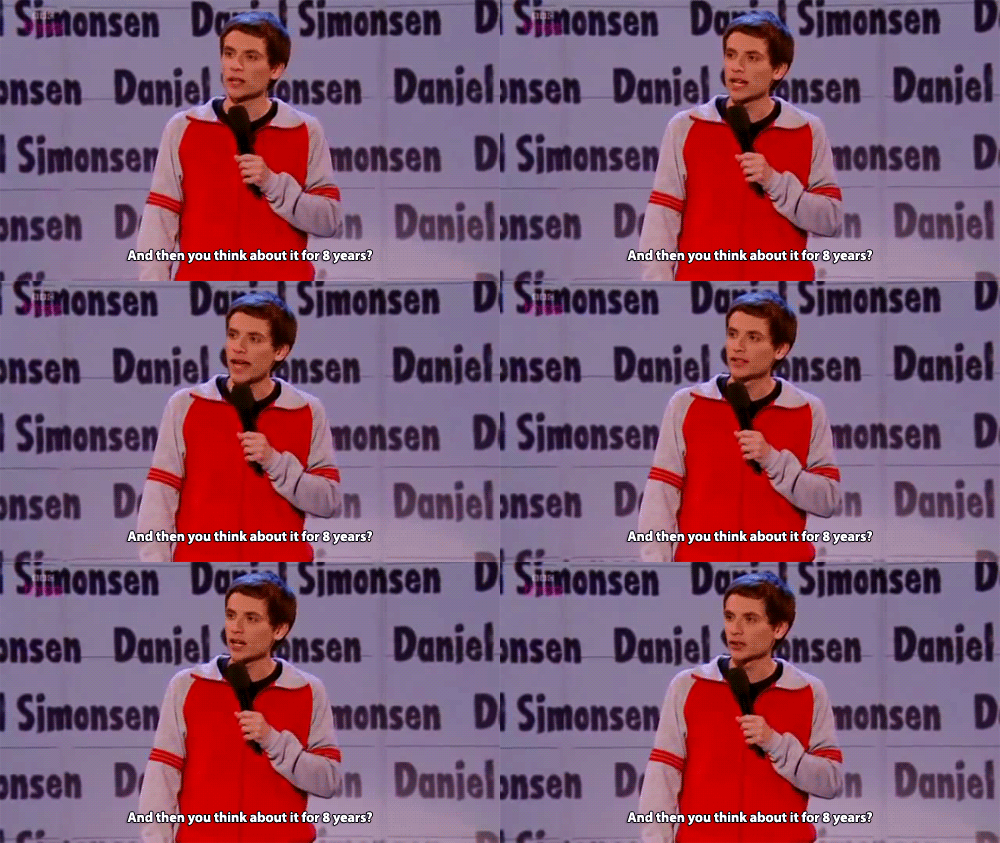

Screencap from the “Pixel Pioneers” video series (via Stuart Brown)
“Game visuals are the most obvious indicator of their technology,” Stuart Brown says in his Pixel Pioneers short documentary series on the graphic history of video games. Last month he released the last of the five-part series on YouTube, concluding with contemporary hyperrealistic graphics that feel light years away from the monochromatic pixels of Pong in 1972.
Pixel Pioneers is a series of short videos, each between eight and nine minutes long, that looks not just at the graphics themselves, but how the technology and design behind them guided gameplay. Brown starts with the emergence of arcade games, where sometimes color was added by a physical translucent overlay on the screen, and early breakthroughs like the 1979 Galaxian, which was basically an update of Space Invaders from the year before, but with multiple colors and the beginnings of dimensions.
By the time Brown reaches Crytek’s 2007 game Far Cry in the series’ fifth installment, graphics are edging into the photorealistic. As he says, the visual effects of recent games are often “designed to sell the illusion of reality.” However, he adds that “the true value of visuals is not in their realism. A game’s aesthetic does far more to establish its character than its polygon count.”
Brown, under the username Ahoy, is a prolific producer of YouTube video game content, mostly with weapon guides, but also “A Brief History of Piracy” (actual swashbuckling pirates, not the kind that steal content) and “Easter Eggs in Video Games.” The Pixel Pioneers series is his most thorough work and, though it is dripping with nostalgia, can be engaging for an audience beyond the gaming community. Along with other projects out there examining video game history from alternate angles like its development of sound, the relatively recent history of gaming deserves such in-depth analysis as an important component of the broader history of technology and design.
View all of the Pixel Pioneers documentary series on YouTube.
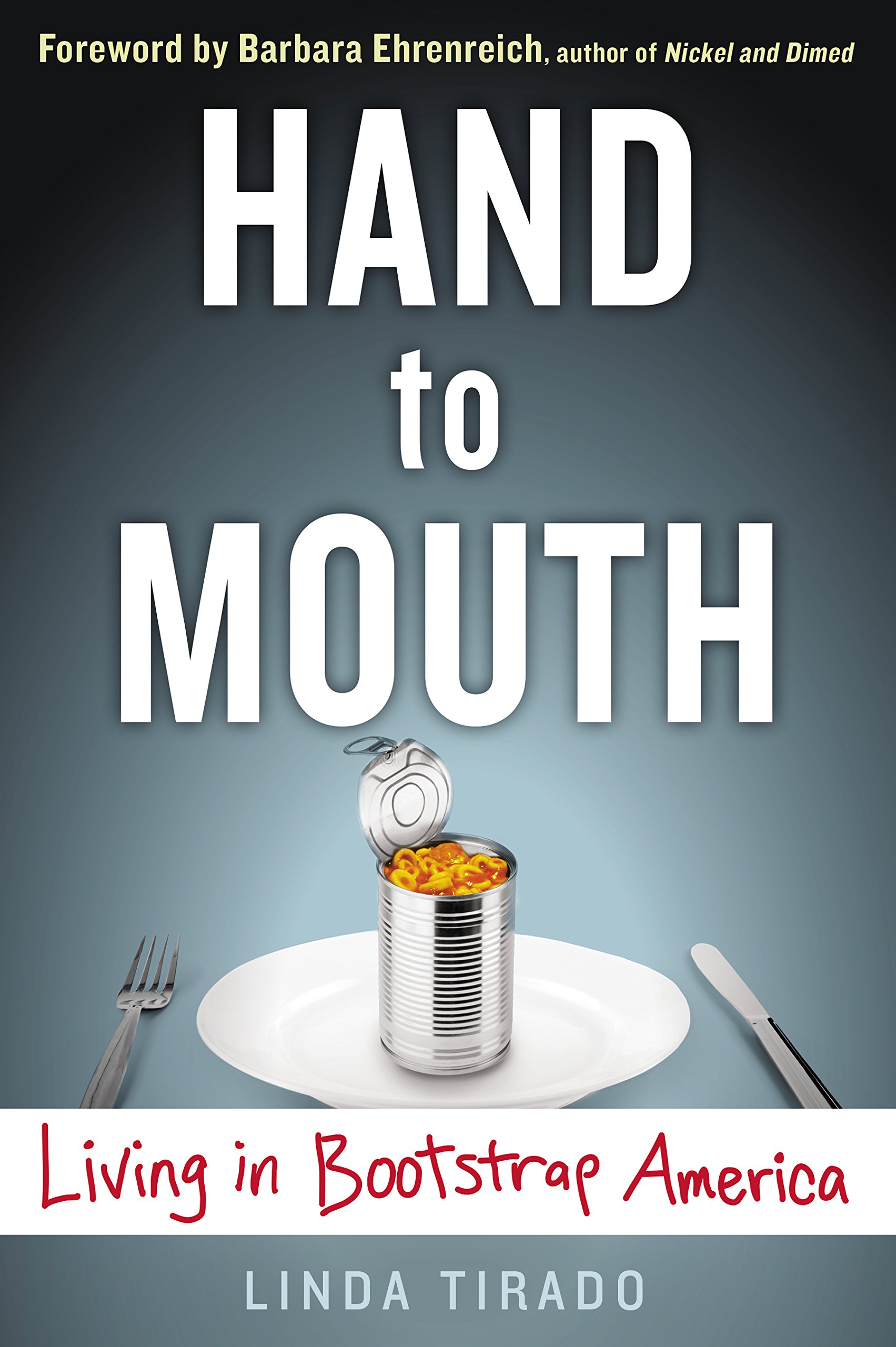 An excerpt from Linda Tirado's 2014 book Hand to Mouth: Living in Bootstrap America lays out some of the ways that being poor costs more than having a comfortable income -- it's more than having to pay for high daily rents in a motel because you can't afford first-and-last.
Read the rest
An excerpt from Linda Tirado's 2014 book Hand to Mouth: Living in Bootstrap America lays out some of the ways that being poor costs more than having a comfortable income -- it's more than having to pay for high daily rents in a motel because you can't afford first-and-last.
Read the rest
![flagellation-l-agneau-inv-june-sc-hi[1]](http://annaraccoon.com/wp-content/uploads/2014/12/flagellation-l-agneau-inv-june-sc-hi1.png) ‘She is constantly visited by amateurs of birch discipline, being always furnished with brooms of green birch and of the best quality, and is always happy to see any friend that feels himself inclinable to spend three or four guineas in her company.’
‘She is constantly visited by amateurs of birch discipline, being always furnished with brooms of green birch and of the best quality, and is always happy to see any friend that feels himself inclinable to spend three or four guineas in her company.’
The lady in question can be found residing on Berwick Street, Soho; and if a good flogging or spanking is your bag, I’m certain she’ll be more than happy to receive you. The only snag is that she’s been dead for more than two-hundred years, with the above description of her particular talent lifted from the pages of Harris’s Book of Covent Garden Ladies, an annual publication in the mid-to-late eighteenth century that offered both resident and visitor an extensive guide to the sex-workers of Georgian London. My compilation edition of the publication offers a glossary of slang from the time that serves to translate the numerous colloquial phrases for various sexual specialities, but this wouldn’t have been necessary when the books were published as the slang used wasn’t a clandestine code ala polari; the capital’s sex industry of the 1700s was an open and guilt-free business, not to mention a booming one. Flagellation was perhaps the most flourishing branch (sorry!) of the industry, as the number of premises in and around the Covent Garden district that specialised in this specific pleasure outnumbered those that didn’t. So renowned was the Brits’ appetite for flogging and spanking that the French referred to it as the English Perversion. A long and proud history that considerably predates the Marquis de Sade should therefore count for something, but not in the sexually liberated society of the 21st century, it would seem.
Last week, an amendment to the 2003 Communications Act listed a series of sexual acts that often feature in the more obscure online pornography that are now no longer permissible in British-produced porn. Included on the list was the good old ‘English Perversion’ – Spanking, Caning and Aggressive Whipping (is there such a thing as non-aggressive whipping?). However, were this list limited to one of the oldest kinky pastimes, it would be laughable enough; but other life-threatening acts now deemed beyond-the-pale on-screen include Humiliation; Facesitting; Fisting; Watersports (apparently known as Urolagnia – I could have sworn that was a former Soviet Republic); Female Ejaculation (still okay for a woman to be splattered in the discharge of Male Ejaculation, apparently); Penetration by Any Object Associated With Violence (bang goes the old cop-and-truncheon standby, then); and Role-playing as Non-Adults (Remember, role-playing, which means pretending, just like every actor playing Demetrius or Chiron pretends to rape and cut off the tongue and hands of Lavinia in ‘Titus Andronicus’ on stage).
Perhaps best of all lewd and licentious activities viewed as unacceptable on the list is ‘Physical or Verbal Abuse – Regardless if Consensual’. Did you catch that last bit? That’s right – regardless if consensual. Where, I wonder, does that leave any movie in which two characters physically and verbally abuse each other? Mr T’s goading of Sylvester Stallone in ‘Rocky III’ includes both; the former suggests Rocky’s missus would have a better time in bed with him and then both men knock seven bells out of each other. But they are, lest we forget, actors, a label that also applies to (slightly) lesser thespians in a porn video based around role-playing.
When quizzed about these laughable new rules and regulations, the predictable response from the Department of Media, Culture and (presumably not water) Sport said imposing such restrictions was a ‘tried and trusted method for protecting children.’ Sorry? Where do children come into this? We’re not talking about child pornography, we’re talking about fully grown adults pleasuring each other for the pleasure of other fully grown adults. Why should everything involving adults today be governed by what is perceived as harmful to some imaginary child? What about those of us who don’t have – and have never wanted – children? It seems what we can or cannot watch is viewed through a prism that relegates all to the status of a child. Surely if a child accidentally accesses online porn, is that not the responsibility of its parents for not blocking it from the family computer? This is a child that can stroll into a supermarket or be entombed in a doctor’s waiting room with its mother and be bombarded by cheap and tawdry titillating magazines boasting such headlines as ‘Sick Dad Dressed As Santa and Then Raped Us’ or return home to switch on MTV and be confronted by a virtually naked pop siren gyrating around the screen whilst singing a song about masturbation.
Incidentally, I’m not and never have been a devotee of pornography. Frankly, I find it boring, repetitive and utterly un-arousing. To me, it seems to narrow rather than widen the vista of the sexual experience, reducing what the great Adam Ant once referred to as ‘the last adventure known to mankind’ to a series of choreographed clichés enacted on a tedious loop. But maybe that’s just me. I do, however, maintain it is the right of an adult in a supposedly free society to enter into a mutual agreement with other adults, and be fully aware that what he or she is about to receive is the province of those old enough to both understand and enjoy what is going on. It would appear those engaged in the cause of protecting children now regard niche markets of the sex industry that few adults, let alone children, are exposed to on a regular basis as more worthy of diverting their energies towards than the actual genuine threats to children such as ones that were allowed to take place in a certain South Yorkshire town. Well, f*** me up the arse with a red-hot poker! Just don’t film it when you do.
© Petunia Winegum

im setting myself on fire goodbye
I made you a sandwich put it in your mouth
TELL THAT TO MOTHERFUCKING QUEEN VICTORIA AND HER HUGE ASS EMPIRE BITCH
I’m sorry.
I couldn’t hear you.
Over all the voices of amazing women.
Throughout history.
Who could have
kicked
your
ignorant
ass.
Reblogging this for the gender studies we’re doing in my history course.
No important discoveries of course because discovering what the sun is made of isn’t important at all OH NO.
Whaaat a douchetit fucknugget. I’d love to practice my crotch kicking skills on this dude.
my favorite part is at the end. obviously your completely truthful when you say “i am not sexist, anti-feminine, or whetever but this is brilliant”
just somethings that women invented:
- stove
- dishwashers
- globes
- life rafts
- fire escape
- car heaters
- medical syringes
- windshield wipers
- fridge
- water heater
- chocolate chip cookies
- disposable cell phones
- Bulletproof vests
We wouldn’t know what we do about radiation without Marie Curie. Oh and what about Roseline Franklin, who figured out what DNA looked like?
And guess who took on the empty jobs when all the men were in the army in WW2?
Arg, posts like this.
Also Re: “never forced to die in a war”, Libya, Benin, Chad, Malaysia, Tunisia, Cuba, Eritrea, Taiwan, and Israel’s mandatory military services would like to have a word with you.
I’m going to go point by point here:
Joan of Arc led an army 600 YEARS AGO what do you mean women have never fought in wars? COUNTLESS women have been killed in battle. HOW DARE YOU disregard their courage and their sacrifice. And let’s not forget all the women who contributed to war efforts before they were allowed to fight by working in factories, nursing, spying, and making sure the industries back home didn’t die completely.
“Women have never lead a nation”? Yeah, everyone from Margaret Thatcher to Ruth Dreifuss would like to have a word with you about that. The Chancellor of Germany (generally considered one of the most powerful people in Europe and in the world) is a woman. The Presidents of Liberia, Argentina, Lithuania, Costa Rica, Brazil, Kosovo, Malawi, and South Korea are women, as are the Prime Ministers of Bangladesh, Iceland, Trinidad and Tobago, Australia, Slovakia, Thailand, Denmark, and Jamaica. The US Secretary of State, the President of the Indian National Congress Party, the General Secretary of the Burmese National League for Democracy, and the monarchs of England and Jordan are women.
Facebook’s COO, the CEOs of Pepsi, Kraft, Xerox, IBM, Yahoo, WellPoint, Avon, the President of the Council of Fashion Designers of America, and the co-chairman of Sony Pictures Entertainment are women, just to name a few. There are now a million more female college graduates in America than there are male college grads. So no, I would not say that women are incapable of succeeding at their jobs. I think we can all agree that idiots like you are the reason women get paid less than their male counterparts.
RE the voting thing and the thing about women not being able to make difficult decisions: The ghosts of Susan B. Anthony, Amelia Bloomer, Emily Davison, Harriet Tubman, Sojourner Truth, Mary Richardson, Emmeline Pankhurst, Frances Ellen Watkins, Maria W. Stewart, Christabel Pankhurst, Lucy Stone, and all the other suffragettes and abolitionists who fought for their rights despite how radical and dangerous it was are coming to haunt you.
The things about wimpy support groups and physical beauty make so little sense that I don’t even know what to say in response
A further list of things invented by women:
Toilet paper holder
Submarine lamp and telescope
Ironing board
Home solar heating system
Gas heating furnace
Foldaway bed
Disposable diaper
Cobol (first computer language)
Circular saw
Rolling pin
Kevlar
Electric hot water heater
Elevated railway
Engine muffler
You conveniently forgot to mention literature, but let me just remind everyone that the 5th, 6th, 12th, 14th, 16th, 17th, 18th, and 21st best-selling books of all time were written by women. The 1st, 2nd and 6th best-selling authors of 2012 are women, while the 3rd best-selling book of 2011 was written by a woman…do I really need to continue?
Women have not contributed to science or mathematics or the building blocks of modern society? Tell that to the 43 female Nobel Prize winners. Tell that to Emilie du Chatelet, Caroline Herschel, Mary Anning, Mary Somerville, Maria Mitchell, Lise Meitner, Irène Curie-Joliot, Barbara McClintock, Dorothy Hodgkin, Marie Curie, Rosalind Franklin, any of the people mentioned in the previous comments, or any of the other women who made significant scientific or mathematical advances despite being oppressed by people like you. Oh, and RE the philosophy, here’s a list of people who prove you wrong: http://en.wikipedia.org/wiki/List_of_female_philosophers.
And women did all that in a society ruled by thinking like yours. While bearing your children and wearing corsets.
I never claimed we were superior, but don’t you dare tell me we are not EQUAL.
There’s 2 problems with what the original image is doing, and this is the problem with a lot of arguments about equality and worth and stuff in general.
1) It’s factually incorrect, which everybody above has done a good job of pointing out.
2) It’s constructing what it thinks makes a human being worthwhile.
The problem is that we can’t argue 1 without being aware of 2 as well, because honestly, who says that it matters if people participate in the mass slaughter of others? Or if they led aggressive colonizing nations? Why does the worth of a group of human beings depend on whether they’ve invented mathematical concepts, or invented something “useful”?
It’d be like if I said “blonde people are inferior because they’ve never created a lego castle!” Besides that that’s factually incorrect, why would a human beings worth be determined by creating a lego castle? It’s just something I decided made people worthwhile. It’s arbitrary.
And it’s no less arbitrary just because lots of people decide that’s a standard to judge other humans on, or if a society is founded on it, a society created by white male colonizers who enslaved others and took others land through genocide, no less, so it’s not like prioritizing such values is not in the best interests of the dominant group.
The idea that a group deserves domination over others because they are intellectually, or physically, or martially superior is a human construction, and one that conveniently justifies the conquerors, the slavers, and the people who run giant corporations that impoverish millions. They are always the ones who, by virtue of being dominant, get to construct what makes a human being worthy of respect, and who get to be seen as having those aspects inherently. It’s everybody else who they dominate that needs to beg and scramble and prove themselves as worthy.
So, it’s absolutely true that that above image is fallacious and factually incorrect, but we need to be critical of the values the image is extolling as well. And while I understand the practical need to encourage women and girls by pointing out the accomplishments of women throughout history, it’s also important that we question the entire narrative in general, about why it’s so important that people have participated in war, or have led nations to conquer other nations, or proved their intellectual acumen by winning scientific awards, or inventing something that is marketable. Besides that the very nature of a lot of these standards are based on colonialist, martial, and capitalist virtues, it’s arbitrary that we choose some standards in which a group must meet to be considered “equal”. That’s how groups maintain their power, that’s how inequality continues to be justified. And in a more practical sense, it’s also important that we question these narratives and this construction because while it may help some groups, it’s still used to oppress others, and we’re just justifying the arbitrary criteria for human worth by saying “no no, me too! I’m worthy!”
Me: “Hiya! What can I do for you?”
Customer: “Yeah, I’d like to exchange this peanut butter.”
(She hands me the peanut butter and the receipt.)
Me: “Oh, okay. Any reason? Is it bad?”
Customer: “Oh, no, it’s not bad. It’s just that it’s the chunky kind, and I need creamy.”
Me: “Oh! Well, if you want to go grab the one you want, I’ll get you fixed up and on your way!”
(She goes and gets the creamy peanut butter and comes back. I check the prices and hand her the right one.)
Me: “All righty, you’re all set! Have a good day!”
Customer: “Thank you!” *laughs* “I can’t believe I picked this up. I can’t have the one with the chunks in it. I’m allergic to peanuts!”
(She walked off and my manager and I exchanged very confused glances.)

Rosalind Franklin and Raymond Gosling, “Photo 51″ (courtesy King’s College London)
Beautiful, isn’t it? Peer deep into this photograph’s heart, eye, vanishing point. Despite the beauty, no hammered stare, of any length, unlocks meaning or maker. The image (inviolate) defies casual analysis. Perhaps, you wonder, identification of topic or photographer is irrelevant. No clues visible (except perhaps to a biologist). Ah, now you read the label. The shoulders sigh (aesthetic surmises fade), the eye winks (no joke), and a scientist strides onto the stage and grips the podium (serious stuff).
The iconic X-ray diffraction photograph of DNA taken by physical chemist Rosalind Elsie Franklin (1920–1958) might seem timed to the season. Auld lang syne, and all that. The genetic material glimpsed in Photo 51 connects all living things and the image thus metaphorically captures human past, present, and future. It also marks an important milestone in science. In the last half-century, research that drew from Franklin’s photograph has brought advances in biology, medicine, paleontology, and many other parts of life.
Under a microscope, cells reveal their own truths, possessing the potential to separate conception from context. By convention, science (which makes the invisible visible) renders the visualizer invisible. Discoveries are disassociated (divorced) from he (or she) who stained the cell, mixed the reagents, pushed the buttons, coded the data. In an era when cameras record every baby step and every entertainer’s misstep, it may be difficult (if you are outside that world) to comprehend a culture in which (in theory) the photographer does not attach to the image. Analysis matters. Publication matters. Claiming credit first matters. The photographs themselves are allegedly, well, just part of the work.
This particular image had led Franklin to conclude in 1952 that the strands of DNA might form a helical structure but she was cautious and wanted more data. And therein lies the back story: Franklin’s own vanishing point.
Novelist Josephine Tey once accused historians of flattening the past into a “peepshow,” drawing historical actors as “two-dimensional figures against a distant background.” Let us pull Franklin into the foreground, replace the center of the image with her face (three-dimensional), and consider whether knowing about the photographer matters.
In January 1953, Maurice Wilkins, one of Franklin’s colleagues in the laboratory at King’s College, London, shared her photograph (without her knowledge) with two other scientists also in the DNA hunt. James Watson and Maurice Crick (the men who, in another famous picture, seem to be ogling a curvy “double helix” model as if it were a naked Venus) interpreted the image (and other material attributed to Franklin). Watson, Crick, and Wilkins raced into print, pushed Franklin aside, and achieved fame and fortune. Franklin was allowed to stand at the back of the stage: her article was the third in the journal issue. Watson’s arrogant dismissal of Franklin’s work continued for decades after her death. Credit should go to the flyboys, the creative geniuses, not the others. “Technical stuff” was “woman’s work.”
Franklin had grasped the image’s essential truth, before others saw it, but the Nobel Prize is not awarded in memoriam. Die too soon and you never get to wear a fancy dress. Watson, Crick, and Wilkes made the list four years after Franklin’s death. It is left to history to reconsider (some would say “redress”) such matters. Scientific encyclopedias up through the 1990s included “Franklin, Benjamin” but not “Franklin, Rosalind.” Newer works now recognize Rosalind’s contributions and dissect the social and cultural attitudes that reinforced and stood silent at her marginalization.
The notion that a photographer’s identity might, as a matter of cultural practice, be detached from her photograph may seem an anathema within the world of art, where exhibitions celebrate the vision of those who hold the cameras, even if their names are unknown. Credit is a cultural practice: a matter of grace and humility when shared, a matter of despicable boorishness when unfairly stolen. Fortunately, there is a form of historical geometry: a line (reinforced) attaching Franklin to this photograph and its meaning in time.
At first glance, such context remains obscured from the viewer. The photograph’s mysterious, cloudy strands wind themselves around our eyes and engender thoughts of beauty. But for those who value integrity, well, pull on that line and reach for Rosalind Franklin. No vanishing point to memory or to our common humanity. Credit due.
This essay was originally published by the Hillman Photography Initiative at Carnegie Museum of Art, which investigates the life cycle of images: their creation, transmission, consumption, storage, potential loss, and reemergence. For more on the Initiative and to offer public commentary on this image, click here.
Here’s the thing. When we talk about race relations in America or racial progress, it’s all nonsense. There are no race relations. White people were crazy. Now they’re not as crazy. To say that black people have made progress would be to say they deserve what happened to them before.
Right. It’s ridiculous.
So, to say Obama is progress is saying that he’s the first black person that is qualified to be president. That’s not black progress. That’s white progress. There’s been black people qualified to be president for hundreds of years. If you saw Tina Turner and Ike having a lovely breakfast over there, would you say their relationship’s improved? Some people would. But a smart person would go, “Oh, he stopped punching her in the face.” It’s not up to her. Ike and Tina Turner’s relationship has nothing to do with Tina Turner. Nothing. It just doesn’t. The question is, you know, my kids are smart, educated, beautiful, polite children. There have been smart, educated, beautiful, polite black children for hundreds of years. The advantage that my children have is that my children are encountering the nicest white people that America has ever produced. Let’s hope America keeps producing nicer white people.
It’s about white people adjusting to a new reality?
Owning their actions. Not even their actions. The actions of your dad. Yeah, it’s unfair that you can get judged by something you didn’t do, but it’s also unfair that you can inherit money that you didn’t work for.

Not too long ago, Autumn Sandeen wrote about an experience she had trying to get a consumer discount she qualified for. Sandeen is a career Navy veteran. She’s the real deal, when it comes to standing up for herself and others like her. For instance, to protest Don’t Ask Don’t Tell, She handcuffed herself to the White House fence, alongside Dan Choi and others, knowing that she would likely be arrested and booked as though she were a man — a terrifying prospect for any trans woman — and then she wrote about how the arresting officers and custodial personnel treated her.
This was a much smaller matter. She learned that her phone company had a discount program for veterans, and she applied for it. Her DD214 (the official documentation of her discharge) has her old name on it, but she also has a copy of the court order for her name change. So she sent both. Her DD214 with her old name, and a copy of the court order changing her old name to her new name, the new name being the name on her account with the phone company.
The phone company couldn’t figure it out.
Suppose that you serve in the military and get discharged, and then get married and take the last name of your spouse. In such a circumstance, to get your veteran’s discount from the phone company with an unchanged DD214, you’d have to do exactly what Sandeen did.1
I received a post card back stating the discount was denied. The reason was because the name on my DD214 didn’t match my name.
She called them.
I talked to a very nice customer service agent, explaining my confusion of being denied the discount. She put me on hold and talked offline to their discounts office, and they reaffirmed that I was denied the benefit because the name on my DD214 didn’t match my current name. She, in a tone which indicated, “I don’t understand how this person with a male name could somehow be you” was clearly confused.
Sandeen outed herself. She explained, explicitly, that she was trans. The rep called a supervisor onto the line.
I explained why my billing name didn’t match my DD214 name. After putting me on hold, he came back on the line to tell me for processing I needed to send in a copy of my change document.
That would be the copy of the court order which she included, originally, with the DD214. She explained that she had already submitted it.
He again put me on hold, and came back on the line and said, they did have my change of name document on file as I’d sent it in with my DD214.
He apologized.
The process took Sandeen about 40 minutes.
It wasn’t the end of the world. Sandeen worked through it. It just took 40 minutes more of her life that it took out of most other people’s.
It seemed familiar to me.
Recently, I paid off a car which I bought a few years ago, before I transitioned. The bank which loaned me the money sent me the title… in my old name, despite the fact that I had, in the interim, changed my name with the bank. They explained that they “had to” do it that way, because that was the name on the loan.
So, I took the signed-over title to my friendly and helpful town clerk (who is, in fact, friendly and helpful) and asked her how to get the title in my new name. Her first thought was that I could sign my old name and sign it over to myself in my new name, but then she pointed out that I’d have to pay the retitling fee, and that didn’t seem fair. Also, I pointed out, part of the process of my changing my name was that the court had ordered me not to use the old name on legal documents, and so it didn’t seem like a good idea to sign my old name to a document with a current date on it. She agreed. She called the state DMV, and they said it should not be a problem, and directed her to the appropriate form. There would be no charge. I filled it out and sent it in.
Awhile later I got a letter from the state: they could not process my title request, because I needed to get the old owner to sign it over to the new owner.
A few days later, when I had time during business hours, I drove over to town hall again. I showed the letter to the town clerk. She sighed. She called the DMV. She explained the situation. They said they would have to get a supervisor. She explained it to the supervisor, who put her on hold. We chatted while she was on hold.
“This should not take so long,” she said, “they work in the same room.”
As a police officer, I have access on duty to the state motor vehicle files. I sometimes run my own name and DOB or my own license plate in order to check that the connection is working. I know perfectly well that under my vitals a list of previous names comes up. I’m not happy about it, but there it is. It’s one reason I fear being pulled over.
“I can tell you what happened,” I offered. She waited expectantly. “They ran my name, and looked at the previous name, and then they looked at my gender marker, which I have not changed because in order to change it the state requires me to answer questions about what is between my legs, which I think is none of the state’s business, and then they had to have a discussion about it.” (“Discussion” was the word I chose in an effort to be polite. I’ve listened to office workers discuss a trans person’s entry, and there’s usually some laughter involved. Not the light-hearted kind.)
Her mouth twisted. We resigned ourselves to a wait.
Fortunately, there was a practical limit; the DMV offices were due to close. After a few minutes they came back on the line and told her that it would be fine, and there would be no need for further paperwork.
Now, we provided them with no more information than they already had in front of them, available in my own records, which pop up when you run my name. It was theoretically within their power to save me, and the town clerk, and ultimately their clerk, this trouble.
But, apparently, a male name and a female name could only be a title transfer, and it was less trouble to stuff an envelope with a form letter than it was to run my name and DOB and read the screen.
Total time and trouble: for me, about an hour, and for the town and state employees, about half an hour. Fortunately, there was no other impact. I wasn’t, for instance, prevented from selling my car because I did not have a title I could sign over to the buyer. I was “lucky,” if you squint hard and tilt your head sideways.
When I transitioned, I had to change my name with various financial institutions. The procedure varied. Most wanted me to send them a copy of the court order, which I did, and then they changed my name. One simply changed it after I answered the security questions. One, my actual bricks-and-mortar bank, told me that they could not change the name on my account even though I was standing in front of the manager, showing her the original court order with the fancy crimped seal over the judge’s actual signature, together with the new driver’s license which my state had issued in my name on the strength of exact same copy of the original court order. No, she told me, I would have to go to the Social Security Administration and get them to change my name in their system, and then I would have to bring that paperwork back, and then they would change my name on my account.
I had a better idea. I checked with my wife, re-routed the automatic paycheck deposit… and we closed the account.
Then we opened a new account with a different local credit union… using my state-issued driver’s license and nothing else. They didn’t need to see the fancy court order, because they didn’t know that I had once had a different name. It would show up in a credit check, but they didn’t need to do a credit check, because they weren’t extending me credit, I was giving them money. They didn’t need to know that I had once had a different name, apparently, to take my money and store it for me and make more money with it in the meantime. And the other bank, the one where we closed our account… they didn’t need to know about the name change, either, in order to give us our money back.
What did it cost us? Measurably, not much; a few hours of time. Less tangibly, the knowledge that we don’t fit, that procedures are not designed for us, that when we need to do something in our lives which involves our IDs, we should budget more time, and carry more proof of who we are, and be prepared to answer invasive questions about our genitals.
Later, I took the court order to the Social Security Administration. They changed my name. I also showed them a letter from my doctor certifying that I had undergone irreversible medical treatment, and they changed my gender marker.
At the end of her story, Sandeen advocated and asked a rhetorical question:
I told him their intake process felt both discriminatorily sexist – as more women than men change their names at marriage – and transphobic.
Intentional sexism or transphobia? Probably not. But a process or policy doesn’t have to be intentional to be discriminatory, does it?
The bank manager who told me I had to go through the Social Security Administration was expressive and thoughtful and sincere and helpful and looked up the nearest SSA office and printed out directions and hours for me. I don’t think her bank’s policy was intentionally discriminatory.
But the result was.
Grace
Ijeoma Oluo, in a series of tweets:
Don’t play in the park with toy guns and maybe they won’t kill you.
Don’t ask for help after a car accident and maybe they won’t kill you.
Don’t wear a hoodie and maybe they won’t kill you.
Don’t cosplay with a toy sword and maybe they won’t kill you.
Don’t shop at Walmart and maybe they won’t kill you.
Don’t take the BART and maybe they won’t kill you.
Don’t ride your bike and maybe they won’t kill you.
Don’t reach for your cell phone and maybe they won’t kill you.
Don’t go to your friend’s birthday party and maybe they won’t kill you.
Don’t sit on your front stoop and maybe they won’t kill you.
Don’t “startle” them and maybe they won’t kill you.
Don’t “look around suspiciously” and maybe they won’t kill you.
Don’t walk on a bridge with your family and maybe they won’t kill you.
Don’t play “cops and robbers” with your buddiesand maybe they won’t kill you.
Don’t work in a warehouse repairing instruments and maybe they won’t kill you.
Don’t stand in your grandma’s bathroom and maybe they won’t kill you.
Don’t pray with your daughters in public and maybe they won’t kill you.
Don’t go to your bachelor party and maybe they won’t kill you.
Don’t have an ex boyfriend who might be a suspect and maybe they won’t kill you.
Don’t call for medical help for your sister and maybe they won’t kill her.
Don’t hang out in the park with your friends and maybe they won’t kill you.
Don’t get a flat tire and maybe they won’t kill you.
Don’t park in a fire lane and maybe they won’t kill you.
Don’t reach for your wallet and maybe they won’t kill you.
Don’t let your medical alert device go off and maybe they won’t kill you.
I’m done for today. My heart can’t handle any more.
This is the context. And every fucking time it happens, white people pop up to explain why it’s fine, it’s okay, none of that is important and black people have nothing to complain about.
Don’t comment if you can’t handle not being a jerk about this. You’re discussing people’s lives and deaths. Show some respect.

Have you seen this reality TV show? No, that’s not solo polyamory. (It’s also not reality.)
After more than two years of writing a blog about solo polyamory, it’s high time I got around to clarifying my definition of this core concept.
CAVEAT: As with any term I use here, I’m explaining how *I* use this term. Others may disagree — and that’s totally fine. I’m not trying to speak for anyone but myself.
Solo polyamory: Flipping these words around, polyamory is, broadly speaking, one approach to engaging in (or being open to having) ethically nonexclusive relationships involving sex, romance, or deep emotional intimacy. What distinguishes solo poly people is that we generally do not have intimate relationships which involve (or are heading toward) primary-style merging of life infrastructure or identity along the lines of the traditional social relationship escalator. For instance, we generally don’t share a home or finances with any intimate partners. Similarly, solo poly people generally don’t identify very strongly as part of a couple (or triad etc.); we prefer to operate and present ourselves as individuals.
People can be solo poly by choice or circumstance. That is, some people prefer solo polyamory and are unwilling to strongly merge their identity or life infrastructure with their partners. Others simply happen to be effectively solo: they may desire (or be open to) primary-style relationships in the future, but they just don’t happen to have one at the moment.
Solo polyamory can be an expression of personal values. People who prefer solo polyamory generally embrace autonomy as a paramount value: their own, and that of others. (This is very much the case for me, but not for all solo poly people.)
Solo poly people may or may not also be “single,” in the conventional sense of that term (“completely unpartnered”). We may have one or more intimate partners who play a significant, ongoing role in our lives — or we may, at the moment, have no such relationships. At the time I wrote this post (December 2014) I was involved in one significant ongoing intimate relationship, while remaining open to others. Most of a year later, that relationship has ended, and I’m dating others, but nothing yet feels like a particularly deep relationship. And that’s OK.
I do consider myself poly; I wouldn’t participate in an exclusive or dishonest relationship. At times I may incidentally be single — but I am always solo, regardless of my partnership status. Also, I never really view myself as part of “a couple;” I’m an individual who has important and open intimate relationships with other individuals, when it feels right.
Beyond that definition, there are many options and nuances to solo polyamory. For instance, solo poly people may:
Engage in almost any type of ethically nonmonogamous relationship — very casual or deeply committed, short term or long term, flexible or rigidly defined, kinky or vanilla, sexually intimate or not, etc. Like anyone, solo poly people have individual preferences and get to define and explore their own comfort zone.
Live alone, or not. While many solo poly live alone (or prefer to), others may live with friends, roommates, family of origin or choice, their children, etc. They may have partners who stay with them part-time or for long stretches. They may be nomadic, or part of an intentional community. But typically, they do not live with any intimate partner. (And yes, admittedly “intimate” is a very fuzzy term when it comes to cohabitation. Roll with it.)
Some solo poly people may spend considerable time at home with partners, even sometimes living together part-time. Or they may come and go freely from each others’ homes. But generally, solo poly people do not merge dwellings or other resources with intimate partners in a way that would be difficult to disentangle should that relationship end or significantly shift.
Avoid hierarchy, or not. Since solo poly people don’t have primary-style partners, their relationships tend to be non-primary in nature (which doesn’t necessarily mean secondary.) Many solo people, myself included, prefer to avoid relationships with people who practice hierarchy — whether explicitly stated, or presumed. That’s because nonprimary partners are inherently disadvantaged by hierarchy — which is a big part of the point of hierarchy, after all. Plus, thanks to the common social presumptions of couple privilege and the relationship escalator, nonprimary partners often get treated unethically or poorly in hierarchical relationship networks.
That said, some solo poly people are comfortable in (or at least, are willing to accept) the role of being a secondary partner in an explicit hierarchy — accepting imposed rules and limits, or even a potential third-party veto. These people sometimes call themselves “single secondaries.” Furthermore, some solo poly people disagree that couple privilege exists at all, or that it’s a problem.
Date outside the poly community, or not. While solo poly people aren’t necessarily single, we may look that way to people outside the poly/open community. Therefore, conventionally single people sometimes are comfortable getting intimately involved with solo poly people, at least to some extent, since we kind of look like them (if you don’t look too closely). In contrast, dating someone in a primary-style poly/open relationship might seem more alien, and thus more challenging, to a conventional singleton.
Some solo poly people are comfortable dating conventional singles, or people who don’t specifically consider themselves poly or open. I myself am open to dating people who don’t consider themselves poly, as long as they respect, appreciate and embrace that I am polyamorous.
Some solo poly people will even date singles with a stated preference for eventual monogamy — although for me, that’s a major mismatch in terms of significant emotional investment, so I don’t tend to pursue more than casual short-term dating with people seeking eventual monogamy.
Some solo poly people prefer to date only within the polyamorous, open, relationship anarchist, swinger, or otherwise ethically nonmonogamous people. This can reduce potential misunderstandings, mismatched values, or the risk of being carelessly dumped when a partner suddenly “goes mono” on you. However, this approach does lead some solo poly people to feel like they’re “fishing in a teaspoon” — especially if they are unwilling to play the secondary role in a hierarchy.
Any identity label is mostly subjective. There’s lots of room for interpretation, variation, gray areas and disagreement. Below is how I usually make this distinction for solo polyamory.
CAVEAT: Again, I am not trying to tell anyone what they are, or what they should call themselves. I’m just trying to clarify where/how I think the term solo poly applies. I respect everyone’s right to self-identify as they choose. (With one minor exception, which I mention at the end.)
Basically, from my perspective, someone who is in a romantically/sexually exclusive two-person relationship, or who is seeking monogamy (or would ultimately prefer a wholly or mostly exclusive relationship) probably would not fit the “poly” part of the solo poly label — even though they may be otherwise solo (if they prefer a lot of autonomy even when in a relationship).
Nor, probably, would someone who is “dating around” or otherwise involved with multiple partners, but who doesn’t disclose all relationships to all partners. This can get murky, since some poly/open people (including solo poly folks) are fine with participating in don’t-ask-don’t-tell relationships — which by agreement do not involve full disclosure.
It gets trickier to distinguish whether a poly/open person is also “solo.” For instance, I’ve encountered some poly people in outwardly primary-seeming relationships (including legal marriage) who nevertheless choose to embrace the solo poly label in order to signify that they prize autonomy, eschew hierarchy, operate mostly as a free agent, and do not place limits or conditions on each other’s relationships. This is not wrong or bad — but it does usually generate some pushback.
The catch here is that hierarchy, enmeshment and couple privilege are endemic to society, and quite insidious. Appearances and circumstances matter, even though they can be deceiving. Consequently, people who are visibly partnered up in a more-or-less conventional fashion face rather different relationship and social dynamics from visibly solo people. It’s not a level playing field. This reality would make it very difficult (although theoretically not impossible) for someone who is, say, is married, living with their spouse, poly and nonhierarchical to consistently behave as (and be treated as) a solo person.
There is one blatantly incorrect way I’ve seen some people misunderstand and misuse the term solo poly. Some people think solo poly means “currently available for nonexclusive relationships that don’t necessarily involve my existing primary-style partner(s).” As in: “I’m solo poly; my wife is okay that I see other people, and we date separately.”
Yeah… no. Sorry. That’s nonmonogamous, possibly even poly. But if you’re in a primary-style relationship, you’re probably not solo — even if you and your primary partner don’t always date “as a couple.”
What does solo polyamory mean to you? Did I miss anything, or do you agree/disagree? Please comment below.
Want to talk with people about solo polyamory? Join the solo poly Facebook group. (Anyone is welcome to join.)
Michael Kuroda (madoruk) just built these lovely, iconic blocks from the Mario line of video games. Each of the blocks are perfect and look like they fell right out of the games. And, to top it off, that background perfectly highlights the blocks. They would be still be fine without a backdrop but it really is the icing on the cake. If I had to choose, I think the ‘POW’ block is my favorite but it’s a close call. They are all really well done. Michael really hit one out of the park with these beauties!

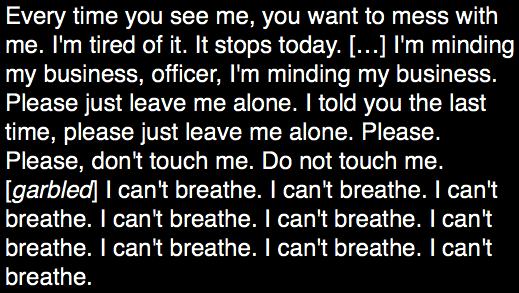
Killed for allegedly selling loose cigarettes.
[via]
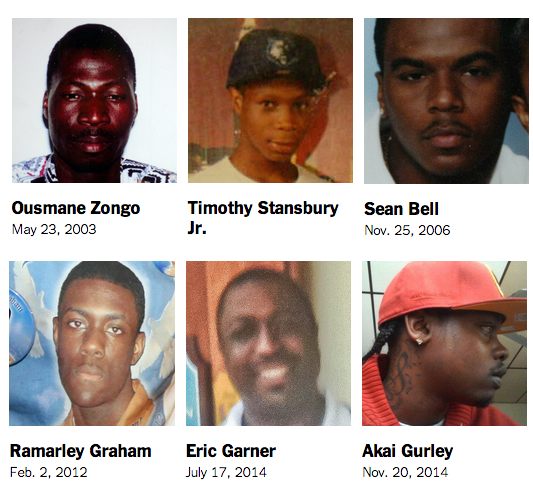
A New York Times interactive feature profiles notable deaths since 1990 involving NYPD officers. “Most did not lead to criminal charges; even fewer resulted in convictions.”

Source, with thanks to @saladinahmed on Twitter.