Shared posts

19 May 20:46

Gay Pay for Straight Work

by gendsocoakland
By Sean Waite and Nicole Denier

Over the last two decades there has been a growing interest in the labor market outcomes of gay men and lesbians. It has long been acknowledged that labor markets are stratified along multiple dimensions, such as gender, race and nativity. More recently new data has shed light on how labor market opportunities and rewards may also differ by sexual orientation. So far research has generally found that gay men earn less than straight men and lesbians earn more than straight women (in our work we show that this still means earning less than all men).

In most cases wage differences cannot be explained by differences in individual characteristics or choices, like weeks and hours worked, socio-demographic factors, education, and occupation or industry of employment. Researchers often interpret any wage gap that remains after accounting for these characteristics as discrimination. In other words, it is argued that employers and customers have a preference working with or doing business with straight men, rather than gay men. The wage advantage for lesbians relative to straight women is commonly interpreted as positive discrimination, i.e. since lesbians are less likely to be married and have fewer children, employers perceive them as more committed and less encumbered by family responsibilities than straight women. Taken another way, lesbians may experience less discrimination than straight women because they are perceived to be less encumbered by family and childcare responsibilities. But research so far has been limited by two big things. First, many data collection agencies don’t ask about sexual orientation in surveys (a great summary of this issue can be found on the Family Inequality blog), and if/when they do, it is often not asked in the context of questions about work situation. Second, research often focuses on one particular source of pay differences at a time, making it hard to evaluate the major factors driving wage inequality for gay men and lesbians.

Using Canadian Census data, we explore how various mechanisms contribute to wage gaps between gay men and straight men and lesbians and straight women, focusing on areas that researchers have identified as key determinants of how much people earn, including a 1) education and weeks/hours worked, 2) occupation and industry of employment, 3) sector of employment, and 4) family situation.

Canada is a particularly interesting case for studying the labor market experiences of gay men and lesbians. In 2003 Canadian provinces began recognizing same-sex marriage, culminating in the federal legalization of same-sex marriage on July 20, 2005–making Canada the fourth country in the world to federally legalize same-sex marriage. Ten years earlier the Supreme Court of Canada maintained that sexual orientation was subject to coverage under federal anti-discrimination laws outlined in the Canadian Charter of Rights and Freedoms. In addition to federal protections, all provincial human rights charters and laws prohibit discrimination based on sexual orientation in private housing and labor markets. As a result of this legal setting, the 2006 Census of Canada provides data on married and cohabiting same-sex couples across the nation–one of the first in the world to do so. Statistics Canada also went to considerable lengths to ensure that same-sex couples were correctly counted in the 2006 census. For instance, the Canadian Census asks respondents directly if they are in a same-sex common-law relationship. This is an improvement over US census data where researchers must infer a conjugal relationship between same-sex adults in a household.

Our most conservative estimates find a ranking of labor market outcomes by sexual orientation in Canada, such that straight men earn more than gay men, followed by lesbians and straight women (See Figure 1 below). These conservative estimates account for education, weeks/hours worked, occupation and industry of employment, and family situation. chartSource: 2006 Census of Canada. Note: Estimated using ordinary least squares regression. Sample includes non-visible minority, native-born employees with annual earnings above $1,000, and in married or common-law relationships. All wage gaps statistically significant at *** P ≤ .001.

What do the different mechanisms tell us about the sources of gay pay gaps? High levels of educational attainment lead to employment in lucrative occupations for sexual minorities, but within these occupations gay men and lesbians earn significantly less than straight men. Wage gaps are reduced in the public sector for straight women, gay men, and lesbians, indicating that the highest gay pay gaps are found in private sector jobs. Finally, we find that straight women experience a motherhood penalty, straight men experience a fatherhood premium, and both receive a premium for marriage; however, the presence of children and marriage have no effect on the earnings of either gay men or lesbians in conjugal relationships.

Although Canada has a long history of employment protections and a high level of acceptance for sexual minorities, labor markets are stratified by sexual orientation. Gay men in Canada appear to make choices to improve their economic fortunes, such as investing in high levels of education and working in high paying occupations; however, it is within these occupations that gay men earn less. For lesbians, investments in higher education, sorting into higher paying occupations, industries and working more hours per week play a significant role in their wage advantage, relative to straight women. A smaller, although not insignificant, portion arises from differences in returns to these characteristics for lesbians. This study has answered many important questions regarding labor market stratification by sexual orientation in Canada; however, many questions remain. Research on the economic lives of gay men and lesbians continues to offer an exciting and pressing arena for future research.

Sean Waite is a PhD candidate in sociology and graduate trainee at the Centre on Population Dynamics at McGill University. For information on his research, please click here. Nicole Denier is a PhD candidate in sociology and graduate trainee at the Centre on Population Dynamics at McGill University. For more information about her current research click here. Their co-authored article, “Gay Pay For Straight Work: Mechanisms Generating Disadvantage,” is available through Online First here. To view the article press release, click here and here.


Filed under: Economy, Gender & Class, Sexualities, Work & Organizations
19 May 20:46

The Glass Plate Garden: Early Photographs of Central Park

by Allison Meier
J. S. Johnston, Bethesda Terrace at Central Park (1894) (via Thomas Warren Sears photograph collection, Archives of American Gardens)

J. S. Johnston, Bethesda Terrace at Central Park (1894) (via Thomas Warren Sears photograph collection, Archives of American Gardens)

In thousands of recently digitized glass plate negatives, the natural and landscaped grandeur of gardens past is revealed in freshly sharp detail. The Thomas Warren Sears Archives of American Gardens, named for landscape architect and photographer Thomas Warren Sears, at the Smithsonian Gardens includes over 4,600 glass lantern slides from 1900 to 1966. Documenting gardens both private and public around the United States and in Europe, there are several images that reveal the 19th-century experience of visiting New York’s Central Park.

A few decades after Central Park’s opening in 1857, the park scenes shown below capture well-coiffed patrons strolling the Bethesda Terrace with its angel sculpted by Emma Stebbins in the central fountain, and lounging in the adjacent mall in their top hats and feathered bonnets. The new scans are often over 20MB jpgs (and 140MB tifs), so you can really zoom in close to the finer black and white details. Smithsonian Digitization demonstrated the difference with the new scans in a Tweet, with the old online version above and the new below:

Amazing detail in this newly digitized glass plate negative from @SIGardens, at http://t.co/ujIsDPgnEw pic.twitter.com/BBRSp123iy

— SI Digitization (@SIxDIGI) February 24, 2015

Over 3,000 of the Thomas W. Sears plates were digitized in just nine days, part of the Smithsonian Institution’s new speedy program for putting collections online. According to a January article in Smithsonian Magazine, an effort to digitize 137 million objects across the institution includes a “rapid capture” process involving a conveyor belt and 80 megapixel imaging system. It was first in full-production for the currency in the collections of the National Museum of American History. Digitization program officer Ken Rahaim told the Washington Post that in 2013, the Smithsonian Gardens glass plates were part of a pilot project involving flatbed scanners with a camera.

The online images flying out of the Smithsonian encompass everything from 40,000 Asian artworks at the Freer Gallery of Art and Arthur M. Sackler Gallery to 40,000 bumble bees at the National Museum of Natural History. The consistent quality and increased availability is an impressive model for bringing other museum collections online. Items like the Thomas W. Sears garden glass plates aren’t the type of objects to often be on display with their delicate medium and incredibly specific focus, and especially not in their complete number. But now through the online archives you can promenade through parks, gardens, and private natural oases of yore at your digital leisure.

J. S. Johnston, Bethesda Terrace at Central Park (1894) (via Thomas Warren Sears photograph collection, Archives of American Gardens)

J. S. Johnston, Bethesda Terrace at Central Park (1894) (via Thomas Warren Sears photograph collection, Archives of American Gardens)

S. J. Johnston, "The Mall" in Central Park (1894) (via Thomas Warren Sears photograph collection, Archives of American Gardens)

S. J. Johnston, “The Mall” in Central Park (1894) (via Thomas Warren Sears photograph collection, Archives of American Gardens)

J. S. Johnston, Bethesda Terrace at Central Park (1894) (via Thomas Warren Sears photograph collection, Archives of American Gardens)

J. S. Johnston, Bethesda Terrace at Central Park (1894) (via Thomas Warren Sears photograph collection, Archives of American Gardens)

J. S. Johnston, Bethesda Terrace at Central Park (1894) (via Thomas Warren Sears photograph collection, Archives of American Gardens)

J. S. Johnston, Bethesda Terrace at Central Park (1894) (via Thomas Warren Sears photograph collection, Archives of American Gardens)

View more images from the Thomas Warren Sears Archives of American Gardens online at the Smithsonian Institution

19 May 20:44

The TPP and Environment

by Erik Loomis

index

The Trans Pacific Partnership is likely to be as disastrous on environmental issues as it is for labor and intellectual freedom.

In order to avoid dangerous climate change, scientists estimate that 80 percent of the world’s fossil fuels need to remain in the ground. But coal, natural gas, and oil left in the ground means profits left on the table for fossil fuel companies. And under the proposed Trans-Pacific Partnership (TPP), corporations will likely be able to sue governments that interfere with their business — even if it’s by enacting carbon reduction goals and passing environmental legislation.

“Creating a corporate bill of rights to protect investors is incredibly undermining to our ability to protect the environment,” Ben Schreiber, the climate and energy program director for Friends of the Earth, told ThinkProgress.

Previous trade deals have, in fact, led to lawsuits over fossil fuels. An American mining company, Lone Pine Resources, sued the Canadian province of Quebec in 2013 for passing a ban on fracking. The company says the ban cost them $250 million and that under the North American Free Trade Agreement (NAFTA), Quebec is liable for the lost revenue. That lawsuit is ongoing.

In another lawsuit, Chevron alleged that Ecuadorian activists had defrauded the company, after it was ordered to pay $18.2 billion in damages for environmental contamination.

19 May 20:44

My Funny Internet Life, Part 9,744

by John Scalzi

Gamergater just claimed to have a higher IQ than I do. He apparently found it out by taking a free IQ test online! That's ADORABLE. (1/2)

— John Scalzi (@scalzi) May 19, 2015

I may not be a smart man, but at least I don't dickwave about my IQ in public like it actually means anything in the real world. (2/2)

— John Scalzi (@scalzi) May 19, 2015

I was very proud of my IQ when I was eight. I've grown up a little bit since then.

— John Scalzi (@scalzi) May 19, 2015

Now all of IQ Boy's friends are trying to snark me. It's like watching squirrels play polo.

— John Scalzi (@scalzi) May 19, 2015

Apparently many of you would pay money to see squirrels play polo. QUICK TO THE ANIMAL CHANNEL

— John Scalzi (@scalzi) May 19, 2015

For people wanting to know what the polo squirrels are riding: POMERANIANS.

— John Scalzi (@scalzi) May 19, 2015

We have a fan art request for Squirrel Polo, with the squirrels on their Pomeranian mounts. MAKE IT HAPPEN INTERNETS

— John Scalzi (@scalzi) May 19, 2015

@scalzi BY YOUR COMMAND pic.twitter.com/0bz49Iq9dx

— Bicycle Repairman (@ThreeSpeeds) May 19, 2015

SQUIRREL POLO WITH POMERANIAN MOUNTS, LADIES AND GENTLEMEN https://t.co/N0iMYdLpDp

— John Scalzi (@scalzi) May 19, 2015

What’s the moral to this story? Two morals: One, the Internet is awesome because, sometimes, if you ask, you will get pictures of squirrels playing polo on the backs of Pomeranians. And two:

Today's lesson: Intelligence is a tool, not a trophy. Being "smart" doesn't mean shit. Doing something with the intelligence you have does.

— John Scalzi (@scalzi) May 19, 2015

But mostly: Squirrels on Pomeranians, playing polo.

Update: 1:48pm: The opposing team has now taken the field:

What a glorious day for Squirrel Polo.

Update, 5pm:

@theskypirate @TomWestLoop @PaladinToday @scalzi Dachshunds too? pic.twitter.com/XveK6UX4Nl

— Bicycle Repairman (@ThreeSpeeds) May 19, 2015

And now we have a league!


19 May 07:29

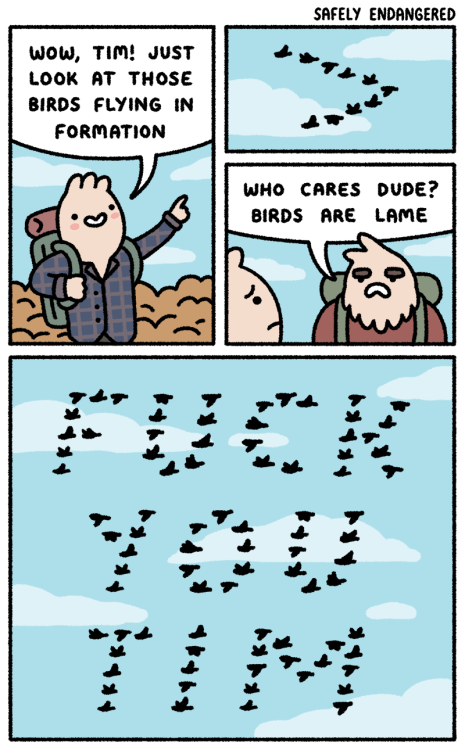
Birds know.Don’t hate birds.


Birds know.

Don’t hate birds.

19 May 07:29

A Quick Primer For Those Who Wonder What The Issue With Slate Voting And The Hugo Awards Is

by Ampersand

puppy-sniffing-award

This post is for those who have heard about the controversy over slate voting and the Hugo Awards, but don’t know exactly what that means in the context of the Hugos. I’m going to simplify for the sake of (relative) brevity. 1 .2

BACKGROUND: HOW HUGO AWARD VOTING WORKS

For any readers who don’t know, the Hugo Awards are an annual award given out for science fiction and fantasy works. The Hugos Awards are voted on in two rounds. The voters are members of Worldcon (anyone with $40 to spare can be a voting member).

In the first round, voters can write up to five works within each category on their voting ballot (categories include “best novel,” “best short story,” “best graphic story,” and so on).

Hundreds of works and creators are written in during the first round by over a thousand voters (iirc), but only five in each category – the five most popular among all voters, using a “first past the post” vote-counting method – get to be “nominees.” This is what people are referring to when they say a work or creator is “Hugo-nominated.”

In the second round, Hugo voters choose from among the five nominees per category, and one winner per category is chosen, using Instant Runoff Voting. (Voters can also vote “no award,” and if no award “wins” a category, then no award is given in that category that year.)

HOW SLATE VOTING WORKS

The current controversy over slate voting is specifically related to the first round of voting. Because the majority of Hugo voters spread their first-round votes among hundreds of different works per category, it takes a relatively small number of votes (40-60, iirc) for a work to be nominated for a Hugo.

Therefore, if a minority of 100 or so voters organizes as a bloc and votes in unison (or near-unison) for the same five works in each category, they alone will determine who gets nominated for a Hugo, while the majority of voters will have no effect on who gets nominated. This form of collective organizing is called “slate voting” or “bloc voting.”

There were two known slates this year, the Rabid Puppy slate and the Sad Puppy slate. The two slates overlapped significantly, and I will refer to them collectively as “Puppies.” In multiple Hugo categories, the Puppies controlled which five works were nominated, locking out the majority of Hugo voters from having an effect on the outcome. In other categories, the Puppies did not control all five nomination slots, but they still had a much greater effect than they would have if they had voted as individuals rather than collectively organizing.

WHY I DISLIKE SLATE VOTING

(This section is less factual and more about my personal opinions.)

Slate voting is antidemocratic, since it is a way for a minority of Hugo voters to control the outcome of the Hugo nomination process.

Slate voting also breaks the longstanding understanding that Hugo voters are supposed to vote based on quality – that is, they’re supposed to vote for the works they as an individual consider the most outstanding work of the year.3 That hundreds of Puppy voters all individually decided to choose almost exactly the same 27 or so works as the most outstanding works of the year, and by a massive coincidence their individual favorite choices matched the works listed on the slates chosen by their leaders, is not a credible claim.

Finally, although the pre-Puppy status quo was not perfect, the Puppy’s slate tactics are exceptionally prone to nepotism and corruption, because the final decisions of which works went on Puppy slates were made by just a few leaders, who operated without any transparency.

As a result, some Hugo nominees this year seem to have been nominated for being pals with Brad Torgensen, who ran the Sad Puppies slate, rather than for producing work that is outstanding either in quality or popularity. And the Rabid Puppy slate strongly favored a previously-obscure Finnish publisher, a company owned by… the organizer of the Rabid Puppy slate.

Slate voting leads to political parties. “What institutional slate voting gets you, no matter how well-intentioned or how much it is aligned with your own views, is political parties. Nothing can get onto the ballot unless it’s part of a slate, so the people who run the slates become the kingmakers; any author who wants any chance at an award has to get in with one of them.”

THREE POPULAR PROPOSALS TO REDUCE THE INFLUENCE OF SLATE VOTING

Many have suggested that all that’s needed to reduce the influence of Slate voting is more voters, that is, for a larger number of people to vote in both rounds of Hugo voting. However, since Slate Voting is a strategy that mathematically allows a collectively organized minority to overcome the preferences of a disorganized majority, I don’t have much confidence in this proposal. (Although it is a nice idea for other reasons.)

Another proposal is the 4/6 proposal, in which individual Hugo voters can only nominate four works per category, and there will be six nominees per category. In this case, rather than a successful slate controlling 100% of nominees in each category, it will only control 66% of nominees in each category. If there are two slates, then the most successful slate will control 66% of nominees, while the next most successful slate will control the remaining 33% of slots. This seems like an insufficient solution, to me.

The proposal I favor is “Least Popular Elimination,” in which voters could still nominate up to five works per category, but the votes are counted in a way that mathematically favors works that appear on the broadest number of voters’ ballots while diluting (but not completely eliminating) the power of slate voting. A detailed explanation of “Least Popular Elimination” voting is available here. While LPE voting is not as intuitive as the other two proposals, I believe it would be more effective.4

  1. Disclosure: Although I’ve tried to be accurate, I am not neutral or objective, and I generally disagree with the Puppies on most things.
  2. For a more detailed summary of events, see Freeping the Hugo Awards.
  3. “Doing anything except nominating the works you personally liked best is cheating in my book.” — science fiction author Connie Willis.
  4. This post began life as a comment on Feminist Critics.
19 May 07:28

aphnorwegian: mxcleod: egalitarianqueen: kibosh-josh-mahgosh: ...


aphnorwegian:

mxcleod:

egalitarianqueen:

kibosh-josh-mahgosh:

egalitarianqueen:

rougaroucojones:

radarmatt:

rougaroucojones:

karolinedianne:

spangledshieldsandsilverwings:

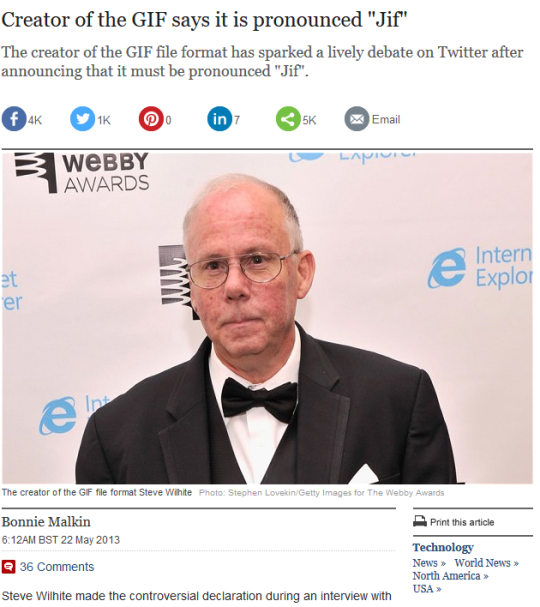
Gif stands for Graphics Interchange Format. when graphics is pronounced “JAFFICKS” Then I will pronounce Gif with a “J”

^ This

It’s followed by an R of course it would be a hard g. But Giraffe is a soft g. Genius is a soft g. Gin is pronounced with a soft g too. GIF is I following a g, it would be pronounced with a soft g.

It aint Jif peanut butter though.

It would still be pronounced like that. The general rule is if the g is followed by an e or i, it’s soft g. U or a consonant is generally a hard g.

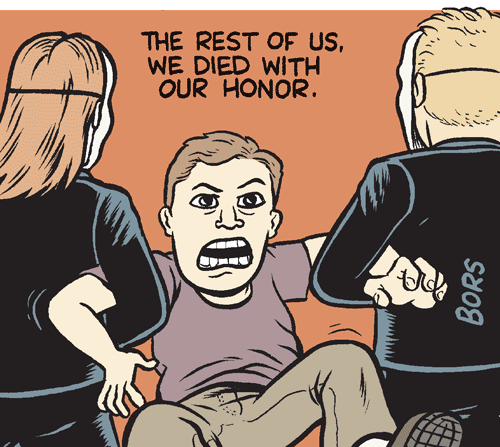
I will DIE WITH MY HONOR

Gear =/= Jear

Get =/= Jet

Gift =/= Jift

Give =/= Jive

In English, words with a ‘G’ followed by an ‘e’ or an ‘i’ can be pronounced with either a hard ‘G’ or a soft ‘G’.

Words with Germanic roots such as ‘gear’, ‘get’, ‘gift’, ‘give’ (see above) are pronounced with a hard ‘g’ while words with Latin or Greek roots such as ‘gem’, ‘general’, ‘giraffe’, ‘giant’, are pronounced with a soft ‘g’.

So no, it’s not exactly a “general rule” that ‘g’ followed by an ‘e’ or an ‘i’ makes a soft ‘g’ sound. 

Additionally, “GIF” is an ACRONYM starting with a word that begins with a hard ‘g’ sound, so “GIF” is therefore pronounced with a hard ‘g’.

We fight with honor

image
image
image
19 May 07:25

Photo


19 May 07:25

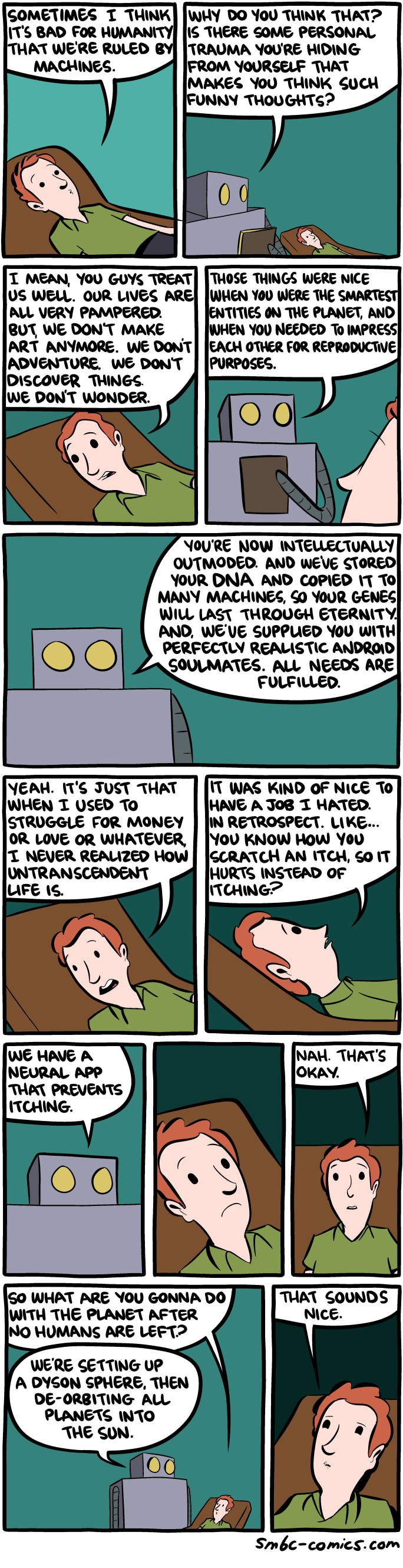
Saturday Morning Breakfast Cereal - You, Robot

by admin@smbc-comics.com

Hovertext: Do you think I could get another sex droid?


New comic!
Today's News:
19 May 07:23

One Crucial Reason Why Abortion Criminalization Is Indefensible

by Scott Lemieux

4-months-3-weeks-2-days

But of course:

A Tennessee Republican is making headlines for voting in favor of a national abortion ban, even after pressuring the women in his own life to have legal abortions.

Rep. Scott DesJarlais (R-TN) publicly opposes abortion and has repeatedly run for office as a pro-life candidate. Last week, he was one of 242 House members to vote for a proposed 20-week abortion ban that has become one of the top priorities for the current GOP-controlled Congress.

An anti-abortion Republican casting a vote in favor of an abortion restriction is not typically newsworthy. However, DesJarlais’ positions on the subject are particularly controversial, thanks to evidence that emerged in 2012 that revealed he has advocated for at least three legal abortions in his personal life.

Three years ago, transcripts related to the congressman’s divorce trial showed that DesJarlais supported his ex-wife’s decision to legally end two pregnancies. He also had several extramarital affairs, and once pressured a 24-year-old woman to have an abortion after she told him she was pregnant with his child. “You told me you’d have an abortion, and now we’re getting too far along without one,” DesJarlais told the woman in a recorded phone conversation. “If we need to go to Atlanta, or whatever, to get this solved and get it over with so we can get on with our lives, then let’s do it.”

This reminds me of people asserting that when John McCain said that if his daughter wanted an abortion he’d leave it up to her, this showed that he was really a moderate on abortion rights. The problem with this is that the formal legal status of abortion is essentially irrelevant to whether the wives, mistresses, and daughters of people like Scott DesJarlais and John McCain will be able to obtain safe abortions. They are fully aware of this when they vote for every abortion regulation and ban to come down the pike. And the disjuncture also illustrates that these votes are appalling. All women should have access to safe, legal abortions, not just women who are affluent or who have access to the patronage of people like Scott DesJarlais.

19 May 07:19

Is the William Daniels Voice Optional?

by Robert Farley
Knight Rider Supercar KITT instrumentation.jpg

“Knight Rider Supercar KITT instrumentation”. Licensed under CC BY-SA 3.0 via Wikimedia Commons.

Without evaluating the likelihood of the changes described (I think the author gets the impact on manufacturing a bit wrong, even accepting his priors) or the timeline, I’m curious what folks think about the political effects of a transformation in transport.

Most people—experts included—seem to think that the transition to driverless vehicles will come slowly over the coming few decades, and that large hurdles exist for widespread adoption. I believe that this is significant underestimation.

Autonomous cars will be commonplace by 2025 and have a near monopoly by 2030, and the sweeping change they bring will eclipse every other innovation our society has experienced. They will cause unprecedented job loss and a fundamental restructuring of our economy, solve large portions of our environmental problems, prevent tens of thousands of deaths per year, save millions of hours with increased productivity, and create entire new industries that we cannot even imagine from our current vantage point.

In particular, I’m wondering what a progressive coalition looks like in this world; we simultaneously reach (and indeed, vastly exceed plausible estimate of success) goals in safety, energy use, environmental impact, and urban livability, while also laying waste to vast swaths of the working class. Does a move to autonomous vehicles continue and enhance the urban renaissance, or does it revitalize suburbia by significantly reducing the costs of long-range commuting?

Thoughts?

19 May 07:18

Keeping the “T” in LGBT

by Sam Hope

IDAHOBiT day gave me a chance to reflect on trans inclusion within what sometimes feels like the LGB(t) movement. I’ve written lots before about the importance of organising across difference, and I make no bones about it – I think whenever and wherever we can, we should be as inclusive and pro-intersectional in our community organising as possible.

This point was drilled home for me in one of the events in IDAHOBiT week that I co-organised – a creative writing workshop followed by open mic event that was all about the trans community being empowered to tell our stories. We deliberately made no exclusions – trans people were prioritised, but anyone could attend. This inclusiveness led to the discovery of how many themes connected across the different groups represented. We don’t have to be “the same” in order to connect to one another.

I’ve been struck, also, in some of the other organising I do, where socials are organised across a broad LGBTIQA spectrum, that so many LGB people who approach these inclusive spaces are reporting experiences that intersect with a trans story, even if they do not want to live or identify openly as trans people. I’ve met lesbians, for instance, who have some gender dysphoria, and who feel like imposters in women’s spaces, as I once did, or gay men who toyed with transitioning but decided it was not for them, but nevertheless remain gender variant. These people often feel marginalised in the communities that are supposed to be “theirs”.

Gender is an unspoken issue across LGB campaigning. When it is not spoken about, we pave the way for “acceptance” that is based in cisnormative values – if you act and present yourself in gender conforming ways, you can sleep with, and indeed marry, who you like. LGB people have been sold an idea of “rights” that looks a lot like assimilation. This leaves gender non-conforming LGB folks, who often face the most prejudice, high and dry.

Gender and sexuality have only recently been seen as two entirely separable things. When the term “lesbian” was first coined in the late 1800s, it represented gender non-conformity rather than simply sexuality. In Nazi Germany, when “homosexuals” were sent to the death camps, that included people we would now think of as trans. In the early 1930s, Germany had been pioneering transsexual surgery – the Nazis burned down the institute responsible.

At the Stonewall riots, butch lesbians and “drag queens” took a lead role – these were the people subject to the most violence and oppression, the folks who did not conform to gender. Stonewall icons Sylvia Riviera and Marcia P Johnson, called “drag queens” at the time, would now be known as transgender women.

Since Stonewall, we have come to understand gender identity and sexuality to be different things, and our community has separated out in a way it never was before. The movement for rights in same sex relationships has forged ahead, with gender non-conforming folks being left behind with weak promises that the bus will come back for us.

Now inclusion is improving, and I’m pleased to say locally there was good representation of T and B at IDAHOBiT events. But representation is often based on the idea that it is LGB’s movement and we Ts are crashing it. However, those folks within the LGB community most in danger, most at risk, are those with the biggest connection to the trans narrative. This is why gender variant folk have always been at the forefront of LGBT activism.

In reality, there is a huge overlap between our communities. Our rainbow is an ever-merging spectrum, rather than neatly divisible colours. It is not that we are “all the same” but that we are on a continuum, with no clear place to draw a divide between us.

We are and always will be one movement.

IDAHOBiT day celebrates the day, 25 years ago, when homosexuality was declassified as a mental illness by WHO. However, Gender Dysphoria is still in DSM V, the latest manual for psychiatric illnesses. Of all days, this has to be a day to raise awareness of the fact that trans people are still fighting a stigma that LGB folk have had lifted.

Those that say IDAHO is really about being gay and nothing to do with trans folk are missing not only the interconnectedness of our lives and histories, but also the importance of reaching out in empathy and fellowship to people who still fall under the stigma of psychiatric diagnosis.

Even when we’re nominally included, the extra difficulty trans people face in participating in events is often overlooked. Trans women in particular are more likely to experience hate and violence than other members of the community, and are often, therefore, terrified of being visible. Many if not most trans folk have trauma levels higher than the general population. Making participation safe and welcoming is therefore a disability access issue.

And let’s not forget that the violence figures for queer people of colour are even higher still.

But often instead of being supported to participate, trans and queer people are branded “unreliable” or “difficult” and cis folks just shrug and say “we tried”. Often they haven’t listened carefully enough, at worst they see us as an inconvenience, or too demanding.

Image: Sam Hope holding a placard that reads : Listen to the trans community

IDAHOBiT, 2015

In reality, if we’re not making events accessible and fully inclusive to trans people, we are probably also deterring other vulnerable and marginalised elements of our LGBTQ+ community. IDAHOBiT needs to be more than just a day when white professionals can come out to represent “diversity”. Youth, disability, race, gender non-conformity, class, mental health and a whole lot of other issues are the casualties when this happens. When we start to focus on inclusion, it’s hard work, but the benefits to the whole community are enormous.


19 May 07:17

Enough with the torture scenes, please

by Ampersand

A scene from “Captain America: The Winter Soldier,” in which Captain America and Black Widow are trying to get information from a bad guy:

Jasper Sitwell: Is this little display meant to insinuate that you’re gonna throw me off the roof? Because it’s really not your style, Rogers.

Steve Rogers: You’re right. It’s not. It’s hers.

[Natasha kicks Sitwell off the roof]

In context, it’s a really funny scene. Don’t worry, they didn’t really kill Sitwell.1 Cap’s pal The Falcon was below, waiting to fly up and catch Sitwell and throw him back down onto the roof. Then Sitwell talks, because in the superhero genre torture always works (at least, it does when the good guys torture).2

Colin Smith, in an excellent post about a torture scene in a Spider-Man comic, describes the elements of a typical superhero torture scene:

6.) A situation in which the torture’s been designed to be gruesomely compelling for the reader, because torture is, as [the writer] amongst many others obviously believes, an entertainment in itself.

7.) The clear suggestion that the heroic torturers are never sadists, incompetent or misguided, let alone evil.

8.) Information gained from the torture leads to decisive action which saves the day, because the torture, of course, always works and always works in an entirely productive fashion which allows the sins involved to be entirely eclipsed by the thought of all the children and puppies who’ve been protected.

9.) An outcome which either ignores any suggestion that the victim of the torture will suffer any lasting ill-effects or which actively implies that they won’t.

10.) The sense that the hero or heroes who sanction and commit the torture will themselves suffer no lasting, dehumanising effects from their behaviour beyond a noble air of angst earned through the suffering which they – and not their victims – underwent as a result of the cutting and poking and burning and so on.

11.) The clear sense that torture is something which real heroes rise to, and which marks the truly super-heroic superhero as a figure willing and able to do anything in order to save the world once again.

Torture has been routinely used by “dark” superhero characters like Batman and Daredevil for so long – I’m really enjoying the Netflix Daredevil series, but I think this show uses torture even more than “24” did – it’s become normalized. By now, “light” superhero characters like Spider-Man and Captain America both use torture, and it’s seldom questioned. (Although it’s odd that in both those examples, the actual physical torturing was done by a “dark” female friend of the male hero, rather than by the male hero himself.)

I accept that in some genres, heroic characters do things that would be horrible in real life (like, you know, being a vigilante), and often that’s part of the fun. But the routine, fruitful use of torture by good guys in pop media – and not only in superhero films – worries me, because the typical American voter mainly learns about torture from pop culture, and the view of torture pop culture pushes is horrifying. If pop culture wasn’t so relentlessly pro-torture, would the American public be so quick to accept it when our government tortures?

wonderella-torture

  1. Later on Sitwell does get murdered by a villain – but the villain in question is VERY good-looking and on a redemption narrative arc, so that’s okay too, I guess.
  2. Honorable exception: The Dark Knight, a movie in which Batman tortures two bad guys, and it doesn’t work either time. Unlike Frank Miller’s Dark Knight graphic novel, in which torture works.
19 May 07:15

Doom Gameplay Teaser

by noreply@blogger.com (Endless)


19 May 07:14

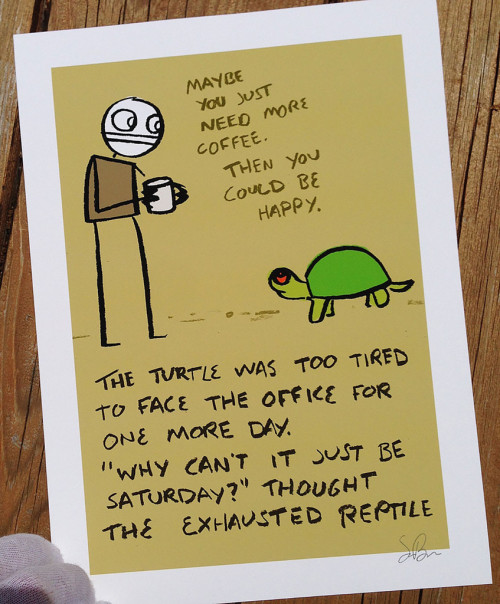
Tired Turtle

19 May 07:14

found a bunch of these I didn’t know I had.

19 May 07:14

real-faker: stutterhug: Calling up A Friend Nekomancer


real-faker:

stutterhug:

Calling up A Friend

Nekomancer

19 May 07:12

Feel Magic

19 May 07:11

The Uneasy Balance of Self Care VS Challenging Fear

by kittystryker

I have a particularly uneasy relationship with food. Buying it, cooking it, remembering to eat it. I will go hungry for hours, sometimes days when the headweasels are particularly bad. I develop this dread of dealing with food that causes me to freeze and want to just sleep until the anxiety goes away.

I’ve always had some sort of weird tension around food, from what I can recall- when I was a child, I would break into the baking cabinet and binge on chocolate chips until I was sick. It’s sort of funny, as back then, I was skinny as a rail- it was only when I started taking medication for depression and thus gained weight that I went from devouring everything in my path to picking at what was on my plate. I learned how to ignore my body for hours, and am still unlearning the damage, even while people scowl at me in restaurants for eating at all.

I feel like most people, when they need groceries, or want a snack, just pack up, go to the store, and buy what they want. None of the individual things are particularly difficult for me- making a list, driving, finding what I need, paying for it, unpacking. But because of all the the above trauma, when I need to go to the shop, I spend sometimes weeks persuading myself that I can do it. I put it off by buying takeout, and portioning it out for several days. I go through my pantry and eat random things that don’t really go together in order to procrastinate going to the store. I find friends to go to dinner with.

With the advent of the internet, it’s much easier than ever to get all sorts of things delivered, including the dreaded groceries. I did that for the first time today- had a stranger buy my groceries for me and bring them to my apartment so I didn’t have to leave. And as I clicked the “order” button and was flooded with a sense of relief, I wondered- was I doing self care, or was I avoiding challenging myself and my fears? Was the fact that I am now more willing to pay extra for someone else to bring food to me actually making my anxiety around food and cooking worse?

I’m not sure. Sometimes it feels like a reward for doing something I find difficult, like finishing a hard piece or getting an unpleasant task done. But sometimes, it’s simply because the idea of going into the fridge and figuring out what to cook is just that horrifying for me. While I appreciate that my partners cook for me, I don’t want to be frozen in place forever on my own, only eating fruit and vegetables that require no more prep than rinsing them off.

I’m trying to give myself small challenges, like today I made guacamole, and also I made my own french fries from scratch. Nothing too complex, but quick and easy enough that I could make them and be eating food that came from my veg box and would end up going bad. I like the food I make, but I’m still exploring why I have so much panic about the process. I suspect that it comes in part from having multiple kitchens in my life that were difficult to maneuver or cook in, which often stood in the way of me taking care of my food needs. Now I have an open kitchen and the dishes are always done, so I’m very slowly becoming less tense around food prep.

In the meantime, as I slowly breathe through this, I’m trying not to feel guilty when I pay someone to do my grocery shopping for me. It feels so ridiculously privileged, but it’s also the only way I’d eat sometimes. I struggle a lot with wondering if my mental health issues make me seem like a bougie bitch when really it’s just that people terrify me, seemingly more and more so each year. I suspect the hardest part is going to be giving myself space to need that kind of task done for me, for a while, as I keep pushing forward in relearning how to be outgoing. The world doesn’t feel very safe, and for now being in retreat makes sense… but it’s not where I want to be forever.

How do you balance taking care of mental health issues with not wanting to give into the spirals that hold you back?

19 May 07:09

siddharthasmama:Myth: women of color, particularly black women,...


siddharthasmama:

Myth: women of color, particularly black women, abuse the system and are “welfare queens”.

Reality: white women/families are the biggest recipient group and are also more likely to abuse the service and commit fraud.

18 May 07:42

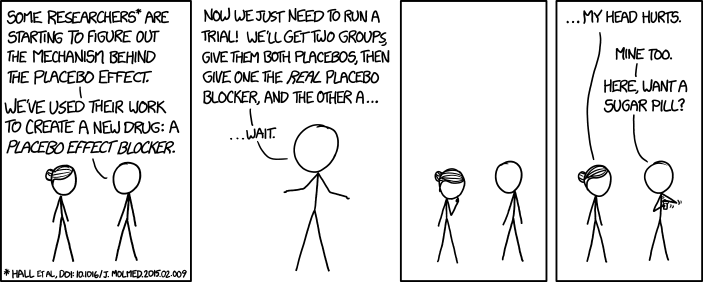
Placebo Blocker

They work even better if you take them with our experimental placebo booster, which I keep in the same bottle.
18 May 07:04

animateglee: oomshi: the bible said adam AND eve so i slept with them both Well it’s the Bible,...

animateglee:

oomshi:

the bible said adam AND eve so i slept with them both

Well it’s the Bible, not the Straightble, I’m just following the book.

18 May 06:58

cagedlions:But institutional racism is imaginary, right?Watch.


cagedlions:

But institutional racism is imaginary, right?

Watch.

18 May 06:58

down the throat chanel preston

by admin

Down_The_Throat_3_2015-03-04-09_01_49Down_The_Throat_3_2015-03-04-09_02_27Down_The_Throat_3_2015-03-04-09_03_09Down_The_Throat_3_2015-03-04-09_03_26Down_The_Throat_3_2015-03-04-09_03_39

Originally posted 2015-05-17 17:40:41. Republished by Blog Post Promoter

down the throat chanel preston source: droolingfemme.

18 May 06:57

"Seventeen of the twenty-one names on the list of advisers to the Bush campaign-in-waiting worked in..."

Seventeen of the twenty-one names on the list of advisers to the Bush campaign-in-waiting worked in his brother’s administration and a majority of those were in one way or another associated with the war in Iraq or its aftermath.


Three names stand out in particular: Paul Wolfowitz, John Hannah and Stephen Hadley, all of whom were intimately involved in promoting the war, and in deceiving not just the American people but the entire world. Wolfowitz and Hannah had their fingers all over the document that formed the basis for Secretary Powell’s speech to the UN in February 2003. Hadley, as President Bush’s Deputy National Security Adviser offered his resignation to then-President Bush after discovering three documents in his files from the CIA telling the White House not to include the claim of yellowcake from Niger in the case for war. These were but two of the many lies promulgated by the cabal that brought such disgrace to the Bush administration and to the country.


- How can Jeb Bush claim to be his own man when he has eagerly
surrounded himself with the architects of the deception that led to the
Iraq war? 
18 May 06:56

You’re too young to be a dom

by Stabbity

It’s sadly common for the ageist dicks of the world to tell younger doms that they’re too young to be dominant, as if age has anything to do with it.

First of all, being dominant is an identity, not an achievement. If it was an achievement, there would be an agreed upon test to take or a panel of judges who could decide whether or not to bestow true domhood upon you. Tests and judges only make sense when you have something concrete to test, like the ability to play pierce someone without cross contaminating anything. Domination (and submission!) are so subjective that testing how good a dom someone is would be as relevant and useful as testing how good a romantic partner someone is. There is no “good partner,” only the person who is right for you. Dominance is an identity like nerd is an identity – it’s certainly related to things you do, but only you get to decide whether or not you’re a nerd and it has nothing to do with how old you are.

If the people who shit on younger doms were being logical about it, they would also have to shit on older doms who are new to the scene. Age does limit the amount of experience you could possibly have, but if you’ve ever spent any time at any kink events, online or off, you’ll know that it’s not exactly uncommon for people not to figure out they’re kinky or not feel comfortable exploring it until later in life. So why don’t older newbies get more shit? My theory is that they don’t scare the douchebags of the scene because they aren’t walking threats to the idea that domination is this extraordinarily difficult thing that requires years of intense study and only the most extraordinary, experienced, and educated person could possibly call themselves a dom. Basically, these people are so insecure that they freak out when some kid shows up and proves that anybody can be a good dom to the right partner. We can all agree that’s blatant douchebaggery, right?

On the subject of douchebaggery, how exactly are people who are “too young to be doms” supposed to get the experience that would get these assclowns off their backs? Oh, that’s right, they’re not. They’re supposed to quietly slink away from the scene and not provide any competition for the hot young submissives. If you know you can’t compete with a young, inexperienced dom in a subculture that fetishizes experience in doms (god forbid submissives be experienced, but that’s a separate post), I know where the problem is and it’s not with your competition.

Life experience does count, of course, but it’s hardly the be-all end-all of skill as a dom. There’s no shortage of people with decades more life experience than I have making complete asses of themselves on Fetlife, after all. Now, it would take a pretty exceptional 20 year old dom to convince a 25 year old to submit to them, but why couldn’t they be a perfectly good dom for another 20 year old?

I used to have trouble taking younger doms seriously, but I think that was because I a) bought into the myth in the scene that you can’t possibly be a good dom without lots of life experience, and b) was insecure about my own level of experience so I was kind of a dick about people even younger than I was. Fortunately, I’ve grown up since then and now understand that it’s pretty cool if people are figuring out what they really want younger than I did.

And finally, if age is so important how come nobody gets told they’re too young to be submissive?

17 May 22:26

Political commentary

by Mo

manfeels-park-29-political-commentary

Source: The Prime Minister of the United Kingdom actually said this, and lo, it was memed.

Yeah, whatever, it’s not really Manfeels. I don’t care.

17 May 19:13

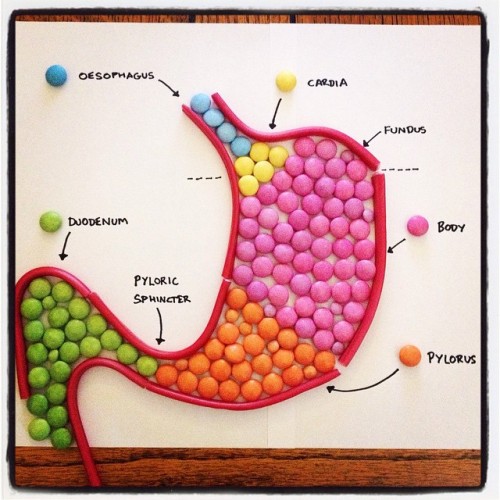
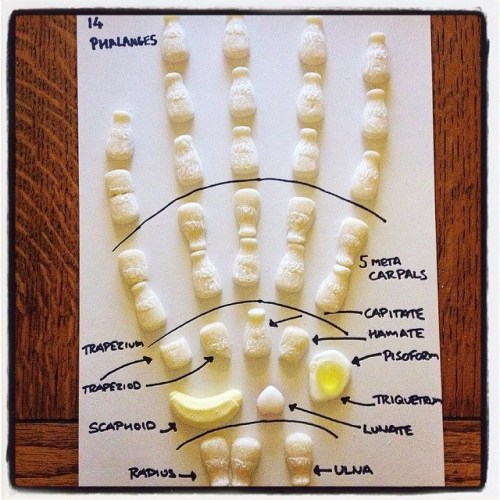
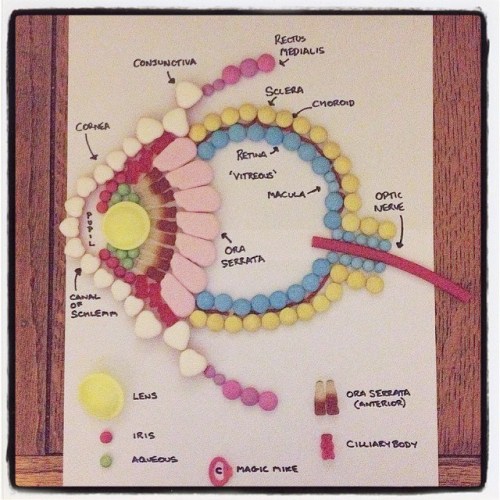
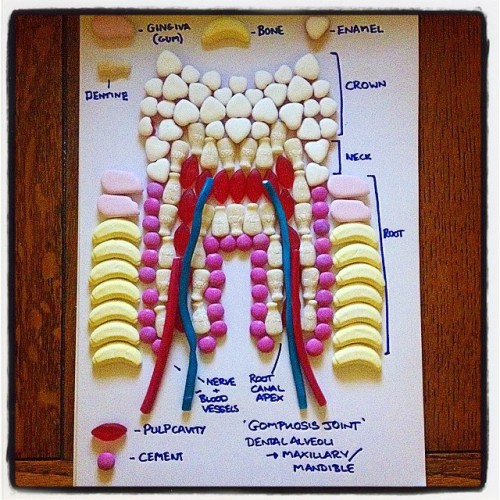
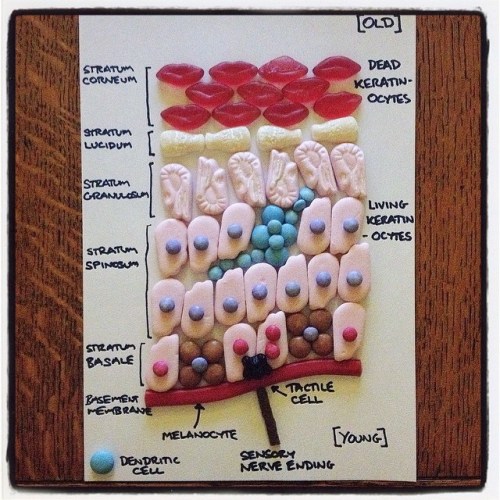
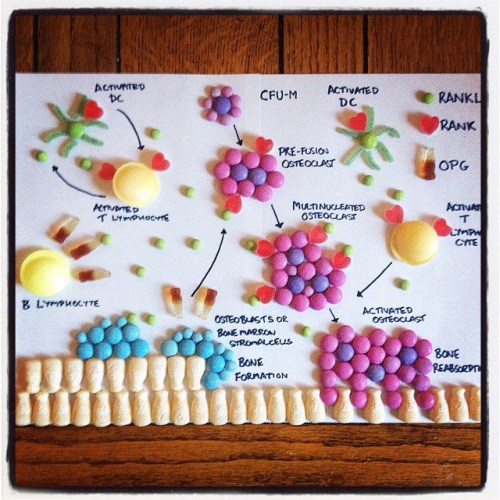
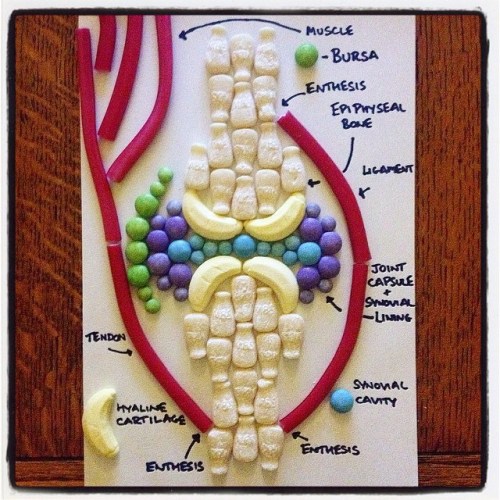
aspiringdoctors:laughingsquid:‘Candy Anatomy’, A Medical Student...

17 May 19:12

Required Reading

by Hrag Vartanian
Sometimes emojis can say it all. (via @guan)

Sometimes emojis can say it all. (via @guan)

This week, Picasso and global inequality, mistaking art for a garbage can, Twitter’s abuse problem, gayness vs. homosexuality, and more.

 Neil Irwin writes “The $179 Million Picasso That Explains Global Inequality“:

One of the most important findings of the leading economists who study inequality is that wealth and incomes at the very top are “fractal.” What they mean is that when you zoom in on the upper end of wealth distribution, patterns repeat themselves in an ever more finely grained pattern.

… In other words, the number of people who, by this metric, could easily afford to pay $179 million for a Picasso has increased more than fourfold since the painting was last on the market. That helps explain the actual price the painting sold for in 1997: a mere $31.9 million, which in inflation-adjusted terms is $46.7 million. There were, quite simply, fewer people in the stratosphere of wealth who could bid against one another to get the price up to its 2015 level.

 Heba Kayal, who just graduated with a degree from Columbia University in modern art history and curatorial studies, posted this on Facebook on Friday (and it’s reproduced here with permission): “Just got told off for throwing a cookie wrapper in a black bin by very rude & irate gallerist… Turns out the black bin was a work of art #frieze #nyc #art”:

Screen Shot 2015-05-17 at 11.45.45 AM

Perfectly classic.

 Artist Mark di Suvero interviews architect Renzo Piano about the new Whitney Museum. It begins:

MARK DI SUVERO: Renzo, I have some questions for you. I would like to ask you why you do so many museums? [laughs]

RENZO PIANO: I don’t know why. Because they ask me. Also, Mark, really, I do much more than museums. What I really long to do are public buildings. I love that—a concert hall, a school, a library, a hospital. Everything that is public makes a city a better place to be. Because you make a place where people share values: they come, they stay together. It’s much the same as a museum.

DI SUVERO: But the museums that you’re known for …

PIANO: Museums tend to do a better job. It’s about wondering.

DI SUVERO: Imagination.

PIANO: Yes, it’s about imagination. But take, for instance, something I was working on this morning: We’re making a big building for Columbia University for the Mind Brain Behavior Initiative. It’s about the structure of brains, and we’re working with the scientists there. And those people are equally queer, like artists.

 A thoughtful piece — though a few lines (like, “Everywhere, the global circulation of images and commodities goes hand in hand with increasing partitions in the social sphere: segregation, cultural difference, inequality”) are suspect for being contradictory — published in the e-flux journal about the idea of space, labor, and the internet:

Though the internet was hailed as a solution to all kinds of perennial problems—blogs will solve the issue of the corporate consolidation of the press; Bitcoin will solve currency manipulation and rampant corruption in financial markets; social media will fix the democratic deficit—the digital economy entails a shift from a formal to an informal economy, which replaces formal benefits, like salaries, pensions, and social safety nets, with “likes” and barter, while the formal benefits accrue to the very few.4Under the twin pressures of financialization and what is called “the sharing economy,” capital has emancipated itself from its direct relationship to labor—which is not to say that it has done away with work; it has just overcome the need to pay formal salaries, along with the claim to formal possessions.

… If we understand digital space as a territory in its own right, we need to scrutinize how said territory is being mapped. This is not happening with Borgesian fidelity, as the corporate interests that are trying to describe this territory are not concerned with accuracy or diversity, nor are they interested in the imaginary (in old maps, unknown lands were often inhabited by fantastical beings, like sea serpents, monstrous beasts, or mermaids, whereas the maps of the digital world are being drawn in Silicon Valley, with little regard for mapping unique or differentiating characteristics of space). Instead of imagining how one could inhabit the spaces being mapped, the digital topographers labor to create a homogeneous landscape where a user is a user is a user, disregarding the social and cultural “accidents” in the landscape, and filling the unknowns in the map with replicas of themselves.

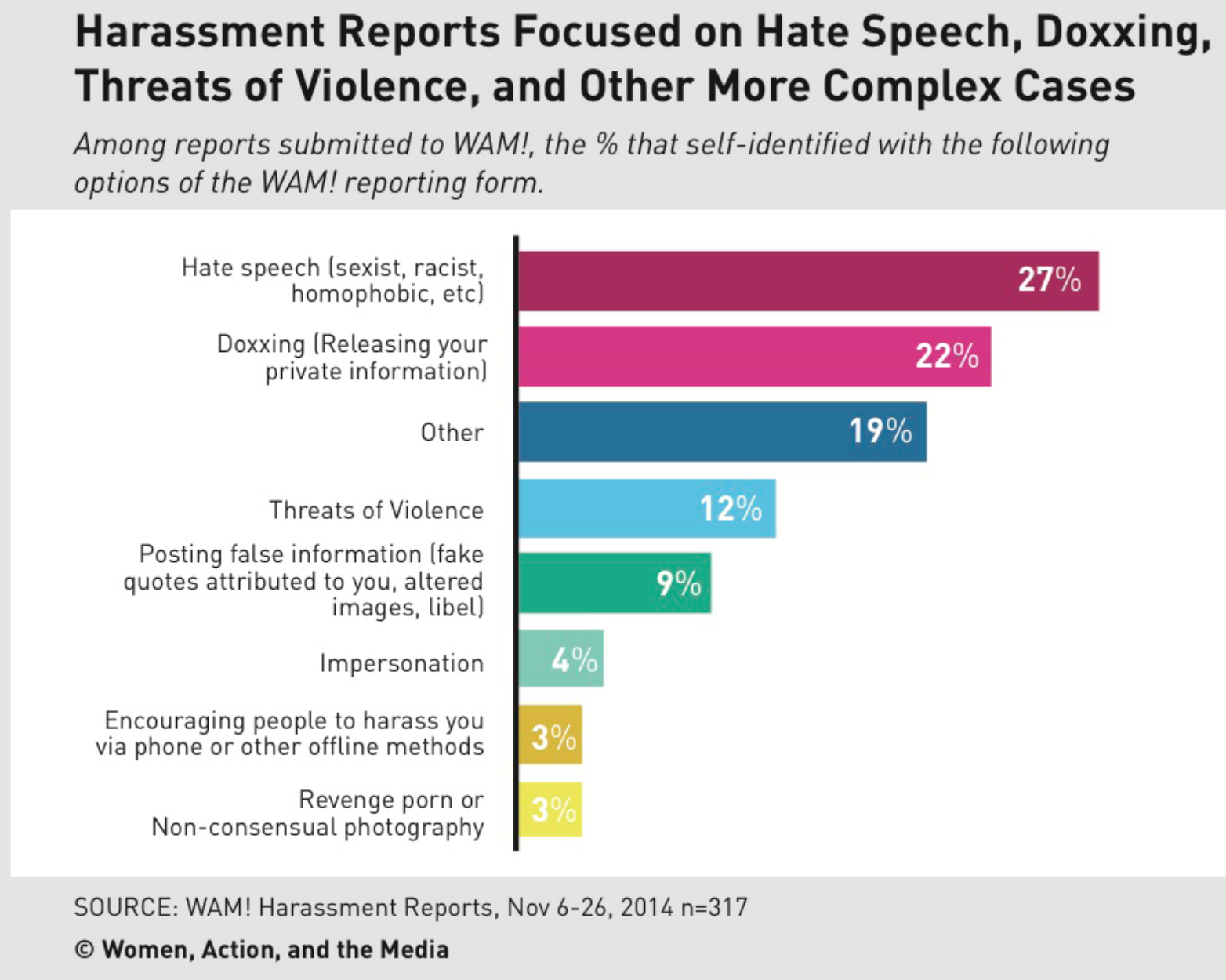
 Women, Action, and the Media has released a report on Twitter’s “abuse problem,” and it explains:

The vicious targeting of women, women of color, queer women, trans women, disabled women, and other oppressed groups who speak up on online has reached crisis levels.

And one of the interesting charts (I encourage you to read the whole thing):

Screen Shot 2015-05-15 at 5.14.02 PM

 What killed the infographic?

Infographics, it seems, are a dying breed. Except that in talking to a dozen data visualization experts across the world’s top studios, I learned that the story is far more nuanced. Once a playground for independent designers, data visualization has evolved into something more mature, corporate, and honest about its failings. The quirky, experimental infographics that once peppered the Internet may be disappearing. But that’s only because data visualization, as a medium, has finally grown up and gotten a job.

 J. Bryan Lowder explores what differentiates gayness from homosexuality, and he brings up issues that have long been debated by gay aesthetes:

Implicit in the notion that an apartment like mine can “be gay”—and that you, despite any politically correct training against saying so, could easily recognize it as such—is an understanding of gayness as something more than a basic sexual orientation. The concept of a “gay apartment,” like “gay literature” or “gay mannerisms,” suggests that gayness also comprises a set of markers or values or practices that manifest themselves in the spaces and objects and relationships that gay men create. (While cultural gayness, as I’ll try to define it here, is not the exclusive province of men, their history as its most visible advocates will necessarily bias this piece.) If you believe [Edmund] White and [Neil] Bartlett as I do, gayness may be found not just in whom you sleep with, but also, perhaps, in the sort of sheets you insist on sleeping between.

 Hilarious! The LA Times does their own (spoof?) version of the typical New York Times story about visiting Los Angeles and finding people can actually live there, but in their version someone from LA moves to NYC looking for the comforts of home:

She landed an apartment in Brooklyn, which she’s heard is similar to the Eastside of Los Angeles.

Unlikely though it may seem, Cadenas is part of a trend: Angelenos have always loved visiting New York, but lately they have embraced the city as a place to live. According to Census data, between 2008 and 2012 almost as many Angelenos moved to New York as New Yorkers moved to Los Angeles.

Southern Californians are overcoming their fears of subway germs, and reversing the American directive to go west. They’re finding that New York is more than a capitalist prison that runs on the fumes of the finance industry and nostalgia for CBGB. It now offers many of the lifestyle amenities that their hometown has boasted for decades.

Not too long ago, Angelenos thought of New York as a veritable food desert; as recently as the 1990s, poppy-seed bagels were considered the lone culinary standout. These days, however, New Yorkers can sidle up to the juice bar 3 Roots in Greenpoint for liquid kale and wheatgrass, or stop by Sun in Bloom in Park Slope for a raw-food lunch.

 Witness accounts of crimes can be very unreliable. The New York Times looked into the issues and provides some interesting examples related to the police shooting of a hammer-wielding man in Midtown Manhattan:

There is no evidence that the mistaken accounts of either person were malicious or intentionally false. Studies of memories of traumatic events consistently show how common it is for errors to creep into confidently recalled accounts, according to cognitive psychologists.

“It’s pretty normal,” said Deryn Strange, an associate psychology professor at John Jay College of Criminal Justice. “That’s the hard thing to get our heads around. It’s frightening how easy it is to build in a false memory.”

 Mongolians take memory very seriously:

Called the “international master of memory” in the Mongolian Press, Khatanbaatar has participated in the World Memory Championship himself, and is the best known mental athlete in his home country. As the director of the Mongolian Intellectual Academy in the capital Ulaanbaatar, he is now training hundreds of children and adults, some as young as kindergarten age, who are interested in flexing their cerebral muscles, using mental calculations, speed readings and Rubix Cube deciphering.

The practice has paid off. Organized, consistent and steadfast, Mongolians are a fixture at international memory competitions. Only China boasts more competitors with world rankings.

 The sounds of hard drives failing, arranged by manufacturer.

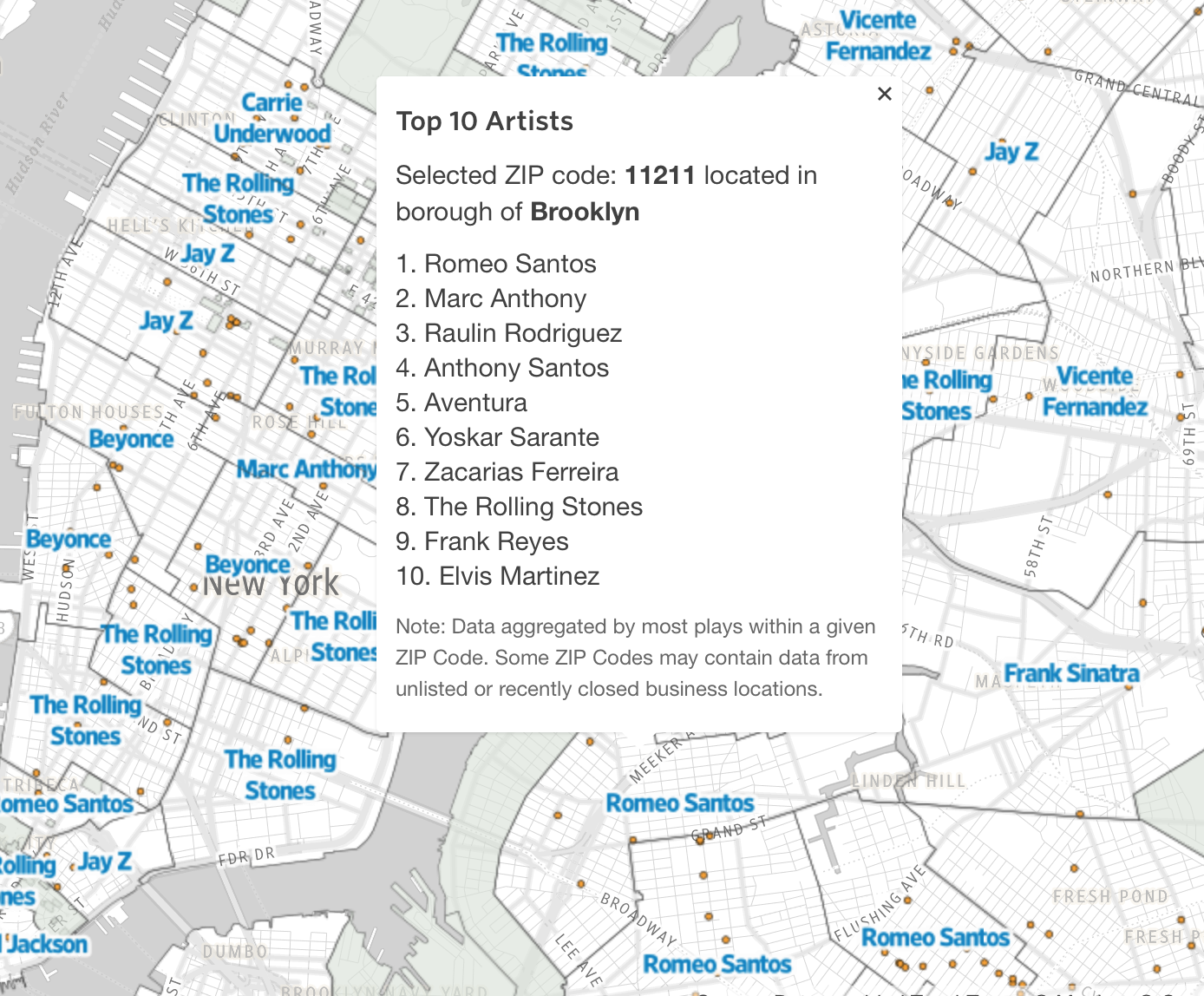
 What New Yorkers listen to on jukeboxes … namely, lots of Rolling Stones, Jay Z, Beyonce, and Romeo Santos. Here’s the top 10 artists in Williamsburg’s 11211 area code (which is where Hyperallergic HQ is located):

Screen Shot 2015-05-15 at 5.53.41 PM

Required Reading is published every Sunday morning ET, and is comprised of a short list of art-related links to long-form articles, videos, blog posts, or photo essays worth a second look.

17 May 19:07

“Fury’s” Feminism: A Treatise by John Nolte

by bspencer


John Nolte really likes “Mad Max: Fury Road.”

After almost twenty years of directing nothing but kids movies, 70 year-old George Miller has picked himself up, dusted himself off, and, like a Boss, once again shown the whippersnappers how it is done.

I mean, he really likes it.

“Fury Road” is dazzling to watch and experience. The talk of no CGI is, however, pure hype. There is plenty of CGI, and that includes moments in some car stunts. Compared to the new “Avengers” movie, which is practically a cartoon for extended periods, this is a small thing and in no way takes away from Miller’s practical-effects achievements. There will be Oscars.

You know what he likes best about it? The feminism. That’s right. Nolte likes the feminism, ‘cuz it’s the right kind of feminism. Nolte-approved feminism.

“Fury Road’ is nothing like the diseased modern-day, left-wing feminism spread by the likes of Hillary Clinton and Barack Obama. Miller’s women are not victims, are not Julias, are not dependent on a central government to solve all their problems, are not wallowing in a narcissistic cult of their own victimhood, and are not acting like men.

In fact, just the opposite is true. Miller’s heroines are beautiful, feminine, and breaking away from a cult of personality and its tyrannical central government. These are feminists who have come for their God-given rights, not emasculate. They don’t crybaby, they act. They don’t tell others how to behave, they fight. They don’t want to take away your rights, but they damn sure are demanding their own.

These are women too busy being strong and independent to collapse into a helpless ball of harpy outrage over imagined offenses.

I, for one, am excited about this convservative-approved avenue of feminism suddenly available to me. Provided I look like Charlize Theron and confine my feminism to beating people up in the desert, I will be golden!!!! Not like those whiny feminists who complain about things like the prevalence of rape in military culture and petition the government to change things legislatively. I mean, that is some straight up outraged harpy shit right there.

The only problem I see with partaking of this new feminism (because I already look exactly like Charlize Theron*) is that I just don’t think I’ll get many opportunities to beat up random folks in the desert; but since I’m guessing Nolte lives in Southern California I’ll happily volunteer to ride out there in a fixied Humvee so I can hit him the face with a shovel. FEMINISM!

*Theron a is a freckle-faced middle-aged woman with a sagging ass, right?