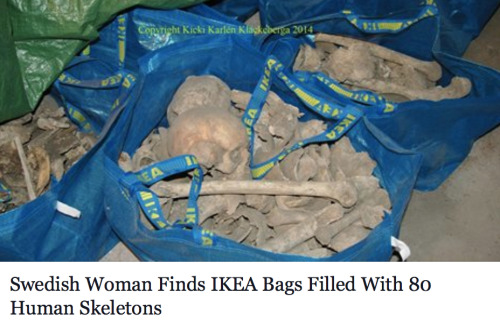
And of course they come in, like, a million pieces you have to put together yourself.
And of course they come in, like, a million pieces you have to put together yourself.
I read things. I find them interesting. I share them.
10 Things the Left Should See the Back of Right Now (Isla Williams)- I do not have enough YES TO THIS to articulate how important this is.
My Birth Story, The Bipolar Birth Plan Was Bullshit and The Stigma Of Mentalist Mums (The Secret Life Of A Manic Depressive)- Honest account of birth and postnatal care for a mother with bipolar. With bonus pictures of an adorable babby.
I stand with Bahar Mustafa – Reverse racism isn’t real (Sam Ambreen)- Sam knocks it out of the park, and like Bahar, has upset a lot of white men. Good.
Sex Workers Don’t Owe You Any Answers (Alana Massey)- Shit that shouldn’t need to be said, said well.
Shit White Feminists Need To Stop Doing (Fernanda Toro)- Ditto. Read, take heed.
It did not start with Stonewall – Black lesbian elders tell their herstories.
A Rare And Remarkable Glimpse Into The Lives Of Trans Women In 1960s Paris– Photographs of the glamorous trans women sex workers in Paris.
The Underground Art of the Insult (Anna Holmes)- A brief history of throwing shade.
Congrats, you have an all male panel!– Shaming the all-too-common all-male panels.
Positive Behaviour S&M (Mark Neary)- This is what schools are doing to autistic children and it’s fucking horrible.
Workfare, Forced Labour and the new ‘Business and Community Wardens’. (Pete the Temp)- Exposing the forced labour in a “voluntary” role.
Mad Max: Fury Road Director George Miller: “I Can’t Help but Be a Feminist” (Vanity Fair)- What Miller describes here as he talks about his creative process is the bare minimum any fucking director should do, and yet they aren’t. Do a George Miller, and make an actually fucking good film.
And finally, the best of the hipster cop meme. Fuck that guy.


So you know how UKIP said that all the floods in the UK currently are because of gay marriage
well someone’s gone and made a twitter account called @UkipWeather and let me tell you this is pure gold
and my personal favourite


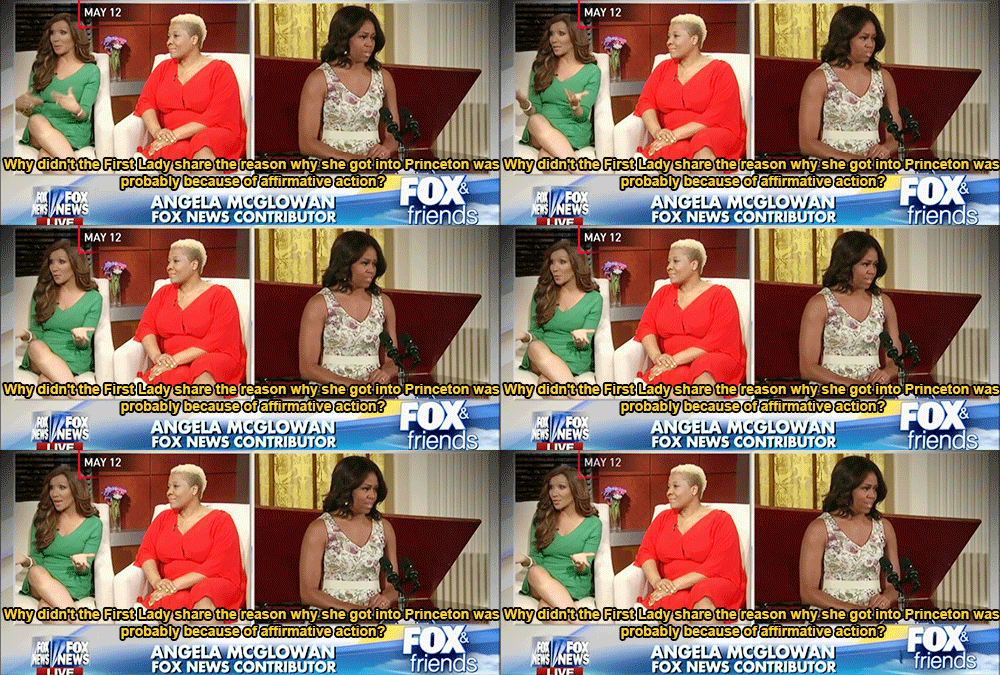

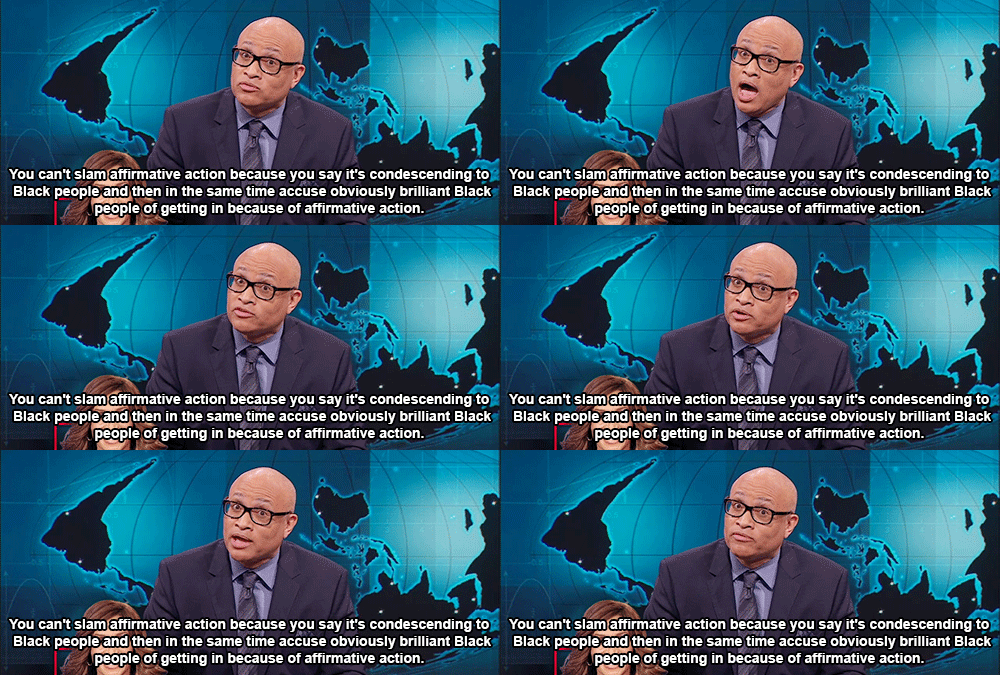
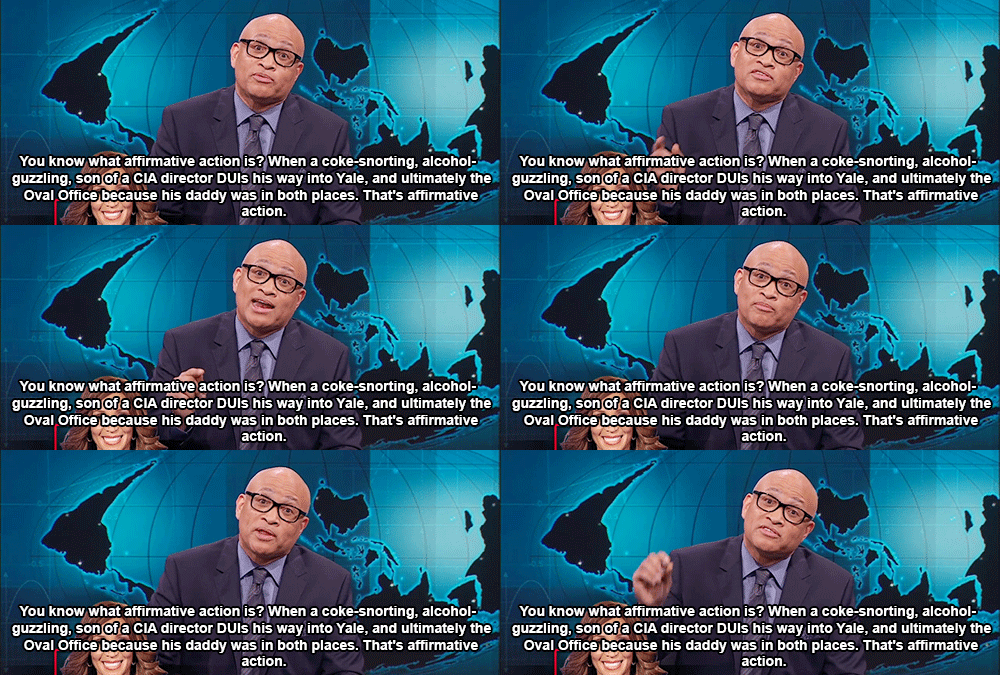
*MIC DROPS ALL THE WAY TO HELL*
Well….
If you saw the rest of this, she also insinuated that Michelle Obama can’t read
Burrrrn
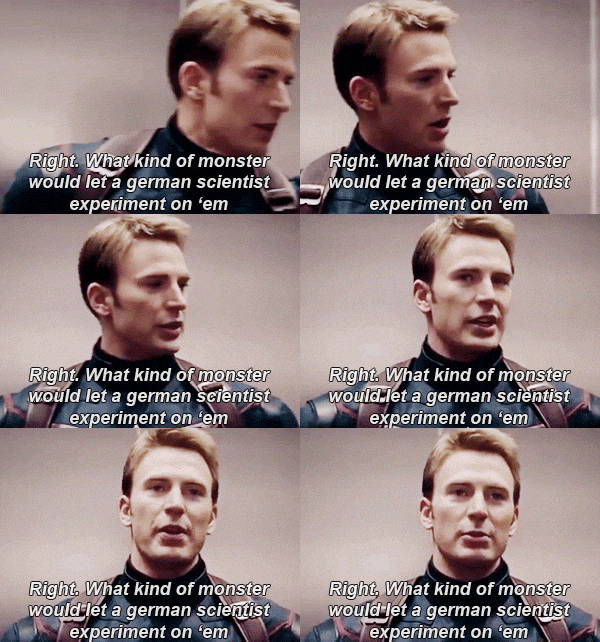

No but this scene is extremely important and it’s why I’m angry at people who say that Steve’s characterization sucked.
Steve is the only one who understands where these two kids come from. Hill is trying to distant Steve from them because right after he says this line she says: ‘’We’re not at war anymore.’’. She’s trying to prove that Steve did the right thing because when the country is at war we all make some hard choices that we are not proud of. In war everything is permitted, and Steve did the right thing because he was doing it for the right cause. Hill is basically saying ‘You did it to protect your country and to save people and to make a difference, but these kids have no excuse for volunteering to these scientists.’
But how does Steve reply to that? To her ‘’We’re not at war anymore’’?
He says ‘’They are.’’
And it is SO important because Steve sees the big picture. For most Americans the war is something ugly that their grandparents had to deal with, something in the distant past that left mark but is also way behind them. But just because there wasn’t a war in America for over 70 years doesn’t mean that other countries have been so lucky. And Steve GET’S IT. It doesn’t mean that he’s not mad. It doesn’t mean that he will not fight them if they’re on the opposing sides. But he knows where they come from. And he won’t let them be reduced to some monsters who let German scientists experiment on them.
Because if Steve was anything but American during WW2, if he wasn’t on the ‘winning team’, he wouldn’t be labeled as hero.

A view of one of the many illegal markets set up by migrant laborers in the Abu Dhabi worker camps (photo by the author for Hyperallergic)
The news that a third member of the Gulf Labor Artist Coalition was barred from entering the United Arab Emirates (UAE) has many people wondering what this means for the future of the Gulf nation’s growing art community. In the art world, where the free circulation of ideas has long been an important value, the travel restrictions signal a very different climate emerging for cultural workers in the UAE.
The Gulf Labor Artist Coalition, which is an international group of artists working to ensure that migrant workers’ rights are protected during the construction of museums and other institutions on Saadiyat Island in Abu Dhabi, has released a statement on the recent situation faced by its members and reasserted its position that the “betterment of conditions for workers is not separate from the development of conditions of making and showing art.” The group goes on to elaborate on the relationship between workers and art:
The specter of work has always haunted the making of art and the reflections of artists. To deny this engagement is not just a denial of a particular topic or subject matter, it is a denial of the history from which art emerges, which is from an inherent questioning of human activity in this world and the measures by which these activities are valued.
New York University Professor Andrew Ross, who was the first member of Gulf Labor to be turned away last March, is troubled by the reactions by the UAE-affiliated cultural institutions to the travel bans. “For the UAE authorities to tolerate forced labor and trafficking at the core of the country’s workforce is bad enough. To retaliate in this way against those investigating the abuses is tantamount to saying that the state actually sanctions these practices,” he told Hyperallergic. “The silence of the Guggenheim and NYU suggests that these institutions have ceded too much autonomy to their Emirati partners who pay all the bills.”
For Ashok Sukumaran, who this month was denied a visa to visit the UAE from his native India, the issue raises many concerns. “Beyond the classic arguments for freedom of speech and movement (which must be restated), and the issue of workers’ rights (which is a systemic one), there is another condition that is at issue here. That the UAE is a regional hub and a melting pot for the region,” Sukumaran told Hyperallergic. “It’s where I would meet Nepalis, Punjabis, people from southern Iran, and Balochis. The role of the cultural institutions of the UAE is to develop forms of dignifying these relations and thereby the treatment of all these people. It is a big role. A role of the anti-police, if the police is about suspicion, surveillance, and control.
“Which is why it is upsetting to see the major cultural forces gathered on the island of Saadiyat treat workers as a PR problem, or ‘security issue.’ We expect some imagination from them, and not more policing. To paraphrase a painting once shown in the [2007] Sharjah Biennial (by Rikrit Tiravanija), ‘Less Oil, More Courage’ is needed. “
We asked artist Walid Raad, who is the third member of Gulf Labor to be denied access to the UAE, if he thinks there’s a growing awareness of the issue in the art world and why he become involved in the first place. “We do what we can, as we assume others are as well. I personally became involved in this because I was asked to contribute to various projects in the Gulf,” he told Hyperallergic. “I take the institutions and individuals who invited me at their word when they say they want to build the most progressive infrastructure for the arts in the world. Then the question became about what this actually means. Does it refer only to the architecture of the buildings, the quality of the programs and artworks, or can it also be about those who are building the museums, roads, pipelines, etc.”
The following is the recent Gulf Labor Coalitions statement in full:
To:
Guggenheim, New York and Abu Dhabi
Louvre, Paris and Abu Dhabi
New York University (NYU), New York and Abu Dhabi
Tourism Development & Investment Company (TDIC), Abu Dhabi
Abu Dhabi Tourism and Culture Authority (TCA), Abu Dhabi
Sharjah Art Foundation (SAF), Sharjah
Art Dubai, Dubai
Salama Bint Hamdan Al Nahyan Foundation, Abu DhabiThis week artists Ashok Sukumaran and Walid Raad were denied entry to the UAE on grounds of “security.” This comes after NYU professor Andrew Ross was similarly barred from flying to Abu Dhabi in March. Given Sukumaran and Raad’s history of vital and sustained engagement with the country and region, invited or celebrated by many of you addressed in this letter, the only possible reason to suddenly have three such integral parts of our art and academic community denied entry, must be their involvement with the Gulf Labor Coalition.
All three are members of this artist-initiated group that has been working since 2010, urging the museums and other institutions being built on Saadiyat to create better conditions for their workers. One of the reasons Gulf Labor has focused directly on the Guggenheim is that as contemporary artists working in and engaging with the region, we have felt particularly implicated, and also felt we could have a say in the development of this museum.
Beyond Saadiyat Island, Gulf Labor has conducted independent research and continues to produce a body of knowledge around migrant labor, not only in the Gulf, but also in the home countries of workers. In July 2015, it will present a report on this research in the context of the Venice Biennial.
Gulf Labor’s long history of constructive, and patient engagement with the Guggenheim and TDIC on this issue is documented on our website. From the summer of 2010, six months before the announcement of a boycott, up to our last proposal in April of 2015, we have have tried to consult with, or address directly, the Guggenheim before making our positions public.
Our most recent proposal synthesizes and brings together years of research and engagement with many parties ranging from human rights and labor organizations, to researchers and workers in the region. These remedies have been drawn from the experiences of workers at the Louvre, NYU Abu Dhabi and Saadiyat Island infrastructure sites, and is supported by experts in the field. We have made this proposal at a pivotal juncture when contractors are meant to be hired and construction of the Guggenheim building is set to begin. Addressed to the Guggenheim and its Abu Dhabi partners we have stipulated:
(1) setting up a fund to reimburse workers for recruitment fees,
(2) ensuring a living wage,
(3) allowing forms of collective representation.We provided the Guggenheim a month to engage with what we still believe is a realistic and achievable proposal to improve the condition of workers on the island and to end our call for a boycott. An entire month passed without a response.
Now with these denials of entry, we are faced with a further retrenchment of the possibilities of dialogue and a foreclosing of the exchanges which have contributed to the development of the cultural institutions of this region. We have always held that the betterment of conditions for workers is not separate from the development of conditions of making and showing art.
These denials are not targeting specific individuals, but potentially setting a dangerous standard of what can or cannot be done within the field of culture itself. And in this way, they implicate all the members of our artistic and cultural communities. Thus, we believe that it is an especially crucial time for institutions with expressed commitments to the region such as your own, to commit to lifting these denials of entry and, at the same time, to explicitly engage with the questions that these denials seem to want to evade – that is, the fair working conditions of the people who construct and maintain your organizations.
The specter of work has always haunted the making of art and the reflections of artists. To deny this engagement is not just a denial of a particular topic or subject matter, it is a denial of the history from which art emerges, which is from an inherent questioning of human activity in this world and the measures by which these activities are valued.
Links to Sukumaran and Raad‘s recent statements.
Gulf Labor Coalition
May 16, 2015

BuzzFeed sent pictures of some very American things to their UK office and asked them to guess what the pictures were. There were biscuits and gravy and then there were corn dogs and a crunchwrap supreme from Taco Bell. Very American things.
They also included this picture of Chiefs fans tailgating at Arrowhead last year's home opener against the Titans. A few of the responses from their co-workers are spot-on (and a couple of them are not).
This is the most American thing I have ever seen in my life.
What's happening here is many children are following the wrong dads around because everyone accidentally wore the same outfit.
FOOTBALL!!!!! But not the good type. Looks like a bunch of Kansas fans having a jolly good time with their BBQs and six-packs in the car park before a game. Why in a car park? No fucking idea.
God knows. Republican National Convention?
This is a parking lot grill thing! There's a name for it. It's probably at NASCAR. There are flags and half of them are the stars and stripes. USA! USA! USA!
This is tailgating. It's the most popular sport in America. Occasionally they play a celebratory game of football at the end but people don't care as much about that because you can't eat or drink a football.

This morning, a federal jury stunned Philadelphia and acquitted six city narcotics officers accused of violently robbing suspected drug dealers of hundreds of thousands of dollars. Victims were allegedly brutally assaulted and even hung over balconies, according to the indictment.
Throughout the trial, lead defense lawyer Jack McMahon attacked the alleged victims' credibility (calling them "bags of trash" and "despicable liars") and that of former officer Jeffrey Walker, a narcotics cop arrested separately who pleaded guilty and testified against his former colleagues.
McMahon apparently did a good job convincing the jury that these alleged drug dealers were all liars despite the fact that they and Walker independently told the same chilling stories. What's so sad and ironic about this is that this is exactly why corrupt police target criminals: who’s going to believe them?
Apparently not this federal jury which, according to the Philadelphia Inquirer, was made up "largely of white suburban residents." McMahon played to what was no doubt a sympathetic audience.
Today's verdict sends a message to Philadelphia District Attorney Seth Williams: the question of whether rogue police are held accountable lies in his office's hands."There is no question that the federal jury pool in the Eastern District of Pennsylvania is overwhelmingly white, suburban and rural, conservative and pro-law enforcement," says Larry Krasner, a prominent civil rights lawyer and longtime critic of narcotics officer corruption.
The same was true in 1992 when the trial of the officers videotaped beating Rodney King was moved from Los Angeles to suburban Simi Valley*, "a police officers' bedroom community with a predominantly white population," as reporter Linda Deutsch put it. "There were no blacks on the jury."
Soon thereafter, Los Angeles was in flames.
Today's verdict sends a message to Philadelphia District Attorney Seth Williams: the question of whether rogue police are held accountable lies in his office's hands. Williams has shown a new interest in prosecuting police and correctional officer misconduct in recent months, after years of criticism for ignoring it.
City juries are by no means automatically anti-cop, but seem likelier to be more skeptical of police. A 2013 Pew Research Center poll found that compared with suburbanites and rural residents, urban residents as a whole were more likely to agree that black people are treated less fairly than whites by police. Much of this, however, may be more related to race than geography. A December 2014 Gallup analysis of poll data found that a similar percentage of urban and non-urban whites had a great deal or a lot of confidence in police (62 to 60-percent), but that black people living in urban areas were less likely to have such confidence (26-percent) than those who live in non-urban areas (38-percent). City juries then would likely be more skeptical of cops than federal juries drawing from the broader metropolitan area not because they are urban per se, but because they are more likely to include black people.
But it can also be hard to get local prosecutors to take on police misconduct: Krasner says that federal prosecutors ceased calling some of the narcotics officers to testify years before Williams' office took action, and that he only did so only after Krasner's accusations of misconduct prompted a local judge to order the DA to release records on a number of officers.
Another blockbuster case was exposed in a Pulitzer Prize-winning Philadelphia Daily News series, detailing allegations against another group of city narcotics cops of fraudulent search warrant applications, looting immigrant-owned convenience stores, and in one officer's case, committing serial sexual assault. Yet neither federal nor local prosecutors brought charges. Last month, the DA charged another narcotics cop, Christopher Hulmes, with perjury after I exposed his lies in the Philadelphia City Paper—more than three years after he had admitted to lying in open court.
The case should also should remind Philadelphia Police Commissioner Charles Ramsey that the city's drug war is out of control. Federal prosecutors alleged that "Police Department top brass never asked too many questions because the squad was one of the most productive on the force, often raking in large hauls of seized money and drugs," according to the Inquirer. Indeed, the officers' immediate supervisors testified on their behalf.
The next step for the six acquitted officers from this morning’s verdict will no doubt be to use the city's broken arbitration system to overturn their dismissals (though the police department says that one of the officers has resigned). And then they could very well end up back on the street once again holding a gun, a badge, and the power of arrest over the citizens of Philadelphia. But civil rights cases filed by the alleged victims will move forward. A lot of money, and some measure of unfulfilled justice, is at stake.
"Justice comes in many forms," says Krasner, whose office is coordinating the various lawyers bringing what he says is more than 100 civil rights lawsuits against the officers and the city. "Sometimes it is criminal court. Sometimes it is in civil court. And we are looking forward to pursuing these civil claims."
*CORRECTION: This story originally referred to Simi Valley as Simi County. Simi Valley is located in Ventura County.


While I’ve been distracted and gallivanting about, some good news has come in. The Australian government had set aside $4 million to give to Bjørn Lomborg, to create an institute of climate quackery at the University of Western Australia. I’m sure UWA could use $4 million (is there a university that isn’t strapped?) but they decided they didn’t need it that much and turned it down. I think most institutions of higher learning would similarly reject money for that purpose, or for building an astrology center, or a creationist think-tank.
It’s a little something called intellectual integrity.
(Universities sometimes fail in this regard, though, which is how the University of Minnesota ends up with a Center for Spirituality and Healing. But that’s a different story.)
As you might guess, conservatives are furious. Their standard line is that this was a violation of FREE SPEECH!
First to don the water skis for the shark jump was the education minster, Christopher Pyne, who vowed that he would find a new home for Lomborg’s questionable methodology.
“You can be certain it will happen,” said Pyne, before revealing that he had apparently been on the phone to “freedom of speech” and word had come back.
“Freedom of speech demands that it does,” declared Pyne (hashtag facepalm).
Many in Australia’s stable of conservative thinkers were so incensed by the decision of UWA’s vice chancellor, Paul Johnson, that the only balm to sooth their fiery rage was to quickly over-write 700 words for a Rupert Murdoch newspaper.
This was Australia’s very own “Scopes Monkey Trial” … a “disgrace to universities”… a “grotesque betrayal of the tradition of free thought” … a “craven surrender to the mob”. And that was just News Corp’s climate science mangler-in-chief, Andrew Bolt.
Free speech apparently means that the Australian government owes me $4 million right now. After all, I have things to say, and some Australians read them, and I want the money, and therefore if I’m not immediately given a government sinecure to say whatever I want, the principles of free thought have been destroyed.
Except, we’ve been over this before. Free speech means the government is not allowed to interfere with your expression of ideas, not that the government must subsidize your every word. Free thought actually is an intellectual tradition, but it does not mean that the universities may be bought — it means that they are allowed the freedom to practice some intellectual rigor and decide what the best ideas are. That means we have the freedom to say that some ideas are very bad, including the denialism of Lomborg.
I thought this comment by Will Grant was perfect.
Former Institute of Public Affairs fellow Tim Wilson, now a Human Rights Commissioner, accused the university of engaging in a form of “soft censorship”.
The Australian National University academic Will Grant pointed out that indeed universities did engage in soft censorship all the time. “It’s called learning”, wrote Grant.
Quite so. You know you’re dealing with a fool when they start arguing that freethought means you have to have an undisciplined brain that gives equal weight to both wise and foolish ideas.

Before I headed off to Australia, a friend of mine who has worked in the fine art industry advised me to keep an eye for aboriginal art on the basis that there is some very excellent work out there. To which my response was, yeah, okay, but that’s not going to happen because it’s not like I’m going to bother to jump through all the hoops I’d need to jump through to bring a substantial piece of art back with me.
And then I went into an aboriginal art gallery in Perth and saw this piece, by Sascha Long Petyarre, and couldn’t stop looking at it. Nor was I the only one; there was a couple in the gallery as well and I saw them doing the same thing I was doing, which was looking at it, wandering off to look at other pieces and then coming back to it. I came back to it enough that eventually I figured out that if I didn’t buy it I was going to eventually regret not having done so. So I did — and had to jump through a bunch of aggravating hoops to get it back home, exacerbated by the fact I was also injured at the time, so schlepping a really large Tube O’ Art was that much more annoying.
But: Totally worth it. The painting, roughly six feet by three, looks great in this picture but it looks frankly amazing live and in person. It now resides in my daughter’s room, not only because it fits the decor there but because I hope she finds Ms. Long Patyarre’s door into dreamtime a creatively inspiring one (also, before any of you fine art folks ask, the painting is on a northern wall, away from direct sunlight).
I wasn’t expecting to get art when I was in Australia, but I’m happy I did anyway. Life is funny that way.
Incidentally, if you do like the image above, it appears Sascha Long Petyarre has done a lot of work that is thematically similar, much of which is for sale. Here’s the Google listing of her name, which features links to several galleries and other places that have her work for sale. Check out her work; it’s pretty great.


 The European Commission (EC) has finally confirmed what we've all known for years: if you shut down one online piracy site, another will simply take its place. A report published by the EC's Joint Research Center found that the closure of Kino.to, a ...

One of the most common responses to Age of Ultron, which I enjoyed a lot although not without reservations, is that the movie’s insistent emphasis on the Avengers preventing civilian casualties is something of a “take that” to Man of Steel.
Indeed, I thought that was one of the better elements of the film, so I was a bit surprised to read this article in the Washington Post, which argued that:
At a certain point during the critics’ screening of “Avengers: Age of Ultron”—I believe it was when Iron Man (Robert Downey Jr.) decided that it was more important to grab three people out of a collapsing tenement than focus on the world-ending event only he had the technical know-how to stop—I wrote “Oh, [expletive deleted] the civilians, get on with it” in my notebook…
I get the sense that what makes some people uncomfortable about “Man of Steel” is that it more closely reflects the way war is fought today than a movie like “Age of Ultron.”
To begin with, I don’t buy Sonny Bunch’s defense of Man of Steel. To begin with, given that Superman is a character whose best stories are about saving people, the movie makes “Clark Kent using his powers to save people” almost entirely confined to the beginning and end of the movie, suggests that saving people wasn’t a high priority of the film. The big critique of Superman’s fight in Metropolis – which would have civilian casualties in the hundreds of thousands, because it’s not true to life to assume that “any sane civilian has fled the city in terror” – isn’t just that we don’t see Superman try to protect civilians (notably, the scene of Perry White trying to save a journalist trapped in the rubble doesn’t end with Superman lifting the rubble long enough to be photographed saving the day), it’s that he doesn’t seem to be concerned about the issue until he’s brought face to face with it, long after he’s been throwing Zod through skyscrapers inhabited by hundreds if not thousands of squishy humans, not to mention that Superman consciously decided to commit genocide on the Kryptonian race on the grounds that “Krypton had its chance!”
But I also find it strange that Bunch didn’t expect the Avengers to do this. After all, as “Moviebob” Bob Chipman has pointed out, the first Avengers film was chockablock with sequences that are all about trying to protect casualties – whether it’s Iron Man going on a suicide mission to shove a nuke through a wormhole so that it doesn’t vaporize Manhattan, Bruce Banner’s anguish and dread of the thought of what “the other guy” might do to bystanders, or Captain America literally shielding German civilians from Loki’s wrath, or Captain America coming up with tactical plans designed primarily to contain the damage to the city, or Captain America engaging with first responders to make sure that civilians get evacuated from the combat zone, or Captain America throwing himself on a grenade (again) to save people – and all of this is crucial to why audiences responded to these characters.
And I think this gets to what I find so frustrating about Bunch’s implied argument that “gritty and realistic” is a better way for superhero movies to go. Yes, it’s probably true that Man of Steel is a more realistic depiction of urban combat than Age of Ultron – but superhero movies, should be better than just depicting reality, because they’re superhero movies and not military action movies. What makes a superhero different from a private detective or a gunslinger or a war hero is that they’re allowed to be larger-than-life both in terms of their abilities, but also in terms of their moral characters, and of embodying certain ideals. I’m not necessarily on board with Grant Morrison’s “superheroes are modern gods” thing, but as readers of this blog know, I really do think Captain America is supposed to represent America at its best. Likewise, Daredevil’s supposed to be the lone man without fear standing up against the Man in defense of Hell’s Kitchen, and Superman’s supposed to be about Truth, Justice and the American Way.
So yeah, the Avengers’ insistence on saving every last civilian in Sokovia – even at risk of their own lives – isn’t the way that wars are fought. That’s the point. It’s the way that wars should be fought.
Why do Republicans hate the humanities and want to turn institutions of higher education into nothing more than training schools for employers? The story of Ivy Ziedrich, now famous for challenging Jeb Bush on ISIS, tells it all:
Ms. Ziedrich, a high school debater who specialized in the parliamentary style and still helps coach her former team, said that all the attention she is garnering from those on the right (who thought she was rude) and those on the left (who want to canonize her) is confounding given her own political journey. Growing up in Northern California, she considered herself a conservative like her mother and father, who is a loyal Fox News viewer.
Then she identified as a libertarian and, ultimately, as Democratic, influenced by her time spent debating and by books like Howard Zinn’s “A People’s History of the United States.”
There we have it. When people read and learn about the world, they become less conservative. When students read, especially radical texts like Zinn, they start questioning the world around them. That might lead to them to challenging power like Ziedrich just did. And we can’t be having that now. So instead, let’s eliminate the humanities entirely and get everyone majoring in business so that our elites can continue their wars and their exploitation of the world’s workers without pushback from the plebs.
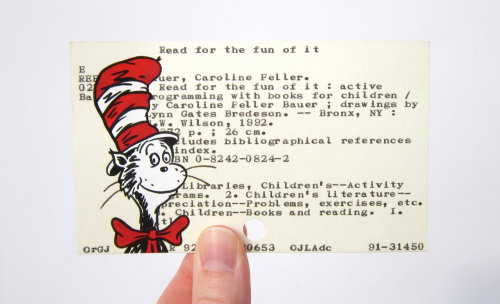

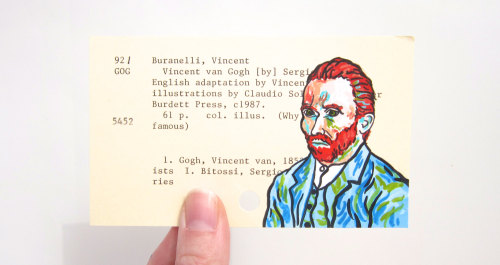



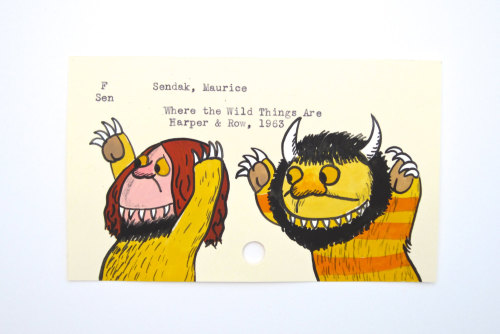


Vickie Moore illustrates classic library catalog cards with depictions of what the book is about. As a graduate student studying for my masters of information and library science degree, I am particularly fond of these lovely creations! Check out her shop Winged World on Etsy.
 We couldn't believe the horrible things people say – or the misogynistic assumptions their judgments reveal.


This book from our collection just goes to show that even in 1885, women were hilarious and wanted everyone to know it. It’s easy to think that women in comedy is a relatively new thing, but Kate Sanborn was one of the pioneering female humorists of her time.
The Wit of Women is a book entirely dedicated to humorous things women have written or said. This book certainly touches on the unfortunately persistent idea that women “just aren’t funny”. Ms. Sanborn turns that idea on its head when she writes that humor was difficult to gather for this book, “not because there is so little, but because there is so much.”
-Kelly
Sanborn, Kate. The wit of women. New York: Funk & Wagnalls, 1885.
 |
Courtney
shared this story
from  Super Opinionated. Super Opinionated.
|
You see that? The motherfucking QUEEN OF ENGLAND is taking a selfie. NONE OF Y'ALL BITCHES HAVE A LEG TO STAND ON AGAINST SELFIES ANYMORE OKAY
Her phonecase. HER PHONECASE GUYS
Charlotte is being such baby right now I LOVE IT.
Nobody is going to talk about William giving his grandmum bunny ears?
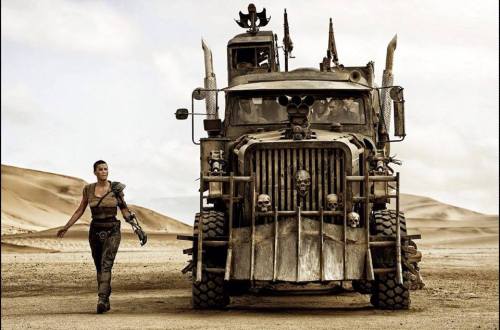
No spoilers, promise.
That was the first time in a lifetime of near-constant consumption of cinema that I’ve been sitting in a packed, darkened movie theatre, watching some massive, bombastic blockbuster action movie, sensing the excitement, the rapt gaze of a predominantly male audience, and thought to myself…
This movie isn’t just tipping its hat to women so we won’t feel excluded. This movie is *for women*.
Fury Road features some of the most fierce and violent and brutal and vivid and compelling imagery I’ve watched in any movie, ever, and it also just happens to be one the most warmly and thoroughly feminist films I’ve ever seen, from any genre.
Miller made this for us.
When that realization hit me, I cried.
Unprecedented. What a lovely day.

Missy is so right! A legend like her shouldn’t be lumped together with a new up and comer like Paul McCartney
Paul who?
You remember Jesse McCartney? That’s his grandfather.
HES A FUCKING BEATLE. HOW DO YOU NOT KNOW THIS.
How do you think Jesse McCartney would feel knowing you’re calling his grandfather derogatory terms like “a beatle” ?
OMFG. YOU PEOPLE ARE SO FUCKING STUPID. EVER HEARD OF A BAND CALLED THE BEATLES? ONE OF THE BEST THING TO HAPPEN TO AMERICA DURING THE BRITISH INVASION? PAUL MCCARTNEY WAS ONE OF THEM. YALL NEED TO LEARN YOUR HISTORY ON MUSIC BEFORE YOU EVER SPEAK AGAIN.
Are they new?
does paul bacardi even have an album out
What about a mixtape?
I thought rupaul McCartney was a drag queen
The Beatles were a mediocre band lol
Paul mcCartney isnt jesses grandfather for 1.
2. He was a memver of the band “the beatles” in the 1960’s
3. Missy elliot is less a legend than paul. He is a visionary. But no. Neither of them should be lumped together with anyone newCall me when Jesse’s grandfather does a masterpiece to the level of Work it
He already has. Many masterpieces. Many many masterpieces. And hes fucking gloriouse.
I mean I would only say he has one masterpiece, not “many many” and that’s mostly because rihanna and kanye were on the song
No. Considering hes been making masterpieces in music since the 1960’s hes alot better. And i stand by that. Because tbh. I dont like kanye. And pauls been around for much longer.
Masterpieces like:
“Yellow submerine”
“Hey jude” (my favorite actually)
“Words of love”
“Love me do”
“Strawberry fields forever”
“All you need is love” (one of the most popular 60’s-70’s songs of all time)
“We can work it out”
“Hello, goodbye”
“Cant buy me love”And ALOT more. They were one of the most beloved bands. and they were amazing. still r.
paul even has his own solo records. Has for a while. And hes not in any way related to jesse mcCartney. If he were he’d be disappointed.I don’t know, Jesse was on Suite Life once I think his grandfather paul would be proud
Can’t be that good if his grandson is better known than him. Have you heard Jesse McCartney “Because you Live”? shit is fire. Paul Blart sounds boring.






TDS, May 4, 2015
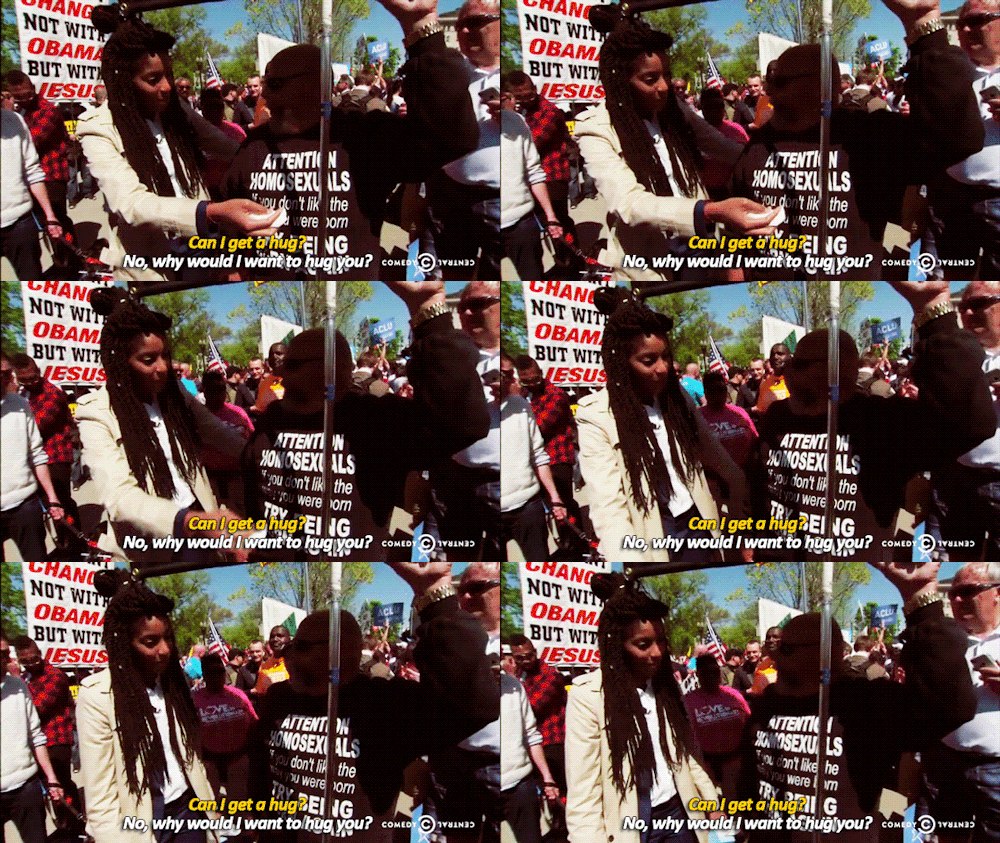
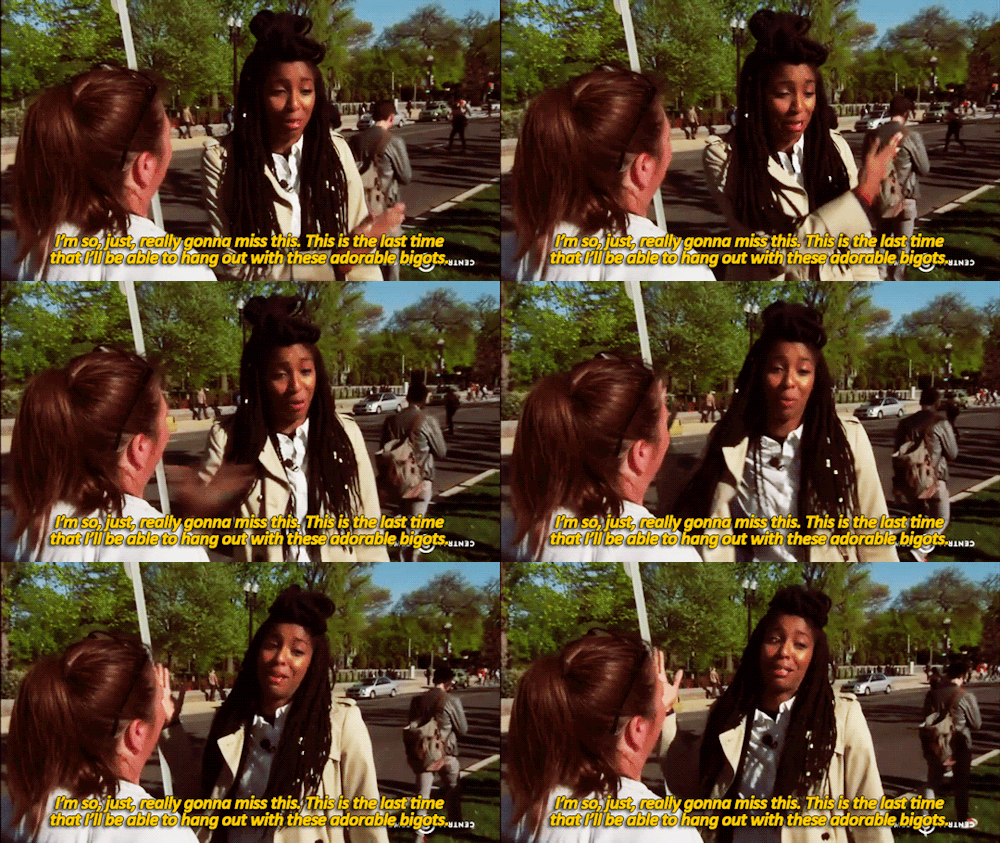
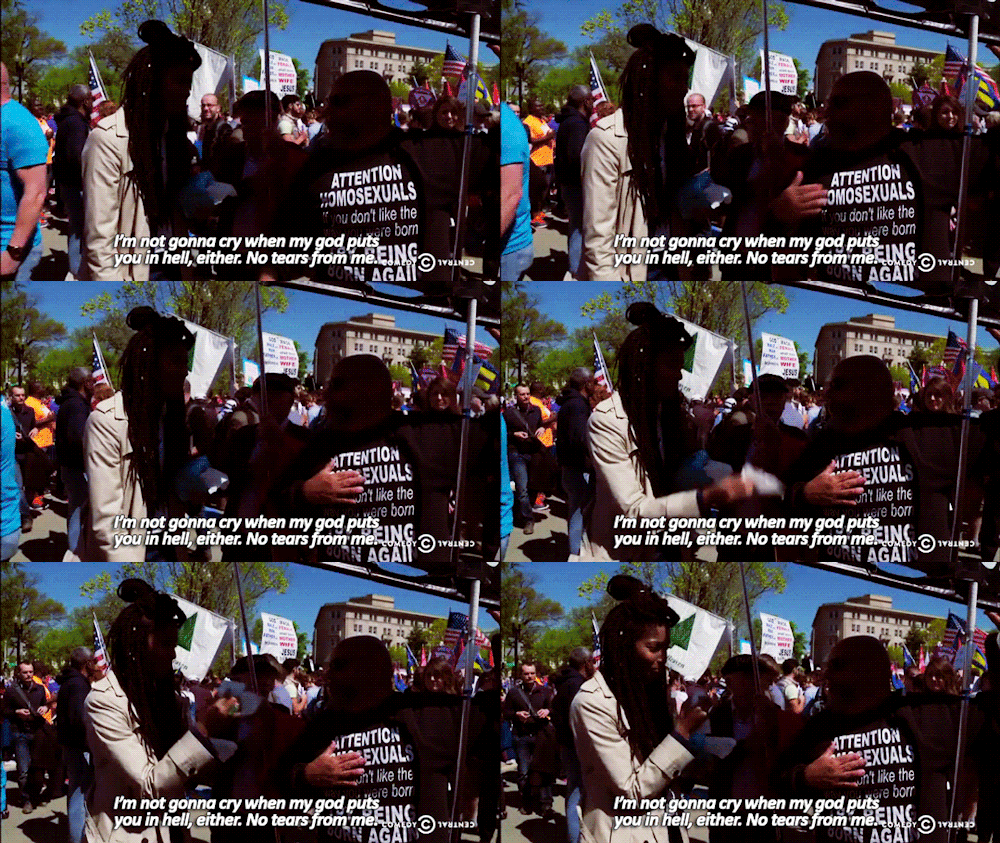
With the tide of history turning against them, Jessica Williams commemorates the anti-gay protesters who will soon become irrelevant.


Disney is making a movie featuring the first African princess & she’s going to be white. Not only that but it’s based on true story of an attempt of modern day colonialism of a father who thought it would be cute to declare land on African soil as his own so his daughter can be princess.
I am pissed.
boycotting this. Above is the film writer’s twitter, let her hear your thoughts. #PrincessOfNorthSudanHold on, I’d like to reiterate that this movie is not just Disney fantasy. This white guy really did go to Sudan, claim land there, and tried to become a king. He’s even tried to crowd fund for his nation.
I’m pissed at this. I really am. The land is not uninhabited; there are indigenous people living there. It belongs to them. Whatever the international laws say, this white guy has no right to claim what doesn’t belong to him. It’s bull!
http://www.aljazeera.com/indepth/features/2015/05/150510120858265.html
I literally thought this has been scrapped and debunked like six months ago but oh my god.
White folk; the world knows what you’re about now, we’re not going to let you do this.
But guys…
He did this for his daughter… He just wanted to make her happy. please stop being so mean..yes I know what he did was wrong on some terms but it sounds like he was just joking at first to please his little girl but ended up to deep.
And the land was open land yeah? And he wasn’t disturbing anyone either right?
And please stop using ‘white people’ and ‘white folks’ Im not trying to be mean or rude,but with everything going on we don’t need conflict on this site.also just take a breather yeah?
Have a good day c:THE ARTICLE LITERALLY SAID THAT AFRICAN TRIBES LIVE IN THAT AREA.
But…but guys he is totally just doing this for his daughter. The world is your playground and fuck those native people who have lived there for generations. Don’t be so mean, gosh. (✿◠‿◠) - you

O palhaço, oil on cardboard, 100x70cm, 2003, Anderson Santos