Seinfeld, which turned 25 in 2014, is now available to stream online, in its entirety, thanks to Hulu. The series is self-evidently one of the most influential television programs ever made; when it debuted in 1989 it entered a sitcom landscape that was still shaking off the last cobwebs of the 1970s sitcom revolution, and it suggested, boldly, that sitcoms didn't need to be about important issues or even use traditional storytelling methods to be great. Instead, they could just focus on the minutiae of life, the little bits and pieces of larger things that add up to form our points of view. It was a show that reveled in detritus.
Easy to miss in all of that, however, were all of the ways that Seinfeld influenced TV via its underpinnings. Jerry Seinfeld's observational humor affected many other shows of the era (as well as many that premiered long after the series had ended). The "single people living in the big city" premise became the centerpiece of seemingly every other sitcom. But Seinfeld was so huge that it influenced television in many smaller ways, too. Here are five of them.
1) Seinfeld changed the way sitcom stories are written
It's not terribly exciting to think about television in terms of its story structure — the storylines, scenes, and raw dramatic beats that make up any given episode of TV — but Seinfeld's impact on television comedy is actually most pronounced in this arena. The famous "show about nothing" pitch obscured just how much structural work was going on beneath the show's hood. Prior to Seinfeld, most sitcoms broke down into an A-story and a B-story, and the surrounding material could take the form of a so-called "runner," a joke that continued throughout the episode and told a very loose story but didn't do much more than that.
Particularly in its best episodes, Seinfeld blew all of that up. Even in an episode like the famous "The Contest" (the one with the competition to see which of the central foursome can go the longest without masturbating), each of the four characters has their own storyline, all four of which converge in the final moments to create a whole that's larger than its parts. The best Seinfeld episodes are marvels of story structure, with jokes and storylines dovetailing and tucking into each other in ways that can be as thrilling as any twist in a plot-heavy drama.
This approach has become incredibly common since Seinfeld left the air. In particular, it's useful to look at Arrested Development, one of the show's most obvious heirs and one where individual episodes could contain up to nine stories (one for each regular character) that collided by the time the episode ended. Not every show uses the Seinfeld structure (and some, like Everybody Loves Raymond, used structures that were deliberately as little like Seinfeld as possible), but the series gave other shows the option of pursuing far more than the typical two stories per episode.
2) It made us want to watch self-involved jerks
Matt Zoller Seitz made this point ably over at Vulture last week: while much of the credit for the age of antiheroes — which TV is just exiting — often gets placed at the feet of The Sopranos, Seinfeld was just as much of an influence. Writes Seitz:
Seinfeld's impact resonated beyond comedy. Its serene belief that characters did not have to be likable as long as they were interesting foreshadowed a change in TV drama that wouldn't settle until the late '90s, when HBO turned a show about violent gangsters into an award-winning hit. We tend to forget that the first coldly expedient hero to anchor an influential, long-running series named after him wasn't Tony Soprano. It was Jerry Seinfeld.
Yet look beyond just Jerry, and you see that Seinfeld is filled with the sorts of self-involved jerks who would drive many of the best TV shows of the last decade. Seinfeld is perhaps the earliest series to essentially dare the audience to identify with its characters by seeing their own worst traits reflected in them. It believed it could do this simply by crafting characters who were as interesting and funny as possible. It was mostly right.
Take the character of George, perhaps the show's most compelling, most loathsome figure. We empathize with George because we recognize in his character all of the times we've been unable to escape our own limitations and weaknesses. But look at him from another perspective, and he's a ‘90s riff on what we might now call "nice guy syndrome." And the show endlessly mocks him for it!
George essentially believes he deserves to have sex with a beautiful woman because he's a white guy living in modern America, and when he doesn't succeed (but Jerry or Kramer does), he grows ever more petulant. He doesn't particularly want to strive to succeed. He just wants life handed to him on a silver platter. That was the kind of character TV hadn't really seen before Seinfeld hit the air, but it's also the kind of character who's everywhere now, and often on shows that don't realize Seinfeld worked because the joke was much more often on George (or Jerry or Kramer or Elaine) than it was on anybody else.
3) Elaine Benes is a tremendously influential female character
Funny women in control of their own destinies existed on television before Elaine, but Elaine was the first one who was simply allowed to unapologetically be whatever she wanted to be. Even a short year before Seinfeld debuted, a show like Murphy Brown had to essentially center everything on the fact that its protagonist was a single woman making her way through her life and work. Also worth considering is the Jamie Lee Curtis and Richard Lewis vehicle Anything But Love, which debuted a few months before Seinfeld and had much in common with it (including a large number of scenes set in diners during which Curtis and Lewis discussed the oddities of modern life), but constantly felt the need to make Curtis's arc largely about her romantic prospects or lack thereof.
Elaine was different. Many of her stories were about her love life, but she also had weird jobs and got just as involved in the shenanigans of a given episode as any of the male characters. Thanks to the work of Julia Louis-Dreyfus, one of the great comedic actresses of American television, Elaine could be both deeply weird and deeply feminine. TV hadn't known a character like her before, and she paved the way for everyone from Leslie Knope to Hannah Horvath.
4) It predicted the growing whiteness of network television
Little of this is Seinfeld's fault; television's whiteness has far more to do with the Clinton-era repeal of the Financial Interest and Syndication Rules (a subject for another time). But it's worth pointing out that the centerpiece of NBC's very diverse 1980s Thursday sitcom lineup was The Cosby Show, while Seinfeld was the centerpiece of its very white 1990s Thursday sitcom lineup. It more or less made sense for Seinfeld to be as white as it was. The show was, after all, famously rejected by audience testers, and NBC's Brandon Tartikoff worried it was "too New York, too Jewish." It was, to a real degree, about four people who were incredibly limited in their perceptions and worldviews, so a certain amount of tunnel vision made sense.
But Seinfeld was also the unlikely beneficiary of the fact that the television landscape was changing. By its final season, the series was a mega-hit, watched by large numbers of people in all demographics. However, in its early years, it struggled in the ratings, kept alive by critical acclaim and awards attention, sure, but also because the people who were watching it were more demographically desirable to advertisers. And what that usually means is young white people with lots of money who live in cities.
As that demographic was targeted with more and more focus in years to come, it would lead to shows with fewer and fewer people of color, shows that could be good (Friends or Girls) or bad (the many, many Seinfeld clones of the mid-'90s) but still shows that were overwhelmingly about a bunch of white, affluent people who never had to worry about anything but the trivial details of life. What felt revolutionary on Seinfeld quickly curdled into something harder and harder to stomach on the many shows it inspired.
5) It heralded the death of the multi-camera sitcom
When television experts talk about a "multi-camera" sitcom, what they mean is a sitcom that functions almost as a filmed play, with multiple cameras (usually four) in fixed positions capturing the action of a sitcom taping, usually in front of a live audience. Think of the difference in presentation between Cheers (a very classical multi-camera sitcom) and Modern Family (which is what is usually called a "single-camera" sitcom and is presented much more cinematically than theatrically). The evolutionary history of the sitcom format can be split into two periods, with Seinfeld as a rough dividing line.
NBC actually forced creators Seinfeld and Larry David to make the show a multi-camera, but once the two were committed to doing so, they essentially broke all of the established rules of how multi-camera sitcoms worked, twisting and bending them so far that the multi-camera sitcom had essentially nowhere else to go if writers wanted to continue to innovate.
The longer the show ran, the more single-camera sequences it inserted into the action. (Think, for instance, of all of those scenes with characters walking down city streets, which were pre-taped and aired for the studio audience, instead of being presented live on stage.) And the longer it ran, the more it broke those stories up into smaller and smaller pieces, presaging the joke-a-second pace most single-camera sitcoms run at today.
And yet Seinfeld stands as a testament to how good multi-camera sitcoms can be at their best. Several of the show's sequences would only work in the more theatrical trappings of the multi-cam, and the performers' broadness was also given greater latitude by the format.
Think of the famous story George tells about removing a golf ball from a whale's blowhole. On a single-camera sitcom, that might be presented to the audience as it happened. On Seinfeld, which was limited in how much location filming it could do, the story becomes a yarn for Jason Alexander to spin, and that makes all the difference in terms of humor.
Seinfeld left big shoes for the sitcom to fill. Some (like Raymond) might have returned to a more deliberately classical vibe. But others pushed past it and found that the only territory left to explore involved finding new ways to film these sorts of shows. Seinfeld might have been something of an endpoint for lots of different sitcom techniques, but it was also the beginning of many, many others.
The prize pool for the Dota 2 world championship tournament The International is now greater than $10 million thanks to sales of its digital program, The Compendium. With that much money on the line, you might be curious about the eSports event, but no sporting event is fun to watch if you don’t understand what’s going on.
That’s exactly why Valve will have a “Dota Newcomers Broadcast,” dedicated to introducing new players and viewers to the basic rules. Valve says the Dota Newcomers Broadcast is “an English stream happening alongside the main stream, and will feature commentary aimed at easing people into understanding the exciting world of BKBs, tri-lanes, and counter-picks.”
Dedicated Dota 2 fans will probably want to stick to the International Multicast, which will consolidate all the simultaneous matches into one stream, or the Spoiler-Free DVR Broadcast, which allows you to catch up with matches or moments you missed with pause and rewind features.
You can find out more about how, when, and where to watch the event on Dota 2’s website.
The International’s $10 million in prizes marks the world record for biggest reward in history for an eSports tournament. It crushes last year's mark of $2.8 million, which was the biggest eSports prize to date. When the Compendium launched in May, its proceeds raised the prize from its initial $1.6 million to $2.2 million in its first night. In case you’re wondering, the first place will win more than $4.7 million.
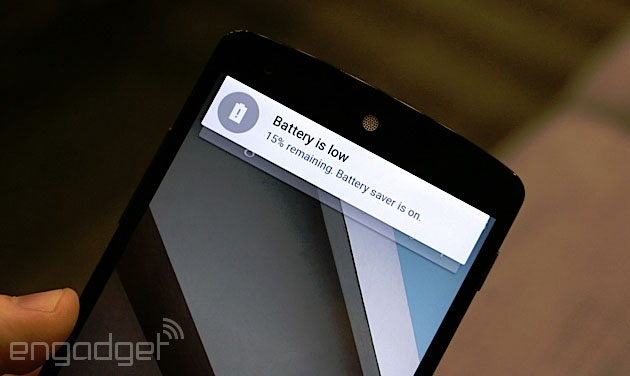
One of the big reveals for Android 4.4 KitKat's successor, Android L, was Project Volta -- new tweaks to improve battery life. Those include a new API that schedules minor tasks better, a "battery historian" to track battery-sapping activities and ART, a more efficient runtime. There's also a "battery saver" mode that kicks in aggressively when only 15 percent of the battery remains. Now that the developer preview has been in the wild, Ars Technica has put it through its paces, along with a number of users on the XDA developer forums. The results? So far so good, with some caveats. Under tightly controlled conditions, Ars Technica managed a whopping 36 percent better battery than KitKat, without even using the battery saver mode. Many XDA users saw comparable results, though battery life was actually worse than on Android 4.4 for some. However, that was likely influenced by apps and other factors -- one user noticed WhatsApp sucking 15 percent of his battery life, likely a beta bug. We'll be running our own battery of tests, as it were, but the takeaway for now? Hey, it's still a developer preview -- but we're optimistic.
Samsung says it will stop making plasma TVs on November 30th. While disappointing, this isn’t unexpected news. (Panasonic did the same earlier this year). Samsung will honor plasma TV warranties just as they would their LCDs, so we still recommend our Samsung Best TV and Best $500 TV picks while you can still buy them.
Samsung announced today that it won't be making any more plasma TVs, which is more or less the end of an era. Plasma TVs were the first mainstream flat-panel televisions on the market, but over the last decade they've been overtaken by LCD TVs, which are vastly thinner, cooler, more power-efficient, and most importantly, cheaper. People basically buy the biggest TV they can afford, which is how Samsung and Vizio managed to completely disrupt Sony as a dominant TV maker: they poured millions into marketing gigantic cheap LCDs while Sony stayed focused on image quality and offered more expensive smaller sets. (At this point Sony's most profitable business is its insurance division; the TV division is such a dog it was spun off into its own company earlier this year.)
The death of plasma is an incredible success story for LCD technology, but it's also a sad reminder that disruption doesn't always meant the best products win: no LCD TV has ever looked as good as the best plasma TVs. Just go down the list: Pioneer's Kuro plasmas were so amazing that CNET still uses them as a review reference years after they were discontinued in 2008. Pioneer couldn't make any money and sold the Kuro technology to Panasonic, whose high-end plasmas were widely considered the best until late last year, when the company stopped making them in favor of LCDs. (The remaining stock is in high demand; used 55-inch sets are selling for $3,000 and up on Amazon six months later.)
And after the Panasonic plasmas went away, the next best TVs you could buy were Samsung's F8500 plasmas, which weren't updated this year and are now discontinued. If you absolutely want the best TV you can buy right now, you should pick up a closeout F8500; nothing better will hit the market anytime soon. The gap in performance is so big that review sites like The Wirecutterdon't even recommend LCDs after the F8500; the site flat-out says "most people shouldn't" want an LCD TV if they care about picture quality.
But if you can handle waiting, you should let the TV industry breathe for a couple more years before spending any money. TV makers are dying to push higher-resolution 4K sets on people (which would kick off a hugely profitable upgrade cycle) but there's virtually nothing to watch on those TVs apart from Netflix series like House of Cards and Orange is the New Black. There's no point in buying a high-res TV with so little high-res content available. And there's other interesting new technology in the works like Dolby Vision, which creates such stunningly bright images that I actually thought I felt the heat of an explosion when I watched a demo earlier this year. It was pretty cool. And maybe, just maybe, LCD sets will catch up with the quality of plasma.
To celebrate the Fourth of July this week, the folks at Fox's Animation Domination HD put together a short cartoon on how capable Captain America, the embodiment of American exceptionalism, is at things like math and reading. And he's not very good. Using global statistics as a lodestar, ADHD's version of Cap isn't particularly exceptional at anything save for raw consumption. And that's before things get really dark at the end... All this makes their use of the original 1960s theme song all the more depressing.
There's something particularly eerie about an abandoned shopping mall. Perhaps it's the stark contrast from its intended purpose: to see such a sterile place once designed to entice throngs of shoppers into its doors, now so completely devoid of any human life, dilapidated and darkened with time. It's basically the very definition of post-apocalyptic. But in the case of the (now ironically named) New World shopping mall in Bangkok, Thailand, abandonment by humans doesn't equate with...
Paul the octopus might have been the star of the 2010 World Cup with his accurate predictions, but Microsoft’s Cortana assistant is proving a worthy digital replacement for the now-deceased cephalopod. Microsoft started adding World Cup predictions to Cortana over the weekend, and she has successfully predicted four results, backing Brazil, Colombia, the Netherlands, and Costa Rica in their final 16 games. The new prediction functionality is part of regular updates that Microsoft makes to Cortana every two weeks, bringing simple improvements and new data to the service.
Cortana is currently predicting France and Germany will progress to the quarter-final stages today, both of whom are favorites in their games. The results will further test Microsoft’s Bing predictions engine, which has previously forecast who would get voted off or win The Voice, Dancing With the Stars, and American Idol. Microsoft uses models to evaluate World Cup teams based on win / loss / tie records, game time, weather conditions, home advantages, and other factors. Some will be hoping Cortana isn't 100 percent though, as she's currently predicting Belgium will beat the USA in their game later this week.
Smart-weapon company TrackingPoint seems pretty intent to make real-world guns act like the virtual firearms we use for offing video game villains. The latest demo of its ShotView targeting system showcases live video being transmitted from a rifle's scope to a set of off-the-shelf Smith Optics I/O Recon goggles via WiFi, enabling the marksman to hit an explosives-filled pop bottle from 500 yards down-range without even looking at it. While the previous concept clip used Google Glass, a TrackingPoint spokesperson tells us that the Smith goggles don't lag like Google's wearable does in this scenario. Speed might not make a huge difference at the firing range, but, for soldiers in the field, we'd imagine that keeping pace with a mobile target is somewhat important -- especially if they aren't physically looking at it. For a gander at an advanced warfighter's possible arsenal, make sure to peep the video below.
On June 28, two noteworthy global events begin: the second round of the World Cup and Ramadan, the Islamic month observed by fasting.
For some of the dozens of Muslim players on Algeria, France, and Germany, this will pose a problem: having to play world-class soccer after having abstained from food and water since sunup.
As part of the fast, all food and drink is prohibited between sunrise and sunset
As part of the Ramadan fast, all food and drink is prohibited between sunrise and sunset for the entire 30-day month. Although some players are reportedly going to forgo the fast during the tournament, others are going to adhere to it. This is the first time the World Cup and Ramadan have overlapped since 1986.
To people who don't fast, it probably seems inconceivable to play a whole game after many hours without food, let alone water — but there's evidence that the Muslim players who are used to fasting are capable of effectively coping with it and maintaining their performance.
Here's what research has to say about how fasting affects the body — and how these players cope with it.
How fasting affects players' performance
For people who've never gone a full day without food or water, it might seem impossible to make it through a grueling 90-plus minute soccer match in this condition. But the evidence on whether fasting affects players' performance is surprisingly mixed.
there's evidence players can use strategies to cope with the strain of fasting
Some research has found that performance does indeed deteriorate slightly during Ramadan — because of fasting, but also decreased sleep. (Because people have to do all their eating at night, they generally get less sleep during Ramadan.)
But on the other hand, there's evidence that players can use strategies to cope with the strain of fasting and adjust their bodies to deal with it. A study of 85 professional Tunisian soccer players, for instance, found that over the course of Ramadan, their performance on speed, agility, passing, and dribbling tests gradually improved, eventually reaching their pre-Ramadan levels as they continued their training regimen. Other work has found similar results in youth soccer players.
How the players will cope with fasting
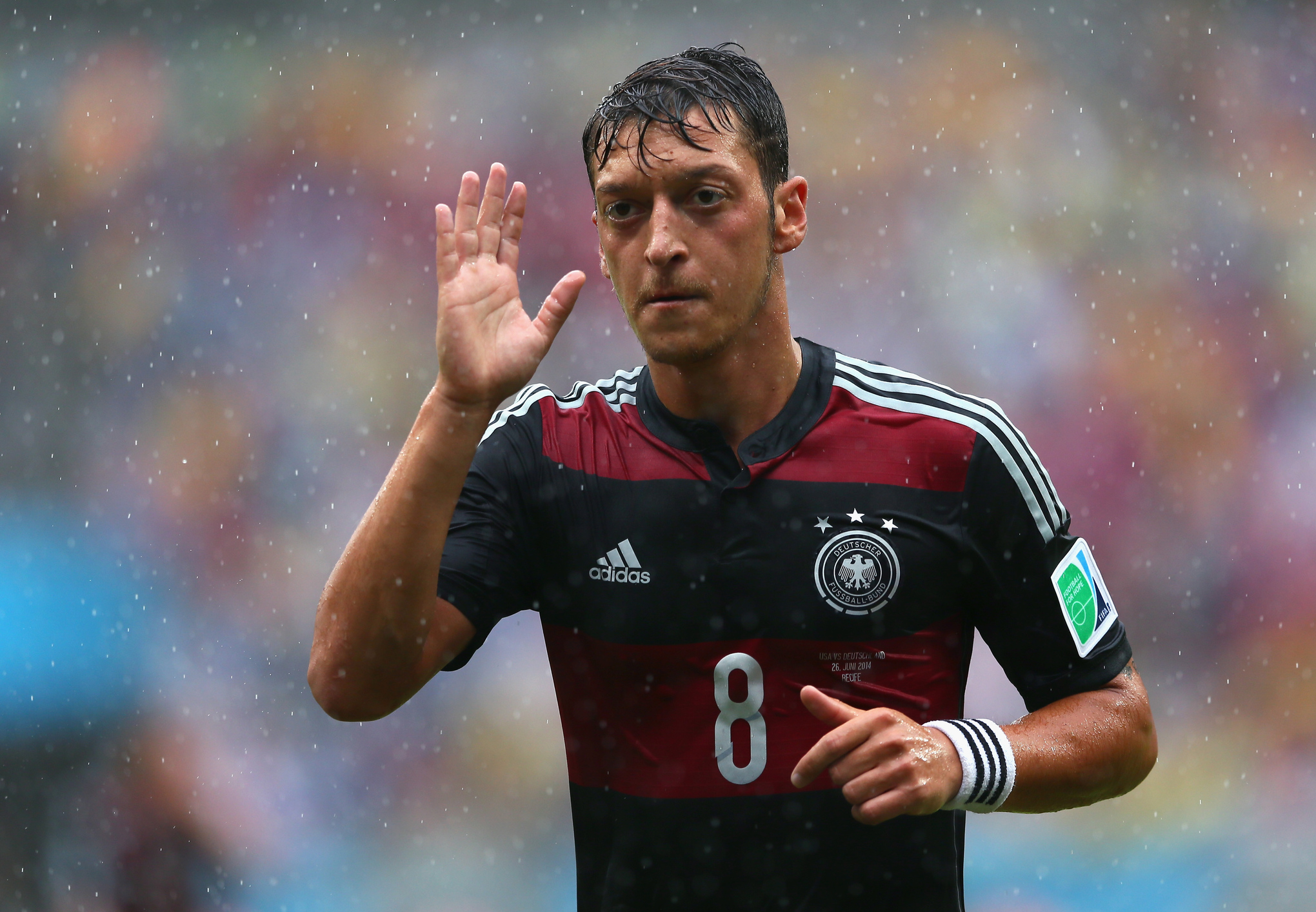
Mesut Oezil, of Germany, will also be fasting. Photo by Kevin C. Cox/Getty Images
So how do players manage to play an endurance-based game effectively while fasting?
One strategy isn't surprising: drinking and eating as much as possible at night. Research has shown that if players maintain their overall calorie and fluid intake during Ramadan, their performance in aerobic activities can remain constant.
At the same time, humans aren't camels: drinking a ton of water at 6 am doesn't mean you'll be fully hydrated at 4 pm. That's why the time of a match or practice is key. The researchers who've studied athletic performance during Ramadan recommend trying to schedule athletic events during the evening (after the sun has set, and people can eat and drink) or right before it (when they can at least replenish themselves after it ends.)
research has shown that if players maintain their calorie and fluid intake, their performance might not suffer
Of course, World Cup teams don't have any control over their schedules. But one thing that helps is that it's winter in Brazil, so the sun will set at 5:34 in Porto Alegre — towards the end of Algeria's first game, which is at 4 p.m.
Another key for players, research shows, is simply to keep training just as much during Ramadan as they did beforehand, and let the body gradually adjust. During Ramadan last year, Kolo Touré, a defender for Côte d'Ivoire who is Muslim, explained that "The first five days are difficult. After that, the body just starts to adapt." Unfortunately, the remaining Muslim players (Côte d'Ivoire was eliminated) won't have much time to adapt so it's possible that they'll be more heavily affected.
Meanwhile, other work shows that getting enough sleep is especially important for fasting athletes. If the World Cup were being played in the northern hemisphere — so days were longer — then fasting might cut into sleeping time, because of the need to eat at night. But the early sunsets and late sunrises in Brazil make it seem less likely that this would be a problem.
So will Ramadan affect the World Cup?
On the whole, it seems like fasting will affect the games less than you might think. These are world-class athletes who have gone their whole lives fasting during daylight for a month a year and getting through it fine.
The research shows that if players eat and drink enough during nighttime — and train sufficiently — they can roughly maintain their levels of performance. Moreover, unlike track or swimming, this is a team sport with many variables that have more to do with technique and experience than raw physical ability.
This, folks, is the very essence of "get wrecked."
Watch as Daisy is completely unable to catch a break in this video by HowBoutGaming:
I think my favorite part is at the end, when she clearly just stops trying to move forward. I don't blame you, Daisy.
Confession: I have an absolutely irrational and intense hatred for Daisy, so this video makes me feel happy despite claims that Daisy deserves better. Still, we've all been there, right? The title of this video says it all. This is Mario Kart, this is the Mario Kart experience. It's bullshit. And that's why we love it.
This entry passed through the Full-Text RSS service — if this is your content and you're reading it on someone else's site, please read the FAQ at fivefilters.org/content-only/faq.php#publishers.
Taking a photo with your phone has become so commonplace that it's hard to remember how weird the idea seemed when camera phones first came out. Fortunately, we have old videos to remind us. Here's the Daily Show's Ed Helms ridiculing the idea in 2004:
To be fair to Helms, skepticism about camera phones wasn't as ridiculous in 2004 as it seems today. That's because camera phones circa 2004 were terrible.
Imaging chips weren't very sophisticated, and phone manufacturers tended to use the cheapest hardware they could find. So camera phone images were vastly inferior to the photos you could take with dedicated cameras.
Also, phone camera software — both the software on the phone and software to get images off your phone and onto your PC or the internet — left a lot to be desired. So it's not surprising that the camera feature on these early phones didn't get much use.
But most people didn't anticipate how quickly this technology would improve, and how useful it could be once it did. People also didn't appreciate how the ubiquity, portability, and connectedness of camera phones would allow people to use their camera phones in ways that wouldn't have been practical with traditional cameras.
A lack of imagination about new technologies — especially disruptive technologies that start out worse than what's already on the market — is surprisingly common. Many people who had experience with beefy mainframe computers dismissed the personal computer as a toy in the 1970s. Heck, I dismissed the iPad as an under-powered PC when it came out. In retrospect, those judgments were obviously wrong. Cheap, portable technologies often tend out to be a lot more useful than people anticipate.
نبدأ الحلقة بانطباعاتنا عن الألعاب التي لعبناها خلال الأسبوع، وعلى رأسها Shovel Knight، اللعبة التي تستعير أسلوب الألعاب الكلاسيكية بشكل رائع، بالإضافة لبيتا Battlefield Hardline وعودة عبدالعزيز الزامل لمحتويات Halo 4 القابلة للتحميل. بعد ذلك نناقش أهم أخبار الأسبوع مثل تفاصيل بيتا Destiny، وعرض No Man’s Sky الجديد، ودخول Google لسوق أجهزة الألعاب المنزلية بنظام Android TV، ومبيعات ماريو كارت الجديدة. وننهي الحلقة بنقاش حول السؤال الذي طرحناه سابقاً عن استحقاق أجهزة الجيل الجديد للشراء.. هل تغيرت الإجابة بعد 8 شهور؟
للاشتراك في Gaming FTW عن طريق آيتونز وغيره من البرامج التي تدعم خلاصات RSS، اضغط هنا
Google has a new metaphor for how design works across all of its properties, including Android L, Chrome OS, and the web. It's based on a fictitious material...
It used you be that if you wanted to round up some chums on a Google+ video hangout in Chrome to figure out how Sherlock really faked his death, you all had to download and install a plugin first. 'Twas hardly a dealbreaker for most, but the process...
The last 200 years or so have been, by far, the best in human history. Though pockmarked by tragedy, the story, on the whole, is one of relentless triumph: triumph over disease, over poverty, and over early death.
"Before the Industrial Revolution, life expectancy was about 30 years," says Don Bordreaux in a lecture for Marginal Revolution University. "Today in the United States, we expect to live to be about 80. Before the Industrial Revolution, one in four kids would die before the age of five. Today, in developed countries, it's more like one in 200."
What's easy to forget, though, is that prior to the Industrial Revolution, human lives weren't constantly improving. Living standard stagnated for decades and centuries. Mass starvation and disease often wiped out improvements in an instant. This is, Bordreaux says, the hockey stick of human prosperity; so named because if you graphed the living standards of the human race over time, they would mostly be flat until the exponential advances of the past 200 years.
No doubt you’ve been glued to the interwebs, watching the Google I/O keynote. Is the next version of Android named Lollipop, Lickable Lemur, or Limoncello? I’m honestly not sure, because I’m writing this the night before. But what I do know is that an awesome new platform has launched: Android TV.
Now if there’s a new way to get content on your TV, we try our hardest to be there from the start, and we’re super happy to let you know that Plex will be available when the Android TV launches. Mind you, this is no simple port of the big-screen Android app for the Google TV, this is much, much more. Starting with the finger-licking delicious new UI of the Android TV, we’ve completely redesigned the Plex home screen, and added exciting new ways to explore your media. Also, the app integrates perfectly with some of the amazing new Android TV features, including voice search. Lastly, media you’re most likely to want to watch next is displayed on the Android TV home screen.
Obviously, Android TV isn’t available for users yet, but we wanted to give you a rare peek at what’s coming in the near future.
Feast your eyes on these screenshots, dear reader! Is this the sexiest version of Plex yet?
You didn't think we'd go through the whole keynote without a little Google Drive love did you? To celebrate an impressive 190 million Drive users (that's active within the last 30 days), Google has just added a more compelling "Drive for Work"...
Uruguay striker Luis Suarez could once again be in trouble after appearing to bite an Italian opponent Tuesday in a key World Cup qualifying game. The incident, shown on television replays, showed Suarez apparently bite the shoulder of Italy defender Giorgio Chiellini as the pair clashed in the Italian penalty area. It happened about a minute before Uruguay scored in the 81st. Suarez was sanctioned with a heavy ban for biting Chelsea defender Branislav Ivanovic in the English premier League in 2013. FIFA can sanction players for biting with bans of up to two years.
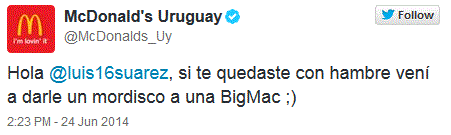
The McDonald's tweet translates as "Hey Luis Suarez, if you're still hungry, come take a bite out of a Big Mac."












 It used you be that if you wanted to round up some chums on a Google+ video hangout in Chrome to figure out how Sherlock really faked his death, you all had to download and install a plugin first. 'Twas hardly a dealbreaker for most, but the process...


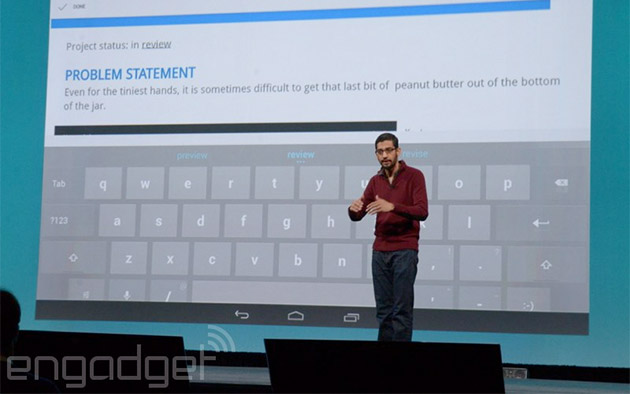 You didn't think we'd go through the whole keynote without a little Google Drive love did you? To celebrate an impressive 190 million Drive users (that's active within the last 30 days), Google has just added a more compelling "Drive for Work"...


 Here's what happened today: