Shared posts

02 Jul 13:35

A Tribute to Discomfort: Insights from National Geographic Photographer Cory Richards

by Christopher Jobson

A Tribute to Discomfort: Insights from National Geographic Photographer Cory Richards travel interview documentary adventure

A Tribute to Discomfort: Insights from National Geographic Photographer Cory Richards travel interview documentary adventure

A Tribute to Discomfort: Insights from National Geographic Photographer Cory Richards travel interview documentary adventure

A Tribute to Discomfort: Insights from National Geographic Photographer Cory Richards travel interview documentary adventure

A Tribute to Discomfort: Insights from National Geographic Photographer Cory Richards travel interview documentary adventure

At the age of 14, photographer Cory Richards had dropped out of high school and was technically homeless. His education, he says, was instead obtained through the observation of struggle. Through various forms of discomfort and adventure he would eventually become the first American to successfully summit an 8,000-meter peak in winter (Pakistan’s Gasherbrum II), and launch an incredible career in photography through the pages of National Geographic.

Brooklyn-based digital media company Blue Chalk recently sat down with Richards to discuss his motivations and driving desire to connect with the people he photographs. (via ISO 1200, PetaPixel)

24 Jun 07:38

Photo


24 Jun 07:37

Stretch limo made from three bodged-together Deloreans

by Cory Doctorow


Redditor Viking 187 posted this image of a stretch Delorean made from three deloreansworth of parts -- Marsandtherealgirl has context for it: Read the rest

24 Jun 07:37

tonyabbot: when your friends start talking about sex

tonyabbot:

when your friends start talking about sex
image

24 Jun 07:36

was searching for matrix gifs. was not disappointed

24 Jun 07:33

Photo


24 Jun 07:28

Colorful Liquid Splashes Captured at 1/3500th of a Second Look Like Floating Sculptures

by Christopher Jobson

Colorful Liquid Splashes Captured at 1/3500th of a Second Look Like Floating Sculptures high speed

Colorful Liquid Splashes Captured at 1/3500th of a Second Look Like Floating Sculptures high speed

Colorful Liquid Splashes Captured at 1/3500th of a Second Look Like Floating Sculptures high speed

Colorful Liquid Splashes Captured at 1/3500th of a Second Look Like Floating Sculptures high speed

Colorful Liquid Splashes Captured at 1/3500th of a Second Look Like Floating Sculptures high speed

Colorful Liquid Splashes Captured at 1/3500th of a Second Look Like Floating Sculptures high speed

Colorful Liquid Splashes Captured at 1/3500th of a Second Look Like Floating Sculptures high speed

Colorful Liquid Splashes Captured at 1/3500th of a Second Look Like Floating Sculptures high speed

Colorful Liquid Splashes Captured at 1/3500th of a Second Look Like Floating Sculptures high speed

Colorful Liquid Splashes Captured at 1/3500th of a Second Look Like Floating Sculptures high speed

Cassandra Warner and Jeremy Floto of Floto+Warner Studio recently produced this beautiful series of photos titled Clourant that seemingly turns large splashes of colorful liquid into glistening sculptures that hover in midair. The photos were shot at a speed of 1/3,500th of a second, taking special care to disguise the origin of each burst making images appear almost digital in nature (the duo assures no Photoshop was used). They share about the project:

Colourant is a series of events that pass you by as an imperceptible flash. A fleeting moment, that blocks and obscures the landscape, a momentary graffiti of air and space. Creating shapes of nature not experienced by the human eye, these short-lived anomalies are frozen for us to view at 3500th of a second. Transforming the non-discernible and ephemeral to the eternal. The essence of photography—immortalize the transitory.

You can see several additional shots from the series on their website and prints are available through Vaughan Hannigan. If you liked this you can check out similar high-speed liquid works by Manon Wethly, Fabian Oefner, and Shinichi Maruyama.

Update: For those curious, the artists share via email that the colors/liquids used in the photographs are “non toxic and water based.”

23 Jun 06:54

Bender: Bite my shiny LEGO ass.

by Simon

Good news everyone!
Adrian Drake (BrickFrenzy) is back with another MEGA awesome build for Brickworld this year. This time, it’s a life-sized Bender from Futurama:
Bender

At 6 feet tall (including antenna) and built with approximately 20,000 pieces – it may surprise you that this build only took about Adrian a month to build. I think this was the single most photographed build at Brickworld, and earned Adrian the Judge’s Choice Award and nomination for Best Mega Creation.

Of course no life sized bender would be complete without a functional chest cavity (featuring one of Brickworld’s finest traditional drinks).

Bender's opening torso

As a huge Futurama fan, I couldn’t help but get caught up in life-sized-Bender Fever, and decided to build Nixon’s head (minus jar) to put on Bender’s body (ARROOOOO!).

Richard Nixon in a Bender Suit

Oh and Adrian totally trusted me enough to let me put on Bender’s Head.

A special thanks to Adam Myers for letting me build Nixon from his collection in Chicago, and for loaning out Nixon head to Adrian to display at BrickFair VA.

20 Jun 16:55

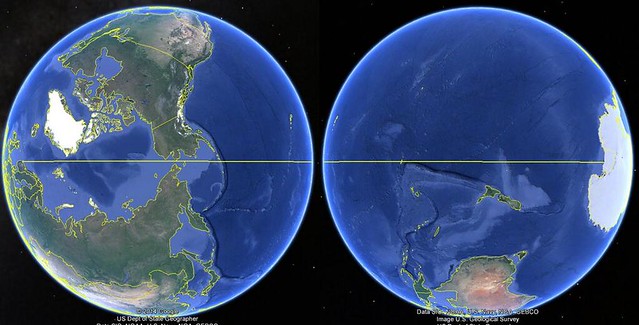
De Noruega a la Antártida sin tocar tierra

by noreply@blogger.com (Antonio Martínez Ron)
Hoy, en rutas insospechadas:
Si navegásemos recto desde Noruega al norte llegaríamos a la Antártica sin tocar tierra (@milhaud)


Entrada publicada en Fogonazos http://www.fogonazos.es/
20 Jun 06:45

Compelling Photos Document the Contents of Abandoned Suitcases from a 125-Year-Old Psychiatric Center

by DL Cade

20120223,894s

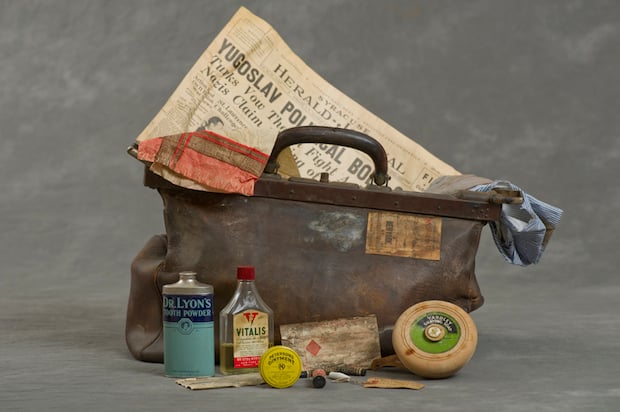
Willard Psychiatric Center began its life in 1869 as Willard Asylum for the Insane, closing down over 125 years later in 1995. Thousands of long-term patients passed through its doors, and when the center was shut down, it was discovered that hundreds of suitcases belonging to some of its earliest residents had been set aside and forgotten in one of the hospital’s attics.

Those suitcases and their contents have been preserved, catalogued and, thanks to photographer Jon Crispin and his compelling Willard Asylum Suitcases series, now they have been photographed as well.

Crispin had photographed the old Asylum many times over the past three decades, and so this extension of his documentary work seemed only natural. In March of 2011, he was given access to the preserved suitcases — which are now in the New York State Museum’s permanent collection — and began what he calls “a thorough documentation” of the contents found within.

Anna G Suitcase from Willard Asylum

The series is, in a word, absorbing. Many photo series offer a glimpse into the past, but this is far more intimate than a then-and-now composite or even historical photographs rediscovered in somebody’s attic.

These are personal belongings. Combs, mirrors, medicines and hangers are joined by letters, postcards and, yes, even some old photographs. The photos in the series document all of these things, from the most mundane to the fascinating, arranged with obvious care by Crispin so as to respect the memories of the people the belonging actually belonged to.

“My main concern throughout this project is to maintain a respect for the integrity of the resident’s lives,” he writes in the project’s statement. “And I am determined to tell their stories through my photographs.”

Here is a glimpse at a few of those stories:

Willard Suitcases / Fred B. ©2013 Jon Crispin ALL RIGHTS RESERVED

Willard Suitcases / Maude K ©2013 Jon Crispin ALL RIGHTS RESERVED

Willard Suitcases / Mary W ©2013 Jon Crispin ALL RIGHTS RESERVED

Willard Suitcases / Ernest P. ©2013 Jon Crispin ALL RIGHTS RESERVED

20111028,064s

Willard Suitcases / Raymond H.

20111109,208s

©2011 Jon Crispin ALL RIGHTS RESERVED Willard Suitcases Project / Charles L

Willard Suitcase Project / Mildred H ©2011 Jon Crispin ALL RIGHTS RESERVED

Willard Suitcases / Eleanor G ©2013 Jon Crispin ALL RIGHTS RESERVED

Willard Suitcases / Lotte J ©2013 Jon Crispin ALL RIGHTS RESERVED

Willard Suitcases / Anna B ©2013 Jon Crispin ALL RIGHTS RESERVED

20120209,176s

20120216,140s

Willard Suitcases / Mary R ©2013 Jon Crispin ALL RIGHTS RESERVED

©2012 Jon Crispin ALL RIGHTS RESERVED Willard Suitcases  /  Agnes J

©2012 Jon Crispin ALL RIGHTS RESERVED Willard Suitcases  /  Agnes J

Freda B Willard Suitcase

©2012 Jon Crispin ALL RIGHTS RESERVED Willard Suitcases  /  Anna B. H.

©2012 Jon Crispin ALL RIGHTS RESERVED Willard Suitcases , Mary T

Willard Suitcases  /  Lillian L

Willard Asylum Suitcases ©2012 Jon Crispin ALL RIGHTS RESERVED

Willard Asylum Suitcases ©2012 Jon Crispin ALL RIGHTS RESERVED

20120406,210s

20120607,040 copy

Willard Suitcases Projecty ©2013 Jon Crispin ALL RIGHTS RESERVED

Willard Suitcases / Delmar H. ©2013 Jon Crispin ALL RIGHTS RESERVED

Willard Suitcases / Delmar H. ©2013 Jon Crispin ALL RIGHTS RESERVED

Willard Suitcases Project

Willard Suitcases Project

Willard Suitcases Project

Willard Suitcases /

20140204,155ks

When we spoke with Crispin, he thought he had sent us too many photographs from the series. “Pick and choose” he said apologetically. We’ve published them all instead, and don’t regret a single one.

But as many pictures as he sent us (which was definitely not too many or even, perhaps, enough) he kept plenty more to himself. The project began in 2011 and hasn’t been completed yet. More than 400 suitcases were discovered in that attic, belonging to patients who resided at the Asylum from 1910 through 1960, and in March Crispin took to Kickstarter and raised the funds to finish his work.

If you’d like to find out more about the series, visit the Willard Asylum Suitcases website or the already-funded Kickstarter campaign where Crispin describes the work he’s doing. And afterwards, be sure to pay his own photography website a visit as well.

(via Lost At E Minor)


Image credits: Photographs by Jon Crispin and used with permission

20 Jun 06:12

Daily Overwiew changes your perception of Earth

by Caroline Kurze

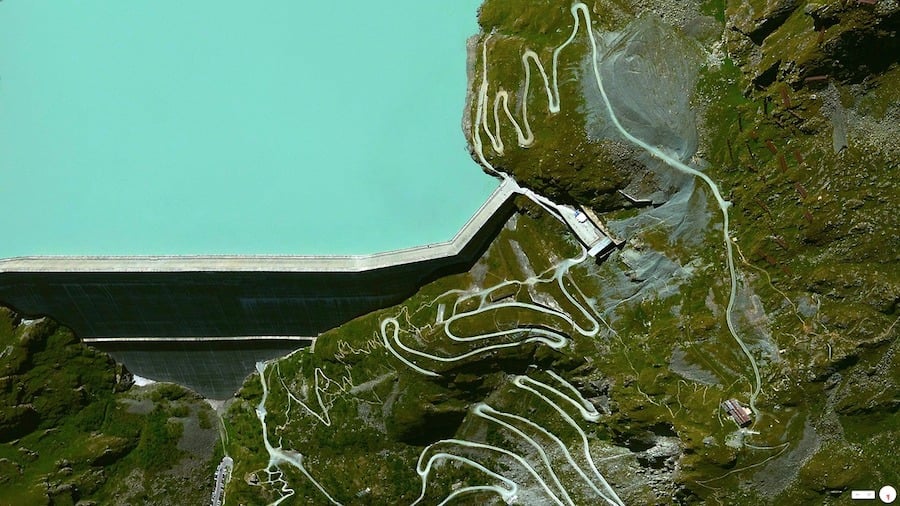
Daily Overview is an amazing project that shares one satellite photo from Digital Globes a day in an attempt to change the way we see our planet Earth.

The project was inspired by the Overview Effect, which first described by author Frank White in 1987 as an experience that transforms astronauts’ perspective of Earth and mankind’s place upon it. They’re having a feeling of awe for the planet, a profound understanding of the interconnection of all life, and a renewed sense of responsibility for taking care of the environment.

You can find out more about it in the video below. You can also follow the project via Instagram, Facebook or Tumblr.

All images © Satellite imagery courtesy of Digital Globe | Via: Bored Panda

18 Jun 11:27

The Sudokomic Game

another_fun_game_is_comic_tac_toe
18 Jun 06:46

Un pterodáctilo del siglo XX

by alpoma

hill_pterodactyl_1aDesde que a finales del siglo XVIII fuera descrito el primer fósil de pterodáctilo, la popularidad de ese tipo de dinosaurio volador no dejó de crecer. Puede que fuera por eso que, buscando inspiración a la hora de encontrar un nuevo tipo de avión más seguro que los convencionales, se terminara bautizando así al avión que hoy nos visita que, además, recuerda a lo lejos uno de esos animales prehistóricos. Se trata del Westland-Hill Pterodactyl, un tipo de ala volante que cobró vida a lo largo de diversos modelos en los años veinte y treinta del pasado siglo. Algunos de los modelos más perfeccionados fueron construidos por la empresa británica Westland Aircraft, pero todos ellos fueron diseñados por el ingeniero Geoffrey Terence Roland Hill.

modelos_1928
Varios modelos del Westland-Hill Pterodactyl (1928). Fuente.

pterodactilo_1931 Llegaron a desarrollarse hasta ocho modelos diferentes. El diseño original estaba inspirado en la forma de las gaviotas y el objetivo de esta curiosa forma se centraba en la seguridad, sobre todo en evitar la entrada en pérdida en caso de parada del motor. Este avión sin cola y con alerones móviles en los extremos de las alas voló inicialmente como planeador en 1926, siendo equipado con un motor de pequeña potencia en su siguiente versión. A partir de esos primitivos ensayos la Westland tomó el timón del proyecto. El modelo de 1931 ya permitía transportar a tres personas y en 1932 se presentó una ágil versión militar que, a pesar de mostrar algunas cualidades interesantes, no prosperó (vídeo del Westland-Hill Pterodactyl Mk. IA).

_______________
Imagen de cabecera: Westland-Hill Pterodactyl 1A de 1925. Fuente.
Imagen inferior: El Inventor, número 6, 1931. Biblioteca Nacional.

Un pterodáctilo del siglo XX apareció originalmente en Tecnología Obsoleta, 17 junio 2014.

17 Jun 19:26

«Imagine» в картинках

Можно включить перед просмотром:


17 Jun 07:07

This is exactly how your brain works

16 Jun 17:29

Photo


13 Jun 10:25

Volkswagen Freaks Out a Whole Movie Theater With Devious 'Don't Text and Drive' PSA

by Rebecca Cullers

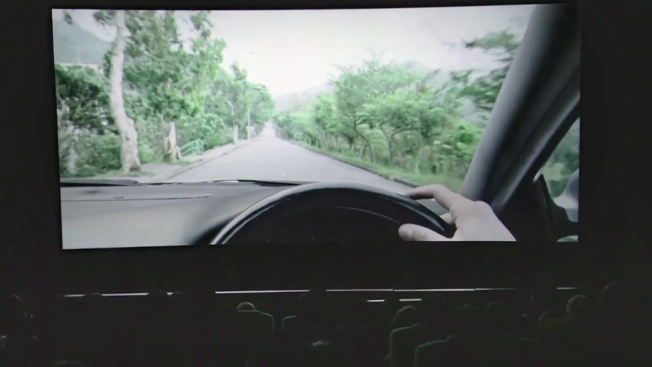
We've seen lots of "Don't text and drive" ads lately. With this one from Ogilvy Beijing, Volkswagen drove the message home to a captive movie-theater audience in a way they'll surely remember.

Watch the spot first to get the full impact.


Obviously the video begs the question about how, exactly, the stunt was pulled off. It says a "location-based broadcaster" was used—presumably this is done through geo-fencing, though you would think people would have to opt in to receive text messages that way.

But if the footage is genuine, it's a remarkable way to demonstrate that mobile-phone use is now the leading cause of death behind the wheel. Advertising is a great way to get that message across, at least until VW figures out a way to use German engineering to solve our obsession with cellphones.


13 Jun 08:30

Los 21 inventores que murieron a causa de sus propias creaciones

by Sergio Parra

800px-tesla_colorado.jpgLos inventores se definen como las personas que piensan por primera vez algo y, además, lo llevan a cabo en forma de algo que no existía antes. La palabra "inventor" viene del verbo latino invenire, inventar, encontrar. Los inventores, pues, son personas curiosas e inquietas por naturaleza. Sin embargo, a veces ponen tanta pasión en lo que hacen que acaban muertos por culpa de sus propios inventos.

Muertes que fueron la consecuencia directa de la invención (cuando ésta ha fallado fallado, por ejemplo) o la causa indirecta de la muerte del inventor (como en el caso de la exposición a elementos nocivos en un laboratorio). Sea como fuere, a continuación tenéis una lista de esta clase de inventores. Inventores que quizá hubiesen seguido vivos durante unos años más si no hubiesen inventado nada.

1. Li Si

10-inventores-que-murieron-por-sus-propios-inventos-8.jpgDe nacionalidad china, Li Si fue ejecutado en el 208 a. C. por su propio método de ejecución tras ser declarado culpable de traición: los 5 dolores. Al parecer, Si era reconocido por las máquinas de tortura que era capaz de concebir.

2. James Douglas

360px-blade_of_the_maiden.jpgEste escocés fue decapitado en 1851 por una herramienta inventada por él mismo para tal efecto: La Doncella (también conocida como Scottish Maiden), que es una forma temprana de guillotina o la horca. Actualmente, La doncella se muestra en el Museo Nacional de Escocia.

3. Henry Winstanley

640px-eddystone_lighthouse00.jpgEste inventor británico murió en su faro, el Faro de Eddystone, durante la gran tormenta de 1703.

4. Jean-François de Rozier Pilâtre

1024px-ballon_de_rozier.jpgEste inventor francés murió cuando su globo se estrelló cerca de Wimereux, en el Paso de Calais, en el curso de un intento de cruzar volando el Canal de la Mancha. En junio de 1783 presenció el primer vuelo de globo de los hermanos Montgolfier.

5. Horace Lawson Hunley

hunley1.jpg Este inventor norteamericano murió en 1863 en un submarino de su propia invención, el HL Hunley.

6. William Bullock

f946ce1c0b68.jpg Su pie quedó atrapado en un dispositivo rotatorio de imprenta que él había inventado en 1867, la primera máquina de imprenta capaz de alimentarse a partir de un rollo de papel. Desarrolló gangrena que llevó a la muerte 4 días después.

7. Cowper Phipps Coles

1024px-lady_nancy_taganrog.jpgEl capitán Cowper Phipps Coles (1819 - 7 de septiembre de 1870) fue un oficial de la Marina Real Británica e inventor. Inventó una balsa con una torreta blindada giratoria, la cual fue bautizada como Lady Nancy. Su torreta fue usada exitosamente en varios buques de la época. A bordo de un barco equipado con su torreta, naufragó en una borrasca en el cabo Finisterre el día 7 de septiembre de 1870: para asegurar la navegación, el almirantazgo decidió agregar un extenso aparejo el cual elevó el centro de gravedad del buque haciéndolo peligrosamente inestable.

8. Otto Lilienthal

1024px-otto_lilienthal_gliding_experiment_ppmsca.02546.jpg Este inventor alemán murió debido a un 56 pies (17 m) al caer cuando su ala delta perdió sustentación durante un vuelo de 1896. Trabajando conjuntamente con su hermano Gustav, realizó más de 2000 vuelos en planeadores de su diseño, comenzando en 1891 con su primera versión del planeador, el Derwitzer.

9. William Nelson

imagescatmyfw4.jpgEn 1903, este inventor norteamericano murió cuando se cayó de su bicicleta motorizada mientras realizaba pruebas en General Electric.

10. Franz Reichelt

flying_tailor.jpgLa muerte de este inventor austríaco, en 1912, se debió a la caída de su paracídas desde de la torre Eiffel. Al parecer el paracaídas no se abrió. Incluso disponemos de la grabación del desastre:

11. Thomas Andrews

thomas_andrews.jpgEn 1912 murió este arquitecto del Titanic, precisamente cuando el Titanic se hundió tras colisionar con un iceberg.

12. Aurel Vlaicu

glider_a_vlaicu_1909.jpgEn 1913, el avión Vlaicu II se estrelló en las montañas de los Cárpatos, y en él iba este inventor rumano.

13. Valerian Abakovsky

dfd.jpgEn 1921, este inventor murió cuando el Aerowagon descarriló durante el viaje de prueba. El Aerowagon era un invento suyo: fue un vagón experimental de alta velocidad equipado con un motor de avión.

14. John Godfrey Parry-Thomas

1280px-parry_thomas_and_babs,_pendine,_april_1926_(our_generation,_1938).jpgEn 1927, su muerte se produjo cuando la cadena de transmisión de su coche se rompió en una carrera, produciéndole a una lesión en la cabeza fatal.

15. Alexander Bogdanov

alexander+bogdanov3.jpgEn 1928, el inventor de la transfusión de sangre murió cuando se hizo una transfusión a sí mismo de sangre que estaba contaminada (algunos dicen que el grupo sanguíneo era incompatible).

16. Max Valier

max_valier_in_rocket_car_(1931).jpgEn 1930, murió cuando uno de sus motores de combustible líquido explotó en el escritorio de su laboratorio. Valier fue uno de los pioneros de la industria de cohetes y es uno de los fundadores de la Deutsches Verein für Raumschiffahrt (la Sociedad para el Vuelo Espacial de Alemania (DVfR)).

17. Marie Curie

marie-noble-portrait-600.jpgD. espués de quedarse ciega, murió, el 4 de julio de 1934, en la Clínica Sancellemoz. Falleció de anemia aplásica debido a la constante exposición a elementos radioactivos, cuyos nocivos efectos eran aún desconocidos. Pionera en el campo de la radiactividad, fue, entre otros méritos, la primera persona en recibir dos Premios Nobel en distintas especialidades, Física y Química

18. Thomas Midgley, Jr.

220px-ethylcorporationsign.jpgInventó las camas automáticas para discapacitados, que tienen mecanismos que permiten elevarla automáticamente. En una prueba, cayó y se enredó accidentalmente entre las cuerdas del mecanismo de elevación, muriendo estrangulado en el año 1944.

19. Harry K. Daghlian, Jr.

partially-reflected-plutonium-sphere.jpgFue uno de los desarrolladores de la bomba atómica, y murió por contaminación de la radiactividad del plutonio del laboratorio. Ocurrió en 1945.

20. Louis Slotin

tickling_the_dragons_tail.jpgA igual que Harry K. Daghlian, este desarrollador de la bomba atómica también murió por contaminación. Ocurrió en 1946.

21. Donald M. Campbell

donald_campbell_&_leo_villa.jpgEn 1966, murió cuando su lancha (con el motor de velocidad inventado por él) se volcó en una carrera.

Vía | Buzzle

-
La noticia Los 21 inventores que murieron a causa de sus propias creaciones fue publicada originalmente en Xatakaciencia por Sergio Parra.


11 Jun 06:42

10 carteles de reclutamiento de la Primera Guerra Mundial

by Manuel Jesus Prieto Martín

Gran Bretaña te necesita de inmediato


¡Franceses de Canadá, alistaos!


Hombres listos para el cuerpo de tanques


Para ciclistas Si te gusta pedalear, hazlo por el rey


Se necesitan leones El imperio necesita hombres leones


Mujeres de Lancanshire


Viaje gratis a Europa Ropa, comida, paga... guerra asegurada


Por dinero y un rifle


Los cuatro valientes


Santos y soldados

Fuente: Imperial War Museums


Puedes seguirme en twitter: @vitike
Curistoria también está en Facebook
10 Jun 13:29

Sliced Glass ‘Paintings’ and Portraits by Loren Stump

by Christopher Jobson

Sliced Glass Paintings and Portraits by Loren Stump glass

Sliced Glass Paintings and Portraits by Loren Stump glass

Sliced Glass Paintings and Portraits by Loren Stump glass

Sliced Glass Paintings and Portraits by Loren Stump glass

Sliced Glass Paintings and Portraits by Loren Stump glass

California-based glass artist Loren Stump specializes in a form of glasswork called murrine, where rods of glass are melted together and then sliced to reveal elaborate patterns and forms. While the murrina process appeared in the Mideast some 4,000 years ago, Stump has perfected his own technique over the past 35 years to the point where he can now layer entire portraits and paintings in glass before slicing them to see the final results. His most complex piece to date is a detailed interpretation of Leonardo da Vinci’s Virgin of the Rocks, which involved hundreds of glass components that were melted into a final piece. You can see more of Stump’s 2D and 3D work over on his website. (via Lost at E Minor)

02 Jun 12:58

1966: Jet Locomotive

by Amanda

Jet Locomotive 1 Jet Locomotive 2

In 1966, New York Central engineer Don Wetzel attached two GE jet engines to the top of a commuter car and sped down a straight section of Ohio track at 183 mph, setting a world record for self-propelled trains recognized by Guinness World Records. No train in North America has gone faster since.

02 Jun 12:55

Pixar Renderman software set free so you can make your own Toy Story

by Lee Mathews
Pixar Renderman
Aspiring animators, listen up! Pixar’s working on a brand new version of Renderman, the in-house software they use to render (duh) all their awesome digital creations. There are a slew of improvements coming, […]
02 Jun 10:29

Photo


02 Jun 10:22

Dancing Shadow Sculptures by Dpt. and Laurent Craste [Updated]

by Christopher Jobson

Dancing Shadow Sculptures by Dpt. and Laurent Craste [Updated] shadows projection porcelain light kinetic sculpture ceramics

Dancing Shadow Sculptures by Dpt. and Laurent Craste [Updated] shadows projection porcelain light kinetic sculpture ceramics

Parade is an interactive art installation concevied by ceramacist Laurent Craste and digital agency Dpt. for the Chromatic festival in Montreal. At first glance the piece looks rather mundane: two misshapen porcelain vases sit atop a pedestal inside a wood cube, lit from above by an industrial light. But move the light and suddenly the magic happens as shadows projected from the vases animate to life. What a fun piece.

Update: Of course things like this are never as simple as they appear. Dpt. explains further that the animated “shadows” are coming from a hidden projector which tracks the movements of the faux light source. We’ve been tricked! But I suppose that’s kind of the point.

02 Jun 09:57

De cuando la marca de coches SS cambió a Jaguar

by Manuel Jesus Prieto Martín
Modelo SS 100 de Swallow Sidecar Company
(Modelo SS 100 de Swallow Sidecar Company)
Hace unos días, un seguidor del blog cuyo apodo es Majo Busa me dejaba un comentario en la página de Curistoria en  Facebook en el que me ponía tras la pista de una curistoria en torno a la Segunda Guerra Mundial y la marca de coches Jaguar. Se lo agradezco desde aquí ya que no conocía el dato y lo comparto con todos ustedes.

En otras ocasiones ya hemos visto cómo la Segunda Guerra Mundial, y especialmente tras ella, hizo que cambiaran muchas cosas en toda Europa y en el mundo para dejar atrás cualquier relación con el nazismo. Cambio de apellidos, en los nombres de las empresas, en los diseños… cualquier cosa para evitar ser relacionado con el pasado terrible de la Alemania de Hitler, aunque en ocasiones el tema fuera casi absurdo. Por ese mismo trance pasó la marca de coches Jaguar Cars.

Emblema de Jaguar
(Emblema de Jaguar)
Jaguar Cars, la marca de automóviles, fue fundada en 1922 bajo el nombre de Swallow Sidecar Company por William Lyons. Tomaron las siglas precisamente de su nombre Swallow Sidecar para nombrar sus primeros vehículos, como el precioso SS 100 de finales de los años 30, el SS 2 o el SS 90. Tras la Segunda Guerra Mundial cualquier referencia a las letras SS traía a la cabeza a los soldados nazis y la compañía decidió cambiar su nombre por el de Jaguar, lo que cambió para siempre también su frontal.

Sinceramente me parece un poco exagerado el cambio, y más para una marca británica, pero aquellos eran otros tiempos y quién sabe qué impacto tendrían estas cosas en las ventas.


Puedes seguirme en twitter: @vitike
Curistoria también está en Facebook
28 May 06:41

http://pordondemeda.tumblr.com/post/87009882487


27 May 07:11

Photo


22 May 11:00

Photo


19 May 06:29

Photo


18 May 17:31

‘JohnnyExpress’, An Animated Short About a Trouble Causing Space Delivery Man

by Brian Heater

Produced by Korean studio Alfred Imageworks, “JohnnyExpress” is a short 3D animated film that follows Johnny, a space delivery man tasked with delivering one tiny package.

Johnny is lazy and his only desire is to sleep in his autopilot spaceship.When the spaceship arrives at the destination, all he has to do is simply deliver the box. However, it never goes as planned. Johnny encounters strange and bizarre planets and always seems to cause trouble on his delivery route.

The cartoon, set in 2150, quickly escalates into a hilarious monster movie parody.

via Vimeo Staff Picks