Shared posts

02 Jun 01:14

devinchee: nottheshepardyourelookingfor: cannedmuffins: honeyy...

Burly.Thurr

Hashtag Irreverence for Aaron, the holdout Christian in the group.


devinchee:

nottheshepardyourelookingfor:

cannedmuffins:

honeyyoumeanhunkules:

erinsuxx:

finally done the story of the “virgin” mary and her immaculate conception for my sequential art final.  very happy with how this came out/that it’s finished.

this is beautiful, good job!

This is actually how I said it probably happened.

I just laughed myself into space

"yea someone ‘came upon you’ but i dont think it was the lord" is the best line ever written in the history of anything

01 Jun 19:03

[3lliottc]

Burly.Thurr

Oh dad jokes.

01 Jun 02:18

Anti-vaxx? How about pro-disease?

by Jason Kottke
Burly.Thurr

Self-explanatory.

2014 measles rise

Measles cases in the U.S. just hit a two-decade high. In case you can't already guess why, assistant surgeon general Dr. Anne Schuchat explains:

The current increase in measles cases is being driven by unvaccinated people.

From Aeon, Polio whack-a-mole:

The great allies of infectious diseases are no longer poverty, nor dirt, but the global anti-vaccination movement.

Tags: medicine   polio   vaccines
31 May 01:50

http://fuckyeahreactions.tumblr.com/post/87083490846

Burly.Thurr

More like Michael Weed-bender.

30 May 21:00

May 30, 2014

Burly.Thurr

I thought I was done for the day, but this one struck an arousing chord, too.


30 May 13:33

Photo

Burly.Thurr

For all you cat haters out there.


29 May 16:02

Would You Pay $1,000 Once to Get Free Beer for Life?

by Matt Vasilogambros
Burly.Thurr

Northbound in a national publication! I'm really bummed I didn't get in on the ground floor on this one. It's not very conveniently located for me, I guess. But they do an excellent job with their brews.

A brewpub and a coffee shop in Minnesota's Twin Cities have used this one-time payment method to save their businesses. And there's no reason to think the model can't spread.

29 May 15:34

Microsoft's Skype Will Soon Be Able to Translate Voice Calls in Real Time

by Polly Mosendz
Burly.Thurr

Will language no longer be a barrier to global communication in the near future?

Image REUTERS/Susana Bates
Microsoft Chief Executive Officer (CEO) Steve Ballmer (L) and Skype CEO Tony Bates shake hands at their joint news conference in San Francisco, May 10, 2011. Microsoft acquired Skype for $8.5 billion.  (REUTERS/SUSANA BATES )

Skype will soon have the ability to translate multilingual conversations in real time, as Microsoft graduates software translations from written text to actual voice calls. The translations will be done simultaneously, displaying multilingual subtitles. 

Chris Wendt, program manager of Microsoft's Machine Translation team, said "We felt speech translation was a very natural evolution of the text-translation work we've been doing. It's an exciting project, and it became clear that adding this capability to Skype and enabling people to have translated conversations was the killer scenario to get this technology into customers' hands."

The feature works remarkably well in demonstrations. The Inquirer tested the Bing translate engine with a few paragraphs of Portuguese-to-English to see if they could find any errors, but found "it did an almost word perfect transition there and back."


Microsoft is launching the translation engine in a beta version on Windows 8.1 later this year. Check out the new feature in action:


29 May 14:33

WE ARE THE BEST!

by esb
Burly.Thurr

Sounds like the swedish film industry is keeping it real.


GO SEE THIS MOVIE, YOU GUYS!

Set in Stockholm in 1982 and shot in Swedish, We Are the Best! is director Lukas Moodysson's adaptation of his wife's graphic novel about three aspiring punk rock girls. (Allow me to clarify: these girls are aspiring to be in a punk band. They are already punk as fuck.)

I have to admit, I was relieved when I read the NY Times review this morning and learned that Moodysson has been making movies for 15+ years. We Are the Best! feels like a first film, in that it's rough and exuberant and utterly connected to the material, but the acting is so good--his leads were aged 11, 13 and 14 when they shot the film--that I started kicking myself in my seat, thinking "How did he get those performances??"

We Are the Best! opens this Friday in Montreal, New York, Toronto, Vancouver and West Los Angeles, then rolls out to more cities throughout June + July.

Absolutely appropriate for tween audiences, if you don't mind a fuck or two. (Which, if you mind that, what are you doing here?) Be the cool aunt and bring your ten-year-old niece. It'll blow her mind.
29 May 14:23

kettlehead-comics: this is the first time I have ever reblogged...

Burly.Thurr

Aw, Steve Irwin.


kettlehead-comics:

this is the first time I have ever reblogged something twice

29 May 01:47

In Defense of Schlock Music: Why Journey, Billy Joel, and Lionel Richie Are Better Than You Think

by Jody Rosen
Burly.Thurr

TLDR. But I think I can get behind some of the sentiments.


When Journey’s “Don’t Stop Believin’” first rumbled into earshot in the summer of 1981, few presumed it would have much staying power. The song was a hit, but not a huge one, reaching No. 9 on the Billboard Hot 100 on December 19 and hanging on at that position for two weeks before tumbling down the charts and off radio playlists. There was no sign of “Don’t Stop Believin’” in the tallies of the year’s top-100 hits in either the U.S. or U.K. It was a curio, memorable mainly for its unorthodox structure, serving up three verses and two bridges before finally arriving at its money-shot chorus (“Don’t stop believin’/Hold onto that feelin’”) at the 3:23 mark.

The rock-critic consensus on “Don’t Stop Believin’” was unsurprising: Disdain was the order of the day. Critical conventional wisdom cast Journey as doubly deplorable. They were not merely (to use the period’s choice epithet) “corporate rockers”; they were cynical corporate rockers — erstwhile San Francisco hippies who had shelved their prog-fusion ambitions and hired a cornball singer, Steve Perry, to chase Foreigner and REO Speedwagon up the pop charts. For critics, Journey was like a one of those moldering foodstuffs that you dread finding in the back of your refrigerator: When forced to deal with it, you take bacon tongs in hand, hold it at arm’s length, and drop it into the trash. In a 166-word blurb in the 1983 edition of the Rolling Stone Record Guide, Dave Marsh, the Bruce Springsteen biographer and guardian of rock-critical orthodoxy, gave one-star reviews to all of Journey’s albums while emptying his rucksack of insults: “Stepford Wives rock,” “calculated,” “nitwit,” “plodding,” “banality,” “utter triviality,” “exploitative cynicism,” and worst of all, surely, by Marsh’s lights, “Paul Anka and Pat Boone.” Rolling Stone’s regular magazine review of Escape, the album that opened with “Don’t Stop Believin’,” was no kinder. Critic Deborah Frost’s contempt boiled over into mixed metaphors (“a veritable march of the well-versed schmaltz stirrers”), with special scorn aimed at the lyrics of “Don’t Stop Believin’”: “Lord knows how many weary pilgrims have managed to tramp down the memory lane of adolescent lust without the side trip that Journey make to the dank hole of dreck-ola … addressing their audience as ‘streetlight people.’” Frost wrapped up her piece with a vision of Journey’s obsolescence: “Maybe there really are a lot of ‘streetlight people’ out there. If so, my guess is that they’ll soon glow out of it.”

The truth, we’ve learned, is stranger than fiction, to say nothing of Rolling Stone album reviews. “Don’t Stop Believin’” hasn’t just stuck around: It has sunk its teeth into the collective unconscious. Today, the song sounds irrefutable; its dramatic slow-boiling arrangement — those tolling piano chords, arcing 16th-note guitar arpeggios, and mock-operatic vocals — is the essence of arena-rock grandeur. As for schmaltz-stirring: The song’s inspirational bromides, its images of desperadoes stalking noirish streets on a quest for hidden, um, emotion — “Streetlight people/Livin’ just to find emotion/Hiding somewhere in the night” — these sentiments have proved alluring enough to pull in just about everyone: cutesy indie-pop a cappella singers; the Chicago White Sox, who embraced “Don’t Stop Believin’” as the theme song of their 2005 championship run; David Chase, who used it as the soundtrack for The Sopranos’ final scene; Ryan Murphy, who made it the big finale of Glee’s pilot episode; Kanye West, whose live band played a note-for-note rendition in tribute to the rapper’s late mother; even Bruce Springsteen, who romped through a shaggy cover alongside Lady Gaga, Sting, Elton John, and other stars at a 2010 Carnegie Hall benefit concert.

In short, 33 years after its release, “Don’t Stop Believin’” is pop-music Holy Writ. History has certainly been kinder to Journey than to the reviewers who savaged them. If you examine the top singles in the 1981 Village Voice Pazz & Jop Critics Poll, you’ll find Laurie Anderson’s “O Superman” in the No. 1 slot. “Don’t Stop Believin’” got nowhere near that list, of course, yet today Journey’s anthem haunts our culture like no other song from 1981. “Don’t Stop Believin’” has become a standard not in spite of the qualities that repelled critics — the clichés, the pretensions, the overweening emotionalism, Steve Perry’s too-tight jeans and too-tremulous tenor. It has become a standard because of them. Put another way, “Don’t Stop Believin’” has endured because it belongs to a tradition that has given us our most indestructible songs, a tradition as time-honored, as sturdy, as it is maligned: schlock.

***

Schlock, at its finest, is where bad taste becomes great art. Schlock is music that subjugates all other values to brute emotional impact; it aims to overwhelm, to body-slam the senses, to deliver catharsis like a linebacker delivers a clothesline tackle. The qualities traditionally prized by music critics and other listeners of discerning taste — sophistication, subtlety, wit, irony, originality, “experimentation” — have no place in schlock. Schlock is extravagant, grandiose, sentimental, with an unshakable faith in the crudest melodrama, the biggest statements, the most timeworn tropes and most overwrought gestures. Put another way: Schlock is Rodgers and Hammerstein, not Rodgers and Hart. It’s “Climb Ev’ry Mountain” and “You’ll Never Walk Alone,” not “Manhattan” and “My Funny Valentine.”

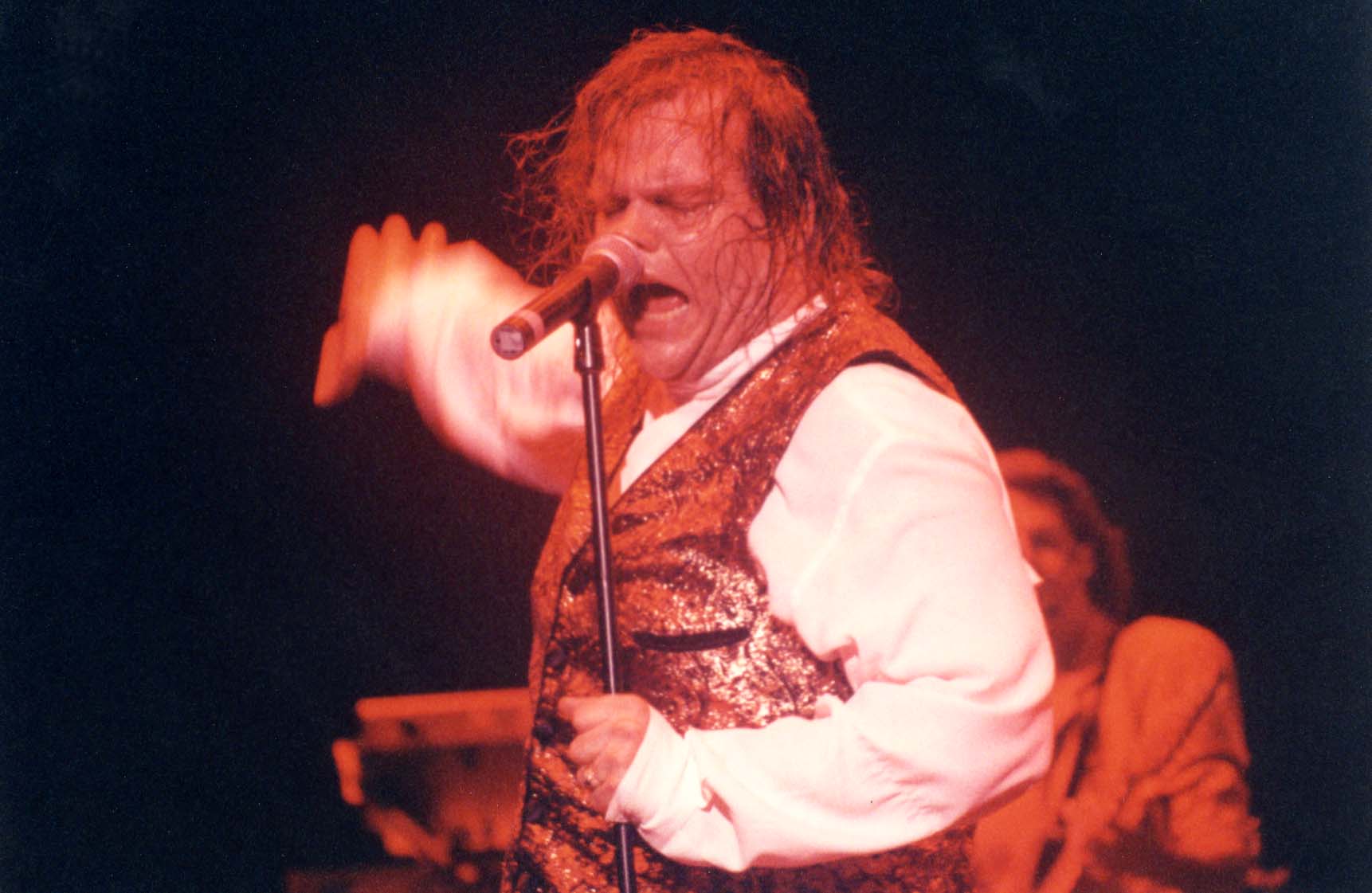
Schlock’s supreme pop-music form is the power ballad, but it thrives in many genres, speaking in a range of musical accents, registers, tempos, and time signatures. What’s consistent is the spirit in which schlock speaks: unself-consciously, with no embarrassment about its opulence, its pretensions, its vulgarity. Since at least the 1950s, popular-music culture has been gripped by a cult of cool. But schlock isn’t cool. Schlock carries a torch, and the torch burns white hot. Schlock is Meat Loaf, sweating buckets, as he rears back to deliver the final chorus of “I Would Do Anything for Love (But I Won’t Do That).” Schlock is the maudlin creak of Cat Stevens’s singing voice and the rippling ostentation of Mariah Carey’s. Schlock is Chicago’s “If You Leave Me Now,” an almost vulgarly pretty song, with a melody that billows and shimmers like a silk sheet settling down on a Louis XIV four-poster bed. Schlock is Jason Mraz, riding a burbling white-reggae groove, crooning about world peace, earnestly and nonsensically: “We’re just one big family/And it’s our God-forsaken right to be loved, loved, loved, loved, loved.” Schlock is Usher trying to coax you into bed, and Rod Stewart pressing the point (“Don’t say a word, my virgin child/Just let your inhibitions run wild”) while a saxophone murmurs its agreement. Schlock has no shame, no limits; it is not bound by any sense of propriety or proportion. It is unchained melody.

The etymology is revealing. Schlock comes from the Yiddish shlak, meaning secondhand, or damaged, goods; it describes something both inexpensive and of dubious value, something cheap, junky, tacky. In the 1920s, schlock was a slang term among criminals for stolen merchandise, for booty that you fenced in bulk — and critics often invoke the term schlock when describing music that has the whiff of shoddy illegitimacy about it, music that is the result of industrial-pop production and is by implication formulaic, relying on pilfered materials, borrowed ideas, clichés. A secondary meaning of shlak is apoplectic stroke, which may resonate with connoisseurs of musical schlock — with anyone, for instance, who’s experienced the Richter-scale-rattling spectacle of Céline Dion singing “All by Myself” live in concert.

Schlock has a close relative in another Yiddishism, schmaltz — a label often given to music that is swamped by goopy sentimentality, as a roast chicken is swamped by rendered fat. Much schlock music qualifies as schmaltz, or is at least very schmaltzy. But schlock is a broader category than schmaltz; it makes room for songs that are grandiose but less reliant on lachrymose sounds and sentiments. (Toto’s “Africa” is schlock but not schmaltz, concealing its torch-ballad bombast beneath a placid easy-listening arrangement.) Other terms are sometimes used interchangeably with schlock: kitsch, cheese, camp. Schlock contains elements of these, but none are true synonyms. Schlock is more dignified than kitsch like “How Much Is That Doggie in the Window?” or Red Sovine’s tearjerker trucker ballad “Teddy Bear.” It is weightier, more substantial, than pure pop cheese like the Spice Girls’ “Wannabe” or novelty-song cheese Los del Rio’s “Macarena.” And while certain listeners embrace schlock, with both affection and condescension, as camp, schlock itself is allergic to the irony that is a prerequisite of camp. A karaoke singer might perform “The Rose” or “Every Rose Has Its Thorn” or “Kiss From a Rose” as a campy sendup, but Bette Midler and Poison and Seal take those songs seriously — offer up those roses on bended knee. Schlock is earnest and solemn; it’s ambitious and aspirational and exalted. It shoots for the moon or, at least, for the penthouse suite.

Music critics have been dropping the word schlock for years, but few efforts have been made to define it or theorize about it. The closest anyone has come in recent years is Carl Wilson’s discussion of schmaltz in his brilliant book about Céline Dion, Let’s Talk About Love: Why Other People Have Such Bad Taste. To find a more a head-on consideration, we have to travel all the way back to 1976, to a terrific Village Voice article by critic Tom Smucker about, of all things, the Canadian chanteuse Anne Murray. In the piece, Smucker lays out a taxonomy of schlock: True Schlock, High Schlock, Pre-Schlock, Post-Schlock, Assumed Schlock, Archetypal Schlock, Anti-Schlock, and Revisionist Anti-Schlock. He also provides a helpful definition. Schlock, Smucker writes, is “materialism in a Dionysian mode. At its best it represents the entrance into the mystery of America — the vulgar ecstasy of consumption — and is more exciting than sex. People who’ve always had money don’t like schlock because it isn’t tasteful, as if a man on the verge of starvation all his life who sits down to his first big meal should be into how the food tastes.

I’m not sure about the more-exciting-than-sex part, especially since so much schlock is about sex, or has sex hovering over it.  But Smucker was right to detect the class and status anxieties that swirl around schlock. Tastemakers — Smucker’s “people who’ve always had money” and those, wealthy or not, with cultural capital — have generally kept their distance from schlock, regarding it as debased, inferior, embarrassing, the soundtrack of the great unwashed. (This is one reason why you find relatively less schlock, pound for pound, in indie music.) Rock criticism has done an about-face since Rolling Stone sneered at “Don’t Stop Believin’,” and today’s critical orthodoxy tilts toward omnivorous “poptimist” appreciation, with an open attitude to the commercial mainstream. Still, critics remain squeamish about schlock. When the word is used by record reviewers, it’s usually as an insult, certainly not as an asset, and not even, in most cases, as a neutral descriptor. Today we have a new regard for once-maligned genres, including bad ol’ corporate rock; we’re learning, slowly but surely, to move past the defensiveness of “guilty pleasures.” Yet schlock remains a musical pleasure for which we can’t quite relinquish our shame.

 ***

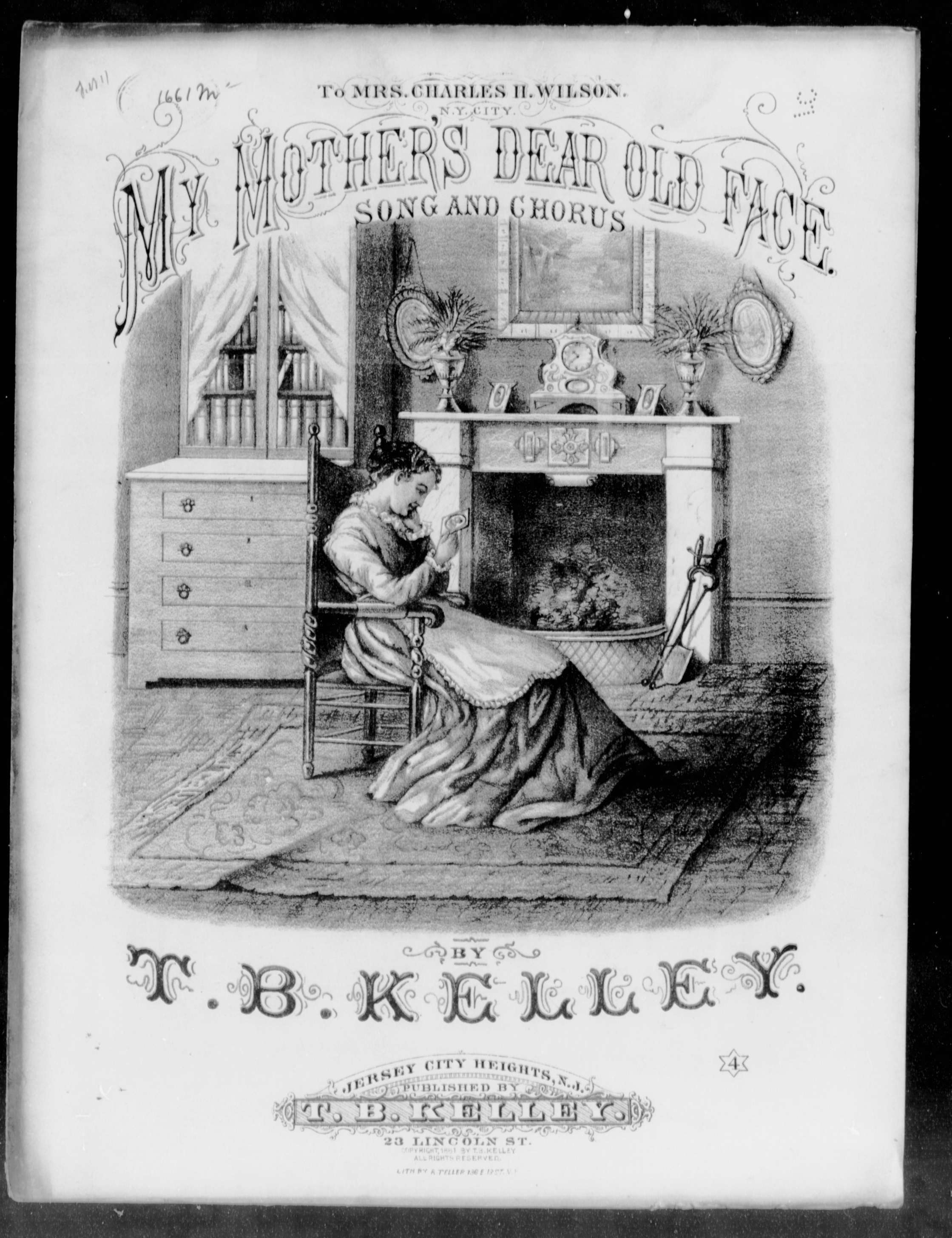
History, though, tells us to take schlock seriously. For one thing: Schlock is history. Schlock is primordial: It was there at the beginning — of music itself, undoubtedly, when the first Paleolithic flutist tooted a tune on a cave-bear femur to honor his god or woo his mate. As for our popular-song tradition: Follow its roots back, and you will find schlock. You hear it in the lovelorn bleakness of the Delta blues; in death-haunted country ballads; in gospel testimonials; in the Scottish and Irish ballads that flowed into American folk and pop; in the grotesque plantation nostalgia of blackface minstrelsy; and in the schlock ground zero of Victorian parlor song, with its paeans to pious children, saintly mothers, martyred soldiers,  imperiled trees, old oaken buckets, old homesteads, old men.

That history haunts today’s hit parade. As long as schlock is on the charts, the past is never far away. Schlock believes in yesterday: in auld lang syne, in the way we were, in the summer of ’69. Cultural historians tell us that homesickness is the American way, the primal condition of a nation of immigrants and road-weary nomads. So perhaps it’s not surprising that schlock nostalgia has flourished in our popular music. You’ll hear schlock whenever a plaintive melody is hitched to a lyric that yearns hopelessly for a vanished yesteryear: when the crooner pines for a white Christmas “just like the ones I used to know” or the pop diva mourns the one that got away. The past moves through schlock in surprising ways. At the turn of the 20th century, Tin Pan Alley songwriters revived the “back to Dixie” trope that was a staple of blackface minstrelsy, churning out countless songs about train rides home to the pastoral South. In 1973, Gladys Knight and the Pips revived the revival, taking “Midnight Train to Georgia” to the top of the charts; and it was Knight’s hit that inspired keyboardist and songwriter Jonathan Cain to place Journey’s small-town girl and city boy on a “midnight train going anywhere” in “Don’t Stop Believin’.” Decades and centuries pass; revolutions, musical and otherwise, remake the world. The schlock train keeps chugging along.

Schlock is pop’s repository of Victoriana. When Kanye West raps a corny ode to his mother and Beyoncé sings one to her daughter — when “tears in heaven” tumble for Eric Clapton’s dead son and David Bowie’s doomed astronaut in “Space Oddity” warbles “Tell my wife I love her very much” — we are back in the 19th century, in the parlor room where families gathered to sing maudlin and morbid ballads to, and about, each other.

Accordingly, schlock often has an old-fashioned ring. Schlock’s signature musical instrument is the piano, that dowdy crown jewel of the Victorian parlor. (If a song opens with ponderous piano chords — a stately “Let It Be”–style intro — you know it’s a schlock anthem.) There are other telltale schlock sounds: syrupy string orchestrations; saxophone solos; black gospel choirs, annexed by white singers to give choruses a soulful boost; Barry Manilow modulations — the florid key changes that appear on the far side of the middle-eight, like a herd of unicorns bursting into view on a mountain ridge. Schlock is theatrical, and its flair for the dramatic harks back to earlier, hammier eras: to the vaudeville of Al Jolson, the Broadway of Ethel Merman, the Vegas of Elvis’s later years.

Yet schlock adapts. In 1998, two London-based record producers, Mark Taylor and Brian Rawling, used a new pitch-correction software program, Antares Auto-Tune, to create a vocal hiccup in the chorus of Cher’s “Believe.” The result, that little vocal trill, sounded “futuristic,” robotic. It also sounded old, replicating, with a digital-age shiver, the mordent, the plaintive quaver or catch in the voice that was a staple of sentimental Irish ballad singing and was imported to American pop in the 1920s and ’30s by crooners like Russ Columbo and Bing Crosby. Over the past several years, Auto-Tune–slathered vocals have become one of pop’s schlockiest sounds, adding an air of desolation to heartsick ballads by rappers turned crooners: West, T-Pain, Drake, and the current master of ardent hip-hop schlock, Future. It’s just one recent example of the way new sounds and new technologies are absorbed into schlock — of how swiftly the cutting edge is deployed in the service of pop’s most unapologetically bourgeois music.

Schlock keeps up with the times in other ways, expressing the Zeitgest in the usual schlocky fashion — sentimentally and emphatically. The schlock ballads of the late-19th and early-20th century registered the shocks and dislocations of a rapidly urbanizing and modernizing world, telling tales of lost rural idylls, shattered families, and despoiled maidens; the lavishly orchestrated schlock-pop of the 1950s caught the confidence and bloat of American Empire at its postwar height. Today’s schlock is time-stamped, too. Consider the hydra-headed postmodern beast that is Katy Perry’s “Roar,” which cannibalizes one schlock classic of the ’70s (“We Are the Champions”), one of the ’80s (“Eye of the Tiger”), and one of recent vintage (“Brave”), en route to a chorus that gives Helen Reddy’s 1972 feminist-schlock rallying cry “I Am Woman” an ecumenical post-feminist spin: “I am a champion/And you’re gonna hear me roar.” Like so much 21st-century schlock, “Roar” is, if you will, Oprah-opera: an inspirational aria that speaks the language of the self-help book and the pep talk, in a musical setting big and burly enough to work as halftime show-rocking “jock jam.”

***

The list that accompanies this essay, “The 150 Greatest Schlock Songs,” is one listener’s schlock canon. Like all lists, it’s limited by personal taste and by space; there are many fine songs — whole schlock genres and traditions—that didn’t make the cut. Some of the greatest schlock is Latin music; French chanson is a virtual tout­-schlock zone. But I’ve stuck to Anglo-American pop, on the theory that every list has to stop somewhere.

I had other ground rules. This is a list of the best schlock songs, not the most “essential” or significant ones. Any historically conscientious survey of schlock would have to take account of, for example, Perry Como, the Carpenters, Tom Jones, “Don’t Cry for Me, Argentina” “From a Distance,” “Truly, Madly, Deeply,” and dozens of others musicians and songs absent from my list. A decent argument could be made that “Hotel California” is the schlockiest popular song of all time, but it’s not here, either.

The guiding principle of this list is that schlock is too important a tradition not to take seriously and that taking it seriously means making astute judgments about that tradition. Not all schlock is terrible; only some is transcendent. For me, the great stuff is defined by an alchemical blend of beauty and brazenness — ideally, by vast quantities of both. “I Don’t Want to Miss a Thing,” the 1998 Aerosmith power ballad written by Diane Warren, is great schlock on the strength of its tune alone. Steven Tyler’s audacious scenery-chewing vocal tips it into Hall of Fame territory; the lyric, narrated by a lovestruck weirdo who stays up all night gaping at his sleeping girlfriend, seals the deal.

But again: à chacun son schlock. You might love Billy Joel’s inescapable “Piano Man,” and you’d be right to call it a schlock classic; I think it’s a horrible song. Joel’s “Until the Night,” on the other hand, is great, a magnificent bit of ersatz–Brill Building–pop-pomp that deserves canonization, and gets it. I have a fondness for sex schlock, for songs that dress up shameless come-ons in costume-drama finery. This explains the inclusion of Barry White’s “Can’t Get Enough of Your Love, Babe,” the Isley Brothers’ “Between the Sheets,” Solomon Burke’s “Music to Make Love By,” Extreme’s “More Than Words,” and Benny Mardones’s breathtakingly skeezy Lite-FM staple “Into the Night,” and it’s why I chose “Girl, You’ll Be a Woman Soon” over any of dozens of other Neil Diamond anthems. Grunge and post-grunge are schlock-heavy genres — the inchoate angst, the mommy-and-daddy issues, the dudes earnestly mewling their pain over crashing guitars. But I’ve never been a fan, which is why the list includes only one peak-grunge song (Pearl Jam’s “Jeremy”) and why there’s no “With Arms Wide Open,” a song that will be lighting up karaoke machines and oldies radio well into the 22nd century.

What you will find on this list is a different view of history, a discombobulated version of the popular-music canon. Many familiar pop gods are here, yes, but they are sharing their throne room with musicians generally relegated to less posh digs. There are no Bob Dylan songs on this list; there are five songs written by Lionel Richie. A schlock-centric history makes room for underrated greats (Johnnie Ray, Peter Cetera, Sade) and privileges often-maligned genres (soft rock, Quiet Storm soul, Nashville pop-country). It champions alternative golden ages: Rock culture enshrines the ’60s, but schlock loves the ’90s, the heyday of Whitney and Mariah and Garth and Shania and other titans of the blustery schlock power-ballad. Schlock prizes the rhapsodic over the rugged, the voluptuous over the volatile; a list of great schlock songs therefore flips the usual rock-critical gender and age biases, tilting toward the gentler, more sentimental “women’s music” that rules radio formats aimed at middle-aged listeners, like adult-contemporary and country. Schlock chooses pop metal over the rock critic’s favorite, punk — although Carl Wilson may have been onto something when he called punk “anger’s schmaltz.” Schlock goes for that old softy, Paul McCartney, not the critic’s darling John Lennon — although, come to think of it, there is no schlockier song than Lennon’s drippy “Imagine,” and what is Lennon’s 1970 primal-scream-therapy ballad “Mother” if not anger’s schmaltz, a Janovian update of the Victorian mother song?

The truth is, we’re capricious in our judgments about schlock. Dave Marsh derides the “triviality” and “banality” of Journey’s schlock-rock, but there is no more flaming schlock purveyor than Marsh’s beloved Bruce Springsteen, and an honest listener will admit that the only thing separating the beautiful-loser melodrama of “Don’t Stop Believin’” from that of, say, “Jungleland,” is the relative tameness and tautness of the former, whose poesy is practically Noël Coward compared with the Boss’s Beat-poetic ejaculations (“Beneath the city, two hearts beat /Soul engines running through a night so tender”) — to say nothing of the Clarence Clemons sax solo that clocks in at nearly half the length of Journey’s song. Schlock thrives in musical precincts that pretend to be above such things, and critical gatekeepers have often gone along with the charade, damning Bon Jovi’s bombast while ignoring — or, rather, relishing without owning up to — Bon Iver’s.


***

One thing we all may be able to agree on: In 2014, schlock reappraisal is in the air. The 21st century has been a time of intensive pop-canon consolidation. We’ve seen a new body of popular standards, a latter-day Great American Songbook, consecrated by TV talent shows and YouTube home-video cover songs and the unnumbered zillions who’ve tipped back a strong drink and stepped onto a karaoke stage to take a whack at Gloria Gaynor or the Backstreet Boys or Bruno Mars. If you stop by your nearest karaoke palace — if you examine the repertoires of American Idol or Glee — you’re reminded that schlock remains the people’s choice. We mark our most important occasions, weddings and funerals and holidays, with schlock. We seek solace in schlock when challenged by hard times: when the Titanic goes down, when war separates loved ones, when the Twin Towers fall. And when it’s time to wow the judges on The Voice, we break out “Against All Odds” or “Open Arms” or “I Will Always Love You.”

We may never fully shake off the shame of loving such songs. No matter how far poptimist reclamation extends, there is nothing that will make a song like “Endless Love,” the Lionel Richie–Diana Ross duet that roosted at the top of the charts for nine weeks in 1981, less embarrassingly sappy. But the problem, it seems fair to say, lies with us — with our aesthetic prejudices, the limits of our critical imaginations, our insecurities — and not with “Endless Love.” We’ve learned to be wary of sentimentality, to favor abrasion and dissonance over lavish melodicism, or at least to prefer beauty and sentimentality in tidy little packages, preferably pegged to “literate” lyrics full of wry observations and piquant little ironies. We’ve chosen “good taste” over “bad taste” — a dodgy proposition in general, and a fool’s bargain when it comes to assessing the lurid carnival of popular music.

Take Lionel Richie. He is a slyly virtuosic singer and a songwriter whose knack for sumptuous tunes is matched by his weakness for ridiculous high-flown chivalric romance. He is, in other words, a brilliant cornball. As poetry, “Endless Love” is leaden (“Your eyes, your eyes, your eyes — they tell me how much you care”); the instrumentation, all tinkling pianos and swooning strings, is predictable and banal. Yet the song is beautiful, a ravishing flow of melody and harmony that never lets up, arriving in crescendo after crescendo. “Endless Love” is a tissue of clichés — which Lionel Richie folds into a gorgeous origami swan. If, as critics and canon-makers, we can’t find a way to hallow a song like “Endless Love” — if we can’t see fit to put Richie in the Rock and Roll Hall of Fame alongside Springsteen and Michael Jackson and Madonna, the only ’80s hit-makers on his level — we may need to ask ourselves if our critical criteria are out of whack: if on some basic level we’re missing the point of the art form we purport to critique.

The truth is, big corny windswept sentimentality might just be the thing that pop does best. Music is the most immediate, the most visceral and ineffable of human inventions, and its essential power, the trump card it holds over the other arts, is its bald appeal to the emotions, the way a rapturous tune, a stirring beat, a charismatic voice, can override everything, transporting us to a realm beyond concerns about tastefulness or “cool” or even coherence. What the fuck is “purple rain”? It’s doggerel, that’s what; nobody has the foggiest idea what purple rain is. And yet, when Prince commands, “If you know what I'm singing about up here — c'mon, raise your hand!” our hands shoot up, because even though we don’t know what he’s singing about, we feel it.

“Journey,” Dave Marsh sniffed back in 1983, “gives the people what they want.” He was wrong, though. Schlock isn’t what we want, at least not what we want to believe that we want. We want to be connoisseurs and, lord help us, we want to be cool. Schlock delivers something more profound: what we need. It’s music that serves our awkward yearnings, in a secular era, for uplift, for a touch of the sacred, for a stairway to heaven. It’s the soundtrack we turn to for a good long cry in a dark little room, when we’re dumped by someone we love. We recoil from schlock even as we lust for it, because it hits us where it counts, revealing us at our most wretchedly vulnerable and human. Which is why, despite our high-minded instincts, we’re stuck with schlock. There are times in life when only thing that will do is a great big tear-jerking cliché, gusting along atop an even bigger melody. As the poet said: We’re livin’ just to find emotion.

Read more posts by Jody Rosen

Filed Under: journey ,don't stop believin ,music ,radio vulture ,no respect week

28 May 22:29

Be a Google Ninja: Tips and Tricks for Online Research

by Barry Ritholtz

click for complete graphic
Google ninja


Source: The Reformed Broker


28 May 21:27

Veteran tells how killing a young German soldier haunted him for life

by Jesus Diaz on Sploid, shared by Jesus Diaz to Gizmodo
Burly.Thurr

Haunting.

Veteran tells how killing a young German soldier haunted him for life

In this day of remembrance for all of those who fought for this country—and others too—I thought it would be good to hear the heartbreaking story of Joseph Robertson, a World War II veteran who had to kill a young German soldier face to face, during the Battle of the Bulge. Listen—and think.

Read more...


28 May 20:59

World's Tallest Waterslide Delayed After Testers Go Airborne

by Luke Plunkett
Burly.Thurr

Once they get the bugs worked out, I will hope to try this one day.

World's Tallest Waterslide Delayed After Testers Go Airborne

The Schlitterbahn park in Kansas is home to the Verrückt, which when open will be the world's tallest waterslide. It won't be open for a little while, though, because it's been reported that some testers - going at 60-70mph - have been going airborne.

Read more...


28 May 20:24

stardust-and-fish: smolderingtroyler: heartyglobe: nobody...

Burly.Thurr

Gets the job done. Just in a different way. Huh.


stardust-and-fish:

smolderingtroyler:

heartyglobe:

nobody says it but we all know what this is about

This picture is weirdly genius

LOL

27 May 18:36

The best way to win an argument

by tomstafford
Burly.Thurr

Relevant to dudes discuss. Get ready to change your minds! ;)

How do you change someone’s mind if you think you are right and they are wrong? Psychology reveals the last thing to do is the tactic we usually resort to.

You are, I’m afraid to say, mistaken. The position you are taking makes no logical sense. Just listen up and I’ll be more than happy to elaborate on the many, many reasons why I’m right and you are wrong. Are you feeling ready to be convinced?

Whether the subject is climate change, the Middle East or forthcoming holiday plans, this is the approach many of us adopt when we try to convince others to change their minds. It’s also an approach that, more often than not, leads to the person on the receiving end hardening their existing position. Fortunately research suggests there is a better way – one that involves more listening, and less trying to bludgeon your opponent into submission.

A little over a decade ago Leonid Rozenblit and Frank Keil from Yale University suggested that in many instances people believe they understand how something works when in fact their understanding is superficial at best. They called this phenomenon “the illusion of explanatory depth“. They began by asking their study participants to rate how well they understood how things like flushing toilets, car speedometers and sewing machines worked, before asking them to explain what they understood and then answer questions on it. The effect they revealed was that, on average, people in the experiment rated their understanding as much worse after it had been put to the test.

What happens, argued the researchers, is that we mistake our familiarity with these things for the belief that we have a detailed understanding of how they work. Usually, nobody tests us and if we have any questions about them we can just take a look. Psychologists call this idea that humans have a tendency to take mental short cuts when making decisions or assessments the “cognitive miser” theory.

Why would we bother expending the effort to really understand things when we can get by without doing so? The interesting thing is that we manage to hide from ourselves exactly how shallow our understanding is.

It’s a phenomenon that will be familiar to anyone who has ever had to teach something. Usually, it only takes the first moments when you start to rehearse what you’ll say to explain a topic, or worse, the first student question, for you to realise that you don’t truly understand it. All over the world, teachers say to each other “I didn’t really understand this until I had to teach it”. Or as researcher and inventor Mark Changizi quipped: “I find that no matter how badly I teach I still learn something”.

Explain yourself

Research published last year on this illusion of understanding shows how the effect might be used to convince others they are wrong. The research team, led by Philip Fernbach, of the University of Colorado, reasoned that the phenomenon might hold as much for political understanding as for things like how toilets work. Perhaps, they figured, people who have strong political opinions would be more open to other viewpoints, if asked to explain exactly how they thought the policy they were advocating would bring about the effects they claimed it would.

Recruiting a sample of Americans via the internet, they polled participants on a set of contentious US policy issues, such as imposing sanctions on Iran, healthcare and approaches to carbon emissions. One group was asked to give their opinion and then provide reasons for why they held that view. This group got the opportunity to put their side of the issue, in the same way anyone in an argument or debate has a chance to argue their case.

Those in the second group did something subtly different. Rather that provide reasons, they were asked to explain how the policy they were advocating would work. They were asked to trace, step by step, from start to finish, the causal path from the policy to the effects it was supposed to have.

The results were clear. People who provided reasons remained as convinced of their positions as they had been before the experiment. Those who were asked to provide explanations softened their views, and reported a correspondingly larger drop in how they rated their understanding of the issues. People who had previously been strongly for or against carbon emissions trading, for example, tended to became more moderate – ranking themselves as less certain in their support or opposition to the policy.

So this is something worth bearing in mind next time you’re trying to convince a friend that we should build more nuclear power stations, that the collapse of capitalism is inevitable, or that dinosaurs co-existed with humans 10,000 years ago. Just remember, however, there’s a chance you might need to be able to explain precisely why you think you are correct. Otherwise you might end up being the one who changes their mind.

This is my BBC Future column from last week. The original is here.


23 May 16:56

A Sampler of Odd Animal Cartoons

by Adrienne Celt
Burly.Thurr

The last one got me. Hash-tag Existentialism.

I.
2014-02-19-lamprey125
II.
2013-08-21-lamprey102
III.
2014-03-12-lamprey127
IV.
2014-01-22-lamprey121
V.
2013-06-19-lamprey93

Read more A Sampler of Odd Animal Cartoons at The Toast.

23 May 15:59

No, The Moon Landings Weren’t Faked. (And Here’s How You Can Tell.)

by JPMajor
Burly.Thurr

For all you moon landing conspiracy theorists following me (aka no one).

Buzz Aldrin on the Moon with a lunar seismic experiment, July 20, 1969 (NASA photo)

Buzz Aldrin on the Moon with a lunar seismic experiment, July 20, 1969 (NASA photo)

When you write about space as often as I do (and use a laptop with a big NASA sticker on the cover no less) you’re occasionally going to get the question posed to you: did we really land on the Moon? (That, and “do you believe in UFOs?”) And with this year marking the 45th anniversary of the Apollo 11 Moon landing — which, by the way, most definitely happened — and this particular weekend being 45 years since the Apollo 10 “dress rehearsal” lunar orbiting mission, I thought I’d assemble a list of a few oft-purported  “proofs” of a Moon landing hoax… and then let you know why they’re completely wrong.

You’ve probably heard a few of these before…

1. The flag is waving.
This is one of the biggest claims waved around (pun intended) by conspiracy fanatics. When the U.S. flag was placed by Armstrong and Aldrin and recorded by the TV camera they’d previously set up, it appears to be waving in a non-existent lunar breeze. But there’s no atmosphere on the Moon, how can there be a breeze to blow a flag around?

This isn’t proof of location on a Disney sound stage in Burbank. The flag isn’t “waving,” it’s swinging.

First of all the U.S. flag was hanging from a telescoping rod along its top to keep it extended, but it wouldn’t extend all the way. And when planting the flagpole, the astronauts had a difficult time getting very far into the lunar surface… after a few inches they hit some pretty solid stuff. The struggle to keep it upright for a good photo-op meant that it got some pretty vigorous shaking, and this resulted in a lot of movement. The Moon doesn’t have an atmosphere (not including some sparsely-scattered ions and dust) but it does have gravity — about one-sixth of Earth’s — and a well-shaken banner will still wave… just not in any wind. In fact once they were done fussing with the flagpole, it stayed still for the remainder of the mission.

“During a pause in experiments, Neil suggested we proceed with the flag. It took both of us to set it up and it was nearly a disaster.”
– Buzz Aldrin

Unfortunately as soon as the ascent stage of the LM launched, returning Neil and Buzz to lunar orbit to meet back up with Michael Collins in the CM, the entire flag was blown over — but from the force of the ascent rockets, not “wind.” (Luckily Newtonian physics work very well in space, otherwise we’d never get anywhere!)

Buzz Aldrin practices taking pictures with his suit-mounted Hasselblad (NASA/JSC scan)

Buzz Aldrin practices taking pictures with his suit-mounted Hasselblad (NASA/JSC scan)

2. If there’s no atmosphere on the Moon, where are the stars in the photos?
This is Photography 101. The Apollo astronauts were using several types of cameras to record their lunar adventures, one being modified medium-format Hasselblad 500 EL cameras mounted to their spacesuits. These were film cameras and had to be set just right to get pictures to develop correctly — not unlike today’s digital cameras, but without the convenience of auto mode! All the astronauts went through training on how to shoot with the cameras, so when they got to the Moon they were able to take some really great shots of the surface in beautiful 70mm detail. (Check out the Project Apollo Archive for hi-res scans of the color and black-and-white film they shot.)

Daytime on the Moon is about two Earth weeks long. (A full solar “synodic” day there takes 29.5 Earth days.) All the Apollo surface EVAs took place on the side facing Earth during the lunar daytime. This means that the Sun was in the sky, illuminating the surface and everything the astronauts were doing… including taking pictures. So even though there was no atmosphere above them, the astronauts still had to expose their cameras to account for a very bright lunar landscape (and in some instances with a very harsh, big white star we call the Sun in the sky.) They were there to explore the Moon, not the stars, and so they didn’t waste any film taking astrophotos.

Long story short, in order to capture stars in their photos they would have had to expose for them in camera, which would have resulted in a very blown-out, blurry lunar surface. (Plus they didn’t bring along tripods for long exposures.) Think about it — if you took pictures outside at night, and let your camera adjust for a well-lit object or scene, even if there was a sky full of stars above you at the time they wouldn’t be visible in your picture. It’s just how cameras work — they simply can’t adjust like your eyes do.

Learn more about the lunar cameras here.

3. You can still see things in the shadows. They should be completely black with no air to scatter light.
Well, yes and no. It’s true that light on Earth is scattered by the atmosphere, and so we can see even where the Sun isn’t directly illuminating a scene. And in space, shadows can be incredibly dark because of the lack of this effect. But there is still reflected light, and the lunar surface is reflective.

Aldrin lands

Buzz Aldrin descending the ladder of Eagle

When Neil photographed Buzz descending the ladder onto the Moon’s surface, you can still see him pretty well even though he’s clearly in the shadow of the LM. This is the result of reflected light from the Sun hitting the lunar regolith and bouncing back up into the shadows, not “another source of artificial illumination” claimed by some conspiracists. Again, no atmosphere doesn’t negate the physics of how light works — after all, the Moon is pretty dark in color yet we see it as a very bright object in the night sky, especially when full. This is a ready testament to its reflectivity (and even then it’s still only reflecting 12% of the sunlight it receives.)

Also don’t forget that in addition to the Sun, the Earth was in the sky above the Apollo astronauts — and it was also reflecting sunlight onto the Moon, just like the Moon does onto Earth.

Want an example of how this worked? Check out Ian Goddard’s demonstration site here, and see the results of an experiment on Discovery Channel’s “Mythbusters” here.

4. The shadows in the photos were uneven.
Therefore alternate lighting sources? No, therefore uneven terrain. Single-source lighting on a perfectly flat plane will result in perspective-aligned shadows, but on an uneven surface the shadows will “appear” to slant off at different angles as they are projected across the ground.  The Moon pretty much has no perfectly flat planes — it’s cratered and hilly down to the smallest scales. Shadows cast by the Sun will be skewed all over the place. (See the link above for a sample of that too.)

Apollo 16 astronauts John Young and Charlie Duke got to drive a Boeing-made Lunar Roving Vehicle (LRV) on the Moon, one of three sent up during the Apollo program. Note how the dust is kicked up in nice billowing arcs by the LRV’s wheels… that’s not Earth gravity in action!

5. Radiation would have killed the astronauts en route to the Moon.
Radiation in space is very dangerous. Nobody’s contesting that fact. Even a thickly-hulled spacecraft can allow in enough cosmic radiation to damage living DNA over long durations, and outside of Earth’s protective magnetosphere it becomes an even bigger danger. This in fact is still a major obstacle to overcome if we’re to send humans to Mars or beyond. But the Apollo astronauts weren’t on a year-long voyage to Mars, they were on week-long trips to the Moon. Even the Van Allen belts, which concentrate energetic particles from the Sun into donut-shaped rings surrounding Earth, were passed through pretty quickly by the Apollo spacecraft on their way Moonward.

A pretty clear explanation is given by astronomer Phil Plait in his 2001 Bad Astronomy article:
“The van Allen belts are regions above the Earth’s surface where the Earth’s magnetic field has trapped particles of the solar wind. An unprotected man would indeed get a lethal dose of radiation, if he stayed there long enough. Actually, the spaceship traveled through the belts pretty quickly, getting past them in an hour or so. There simply wasn’t enough time to get a lethal dose, and, as a matter of fact, the metal hull of the spaceship did indeed block most of the radiation.”

Now, had the Apollo astronauts been in the way of a strong solar flare event while on the lunar surface, it would have been a different story. Protected only by their space suits, they could have received a lethal dose of solar radiation very quickly as a cloud of particles swept past the Earth and Moon. Luckily that didn’t happen, but it was an occupational hazard. (Although compared to the countless other dangers they confronted in order to achieve their goals, that was somewhat low on the list.)

6. We didn’t have the technology in the 60s to go to the Moon.
This is a total cop-out argument. Yes, 1960s technology was far inferior to what we have today… even one of our cell phones contains vastly more computing power than what was aboard the Apollo spacecraft. But the Apollo spacecraft only had to know how to do one thing: get living, breathing astronauts to the Moon and back. This was achieved through complex engineering and the efforts of many thousands of the brightest minds in the country, not to mention a few fearless astronauts who knew a thing or two about flying experimental aircraft. Getting to the Moon was a case of pure physics, dedication, and guts… the required innovations just came as a direct result. Read more here on Clavius.org.

As far as NASA having created all the footage of the landings in a studio, it actually would have been easier at the time to just go to the Moon…

7. We’ve imaged all the Apollo landing sites from lunar orbit.
NASA’s Lunar Reconnaissance Orbiter has been surveying the Moon for five years now, and during that time has imaged all of the Apollo landing sites from its position in lunar orbit. Several times, in fact, and under many different lighting angles. So while we can’t visually resolve the remains of the Apollo sites from Earth, LRO can see them very nicely… LM descent stages, ALSEPs. LRVs, and astronaut tracks all as they were left over 40 years ago.

The descent stage of Eagle can be seen in this LRO image, along with tracks and experiment packages. (NASA/LRO/Arizona State University)

The descent stage of Eagle can be seen in this LRO image, along with tracks and experiment packages. (NASA/LRO/Arizona State University)

8. Okay smart guy, so if we REALLY went to the Moon, how come we never went back?
This, unfortunately, has more to do with the nature of politics and public interest than space technology, although the latter often becomes a casualty of the former. There’s a lot involved with the answer to this, but suffice to say after the Apollo program was closed down, the technology to send humans to the Moon was retired. The Saturn V rockets were either dismantled, put in museums, or, in the case of Skylab, used in other programs, and eventually all of the special components created by contractors and sub-contractors that allowed the success of Saturn and Apollo were no longer available or in production. We didn’t lose the technology, as some have claimed, we just stopped making it, at least for those specific uses. As times changed, priorities (and thus budgets) changed, and NASA’s manned spaceflight program of the 60s and early 70s became a thing of the past, in some cases replaced by newer, better goals… but in some cases still not replaced at all.

Is it a shame that the last bootprints on the Moon are still those of Gene Cernan from December 1972? Heck yes. Does it mean he never went at all? Hell no.

Read more in this article by Space.com’s Clara Moskowitz.

The Apollo missions are still one of the crowning achievements (in my opinion, at least) of both our country and of humanity as a whole. Yes, the reasons behind the race to the Moon in the 60s were very political, that’s surely no secret. But in just eight years we went from sending the first American on a brief suborbital flight to safely landing astronauts on the surface of another world and bringing them home again, an incredible feat accomplished only through the talent and hard work of literally hundreds of thousands of people — over 400,000, in fact (source) — and the support and financial backing of an entire nation. Reasons aside, the summer of 1969 changed both the global political landscape and our perspective of our place in the Universe, and that’s not something to be dismissed lightly… or with wanton disregard for all those who made it happen.

(And, of course, let’s not forget the undeniable 842 pounds of Moon rocks that the Apollo astronauts brought back to Earth with them, and the laser ranging reflectors that were left up there and still being used to measure distances to the Moon today!)

“The body of physical evidence that humans did walk on the Moon is simply overwhelming.”
– Dr. Robert Park, Director of the Washington office of the American Physical Society

Want to dive deeper into the debunking of any Moon landing hoax? Check out the links below:

Great info from University of Arizona LPL Senior Researcher Jim Scotti

“Bad Astronomer” Phil Plait’s de-hoaxing article (which specifically attacks a 2001 “documentary” on Fox TV)

 NASA’s Response to Said Fauxumentary

Clavius.org  – a site dedicated to debunking Moon hoax theories

 A Retrospective Analysis of Project Apollo (NASA)

National Geographic attacks 8 Moon landing hoax myths

A debunking by rocket and space technology site Braeunig.us 

Watch Universe Today’s video “How Do We Know The Moon Landing Isn’t Fake?”

Apollo Landing Sites Imaged by NASA’s Lunar Reconnaissance Orbiter

Added 6/3/14: A “Decisive Debunking” of the Moon Landing Conspiracy by med student Hasaan Rafique

Added 6/3/14: The Moon Landing Hoax Debunked on RelativelyInteresing.com

__________________________

…and after all this, if you still must believe that the Apollo missions were all an elaborate scam, I’m afraid I really can’t help you. The world you choose to live in is much, much more dark, tangled, and subversive than I care to venture into. I’m just sorry that you have so little faith in what humans can achieve. 


Tagged: Aldrin, Apollo, Armstrong, debunk, hoax, landings, moon, NASA, space
23 May 14:36

The Real Numbers on Tamiflu

Burly.Thurr

Bummer. Looks like the miracle flu drug isn't all that effective. Which makes pandemic flu situations even more alarming.

I've been meaning to cover this controversy about Tamiflu (oseltamivir). The Cochrane group has reviewed all the clinical data obtainable on the drug's efficacy, and has concluded that it doesn't have much. That's in contrast to an earlier review they'd conducted in 2008, which said that, overall, the evidence was slightly positive.

But as Ben Goldacre details in that Guardian piece, a comment left on the Cochrane paper pointed out that the positive conclusions were almost entirely due to one paper. That one summarized ten clinical studies, but only two of the ten had ever appeared in the literature. And this sent the Cochrane Collaboration on a hunt to find the rest of the data, which turned out to be no simple matter:

First, the Cochrane researchers wrote to the authors of the Kaiser paper. By reply, they were told that this team no longer had the files: they should contact Roche. Here the problems began. Roche said it would hand over some information, but the Cochrane reviewers would need to sign a confidentiality agreement. This was tricky: Cochrane reviews are built around showing their working, but Roche's proposed contract would require them to keep the information behind their reasoning secret from readers. More than this, the contract said they were not allowed to discuss the terms of their secrecy agreement, or publicly acknowledge that it even existed. . .Then, in October 2009, the company changed tack. It would like to hand over the data, it explained, but another academic review on Tamiflu was being conducted elsewhere. Roche had given this other group the study reports, so Cochrane couldn't have them.

And so on and very much so on. Roche's conduct here appears shameful, and just the sort of thing that has lowered the public opinion of the entire pharma industry. And not just the public opinion: it's lowered the industry in the eyes of legislators and regulators, who have even more direct power to change the way pharma does business. Over the years, we've been seeing a particularly nasty Tragedy of the Commons - each individual company, when they engage in tactics like this to product an individual drug, lowers the general standing of the industry a bit more, but no one company has the incentive to worry about that common problem. They have more immediate concerns.

So what about Tamiflu? After years of wrangling, the data finally emerged, and they're not all that impressive:

So does Tamiflu work? From the Cochrane analysis – fully public – Tamiflu does not reduce the number of hospitalisations. There wasn't enough data to see if it reduces the number of deaths. It does reduce the number of self-reported, unverified cases of pneumonia, but when you look at the five trials with a detailed diagnostic form for pneumonia, there is no significant benefit. It might help prevent flu symptoms, but not asymptomatic spread, and the evidence here is mixed. It will take a few hours off the duration of your flu symptoms.

I've never considered it much of a drug, personally, and that's without any access to all this hard-to-get data. One of the biggest raps on oseltamivir is that it has always appeared to be most effective if it could be taken after you've been infected, but before you know you're sick. That's not a very useful situation for the real world, since a person can come down with the flu any time at all during the winter. Goldacre again:

Roche has issued a press release saying it contests these conclusions, but giving no reasons: so now we can finally let science begin. It can shoot down the details of the Cochrane review – I hope it will – and we will edge towards the truth. This is what science looks like. Roche also denies being dragged to transparency, and says it simply didn't know how to respond to Cochrane. This, again, speaks to the pace of change. I have no idea why it was withholding information: but I rather suspect it was simply because that's what people have always done, and sharing it was a hassle, requiring new norms to be developed. That's reassuring and depressing at the same time.

That sounds quite likely. No one wants to be the person who sets a new precedent in dealing with clinical data, especially not at a company the size of Roche, so what we might have here is yet another tragedy of the commons: it would have been in the company's best interest to have not gone through this whole affair, but there may have been no one person there who felt as if they were in any position to do something about it. When in doubt, go with the status quo: that's the unwritten rule, and the larger the organization, the stronger it holds. After all, if it's a huge, profitable company, the status quo clearly has a lot going for it, right? It's worked so far - who are you, or that guy over there, to think about rearranging it?

23 May 02:28

Of Course, Someone Already Tried to Snort Powdered Alcohol

by Polly Mosendz
Burly.Thurr

"If you like headaches and gummed-up sinuses and numb, dissociative drunks, you're going to go apeshit for powdered booze." The PopSci article on how to make it is excellent, actually.

Image
River Donaghey snorts powdered alcohol. Photos by Meredith Jenks for Vice

From the moment Palcohol became public knowledge, it was only a matter of time until someone would try to snort powdered alcohol. Palcohol creator Mark Phillips really tried to discourage people from snorting his product, launching a full blown powdered alcohol PSA, before the stuff has even gone on sale. In his informative video, he said snorting the product would "hurt. A LOT."

Regardless, here we are, a mere two weeks later with the first documented powdered alcohol snorting. River Donaghey over at Vice decided to try it for himself, and put the entire experiment on the Internet for our enjoyment

While Palcohol has not yet hit the shelves, there are recipes online for making your own powdered alcohol. Donaghey used a Popular Science recipe to make his version, which he thinks came out much stronger and more pure than what Palcohol will offer. Before he snorted it, Donaghey ate it straight, put it on pizza, and set it on fire. 

As for the actual snorting, it lived up to Phillips unpleasant description:

Somehow, the powder turned straight into glue when it hit my sinuses. I was immediately plugged up. The fumes burned inside my nose, but only for the first minute or so. After that came an uneasy numbness. Maybe all the nerve endings were dead. There was no one left to sound an alarm.

The headache was still present—a throbbing pressure at my temples—but the powder drunk was giving me a weird, out-of-body feeling. If you like headaches and gummed-up sinuses and numb, dissociative drunks, you're going to go apeshit for powdered booze.

At some point after snorting, eating and lighting it on fire, Donaghey passed out. He woke up at 4:00 a.m. with his "face caked with blood from [his] nose." Overall, it sounds like a pretty heinous experience. Again, The Wire strongly, strongly discourages the snorting of Palcohol or any other powdered alcohol. Instead, we urge you to read Donaghey's tale in full and avoid all white powdered stuff. 

Thank you for taking one for the team and trying it, River. Now we don't have to. (Neither should anyone else.)


23 May 02:25

The Brian Williams-Edward Snowden Interview Promo Is a Gift to the Internet

by Danielle Wiener-Bronner
Burly.Thurr

Ermahgerd. Snowden 'n' Williams. Click thru to Wire article for laffs.

Image NBC News
Oh hello.  (NBC NEWS)

NBC News announced on Thursday that Brian Williams has landed an exclusive interview with Edward Snowden, and did so by tweeting out an ... interesting promotional photo touting it. That photo is, shall we say, a bit awkward. 

EXCLUSIVE: Edward Snowden gives wide-ranging Interview to Brian Williams http://t.co/szKL9Dlj7c pic.twitter.com/9iGTsGcWyv

— NBC News (@NBCNews) May 22, 2014

The interview won't air until May 28, and sounds like it could maybe be kind of exciting. Williams traveled to Moscow and spoke with Snowden for several hours about his experience since the NSA story broke open. According to NBC, the conversation "was shrouded in secrecy due to Snowden's life in exile since leaking classified documents about U.S. surveillance programs a year ago." But it's hard to believe that Snowden, who at this point has appeared to the public via webcam and penned several columns, has left anything left unsaid.

However, since we still have a week before the contents of that interview are revealed, let's talk about this photo some more: 

It sort of looks like Snowden is holding a mask of his own face in front of him pic.twitter.com/oUugSQJ0qL

— Jack Mirkinson (@jackmirkinson) May 22, 2014

It is excellent social media joke-bait: 

We bought a zoo. RT @HuffPostMedia: This photo clearly requires a caption contest http://t.co/6fRIRLdV9k pic.twitter.com/1ZljrOGY6z

— Carol Ray Hartsell (@carolrhartsell) May 22, 2014

EXCLUSIVE: Edward Snowden stares longingly into the camera along with Brian Williams http://t.co/CoxIah4NC4 pic.twitter.com/58E5AcBhni

— Ian L. (@i_am_scifi) May 22, 2014

I don't ask for much. Request: can one of y'all throw Brian Williams into a No Limit style CD photoshop for me? pic.twitter.com/zaZvx7SvUs

— 3030 (@jose3030) May 22, 2014

It didn't take long for Twitter's nimblest graphic artists (mostly @darth) to crack some visual jokes:

let me just save you a hashtag pic.twitter.com/HLaOGGzl98

— darth™ (@darth) May 22, 2014
Like, a lot of jokes:

pic.twitter.com/JlrXQOeJs2

— Katherine Miller (@katherinemiller) May 22, 2014

“…and aliens." pic.twitter.com/oGM8L5yQrl

— darth™ (@darth) May 22, 2014

EXCLUSIVE pic.twitter.com/MlCj0EsdPT

— Anthony De Rosa (@AntDeRosa) May 22, 2014

come on now @NBCNews let’s not oversell this pic.twitter.com/PnwUIWzTQB

— darth™ (@darth) May 22, 2014

An Unexpected Interview pic.twitter.com/EvFZ7VJOwB

— Carol Ray Hartsell (@carolrhartsell) May 22, 2014

If you see any more good ones, let us know.


23 May 01:44

Photo

Burly.Thurr

More follow-up to irreverence.


23 May 01:37

alex-v-hernandez: stachionalgeographic: nethilia: fuckyeahnerd...

Burly.Thurr

I'm sure there's something wrong with this. But I don't know what it is.


alex-v-hernandez:

stachionalgeographic:

nethilia:

fuckyeahnerdpr0n:

always reblog “good guy satan” meme

chill ass bitch

Clothes.

wormwoman
22 May 01:53

Watch World War I Unfold in a Three Minute Time-Lapse Film: Every Day From 1914 to 1918

by Ayun Halliday
Burly.Thurr

@Bryan. For your enjoyment.

As time places us ever further from the event, our knowledge of (and—generally speaking—interest in World War I) has shrunk precipitously.  That trend is reversing as the centennial of Archduke Franz Ferdinand’s assassination draws nigh.

The Atlantic’s Alan Taylor launched an excellent 10-part series on World War I, which thusfar explored the role of technology and animals.

Cartoonist Joe Sacco documented the Battle of the Somme’s first day in The Great War, an astonishing twenty-four-foot-long panorama.

The UK’s Imperial War Museum is inviting the public to contribute photos and family anecdotes to Lives of the First World War, an interactive digital database.

It’s a good time to play catch up.

Before I started studying this game-changing catastrophic event with my young son, one of my few germane pieces of information was that a lot of soldiers lived and died in trenches dug along the Western front. Even without photos, statistics, or personal stories, this defining aspect hits home hard in Emperor Tigerstar’s animated map of the Great War’s changing front lines in Europe and the Middle East, above.

The trenches were built following the First Battle of the Marne in September 1914. Eventually they covered over 25,000 miles. Hundreds of thousands met their ghastly ends there, via bombs, illness, and poison gas attacks, but these losses resulted in very little geographic gain for one side or the other.

If you’re looking for change, keep your eye peeled for the Russian Revolution. The Western Front was a deadlock.

An animated timeline of World War II can be found here.

Related Content:

The BBC’s Horrible Histories Videos Will Crack You Up and Teach You About WWI (and More)

British Actors Read Poignant Poetry from World War I

World War I Remembered in Second Life

Ayun Halliday is the author of seven books, and creator of the award winning East Village Inky zine. Follow her @AyunHalliday

Watch World War I Unfold in a Three Minute Time-Lapse Film: Every Day From 1914 to 1918 is a post from: Open Culture. Follow us on Facebook, Twitter, and Google Plus, or get our Daily Email. And don't miss our big collections of Free Online Courses, Free Online Movies, Free eBooksFree Audio Books, Free Foreign Language Lessons, and MOOCs.

The post Watch World War I Unfold in a Three Minute Time-Lapse Film: Every Day From 1914 to 1918 appeared first on Open Culture.

21 May 15:56

Robots of Tomorrow

by Doug
Burly.Thurr

Robopocoholic.

Robots of Tomorrow

Dedicated to Kim and Marc, who are celebrating their 25th anniversary today! Happy anniversary, you two!!

And here’s more Star Wars and more Terminator!

21 May 01:05

FBI Director: Don't Let Weed Stop You from Applying to the FBI

by Connor Simpson
Burly.Thurr

I think the Feds have a pretty strict anti-drug policy that would be pretty hard to bend for FBI purposes. But I'm going to try and observe with interest as this develops.

Image AP
AP

Law enforcement angencies generally don't hire stoners and slackers. But as the cyber war heats up, groups like the FBI may be forced to turn to people who like to get a little heated to stay ahead of the curve. 

“He should go ahead and apply,” was the advice FBI Director James B. Comey had on Monday for a young man who theoretically balked at applying for an FBI job because he liked to get lit. Comey spoke about the difficulties facing the FBI when it comes to hiring promising young hackers at the White Collar Crime Institute, an annual conference held at Manhattan's New York City Bar Association, according to the Wall Street Journal. The trouble is, a lot of hackers smoke weed, and that's something the FBI generally frowns upon. 

One attendee asked Comey about a friend who considered an FBI job but ultimately did not apply because of the marijuana policy. The theoretical FBI applicant knew he would never pass a drug test. But director Comey's comments clearly signal the FBI at least wants to move on from the increasingly outdated anti-marijuana policy that is complicating its efforts to fight cyber crime. 

Bongs are everywhere in the fictionalized hacker hangout on HBO's Silicon Valley. Heck, two weeks ago police accidentally busted Erlich, one of the main characters, for his grow-op hidden in their garage. Weed is baked into the tech culture at this point, and many people working in tech have zeroed in on the marijuana industry as one ripe for disruption, as Wired's Mat Honan explained recently. Plus, the USA is moving relaxing its marijuana attitudes, considering the drug is now legal in two states. 

As it stands, the FBI's hiring policy on its website says an applicant must be marijuana free for three years if they hope to apply for a job with the bureau. Unfortunately for Comey — who has to fill 2000 new jobs this year, many of them dedicated to fighting cyber crime — finding a tech wizard who hasn't smoked in the last hour is hard enough. “I have to hire a great work force to compete with those cyber criminals and some of those kids want to smoke weed on the way to the interview,” Comey told the conference attendees. 

The FBI could possibly amend those strict rules soon. Comey told the conference the bureau is “grappling with the question right now” of how to change the drug policy without scaring off the cream of the hacking crop. 


20 May 20:47

Dinesh D'Souza Pleads Guilty to Violating Campaign Finance Laws

by Adam Chandler
Burly.Thurr

This guy is a complete fucker. Why America's So Great? Because I can flaunt its laws without recourse. Oh wait....

Image AP
AP

Dinesh D’Souza could face some jail time after pleading guilty to one count of making illegal campaign contributions to a U.S. Senate campaign. The 2016: Obama's America filmmaker's legal saga rallied conservatives who claimed his indictment was part of a witch hunt.

D’Souza was to have started his trial this week in New York, but instead, he pleaded guilty Tuesday to one count of making illegal campaign contributions, which carries a maximum two-year sentence. He’s expected to be sentenced in about four months.

By striking a deal, the more serious charge against D'Souza, namely making false statements to the Federal Election Commission, will reportedly be dropped.

“I knew that causing a campaign contribution to be made in the name of another was wrong and something the law forbids,” he said in court today.

This is hardly D'Souza's first weird brush with controversy. Back in 2012, he resigned from the presidency of The King's College amid a scandal involving D'Souza and a young woman he reportedly introduced as his fiancee to attendees of an evangelical Christian conference, despite the fact that he hadn't divorced his wife of 20 years yet. 

More recently, he made a Between Two Ferns parody to mock President Obama's appearance on the Galifianakis joint, which D'Souza and others said diminished the presidency. The spot was also more than a little bit self-promotional: His new film America is set to be released in early July, you know, on the 4th. His last film 2016 raked in about $33 million.

Fortunately for D'Souza, he likely won't be sentenced until after his new film drops. The release date is said to be still holding steady despite D'Souza's guilty plea.  


16 May 03:05

Now That's an Honest Invite

Burly.Thurr

Glorious. I hope this was actually used. So passive aggressive!

Now That's an Honest Invite

Submitted by: (via Noy2222)

16 May 03:02

$2 Undecillion Lawsuit

by xkcd
Burly.Thurr

Lulz. I usually enjoy xkcd explanations. This one is a gem.

$2 Undecillion Lawsuit

What if Au Bon Pain lost this lawsuit and had to pay the plaintiff $2 undecillion?

—Kevin Underhill

The bakery-cafe chain Au Bon Pain (with a few other organizations) is being sued. This is how much money the person suing them is demanding:

This is how much sellable stuff there is in the world:

This is the estimated economic value of all goods and services produced by humanity since we first evolved:

Even if Au Bon Pain conquers the planet and puts everyone to work for them from now until the stars die, they wouldn't make a dent in the bill.

Maybe people just aren't that valuable. The EPA currently values a human life at $8.7 million, although they go to great lengths to point out that technically this is not actually the value any specific person places on another person's individual life.[1]Note that they don't say whether they assume that amount would be higher or lower. In any case, by their measure, the total value we place on all the world's humans is only about $60 quadrillion.[2]The world's combined oil reserves are only worth a few hundred trillion, which suggests that purely from an accounting standpoint, the "no blood for oil" slogan makes a lot of sense.

But while people may be worthless,[3]I'm rounding down. we're hardly all there is on the planet. Out of all the Earth's atoms, only 1 out of every 10 trillion is part of a human.

The Earth's crust contains a bunch of atoms,[citation needed] some of which are valuable. If you extracted all the elements, purified them,[4]This is just one of many reasons that this idea wouldn't make sense in practice. The reason many elements (like U-235) are valuable is that it's hard to manufacture or purify them, not just because they're rare. and sold them, the market would crash.[5]Both in the sense that the supply would cause a drop in prices, and the sense that the market is like 20 miles above the mantle and you just removed the crust supporting it. But if you somehow sold them at their current market price, they would be worth ...

Oddly, most of this value comes from potassium and calcium, and most of the rest comes from sodium and iron. If you're going to sell the Earth's crust for scrap, those are probably the ones you should sift out.

Sadly, even selling the crust for scrap doesn't get us close to the numbers we need.

We could include the core,[6]It's down there. which is iron and nickel with a dash of precious metals, but it turns out it wouldn't help. The amount demanded from Au Bon Pain is just too large. In fact, an Earth made of solid gold wouldn't be enough. The Sun's weight in platinum wouldn't be, either.

By weight, the single most valuable thing that's been bought and sold on an open market is probably the Treskilling Yellow postage stamp. There's only one known copy of it, and in 2010 it sold for \$2,300,000. That works out to about \$30 billion per kilogram of stamps. If the Earth's weight were entirely postage stamps, it would still not be enough to pay off Au Bon Pain's potential debt.[7]Also, the stamps would probably be less valuable now that there is literally an entire planet of them, but that's the least of Au Bon Pain's problems.

If Au Bon Pain & co decided to be intentionally difficult, and pay their debt entirely in pennies, they would form a sphere that would squeeze inside the orbit of Mercury.[8]The fate of this sphere of pennies is left as an exercise for the reader. The fate of Mercury is that it would fall into the pennies and disintegrate. The bottom line is that paying this settlement would be, in almost any sense of the word, impossible.

Fortunately, Au Bon Pain has a better option.

Kevin, who asked this question, is a lawyer and author of the legal humor blog that reported on the Au Bon Pain case.[9]And which we encountered in Question #90. He told me that the world's most highly-paid lawyer—on an hourly basis—is probably former Solicitor General Ted Olson, who recently disclosed in bankruptcy filings that he charges $1,800 per hour.

Suppose there are 40 billion habitable planets in our galaxy, and every one of them hosts an Earth-sized population of 7 billion Ted Olsons.

If Au Bon Pain hired every Ted Olson in the galaxy to defend them in this case, and had them all work 80-hour weeks, 52 weeks a year, for a thousand generations[10]This scenario assumes that the former Solicitor General reproduces asexually....

... it would still cost them less than if they lost.

14 May 02:36

Is This More Fun or Painful?

Burly.Thurr

Ah, nothing like spring skiing.

Is This More Fun or Painful?

Submitted by: (via zhfrench)

Tagged: gifs , ouch , skiing , whee , g rated , fail nation