via @thatshaikh

Contact Light, 2014, Oil and linen, 60 x 45 inches
Heavily tinted blue paintings form space stations, spacesuits, and rockets just after blast. Michael Kagan paints these large-scale works to celebrate the man-made object—machinery that both protects and holds the possibility of instantly killing those that operate the equipment from the inside. To paint the large works, Kagan utilizes an impasto technique with thick strokes that are deliberate and unique, showing an aggression in his application of oil paint on linen.
The New York-based artist focuses on iconic images in his practice, switching back and forth between abstract and representational styles. “The painting is finished when it can fall apart and come back together depending on how it is read and the closeness to the work,” said Kagan about his work. “Each painting is an image, a snapshot, a flash moment, a quick read that is locked into memory by the iconic silhouettes.”
Kagan exhibited this series of space-based paintings last year at Joshua Liner Gallery in an exhibition titled Thunder in the Distance. He was also recently commissioned by The Smithsonian to create three large paintings inspired by their air and space archives. You can see more of his work on his Instagram here. (via Fubiz)

One Day This Will All Be Yours, 2014, Oil and linen, 60 x 80 inches

Reflector, 2014, Oil and linen, 36 x 36 inches

We Live On In The Thoughts Of Others, 2014, Oil and linen, 36 x 36 inches

Apollo, 2010, Oil and linen, 60 x 34 inches

Supersonic, 2014, Oil and linen, 72 x 54 inches

Mankind, 2014, Oil and linen, 96 x 54 inches

With All The Fucking Force, 2011, Oil and linen, 60 x 80 inches

build a town this close to the forest, take your chances
"I swear I have friends. They are just not in this class." You know!? It's almost as bad as being picked last for anything. On a side note, I am still alive. I was really busy with school and another side project the last few months. Thank you everyone for your continuing support! But if you were hoping I was gone, that's cool too. Not like I have friends or anything...it's totally fine -internally crying-


880 East Main Street, photo by Jason Wilder

14 Capron Street, photo by Jason Wilder

40 Greenleaf Street, photo by Jason Wilder

488 Joseph Avenue, photo by Jason Wilder

43 Public Market, photo by @markdeffphoto

820 South Clinton Avenue, photo by @markdeffphoto
In its fifth year, WALL/THERAPY continues to transform Rochester, New York through art and neighborhood intervention, using elaborate public murals to inspire and bond communities. Not only are the images provided for the community a way to inspire the areas that they are placed into, but the walls on which the artists create their work are also resurfaced and rehabilitated, bringing a literal therapy to the murals’ structures.
This year the 14 murals were focused on the themes of surrealism and the fantastic, with work ranging from a gigantic superhero casually sitting on the side of a building, to a gigantic whale swimming within a whale-shaped bubble. Each also varied in size and location, with murals wrapping around corners of brick walls and scaling vertically to the top of buildings.
To see more murals from this year’s WALLTHERAPY and learn about other programs associated with the project follow the link here.
Kowloon Walled City was a crazy social experiment, except there were no scientists in charge; the test subjects were.
On the site of a dismantled Chinese fortress in Hong Kong, refugee squatters began building makeshift homes in the 1940s. What started out as 2,000 refugees in huts gradually grew into 50,000 people crammed into ramshackle, unregulated skyscrapers leaning on each other for support. (It's reported that no architects or engineers were involved in building the structures, which went up to 14 stories, but were somehow erected by the community that lived there.) And amazingly, it all formed a cohesive—and largely contiguous—structure, resembling a castle or fortress.


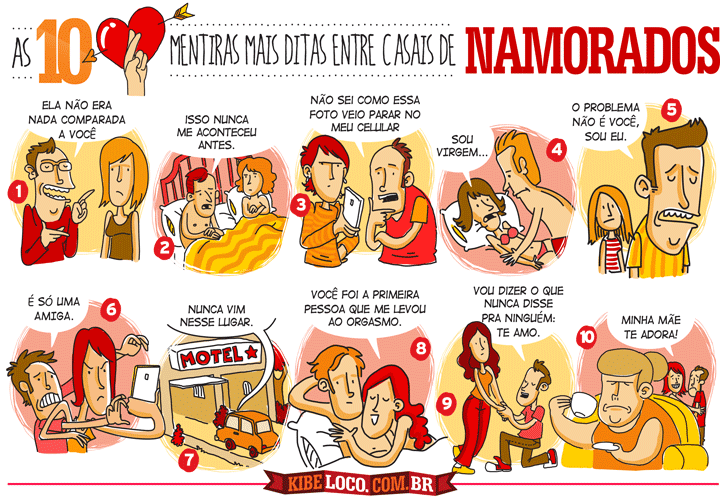
KWC had water and electricity siphoned from wells and the rest of the city, but was an unregulated mess of ad-hoc infrastructure largely unsupported by government. Police were afraid to venture inside (though unbelievably, postman were reportedly forced to deliver mail there!). It was filled with criminals, drug dealers and prostitutes, as well as honest families, schoolchildren and one-man manufacturing shops. The following illustration shows what a slice of it might look like:
 Larger version of this image is viewable here
 Tiny, cramped spaces did double duty, with units that were classrooms during the day transformed into strip clubs at night. There were restaurants and gambling dens, hair salons and convenience stores, unlicensed doctors and dentists. So close were the buildings that sunlight was hard to come by on street level; thus fluorescents were hung outdoors at ground level for illumination. Rooftops, meanwhile, became social spaces.

The government finally shut it down in the 1990s and razed it. But in the years during and since, Kowloon Walled City has captured the imaginations of everyone from architects to sci-fi authors to set designers to artists.
 Image by Greg Girard
  Image by Greg Girard
 Speaking of artists, photographer Greg Girard, who documented KWC in the 1980s, probably has the best photo essay on it (shot both inside and outside) right here. We also wanted to show you the fantastic KWC-inspired work done by a handful of illustrators:
 Image by Keith Perelli
  Image by Stefan Morrell
  Image by Stefan Morrell
  Image by Stefan Morrell
  Image by Andrew Suryadi
  Image by Nivanh Chanthara
  Image by Nivanh Chanthara
  Image by Nivanh Chanthara
  Image by Nivanh Chanthara
Spanish illustrator Juan Carlos aka Jotaka created this fantastic series of paper family portraits by rendering his bendy illustrated characters in cut paper. Titled La siesta, he describes the images as “a personal project about hugs, the importance and the ideal time to receive them.” Some of these are available as prints in his shop, and he regularly updates a blog here. (via Behance)