They’re so nice. But they still have the same problems with sexual abuse.
Over the past month, a number of disturbing revelations have come to light within the Canadian literary community. I use the term “come to light” deliberately, because many of us were already fully aware of how dangerous it can be to be a woman in this particular culture.
At great risk to herself, Toronto poet Emma Healey penned a thoughtful, candid and scathing condemnation of the sexual and psychological abuse that exists in our own backyard. On the website TheHairpin.com, she detailed a relationship she had at 19 with an unnamed prominent Canadian writer and English professor. He was 34. The alleged ensuing dynamic was inappropriate at best, and entailed sexual assault at worst.
I think you’ll recognize this situation described by Healey:
Every time we treat issues of abuse as black-and-white – every time we ask a woman why she didn’t just leave the apartment or the relationship, why she didn’t just call the police, how she didn’t see it coming; every time we tell her not to feed the trolls or that she has no real proof or ask why she’d allow herself to be bullied by someone so insignificant in the first place – every time we do these things, no matter what our intentions, we are complicit in the systems that allow predatory individuals to thrive in small communities. Abusers whose power and influence seem relatively minor are often the most dangerous kind, since the people around them who can afford to ignore their behavior will do so until something drastic forces them to act, while those who have something to lose at their hands will continue to stay silent. A man who’s “no big deal” can still ruin your reputation. A man who’s “no threat” can still leave marks. A man who “doesn’t matter” can still set fire to your life and then walk away whistling.
If there’s anything I’ve learned in the past week, it’s the same thing I learn over and over again every single time I see women speaking out publicly against men who have harmed them. It is exhilarating and terrifying and heartrending to watch people tell their stories, to see the changes that can come from that telling. But victims of harassment, assault, rape and abuse deserve, absolutely and in every case, the dignity of being able to do whatever they want with their stories. Right now it feels as though we rely on them to pursue change by putting themselves and their experiences at the mercy of Twitter, Facebook, Gawker, Salon – of legions of strangers who all know they know better.
We consistently fail young women—all women—by tacitly relying on them to learn from each other, or from their experiences, which of the people in their communities they can and cannot trust. We ask them to police their own peers, but quietly, through back channels, without disturbing the important people while they’re talking. We wait for the victims of abuse to be the ones to take power away from their abusers, instead of working actively to ensure that these motherfuckers never get that far in the first place.
I remember when I first learned that women in my communities were having these quiet conversations with each other about who was a lech, who liked to get young women drunk, who cruised our conferences looking for people to prey upon, and I was horrified — I had no idea. One of the advantages of privilege is that I can be completely oblivious and ignore the problem. And then I was horrified even more as I learned that some people don’t react by getting angry with the men who abuse our groups, but rather with the women who dare to speak out loud what was previously only whispered.
It’s got to change. Everywhere. Including Canada.

 facebook
 reddit











 If your phone is designed to be secure against thieves, voyeurs, and hackers, it'll also stop spies and cops. So the FBI has demanded that device makers redesign their products so that they -- and anyone who can impersonate them -- can break into them at will.




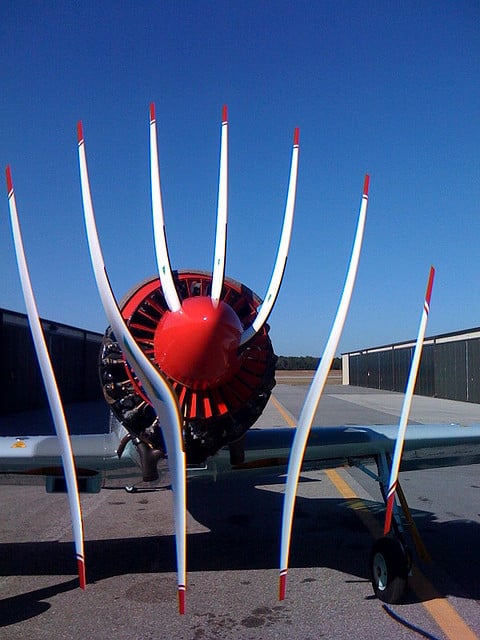


 , and the real object (which is rotating) be denoted by
  where
where  are 2D polar coordinates. Polar coordinates are a natural choice for this problem due to the rotational motion of the objects.
 , and the shutter progresses across the image at speed
  in the vertical direction. At position
  , and so the time elapsed is
  . In this time the object has rotated a number of radians
  . Putting this together,
 is proportional to the number of rotations during the exposure, and parameterises the transformation.
 propellers where
  is non-zero only for
  for
for  . The image
  is then non-zero for