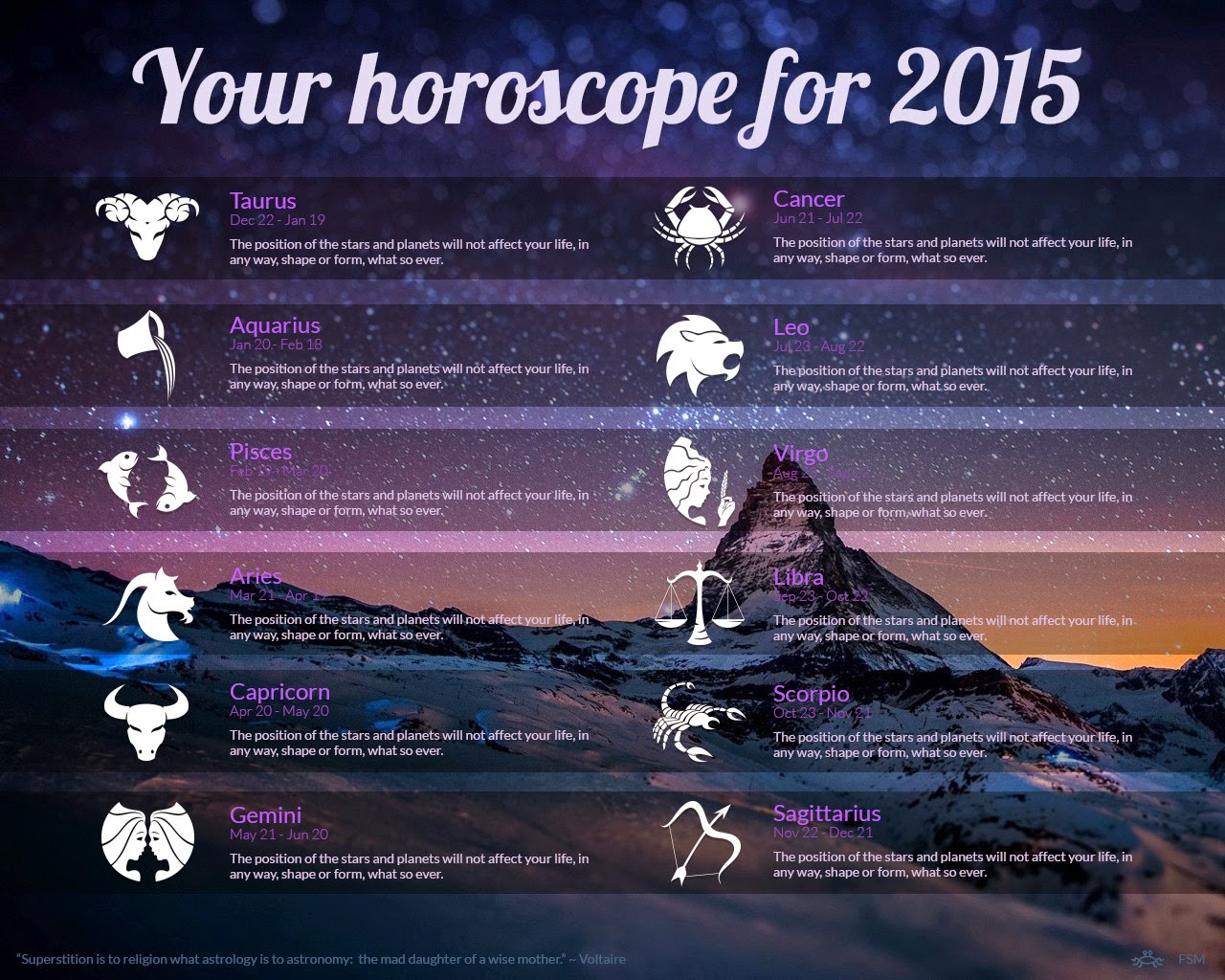
“The position of the stars and planets will not affect your life in any way, shape, or form, whatsoever.” (more…)
“The position of the stars and planets will not affect your life in any way, shape, or form, whatsoever.” (more…)
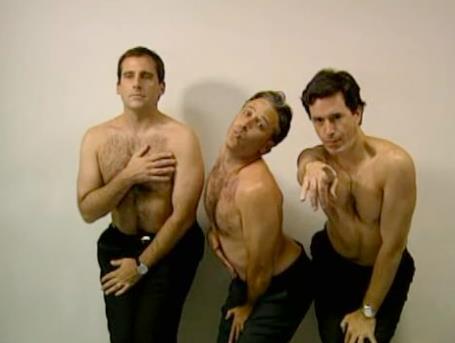
“Steve Carell, Jon Stewart and Stephen Colbert: How men would look if they had to pose in ads the way women are expected to.”
Yeah this definitely deserves a place on my blog
im so glad I woke up this morining
These guys


Artist Jeremy Miranda is fascinated with how the mind creates memories and the juxtaposition of experiences both real and perceived. His oil paintings overlap interior and exterior environments to create unexpected relationships between disparate subjects, usually natural versus man-made. The interior of an artist’s studio dissolves into a bucolic river landscape, a bookshelf leads into the ocean, or a glowing furnace is concealed below quiet pond. Miranda most recently had an exhibit at Nahcotta Gallery in New Hampshire where several of his original works are currently available. Some of his most popular images are also available as prints. (via My Darkened Eyes)
And may be mass murder, according to a heavily footnoted editorial in the British Medical Journal.
If there is one cause of cancer, it would be genetic damage to somatic cells. So all we have to do to cure cancer is prevent all genetic damage! That’s not a very useful prescription, unfortunately; it’s rather like saying that all we have to do to prevent accidental deaths is prohibit all potential causes of injury. The causes of genetic damage are ubiquitous.
We’re familiar with some. Smoking, for instance, irritates and damages the cells of the lung epithelium, and increases the rate of cancer incidence. UV radiation damages DNA, so prolonged exposure to the sun increases the rate of skin cancer. Chimney sweeps would get covered in the carcinogenic compounds present in soot, which would accumulate in folds of skin, and had phenomenal rates of scrotal cancer. So don’t clamber around in chimneys, stay in the dark all the time, and never start smoking, and you won’t get cancer, right? Wrong. You’ve eliminated some factors that increase the incidence of cancer, but not all. You might think that if we just eliminated every cause of genetic damage we’d be safe, except that there’s one we can’t get away from.
Cell division can cause spontaneous errors. We have all kinds of error-checking molecules that try to prevent it, but nothing in the natural world can be perfect. The error rate in human cell division is very low, about 1 mistake in every 1010 cell divisions, but it’s not zero — it means that every third division by a cell line will introduce an error. Many of your tissues are full of cells that are constantly dividing — epithelia in particular are continuously shedding old cells and dividing to produce new ones — so retiring to a dark bunker and breathing filtered air and eating only pure foods untainted by carcinogens (which don’t exist) won’t reduce your cancer risk to zero. The act of living is a cause of cancer.
But, you might be wondering, how much does simple cell division contribute to cancer, compared to environmental risks? An analysis by Tomasetti and Vogelstein tries to quantify the relative risk, and comes to the conclusion that in many cases, the largest cause of cancers is simply bad luck, caused by stochastic errors in cell division, rather than any controllable environmental factors.
They accomplished this by doing a comparative analysis of different tissues in the body, by looking at the number of stem cell divisions required to produce and maintain that tissue over the lifetime of an individual, and comparing that to the frequency of cancers in that tissue. For instance, many of the cells of the brain are in a terminal state — they don’t divide any more, so the rate of cell division is relatively low. The lining of your intestine, on the other hand, is constantly shedding cells and reconstituting itself, so you’d expect the rate of stochastic genetic damage, and cancer, to be higher in the intestine than in the brain. By examining the cancer incidence in many tissues for which the number of generating stem cell divisions are known, we can get an estimate of the relative contribution of uninduced errors in cell division to cancer.
They produced a chart showing the correlation between the total number of stem cell divisions and cancer risk — it’s totally unsurprising. Actively dividing tissues are more prone to cancer.
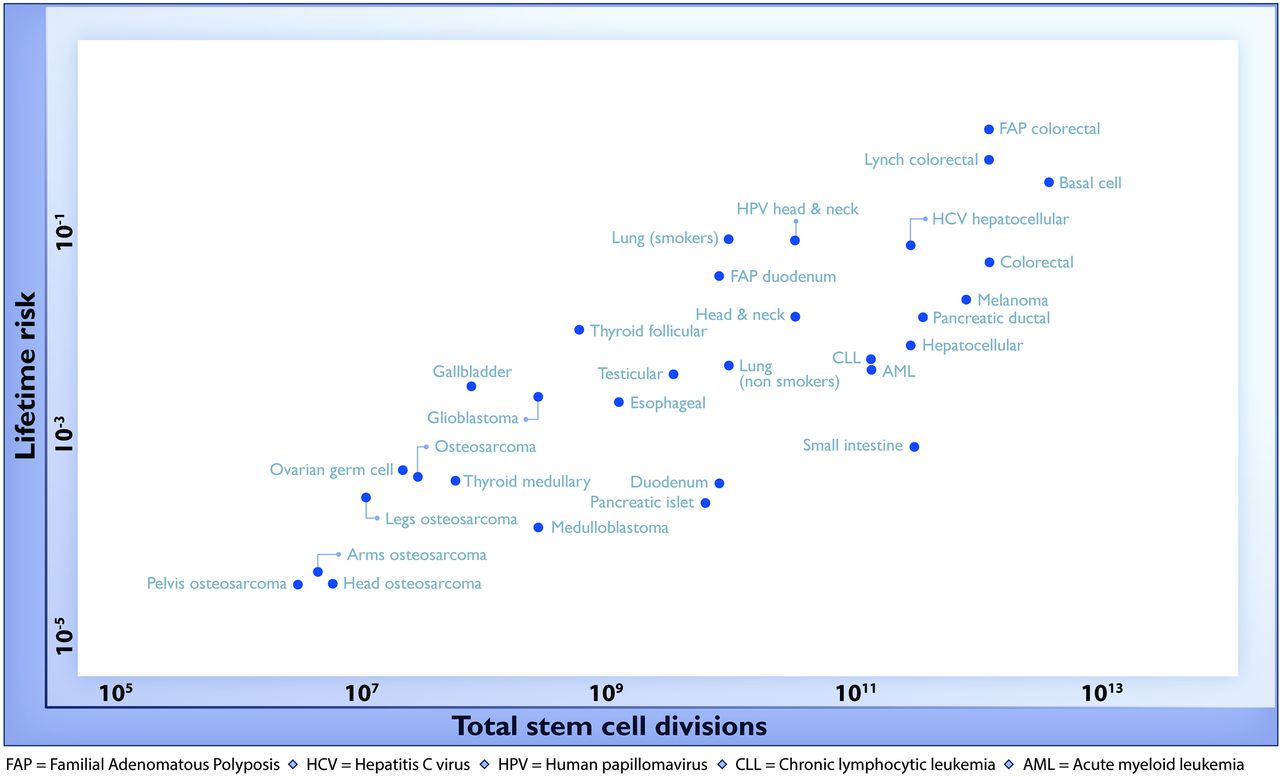
The relationship between the number of stem cell divisions in the lifetime of a given tissue and the lifetime risk of cancer in that tissue.
The results showed that stochastic errors in cell division are the single greatest cause of cancer — it’s mostly due to bad luck, not simply due to reckless exposure to carcinogens.
A linear correlation equal to 0.804 suggests that 65% (39% to 81%; 95% CI) of the differences in cancer risk among different tissues can be explained by the total number of stem cell divisions in those tissues. Thus, the stochastic effects of DNA replication appear to be the major contributor to cancer in humans.
Again, I didn’t find the idea that chance dominates in causing cancer at all surprising, although apparently some people are a little shocked.
Now hang on, though, before you take up smoking, head off to the tanning parlor, and indulge in some naked chimney cleaning, on the assumption that we’re all doomed anyway, and we’re all going to get cancer no matter what bad habits we eschew…this is all about probability. If you were going off to the casino to shoot craps, you wouldn’t sneer at something that gave you a 10% edge on the table, would you? What these results are saying is simply that if you roll the dice, there is always the possibility of coming up snake-eyes, so you don’t get to play forever without crapping out. Unlike throwing dice, though, there are ways you can shift the odds to reduce the probability of error in real life situations.
Furthermore, we know that some environmental factors can significantly increase your risk of cancer. In the graph above, for instance, not that there are two separate entries for lung cancer, one for smokers and another for non-smokers. The Y axis is on a logarithmic scale, so you should be able to see that smoking increases your lifetime lung cancer risk more than ten-fold. Some cancers are clearly the consequence of elevated risk from environmental and genetic factors.
The authors attempted to identify which kinds of cancers were most often caused by simple bad luck (where environmental factors are not likely to be to blame) and those that are the product of additional, potentially controllable factors.
We next attempted to distinguish the effects of this stochastic, replicative component from other causative factors—that is, those due to the external environment and inherited mutations. For this purpose, we defined an “extra risk score” (ERS) as the product of the lifetime risk and the total number of stem cell divisions (log10 values). Machine learning methods were employed to classify tumors based only on this score. With the number of clusters set equal to two, the tumors were classified in an unsupervised manner into one cluster with high ERS (9 tumor types) and another with low ERS (22 tumor types).
What that means, basically, is that if you use the data that suggests a certain intrinsic rate of cancer formation that is based entirely on stochastic errors of replication, cancers that show a higher rate have an extra factor causing greater risk (ERS), while cancers with a lower rate are most likely not caused by external factors. They then let a computer classify different kinds of cancers to come up with a chart that classifies cancers into R-tumors, those that are most likely caused by uncontrollable errors in replication, and D-tumors, those that have significant environmental contributors.
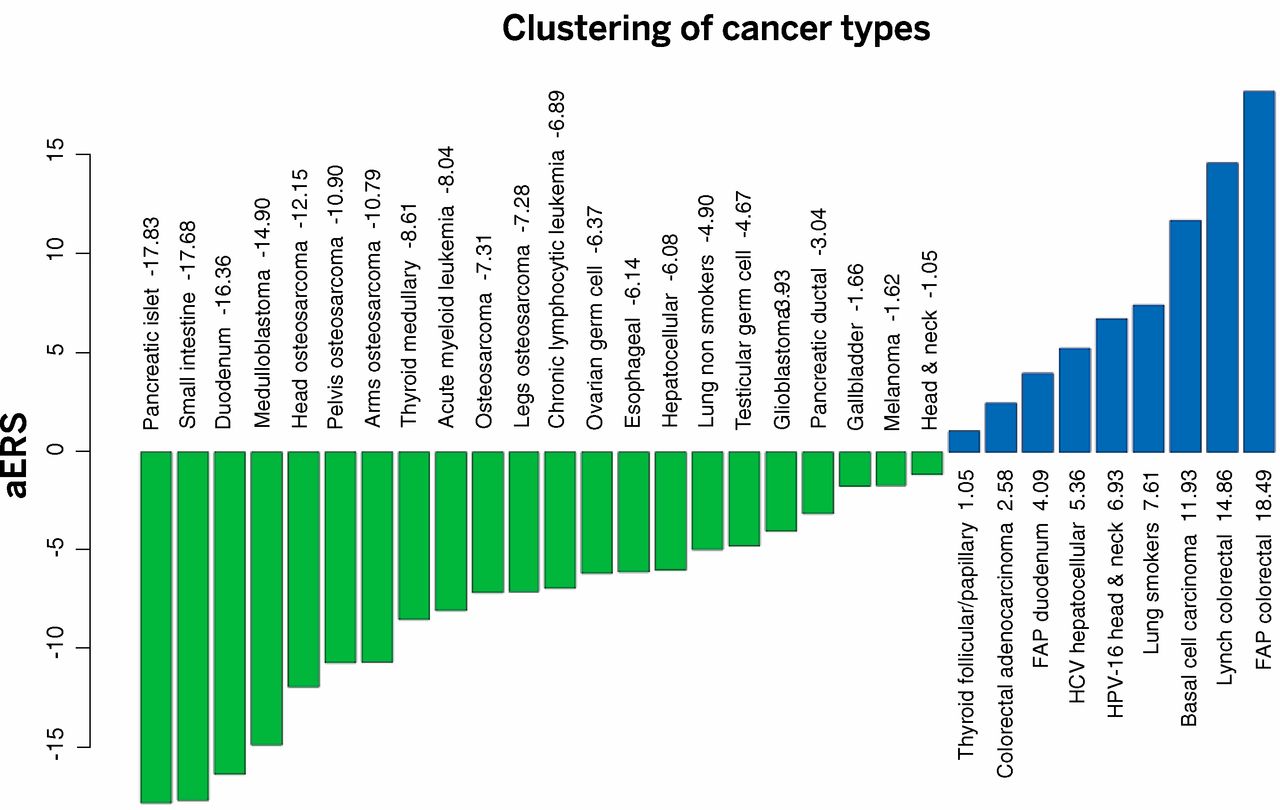
Stochastic (replicative) factors versus environmental and inherited factors: R-tumor versus D-tumor classification. The adjusted ERS (aERS) is indicated next to the name of each cancer type. R-tumors (green) have negative aERS and appear to be mainly due to stochastic effects associated with DNA replication of the tissues’ stem cells, whereas D-tumors (blue) have positive aERS. Importantly, although the aERS was calculated without any knowledge of the influence of environmental or inherited factors, tumors with high aERS proved to be precisely those known to be associated with these factors.
This is useful information. It suggests that it’s pointless to go searching for environmental causes of R-tumors — the incidence of pancreatic cancer, for example, is accounted for by the error rate in cell replication alone, and it’s unlikely that any factor in the environment makes a significant contribution in the general population (it does not mean that there is nothing that could cause pancreatic cancer, only that it can’t be a common risk factor). Meanwhile, colorectal and lung cancers do have a significant risk beyond what can be accounted for by stochastic errors, so pursuing a reduction in exposure to risk factors, like diet and smoking, can have a useful role in reducing the incidence of these cancers.
Another important caveat: this study says something about the nature of causal agents for certain kinds of cancer. It says nothing about the treatment of cancer. It says that cancer is an inevitable consequence of having populations of dividing cells, and that many cancers are probably not caused by external agents, but that does not mean, of course, that treatment is futile. It actually means that treatment is even more important — that we can never have a world where no one gets cancer, so we’d better be effective in stopping cancers once they start.
(By the way, I stole the title from Raup’s book, Extinction: Bad Genes or Bad Luck?, which says the same thing about the extinction of species. It’s often just a case of bad luck, and can’t be pinned on something specifically bad about the species or some factor in its environment. Chance is important at all levels of biology.)
Tomasetti C, Vogelstein B (2015) Cancer etiology. Variation in cancer risk among tissues can be explained by the number of stem cell divisions. Science 347(6217):78-81.
Bob O’Hara and GrrlScientist have serious reservations about the paper. I think they’re right that 65% number is rough and might easily wander as more data comes in, but I also think their objections are purely statistical and not well-grounded in the reality of the phenomenon. For example, this argument:
So where did this two-thirds ratio come from? It is the proportion of variation in the log of the cancer risk that can be explained by cell divisions. But this variation could be the same regardless of whether the baseline risk is high or low. For example, the depth of the water in the Marianas Trench goes up and down with the position of the moon, so this explains a bit of the variation in its depth. But that reveals bugger all about the absolute depth of the trench.
The first couple of sentences are exactly correct, and important for understanding the paper. They are only looking at the causes of variation in rates of different cancers. The rest is also correct in the abstract: conceivably, all of the cancer causes could be swamped in their magnitude by a great deep sea of completely unknown agents — so there could be a Mystery Factor X that is the primary cause of all cancers, which is just currently unidentified, so all Tomasetti and Vogelstein are looking at is minor causes of variations in waves on the surface.
Except…well, O’Hara and GrrlScientist even notice this little fact:
So, what proportion of cancers are due to bad luck? Unfortunately it’s difficult to tell from the paper. The figure from the paper is on the log scale, and if we extrapolate the model to zero (no cell divisions), we’d see it assumes there is no risk of cancer.
Exactly. That’s what we’d expect if the magnitude of Mystery Factor X was 0, and the baseline rate of somatic errors leading to cancer was set by the replication error rate.
I’ll also add that if they were correct, and there were a gigantic source of cancer-causing errors in all tissues regardless of their replication rate, that would only make Tomasetti and Vogelstein’s case stronger, that the controllable, environmental causes of cancer would be even smaller than the 35% suggested by their paper.
There is also some reasonable concern that the paper includes only a subset of cancers — there are some big, important ones like breast and prostate cancer that are not included. That’s because they could only include cancers in tissues for which they had data on the stem cell population and number of lifetime divisions; if you’re looking for correlations between X and Y, you can’t include data for which you only have X values.
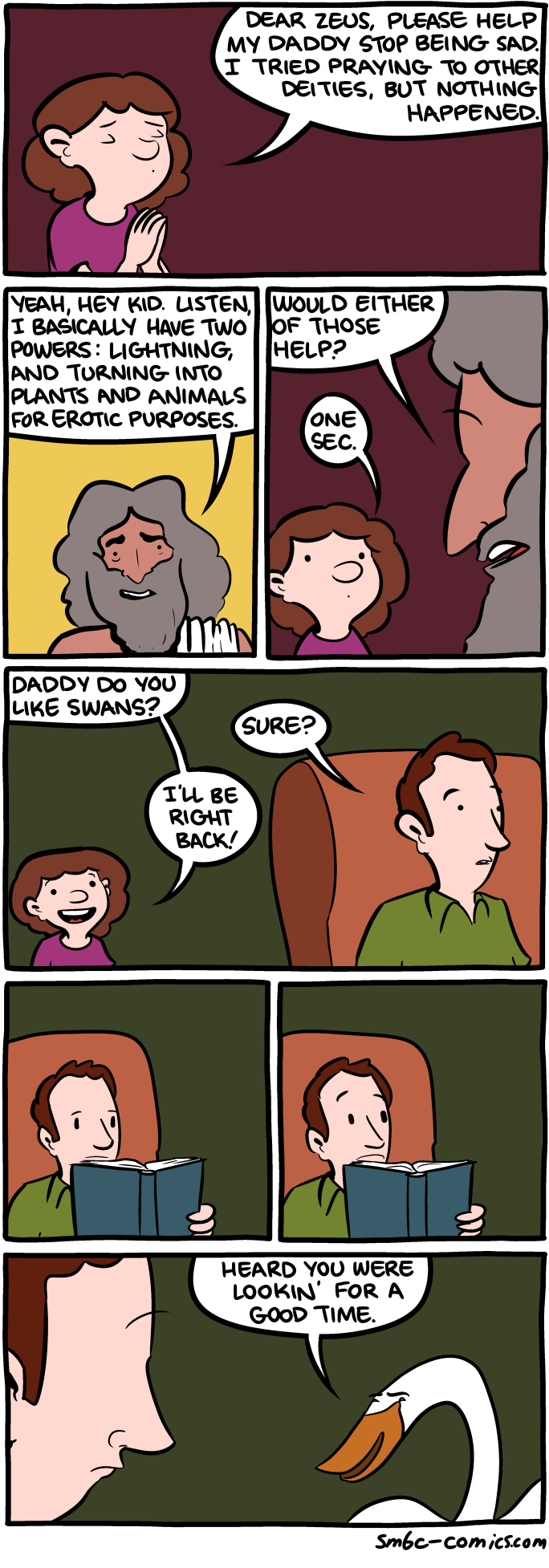
There are literal wrecks ("Just write Happy Birthday on it,") and then there are the wrecks that literally suffer from a game of Telephone. And they're fabulous.
"Too Legit To Quit"

"Welcome Home"

"Happy Birthday, Cowgirl!"

"Valedictorian"

"Gettin' hitched!" (for a wedding shower)

"Happy Hanukkah!"

"Happy Birthday Beth & Libby!"

(And to think she used to be the life of the party.)
"Bye, Evan!"

"For Our Fearless Leader"

(At hour 5, she turns into a whimpering puddle of goo.)
"You're an ace!"

Here they asked for a big mouse with some little mice around it:

SO CLOSE.
While on this one they wanted "blue camo" - as in "camouflage."

Most recently, of course, there was that Obama/Llama fiasco. Heh.
And finally, my favorite:
"Don't Take No For An Answer!"

It says "Don't Techno For An Answer." Which is officially one of my favorite things ever. Because now I want to, dangit.
Random Person: "So Jen, are you coming to our baby shower? We're serving one of those hee-LARIOUS vagina cakes!"
Me: [puts on sunglasses] [cranks techno music] [moonwalks away]
Thanks to Mary D., Amy D., Cat D., Rowenna O., Amy R., Jill S., Emily A., Karen B., Liz W., Sarah H., Helen, Yvonee D., & Dori K. for that new life goal.
*****
Thank you for using our Amazon links to shop! USA, UK, Canada.
How many fairies would fly around, if each fairy is born from the first laugh of a child and fairies were immortal?
—Mira Kühn, Germany
"There are always a lot of young ones," explained Wendy, who was now quite an authority, "because you see when a new baby laughs for the first time a new fairy is born, and as there are always new babies there are always new fairies. They live in nests on the tops of trees; and the mauve ones are boys and the white ones are girls, and the blue ones are just little sillies who are not sure what they are."
—Peter Pan
Interestingly, fairies in the Peter Pan mythology definitely don't live forever. At the end of the book, Peter comes to visit Wendy a year after their adventures. Wendy asks about Tinker Bell, and Peter says he can't remember her and assumes she's died, and Wendy observes that fairies don't live very long.[1]When she expressed a doubtful hope that Tinker Bell would be glad to see her he said, "Who is Tinker Bell?"
"O Peter," she said, shocked; but even when she explained he could not remember.
"There are such a lot of them," he said. "I expect she is no more."
I expect he was right, for fairies don't live long, but they are so little that a short time seems a good while to them. This suggests that at any given time, there are probably be far fewer fairies than humans in the Peter Pan universe, since they have the same birth rate and shorter lifespans.

But Mira's scenario assumes immortal fairies, so let's talk about immortal fairy demographics.
A fairy is created by every[2]Approximately, anyway, but we'll round up by assuming that all babies laugh. newborn baby. The total number of humans who have ever lived is somewhere around 100-120 billion,[3]There are various groups who have estimated this, and they all tend to come up with a number around in this range. If you take a set of estimates for ancient human population (Wikipedia has a table of them) and assume a birth rate near the biological maximum before the 20th century (35 to 45 births per 1,000, according to this paper), you can derive a similar number yourself. meaning 100-120 billion fairies have been created.
How much do all those fairies weigh? Tinker Bell, the main fairy from the Peter Pan universe, seems to be a little under six inches tall. In a scene in Hook, Tinker Bell (played by the 5 foot 9 inch Julia Roberts) fits comfortably in a 1/12 scale dollhouse, suggesting a height of 5.75 inches. As another data point, the statue of Tinker Bell at Madam Tussaud's wax museum is 5.5 inches. This suggests that fairies in Peter Pan are pretty close to 1/12th scale.
If fairies are 1/12th the size of humans, then they weigh \( \left( \tfrac{1}{12\text{th}}\right) ^3=\tfrac{1}{1728\text{th}} \) as much as us, which means Julia Roberts's Tinker Bell is probably around 35 grams.[4](two mice) As of 2015, total fairy biomass would be about 4 million tons. That's less than humans or horses, and probably comparable to the total mass of all humpback whales.[5]Fairies also probably outweigh wild birds.
At these numbers, fairies would be a minor piece of the ecosystem, although possibly a pretty annoying one.

But it wasn't always the case. In the early days of our species, our high birth rates (and death rates) plus our low population mean that we would have accumulated fairies quickly. The exact numbers depend on when the modern human (fairy-generating) species developed, but by the time the last ice age was over, the accumulated fairies could have outweighed our tiny living human population 10 to 1.

Once our population started growing following the agricultural revolution, we would have quickly outstripped fairies in terms of weight. In 2015, fairy biomass would be down to about 1.2% of human biomass, and by the mid-21st-century, they'd bottom out at less than 1%.
But as long as humans keep reproducing, the fairy population would keep growing. If we assume the human population will level off at around 9 billion partway through this century, then the share of mass occupied by fairies would continue rising steadily.
If our population stays at a stable 9 billion indefinitely, by 2100, they'll be back above 1% of human biomass, and they'll reach 2% by the year 3000. In the year 100,000, if our species is somehow still around, they'll outweigh us.
This makes things interesting. Let's assume fairies need to eat. If fairies weigh about as much as us, they'd presumably be consuming a similar share of food and water. So even if the Earth can support 400 million tons of human, it may not be able to support 400 million tons of human and another 400 million tons of fairy. This suggests that, sometime in the next hundred millennia, the growing fairy population would start to crowd out the human population.
But if fairies crowd out humans, that would in turn reduce the growth rate of the fairies, slowing down the replacement process. The end result (in this idealized model) would be that the fairy population growth would taper off as the human population declined. The situation would never quite reach a stable equilibrium, because every 1,728 human births would create one human's weight in fairies, reducing the Earth's total human carrying capacity by 1. But since the rate of fairy creation would slow down as the human population shrank, the process would stretch out for a very long time.
This odd situation would only exist because fairies—in Mira's scenario—are immortal. The scenario would change dramatically if we introduced a fairy death rate. Perhaps fairies don't age or experience natural deaths, but can still die from other causes.
What would kill the fairies? Who knows.[6]J. M. Barrie introduces a fairy-killing mechanism in Peter Pan; any time anyone says "I don't believe in fairies", a random fairy dies. In a world of immortal fairies, this could serve as an effective feedback. If no one has heard of fairies, no one will say they don't believe in them, and their population will grow. As fairies start to be common enough to be noticed, people will have a reason to say they don't believe in them, and their population will drop.
Eventually, civilization would start documenting the existence of fairies, and then no one would have any reason to disbelieve their existence, and the feedback loop would break down. But ecosystems aren't static. If you mess with one part, the other parts change in response. Fairies could become the dominant species, but the system they learned to dominate wouldn't be there forever.
If fairies represent most of the biomass in the ecosystem, eventually, given enough time ...

... something will learn to eat them.
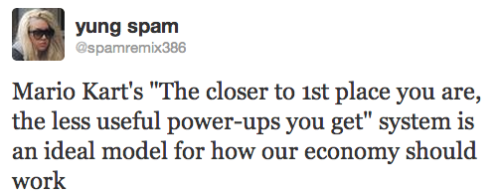
Whoa.
I read this out loud to boyfriend and he just went “ohhhhhhhhh”
CEOs all runnin around terrified of blue shells from the homeless
Yes.
Remember, when dealing with random strangers online or offline:
You’re allowed to set your own personal boundaries for under what circumstances you’ll engage with someone, with whom you’ll engage, what you consider over the line, what you consider attractive or acceptable, and so on.
You’re allowed to change those boundaries as you see fit, whenever you feel the need to.
The fact that you engage in conversation/debate/discussion with someone doesn’t mean that you’re required to do so with everyone, or that you’re required to continue the conversation, or that you’re required to engage with the same person on a different subject. You can be willing to talk politics with one person and not with another. You can be willing to talk politics with one person but not religion. You can be willing to have debates with one person and only non-oppositional discussions with another. You can begin a debate, and if you’re feeling uncomfortable or trapped or unhappy, you can walk away from it.
You can tell someone you’re only willing to talk with them if they don’t use particular language while talking with you.
You can also tell someone you’re not willing to talk with them if you don’t get to use particular language.
You can be okay with a particular type of humor from one person and not from another. You can find a particular type of flirting attractive from one person and not another.
Your presence in a public place, or on social media, does not mean that you’re required to engage with everyone who tries to engage with you. You can choose to whom you respond.
I am writing this because I wish I’d realized it when I was younger. I spent a lot of time in conversations with strangers who made me uncomfortable, or who were stopping me from enjoying the book I’d brought to a coffee shop to read, or who made my bus ride home from college miserable, or who sucked away my time and energy on the internet, because I’d been socialized into believing that shutting down a conversation was rude (and therefore unacceptable) and that other people’s comfort trumped mine. I felt, without really realizing it, like I needed permission to disengage, or to choose not to engage in the first place.
You don’t need permission to disengage from a conversation, or to choose not to have it. Or rather, you have all the permission you need to do either: your own.
People may think you’re being unfair. That’s okay. People may think that you’re being rude. That’s also okay. They get to think that. They have a right to their feelings and opinions. However, their feelings and opinions don’t give them a right to trample all over your personal space, whether that space is physical, mental, or emotional.
And ask yourself: so, what if those boundaries aren’t fair? Why do personal boundaries need to be “fair”? Is it even possible for something subjective like personal boundaries, and personal comfort levels, to be “fair”? Who gets to determine what “fair” is anyway? And why is “fairness” a higher priority than your comfort, feelings of safety, emotional reserves for interacting with other people, or level of enjoyment with engaging? Why is it more important to be fair to others than it is to be fair to yourself? Why should someone else’s desire to talk to you trump your desire not to talk to them?
Sometimes you have to put your own emotional well-being, your own energy levels, your own enjoyment first. And that’s okay.
People may tell you you’re missing out. That might be true. There’s a super-slim chance that that stranger at the bus station might drop life-changing wisdom on you. But you know what? If you’re emotionally drained or not in a social mood or whatever, the chances of you actually taking whatever they say to heart are pretty slim. And here’s the thing about wisdom: it hardly ever comes around just once. You’ll hear it from someone else, or have that insight on your own, at some later point when you’re ready to hear it.
"I don’t feel like talking to this person," is a perfectly legitimate reason not to talk to them. You don’t have to be rude in declining to engage: you can tell them you’re not really in the mood to talk but it’s nothing personal and you hope they have a lovely day. But you’re not required to keep talking to them, and if they keep pressing you to engage, they’re being rude or worse.
And you can enjoy talking to strangers at Starbucks or a bus stop one day and not want to engage the next. That’s okay. You get to feel differently from day to day. You may relish a political debate on Twitter one day and not feel like responding to random strangers in your mentions the next. That’s also okay.
You don’t owe people explanations of why your boundaries apply to them or this situation.
You don’t owe people a debate.
You don’t owe random strangers engagement, period. It’s something that you can choose — or not — to do as you see fit.
I’m a firm believer that adding ‘Space’ to anything makes it more awesome. So what do you get when you add Space to trucks (which are already awesome), you get Jason Corlett‘s epic Space Truck:

This build actually started off as two separate builds that Jason tells us wasn’t working for him, so he combined it into one really cool mash up:

What I’ve always loved with Jason’s build is his attention to detail and realistic feel to his out of this world creations. A great example is the the awesome cab opening and the engine in the back:


Chrome/Firefox: If you're on a slow internet connection, YouTube's unbearable to use. It never seems to know when to start playing and when to stop buffering. SmartVideo for YouTube gives you control over all that.

The Creepy Misogynist Movement That’s Making Conservatives Even More Sexist
I knew it was only a matter of time before the Stupidsphere made common cause with the MRA idiots.

Celine Dion’s ‘My Heart Will Go On’ classic is immortalized as you’ve never seen it before on a t-shirt with the classic hard rock combo of skulls, fire and satanic symbolism. AVAILABLE HERE
"We live in a world where losing your phone is more dramatic than losing your virginity"
Um ok but I don’t recall my virginity having 16 GB of memory with all my contacts, music, photos, calendars, and apps or costing over $200.
my phone is an expensive and important material object and not a useless social construct put in place to shame and commodify women
Plus I remember where I lost my virginity.
This could not be any more perfect.
Penguins at the Matsue Vogel Park in Japan had a ball when they dressed in uniform and kicked a soccer ball with their beaks at the Matsue Vogel Park Penguin World Cup. The event held at the park was in celebration of the 2014 FIFA World Cup held earlier this year.


images via Vogel Park

Printed without words, IKEA instructions are meant to be used around the globe. Someone in Tokyo can build his KLÄPPE swivel chair from the same booklet as a college kid in her Maryland dorm.
This saves the Swedish furniture manufacturer tons of money in printing costs, but it also serves a surprising purpose: Taken out of context, certain pages and details from IKEA instruction books can be interpreted as guides to living a fuller and more happy life. Here are 16 examples.

You earned it. Follow steps 1-3 as shown above for maximum relaxation. If you don't feel like going all the way, stop at step 2. This is you time.

Sanitation workers will appreciate and even look forward to your spring-fresh bag of trash on collection days.

Now he's the fastest echinoderm on the block. Look at him go!

It's a little-known erogenous zone, as demonstrated by the shaded "heat" sphere above.

Right there, underneath that thing with all the other wallets.

Long day? Kick back with a cold one or two, which will be floating in space for you to grab when you're ready.

And he's never coming back. Time to move on.

There may be loose change or even forgotten treats that have accumulated down there. Best to make sure.

There's a daybed right behind you. Lie down for a bit and think about things that'll cheer you up. Remember the Home Improvement episode where Tim enters the lawn mower race? That was a good one. Think about that.

Attach a bow to the bottom to give your gift some decorative flair.

There, at those branches. Fall is around the corner; you can tell by how the leaves are changing color.

A great butt isn't given, it's earned.

It's the secret to winning this classic game.

Fold up what's left of the King of Cool for easy storage.

Why are you lugging around that loaded keychain? Free up some much-needed pocket space by streamlining.

A hastily drawn outline doesn't do these beloved characters justice.
[All images from IKEA product instructions. Source Products: Karlstad, IKEA PS, Mysinge, Pax Tonnes, Premiar, Rakke, Rationell, Smaldal, Stefan, Tylosand, Udden, Verner, Vreta]
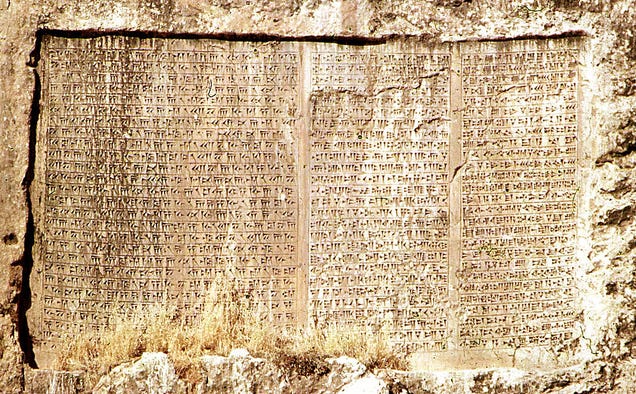
These songs are examples of how art and science can come together to create something incredible. Musician Stef Conner learned to read several ancient Babylonian and Sumerian tablets written in cuneiform script, using historians' research to figure out likely pronunciation. Just listen to the results.


"How Vaccines Work" Source
Credit: Maki Naro
This is the rest of the comic from Naro since tumblr only allows 10 photos at a time.

The trees in question are mountain ash, the tallest flowering trees in the world. They are not quite the tallest trees of any kind: that record belongs to the coast redwoods of the western US. But that might be because things have been skewed against the mountain ash...This was new to me:
On the face of it, the mountain ash should be able to beat the redwoods, which top out at 115m. They grow five times faster than the redwoods, "sprinting" toward the skies. "They're the fastest-growing tree by far," says Sillett...
Historical records do indicate that mountain ash have reached greater heights than today's giants in the past. In 1881, surveyor George Cornthwaite measured a felled tree in Victoria at 114.3 metres. That is about 1m shorter than the world's tallest living tree, a coast redwood measuring 115.5m.
...the tallest trees can suffer from "xylem cavitation", in which gas bubbles form in the cells carrying water up the trunk. These tiny gas embolisms [sic] can prevent water from moving up the tiny conduit cells, much like a pulmonary embolism can stop blood flow to the lungs in humans. To avoid this, the tree regulates how much water is lost through its leaves by closing down the tiny pores all over their surfaces. But these pores are also the pathways for carbon dioxide to come in, so by closing them the trees limit how much sugar they can make."Emboli," not "embolisms" (which are events).

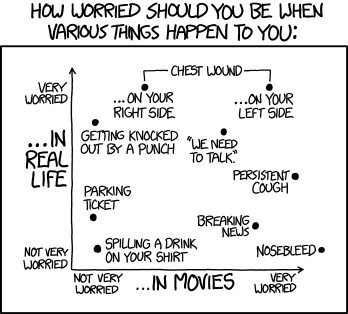


 Super Opinionated.