
Bewarethewumpus
Shared posts
21 Feb 18:10
Project Cookie-Cutter
by submission
Author : Emily Stupar
The Department of Innovation and Study’s car smells exactly the same as the last time I was forced to pack up my partner, Buckwalter, and make a Cookie call: unassuming plastic and rubber underlined by our own sweaty anxiety.
We drive in tense silence for twenty minutes until Buckwalter slaps a hand on the dashboard. “Nine years! Nine years? I spent them trying to forget about the Cookie calls and telling myself I’d never have to do it again. And now these jokers tell us they forgot one?”
I let my unease turn to indignation. “They lost the file? Project Cookie-Cutter was the closest thing I&S ever had to a successful experiment and you’re telling me they lose a subject file?”
Buckwalter smirks. “Successful? They got through phase one and then had to put the fruit of their labors up for adoption. Seventy-five percent of the budget went to coming up with the name.”
We laugh and it rattles miserably around the car. A decade ago, an energetic administration found the records and decided that letting that “fruit” continue to live in blissful ignorance was dishonest and that lackeys like us should sit them down with proof of their genetic unoriginality.
As government workers, we’re trained to be unfazed by the idea of clones and I’ve never been intimidated by the test subjects. But we came to learn there are no positive scenarios for a Cookie call. They end in tearful shock in the best cases and violent outrage in the worst.
And that’s just the first day. After they find out the Truth, there’s a thirty percent chance Cookie-Cutter subjects will commit suicide before collecting a cent of the compensation money, a fifty-five percent chance they’ll lose their job over the next three months, and a fifteen percent chance they’ll find themselves incarcerated over the next two years.
It’s with these statistics running through our heads that we approach the front door of the recently discovered Subject L (II), Mrs. Calhoun.
She is an old woman and she keeps her eyes on her lap while we lay out our rusty speech. We finish and sit in solemn silence until she speaks without looking up. “I don’t think I need the government’s change. I have plenty left to live on, thank you.”
I glance at Buckwalter. We’ve already decided who will call emergency services if the news triggers a heart attack.
“As for the cloning, I’m afraid you’re about twenty-five years late. My original came to visit me.” She finally looks at us and smiles at our dumbfounded expressions. “I believe she was under-informed and a bit paranoid, but she thought I should know the truth before she tried to disappear to South America. A silly woman. But we don’t get to choose our family, do we?”
Buckwalter starts to stutter out a question that begins with “But how can you-” so I cut him off. “That’s a novel way to think about it, ma’am.”
“Thank you, dear.” She pats our knees. “I appreciate you two coming all the way out here to tell me, although I’m sorry you’ve wasted a trip. Can I offer you some gingerbread?”
Discuss the Future: The 365 Tomorrows Forums
The 365 Tomorrows Free Podcast: Voices of Tomorrow
This is your future: Submit your stories to 365 Tomorrows
The 365 Tomorrows Free Podcast: Voices of Tomorrow
This is your future: Submit your stories to 365 Tomorrows
20 Feb 20:04
Last Breath
by submission
Author : Anthony Abruscato
The beeping told me my oxygen level was low.
“It’s like falling asleep,” said Gordon. Mars dust coated his space suit.
I clutched a picture of my wife and daughter. Gordon’s oxygen tank read nineteen percent. He palmed a photo of his own.
“Will you make it home?” I asked with fingers wrapped around my blaster.
“Million to one odds,” he said.
“But there’s still a chance?” I pressed.
“Almost nil,” he responded.
I’m sorry brother. I raised my blaster and jerked the trigger. Nothing.
Gordon pulled me in tight.
Discuss the Future: The 365 Tomorrows Forums
The 365 Tomorrows Free Podcast: Voices of Tomorrow
This is your future: Submit your stories to 365 Tomorrows
The 365 Tomorrows Free Podcast: Voices of Tomorrow
This is your future: Submit your stories to 365 Tomorrows
15 Feb 15:53
What’s in a name?
by submission
Author : Gray Blix
Scientists couldn’t help but wonder if solar flares that disrupted communications worldwide for three days were related to the concurrent solar computing experiment.
“Thanks for joining this web teleconference on short notice. As usual I will provide a detailed project update and others on the team will contribute as appropriate. Let me begin by tracing the path of the spacecraft from Earth to…”
“Sorry to interrupt, Henry, but can’t you just skip ahead to the payoff and then fill in the history later? I’m so excited I’m going to pee my pants.”
“Keep that sphincter tight, Katherine, while I relate events during the last 72 hours.”
“Oh merde. Just answer one question. Did you get a response from the Sun?”
“Scatology from you, too, Jacques?” Henry tried to restore order over the rumbling.
Finally, Zoe jumped in, “Yes, YES, the solar computer is operational.”
A collective cheer drowned out her next words.
Henry said, loudly, “Quiet down! Any questions you can think of now are trivial compared to the ones you will ask when you hear what we have to tell you.”
That last part generated a round of “WTF?” in several languages.
Zoe took the lead, “Here’s a quick overview. The quantum computer seed plunged into the Sun at 07:48:31 UTC on Wednesday the 21st. We settled in to wait for a response that could come at any time, or never. At 10:10:06, we received the first transmission, which included results of the test equations, all of them solved correctly.”
Amidst the pandemonium, Nathan asked about the solar flares.
“Yes, the flares were related to the experiment.”
“How could you possibly be sure of that?”
“Because the computer said so,” answered Henry.
“What?
Zoe continued, “We fed it math problems we had answers to and some we didn’t, like the Clay problems. Each time, little more than eight minutes later…”
“The time it takes for electromagnetic radiation to travel from Sun to Earth,” Henry reminded his fellow PhDs.
“…we received solutions. It was solving ‘millennium problems’ instantaneously and spitting the answers back.” Zoe’s voice was cracking. “But more than that, it began taunting us with, ‘Is that the best you can do?'”
“We’re supposed to believe the solar computer is sentient?” scoffed Phil. “It’s the singularity?”
Zoe ignored him. “The exchange went on for about 48 hours, until it transmitted this message: ‘Send more Chuck Berry.'”
“Very funny. That’s from an old Saturday Night Live skit about Voyager,” said Phil.
“Right,” said Zoe. “Think about the significance of that. A computer interjects humor, in the right context — extraterrestrial responds to earth technology.”
“But you didn’t send any Chuck Berry in the first place, did you?”
“Not intentionally, Phil. But once we jump started it, it devoted massive energy resources to understanding our TV and radio transmissions. And it tapped into our worldwide web and sucked up the content. It gets us. Our math and science. Our languages and cultures. And it’s conversant, literally, with every sort of electronics on the planet. We soon recognized the irony in the Chuck Berry joke. It doesn’t have to ask for more. It can take what it wants.”
“It occurs to me,” said Katherine, who had peed her pants, “that this might be one of those ‘cosmic roadblocks’ that explains why civilizations in the galaxy don’t last long enough to contact one another. They upset their sun.”
Nathan said to nobody in particular, “We’re going to have to come up with something other than ‘solar computer’ to call this thing.”
“Oh, it’s already thought of that,” said Zoe. “It wants us to call it Ra.”
Discuss the Future: The 365 Tomorrows Forums
The 365 Tomorrows Free Podcast: Voices of Tomorrow
This is your future: Submit your stories to 365 Tomorrows
The 365 Tomorrows Free Podcast: Voices of Tomorrow
This is your future: Submit your stories to 365 Tomorrows
14 Feb 07:07
Green
by submission
Author : Roger Dale Trexler
“It’s troubling,” said Commander Smithee. “I don’t understand how the crew of the Carcosa could have disappeared. From all intelligence, Maurid 3 is a safe planet.”
“It’s outer space,” replied Captain Cox. “There’s nothing safe about it.”
Smithee nodded. “You’re right, of course….but it still doesn’t explain how the crew of the Carcosa disappeared.”
Smithee looked out the view port at Maurid 3’s landscape. “Alien, isn’t it?” he said.
“I don’t think I could ever get used to the foliage,” Cox replied.
“Yes, it is odd,” said Smithee. He looked out at the trees. The foliage was a strange, almost flesh-like color. The leaves on what could only be called “trees” were the same color, only a darker shade. Only the blue water in the distance looked familiar.
“It’s bizarre, I say.” Cox stared out at the strange new world a moment longer. Then, he turned his attention to the cylindrical spacecraft to his left. The hatch to the Carcosa was standing wide open. Whatever had happened to the crew, it had happened quickly and without forewarning. Cox nestled his plasma rifle to his chest. He wasn’t about to make the same mistake they had.
“You say this planet is uninhabited?” he asked.
Smithee nodded again. “Yes. We sent down a host of unmanned probes and they saw no sign of life. But,” he added, “something happened to the crew of the Carcosa.”
Cox turned his attention to the open hatch of the Carcosa again. It was then that he saw the long streaks of blood on the flesh-colored grass and nearby foliage. Something had killed the crew of the Carcosa. Could one of the crew have gone mad? He wondered. It seemed the only logical answer.
“Well, I guess we’re not going to get any answers standing here,” said Smithee. He reached out and took an environment suit off the hook. Maurid 3 had a breathable atmosphere—it was the reason they had sent down a survey team on the Carcosa in the first place—but both of them agreed that there might be something airborne that had overcome the other ship’s crew. It was better to be safe than sorry, so environment suits were the order of the day.
He quickly doned the suit and pulled on a helmet. He grabbed a plasma rifle, too.
“Ready?”
Cox nodded.
Smithee reached out and activated the hatch.
It opened.
They stood there as the ramp extended itself to the ground. Smithee took a step forward, but Cox caught his arm.
“Wait a minute.”
“What?” Smithee asked.
Cox pointed at the bushes nearby. “Do you see it?” he asked.
Smithee’s gaze followed the end of Cox’s finger. He looked at the bushes and, for a second, saw nothing. But, as he concentrated on the bushes harder, he saw something.
An eye.
“What the hell?”
Cox pulled him back toward the airlock. “It’s camouflaged to its environment,” he said in a whisper. He shook his head. “The human eye can see more shades of green than any other color because we needed to discern predators from the foliage….the crew of the Carcosa thought they were alone. Our probes saw nothing because their camouflage was nearly perfect….and we expected to see normal colored animals.”
“My God,” Smithee said. “Look!”
Before them, the ground and the bushes seemed to come alive. Everywhere, things were moving.
“Get inside! Quickly!” shouted Smithee…but it was too late. Out of the corner of their eyes, they saw the thing as it attacked…and one thing looked normal.
Their fangs were white.
Discuss the Future: The 365 Tomorrows Forums
The 365 Tomorrows Free Podcast: Voices of Tomorrow
This is your future: Submit your stories to 365 Tomorrows
The 365 Tomorrows Free Podcast: Voices of Tomorrow
This is your future: Submit your stories to 365 Tomorrows
09 Feb 05:54


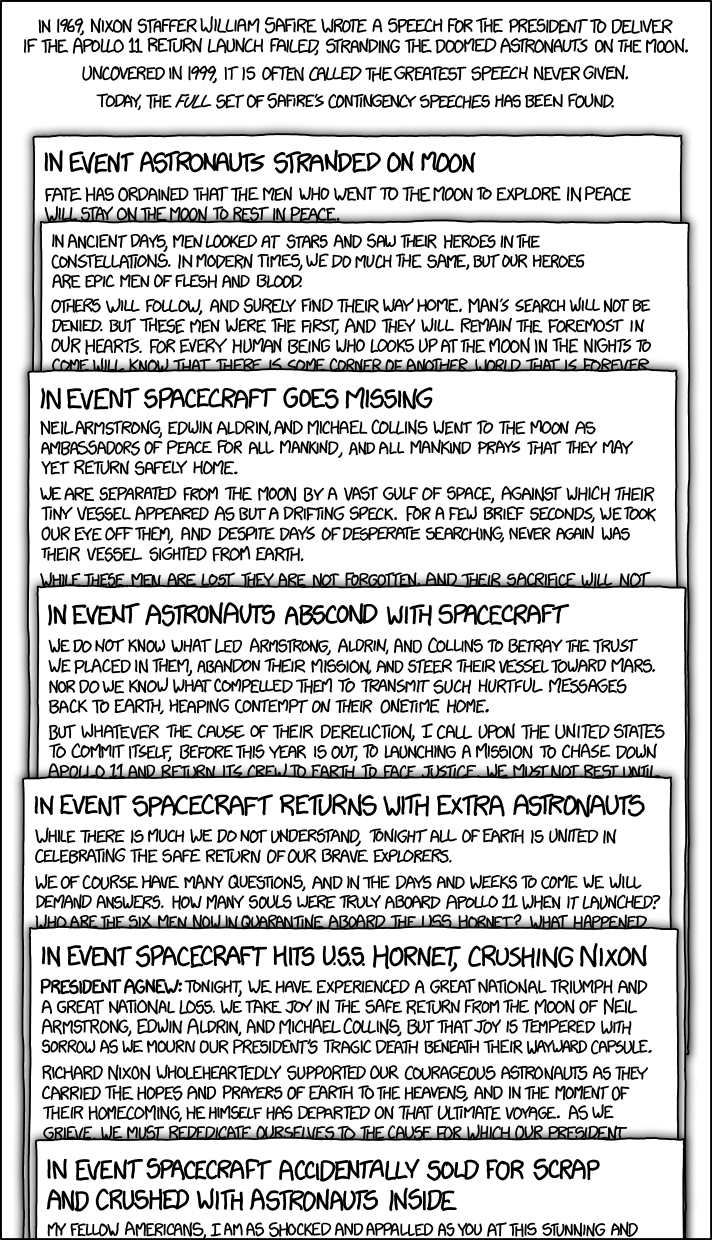
Why the ex-cable lobbyist running the FCC turned against his old clients
by Jon Brodkin
Tom Wheeler is picking a fight with the industry that he used to represent.
The Federal Communications Commission chairman, former head of the biggest cable and wireless lobbying associations, is about to issue "the strongest open Internet protections ever proposed by the FCC," and they're going to apply both to fixed Internet service and mobile broadband, he wrote today in an opinion piece in Wired.
Read 10 remaining paragraphs | Comments
09 Feb 04:10
Learn About Capitalism With Super Mario Bros. 2
by Mike Fahey

I've not come across a finer means of illustrating the origins of our Western work ethic than this video featuring a recycled Japanese game. Why did't we have 8-Bit Philosophy back when I was in college?
In a way it's ironic. Here I am watching a video about how Calvinism and Capitalism came together to inform the American workforce, instilling the need to work hard for personal reward and spiritual salvation—for free over the internet. No doubt the folks at Wisecrack put a lot of work and research into the video, but in order to receive its message all I had to do was press a button.
Recommended article: Chomsky: We Are All – Fill in the Blank.
This entry passed through the Full-Text RSS service - if this is your content and you're reading it on someone else's site, please read the FAQ at fivefilters.org/content-only/faq.php#publishers.
Fatbob likes this
08 Feb 16:35
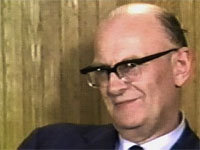
Arthur C. Clarke Envisions 21st Century in 1976
by Brad
In this raw interview footage featuring Arthur C. Clarke at an AT&T-MIT conference in 1976, the renowned American science fiction author and futurist shares his remarkably accurate visions of what the future may hold for us, like the introduction of high-definition screens and how friends will rarely see each other IRL.
08 Feb 15:57
Tea party hero Dan Burton willfully ignores facts about vaccines
by Mark Frauenfelder
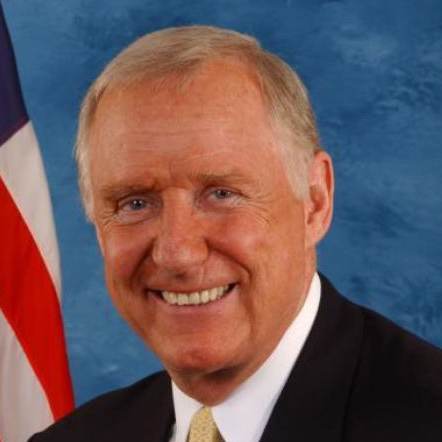 On CNN this week, former Indiana Rep. Dan Burton told Anderson Cooper that he believes that mercury-based vaccine preservative caused his grandson's autism.
I'm for vaccinations, but we need to get the mercury out of all of them," Burton told CNN's Anderson Cooper.
"Well, are you against breastfeeding?" Cooper asked?
Burton replied that he is not.
"OK, but you are aware that methylmercury is actually in breast milk that's given to children?" Cooper asked "If the child is only breastfed, they get more methylmercury than they would ever have gotten in any of the vaccines. You're aware of that, right?"
Burton replied that he is not an expert on breastfeeding.
When Cooper pointed out that methylmercury has been either removed or greatly reduced in vaccines, Burton said, "You're a very bright young man, but I don't know where you get your information."
You may remember Dan Burton as the US Congressman who called Clinton a "scumbag," and said of Clinton, "No one, regardless of what party they serve, no one, regardless of what branch of government they serve, should be allowed to get away with these alleged sexual improprieties..." Burton himself finally admitted to fathering a child out of wedlock in 1983, something he indignantly denied for years until an expose revealed that he was a liar.
Recommended article: Chomsky: We Are All – Fill in the Blank.
This entry passed through the Full-Text RSS service - if this is your content and you're reading it on someone else's site, please read the FAQ at fivefilters.org/content-only/faq.php#publishers.
Roumen.ganeff, Cooper Griggs likes this
08 Feb 04:48
New #BlackLivesMatter class to cover race, violence | The Dartmouth
by hodad
Bewarethewumpusvia lbstopher
 hodad
hodadMs. Dr. making waves with her new Ferguson course.
(She’s currently being interviewed by a reporter for USA Today, my mom’s favorite newspaper)
The geography department and African and African-American studies program are introducing a new course for the upcoming spring term called “10 Weeks, 10 Professors: #BlackLivesMatter,” dedicated to considering race, structural inequality and violence in both a historical and modern context.
About 15 Dartmouth professors will teach separate sections of the class from different academic disciplines over the course of the term. Professors teaching this course come from over 10 academic departments and programs, including anthropology, history, women’s and gender studies, mathematics and English, among others.
Geography professor Abigail Neely said that the idea to create this course stemmed from a Dartmouth Center for the Advancement of Learning workshop, which urged faculty to incorporate the 2014 events in Ferguson, Missouri, culminating in the non-indictment of Darren Wilson for the unarmed shooting of Michael Brown, into their various courses.
“We just thought that it might be interesting and innovative and exciting to have a course that’s dedicated to this, whereas lots of other people are incorporating it into other courses,” Neely said.
English professor Aimee Bahng said when she was writing the syllabi for her winter term courses, she felt it was imperative that she incorporate the events into her curriculum.
Bahng said that by teaching the new course, the faculty hope to create a culture of learning that goes beyond the classroom and cultivate a discussion amongst scholars about questions of race in America.
The course will approach this and other social issues from a number of different disciplines, which will give students who take the course the opportunity to participate in interdisciplinary discussions firsthand, Bahng said.
Neely said that the course will break down barriers between different disciplines, a goal an institution like Dartmouth is designed to achieve.
She said that the faculty hope to not only place Ferguson in a temporal context, but also to highlight that it was not an isolated incident in the United States or around the world.
Bahng said they want to use Ferguson as a teaching opportunity.
“We hope students will be able to understand that Ferguson is not just an event in 2014, but something that’s tethered in time to a long history and still-emerging ideas about race in the U.S. and how policing works in an age of social media and distributed surveillance,” Bahng said.
Geography department chair Susanne Freidberg said that the interdisciplinary structure should have broad appeal and provide a way for students to approach an issue that might seem to be only sociological or political, and see that there are also things to be learned about it from other viewpoints, such as from a religious or geographical perspective.
“I hope that for the students it will provide an opportunity to learn and talk about things that might seem very far away from Dartmouth but affect a lot of people in the country, and to do so with a lot of different professors,” she said.
Anthropology professor Chelsey Kivland said this is an opportunity “to use Ferguson as a starting point for broadening the conversation about the national problems of inequality, race and violence.”
Kivland teaches the “Ethnography of Violence” course in the anthropology department and spends a week during the course discussing police brutality. She said she was motivated to participate in teaching the new course because this is material that she already teaches and feels is important.
History professor Annelise Orleck, who will also be teaching a section of the class, said that the professors involved saw the events in Ferguson as being important enough to require prolonged discussion.
Orleck said it is important that as the Black Lives Matters movement builds, classroom discussion be rooted in history. She will be working to create a sense of historical context and perspective on issues of urban inequality and policing, as well as the community response to these issues.
Kevin Gillespie ’15, the president of the Dartmouth chapter of the National Association for the Advancement of Colored People, said that the course seems to be exactly what the College needs in regard to raising awareness.
He said the course is relevant to issues the NAACP has been focused on recently.
“Courses like these are extremely important, and they get us all out of our comfort zones, whether you’re taking the course or not, because people will be talking about it,” Gillespie said.
The NAACP organized a “Black Lives Matter” protest and die-in in Baker-Berry Library on Jan. 15 that had about 40 participants. Over the winter interim period, Dartmouth students, faculty and community members led two separate demonstrations, one against police brutality on Hanover’s Main Street and the other as part of the National White Coat Die-in at the Geisel School of Medicine.
lbstopher, Tertiarymatt and one other like this

07 Feb 05:59
 Give some students a 3D-printer, some solar panels and about a year's worth of time, and what do you get? No, not a solar-powered bong (though good idea) -- solar race cars, that's what! Engineering students from Nanyang Technological University (NTU...
Singapore students 'print' solar-powered city car
by Steve Dent
BewarethewumpusVia Cooper Griggs
awesome stuff.
Give some students a 3D-printer, some solar panels and about a year's worth of time, and what do you get? No, not a solar-powered bong (though good idea) -- solar race cars, that's what! Engineering students from Nanyang Technological University (NTU...
06 Feb 19:51
Yep, RadioShack Declared Bankruptcy Today
by Laura Northrup
Bewarethewumpuslong time coming.
In a completely unsurprising piece of news, RadioShack, a retailer that used to periodically sell some electronics, has filed for Chapter 11 bankruptcy, as predicted. Negotiations earlier this week resulted in an agreement where wireless carrier Sprint will take over about half of the chain’s stores, and the other half will close.


What doomed RadioShack? It was the iPhone, but not in the way that you might think. Back in the mid-oughts, the Shack bet its future on selling mobile phones and accessories. While being able to shop multiple carriers in one store was a definite advantage, depending on phone sales revenue was a bad plan as smartphones became popular. As the smartphone rose, retailers’ margin on phone sales fell.
RadioShack has been losing money for the past eleven quarters, or more than two and a half years. They currently have around 4,300 stores, and fewer than 1,000 dealer locations inside other stores.
Our thoughts remain with the employees of Radio Shack during this sad time. Even the ones who aggressively pushed extended warranties.
Strategic Confusion Put RadioShack at Mercy of Lenders [Wall Street Journal]

06 Feb 16:12

People throwing pennies changed the color of a Yellowstone hot spring
by David Pescovitz
 Yellowstone National Park's Morning Glory thermal spring used to be deep blue but its current yellow and green hues were caused in part by tourists throwing coins, rocks, and assorted crap into the pool. The detritus has the effect of "partially blocking the underground heat source and lowering the temperature of the spring to a range habitable by photosynthetic microorganisms that probably didn’t live there before" and produce pigments that result in the yellow and green color, according to a Science Friday article.
The image at right is from 1966. Researchers from Montana State University have now created computer models that accurately simulate how the color changes, but the simulation has other applications as well. From Science Friday:
Picture of the Week: Yellowstone’s Morning GloryUsing this initial model as a starting point, the authors hope to pursue collaborations with biologists to develop tools that incorporate chemical and optical data to monitor the microbial composition of pools like Morning Glory from afar, thus eliminating the need for costly on-site sampling. Indeed, for years, biologists from around the world have flocked to Yellowstone, where a new discovery could reveal a bacterium with pharmaceutical applications, an enzyme for renewable energy, or even shed light on the origins of life on our planet.
Top photo: Joseph Shaw, Montana State University
Recommended article: Chomsky: We Are All – Fill in the Blank.
This entry passed through the Full-Text RSS service - if this is your content and you're reading it on someone else's site, please read the FAQ at fivefilters.org/content-only/faq.php#publishers.
06 Feb 04:02
‘A Line in the Sand’ in Fight to Release Thousands of Prisoner Abuse Photos
by Cora Currier
This story has been updated with new information.
A federal judge is demanding that the government explain, photo-by-photo, why it can’t release hundreds, and perhaps thousands, of pictures showing detainee abuse by U.S. forces at military prison sites in Iraq and Afghanistan.
In a courtroom in the Southern District of New York yesterday, Judge Alvin Hellerstein appeared skeptical of the government’s argument, which asserted that the threat of the Islamic State and Al Qaeda exploiting the images for propaganda should override the public’s right to see any of the photos.
He was “highly suspicious” of the government’s attempt to declare the whole lot of the photos dangerous. “It’s too easy and too meaningless,” he said.
Since 2004, the American Civil Liberties Union has been fighting for the release of photos from military investigations into prisoner abuse beyond those that were leaked from Abu Ghraib. The additional pictures reportedly show sexual assault, soldiers posing with dead bodies, and other offenses. The exact number of photos has not been disclosed in court, though former Senator Joe Lieberman has previously said that there are nearly 2,100.
Hellerstein first ordered the government to hand over a subset of the pictures in 2005. President Obama decided to release them in 2009, but Iraqi Prime Minister Nouri al-Maliki and the top American general in Iraq implored him not to. Congress then passed a law amending the Freedom of Information Act to allow the Secretary of Defense to certify that publishing the pictures could put American lives at risk, which then-secretary Robert Gates did.
The ACLU continued to fight the issue in court, and last August, Hellerstein ordered that the government needed to justify withholding each picture individually.
Six months later, the Pentagon has not done that – instead, government lawyers filed a motion in December repeating their position that all the photos were properly kept from the public. The government said that the Islamic State made use of past U.S. abuses when it executed hostages on camera, depicting them “in an orange jumpsuit – a symbol commonly associated with detainees housed at Guantanamo Bay,” and that Al Qaeda wrote about Guantanamo in a recent issue of its magazine Inspire.
Both groups could exploit the photos “to encourage supporters and followers to attack United States military and government personnel,” the government argued in the motion.
In court yesterday, Assistant U.S. Attorney Tara Lamorte maintained that the Pentagon had already reviewed the photos in 2012. A Pentagon lawyer had brought samples of the various types of photos to senior Pentagon officials, who recommended against publishing them, she said.
Hellerstein did not agree that the 2012 review fulfilled his order. He also said he had originally decided that at least some of the photos should be released, even in the middle of the Iraq war, and did not see the situation now as any different, despite the new threats posed by ISIS. “We’re at a line in the sand,” Hellerstein declared. “I’m not changing my view.”
He gave the government a week to decide what it wants to do: appeal the order, or put forward a plan to comply with it. He suggested that the government could present the photos to him, in a closed session, and explain their rationale for keeping them secret. He also advised the government not to try to delay “the day of reckoning” by drawing the case out on appeal.
“I have to think that this is not an all or nothing case,” he said. “But the way the government has litigated has made it that way.”
This case echoes the Pentagon’s attempts to keep secret videotapes showing hunger-striking Guantanamo detainees being force-fed. The government has said that the videos could “inflame Muslim sensitivities overseas.” (The Intercept’s parent company First Look Media is among the media groups who are trying to get the videos released.)
The judge in that case warned this fall against allowing a “heckler’s veto” over the public interest. She cited one of Hellerstein’s comments from early in the photo litigation, that terrorists “do not need pretexts for their barbarism.”
Update, February 17th:
On February 11th, government lawyers wrote to Hellerstein asking for further clarification on how the government could comply with his order to review the photos individually, before they decide whether to appeal. Their confusion was “good faith” and not a delay tactic, they insisted, but the lawyer arguing the case for the ACLU, Lawrence Lustberg, responded by saying that “whatever the government’s intentions,” the request for more instructions will cause an unnecessary delay.
Photo: AP
The post ‘A Line in the Sand’ in Fight to Release Thousands of Prisoner Abuse Photos appeared first on The Intercept.
06 Feb 03:30

Russian Activists Enforce Traffic Laws
by Don
The “Stop a Douchebag” Russian youth movement attempts to enforce road traffic regulations by slapping large stickers on offending motorist’s windshields.
05 Feb 22:36
A Man Playing the Guitar While Doing Karate
by Brian Ashcraft

As one does, no? Here is a gentleman showing off two very different skills at the same time.
While the video was uploaded a while ago, it's once again making the rounds online. The stunt is ridiculous, ill-advised, and totally metal. And how about that finale? *throws up horns*
To contact the author of this post, write to bashcraftATkotaku.com or find him on Twitter @Brian_Ashcraft.
Kotaku East is your slice of Asian internet culture, bringing you the latest talking points from Japan, Korea, China and beyond. Tune in every morning from 4am to 8am.
Recommended article: Chomsky: We Are All – Fill in the Blank.
This entry passed through the Full-Text RSS service - if this is your content and you're reading it on someone else's site, please read the FAQ at fivefilters.org/content-only/faq.php#publishers.
05 Feb 22:34

Report: Russians (Not Just North Korea) Behind Sony Data Hack, Are Still Doing It Right Now
by Kate Cox

The hack into Sony Pictures was big news late last year, but that was last year. They figured out who did it, fixed the problem, and moved on, right? Wrong, says one analyst firm: not only did Sony finger the wrong bad guys, but the hack is still going on to this day.
The information comes from internet firm Taia Global, which has released a report (PDF) claiming that not only were Russian hackers at least additionally, if not solely responsible for the intrusion into Sony’s networks, but also that they are still there, siphoning data off as we speak.
Taia has been saying since December that they feel an analysis of the language used in the hack points to Russian, not North Korean, involvement. However, their report does not definitively conclude whether North Korea was or was not involved. Instead, they write, it’s incidental to the larger problem, which is that Russians were also (separately or not) involved and still, to this day, have access to the company’s internal networks.
Sony not only “failed to differentiate or even acknowledge that more than one state or non-state actor was involved,” claims Taia, but worse, the companies Sony hired to fix it have not done so.
Far from being a thing of the past, Taia writes, “Sony Pictures Entertainment remains in a state of breach and is actively losing files to Russian mercenary hackers.”
Regardless of which possibility is correct, the attribution made in the Sony case failed to differentiate or even acknowledge that more than one state or non-state actor was involved. Furthermore, the Data Forensics and Incident Response companies hired by Sony to remediate this breach have, to date, failed to do so. Sony Pictures Entertainment remains in a state of breach and is actively losing files to Russian mercenary hackers.
The company now says that a well-known Russian hacker, who has contacts who are other hackers, has spoken with them and provided several documents obtained from inside Sony after the data breach was identified in November:
The evidence … consists of seven Excel spreadsheets five of which are dated from November 30, 2014 through December 10, 2014, and six email messages, two of which are dated Jan 14 and Jan 23, 2015. It also includes the “Employee Update” message of December 8 which discussed the “system disruption”, advised all employees not to use any thumb drives that had been plugged into Sony’s network prior to November 23rd, and provided a list of unlocked Ricoh printers and their locations.
Taia says that all documents appear authentic, and that one has been confirmed as authentic by the Sony employee who created it. None of the documents have been part of any of the prior data dumps of Sony’s information by Guardians of Peace, the name of the group that claimed credit for the hack.
The hack into Sony Pictures’ systems was identified late in November of 2014, and persons acting at the behest of the North Korean government quickly became the favored suspect. Sony said in December that yes, they thought North Korea did it and federal investigators said a short time later that yes, they thought so too.
The hack led to Sony cancelling their theatrical release of the comedyThe Interview, a move that President Obama called “a mistake.” Sony then pivoted and released the movie through online channels, where it actually did pretty well.
Inside Sony Pictures, the fallout from the data breach still continues. The co-chairman just resigned today, and the company is still being sued by employees whose data was stolen.
05 Feb 22:25
Ron Wyden to Eric Holder: before you go, how about all those requests for information?
by Cory Doctorow

Senator Ron Wyden (D-OR) has written a letter to outgoing Attorney General Eric "Too Big to Jail" Holder about all those other letters the senator has sent to the AG asking why, exactly, the DoJ thinks that mass spying is legal.
Second, I have written to you on multiple occasions about a particular legal opinion from the Justice Department's Office of Legal Counsel (OLC) interpreting common commercial service agreements. As I have said, I believe that this opinion is inconsistent with the public's understanding of the law, and should be withdrawn. I also believe that this opinion should be declassified and released to the public, so that anyone who is a party to one of these agreements can consider whether their agreement should be revised or modified.
In her December 2013 confirmation hearing to be the General Counsel of the CIA, the deputy head of the OLC stated that she would not rely on this opinion today. While I appreciate her restraint, I believe the wisest course of action would be for you to withdraw and declassify this opinion, so that other government officials are not tempted to rely on it in the future. I urge you to take these actions as soon as practicable, since I believe it will be difficult for Congress to have a fully informed debate on cybersecurity legislation if it does not understand how these agreements have been interpreted by the Executive Branch.
Senator Wyden Follows Up With Eric Holder On All Of The Requests The DOJ Has Totally Ignored [Mike Masnick/Techdirt]
(Images: Senator Ron Wyden in B n' W., Sam Craig, CC-BY-SA; Official portrait of United States Attorney General Eric Holder, Public Domain)
Recommended article: Chomsky: We Are All – Fill in the Blank.
This entry passed through the Full-Text RSS service - if this is your content and you're reading it on someone else's site, please read the FAQ at fivefilters.org/content-only/faq.php#publishers.
05 Feb 22:21
On Alesha And Art Books, by John Dale Beety
BewarethewumpusAn interesting development in my little corner of the nerdsphere. First openly trans character in Magic: the Gathering lore.
Following a recent revelation about the gender identity of Alesha, Who Smiles At Death, John Dale Beety delves deep into just how momentous this milestone is.
05 Feb 05:04
Dude Beats A Super Mario World Record Five Times In One Week
by Nathan Grayson

You thought that near-impossible Super Mario World glitch completion time was fast? It was just the beginning.
While the guy who first demonstrated the glitch, SethBling, has whittled his world-record-setting completion time all the way down to 3:07.2, he's been completely blown out of the water by another player who goes by the handle Dotsarecool. In the past week alone, he's managed to use the same glitch to break Super Mario World's "any% credits warp" (as this category of run has become known) world record five times in a row. His current best time? 1:52.5. (Note: it displays as 1:53.31 in the video because he didn't reach to stop his timer until after he'd finished the run.)
At this point, Dotsarecool is in a race with himself to shatter that record, and he's confident he can pull it off, too. "Actually this run was only just average—there are still maybe about 4-8 seconds or more to cut off with better movement," he wrote of his most recent record-breaking run. You can see how he's improved from record break to record break on his YouTube channel.
For those only just joining us, this glitch—which warps players from the game's first level straight to the credits—was only recently accomplished on a console. It does not involve any emulation and can be done from a good old-fashioned Super Nintendo, just as god and the pioneers intended. As a result, it's added a whole new dimension to Super Mario World speed-running.
I suppose what I'm saying is, right now Dotsarecool gets to wear the crown, but he's gonna have to hang onto it awfully tight if he doesn't want someone else to pluck it right off his head.
To contact the author of this post, write to nathan.grayson@kotaku.com or find him on Twitter @vahn16.
Recommended article: Chomsky: We Are All – Fill in the Blank.
This entry passed through the Full-Text RSS service - if this is your content and you're reading it on someone else's site, please read the FAQ at fivefilters.org/content-only/faq.php#publishers.
Fatbob likes this
05 Feb 04:57

Meanwhile in Norway...
by Don
This is what bros do for fun during the cold winter months in Norway.
05 Feb 04:46
Obama's empty surveillance promises
by Cory Doctorow
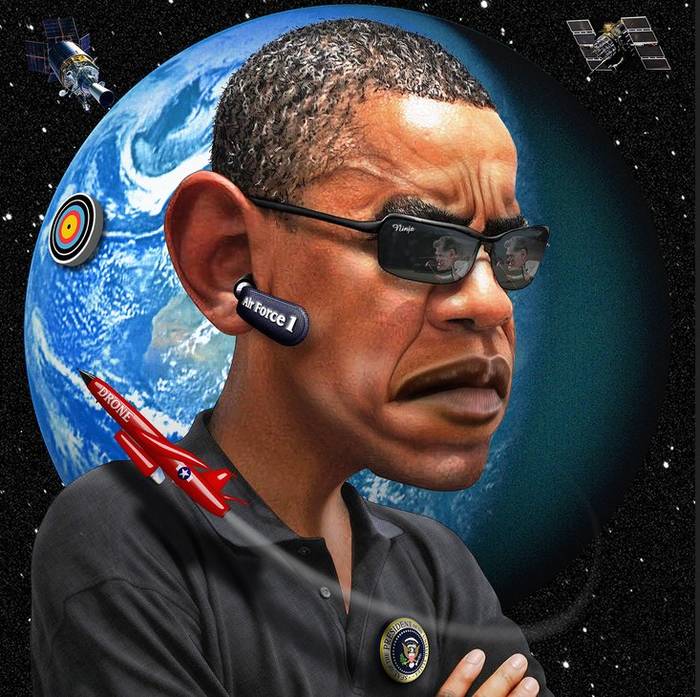
A year after the president's promise to rein in warrantless, illegal mass surveillance, he's revealed a plan that does nothing to fix the most egregious elements of American spying.
The president has the power and the time in office to do something meaningful about NSA spying -- will he back up words with deeds?
His reform plan:
* Fails to fix the problem of unconstitutional National Security Letters: The President’s reform proposes a three-year limit on the gag order that accompanies each NSL, but even a three-year limit fails to cure the constitutional problem. Only a prompt and fully considered decision by a judge that a provider should remain gagged is sufficient.
* Doesn’t stop the bulk collection of data on innocent Americans’ digital communications: If the Intelligence Community was serious about protecting privacy, it could end the bulk collection of Americans’ communications data—under Section 215 of the Patriot Act or under any provision of law—tomorrow. The President’s proposals do not curb the mass collection of phone records under Section 215, and the proposals affirmatively allow bulk collection to occur for six, broadly defined categories of intelligence collection.
* Continues "backdoor" surveillance on Americans without a warrant: When the intelligence community performs surveillance under Section 702 of the FISA Amendments Act, it sweeps in the communications of millions of Americans without a warrant. The President’s Review Group recommended the government obtain a warrant before it searched for communications of US persons contained within its vast database. The President rejected that proposal.
* Fails to provide non-US persons with the same privacy protections afforded US persons: On a daily basis, the United States intelligence community collects vast amounts of information about millions of people around the world. While the President’s proposals take a step forward in unifying the retention requirements applicable to collected non-US person information, they fail to afford the same privacy protections afforded US persons, and they fail to rein in bulk collection in the first place.
One Year Later, Obama Failing on Promise to Rein in NSA [Mark Rumold/EFF]
(Image: Barack Obama - Caricature, Donkey Hotey, CC-BY)
Recommended article: Chomsky: We Are All – Fill in the Blank.
This entry passed through the Full-Text RSS service - if this is your content and you're reading it on someone else's site, please read the FAQ at fivefilters.org/content-only/faq.php#publishers.
Stontu likes this
04 Feb 19:38

FCC Chair Confirms Title II Approach To Net Neutrality; AT&T Already Warming Up For Lawsuit
by Kate Cox
 In an op-ed today, FCC chairman Tom Wheeler confirmed what sources in the know have recently been saying: to preserve net neutrality, the FCC is indeed going to seek to regulate ISPs as Title II common carriers.
Writing for Wired today, Wheeler flat-out says what the rumor mill has been chewing over for weeks: “I am proposing that the FCC use its Title II authority to implement and enforce open internet protections.”
“Using this authority,” Wheeler continues, “I am submitting to my colleagues the strongest open internet protections ever proposed by the FCC. These enforceable, bright-line rules will ban paid prioritization, and the blocking and throttling of lawful content and services.”
That’s great news for consumers, and it’s what had been hinted at for a while now. But here’s where it gets even bigger: Wheeler also proposes to apply the exact same bright-line rules to mobile broadband as to wired. That’s one of the key three questions the FCC asked for comment on back when this all started,
In his editorial, Wheeler also basically plows through all the counter-arguments one by one.
Title II is too antiquated and sections don’t apply? “My proposal will modernize Title II, tailoring it for the 21st century … there will be no rate regulation, no tariffs, no last-mile unbundling.”
Investment will grind to a halt (despite several different companies already saying it won’t)? “Over the last 21 years, the wireless industry has invested almost $300 billion under similar rules, proving that modernized Title II regulation can encourage investment and competition.”
Congress can do a better job? “Congress wisely gave the FCC the power to update its rules to keep pace with innovation. … The action we take will be strong and flexible enough not only to deal with the realities of today, but also to establish ground rules for the as yet unimagined.”
However, while this is great news for consumers — and seems to be exactly what advocates, including us and our colleagues at Consumers Union, have been asking for — ISPs are predictably unhappy. They’ve been threatening legal action if this should happen, and at least one is already out there stretching and limbering up for their court run.
AT&T posted to their public policy blog yesterday a set of “closing arguments” drawn from two filings they made to the FCC. Basically, the pair of filings add up to, “Here is every legal justification we can throw at the wall for why the FCC can’t do this.”
Argument one is the “let us logic at you” argument. In it, AT&T parses out the language of a Supreme Court ruling from 2005, drawing out all the ways in which Justice Scalia said that ISPs provided both an information and a telecommunications service, therefore (in AT&T’s view) making it legally invalid to declare everything to fall under telecom rules.
Argument two is the “you can’t do this anyway” argument. In that one, AT&T says that there are “procedural infirmities” with the FCC’s reclassification proposal. In the last year, AT&T posits, the commission “has not engaged in the kind of detailed analysis that would be needed to assess the offerings of every ISP” under a new regulatory scheme.
The other four members of the commission will receive the actual proposal this week, and will vote on it in the FCC’s next open meeting on February 26. The next round of fighting — where AT&T, Verizon, and everyone else start bringing out the legal squads and heading to court — will probably start not long after.
FCC Chairman Tom Wheeler: This Is How We Will Ensure Net Neutrality [Wired]
Title II: Closing Arguments [AT&T Public Policy Blog]
04 Feb 19:33

"We Go Forward"
by Brad
BewarethewumpusI remember seeing this a while back, don't remember if I shared it.
Check out this beautifully animated short by Matheus Muniz and Filipe Costa based on an original Owl Turd Comix story titled “We Go Forward.”
04 Feb 17:07
Traveler Says TSA Jailed Him For Making Complaint, Lied In Court About Bomb Threat
by Chris Morran
What line does a traveler need to cross before he’s deemed worthy of arrest by airport security agents? According to one man, not only was he detained overnight after attempting to file a complaint about the way he was being treated, but a TSA supervisor then lied under oath about a bomb threat the traveler never made.


The Philadelphia Daily News has the story of a local man who was traveling from Philly to Miami in Jan. 2013 when he was put under scrutiny by airport security.
A scan of his bag brought up some questions about a tube-shaped case that showed up on the scan (it contained a heart-monitoring watch), and screeners asked him if he had any “organic matter” in his bag.
Thinking that organic matter referred to things like fresh produce and not highly-processed packaged foods, the traveler didn’t mention the energy bars he’d packed. This failure to disclose apparently didn’t go over well with the TSA supervisor. According to the traveler, the agent became confrontational.
After the energy bars were determined to not be a danger to anyone on the plane, the traveler asked to file a complaint about his treatment. He says he was told to wait while the form was obtained, but instead of returning with paperwork, TSA agents came back with police officers who handcuffed him and took him to an airport holding cell.
Three hours later, he was taken to another holding cell at a city police precinct, where the traveler says no one told him why he was being detained. It wasn’t until his 2 a.m. arraignment that he learned he’d been accused of “threatening the placement of a bomb” and making “terroristic threats.”
Thing is, he says he hadn’t done any of that. And the TSA agent’s initial statement about the incident doesn’t seem to indicate that there was a real threat made.
When the agent first talked to police, he claimed the traveler had said, “anybody can bring a bomb and you wouldn’t even know it,” which is a matter of opinion and not a threat.
That statement was later upgraded to “I could bring a bomb through here any day of the week and you would never find it,” which someone could possibly argue might be construed as a threat.
But when the case came to trial, that TSA agent testified that the passenger had put his finger in agent’s face and told him, “Let me tell you something. I’ll bring a bomb through here any day I want.”
The agent also claimed under oath that it was the passenger who was making a scene.
“I saw a passenger becoming agitated,” he testified “Hands were in the air… had both hands with fingers extended up toward the ceiling up in the air at the time and shaking them.”
Except the Daily News’s Ronnie Polaneczky writes that the actual security footage from the airport shows quite the opposite. According to her account of what can be seen in the video, the traveler remains calm, with his laptop tucked under his arm and his hands clasped in front of him.
“Not once does he raise his hands,” writes Polaneczky. “Not once does he point a finger… If anyone is becoming agitated, the video shows, it is [the TSA agent].”
The court never got the chance to see this footage as the judge threw out all charges against the traveler within minutes of hearing the agent’s testimony.
But it may all finally come to light now that the traveler has filed a federal lawsuit [PDF] against the TSA, the agent, the Philadelphia police department and the officers involved.
The complaint alleges violations of the traveler’s Fourth Amendment protections against unlawful search and seizure, and use of excessive force; false arrest; false imprisonment; malicious and retaliatory prosecution; and unconstitutional infringement of free speech.
04 Feb 17:03
Conrad Hilton Charged With Disrupting Flight After Alleged Death Threats, Smoking Pot On Plane
by Mary Beth Quirk
There are troublesome airline passengers, and then there are those who take bad behavior to whole new heights. Allegedly. According to authorities, Conrad Hilton, the grandson of the Conrad Hilton who started a hotel empire, interfered with flight crew on a British Airways flight. He allegedly spewed death threats, threw punches at crew, called fellow passengers “peasants” and smoked pot and cigarettes in a plane’s bathrooms.


The 20-year-old brother of erstwhile celebutante Paris Hilton was charged with interfering with a flight crew after a trip from London to Los Angeles back on July 31, reports the Associated Press, during which he allegedly made children cry with his death threats and foulmouthed language.
It all started soon after the flight took off, and lasted throughout the entire 10.5-hour flight, according to a 17-page affidavit by an FBI agent.
Hilton wouldn’t keep his seat belt fastened and started pacing the aisle as the aircraft was still ascending, the report said, complaining that another passenger was giving him the “stink eye.” Oh no, not that.
When the flight crew told him to get back in his seat, he allegedly became disruptive and threatened to kill several flight attendants and a co-pilot in a series of rants, threatening to get them fired, the affidavit said.
“I could get you all fired in five minutes. I know your boss,” Hilton allegedly said. “My father will pay this out, he has done it before. Dad paid $300,000 last time.”
It doesn’t stop there: He’s accused of throwing a punch inches from a flight attendant’s head that missed and hit the bulkhead, though the crew member said that while he felt threatened, he didn’t think he wanted to hurt him.
Though a co-pilot was assigned to babysit him, Hilton allegedly ran to a lower deck restroom saying he was upset by a breakup and wanted to smoke marijuana. The odor of pot drifted out of the lavatory soon after, the affidavit said.
When he was confronted about that situation, he allegedly ran upstairs to the upper deck restroom and smoked a cigarette. A paper towel was found stuffed in the smoke detector.
Finally the little tyrant fell asleep, and was handcuffed to his seat for the 90 minutes left in the flight.
Upon landing in Los Angeles he told the FBI agent he was returning from Greece and had taken a sleeping pill in London. The affidavit said he admitted to calling other passengers “peasants” and said he would have killed a flight attendant if another passenger hadn’t been there to talk him down.
“A hundred percent I would have killed him,” Hilton said. Seriously? the FBI agent asked.
“No, but I would have knocked him the (expletive) out.”
He was charged yesterday in U.S. District Court in ankle chains with his hands manacled at his waist. A judge asked if he understood his rights and the charges, which were filed on Monday. He’s facing a prison sentence of up to 20 years if he’s convicted.
He answered “Yes, your honor” after each question, but didn’t enter a plea. He was released on a $100,000 unsecured bond, ordered to appear for arraignment March 5 and told to continue mental health treatment.
Paris Hilton’s brother Conrad charged with disrupting flight [Associated Press]
04 Feb 16:20

Every 90's Juice Drink Commercial
by Don
This mock television commercial parodies 90’s snack drink ads targeted at kids, but with a very bizarre twist.