Shared posts

05 Sep 16:15

Unraveled

by submission

Author : Bob Newbell

It’s been a subjective month since we changed history. It feels like ten years. In reality, an infinitesimal fraction of a second has passed for us in the Stopwatch. That’s the unofficial and pathetically unoriginal name some smart aleck gave to the Temporal Exclusion Facility shortly before we started our experiment.

“Another report,” says a tired-looking undergrad to me as another anomaly dispatch pops up on the holodisplay.

Martin Luther tweets Ninety-Five Theses

Getting closer, I silently say to myself. I think back to how it all began. We were warned by both our fellow students and the faculty not to try this experiment. It would never work, they admonished us, but it might damage university equipment. They were wrong.

It had started as a late night, alcohol-fueled brainstorming session: What if the Vienna Academy of Fine Arts had admitted Adolph Hitler? He had no artistic talent, of course. He had been rightly rejected by the Academy. But what if someone had persuaded the powers that be to admit him anyway? Perhaps through the inducement of a large donation to the Academy? Or maybe just a large donation to the ones who determine who got admitted? Could the nightmare of World War II and the cold and hot wars that resonated on from it be avoided? There was a way to find out.

“Report!” says the undergrad.

American and Confederate Presidents meet at the Mason-Dixon Wall

“So we’re back to just the USA and the CSA? The Pacific States of America is gone?” I ask. “What about Canada?”

“Canada is back,” says the undergrad. “It’s no longer part of the USA and its borders are more or less like they’re were originally.”

More progress. Maybe we’ll pull this off yet. I think back to the first night. World War II had been averted. Millions of lives had been saved. But then we’d discovered it had only been delayed, not eliminated. A Second World War had begun in 1951. And this one quickly escalated into a nuclear conflict. We went back and tried to undo our original intervention. The original World War II was restored, but this time the Third Reich didn’t try to invade Russia. Able to concentrate all its military effort on the western front, Nazi Germany survived the war intact.

July 20, 1969: Buzz Aldrin becomes first man to walk on the Moon

“Okay,” I say. “So Aldrin stepped out before Armstrong. That’s fine. Don’t try to correct that.”

“We’ve got a problem,” says another student from across the control room. “The Soviet Union didn’t fall in the late 20th Century. Looks like the USA and USSR have a limited nuclear exchange in 2003. But it doesn’t escalate into a full-scale global war.”

“We can’t let that stand,” I say. “We need an intervention that will weaken the Soviets so the USSR collapses in 1991 like it’s supposed to.”

For thirty days and nights we’ve been endlessly intervening in history, a nudge here, a great shove there, trying to restore the timeline.

SOVIET UNION DISSOLVES INTO COMMONWEALTH OF INDEPENDENT STATES

“Have we succeeded?” I ask.

“Checking,” says one of my fellow students.

The Greek philosopher Heraclitus said you can never step twice into the same river. A complete restoration will never be possible. But maybe this time we’re close enough. Maybe this time…

A chorus of moans erupts among the others.

“What?!” I yell.

A new report pops up on my holodisplay:

COMMUNIST COLLAPSE ENDS COLD WAR BETWEEN SOVIETS AND IROQUOIS EMPIRE

I punch the display. The ephemeral words scintillate around my fist.

Discuss the Future: The 365 Tomorrows Forums
The 365 Tomorrows Free Podcast: Voices of Tomorrow
This is your future: Submit your stories to 365 Tomorrows


21 Aug 17:29

New record temperature for a superconductor

by John Timmer

Superconductivity was first seen in metals cooled down to close to absolute zero. But after exhausting every metal on the periodic table, the critical temperature at which the metal transitions to superconductivity never budged far from those extremely low temperatures.

That changed dramatically with the development of cuprate superconductors, copper-containing ceramics that could superconduct in liquid nitrogen—still very cold (138K or −135°C), but relatively easy to achieve. But progress has stalled, in part because we don't have a solid theory to explain superconductivity in these materials.

Now, taking advantage of the fact that we do understand what's going on in superconducting metals, a German research team has reached a new record critical temperature: 203K, or -70°C, a temperature that is sometimes seen in polar regions. The material they used, however, isn't a metal that appears on the periodic table. In fact, they're not even positive they know what the material is, just that it forms from hydrogen sulfide at extreme pressures.

Read 8 remaining paragraphs | Comments

20 Aug 05:18

U + Me = Trigonometry

by Brad
26a
19 Aug 19:31

Oh My Gosh, What The Heck

by Brad
0df
19 Aug 14:28

Bertstrip: Guess Who's Next?

by Brad
F6a
18 Aug 22:43

POSTSCRIPT: Even After Embarrassing Story, CenturyLink Still Has No Idea That This House Is Not On Their Network

by Chris Morran

centurylinkYou probably remember the story of Seth, the Washington state homeowner who was on the brink of having to sell his new house because — in spite of what their websites said — neither Comcast nor CenturyLink were willing to sell him the broadband service he needs for his home office. Even though this made national headlines, with CenturyLink looking particularly inept, the company still hasn’t figured out that Seth’s house is not connected to its network.

Just a quick catch-up for those coming late to the story. Before Seth moved in, he’d twice checked with Comcast to make sure the house could get service. After multiple install techs confirmed there was no service and the nearest connection point was thousands of feet away, Seth looked into other options.

Among those was CenturyLink, which does sell adequate broadband service in his general area. The CenturyLink website even confirmed for Seth that his address could be connected. But after making the appointment for installing the service, CenturyLink cancelled, telling him their website was mistaken and that there was no intention of expanding Internet service to his neighborhood in the foreseeable future.

And yet, his address continued to remain on the site, even after Consumerist spent weeks chasing some sort of explanation from CenturyLink.

We were repeatedly promised a comment and that the company was looking into the situation, only to be told after several weeks that the person we’d been dealing with had been promoted and that we had to start all over again with a new media contact — who was on vacation for another week.

Even by the time we published Seth’s story, about a month after we’d brought the error to the company’s attention, the CenturyLink site was still showing his address as being part of their broadband network.

At no small expense of time and money, Seth ultimately made a complicated deal with his county — which operates a fiberoptic network, but which is prohibited by state law from selling directly to consumers — and a broadband reseller to connect his property to the Internet, saving him from having to sell.

But then he goes to check his mailbox and gets the above mailer from CenturyLink, telling him to sign up for the company’s high-speed Internet service, even though it’s still definitely not available in his area.

How do we know? A) Because no CenturyLink teams have been out and about, digging or running cable in Seth’s neck of the woods; and B) because the CenturyLink site now accurately reflects the connection possibilities at his address:

centurylink2

18 Aug 22:38

Drug Companies Agreed To Not Compete, Resulting In High Price For Generic Medication

by Chris Morran
Bewarethewumpus

#costofdoingbusiness

Until May 2015, Par's generic form of Kapvay (clonidine hydrochloride) was the only generic version available in the U.S., even though Concordia also had the rights to market a competing generic.

Until May 2015, Par’s generic form of Kapvay (clonidine hydrochloride) was the only generic version available in the U.S., even though Concordia also had the rights to market a competing generic.

Imagine that Bob and Mary are the only two kids in town allowed to sell lemonade. They could try to compete against each other, potentially resulting in lower prices, improved juice, or better service… or Mary could say to Bob, “How’s about you pay me some money so I don’t exercise my option to sell lemonade?” That means the price for lemonade is whatever Bob says it is, and he’s encouraged to keep it high because he’s paying some of that money out to Mary. Now imagine this isn’t about lemonade, but about prescription drugs.

The Federal Trade Commission recently filed a complaint [PDF] against two drug companies — Concordia Pharmaceuticals Inc. and Par Pharmaceutical, Inc. As recently as May 2015, they were the only two companies allowed to market a generic form of the ADHD drug Kapvay (clonidine hydrochloride) in the U.S.

Before the original patent for Kapvay expired in 2013, the name-brand version of the drug had been bringing in $72 million a year in the U.S. alone.

When that patent did expire, Par Pharmaceutical became the first company approved to market a generic version. That same year, Concordia acquired the rights to Kapvay, meaning it could sell both the name-brand version and a generic.

But rather than go into business against each other, the FTC says that Concordia and Par signed a “License Agreement” in Sept. 2013. This deal granted Par the rights to the original patent and any future intellectual property relating to Kapvay. Concordia also agreed to delay its marketing of Kapvay for five years and to not permit any third party to market an authorized generic version of the drug.

Thus, Par became the sole seller of Kapvay in the U.S., and Concordia received somewhere from 35% to 50% percent of the profits from the sale of the drug.

This arrangement lasted for around 14 months. After Concordia learned of an FTC investigation into the deal, it began marketing an authorized generic version of Kapvay.

“By agreeing not to compete,” reads the complaint, “Concordia and Par… reduced the number of competing generic Kapvay products available to consumers. The agreement, therefore, deprived consumers of the lower prices that occur with generic competition.”

Drug companies can argue that such payment agreements are justified if there is an overlap between the release of a generic and the expiration of a patent. But in the case of Kapvay, the FTC pointed out that Par’s generic version only came out seven days before the Kapvay patent expired, which would not justify such a substantial licensing fee. Additionally, these payments were slated to continue for five years after the expiration.

“In substance, the payments, though purportedly for intellectual property, are the mechanism for Par to share with Concordia the supra-competitive profits preserved by their agreement not to compete,” argued the FTC, which accused the companies of making a deal that “unreasonably restrained trade,” in violation of the FTC Act’s prohibition against unfair competition.

Rather than face a drawn-out challenge, both companies have reached settlement deals with the FTC.

The Concordia order [PDF] bars the Barbados-based company from enforcing the anticompetitive provisions of its agreement — including the sharing of profits — with Par.

Meanwhile, Par’s settlement agreement [PDF] prohibits the company, based in Chestnut Ridge, NY, from enforcing the provisions that bar Concordia from agreeing not to sell an authorized generic version of Kapvay.

Both companies are prohibited from agreeing with other entities to bar or delay entry of an authorized generic after the patents for the name-brand drugs have expired. They must also notify the FTC of any deals they make the restrict the entry of any authorized generic.

“By signing this agreement not to compete shortly before Concordia’s patent covering branded Kapvay ended, Concordia and Par reduced the number of competing generic Kapvay products available to consumers, depriving consumers of the lower prices that typically occur with generic competition,” said Debbie Feinstein, Director of the FTC’s Bureau of Competition.

18 Aug 22:06

'Skinny Mario' Is An Abomination

by Patricia Hernandez
Bewarethewumpus

*SlenderMario

'Skinny Mario' Is An Abomination

Nintendo has gone too far. They must be stopped. This cannot stand.

Those of you who have been following developments around Mario Maker probably already know all about the “Luigi Mushroom,” a special power-up that that gives Mario all of the trademark abilities that normally define Luigi. With it, Mario can jump higher—something to which I have no objection. What freaks me out, though, is the following:

Advertisement

This is not right. Yes, we’ve known about Mario’s slim new appearance for a while; we even reported on it last year. But I got a chance to actually experience a Mario Maker session where you play as Skinny Mario throughout the entire level last night, and it has rocked me to my very core. I feel it is my duty as a human being to express my extreme displeasure with Skinny Mario (who, to be clear, is not called Skinny Mario by the game—but that is still his name.)

Mario must be chubby. That is who he has always been; the chubbiness is a part of his charm, a key part of his excellence. It’s part of why his movement repertoire is so awesome. Mario would not have become the icon that he is today without the extra pixels on Jumpman that gave shape to his belly. Presumably, this is why Mario has retained this particular aspect of his design across the years, even while other aspects of his model morphed and changed.

It says everything that the Luigi mushroom—and Skinny Mario’s subsequent appearance—was the result of a bug. An irregularity. Something which should not exist under normal circumstances. He was supposed to turn into a bigger Mario when he ate the mushroom, like he always does. Instead, that diabolical glitch mushroom turned him into the monster that is Skinny Mario. He looks like a Mario that’s been resized poorly in Photoshop, for crying out loud.

I understand that Mario Maker must provide new experiences for players, and that it remixes existing Mario elements to achieve that. Nintendo has nailed this, I think—Luigi mushroom aside, this early level is a nice surprise!

But Nintendo, can’t you see how much the Luigi mushroom rips apart the very fabric of the Mario universe? If Skinny Mario is a thing, then we must contemplate the possibility that Luigi is not who we think he is, either. We must acknowledge the possibility that the Luigi that we know and love very well might be perpetually eating Luigi mushrooms, perhaps to acquiesce to harmful beauty standards set by the Mushroom Kingdom.

I don’t think I am alone in my aversion to Skinny Mario. Here are a collection of reactions I’ve seen to Skinny Mario from friends and family:

“oh my god”

“skinny mario is fucked up”

“terrifying”

“what the fuck”

“I HATE THIS”

“I’m scared”

Please, dear reader, if you feel the same way about Skinny Mario, contact your local congressman.* This might be futile—we live in a world where Cookie Monster must say that cookies are a “sometimes” food—but we must do what we can to rectify this, for our fellow gamers around the world.

*Do not actually do this.

This entry passed through the Full-Text RSS service - if this is your content and you're reading it on someone else's site, please read the FAQ at fivefilters.org/content-only/faq.php#publishers.

18 Aug 21:50

Saturday Morning Breakfast Cereal - A Pump

by admin@smbc-comics.com

Hovertext: No I will NOT use a handcrank.


New comic!
Today's News:
18 Aug 17:39

The End of the Internet Dream: the speech that won Black Hat (and Defcon)

by Cory Doctorow


"The End of the Internet Dream," cyberlawyer Jennifer Granick's keynote at Black Hat, was all anyone could talk about at this year's Defcon -- Black Hat being the grown-up, buttoned-down, military-industrial cousin to Defcon's wild and exuberant anarchy.

The text of Granick's speech is now online, and I can see what they were all raving about. Granick tells the true story of "Internet Utopians" -- not people who believed the Internet would deliver a better, freer world; rather, people who believed that it could, if the rest of us fought for it.

She also tells the tale of how that dream was dashed by giving in to cybersecurity scaremongering, copyright bullying, easy answers to difficult speech, unexamined racism and sexism, and the global war on terror. How governments, companies and our complacency all but killed the dream of the Internet as a force for improving the world.

But she also provides a prescription for changing that -- hope that we can avert that future, and that therefore, we must.

If you wondered why I went back to EFF after a decade of sitting on the sidelines, this is why.

Below, some of the best moments from the speech:

The security community has historically been very good at finding, cultivating, and rewarding talent from unconventional candidates. Many of the most successful security experts never went to college, or even finished high school. A statistically disproportionate number of you are on the autism spectrum. Being gay or transgender is not a big deal and hasn’t been for years. A 15-year-old Aaron Swartz hung out with Doug Engelbart, creator of the computer mouse. Inclusion is at the very heart of the Hacker ethic.

And people of color and women are naturally inclined to be hackers. We learn early on that the given rules don’t work for us, and that we have to manipulate them to succeed, even where others might wish us to fail.


Here’s a quiz. What do emails, buddy lists, drive back ups, social networking posts, web browsing history, your medical data, your bank records, your face print, your voice print, your driving patterns and your DNA have in common?

Answer: The U.S. Department of Justice (DOJ) doesn’t think any of these things are private. Because the data is technically accessible to service providers or visible in public, it should be freely accessible to investigators and spies.


Globalization gives the U.S. a way to spy on Americans…by spying on foreigners we talk to. Our government uses the fact that the network is global against us. The NSA conducts massive spying overseas, and Americans’ data gets caught in the net. And, by insisting that foreigners have no Fourth Amendment privacy rights, it’s easy to reach the conclusion that you don’t have such rights either, as least when you’re talking to or even about foreigners.


The battleground of the future is that people in power want more security for themselves at the expense of others. The U.S. Government talks about security as “cyber”. When I hear “cyber” I hear shorthand for military domination of the Internet, as General Michael Hayden, former NSA and CIA head, has said — ensuring U.S. access and denying access to our enemies. Security for me, but not for thee. Does that sound like an open, free, robust, global Internet to you?


What that means is that governments, or corporations, or the two working together increasingly decide what we can see. It’s not true that anyone can say anything and be heard anywhere. It’s more true that your breast feeding photos aren’t welcome and, increasingly, that your unorthodox opinions about radicalism will get you placed on a list.

Make no mistake, this censorship is inherently discriminatory. Muslim “extremist” speech is cause for alarm and deletion. But no one is talking about stopping Google from returning search results for the Confederate flag.


We start to think globally. We need to deter another terrorist attack in New York, but we can’t ignore impact our decisions have on journalists and human rights workers around the world. We strongly value both.

We build in decentralization where possible: Power to the People. And strong end to end encryption can start to right the imbalance between tech, law and human rights.

The End of the Internet Dream [Jennifer Granick/Backchannel]

This entry passed through the Full-Text RSS service - if this is your content and you're reading it on someone else's site, please read the FAQ at fivefilters.org/content-only/faq.php#publishers.

18 Aug 15:15

LAPD & Chicago bought "Stingrays on steroids" with asset-forfeiture & DHS money

by Cory Doctorow

The military surveillance devices known as "Dirtboxes" have been in secret operation for more than a decade, tracking citizens' locations and intercepting their calls, breaking the encryption on hundreds of calls at once.

DRT boxes (named for Digital Receiver Technology Inc, a Boeing subsidiary), are called "Stingrays on steroids" -- Stingrays are the powerful, secretive fake cell towers used to track whole populations' movements around cities. Dirtboxes are often mounted on low-flying aircraft and used for mass-scale urban surveillance.

Dirtboxes are used by the US military and NSA overseas, including in France. Because of the secrecy surrounding Dirtboxes, they are acquired through no-bid contracts, and many of the cases in which they are used collapse in court because police departments are unwilling to reveal their phone surveillance capabilities in public forums.

Chicago bought their Dirtboxes with cash seized in dubious civil forfeiture cases; LAPD's funding came from a DHS national security grant.

The main difference between the Harris and Digital Receiver Technology devices, Martinez said, is the ability of the most sophisticated Digital Receiver Technology devices to simultaneously break the encryption of communications from hundreds of cellphones at once. A 2011 purchase order for this equipment by the Washington Headquarters Services, a branch of the Pentagon, states the devices can retrieve the encryption session keys for a cellphone “in less than a second with success rates of 50 to 75% (in real world conditions).”

In Chicago, cell-site simulators have been used to eavesdrop on the activities of demonstrators during a 2012 NATO summit and Black Lives Matter demonstrations last year.

“What’s happened here is the U.S. goes to war against a foreign country under dubious circumstances, private companies develop these surveillance technologies with the help of the CIA and NSA, and they import them back home and use them on Americans,” Martinez said.

Chicago and Los Angeles have used ‘dirt box’ surveillance for a decade [Ali Winston/Reveal News]

(via Techdirt)

This entry passed through the Full-Text RSS service - if this is your content and you're reading it on someone else's site, please read the FAQ at fivefilters.org/content-only/faq.php#publishers.

18 Aug 15:13

Woman fined for posting photo of police car illegally parked in handicap spot

by David Pescovitz
police-car-handicap-spot-665x385

A woman in Petrer, Spain posted a photo on Facebook of a police car illegally parked in a handicap spot. She was subsequently fined almost €800 (~US$886) under the Citizens Security Law, aka the "gagging law," that prohibits "the unauthorised use of images of police officers that might jeopardise their or their family’s safety or that of protected facilities or police operations." From The Guardian:

Fernando Portillo, a spokesman for the local police, said the officers had parked in the disabled bay because they had been called to deal with an incident of vandalism in a nearby park. A rapid response is essential if they are to catch the offenders “in flagranti”, he told local media, adding that in an emergency the police park where they can.

Asked how the photo had put the police at risk, he said the officers felt the woman had impugned their honour by posting the picture and referred the incident to the town hall authorities. “We would have preferred a different solution but they have the legal right to impose the fine,” Portillo said.

This entry passed through the Full-Text RSS service - if this is your content and you're reading it on someone else's site, please read the FAQ at fivefilters.org/content-only/faq.php#publishers.

17 Aug 20:27

Politicians can only view secret trade pact in special viewing room

by Glyn Moody

The fact that most people have still never heard of the world's biggest trade deal—the Transatlantic Trade and Investment Partnership (TTIP) between the US and Europe—even after two years of negotiations, might suggest that whatever its problems, maintaining secrecy is not one of them. But the European Commission begs to differ: since the end of July, instead of sending up-to-the-minute summaries of its talks with the US to EU politicians, the Commission now requires that national politicians travel all the way to Brussels to a special reading room where the texts can be viewed under tight security. MEPs must also use this same system.

The EC made this rather drastic move in response to confidential TTIP documents appearing on the non-profit investigative news site Correct!v. News of this secret reading room was revealed in a confidential report of an EU meeting that took place on 24 July... which rather embarrassingly was then also leaked to the same site.

The new system is pretty insulting for top politicians, who are not used to being treated likely naughty schoolchildren that require constant adult supervision. Furthermore, considering the wide-ranging implications of TTIP, you'd think that the EC would want to make it easier for European politicians to read the latest documents, so that they know what is being negotiated in their name.

Read 7 remaining paragraphs | Comments

17 Aug 19:10

Windows 10 Won’t Run Games Using SafeDisc Or Securom DRM

by Graham Smith

Windows 10 won’t run games that employ SafeDisc or certain versions of Securom DRM, rendering hundreds of old disc-based games potentially unplayable without complex workarounds. Games which used these forms of DRM range from Crimson Skies to Grand Theft Auto 3, Microsoft Flight Simulator 2004 to the original The Sims. Yet despite this change coming in Windows 10, blame can’t likely be placed at Microsoft’s feet. For one, SafeDisc is notoriously insecure and Microsoft’s decision to block it from their new operating system will likely protect more users than it hurts.

More details below.

… [visit site to read more]

17 Aug 15:34

Televangelists are con artists, and they are thriving

by Rob Beschizza
They know who is weak and why they are weak, and they have a brand for them: "seed faith."

oliver-televangelists

This entry passed through the Full-Text RSS service - if this is your content and you're reading it on someone else's site, please read the FAQ at fivefilters.org/content-only/faq.php#publishers.

17 Aug 15:04

MeFi: On becoming African-American

by almostmanda
I knew that my sister was smarter than her husband; I also knew that she knew this. But I also knew that her husband thought little of women, and nothing of their intelligence. Yet, here he was losing a shouting match on his home court. He was embarrassed. After seeing how the French language had betrayed him, a bittersweet subtlety slipped from his lips like licorice. In plain-vanilla English he said, "This is exactly why I shouldn't have married a black girl."
--Coming to America
17 Aug 14:05

Photo


17 Aug 05:40

Six Times Toy Story Went Too Far

by Kevin Wong

Six Times Toy Story Went Too Far

In 1995, Pixar released Toy Story, and it couldn’t have dropped at a better time.

The Disney Renaissance had peaked the year prior with the Lion King, and although no one knew it yet, the Eisner era had already begun its slow decay and collapse. Toy Story had a hellish developmental cycle — the script went through several rewrites, Disney shut down the production at one point, and even late into its production cycle, there were several key Disney executives who were not on board. But it emerged, finally, as a groundbreaking, acclaimed film — it ushered in a new era of CGI animation and was proof that something other than a princess musical could be a crossover hit.

With the following Toy Story 2 and Toy Story 3, the trilogy has become a beloved touchstone for a generation’s childhood — the same moviegoers who saw 1 as kids were the same moviegoers who cried as adults during 3. Those moviegoers saw their innocence thrive, and then die onscreen, in the most heart wrenching manner possible.

Advertisement

Here are six times that Pixar went too far with the Toy Story trilogy. And let’s pray that the upcoming Toy Story 4 won’t constitute number seven.


6. Sid Isn’t Really Evil

Six Times Toy Story Went Too Far

At least for younger Toy Story fans, Sid is the de facto villain of the first film — a destroyer and torture expert of innocent toys. He even has a cliched, ‘moustache twirling’ scene at the beginning, when he blows up a toy and does a little happy dance. But as we grow older and stop taking what we see at face value, we begin to view Sid in a different light. The viewer receives evidence, both implicit and explicit, that Sid is really just an unhappy kid — his house is unkempt and messy, and his parents seem neglectful and hands-off in their childrearing.

But Pixar buried Sid’s complexity too deeply. All of the other Toy Story villains’ traumas were made explicit beyond background context clues, and Lotso was even given a shot at redemption (though he didn’t take it). Instead, Sid runs away from Woody traumatized, and we’re supposed to cheer.

Most importantly, Sid didn’t know his toys were alive. Had he known, then yes, Sid would be a monstrous sociopath. But let’s be real: what child hasn’t played rough with his or her toys? One might even consider it creative to do what Sid did, which was to combine his toys into something of his own imagining. Sid is only cruel because of what the audience knows; plastic is a far cry from flesh, and it’s not like the kid was blowing up small animals in his spare time.


5. The Climactic RC Car Chase Defies Logic

Six Times Toy Story Went Too Far

RC is an underrated, key character in the first film. He actually sets the entire “Lost Toy” plot in motion, when Woody inadvertently uses him to knock Buzz out the window.

At the close, RC also resolves the film’s conflict, in a way that’s thrilling, but illogical. RC manages to not only outrun a healthy, angry dog, but also manages to keep pace with a massive, moving truck. It made for a great chase scene, but it was definitely a bit much, even for an animated film.

A common counterargument to this is that the RC Car, as an autonomous thing, simply pushed itself harder — that the top speed that accessed by the remote control isn’t its actual top speed. Fine. But if that’s the case, then why is it so dependent on batteries? All the other toys, after all, are able to run and flip without the benefit of a power source.


4. Every Compelling Character In The Entire Trilogy Is Male

Six Times Toy Story Went Too Far

There is no three-dimensional, well-realized female character (with the possible exception of Jessie, and even she’s sort of a stereotype). Bo Peep is essentially a trophy to be fought over, and Barbie is a one note joke. If Pixar must make a Toy Story 4, they should consider incorporating a well-realized female toy to give the cast some needed balance and perspective.

They could also characterize Jessie a bit better. She began Toy Story with some real promise, as a character who struggled with abandonment issues and allowing herself to be loved. She even got her own song in the form of Sarah Mclachlan’s “When She Loved Me.”

But in Toy Story 3, she has become just another sidekick to Woody and Buzz’s shenanigans. Pixar missed a key chance to make the dynamic duo into a trio.

Lots of times, Jessie is just moping around or going with the flow, rather than taking definitive actions to pursue her goals. She doesn’t even get her own action scene in the final film, even though she’s Buzz’s physical equal at the end of Toy Story 2.


3. Buzz Becomes A Plot Device

Six Times Toy Story Went Too Far

It’s getting to be routine and cliched; Buzz isn’t himself, and the gang has to flip his switch, or spot his decoy, or snap him out of it to reach their goals. It’s the problem of multiple sequels — eventually, entire plotlines get recycled, and the protagonist learns the same lesson, all over again.

It’s reminiscent of bad Star Trek: The Next Generation episodes; whenever the writers got lazy, they just had Data malfunction and nearly kill everyone. Or how about the Shrek franchise, where Shrek learns at the end of every movie that he’s more than just an ogre? Ogres may not be vicious, mean creatures, but they’re certainly forgetful.

Surely, Buzz isn’t the only toy that could malfunction in humorous ways.


2. Lotso’s Punishment Was Excessively Cruel

Six Times Toy Story Went Too Far

In the past, the Toy Story creators let the antagonists off pretty easily. Sid will probably need therapy, but at least he’s alive (and later becomes a gainfully employed sanitation worker). Prospector Pete might not like makeup and lipstick, but he’ll be loved by his new owner, for better or for worse. This is, after all, a kids’ franchise.

But Lotso? He gets tied to the front of a truck to be dragged through bugs and the elements, along whatever journeys the truck is scheduled to make. Eventually, if he doesn’t get tossed into the trash at a truck stop, he’ll probably just break apart and scatter across the highway.

As evil as he was (and he was definitely evil; he left the gang to burn in the incinerator), Lotso was also a damaged soul. And it’s hard not to feel sorry for a bear who smells like strawberries — especially when he’s about to smell like truck exhaust and mold instead.


1. Buzz Shouldn’t Be Able To Actually Fly

Six Times Toy Story Went Too Far

When Buzz detaches from the firework at the end of the movie, he flies. No, he doesn’t ‘fall with style.’ He actually freaking flies, and does a parabola right under the telephone wires. It completely undoes a prior scene’s poignancy. It’s that scene when Buzz attempts to fly out Sid’s window and breaks his arm, because wishing for something doesn’t make it come true; a person has to be satisfied with what he or she is.

But by having Buzz actually fly in the end, Pixar took that very adult, poignant lesson, and threw it in the garbage. The audience is thus left to assume that he didn’t fly the first time not because he had limitations he had to accept, but because he didn’t want it badly enough. Or because of some sort of ‘miracle,’ which is even lamer.

It might seem silly to demand logic in a movie where toys are secretly coming to life, but that’s sort of missing the point; a movie should adhere to its own internal logic and rules, and this particular scene did not.

Kevin is an AP English Language teacher and freelance writer from Queens, NY. His focus is on video games, American pop culture, and Asian American issues. Kevin has also been published in VIBE, Complex, Joystiq, Salon, PopMatters, WhatCulture, and Racialicious. You can email him at kevinjameswong@gmail.com, and follow him on Twitter @kevinjameswong.

This entry passed through the Full-Text RSS service - if this is your content and you're reading it on someone else's site, please read the FAQ at fivefilters.org/content-only/faq.php#publishers.
16 Aug 18:19

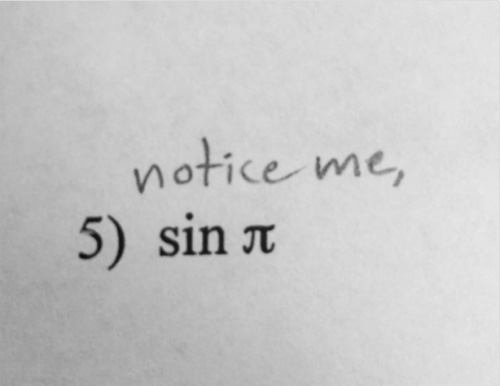
Saturday Morning Breakfast Cereal - The Ethical Fourier Transform

by admin@smbc-comics.com

Hovertext: There's a lot of networking to be done on the Dark Side.


New comic!
Today's News:
16 Aug 18:17

Troubadour

http://oglaf.com/troubadour/

16 Aug 15:28

Bland Monster Jeb Bush “Proud” of His Brother’s Torturing People

by Jon Schwarz

Maybe you’ve seen that Jeb Bush has refused to rule out more torture if he’s elected president. But what’s gone unnoticed — perhaps because Bush is so dreary it’s hard to listen to him without losing consciousness — is he actually said he’s “proud” of his brother’s torture policies.

BUSH: I do think, in general, that torture is not appropriate. It’s not as effective, uh, and the change of policy that my brother did and was then put into executive order form by the president was the proper thing to do. I also would say that right after 9/11, I mean, we were attacked, and, uh, my presid — my brother — and I’m not saying this because I’m a Bush, I’m saying this because I love this country just like everybody in this room — I’m proud of what he did to create a secure environment for our country.

Here are just a few of the things that Jeb Bush is “proud” of:

• The torture of people who were victims of mistaken identity. This included Khalid el-Masri, a German citizen, who was picked up in Macedonia while on vacation and then flown to Afghanistan’s “Salt Pit” black site, where the CIA proudly tortured him. When the CIA realized they had the wrong person, they flew him to Albania and proudly dumped him on the side of the road. The Senate Intelligence Committee’s report on torture made a “conservative calculation” that 22 percent of the CIA detainees were cases of proud, mistaken identity.

• Around 100 U.S. prisoners died during interrogations. A CIA interrogator proudly told a detainee he would never go on trial because “we can never let the world know what I have done to you.”

• The proud tradition of waterboarding, proudly embraced by his brother, was also a favorite torture method of Imperial Japan during World War II, Latin American dictatorships, and Cambodia’s genocidal Khmer Rouge. The U.S. convicted a Japanese officer of war crimes for using it. Many of the torture techniques used by the CIA and the military were proudly modeled on Chinese Communist techniques used during the Korean War to obtain false confessions from American prisoners.

• The CIA proudly subjected at least five prisoners to “rectal rehydration” or “rectal feeding.” According to the Senate report, one prisoner’s lunch of “hummus, pasta with sauce, nuts, and raisins was ‘pureed’ and rectally infused,” thus creating a secure environment for our country.

• An FBI interrogator explained in 2008 that U.S. torture policies had proudly “helped to recruit a new generation of jihadist martyrs” and predicted that “a day of reckoning will come.” Cherif Kouachi, one of the two brothers who killed the staff of Charlie Hebdo, was motivated to become a jihadist by the U.S. torture of prisoners at Abu Ghraib.

Despite all this, it should not go unnoticed that during Bush’s pro-torture remarks he was wearing a very nice, understated tie.

The post Bland Monster Jeb Bush “Proud” of His Brother’s Torturing People appeared first on The Intercept.

16 Aug 04:10

Chelsea Manning having troubles with military brig authorities

by David Kravets

Chelsea Manning, serving a 35-year term for leaking classified military documents to WikiLeaks, is having some run-ins with the authorities at the military brig at Fort Leavenworth in Kansas.

Supporters said Manning is to have an August 18 hearing over having unauthorized books and toothpaste and some minor scrapes with prison guards. The Chelsea Manning Support Network said the woman could be handed solitary confinement because of the infractions:

Chelsea faces this incomprehensibly severe punishment as a result of ridiculously innocuous institutional offenses, including the possession of books and magazines related to politics and LBGTQ issues (which she received openly via the prison mail system), and having a tube of toothpaste that was past its expiration date–deemed “medical mis-use”. The catalyst for this attack on Chelsea seems to have been an incident in the mess hall where she may have brushed, or accidentally knocked, a tiny amount of food off of her table. When aggressively confronted by a guard, she asked to speak to her lawyer.

The reading contraband, the support network said, included "a novel about transgender issues, the book 'Hacker, Hoaxer, Whistleblower, Spy — The Many Faces of Anonymous,' the book 'I am Malala,' an issue of Cosmopolitan magazine containing an interview with Manning and the US Senate report on CIA torture."

Read 2 remaining paragraphs | Comments

16 Aug 03:47

AT&T was the NSA's enthusiastic top surveillance partner

by Cory Doctorow
Bewarethewumpus

Someone remind me, how long was AT&T the sole provider of service to the iPhone?


All the phone companies helped the NSA commit mass surveillance, but the agency singled out Ma Bell as "highly collaborative" with an "extreme willingness to help."

The revelation comes from newly released Snowden docs, spanning 2003-2013. AT&T handed "billions" of emails over to the NSA, provided tech support when the NSA wanted to wiretap the UN, and received more than double the financial support from the NSA as the next-most-enriched telco.

AT&T voluntarily served as the testbed for new NSA spying techniques, for which the NSA was very grateful; NSA agents who visited AT&T facilities were reminded to be on their best behavior: "This is a partnership, not a contractual relationship." AT&T was the first telco to begin mass surveillance of Americans after the passage of the Patriot Act in 2001, turning on spying twice as fast as the competition.

In September 2003, according to the previously undisclosed N.S.A. documents, AT&T was the first partner to turn on a new collection capability that the N.S.A. said amounted to a “ ‘live’ presence on the global net.” In one of its first months of operation, the Fairview program forwarded to the agency 400 billion Internet metadata records — which include who contacted whom and other details, but not what they said — and was “forwarding more than one million emails a day to the keyword selection system” at the agency’s headquarters in Fort Meade, Md. Stormbrew was still gearing up to use the new technology, which appeared to process foreign-to-foreign traffic separate from the post-9/11 program.

In 2011, AT&T began handing over 1.1 billion domestic cellphone calling records a day to the N.S.A. after “a push to get this flow operational prior to the 10th anniversary of 9/11,” according to an internal agency newsletter. This revelation is striking because after Mr. Snowden disclosed the program of collecting the records of Americans’ phone calls, intelligence officials told reporters that, for technical reasons, it consisted mostly of landline phone records.

AT&T Helped N.S.A. Spy on an Array of Internet Traffic [Julia Angwin, Charlie Savage, Jeff Larson, Henrik Moltke, Laura Poitras and James Risen/NYT]

This entry passed through the Full-Text RSS service - if this is your content and you're reading it on someone else's site, please read the FAQ at fivefilters.org/content-only/faq.php#publishers.

16 Aug 01:06

Canadian Goose Befriends Pickup Truck

by Don
Bb4

This bizarre wild Canadian goose follows a pickup truck all the way to the Shinning Bank Lake in Alberta, Canada, where it seems to have finally found peace.

15 Aug 19:24

Retro Games Can Still Make You Tons Of Money

by Kevin Wong

Retro Games Can Still Make You Tons Of Money

The retro gaming industry continues to explode.

CNN reported on the secondary market for vintage games, and the dusty, old cartridges sitting in your mom’s attic are increasing in value — sometimes by twice of what they were valued at years ago. Even The Legend of Zelda, a ‘common game’ that sold for a respectable $12 a few years ago, can now fetch a dealer $25. Rarer games and systems can sell for thousands. One such dealer, Giulio Graziani, discussed the changing times.

Graziani, 50, has been in business since 2003, but says the market only recently began to spike. “Five years ago, I could drive through Texas and stop in little towns and buy everything,” he says. “Now they’re selling games out there for more than I do!”

One might think that online stores, such as the Virtual Console, would drive prices down for these games, due to supply-and-demand. But so far, it doesn’t seem to have had an effect upon demand. Perhaps there’s something to be said for permanent, tactile ownership. And when even the most popular classic games aren’t available through the official outlets, the alternatives must feel tempting.

Advertisement

Image Credit: VentureBeat

Kevin is an AP English Language teacher and freelance writer from Queens, NY. His focus is on video games, American pop culture, and Asian American issues. Kevin has also been published in VIBE, Complex, Joystiq, Salon, PopMatters, WhatCulture, and Racialicious. You can email him at kevinjameswong@gmail.com, and follow him on Twitter @kevinjameswong.

This entry passed through the Full-Text RSS service - if this is your content and you're reading it on someone else's site, please read the FAQ at fivefilters.org/content-only/faq.php#publishers.

15 Aug 16:13

University of North Texas mug

by Rob Beschizza
mug

$10. Designs to reconsider. [h/t Karen!]

This entry passed through the Full-Text RSS service - if this is your content and you're reading it on someone else's site, please read the FAQ at fivefilters.org/content-only/faq.php#publishers.

14 Aug 23:37

Finally, Someone Defeats the Candy Bar!

by Ari Spool
8df

That seemingly indestructible Nokia 3310 mobile phone finally gets what it deserves: a good old-fashioned red hot nickel ball application.

14 Aug 19:53

MeFi: The Web We Have to Save.

by advil
Bewarethewumpus

From the comments:

"If you have to put a date on when the Old Web died, July 1, 2013 is as good as any."

The Web We Have to Save. SLhoder: "The rich, diverse, free web that I loved — and spent years in an Iranian jail for — is dying. Why is nobody stopping it?" (h/t mkb, via ...uh... facebook.)
14 Aug 14:17

Comic: Freaks And Beaks

by tycho@penny-arcade.com (Tycho)
New Comic: Freaks And Beaks
14 Aug 04:27

HOW DO YOU KNOW

Bewarethewumpus

Pretty sure that's Chris Pratt.

dinosaur,hilarious,jesus,noah,Raptor

HOW DO YOU KNOW that isn't noah? I don't see a name tag...

Submitted by: DeCoria

Tagged: dinosaur , hilarious , jesus , noah , Raptor