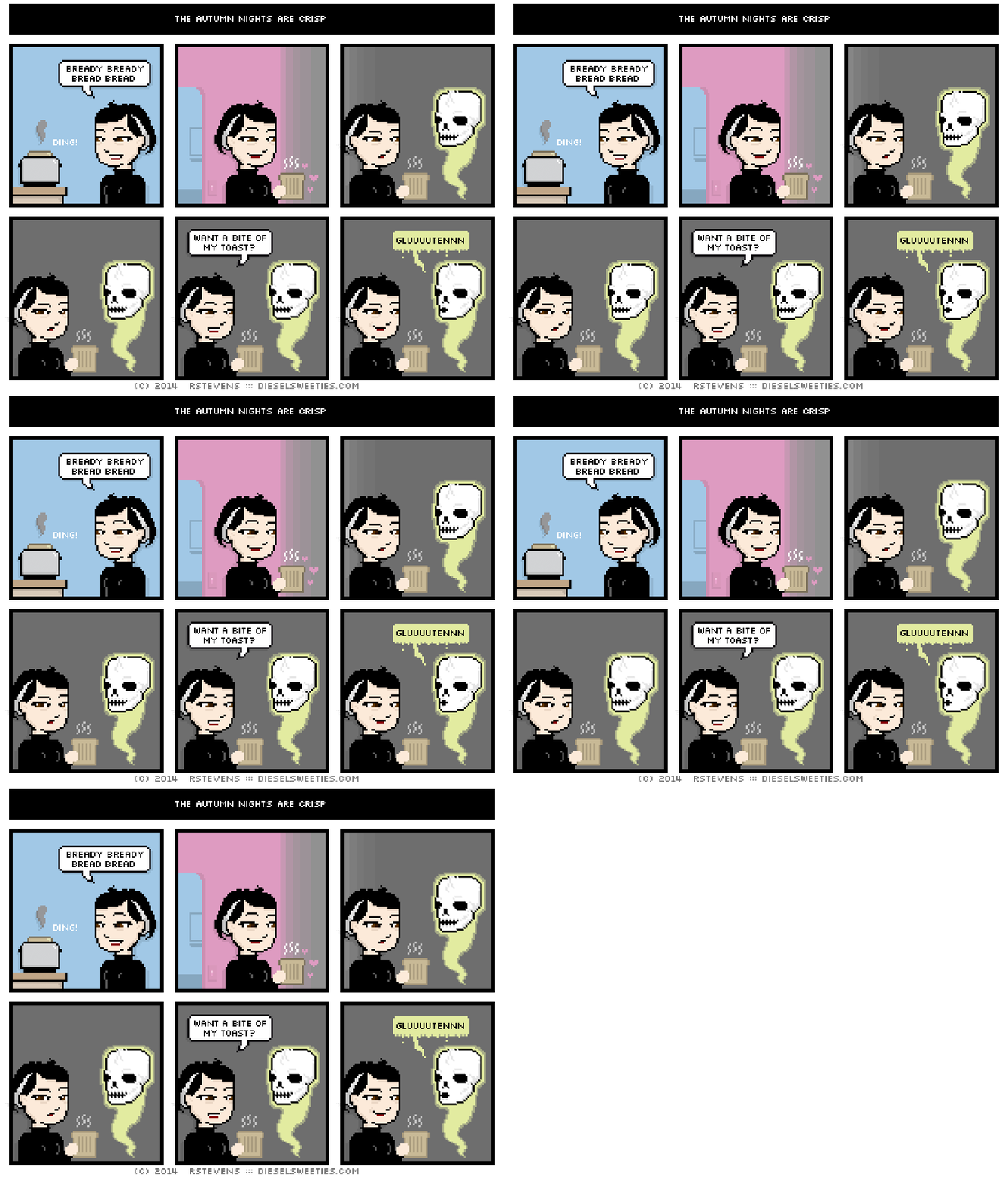
Caitlin used this week’s matchup, along with a Noodler’s brush pen, to sketch an incredibly adorable drawing of an English bulldog. Alex provided a writing sample to show off the duo’s abilities.


Hope y’all have a happy Monday!
TertiarymattWhere is his plate?
via Osiasjota




TertiarymattVC, fucking things up.
 The extraordinary reports coming out of the Balcones distillery in Waco, Texas may yet be seen as the first of many such scenarios as venture capitalists set their sights on the craft distilling industry. The distillery founder, Chip Tate, has refused to attend board meetings with the venture capital group that owns a majority stake in the company; the VC group has, in turn, accused him of what amount to terroristic threats. Whiskey-lovers are up in arms, fearing the outcome for this iconic craft distillery; the Twitter hashtag #nochipnobalcones is spreading.
Here’s what’s happened. The distillery was established — indeed, was literally built — by president and head distiller Chip Tate in 2008 and has subsequently become one of the flagships of the U.S. craft scene internationally. With demand for the Balcones range rising, Tate needed to increase capacity and in, 2013, he and second round investor Michael Rockafellow accepted a substantial offer from a group headed by Greg Allen, along with a number of smaller investors, which bought out Stephen Germer (Balcones’ initial investor), giving them a majority stake in the company.
Allen’s background is with his family’s food processing business. Prior to that he worked in Goldman Sachs’ mergers and acquisitions department and as an attorney specializing in venture capital financing and emerging growth companies.

Chip Tate
It appears that a combination of differing philosophies as to future strategy, a clash of personalities, and concerns over the rising costs of the distillery expansion has resulted in a deterioration in relations between Tate and the new board, with them moving to significantly reduce his role within the company he founded. As a result of this, Tate refused to attend board meetings.
On August 22nd, the boardroom battle ended up in court, where judge Gary Coley granted a temporary restraining order enforcing a 90-day suspension on Tate. According to the board, his “unconscionable and reprehensible” behavior could delay the $10 million distillery expansion project. They also alleged that Tate had threatened the life of chairman Greg Allen and suggested he would rather see the distillery burn than have it wrested from his control, claims which most commentators feel were made in the heat of the moment and are hardly credible.
While Allen has made some documentation available to the court, the restraining order has gagged Tate, preventing his side of the story to be heard. (For the record, we have not attempted to speak to him, nor have we received any communication from him.) A hearing in the case is set for Sept. 18.
It leaves a number of questions. The extreme reaction of the board to the apparent rise in costs of the new facility (inevitable in any distillery build) has raised questions as to the financial stability of Allen’s investment group, and makes some analysts wonder whether the Allen-led consortium was investing in Balcones with the intention of selling it at a profit soon after the expanded plant was in production.
If so, this will not be the last time we will see this happen. Investors unfamiliar with the long-term nature of the whisky business are liable to only see potential profit, with no great understanding of the deep pockets required to invest in plant, warehousing, and inventory. What further complicates matters where craft distilleries are concerned is that they are not just buying into a brand, but a highly personalized vision. Without Chip Tate, is there — can there be — a Balcones?
Photo: darkrye.com
The post The Balcones Controversy appeared first on Whisky Advocate.
TertiarymattCan't remember whose share I saw this on... but worth sharing again. Very much.
TertiarymattA song that I think is about the death of their father.
TertiarymattThese look reasonably nice.
 |
| Faber-Castell Basic in Black Carbon |
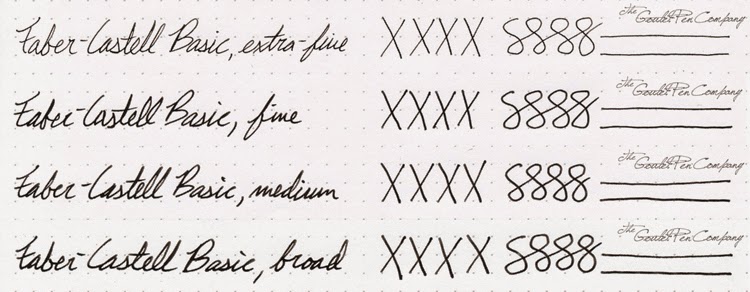


The Pen and Cape Society has just released the eleventh chapter of the Super Choice Adventure, a group fiction project where you, the reader, gets to vote who writes the next chapter.
Chapter 11 was my turn, and things got a little out of hand.
By "a little out of hand" I mean "the average chapter has been around 1400-1500 words and my initial draft came in at 3600 FREAKING WORDS so I pared it down to 2750 FREAKING WORDS which is still too much but I ran out of time so there it is."
Anyway: The Super Choice Adventure Page, for those of you who are curious but who haven't been following it. And Chapter 11, my ridiculously overgrown contribution, for your consideration and enjoyment.


TertiarymattBOOTYBOOTYBOOTYBOOTY

TertiarymattStill not sure I shouldn't be making liquor.
 I hate articles that begin with a dictionary definition, but defining ‘craft’ as it applies to whiskey making is our purpose here, so let’s see what the dictionaries say.
“An activity involving skill in making things by hand.”
“Denoting or relating to food or drink made in a traditional or non-mechanized way by an individual or a small company.”
“An art, trade, or occupation requiring special skill, especially manual skill.”
And then there’s this:
“Skill used in deceiving others.” As in, “He used craft and guile to close the deal.”
That last one is archaic but relevant, because everyone these days wants to claim the word “craft” and apply it to their company and its products. That includes the largest companies in the business. This shouldn’t surprise anyone. The world’s largest beer makers have been trying to co-opt “craft brewing” for decades.
In a recent conversation with Chris Morris, he cited the dictionary. Morris is Brown-Forman’s master distiller and the occasion was a press event to launch a new craft series for Old Forester Bourbon. (It’s pretty cool, but more on that later.) Morris said, “The dictionary says craft is about experience, knowledge, and skill. We have all those things.”
Ewan Morgan, a Diageo brand ambassador for whiskies, puts it this way: “Craft is about artisanship, passion, experience, great liquid, great products.”
I’m not going to quarrel with the big guys — not here, anyway — but the problem with their point-of-view is this. “Craft” cannot merely mean “well made.” If everything is craft, then nothing is. The word becomes useless as a way to distinguish something from something else.
If the definitions above are vague as applied to craft spirits, the American Distilling Institute (ADI) has one that is very specific. It defines “craft spirits” as “the products of an independently-owned distillery with maximum annual sales of 52,000 cases, where the product is physically distilled and bottled on site.”
Jackie Summers is a craft spirits producer in Brooklyn, New York, who makes an enticing liqueur called Sorel. He doesn’t distill anything. His craft is working with and combining botanicals and other natural ingredients to produce a drink that is original, even as it seems familiar. He is also skilled at crafting thoughts.

Mastering the craft
“Before the advent of public education,” he writes, “people learned a trade through the apprenticeship model. Apprentices would begin to study with a master in their mid-teens, and continue into their early twenties. It was not until you took on your own students that you could claim mastery yourself. By this method, generations of skills were handed from one to the next — you honed your craft — based on a simple principle: you don’t become great by trying to be great. You become great by doing something over and over again, learning as you go. Greatness is a process. As Aristotle said, we are what we do repeatedly.
“Ultimately craft distillers see themselves as artists, their distillate being their art,” he continued. “Sure, you could start off with a concept, hire food scientists to chemically analyze and then reverse engineer a liquor. But what makes small batch production special is the tiny inconsistencies from batch to batch that give a product character; the miraculous way one bale of wheat may differ ever so slightly from the next, or how actual botanicals play and dance with each other in a way that chemical compounds can only imitate. Remove these tiny fluctuations, and the end result is sterile perfection.”
Now we’re getting somewhere.
Craft is about things made, not necessarily from scratch, but where an artisan effects some kind of transformation. For something to be “craft,” an artisan must conceive and execute an idea, and it must be a production idea, not a marketing one. The craft performed must directly impact the product, not merely the packaging and promotion of it. And the artisan himself or herself must do it, perhaps with assistance (e.g., apprentices, journeymen), but the unmistakable mark of the master’s hand must be on the final product.
Craft has nothing to do with the size of the company. It is the product that represents the craft, not the producer. A corporation may be a legal person, but a corporation cannot be an artisan. A corporation cannot be a master distiller.
The artisans working at the producers most recognized for their craft whiskeys — Balcones, Koval, Corsair, Few, Dry Fly — do it with their mastery of the materials, equipment, and processes; but also with innovation, originality, and creativity. They do things that haven’t been done before and create products unlike anything you’ve ever tasted before. That’s what the consumer wants from ‘craft.’
To make sure you get what you want when you want craft whiskey, get used to asking producers and promoters this question about their craft products: “What’s ‘craft’ about it?”
The post What Is Craft? Wouldn’t You Like to Know? appeared first on Whisky Advocate.
TertiarymattA whisky related take on Scotland for Scots.
Though if they stick with the pound, that would be really dumb.
 Ian Buxton has some thoughts about the upcoming vote on Scottish independence. Not surprisingly, they center on its effects on Scotch whisky. Be honest; that’s exactly the way many people who read this blog evaluate it!
At last! At last, the Scotch whisky industry has woken up to the potential dangers of a ‘yes’ vote in the Scottish Independence Referendum (you can explore the issues, facts, opinions, and polls on a BBC site here).
In summary, on September 18th, voters in Scotland will give a YES/NO answer to a simple question: ‘Should Scotland be an independent country?’
The question is a momentous one, involving the break-up of the 300 year old United Kingdom and turning Scotland and England into foreign countries. The debate has run on for nearly two years, with no final and satisfactory answers to questions such as ‘what currency will Scotland use, and on what basis?’, ‘will an independent Scotland be part of the European Union?’ and ‘how will all this be paid for?’

The expectation is that if Scotland breaks away it will follow a more left-wing political and social agenda than has previously been the case for the United Kingdom as a whole. The nationalist case is that Scotland, a country rich in natural assets, can well afford to stand on its own. The North Sea oil fields are frequently mentioned as a major source of income, though as the No campaign loudly responds, eventually the oil will run out. No one knows exactly when, but that the wells will finally run dry isn’t in dispute.
That leaves whisky as one of the few remaining national assets that can’t easily get up and leave (a large part of the significant Scottish financial community could well decamp to the City of London). The fact that Scotch whisky has to be made and matured in Scotland means that it will inevitably be a long-term tax target for any future government of an independent Scotland.
The political arguments are good: the industry uses Scotland’s water but currently pays relatively little tax in Scotland itself and, while it creates employment, the high-value management jobs tend to be out of the country. Much of the economic benefit of Scotch whisky flows not to the people of Scotland, but to anonymous global multinational corporations. A tax on water extraction would be easy to measure and very hard to avoid. Why shouldn’t they pay their share?
It’s a seductive argument. What’s more, as well as a water tax, one could easily anticipate a ‘storage tax’ on every barrel slowly maturing in a Scottish warehouse (similar to Kentucky’s ad valorem tax on aging bourbon; you could expect many more NAS whiskies if that ever came in!). The current political administration of the Scottish National Party, who run the present Scottish administration, are also deeply committed to higher taxes on alcohol on grounds of health and social policy, so the price of a dram or a bottle could shoot up after a Yes vote.
You might have thought then that the Scotch whisky industry would have been lobbying hard against the independence vote and stressing the benefits of the union. But until very recently we’ve heard little; the corporate line has been “it’s for the people of Scotland to decide.”
At last, however, they have started to fight. First to break cover was former Scotch Whisky Association chief Gavin Hewitt, who has set out a clear personal position in mainstream and social media. He’s no enthusiast for an independent Scotland. “Scotland would lose influence in the world and the clout that a big country has with [EU headquarters in] Brussels; lose access to a superb network of UK embassies and trade support, and I am concerned about the consequences [of a 'yes' vote] for whisky. If it ain’t broke,” he argues “then don’t fix it.”
But Gavin is just one man. That’s not the case with William Grant & Sons’ donation of hard cash to the Better Together campaign and other pro-Union groups. Earlier this year they gave £185,000 (more than $300,000) and have been vocal in support of the status quo.
Now they’ve been joined by a number of distillers who were part of a joint letter to The Scotsman newspaper signed by 120 leading Scottish businesses which argued the case for the continued union with England. It included some impressive names such as the chief executives of the Edrington Group (Famous Grouse, Macallan, Highland Park), Inver House, Burn Stewart, and William Grant & Sons, as well as smaller concerns such as Tomatin, Adelphi, Ian Macleod Distillers (Glengoyne), and so on.
Well done, I say… and where are Diageo, Pernod Ricard, and Bacardi? This issue is simply too important to let go by default. It’s my opinion that the companies are making a mistake: they should have a view and they should express it, quickly and clearly. Their employees and customers deserve no less. This is too important a subject: Scotch whisky does not belong to Scotland alone, and the drinkers of England and Wales, let alone the wider world, want to hear the distillers’ voice: loud and clear.
Scottish Independence, if it comes, may well be good for whisky’s image, yet also, as I have suggested, push up prices. Whisky drinkers may welcome a greater strength of national identity and the proud confidence of a newly-formed nation, but will those drinkers be willing to pay more to toast an independent Scotland?
That’s the key question that no one can answer. But one thing is sure: if Scotland votes to go it alone, there will be no way back and nothing will be same ever again for the nation’s most famous export.
On September 19th we will know for sure.
photo: http://photoeverywhere.co.uk/
The post The Vote For Scottish Independence appeared first on Whisky Advocate.
Tertiarymattsigh.

TertiarymattNeed to get a bottle of this. The 114 is rather less common in my area, though.
Old Grand-Dad 114 is a high rye (recipe) bourbon that’s……well, the grand-dad to the 100 proof Bottled-In-Bond (BIB) version I reviewed a couple years ago. As I noted in that review, the “Granddad” pays homage to Basil Hayden. Mr. Hayden was well known for favoring more rye in his bourbon mashbill than was common (even today). While we don’t know the exact percentage of rye, it’s up there. The brand is owned, distilled and bottled by Beam.
Let me say before tucking in – it’s comforting to get the reviews flowing with something that is available to most, and a reasonable (sub $30) price point.
 Old Grand-Dad 114 Bourbon (Bottled in Bond), 57% abv (114 Proof), $28
Color: Deep Amber
Nose: This bourbon’s attitude is airy and effervescent even at full strength. Orange rind, burned sugars, honey, southern spearmint, touches of floral (orange blossom, honeysuckle) notes and grain (corn and dry rye). Pour and leave in the glass for a good 3-4 minutes. The initial alcohol blast quickly subsides and you can get to business.
Palate: Brief notes of honey, bitter orange, caramel and vanilla yield to warming spices (cinnamon, mint, white pepper). Barrel flavors and a bit of resiny grip lead to the finish.
Finish: Lingering finish of toasty oak, orange, and caramel sweetness.
Overall: OGD 114 is a very good bourbon and it’s different. It’s one of those whiskeys, like the 100, that you just don’t taste all the time. It’s NOT a heavy whiskey in terms of nose and flavor, but the proof nips in spots. Water is your friend, and it’s easily to dial this one into a comfort zone for you.
Sour Mash Manifesto Rating: (8.7 Very Good/Excellent)
Tertiarymatt...so today I learned Joan Rivers died from Metal Sucks.
Before she was late, natch.
The post Watch the Late Joan Rivers Interview GWAR and Van Halen’s David Lee Roth appeared first on MetalSucks.
TertiarymattMore on that.
Trsst is a system of social communications that supports the open web, protects freedom of speech, affords proof of authorship, protects privacy and anonymity, and allows content creators to be compensated for their work.
Existing means of social communications, particularly popular services like Twitter and Facebook, are lacking on all of these counts. In that the content generated on these services is largely unreachable except to members of these services, and that these services no longer support open web standards like RSS, they do not support the open web. In that these services are controlled by corporations, the shareholders and directors could at any time overturn any commitment or promise of privacy or anonymity. In that these corporations operate with license from and under the jurisdiction of a government, these governments have many times legally compelled them to do so. Most if not all governments today actively engage in covertly tracking the communications of their citizenry. And most bloggers today will readily acknowledge the difficulty of making money writing for the web, especially the social web.
Trsst is social. It supports the common use cases of web logging software, the common use cases of microblogging software, and the common use cases and idioms of social networking applications.
Trsst supports the open web. It works with existing web browsers, desktop and mobile, and no external applications or native software is required. Users can follow existing content feeds without modification, and existing feed readers can follow users' feeds. Private content is kept private, while public posts are search-indexable and open to the world without forced membership or specialized software.
Trsst supports freedom of speech. Creating content with Trsst affords both anonymity and proof of authorship. A user's blogchain provides proof against censorship in the form of message tampering or individual message suppression or omission. The syndicated network protects against censorship by network server blacklisting or keyword filtering.
Trsst protects privacy. It affords encrypted private communications between individuals and encrypted private publishing to groups of individuals. It allows anonymous authorship. Servers host only encrypted content that they are unable to read because only the user holds the decryption keys.
Trsst fosters mainstream adoption of digital currencies and compensates content creators for their created content. In Trsst, every user account is a digital wallet. Authors and individual pieces of content can receive secure and anonymous micro-payments of digital crypto-currency, enabling long-envisioned content monetization schemes where authors receive small payments each time their content is consumed, shared, or "liked". Trsst allows these payments to be made anonymously to an author, to a site, and on each individual piece of content where-ever it is syndicated or appears on the web.
Because revolutions are started on social networks like Twitter and Facebook, and dissidents, informants, confidential sources, journalists, and those they trust all rely on these services, our method will better preserve their causes, their freedom, their livelihood, and their lives.
A user is a person who reads or writes blog entries. Users create accounts to follow other users' accounts to read their entries, and some users create entries on their own accounts for other users to follow.
An account is a persona created by a user for the purpose of authoring blog entries. Entries belong to an account, and an account belongs to a user. A user can have multiple accounts, but a typical user will only need one. The relationship between an account and a user is hidden by default, preserving the user's anonymity.
A nickname is a optional human-readable text string used to describe an account. A nickname is required to be unique among all nicknames for all accounts managed by a server, such that an address of the form nickname@hostingprovider.com and/or nickname.hostingprovider.com is globally unique. The globally unique form of the nickname becomes an alias for the account public key.
A tag is a short text string usually comprised of a single word and used to categorize entries. Often they are preceded with a hash symbol; for example: #cats, #dogs, and #alpacas. In RSS parlance, this is a category.
A mention is a reference to an account or nickname that is embedded in an entry. A user mentions an account in a blog entry to bring that entry to the another user's attention.
To follow is to subscribe to a feed of a user's blog entries. Users follow one or more other users to receive a stream of entries from all of those users.
A feed is a document retrieved over a network connection, usually over a web protocol and usually in an xml-based format, that contains header information about an account and one or more entries or summaries of entries from a blog.
A client is the software running on the user's computing device to read and write and store entries. A client can be a native software application, or a software script downloaded to and running in a user's web browser or other execution environment.
A server is taken to mean a single physical server, a collection of servers residing on a cloud infrastructure, or a company providing servers in either of those two contexts.
A syndication network is a federation of servers that all agree to adhere to protocols of sharing feeds such that users' entries are propagated across the network for efficient retrieval, fault-tolerance, and resistance to censorship or suppression.
A keypair in terms of public-key cryptography is the pair of a private key and its corresponding public key. Each user's account corresponds to a keypair, and the public key is the account's unique identifier. The keypair is generated as a valid payment address in a crypto-currency system such as Bitcoin. The account's private key is held by a user in secret and kept in a keystore.
A keystore is an encrypted file that contains all of a user's keypairs: one for each account, and possibly more that are directly associated with individual entries or additional crypto-currency payment addresses.
A blogchain is a chain of entries linked together such that each digitally-signed entry contains the digital signature of the entry that directly precedes it. In this way, the integrity of the chain can be validated, and any missing or modified entries can be identified. Entries created on an account are added to the blogchain for that account.
The operation of the system is described through individual use cases from the perspectives of the user and the server.
To begin using the system, the user obtains a client which creates a keystore. The client encrypts the keystore with a user-specified password which is subsequently used to access or modify the keystore.
The user next creates one or more accounts. For each account, the client generates a keypair, and stores it in the keystore. Each account's public key is the globally unique identifier for that account.
The keypair generation uses the same scheme as a crypto-currency key generation scheme, such that the public key of the keypair is a valid payment address for a crypto-currency such as Bitcoin.
The user may optionally attach personally identifying information to the account, such as a personal name, nickname, and/or url to an icon or image; or, the user may choose for this account remain anonymous. In either case, the publicly unique identifier is the public key of the account.
The user may create one or more entries on an account.
An entry consists of a globally unique identifier, a timestamp, and optional additional attributes including but not limited to:
In some cases, the globally unique identifier may be a valid payment address for a crypto-currency such as Bitcoin. In this manner, users can be compensated for specific pieces of content they generate, and the payment address will convey with the content where-ever it appears within the syndication network, or beyond.
In the common case, the user writes the short text summary, and optionally one or more mentions of other accounts to bring the entry to the attention of the users of those accounts, and optionally one or more tags to help categorize the content of the entry.
The user decides whether to post an entry publicly or privately.
In the default case, the user decides to post the entry publicly so it is visible to everyone. In this case, the client signs the entry using the account's private key and then adds the resulting message digest as an attribute on the entry. Other clients can use the account's public key to verify that the entry was created by that account, and that it was not modified since signing.
If an account has more than one entry, the message digest of the most recently created account is included as an attribute on the newly created entry before its message digest is generated. In this way, each entry forms part of a blogchain with all other entries, and each entry can be used to verify the existence of the immediately previous entry, and to verify that no entries were tampered, deleted, or otherwise suppressed.
In some cases, the user decides to post an entry privately so that only the user of another account can read it. In this case, the entry is encrypted with the public key of the other user's account so that only the account owner can use their private key to decrypt it. The encrypted data is signed to generate another message digest in unencrypted form to be used with the next new entry.
If the content size exceeds a specified threshold, the entry is compressed with a known compression algorithm (such as gzip) before it is encrypted.
If the encrypted entry contains attachments, these attachments are compressed and encrypted using the same key and in the same manner but may be stored separately.
When the entry is encrypted, the intended recipient account will know about the entry only if it is following the authoring account. To bring an encrypted entry to the attention of the intended recipient account that is not a follower, the user may decide to add one or more mentions or tags to the entry in unencrypted form.
When a user wants their account to follow another account, it posts a public entry mentioning the target account with an attribute action verb such as "follow". The entry may contain multiple mentions to follow multiple accounts.
When a user wants their account to stop following an account, it posts a public entry mentioning the target account with an attribute action verb such as "unfollow". The entry may contain multiple mentions in order to stop following multiple accounts.
Some clients may allow users to follow accounts without posting public entries.
When a user's account is following one or more accounts, the client retains information about each account, including the account's home server if any, and periodically requests entries for all followed accounts from the user's home server if any, or the home server of each followed account if any, or from any server participating in the syndication network.
The client displays entries from the user's own accounts and from any remote accounts that are followed by the user's accounts. Clients have complete freedom and latitude to render entries in whatever manner desired: some clients may resemble Facebook or Twitter or Google Reader and others may resemble conventional web pages, threaded discussion forums, or even email clients.
When the client encounters an encrypted entry, it attempts to decrypt the entry using: its own private key (in which case the entry was a private message intended for the user's account) and every group public key previously received in previous private messages from the originating account, until either the message is decrypted or all keys have failed to decrypt the message.
When an entry contains attachments, the client may fetch each attachment and render it inline with the entry or otherwise may provide means for the user to fetch the attachment. If the entry was encrypted, the attachments are decrypted with the same key used to decrypt the entry.
When a user wants to post private entries to an account to be read by more than one other user's account, the user creates a "group" in their account. To create a group, the client generates a new keypair associated with this group in the keystore, and the user can associate descriptive information with the group, such as "Friends" or "Family".
When the user wants to add another user's account to a group, the client posts a private entry to their account encrypted for the target account and containing the public key of the group as the short text string or optionally as a separate specific attribute on the entry. In case the target account does not follow the user's account, the user may add a public mention of the target account as described above.
The client may also post a private entry to the group (see below) mentioning the newly added account with an attribute action verb such as "invite".
A user posts a private entry to a group by encrypting an entry with the group's private key. The entry is otherwise created and treated as any other private entry. In this manner, all accounts that have the group's public key at the time the entry was posted can decrypt and view the entry.
To remove accounts from a group, the client creates a new keypair for the group and stores it in keystore. Then, for each account that has not been removed, a private entry is posted, encrypted for the target account and containing the new public key of the group as the short text string.
The client may also post a private entry to the group using the new key and mentioning the removed accounts.
All future posts to the group are encrypted using the new private key for the group. In this manner, new content intended for the group is no longer visible to accounts that were removed from the group. Previously existing entries will remain visible to the removed user unless the entries are edited and/or deleted (see "User edits an entry") causing those entries to be re-encrypted with the new key.
When a user deletes an entry, the client posts a new entry referencing the target entry and including the message digest of the deleted entry and the message digest of the entry immediately preceding the deleted entry. In this manner, clients can maintain and verify the integrity of a blogchain that includes deleted messages.
All attributes of the target entry are deleted except for the unique identifier and timestamp and a syndication preference that tells other servers on the syndication network to cease and desist redistribution of the previous entry and to delete any stored copies.
When a user edits an entry, the user may decide whether to preserve the the target entry, or delete it.
If the target entry is preserved, the client generates a new entry referencing the target entry and containing the attributes that are changed. In this manner, the change history of the particular entry is preserved and may be rendered appropriately in the client. The attributes themselves may contain a standard markup notation (such as diff notation) such that only the portions of the lengthy attribute values that are modified need be contained in the attribute values of the new entry.
If the target entry is deleted, the client modifies the target entry and posts another new entry referencing the deleted entry as described above (see "User deletes an entry").
Trsst encourages and supports standalone client nodes that publish entries to the syndication network. However, in practice, most users will contract with a server, subsequently known as their home server, to reliably store that user's keystore, entries, and attachments, as well as serve feeds, entries, and attachments, send notifications to the user and/or the user's client, and/or relay these items to and from other servers participating in the syndication network. The terms of the contract are negotiable between the user and the server, and servers should differentiate themselves based on cost, storage capacity, performance, and terms and conditions.
In the common case, the user downloads the client software from their home server and allows it to execute in a web browser on a computing device. The user may choose to use other kinds of client software including kinds that execute independently of a web browser. The user may choose to obtain the client software from a hosting provider other than their home server.
When a user has posted new entries to one or more of their accounts, the entries may be submitted to one or more servers. The client submits each entry to the user's home server, if any, and optionally to the home server of each account mentioned, and optionally to one or more other servers in the syndication network. See "Pushing a feed to a server" below.
When entries are transmitted between client and server or between server and server, the interchange format is called a feed. A feed contains a header with identifying information about the account and a body containing zero or more entries.
The header can contain attributes optionally including but not limited to:
This interchange format conforms to an existing standardized format such as RSS or Atom with standardized extensions to the format as needed.
All client-to-server and server-to-server communications are conducted over HTTPS. In this manner, all entries, including public ones, are encrypted and the entries cannot be filtered or suppressed by third-parties based on content.
Feeds can be pulled from a server, or pushed to a server.
A requestor -- either a client or a server -- requests a feed from a server by sending a network request containing the public key of an account and optional additional parameters to sort and/or filter the entries in the resulting feed. The server responds by generating and returning a feed containing entries for the specific account including header information for that account.
In some cases, requestors may request entries in a given time window; for example, all entries posted in the past two weeks, or all entries posted in July 2013. In the common case, requestors may request all entries for an account posted after the specific point in time when that client last fetched entries for that account. In this manner, requestors can efficiently request just the updates made to an account in order to keep their local copies of the account's metadata and entries synchronized with the rest of the syndicated network.
In some cases, requestors may request entries that match certain tags and/or mentions and/or verbs. In these cases, the resulting feed contains only the entries for that account that contain those tags and/or mentions and/or verbs. Some servers may allow the account identifier to be omitted in this cases, in which case the server returns all matching entries from all accounts who use that server as a home server, or more broadly, from all matching entries stored on that server regardless of home server.
In some cases, servers receiving requests may make requests to other servers to retrieve the entries needed to satisfy the original request. In this manner, entries from accounts whose home server has been blocked or otherwise deactivated or unreachable will continue to be distributed and accessible across the syndication network. The request will include the history of triggering requests such that a request does not create a cycle and search depth can be curtailed during high load conditions.
In all cases, requestors may combine request parameters such as account identifiers, time windows, tags, mentions, and/or verbs, with logical boolean operators, to achieve the desired outputs.
In all cases, servers may truncate or paginate responses as they see fit, and in such cases must communicate to the client that the results are incomplete.
A submitter -- either a client or a server -- submits a feed containing zero or more entries to a server. In the common case, a client is pushing newly created entries to its home server, but clients may also push directed entries to the home servers of mentioned accounts, and servers may also push selected entries to other servers as part of their participation in the syndication network.
When a server receives a feed, it may validate the feed's header and individual entries against the public key of the associated account. Feeds and entries that do not validate may be rejected. Servers may also reject entries for other reasons, including for example rejecting entries from accounts not followed by accounts hosted by this server, or rejecting entries from accounts not hosted on this server.
When a server accepts an entry, it stores the entry and optionally any attachments, and optionally submits the entry to the home server of each mentioned account, and optionally to one or more other servers in the syndication network. As an optimization, the two parties may collaborate to determine which party can most efficiently relay these entries to the home servers of mentioned parties or other servers in the network.
A server may decide how long to store entries and attachments based on factors including but not limited to: the syndication preference specified by the account and/or the entry, the size of the data, how frequently it is requested, how many of its users' accounts follow the account, and whether the accounts related to the entry are in contract with the server. Users may enter into contract with one or more servers to store the user's keystore and all the entries and attachments for its accounts and/or provide expedited syndication for those entries.
TertiarymattOkay, so this is an open source, encrypted, RSS based twitter-replacing thing?
If you support our goals,
please do the following three things:
Click to pledge on 
Just making a pledge is the big thing, whatever the amount.
Email someone you think would pledge
This is a huge factor in successful kickstarters.
Thanks for your support!
TertiarymattNew Earth!
Earth as it is in Heaven! U jam!!
The post Listen: Earth’s Primitive New Stunner appeared first on MetalSucks.
TertiarymattSome interesting stuff in here. The opening Wolf Blood track is way psychedelic/bluesy. The Grey Heaven Fall video, meanwhile, makes me think of skinny young dudes in corpse paint running around the woods while Yakety Sax plays. Like, that's going on in my head simultaneously with the actual song.

Yes, I’m feeling much better today, thank you for asking. My day-long hangover yesterday was so catastrophic that I couldn’t bring myself to listen to any metal at all — so you know it was a really bad one. Having finally recovered overnight, I decided to do some catching up on this Sunday morning. In thinking about what music to package in this post from what I heard, I decided to make it a globe-trotting musical tour of the underground. It’s all death metal until the final two songs.
SULLEN
Sullen are a fairly new band from beautiful Isla Margarita in Venezuela whom I discovered after the band’s guitarist e-mailed us yesterday. They’ve recorded a four-song EP released earlier this month named Parasite In Agony, which includes a creepy intro, two original songs, and a cover of Venom’s “Resurrection”.
It’s a strong offering of tyrannical death metal that’s both thoroughly malignant and quite memorable. The songs are loaded with big, sour, earth-moving riffs, fine (and surprisingly soulful) guitar solos, viciously pugilistic percussion, and pleasingly throaty, blood-gargling vocals. I thoroughly really enjoyed this stomping, jagged-edged, skull-fracturing EP. It’s well-written, well-performed, and well-produced. Listen below.
https://soundcloud.com/sullen-death-metal
https://www.facebook.com/sullendeath

NOKTURNEL
From Venezuela we move to Leander, Texas, home of Nokturnel. This band released their first album way back in 1993 and crawled back from the grave with a second album in 2001. Their most recent work is a new song named “Wormhole”, which I found out about when the band’s vocalist/guitarist Tom Stevens messaged us on Facebook. “Wormhole” is available for free download on ReverbNation, and I’m really digging it
It’s vicious and voracious, with an aura of incurable pestilence hanging around it, and it’s also a dynamic song that will get its hooks in you firmly. It drives like a tank brigade on the attack and is just as heavy and destructive. Within the barrage you’ll find some creative guitar work and a face-melting solo. Also, Tom Stevens sounds like a wild animal.
I’m including two players below — one from ReverbNation and one from Bandcamp, where the song appeared on the Grinding For A Cure Vol. 4 compilation.
http://www.reverbnation.com/nokturnel/song/21455297-wormhole
http://grindoplis420.bandcamp.com/track/nokturnel-wormhole
https://www.facebook.com/pages/Nokturnel/149046265125068

CANOPY
Now let’s leap the Atlantic and visit some dear old friends from Sweden.
Canopy’s last album Menhir (available on Bandcamp) was released in 2010. I named the title track to our list of 2010′s Most Infectious Extreme Metal Songs, but it only barely nosed out another song from the album for that accolade. That other song is “The Entire City”. It was one of my favorite songs of that year, and of every year since then. Yesterday Canopy released a music video for the song, which is really just a montage of photos, but it reminded me of how fucking much I love “The Entire City”.
https://www.facebook.com/pages/Canopy/7778617518
GREY HEAVEN FALL
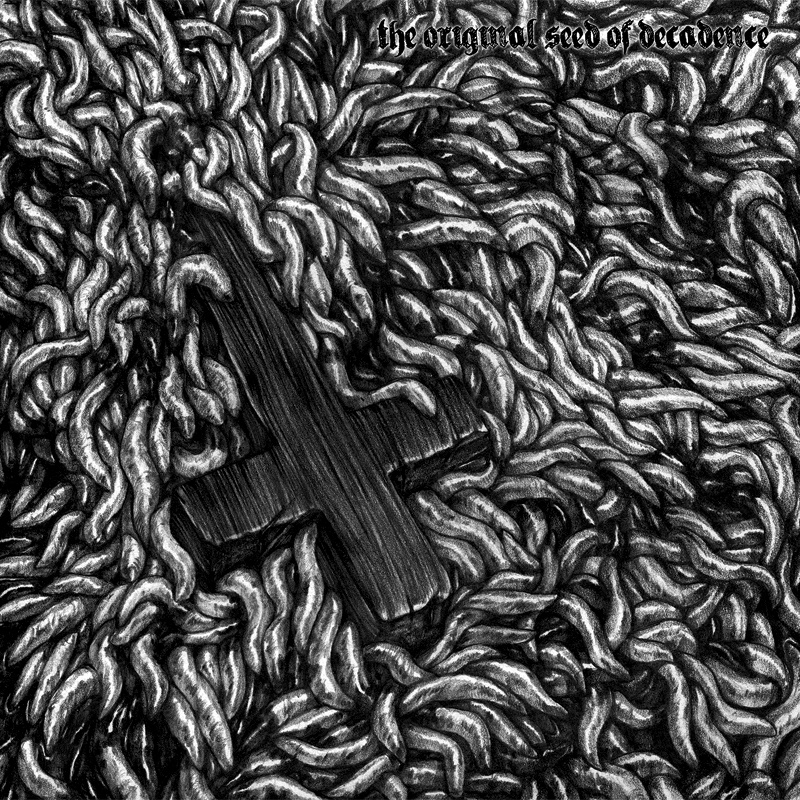
Now we move east from Sweden and visit the music of a Russian band named Grey Heaven Fall, who also contacted us on Facebook recently. They released a self-titled debut album in 2011 and then a split last year with Twilight Is Mine; the Grey Heaven Fall side of the split is entitled The Original Seed of Decadence. They are planning to release their second album by the end of this year.
In an effort to get a sense of the band’s music I found a stream of one of their two songs from that 2013 split release, and it’s very good. If you’re looking for a total blast of super-charged black/death devastation, look no further than “Abomination of Divine”. It brings a raging storm of flensing riffs and punishing rhythms, but the song becomes even more interesting when the band ease up on the gas in the mid-section and a warm bass presence surfaces briefly — before a phalanx of head-hammering riffs come down like pneumatic rain. Very cool guitar solo in here, too, along with imperialistic vocal might. I’ll be watching for that new album…
UPDATE: After writing this post I discovered that both of the Grey Heaven Fall songs from the split are available on Bandcamp, so I’ve added that link as well as the Bandcamp stream.
https://www.facebook.com/greyheavenfall
http://aestheticsofdevastation.bandcamp.com/album/the-original-seed-of-decadence-ep-split
http://aestheticsofdevastation.bigcartel.com/product/grey-heaven-fall-twilight-is-mine-the-original-seed-of-decadence-age-of-aquarius
DHWESHA
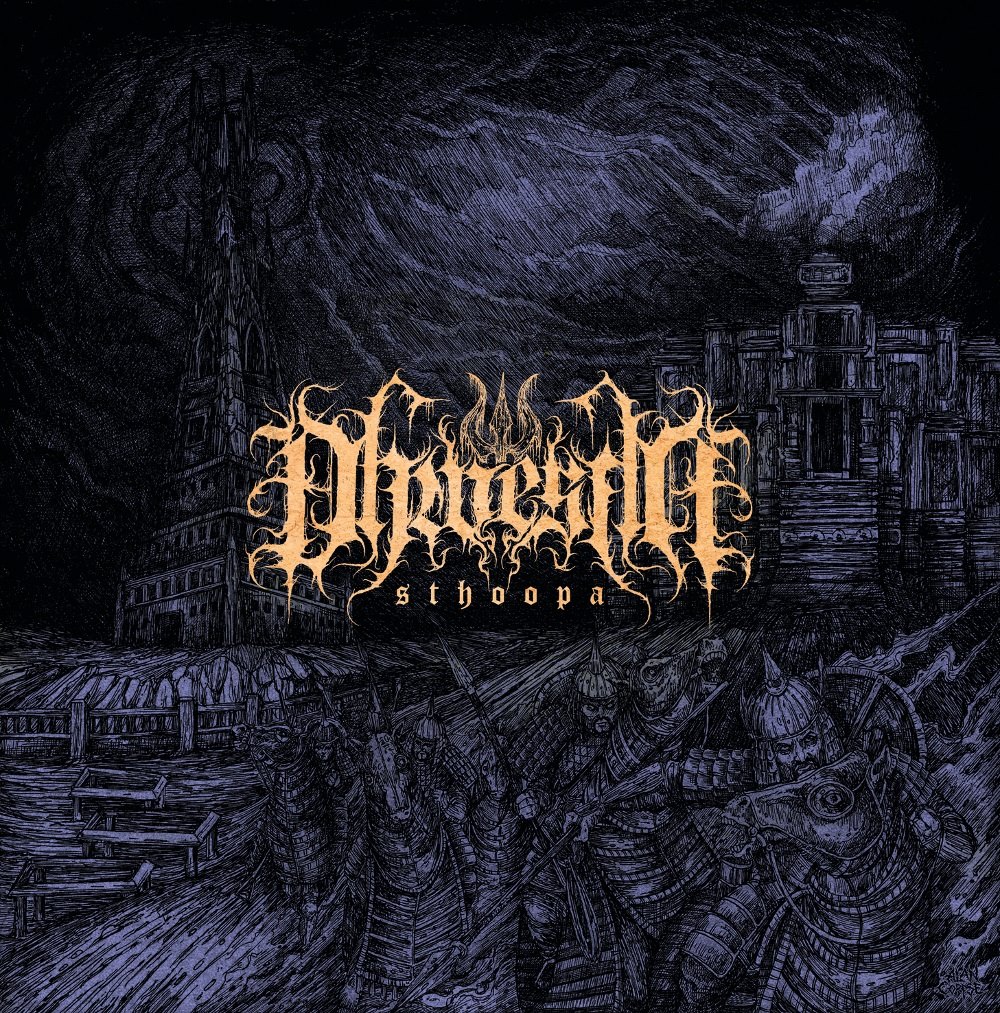
Moving south we next visit Bangalore, India, home of the death metal band Dhwesha. They’ve recorded a debut album named Sthoopa (the very cool cover art for it is above) that will be released by Dunkelheit Produktionen next month. I found an impressive song from the forthcoming album on Soundcloud named “Kapala Haara”. It opens with a mournful, doomed-sounding introduction but then opens the throttle and begins to race. It hits with militaristic force, grisly grinding riffs and high-speed drums combining to drive the threat level into the red zone. There’s a subtle Eastern flavor to the melody that enhances the appeal of this potent death assault. Fans of bands like Suffocation should eat this up.
UPDATE: After writing this post I found another song from the new album on Bandcamp. This one is the title track, and I’ve added it below.
https://www.facebook.com/pages/Dhwesha/203586443016525
https://dunkelheitprod.bandcamp.com/track/sthoopa
http://www.dunkelheit.cc
WOLF BLOOD
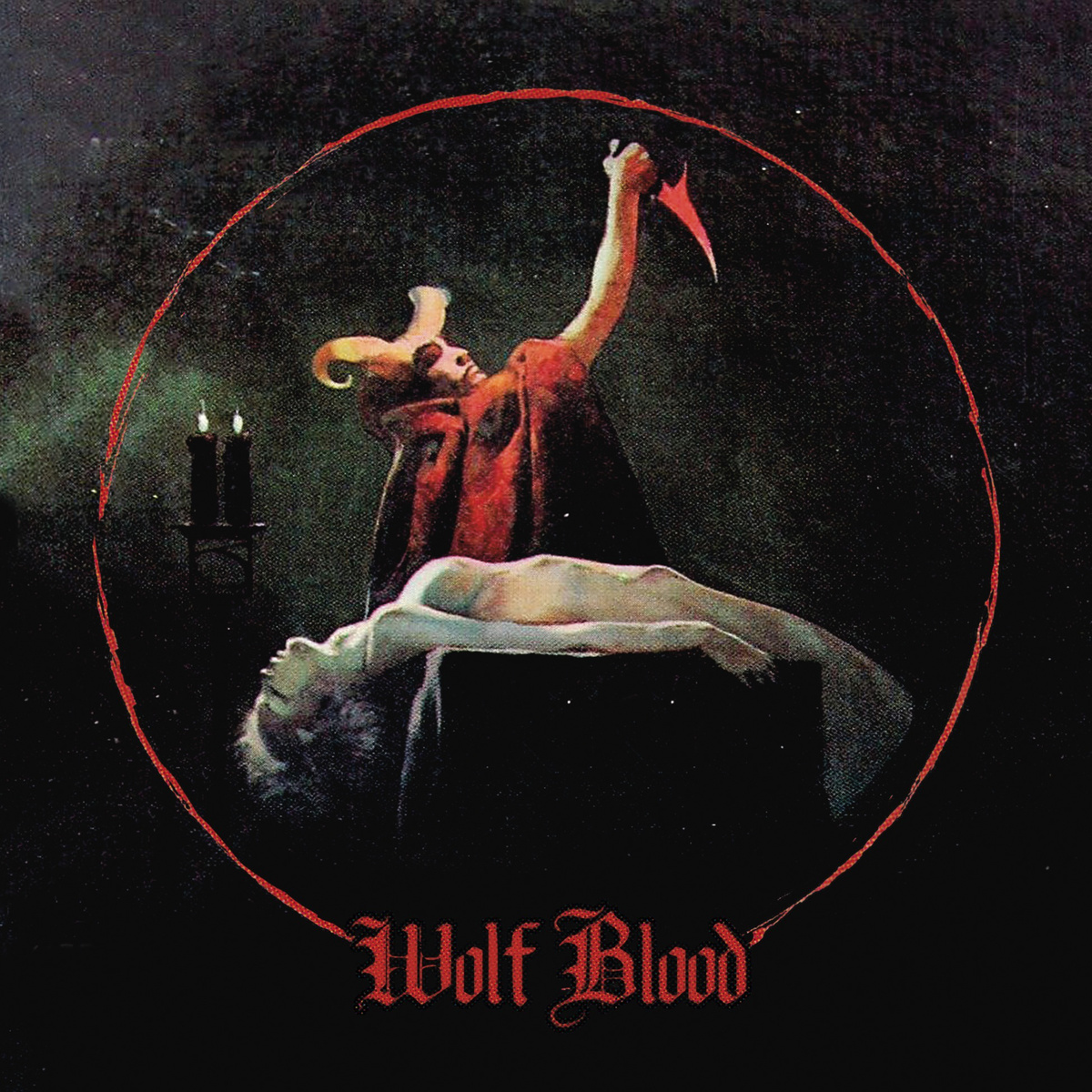
To conclude this globe-trotting metal excursion we return to the U.S., and to Duluth, Minnesota in particular. That’s the home base of a band named Wolf Blood. They released their debut, self-titled album on tape, but now Burning World Records plans to release it on vinyl in October 2014. The vinyl release features the enticing cover art you see above.
I hunted around for music to hear and discovered that the album is streaming on the band’s Bandcamp page. At this writing I’ve only listened to the first two songs, but man are they good.
“Witch” is mainly slow-moving, sludgy, and narcotic, with a tremendously hooky lead riff and a vocalist who moves from a psychoactive wail to a jagged howl with aplomb. And when the song really starts to roll, heads will bang. The instrumental piece “Ochro Ologo” makes for a nice follow-on contrast, proving that Wolf Blood can bust up the joint, too. It’s got “mosh trigger” written all over it — and it’s catchy as hell. I’ll definitely be listening to the rest of this album later today; the vinyl pre-orders are available now at the Burning World site.
http://wolfblood666.bandcamp.com/album/wolf-blood
https://www.facebook.com/wbduluthmn
http://burningworldrecords.com
TertiarymattDemo is very demo-y.
Drones for Queens is pretty good, though.

It’s rare for us to look back over our shoulders at releases from past years (or even past months). We have too damned much trouble trying to stay abreast of current releases. But I’ve recently discovered some short releases by three bands from Pennsylvania that I felt I had to write about, despite the fact that most of the music is from 2013 — if for no other reason than to introduce you to some names I suspect you’ll be hearing more about in the future.
The first one is a 2013 demo by a band named Outer Heaven, and the second is a 7″ split by Drones For Queens and Occult 45.
OUTER HEAVEN
I discovered the existence of Philadelphia’s Outer Heaven as a result of some glowing Facebook remarks by Krieg’s Imperial about their performance at last weekend’s Detest Fest Vol. 1 in the band’s home town. I hadn’t heard the name before, but after some poking around I learned that they include guitarist Jon Kunz from Rivers of Nihil and that they released a 7-track demo last year. But having said that, I suggest you now put Rivers of Nihil right out of your head, because Outer Heaven is a very different beast.
On that 2013 demo they drop ropey sludge riffs down from the rafters, knot them around your neck, and then push an anvil-heavy counterweight over the edge — and up you go, while the band beat you like a piñata with crowbars.
This isn’t terribly flashy music, but it’s crushingly heavy and eminently headbang-worthy, a merciless horror of doom-drenched death metal fueled by ravaging riffs that alternately grind, romp in a d-beat rhythm, and chug like a freight train. The grisly melodies have a way of infiltrating themselves into your skull, and Austin Haines’ deep, tyrannical vocals are horrors all by themselves. I really dig it.
The band’s demo is available for “name your price” download at Bandcamp. I understand they’re working on a debut album, Diabolus Vobiscum, that will be released later this fall. Bring it!
https://outerheavenpa.bandcamp.com/
https://www.facebook.com/OuterHeavenPA

DRONES FOR QUEENS
This Philadelphia band sent me a copy of their 2013 vinyl split with fellow Philly fanatics Occult 45 not long ago, and I finally gave it a shot. Drones For Queens contributed two songs to the split — “Whitewashed Afterlife” and “Grievance Collectors”.
On those songs, the band flail and pummel the listener with a technically acrobatic and nearly unhinged display of flying guitar and bass notes and rambunctious skins work, while the vocals erupt in caustic brays and jagged snarls. The music has the speed and explosiveness of grind, the stomping energy of punk, and the instrumental athleticism of tech metal. It’s a head-spinning experience. Crazy shit — and crazy good.
Drones For Queens have been recording another EP — this time with four songs — and it should be released later this fall.
Both bands have their respective tracks available for “pay what you want” download on their Bandcamp pages. Have a listen to the Drones’ songs below.
http://dronesforqueens.bandcamp.com/album/split-w-occult-45
https://www.facebook.com/dronesforqueens
OCCULT 45
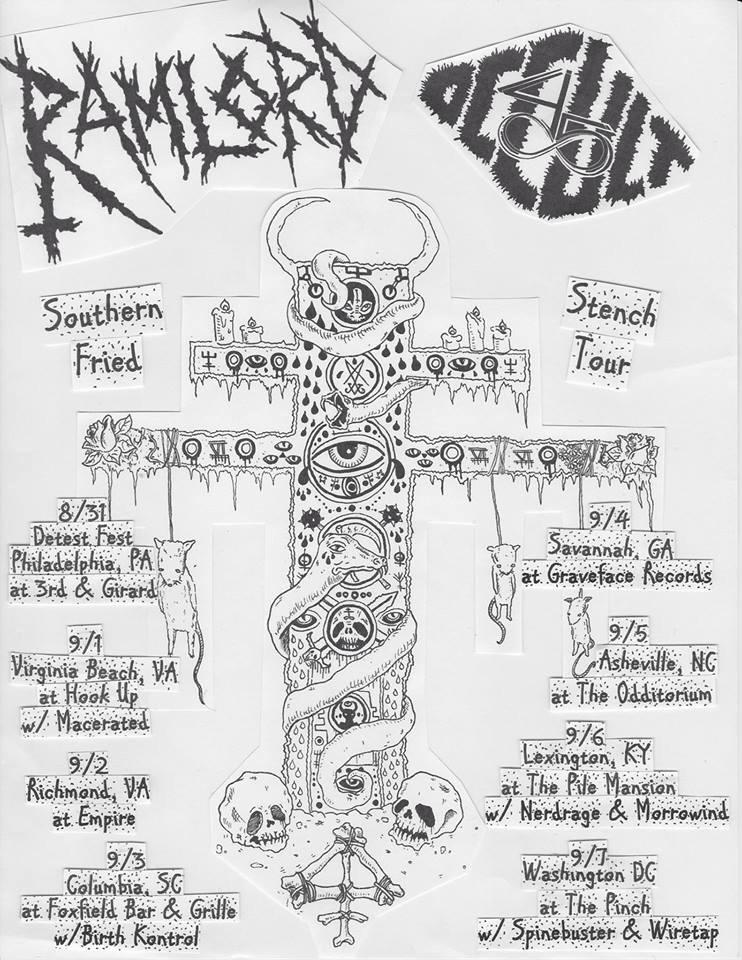
Occult 45 also performed at that Detest Fest Vol. 1 on Sunday, a show that marked the beginning of a tour they’re doing with Ramlord; I’ll post the tour flyer below the final music stream so you can check out the schedule.
Occult 45 contributed three short songs to the split with Drones For Queens. It’s a buzzing hornet hive of grind and d-beat crust, and I mean really pissed-off hornets with an enraged, jugular-bursting vocalist right in the middle of the swarm. It’s highly energizing music that’s perfect for those times when you’d like to punch some motherfucker in the throat, though for music this intense the lo-fi production makes it sound a bit thin for my tastes. Still, I’m liking what I hear.
By the way, Occult 45 have two more recent songs streaming on a Bandcamp page set up by Radio Static Philly, and I’m including that stream down below as well. Like the music from the split, they’re available for “name your price” download.
http://occult45.bandcamp.com/album/split-w-drones-for-queens
http://radiostaticphilly.bandcamp.com/album/tyranny-stomp-ppfo
https://www.facebook.com/Occult45
TertiarymattThis is some live eepee. She's great.

Includes high-quality download in MP3, FLAC and more. Paying supporters also get unlimited streaming via the free Bandcamp app.
|
Water Tower
06:22
|
||||
|
Mechanical Hands
04:57
|
||||
|
Flags
03:37
|
||||
|
Tuesday
02:59
|
||||
|
Churchyard
04:57
|
RED FROST INDUSTRIES (RFI 000 000 006.1)
• DIGITAL = unlimited
E.P. HALL - Russian Recording, 08 JUN 2014
1) Water Tower
2) Mechanical Hands
3) Carapace / Mommy Crow / The Countess Calls
4) Flags
5) Gone Are the Thoughts of Sparrows
6) Tuesday
7) Churchyard
recorded live, 06.08.2014 at Russian Recording, Bloomington, IN
at the third annual Red Frost Industries showcase
recorded by Max Mullen, live sound by Cole
(c)+(p) 2014
RED FROST INDUSTRIES
_
all rights reserved
Jun 2014
Aug 2013
Apr 2013
May 2012
Sep 2012
Dec 2011
Jun 2014
TertiarymattAnd now Rosalind understands why Ripley is important.
TertiarymattI love this goddamn song. It starts out so pretty (and the interlude before it is similarly simple and quiet, just acoustic guitar), but steadily builds tension and complexity, and the amplified, distorted heaviness kick in which such a huge, slow, dramatic punch. It is so utterly satisfying. I think it would probably blow the top of my head off live, when it is properly loud enough, banging through the guts.

Unbound, unrepressed, untamed, uncontrollable, unknown. No longer cowering beneath the roles hewn to our beings, we shall reclaim our vital energy, unique and unpredictable. Backs bent no more in the mad race of resource production and consumption. That web of domination, that web of mediation. Of limited experience and clearly defined boundaries. We rebuke this overgrown wasteland, teeming with the repulsiveness of pavement and cement. A concrete wilderness? No. An everlasting shrine to submission and death. A false wilderness prostrate and conforming to the will of man. Those vines and sh...
TertiarymattI know this feel. Except I'm just hella straight.
TertiarymattPretty crazy good.







 feeds for