To save on hiring expensive photographers, agents are often happy to use footage provided by paranormal investigators.
Follow on Twitter @BadRealtyPhotos.
To save on hiring expensive photographers, agents are often happy to use footage provided by paranormal investigators.
Follow on Twitter @BadRealtyPhotos.

The Annoying Bird theme continues! Here are more birds.
The Annoying Bird theme continues! Here are more birds.
Quarks are gregarious particles, but only within limits. Protons, neutrons, and other baryons are made up of three quarks, while unstable particles called mesons are composed of a quark-antiquark pair. (An antiquark is the antimatter partner to a quark.) Nothing with more than three quarks in a single particle has been found in nature, at least under ordinary circumstances.
Since 2008, however, researchers at CERN in Europe and at Belle in Japan found hints of a four-quark particle. Those hints were confirmed today by physicists at the LHCb experiment at CERN. To discover and characterize the particle, researchers sifted through 25,000 decays of mesons resulting from more than 180 trillion collisions at the Large Hadron Collider. This object they studied, known affectionately as Z(4430)-, has provided the first unambiguous measurement of a four-quark particle; earlier experiments also provided hints about another candidate, the Zc(3900)+.
With that much data, physicists were able to determine the composition of the Z(4430)-: it consists of a charm quark, a charm anti-quark, a down quark, and an up antiquark. The "4430" part of the name indicates its mass: 4,430 million electron-volts, which a little more than four times the mass of a proton (938 million electron volts). The combination of quarks gives the Z(4430)- a negative electric charge, hence the "-" in the label. The particle is highly unstable, so none of them are expected to be seen in nature.
As recent disclosures have reminded us, security is not a simple matter. Most will tell you that the weak link in the chain is us: we simply don't use good security habits. But we're only one part of a number of issues. Although passwords are weaker than they should be, a strong password used on a weak system won't be much help. There is still a lot of necessary work being done to ensure that communication between parties is strongly encrypted.
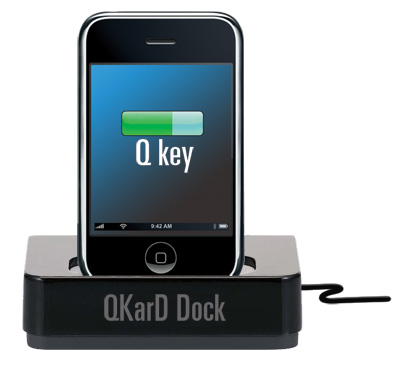
One option that has received waves of attention over the last ten years is quantum key distribution (QKD). Despite its promise of absolute security, QKD has many practical difficulties that have limited it to niche applications. Now, in a nice bit of work, researchers have shown how to implement QKD for handheld devices.
Light has a property called polarization, which is measured with respect to a reference frame. So, for instance, horizontally polarized light has its electric field aligned with the ground, while vertically polarized light has its electric field aligned perpendicular to the ground. In between, we can have diagonal and anti-diagonal polarized light.
After twelve-and-a-half years, the curtain fell on Windows XP yesterday: the aged operating system transitioned out of extended support and into a long, dark, unsupported and unpatched twilight. Bespoke patches will still be made for those customers willing to pay enough money—mainly governments and large corporations with significant Windows XP installed bases—but for most of the world, XP is now officially a dead operating system.
Windows XP wasn't the only thing to be shuffled into unsupported purgatory yesterday, though. Also included in the group of applications to be dumped down the memory hole is the browser that everyone loves to hate: Internet Explorer 6.
For all its terribleness now, IE6 accomplished a pretty stunning set of achievements. It's the browser that definitively killed Netscape Navigator and ended the first great "Web Browser War." At its height, IE6 was the browser of choice for ninety percent of the Web's users. Its crushing market dominance also ensured that businesses used it internally as well as externally, developing ActiveX-based Web applications for it and further perpetuating Microsoft's ecosystem lock-in.

Ótimo fim de semana!
Acompanhe o Mentirinhas no TWITTER e no FACEBOOK
Animação – Captain Cumulus
Reviews – lançamentos e afins no mundo dos quadrinhos
O post Muitirinhas #124 apareceu primeiro em Mentirinhas.
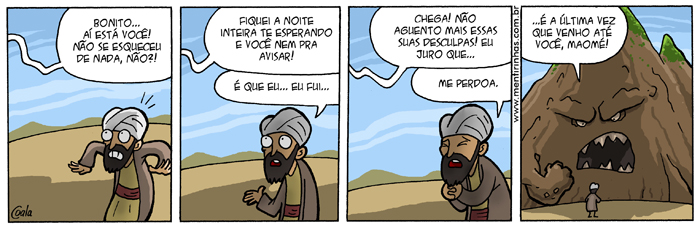
 Normalmente é o que acontece quando a briga sai da internet.
O post Mentirinhas #614 apareceu primeiro em Mentirinhas.
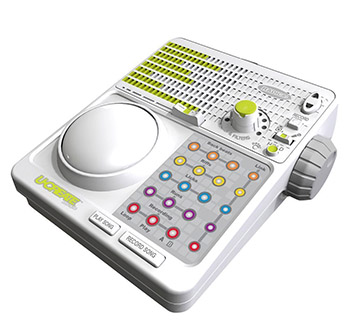
The Mattel “Ucreate” is a $50 box that lets kids combine pre-recorded samples to “express themselves through creating their own songs.” Apart from the fact that kids have been learning to play regular musical instruments for thousands of years (which actually allow them to learn technique and music theory), the manufacturer has dropped their online support for the product, so it can no longer connect to a computer.
One of the comments, a five-star review which is definitely not fake, reads “Everyone knows that music is all the rage with kids!” Ah, yes, those kids with the bippy-bop and the puddin pops. They jimmy-jam but it’s not even music, it sounds like a burglar banging trash cans together. The kids love it though.
”Revenues derived from college athletics is greater than the aggregate revenues of the NBA and the NHL,” said Marc Edelman, an associate professor at City University of New York who specializes in sports and antitrust law. He also noted that Alabama’s athletic revenues last year, which totaled $143 million, exceeded those of all 30 NHL teams and 25 of the 30 NBA teams.
Texas is the largest athletic department, earning more than $165 million last year in revenue — with $109 million coming from football, according to Education Department data. The university netted $27 million after expenses.
Other major programs such as Florida ($129 million), Ohio State ($123 million), Michigan ($122 million), Southern California ($97 million) and Oregon ($81 million) also are grossing massive dollars.
Those numbers of course are not counting the fundraising value of collegiate athletics. There is more here, via Michael Makowsky.
Here is our previous post on higher education and athletics.
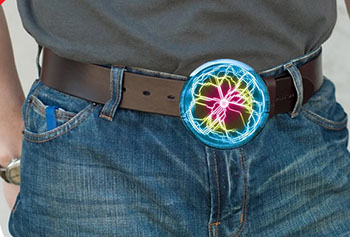
“Is your dick shooting lightning bolts, or are you just happy to see me?” Neither! It’s a belt buckle that looks like a plasma globe.
Albener PessoaJa passei por esta experiencia, varias vezes ... (video roubado do feed do Tadeu)
The pain of being the only engineer in a business meeting is perfectly illustrated in the comedy sketch, “The Expert.” The sketch was written and directed by Lauris Beinerts and is based on the (Russian language) short story, “The Meeting,” by Alexey Berezin.

Albener PessoaEh cada uma que aparece ....

O cortador de grama Honda Mean Mower entrou oficialmente para o Guinness Book não por ser aquele que mais apara gramados ou campos de futebol, mas por ter chegado a uma velocidade que a maioria dos populares brasileiros nem sonha em chegar: 187 km/h.
A velocidade foi obtida em um teste na cidade de Tarragona, Espanha, onde foi registrado 187,6 km/h. Ele superou a marca de 141 km/h, obtida em 2010. O modelo é baseado no cortador HF2620 e foi preparado pela Team Dynamics, equipe de competição do campeonato europeu de turismo.

Rodas de quadriciclo, chassi modificado, suspensão reajustada e câmbio de seis marchas com paddle shifts foram introduzidos. O motor é um V2 de 1.000 cm3 usado pela motocicleta Honda VTR Firestorm, que pode fazer o Mean Mower ir de 0 a 100 km/h em menos de 4 segundos.
A marca japonesa chegou a dizer que o veículo poderia chegar a 210 km/h. Na função de cortar grama, o HF2620 modificado roda até 24 km/h. Não há pretensão de comercializar o veículo personalizado.
Agradecimentos ao vinoferry pela dica.
A noticia Honda Mean Mower: Cortador de grama bate recorde de velocidade com 187 km/h (vídeo) foi publicada no site Notícias Automotivas - Carros.