
Shared posts
08 Jan 13:23
Ellen DeGeneres
"I gotta work out. I keep saying it all the time. I keep saying I gotta start working out. It's been about two months since I've worked out. And I just don't have the time. Which uh..is odd. Because I have the time to go out to dinner. And uh..and watch tv. And get a bone density test. And uh.. try to figure out what my phone number spells in words."
26 Dec 12:34
Spielberg, Woody Allen, Kubrick, Herzog e mais alguns diretores desejam um Feliz Natal
by Kiko Nogueira
26 Dec 12:18


Esse cara filmou um segundo de cada um dos seus dias por um ano
by Casey Chan
ivanDia 16 de Janeiro eu finalizo o meu =)
Nossas vidas não são sempre interessantes. Alguns dias passam e ao final deles você nem se lembra do que fez. O mês passado é igual ao mês que vem. Quem sabe o que vai acontecer amanhã? O tempo simplesmente desaparece e às vezes nós não sabemos o que aconteceu. Por isso, nós deveríamos gravar um pouquinho das nossas vidas para lembrar do que fizemos. Pode ser incrivelmente chato e cheio de nada, mas quando juntamos essas pequenas gravações, elas podem se transformar em alguma coisa e juntando os dias, semanas, meses e anos, bom, você vai ter sua vida.
Como o Digg mostrou, Matt Skuta filmou um segundo de sua vida todos os dias por um ano inteiro e colocou tudo junto para você ver (e para ele se lembrar). Mesmo coisas como assistir cães perseguirem uns aos outros, fritar bacon, olhar para aviões no céu ou estacionar seu carro na garagem parecem memoráveis quando você as reúne e arremata com uma música inspiradora.
É legal olhar pra trás. Mesmo quando nada aconteceu.
[Imagem via]


23 Dec 15:03

SBT recria a pegadinha da ‘Carrie, a estranha’ no Brasil
by Duquian
A pegadinha de maior sucesso do ano, feito em um coffee shop, em Nova York, para divulgar o filme ‘Carrie – A Estranha’, chegou a incríveis 50 milhões de views.
E não é que o programa do Silvio Santos, responsáveis pelas melhores pagadinhas feitas pelo lado de cá, recrio o viral gringo aqui no Brasil em parceria com a Sony. Se brincar versão tupiniquim ficou ainda mais assustadora por trancar a porta e estourar as luzes da cafeteria, no final.
Só imagino que as vítimas mais jovens do SBT não tenham internet ou nunca acessaram o youtube para não terem visto a pegadinha original.

19 Dec 14:51
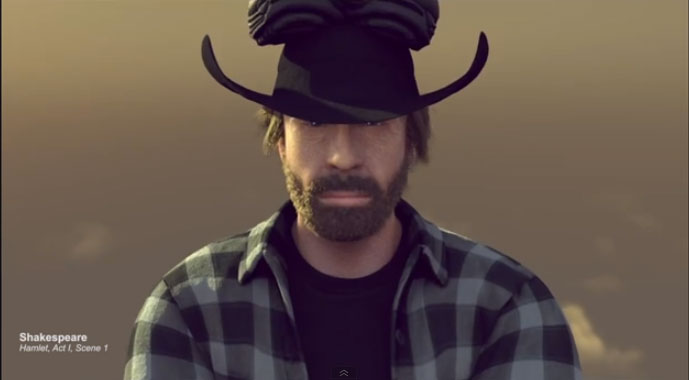

Chuck Norris mostra a Van Damme como se faz
by Regis Freitas
Mais uma paródia do famoso comercial com o Van Damme, nesse a Delov Digital usa o imortal Chuck Norris para desejar um feliz natal de forma épica.
Sofía Henao, David Pelaez likes this
19 Dec 12:50
Tweet
Like this post on Facebook:
Like Wait But Why on Facebook:
The Truth About Evolution
by Tim Urban
As you start reading this article, let's list some questions you haven't asked yourself in a while:





- Why do I exist?
- Why do I look the way I do?
- Where do the genes come from that make me who I am? If I trace those genes back far enough, do things start to get superbly weird, so weird that a series of low-grade Wait But Why drawings would need to get involved?
In order to get to the bottom of things, let's start at the present and work our way back, tracing our genes at major steps along the way.
We begin with you. I don't know you, but I can tell you look something like this:

To keep things simple, we're going to stick with your patriline, the male lineage of your DNA.
So moving one step back, we have your father:

We then get to your grandfather, great grandfather, and eventually, your great great grandfather, who was likely born sometime between 1825 and 1875. He looked like this:

Your great great grandfather lived most of his life without running water or electricity, and he was probably more racist than you are. You've never met him, but without him, you wouldn't exist.
Now we move to his father, his father's father, and so on—let's jump back 18 generations to your [great x 20] grandfather (putting the number of "great"s as the superscript number):

Your great20 grandfather kept it real. When he wasn't torturing somebody, he was being tortured himself. When he wasn't catching the Black Plague and dying, he was slaughtering women and children in the Crusades. And weirdly, he might have had the same last name as you.
If he could meet you, he'd be blown away by the ease of your current pussy existence. But not as blown away as your great500 grandfather would be.

Your great500 grandfather didn't spend years toiling over which career would be the best expression of his inner purpose. He hunted animals, battled other tribes, and somehow managed to impregnate someone before dying in his early 30s. Had he not, you and a few million other of today's people wouldn't currently exist.

Now we reach a time before humans were fully humans, and a time when a very special man lived. Scientists call him Y-chromosomal Adam. Y-chromosomal Adam is the most recent male ancestor from whom all current living humans are descended—in other words, he's not just your great14,000 grandfather, he is everyone's great14,000 grandfather, and the last time in history a common male ancestor to all of us lived. All ancestors we discuss from this point onward are common to the entire human race.
So what was Y-chromosomal Adam like? He was a disgusting, highly unpleasant man who probably raped people. But the good news for all of us is that he lived and he survived long enough to pass on his genes. If he hadn't, the human race probably would have survived, but the current world would be completely different and not one of us would exist.

Okay here's where things begin to get weird. 3 million years ago, there were no humans. Our ancestors from that time were some hybrid of ape and human called Australopithecus. Your great220,000 grandfather was not a sophisticated man—his brain was 35% the size of a human brain—and he was not attractive. But he was one of the first of your ancestors to be bipedal, meaning he could stand upright—this allowed him to use his hands for other things, like making and using tools, which in turn allowed the smartest to thrive, pushing the quick evolution of bigger brains.

Your great550,000 grandfather was a very important monkey. Not only is he the ancestor of every living human, he's the ancestor of every living chimpanzee as well. This is the last time in history we shared an ancestor with chimps—scientists believe 6 million years ago is about the time the Hominini tribe split into two branches that would eventually result in humans and chimps. This means that around that time, there existed one monkey—who had one child that went on to become the ancestor of all humans and another child that went on to become the ancestor of all chimps.
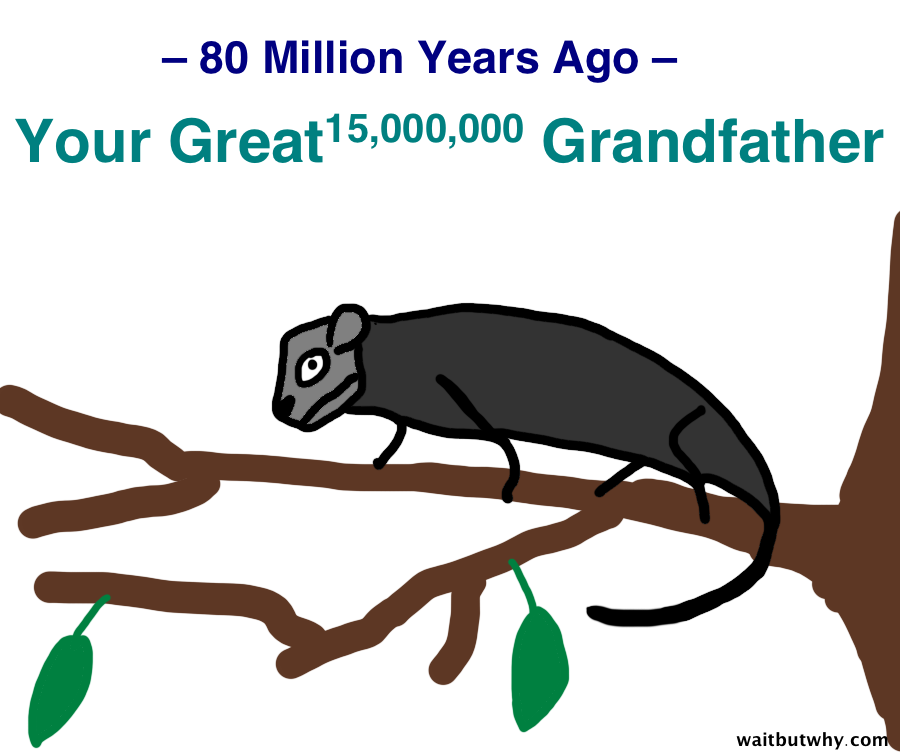
Unlike most of his descendants, your great15,000,000 grandfather had shitty timing and coexisted with the dinosaurs. Until the massive asteroid led to the extinction of the dinosaurs around 66 million years ago, mammals were small, second class citizens confined mostly to the trees. This unassuming fellow is a common ancestor to all modern primates.

I want you to take a moment and absorb the fact that your great55,000,000 grandfather was a rodent. More specifically, he was a Eutherian—the first placental mammal, and the father to all mammals besides marsupials and egg-layers. So if there's a whale out there with a similar blog who plans on writing an article like this one, tracing his father's father and so on, he's on his own up to this point, but from here forward he can just plagiarize this article and it'll apply perfectly for whales too.

Instead of screaming when he saw a millipede and then throwing a book at it and running away like a normal person, your great125m grandfather ate it. He was an early lizard, the first in our lineage with legitimate arms and legs and an advanced nervous system—and he's the last time all mammals, reptiles, and birds shared a common ancestor. (Somewhere between him and our rodent ancestor was an awkward hybrid—the first of all mammals, who laid eggs, like today's duck-billed platypus.)
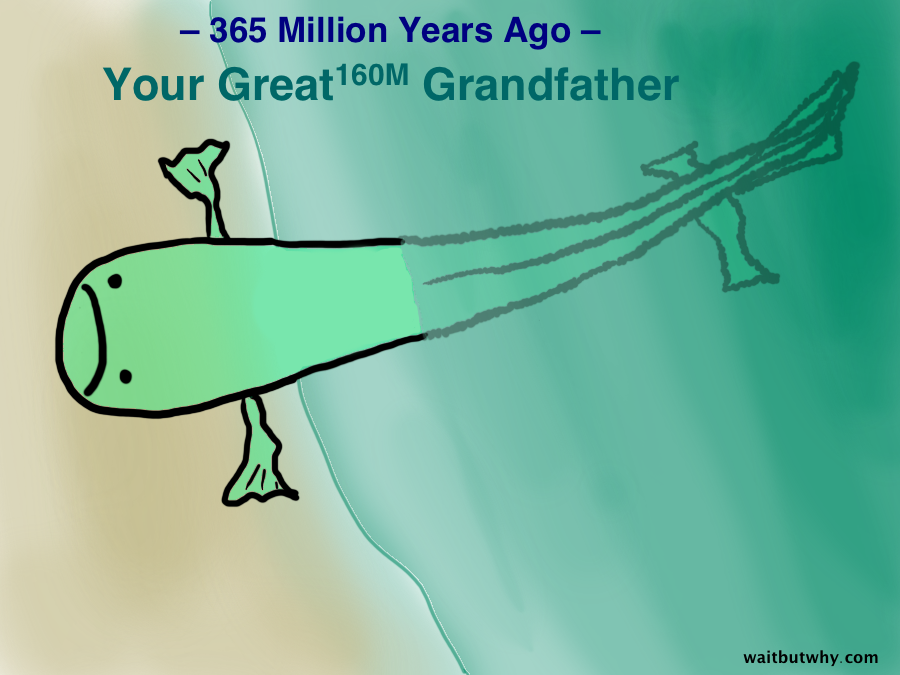
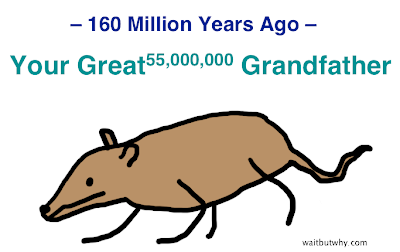
Your great160m grandfather hated his life. The first member of our patriline to venture out of the ocean, he's the evolutionary equivalent of the modern human who immigrates to a new country, leaving behind everything he knows to start from ground zero because it's best for the family in the long run. "Walking" is a generous term for what your great160m grandfather did during his land excursions—he'd pull himself miserably through the mud, struggling to breathe, all so that you could one day live outside the hell that is the cold, dark ocean.
He's called an Acanthostega—and he pioneered a number of key modern features, including lungs alongside his gills and bones in his flippers, an innovation that led to arms and legs for his descendants.

Your great220m grandfather was a fish. Look at your arms and legs, and now look at this picture—your limbs are just a more evolved version of those two pairs of flimsy little fins. If the prehistoric fish had adapted differently to needing to balance itself in the ocean current, the human body might look vastly different today. His other claim to fame is being the first creature with a jaw—previous ancestors only had a suction hole.

If your great255m grandfather seems like an embarrassing flatworm, that's because he is—but he gets credit for both the invention of the brain and being the first animal to be bilateral (having a front and back).

I don't know what to tell you. This is a part of your lineage.
I want you to pause and just ponder for a second that I'm not inventing silly shit here—if you take your father, and your father's father, and do that 435,000,000 times, you'll end up at a jellyfish. Evolution is boggling.
But let's not pass over the jellyfish without due credit for two huge innovations—nerves and muscles. Eyes first happened around this time as well, which one theory states as a major reason for the Cambrian explosion when animal life suddenly burst into diversity.

Your great555m grandfather was a sponge and spent his life bored as fuck.
He does have one massive feather in his cap, which is that he's the world's first animal. Up until his time, all life consisted of single cell organisms, and he was the first creature made of multiple cells.
And no, those plants didn't exist then and shouldn't be in the picture. But I just realized that now, and I'm proud of having drawn them, so I'm leaving them there.

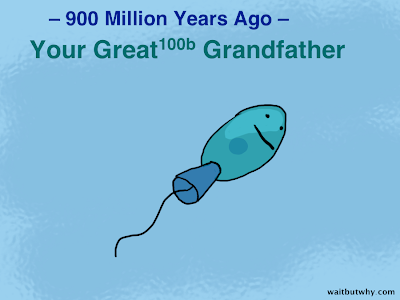
We have to go a whole lot of generations back to get to your great100b grandfather, a complex single cell eukaryote.
He may not look like much, but he's both the ancestor of the entire animal kingdom and the inventor of sex. He's also adorable.

Going way, way back to the earlier part of Earth's existence, we arrive at your great850b grandfather, a hapless simple cell bacterium with little charisma. His crowning achievement is the invention of photosynthesis, which filled the atmosphere with oxygen and paved the way for modern life to exist.

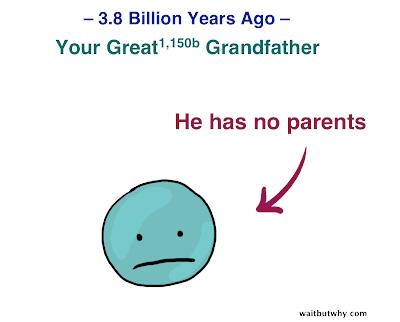
Going back 1,150 billion generations and roughly 3.8 billion years, we arrive at the end of our line—the first living particle and the founder of all life on Earth. We're not quite sure how he started living in the first place—it's one of the great scientific questions of our time. There are a number of theories, including spontaneous generation, emergence from a primordial soup, and some even suggest he came to Earth from somewhere else in space. Either way, we owe a lot to him, and we should take a moment to appreciate his lonely moment of life 3.8 billion years ago that led to everything we know.
As we wrap up, two things to reflect on:
1) How rich the story of your genes is. Your genes have come a long way, have passed through trillions of other organisms, and have undergone an insane number of optimal mutations to finally arrive packaged up together in your chromosomes. You are the way you are because of things that happened to that jellyfish, that lizard, that monkey and the way each of them adapted to their environment for billions of years.
I read that when we hiccup, it's a remnant of a prehistoric impulse in fish—when your body does something or feels something, it's a window into your deep intertwined connection to all of these other species and to the history of life.
2) How incredibly unlikely it is that you exist. Going back to the first particle of life, there are over a trillion fathers and father's fathers that eventually ended with your parents conceiving you. And if any one of those fathers (or mothers) had died before reproducing—if any of the millions of fish in your line had been prematurely eaten, if any of the millions of rodents in your line had been crushed by a falling tree as a baby—you would not exist. Maybe someone similar to you—but not you.
________
One other thing
I'm making a New Year's Resolution comic to post on Wait But Why as the New Year's post. It'll be made up of readers' resolutions. If you want your resolution(s) in the comic (anonymously unless otherwise requested), email them to contact@waitbutwhy.com by 12/27.
________
Sources
- Toth, Nicholas and Schick, Kathy (2005). "African Origins" in The Human Past: World Prehistory and the Development of Human Societies (Editor: Chris Scarre). London: Thames and Hudson. Page 60.
- Richard Dawkins 2004 The Ancestor's Tale page 136, 250, and 289.
- A Jurassic eutherian mammal and divergence of marsupials and placentals http://dx.doi.org/10.1038/nature10291
- Eckhart L, Valle LD, Jaeger K, et al. (November 2008). Proceedings of the National Academy of Sciences of the United States of America 105 (47): 18419–23.
- http://web.archive.org/web/20090319201312/http://www.uhh.hawaii.edu/~ronald/392/Homol-Gill-Jaw.JPG
- http://www.ucmp.berkeley.edu/protista/proterospongia.html
- Lots of Wikipedia, obviously, but since that's "unprofessional," we'll just pretend it wasn't part of it.
A note on how I calculated the number of "greats" in each case
I did so by making rough generation length estimates based on the typical lifespan and age of reproductive maturity of the various species along the way. I began with 25 years for human generations, then 13 years for Australopithecus and advanced primates, five years for early tree primates, two years for rodents, lizards, fish, and worms, two months for jellyfish and sponges, and one day for single cell organisms.
Like Wait But Why? Subscribe by entering your email address (no spam, ever)
Like this post on Facebook:
Like Wait But Why on Facebook:

17 Dec 18:32
This cartoon is abusing its privileges
by seemikedraw

Barciella and -1 others like this
17 Dec 17:52
Tweet
Like this post on Facebook:
Like Wait But Why on Facebook:
Life is a Picture, But You Live in a Pixel
by Tim Urban
This is Jack:

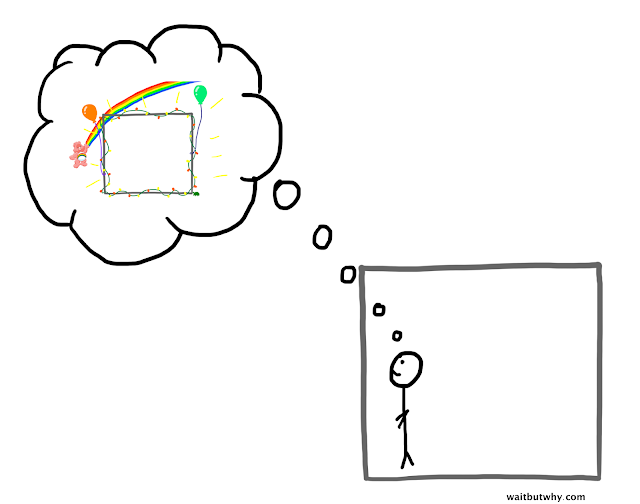

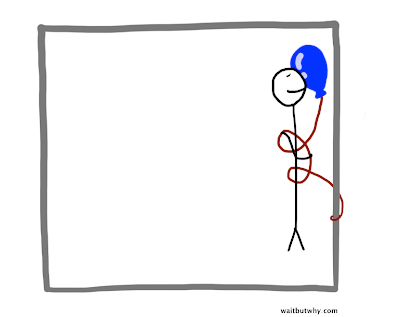
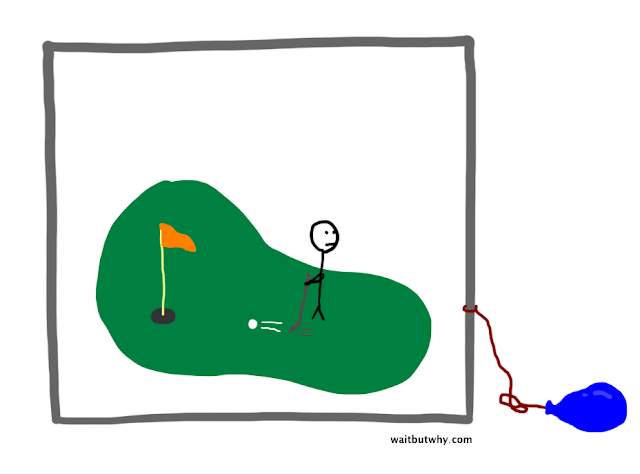 Until one day, the walls look exactly how they did before his raise.
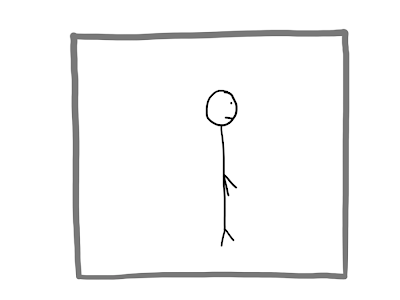
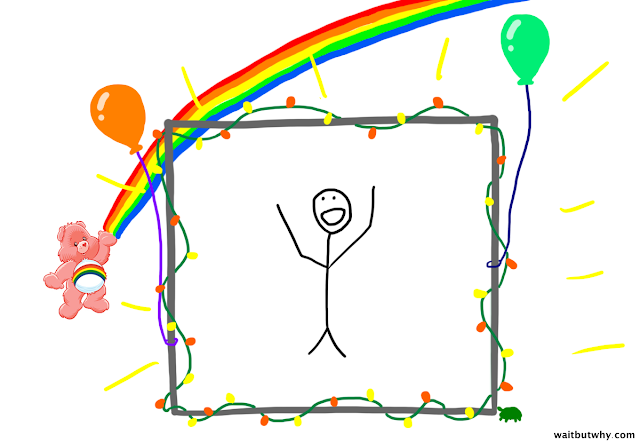
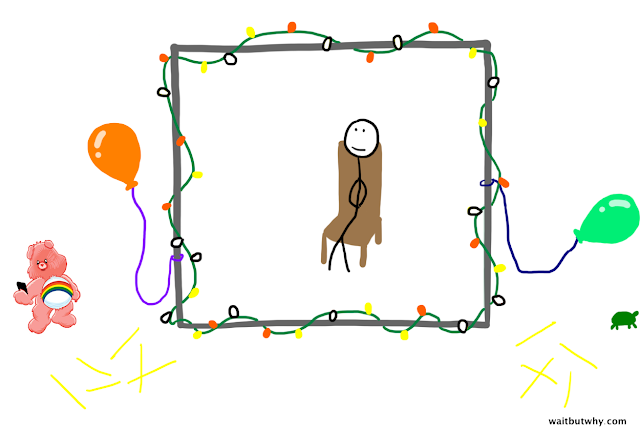
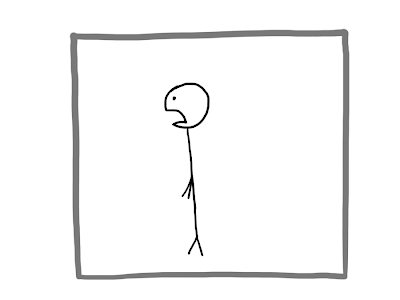

But this is a mistake, because Jack doesn't live in the picture's broad strokes, he lives at all times in a single pixel of the image—a single Today.

So while thousands of Jack's Todays will, to an outsider from far away, begin to look like a complete picture, Jack spends each moment of his actual reality in one unremarkable Today pixel or another. Jack's error is brushing off his mundane Wednesday and focusing entirely on the big picture, when in fact the mundane Wednesday is the experience of his actual life.
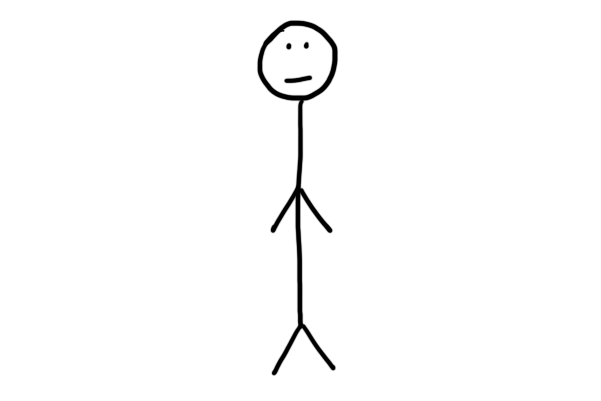
And this is Today:

Jack and Today are dating.
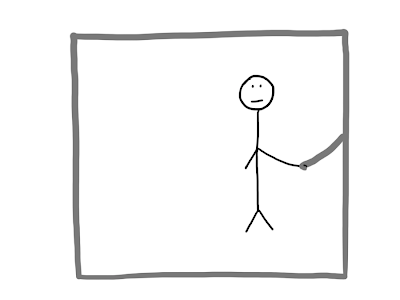
The relationship is going all right and Jack's reasonably happy, but for a while now, Jack has known that the Today he's with is not the one. Sure, he and Today have fun sometimes, but all too often, Jack feels like he's dating a mundane Wednesday, and that's certainly not the kind of Today he plans to be with in the long run.

The relationship is going all right and Jack's reasonably happy, but for a while now, Jack has known that the Today he's with is not the one. Sure, he and Today have fun sometimes, but all too often, Jack feels like he's dating a mundane Wednesday, and that's certainly not the kind of Today he plans to be with in the long run.
Because he knows the relationship is just temporary, Jack doesn't invest that much of himself in it, spending more of his energy thinking about someone else—Tomorrow. Now Tomorrow is the kind of day he'd love to date—fulfilling, passionate, meaningful and exhilarating. He knows it's only a matter of time before he finds a Today just like that, the kind of Today he'll be with when he's found love, when his career has taken off, and when he lives in his dream city. He can just picture her now:

That time will come, but Jack has another plan in the meantime—he's getting a raise next week, and he's going to break up with his current Today as soon as that happens and start dating someone new—Today Once I Get My Raise. Of course, she's not the kind of Today worthy of marriage for a guy like Jack, but she's much more fun and exciting than his current very ordinary Today.
The morning after he gets his raise, Jack wakes up with an extra bounce in his step. He's a new man with a new Today, and he likes her already:
The morning after he gets his raise, Jack wakes up with an extra bounce in his step. He's a new man with a new Today, and he likes her already:

That night, he goes out to a restaurant he couldn't afford just a day earlier, and the second day, he buys a new set of golf clubs.

Two weeks later, Jack goes back to that fancy restaurant, but something feels a little different. The food is still great, but it's just not quite as exciting this time.
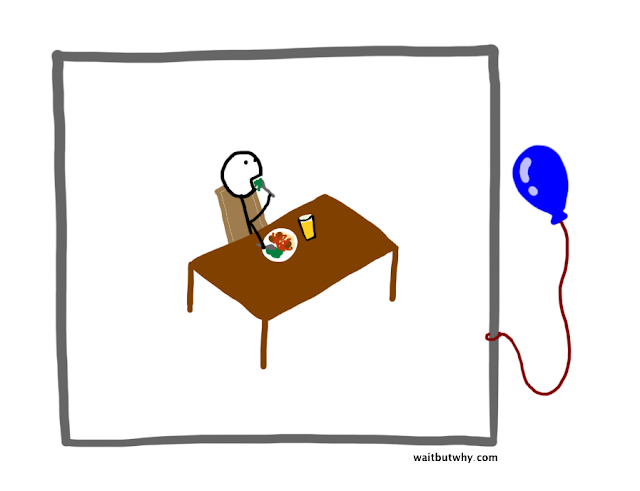 And a month after that, when he heads out golfing for the fourth time with the new clubs, his mood isn't affected at all by them—it just kind of feels like a normal golf day again.


Jack is confused. He left his ex-Today in the dust, so why does it kind of seem like he's dating her again? He's supposed to be done with that part of his life.
It's disappointing, but Jack shrugs it off—this raise was small potatoes anyway, and the real future's all still to come, so it's not a big deal if he's not that happy.
A few years later, Jack has a big month. First, after years of being single, he meets this amazing girl and they hit it off right away. She's exactly who he's been waiting for, and after a few dates, she's his girlfriend. Right around the same time, the new restaurant-rating business Jack started a year earlier is written up in a big newspaper and suddenly, business starts raining in. He knew the business was a good idea, and now this is proof. For Jack, it's all finally happening.
And his new Today, Today Once My Business Takes Off And I Find A Girlfriend, is everything he spent his last few years dreaming about.

This is the life Jack always knew he'd be living soon enough—he's just that kind of guy. And his Wednesdays will never be mundane again.
But then something starts to happen. After a few months, even though things are going well with his girlfriend and his business's growth has only accelerated, Jack finds himself appreciating all of the excitement around his Today a bit less than he used to, which makes things feel a little less vibrant. He's busier than he's ever been before, working almost constantly, and while he's still pleased with his new Today, his general mood doesn't feel all that high anymore.

And a year after that, even though Jack's life is richer and more meaningful than it used to be, he's gotten completely used to the way things are. He also has watched a friend's career take off even more than his own and wonders what that must feel like, and his other friend seems to have a little more fun with his girlfriend than Jack has with his—must be nice, he thinks.
And one day, Jack wakes up to find himself here:

He can't believe it. What the hell is she doing here?
He considers placing a restraining order on this ex who won't leave him alone, but ultimately decides to let it go—after all, it's not like he was gonna marry Today Once My Business Takes Off And I Find A Girlfriend anyway. The real Today he's holding out for is Today Once I Sell My Business and Marry My Girlfriend, and that's the Today he'll truly be happy with.
He considers placing a restraining order on this ex who won't leave him alone, but ultimately decides to let it go—after all, it's not like he was gonna marry Today Once My Business Takes Off And I Find A Girlfriend anyway. The real Today he's holding out for is Today Once I Sell My Business and Marry My Girlfriend, and that's the Today he'll truly be happy with.
* * *
Jack's struggle isn't unusual—it's something most of us are going through in one way or another. In his amazing Ted Talk, Harvard professor Dan Gilbert describes what he calls The Impact Bias—our "tendency to overestimate the hedonic impact of future events." Humans have the ability to simulate future situations in our heads to predict what it'll be like to experience them, but that simulator doesn't always work so well and tends "to make you believe that different outcomes are more different than in fact they really are."
Gilbert says that "from field studies to laboratory studies, we see that winning or losing an election, gaining or losing a romantic partner, getting or not getting a promotion, passing or not passing a college test, and on and on, have far less impact, less intensity, and much less duration than people expect them to have." It even applies to terrible events in our lives. According to Gilbert, "a recent study showing how major life traumas affect people suggests that if it happened over three months ago, with only a few exceptions, it has no impact whatsoever on your happiness." Jack is clearly a victim of The Impact Bias.
Jack's difficulties also relate to The Pixel Theory, a phrase coined by Tim Urban during his famous "alone in his apartment in front of the mirror" Ted Talk.
Jack sees his life as a rich picture depicting an epic story and assumes that the key to his happiness lies in the broad components of the image.
Jack's difficulties also relate to The Pixel Theory, a phrase coined by Tim Urban during his famous "alone in his apartment in front of the mirror" Ted Talk.
Jack sees his life as a rich picture depicting an epic story and assumes that the key to his happiness lies in the broad components of the image.

But this is a mistake, because Jack doesn't live in the picture's broad strokes, he lives at all times in a single pixel of the image—a single Today.

So while thousands of Jack's Todays will, to an outsider from far away, begin to look like a complete picture, Jack spends each moment of his actual reality in one unremarkable Today pixel or another. Jack's error is brushing off his mundane Wednesday and focusing entirely on the big picture, when in fact the mundane Wednesday is the experience of his actual life.
And his assumption that his future Todays would be as vibrant and rich as the broad picture of his life is misunderstanding the unremarkable nature of a pixel, no matter what one's life looks like in broad strokes. This assumption leads Jack to feel like his uneventful Today must be an unsatisfactory temporary relationship, when in reality it's an inevitable and permanent marriage that he must accept and embrace in order to be happy.
As far as what will actually make Jack happier as he lives in his mundane Wednesday, there are a number of scientifically proven things, including spending time with people you like, sleeping well and exercising, doing things you're good at, and doing kind things for others.
But perhaps the first thing Jack needs to do is learn to feel more gratitude, another scientifically proven route to happiness and the area in which he falls the most woefully short. Jack spends so much of his time looking up at the great things that will come his way and planning his future happiness and not nearly enough time looking down and thinking about how badly he used to want so many of the things he currently has.
The good news for Jack is that next week is Thanksgiving—a perfect time to start.
But perhaps the first thing Jack needs to do is learn to feel more gratitude, another scientifically proven route to happiness and the area in which he falls the most woefully short. Jack spends so much of his time looking up at the great things that will come his way and planning his future happiness and not nearly enough time looking down and thinking about how badly he used to want so many of the things he currently has.
The good news for Jack is that next week is Thanksgiving—a perfect time to start.
Like Wait But Why? Subscribe by entering your email address (no spam, ever)
Like this post on Facebook:
Like Wait But Why on Facebook:
16 Dec 12:57
Netflix Brings Profiles to Android for Better Recommendations
by Mihir Patkar
ivanTHIS!

Android: Sharing a Netflix account means that you don't always get the best recommendations possible. The simplest way to stop that is to set up individual profiles for all the people in your house. And Netflix Profiles is now finally making its way to the Android app with the new 3.1.0 update.
15 Dec 20:05


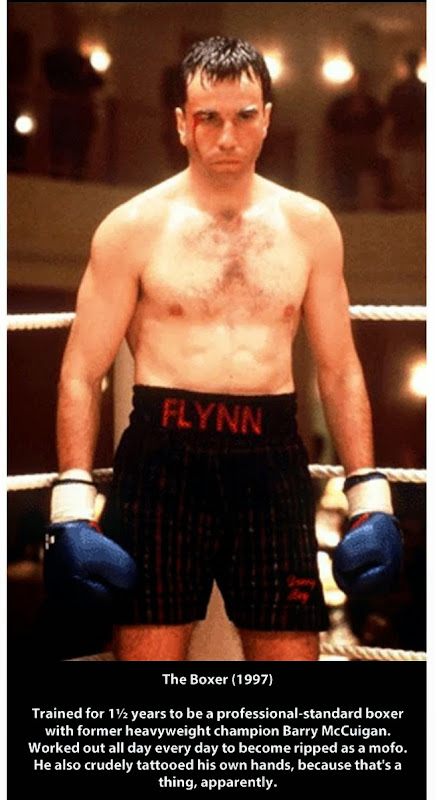


Daniel Day-Lewis` Insane Method of Acting
by noreply@blogger.com (Damn Cool Pics)
ivanComo ser idiota.


13 Dec 17:48
Mobilidade urbana não é isso: resposta aberta à revista ‘Época São Paulo’
by Diario do Centro do Mundo

Publicado originalmente no site Cidades Para Pessoas
A revista Época São Paulo do mês de dezembro traz um especial sobre mobilidade em que questiona a construção de uma série de corredores exclusivos de ônibus em São Paulo. Nessa carta-aberta em resposta à reportagem, gostaria de tocar em quatro pontos:
1. O que é dar certo?
A resposta para essa questão depende do que e como está sendo medido e de quanto tempo a ideia teve para ser testada.
Na década de 70, por exemplo, uma série de ciclovias foi construída na cidade de Copenhague, ocupando espaço dos carros. O trânsito dinamarquês, que já era intenso, ficou pior durante alguns anos, até que as opções de mobilidade começaram a ser questionadas pelos usuários e mais gente optou pelas bicicletas. “Demorou cerca de 10 anos para que essa democratização das vias se convertesse em menos trânsito e mais gente se locomovendo com qualidade”, diz o urbanista Jeff Risom, do Gehl Architects.
Em meados dos anos 2000 o prefeito de Bogotá Enrique Peñalosa foi massacrado pela opinião pública e imprensa locais porque tirou faixas dos carros para criar corredores de ônibus no sistema de BRT. Anos depois foi convidado a integrar o time de consultores do ITDP e é ovacionado pela democratização da mobilidade que promoveu na capital colombiana.
Em 2010, a cidade de São Francisco inaugurou seu primeiro parklet, uma estrutura de madeira que transforma uma vaga pública de estacionamento de carros em um espaço público para pessoas. A imprensa local e os moradores do bairro do parklet foram contra a medida, que lhes “roubava” uma vaga de estacionamento. Hoje o modelo conquistou a cidade e o único congestionamento gerado foi entre os concorrentes para os editais de construção de novos parklets.
A chamada de capa da Época São Paulo se propõe a explicar por que a ideia deu errado.
A ideia à qual se refere a revista é a construção de 300 quilômetros de corredores exclusivos para ônibus, que levam a maioria das pessoas, em uma cidade com 17 mil quilômetros de vias. Claro que a medida não está imune a erros. Há uma porção de falhas na implementação das faixas a ser apontada e é papel do bom jornalismo fazer isso. Mas o período de menos de um ano está longe de ser suficiente para determinar que a medida deu errado, especialmente em uma cidade com a escala de São Paulo.
2. Dados imprecisos ou mal combinados levam a conclusões equivocadas
Logo no início da reportagem, a revista afirma “a carência de outras modalidades obriga 75% da população a andar de ônibus – um número tão alto quanto inadequado”. O dado está impreciso. Em São Paulo, de acordo com a última pesquisa Origem e Destino (de 2007), 38,42% dos deslocamentos são feitos de transporte público, sendo a maioria de ônibus. Esses 75% devem se referir às pessoas que andam também de ônibus, de forma integrada a outros meios de transporte. Mas é usado de forma imprecisa, além de não ter sua fonte citada. E, ainda que estivesse correto, o fato de tanta gente andar de ônibus não deveria ser um argumento a favor dos corredores? Outra coisa: ter um número alto de pessoas andando de ônibus não é ruim. Em Londres, por exemplo, 11% dos deslocamentos são feitos de metrô e 22% (o dobro) de ônibus, quase empatado com os deslocamentos a pé, que somam 21%.
“Não adianta aumentar a velocidade de um sistema ineficiente”, diz o urbanista Flamínio Fichmann em uma aspa em destaque. Fato: o sistema de ônibus de São Paulo não é confortável nem eficiente. Mas dar mais espaço aos ônibus não é justamente aumentar a eficiência do sistema?
“A frota de ônibus paulistana passou a receber um tratamento VIP em dezenas de avenidas. Ocupa com exclusividade o espaço antes dividido com motos, carros e taxis”. Tratamento VIP? Em 2010, o engenheiro de trânsito Horácio Figueira, com base na pesquisa Origem e Destino, estimou que os carros, que levavam 20% das pessoas, ocupavam 80% do espaço das vias. Trata-se, portanto, do fim do tratamento VIP que a minoria das pessoas tinha em São Paulo: ocupando a maioria dos espaços das ruas.
A questão é: isso está fazendo de maneira estratégica ou demagoga? Essa pergunta levantada nas entrelinhas da reportagem é legítima e deve ser colocada em pauta. Infelizmente, a sensação que o texto nos dá é que uma série de dados foi reunida para apoiar uma tese pré-estabelecida – a de que a ideia deu errado. Por exemplo ao citar a pesquisa por uma parceria entre o Ibope e a Rede Nossa São Paulo feita em setembro desse ano que aponta que 69% dos paulistanos acham o trânsito da cidade péssimo. Paulistanos acham o trânsito da cidade péssimo há anos, essa percepção não foi resultado dos corredores, ao contrário do que induz a reportagem. Aliás, essa mesma pesquisa aponta que 93% dos paulistanos apoiam os corredores de ônibus em construção.
É verdade que o Ibope levantou, também, que 43% dos moradores da cidade perceberam uma piora no trânsito após os corredores. Eu sou uma delas. Mas não deixo de apoiar a medida, nem de estar disposta a conviver com essa transição, que leva tempo.
Um ponto importante em que a revista toca é a má distribuição das linhas de ônibus. “As faixas exclusivas da avenida Sumaré, por enquanto, registram apenas 30 veículos a cada 60 minutos. Eles andam rápido mas levam pouca gente”. Como os ônibus pegam mais trânsito fora dos corredores, há casos em que estão demorando mais tempo para chegar ao destino. Perfeito: temos aí um problema claro e bem diagnosticado. A questão é: queremos resolvê-lo aumentando a rede de corredores exclusivos ou decidindo que a ideia deu errado, abandonando-a e voltando à estaca zero?
3. Mobilidade não se resolve com mobilidade
São Paulo tem empregos concentrados no centro e pessoas morando em excesso nas periferias, e é a correção desse desequilíbrio que aliviaria a pressão nos sistemas de transportes públicos e particulares. Na única parte propositiva da reportagem, as soluções apontadas são lineares e simplistas: sistemas de BRT, pedágio urbano e transporte sobre trilhos. Nada disso ataca o desequilíbrio físico da cidade. Há um ítem que prega o “adensamento dos bairros” e diz que “aproximar o emprego da moradia é uma maneira de evitar deslocamentos”. Perfeito. Seria um bom ponto de partida para dar conta da complexidade da questão.
4. Mobilidade não é futebol
É difícil escapar da armadilha de polarizar o debate da mobilidade – carros x ônibus, corredores x BRT, metrô x VLT. Cair nessa armadilha é quase como discutir futebol e tentar argumentar qual o melhor time, o melhor esquema tático, o mais talentoso, etc. A diferença central é que no futebol, apenas um time ganha. Na mobilidade, ao contrário, sai vitoriosa a cidade que sabe combinar várias opções, para que as pessoas possam escolher o melhor meio de transporte a cada situação.
Eu sou a favor da construção de corredores de ônibus porque eles são um passo nesse sentido. Não se trata de defender um modal em detrimento do outro ou cercear a liberdade de ir e vir das pessoas. Muito menos de crucificar os carros, um meio de transporte legítimo como qualquer outro. Trata-se de democratizar a mobilidade, reservando a maioria do espaço para a maioria das pessoas.
Allan Patrick likes this
12 Dec 19:32

A pior tirinha do mundo
by Andrício de Souza
ivanJá contei essa piada pra minha mulher... e a reação dela foi igual a minha agora. Nula.
Damiani.guilherme, Raphael Neto likes this
12 Dec 17:25
Tweet
Like this post on Facebook:
Like Wait But Why on Facebook:
How to Name a Baby
by Tim Urban
The first time a friend of mine had a child, it was intensely jarring.

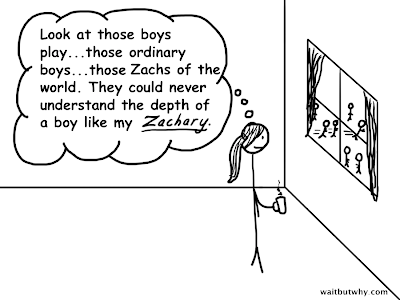


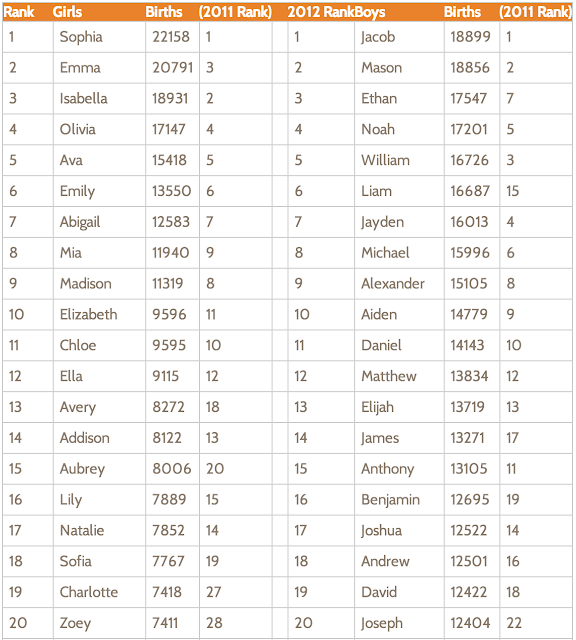

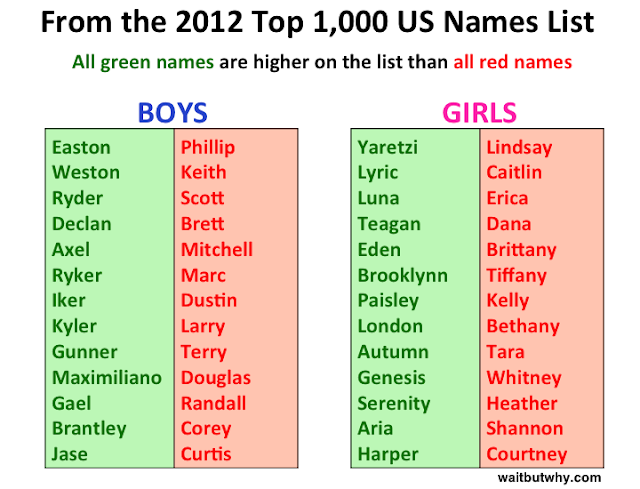
So to be clear, Gunner and Gael are currently more common baby names than Phillip or Scott. And Lyric, Paisley, and Brooklynn with two n's are all more common than Lindsay, Caitlin, and Erica. We're still close enough in time to the red name fads that they seem really common, but they're actually just fads. And they're over.
 So there are a bunch of middle-aged conservative women and liberal toddlers out there named Charlotte.
The only time I ever saw a dead name return in fewer than 80 years is when it caught on with a totally different demographic (Jeremiah is another one of these, which after losing steam in the early nineties in the Northwest, has now gotten hot in the Deep South).
 Utah got into the name in the early 70s by itself, and then suddenly in 1980, everyone else decided to jump on board. The same phenomenon goes for Natalie, Aubrey, Riley (m), Jaxon, Paisley, Braxton, and Lacey. (Yes, those are all popular names right now.) Not sure who made Utah the name prophecy state, but that's what it apparently is.
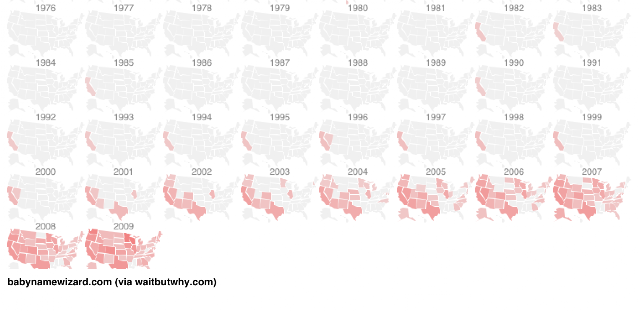
 Same goes for Braxton, Brooklyn, and Jaxon.

Here's a map showing where Paige was popular in 2008.

Same goes for Alexa, Kathleen, and Nicole.
Vowel Names
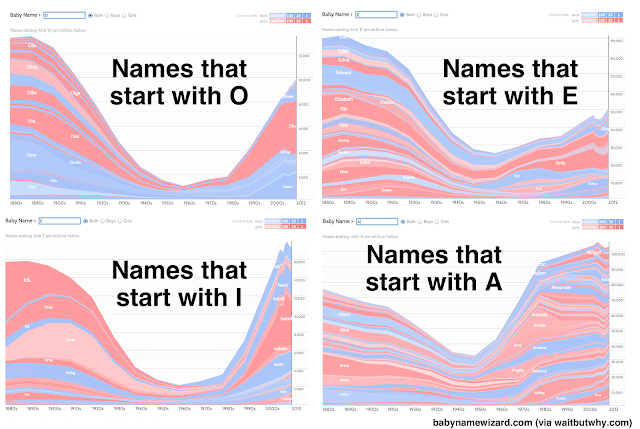
Consonant Names

And F names are for old people.


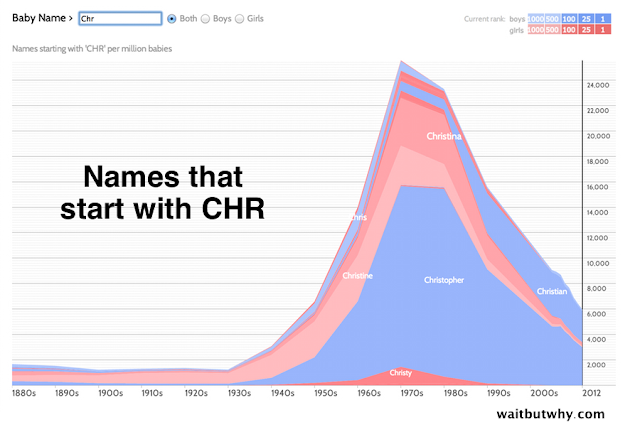


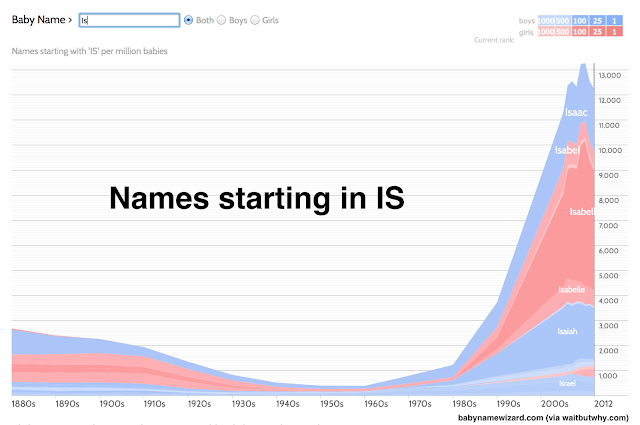
There's a current fad going on for names starting in IS.



Another case of females committing full-fledged robbery:

 And now, many of the most popular baby names are popular with both genders, as if each gender can't handle the other one innovating without being included.
I know a lot about names right now.
I'll leave you today with this puzzle:

I'd be living my normal day, and then the thought would hit me—"Matt has a son"—and my whole world would get turned upside down.
Three years and six friend babies later, I'm 32 and have numbed to the whole thing considerably. It's still weird. But not jarring.
This new phenomenon in my life has introduced several new experiences—things like "having your feelings hurt and losing self-confidence because your friend's toddler doesn't like you" and "learning that talking about the baby as a 'toy' or a 'pod' and commenting on 'it not having a brain yet' is less funny to the baby's parents than it is to you." But perhaps the most frequent new experience is finding myself in discussions about baby names, both in the form of talking to the impending parents and pressuring them to reveal the candidates, and talking to other friends about the eventual name choices behind the new parents' back.
(Note: definitely best to keep the name candidates a secret until after the baby's born—no name will please everyone and other peoples' opinions really shouldn't be part of the process for something so personal. And when you announce the name after the baby is born, everyone has to pretend they like it to your face no matter what they think, so you'll end up feeling like everyone likes it.)

You'd assume that thinking about baby names is a new thing in my life, but I've actually had a lifelong fascination with the topic.
My curiosity rose to a whole new level the day I discovered an amazing website called The Baby Name Wizard, and especially their Voyager tool, which lets you plug in a few letters or a whole name and see a visual depiction of its corresponding popularity trends over time. The Voyager is delicious and rents permanent space in my Dark Playground. (Of course, as soon as it was the topic of this post, putting Voyager play time in the Dark Woods for the first time ever, the monkey suddenly wanted to do other things and kept clicking away from the page. But that's a whole other topic.)
So, for all these reasons, it seemed like the right time for a post about names, trends, and the things expecting parents need to think about as they make this decision.
After many hours on The Baby Name Wizard (and the government's official name database), here are my thoughts (focusing on the US unless otherwise stated)—
Parents choosing a name have a few options:
1) Go Timeless
Examples: John, James, William, David, Mary, Sarah, Elizabeth
Benefits: You won't embarrass yourself; You won't pigeonhole the kid in any way, including generationally; It's classy; There's something cool about a common bond with centuries of previous humans
Drawbacks: It's kind of boring.
These names are often biblical, or sometimes those of famous royalty, and they're bigger than any one generation—William is not a typical old man's name or young guy's name—it's just William. And they're always popular.
But they're less popular than they used to be. The Top 10 boys names in the 1880's share six members with the Top 10 boys names in the 1950's: John, William, James, Robert, Charles, and Thomas. But the Top 10 in 2012 only includes one name from that list—William.
2) Go Super Weird
Examples: Winter, Namaste, Jameliah, Stormy, Cameo, Grudzel
Benefits: No one will ever question your balls; If the kid is awesome, then it's awesome.
Drawbacks: They'll have to spell their name on the phone 2 trillion times throughout their life; They'll have to watch people figuring out how to react every time they introduce themselves; They'll get made fun of at school; It might hurt their chances of getting job interviews; If the kid isn't awesome, the whole thing is awkward; If you were just in a phase and made a compulsive decision, that's shitty cause the kid has to live with it forever.
Despite several drawbacks, it's a nice chance to say, "P.S. We don't give a shit about what other people think." And again, if the kid's awesome, a weird name just makes them even more awesome.
For what it's worth, a lot more people are going weird now than they used to. People used to be almost uniformly conformist. In 1950, only 5% of parents strayed out of the Top 1,000 names when naming their child. In 2012, 27% of parents went weird and left the Top 1,000.
This is part of a broader trend away from conformity: In 1880, the Top 4 boys names (John, William, James, George) covered one in every four boys. In 2012, the Top 4 boys names (Jacob, Mason, Ethan, Noah) cover only one in every 26 boys.
3) Go a Little Weird But Not Too Weird
Examples: Ashton, Wyatt, Luca, Brooklyn, Delaney, Alexia
Benefits: You're being nonconformist but without most of the drawbacks in Category 2; If it's a really good name people will be all jealous and you'll be thrilled with yourself; It says "My parents are cool but not too annoying."
Drawbacks: You might be a little too pleased with yourself for someone who still let the Top 200 names dictate their choice; There's a chance a lot of other people feel the same way about that "unconventional" name and you inadvertently find yourself as part of a Name Fad.
This category is perfect for parents who are far too thrilled with themselves and are having far too special a child for a Timeless or Top 10 Name, but who also look down upon those who go for a Super Weird Name as annoying or unclassy. (In case you're wondering, most of my friends went with Category 3.)
But let's focus on something I mentioned in the drawbacks: The Name Fad. It turns out that sometimes you're not the only one who loves that fresh, oh-so-pretty name, and a Name Fad happens when millions of Category 3 couples all start to say "Wait I like that" when they hear about someone else making a great Category 3 choice (it can also be started by a famous person—e.g. the surge in Mileys in the last decade).
Suddenly, that name so perfectly placed at #137 on the list of popular names is #86. Then the next year it's #41. Then #18. Then #5. All to the horror of the Category 3 couple.
You know when everyone calls a guy by his nickname except his parents, who use his full three-syllable name? I think part of that is trying to wrench individuality from a fad name.

The fad is heightened by another large category of parent choice—
4) Just Dive Into the Current Honeymoon, Knowing You're Picking a Popular Name
Examples: Anything from the current Top 20.
Benefits: Safe; Hip; Bonds your child with his/her whole generation in a broad sense.
Drawbacks: There will be three other kids in the class with the same name and they'll be referred to along with their last name initial; Your child will one day have a Middle-Aged Name, and one later day, an Old Person Name.
To me, studying Name Fads throughout time yields the most interesting information because it speaks about something society is doing as a whole at a given time. Let's spend the rest of the post digging into Name Fads and how they work—
Name Fads
Here's what a Name Fad looks like:

Between 1965 and 1985, everyone named their daughter Jennifer, and now, no one does. So Jennifer was officially a Name Fad. What this means for all the Jennifers of the world is that while they've enjoyed spending most of their life so far with a cute, hip, young girl name, they are on their way to having a Your Mom's Friend's Name. A Your Mom's Friend's Name happens when lots of middle-aged people have a name that no young or old people have.
A few decades after that, Jennifer can look forward to having an Old Lady Name, which happens when a name belongs to lots of old ladies, but no one under 75.
This isn't necessarily a bad thing, but it's a fact that Jennifer is irreparably branded with her generation forever. Of course, Jennifer is just one of many such names.
In 30 years, the names Natalie, Chelsea, Samantha, and Lindsay will sound how Nancy, Cheryl, Susan, and Linda do today. And in 60 years, the names Ethan, Cody, Brandon, and Matthew will be Earl, Chester, Bernard, and Melvin. These are all just Name Fads—only difference is when they happened.

If you want to know if your name is a fad, type it into the Voyager. If it looks like a witch's hat, it's a fad.
So what's hot right now?
Sophia and Emma in particular are not just sweeping the US, but the whole Western world.
Sophia (or Sofia) is in the Top 6 baby names in Italy, Finland, Denmark, Germany, Russia, Ukraine, Argentina, and Chile. Emma is Top 6 in Ireland, Finland, Norway, Canada, Denmark, Belgium, Netherlands, France, Italy, Switzerland, Austria, and Germany. Emma's popularity is also clearly caused by a wave of naming after great-grandmothers, another way people sometimes name a child:
To stress how much more popular the biggest names used to be, Mary was six times as popular in 1880 as either Sophia or Emma is now.
And looking at the other top names of 2012 emphasizes just how dead fads are once they're over:
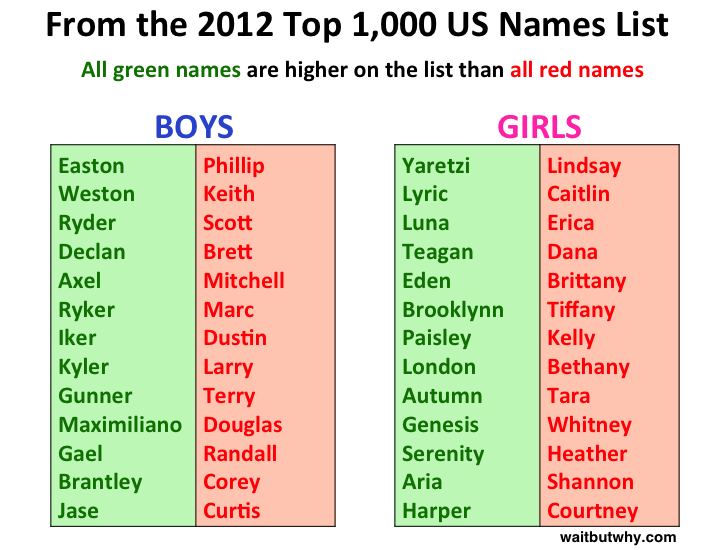
So to be clear, Gunner and Gael are currently more common baby names than Phillip or Scott. And Lyric, Paisley, and Brooklynn with two n's are all more common than Lindsay, Caitlin, and Erica. We're still close enough in time to the red name fads that they seem really common, but they're actually just fads. And they're over.
Some other odd fads I observed while researching:
Demographic-related fads
Charlotte has a weird history.
After dying out as a popular name for Southern women a few decades ago, Charlotte has returned as a popular name in the most liberal states. This graph shows popularity in each state over time, with the states going from most conservative on the top to most liberal on the bottom.
The only time I ever saw a dead name return in fewer than 80 years is when it caught on with a totally different demographic (Jeremiah is another one of these, which after losing steam in the early nineties in the Northwest, has now gotten hot in the Deep South).
We stole a lot of the hottest current names from Utah.
Here's the history of the name Brooke:
We also stole Evelyn from California.
Evelyn's Popularity Over Time
The popular girl name Reagan is for Republicans.
Sophia was originally for the richest states, before it got so popular everyone got into it. Sofia is still for rich states though:
Paige is only for Northerners.
Here's a map showing where Paige was popular in 2008.
Same goes for Alexa, Kathleen, and Nicole.
Meanwhile, Victor is mainly found in the Southwest, Colton in the middle of the country, Caroline in the East, and both Adrianna and Dominic are mostly contained to New Mexico.
Fads around specific letters or sounds
Names starting with a vowel were hottest now and 100 years ago, while many names starting with consonants were biggest in the middle of the century.
Vowel Names
And F names are for old people.
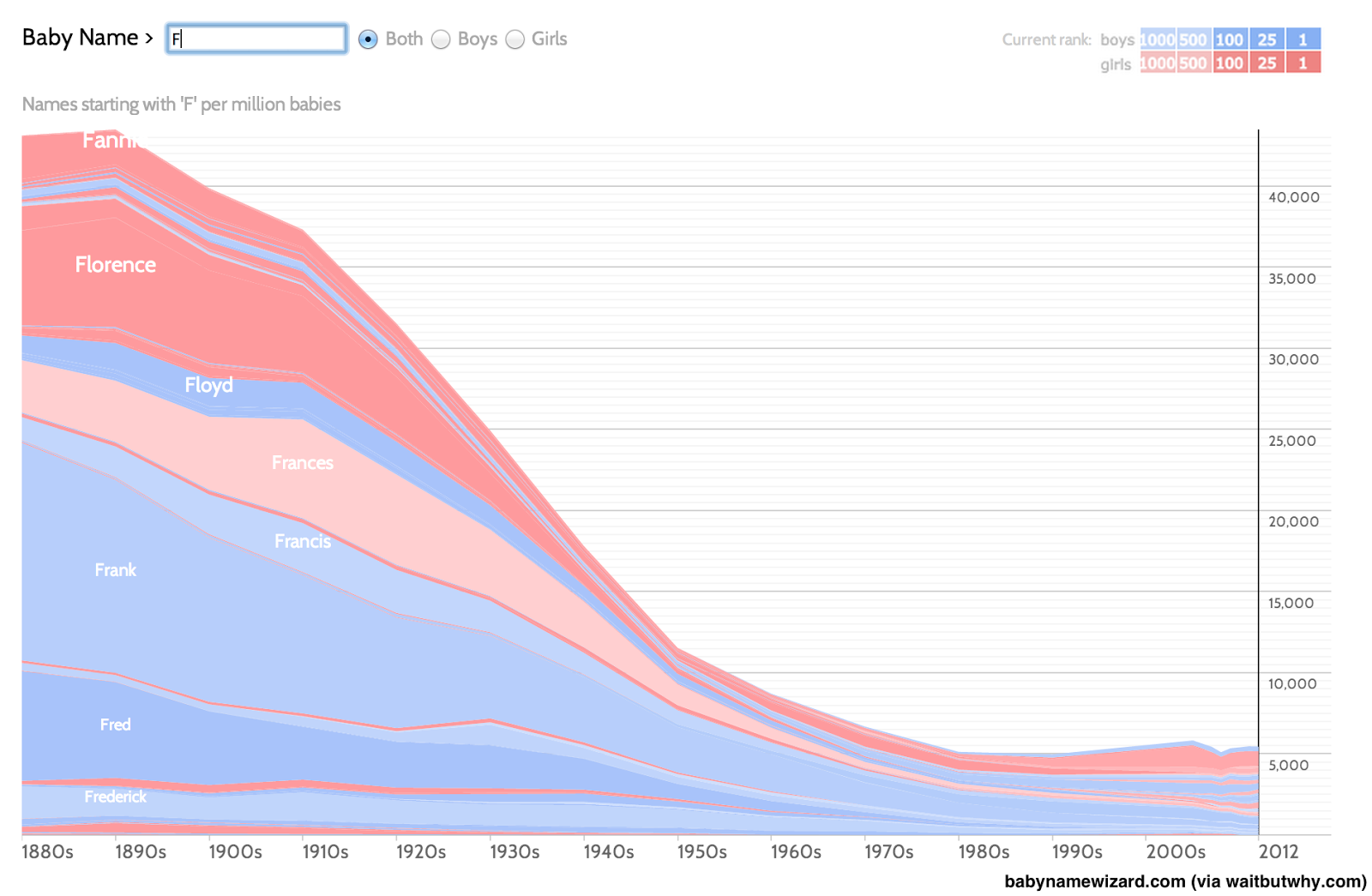
Names starting with ERI, LA, and the sound CR all went through fads in the 1970s and 80s. They're all over now.


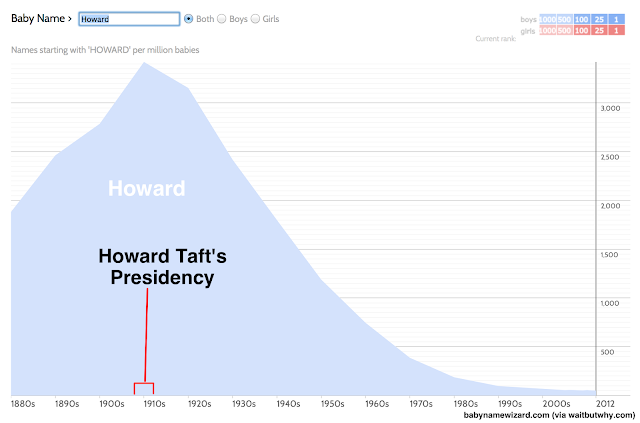
People used to copy the president


Genders being dicks
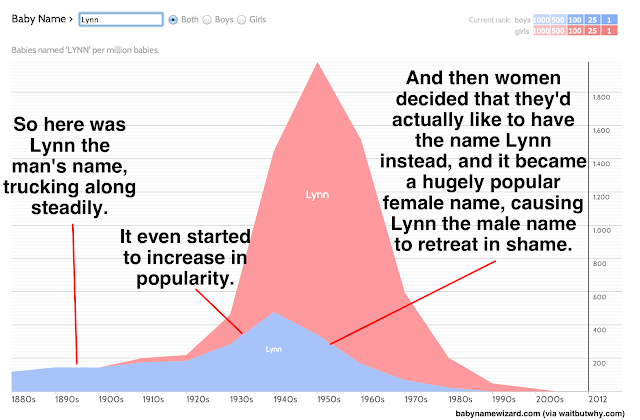
Sometimes one gender is doing its thing, living its life, when one of its names is suddenly stolen by the other gender:
Another case of females committing full-fledged robbery:

Genders also get jealous when the other has too popular a name. Each of the following names has had the other gender in the Top 1,000 during some stretch of the past (click on a name to see its history with the opposite gender).
John, William, James, George, Joseph, Michael, Thomas, David, Frank, Henry, Mary, Elizabeth, Sarah, and Margaret.
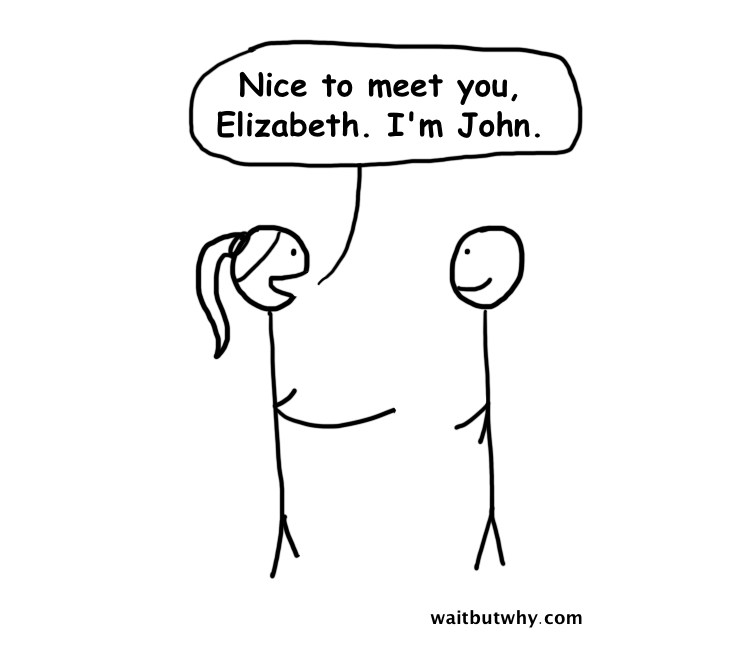
I know a lot about names right now.
I'll leave you today with this puzzle:
Like Wait But Why? Subscribe by entering your email address (no spam, ever)
Like this post on Facebook:
Like Wait But Why on Facebook:
Jennifer.hansman likes this

10 Dec 12:59
Rocky movie breakdown
by Nathan Yau

Fathom Information Design watched all six Rocky movies, classified segments into dialogue, training, montages, pre-fight, fight, and credits, and then visualized it. Rocky Morphology is the result.
It's interesting to see the battle between dialogue, montage and fighting throughout each film. Dialogue beats out training and fighting in the first two Rocky films, but fighting and montage occupy the most time in Rocky III and Rocky IV. Rocky V favors dialogue over fighting — undisputedly slowing its pace next to the previous films. In the final round, Rocky sticks with dialogue over fighting but — "it ain't over 'till it's over" — Rocky delivers one last montage and fight scene to close out the series and complete the Rocky Morphology.
Needs more montage. Maybe we'll get it in Grudge Match, because as we all know, that has instant classic written all over it.

04 Dec 17:10
Starred Items!
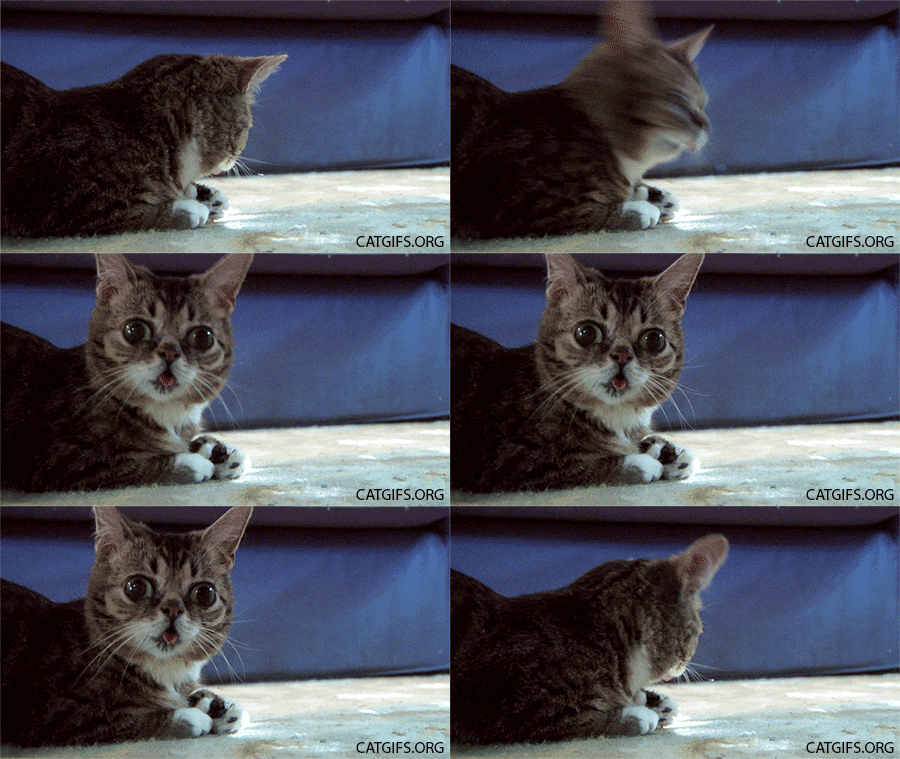
We’re excited to announce that starred items are now live in The Old Reader. This has been one of the most requested features and something we’ve felt belongs in the application for a long time. Hotkey (f) and API support are also available. Starred items will automatically be sent to pocket for users that have it activated.
As most of you know, our focus over the past few months was to increase performance and stability of The Old Reader. We’ve made tremendous strides and can now focus on adding functionality and making this tool a long-term sustainable platform built for the Open Web. The best is yet to come.
Thanks for using The Old Reader!
(www.catgifs.org/2013/09/07/cat-surprised-cat-animated-gif/)
Bill Robertson, Nosolonin and 24 others like this
04 Dec 16:36


Veja a evolução do impressionante retrato de Morgan Freeman feito com o dedo no iPad Air
by Duquian
ivanIgualzinho o Mandela
Kyle Lambert conseguiu impressionar a todos com a fotorrealista de Morgan Freeman. E mais surpreendente ainda é Kyle afirmar ter usado apenas um iPad Air, o app Procreate e seu dedo para cunhar, com tamanha precisão, essa imagem que você vê logo abaixo,

04 Dec 15:31


A carta mais inusitada enviada ao Papai Noel que você verá esta semana
by Duquian
“Querido Papai Noel, Como você está? Eu estou bem. Aqui está o que eu quero para o Natal”: http://www.amazon.com/gp/product/b0032hf60m/ref=s9_hps_bw_g21_ir03? pf_rd_m=ATVPDKIKXODER&pf_rd_s=center-3&pf_rd_r=1xwe42fh1k03y7bmwqnm&pf_rd_t
=101&pf_rd_p=1328901542&pf_rd_i=16579&tag=viglink122467-20
Não se sabe se a tal cartinha foi realmente escrita por uma criança, mas não deixa de ser inusitado e engraçado. Torcer agora para que Papai Noel tenha algum dispositivo ligado a internet e uma conta na Amazon. Quer saber o que foi pedido na cartinha? Clique no link acima.

Greg McCabe, Fatbob and one other like this

02 Dec 12:59


Mais do mesmo.
by Neto
Outro dia falei, nesse post no Facebook, que estava faltando criatividade nos Posters dos filmes. Usei como exemplo esses 3 posters aí de cima. E não é que tem gente que se dá ao trabalho de organizar a bagunça e separar categorias de clichês gráficos? A Marina Siqueira me mandou esse trablaho do site Demilked. Então, o UoD orgulhosamente apresenta as categorias Poster de Cinema Manjado:
O intrépido solitário de costas.
Cabeçonas sobre gente pequena na praia.
Costas com costas vistas de lado.
No meio das pernas.
Na cama e algo mais.
Olhão com coisa dentro.
Big Blue.
Preto e Branco em chamas.
Correndo na rua torto e azulado.
Cara feita de coisas.
Lady in Red.
A justiça é cega.
Textão na testa.
Reflexo no óculos.
A praça é nossa.
Big Blue.
Textão na testa.
Correndo na rua torto e azulado.
A praça é nossa.
Na cama e algo mais.
Reflexo no óculos.
Cara feita de coisas.
No meio das pernas.
Preto e Branco em chamas.
Lady in Red.
Olhão com coisa dentro.
A justiça é cega.
Costas com costas vistas de lado.
Cabeçonas sobre gente pequena na praia.
    
|
Albener Pessoa and -1 others like this


29 Nov 17:23
Photo
ivanMinha vida até achar um seriado legal.
Aliás, meu seriado do momento é... House of Cards =)
Albener Pessoa likes this
19 Nov 23:36


Batman: The Deal | A melhor história do Morcego que você não vai ver nas bancas
by Pedro Turambar
Não acho que exista uma fórmula para mostrar seu talento. Cada um faz de um jeito, cada um encontra um caminho, às vezes similares aos demais, outras não.
Normalmente as ideias mais ousadas são as que atingem o objetivo de forma mais rápida e prática. Foi numa dessas que Gerardo Preciado e Daniel Bayliss devem ter falado um pro outro:
– Ei, bora ali fazer a melhor história curta do Batman?
– Bora.
Porque é isso que The Deal é, uma fan art feita por dois ingleses de tirar o chapéu. É isso que esses caras tiveram bolas para fazer e mostrar pra quem quisesse ler. Coragem, ousadia e talento para mexer com um dos maiores ícones da cultura popular do mundo.
Se você leu A Piada Mortal de Alan Moore e Brian Bolland, eu diria que isso aqui é o final estendido dela.
As metáforas, as alusões e o entendimento sobre a vida o universo e tudo mais que The Deal traz é de uma sensibilidade, e profundidade que poucas vezes eu vi em uma história em quadrinhos. Colocar isso em um diálogo entre o Batman e o Coringa é simplesmente genial.
Se você gosta de quadrinhos ou não. Se você é fã do Batman ou não, não importa.
Apenas leia e tire alguns minutos para pensar.


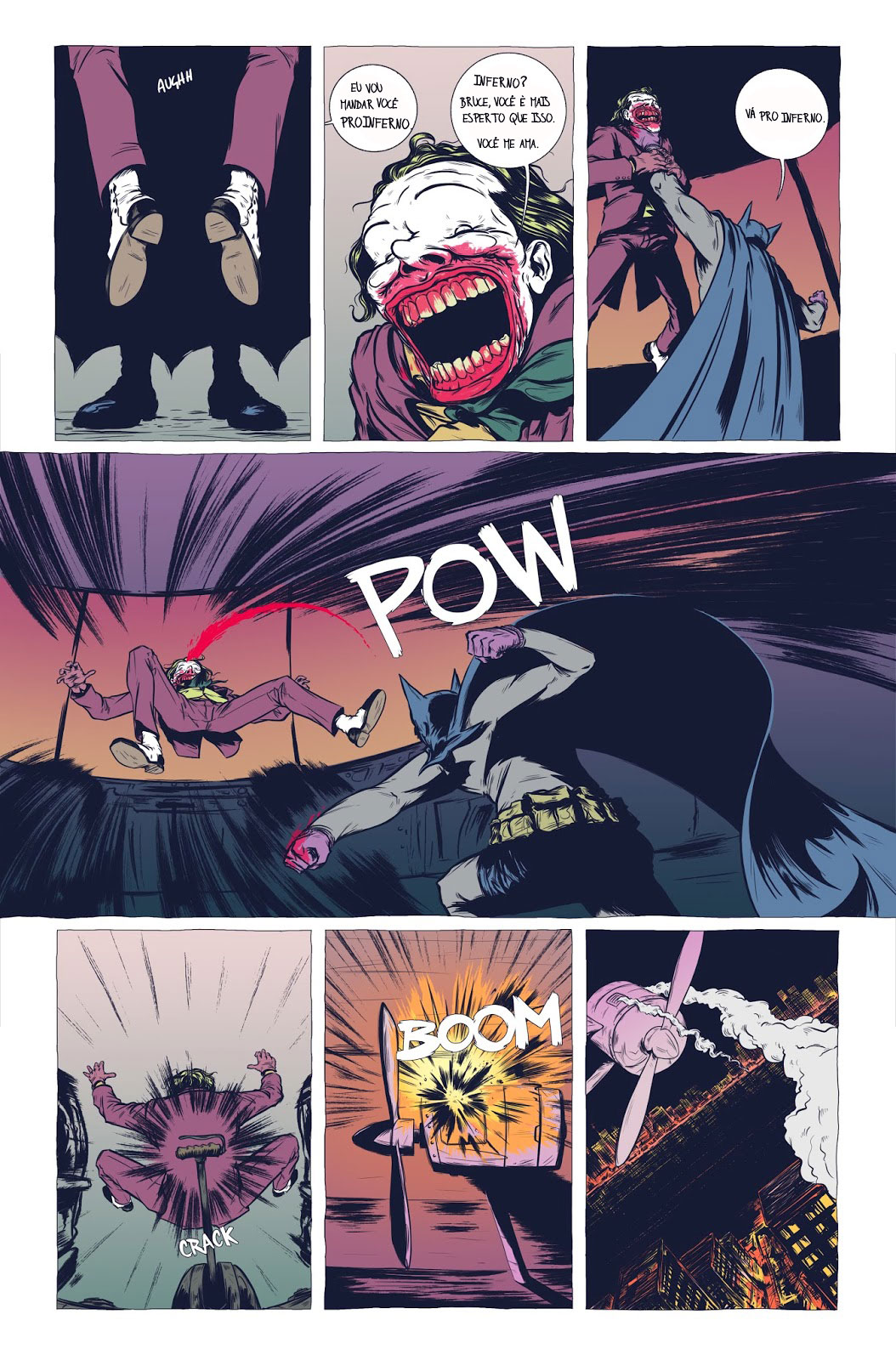


Obs: a tradução foi feita pelo Pedro Turambar e garimpada (e diagramada com toda a inocência de quem nunca fez isso) por Jader Pires, com autorização dos autores da obra.
Obs 2: Todas as personagens são propriedade da DC Comics.
Pgabriel.26 likes this