Sonic the Grandpa.


‘Blessings upon the Land of my Love
by Imran Qureshi, and “You who are my love and my life’s enemy too”.Site-specific installation, Emulsion and acrylic on brick, 2011.
Unctional Beauty and Handmade Political Art
Folk arts are usually secluded in the area of the “ornamental”; they are seldom seen as “political” or critical. By the same token, the artifacts of political expression are not seen as belonging to a tradition of art-making. However, despite institutional silence, there is a long standing, home-made tradition of making political art. Sometimes, these “gifts of resistance”[1] refuse the commercial appropriation and remain autonomously critical. They are autonomously critical in the sense that their critical stance is not imposed by what an institution wants them to be critical about. A carpet, for instance, is not always a textile floor covering but a way of spending time usefully, politically and critically and yes, it is beautiful: a beauty we fear. Starting with “the aesthetic era”, the established aesthetic theories define beauty as an ability of some objects to arise in viewers a distinctive type of unmediated pleasure – aesthetic pleasure. This ability to arise pleasure in attendants is the only purpose of beauty in aesthetic era. Then, beauty is understood as a functionless entity which merely gives us aesthetic pleasure. But is this so? Political home-made pieces don’t strive to conform to a hegemonic or paradigmatic concept of beauty but to a pluralistic understanding of it. How does beauty look is less noteworthy in comparison with what beauty does and means. Political-critical-home-made art usually exhibits difficult beauties[2], queer beauties and obscure beauties, which nevertheless, do not seem to be pleasant at the first sight (and, even if they are pleasant at the first sight in some cases, this does not mean that they don’t perform a critical function at the same time). Therefore, even if folk arts tend to be secluded in the ornamental’s domain, it does not mean that “the ornament” cannot act as an indicator of social change or as a critical reminder. And even if they are not called “art”, this does not mean that these forms of creativity from outside the mainstream artworld cannot act critically and progressively.
Critical Ornament and Functional Beauty
Ornament repeats animalistic, vegetative or geometric patterns applied to an image surface. It is commonly held that ornament serves “to heighten an aesthetic effect, to structure, accentuate or enliven surfaces, to frame, to fill –or to dignify”[3]. Sometimes, it does more than that but being too often associated with triviality, domesticity or “popular culture” fails to convince that beauty can be clever too. From the long history of its dismissal, it would be enough just to mention Adolf Loos’s invectives: “No ornament can any longer be made today by anyone who lives on our cultural level. It is different with the individuals and peoples who have not yet reached this level…I can tolerate the ornament of the Kaffir, The Persian, the Slovak peasant woman, my shoemaker’s ornaments, for they have no other way of attaining the high points of their existence. We have art, which has taken the place of ornament”[4].
As we know, ornaments became inextricably bound up in discussions about taste and beauty. Yet, ornament does not necessarily talk about symmetry and harmony to satisfy a cataleptic aesthetics of pleasure but can talk about conflicts and injustices too. It is increasingly being used as a means of criticism: “of suffocating female role models; of totalitarian political systems; of standardizing behavioral patterns, expectations and conventions”[5]. Even mere decoration (“free beauty”[6] in Kant’s terms) acquires a political function. Then, the beautiful, “inoffensive” ornament started to be increasingly used by political artists from the art world or from the margins as a means of criticism of the disturbed conditions of the world. To take just an example, the Pakistani artist Imran Qureshi’s floor painting for the 10th Sharjah Biennial (United Arab Emirates) is a mixture of beauty and critique. As the curator Sabine Vogel posits: “Blood –red color everywhere. The whole courtyard is a shambles. Splatters cover even the stairs and the walls. But then you notice the little, white floral ornament. They are fused with the color of blood; they emerge from this image of violence”[7].
firehoseand also

“I have icefire in my veins.”
Anna Anthropy tells me this as we sit down for an interview at the Game Developers’ Conference in San Francisco. Such a declaration is not out of character for the prolific video game designer and author. Most of her games, such as Mighty Jill Off, Sex Cops of Tickle City, Encyclopaedia FuckMe and Lesbian Spider-Queens From Mars explore the intersection of sadism, gender and sex, subjects usually avoided by mainstream games. After I interview her, she will go to the Mad As Hell: Hothead Developers Rant Back session, where her fire-cleansing riffs on my poem Romero’s Wives will leave me shaken and emotional and the Moscone Centre all but burnt down.
via Anna Anthropy and the Twine revolution | Technology | guardian.co.uk.


firehoseCara Ellison beat
Twine beat

Porpentine is a game designer, writer, and curator for freeindiegam.es. She primarily makes Twine games, which are choose your own adventure style games that are accessible, short, and welcoming. You can play them in a browser on your lunchbreak with some headphones on.
But in my mind Porpentine looks like a hot cyberpunk cyborg, eyes aglow, a textual goddess alight with burning fluorescent punctuation. She does not walk anywhere: she glides, riffing in smeared lipstick, sly grin, sylph-like limbs; those she touches have typography bleed up their arms and flash into their bursting hearts. I am Molly from Neuromancer interfacing with her as I listen to percussive pop beats, type questions to her in IM. Gchat is now an early 90s cyberconduit to the Porpentine mainframe. She’s a queer tranarchafeminist, a cyberqueen, a Twine weaver, and so many other things besides. Her tendrils stroke the internet, provoking.


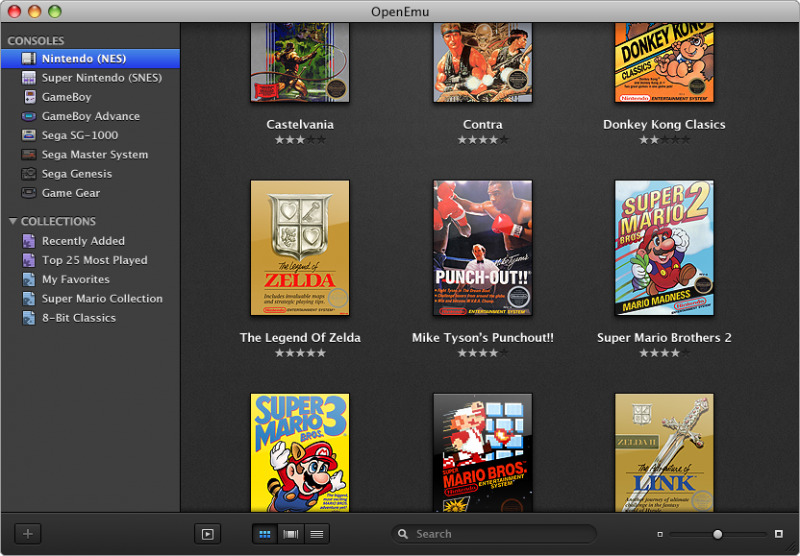
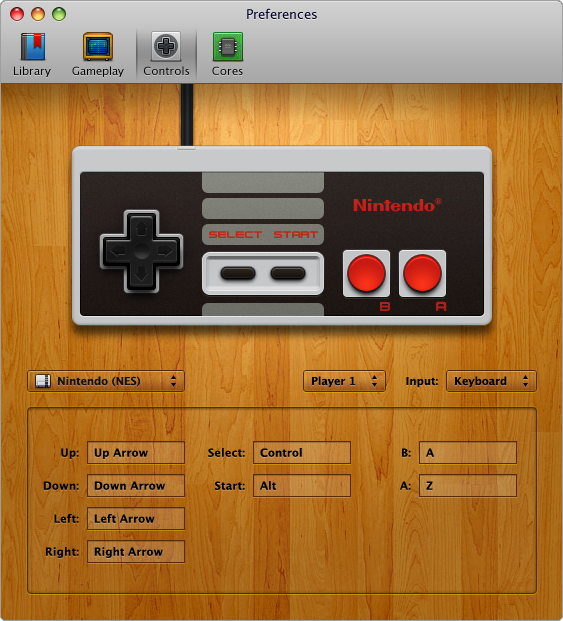
Open Emu is an open source project to bring game emulation to OS X as a first class citizen, leveraging modern OS X technologies such as Cocoa, Core Animation and Quartz, and 3rd party libraries like Sparkle for auto-updating. Open Emu is based on a modular architecture, allowing for game-engine plugins, this means Open Emu can support a host of different emulation engines and back-ends while retaining a familiar OS X native front-end.OpenEmu, which has been in beta for quite some time, is able to emulate the hardware of several different consoles. Version 1.0 of the software will include support for several 16-bit systems, including the Game Boy, Game Boy Color, Game Boy Advance, Game Gear, NeoGeo Pocket, Nintendo Entertainment System, Sega Genesis, and Super Nintendo, among others.

    
|
firehosehmm
The practice of implementing responsive images is still in its infancy. We’ve seen a lot of ideas and suggestions for how it should be done and we’re bound to see a lot more.
Today we’re going to look at a fascinating little framework that allows you to not only automatically resize your images when the viewport changes, but also crop the images with a specific important focal point in mind. Amazingly enough, it does all this with pure CSS. Read on to see how it works.
Focal Point is a GitHub project and CSS framework created by Adam Bradley. As you know, the concept of responsive images requires that any images on your page resize and reflow to achieve optimal layout for the current viewport size. Focal Point takes this idea a step further though and not only resizes your images, but crops them as well.

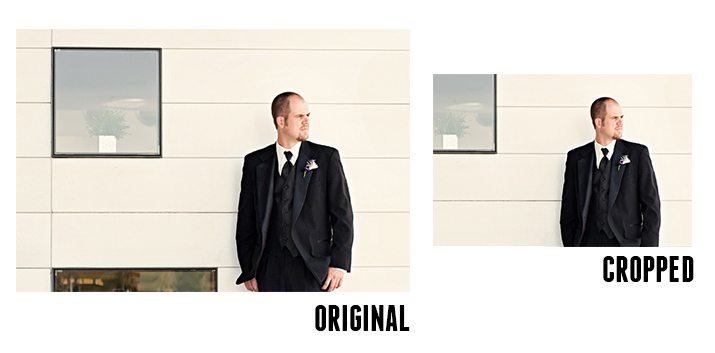
The problem with this idea of course is that if you arbitrarily crop an image, you could be cutting out the most important part of the image! For instance, in the image above, the subject is on the right side of the image. How do we prevent her from being cropped?
Fortunately, Focal Point allows you to specify a targeted area of the image to retain (the focal point). This way, when the framework crops your image, it will do so in a way that ensures that your picture still looks great.

Implementing Focal Point is a pretty unique process, but it’s quite easy. First, we’ll talk about the general process that’s used to choose a focal point, then we’ll dive into the code.
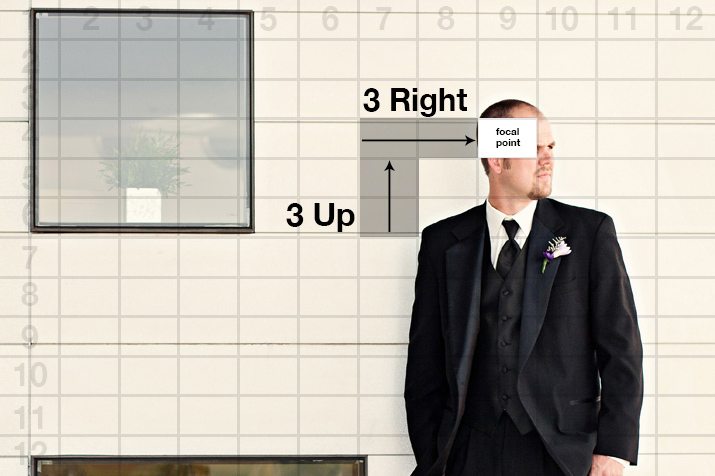
When you insert an image into your web page using Focal Point, that image will automatically be split up into an invisible 12×12 grid. It doesn’t matter what the dimensions of the images are, the grid will adapt to whatever you need.

Now that we know how the image is split up, we must decide on a specific place in that grid that will serve as our focal point. What this means is that, as the image is cropped, the point that we choose will serve as a central area around which the crop will happen. So if we choose the man’s face, we can ensure that the important aspects of this photo are maintained.
The process here is to find the face, then count grid units from center. In this case, his face is three units right and three units up from the center of the grid.
Now that we have our focal point in mind, it’s time to plan out our code. To begin, make sure you download the project from GitHub and link the included CSS file to your HTML document.
Once you’re all set up, it’s time to set up two divs and an image tag. Yep, I know, that’s a heck of a lot of markup for a single image and definitely a huge downside to using this framework. Here’s the basic markup:
<div class="focal-point">
  <div><img src="guy.jpg" alt="guy"></div>
</div>
As you can see, the outer div contains the “focal-point” class and the inner div contains our image with no classes applied.
Now it’s time to tell Focal Point where we want to focus in the image. Remember that our focal point is three grid units to the right and three grid units up. This translates to the class names “right-3″ and “up-3″, which are applied to the outer div.
<div class="focal-point right-3 up-3">
  <div><img src="guy.jpg" alt=""></div>
</div>

With this code applied, our image will start out like normal on large screens, then as the viewport is reduced, the width will gradually decrease as the crop tightens around our focal point.
Notice how the image on the right isn’t just smaller, unimportant parts of the photo have actually been cut out. This magic happened live, with CSS! To get a better idea of how this works in a project, let’s build a basic page.
The first thing that we’re going to do is set up a div with a class of “column”:
<div class="column">
</div>
Simple enough right? Now let’s add in a heading and a paragraph just for some generic page content.
<div class="column">
  <h1>Focal Point</h1>
  <p>Lorem ipsum.... </p>
</div>
Next, toss in the image just like we did above using the “right-3″ and “up-3″ classes and two divs.
<div class="column">
  <h1>Focal Point</h1>
  <p>Lorem ipsum.... </p>

  <div class="focal-point right-3 up-3">
    <div><img src="guy.jpg" alt="guy"></div>
  </div>
</div>
Now, to finish off the page, copy and paste that entire chunk of code. This time around though, we’ll use another image and a different focal point.
<div class="column">
  <h1>Focal Point</h1>
  <p>Lorem ipsum...</p>

  <div class="focal-point right-3 up-3">
    <div><img src="guy.jpg" alt="guy"></div>
  </div>
</div>

<div class="column">
  <h1>Focal Point</h1>
  <p>Lorem ipsum...</p>

  <div class="focal-point right-2 up-2">
    <div><img src="couple.jpg" alt="couple"></div>
  </div>
</div>
For the second image, the focal point will be right two units and up two units. Here’s what that looks like on our grid:

Now it’s time to style up this page. The awesome part is that the responsiveness of the images as well as the focal point voodoo is all taken care of for us. All we have to do is make everything look pretty. The process that I go through here basically splits the page into two columns and styles the text.
* {
  margin: 0;
  padding: 0;
  -webkit-box-sizing: border-box;
  -moz-box-sizing: border-box;
  -ms-box-sizing: border-box;
  box-sizing: border-box;
}

.column {
  float: left;
  overflow: auto;
  padding: 20px;
  width: 50%;
}

h1  {
  text-transform: uppercase;
  font: bold 45px/1.5 Helvetica, Verdana, sans-serif;
}

p {
  margin-bottom: 20px;
  color: #888;
  font: 14px/1.5 Helvetica, Verdana, sans-serif;
}

@media all and (max-width: 767px) {
  p {
    font-size: 12px;
  }

  h1 {
    font-size: 35px;
  }
}

@media all and (max-width: 550px) {
  h1 {
    font-size: 23px;
  }
}
Now that our demo is built, let’s take a look. If we take a look at the page on a desktop or laptop computer, we see that the images have automatically conformed to our column size and are displaying the full image area.
Demo: Click here to launch.

Now if we either narrow our window size or switch to a mobile device, we can see the images adapt perfectly. As we get smaller and smaller, a media query kicks in and suddenly the images are not only smaller, but cropped.

From a design perspective, how cool is that!? The smaller an image becomes, the easier it is for what was once a large, prominent focal point to become a tiny speck. With this framework, you can make sure that viewers on small devices still receive high impact images.
This should work fine in all major, modern browsers. For IE8, the images will resize correctly, they simply won’t crop themselves. This really isn’t the end of the world as 99.99% of sites on the web don’t have this auto-cropping functionality anyway!
Now we know that Focal Point works, but it’s important to know how it works. This way if you want to tweak what’s happening or do something similar without the framework, you’ll be able to with no problem.
The first portion of the code is a basic CSS-only responsive image solution. It would be good to back this up with some JavaScript, but it’s a solid start. As you can see, it takes advantage of 100% width, 100% max-width and auto height to work its magic.
.focal-point {
    width: 100%;
    height: auto;
    overflow: hidden;
}

.focal-point img {
    width: 100%;
    max-width: 100%;
    height: auto;
    -ms-interpolation-mode: bicubic;
}

.focal-point div {
    position: relative;
    max-width: none;
    height: auto;
}
What happens next is a little more complicated. First, a basic media query is implemented at 767px. Then, to make the crop happen, some negative margins are used for each of the possible classes. I’ve cleaned up this code to only include the “up-3″ and “right-3″ classes that we used above.
@media all and (max-width: 767px) {

    /* 4x3 Landscape Shape (Default) */
    .focal-point div {
        margin: -3em -4em;
    }

    /* Landscape up (Total 6em) */
    .up-3 div {
        margin-top:    -1.5em;
        margin-bottom: -4.5em;
    }

    .right-3 div {
        margin-left:  -6em;
        margin-right: -2em;
    }
}
As you can see, there’s really not much code at work here, but it’s a pretty tricky chunk of CSS. Negative margins are being used with em units to crop the image relative to a specific point. Serious kudos to Adam Bradley for thinking up this clever technique!
Now that you’ve seen what Focal Point does and how it works, it’s time for you time chime in and let me know what you think. Would you use this in a project? Why or why not? How would you make it even better?
Also, if you’ve seen any other great responsive image tools, techniques or frameworks, leave a link and I’ll check them out.

Though she is a recent graduate of the illustration program at the University of West England, Kate Barley’s style has a mature feel.
She takes inspiration in the work of great Golden Age illustrators like Kay Nielsen, Edmund Dulac and Harry Clarke, with a bit of Aubrey Beardsley and perhaps a touch of early 20th century New Yorker cartoonists thrown in for good measure.
When looking through her website portfolio, be aware that though clicking on the images themselves simply advances to the next image, there are text links to the left for viewing the larger versions, which I recommend to really appreciate her work.
There is also a quick sampler of larger images from The Olive Fairy Book on the cizgili masallar blog.
[Via MetaFilter]
firehose"Instead of figuring out some reason why this person we disagree with shouldn't even be at the table, we should be trying to figure out why they so badly want to be part of this discussion. We will always, always, always learn more from people with whom we disagree than from our own personal echo chamber, as safe and comfortable as that place may be.
...
I want to see 500 (or 50,000) game makers, all with different ideas about how to make something interesting and new for a new audience, arguing about how to make great art, with vigor and passion, and complete respect for everyone's right to be part of that discussion. I want to see the great works they make to back up their rhetoric."

By Adam Saltsman on Apr 12, 2013 at 12:00p
A kind of debate-rant-fueled movement among game makers and critics has unfolded over the last few weeks, and will continue to do so, hopefully for the foreseeable future. At the heart of this movement, as far as I can tell, is a passion for video games. It is about a powerful need to make games that are more inclusive. This means not only making games that are about more than just swords and guns, mitigating the overwhelming male gaze and exploring the form and content, but also getting people who wouldn't normally express themselves through games to do just that. What better place to get new experiences than from new people? This discussion has been inspiring, enlightening and frustrating in equal measures.
I've spent the last couple years dealing with some big life changes, and trying to figure out how making video games squares with my new life. Being on the sidelines of a movement that is all about inclusivity in games, finding new audiences and new experiences, this is all enormously reassuring for me. When someone I've never met writes, "This is the first video game I've played and enjoyed since
The last few years, and especially the last few months, have brought with them an endless string of eye-opening and awareness-raising incidents, some happy, some sad, that are helping me improve my understanding of my life and the lives of the people around me. We are, and I mean this in the best way, growing up a bit. We have a lot of growing up to do still, too, but when I look back on ideas and attitudes that went unquestioned just a couple of years ago, I can see concrete progress. But I feel frustrated, too. I've felt frustrated for weeks, actually, and I've been struggling to figure out how to explain what I'm feeling. My frustration, as far as I am capable of understanding it, stems from the role of dismissal in this ongoing conversation about the future of games. I see a lot of dismissal happening on both "sides" of this conversation, some of it implicit, some of it explicit, and all of it harmful. Robert Yang wrote yesterday that when we're talking about the games from this new movement, games like Cart Life, Howling Dogs or Depression Quest, or even Train and Proteus, bringing up the question of "but are these games?" is actually a form of dismissal. It is a harmful categorization that tries, whether we like it or not, to create a separate set of standards by which to judge these games. It's a way of stopping a conversation before it has even started, and that is the last thing we need. The other extreme, though, is the idea that any attempt to categorize or understand games from this movement is a political action against not just the games but the games' creators. That is, if you were to examine the structure of these games, not just the narrative presented by the game, that could be construed as an act of oppression against the artist. This is maybe a more explicit form of dismissal, but otherwise functionally the same. In a way, this act of dismissal could be construed as furthering the conversation, for how many questions it raises: Is it more harmful to analyze a work than it is to dismiss its critics? Is creating a public work an act of submission to critical analysis? When we make things, do they transfer out of our ownership? Where do we draw the line between creator and creation? We can (and will, I hope) pursue these threads, but at the root of all this is an attempt to cut off a branch of discussion. We are in the midst of the most important and influential movement in video games in a decade, if not ever — a movement that is vital to the ongoing cultural relevancy and maturation of our medium — and almost everyone involved in the conversation is, intentionally or otherwise, looking for ways to ignore everyone else. We can do better than this, and we have to, in order to make progress. This is our real empathy problem in video games. Instead of figuring out some reason why this person we disagree with shouldn't even be at the table, we should be trying to figure out why they so badly want to be part of this discussion. We will always, always, always learn more from people with whom we disagree than from our own personal echo chamber, as safe and comfortable as that place may be. This is all easier said than done, of course. In practical terms, this might mean worrying less about how to define a game, or whether games are art, or what indie means. It might mean being receptive to analysis of personal works made public, even (especially?) if we disagree with them. It means striving for this kind of perfect zen balance of deep, passionate belief in your own ideas, while cultivating a very real respect for people who don't share those beliefs. It means growing up a little bit. To be perfectly clear, I don't want to see consensus building, prescriptive diatribes or agreement on The Right Way Forward, whatever that is. I want to see 500 (or 50,000) game makers, all with different ideas about how to make something interesting and new for a new audience, arguing about how to make great art, with vigor and passion, and complete respect for everyone's right to be part of that discussion. I want to see the great works they make to back up their rhetoric. Because the thing we have in common, this need to make more games better for everyone, binds us together with far greater force than the things that we think divide us. Adam Saltsman is an indie game developer in Austin, Texas. His previous games include Canabalt, Capsule and Hundreds. For more information on his work, visit his website.At the heart of this movement, as far as I can tell, is a passion for video games
The last few years have been eye-opening
When we make things, do they transfer out of our ownership?
We have a real empathy problem

By Alexa Ray Corriea on Apr 12, 2013 at 12:30p
Concept artist Claire Hummel, who assisted in visual development for BioShock Infinite, has taken to DeviantArt to share some design work detailing the evolution of heroine Elizabeth's wardrobe.
Hummel posted a series of sketches showing several concepts for the outfit Elizabeth wears during the first half of the game. Hummel's notes indicate that Irrational Games was going for a school-wear aesthetic with her first threads, basing them off 1912 high school uniforms. Regarding her skirt, a hemline at or above the knee for the period, Hummel writes, "is a stretch."
She shows several different options for Elizabeth's hairstyle, including updos and loose braids, as well as a handful of of color schemes for her final outfit. The last row of drawings show the battering Elizabeth's clothing takes as she attempts to escape Columbia, detailing a gradual progression of disarray and tearing.
Hummel also provides a piece of concept art showing Elizabeth's finalized outfit, as well as some designs for the clothes and faces of the enigmatic Lutece twins.
Check out Hummel's DeviantArt profile page for more of her work.
firehose' “Something that John was very keen on,” Rhianna says, “and I agreed with him, was not to dwell upon gender insults. It’s fairly rough and ready but they’re not sort of throwing out ‘bitch’, ‘whore’ et cetera et cetera. We were certainly very aware of the Arkham City stuff, and you don’t get the same gendered insults to a male player that you do to a female. He didn’t feel that was appropriate, neither did I, but he wanted to have it in-keeping with the guys – but also they are working effectively for a woman as well, although you don’t know that at the time.” '
also lots of great Cara-isms, like a Jaffa Cakes scoop and a digression on which teas Lara Croft would like

It’s about five to seven on a Wednesday night and I meant to call my mum about an hour ago to tell her that I am a failure of a woman because I am twenty seven and sleeping on a beanbag in a loft, but instead what I did was look in the back of the fridge for dinner, which turns out to be a giant pot of Tesco’s Finest pea soup with ham in. I dump the pot of soup on a table and then have a slight heart in mouth moment – I can’t call my mum or eat soup I am interviewing Rhianna Pratchett and she is the Lara Croft of writing Tomb Raiders.
via Rhi, Light My Fire: Rhianna Pratchett On Tea, Cakes & Lara | Rock, Paper, Shotgun.


firehoserobotic bartender beat
Apr 11th 2013 By: Chris Sims

The costumes include Batman, Robin, Batgirl, the Riddler, Catwoman and the Joker, and for store-bought costumes, they actually look pretty good -- even if the Joker doesn't include a moustache. Check out bigger pictures below!
I think my favorite thing about these costumes existing is that the models wearing them for the catalog shots are in much better shape than their original TV counterparts. Don't get me long, I love Frank Gorshin as the Riddler, but muscle definition was not among his many great traits.
Batman includes a jumpsuit to which those boots are attached, and a utility belt whose functionality remains unknown:

Robin includes the tights. You're welcome.

Batgirl does not include the red wig, purple boots, or a parakeet to act as one's confidante. But really, how hard can it be to find a pair of high-heeled purple crime-fighting boots by October?

The Riddler, in addition to his jumpsuit and purple corset, actually does include his signature question mark cane:

In addition to those, there's also a Joker -- which, from the pictures, looks slightly off model as it skews towards the darker coloring of The Dark Knight rather than the lurid bright purple of Cesar Romero's version -- and a Catwoman, which I imagine will be a very profitable costume.
They're all currently available to pre-order at Big Bad Toy Store for a cool $139.99 each, so if any of my editors are reading this, don't be surprised if that exact figure shows up on my next expense report.
firehoseSLEEPING + MEGA MAN = TAL
Apr 11th 2013 By: Caleb Goellner


[Via Crunchyroll]
firehoseGambit beat
Scot Nery and Evan Young of the Showoff Show (the “interactive comedy show about showing off”) give some tips on “How to Throw Playing Cards.” They say it’s “easier than you might think.”
submitted via Laughing Squid Tips

By Jenna Pitcher on Apr 11, 2013 at 11:31p
Attendee registration for the second annual Boston Festival of Indie Games are now open, MIT Game Lab and Boston Indies announced.
The festival caters to game developers and game enthusiasts, and celebrates all types of games, such as video games, location-based games, tabletop games, card games and live role-playing games.
The free attendee registration covers the Indie Video Game Showcase, the street games, board/card Games, film screenings and an art show. The film screening line up consists of the Ecstasy of Order: the Tetris Masters, Going Cardboard: A Board Game Documentary, Indie Game: The Movie, Get Lamp and Darkon.
Separate registrations are required for the live music events and the game jam.
The Figgies Awards, a community-voted awards ceremony where the best games showcased at the event are recognized for various categories, will top the festival off.
The Boston Festival of Indie Games will take place on Sept. 14 at the Stratton Student Center, MIT and detailed event information can be found on its official website.
After a self-imposed 12-hour halt in trading due to crammed servers, Tokyo-based Bitcoin exchange Mt. Gox attempted to get back in business today with upgraded hardware — but it didn't take long before things went wrong again. The site is currently offline due to what the exchange tells The Verge is a "huge" DDoS attack; trading resumed for less than two hours.
Yesterday Mt. Gox issued a press release claiming that the service outages were due to increased demand rather than DDoS, but today this was followed by a seemingly contradictory release admitting that DDoS attacks had occurred over the past two days. The Verge contacted Mt. Gox to find out exactly what happened, and were told that while there were no DDoS attacks occurring at the time the initial statement was made, they came immediately after the server problems related to increased usage had been solved.
"We [suffer] DDoS every day, every single hour," said chief marketing officer Gonzague Gay-Bouchery. "This morning from 9 to 11 we had six." It wouldn't be the first time that DDoS attacks have disrupted Mt. Gox; last week the exchange suffered major DDoS-related technical problems after a heavy assault on its servers. But although this time Mt. Gox vowed to defend itself against the downtime with upgraded infrastructure — its new hardware is said to have 50 times the trading capacity — it would seem the exchange is unable to solve its DDoS problem.
"We are still being attacked by a yet unknown group of people."
"We are still being attacked by a yet unknown group of people that have clearly an intention in hurting Mt. Gox and Bitcoin as a whole," says Mt. Gox in its latest release. "But rest assured that we are not giving up and are dedicated to win this, one way or another!" The exchange says it still plans to handle all pending trades unless users wish to cancel, and will waive all trading fees for 48 hours. But with many worried Bitcoin traders posting angry messages on Mt. Gox's Facebook page, the episode is another example of how technical problems can have a real-world effect on the virtual currency.
firehoseAaron Diaz speculative reboot autoshare

By Jenna Pitcher on Apr 12, 2013 at 6:22a
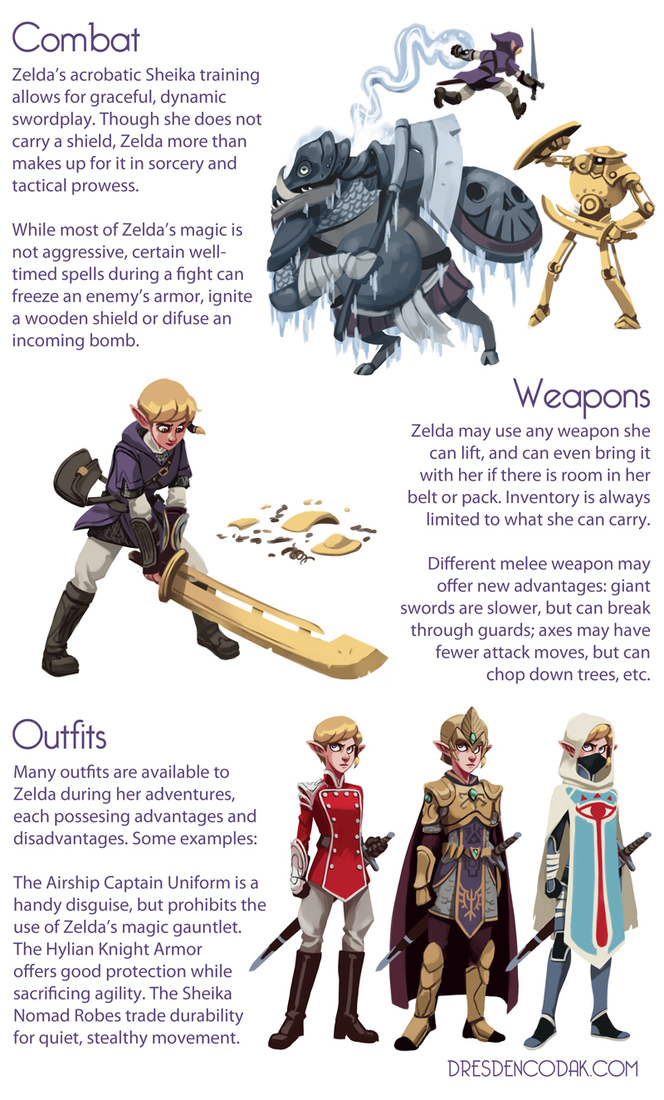
Through a series of illustrations inspired by Anita Sarkeesian's Video Game Tropes vs Women series, Artist Aaron Diaz has reimagined the Zelda universe with Zelda as the hero rescuing a princely Link.
"This concept work is meant to show that Zelda as a game protagonist can be both compelling and true to the franchise, while bringing new and dynamic game elements that go farther than being a simple gender swap," Diaz wrote on his Tumblr.
The game pitch concept titled The Legend of Zelda: Clockworks Empire is set 2,000 years after Twilight Princess. Diaz explains that it isn't a reboot, "but simply another iteration in the Zelda franchise."
"I'm a very big Zelda fan, and worked hard to draw from key elements in the continuity and mythos," he wrote. Detailed illustrations and information about The Legend of Zelda: Clockworks Empire can be located on Diaz's Tumblr.
Part of this record is broken: Twitter is great when you're watching it. Interesting links come in that many people would never post to their blog. But when you're not watching it, well, it's just a dumb frog. I decided to fix this for myself.
Back when smart people respected Twitter they had an open API that allowed services like IFTTT to read a feed source and pull in posts. This script is still better. You could also get an RSS for a Twitter feed. That's been discontinued. This script is still better.
This script reads the current Twitter timeline for the people specified in the feedList parameter. The script looks for URL's that are not images. When it finds one it posts it to a Pinboard account with a couple of tags, the original Tweet text and the original source Tweet URL.
In Pinboard it looks like this:1
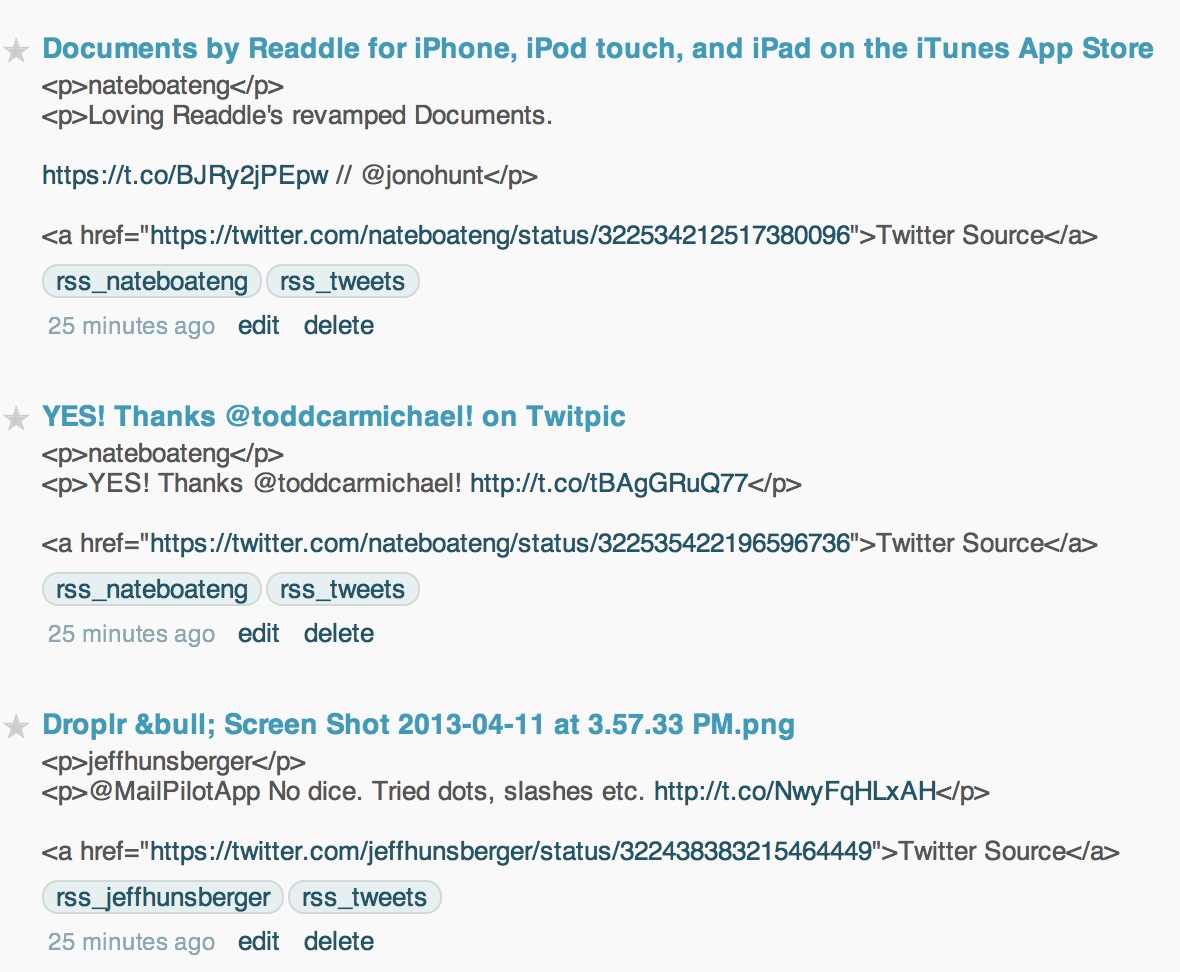
The tags are useful for a couple of resons. The first tag includes the Twitter user's handle (for example: rss_jeffhunsberger). That way I can narrow down to see the links from a specific user. There's also a main tag that groups all bookmarks added to Pinboard by this script.
The content of the bookmark is a little messy, but I'll get to that later. The important part is that it is a proper Pinboard bookmark. The description contains all of the context I need from the Tweet and a link back to the original Tweet incase I need to reference it later.
Short Description: I read these links in RSS.
I have a few Pinboard accounts. I'm filthy with Pinboard. I have the main account that I use for almost everything. Then I have a dev account for playing around with the API. Finally, I have an unused account that I've been ignoring. This script posts to my unused account. All bookmarks are public.
Pinboard is great, but I usually just want to read an RSS feed. Guess what? That's pretty easy with Pinboard. That's also why I throw in some extra html tags in the bookmark description. It makes it look nicer in my feed reader.
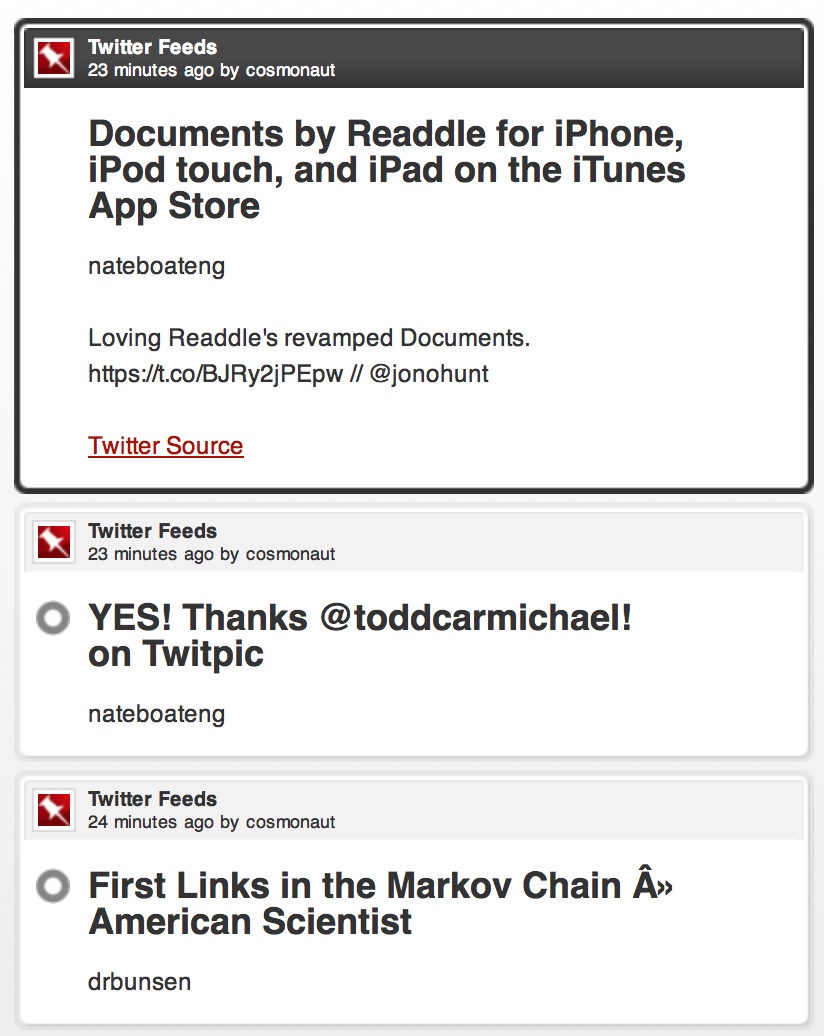
Since each Twitter account gets its own tag in Pinboard, I can also create RSS feeds for specific users. Pinboard provides RSS feed options for any tag. That's nice.
You need the following things to use this script.
It's a Python script that uses the Twitter and Pinboard libraries.
#!/usr/bin/python
import twitter
import re
import pinboard
import urllib2
from BeautifulSoup import BeautifulSoup
from StringIO import StringIO
import gzip

# The Pinboard account credentials to use
pyAccount = 'aUserAccount'
pyPass = 'anAwesomePassword'

api = twitter.Api(consumer_key='gibberish', consumer_secret='moregibberish', access_token_key='evenlongergibberish', access_token_secret='thelastbitofgibberish')
#print api.VerifyCredentials()

#Twitter users with interesting links
feedList = ['binaryghost', 'viticci', 'marksiegal', 'ttscoff', 'gromble', 'drbunsen', 'waltonjones', 'TJLuoma', 'eddie_smith', 'chewingpencils', 'jeffhunsberger', 'nateboateng']

# The adventure begins
for user in feedList:
    # Get all of the user tweets
    statuses = api.GetUserTimeline(user)
    # Loop through all tweets and look for URLs
    for status in statuses:
        # A reasonably generous URL regex pattern to match
        urls = re.findall('http[s]?://(?:[a-zA-Z]|[0-9]|[$-_@.&+]|[!*\(\),]|(?:%[0-9a-fA-F][0-9a-fA-F]))+', status.text)
        # Everytime we find a URL, do some magic
        if urls:
            for url in urls:
                # Put together the tweet info
                tweetMsg = status.text
                rssTag = ['rss_'+user, 'rss_tweets']
                sourceURL = 'https://twitter.com/'+user+'/status/'+str(status.id)
                try:
                    # Let's make sure the URL is valid by trying to visit it
                    request = urllib2.Request(url)
                    request.add_header('Accept-encoding', 'gzip')
                    response = urllib2.urlopen(request)
                    data = response
                    maintype = response.headers['Content-Type'].split(';')[0].lower()
                    # We don't want image links
                    if maintype not in ('image/png', 'image/jpeg', 'image/gif'):
                        # Need to handle gzip content if we want to grab the page title. Lots of sites send gzip now.
                        if response.info().get('Content-Encoding') == 'gzip':
                            buf = StringIO(response.read())
                            f = gzip.GzipFile(fileobj=buf)
                            data = f.read()
                        # I guess I just prefer a real link to shitty t.co links
                        fullURL = response.url

                        if fullURL is not None:
                            print fullURL
                            # This could be done with lxml but BeautifulSoup is easy
                            soup = BeautifulSoup(data)
                            # Get the title for the page
                            myTitle = soup.html.head.title
                            pyTitle = myTitle.string
                            print pyTitle
                            # Assemble the bookmark notes. Create Twitter link for RSS viewing
                            bookmarkExtended = '<p>'+user+'</p>\n<p>' + tweetMsg + '</p>\n\n' + '<a href="'+sourceURL+'">Twitter Source</a>'
                            try:
                                p = pinboard.open(pyAccount, pyPass)
                                postResult = p.add(url=fullURL, description=pyTitle, extended=bookmarkExtended, tags= (rssTag))
                            except (RuntimeError, TypeError, NameError):
                                print RuntimeError
                                print NameError
                                print TypeError
                except urllib2.HTTPError, err:
                    # If it's an http error like 404, just skip the link. We don't have time for this junk.
                    continue
I've commented the code where I think it helps or amuses me. I've also put it on Github. I'll be refactoring it to make it a bit more flexible (and pretty) and also filter out other unwanted URL types like Instagram links. The script is pretty slow and could benefit from some more effecient code. I will not update this post. Check Github for changes.
For now, I've connected the script to a cron job to run every couple of hours. When run from the command line it outputs the links as they are identified. Nothing special.
I mostly made this as a way to exercise some muscles that have started to atrophy during a busy time at work. I miss fiddling. But now I'm pretty happy with the results. I really enjoy the new RSS feed and not missing interesting stuff from interesting people on Twitter.
Of course, I'm using Brett Terpstra's Pinboard styling. ↩