The BBC children’s program Horrible Histories presents Victorian literature by way of The Smiths:
(Hat tip: Dangerous Minds)

firehosevia Rickatyahoodotcom
The BBC children’s program Horrible Histories presents Victorian literature by way of The Smiths:
(Hat tip: Dangerous Minds)
firehosevia Rosalind
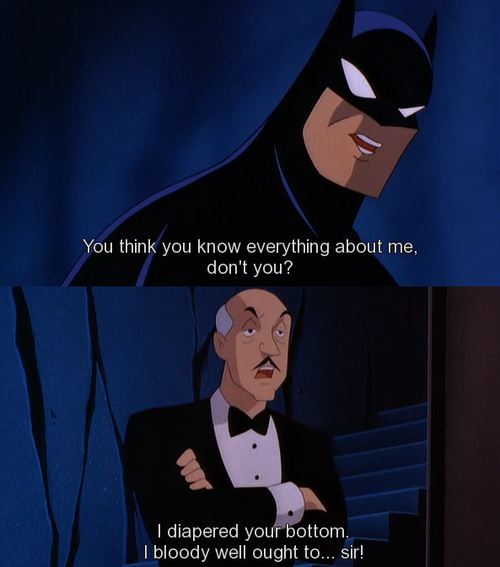
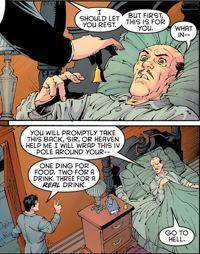
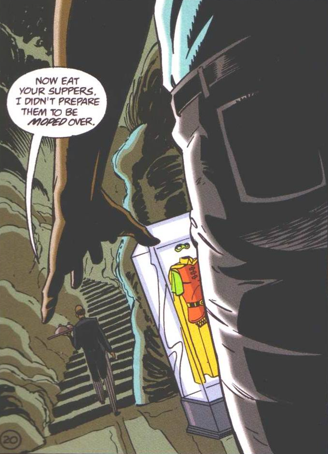
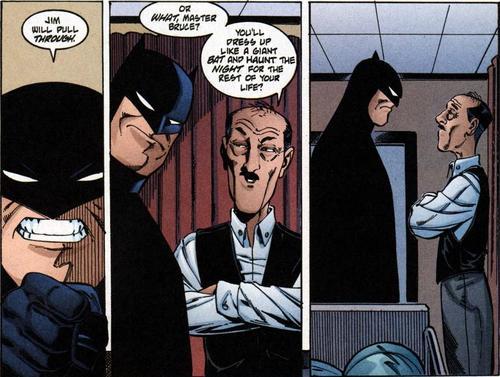

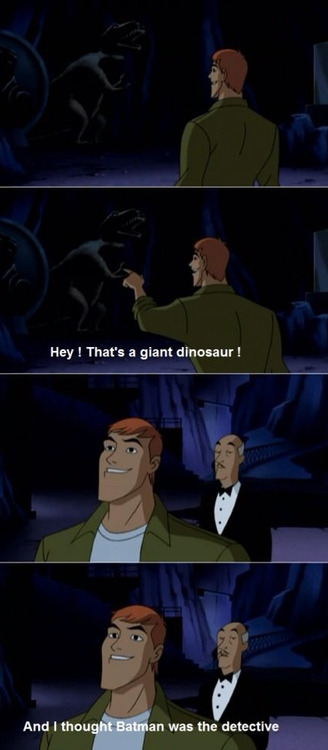
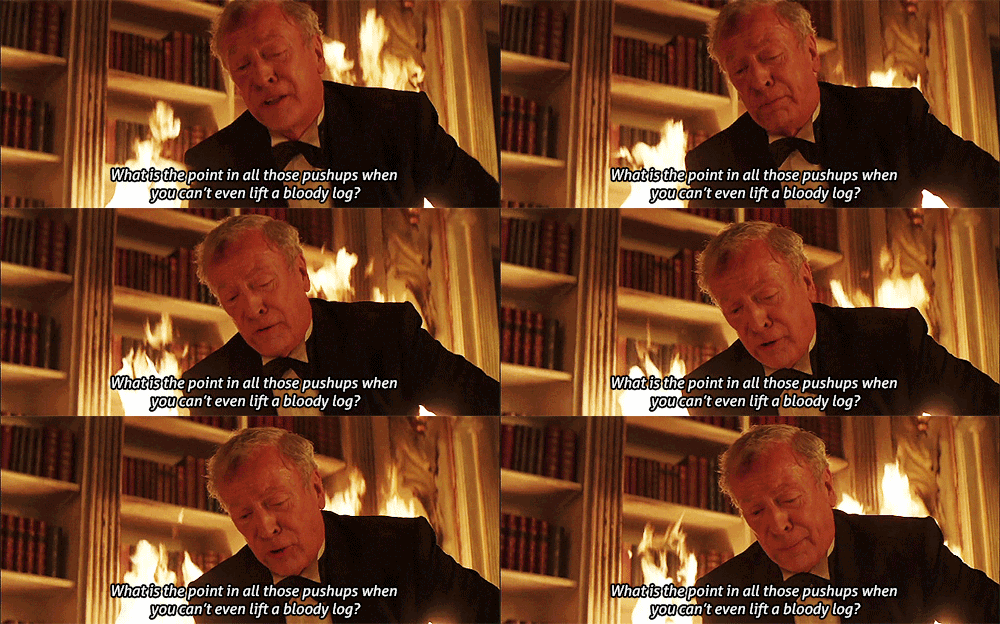
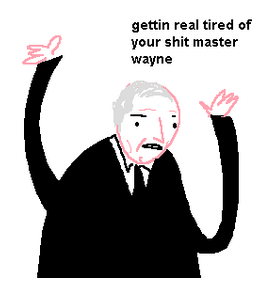
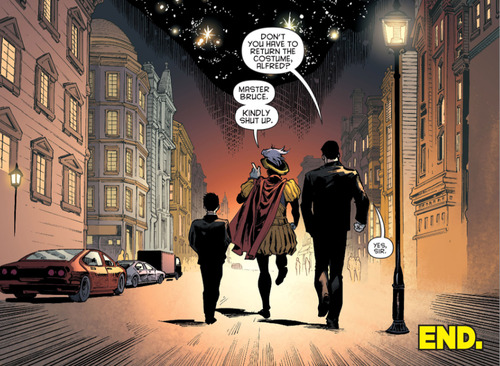
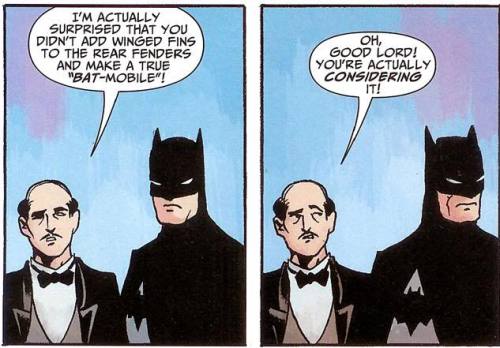
Alfred, y u so sassy?
EDIT: Added more sass. :)
I really REALLY need an Alfred movie. No Batman plot, just Alfred making tea and being his sassy self.
ALFRED PENNYWORTH HAS A POSSE
firehosevia Rosalind
#strapup

I feel like I’ve reblogged this already but it’s pretty neat, so enjoy!From Dolce & Gabbana to Paul Smith shoes, know your type!
firehosevia Rosalind
firehosevia Tertiarymatt

firehosevia Snorkmaiden

NO OFFENSE BUT YOUR WIFE’S GRAMMAR IS ATROCIOUS. I’M SURE SHE’S A LOVELY WOMAN BUT THIS MIGHT AS WELL BE WRITTEN IN CRAYON.

Nothing I could say would highlight the wonderfulness of this more than it does itself.
firehosevia Snorkmaiden


Rare Indian Battleaxe
- Dated: Early 18th century
- Measurements: Overall length 84cm
A seldom encountered form of Udaipur workmanship. The long, lightly-curved blade terminating in bird’s heads, each with garnet eyes, retained by a pair of sinuous arms which spring from the chiseled socket. They are heavily embellished with inlaid silver panels in flower and vine motifs and terminating in a pair of lotus-bud finials. The haft composed of a full tang to which shaped rosewood grips are affixed by numerous profiled iron bosses, terminating in a leather-covered grip with lotus-bud finial.
Source: © Auction Flex


Read more of this story at Slashdot.


Edward Snowden—the man behind what the Guardian is calling, with only a little hyperbole, “one of the most significant leaks in US political history”—was not what you would call a high-level agent.
By his own account, Snowden was a mediocre student who joined the National Security Agency (NSA) as a security guard, learned to program, wound up managing network security for the CIA station in Geneva, and then spent four years working at the NSA for private contractors. What he saw apparently prompted him to take refuge in Hong Kong before leaking top-secret documents about the NSA’s intelligence-gathering capabilities to the Guardian and the Washington Post.
And it’s precisely his lowly status that made Snowden such a risk, according to John Schindler, an ex-NSA analyst and counterintelligence officer who now teaches at the US Naval War College.
Schindler has been tweeting with considerable disdain about Snowden, calling him a “weenie,” a “dork,” and a “textbook case of delusion, ego, mental instability,” and suggesting that Snowden chose Hong Kong because he plans to defect to the Chinese. I asked Schindler if the NSA was using ex-staffers like him to discredit Snowden; “They’re not that forward-leaning, I can assure you” he replied.
Whatever his motive, Schindler’s tweets reveal a cultural rift between the “blue badge” holders, who have passed exhaustive background checks and indoctrination, and the green-badged contractors like Snowden, as well as between intelligence analysts and technicians in general:
I think I speak for a whole lot of blue badgers that I am relieved the source is a green badger. We knew it was, right? NSA insider joke.—
John Schindler (@20committee) June 09, 2013
@Ibishblog @joshuafoust @Max_Fisher @dandrezner Sorry, not true. IT dorks are massively overpaid across IC, b/c they have clearances—
John Schindler (@20committee) June 09, 2013
And what happens when people whom your core employees despise have access to some of your most sensitive information? Nothing good, as Schindler—once you strip away the disparaging tone—rather pertinently points out:
Remember, folks, IT weenies are the code-clerks of the 21st century: although low-ranking, they see everything, hence the huge CI risk—
John Schindler (@20committee) June 09, 2013
Been telling my CI peeps for years that NSA & IC only 1 disgruntled, maladjusted IT dork away from disaster (esp IT contractor)…oh well.—
John Schindler (@20committee) June 09, 2013
And he recalls that lowly operatives have wrecked major intelligence operations in the past:
Igor Gouzenko – paging intel history geeks here – was "only" the code clerk @ USSR Embassy in Ottawa, but his defection in 1945 was huge—
John Schindler (@20committee) June 09, 2013
(cont'd) because Gouzenko & KGB rezident in Ottawa were *only* people there who saw EVERY message in & out – huge blow intel-wise—
John Schindler (@20committee) June 09, 2013
@TheWarRoom_Tom Many, actually. Some of the most damaging CW spies were junior enlisted with access to things didn't necessarily understand—
John Schindler (@20committee) June 09, 2013
In both government and business, stories of disgruntled IT personnel who have wreaked havoc are legion. They include the system administrator who locked everyone else out of San Francisco’s central computer system, the Australian who made a computerized waste-management system spill millions of liters of raw sewage into parks and rivers, the car-dealership worker who remotely shut down the cars of over 100 furious customers, and the guy who hacked into his ex-boss’s computer while he was giving a presentation to the city mayor and put a naked woman on the screen instead. Whether you’re running a 20-person office or the world’s biggest intelligence agency, remember who has the power to blow you up.

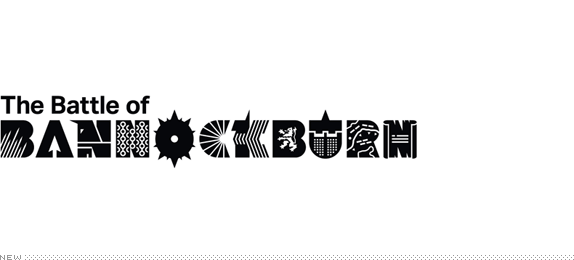
Scheduled to open in 2014, The Battle of Bannockburn project is a partnership between the National Trust for Scotland (NTS) and Historic Scotland to create a new visitor centre and landscaping at the site of the original battle of 1314 that, as described by NTS, is "one of the defining moments in Scottish history, [where] King Robert the Bruce routed the English forces of King Edward II to win a much-longed-for freedom for the Scots." The identity for the project was designed by The Beautiful Meme with consultation from Bruno Maag of Dalton Maag; the logo was first released in July of 2012 and it just caught a second wind after winning the Best Identity of the Year at the UK's Design Week Awards.
Like The Battle of Bannockburn experience itself, our identity demands engagement. The unusual approach of each character representing an aspect of the battle or its historical impact results in a logo that asks our audience to make an investment, to spend time and thought in revealing what the identity is saying. Such an immersion is rewarded with depictions of weapons, strategy, terrain, pride and nationhood. The aesthetic of the logo is dark, brutal and spiky, reflecting the realities of battle. Stylistically, the characters reflect contemporary app icons and game graphics, as well as more traditional heritage illustrated visuals.
— Brand Book (not available online)


Like individual units in an army, each character can be dispatched separately to do battle for the brand through marketing, merchandising and fundraising. The ability to break apart the logo also allows for an identity that can be hacked. We anticipate some sectors of our target audience (particularly students) creating new versions and letters, using images within the letterforms, employing single letters to begin sentences similar to illuminated manuscripts, or even making 3D or animated versions.
— Brand Book (not available online)
All captions below are from the brand book.

The B illustrates the tight packs in which the Scots would group together, known as Schiltrons. The men would brandish pikes ready to spear oncoming troops.

The A shows the tip of a regular infantry arrow that could be fired by archers to pierce flesh up to 100 yards away.

This N represents a cavalry horse in its charging position. In total 2700 battle hardened horses were used at Bannockburn.

This N represents a common medieval chainmail pattern. The chainmail worn could weigh up to three stone.

The O represents the head of a morning star or mace. This brutal weapon was often used by soldiers on horse back.

The C represents the sabaton armour that was generally worn by higher ranking infantry. It would protect feet, shoulders and arms from hacking blows.

The K represents the head of an axe or turn-pike. Robert the Bruce used a battle axe to attack and kill Sir Henry de Bohun - the axe sliced through his helmet and split his skull in two.

This B represents the rampant lion that was emblazend on English and Scottish shields and flags. Only after the battle did the lion become associated with the Scottish.

The U represents the style of helmet used in the battle. Although they limited vision they would protect from stray arrows and light weaponary strikes.

The R represents a plan of war. The ingenious tactics used by the Scots to defeat the English were crucial to the battle's outcome. What was lacked in numbers was made up for in strategic positioning on higher ground.

The N represents the Declaration of Abroath. As a result of the battle, this important document was created on 6th April 1320 and declares Scotland an independent country.
How to say this in a professional, critical, constructive manner? This logo is fucking awesome. To elaborate, I guess, this is a concept that could have been executed so horribly and so wrong that it would make a Game of Thrones betrayal scene look like Nashville. The weight and balance of each character and the details within it are all perfectly in tune and there is enough detail to understand the different things each letter is trying to communicate even without the explanations above. Except the first "N" — the horse — which I had not picked up on and then just blew my mind. The logo is spiky and dangerous and it immediately communicates medieval warfare in a way that is contemporary and exciting. So, yeah, I stand by my initial assessment: fucking awesome.


Stained glass Sun, Southwark Tavern, London

 Fable 3 currently free on Xbox Marketplace originally appeared on Joystiq on Mon, 10 Jun 2013 08:30:00 EST. Please see our terms for use of feeds.
firehoseoarfish!
Scientists working in the Gulf of Mexico have finally managed to capture footage of a rare and mysterious serpentine-like creature called the oarfish. It's our first glimpse of this camera-shy fish in its natural habitat.

    
|
Read more of this story at Slashdot.

By Adam Smith on June 10th, 2013 at 3:00 pm.

I didn’t realise how much I wanted a mash-up of X-COM and Ghostbusters until I saw the Kickstarter page for GhostControl Inc. As soon as I had realised how much I wanted the game, I swiftly came to appreciate the nineties-styled Theme Residence design, particularly as it should make great variety possible. Buildings stitched together from various components, so the game is about exploring the layouts of a fictional London’s buildings as much as catching ghosts. Well, maybe the ghosts will take precedence but I do want to spend some time just poking around in those wee houses. The target is a modest £7,500, the pitch video is as daft as a dog on a unicycle and if all goes well it’ll be out by September.
I’m not sure whether the greater challenge will be from the spooks or rival ghost hunters, and I’m not opposed to the comedic tone, but I do hope the threat from the enemies is tangible, even if they’re not. I want at least one of my crew to have his face melted off by a frightening apparition every now and then. Whatever the case – and hopefully more will be revealed as the campaign continues – this one makes me feel good.


Americans are crazy for tablets, say the results of Pew Internet & American Life project’s just-released annual survey of tablet PC ownership. There aren’t many boldface surprises in this report, but the details are interesting. For example, unlike smart phones, which are mostly popular with young people, people who own tablets like the iPad and Google’s Nexus 10 tend to be age 35-44, which means that companies aiming their mobile strategy at that demographic should focus on large screen sizes.

firehosevia multitasksuicide

Joe South - Games People Play With Really Big Fucking Knives.