CaryThe Elopcalypse is complete... Nokia has been assimilated into the collective.
With its deal for Nokia’s handset business, Microsoft is making a bold, risky bet to gain traction in the smartphone market after missing the tech sector’s shift to mobile.
The deal worth $7.2 billion (5.44 billion euros) gives Microsoft Nokia’s mobile phone operations along with an array of patents and licenses to help compete with rival platforms from Google and Apple, and manufacturers such as Samsung.
The deal “is transformational,” said Microsoft chief executive Steve Ballmer in a conference call, arguing that Microsoft needs to make up lost ground in the mobile space.
“We are trying to accelerate our phone market share,” Ballmer said. “We know we need to accelerate, we are not confused about that.”
Ballmer said in an email to Microsoft employees that the deal with Finland-based Nokia is “a bold step into the future and the next big phase of the transformation we announced on July 11″ when the company unveiled a reorganization to concentrate on “devices and services.”
The deal also moves Nokia chief executive Stephen Elop, who was hired from Microsoft in 2010 to turn the company around, back to his former firm, and makes him a likely candidate to succeed Ballmer when he retires.
But analysts were divided over whether Microsoft’s move would have the intended effect.
Ross MacMillan, analyst at Jefferies, said he was generally positive on the deal, which gives Microsoft expertise in manufacturing and the supply chain, as well as an important mapping service.
MacMillan said Microsoft sees “better economics owning the hardware” and should make a profit of $40 per unit as the owner, up from $10 per unit, allowing the deal to pay off with annual smartphone sales of 50 million.
Walter Pritchard at Citi said the deal casts doubt on speculation that Microsoft might split up the company to concentrate on different segments, which some analysts had hoped for after Ballmer’s announcement that he would retire within a year.
“This acquisition really does lock the successor into the current strategy,” Pritchard said.
Others were more skeptical.
“I am not sure in the long run that buying Nokia will achieve the goal of making Microsoft a leader in mobility,” said Jack Gold, analyst with J. Gold Associates, who argued that Microsoft risks “alienating” other manufacturers.
“I think they could have achieved the same thing through a strategic partnership with Nokia (which they already had in place) and by simply ‘staking’ Nokia to the funds it needed.”
Trip Chowdhry at Global Equities Research said the acquisition was “nothing to get excited about” and doubted whether Microsoft can be an important player in the smartphone segment.
“Winners in the smartphone market are already declared, 95 percent of the market is going to remain with Google Android and Apple,” he said.
“There is no third player. Microsoft, Blackberry etc. will play in the ‘others’ category… had Microsoft acquired Nokia in 2005, we would have thought that to be ground breaking, not in 2013, when the smartphone Industry is already well defined.”
Windows-based smartphones saw a 78 percent jump in the past year, but still only held just 3.7 percent of the global market in the second quarter, according to research firm IDC, which estimated Google’s Android with 79.3 percent and Apple’s iOS with 13.2 percent.
Microsoft indicated it is aiming for a 15 percent share in smartphones by 2018, in a market estimated at 1.7 billion unit sales.
Shares in Microsoft slid 5.6 percent to $31.5, while Nokia surged 31 percent $5.1 on the news in late morning trade.
Ted Schadler at Forrester Research said the deal indicates Microsoft is finally making a transition to a multi-dimensional company.
“This acquisition is a clear stepping stone in Microsoft’s transition from a software company to a software-led multiproduct company,” Schadler said.
“Apple pioneered the model of vertical integration in devices: device+software+services. Google quickly mastered it. Microsoft has now proven that it is willing and able to make the tough decisions to make a vertically integrated product a cornerstone of its business model.”
Schadler said he sees a positive outcome from the tie-up.
“Microsoft will become a significant third player in the mobile mind shift, still behind Google and Apple in market share, but a very vital competitor and supplier,” he said.
CaryDon't forget circling the lot for 5 minutes to get a close parking spot...



Brucciani & Co, Fig Leaf for David, 1857. Cast. England.
This fig-leaf was hung on the statue of David on the occasion of visits by royal ladies. It was last used in the time of Queen Mary (1867-1953). On her first encounter Queen Victoria was so shocked by his nudity that a firm suggestion was made that something has to be done. Consequently, the correctly proportioned fig leaf was created and stored in readiness for any visit the Queen might make, for which occasions it was hung on the figure from two strategically implanted hooks. More: V&A

Maple trees demonstrate the relationship between ambient air temps and fall color transitions.
So just to clarify, the Affordable Care Act
- Passed both the House and the Senate
- Was signed into law by Obama in 2010
- Was upheld as constitutional by the Supreme Court in 2012
And yet now it’s 2013 and the GOP in the House has voted 40 times to repeal it and is now going to shut down the fucking government because they can’t handle the democratic process.
Ok.
Psalms 4:20 (via fuckititsfriday)
Pretty sure this is from the Book of Caucasians.
(via stoney321)


CaryI guess that the house cats getting the little garden lizards think that they are attacking a crocodile... (It's a cayman -- money shot at ~1:30)
CaryIf you want some up close and personal time with giraffes, go on one of the San Diego Wild Animal Park's Safari truck tours.

That long neck truly makes the giraffe a pretty unique animal, and it's simply amazing how photographers manage to capture such great moments of this animal, like parenting! Baby giraffes are simply too cute! So, for more of these, please check each photographer's portfolio simply by clicking each image. I hope you enjoy these as much as I did. Also, if you got your own giraffe photos, share them with us! Cheers! ;)


CaryWould be nice... Right now, I think that the only biofuel that produces more energy than it takes to create it is sugar-cane-based fuel from tropical regions like Brasil. US sugar cane is slightly negative and US corn is very negative.
Cary"Knowledge is now the rote memorization of “facts”, and educators who try to get students to understand concepts are now enemies of knowledge."
We all know that the creationists have been busily trying to redefine science so that they can call Bible-based faith that the earth is 6000 years old “science”, while empirical research and validated theories are relabeled “dogma”. But now they’re going to reach deeper into the educational process and redefine “knowledge”.
While most of us think that it is ignorance that needs to be stamped out, advocates of Kentucky’s new unapproved and forcibly implemented science standards are targeting … knowledge.
Just take a gander at the responses to my opinion piece in the Louisville Courier-Journal which were published on Monday. According to Brad Matthews, former director of curriculum and assessment for the Jefferson County Public Schools, one reason we need these unapproved and forcibly implement standards is to extirpate that bane of all modern permissivist educators: memorization.
"Science education has moved away from the memorization of many facts," says Matthews, "and toward understanding how the laws and principles of science are applied."
That’s right: students have memorized too many facts. Their heads are bursting with scientific facts. There is not enough room in their tiny little brains for an understanding of how these facts should be applied because all the room us currently taken up by scientific facts which these students have memorized. There is simply no space in those fact-crowded little heads for scientific concepts.
The solution is obvious to people like Matthews: clear all that knowledge out of there so they will be able to apply the knowledge they will no longer have under these standards.
Knowledge is now the rote memorization of “facts”, and educators who try to get students to understand concepts are now enemies of knowledge. I’m sure the taskmasters who run madrassas are now nodding their heads in complete agreement.
Brad Matthews’ statement is entirely reasonable, and does not warrant one iota of the hyperbole Cothran applies to it. The worst classes in the world are the ones where we sit students down and force them to memorize strings of data and then regurgitate them onto an exam. That does not imply that kids shouldn’t have to master some basic rote skills; sorry, gang, knowing your times tables is still important as a basic life skill.
But you still have to understand how to apply that knowledge. For instance, in cell biology, I expect my students to memorize the structure of a peptide bond (that’s not hard) and the basic properties of the classes of amino acids (only slightly harder), and we talk about some basic chemical reactions, like hydrolysis. They should be able to figure out how you break a peptide bond, without memorizing all the pairwise combinations of amino acids and how they’re split chemically. Once you know the general principle you can apply it everywhere!
Also, if you’re learning science, you have to learn how to fit new facts into an existing body of knowledge, and memorization won’t cut it.
What these guys are really afraid of is that deep ideas like evolution are natural inferences from all the data and facts floating around in science — if you learn how to think, you’ll inevitably figure out that creationism is bullshit, evolution actually works and makes sense, and that all those religious cranks have been lying to us. So in defense they want to truncate education: memorize what we already know (and even that they will tightly circumscribe), but don’t you dare teach kids how to think.
The New York Times, Dec. 20, 1924:

Oops.


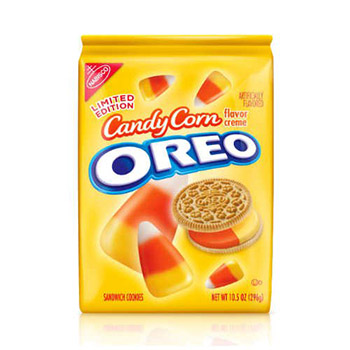
Seasonal dishes in the fall can be wonderful. But processed-food makers, especially candy makers, do their best to crush our spirits. Pumpkin Spice Hershey’s Kisses are gross, Mellowcreme Pumpkins are startlingly bland, and the Milky Way Caramel Apple candies are a bizarre mix of cinnamon, fake apple, and chocolate.
But the worst, far and away, is Candy Corn Oreos. They mix the “is it really even an Oreo” vanilla cookie with a yellow and orange filling designed to taste like candy corn. It kind of does taste like candy corn. It kind of also tastes like food coloring, and wax, and low-grade sugar. And, on a personal note, I hate that I had to eat them to write this blog entry. I hate that I had to eat like 3 of them to properly describe the taste. I hate everything.
I’ve been reading “The Thin Man,” by Dashiell Hammett, so I am now craving a 1920’s cocktail. So this week we will be sampling the:
Red Death
Ingredients
Method
Pour the ingredients into your elegant shaker. Shake, shake shake: shake, shake shake. Add ice into a very tall glass. Pour the concoction into your handsome glass. Add your lucky cherry on top. Drink heartily while pondering the eternal verities.