Shared posts

29 Sep 20:35

The final switch: Goldsboro, 1961

by Alex Wellerstein

The threat of nuclear weapons accidents isn’t a new one. Even in 1945, Los Alamos physicists sweated when contemplating all that could possibly go wrong with their bombs, if they went off at the wrong place or the wrong time. Or didn’t go off at all. That’s the bind, really: a nuclear state wants a weapon that always goes off exactly when you tell it to, and never goes off any other time. That’s a hard thing to guarantee, especially when the stakes are so high in both directions, and especially since these two requirements can be directly in tension.
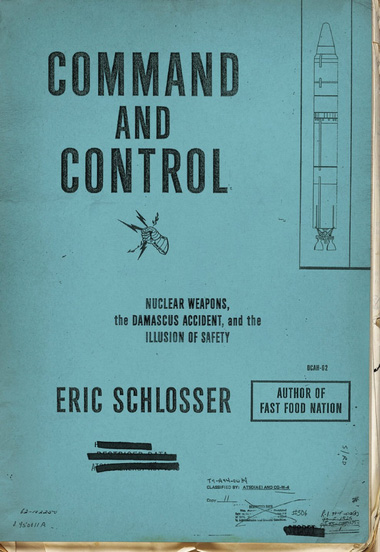
Schlosser - Command and Control book

I recently heard Eric Schlosser give that elegant formulation at a talk he gave last week in support of the release of his new book, Command and Control: Nuclear Weapons, the Damascus Accident, and the Illusion of Safety. I haven’t had a chance to read the book, yet (it’s currently en route), but I’m looking forward to it. I read Schlosser’s Fast Food Nation a decade (!) ago and found it completely eye-opening. But I went to his talk last week not sure what to expect. From McDonald’s to nuclear weapons accidents? Stranger things have happened, but I worried that maybe he would take the “easy” route with regards to the accidents, not bothering to learn to nitty-gritty technical details that let one talk about such things sensibly, or, at the very least, sensationalize the findings. So I was pretty pleased to find that neither seemed to be the case. Schlosser has seriously done his homework, spending 6 years digging through records, FOIAing documents, and interviewing weapons designers. His discussion of the risks seemed right on the mark so far as I could tell — they don’t need to be exaggerated one bit to be perfectly horrifying. He answered questions expertly, even a tough, devil’s-advocate one from Hugh Gusterson. So I’ve been looking forward to reading the full book.

Last week, the Guardian released a new document, obtained by Schlosser through a FOIA request, regarding one particular accident, the 1961 crash of a B-52 near Goldsboro, North Carolina, which resulted in the jettisoning of two Mark-39 hydrogen bombs. The document in question is a government nuclear expert’s evaluation of a popular account of the Goldsboro accident, in which he finds some major errors (like overstating the yield of the bomb), but ultimately concludes that at least one of the bombs was, in fact, pretty damned close to accidental detonation: “one simple, dynamo-technology, low voltage switch stood between the United States and a major catastrophe … It would have been bad news – in spades.

The bomb in question, stuck in the mud.

The bomb in question, stuck in the mud.

I’ve been watching how the above document has been discussed by people on the web. The most interesting response has been people saying, “I thought that bomb lacked a nuclear core?” You know that there have been too many nuclear weapons accidents when people start getting them confused with one another. The missing-bomb-that-maybe-lacked-a-core is the 1958 Tybee bomb, where a Mark-15 hydrogen bomb was lost near Savannah, Georgia. Different bomb, different day.

The other response I commonly saw was one that assumed that any such fears of a bomb going off accidentally were exaggerated. Now this is kind of an interesting response. For the one thing, they’re discounting a contemporary, internal, once-classified evaluation made by a relevant expert. In exchange, they’re parroting either general skepticism at the idea that a nuclear weapon could technically be unsafe, or they are parroting a standard line about how hard it is to set off an implosion bomb accidentally, because all of the lenses need to detonate at exactly the same time. Which is sometimes the right approach (though not all American bomb designs were “one-point safe” — that is, there were designs that ran a real risk of producing a nuclear yield even if just one of the explosive lenses accidentally fired), but in this case, it’s entirely irrelevant, for reasons I’ll explain below.

I’ve been in touch with Schlosser since the talk, and he shared with me a video he had (somehow) gotten his hands on produced by Sandia National Laboratory (the weapons lab that specializes in making bombs go off at just the right moment) about the Goldsboro accident. He’s put it up on YouTube for me to share with you. It is only a few minutes long and worth the watch.

I love the CGI — “all the sudden, now that weapon system is free.” The bomb looks so… liberated. And the part at the end, where they talk about how they had plenty of opportunities for future data, because there were so many accidents, is wonderfully understated. But the stuff that really hits you in your gut is the description of exactly what happened:

“All of the sudden now that weapon system [the Mk-39] is free. As the weapon dropped, power was now coming on, and the arming rods were pulled, the baroswitches began to operate.1 The next thing on the timing sequence was for the parachute to deploy. When it hit the ground, it tried to fire.” “There was still one safety device that had not operated. And that one safety device was the pre-arming switch which is operated by a 28 volt signal.” “Some people could say, hey, the bomb worked exactly like designed. Others can say, all but one switch operated, and that one switch prevented the nuclear detonation.” “Unfortunately there had been some 30-some incidents where the ready-safe switch was operated inadvertently. We’re fortunate that the weapons involved at Goldsboro were not suffering from that same malady.”

What’s amazing about the above, in part, is that everything in quotation marks is coming from Sandia nuclear weapons safety engineers, not anti-nuclear activists on the Internet. This isn’t a movie made for public consumption (and I’ve been assured that it is not classified, in case you were wondering). It’s a film for internal consumption by a nuclear weapons laboratory. So it’s hard to not take this as authoritative, along with the other aforementioned document. Anyone who brushes aside such concerns as “hysterical” is going to have to contend with the fact that this is what the nuclear weapons designers tell themselves about this accident. Which is pretty disconcerting.

There are further details in another document sent to me by Schlosser, a previously-classified review of nuclear weapons accidents from 1987 that clarifies that one of the reasons the Goldsboro bomb in particular almost detonated was because of the way it was tossed from the aircraft, which removed a horizontally-positioned arming pin. That is, an arming pin was supposed to be in a position that it couldn’t be removed accidentally, but the particulars of how violently the aircraft broke up as it crashed were what armed the bomb in question. The other bomb, the one whose parachute didn’t fire, just had its HE detonate while it was in the mud. From the 1987 review:

Before the accident, the manual arming pin in each of the bombs was in place. Although the pins required horizontal movement for extraction, they were both on a lanyard to allow the crew to pull them from the cockpit. During the breakup, the aircraft experienced structural distortion and torsion in the weapons bay sufficient to pull the pin from one of the bombs, thus arming the Bisch generator.2 The Bisch generator then provided internal power to the bomb when the pullout cable was extracted by the bomb falling from the weapons bay. The operation of the baroswitch arming system,3 parachute deployment, timer operation,4 low and high voltage thermal batteries activation, and delivery of the fire signal at the impact by the crush switch all followed as a natural consequence of the bombing falling free with an armed Bisch generator. The nonoperation of the cockpit-controlled ready-safe switch prevented nuclear detonation of the bomb. The other bomb, which free-fell, experienced HE detonation upon impact. One of the secondary subassemblies was not recovered.5

The secondary subassembly is the fusion component of the hydrogen bomb. Normally I would not be too concerned with a lost secondary in and of itself, because bad folks can’t do a whole lot with them, except that in this particular bomb, the secondary contained a significant amount of high-enriched uranium, and lost HEU is never a good thing. The government’s approach to this loss was to get an easement on the land in question that would stop anyone from digging there. Great…

Mk-39 ready-safe switch

From the video, I was also struck by the picture of the ready-safe switch then employed. I’d never seen one of these before. Presumably “S” means “safe” and “A” means “armed.” It looks ridiculously crude by modern standards, one little twirl away from being armed. This little electronic gizmo was all that stood between us and a four megaton detonation? That’s a wonderful thing to contemplate first thing in the morning. Even the later switches which they show look more crude than I’d prefer — but then again, probably all 1950s and 1960s technology is going to look crude to a modern denizen. And again, just to reiterate, we’re not talking about “merely” accidentally igniting the explosives on the primary bomb — we’re talking about the bomb actually sending a little electrical charge through the firing circuit saying “Fire!” and starting the regular, full-yield firing sequence, stopped only by this little gizmo. A little gizmo prone to accidentally firing, in some of the bombs.

Lest you think that perhaps Sandia overstates it (which seems rather unlikely), take also the testimony of Secretary of Defense Robert McNamara into account. In January of 1963, McNamara explained at a meeting between the Defense and State Departments that he was opposed to Presidential pre-delegation of nuclear weapons in part because of the danger of accidental detonation — either ours or the Soviets’. In the meeting notes, posted some time back by the National Security Archive and forwarded to me by Schlosser, McNamara’s participation is listed as follows:

Mr. McNamara went on to describe the possibilities which existed for an accidental launch of a missile against the USSR. He pointed out that we were spending millions of dollars to reduce this problem to a minimum, but that we could not assure ourselves completely against such a contingency. Moreover he suggested that it was unlikely that the Soviets were spending as much as we were in attempting to narrow the limits of possible accidental launch. He went on to describe crashes of US aircraft[,] one in North Carolina and one in Texas, where, by the slightest margin of chance, literally the failure of two wires to cross, a nuclear explosion was averted.

This one’s interesting because it embeds these accidents in a context as well — the possibility of either us, or the Soviets, accidentally launching a nuke and wondering if a full-scale nuclear exchange has to follow. It’s not quite Strangelovian, since that would require a rogue commander, but it is very Fail-Safe.

As to what the Goldsboro blast would look like, the only time we tested this warhead at full yield was the shot “Cherokee” at Operation Redwing, in 1958. It was a pretty big boom, far more impressive than some of the Hiroshima shots that have been posted along with the Goldsboro story:

Redwing_Cherokee_005

And, of course, you can use the NUKEMAP to chart the damage. I’ve added the W-39 warhead to the list of presets in NUKEMAP2, using 4 megatons as the yield (the tested yield was 3.8 megatons, though the W-39 is often stated as an even 4. I rounded up, just because quibbling over 200 kilotons seemed pointless), and a fission fraction of 55%.6 It’s a pretty big explosion, with a fallout plume capable of covering tens of thousands of square miles with hazardous levels of contamination (and nearly a thousand square miles with fatal levels). Note that the Cherokee test was a true airburst (the fireball didn’t touch the ground), and so didn’t generate any significant fallout. The Goldsboro bomb, however, was meant to operate on impact, as a surface burst, and would have created significant fallout.

Again, one doesn’t have to exaggerate the risks to find it unsettling. The bomb didn’t go off, that final switch thankfully did work as intended. But that’s cold comfort, the more you learn about the accident. Our current nuclear weapons are much safer than the Mk-39 was, back in 1961, though Schlosser thinks (following the testimony of experts) there are still some unsettling aspects about several of our weapons systems. If we are going to have nukes, he reasons, we should be willing to spend whatever it costs to make sure that they’ll be safe. That seems to me like an argument guaranteed to appeal to nobody in today’s current political climate, with the left-sorts wanting no nukes and no modernization, and the right-sorts not really wanting to talk about safety issues. But I’ll get to that more another day, once I’ve read the book.

If that bomb had gone off, we’d speak of “Goldsboro” as a grim mnemonic, in the same way that we do “Chernobyl” today. One wonders how that would have changed our approach to nuclear weapons, had the final switch not held strong.

Notes
  1. The “arming rods” were pull-out switches that would activate when the weapon left the bomb bay. The baro(meter) switches were pressure sensitive switches that would make sure the bomb was nearing the appropriate height before starting the next sequence of arming. In the World War II bombs, the next stage in the sequence would be to consult radar altimeters to check the precise distance from the ground. The Goldsboro bombs were set to go off on ground impact.
  2. A Bisch generator, as the context implies, is an electrical pulse generator.
  3. Again, a pressure-sensitive switch that tried to guarantee that the bomb was roughly where it was supposed to be.
  4. Timer switches were often used to make sure that the bomb cleared the aircraft before seriously starting to arm.
  5. R.N. Brodie, “A Review of the US Nuclear Weapon Safety Program – 1945 to 1986,” SAND86-2955 [Extract] (February 1987).
  6. Chuck Hansen, in his Swords of Armageddon, estimates that shots Cherokee and Apache of Operation Redwing had an average fission fraction of 55%, but isn’t able to get it any more precise than that. Given what I’ve read about the bomb — that it used an HEU secondary, for example — I would expect it to be at least 55%, if not more. It seems like a pretty “dirty” weapon, emphasizing a big yield in a relatively small package over any other features. See Chuck Hansen, Swords of Armageddon, V-224 (footnote 325).
28 Sep 22:43

Energy-related

by Arjendu

I have been reading about energy — both fossil fuel and non-fossil-fuel — for the last few weeks. It’s part of an attempt to understand something new during my sabbatical and re-tool for my return the physics department and to the classroom.

As I read, I plan to post comments on books and articles that I’ve read. I will start with those that are not very technical.

The first is ‘Powering the future’ by Robert Laughlin. This book takes the perspective of looking at how the world will use energy in about 200 years or so. Taking this long view allows Laughlin to not get too deep into analyzing the technology race between different non-fossil-fuels. It allows him to cut to the bone of the physics behind sources of energy, and do ‘back-of-the-envelope’ sort of calculations to predict how it will work out in the long-term future. His analysis is extremely compressed (the actual text is 122 pages, though there are a further 90+ pages of endnotes including citations and calculations) and the brilliance of his thinking shows. (He *is* a Nobel Prize winner in Physics after all, though about something far from the topic of this book — on the Quantum Hall Effect). He is also a provocative and entertaining writer (there is a remarkable section on robots and how they will tend compressed-air energy storage on the bottom of the ocean, for example). I enjoyed the book tremendously and it clarified the intellectual landscape for me (albeit as a physicist) in a way that previous books had not managed. I would recommend this book strongly to anyone looking for a broad sweep understanding, though I do believe you’d probably benefit a lot more from it if you have a technical background.


28 Sep 22:36

A Factory Pump by Heiko Klug

by Vanessa Ruiz

Untitled Heiko Klug factory anatomical heart (4)

Untitled Heiko Klug factory anatomical heart (3)

Untitled Heiko Klug factory anatomical heart (2)

Untitled Heiko Klug factory anatomical heart (1)

Gritty factory inspired work by Germany based art director, Heiko Klug. What started as a test scene in 3ds Max became a full fledged personal project. As Heiko added more detail, he transformed a basic anatomical heart into something that could be found deep in a dark basement of an old building slowly pumping away.


28 Sep 20:11

"I am not young enough to know everything."

“I am not young enough to know everything.”

- Oscar Wilde
28 Sep 19:18

"They are the earliest painted portraits that have survived;...


"They are the earliest painted portraits that have survived; they were painted whilst the Gospels of the New Testament were being written. Why then do they strike us today as being so immediate? Why does their individuality feel like our own? Why is their look more contemporary than any look to be found in the rest of the two millennia of traditional European art which followed them? The Fayum portraits touch us, as if they had been painted last month. Why? This is the riddle.”

-John Berger, from “The Fayum Portraits”

28 Sep 19:14

http://ratak-monodosico.tumblr.com/post/62210701535


28 Sep 19:01

What they say/What I hear

28 Sep 18:57

tastefullyoffensive: Mom Con [jimbenton] As a mom, I’m...


tastefullyoffensive:

Mom Con [jimbenton]

As a mom, I’m pretty pissed someone revealed our secret meetings.

28 Sep 18:55

Going to hell for this

28 Sep 18:34

This map, by Douglas Coupland, shows an imagined balkanization...


This map, by Douglas Coupland, shows an imagined balkanization of the US and Canada by 2092.

22 Sep 21:11

Fucking squirrel (by jomeister09)

Cary

Wait for it....


Fucking squirrel (by jomeister09)

22 Sep 03:54

20 Most Magnificent Places To Read Books

by Anna Chui

Where do you usually read? On your bed, in the backyard or in a coffee shop?

“In a good bookroom you feel in some mysterious way that you are absorbing the wisdom contained in all the books through your skin, without even opening them.” - Mark Twain

If you too agree with what Mark Twain said, just imagine how you’d feel reading your book in one of these most magnificent reading places…

1. Stuttgart Library, Germany

Stuttgart Library, Germany

2. Jose Vasconcelos Library, Mexico City, Mexico

Jose Vasconcelos Library in Mexico City

3. The Vennesla Library and Culture House, Vennesla, Norway

The Vennesla Library and Culture House, Vennesla, Norway

4. Joe & Rika Mansueto Library, University of Chicago, USA

Joe & Rika Mansueto Library at the University of Chicago

5. Book Mountain Library, Spijkenisse, The Netherlands

Book Mountain Library, Spijkenisse, The Netherlands

6. Los Angeles Central Library, Los Angeles, USA

Los Angeles Central Library

7. New York Public Library, New York, USA

New York Public Library

8. Library of Congress, Washington DC, USA

Library of Congress

9. Royal Portuguese Reading Room, Rio, Brazil

Royal Portuguese Reading Room

10. The Hearst Castle Library, California, USA

The Hearst Castle Library

11. Librería El Ateneo, Buenos Aires, Argentina

Libreria El Ateneo Buenos Aires

12. The Trinity College Library, Dublin, Ireland

Trinity Colleage Library Dublin Ireland

13. Jay Walker’s Private Library, USA

Jay Walkers Private Library USA

14. Skywalker Ranch Library, California, USA

Skywalker Ranch Library USA

15. House On The Rock, Wisconsin, USA

House On The Rock

16. Shakespeare and Company, Paris, France

shakespear and company paris

17. The Libreria Acqua Alta, Venice, ItalyLibreria-Acqua-Alta-Venice

18. Taipei Public Library, Taiwan

Taipei public library

 19. Liyuan Library, China

Liyuan Library

20. Old Market Library, Min Buri, Bangkok

Old Market Library, Min Buri, Bangkok

Images speak louder than words: 18 Images Shown Where Children Sleep Around the World

The post 20 Most Magnificent Places To Read Books appeared first on Lifehack.

22 Sep 02:18

Courageous Heart

Cary

I miss the cards -- it was always interesting to see who had checked out the book before you....

21 Sep 19:27

Found this really helpful

21 Sep 18:05

The Great Slang Debate: 107 Regional Slang Words To Know

by Joe Vennare

Do you say pop or soda?

Ah yes, the timeless regional slang debate that can quickly turn a friend into a foe. Or, at least have us wondering what the heck that guy was talking about when he said he wears a toboggan on his head.

For the record, southerners wear a toboggan (aka knit cap) on their head, while our friends up north ride on a toboggan (aka sled) in the snow.

Unlike politics and religion, we’re free to argue over pronunciations and local dialect in mixed company. And, most of us do. That’s because, depending on where we were raised, our pronunciation and even definition of certain words can differ drastically.

For instance, is it Jimmies or sprinkles, cellar or basement? That depends on who you ask.

Have you ever played on a teedle board? How about a tilt? If you’ve ever been on a seesaw the answer to both questions is yes. They’re all the same thing; a teeter totter.

Wow that’s confusing!

Thankfully, a new video from the team over at Mental Floss is helping to make sense of the great slang debate.

107 Regional Slang Words | Mental Floss

Being a freelance writer, I often find myself messing up common phrases. 25 Common Phrases That You’re Saying Wrong

The post The Great Slang Debate: 107 Regional Slang Words To Know appeared first on Lifehack.


21 Sep 17:50

Extreme Microbe Brewing: the Curse of Auto-Brewery Syndrome

by timothy
Cary

C'mon yoplait, when are you going to make a pro-biotic yoghurt that will let me make beer in my belly?

An anonymous reader writes with a story excerpt that may inspire envy in some readers: "Most beer guts are the result of consuming fermented brew, but a new case study describes a rare syndrome that had one man's gut fermenting brew, not consuming it. It's called gut fermentation syndrome or auto-brewery syndrome, and it's 'a relatively unknown phenomenon in Western medicine' according to a study published in July's International Journal of Clinical Medicine. 'Only a few cases have been reported in the last three decades' according to Dr. Barbara Cordell, the dean of nursing at Panola College in Carthage, Texas, and Dr. Justin McCarthy, a Lubbock gastroenterologist, the study's authors." (More at NPR.)

Share on Google+

Read more of this story at Slashdot.


20 Sep 02:49

Jessica Harrison’s Gutsy Porcelain Exhibition

by Vanessa Ruiz
Jessica Harrison Ethel
Jessica Harrison Karen
Jessica Harrison Bridget
Jessica Harrison Isobel
Jessica Harrison Clare
Jessica Harrison Sibyl

We’ve posted these twisted takes on the classic porcelain figurine by Jessica Harrison before on Street Anatomy and have been waiting patiently to see if she’d create more in the creeptastic series. Well to our morbid delight she has!

Jessica just announced a new exhibition of her work opening this month called Body & Soul: contemporary international ceramics at the Museum of Arts & Design in New York. The exhibition will feature 10 of her new figurines alongside the work of 25 international artists exploring the human body through the medium of clay.

Body & Soul: contemporary international ceramics
24th September – 2nd March 2013
Museum of Arts & Design
2 Columbus Circle
New York

Having begun studies in sculpture in Scotland in 2000, Jessica recently completed a practice-led PhD from the Edinburgh College of Art funded by the Arts and Humanities Research Council. She “unravels imaginative touch” in creating her sculptures, something clearly seen here as she shows these beautiful female porcelain figures so gruesomely tearing out their innards.

View more of Jessica Harrison’s work at jessicaharrison.co.uk and visit her online shop with prints!

16 Sep 05:32

Kids are Trapped in the Darndest Things

by Adam

2013-09-16-Kids-are-Trapped-in-the-Darndest-Things

16 Sep 02:27

Obscure Colour Words

albicant: whitish; becoming white
amaranthine: immortal; undying; deep purple-red colour
aubergine: eggplant; a dark purple colour
azure: light or sky blue; the heraldic colour blue
celadon: pale green; pale green glazed pottery
cerulean: sky-blue; dark blue; sea-green
chartreuse: yellow-green colour
cinnabar: red crystalline mercuric sulfide pigment; deep red or scarlet colour
citrine: dark greenish-yellow
eburnean: of or like ivory; ivory-coloured
erythraean: reddish colour
flavescent: yellowish or turning yellow
greige: of a grey-beige colour
haematic: blood coloured
heliotrope: purplish hue; purplish-flowered plant; ancient sundial; signalling mirror
hoary: pale silver-grey colour; grey with age
isabelline: greyish yellow
jacinthe: orange colour
kermes: brilliant red colour; a red dye derived from insects
lovat: grey-green; blue-green
madder: red dye made from brazil wood; a reddish or red-orange colour
mauve: light bluish purple
mazarine: rich blue or reddish-blue colour
russet: reddish brown
sable: black; dark; of a black colour in heraldry
saffron: orange-yellow
sarcoline: flesh-coloured
smaragdine: emerald green
tilleul: pale yellowish-green
titian: red-gold, reddish brown
un bémol: madder ( garance) colour is made with madder, a root. vermilion: bright red
virid: green
viridian: chrome green
xanthic: yellow
zinnober: chrome green
16 Sep 02:18

RIP

16 Sep 01:55

Picking Through George Washington's Trash

by Rebecca Onion
Cary

Digging in the old dump by our house was one of my favorite activities when I was a kid...

The Vault is Slate's history blog. Like us on Facebook, follow us on Twitter @slatevault, and find us on Tumblr. Find out more about what this space is all about here.

Here are five things found in a garbage pile excavated at George Washington’s plantation home in Virginia between 1990 and 1994. The Mt. Vernon Ladies’ Association has put a collection of these finds online, in a searchable database, along with item descriptions. Over 300,000 artifacts have been unearthed in all.

Workers at Mt. Vernon found the midden (a word archaeologists use to describe a pile of waste produced by the normal activities of daily life, including cooking and eating) in 1948 when they dug a hole to plant a tree. Located in a spot near the former location of the Washingtons’ kitchen, the midden contained materials dating from 1735 through 1990. (Washington owned Mt. Vernon between 1761 and his death in 1799.)

Browsing the website is an oddly hypnotic experience. The best way to do so is to visit the “objects” page and hit “refresh.” The trash—fragments of pots, buttons, pieces of ladies’ fans, nails, thimbles, animal bones, marbles—flashes by in a neatly arranged digital heap.

Clicking on a particular piece yields a surprisingly deep history about the way that the Washingtons lived.  A cherry pit: Washington “grew several cherry varieties in his fruit garden” before the Revolution. A bit of broken wig curler: Colonial men and women would wrap these in wet paper and then wind wig hair around them, before setting the whole wig into an oven to dry. Parts of a pig skull: Colonial elites used to eat pig heads “boiled, hashed, or roasted.”

The most interesting objects are those that, like the cowrie shell below, bear some witness to the presence of enslaved laborers. This particular species of cowrie was native to Africa, and probably came to Mt. Vernon along with a newly purchased person.

16 Sep 01:40

Cota By Ossia Aims To Drive A Wireless Power Revolution And Change How We Think About Charging

by admin

ossia-cota-technology

Wireless power. It’s less sci-fi sounding than it once was, thanks to induction charging like that based on the Qi standard, but that’s still a tech that essentially requires contact, if not incredibly close proximity. Magnetic resonance is another means to achieve wireless power, and perfect for much higher-demand applications, like charging cars. But there’s been very little work done in terms of building a solution that can power your everyday devices in a way that doesn’t require thought or changing the way we use our devices dramatically.

Cota By Ossia Aims To Drive A Wireless Power Revolution And Change How We Think About Charging - [Link]

16 Sep 01:38

Listen to the sound of your preconceived gender norms shattering...


Listen to the sound of your preconceived gender norms shattering under the weight of knowledge about the mothers of science fiction.

16 Sep 01:14

Panoramic photo gone wrong

16 Sep 01:10

Life-like Octopus Table by Isaac Krauss

by rachel

Life-like Octopus Table by Isaac Krauss

Los Angeles designer Isaac Krauss has crafted this pristine octopus table by hand, and it’s finished with a molten bronze that gives the natural brown color and a round glass top. Sand blasting, glass eyes and extreme details are just a fraction of what is shown on Krauss’ website that shares the entire process through a series of photos.

Built piece by piece in his LA workshop, Krauss first made the skeleton of the base and continued on by molding each major part from aluminum wire, steel, and seven to eleven coats of ceramic. Artists like Maximo Riera have created furniture incorporating great animals of our earth– but this 1500 hour project is a beauty to the testament of patience and dedication.

Life-like Octopus Table by Isaac Krauss (5)

Life-like Octopus Table by Isaac Krauss (4)

Life-like Octopus Table by Isaac Krauss (3)

Life-like Octopus Table by Isaac Krauss (2)

Life-like Octopus Table by Isaac Krauss (1)

Life-like Octopus Table by Isaac Krauss is a post from Inthralld.

16 Sep 00:39

almost invisible

16 Sep 00:17

Saw this guy making an illegal uturn on my way home today

16 Sep 00:06

What Makes Good Bacteria Go Bad? It’s Not Them, It’s You Imagine...


What Makes Good Bacteria Go Bad? It’s Not Them, It’s You

Imagine a friend of a friend brings his family to stay with you — his family of tiny survivalists. For weeks or months you all live quietly side by side with no problems. You share meals. Your kids play together.

Then one day you get sick — maybe felled by a bad cold or the flu. Suddenly certain the end is near, your jittery houseguest breaks out an armory’s worth of chemical weapons. He abandons his community to save himself and hunt for a new home, wreaking havoc on the way out the door.

That’s essentially the story line microbiologists in Buffalo, N.Y., have now worked out for why colonies ofStreptococcus pneumoniaebacteria (akapneumococcus) can camp out happily and harmlessly for months at a time in the nose and throats of humans, then abruptly turn on their hosts. The germs sometimes trigger painful earaches or even meningitis in kids, and often pneumonia in the elderly and others with weak immune systems.

Read the rest on NPR’s Shots health blog.

(Image courtesy of the Centers for Disease Control)

15 Sep 23:52

Awesome GIFs of "Flare Surfing"

by Pinar

A couple of years ago, while on the Red Bull Minor Threat trip in Indonesia, professional surfer Bruce Irons decided to take his sport to the next level by strapping a few flares onto his board. What resulted is a stunning visual spectacle that looks almost like a man riding the waves on a board of flames. Irons admits that he wasn't too keen on the idea when fellow team member Sam McIntosh suggested the "flare surfing" idea to him. However, in the end, he opted to perform the stunt, not knowing just how awesome the blazing trail of inferno would look at night through the water.

Check out the video, below, of Irons in action and talking about the incredible trick.


via [reddit, Chicka-Chicka Gifs]
15 Sep 19:44

How Antidepressants Affect Selfhood, Teenage Sexuality, and Our Quest for Personal Identity

by Maria Popova

“Though antidepressants are effective at managing negative emotions, they don’t in themselves provide the sense of meaning and direction that a person equally needs in order to find her way in life.”

“Great art was born of great terrors, great loneliness, great inhibitions, instabilities, and it always balances them,” Anaïs Nin famously wrote. But what if it doesn’t balance out? What if the emotional excess, believed to be essential to creativity, was of the negative and crippling kind? One need only look at such tragic heroes as Sylvia Plath, David Foster Wallace, Marilyn Monroe, and Kurt Cobain to grasp the gravity of the proposition. And yet we remain ever so culturally ambivalent about alleviating the anguish of mental illness with the same arsenal we use against physical pain: drugs.

In Coming of Age on Zoloft: How Antidepressants Cheered Us Up, Let Us Down, and Changed Who We Are (public library), Katherine Sharpe explores the heart of this ambivalence through an intersection of her own experience, conversation with medical and psychiatric experts, and in-depth interviews with forty young adults who grew up on psychopharmaceuticals. Having spent a fair portion of my own life on antidepressants, and having recently resumed treatment, I was instantly fascinated, both as an observer of culture and a living sample size of one.

Sharpe begins with an anecdote from her college days, in which she and her six roommates arrived at the accidental and highly self-conscious realization that each one of them was, or had been, on one form of psychoactive drug or another — an incident emblematic of the pervasive and profound cultural pattern at the heart of Sharpe’s book. She writes:

It is strange, as a young person, to realize that you have lived through something that can be considered a real historical change, but that’s exactly what we had done. When I was a child, in the early 1980s, taking psychiatric medication was decidedly a fringe phenomenon. Prozac came onto the market in 1987, the year I was eight. The first member of a family of drugs called SSRIs (for “selective serotonin reuptake inhibitors”), it quickly became the leading edge of a psychopharmaceutical revolution. Throughout the 1990s and 2000s, Americans grew ever more likely to reach for a pill to address a wide variety of mental and emotional problems. We also became more likely to think of those problems as a kind of disease, manifestations of an innate biochemical imbalance. Depression, social anxiety, obsessive-compulsive disorder, and the like went from being strange clinical terms or scrupulously hidden secrets to constituting acceptable topics of cocktail party conversation — talk that was often followed up by chatter about the new miracle drugs for despair.

Artwork by Bobby Baker from 'Drawing Mental Illness.' Click image for more.

But more than a mere statistically swelling phenomenon — less than two decades after the introduction of Prozac, SSRIs had outpaced blood pressure medication to become America’s favorite class of drugs, popped by about 10% of the nation — Sharpe points out a troubling corollary: In permeating everyday life so profoundly, antidepressants also embedded themselves in youth, with an ever-growing number of teenagers taking psychopharmaceuticals to abate depression, ADHD, and other mental health issues. And while relief from the debilitating and often deadly effects of adolescent depression is undoubtedly preferable over the alternative, it comes with a dark side: Antidepressants confuse our ability to tell our “true self” from the symptoms of the disease, and from the effects of the medication, at a time when the search for selfhood and the construction of personal identity are at their most critical and formative stages. And given the teenage brain responds so differently to life than the adult’s, the implications are even more uneasy:

Rightly or wrongly, antidepressants command powerful emotions; they can lead people to examine their deepest assumptions about themselves and the world.

[…]

The notion that depression distorts the true self and that antidepressants merely restore what was there all along has often been invoked against the fear that by taking antidepressants, we might somehow be betraying our true natures. But that belief in particular is one that people who start medication young cannot fall back on. Worries about how antidepressants might affect the self are greatly magnified for people who begin using them in adolescence, before they’ve developed a stable, adult sense of self. Lacking a reliable conception of what it is to feel “like themselves,” young people have no way to gauge the effects of the drugs on their developing personalities. Searching for identity — asking “Who am I?” and combing the inner and outer worlds for an answer that seems to fit — is the main developmental task of the teenage years. And for some young adults, the idea of taking a medication that could frustrate that search can become a discouraging, painful preoccupation.

She relays her own experience:

When I first began to use Zoloft, my inability to pick apart my “real” thoughts and emotions from those imparted by the drug made me feel bereft. The trouble seemed to have everything to do with being young. I was conscious of needing to figure out my own interests and point myself in a direction in the world, and the fact of being on medication seemed frighteningly to compound the possibilities for error. How could I ever find my way in life if I didn’t even know which feelings were mine?

This inner torment makes perfect, if tragic, sense in the context of developmental psychology, the commonly accepted credo of which is that establishing an identity is adolescents’ primary developmental task. When that process is disrupted by folding in the effects of medication, or the adopted inner storytelling that mental illness renders one somehow handicapped or fundamentally flawed, the consequences can be serious and far-reaching:

Though antidepressants are effective at managing negative emotions, they don’t in themselves provide the sense of meaning and direction that a person equally needs in order to find her way in life.

And even though modern psychology does away with the notion of the immutable self — something Nin herself so eloquently articulated more than half a century ago — Sharpe reminds us that despite what we may rationally believe about our scientific selves, we hang on to the romantic ideal of their metaphysical manifestation with emotional fervor:

For the last twenty years, the dominant academic theories of personhood have focused not on the idea of essence but on performance and changefulness, the sense that we don and doff identities at will as we move through our lives. Intellectually, we all know that the true self is more of a metaphor than a literal reality — we don’t really believe that there is some perfectly realized version of each of us hovering out there, just waiting to be discovered like a vein of gold.

But no matter how well we understand the academic critique of the essential self, or how much we feel disposed to dismiss “Who am I?” … most of us still want to feel, in some way, like ourselves. We may never achieve the highly concrete answer to the question of who we are that we first imagine possible as a young teenager — but a notional sense of self is something that we rely on from day to day. … A feeling of authenticity is, admittedly, an intangible thing to lose — but in a society that still prizes a notion of authentic selfhood, however problematic, it can be a significant one.

Artwork by James Thurber from 'Is Sex Necessary?' Click image for more.

Among the facets of selfhood most deeply affected by adolescents’ and young adults’ use of antidepressants, Sharpe notes, is that of sexuality. Every SSRI warning label cautions that the drug might — meaning, to decode the big-pharma-euphemism here, most likely will — produce “sexual side effects” ranging from loss of interest in sex to performance difficulty to inability to reach orgasm. For teenagers, most of whom are only just beginning to experiment with and understand their sexuality — whether parents approve of not — the repercussions can have an additional layer of gravity over the frustration these “sexual side effects” present for adults:

Just as teens don’t have a sense of their baseline adult personality with which to judge whether and how antidepressants may be affecting them, teens also lack a baseline impression of their own sexuality. Adults who are familiar with their own sexual norms will have an easy time knowing when those norms have been upset. But for adolescents who are just growing into their sexuality, the picture can be more mysterious. … Because SSRIs influence not just performance but also a person’s thoughts and desires, these side effects are relevant for teens who aren’t having sex as well as for those who are.

Artwork from 'An ABZ of Love.' Click image for more.

Coming of Age on Zoloft is fantastic and pause-giving its entirety, embodying the rare bravery of asking important, complex questions in a society that fetishizes simplistic, sensationalistic answers. In a culture where just about the most embarrassing thing is not to have an opinion, Sharpe invites us to form one that is truly our own, however inconclusive and full of what Keats called “negative capability,” rather than a borrowed one that is easier to don but devoid of true understanding. Sharpe herself puts it beautifully:

This book won’t settle those debates, but it does speak to them. Twenty-five years after the introduction of Prozac, we are still collectively attempting to figure out what an appropriate use of medication would look like, in our culture and in our individual lives. We are trying to figure out what our sadness and pain mean — if they mean anything at all — and when they attain the status of illness. We’re trying to figure out when to turn to pills, when to go another route, and how we might be able to tell. … Good answers to the big questions about medication are likely to proceed from careful attention to the actual experiences of the people who have faced them.

For more on how psychoactive drugs affect the romantic and sexual lives of adults, see biological anthropologist Helen Fisher’s excellent analysis of the neurochemistry of desire and SSRIs.

Donating = Loving

Bringing you (ad-free) Brain Pickings takes hundreds of hours each month. If you find any joy and stimulation here, please consider becoming a Supporting Member with a recurring monthly donation of your choosing, between a cup of tea and a good dinner:


♥ $7 / month♥ $3 / month♥ $10 / month♥ $25 / month


You can also become a one-time patron with a single donation in any amount:


Brain Pickings has a free weekly newsletter. It comes out on Sundays and offers the week’s best articles. Here’s what to expect. Like? Sign up.

Brain Pickings takes 450+ hours a month to curate and edit across the different platforms, and remains banner-free. If it brings you any joy and inspiration, please consider a modest donation – it lets me know I'm doing something right. Holstee