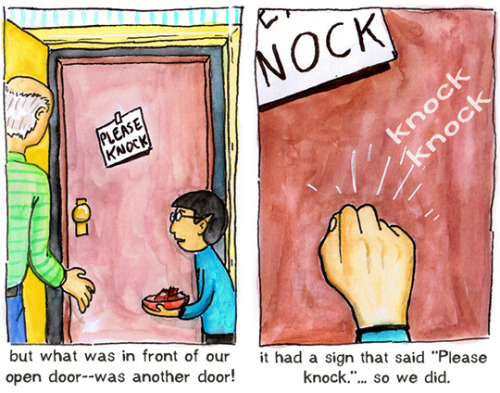
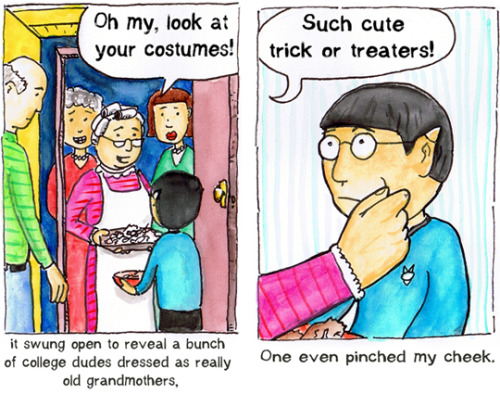
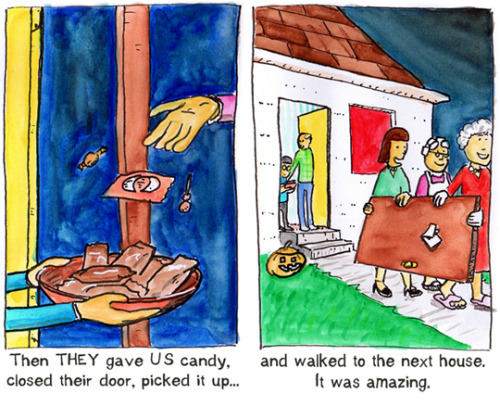
A tese é mais apropriada para os EUA, mas achei super bacana.
Adam Victor Brandizzi
Shared posts
Uma teoria simples da Direita e da Esquerda
A tese é mais apropriada para os EUA, mas achei super bacana.
The real benefits of migration
‘The supposed costs or benefits of immigration always omit one crucial group: the migrants themselves’
Woman with the guts to tell the truth over migrants,” applauded the Daily Mail. “All the compassion of stage 4 bone cancer,” sneered a columnist in The Guardian. It’s no surprise that when UK home secretary Theresa May gave a speech about migration that was designed to polarise opinion, she succeeded.
Among policy wonks and fact-checkers, one statement in the speech found the spotlight: “The evidence . . . shows that while there are benefits of selective and controlled immigration, at best the net economic and fiscal effect of high immigration is close to zero.” (Translation: immigration costs us nothing but we want to reduce it anyway.)
Is May’s summary of the evidence correct? Probably not, although there is room for reasonable people to disagree. What is clear is that the recent large and uncontrolled rush of working-age immigrants from the European Union has undoubtedly been positive for the public finances, unlike British natives, who have been a huge drain on the public finances for some time.
But there was a far bigger lacuna in May’s speech, and most commentators have missed it: the fact that these supposed costs or benefits always omit one crucial group. That group is the migrants themselves. They prosper hugely from being allowed to migrate yet that prosperity hardly ever figures in debates about immigration.
This is odd. I would not expect schools to fare well on a cost-benefit analysis if we ignored any gains to the under-18s. Nor would hospitals look like a good investment if we counted only the advantages to non-patients. Yet it seems that migration may still be mildly beneficial even after disqualifying any benefit to the people most likely to gain — the migrants. That is remarkable.
Of course, one might make the case that because migrants are foreign nationals, we are entitled to make their welfare a lower priority. My colleague Martin Wolf is one of the few commentators to bother asserting this openly; most simply seem to assume that foreigners count for nothing. In a world where we rightly abhor racial and sexual discrimination, discriminating against people because of their nationality is widely accepted. It is also a legal obligation for UK employers.
The assumption that foreigners don’t count is hard to square with the UK’s foreign aid budget of around £12bn. And as I hinted in last week’s column, being open to migration from poor countries is perhaps the best anti-poverty programme that rich countries can offer. Several economists have estimated the economic impact of radically liberalising immigration rules and allowing anyone to move anywhere — a typical estimate is that the world economy would roughly double in size.
Whether foreigners should count as sentient beings in a British cost-benefit analysis is something I’ll leave to the philosophers. Let’s accept for a moment that they do count, and thus that more open borders would greatly reduce global poverty. Yet an objection immediately arises: the “brain drain”, where the concern is not about migrants arriving in rich countries but about migrants leaving poor ones and denuding them of their skills.
Concerns about a brain drain are not new. In 1972, the Indian economist Jagdish Bhagwati argued for an extra income tax on skilled immigrants in rich countries, levied under the auspices of the UN to compensate the poor countries they had left. Nelson Mandela, the British Medical Association and the Royal College of Nursing have all worried about a brain drain since.
But how real a problem is this brain drain? Michael Clemens of the Center for Global Development argues that there are so many other factors at work in determining a country’s pool of skilled workers that the brain drain hardly comes into it.
“The most important reason that there are few physicians and scientists in Niger and Laos,” writes Clemens, “is that those countries have few physicians and scientists anywhere.” The idea that there is some vast pool of highly-trained Laotian expatriates working in the United States or Europe is, unfortunately, a myth.
Where developing countries do train large numbers of skilled workers — as with the Philippines, a world centre for nursing and midwifery — they also manage to keep a reasonable number of them at home. And those who leave may still be helping their home countries. Migrant remittances to developing countries total almost half a trillion dollars — that is three times as much as is sent in official development assistance. Migrant networks can help make trade flow smoothly too.
Then there is the simple matter of respecting individual liberties. We would not dream of telling young people from Hull that they couldn’t move to London because Hull needs them more. Nor would we insist that the UK’s National Health Service should refrain from recruiting British nurses because those nurses might do more good if they went to work in India. It is unfair to insist that foreigners should obey moral rules that we would find absurd to apply to ourselves.
If we have gained anything from the harrowing images of desperate refugees, it is an appreciation that they are human. Economic migrants are human too. They are not pheasants to poach; nor brains to drain.
Written for and first published at ft.com.
The Exquisite Detail of Traditional Chinese Dongyang Wood Carving

Leifeng Pagoda / Photo courtesy Michael Lai
With origins that date back as far as the Tang Dynasty (around the year ~700), the Chinese craft of Dongyang wood carving is regarded by many to be one of the most elegant forms of relief carving in the world. The craft is still practiced in a few workshops in the region of Dongyang, China, and most commonly appears as ornate decoration on ‘everyday’ objects such as cases, cabinets, stools, desks and tables.
Perhaps the most ambitious manifestation of Dongyang wood carving is seen on enormous mural-like panels intended to be hung as artwork as seen here. You can see a few more examples via Lustik, Orientally Yours, Michael Lai, and XDYMD.COM

Leifeng Pagoda / Photo courtesy Michael Lai

Leifeng Pagoda / Photo courtesy Michael Lai

Green Lake Hotel, Kunming

Green Lake Hotel, Kunming

Green Lake Hotel, Kunming

yangkai2013


yangkai2013
Rube Goldberg Device Features Anthropomorphic Ball that ‘Rescues’ His Friends
Complete with its own theme song, this Rube Goldberg machine made for Japanese educational television program PythagoraSwitch features a brave little red ball named ‘Biisuke’ who rescues his other friends from being trapped elsewhere in the device—And then they all escape together while running away from bag guys! The team behind the program designs a shorter contraption for every single episode of PythagoraSwitch, but this longer one was created for an extended episode over the summer. You can see 200 additional clips from the show at varying levels of quality on YouTube. (via Twisted Sifter)
How Friendships Change Over Time - The Atlantic
In the hierarchy of relationships, friendships are at the bottom. Romantic partners, parents, children—all these come first.
This is true in life, and in science, where relationship research tends to focus on couples and families. When Emily Langan, an associate professor of communication at Wheaton College goes to conferences for the International Association of Relationship Researchers, she says, “friendship is the smallest cluster there. Sometimes it’s a panel, if that.”
Friendships are unique relationships because unlike family relationships, we choose to enter into them. And unlike other voluntary bonds, like marriages and romantic relationships, they lack a formal structure. You wouldn’t go months without speaking to or seeing your significant other (hopefully), but you might go that long without contacting a friend.
Still, survey upon survey upon survey shows how important people’s friends are to their happiness. And though friendships tend to change as people age, there is some consistency in what people want from them.
“I’ve listened to someone as young as 14 and someone as old as 100 talk about their close friends, and [there are] three expectations of a close friend that I hear people describing and valuing across the entire life course,” says William Rawlins, the Stocker Professor of Interpersonal Communication at Ohio University. “Somebody to talk to, someone to depend on, and someone to enjoy. These expectations remain the same, but the circumstances under which they’re accomplished change.”
The voluntary nature of friendship makes it subject to life’s whims in a way more formal relationships aren’t. In adulthood, as people grow up and go away, friendships are the relationships most likely to take a hit. You’re stuck with your family, and you’ll prioritize your spouse. But where once you could run over to Jonny’s house at a moment’s notice and see if he could come out to play, now you have to ask Jonny if he has a couple hours to get a drink in two weeks.
The voluntary nature of friendship makes it subject to life's whims in a way other relationships aren't.The beautiful, special thing about friendship, that friends are friends because they want to be, that they choose each other, is “a double agent,” Langan says, “because I can choose to get in, and I can choose to get out.”
Throughout life, from grade school to the retirement home, friendship continues to confer health benefits, both mental and physical. But as life accelerates, people’s priorities and responsibilities shift, and friendships are affected, for better, or often, sadly, for worse.
* * *
The saga of adult friendship starts off well enough. “I think young adulthood is the golden age for forming friendships,” Rawlins says. “Especially for people who have the privilege and the blessing of being able to go to college.”
During young adulthood, friendships become more complex and meaningful. In childhood, friends are mostly other kids who are fun to play with; in adolescence, there’s a lot more self-disclosure and support between friends, but adolescents are still discovering their identity, and learning what it means to be intimate. Their friendships help them do that.
But, “in adolescence, people have a really tractable self,” Rawlins says. “They’ll change.” How many band t-shirts from Hot Topic end up sadly crumpled at the bottom of dresser drawers because the owners’ friends said the band was lame? The world may never know. By young adulthood, people are usually a little more secure in themselves, more likely to seek out friends who share their values on the important things, and let the little things be.
To go along with their newly sophisticated approach to friendship, young adults also have time to devote to their friends. According to the Encyclopedia of Human Relationships, young adults often spend between 10 and 25 hours a week with friends, and the 2014 American Time Use Survey found that people between 20 and 24 years old spent the most time per day socializing on average of any age group.
Related Story
Playing House: Finally a TV Show Gets Female Friendship Right
College is an environment that facilitates this, with keggers and close quarters, but even young adults who don’t go to college are less likely to have some of the responsibilities that can take away from time with friends, like marriage, or caring for children or older parents.
Friendship networks are naturally denser, too, in youth, when most of the people you meet go to your school or live in your town. As people move for school, work, and family, networks spread out. Moving out of town for college gives some people their first taste of this distancing. In a longitudinal study that followed pairs of best friends over 19 years, a team led by Andrew Ledbetter, an associate professor of communication studies at Texas Christian University, found that participants had moved an average of 5.8 times during that period.
“I think that’s just kind of a part of life in the very mobile and high-level transportation- and communication-technology society that we have,” Ledbetter says. “We don’t think about how that’s damaging the social fabric of our lives.”
We aren’t obligated to our friends the way we are to our romantic partners, our jobs, and our families. We’ll be sad to go, but go we will. This is one of the inherent tensions of friendships, which Rawlins calls “the freedom to be independent and the freedom to be dependent.”
“Where are you situated?” Rawlins asks me, in the course of explaining this tension. Washington, D.C., I tell him.
“Where’d you go to college?”
“Chicago.”
“Okay, so you’re in Chicago, and you have close friends there. You say ‘Ah, I’ve got this great opportunity in Washington…’ and [your friend] goes ‘Julie, you gotta take that!’ [She’s] essentially saying ‘You’re free to go. Go there, do that, but if you need me I’ll be here for you.’”
I wish he wouldn’t use me as an example. It makes me sad.
* * *
As people enter middle age, they tend to have more demands on their time, many of them more pressing than friendship. After all, it’s easier to put off catching up with a friend than it is to skip your kid’s play or an important business trip. The ideal of people’s expectations for friendship is always in tension with the reality of their lives, Rawlins says.
“The real bittersweet aspect is young adulthood begins with all this time for friendship, and friendship just having this exuberant, profound importance for figuring out who you are and what’s next,” Rawlins says. “And you find at the end of young adulthood, now you don’t have time for the very people who helped you make all these decisions.”
The time is poured, largely, into jobs and families. Not everyone gets married or has kids, of course, but even those who stay single are likely to see their friendships affected by others’ couplings. “The largest drop-off in friends in the life course occurs when people get married,” Rawlins says. “And that’s kind of ironic, because at the [wedding], people invite both of their sets of friends, so it’s kind of this last wonderful and dramatic gathering of both people’s friends, but then it drops off.”
“You find at the end of young adulthood, now you don’t have time for the very people who helped you make all these life decisions.”In a set of interviews he did in 1994 with middle-aged Americans about their friendships, Rawlins wrote that, “an almost tangible irony permeated these adults discussions of close or ‘real’ friendship.” They defined friendship as “being there” for each other, but reported that they rarely had time to spend with their most valued friends, whether because of circumstances, or through the age-old problem of good intentions and bad follow-through: “Friends who lived within striking distance of each other found that… scheduling opportunities to spend or share some time together was essential,” Rawlins writes. “Several mentioned, however, that these occasions often were talked about more than they were accomplished.”
As they move through life, people make and keep friends in different ways. Some are independent, they make friends wherever they go, and may have more friendly acquaintances than deep friendships. Others are discerning, meaning they have a few best friends they stay close with over the years, but the deep investment means that the loss of one of those friends would be devastating. The most flexible are the acquisitive—people who stay in touch with old friends, but continue to make new ones as they move through the world.
Rawlins says that any new friends people might make in middle age are likely to be grafted onto other kinds of relationships—as with co-workers, or parents of their children’s friends—because it’s easier for time-strapped adults to make friends when they already have an excuse to spend time together. As a result, the “making friends” skill can atrophy. “[In a study we did,] we asked people to tell us the story of the last person they became friends with, how they transitioned from acquaintance to friend,” Langan says. “It was interesting that people kind of struggled.”
* * *
But if you plot busyness across the life course, it makes a parabola. The tasks that take up our time taper down in old age. Once people retire and their kids have grown up, there seems to be more time for the shared living kind of friendship again. People tend to reconnect with old friends they’ve lost touch with. And it seems more urgent to spend time with them—according to socioemotional selectivity theory, toward the end of life, people begin prioritizing experiences that will make them happiest in the moment, including spending time with close friends and family.
And some people do manage to stay friends for life, or at least for a sizable chunk of life. But what predicts who will last through the maelstrom of middle age and be there for the silver age of friendship?
Whether people hold onto their old friends or grow apart seems to come down to dedication and communication. In Ledbetter’s longitudinal study of best friends, the number of months that friends reported being close in 1983 predicted whether they were still close in 2002, suggesting that the more you’ve invested in a friendship already, the more likely you are to keep it going. Other research has found that people need to feel like they are getting as much out of the friendship as they are putting in, and that that equity can predict a friendship’s continued success.
Hanging out with a set of lifelong best friends can be annoying, because the years of inside jokes and references often make their communication unintelligible to outsiders. But this sort of shared language is part of what makes friendships last. In the longitudinal study, the researchers were also able to predict friends’ future closeness by how well they performed on a word-guessing game in 1983. (The game was similar to Taboo, in that one partner gave clues about a word without actually saying it, while the other guessed.)
“Such communication skill and mutual understanding may help friends successfully transition through life changes that threaten friendship stability,” the study reads. Friends don’t necessarily need to communicate often, or intricately, just similarly.
Of course, there are more ways than ever that people can communicate with friends, and media multiplexity theory suggests that the more platforms on which friends communicate—texting and emailing, sending each other funny Snapchats and links on Facebook, and seeing each other in person—the stronger their friendship is. “If we only have the Facebook tie, that’s probably a friendship that’s in greater jeopardy of not surviving into the future,” Ledbetter says.
Saying “Happy Birthday” on Facebook, faving a friend’s tweet—these are the life support machines of friendship. They keep it breathing, but mechanically.Though you would think we would all know better by now than to draw a hard line between online relationships and “real” relationships, Langan says her students still use “real” to mean “in-person.”
There are four main levels of maintaining a relationship, and digital communication works better for some than for others. The first is just keeping a relationship alive at all, just to keep it in existence. Saying “Happy Birthday” on Facebook, faving a friend’s tweet—these are the life support machines of friendship. They keep it breathing, but mechanically.
Next is to keep a relationship at a stable level of closeness. “I think you can do that online too,” Langan says. “Because the platforms are broad enough in terms of being able to write a message, being able to send some support comments if necessary.” It’s sometimes possible to repair a relationship online, too, (another maintenance level) depending on how badly it was broken—getting back in touch with someone, or sending a heartfelt apology email.
“But then when you get to the next level, which is: Can I make it a satisfying relationship? That’s I think where the line starts to break down,” Langan says. “Because what happens often is people think of satisfying relationships as being more than an online presence.”
Social media makes it possible to maintain more friendships, but more shallowly. And it can also keep relationships on life support that would (and maybe should) otherwise have died out.
“The fact that Tommy, who I knew when I was five, is still on my Facebook feed is bizarre to me,” Langan says. “I don’t have any connection to Tommy’s current life, and going back 25 years ago, I wouldn’t. Tommy would be a memory to me. Like, I seriously have not seen Tommy in 35 years. Why would I care that Tommy’s son just got accepted to Notre Dame? Yay for him! He’s relatively a stranger to me. But in the current era of mediated relationships, those relationships never have to time out.”
By middle-age, people have likely accumulated many friends from different jobs, different cities, and different activities, who don’t know each other at all. These friendships fall into three categories: active, dormant, and commemorative. Friendships are active if you are in touch regularly, you could call on them for emotional support and it wouldn’t be weird, if you pretty much know what’s going on with their lives at this moment. A dormant friendship has history, maybe you haven’t talked in a while, but you still think of that person as a friend. You’d be happy to hear from them and if you were in their city, you’d definitely meet up.
A commemorative friend is not someone you expect to hear from, or see, maybe ever again. But they were important to you at an earlier time in your life, and you think of them fondly for that reason, and still consider them a friend.
Facebook makes things weird by keeping these friends continually in your peripheral vision. It violates what I’ll call the camp-friend rule of commemorative friendships: No matter how close you were with your best friend from summer camp, it is always awkward to try to stay in touch when school starts again. Because your camp self is not your school self, and it dilutes the magic of the memory a little to try to attempt a pale imitation at what you had.
The same goes for friends you only see online. If you never see your friends in person, you’re not really sharing experiences so much as just keeping each other updated on your separate lives. It becomes a relationship based on storytelling rather than shared living—not bad, just not the same.
* * *
“This is one thing I really want to tell you,” Rawlins says. “Friendships are always susceptible to circumstances. If you think of all the things we have to do—we have to work, we have to take care of our kids, or our parents—friends choose to do things for each other, so we can put them off. They fall through the cracks.”
“Adults feel the need to be more polite in their friendships. So we stop expecting as much, which is kind of a sad thing.”After young adulthood, he says, the reasons that friends stop being friends are usually circumstantial—due to things outside the relationship itself. One of the findings from Langan’s “friendship rules” study was that “adults feel the need to be more polite in their friendships,” she says. “We don't feel like, in adulthood, we can demand very much of our friends. It's unfair, they've got other stuff going on. So we stop expecting as much, which to me is kind of a sad thing, that we walk away from that.” For the sake of being polite.
But the things that make friendship fragile also make it flexible. Rawlins’ interviewees tended to think of their friendships as continuous, even if they went through long periods where they were out of touch. This is a fairly sunny view—you wouldn’t assume you were still on good terms with your parents if you hadn’t heard from them in months. But the default assumption with friends is that you’re still friends.
“That is how friendships continue, because people are living up to each other’s expectations. And if we have relaxed expectations for each other, or we’ve even suspended expectations, there’s a sense in which we realize that,” Rawlins says. “A summer when you’re 10, three months is one-thirtieth of your life. When you’re 30, what is it? It feels like the blink of an eye.”
Perhaps friends are more willing to forgive long lapses in communication because they’re feeling life’s velocity acutely too. It’s sad, sure, that we stop relying on our friends as much when we grow up, but it allows for a different kind of relationship, based on a mutual understanding of each other’s human limitations. It’s not ideal, but it’s real, as Rawlins might say. Friendship is a relationship with no strings attached except the ones you choose to tie, one that’s just about being there, as best as you can.
Related Video
A short film about lifelong friendships forged while playing hockey
This entry passed through the Full-Text RSS service - if this is your content and you're reading it on someone else's site, please read the FAQ at fivefilters.org/content-only/faq.php#publishers.
Thirsty Work

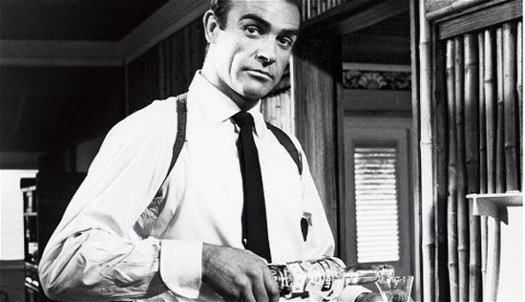
As the series developed, readers came to expect an ever more extensive drinks menu. In On Her Majesty’s Secret Service, for example, the eleventh book, Bond downs no less than forty-six drinks, the widest variety in any single book. According to one Bondologist, these include: unspecified quantities of Pouilly-Fuissé white wine, Taittinger champagne, Mouton Rothschild ’53 claret, calvados, Krug champagne, three bourbons with water, four vodka and tonics, two double brandy and ginger ales, two whisky and sodas, three double vodka martinis, two double bourbons on the rocks, at least one glass of neat whisky, a flask of Enzian schnapps, Marsala wine, the better part of a bottle of fiery Algerian wine (served by M), two more Scotch whiskies, half a pint of I.W. Harper bourbon, a Jack Daniel’s Tennessee whisky with water, on the rocks, a bottle of Riquewihr wine, four steins of Franziskaner beer, and a double Steinhäger gin. The same indefatigable researcher has found that although vodka martini has now become Bond’s signature drink, he only drinks nineteen of them in the books, compared to thirty-seven bourbons, twenty-one Scotches and a remarkable thirty-five sakes (entirely the result of his massive consumption of that particular drink in You Only Live Twice).
— Ben MacIntyre, For Your Eyes Only: Ian Fleming and James Bond, 2008
Please support Futility Closet on Patreon!
5 mapas desenhados para convencer você de alguma coisa
A biblioteca da Universidade de Cornell, nos Estados Unidos, disponibiliza desde setembro deste ano seu acervo digital de 700 mapas de propaganda –ou “mapas persuasivos”, como prefere classificá-los o responsável pela coleção, PJ Mode.
São representações cartográficas produzidas para convencer seus leitores de alguma coisa. Alguns deles, sobre a desigualdade social. Outros, sobre as más intenções dos impérios. Territórios parecem maiores do que são, ou chegam mais longe do que suas fronteiras, ou estão mais próximos do que deveriam estar.
PJ Mode, um historiador amador, reuniu esses mapas durante as três últimas décadas. À revista “National Geographic” ele afirmou que, por ser considerada confiável, a cartografia é uma poderosa ferramenta para a promoção de um ponto de vista específico. “Os mapas têm uma credibilidade inerente. Somos treinados desde a infância a confiar neles.”
Segundo o autor do texto da “National Geographic”,
Analisada como um conjunto, a coleção de mapas é um lembrete de que, apesar de haver beleza na verdade, um ponto de vista enviesado pode ser sedutor também. E nenhum mapa –mesmo os feitos a partir das mais escrupulosas pesquisas– está completamente livre de decisões editoriais ou pontos de vista.
Este Mundialíssimo blog foi ao acervo da Universidade Cornell e reuniu, aqui, cinco dessas ilustrações. Vejam abaixo.
O QUE A ALEMANHA QUER?

Mapa de 1917. Crédito Reprodução/Persuasive Cartography: the PJ Mode Collection
Mapa produzido em torno 1917 marcando em vermelho as áreas teoricamente cobiçadas pela Alemanha. A ilustração inclui, também, as declarações de 23 “líderes do pensamento alemão” justificando suas ambições territoriais, incluindo Otto Richard Tannenberg, autor de “A Grande Alemanha” (1911). Sim, o Brasil está pintado de vermelho.
PORTUGAL NÃO É UM PAÍS PEQUENO

Mapa de 1934. Crédito Reprodução/Persuasive Cartography: the PJ Mode Collection
Este mapa foi criado por Henrique Galvão (1895-1970) em 1934. Reproduz, em um cartão postal, as dimensões de Portugal e seus territórios coloniais em comparação com a Europa. Segundo a descrição deste mapa, no acervo de PJ Mode, “não é incomum que mapas persuasivos sejam reproduzidos e distribuídos como cartões postais, uma maneira barata de chegar a grandes públicos”.
A RÚSSIA É UM POLVO

Mapa de 1904. Crédito Reprodução/Persuasive Cartography: the PJ Mode Collection
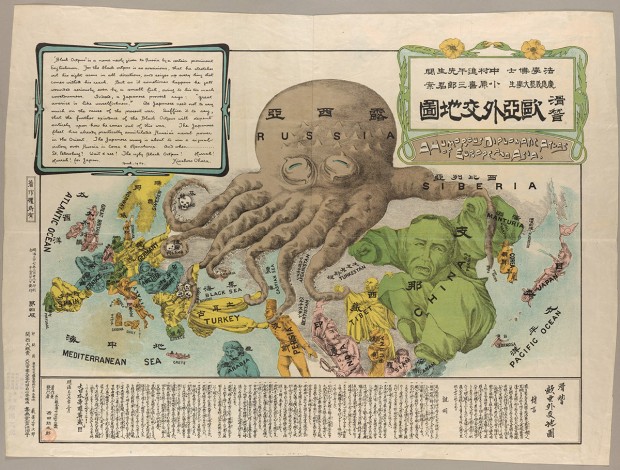
Kisaburo Ohara desenhou esta representação da Europa e da Ásia retratando a Rússia como um polvo meio fofo, meio asqueroso. Os tentáculos se agarram por todos os lados, incluindo Finlândia, Polônia, Turquia e Tibete. Não à toa um braço se alonga até Port Arthur, hoje o distrito chinês de Lushunkou –a posse desse território foi “casus belli” para a guerra entre Japão e Rússia, em 1904-1905. O povo é uma imagem recorrente nesse tipo de mapa.
O PAPA AMERICANO

Mapa de 1894. Crédito Reprodução/Persuasive Cartography: the PJ Mode Collection
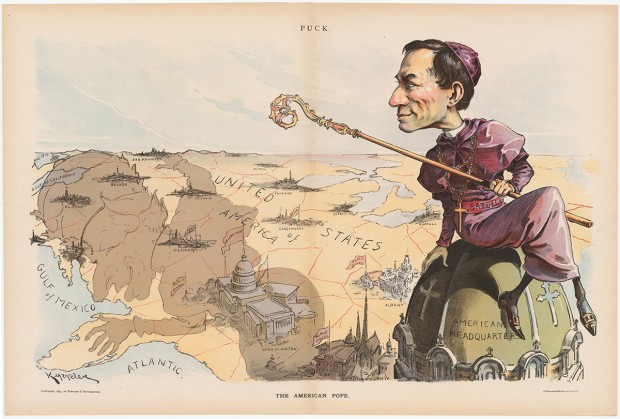
Criação de Udo Keppler em 1894, este mapa apareceu na “Puck Magazine” em 5 de setembro como uma ilustração contrária à Igreja Católica. O homem sentado no mapa é o cardeal Francesco Satolli, escolhido um ano antes como primeiro delegado papal dos Estados Unidos. Na ilustração, sua sombra maligna se deita em cima das escolas públicas do país. Um texto editorial no lado de trás da ilustração registrava: “Temos um Papa, e ficou apenas um pouco mais impossível para um homem ser um bom católico e um bom americano”.
A MÁ POLÍTICA DA ESCRAVIDÃO

Mapa de 1824. Crédito Reprodução/Persuasive Cartography: the PJ Mode Collection
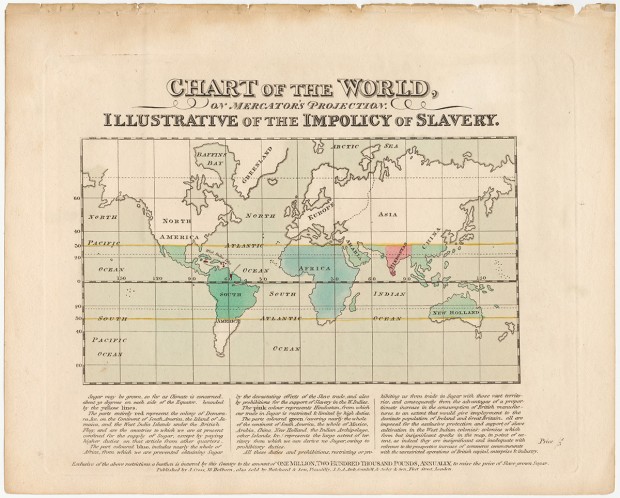
O autor deste mapa, James Cross era um mercador bem-sucedido que liderava um movimento contrário à escravidão. A ilustração foi publicada em 1823 com o argumento de que os impostos cobrados do açúcar aumentavam os preços e inibiam a manufatura na Inglaterra. Segundo Cross, a eliminação das proteções tarifárias levariam ao fim da escravidão. O mapa identifica regiões produtoras de açúcar e critica as políticas que incentivavam a prática escravista relacionada a esse cultivo.
This entry passed through the Full-Text RSS service - if this is your content and you're reading it on someone else's site, please read the FAQ at fivefilters.org/content-only/faq.php#publishers.
Mercado Popular é excelente
Landscapes Painted on the Surfaces of Cut Logs by Alison Moritsugu

When European settlers arrived throughout the 18th and 19th centuries and rapidly expanded their territory across North America, the prevalent belief was that of Manifest Destiny. Specifically, that American settlers were destined to expand throughout the continent by any means necessary regardless of cost, environmental impact, or the devastating harm to Native American populations. The artwork of the period, primarily sweeping landscapes influenced by the European pastoral tradition, did well to capture the pristine beauty of the previously undocumented continent, but completely glossed over the reality of what was really happening.
In her log paintings, artist Alison Moritsugu faces that strange juxtaposition head-on by choosing a literal meataphor—the remains of downed trees—as a canvas for her bucolic oil paintings of the countryside where that very tree may have once originated. A fantastic collision of art history and environmental awareness. The rough edges of the cut branches and trunks appear like windows into the past, telling a story that the tree’s rings alone cannot. She shares via her artist statement:
Painters throughout art history from the Northern Song, Baroque, Rococo and Hudson River School tailored their depictions of nature to serve an artistic narrative. Today, photoshopped images of verdant forests and unspoiled beaches invite us to vacation and sightsee, providing a false sense of assurance that the wilderness will always exist. By exploring idealized views of nature, my work acknowledges our more complex and precarious relationship with the environment.
It should be noted that Moritsugu uses salvaged log segments from naturally fallen trees, or trees that would otherwise be turned into mulch. You can see a collection of new work starting November 12th at Littlejohn Contemporary in New York. (via My Modern Met)


Courtesy of the artist and Littlejohn Contemporary, NY


ohcaptainmycaptain1918: theinturnetexplorer: well that...


well that neighbor feud took an amusing turn.
Imagine your OTP
Portraits of Auto Mechanics in the Style of Renaissance Paintings by Freddy Fabris

Chicago-based photographer Freddy Fabris has worked for years on commercial projets for clients like Leo Burnett, Saatchi & Saatchi, and Ogilvy & Mather, but it was a recent decision to focus on a personal project exploded into a bevy of awards and accolades. Fabris, who has a background in painting, had long been ruminating about how to pay tribute to the works of classic painters like Rembrandt and Da Vinci using his camera. While accompanying a friend to a cluttered auto repair shop, inspiration suddenly struck. Fabris would pose the mechanics in the style of classical portraits, and in tableaus reminiscent of Philippe de Champaigne’s The Last Supper and Michelangelo’s The Creation of Adam. As he shared the idea with colleagues and collaborators, everyone quickly jumped on board and the Renaissance series was born.
While the photos are admittedly absurd, the staggering amount of craft and skill present in each shot is undeniable. From the careful composition of bodies to the striking use of light to illuminate the face of each subject, the portraits in particular are strangely dignifying. The photos have since won the 1st Place International Color Award, the One Eyeland Silver Award, and an APA Conceptual Award. You can explore more of Fabris’ work on his website.


Impressive Blend Of Greek Gods And Chaotic Backdrop Of Graffiti By Pichi & Avo

Spanish street art duo Pichi & Avo have created an exciting blend of classical graffiti and renderings of mythological characters inspired by ancient Greek sculpture. The accuracy, shading, and use of color is all that more remarkable considering each piece is painted only with spray paint.


More on freeyork
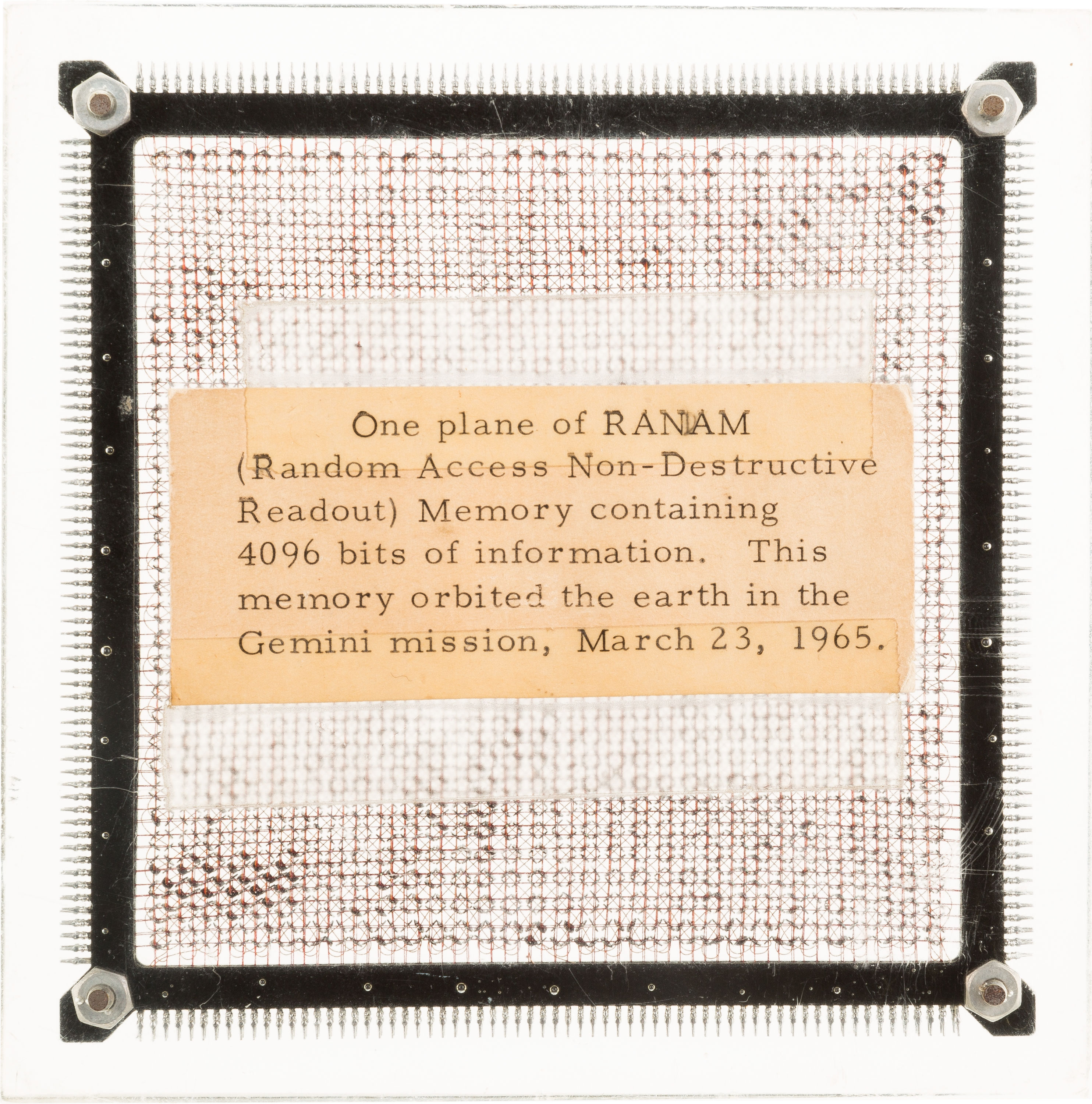
A piece of memory from Gemini 3 spacecraft is up for auction
Do you want a piece of the first computer on a manned spaceflight? Of course you do -- and you're in luck, because a piece of RANAM (Random Access Non-Destructive Readout) from the Gemini 3 spacecraft's computer is up for auction. Heritage Auctions...
details, part 2 toledo museum of art


details, part 2
toledo museum of art
details, part 1 toledo museum of art


details, part 1
toledo museum of art
Lush Paintings of Solitary Swimmers by Pedro Covo


Here’s a lovely series of swimming figures painted by Colombian illustrator and painter Pedro Covo. Covo splendidly captures the obscuring nature of water as splashes are rendered in frenetic splatters of paint, and the sinuous lines of bodies seem to evaporate into brush strokes. The artist most recently exhibited at Río Laboratorio, and has also worked as an illustrator for the Walt Disney company. You can see a bit more over on Instagram and at the Colagene Creative Clinic. (via The Daily Blip, Empty Kingdom)


A bolsa da Margô

– Tira inspirada no conto “Igualzinha, igualzinha” do livro “Mentiras que as mulheres contam” do mestre Luis Fernando Veríssimo
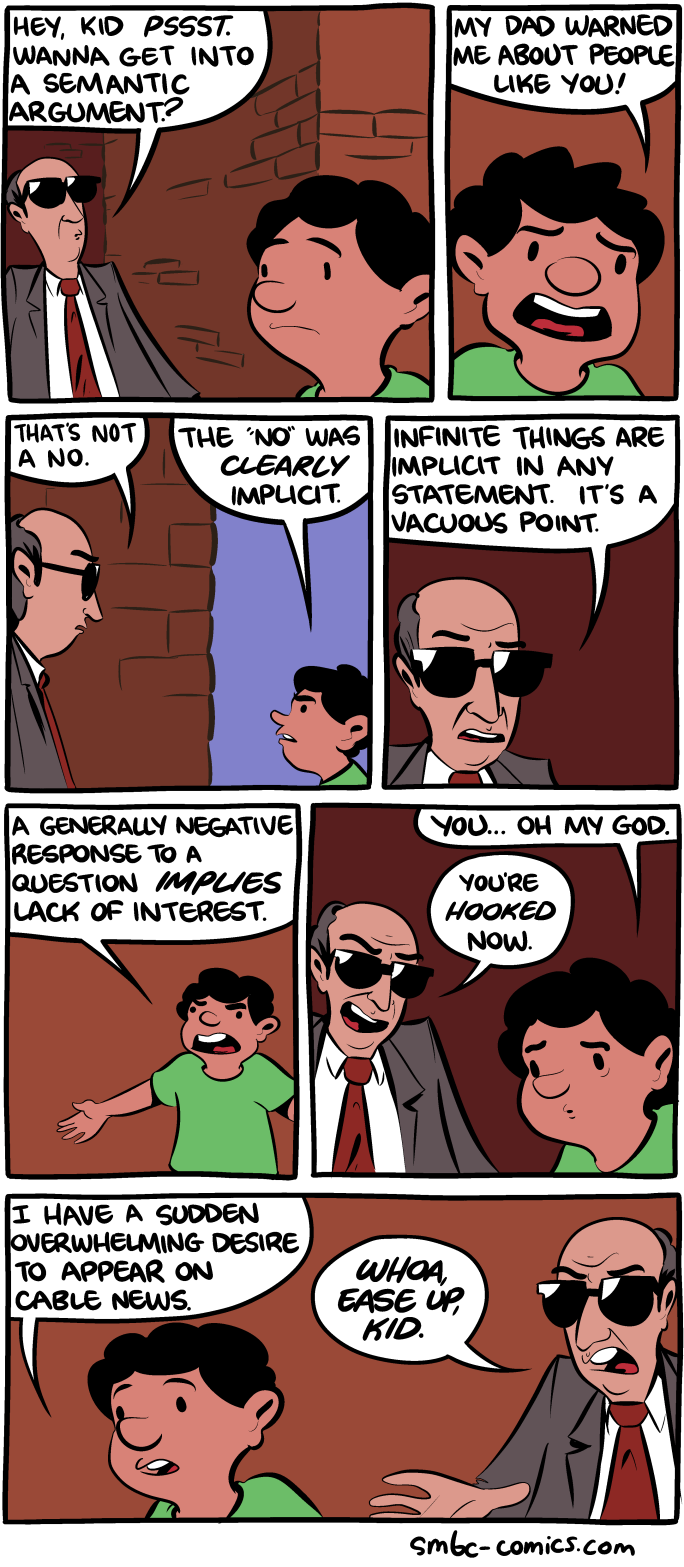
Saturday Morning Breakfast Cereal - Hey kid...

Hovertext: I see junkies everywhere now!
New comic!
Today's News:
We now go into week two of our most surprisingly successful book launch ever. At this point, just about every damn thing gets signed. The signing process will actually kill me, so please enjoy the upcoming final few months of SMBC.
(Seriously though, thanks geeks!)
Remember the Guy Who Gave His Employees a $70,000 Minimum Wage? Here’s What Happened Next.
Adam Victor BrandizziCompare com http://www.nytimes.com/2015/08/02/business/a-company-copes-with-backlash-against-the-raise-that-roared.html
Double salary for you, and you, and you ...
Photo by Bay Ismoyo/AFP/Getty Images
Before Dan Price caused a media firestorm by establishing a $70,000 minimum wage at his Seattle company, Gravity Payments ... before Hollywood agents, reality-show producers, and book publishers began throwing elbows for a piece of the hip, 31-year-old entrepreneur with the shoulder-length hair and Brad Pitt looks ... before Rush Limbaugh called him a socialist and Harvard Business School professors asked to study his radical experiment in paying workers ... an entry-level Gravity employee named Jason Haley got really pissed off at him.
It was late 2011. Haley was a 32-year-old phone tech earning about $35,000 a year, and he was in a sour mood. Price had noticed it, and when he spotted Haley outside on a smoking break, he approached. "Seems like something's bothering you," he said. "What's on your mind?"
"You're ripping me off," Haley told him.
Price was taken aback. Haley is shy, not prone to outbursts. "Your pay is based on market rates," Price said. "If you have different data, please let me know. I have no intention of ripping you off." The data doesn't matter, Haley responded: "I know your intentions are bad. You brag about how financially disciplined you are, but that just translates into me not making enough money to lead a decent life."
Price walked away, shocked and hurt. For three days, he groused about the encounter to family and friends. "I felt horrible," he says. "Like a victim." An entrepreneur since he was a teen, Price prided himself on treating employees well at Gravity, which he co-founded in 2004 with his brother Lucas Price. Three years before, as a 16-year-old high school kid, Dan Price saw bar owners being gouged by big financial firms every time they swiped a patron's credit card. By first outsourcing technology, and then building its own systems, Gravity offered lower prices and better service, and grew rapidly for four years—until the Great Recession nearly wiped it out. Traumatized, Price kept a lid on wages even after the economy recovered—to save the company, of course! Why can't employees see that? Yet the more people tried to cheer him up about his wage policy, the worse Price felt.
Finally, he realized why: Haley was right—not only about being underpaid, but also about Price's intentions. "I was so scarred by the recession that I was proactively, and proudly, hurting my staff," he says. Thus began Price's transformation from classic entrepreneur to crusader against income inequality, set on fundamentally changing the way America does business. For three years after his face-off with Haley, Price handed out 20 percent annual raises. Profit growth continued to substantially outpace wage growth. This spring, he spent two weeks running the numbers and battling insomnia before making a dramatic announcement to his 120-member staff on April 13, inviting NBC News and the New York Times to cover it: Over the next three years, he will phase in a minimum wage of $70,000 at Gravity and immediately cut his own salary from $1.1 million to $70,000 to help fund it.
The reaction was tsunamic, with 500 million interactions on social media and NBC's video becoming the most shared in network history. Gravity was flooded with stories from ecstatic workers elsewhere who suddenly got raises from converted bosses who tossed them out like Scrooge after his epiphany—even, in one case, at an apparel factory in Vietnam. Price was cheered at the Aspen Ideas Festival and got an offer from The Apprentice reality-show impresario Mark Burnett to be the new Donald Trump on a show called Billion Dollar Startup. Gravity was inundated with résumés—4,500 in the first week alone—including one from a high-powered 52-year-old Yahoo executive named Tammi Kroll, who was so inspired by Price that she quit her job and in September went to work for Gravity at what she insisted would be an 80–85 percent pay cut. "I spent many years chasing the money," she says. "Now I'm looking for something fun and meaningful."
Price had not only struck a nerve; he had also turbocharged a debate now raging across the American landscape, from presidential forums to barrooms to fast-food restaurants. How much—indeed, how little—should workers be paid? While financiers and C-suite honchos have showered themselves in compensation, most Americans haven't had a raise, in real dollars, since 2000. Especially in the wake of the recession, entrepreneurs and corporate bosses have tightly controlled costs, including wages. That boosts profits—and bonuses. But at what cost? In a U.S. economy that is more than two-thirds consumer spending, GDP growth is chained to income growth. Workers can't spend what they don't have, nor do they have the home equity to borrow and spend. Weak wage growth helps explain why this long economic expansion has been so tepid.
Until Price dropped his wage bomb, much of that debate was punditry. He gave it a name and a face: A modern Robin Hood helping the working class by stealing from himself—and perhaps from shareholders of other companies whose bosses are now also putting employees ahead of profits: #imwithdan! Was it coincidence that Walmart, that paragon of parsimony, coughed up raises for its lowest-paid workers?
Then the inevitable backlash came. Price has been pilloried on Fox News and trashed by the multimillionaire Limbaugh ("I hope this company is a case study in MBA programs on how socialism does not work, because it's gonna fail"). A Times story in July was so laden with quotes from disgruntled customers and staff that Price's worried friends called to say he always has a place to stay if things don't work out. Others accused Price of orchestrating a clever publicity stunt. ("If it was," he replies, "I'm a genius.") Shortly after Price announced his minimum, his brother Lucas sued him, claiming Dan had previously paid himself "excessive compensation" and asked the court to order Dan to buy Lucas's 30 percent share of Gravity "at fair value" or dissolve the firm. Lucas declined to comment; Dan denies his brother's claims.
Price isn't backing down about pay going up. Now he's going all in. He revealed to Inc. that he has sold all his stocks, emptied his retirement accounts, and mortgaged his two properties—including a $1.2 million home with a view of Puget Sound—and poured the $3 million he raised into Gravity. As majority owner, he is not exactly penniless. But if Gravity fails, so does Price. "Most people live paycheck to paycheck," he says. "So how come I need 10 years of living expenses set aside and you don't? That doesn't make any sense. Having to depend on modest pay is not a bad thing. It will help me stay focused."
And business owners will stay focused on him. The Dan Price Pay Experiment will either be hailed as a stroke of genius showing that entrepreneurs have underpaid their workforces to their companies' detriment, or as proof positive that Gravity is being run by a well-intentioned fool.
"I love Monday mornings," says Price, relentlessly upbeat as usual, walking through Gravity's sparse office in the Ballard section of Seattle, a rapidly gentrifying former fishing village. He wears the full hipster regalia of ripped jeans, untucked shirt, and sneakers. The office looks as you might expect—desks and computers in bland cubicles—but the space is reorganized every six months so people can sit near different colleagues. "So we don't get too comfortable," Price says.
Being comfortable wasn't a goal in Price's family when he was growing up in rural southwest Idaho, near Nampa. He and his five siblings took turns waking at 5 a.m. to make breakfast before Bible readings and prayers led by their Evangelical Christian parents. On his own, Price spent hours reading Scripture and reached the finals of a national Bible-memorization competition in the fifth and sixth grades. Like his siblings, he was homes-chooled until age 12. That's when he rebelled a bit, dying his hair with red and blue streaks and painting his nails like the punk rockers he listened to.
Price learned to play bass guitar and formed a Christian rock trio called Straightforword, which was successful enough to tour and get national airplay. At 16, when the band broke up, he decided to help the struggling owners of bars and coffee shops where they had played by negotiating cheaper rates from the credit card processing companies, which offered little more than exorbitant prices and spotty service.
Though his family struggled financially, Price never thought of his enterprise as a way to make money. Inspired by his father, Ron Price, a self-employed consultant who often spoke of living according to your values, Dan says he just wanted to help friends like Heather, who ran the Moxie Java coffee shop in Caldwell, Idaho. But make money he did, rounding up more than 200 clients and in a good month netting $12,000. By the time he entered Christian Seattle Pacific University in 2004, Price had developed a more sophisticated business model: processing credit card transactions himself using outsourced technology.
Though fluent with computers, his real skill was negotiating—cobbling together deals with the myriad firms involved in making a single credit card swipe go through smoothly. While continuing to serve his Idaho customers, he found enough new ones in Seattle to start Gravity Payments with Lucas, five-and-a-half years older and already a college graduate. He also married Kristy Lewellyn, a high school sweetheart whose strict Christian parents demanded, when Price was 16, that he commit to marriage or stop seeing her. He agreed, but the union didn't last, ending amicably in 2010.
Dan and Lucas were 50-50 partners in Gravity and shared responsibilities but had a falling out about 18 months after launch. Lucas was frustrated at being given menial tasks by his kid brother, and in 2008, they agreed that Dan would become majority owner. Lucas is now an executive at the Seattle texting startup Zipwhip.
Funded in part by Dan's savings, credit card debt, and student loans (diverted to fund his venture), the company grew rapidly as Gravity built its own technology and brought the card-processing systems in-house. He somehow graduated from college in 2008, won several business awards, and met President Obama. Then the recession hit and Gravity fell rapidly to earth. Revenue dropped 20 percent, and vendors and clients went bankrupt. Price was spooked. "We almost lost everything," he says. Always stingy with pay, he had offered employees the usual startup promise: We'll give you an exciting place to work, and you'll learn so much you'll eventually be financially successful—either here or elsewhere. But after his encounter with Jason Haley, he decided to try a new tack.
The 20 percent raises Price implemented in 2012 were supposed to be a one-time deal. Then something strange happened: Profits rose just as much as the previous year, fueled by a surprising productivity jump—of 30 to 40 percent. He figured it was a fluke, but he piled on 20 percent raises again the following year. Again, profits rose by a like amount. Baffled, he did the same in 2014 and profits continued to rise, though not quite as much as before, because Gravity had to do more hiring.
"But I was still bothered and I didn't know why," he says. In March, Price went walking with a good friend who earned less than $50,000 at another firm. She was smart, capable, and worked 50 to 60 hours a week. But her Seattle rent was rising another $200 a month, and she was struggling with student debt and worried about how to pay for basics. "I was so angry," Price says. "Here I am walking around making $1 million a year, and I'm working shoulder to shoulder with people in her situation who are every bit as good and valuable as I am."
As a numbers guy, he knows all the statistics. Even as the nation's productivity has improved 22 percent since 2000, median wages have risen only 1.8 percent, adjusted for inflation. Wages have actually fallen by 3 percent since the recession. Meanwhile, productivity gains are going to CEOs who earn, on average, about 300 times more than typical workers, compared with 71.2 times in 1990, according to the Economic Policy Institute. (Price's $1.1 million salary was about 23 times the $48,000 average at Gravity.) Such trends have driven the push for a $15 minimum wage in some cities, including Seattle.
"I began wondering what my friend would have to make so she wouldn't have to worry about a $200 rent hike," says Price. He recalled a 2010 study by Princeton behavioral economist Daniel Kahneman finding that, while people did not feel happier on a daily basis as their income rose above $75,000, they were decidedly unhappier the less they earned below $75,000. At Gravity, new hires made $35,000 a year.
By any measure, Gravity was doing relatively well. Revenue hit $150 million in 2014 and was growing 15 percent per year on $7 billion in customer transactions. Profits hit $2.2 million—actually a so-so 1.46 percent net margin, below the industry average. About 40 percent of the profits went to Dan and Lucas as dividends (Dan put his in an emergency savings account for the company). The rest went back into the business. "We had a great culture and hundreds of people were applying for positions, so we could have gotten away with underpaying for a while longer," he says.
But Price worried that employees with money troubles would fail to provide the top-notch service that had made Gravity successful. He also believed that low starting salaries were simply wrong—contrary to his values, which his father had always taught him to respect. "I just decided I'm gonna do $70,000," he says. "I don't care if I have to stop paying myself or I have to work 20 hours a day. I'm going to do it."
The plan will eventually double the salaries of 30 workers and give raises to 40 more making less than $70,000. Phased in over three years, this will cost $1.8 million. The minimum jumped to $50,000 immediately and will climb by $10,000 in each of the next two years; those who earn $50,000 to $70,000 will get $5,000 raises. Price has vowed not to raise prices, lay off staff, or cut executive pay. More than half the cost will be offset by Price's pay cut. Unless revenue grows, the rest will be covered by that $2.2 million profit, leaving little margin for error.
Since that April made-for-TV moment, Price says he's had no second thoughts—mostly because he's been learning how his employees had been struggling. Garret Nelson, 31, a salesman in Boise, Idaho, got a $5,000 raise, to $55,000, allowing him to pay for teaching supplies and music lessons for his five homeschooled kids. "People back in Idaho said he was nuts," says Nelson, who went to middle school with Price. "But it really energized the employees."
Is there a magic number that keeps workers focused while still generating a profit? Price calculated a figure but never imagined the publicity he's gotten would boost new customer inquiries from 30 per month to 2,000 within two weeks. Customer acquisition costs are typically high, so in that sense, the strategy has paid off. And in this business, customer retention is key. Gravity's 91 percent retention rate over the past three years—far above the industry average of about 68 percent—has been crucial to its success. Maria Harley, Gravity's vice president of operations, looks at a different set of numbers. While the company had to hire 10 more people than anticipated to handle the new business, most nonlabor costs—rent, technology, etc.—have remained the same, thus improving operating ratios. "We don't need our sales to double," she says. "We only need them to increase marginally—by about 25 to 30 percent. When I started being more logical than emotional about this, I said, 'This is totally possible.'"
Six months after Price's announcement, Gravity has defied doubters. Revenue is growing at double the previous rate. Profits have also doubled. Gravity did lose a few customers: Some objected to what seemed like a political statement that put pressure on them to raise their own wages; others feared price hikes or service cutbacks. But media reports suggesting that panicked customers were fleeing have proved false. In fact, Gravity's customer retention rate rose from 91 to 95 percent in the second quarter. Only two employees quit—a nonevent. Jason Haley isn't one of them. He is still an employee, and a better paid one.
In fact, the biggest threat to Price's company isn't his strategy; it's his brother. Lucas's lawsuit, scheduled to be heard in May, could ruin Gravity. Price estimates legal fees will reach $1 million by then. The suit was filed on April 24, 11 days after the pay-raise announcement—perhaps to pressure Dan to sell when Gravity was in the limelight, thus maximizing the value of Lucas's share. Dan says Lucas has refused his offer to buy him out for $4 to $5 million. (Lucas's attorney says the suit is unrelated to the raises.)
When asked about his brother, Dan maintains his usual upbeat, grateful attitude: "We're in such a great place with the company and Lucas helped me get here. Anything he gets, I won't begrudge. I'll be glad he got it and think he deserves it." Asked how he can remain so charitable when his own brother is suing him—Lucas was best man at his wedding—Price laughs and says he's been seeing a family therapist for about a year.
Brother or not, he vows to fight fiercely to protect his company. "I will do anything to help Lucas reach his financial goals," Dan says, "as long as it doesn't lead to price increases to our merchants, decreases in services to them, pay cuts, or other types of cutbacks to our investments in our team."
Raising your cost of doing business is generally not considered the best way to increase profits and improve market position. Yet the finish line for Price may be when he can lift his own salary up to market rate—making it easier for the company to replace him, if necessary, and show CEOs that sacrifice by the boss is only temporary when overhauling a company's wage structure. He'd also like to get his $3 million loan back—invested to "take us from a low to a high margin for error," he says—but won't sweat it if that doesn't happen. "I started with nothing," he says. "I can always make enough to support myself."
Price says establishing a $70,000 minimum wage is a moral imperative, not a business strategy. And yet he must prove the business wisdom behind it, not only to keep Gravity from sinking—and going down with the ship himself—but also to achieve his long-term goal of transforming the business world. "I want the scorecard we have as business leaders to be not about money, but about purpose, impact, and service," he says. "I want those to be the things that we judge ourselves on."
Correction, Oct. 25, 2015: This post orginally misidentified the author of this story. It is Paul Keegan, not Jeff Bercovici.
This entry passed through the Full-Text RSS service - if this is your content and you're reading it on someone else's site, please read the FAQ at fivefilters.org/content-only/faq.php#publishers.
Justiça intima blogueiros do Acre para que obtenham registro em cartório - 22/10/2015 - Poder - Folha de S.Paulo
A Justiça do Acre decidiu intimar ao menos 133 blogueiros da capital acriana para que compareçam ao fórum da cidade para "regularizar" sua situação. A decisão da Vara de Registros Públicos foi baseada em denúncia de um cartório, que alegou, usando uma lei de 1973, que esses blogs, sem o registro, poderiam ficar na clandestinidade.
A lei 6.015/73, em seu artigo 122, estabelece que jornais, oficinas impressoras, emissoras de rádio ou empresas que operem como agências de notícias devem ter registro civil de pessoas jurídicas. Não há citação para blogs ou sites, até porque naquela década eles não existiam.
O cartório, ao apresentar ao juiz Marcelo Badaró Duarte uma lista de blogs e sites sem registro, pediu que fossem multados por isso. O juiz não aceitou o pedido de aplicação de multa, mas estipulou prazo de 30 dias para que todos procurassem o cartório para regularizar a situação, o que pode custar até R$ 610.
O juiz disse que a medida é apenas burocrática e não tem como objetivo controlar a imprensa. "Quem tiver essa obrigação que a lei diz, que procure o cartório e regularize. Quem não tiver, pode questionar, alegar que tem blog de receita ou de informações pessoais, por exemplo. Acharam que estávamos querendo controlar a imprensa, censurar, mas não é nada disso. É uma questão meramente cartorial, burocrática."
TENTATIVA DE CONTROLE
Para blogueiros e o Sindicato dos Jornalistas do Acre, a medida é descabida e é uma forma de tentativa de controle. Presidente do Sindicato dos Jornalistas do Acre, Victor Augusto Nogueira de Farias disse que entrará com um mandado de segurança para tentar derrubar a exigência.
"Foi uma decisão tomada sem conversar com ninguém. Se é para cobrar taxa de quem tem blog, tem de cobrar de quem usa redes sociais. São situações semelhantes. Não admitimos isso porque blog é uma ferramenta pessoal e gratuita."
Para o blogueiro Altino Machado, que tem um blog de assuntos gerais e foi notificado, a decisão é equivocada ao usar o argumento de "clandestinidade".
"Pega até mal para a Justiça. É uma lambança patética. A ditadura fazia para controlar, impedir o surgimento de jornais alternativos, controlar o país. Mas, agora, não faz sentido algum."
Segundo ele, a exigência fará com que universidades tenham que adaptar sua grade curricular no curso de comunicação social. "Quando forem ensinar o aluno a criar um blog, terão de ensinar primeiro o caminho do cartório."
Fale com a Redação - leitor@grupofolha.com.br
Problemas no aplicativo? - novasplataformas@grupofolha.com.br
This entry passed through the Full-Text RSS service - if this is your content and you're reading it on someone else's site, please read the FAQ at fivefilters.org/content-only/faq.php#publishers.
Saturday Morning Breakfast Cereal - Scientists
Comic for October 24, 2015
This entry passed through the Full-Text RSS service - if this is your content and you're reading it on someone else's site, please read the FAQ at fivefilters.org/content-only/faq.php#publishers.
Quick Thinking
Some “ridiculous questions” from Martin Gardner:
1. A convex regular polyhedron can stand stably on any face, because its center of gravity is at the center. It’s easy to construct an irregular polyhedron that’s unstable on certain faces, so that it topples over. Is it possible to make a model of an irregular polyhedron that’s unstable on every face?
2. The center of a regular tetrahedron lies in the same plane with any two of its corner points. Is this also true of all irregular tetrahedrons?
3. An equilateral triangle and a regular hexagon have perimeters of the same length. If the area of the triangle is 2 square units, what is the area of the hexagon?
Please support Futility Closet on Patreon!


.png)