
Adam Victor Brandizzi
Shared posts
16 Mar 05:31

How to make good guesses
by Tim Harford
‘Would you say that someone reading the FT is more likely to have a PhD or to have no college degree at all?’
What’s the likelihood that the British economy will fall into recession this year? Well, I’ve no idea — but I have a new way to guess.
Before I reveal what this is, here’s a totally different question. Imagine that you see someone reading the Financial Times. Would you say that this individual, clearly a person of discernment, is more likely to have a PhD or to have no college degree at all?
The obvious response is that the FT reader has a PhD. Surely people with PhDs better exemplify the FT reader than people with no degree at all, at least on average — they tend to read more and to be more prosperous.
But the obvious response is too hasty. First, we should ask how many people have PhDs and how many people have no college degree at all? In the UK, more than 75 per cent of adults have no degree but the chance that a randomly chosen person has a PhD is probably less than 1 per cent.
It only takes a small proportion of non-graduates to read the FT before they’ll outnumber the PhD readers. This fact should loom large in our guess, but it does not.
Logically, one should combine the two pieces of information, the fact that PhDs are rare with the fact that FT readers tend to be well educated. There is a mathematical rule for doing this perfectly (it’s called Bayes’ rule) but numerous psychological experiments suggest that it never occurs to most of us to try. It’s not that we combine the two pieces of information imperfectly; it’s that we ignore one of them completely.
The number that gets ignored (in this example, the rarity of PhDs) is called the “base rate”, and the fallacy I’ve described, base rate neglect, has been known to psychologists since the 1950s.
Why does it happen? The fathers of behavioural economics, Daniel Kahneman and Amos Tversky, argued that people judge such questions by their representativeness: the FT reader seems more representative of PhDs than of non-graduates. Tversky’s student, Maya Bar-Hillel, hypothesised that people seize on the most relevant piece of information: the sighting of the FT seems relevant, the base rate does not. Social psychologists Richard Nisbett and Eugene Borgida have suggested that the base rate seems “pallid and abstract”, and is discarded in favour of the vivid image of a person reading the pink ’un. But whether the explanation is representativeness, relevance, vividness or something else, we often ignore base rates, and we shouldn’t.
At a recent Financial Times event, psychologist and forecasting expert Philip Tetlock explained that good forecasters pay close attention to base rates. Whether one is forecasting whether a marriage will last, or a dictator will be toppled, or a company will go bankrupt, Tetlock argues that it’s a good idea to start with the base rate. How many marriages last? How many dictators are toppled? How many companies go bankrupt? Of course, one may have excellent reasons to depart from the base rate as a forecast but the base rate should be the beginning of the journey.
On this basis, my guess is that there is a 10 per cent chance that the UK will begin a recession in 2016. How so? Simple: in the past 70 years there have been seven recessions, so the base rate is 10 per cent.
Base rates are not just a forecasting aid. They’re vital in clearly understanding and communicating all manner of risks. We routinely hear claims of the form that eating two rashers of bacon a day raises the risk of bowel cancer by 18 per cent. But without a base rate (how common is bowel cancer?) this information is not very useful. As it happens, in the UK, bowel cancer affects six out of 100 people; a bacon-rich diet would cause one additional case of bowel cancer per 100 people.
Thinking about base rates is particularly important when we’re considering screening programmes or other diagnostic tests, including DNA tests for criminal cases.
Imagine a blood test for a dangerous disease that is 75 per cent accurate: if an infected person takes the test, it will detect the infection 75 per cent of the time but it will also give a false positive 25 per cent of the time for an uninfected person. Now, let’s say that a random person takes the test and seems to be infected. What is the chance that he really does have the disease? The intuitive answer is 75 per cent. But the correct answer is: we don’t know, because we don’t know the base rate.
Once we know the base rate we can express the problem intuitively and solve it. Let’s say 100 people are tested and four of them are actually infected. Then three will have a (correct) positive test, but of the 96 uninfected people, 24 (25 per cent) will have a false positive test. Most of the positive test results, then, are false.
It’s easy to leap to conclusions about probability, but we should all form the habit of taking a step back instead. We should try to find out the base rate, or at least to guess what it might be. Without it, we’re building our analysis on empty foundations.
Written for and first published at ft.com.
Free email updates
(You can unsubscribe at any time)
Email Address
Adam Victor Brandizzi likes this
05 Mar 20:42
The Majestic Monolith
by DHH

Some patterns are just about the code. If your code looks like this, and you need it to do that, here’s what to do. You’d do well to study…
Adam Victor Brandizzi likes this
04 Mar 23:41
Guia para entender quem venceu as eleições no Irã
by gustavochacra
O Irã é uma democracia ou ditadura?
O Irã não é uma democracia. Mas também é complexo descrever o país como uma ditadura. O regime, sem dúvida um dos mais repressores do mundo, possui algumas liberdades, como eleições e diferentes centros de poder
Quem manda não Irã
. O líder supremo, aiatolá Ali Khamanei – é o mais poderoso. Ele tem a voz final em muitas decisões, como o acordo nuclear do Irã com os EUA e outras potências
. Conselho dos Guardiães – formado por 12 juristas religiosos. Seis são escolhidos pelo líder supremo e seis pelo Poder Judiciário e aprovados pelo Parlamento
. Presidente – eleito pela população com mandato de quatro anos, com direito a uma reeleição. O atual, Hassan Rouhani, é considerado um moderado. O anterior, Mahmoud Ahmadinejad, era um conservador
. Parlamento – tem 290 membros, eleitos pela população para um mandato de quatro anos
. Assembleia dos Especialistas –responsável por escolher o futuro líder supremo, também é definida pelo voto
. Guarda Revolucionária – é uma força militar com enorme poder econômico e político.
Quem venceu as eleições para o Parlamento e Assembleia dos Especialistas nesta semana?
Parlamento – Moderados e reformistas, juntos, conseguiram a maioria dos votos no Majilis, como é conhecido o Parlamento, apesar de centenas de candidatos terem sido bloqueados. Os conservadores foram derrotados
Assembleia dos Especialistas – Também foi vencida por reformistas e moderados
Qual o significado deste resultado?
A vitória dos reformistas e dos moderados significa que o acordo nuclear foi bem recebido pela população. O governo de Rouhani se fortalece. No acordo, o Irã abdicou basicamente de suas vias para conseguir a bomba atômica em troca do fim das sanções econômicas. A população espera que reintegração do Irã à comunidade internacional melhore a economia, deteriorada pelas quedas no preço do petróleo e pelos anos de sanções.
Ao mesmo tempo, setores da sociedade iraniana querem mais liberdades em um regime repressor. O regime deve ser pressionado abrir um pouco e a respeitar mais os diretos humanos, mas continuará muito longe de ter as mesmas liberdades que na Europa ou mesmo América Latina.
E para Obama?
O resultado da eleição é uma vitória para o governo de Obama. Além de ter deixado o Irã mais distante da bomba, ajudou indiretamente a figuras mais moderadas e reformistas a vencer, o que contribui para a diminuição do radicalismo no país, atendendo aos interesses dos EUA.
Guga Chacra, blogueiro de política internacional do Estadão e comentarista do programa Globo News Em Pauta em Nova York, é mestre em Relações Internacionais pela Universidade Columbia. Já foi correspondente do jornal O Estado de S. Paulo no Oriente Médio e em NY. No passado, trabalhou como correspondente da Folha em Buenos Aires
Comentários na minha página no Facebook. Peço que evitem comentários islamofóbicos, antissemitas, anticristãos e antiárabes ou que coloquem um povo ou uma religião como superiores. Também evitem ataques entre leitores ou contra o blogueiro. Não postem vídeos ou textos de terceiros. Todos os posts devem ter relação com algum dos temas acima. O blog está aberto a discussões educadas e com pontos de vista diferentes. Os comentários dos leitores não refletem a minha opinião e não tenho condições de monitorar todos os comentários
Acompanhe também meus comentários no Globo News Em Pauta, no Twitter @gugachacra , no Facebook Guga Chacra (me adicionem como seguidor) e no Instagram
Adam Victor Brandizzi likes this





04 Mar 23:17
That’s not gonna fly.image / twitter / facebook / patreon


Adam Victor Brandizzi likes this
04 Mar 23:13
How to Lie to a Child
by Scott Meyer

We all joke about how weird the traditions of telling kids about Santa Claus and the Easter Bunny are, but, when looked at from a parent’s point of view, they both have a certain utility.
The Easter Bunny hiding eggs gives the parent two different wholesome activities to entertain their kids with: egg dyeing and egg hunting. Also, along with the bounty of Easter candy (which, let’s be honest, is usually some pretty cheap candy—it’s the only food that you actually dress up by putting it in a pile of fake grass), it gets them eating healthy, inexpensive hard boiled eggs.
Santa Claus supplies parents with a mythical figurehead to whom they can direct their kids’ begging, and who they can use as a scapegoat when that begging proves fruitless.
“Don’t tell me what you want for Christmas. Make a list for Santa.”
“You didn’t get the expensive thing you want? That wasn’t my decision. It was Santa. Maybe you weren’t good enough this year. You should probably try to be better next year.”
There’s also the Tooth Fairy, who serves to distract kids from the fact that their teeth are falling out of their heads for no apparent reason, and that soon a new, larger tooth will erupt out of their tender mouth-flesh to replace it. I’d say keeping your kid from obsessing about that is well worth a quarter.
You can comment on this comic on Facebook.
As always, thanks for using my Amazon Affiliate links (US, UK, Canada).
Adam Victor Brandizzi likes this



04 Mar 22:57
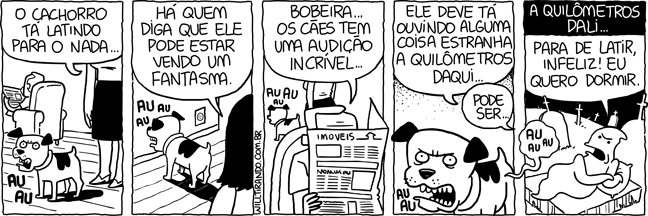
Humane
by Doug
Adam Victor BrandizziA clockwork cheese.

Adam Victor Brandizzi, RC and -1 others like this
04 Mar 22:54
How to Remember Names
by Scott Meyer
Adam Victor BrandizziHello DEEEEnis!

A long time ago, when I was a comic, I was the middle act in a three person show somewhere in western Washington State.
The MC (the person who goes on first) was at the club when I got there. He introduced himself. I forgot his name almost as soon as he told me it. The MC went to the restroom, and while he was away the headliner (the person who goes up last) arrived. We said hello and caught up for a bit, then he asked about the MC. I told the headliner that the MC was in the restroom, and that I was embarrassed that I couldn’t remember the MC’s name.
The headliner said, “Don’t worry. I know exactly how to handle this.”
The MC came out. I introduced the headliner. The headliner shook the MC’s hand and said, “Meyer can’t remember your name.”
Good times.
You can comment on this comic on Facebook.
As always, thanks for using my Amazon Affiliate links (US, UK, Canada).
Adam Victor Brandizzi, Lani Evitts likes this

04 Mar 22:52
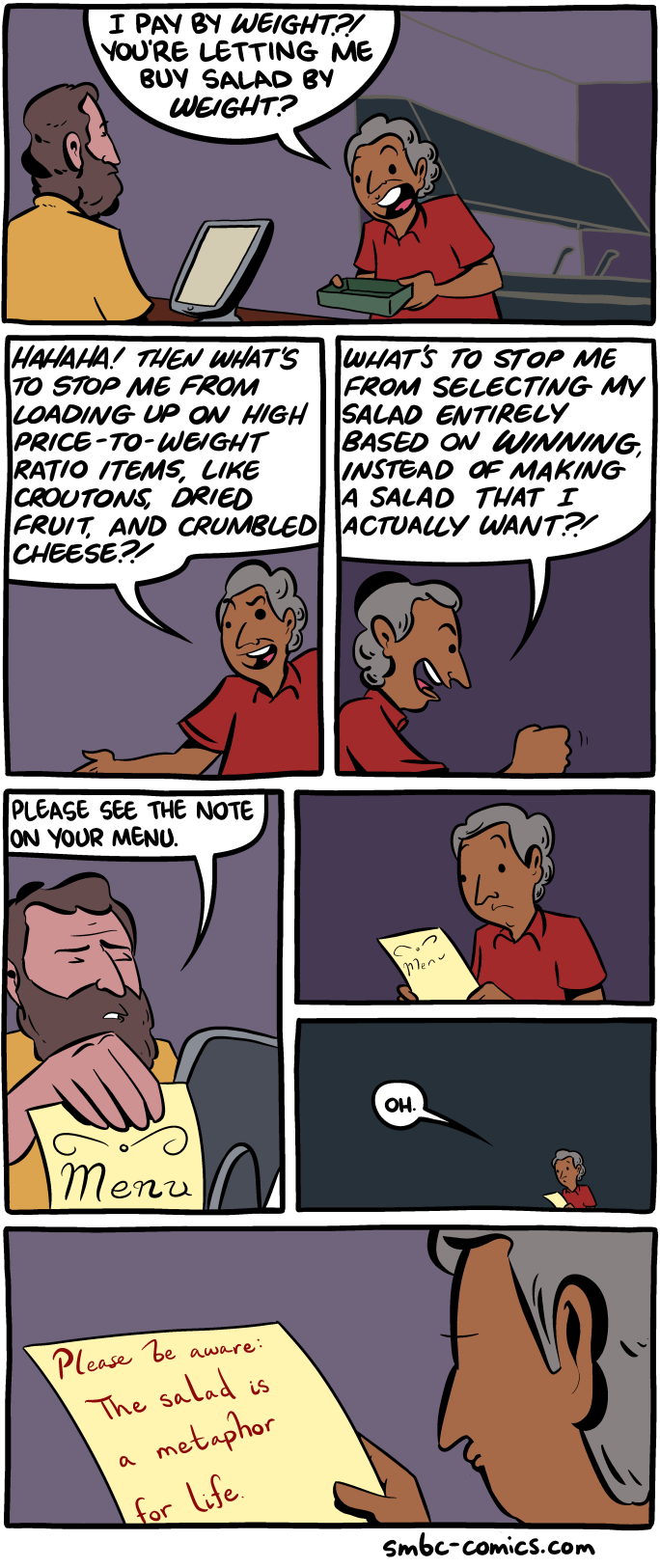
Saturday Morning Breakfast Cereal - Salad
by admin@smbc-comics.com
Adam Victor Brandizzi, Ionut and one other like this
04 Mar 22:48

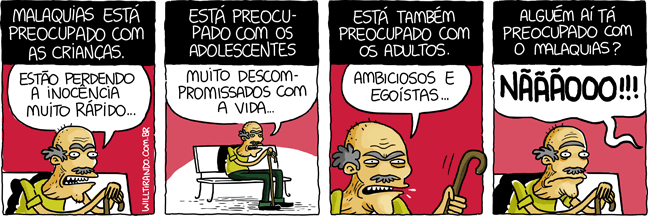
Comic for 2016.03.01
by Dave McElfatrick
This entry passed through the Full-Text RSS service - if this is your content and you're reading it on someone else's site, please read the FAQ at fivefilters.org/content-only/faq.php#publishers.
Adam Victor Brandizzi likes this
04 Mar 22:40

23-10-2015
by Laerte Coutinho
Adam Victor BrandizziResumo de Rio 2016? :P

Martim.baffi, Fernando likes this
04 Mar 22:38

Comic for February 28, 2016
by Scott Adams
This entry passed through the Full-Text RSS service - if this is your content and you're reading it on someone else's site, please read the FAQ at fivefilters.org/content-only/faq.php#publishers.
Adam Victor Brandizzi likes this


