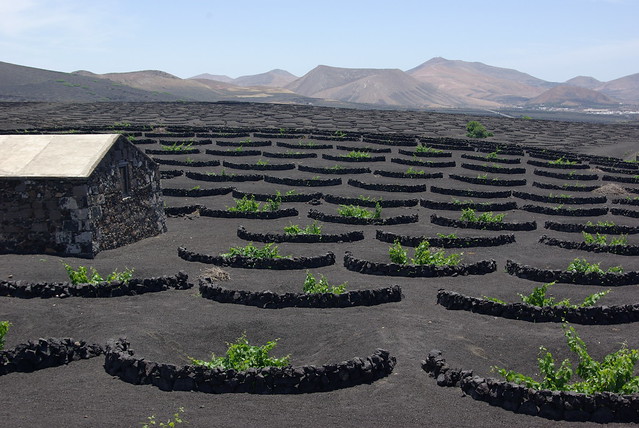
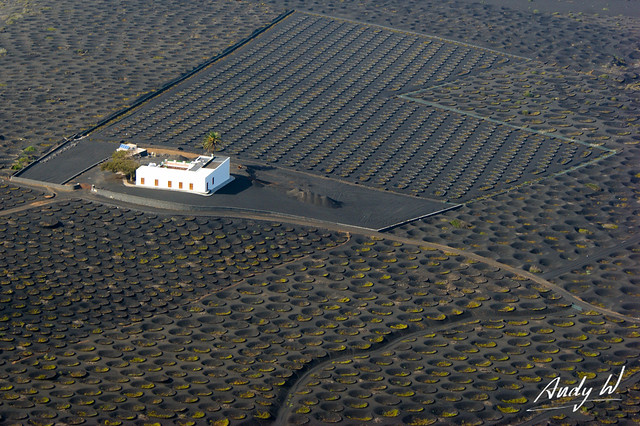
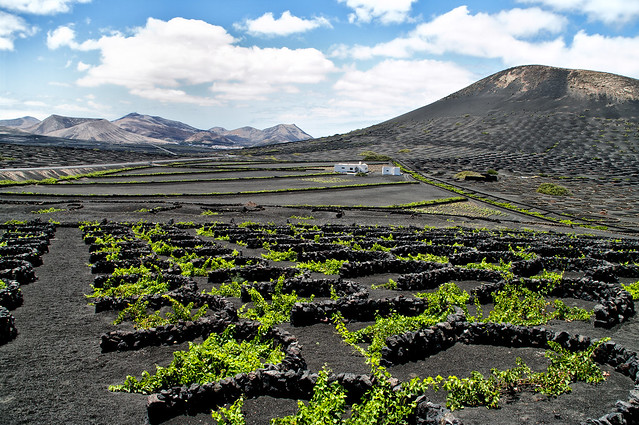
If aliens are out there somewhere and they happen to enjoy the occasional bottle of wine, this could be what their vineyards would look like. But alas, this is just plain ol’ planet earth being totally and completely awesome again.
Lead image (c) PepeLuz

We’re in Lanzarote, the easternmost of the autonomous Spanish archipelago, the Canary Islands, a short distance from the north coast of Africa. Essentially formed after a bunch of volcanos erupted 15 million years ago, the entire island is made up of solidified lava streams, volcanic rock and a heck of a lot of black sand. It hardly rains– 16 days a year at best. In the vast black plains, the heat can reach up to 50 degrees celsius (120F).
So how does anyone even manage to plant a pansy here, let alone harvest wine that can produce anywhere between 400,000 to 600,000 bottles per year?


The Lanzarote winemakers are probably the hardest working winemakers on the planet– and their forefathers, the ones who discovered the technique to make wine in their barren landscape back in the 18th century– well, hats off to them…

The last volcanic eruption on Lanzarote happened in 1730, until which time farmers had been happily producing wine, grain and cereal and generally making the most out of the arable farming land of the island. Then came an almighty eruption which lasted 2,053 days– that’s six whole years of endless hot lava, volcanic ash and gas pounding the island.
While many residents made the not-so-unwise decision to pack up and start new lives in Cuba and the Americas, amazingly, others were not ready to throw in the (hot) towel.

With only a harsh and alien landscape to work with, the farmers had to completely re-invent their techniques of cultivation, but it didn’t take long for the resourceful and resilient residents to figure out that against all odds, the newly deposited volcanic rock could actually be of use to them.
Known in spanish as picón, the volcanic soil was found to be highly efficient at absorbing moisture and rainfall (if any) and retaining it in the black earth. Lanzarote is the only place in the world where this unique method of dry (volcanic) cultivation is used.
But nobody ever said planting and harvesting vines on volcanos was going to be fun…
Every single vine requires its own three meter deep and five meter-wide pit, fortified by a semi-circle stone wall to protect the plant from the winds. Lanzarote now has nearly 2,000 hectares of active vineyards– so that’s quite a bit of digging and stone-stacking in a volcanic atmosphere.
But we haven’t even got to the harvest yet, where of course the island’s unique method of dry cultivation requires that everything has to be carefully done by hand– one person per vine pit, so as not to disturb the sensitive volcanic super soil.
A single vine will give a farmer up to 30 kilos of grapes per harvest which are transported by Lanzarote’s local camels– yes, camels. Camels and wine.
And don’t forget the farmers are working on land that’s heated up to temperatures you might slowly pre-heat your oven at.
Like I said, I’ll see your vintage Bordeaux and raise you a glass from the volcanic vineyards of Lanzarote.

A few addresses I found in wine-producing La Geria region of Lanzarote…
This charming boutique guesthouse situated in the heart of La Geria. This hotel also overlooking the volcanic vineyards, with suites from €96. And one of the more notable wineries open for tours and tasting sessions.
(As Lanzarote wine is only left to mature for a maximum of two years, and is then perfect to drink, it is regarded as a young wine).
:::
YOU MIGHT ALSO LIKE:

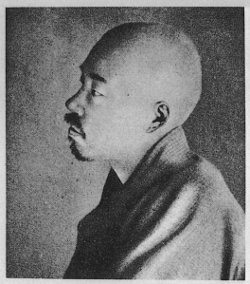
Masaoka Shiki, the fourth of Japan’s great haiku masters, is a member of the Japanese Baseball Hall of Fame. Described as “baseball mad,” Shiki first encountered the game in preparatory school in 1884, only 12 years after American teacher Horace Wilson first introduced it to his students at Tokyo University in 1872. Shiki wrote nine baseball haiku, the first in 1890, making him the first Japanese writer to use the game as a literary subject:
spring breeze
this grassy field makes me
want to play catch
like young cats
still ignorant of love
we play with a ball
the trick
to ball catching
the willow in a breeze
Throughout his career Shiki wrote essays, fiction, and poetry about the game, and he made translations of baseball terms that are still in use today. Eventually he taught the game to Kawahigashi Hekigotō and Takahama Kyoshi, who themselves became famous haiku poets under his tutelage, and today a baseball field near Bunka Kaikan in Ueno bears his name. He wrote:
under a faraway sky
the people of America
began baseball
I can watch it
forever

O Chico Xavier dos Vivos está entre nós. É ele quem psicografa aquilo que dizem os pobres. De pouco importa que o extraído, a obra, tenha a aresta dura duma fala de personagem de filme engajado. Pois o Chico Xavier dos Vivos lê o Espírito da História.
O Chico Xavier dos Vivos vê o Certo, não tem tempo para distrações. Seu coro de senhoras de branco afasta qualquer interferência, cobrando credenciais: “Quem é você? Para quem você soa o atabaque? Onde você mora?”. Pois o Chico Xavier dos Vivos tem uma missão.
O Chico Xavier dos Vivos ilumina a sala. Se nela se senta um pobre vivo, logo esse pobre deve ser convertido num abajur de carne (Ritchie paras as Massas): uma luz auxiliar, ali por validação. Pois pobre é massa na receita do Chico Xavier dos Vivos: entra apenas com o fubá do autêntico.
O Chico Xavier dos Vivos conhece o que se passa nas telas e nos telefones comprados a prazo, e confirma a lenda: os pobres podem falar. E o Chico Xavier dos Vivos escuta o ruído deles, com a fé dum contador de lágrimas numa santa.
Como funciona:
Sempre há certeza na tenda do Chico Xavier dos Vivos.
A Caixa Econômica, ontem, corria atrás do prejuízo para explicar a confusão gerada pelo encerramento de contas. Informou que no próximo balanço a ser divulgado, no começo de fevereiro, haverá a anulação dessa apropriação do dinheiro das contas encerradas....
Assine O Globo e receba todo o conteúdo do jornal na sua casa
Claudia Goldin, economista de Harvard, dedica parte da sua carreira a estudar o que determina a diferença de salários entre homens e mulheres nos Estados Unidos. No passado não muito distante, a diferença era facilmente explicada pela diferença de produtividade entre os gêneros (fortemente associada ao tempo médio de escolaridade) e pela maioria das mulheres trabalhando em setores tipicamente com baixa remuneração. Ao longo dos últimos 50 anos, o primeiro fator foi praticamente eliminado: em 2006, a própria Goldin e seus coautores mostraram que mulheres eram maioria entre estudantes universitários nos EUA. A convergência em educação contribuiu para que a remuneração média por hora de mulheres passasse de 59% para 77% do equivalente para homens.
Com o nível de instrução potencial equalizado, passaram a ser mais importantes as diferenças entre salários dentro de um mesmo setor, que persistiram e pediram explicações mais sofisticadas: discriminação, menor disposição de mulheres para competir e padrões mais rigorosos para promoção de mulheres foram algumas que surgiram na literatura econômica desde 1990. Na última reunião da Associação Econômica Americana, Goldin apresentou seu modelo para a persistência das diferenças e o que chamou de “último capítulo da grande convergência de gêneros”.
Para ela, o último obstáculo para a equalização de salários tem menos a ver com qualquer característica ligada ao gênero do que com como horas de trabalho são remuneradas em algumas profissões. Se é natural esperar que, ao longo de tempos iguais de carreira, homens tenham remuneração total maior que mulheres (mesmo com ganho igual por hora trabalhada, mulheres passarão, em média, menos tempo no trabalho, ao menos por conta do período em licença-maternidade), é menos intuitivo pensar que isso também influencie a remuneração média por período trabalhado (horas ou dias). No seu novo trabalho, Goldin sugere que, para carreiras como advocacia e administração de negócios, esse seja exatamente o caso.
Para que o número de horas trabalhadas afete também a remuneração por hora, é preciso que a relação entre as duas variáveis seja não-linear, ou seja: horas de trabalho adicionais a uma jornada mínima devem ser melhor remuneradas, e há uma penalidade para descontinuidades ao longo da carreira. Assim, um banqueiro de investimentos que trabalha 80 horas por semana ganha mais do que o dobro que outro na mesma função com uma jornada de 40 horas, e homens, que podem passar décadas sem interrupções na carreira mais longas do que poucas semanas de férias não são penalizados quando voltam ao trabalho. Numa das bases de dados usadas no estudo de Goldin (de MBAs da escola de negócios da Universidade de Chicago) dois terços da penalidade em ganhos por períodos de ausência no trabalho são explicados por qualquer ausência (exceto férias), independente da duração.
Esse efeito ocorre, sobretudo, em atividades onde não é possível alternar o trabalho de forma satisfatória entre profissionais diferentes (seja por dificuldade na transmissão de informação, relação construída com clientes ou qualquer outro motivo). Como contra-exemplo, Goldin cita a carreira de farmacêutico, onde a diferença de remuneração entre homens e mulheres é quase inexistente e a remuneração total é perfeitamente proporcional ao número de horas trabalhadas. A padronização das medicações e a melhora de bases de dados de medicamentos e pacientes faz com que um profissional em férias ou licença seja facilmente substituído por outro com a mesma formação.
A solução para esse “último capítulo” passa, portanto, por uma flexibilização no modo como as empresas remuneram mão de obra. Se a prescrição é relativamente simples, há muito o que avançar em como criar os incentivos para que tal flexibilização seja implementada, uma vez que teriam a perder os que valorizam pouco tempo fora do trabalho e são vistos como “comprometidos”, “dedicados” e, portanto, moralmente merecedores de maiores remunerações. A mudança necessária na escala de valores da sociedade para que o status quo seja alterado é tanto utópica quanto antiga: em ensaios clássicos do início dos anos 1930, Keynes e Bertrand Russell anteviam um futuro de jornadas de trabalho curtas (algo como 3 ou 4 horas por dia) e muito tempo para família, ócio e lazer. Em oitenta e poucos anos, se algo mudou foi na outra direção: mesmo com os enormes ganhos de produtividade, muito maiores do que as previsões mais otimistas do início do século passado, a maioria das atividades segue valorizando longas horas em escritórios ou fábricas e carreiras sem descontinuidades. O último capítulo da convergência deve ser o mais longo e difícil.
Este artigo, evidentemente, deve muito ao último paper de Claudia Goldin: http://scholar.harvard.edu/files/goldin/files/grandgenderconvergence.pdf
Este artigo foi publicado originalmente na AE-News/Broadcast
The Egyptian military controls businesses that represent as much as 40% of the country’s GDP. Militaries run economic empires around the world.
Quando você achava que as fanpages do Facebook não poderiam mais te surpreender, eis que surge uma alma genial e nos brinda com a página Pequeno Princezo, que faz toda uma releitura pop funkeira do livro preferido das misses do mundo, O Pequeno Príncipe.
A descrição da página já diz tudo, é uma mistura de Saint-Exupéry com MC Daleste, a mais pura ostentação poética, o Pequeno Príncipe da nova geração!
Dá uma olhada aí nas imagens…
The post Fanpage do dia: Pequeno Princezo, uma mistura de Saint Exupéry com MC Daleste appeared first on youPIX.
John Kerry’s statement on Ariel Sharon’s death is here. Of course diplomats should be diplomatic and avoid gratuitous insults. But isn’t it possible to say something appropriate or even respectful about Ariel Sharon without pretending he was any kind of peacemaker? In an act of truly world class groveling, Kerry manages to repeat the falsehood of Sharon the peacemaker four times within four brief paragraphs–no modest effort. There’s this:
I will never forget meeting with this big bear of a man when he became Prime Minister as he sought to bend the course of history toward peace, even as it meant testing the patience of his own longtime supporters and the limits of his own, lifelong convictions in the process. He was prepared to make tough decisions because he knew that his responsibility to his people was both to ensure their security and to give every chance to the hope that they could live in peace.
Followed a few lines later by this:
In his final years as Prime Minister, he surprised many in his pursuit of peace, and today, we all recognize, as he did, that Israel must be strong to make peace, and that peace will also make Israel stronger.
A notable constant in Sharon’s career was his readiness to massacre defenseless Palestinian civilians. He made his bones, so to speak, at Qibya in 1953, a West Bank town in Jordan. Some Palestinian “infiltrators” had crossed the cease-fire line to murder an Israeli mother and her two children, and the Israeli government decided upon reprisals. (Jordan had denounced the murders and promised to cooperate in tracking down the perpetrators).
The reprisal raid was carried out by Unit 101, commanded by Major Sharon. When it was over, Qibya was reduced to rubble, 45 houses had been blown up, most with their inhabitants inside. 69 civilians, mostly women and children, were left dead. There was a storm of international protest, and Israel initially sought to deny IDF responsibility for the massacre, claiming instead that irate Israeli villagers had taken revenge on their own initiative. The lie didn’t stand up. Israel faced universal condemnation, including from the United States, which called for those responsible for the killing to be held to account. Abba Eban, entrusted with defending Israel at the United Nations, wrote his foreign minister Moshe Sharrett that “Sending regular armed forces across an international border, without the intention of triggering a full-scale war, is a step that distinguishes Israel from all other countries. No other state acts this way.” Sharon was well pleased with the action however, as was most of the Israeli political establishment.
Sharon’s more famous massacre took place at the refugee camps of Sabra and Shattilah in Lebanon. In 1982, the camps were under Israeli control after Israel’s invasion of southern Lebanon. Protected by Sharon’s forces, Lebanese Phlangists –allied with Israel and rabidly hostile to the Palestinians, entered the camps and killed 800 Palestinians, (Israel’s estimate: others are far higher) mostly women and children. Israeli forces protected the forces carrying out the massacres, illuminating the camps with flares. An Israeli investigating commission found Sharon personally responsible for allowing the carnage. He was removed from his post at the Ministry of Defense, though Menachem Begin kept him in the Likud cabinet. Throughout the 1980′s he remained in government, and was a pivotal figure in accelerating Israeli settlement of the occupied West Bank. In 2000, his notorious visit to Jerusalem’s Al Aqsa mosque, accompanied by 200 armed military policeman, was an intentional act of incitement, one of the matches which ignited the second, enormously destructive, intifada that fall.
There is reason to believe that Sharon felt that provoking the Palestinians to violence could be of strategic benefit for Israel. In a lengthy portrait of Sharon published in the 2006 New Yorker (behind a paywall), Ari Shavit writes:
When he went back to the cozy living room and sank into his favorite armchair, he showed me the book he was reading: it was about the Arab revolt of 1936-39. He said that what interested him was the way the rebellion had ultimately collapsed, causing a disintegration of Palestinian society. He clearly saw a certain similarity between the revolt of the nineteen thirties and the intifada that began in 2000. In time, it became evident that the strategic plan that Sharon was considering involved bringing the Palestinians to a point of political chaos and then luring them into a partial agreement on Israel’s terms—one that would not require evacuation of major settlements on the West Bank or a return to the pre-1967 borders.
I’ve heard other Israeli politicians argue in this vein, implying that they would actually welcome Palestinian violence, because militarily Israel is far stronger and and can damage Palestinian society far more in the context of war than peace.
In most tellings, consideration of Sharon as a peacemaker rests on Israel’s unilateral withdrawal from Gaza in 2004, when he was prime minister. The move gave Israel a talking point before international audiences: look, Israel is ready to withdraw from occupied territory. Of course it didn’t lead to peace, as the withdrawal was unilateral, and almost entirely limited to Gaza, and was quickly followed by a blockade of Gaza. Sharon aide Dov Weissglas described the Gaza disengagement as fomaldehyde, designed not to make peace but to smother the peace process. In that, it would seem, the maneuver was hugely successful.
It would be more truthful to conclude that Sharon is a war criminal who should have been indicted and tried for his crimes. If one doesn’t want to speak ill of the dead, he could be deemed a brutal but crudely effective general, a type which has existed in many countries. But it is a stretch too far to call Sharon a “man of peace” and to go on about it as Secretary Kerry did, as if black were white. We have still before us contemplation of the parade of American political figures to Sharon’s funeral, many who will mouth panegyrics to the brutal general, making sure their AIPAC donors hear every fulsome word. By all rights, Americans should find their country’s obsequious lauding of this man a source of national shame.
On Feb. 6, 1898, a worker preparing the front page of the New York Times added 1 to that day’s issue number, 14,499, and got 15,000.
Amazingly, no one caught the error until 1999, when 24-year-old news assistant Aaron Donovan tallied the dates since the paper’s founding in 1851 and found that the modern issue number was 500 too high.
So on Jan. 1, 2000, the paper turned back the clock, reverting from 51,753 to 51,254.
“There is something that appeals to me about the way the issue number marks the passage of time across decades and centuries,” Donovan wrote in a memo. “It has been steadily climbing for longer than anyone who has ever glanced at it has been alive. The 19th-century newsboy hawking papers in a snowy Union Square is in some minute way bound by the issue number to the Seattle advertising executive reading the paper with her feet propped up on the desk.”

See Time-Machine Journalism and Erratum.

Adam Victor BrandizziMe too, vvankinq, me too.
Adam Victor BrandizziNão pesquisei muito, mas o gif é realmente marcante.

Um meteoro caiu sobre a Escolinha do Professor Raimundo. E o nome do meteoro é Respeito.
Pré-escaleta:
Raimundo anuncia estado de greve e aliança com o Black Bloc.
Seu Peru apresenta um libelo contra a heteronormatividade.
Costinha discorre sobre os limites do humor.
Samuel Blaustein aciona a Conib e denuncia antissemitismo.
Seu Ptolomeu corrige colegas, mas é repreendido com base em Marcos Bagno.

Rolando Lero tira dez em trabalho sobre Baudrillard.
Patropi vira deputado.
Seu Boneco comanda sarau da periferia.
Grande Otelo demanda ensino da História da África.
Bertoldo Brecha anuncia que é vegano.

Suppapau Uaçu conta a história dos ancestrais. (Todos adotam Uaçu como sobrenome.)
Galeão Cumbica cobra atrasados após demissão da Varig.
Paulo Cintura diz que cada corpo é bonito à sua maneira.
Nerso da Capitinga discursa sobre a luta no campo, o papel do grande capital na difusão de transgênicos e a necessidade da reforma agrária.
Dona Capitu se recusa a ir apagar o quadro para não perpetuar a objetificação do corpo feminino.

Cacilda invade a sala com a Marcha das Vadias.
Dona Bela é xingada de reaça e chora.
Geraldo exige ser chamado pelo seu nome social de transexual.
Marina da Glória se queixa de assédio. (Raimundo é levado algemado.)

Aldemar Vigário desiste de bajular e acaba na Cracolândia.
Joselino Barbacena pilota helicóptero com meia tonelada de pasta-base.
Lobão substitui Sergio Mallandro, interpretando a si mesmo.
******
(Colaboraram goombagoomba, samirsalimjr, @vonmartius, @lakeflash, @filmebrasileiro e @vonmartius)
A partir deste post, o Tumblr deixa um pouco de lado os textos mais de fundo e retoma por uma temporada o espírito do antigo altovolta.