
Adam Victor Brandizzi
Shared posts
14 Mar 18:14

Bow Tie
by Greg Ross
Adam Victor BrandizziMas que maldade...
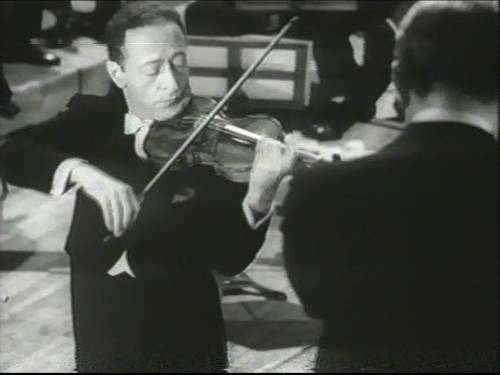
On Oct. 27, 1917, violinist Mischa Elman and pianist Leopold Godowsky attended the first U.S. performance of 16-year-old violin prodigy Jascha Heifetz at Carnegie Hall.
At the intermission, Elman wiped his brow and said, “It’s awfully hot in here.” Godowsky said, “Not for pianists!”

14 Mar 00:36
Caveiras e humanos, de madeira
by Pedro Pezte

O escultor japonês Yoshitoshi Kanemaki faz estas esculturas figurativas em tamanho real, a partir de peças gigantes de madeira de cânfora.
As peças estranhas lindamente bizarras, sempre envolvem dois ou mais personagens mesclados em uma única forma, o que poderia ser interpretado como um comentário sobre a mortalidade, ou personalidades e perspectivas múltiplas.


Adam Victor Brandizzi, firehose and -1 others like this










12 Mar 13:16
Pausa no blog
by Leonardo Monasterio
Adam Victor BrandizziEu asseguro que ao menos a primeira entrevista, com o Banerjee, é excelente: instrutiva, tocante e esclarecedora. Linda, mesmo. A outra vou ler ainda.
Por falta de tempo e de cabeça, o blog ficará paradão por mais um tempo.
Enquanto isso, fiquem com um link para duas entrevistas exclusivas super bacanas que saíram na Revista Desafios e que eu me esqueci de postar:
- Banerjee sobre experimentos e políticas públicas;
- Hanuschek sobre economia da educação.
Adianto para vocês que o próximo número virá com um perfil bem interessante do grande Albert Fishlow. PS: Eu sou do comitê editorial da revista, mas -infelizmente - não posso tomar para mim os méritos dessas ótimas escolhas.
Enquanto isso, fiquem com um link para duas entrevistas exclusivas super bacanas que saíram na Revista Desafios e que eu me esqueci de postar:
- Banerjee sobre experimentos e políticas públicas;
- Hanuschek sobre economia da educação.
Adianto para vocês que o próximo número virá com um perfil bem interessante do grande Albert Fishlow. PS: Eu sou do comitê editorial da revista, mas -infelizmente - não posso tomar para mim os méritos dessas ótimas escolhas.

11 Mar 13:58
Hagia Sophias: From Museums to Mosques
by Robert Ousterhout
Just over 100 years ago, on March 26, 1913, at the height of the Balkan Wars, the Bulgarian army captured Edirne, once capital of the Ottoman Empire. To celebrate their victory, the Bulgarians planned to convert the grand, 16th-century Selimiye Mosque into a Christian church. Fortunately, the Bulgarian Tzartisa Eleanor intervened and put a stop to it. By July, the Bulgarian army was in retreat, Edirne returned to Ottoman control, and the incident was forgotten.
Looking back, the proposed conversion of an historic mosque into a church might strike us as shocking, but the United States and many other Christian countries were vocal supporters of the Bulgarians. Their ultimate goal was the conquest of Istanbul—once Constantinople and the capital of the Byzantine Empire—and the reconversion the Ayasofya Mosque (as it was known in Turkish) into the Church of Hagia Sophia. Emperor Justinian’s Great Church, dedicated to the Holy Wisdom (Hagia Sophia) had been converted to a mosque in the Ottoman Conquest of 1453, but for many it stood as a symbol of a lost, Christian civilization. Cries for its return might surprise modern readers, but the move was regularly advocated for in the pages of American newspapers.
An 1877 New York Times article begins, “How soon the crescent over the minarets of St. Sophia will be replaced by the cross, or how soon the minarets themselves will be entirely swept away, leaving the outlines of the church in their ancient condition, no seer has foretold.” A 1912 article predicts that the Bulgarians, advancing on the Ottoman capital, would soon plant the cross atop of Hagia Sophia. A decade later, the Greek Megale Idea held the conversion of Hagia Sophia as one of its top priorities. In 1921, a special service was held in St. John the Divine, with Orthodox and Episcopal clergy praying in six languages for the restoration of Hagia Sophia as a Christian sanctuary—enthusiastically reported in the American press.
It didn’t happen, of course. The Turks won their war of independence. On November 24, 1934—the same day that Gazi Kemal was proclaimed Atatürk (“Father of the Turks”)—the Turkish Council of Ministers decreed that the Ayasofya Mosque should be turned into a museum: “Due to its historical significance … its conversion to a museum will cause humanity to gain a new institution of knowledge.” The secularization fit with Atatürk’s vision to reshape Turkey as a part of Western civilization. But one wonders if it came as a compromise, a defensive strategy when facing the unified desires of the very Christian West.
Seventy-nine years later, the Hagia Sophia remains the most popular museum in Turkey.
All this might seem like ancient history but for recent events in Turkey. Early in 2012, the identically named Ayasofya in Iznik (Byzantine Nicaea) was reopened as a mosque. Originally the church of Hagia Sophia and the setting of important Church councils, the building had been converted to a mosque with the Ottoman conquest. But it had fallen into disrepair long before the foundation of the Republic, and stood as a roofless ruin. For decades it had functioned as a museum and recently had begun to attract Christian pilgrims.
Then Deputy Prime Minister Bülent Arinç found a loophole in the law, insisting the building had never officially been deemed a museum, and that allowed its conversion. Reaction has been predictable: secularists and academics have decried the move; Islamists are delighted. Locals expect tourism to decline, even though admission fees are no longer collected.
The reconversion of one Ayasofya has spurred efforts for others. In May 2012, thousands of devout Muslims, organized by the Anatolian Youth Organization, prayed outside the Istanbul monument, shouting, “Break the chains! Let Ayasofya Mosque open!” As their leader explained, “Keeping Ayasofya Mosque closed is an insult to our mostly Muslim population of 75 million. It symbolizes our ill-treatment by the West.”
Early in 2013 it was announced that the Hagia Sophia/Ayasofya in Trabzon (Byzantine Trebizond) would reopen as a mosque. With its rich Byzantine fresco program lovingly restored, the 13th-century building has been a museum for the last half-century. Never the focus of controversy, the reconversion seems to have been instigated solely on the basis of its name.
A major force behind the conversion movement, Vakiflar (Ministry of Pious Foundations) Director Adnan Ertem proclaimed that, of the Ayasofyas in Turkey, five are functioning as mosques, while two are “inactive” (i.e., museums), calling their present owner, the Cultural Ministry, an “occupying force.”
A parliamentary commission is now considering an application to reopen Ayasofya in Istanbul as a mosque.
This time they’re serious. Indeed, supporting the reopening of Istanbul’s Ayasofya has become the litmus test of the true believer. Protests by the academic community have fallen on deaf ears, as Erdogan’s Islamist government presents the conversion as a move toward “religious freedom.”
How far have we come in the last century? A few recent incidents are telling. The 5th-century St. John Stoudios (the Imrahor Mosque) is the oldest surviving church in Istanbul and the center of the city’s most important Byzantine monastery. Destroyed by fire in 1894, the archaeological site belongs to the Cultural Ministry as an historic site, but its evocative remains have never been properly documented. A parliamentary commission has determined that the basilica will be rebuilt to function as a mosque.
The Kesik Minare in Antalya faces the same fate, despite public opposition. Recently excavated, the ruin preserves substantial remains from a Roman temple, a Byzantine church, a Crusader church, and an Ottoman mosque. As in so many other sites, its rich history would disappear if rebuilt.
One final example: The Arap Camii in Istanbul, originally a 14th-century Dominican church, suffered minor damage in the 1999 earthquake, after which plaster began to fall from the vaults, revealing remnants of the original frescoes and mosaics. Although the paintings were conserved last year, the Vakiflar covered them up again. They are no longer visible.
One wonders if this is to be the fate of Turkey’s rich, colorful, and heterogeneous past. At least the Tzaritsa had the good sense to say no.
Prof. Robert Ousterhout directs the Center for Ancient Studies at the University of Pennsylvania.





11 Mar 12:27

forever-is-just-another-infinite: bazook: pinkypyro: kevins...
forever-is-just-another-infinite:
Six hundred goddamn AD
Six hundred. Goddamn AD.
This needs to be en-grained in every single living human.
Adam Victor Brandizzi, Tertiarymatt likes this
11 Mar 12:27

Oops
by Greg Ross
Adam Victor BrandizziSituação chata...
PARISEAU, N. De, born in 1753; a celebrated victim of the ‘mistakes’ of the guillotine. Pariseau was director of the opera ballets at Paris, and ardently espoused the cause of the revolution in ‘La Feuille du Jour.’ He was arrested by the Revolutionary Tribunal in 1793, and beheaded by mistake, instead of Parisot, a captain of the king’s guard.
– The Biographical Treasury, 1847
mkvande likes this

11 Mar 12:22
Safety First
by Doug

Here’s more death.
Adam Victor Brandizzi, David Pelaez and -1 others like this
10 Mar 02:15
How to Explain Your Tastes
by Scott Meyer
Adam Victor Brandizzi"Okay, bad example"

Because of the complicated nature of my posting schedule, this comic was written before the Seahawks won the Super Bowl (which I did watch, and enjoy) and the season finale of Downton Abbey, the plot of which largely centered around the contents of a letter.
Of course, you'd have seen this comic a month ago if you were a subscriber. Just saying.
As always, thanks for using my Amazon Affiliate links (US, UK, Canada).
Albener Pessoa, Adam Victor Brandizzi likes this
10 Mar 00:30

themarvelwayoflife: tonywhatareyoudoing: I pledge to reblog...
I pledge to reblog this every time it shows up on my dash
Hilarious!
firehose, Albener Pessoa and one other like this
09 Mar 12:24
São Paulo, capital da segurança
São Paulo é a capital menos perigosa do Brasil. Pelo menos, tem a menor taxa de homicídios, de longe. Para os paulistanos, vai parecer piada ou mentira. Não é.
A incredulidade dos moradores da cidade tem fundamento. Ainda em 2001, a capital paulista era a quinta cidade mais perigosa do país. A taxa de homicídios era cinco vezes maior. Muita gente perdeu parentes e amigos no morticínio, ou disso teve muita notícia.
Neste século, a baixa do número de homicídios em São Paulo foi notável. Trata-se de um sucesso dos governos tucanos, fracos em educação ou transporte, por exemplo.
Leia mais (03/09/2014 - 02h00)
rnas likes this


08 Mar 18:51

Haha, não sabia que tinham feito uma versão de Casa Grande e...
Haha, não sabia que tinham feito uma versão de Casa Grande e Senzala em quadrinhos…
Narcélio likes this
08 Mar 18:51

NATALIA OSADCHAYAFashion Director, ELLE Ukraine
NATALIA OSADCHAYA
Fashion Director, ELLE Ukraine


08 Mar 18:31

Things That Get Under My Skin
by DOGHOUSE DIARIES

We’ve had some trouble with obnoxious pop-ups displaying on the site. Problem has been resolved. More on that here.
Adam Victor Brandizzi, Hugo.falzon and 3 others like this
08 Mar 18:30
Crônicas do Consumo Material e Simbólico VI
by noreply@blogger.com (calote)

Adam Victor Brandizzi likes this


08 Mar 18:06

Medieval Macros / Bayeux Tapestry Parodies | 314.jpg
Bewarethewumpus and -1 others like this