Shared posts

30 May 15:38

Fábrica de lerdeza econômica

A indústria brasileira parou no tempo. Produz quase tanto como no longínquo 2008 antes da crise. Economistas reuniram-se ontem em seminário da FGV de São Paulo para discutir causas e meios de dar cabo dessa lerdeza agoniante. No final do dia, porém, a conversa sugeria que muito lerda será também a saída destes anos de crescimento baixo da economia inteira.

Sem prejuízo para os argumentos dos trabalhos mais técnicos e tentativos sobre o organização industrial, o denominador quase comum das apresentações foi o efeito muito importante da taxa de câmbio real no paradão da indústria depois de 2008. Isto é, dos efeitos compostos dos aumentos de custos (basicamente salários) e do câmbio nominal (o "preço do dólar", na verdade das moedas dos países com os quais o Brasil mais comercia).

Câmbio apreciado ("dólar barato") encarece os produtos brasileiros e barateia os de fora, fazendo consumidores e empresas comprarem mais produto importado, grosso modo. Esse efeito do dólar barato é composto pelo aumento de custos, de salários que crescem mais que a produtividade e em ritmo superior ao da concorrência internacional.

Mas qual o motivo do câmbio valorizado demais, o que foi o caso pelo menos até 2011-12? A resposta pode encher Bíblias, a depender do gosto do freguês, mas inflação, aumento de gasto público, aumentos acelerados do salário mínimo e o aumento maciço de exportações e preços de "commodities" (soja, ferro etc.) são fatores, expostos aqui sem qualquer ordem.

O aumento de salários faz inflar um setor de serviços de produtividade baixa. No caso da indústria, a torna ainda menos competitiva em tempos de liquidação no mercado global de manufaturados (que "sobram" por causa da crise) e de contínua concorrência da mão de obra barata asiática. A perspectiva pequena de ampliação de mercado limita o investimento industrial e, assim, o aumento da produtividade.

Um fator fundamental desse enrosco é a baixa poupança do governo (que gasta um naco enorme do PIB, mas investe muito pouco).

Por que é assim? Porque a sociedade brasileira fez uma opção pela ampliação de gastos sociais desde 1988, diz Samuel Pessôa, colunista desta Folha e professor da FGV do Rio.

Numa chave menos geral, porque há demandas excessivas pelo dinheiro escasso dos impostos, diz Nelson Barbosa, ex-secretário da Fazenda nos anos Dilma e Lula. Isto é, coisas como subsídios diversos para empresas (juros, impostos menores), que o próprio Barbosa chama de "desvalorização fiscal" (dinheiro de impostos para compensar o efeito cambial). Mas também aumentos do mínimo, correção da tabela do IR, gastos sociais básicos (educação, saúde etc.), demandas do funcionalismo, de Estados e municípios, do "financismo" (de quem pede juros mais altos).

Baixa poupança implica menos investimento, juros maiores, no fim da contas. O governo deveria poupar mais e deveria haver incentivos para o aumento da poupança privada. Nada disso deve acontecer tão cedo (exigiria mudanças política e socialmente espinhosas), de modo a permitir um uma alta relevante da taxa de investimento e, assim, do crescimento da economia.

27 May 22:56

Emprego: todos os setores devem fazer pela qualificação

by Míriam Leitão

Enviado por Míriam Leitão - |

NA CBN

Emprego: todos os setores devem fazer pela qualificação

O total de desempregados no mundo deve aumentar em quase 4 milhões este ano, ultrapassando 200 milhões, como mostrou estudo da Organização Internacional do Trabalho (OIT) divulgado hoje. Na Europa, a situação preocupa porque há o desemprego estrutural; em alguns países, chega a níveis muito altos. O empobrecimento da classe média, o desamparo e o desalento dos jovens sem perspectivas têm tido reflexos na política europeia, por exemplo. É preocupante a guinada à direita em alguns países. O desemprego é desagregador do tecido social.

Nos países emergentes, onde a economia é mais dinâmica, há mais geração de vagas, como na Índia, mas na maioria das vezes, é bom lembrar, trata-se de subemprego. Recentemente, a OIT mostrou também que o trabalho forçado rende para as empresas, por ano, US$ 150 bi.

Mesmo quando a notícia sobre o mercado de trabalho é boa, há preocupação com a qualidade do emprego.
O Brasil tem mantido nível bom de emprego. A grande preocupação dos empresários é com a qualificação. Dizem que os trabalhadores disponíveis não têm a capacitação adequada. Mas como são esses que temos, por que eles não fazem alguma coisa para capacitar pelo sistema S, por exemplo? Não dá para depender só do governo.

A economia, hoje, está cheia de exigências. O aprendizado tem que ser contínuo.

Para o país manter o nível de emprego é preciso que todos estejam envolvidos: associações empresariais, de trabalhadores, sindicatos, governos e empresas. Para que transfiram informação e qualificação para os trabalhadores. Assim, o mercado de trabalho continuará melhorando.

Quando há piora do emprego, como ocorreu nos EUA e na Europa, as consequências políticas, sociais e humanas são graves. O emprego é um assunto que vai além da economia.

Ouçam aqui o comentário feito na CBN

27 May 21:09

Documenting Density

by Andrew Sullivan

dish_megacities

The megacities in China captured by German photographer Michael Wolf are “as surreal as they are kinda terrifying,” states Tom Hawking. Wolf describes his project in an interview with Vice:

First off, what’s a megacity?

Cities that have a population with more than 5 million. I wouldn’t really consider any European city a megacity. Paris has a population of 2 million, whereas in China, for instance, a city with 3 million is considered small. I’m talking about populations of 5, 10, 20 million—up to 25 million.

Why do they look so depressing in your photos?

Well, some things about megacities have a lot of downsides. These are profit centers. The people who run them are not really concerned about the populations that live in them. They are concerned about making money. So on the one hand they are very intimidating and frightening but on the other hand they are extremely beautiful. In The Architecture of Density (his photo series featuring an extremely dense Hong Kong high-rise), you can almost see them as a tapestry.

How he describes the message of his work:

I’ve always been a social liberal. I’ve always been for the underclass. For example, I did a project called 100×100 where I photographed 100 apartments in a Hong Kong building that was about to be demolished, all measuring ten feet by ten feet. I am showing the living conditions of the city—but again, I’m looking at the vitality and resourcefulness of the people. They are everyday human beings and that’s what I am trying to document.

Previous Dish on Wolf’s work here.

27 May 20:54

elarve: Take the nudes and go, friend


elarve:

Take the nudes and go, friend

27 May 19:33

Da criança à mãe adotiva: “Por que você demorou tanto para me buscar?”

Adam Victor Brandizzi

Droga, Blog Brasil, fica me fazendo chorar...

NATÁLIA CANCIAN, DE SÃO PAULO

Nunca houve tanta gente “indiferente” no país.

Dados do Conselho Nacional de Justiça mostram que, a cada ano, aumenta o número de interessados em adotar uma criança que são indiferentes em relação à cor, ao sexo e à idade dos futuros filhos.

Para o Judiciário, essa é uma boa notícia: com menos exigências dos candidatos a adotar, aumentam as chances de mais crianças que esperam nos abrigos encontrarem uma família.

Um exemplo: de 2010 a 2014, a proporção de pretendentes que aceitava somente crianças brancas caiu de 39% para 29%. Já a de indiferentes em relação à cor passou de 29% para 42,5%.

O casal Flávia e Thales, de MG, estava nesse último grupo. Ao preencherem o cadastro, em 2009, só fizeram uma restrição: a idade, menor que dois anos.

O tempo passou e eles mudaram o pedido: de dois anos, passaram a aceitar uma criança de até seis.

Foi aí que apareceu a pequena Maria (nome fictício), hoje com quatro anos, dois deles em um abrigo. “Um dia, ela falou: Por quê, mãe? Por que você demorou tanto para me buscar?”, conta Flávia.

Abaixo da foto, o depoimento à Folha dessa mãe adotiva:

Os irmãos Matheus, 7, e Maria (nome fictício), 4, em sítio no interior de Minas Gerais Foto de arquivo pessoal

Os irmãos Matheus, 7, e Maria (nome fictício), 4, em sítio no interior de Minas Gerais
Foto de arquivo pessoal

O primeiro encontro com a Maria [nome fictício] foi numa sala do fórum. Entrei primeiro para conversar com ela, e meu marido e o meu filho ficaram do lado de fora.

Assim que eu a vi, fiquei emocionada. Ela é uma criança muito alegre. Conversamos e eu perguntei: Você quer que eu seja sua mãe? Ela disse “quero!” e veio para o meu colo.

Depois entraram os dois. Foi ótimo, já na hora foi “meu irmão”, “minha irmã”. Correram por toda a comarca, até na sala do juiz.

Eu e meu marido sempre tivemos vontade de adotar. Entramos na fila de adoção quando o Matheus estava com dois anos. Na época queríamos até a idade dele. A assistente social avisou que ia ser difícil.

Não colocamos restrição de cor nem de sexo, nada. Foram cinco anos de espera. Fizemos o cadastro em 2009. Com o tempo, nosso filho cresceu e aumentamos o limite de idade também.

Nos tornamos padrinhos de um menino em um abrigo, que sempre vem passar um tempo com a gente, e mudamos de cidade.

Foi quando recebi uma ligação. Era uma assistente social. Gelei.

Ela contou que havia uma menina devolvida por outro casal que a havia adotado. Eles não queriam que ela voltasse para o abrigo, sozinha, então, se aceitássemos, nós a encontraríamos no fórum dali a dois dias.

Nossa situação foi atípica, porque há sempre um período de convivência com a criança antes de ela ser adotada. E ela iria direto para casa.

Antes, também falei com o meu filho, porque não queria impor nada para ele. E contei a história. Perguntei: “E aí meu filho, o que a gente faz?”. E ele disse: “Temos que trazer ela para a nossa casa e ser a família dela”.

ADAPTAÇÃO

Pela minha experiência, com filho, o primeiro mês é sempre difícil. Quando o Matheus nasceu, tive que me adaptar a ele, mas ele nasceu já adaptado a mim. Com o filho adotivo é assim: eu, a família e ela tivemos que nos adaptar.

Ela é muito sapeca, mexia em tudo, quebrava tudo, um furacão. Então tivemos que, desde cedo, conversar e ensinar as regras. O pessoal que me vê andando com ela hoje brinca: “Flávia, é a mesma menina?” Hoje ela já me pergunta: “Mãe, eu posso?”

O primeiro mês foi bem turbulento. Ela inventava algumas coisas, botava culpa no outro. Percebi que ela tinha medo de ser devolvida. Um dia, eu disse: “Filha, não importa se você fizer tudo errado, eu vou te colocar de castigo. Mas vou te amar pro resto da vida.”

Aí ela perguntou: “Você vai cuidar de mim para sempre?” E eu disse: “Vou”. Agora melhorou.

Muita gente fala para mim: “Você é doida, filho adotivo dá problema.” Não acho. Eu sei que isso não é questão de sangue.

Quando ela chegou, ela não sabia as letras, nada do que as outras criancinhas já sabiam. Passei três meses com ela em uma rotina de estudos. Ensinei as cores, fizemos músicas.

Tinha a hora de estudar, de brincar e de ver TV. Ela fazia manha, cruzava os bracinhos. Eu insistia, explicava que, se estudar, a gente pode ser o que quiser. Agora ela já está lendo mais que os meninos da sala dela [ri].

DEMORA

Um dia, ela falou: “Por quê, mãe? Por que você demorou tanto para me buscar?”

Expliquei que, assim que a assistente social me ligou, nós corremos para buscá-la. Mas ela continuou perguntando, e eu ficava sofrendo com isso. Parecia que a culpa era minha.

Um dia, eu expliquei: “Filha, tem gente que não pode ser mãe e pai. E tem quem sempre quis ser”. Hoje, ela mesma conta a história dela para as pessoas, de quando disse: “eu quero, quero!”.

Minha filha é muito linda, cheia de cachinhos. É maravilhosa [emociona-se], do jeito que eu sempre sonhei.

No início, eu tive dificuldade. Ela viu uma princesa loira e falou: “Olha mãe, que nem eu.” E não quero que ela queira ser loira, quero que ela goste de ser como é, negra.

Agora, ela já vê uma mulher negra na TV e fala: “Olha, que nem eu!”

Uma vez, uma senhora falou: “Ela deve ter puxado o pai, porque a mãe é que não foi.” Há essas pequenas coisas. Mas ela diz: “essa é minha mãe, meu pai e meu irmão”.

Já fiz as contas. Levei cinco anos para adotar. Quando entrei na fila, a mãe dela engravidou. Por isso penso que ela já era para ser minha.

Estar com ela é muito prazeroso. Antes, sentia que ela dizia “te amo” como falava para todo mundo, para agradar. Esses dias ela disse: “Acho que eu te amo de verdade”. Para mim, isso vale a vida.”


27 May 18:31

¿Qué te he hecho? A ver, va... por @sauco8


27 May 18:30

Splendid Makeup Art from Russia

by Adriana de Barros
black woman with painted face and yellow curlcue hair by Azaryan Veronica

St. Petersburg artist Veronica Azaryan informs me that the two close-up shots are studies and the rest are final images for various campaigns promoting Mousson Atelier’s high-end jewelry. She envisions everything from makeup to framing the shot, and the end result is remarkable with women painted in solid colors and some splattered with gold paint or sprinkled with colored pigments to create beautiful textures. Adding the makeup can take up to 4 hours, and although Azaryan often does it herself, she sometimes invites a hairstylist and makeup artist to help out. Above all these photos are her works of art that she states: “simply comes from the soul.”

purple face painting by Azaryan Veronicaintense portrait with paint powder by Azaryan Veronicablack woman with gold paint splatter by Azaryan Veronicawoman painted with black and pink and grey frizzy hair by Azaryan Veronicaclose-up portraits with paint powder by Azaryan Veronicaclose-up of black woman with gold paint splatter by Azaryan Veronicawoman with blue and white painted face by Azaryan Veronicaintense purple face painting by Azaryan Veronicablack woman with gold paint on face by Azaryan Veronica
Photos © Veronica Azaryan
27 May 17:20

Feeding Time

by Doug
27 May 17:15

Photo


27 May 00:45

"Nuns Can't Paint": Sexism, Medieval Art, and Dudes on Mopeds

Adam Victor Brandizzi

Sobre arte medieval, freiras e sexismo.

mcai420291While I was studying for my master’s degree in art history, a nearby library exhibited their collection of illuminated manuscripts. They invited a prominent scholar of medieval books to write the catalogue, and in this catalogue, he attributes two of the manuscripts to women, specifically nuns. He praises the first manuscript, a fifteenth-century Rule, or monastic handbook, from the convent of St. Catherine in Nuremberg. He waxes poetic on the convent’s renowned scriptorium and describes the Rule’s paintings as “splendid and spirited.” The other manuscript is a fifteenth-century breviary, or daily devotion, commissioned by a nun at the convent of St. Mary Magdalene in Hildesheim. For that manuscript, he writes:

“It would be grossly unfair to say that if a manuscript is crudely illuminated it must have been made by women, but it is true that late medieval books made or owned by nuns are often extraordinarily naïve and rough in style.”

When I read that sentence, I did a Scooby Doo-style double take in the middle of the library. Then I went to the front desk and submitted a manuscript requisition. A semester later, I presented a rather dry if tongue-in-cheek paper about scholarship on paintings made by medieval nuns. I got an A, but even reading between the lines of my eye-rolling civility, I never answered my question, the one that got under my skin that day in the library and never left.

How did a scholar look at one manuscript and say, “This is great because it was made by women” and then look at another manuscript and say, “This is terrible because it was made by women”?

url-2Let’s begin by acknowledging that there’s a long history of art historians saying an artwork is either great or it isn’t because its creator might have been female. In fact, the article I was introduced to in my undergraduate critical theory seminar as The Treatise on Feminist Thought vis-à-vis art history was Linda Nochlin’s “Why Have There Been No Great Women Artists?” In my case, my professor included this piece during the feminism week of our syllabus so he could troll us, as usual. The sum total of our discussion was him clearing his throat, reading out the title, and then saying, “There have been. Next!” I love that professor, and mostly I agree with him, but as with most things, it’s more complicated than that.

I’m not here to throw down with Linda Nochlin. That article’s over forty years old, and her main argument is a good one: that the conditions that lead to the creation of Art-with-a-capital-A are almost always the product of privilege. Her recognition of privilege does not seem to extend to art created outside Western Europe or earlier than that region’s Renaissance. Furthermore, she does not seem to find anything contradictory in claiming that women have been systematically precluded from art historical recognition while simultaneously naming off a string of highly-regarded female artists. Her stance seems to be that none of those women count because they’re not Michelangelo, and that anyone who studies them is doing “nothing to question the assumptions lying behind the question ‘Why have there been no great women artists?’ On the contrary, by attempting to answer it, they tacitly reinforce its negative implications.”

I disagree, but that’s okay. I find myself more sympathetic of her foibles in 1971* when I remember that as late as 1985, Margaret Miles declared that no images of women from the Middle Ages were designed or created by women.

Well, that’s not true, and I’m afraid I’m going to explain why at the risk of reinforcing negative implications. Yes, most of the “great” artists of the medieval period in Western Europe were men—or at least, we assume they were men. In the nitty-gritty of manuscript and ephemera studies, we often don’t know the name of the painter, or the scribe, or even whether they were the same person or not. Sometimes they’re only identified by their style; so, you can have cases of “This manuscript by the Master of That Other Manuscript.” From my perspective, finding a manuscript that’s definitely illuminated or transcribed by a woman isn’t so much a case of saying, Oh, wow, a woman made this, as it is saying, Someone signed this! They have a name! In truth, I don’t much care about the gender of a manuscript illuminator or scribe. I care about other people caring and why.

So let’s break down what the author of this exhibition catalogue is really saying. I think we can all agree that it was “grossly unfair” for the scholar to follow that first clause with anything other than a full stop, much less that stomach-dropping “but.” Allow me to reassure you that he doesn’t actually mean that women can’t paint; it’s just nuns. The fact that nuns are women is a coincidence.

url-1Sarcasm aside, the scholar is referring to a type of medieval artwork called Nonnenarbeiten, or Nuns’ Works (so called by a German name because the Germans, my people, invented art history. Just roll with it.) There is a large body of frankly weird artwork made by medieval nuns, almost all personal devotional drawings or paintings of broken and bloody Jesus, flaming hearts, and the like. To modern eyes, they do look childlike. They’re often disturbing. Something you might have going for you that medieval scholars don’t is that right now you’re probably thinking, Doesn’t all medieval art look childlike and disturbing? Entire websites (and entire scholarly careers) are devoted to bizarre details from medieval manuscripts. It’s called marginalia, which basically means doodles, and it ranges from the bizarre (rocket cats?) to the offensive (for example, nuns picking penises off a penis tree.)

A chief trend in traditional art history is a compulsion to force medieval art to make sense (to us.) The theory is that medieval artists had a higher, loftier (read: religious) purpose behind the weird stuff they depicted, and they often did. Opinions are divided between people who like and don’t like medieval art. As someone who does like it, I honestly believe medieval artists didn’t depict humans the same size as castles or with eyes like giant squids because they didn’t know any better. I don’t think they didn’t care or that quality didn’t matter to them. I think—and several scholars more decorated than myself agree with me—that for medieval artists, their style, their preferences, and their objectives in creating art were simply different from ours. The trick of the art historian is to work backwards from final form and function to original intention in order to figure out what the artists’ objectives might have been.

This is where the rhetoric behind Nonnenarbeiten comes into play. While we don’t really know why some nuns made art like Nonnenarbeiten, there are a lot of theories, and theories are often a better glimpse of the art historian than the art itself. Jeffrey Hamburger is a professor at Harvard who writes beautifully about the conditions medieval nuns lived in, which is called enclosure, and how enclosure may have influenced their artwork. Theories on why Nonnenarbeiten look so strange, even against the background of generally strange medieval art, usually revolve around issues of access and agency acting on the nuns externally, such as their lack of formal artistic training or dialogue with the outside world. Not much consideration is given to what the nuns were thinking or how much of their isolation was self-imposed. For example, a convent in Wienhausen painted their own choir rather than allow men to enter their sanctuary. Hamburger argues that the Nonnenarbeiten style indicates a conscious choice on the part of the nuns to express their devotion in an unconventional yet deeply personal artistic vocabulary. Their art isn’t crude, it’s emotional; it’s not naïve, it’s intentional. It’s the solution to a problem: namely, what works for the individual nun-artist to prepare her for her desired cognitive state. The difference between Hamburger’s work and the catalogue author is that Hamburger writes about a specific community of nuns, the sisters of St. Walburg in Eichstätt, and not about nuns in general.

Nuns created artwork that varied in style, function, market, and quality, like all artists everywhere. Some nuns made private devotional drawings, and some crafted products in a variety of media for sale outside the convent. They had opinions about their work, too. In an early sixteenth-century letter to her brother, a nun in Nuremberg asks him if he would show some of her embroidery to his friend Albrecht Dürer, otherwise known as the Elvis of the northern Renaissance. In another letter she says, “I have no recreation except painting; if I could only have Dürer for a fortnight so that he could instruct [me].” (Me too, girl. Me too.)

mca1740011Bizarrely, the catalogue author sometimes does acknowledge nuns’ capacity for intentional stylistic choice. In his entry for the Nuremberg manuscript, he defines Nonnenarbeiten as a “conscious avoidance of visible skill, a deliberate preference for the humility and modesty of low-grade work and a rejection of sophisticated vanity.” How can the Nuremberg nuns choose to paint badly in the name of virtue if the Hildesheim nuns can’t? Either way, the catalogue author commits a logical fallacy by generalizing the work of all nuns as Nonnenarbeiten (the name, Nuns’ Works, is misleading in this way.) He defines the art by the vocation of the artist without regard for stylistic variation. This is both a misreading of Nonnenarbeiten and a misreading of nuns. Unfortunately for the catalogue author, his argument is about to take another blow. In my examination of the two manuscripts, their provenance, and their signatures, or colophons, I found no evidence that the second, “crudely illuminated” Hildesheim manuscript was made by nuns at all.

It was commissioned and owned by a nun, but it’s a middle-class breviary, adorned with standard decoration, punched gold leaf, and sophisticated rendering of perspective and the human form. It appears to be the product of a commercial workshop—not because its quality is too high for nuns to have made it, but rather because its style is comparable to contemporaneous, commercial breviaries made in that region. The fifteenth-century wasn’t the same world as the strictly monastic book-making period that produced the Book of Kells. With the greater availability of paper, the adoption of movable type, and the rapid upward mobility of the emergent middle class after a few massive plagues and wars, the book business was booming in Europe. Commercial scriptoria were often run by families, so it is possible that a secular woman could have worked on the Hildesheim manuscript.

The Nuremberg manuscript, on the other hand, was definitely made by nuns, and the differences between it and the Hildesheim manuscript are like night and day. Whereas the Hildesheim manuscript’s pages are all vellum and the same size, neatly bound and trimmed, the Nuremberg manuscript’s pages are a mix of vellum and paper the consistency of heavy-duty paper towels. The pages are ragged and different sizes; some vellum sheets were saved for full-size paintings, but other paintings are on paper. Strikethroughs and insertions abound in the Rule, but the breviary was carefully planned, painstakingly copied out, as if its scribe were a professional. The case for the Hildesheim manuscript being a commercial product is bolstered by the fact that when the manuscript was made, the convent to which the catalogue author attributes may not have had a scriptorium on site. In short, the two manuscripts’ illustrations, handwriting, materials, and content all have absolutely nothing stylistically in common.

Okay, you may be thinking, so one of the manuscripts wasn’t made by nuns after all, but it was actually pretty well-made, while the one definitely made by nuns did have a marked difference in quality. Why? A Rule is a guidebook to all the duties expected of each member of the monastic community. In other words, it was a public document, a company handbook meant to be used and shared by many people every day, whereas the Hildesheim breviary is a distinctly personal devotional object. If either of the manuscripts were an example of Nonnenarbeiten, it would be the breviary, but it displays none of the stylistic hallmarks of the genre. On the other hand, the Nuremberg Rule was illustrated by nuns in a kooky style, but they weren’t using that style for a private devotional purpose, unlike the nuns of St. Walburg in Eichstätt. The illustrations are of the nuns gardening, attending Mass, going about their daily chores. They illustrated themselves working. One could argue that neither manuscript fits the definition of Nonnenarbeiten. The only conclusion is that the nuns used their unique style for some other reason—perhaps because they liked it.

But despite all this evidence, the catalogue author seems to have left himself a loophole in the most grating part of that rotten sentence: “…that manuscripts made or owned by nuns are often extraordinarily naïve and rough in style.” Made or owned? It’s one thing to argue that nuns make bad art because they’re not trained artists; because they’re hyper-emotional; because they’re women. It’s another to imply that at the moment they take their vows, the moment these women simultaneously renounced and calcified their femininity, medieval nuns lost all aesthetic taste. Maybe he meant that, since nuns were supposed to be poor and humble, they sought out poor and humble artworks—not true, by the way, as evidenced by sweeping monastic reforms during this period. Nuns (and monks) were sanctioned throughout the fifteenth century for bending their vows of poverty by holding personal property, earning income, and holding wealth. It makes sense; nuns were far more likely to be literate and educated than the average medieval woman. And which fifteenth-century German convent held the largest library and the wealthiest, most educated, most artistically productive nuns? The Convent of St. Catherine in Nuremberg, the creators of the Dominican Rule.

This project’s question and its potential answers have haunted me for three years, but I didn’t really get upset until about a week before my paper was due. That’s when I discovered that the Hildesheim manuscript was not, by any accepted standard of evidence, made by a woman. The catalogue author attributed it to a female scribe or painter because of its colophon, or signature: “Laus tibi sit xpiste / quem labor explicit iste / Qui perfecit eum / possit adire deum,” which he translated as: “Praise be to you, Christ: may she who completed the work which ends here be able to come to God.” Feel free to discuss this in the comments, but my classicist Scooby Gang decided a better translation might be: “Praise be to you, Christ, upon whom this work has expounded. May he who finished it be able to go up to God,” considering the masculine connotation of both “eum” and “iste” in this context. This is the catalogue author’s one and only piece of presented evidenced which he claims indicates a female scribe and possible female illuminator.

So where does that leave us? The truth is that I have no idea how to answer my question—or rather, I’m afraid of the answer. The evidence I’ve gathered leaves me with only one conclusion. A well-regarded scholar saw a manuscript that for some reason he did not like, and, devoid of any historical evidence, he equated not liking that piece to its being made by a woman.

After I gave my presentation, one person in the audience came up to talk to me. He was an older man, a non-degree-seeking student from my medieval books class, and one of my few male classmates. He told me he enjoyed my paper, but that I had mixed up two religious orders.

“When you explained what a Rule was,” he told me, “you said, ‘monastic orders, such as Franciscans.’ But the Rule you talked about were Dominicans. You can tell by the color of their robes.”

I know that, I thought. I just told you. In my presentation.

Out loud, I said, “Yes, I know. When I said Franciscans, it was just an example of a monastic order.”

He smiled and said, “Yeah, but they weren’t Franciscans. You were wrong.”

Then he turned and, whistling, left the library, climbed onto his moped with the pro-life sticker, and puttered away.

***

*Linda Nochlin wrote a follow-up piece in 2001, “‘Why Have There Been No Great Women Artists?’ Thirty Years After” in Women Artists at the Millennium, which will lead you down a rabbit hole of amazing late-twentieth-century artists, so I recommend it. I also recommend the original “Why Have There Been No Great Women Artists?” for mindful contemplation. It is widely available for free all over the internet.

Further Reading:

Jeffrey Hamburger. Nuns as Artists: the visual culture of a medieval convent. Berkeley: University of California Press, 2002.

Jeffrey Hamburger. The Visual and the Visionary: art and female spirituality in late medieval Germany. New York: Zone Books, 1998.

Carol M. Armstrong and Catherine de Zegher, Women Artists at the Millenium. Cambridge, Mass.: MIT Press, 2006.

Cynthia J. Cyrus. The Scribes for Women’s Convents in Late Medieval Germany. Toronto: University of Toronto Press, 2009.

Michael Camille. Image on the Edge: the margins of medieval art. Cambridge, Mass.: Harvard University Press, 1992.

Lesley Smith and Jane Taylor. Women and the Book: Assessing the Visual Evidence. Toronto: University of Toronto Press, 1997.

Tags: art, art history, artwork, feminism, medieval art, nuns, whitney burkhalter
Bookmarked at brandizzi Delicious' sharing tag and expanded by Delicious sharing tag expander.
27 May 00:44

5 descobertas de Haddad na cracolândia e a queda dos mitos. “A solução ao alcance das mãos”, diz ao blog - Bruno Paes Manso - Estadao.com.br

Adam Victor Brandizzi

Eu estou muito, muito surpreso com a ousadia do Haddad.

segunda-feira 26/05/14

Bruno Paes Manso

 * ** Conheci pela primeira vez as modestas instalações do programa De Braços Abertos na cracolândia em setembro de 2013, ciceroneado pelo palhaço Fanfarrone (nome artístico do psiquiatra Flavio Falcone, na foto acima). Era um equipamento despretensioso, com televisão e colchões, encravado na rua Helvétia, em frente aos barracos de plástico onde morava parte da população do fluxo. No semestre [...]

 *

**

Conheci pela primeira vez as modestas instalações do programa De Braços Abertos na cracolândia em setembro de 2013, ciceroneado pelo palhaço Fanfarrone (nome artístico do psiquiatra Flavio Falcone, na foto acima). Era um equipamento despretensioso, com televisão e colchões, encravado na rua Helvétia, em frente aos barracos de plástico onde morava parte da população do fluxo. No semestre passado, a instalação funcionou como uma espécie de laboratório social para firmar pactos e ganhar a confiança de lideranças que dariam respaldo à nova fase do programa meses depois. A etapa mais ousada começou em janeiro deste ano. É uma das mais tensas e ricas aventuras políticas do prefeito pelas sombras da cidade – um dos frequentadores recentemente se matou com fogo e gasolina.

O universo que gira em torno do crack e da cracolândia em São Paulo merece atenção especial de Haddad. Foi ele quem chamou o blog SP no Divã para falar do assunto, na quinta-feira. Dois dias antes, o blog já havia acompanhado o prefeito mediando um debate entre especialistas em saúde para discutir sobre drogas e políticas públicas na Frente Nacional dos Prefeitos.

Haddad acredita que a imprensa vem explicando mal o programa De Braços Abertos. “Se for para apanhar, que seja pelo que de fato estou fazendo e não pelo que acham que faço”, diz. Atualmente, Haddad lê o livro do neurologista americano Carl Hart (ver vídeo abaixo), professor da Universidade de Columbia, nos Estados Unidos, cujas pesquisas ajudaram a quebrar diversos mitos sobre o crack. Esses mitos são inúmeros, basta ver pelos tipos opostos de abordagens nos anúncios acima.

Sem alarde, o prefeito vai com frequência nos arredores da Helvétia e Dino Bueno para conversar com os integrantes do fluxo. Desse mergulho no assunto, Haddad fez descobertas importantes, inclusive pessoais, pelo que a conversa deu a entender. As ações do prefeito na região da Luz revelam um pouco de sua essência como político. Mesmo altamente pressionado pelo calendário eleitoral, parece disposto a enfrentar as decisões impopulares. Há um aparente desapego ao cargo que o leva a apostar muitas fichas em suas convicções, uma mistura de coragem e flerte aberto com o suicídio político, quando acha que a escolha vale a pena. É sem dúvida um político raro, já que disposto a fechar os olhos aos conselhos dos marqueteiros, para desespero de muitos aliados.

O blog convida o leitor a conhecer um pouco das descobertas que o prefeito fez na cracolândia e do plano que ajudou a coordenar para o local. Ainda não acho que seja o momento de criticar ou elogiar. Mas de tentar traduzir as ideias por trás do projeto, sem distorcê-las. Listo abaixo os cincos principais achados – na minha modesta interpretação -, relatados pelo prefeito na entrevista que estão orientando as ousadas ações políticas locais.

1) Quem usa crack tem vontades e faz escolhas. Não são zumbis ou objetos passivos de políticas públicas

Essa primeira descoberta funciona como a estrutura conceitual do programa. Pode parecer algo abstrato, papo de professor, mas garantiu avanços concretos. Parte da ideia de que aqueles que usam crack são capazes de fazer acordos com o poder público. Seis meses antes de começar o programa, lideranças do fluxo foram identificadas. As conversas entre eles e a Prefeitura passaram a tratar das demandas e dos compromissos a serem firmados entre as partes. Os frequentadores locais pediram trabalho, documentos, lugar para dormir – o tratamento de saúde não era a prioridade. Foram oferecidas frentes de trabalho a R$ 15 por dia e vagas em um hotel com garantia de privacidade, o que abre para o consumo nos quartos. Em troca do novo lar, os 400 participantes ajudariam a desarmar cerca de 200 barracos que estavam nas ruas da Luz. No dia 15 de janeiro, os barracos foram desfeitos. O acordo inicial servia para estabelecer confiança entre os lados e permitiria compromissos futuros. Permitir que homens, mulheres, crianças e velhos não tenham medo de passar pelo local é uma das metas. “A solução não deve vir dos grandes empreendimentos imobiliários. Mas daqueles que vivem lá”, diz o prefeito.

2) O olhar sanitarista e os erros fatais da política de saturação da cracolândia em 2011

Com o avanço do debate da descriminalização do consumo de drogas, um certo consenso passou a apontar para o conclusão de que o dependente era um doente a ser tratado pela saúde. Essa visão partia, na verdade, de uma ideia simplista: enxerga o médico como uma espécie de Deus Todo Poderoso, capaz de curar o “doente” graças aos seus conhecimentos.

“Há um ponto de tangência entre a visão sanitarista e a higienista. A sanitarista trata quem usa o crack como paciente, que deve ser cuidado pelo médico. A higienista o trata como impaciente, a ser tratado pela segurança pública”.

Nos dois casos, quem usa crack é visto como um objeto passivo das políticas públicas, sem voz, vontade, incapazes de fazerem escolhas. Foram essas crenças que levaram o Governo do Estado, em 2011, a apostar na internação e na ocupação territorial da cracolândia para tentar solucionar o problema. Concebida pela saúde e pela segurança pública, resultou em cenas iniciais de truculência da PM.  A aposta era que a ocupação policial da cracolândia afastaria os traficantes. Sem as drogas, o dependente seria induzido a buscar a internação ou o tratamento para se desintoxicar. Foi apelidada de Operação Dor e Sofrimento. Nos primeiros dias, o Governo chegou a afirmar que a cracolândia havia acabado, assim como a PM deu prazo para o fim do fluxo. Houve cerca de mil internações e mil detenções. O resultado foi espalhar as cracolândias pela cidade, sendo que o fluxo da região central permaneceu alto. Com o passar dos meses, todos perceberam que o programa “enxugava gelo”, sendo abandonado aos poucos.

O novo programa aposta na reconstrução de identidades a partir dos acordos e do permanente contato com os agendes de diversas pastas. Estruturar novas histórias e laços é visto como um caminho.

3) Os ex presidiários são a imensa maioria na cracolândia, a sociedade que está aberta para amarrar novos laços

No levantamento sobre a população da cracolândia, a Prefeitura identificou que cerca de 70% eram ex-presidiários. Pessoas que passaram anos encarcerados e que foram morar no centro ao deixar a prisão. Alguns se tornaram lideranças nas ruas da Luz. A partir desses dados, o prefeito e sua equipe compreenderam algo fundamental que muitos nunca vão entender. A cracolândia não é apenas um lugar, um território, mas é acima de tudo uma espécie de sociedade alternativa. Aqueles que passam a viver no local constroem uma nova identidade, formam outros laços, estabelecem regras e hierarquias. O crack é uma espécie de “soma”, droga que permite aos frequentadores daquele mundo suportar a nova rotina.

Esse ponto é fundamental. A cracolândia resiste porque é o local do exílio para histórias mal vividas na cidade.  A vida anterior é tão pesada que a nova passa a ser aceita mesmo quando vivida em função do crack. É o caso dos ex-presidiários e de muitos moradores de rua. As prisões colocam nas ruas, diariamente, pessoas sem amigos e renegados pelos parentes. Não são aceitos pela sociedade, não conseguem novos empregos. A cracolândia é a única que os recebe de braços abertos. Não é à toa que permanece a tantas investidas do poder público. Também não é à toa que o nome do programa, escolhido pelos frequentadores do local, foi De Braços Abertos.

4) Não há exigência de abstinência. As pessoas precisam aprender a administrar o uso da droga

Há na literatura científica um teste com cocaína e ratos que costumava respaldar os tratamentos de drogas. Dava-se aos roedores presos em uma gaiola a droga e comida. Os ratos morreram de tanto consumir cocaína, o que deu a entender que a dependência poderia ser mortal. O teste orientou tratamentos de abstinência radical. Os novos experimentos do neurologista Carl Hart foram além e ampliaram as ofertas da gaiola. Foi dado cocaína e comida ao rato, mas também parceiro sexual, rodinhas para ele correr, entre outros mimos. O rato sobreviveu. Comia, namorava, andava na rodinha e dava uma cafungada. Depois, o experimento foi feito com humanos, a partir de oferta de dinheiro e crack.

Foram esses estudos que permitiram direcionar o tratamento para que o consumidor aprendesse a administrar o uso de drogas. Respalda cientificamente os tratamentos de redução de danos. A abstinência é bem-vinda, mas deve-se principalmente coibir os males do uso, como os acidentes de trânsito quando se bebe, o uso em espaço público, a transmissão de doenças, etc. A internação nessa terapia só ocorre em casos extremos. Abandona-se o olhar moral sobre o uso das drogas. Pode-se consumir, desde que respeitadas certas regras vigentes no ambiente público. Em São Paulo, no programa da Prefeitura, os acordos não passam pela exigência da abstinência das drogas. É preciso reconstruir as trajetórias, remodelar identidades, mesmo que a droga continue fazendo parte da nova vida.

5) A desprivatização das ruas e calçadas, um dos passos decisivos. “Ao alcance das mãos”

A cracolândia é parte da história da cidade (veja vídeo abaixo). É a nossa sombra, aquilo que preferimos manter no escuro. A solução passa pela compreensão do problema em profundidade. O programa De Braços Abertos seguiu esse caminho em direção às entranhas ao estabelecer diálogo com aqueles que frequentam o local. Em quatro meses, houve avanços concretos. “A solução está ao alcance das mãos”, disse o prefeito. Foram oferecidas 400 vagas, com salários de R$ 15 por dia para jornadas de 20 horas por semana. A adesão segue alta. O prefeito empregou alguns em seu gabinete. Comerciantes da 25 de Março e da Rua Santa Ifigênia ofereceram vagas para os participantes do programa. Só que o fluxo de uso na rua continua alto, apesar de a Prefeitura afirmar que hoje não agrupa mais do que 200 pessoas.

A “desprivatização da rua” é o atual desafio. O prefeito pretende que os consumidores não usem mais crack nas ruas e nas calçadas. “Deve-se garantir o direito de ir e vir. As pessoas não podem ter medo de andar nas ruas da cracolândia porque outros estão usando crack na rua”. Houve uma primeira tentativa desastrada. Foi colocado um cercadinho para isolar os consumidores, o que provocou protestos na Luz. A medida foi tomada, segundo o prefeito, por causa de tentativa de sequestro e de latrocínio ocorrida no fluxo. “Os criminosos aproveitaram o aglomerado de pessoas para tentar fugir”, explica o prefeito.  Com a reação ao cercadinho, a Prefeitura preferiu recuar..

Nos dias de hoje, busca-se  locais para que os consumidores possam usar o crack fora das ruas e longe do público Nas conversas com a Prefeitura, os consumidores pediram para ”queimar a pedra” em alguns imóveis na Rua Dino Bueno. Como são imóveis privados, a sugestão foi recusada. Atualmente, busca-se alternativas, num processo ainda em curso. A “chamada sala segura” é considerada um avanço importante em países europeus e estados americanos que se pautam pela filosofia da redução de danos. São lugares para se usar a droga privadamente, com a possibilidade de acompanhamento médico. “A decisão do lugar que vai ser usado não pode sair de mim, como uma decisão de cima para baixo. Tudo faz parte dessa negociação. É o que garante a legitimidade do processo”, explica o prefeito.

Quatro meses depois, com os avanços ocorridos, o prefeito afirma que a solução para a cracolândia “está ao alcance das mãos”. Ele admite que não há garantias de sucesso. Mas tem a crença de que apostou nas escolhas certas e que percorre o caminho que vai levar São Paulo a superar esse desafio.

Abaixo, dois vídeos. O primeiro deles uma entrevista com Carl Hart falando sobre o livro que escreveu e hoje está sendo lido pelo prefeito. Depois, segue um vídeo de 2011 em que falo sobre as origens da cracolândia. Era o momento em que a polícia saturava o local e praticava diversos abusos. A fala era para explicar a complexidade social da região. Não reparem no meu visual e eu juro que não morava na rua quando fiz o vídeo.


* Panfletos de coletivos contra a internação compulsória

** Cartazes feito por marqueteiros. A cascata do governo baiano afirmando de que 80% dos homicídios são causados pelo crack é um dos maiores clichês de marqueteiros que trabalham com governadores incompetentes

Bookmarked at brandizzi Delicious' sharing tag and expanded by Delicious sharing tag expander.
26 May 20:38

When It’s Not PTSD

by Jessie Roberts
by Jessie Roberts

Lynne Jones questions the spread of the diagnosis, which entered the DSM-III in 1980. She recalls that, while working as a psychatrist in Sarejevo during the Bosnian War, “what immediately struck all of us living under siege at that time was the irrelevance of describing anything as ‘post-traumatic’”:

One researcher found that almost 94 per cent of displaced Bosnian children living in collective centres met the criteria for PTSD. But he wondered if some of those symptoms might be adaptive in the midst of continuing conflict. The children had been repeatedly shelled during the two-month research period. The hyper-vigilance that made a child startle at a sudden sound might actually keep them alert enough to take cover.

Jones went on to run a mental health clinic in Gorazde, Bosnia in 1996. She remembers that “most of the problems people brought to the clinic simply did not fit [the PTSD] pattern of symptoms”:

The most common problem among the ex-soldiers was chest pain. Bojan arrived at the clinic short of breath and trembling with anxiety. A short chubby man, slightly balding, he sat down and talked without stopping. The problem had begun during the war. After the funeral of a close friend, who had died in fighting, Bojan had collapsed with chest pain. Everyone thought he was having a heart attack. He had been sent to Sarajevo and put in intensive care with chest monitors and blood tests. After a few days, they told him it was his ‘nerves’ and sent him back to his unit in Gorazde. He was angry at doctors who had mishandled his problem and terrified of dying of a heart attack like his father. But he did not have nightmares or tend to relive painful memories from the war. He enjoyed his six-year-old child, his wife, his work; and whatever he had, it was not PTSD.

Some of my colleagues at home argued that the PTSD construct should be adjusted to include all post-conflict reactions, in both adults and children. But the point of a diagnosis is to distinguish problems that require different approaches. What is gained by extending the frame to include different symptom patterns, when all they have in common is exposure to the same supposed triggering event? A patient who has a persistent cough and is diagnosed with pulmonary tuberculosis requires a quite different treatment from a chronic smoker with a cough. If no distinction is made, one may end up giving the psychological equivalent of cough mixture: the ubiquitous, undefined ‘counselling’.

26 May 20:09

How unfortunate.

26 May 16:43

Photo

Adam Victor Brandizzi

Não lembro se vi aqui ou em outro lugar, então compartilho por garantia.


26 May 16:42

Government Is Not The Problem

by Matthew Sitman
by Matthew Sitman

Arguing that “American conservatives are in danger of appearing as though they had no positive idea of government at all,” Roger Scruton makes the case for the necessity and goodness of government:

The truth is that government, of one kind or another, is manifest in all our attempts to live in peace with our fellows. We have rights that shield us from those who are appointed to rule us—many of them ancient common-law rights, like that defined by habeas corpus. But those rights are real personal possessions only because government is there to enforce them—and if necessary to enforce them against itself. Government is not what so many conservatives believe it to be, and what people on the left always believe it to be when it is in hands other than their own—namely a system of power and domination. Government is a search for order, and for power only insofar as power is required by order. It is present in the family, in the village, in the free associations of neighbors, and in the “little platoons” extolled by Burke and Tocqueville. It is there in the first movement of affection and good will, from which the bonds of society grow. For it is simply the other side of freedom, and the thing that makes freedom possible.

Rousseau told us that we are “born free,” arguing that we have only to remove the chains imposed by the social order in order to enjoy our full natural potential. Although American conservatives have been skeptical of that idea, and indeed stood against its destructive influence during the time of the ’60s radicals, they nevertheless also have a sneaking tendency to adhere to it. They are heirs to the pioneer culture. They idolize the solitary entrepreneur, who takes the burden of his projects on his own shoulders and makes space for the rest of us as we timidly advance in his wake. This figure, blown up to mythic proportions in the novels of Ayn Rand, has, in less fraught varieties, a rightful place in the American story. But the story misleads people into imagining that the free individual exists in the state of nature, and that we become free by removing the shackles of government. That is the opposite of the truth.

26 May 11:53

Happy Birthday, Ward Cunningham, inventor of the wiki

by Victor Grigas
File:Ward Cunningham, Inventor of the Wiki.webm 

Interview with Ward Cunningham, inventor of the wiki.
View directly on Wikimedia Commons with subtitles (click “CC” in the player), which are editable on this wiki page
Also view here on Vimeo.com and here on YouTube.com

I’m convinced that Ward Cunningham will go down in history as one of the greatest programmers of all time. He invented the wiki, based on an offline HyperCard system that he had developed to track ideas as they flowed through his company.

According to Cunningham (in the video above), “A wiki is collaborative software. It’s software – I made it on the web and allowed people to come to a website and create something. I think what’s really turned out is that people discovered that they can create something with other people that they don’t even know, but they come to trust and they make something that surprises all of them in terms of its value.”

The Wiki-Wiki bus

He named his invention the WikiWikiWeb after he took a ride on an airport shuttle in the Honolulu airport called Wiki-Wiki:

“It was my first Hawaiian word that I learned as they were trying to direct me to the Wiki-Wiki bus between terminals. ‘Wiki’ is an Hawaiian word that means quick and so ‘Wiki-Wiki’ means very quick so (the WikiWikiWeb) is the very quick web.”

In 2011, former Wikimedia Foundation staffer Matthew Roth and I had a chance to interview Ward on camera in the Wikimedia Foundation office in San Francisco. We were in a mad dash to find inspiring stories for the 2011 Wikimedia fundraiser (out of the dozens and dozens of interviews we conducted, Ward’s would be one of the thirteen stories that made it into the fundraising campaign). Given a chance to capture a first-hand account of the very early history of wikis, we had decided to move some tables around and record the interview on video. At the time, there was no need to use his video interview for fundraising purposes, so I archived the footage and moved on.

My apologies to Ward that it’s taken so long to get his interview published. It is full of fascinating insights about the nature of online collaboration. Some excerpts:

On anonymous editing
“I encouraged people not to sign their words [on the wiki]. I thought: Your words, your ideas are a gift to the community and you shouldn’t be claiming credit for it, because then nobody else is going to improve it: They are going to feel it’s yours. So I discouraged that.
I used that a lot myself. I did probably 80% of my editing anonymously, and that just let people feel that ‘oh, there is a large community here, there is all this back and forth’, yet it has a consistency because I wrote a lot of it. But that’s a bootstrapping problem: I had to make it feel like there is a community to attract a community. And people poured in.
… I might have been wrong on some of this stuff, I mean, sometimes people feel that if they aren’t gonna get credit for that they write, they don’t want to write. But I was encouraging people to recognize that they are gifting their words. You know, it’s just an idea, and ideas are cheap.”
On how wikis changed the way people reacted to each other’s errors online
“A classic thing on computer communication boards at the time was: You would write something and somebody would spot a spelling error, so they would say ‘You spelled it this and it’s spelled that!’. Because the only place you could write is at the bottom. You could add, but you couldn’t change.
So you write something and you come back and all you find is tedious complaining about what you said.
Now on my system [the wiki, when] you write a spelling error, somebody just fixes it. And you come back and you don’t even notice it was there. But you find this one sentence that somebody added that really gets at something you were trying to say. So the positive stands out and the negative is just erased.
The nice thing there is if somebody comes along in the meantime and is reading, who knows less than you, they might find your partial answer valuable. This idea that every thought is kind of a seed and it just grows and grows and grows [has] been used very effectively on Wikipedia.”
On how Wikipedia built on his invention and added an essential aspect to it
“[With the wiki], I got this ‘grow from the center out’ dynamic right for a hypertext document on the web, and that has been a model of sharing, and involves [that] you can learn enough about each other to develop this trust relationship.
But there is a couple of things that Wikipedia did right that didn’t even occur to me.
For example [...] I was careless about the licensing. And I think that saying “this has to be licensed this way, here is the ownership, here is the guarantees going forward” – that’s important. And I just wasn’t interested in that stuff, so I didn’t do that right. … You know, I was open, but there was no guarantee that is was open, there was no agreement when somebody submitted [text to the wiki]. There was an expectation, but it wasn’t written down. And in fact I think when I finally did write it down, I said I own it – you have the right to use it, but you can’t keep it. And that’s not really open. But Jimmy Wales’ relationship with Richard Stallman got that right.”
On another important aspect that Wikipedia added – internationalization
“The other thing that I just didn’t think about, or I thought would be too hard, was being international. The fact that because it’s licensed to be reused of course means the content is free to go into other languages. And the fact that people might want to read and write in their own language – that international aspect is profound, in terms of actually having an opportunity to, in some sense, bring the world together. Wikipedia is probably one of the strongest forces in computers for creating peace in the world, in essence. That’s fabulous, this understanding – to just believe it could be done in every language.
When you find yourself reading an encyclopedia that is about the things you care about, because it was written by people just like you, talking about what they care about, and that caring becomes so important to you, you trust this. Well, the fact is that that same sort of interaction is happening in a lot of different cultures. Now, we can talk about edit wars and stuff like that. But what really is happening is that there are people who are moving back and forth between different languages. People who are fortunate enough to know and understand multiple cultures, can, in this world, just carry little bits of culture back and forth.
And when I read something, even in the English Wikipedia, and I see some mention of where the airplane was really invented or something like that, it’s broad, in a sense, because people who have a worldly view – I’m unfortunately not very worldly – have shared their worldly view.
And part of it is because they got involved with their language. English is a big one, but it is even more important if you have more obscure languages. It makes you part of one world of ideas. And that idea that every language is important, just as every person is important too.”

Ward Cunningham turns 65 years old today. Please join me in wishing him a very happy birthday.

Victor Grigas

Storyteller, Wikimedia Foundation

26 May 07:51

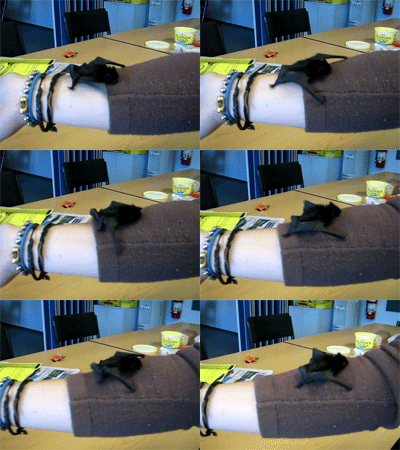
littlemissmatched: ixnay-on-the-oddk: ludfin: batsbatsbats I...


littlemissmatched:

ixnay-on-the-oddk:

ludfin:

batsbatsbats

I SCREAMED IM SO HAPPY

Bats are like puppies with wings. I can’t even.

26 May 07:50

Church Sign Of The Day

by Matthew Sitman
by Matthew Sitman

jesus_had_two_dads

Meet the Anglican priest from Australia behind the above sign – just one of his many efforts:

In an age of digital everything, Father Rod serves up his thoughts via an old-style church announcement board, with movable letters — the sort of sign that appeals to your inner guilt as you drive through rural Alabama. And then he lets the internet take over.

Bower’s messages have gone viral on social media. That might be because having a man of the cloth on their side energizes [Australian PM Tony] Abbott’s embattled critics, less than a year after Australians voted him into office. And it might be because of the wit and heft the messages wield in under 50 characters — a length that makes Twitter seem wordy.

When Father Rod speaks, people listen. His parish now has more than 10,000 followers on Facebook and its billboards are seen by hundreds of thousands more via social media. Not bad for a local church.

(Photo from the Anglican Parish of Gosford)

25 May 19:20

Ojalá hubiera planeado la boda de mi suegra...


25 May 19:19

Should Christians Ditch The Devil?

by Matthew Sitman
Adam Victor Brandizzi

Massa essa história da evolução do capiroto

by Matthew Sitman

Timothy Tutt makes the case for doing so, arguing that Satan is “clearly a theological construct found in many cultures and dolled up differently over time”:

In the earliest traditions of Hebrew scripture, both good and evil were God’s domain. Satan appeared in the books of Job and Zechariah. At first, he worked for God. In the Book of Job, the devil functions as something of a chief-of-staff, checking up on God’s lower level employee. (Some readers may be confused by this and think of the devil as tricky tempter right from the get-go, as in the Garden of Eden. Remember, even though the Book of Genesis is printed first in the Bible, it was not written first.)

As centuries went by, Satan became testier and more independent. He began to oppose God with accusations that tempt humans. The devil moved from God’s employee to less-than-loyal opposition. This move was, in part, because Persian thinking seeped into Judaism. For three years (from about 700-300 BCE), Persia ruled a huge chunk of land from the Indus River to Greece, including what is now Palestine and Israel. Even after the Persian Empire declined, their thinking remained. The Persian philosophy saw the world as a struggle of good and bad.

By the time that Christianity grew out of Judaism, the devil was a full-fledged bad boy, the enemy of God and humans alike.

In a follow-up article, Tutt finds belief in a literal, personal Satan doesn’t fit with his understanding of Christianity:

Satan works well if you’re into fear and punishment. But that’s not what Christianity is about.

Christianity is about grace and love. And grace and love are like poker. They require taking risks and gambling.

If someone hits you on one cheek, let him or her hit you on the other, Jesus said. In a religion of rules, the cheek-slapper would be punished. In a faith of grace, the cheek-slapper just might be so overwhelmed by your gentleness that he or she gives up cheek-slapping. (Of course, that might not happen. That’s the risky grace of the gospel. It’s a lot like holding a straight in your hands and hoping your opponent only has three of a kind.) …

Let me be clear: Evil exists in the world. We must wrestle with that. But old constructs need to be tossed. The Christian church clung to a flat-earth cosmology far too long. Preachers used the Bible to defend slavery. Luther and then other Reformers changed theological views of communion from transubstantiation to consubstantiation to symbolism. Each move required risk.

Recent Dish on the devil here.

25 May 19:13

Realmente, nesse caso complica.


Realmente, nesse caso complica.

25 May 11:41

How To Make Money In Porn

by Tracy R. Walsh
Adam Victor Brandizzi

Tá explicado.

by Tracy R. Walsh

File lawsuits:

Having found a niche in the crowded world of online pornography, X-art.com still had tens of thousands of fans shelling out money for its movies. Quietly, the Fields were also making some extra money in another way: by becoming the biggest filer of copyright-infringement lawsuits in the nation. In the past year, their company Malibu Media LLC has filed more than 1,300 copyright-infringement lawsuits – more of these cases than anyone else, accounting for a third of all US copyright litigation during that time, according to the federal-litigation database Pacer – against people that they accuse of stealing their films on the Internet.

Today, they average more than three suits a day, and defendants have included elderly women, a former lieutenant governor, and countless others. “Please be advised that I am ninety years old and have no idea how to download anything,” one defendant wrote in a letter, filed in a Florida court. Nearly every case settles on confidential terms, according to a review of dozens of court records. Malibu Media’s attorney, Keith Lipscomb, said that most defendants settle by paying between about $2,000 and $30,000. The income earned by all the suits represents less than five per cent of Malibu Media’s profits, Lipscomb said.

25 May 11:38

Stoners Sans Stigma

by Jessie Roberts
by Jessie Roberts

Micah Hauser appreciates that the “sly, genre-busting” web series High Maintenance depicts potheads as regular people:

[T]he protagonist, an unnamed pot dealer known only as “The Guy,” cycles around New York City delivering his wares to the people. To call him a protagonist, though, is not really accurate — he’s more like a reference point. Each episode focuses on a particular customer, and by extension, their living space, which is where all of these deals go down. …

The show is funny, but not in the ways we’re conditioned to expect from stoner-leaning media. There are no 3-foot bongs, no cross-joints, no late-night expeditions to Shake Shack, no burnouts philosophizing about space and time, man. (Full disclosure: there is some giggling.) These are ordinary people who live ordinary lives and happen to smoke weed. Some of them should probably smoke less — the husband in the newest episode, “Rachel,” bums around all day getting high instead of working on his second book — and some use it to escape particular problems or moments of stress, but most are unremarkable, functional adults. Zero judgment is passed (on the weed smoking, anyway). It’s just part of people’s lives, and the act of smoking and purchasing weed is treated no differently than getting a drink at a bar — an activity portrayed without ceremony in basically every television program in history. Welcome to the 21st century.

Previous Dish on High Maintenance here.

25 May 11:29

'O ambiente não está bom'

Adam Victor Brandizzi

Esse "mormaço" é realmente estranho.

Final da tarde de ontem em São Paulo, fim de entrevista com dois empresários. Um deles olha no celular as notícias do dia, mais preocupado em saber do trânsito de um dia de greve de motoristas de ônibus e passeata de professores municipais em greve.

"A PF fez uma limpa no governo do Mato Grosso, esse juiz [ministro do Supremo] não se decide com essa história de doleiros, esta cidade está uma baderna, cadê o prefeito? Não diz aqui se vai ter essa greve da polícia", recita um empresário, uns 60 anos. "Quem se anima com esse país? Vai ser difícil vender e fazer negócio com essa bagunça e esses feriados da
Copa. O clima 'tá' ruim", diz o empresário.

Depois de quase uma semana e meia de conversa com empresários e executivos de setores variados, não aparece nenhum denominador comum novo nas explicações sobre o desânimo crescente na categoria e sobre o esfriamento dos negócios desde o começo do ano.

Há queixas genéricas e habituais contra o governo federal, "custo Brasil", "burocracia para fazer qualquer coisa, licença que atrasa" na agência reguladora "x" ou "y". Nenhum relato de situação crítica ou colapso. Ao contrário, aliás. Apesar da "macroeconomia ruim" (crítica à política econômica), não é raro ouvir que no médio prazo o país "tem tudo para melhorar", devido ao mercado "grande e crescente".

No mais, de mais recorrente, uma insatisfação "difusa", como se dizia da "pauta" das manifestações maiores de junho do ano passado.

Uma queixa meio vaga e pantanosa de que o "ambiente não está bom".

Se a conversa é com a indústria, muita gente volta a reclamar sem muita ênfase do "câmbio". A situação "tinha melhorado", com o dólar mais caro, "mas voltou a ficar barato e varia demais, a gente não sabe a que preço vai fechar negócio". Mais dinheiro do BNDES, a taxa de juros abaixo de zero, "também estava ajudando".

Na verdade, não houve grande mudança em relação a câmbio ou dinheiro farto e barato do BNDES. Mas o "ambiente não está bom" e teria piorado desde março.

Empresários de setores diversos citam as ameaças de desemprego na indústria automobilística, setores que apanham das importações, dos "esqueletos dos shoppings", como um deles se refere aos centros comerciais novos que não conseguem alugar suas lojas.

"A construção [empreendimentos imobiliários comerciais] deve tomar um tombo este ano. Está sobrando espaço [escritórios, lojas, galpões]. O pessoal se animou demais coisa de dois anos atrás", diz alguém do ramo, mas residencial.

Mas é raro ouvir de alguém que a empresa ou o setor deles vai demitir em breve: "Estamos nos mantendo. Nem sobe nem desce. A dúvida é saber o quanto dura essa situação. O salário está alto, apareceu estoque de novo [produção que não foi vendida]", diz outro.

Os indicadores econômicos do ano confirmam o esfriamento do clima, em ritmo no entanto lento e gradual, na média dos setores: alguma estagnação do emprego (queda na indústria), setor de serviços esfriando, vendas de material de construção também.

Mas o desemprego é baixo e o consumo de varejo cresce a 4,5%. O ambiente, porém, não está bom.

25 May 11:21

Unquote

by Greg Ross

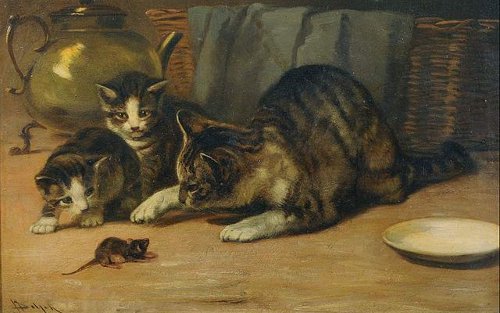
http://commons.wikimedia.org/wiki/File:JH_Dolph_Cat_Mouse.jpg

I own that I cannot see as plainly as others do, and as I should wish to do, evidence of design and beneficence on all sides of us. There seems to me too much misery in the world. I cannot persuade myself that a beneficent and omnipotent God would have designedly created the Ichneumonidae with the express intention of their feeding within the living bodies of Caterpillars, or that a cat should play with mice.

– Charles Darwin, letter to Asa Gray, May 22, 1860

25 May 01:17

iraffiruse: Frozach Submitted

25 May 01:16

Photo


24 May 17:52

“The Most Meta Thing On The Entire Internet”

by Jessie Roberts
Adam Victor Brandizzi

Pô, tudo isso só para usar essa descriçãozinhoa metida a besta?

by Jessie Roberts

Christopher Jobson nominates this GIF of a Vine of a video of a flipbook of a GIF of a video of a rollercoaster (yes, you read that right):

ezgif-save (1)

24 May 17:48

Outras vezes a razão é seu azar.


Outras vezes a razão é seu azar.

24 May 17:24

If adults evolve from children, why are there still children? : shittyaskscience

Adam Victor Brandizzi

Um questionamento importante.

This actually brings up a common misconception about evolution. Although adults did evolve from children, they did not evolve from present day children. Adults and humans have a common evolutionary ancestor, but their evolutionary history has diverged into two distinct lineages since then. This is why adults often are not into the same music/clothing/art that kids are, their differing evolutionary histories predispose them to be into different forms of cultural expression. (Source)

Bookmarked at brandizzi Delicious' sharing tag and expanded by Delicious sharing tag expander.