Shared posts

28 May 20:29

A Poem For Friday

by Alice Quinn
by Alice Quinn

5590670127_2043427f52_b

More haiku by Yosa Buson (1716-1783):

Swallows are wakened at night
in a hut someone
is beating at a snake

*

Old doll reminds me
how my love used to hide
her face in her sleeve

*

Pear trees in flower
a woman reads a letter
by moonlight

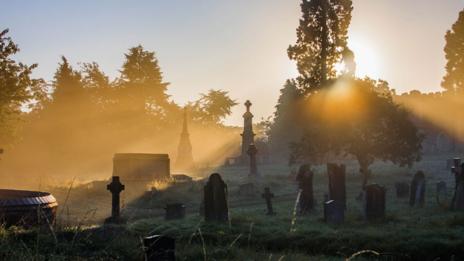
(From Collected Haiku of Yosa Buson, Translated by W.S. Merwin and Takako Lento. Copyright © 2013 by W.S. Merwin and Takako U. Lento. Used by permission of The Wylie Agency, LLC. All rights reserved. Photo by Oleg Shpyrko)

24 May 17:53

World View

by Greg Ross

In Other Inquisitions, Borges writes of a strange taxonomy in an ancient Chinese encyclopedia:

On those remote pages it is written that animals are divided into (a) those that belong to the Emperor, (b) embalmed ones, (c) those that are trained, (d) suckling pigs, (e) mermaids, (f) fabulous ones, (g), stray dogs, (h) those that are included in this classification, (i) those that tremble as if they were mad, (j) innumerable ones, (k) those drawn with a very fine camel’s hair brush, (l) others, (m) those that have just broken a flower vase, (n) those that resemble flies from a distance.

This is fanciful, but it has the ring of truth — different cultures can classify the world in surprisingly different ways. In traditional Dyirbal, an aboriginal language of Australia, each noun must be preceded by a variant of one of four words that classify all objects in the universe:

  • bayi: men, kangaroos, possums, bats, most snakes, most fishes, some birds, most insects, the moon, storms, rainbows, boomerangs, some spears, etc.
  • balan: women, bandicoots, dogs, platypus, echidna, some snakes, some fishes, most birds, fireflies, scorpions, crickets, the hairy mary grub, anything connected with water or fire, sun and stars, shields, some spears, some trees, etc.
  • balam: all edible fruit and the plants that bear them, tubers, ferns, honey, cigarettes, wine, cake
  • bala: parts of the body, meat, bees, wind, yamsticks, some spears, most trees, grass, mud, stones, noises and language, etc.

“The fact is that people around the world categorize things in ways that both boggle the Western mind and stump Western linguists and anthropologists,” writes UC-Berkeley linguist George Lakoff in Women, Fire, and Dangerous Things (1987). “More often than not, the linguist or anthropologist just throws up his hands and resorts to giving a list — a list that one would not be surprised to find in the writings of Borges.”

24 May 17:52

Face Of The Day

by Katie Zavadski
by Katie Zavadski

Screen Shot 2014-05-23 at 12.08.51 PM

The Weapon of Choice project portrays visual manifestations of verbal abuse:

Called Weapon of Choice — to represent the abuser’s choice to use these words to harm — this project was a collaboration between photographer Johnson, make-up artists and victims of both verbal and physical abuse. The images imply the verbal abuse is inextricably tied to physical abuse, because that is what Johnson found to be the case with many of his subjects.

“While listening to the stories from participants who had suffered abuse, we discovered how closely physical abuse followed verbal abuse,” he writes. “Where we found evidence of one, we found evidence of the other. When the abuser chose to inflict harm, verbal abuse was just one of the weapons in the arsenal.”

See the Weapon of Choice website here.

(Photo by Rich Johnson)

23 May 21:58

Kill the Cover Letter and Résumé -- Science of Us

No job applicant has ever enjoyed the process of assembling a decent cover letter and résumé. There’s the endless scanning for errors and out-of-date information, the pointless attempts to make your materials stand out (are you “well-qualified” for the job, or just “qualified”? “Enthusiastic” or “very enthusiastic”?), and the overall soul-crushing feeling that comes from knowing your application will likely end up in a pile of hundreds of others that look just about identical to it. Employers aren’t fans, either — anyone who has waded through a stack of the things understands how exhausting it is to try to sift fact from fiction, qualification from “qualification.” Despite all of this, the system has been entrenched for a while now. It’s just how it’s done.

Now, though, researchers have finally built up enough solid science about human decision-making to confirm a belief held by many on both sides of the hiring equation: It’s time for the résumé and the cover letter to die.

The problem is that the résumé-and-cover-letter bundle — call it “the packet” from here on — is an inefficient, time-wasting way for employers to sort through a first wave of applicants. It doesn’t provide nearly as much useful information about potential employees as we’ve been led to believe, meaning that firms that overly rely on it are likely missing out on talented applicants whose materials get overlooked. What’s worse is that it’s discriminatory — it exacerbates many of the biases that fuel a winner-take-all job market at the expense of minorities and people without fancy connections.

The latter claim might sound odd, given that the information contained in these packets seems pretty straightforward and objective — name, alma mater, things like that. But psychologists and sociologists have shown convincingly that biases powerfully affect our ostensibly “objective” perceptions of others, and that the packet contains exactly the sorts of information that can trigger these biases.

This is far from a bleeding-heart position: There’s a mountain of evidence, and it’s growing seemingly by the week. If you send out identical résumés with white-sounding and black-sounding names, the white-sounding ones will receive more invitations for interviews. You have better odds of being seen as likable and capable if you have a “normal”-sounding name. If you ask subjects of an experiment to proofread a writing sample, they’ll find more errors if told the author is black. If you pose as a student and send a professor an email looking for more advice, they’re less likely to help you out if you have a name that isn’t white- and male-sounding. And if someone reviewing your job application sees that you’re a mother, you’ll often be penalized for it (less likely if you’re a father, however).

So the packet is a minefield of information that could trigger bias, from the basic demographic information revealed by a résumé to the endless name-drops of impressive achievements and associations on a cover letter. “Why does a company need to know your name or where you live?” asked Nathanial Peterson, a Ph.D. student who studies biased decision-making at Carnegie Mellon, in an email. “This invites race, ethnicity, and gender bias that is known to be prevalent in hiring decisions.” Christopher J. Collins, a human resources management professor at Cornell, agreed. “I think people list things on there that potentially give lots of insight into race, gender, things that firms are not supposed to use to make hiring decisions,” he said.

Katherine Milkman, the Wharton professor who ran the emailing-professors study, points out just how widespread this issue is. “Our work shows that it’s still a major problem, even in highly educated populations where you might not expect to see it, and that it is the case across a very wide swath of different groups,” she said. “So we discriminate against women and ethnic minorities who are black, Hispanic, Chinese, and Indian. It’s not like just one group is being harmed — everyone is being harmed here relative to Caucasian males. And obviously if we care about hiring the best people, promoting the best people ... then it’s problematic if we’re allowing ourselves to be influenced in any way by race or gender.”

This extends well past questions of race and gender, though. Valerie Purdie-Vaughns, a psychology researcher at Columbia who specializes in intergroup and diversity issues, explained that once we see what school someone went to, for example, it greatly affects how we subsequently evaluate their work. The Harvard applicant and the State U - Satellite Campus applicant are graded on different curves, in other words, even if they’re equally capable.

Take evaluations of writing samples. “Once you assume that someone’s smart, a whole other set of things goes on,” said Purdie-Vaughns. “One of the things that happens is that you tend to evaluate whatever they wrote in terms of looking for positives instead of looking for negatives. So the person who went to the small state school, you’re looking for mistakes, you’re looking for typos, you’re looking for when they are saying something that doesn’t make any sense, and that confirms your bias that they’re not what you’re looking for. The Harvard applicant, you’re looking for the positive: all of the parts of their cover letter that are coming together for you, and you actually tend to avoid looking at things like the typos or the mistakes. And when you do see things that are either mistakes or errors or red flags, you interpret them differently. You interpret them as, ‘Oh, this person must have been really tired putting together this cover letter because they work so hard.’ Or, ‘Oh, they must be really busy.” In evaluating the sample of the applicant who went to the small state school, on the other hand, “you tend to interpret mistakes as diagnostic of their ability.”

Purdie-Vaughns is referring to confirmation bias, a well-documented phenomenon in which people tend to seek out evidence confirming what they already know (Harvard grads are smart; State grads? Not so much) while ignoring evidence to the contrary. Falling into this trap doesn’t make a hiring manager a bad person, or classist, or anything else — it just makes them human.

That’s the problem: perfectly good, open-minded, non-discriminatory people can end up making these errors. And the context in which hiring decisions are made — long days spent amidst towering piles of application packets—only makes it easier for bias to creep in. “Most of the time people making hiring decisions, we’re tired!” said Purdy-Vaughns. “The more tired you are, that exacerbates each of these biases.”

But even for firms unconcerned with promoting diversity, there’s another good reason to do away with the packet: many researchers think it’s not a very good predictor of what skills an applicant has.

“The broader issue in this kind of biased decision-making is people overinterpret the résumés,” said Collins. “Let’s say you list that you’re a reporter and have done a certain number of stories. I might read into that skills you have that maybe you have, and maybe you don’t.” So “people may get selected in or out [or a potential job] by a biased interpretation of that experience.” Frank L. Schmidt, a University of Iowa professor emeritus who is a leading researcher of prospective-employee evaluation methods, echoed this view. “Even when résumés are honest, an emphasis on résumés often leads employers to focus on credentials per se, which have extremely low validity for predicting future job performance,” he said in an email. The same logic applies for cover letters, of course, since they are little more than opportunities for applicants to stack credential atop credential.

So if résumé and cover letters are so bad, how should companies evaluate applicants? There are a few different options.

At the let’s-just-tweak-it end of the spectrum, employers could choose to rely on the same information currently communicated via the packet, but to do so in an anonymized way. There’s a famous study based on this idea that comes from a world far removed from the paperwork and fluorescent lights of most workplaces: symphony orchestras. In a paper published in 2000, Claudia Goldin of Harvard and Cecilia Rouse of Princeton examined a bunch of data from orchestras that adopted “blind” auditions in which screens concealed the identity of the performers. The screens were introduced in part to chip away at the boys’ club that had developed as a result of the old way of doing business, in which members of orchestras were “largely handpicked by the music director,” as the researchers wrote, and mostly drawn from a pool of “(male) students of a select group of teachers.”

Goldin and Rouse’s number-crunching found that adding the screen did, in fact, account for a good chunk of the then-recent increase in female orchestra members (another chunk was explained simply by the fact that more were applying), meaning that without the screen these women wouldn’t have gotten their jobs simply by virtue of their gender.

A screen’s not going to work for hiring a new manager of operations, of course. But the overall lesson of the orchestra study could easily be applied to hiring decisions: Firms could institute partial “screens” by obscuring certain information from résumés. “One could have information converted into a less potentially biasing format — ‘above average school’ rather than the specific school,” said Kuncel. Katherine Phillips, a Columbia University professor, had a similar idea: instruct applicants to submit résumés with only “initials or a numbered code,” which “would essentially remove gender and race information,” she said in an email.

But for jobs in fields like academia, journalism, or coding that require concrete outputs, there’s a case to be made to go even further: have the first step of the application process be a full-blown sample work assignment, submitted anonymously. Either you can do the work, or you can’t — your potentially biasing race and gender and educational characteristics aren’t even revealed until at least the second round, if you make it that far. (Some companies, particularly those in the tech world, are starting to move in this direction.)

“That would be a much better predictor of your actual ability to write a story or do an investigation,” said Collins. “You’d be testing for the actual job skills that would be most important for success.” Purdy-Vaughns said the advantage of this sort of system would be that it doesn’t completely disregard information like what school someone went to, which “is probably like 5 percent or 8 percent important, [but] not 80 percent important,” as she put it — but does put it in the proper place. And ideally, such a form of hiring could lead to a more diverse applicant pool once applicants realized they’d be judged on the quality of their work rather than on the fanciness of their credentials. (The common knock on this idea is that it would create more HR work for firms, but HR departments are already inundated by packets from unqualified applicants under the current system and a more in-depth first step could cull the field in a useful way.)

Finally, there are tests that employers can have applicants take online to gauge who will be a good fit for a position. Researchers have found that high scores on (methodologically sound) tests of intelligence and of conscientiousness tend to accurately predict who will be a good worker, regardless of the field. Kuncel explained in an email that there is a plethora of such tests firms can use: “knowledge tests, cognitive ability tests, measures of personality, vocational interest measures, [and] integrity tests,” among others. Organizational researchers have produced a mountain of literature attempting to figure out which tests are most valid for which position, and the answer can vary hugely from job to job. Hubert Feild, an Auburn management professor and co-author of the textbook Human Resource Selection, mentioned a self-administered personality inventory Texas Instruments has used in the past on its employment website. “That was their way of screening out people who were team not oriented, not a team player,” he said. “So they were able to screen people out without bothering with a résumé.” Whatever sort of test or tests a given firm decides to administer, what’s crucial is that it can be done anonymously so as to curtail all the various aforementioned forms of bias. (Yes, these tests could hypothetically be taken by an applicant's smarter friend, but firms will usually retest an applicant in a proctored manner right before extending a job offer as a check against this.)

It's clear that companies serious about stripping bias from their hiring processes have no shortage of options. What's less clear is exactly how human judgement should factor into the process, particularly when it comes to the tricky question of evaluating how easy a candidate will be to interact with on a daily basis. “People talk a lot about cultural fit, and ‘cultural fit’ can certainly be a euphemism for hiring people who are like ourselves,” said James Baron, a professor at the Yale School of Management, “but to the extent that people work interdependently, that kind of information can be really helpful as to the likelihood of the person fitting on the team.” Here, too, there are ways to reduce bias. So-called unstructured interviews in which there's no set script of questions are, despite their ubiquity, seen by researchers as a terrible way to make personnel decisions. Structured interviews, on the other hand, can be useful when conducted in a rigorous manner.

So should structured interviews always be a part of the process, then? For less team-oriented jobs, is it okay to sometimes hire blind, without even meeting the candidate in person? Where, in short, should the line should lie between assessment measures that can be delivered in cold numerical fashion by a computer, and those that require human evaluation, warts and all? “The question is what the cost benefit is between getting rid of implicit bias and information that has real signal value,” said Milkman. “Academics have not answered that question.”

Bookmarked at brandizzi Delicious' sharing tag and expanded by Delicious sharing tag expander.
23 May 21:57

The Non-Diet Diet: Eat Whatever You Want -- Science of Us

Adam Victor Brandizzi

Para mim isso é quase só bom senso.

Eat like a caveman. Never mind — actually, don’t eat animal products at all. Or, okay, eat them, but only fish, and only sometimes.

But don’t eat anything for two whole days out of the week. No, you know what? Bananas. Just bananas. These are only a handful of the recent diets that celebrity authors and nutrition bloggers have told us hold the one true key to achieving a healthy weight. But what if it were a lot simpler than that?

As evidence builds that conventional weight-loss methods simply don’t work in the long term, some nutritionists and psychologists are encouraging a kind of non-diet diet, in which you eat what you want when you want it. It’s called intuitive eating, or sometimes, mindful eating, and those who practice and preach this nutritional philosophy say your body instinctively knows what it needs. Your job is to shut up and learn to listen to it.

The whole thing seems a little hippie-dippy — until, that is, you learn that there’s some solid early evidence suggesting that the practice actually works to help people reach a healthy weight.

The phrase intuitive eating was coined and popularized by registered dietitians Elyse Resch and Evelyn Tribole, who published the first edition of their book, Intuitive Eating: A Revolutionary Program That Works, in 1995; a third edition was released last year. More recently, Ohio State University psychologist Tracy Tylka made the practice a bit more scientific by developing a formalized scale specialists can use to measure whether their patients are eating in an intuitive way.

Tylka’s scale includes these skills:

  • Rely on internal hunger and fullness cues. Some nutritionists teach their clients to better listen to their bodies by keeping a “hunger-o-meter,” ranking their hunger on a scale from 0 to 10, while also jotting down their physical hunger symptoms before and after they eat. Resch also recommends that her clients take a couple of deep breaths before starting a meal, and then eat slowly, checking in with themselves to mentally gauge whether they’re still feeling hungry every so often.
  • Eat for physical rather than emotional reasons. In other words, stop eating your feelings. Research has shown that we often eat not because we’re hungry, but because we’re bored, happy, sad, or stressed.
  • Give yourself permission to eat absolutely anything. For intuitive eaters, there are no “good” or “bad” foods. That’s not to say that there’s no nutritional difference between an apple and apple pie, Tribole says. The idea here is that after eating the pie, intuitive eaters will naturally be drawn to more nutritious foods at the next meal, balancing out that extra fat and sugar.

“It might sound easy on the surface. But it does take quite a bit of practice,” says Michelle Gallant, a Harvard University Health Services nutritionist who teaches a popular ten-week seminar on intuitive eating. She says that when people first hear about the idea, they tell her, “Well, that means I’ll be eating burgers and fries all the time.” That’s the common misconception about this approach — that it’s a food free-for-all. But the point of intuitive eating is to eat what your body truly wants by figuring out what kinds of things make you feel best. It’s a subtle shift in thinking: It’s not that you can’t have burgers and fries. It’s just that if you’re really paying attention to how your food makes you feel, you won’t want to eat junk all the time.

Part of the reason some nutritionists are excited by intuitive eating is that it jibes with psychological research showing that if a food is forbidden, it only becomes more tempting. Chronic dieters who try to suppress their cravings actually tend to have more cravings, which can lead to binge-eating. And research has shown that when parents enforce very strict eating rules, their kids tend to be more drawn to off-limits snacks — and they eat more once they do get their little hands on them.

Proponents of intuitive eating argue that their method may be a healthier and more realistic way of managing food intake. “Usually when people have a history of chronic dieting, what that means is they’ve learned to shut off their body’s signals,” says Linda Bacon, a nutrition professor and researcher at City College of San Francisco and the University of California, Davis. “So they can’t even recognize hunger, because for so long they’ve thought that hunger is something you’re supposed to suppress — or ignore.”

Bacon sometimes takes her students through an experiment with a food they love, usually chocolate. “I tell them to take a little bite of it, and notice all the sensations in your mouth and how it tastes,” she said. “And then take another small bite. When you keep doing that, inevitably what people see is that the third or fourth bites don’t taste nearly as good as the first bite. You’re getting clues from your body, which is saying, ‘Slow down, don’t eat so much, I’ve got what I need.’”

But do you actually lose weight? It’s not yet clear — there isn’t a big, solid body of evidence, the studies that have been done are small, and there isn’t much science supporting the idea that we instinctively know what to eat. And the leaders of the intuitive eating movement insist that it is not, primarily, about weight loss — to the point that Resch and Tribole scrubbed every mention of the phrase from the cover and table of contents of their book’s latest edition. But a two-year study Bacon led comparing intuitive eaters to dieters offers hope: Both groups lost weight initially, but after one year, intuitive eaters — but not dieters — kept it off. And a recent analysis of the literature on mindful eating identified six studies showing that overweight or obese participants who learned to eat this way lost significant amounts of weight. Tribole, for her part, says she’s had clients who have lost 100 pounds.

Even if the jury is out on the science, there’s something reassuring about this idea and all of its anti-diet simplicity. It might be okay to ignore the latest eating trend and trust yourself instead. Your body’s got this.

Bookmarked at brandizzi Delicious' sharing tag and expanded by Delicious sharing tag expander.
23 May 21:57

The Positive Side Of Discrimination

by Tracy R. Walsh
by Tracy R. Walsh

Amanda Hess takes note of a new meta-analysis indicating that most prejudice is not due to hostility toward others, “but rather simple preferences for people like ourselves”:

In a review of five decades of psychological research, [the study's authors] found that while most researchers defined prejudice as an expression of hostility, the more pervasive form of bigotry in the United States comes from people who favor, admire, and trust people of their own race, gender, age, religion, or parenting status. Even people who share our birthdays can catch a break. That means that – to take just one example – sexist bias isn’t largely perpetuated by people who hate women. It’s furthered by men who just particularly like other men.

For Hess, the study suggests why discrimination remains such an intractable problem:

We’re not asking the powerful to stop hating; we’re asking them to cede some of their power to others. If the powerful are required to extend their networks to offer jobs to people who aren’t like them, that means that they can’t keep hiring their friends (or people who they feel have the educational pedigree and family background to one day become their friends). … Housing and employment discrimination against minorities isn’t just a case of some people missing out on the opportunities they deserve, but also of white people getting opportunities that they don’t.

23 May 20:46

quem inventou o abraço? tipo, o primeiro abraço deve ter sido mt estranho. "cara qq vc ta fazendo? PQ TA ME SEGURANDO??" "shh confia em mim"

23 May 18:10

stormtrooperfashion: "Jeune Afrique" by Steve...


stormtrooperfashion:

"Jeune Afrique" by Steve Marais for Gaschette Magazine#2 Vol. 11

23 May 14:54

Have Compassion for Yourself - Judith Ohikuare - The Atlantic

"Girl with a mirror (1977)" by Roy Lichtenstein (centralasian/flickr)

If you're familiar with that ubiquitous Marianne Williamson quotation ("Our deepest fear is not that we are inadequate. Our deepest fear is that we are powerful beyond measure …"), you might also have come across its slightly more reserved cousin: "If someone talked to you the way you talk to yourself, you would have kicked them out of your life a long time ago."

The irony of those feel-good sayings, which can be found on many a Facebook wall, Twitter bio, and Pinterest board, is that people who believe that they deserve validation are likely already on the right track. (Much quieter are people whose insides shrivel at the thought of laying any claim to Williamson's "power beyond measure," or even basic kindness—not necessarily out of cynicism, but due to a single-minded conviction in their own worthlessness.)

As journalist Anneli Rufus sees it, the self-hating person inhabits a world of muted despair that prevents him or her from ever feeling at ease in the world. In Unworthy: How to Stop Hating Yourself, Rufus mines the intractable, negative perceptions that she and others have held about themselves, and analyzes the emergence of self-esteem as a goal that feels unattainable for many people. I spoke with Rufus about what it's like to live with low self-esteem in an esteem-driven world, and how people who experience self-loathing can establish healthier relationships with themselves and others in their lives.

After reading your stories and those of some of the people you interview, it seems to me like admitting to other people that you experience self-loathing can be just as fraught as experiencing it. So what made you decide to write this book?

Watching how much my mother suffered. She died in 2011 without "recovering" from her low self-esteem. I gave her a memorial service that 75 people attended, and people kept coming up to me and saying, "Your mother was wonderful." They were sobbing and I thought, my god, if Mom was here she would still argue, "Well, they don't know the real me." That experience, plus my own life, made me realize how much so many people suffer with this.

In the book you talk about the historical trajectory of self-esteem, which wasn't always such an oft-discussed thing. What was life like for you in those pre-self-affirmation days?

I was in elementary school in Los Angeles around 1966. The world was waking up and there were hippies and such, but for kids it was still the old days. It was a time of discipline, obedience, and respect for grown-ups. Kids "selves" were not a topic. Self-esteem was just a word; it was alien, abstract. Los Angeles in the seventies was a very looks-centric time, just as this is a very looks-centric time, and I felt like an ugly outsider—but in those days it was pretty common for girls to say things like, "Oh, I'm the most hideous person at the beach!" Everyone did that.

"He'd tell me, 'Your problem is not that you are ugly or a bad person. Your problem is that you think that.'"

It wasn't until college when I met the person that I'm now married to that I started to feel like an extreme case. He was very complimentary and absolutely did not understand when I argued with him. He'd tell me, "Your problem is not that you are ugly or a bad person. Your problem is that you think that." But like a typical person with low self-esteem, I refused to accept it until very recently.

What is reality for someone who is self-loathing? Because in a sense, the self-loathing person believes that he or she is the realist.

It depends on the person and what their fixation is. Some people think they're really stupid; some people think they're weak; some people think they're ugly. Whatever it is, it colors their daily life. You dress as fast as possible to hide your body without looking at yourself in the mirror because you can't stand it—and then you've put on an outfit that maybe isn't the most flattering. You become fake because you're covering up your own self-loathing, and you can't really pay attention to your spouse, or your boss, or the friend that you're going out with, since part of you is absorbed in, how do I look? How do I sound? Terrible?

That reminds me of an anecdote in the book about the man whose partner moved across the country to be with him, but he still felt insecure about their relationship. He sent text messages and left Post-It notes all over the house and in his boyfriend's car asking, "Do you love me?" over and over again. How does self-loathing affect people's relationships, whether familial, or romantic, or professional?

The way I see it, we make ourselves hard to love. There's a certain negative narcissism aspect to having low self-esteem. People who totally adore themselves are hard to love because they only see themselves and it's hard for them to care about you. But people who hate themselves are also hard to love because they, too, are so self-absorbed that their own needs and miseries obstruct their view of another person. You can't see into someone else's heart if you are so wrapped up in yourself. If you're sitting there, sobbing on the bed and there's someone beside you saying, "But I love you," and you reply, "No! I'm so worthless!" you're basically saying 'screw you' to that person. If we can have compassion for ourselves, then we are inviting ourselves to have compassion for others, which makes relationships fairer and more equal.

If we can have compassion for ourselves, then we are inviting ourselves to have compassion for others, which makes relationships fairer and more equal.

I've seen how difficult it is for people that are in relationships with a person who hates [himself]. They feel that they are not being listened to, and that their care and concern for the self-loathing person is being rejected. And sometimes they say, "I've been reassuring you for 20 years. I've got no more for you." So we're at risk of doing that and, thus, at risk of being alone—which is a self-fulfilling prophecy.

If someone lives a very long life feeling this way about herself as your mother did, do you think that some people might not see low self-esteem in adults as debilitating?

In a sense, this is a matter of life and death—if not physical death then emotional death. I had a friend, an extremely talented, extremely accomplished person, who ended her own life at 53, and she also was a victim of self-loathing. After she died my mother said, "Well, you knew this was going to happen. She's in a better place and she got what she wanted." My mother was sort of envious of her.

I think there's a lot of courage in staying alive in a state of self-loathing because every day is a struggle and things are hard that the average person, the self-accepting person, wouldn't even imagine could be hard. How could it be hard to put on an outfit and go out the door? How could it be hard to go to a party that you were invited to? How could it be hard just to be with your family and have a normal job? But it is. For people who struggle with low self-esteem, basic things are difficult because you’re walking around thinking: I don't deserve friendship. I don't deserve compliments. I don't deserve this job. I don't deserve this husband. I don't deserve to live. Is it better or worse to walk around with that for 84 years? It takes a lot of courage.

From the outside in, what sorts of things are helpful if you are the friend of someone who is self-loathing? And if you are the self-loathing person, how can you help yourself?

If you are the friend, understand that they are living in a state of delusion, at least for now, and that arguing with them is just going to make them more firmly entrenched in their incorrect beliefs. Complimenting people with low self-esteem often doesn't work because it's very difficult for them to accept simple praise. Humor often makes a difference because people with low self-esteem are so down on themselves and so depressed that if you make them laugh, you're bringing them out of themselves.

The way to save ourselves is, among other things, to break those habits that keep us rooted in our self-loathing and in the way that people see us—which make others feed back to us our wrong beliefs about ourselves. If you are always apologizing, some people will feel sorry for you and some people will stomp on you, but in either case that's probably not the real you. Do you really feel that sorry about everything you do? Do you really feel like you need to beg everyone for permission? Probably not. Look at the things you do as if they were on a movie screen and take away the I did it because I'm an idiot. The more you become aware of that thinking and those habits, the easier it becomes to shift them.

Your book references many different religions and philosophies. Why was it important to you to understand how the "self" is conceived of in other cultures, and which were most helpful to you?

I think that in American culture we tend to forget that there are other ways of looking at things. If low self-esteem is something that makes so many people suffer, then let's see how other cultures view the self. You might not convert to another religion, but you might gain a new way of thinking. I found basic meditation pretty helpful and I was a skeptic for years. I had read that people with low self-esteem and people with depression find it hard to meditate because it goes against their normal pattern, which is to cycle over negative thoughts. But meditation is a release from thought, and you can start at just one minute.

Affirmations were not very useful, and studies have shown that affirmations generally do not work for people with a certain degree of low self-esteem. They work for people with medium and high self-esteem because those people are saying something that they already know. But for a person with low self-esteem or no self-esteem, it's like watering ground that doesn't have any seeds in it. You're telling them to say I love myself, and they're going to say No. I don't—and then feel angry and humiliated to have made these grandiose statements about themselves.

Something else that has worked for me is therapy. I went back to therapy a couple of years ago [because] finding the right therapist is crucial and is always a matter of chemistry. I am a solitary type of person but I do think it's important to know that you're not alone. Self-loathing is one of the most isolating things because there are these dark secrets about yourself that you don't want to say. But if you can find out in forums, or online, or reading a book, that this is a state of mind—you are not genuinely a bad person—then that is helpful and encouraging.

If you consider self-loathing to be a form of "negative narcissism," how does someone get to a point where they stop focusing on himself or herself as much, and where would you say you are right now in your own process?

If this were a spectrum, at one end would be total, abject, beat-yourself-over-the-head self-loathing, and at the other end complete, dictatorial narcissism. I think the ideal place to aim for is the middle. I've found that it's things outside myself that are interesting and get my fascination that have taken me out of that state. Fix a car. Go on a vacation. Join a club. I've studied foreign languages and been so wrapped up in that, that it takes my mind off of other things. And after a while, I've got a new skill.

For me, I'm in a state of acceptance, and that is a huge, huge difference. In my 20s, I had a friend who literally would, in earnest, look in the mirror and say, "I look fabulous"—and she meant it. I was always like, 'Whoa, that is so weird.' I'm not saying let's all be like her, but we can get to the middle and just be. It's funny: I'm not looking in the mirror, or complimenting myself, or thinking about myself very much. I'll walk through the day just thinking, "Oh, there's a crow," and I'm so grateful for that.

Bookmarked at brandizzi Delicious' sharing tag and expanded by Delicious sharing tag expander.
23 May 12:32

A cachaça de maconha febre no sertão

Adam Victor Brandizzi

"A Folha conversou com um servidor municipal que, aos finais de semana, vende doses de cachaça de maconha em seu carrinho de churrasco."

DANIEL CARVALHO, DE CABROBÓ (PE)

Encravado no “polígono da maconha”, região pernambucana famosa pela produção da erva em áreas irrigadas pelo rio São Francisco, o município de Cabrobó (a 531 km do Recife) vem se tornando conhecido por um “souvenir” peculiar: uma cachaça artesanal com raiz de maconha, a “Pitúconha”.

É fácil encontrá-la em bares e carrinhos que vendem espetinhos de carne.

Os interessados encontram o produto tanto em dose (R$ 1) como em garrafa.

Com o rótulo que se apropria da tradicional marca pernambucana de aguardente Pitú, essa caninha sai por R$ 30.

“Aguardente de cana adoçada com raiz de maconha”, informa, sem pudor, o rótulo da garrafa de 965 ml. “O Ministério do Transporte adverte: o perigo não é um jumento na estrada. O perigo é um burro no volante”, completa, em tom jocoso, o aviso da embalagem.

Cachaça de maconha

A Folha conversou com um servidor municipal que, aos finais de semana, vende doses de cachaça de maconha em seu carrinho de churrasco.

Ele diz que algumas pessoas coletam as raízes que sobram das operações policiais de erradicação dos pés de maconha e vendem para os produtores de cachaça. Um saco de 30 kg sai a R$ 100.

O servidor, que vende a cachaça há cinco anos, afirma que chega a comercializar até seis garrafas por semana. “Já virou souvenir. Tem um pessoal do banco que compra de carrada. O pessoal tem muito interesse de conhecer. Houve até um leilão na capital. Saiu por R$ 200″, afirma.

ILEGAL

Segundo a Polícia Federal, ainda não há clareza sobre a situação legal da bebida. Perícia feita pela PF no ano passado indicou pequenas concentrações de THC (tetrahidrocanabinol), o princípio ativo da maconha, nas raízes.

Desde o início do ano, policiais federais e colaboradores que participam das operações de erradicação de plantações da droga foram proibidos de trazer e distribuir as raízes, que, ao contrário do restante da planta, não são incineradas.

“Se você for levar ao pé da letra, seria crime [a comercialização da raiz e, consequentemente, da bebida] porque tem o princípio ativo. Só que a concentração é baixíssima. É uma questão que ainda não se tem uma posição definida”, afirma Carlo Correia, chefe da Delegacia de Repressão a Entorpecentes da Polícia Federal em Pernambuco.

De acordo com o artigo 2º da lei 11.343/2006, “ficam proibidas, em todo o território nacional, as drogas, bem como o plantio, a cultura, a colheita e a exploração de vegetais e substratos dos quais possam ser extraídas ou produzidas drogas”.

A exceção é para autorizações legais e para o que estabelece a Convenção de Viena (1971) a respeito de plantas de uso “ritualístico-religioso”.

“A lei não especifica a quantidade de THC. A questão é de ordem prática: a concentração é muito pequena. Não existe uma repressão sistematizada até hoje”, diz o delegado.

Correia afirma que há quem peça raízes aos policiais para tratar dor na coluna, problemas de estômago e asma. “Não existe nenhuma comprovação científica de que a raiz de maconha tenha alguma função terapêutica”, diz o delegado.

PITÚ

Em nota enviada à Folha no final da tarde desta sexta-feira (23), a empresa pernambucana Pitú informou ter tomado conhecimento da bebida “Pitúconha” e “do uso indevido de sua marca”. “A Pitú tomará todas as medidas cabíveis contra a violação dos seus direitos de propriedade intelectual.”

22 May 22:01

Mendonça de Barros: Brasil nunca viraria uma Venezuela... e por causa do PMDB - InfoMoney

Adam Victor Brandizzi

Uma grande VDD. (Sério, sem ironia, é vdd mesmo)

SÃO PAULO - Em tempos de desconfiança com a situação econômica, o atual fundador da Quest Investimentos, ex-presidente do BNDES (Banco Nacional do Desenvolvimento Econômico e Social) e ex-diretor do BC durante a época de hiperinflação, Luiz Carlos Mendonça de Barros, destacou que a "situação ainda tem que ficar muito ruim para achar que está ruim". Em palestra realizada durante a 4ª XP Expert, realizado em Atibaia (SP) no último final de semana, Mendonça de Barros ressalta que, na época em que foi diretor da autoridade monetária, entre 1985 e 1987, a inflação chegava a 2% por dia e que, por isso, precisa ver algo muito ruim para realmente ficar assustado com a economia nacional. 

"[O cenário atual da economia] não é tranquilo, mas não vejo um desastre muito grande pela frente", disse. O economista aponta ainda que o governo exagerou na condução das suas políticas para reverter a crise, mas isso "não quer dizer que estamos à beira de um precipício".

Além disso, ele refuta a tese quase que apocalíptica de que o Brasil vai virar a Venezuela, e tem uma tese bastante controversa sobre o assunto: "o Brasil nunca vai virar a Venezuela porque tem o PMDB", afirmou, referindo-se ao partido de centro que faz parte do governo independentemente do partido que entra no poder.

Mesmo em meio às polêmicas em relação ao partido, como denúncia de corrupção e fisiologismo (relação de poder político em que ações políticas e decisões são tomadas em troca de favores), o partido de certo modo assegura que não haverá uma guinada para a extrema esquerda no País. 

Ativo valioso
Sobre o futuro da economia e a política nacional, Mendonça de Barros destacou que a variável mais próxima da vida econômica dos brasileiros é da renda média real e reforçou que, nos últimos 17 anos até 2010, houve um aumento na série de 1993 até 2010 de 4,7% do crescimento.

Além disso, houve uma ingresso maior da população inserida no mercado de trabalho formal. "Não existe nos BRICs um País com esse ativo". De acordo com Mendonça de Barros, esta é a beleza da eleição de 2014, pois se testará se as mudanças ocorridas na sociedade se refletirão nas urnas. 

De acordo com o economista, está se formando uma nova sociedade e o discurso do PT - de que votar em outros partidos poderá significar a perda das últimas conquistas sociais -, será testado. Concluindo, ele afirma que questão crucial para o Brasil são as reformas microeconômicas, como a reforma tributária e a diminuição do custo Brasil.

Confira os destaques de Luiz Carlos Mendonça de Barros:

Bookmarked at brandizzi Delicious' sharing tag and expanded by Delicious sharing tag expander.
22 May 22:00

BBC - Future - Ageing: The girls who never grow older

Richard Walker has been trying to conquer ageing since he was a 26-year-old free-loving hippie. It was the 1960s, an era marked by youth: Vietnam War protests, psychedelic drugs, sexual revolutions. The young Walker relished the culture of exultation, of joie de vivre, and yet was also acutely aware of its passing. He was haunted by the knowledge that ageing would eventually steal away his vitality – that with each passing day his body was slightly less robust, slightly more decayed. One evening he went for a drive in his convertible and vowed that by his 40th birthday, he would find a cure for ageing.

Walker became a scientist to understand why he was mortal. “Certainly it wasn’t due to original sin and punishment by God, as I was taught by nuns in catechism,” he says. “No, it was the result of a biological process, and therefore is controlled by a mechanism that we can understand.”

Scientists have published several hundred theories of ageing, and have tied it to a wide variety of biological processes. But no one yet understands how to integrate all of this disparate information.

Walker, now 74, believes that the key to ending ageing may lie in a rare disease that doesn’t even have a real name, “Syndrome X”. He has identified four girls with this condition, marked by what seems to be a permanent state of infancy, a dramatic developmental arrest. He suspects that the disease is caused by a glitch somewhere in the girls’ DNA. His quest for immortality depends on finding it.

(Thinkstock)

It’s the end of another busy week and MaryMargret Williams is shuttling her brood home from school. She drives an enormous SUV, but her six children and their coats and bags and snacks manage to fill every inch. The three big kids are bouncing in the very back. Sophia, 10, with a mouth of new braces, is complaining about a boy-crazy friend. She sits next to Anthony, seven, and Aleena, five, who are glued to something on their mother’s iPhone. The three little kids squirm in three car seats across the middle row. Myah, two, is mining a cherry slushy, and Luke, one, is pawing a bag of fresh crickets bought for the family gecko.

Finally there’s Gabrielle, who’s the smallest child, and the second oldest, at nine years old. She has long, skinny legs and a long, skinny ponytail, both of which spill out over the edges of her car seat. While her siblings giggle and squeal, Gabby’s dusty-blue eyes roll up towards the ceiling. By the calendar, she’s almost an adolescent. But she has the buttery skin, tightly clenched fingers and hazy awareness of a newborn.

Back in 2004, when MaryMargret and her husband, John, went to the hospital to deliver Gabby, they had no idea anything was wrong. They knew from an ultrasound that she would have clubbed feet, but so had their other daughter, Sophia, who was otherwise healthy. And because MaryMargret was a week early, they knew Gabby would be small, but not abnormally so. “So it was such a shock to us when she was born,” MaryMargret says.

Gabby came out purple and limp. Doctors stabilised her in the neonatal intensive care unit and then began a battery of tests. Within days the Williamses knew their new baby had lost the genetic lottery. Her brain’s frontal lobe was smooth, lacking the folds and grooves that allow neurons to pack in tightly. Her optic nerve, which runs between the eyes and the brain, was atrophied, which would probably leave her blind. She had two heart defects. Her tiny fists couldn’t be pried open. She had a cleft palate and an abnormal swallowing reflex, which meant she had to be fed through a tube in her nose. “They started trying to prepare us that she probably wouldn’t come home with us,” John says. Their family priest came by to baptise her.

Unlike typical babies, Gabby Williams was born with a smooth frontal lobe in her brain, along with a number of other developmental defects (SPL)

Day after day, MaryMargret and John shuttled between Gabby in the hospital and 13-month-old Sophia at home. The doctors tested for a few known genetic syndromes, but they all came back negative. Nobody had a clue what was in store for her. Her strong Catholic family put their faith in God. “MaryMargret just kept saying, ‘She’s coming home, she’s coming home’,” recalls her sister, Jennie Hansen. And after 40 days, she did.

Gabby cried a lot, loved to be held, and ate every three hours, just like any other newborn. But of course she wasn’t. Her arms would stiffen and fly up to her ears, in a pose that the family nicknamed her “Harley-Davidson”. At four months old she started having seizures. Most puzzling and problematic, she still wasn’t growing. John and MaryMargret took her to specialist after specialist: a cardiologist, a gastroenterologist, a geneticist, a neurologist, an ophthalmologist and an orthopaedist. “You almost get your hopes up a little – ’This is exciting! We’re going to the gastro doctor, and maybe he’ll have some answers’,” MaryMargret says. But the experts always said the same thing: nothing could be done.

The first few years with Gabby were stressful. When she was one and Sophia two, the Williamses drove from their home in Billings, Montana, to MaryMargret’s brother’s home outside of St Paul, Minnesota. For nearly all of those 850 miles, Gabby cried and screamed. This continued for months until doctors realised she had a run-of-the-mill bladder infection. Around the same period, she acquired a severe respiratory infection that left her struggling to breathe. John and MaryMargret tried to prepare Sophia for the worst, and even planned which readings and songs to use at Gabby’s funeral. But the tiny toddler toughed it out.

While Gabby’s hair and nails grew, her body wasn’t getting bigger. She was developing in subtle ways, but at her own pace. MaryMargret vividly remembers a day at work when she was pushing Gabby’s stroller down a hallway with skylights in the ceiling. She looked down at Gabby and was shocked to see her eyes reacting to the sunlight. “I thought, ‘Well, you’re seeing that light!’” MaryMargret says. Gabby wasn’t blind, after all.

Despite the hardships, the couple decided they wanted more children. In 2007 MaryMargret had Anthony, and the following year she had Aleena. By this time, the Williamses had stopped trudging to specialists, accepting that Gabby was never going to be fixed. “At some point we just decided,” John recalls, “it’s time to make our peace.”

Mortal questions

When Walker began his scientific career, he focused on the female reproductive system as a model of “pure ageing”: a woman’s ovaries, even in the absence of any disease, slowly but inevitably slide into the throes of menopause. His studies investigated how food, light, hormones and brain chemicals influence fertility in rats. But academic science is slow. He hadn’t cured ageing by his 40th birthday, nor by his 50th or 60th. His life’s work was tangential, at best, to answering the question of why we’re mortal, and he wasn’t happy about it. He was running out of time.

So he went back to the drawing board. As he describes in his book, Why We Age, Walker began a series of thought experiments to reflect on what was known and not known about ageing.

Ageing is usually defined as the slow accumulation of damage in our cells, organs and tissues, ultimately causing the physical transformations that we all recognise in elderly people. Jaws shrink and gums recede. Skin slacks. Bones brittle, cartilage thins and joints swell. Arteries stiffen and clog. Hair greys. Vision dims. Memory fades. The notion that ageing is a natural, inevitable part of life is so fixed in our culture that we rarely question it. But biologists have been questioning it for a long time.

Our DNA mechanics become less effective with age (SPL)

It’s a harsh world out there, and even young cells are vulnerable. It’s like buying a new car: the engine runs perfectly but is still at risk of getting smashed on the highway. Our young cells survive only because they have a slew of trusty mechanics on call. Take DNA, which provides the all-important instructions for making proteins. Every time a cell divides, it makes a near-perfect copy of its three-billion-letter code. Copying mistakes happen frequently along the way, but we have specialised repair enzymes to fix them, like an automatic spellcheck. Proteins, too, are ever vulnerable. If it gets too hot, they twist into deviant shapes that keep them from working. But here again, we have a fixer: so-called ‘heat shock proteins’ that rush to the aid of their misfolded brethren. Our bodies are also regularly exposed to environmental poisons, such as the reactive and unstable ‘free radical’ molecules that come from the oxidisation of the air we breathe. Happily, our tissues are stocked with antioxidants and vitamins that neutralise this chemical damage. Time and time again, our cellular mechanics come to the rescue.

Which leads to the biologists’ longstanding conundrum: if our bodies are so well tuned, why, then, does everything eventually go to hell?

One theory is that it all boils down to the pressures of evolution. Humans reproduce early in life, well before ageing rears its ugly head. All of the repair mechanisms that are important in youth – the DNA editors, the heat shock proteins, the antioxidants – help the young survive until reproduction, and are therefore passed down to future generations. But problems that show up after we’re done reproducing cannot be weeded out by evolution. Hence, ageing.

Most scientists say that ageing is not caused by any one culprit but by the breakdown of many systems at once. Our sturdy DNA mechanics become less effective with age, meaning that our genetic code sees a gradual increase in mutations. Telomeres, the sequences of DNA that act as protective caps on the ends of our chromosomes, get shorter every year. Epigenetic messages, which help turn genes on and off, get corrupted with time. Heat shock proteins run down, leading to tangled protein clumps that muck up the smooth workings of a cell. Faced with all of this damage, our cells try to adjust by changing the way they metabolise nutrients and store energy. To ward off cancer, they even know how to shut themselves down. But eventually cells stop dividing and stop communicating with each other, triggering the decline we see from the outside.

The telomeres that protect our chromosomes get progressively shorter as we age (SPL)

Scientists trying to slow the ageing process tend to focus on one of these interconnected pathways at a time. Some researchers have shown, for example, that mice on restricted-calorie diets live longer than normal. Other labs have reported that giving mice rapamycin, a drug that targets an important cell-growth pathway, boosts their lifespan. Still other groups are investigating substances that restore telomeres, DNA repair enzymes and heat shock proteins.

During his thought experiments, Walker wondered whether all of these scientists were fixating on the wrong thing. What if all of these various types of cellular damages were the consequences of ageing, but not the root cause of it? He came up with an alternative theory: that ageing is the unavoidable fallout of our development.

The idea sat on the back burner of Walker’s mind until the evening of 23 October 2005. He was working in his home office when his wife called out to him to join her in the family room. She knew he would want to see what was on TV: an episode of Dateline about a young girl who seemed to be “frozen in time”. Walker watched the show and couldn’t believe what he was seeing. Brooke Greenberg was 12 years old, but just 13 pounds (6kg) and 27 inches (69cm) long. Her doctors had never seen anything like her condition, and suspected the cause was a random genetic mutation. “She literally is the Fountain of Youth,” her father, Howard Greenberg, said.

Walker was immediately intrigued. He had heard of other genetic diseases, such as progeria and Werner syndrome, which cause premature ageing in children and adults respectively. But this girl seemed to be different. She had a genetic disease that stopped her development and with it, Walker suspected, the ageing process. Brooke Greenberg, in other words, could help him test his theory.

Uneven growth

Brooke was born a few weeks premature, with many birth defects. Her paediatrician labeled her with Syndrome X, not knowing what else to call it.

After watching the show, Walker tracked down Howard Greenberg’s address. Two weeks went by before Walker heard back, and after much discussion he was allowed to test Brooke. He was sent Brooke’s medical records as well as blood samples for genetic testing. In 2009, his team published a brief report describing her case.

Walker’s analysis found that Brooke’s organs and tissues were developing at different rates. Her mental age, according to standardised tests, was between one and eight months. Her teeth appeared to be eight years old; her bones, 10 years. She had lost all of her baby fat, and her hair and nails grew normally, but she had not reached puberty. Her telomeres were considerably shorter than those of healthy teenagers, suggesting that her cells were ageing at an accelerated rate.

All of this was evidence of what Walker dubbed “developmental disorganisation”. Brooke’s body seemed to be developing not as a coordinated unit, he wrote, but rather as a collection of individual, out-of-sync parts. “She is not simply ‘frozen in time’,” Walker wrote. “Her development is continuing, albeit in a disorganised fashion.”

(SPL)

The big question remained: why was Brooke developmentally disorganised? It wasn’t nutritional and it wasn’t hormonal. The answer had to be in her genes. Walker suspected that she carried a glitch in a gene (or a set of genes, or some kind of complex genetic programme) that directed healthy development. There must be some mechanism, after all, that allows us to develop from a single cell to a system of trillions of cells. This genetic programme, Walker reasoned, would have two main functions: it would initiate and drive dramatic changes throughout the organism, and it would also coordinate these changes into a cohesive unit.

Ageing, he thought, comes about because this developmental programme, this constant change, never turns off. From birth until puberty, change is crucial: we need it to grow and mature. After we’ve matured, however, our adult bodies don’t need change, but rather maintenance. “If you’ve built the perfect house, you would want to stop adding bricks at a certain point,” Walker says. “When you’ve built a perfect body, you’d want to stop screwing around with it. But that’s not how evolution works.” Because natural selection cannot influence traits that show up after we have passed on our genes, we never evolved a “stop switch” for development, Walker says. So we keep adding bricks to the house. At first this doesn’t cause much damage – a sagging roof here, a broken window there. But eventually the foundation can’t sustain the additions, and the house topples. This, Walker says, is ageing.

Brooke was special because she seemed to have been born with a stop switch. But finding the genetic culprit turned out to be difficult. Walker would need to sequence Brooke’s entire genome, letter by letter.

That never happened. Much to Walker’s chagrin, Howard Greenberg abruptly severed their relationship. The Greenbergs have not publicly explained why they ended their collaboration with Walker, and declined to comment for this article.

Second chance

In August 2009, MaryMargret Williams saw a photo of Brooke on the cover of People magazine, just below the headline “Heartbreaking mystery: The 16-year-old baby”. She thought Brooke sounded a lot like Gabby, so contacted Walker.

After reviewing Gabby’s details, Walker filled her in on his theory. Testing Gabby’s genes, he said, could help him in his mission to end age-related disease – and maybe even ageing itself.

This didn’t sit well with the Williamses. John, who works for the Montana Department of Corrections, often interacts with people facing the reality of our finite time on Earth. “If you’re spending the rest of your life in prison, you know, it makes you think about the mortality of life,” he says. What’s important is not how long you live, but rather what you do with the life you’re given. MaryMargret feels the same way. For years she has worked in a local dermatology office. She knows all too well the cultural pressures to stay young, and wishes more people would embrace the inevitability of getting older. “You get wrinkles, you get old, that’s part of the process,” she says.

Botox, a solution for some who wish to stave off the signs of ageing (SPL)

But Walker’s research also had its upside. First and foremost, it could reveal whether the other Williams children were at risk of passing on Gabby’s condition.

For several months, John and MaryMargret hashed out the pros and cons. They were under no illusion that the fruits of Walker’s research would change Gabby’s condition, nor would they want it to. But they did want to know why. “What happened, genetically, to make her who she is?” John says. And more importantly: “Is there a bigger meaning for it?”

John and MaryMargret firmly believe that God gave them Gabby for a reason. Walker’s research offered them a comforting one: to help treat Alzheimer’s and other age-related diseases. “Is there a small piece that Gabby could present to help people solve these awful diseases?” John asks. “Thinking about it, it’s like, no, that’s for other people, that’s not for us.” But then he thinks back to the day Gabby was born. “I was in that delivery room, thinking the same thing – this happens to other people, not us.”

Still not entirely certain, the Williamses went ahead with the research.

Amassing evidence

Walker published his theory in 2011, but he’s only the latest of many researchers to think along the same lines. “Theories relating developmental processes to ageing have been around for a very long time, but have been somewhat under the radar for most researchers,” says Joao Pedro de Magalhaes, a biologist at the University of Liverpool. In 1932, for example, English zoologist George Parker Bidder suggested that mammals have some kind of biological “regulator” that stops growth after the animal reaches a specific size. Ageing, Bidder thought, was the continued action of this regulator after growth was done.

Subsequent studies showed that Bidder wasn’t quite right; there are lots of marine organisms, for example, that never stop growing but age anyway. Still, his fundamental idea of a developmental programme leading to ageing has persisted.

For several years, Stuart Kim’s group at Stanford University has been comparing which genes are expressed in young and old nematode worms. It turns out that some genes involved in ageing also help drive development in youth.

Kim suggested that the root cause of ageing is the “drift”, or mistiming, of developmental pathways during the ageing process, rather than an accumulation of cellular damage.

Mice on restricted diets live longer (SPL)

Other groups have since found similar patterns in mice and primates. One study, for example, found that many genes turned on in the brains of old monkeys and humans are the same as those expressed in young brains, suggesting that ageing and development are controlled by some of the same gene networks.

Perhaps most provocative of all, some studies of worms have shown that shutting down essential development genes in adults significantly prolongs life. “We’ve found quite a lot of genes in which this happened – several dozen,” de Magalhaes says.

Nobody knows whether the same sort of developmental-programme genes exist in people. But say that they do exist. If someone was born with a mutation that completely destroyed this programme, Walker reasoned, that person would undoubtedly die. But if a mutation only partially destroyed it, it might lead to a condition like what he saw in Brooke Greenberg or Gabby Williams. So if Walker could identify the genetic cause of Syndrome X, then he might also have a driver of the ageing process in the rest of us.

And if he found that, then could it lead to treatments that slow – or even end – ageing? “There’s no doubt about it,” he says.

Public stage

After agreeing to participate in Walker’s research, the Williamses, just like the Greenbergs before them, became famous. In January 2011, when Gabby was six, the television channel TLC featured her on a one-hour documentary. The Williams family also appeared on Japanese television and in dozens of newspaper and magazine articles.

Other than becoming a local celebrity, though, Gabby’s everyday life hasn’t changed much since getting involved in Walker’s research. She spends her days surrounded by her large family. She’ll usually lie on the floor, or in one of several cushions designed to keep her spine from twisting into a C shape. She makes noises that would make an outsider worry: grunting, gasping for air, grinding her teeth. Her siblings think nothing of it. They play boisterously in the same room, somehow always careful not to crash into her. Once a week, a teacher comes to the house to work with Gabby. She uses sounds and shapes on an iPad to try to teach cause and effect. When Gabby turned nine, last October, the family made her a birthday cake and had a party, just as they always do. Most of her gifts were blankets, stuffed animals and clothes, just as they are every year. Her aunt Jennie gave her make-up.

Walker teamed up with geneticists at Duke University and screened the genomes of Gabby, John and MaryMargret. This test looked at the exome, the 2% of the genome that codes for proteins. From this comparison, the researchers could tell that Gabby did not inherit any exome mutations from her parents – meaning that it wasn’t likely that her siblings would be able to pass on the condition to their kids. “It was a huge relief – huge,” MaryMargret says.

Still, the exome screening didn’t give any clues as to what was behind Gabby’s disease. Gabby carries several mutations in her exome, but none in a gene that would make sense of her condition. All of us have mutations littering our genomes. So it’s impossible to know, in any single individual, whether a particular mutation is harmful or benign – unless you can compare two people with the same condition.

All girls

Luckily for him, Walker’s continued presence in the media has led him to two other young girls who he believes have the same syndrome. One of them, Mackenzee Wittke, of Alberta, Canada, is now five years old, with has long and skinny limbs, just like Gabby. “We have basically been stuck in a time warp,” says her mother, Kim Wittke. The fact that all of these possible Syndrome X cases are girls is intriguing – it could mean that the crucial mutation is on their X chromosome. Or it could just be a coincidence.

Walker is working with a commercial outfit in California to compare all three girls’ entire genome sequences – the exome plus the other 98% of DNA code, which is thought to be responsible for regulating the expression of protein-coding genes.

For his theory, Walker says, “this is do or die – we’re going to do every single bit of DNA in these girls. If we find a mutation that’s common to them all, that would be very exciting.”

But that seems like a very big if.

(Brain Smithson/Flickr)

Most researchers agree that finding out the genes behind Syndrome X is a worthwhile scientific endeavour, as these genes will no doubt be relevant to our understanding of development. They’re far less convinced, though, that the girls’ condition has anything to do with ageing. “It’s a tenuous interpretation to think that this is going to be relevant to ageing,” says David Gems, a geneticist at University College London. It’s not likely that these girls will even make it to adulthood, he says, let alone old age.

It’s also not at all clear that these girls have the same condition. Even if they do, and even if Walker and his collaborators discover the genetic cause, there would still be a steep hill to climb. The researchers would need to silence the same gene or genes in laboratory mice, which typically have a lifespan of two or three years. “If that animal lives to be 10, then we’ll know we’re on the right track,” Walker says. Then they’d have to find a way to achieve the same genetic silencing in people, whether with a drug or some kind of gene therapy. And then they’d have to begin long and expensive clinical trials to make sure that the treatment was safe and effective. Science is often too slow, and life too fast.

End of life

On 24 October 2013, Brooke passed away. She was 20 years old. MaryMargret heard about it when a friend called after reading it in a magazine. The news hit her hard. “Even though we’ve never met the family, they’ve just been such a part of our world,” she says.

MaryMargret doesn’t see Brooke as a template for Gabby – it’s not as if she now believes that she only has 11 years left with her daughter. But she can empathise with the pain the Greenbergs must be feeling. “It just makes me feel so sad for them, knowing that there’s a lot that goes into a child like that,” she says. “You’re prepared for them to die, but when it finally happens, you can just imagine the hurt.”

Today Gabby is doing well. MaryMargret and John are no longer planning her funeral. Instead, they’re beginning to think about what would happen if Gabby outlives them. (Sophia has offered to take care of her sister.) John turned 50 this year, and MaryMargret will be 41. If there were a pill to end ageing, they say they’d have no interest in it. Quite the contrary: they look forward to getting older, because it means experiencing the new joys, new pains and new ways to grow that come along with that stage of life.

Richard Walker, of course, has a fundamentally different view of growing old. When asked why he’s so tormented by it, he says it stems from childhood, when he watched his grandparents physically and psychologically deteriorate. “There was nothing charming to me about sedentary old people, rocking chairs, hot houses with Victorian trappings,” he says. At his grandparents’ funerals, he couldn’t help but notice that they didn’t look much different in death than they did at the end of life. And that was heartbreaking. “To say I love life is an understatement,” he says. “Life is the most beautiful and magic of all things.”

If his hypothesis is correct – who knows? – it might one day help prevent disease and modestly extend life for millions of people. Walker is all too aware, though, that it would come too late for him. As he writes in his book: “I feel a bit like Moses who, after wandering in the desert for most years of his life, was allowed to gaze upon the Promised Land but not granted entrance into it.”

This is an edited version of an article originally published by Mosaic, and is reproduced under a Creative Commons licence. For more Mosaic articles click here.

If you would like to comment on this, or anything else you have seen on Future, head over to our Facebook or Google+ page, or message us on Twitter.

Bookmarked at brandizzi Delicious' sharing tag and expanded by Delicious sharing tag expander.
22 May 20:19

What the U.S. Can Learn From Brazil's Healthcare Mess - The Atlantic

Adam Victor Brandizzi

Descreve o SUS com muita justiça, e usa como alerta para problemas a serem evitados - e soluções que podem ser adotadas - no Obamacare.

On a recent afternoon in Boa Vista, a lower-middle-class neighborhood of Sao Paulo, Brazil, Noranei Oliveira Miranda waited patiently on a small couch for the local community health workers to arrive.

Her aging father, Dirceu, was seated next to her, not as patiently. Trembling and non-verbal, he reared up from the couch and reached in vain for the front door. She held him down with a pillow, her strong arms forming a seatbelt across his torso.

“Sit still, dad!” she cried in Portuguese.

Dirceu was a professional driver until Alzheimer’s robbed him of his mental faculties and an HIV infection further depleted him. Now he’s delirious and desperate to get back onto the hilly, narrow streets where he made his living as a younger man. His face is riddled with wounds from falls he incurred during past escape attempts. Noranei, the youngest child, has quit her restaurant job to help take care of him.

At last, the health workers arrived, clad in matching sky-blue vests. “Look, it’s Daiana and Gabriela!” Noranei told her father.

Dirceu smiled and stopped flailing.

Gabriela and Daiana make their rounds through Boa Vista. (Olga Khazan)

The two health workers are middle-aged women who live in the community. They aren’t doctors, nor do they have any medical training. But they spend their days making the rounds through the 180 or so local families that have been assigned to them, asking, essentially, “How’s life?” They make sure Dirceu feels okay on his HIV medications. They admonish kids not to drink standing water and diabetics not to eat too many cookies. If one of their charges is having a personal problem—say with domestic abuse or alcohol—they try to help. They’re armed with exercise and nutrition tips, but they don’t dispense medication.

Overall, they help ensure no one gets lost in Brazil’s enormous state-sponsored healthcare system. “I feel good because they help me,” said Maria Camargo, a wheelchair-bound 68-year-old woman, when Daiana and Gabriela dropped in for a visit. “No one forgets about me.”

Universal healthcare looks very different in Brazil than it does in, say, Scandinavia.

Ever since 1988, the Brazilian constitution has promised free public healthcare to every citizen. “‘Health is a private right and a duty of the state,’” said Alexandre Chiavegatto Filho, a health policy professor at the University of Sao Paulo, quoting the statute. “People do love that phrase. It would be crazy and impossible for any government to change that.”

By a lot of measures, Brazil’s Sistema Único de Saúde—or SUS—has led to huge health gains. The country now has an infant mortality rate of about 13 per 1,000 live births, down from about 27 in 2000. Maternal mortality has also been cut in half since 1990. The average Brazilian only lived to about 66 in 1990; today, life expectancy is at a respectable 74.

A medical student consults with Maria Camargo, who recently lost her lower leg to diabetes. (Olga Khazan)

But take a closer look, and the system seems more like “a safety net with holes,” as one Brazilian doctor put it to me. There are only about two hospital beds for every 1,000 people. It can take months to get an X-ray in Sao Paulo. A quarter of Brazilians are able to afford private doctors, paying with American-style insurance they get through work. But a sizable chunk of the population is still poor, living in remote jungles and farms or in ghettoized favelas, and relies on the publicly funded SUS. The health outcomes of the two groups are just as strikingly different as their life circumstances. In a 2013 poll, 48 percent of respondents said they thought healthcare was Brazil’s biggest problem, ranking the issue well above education, corruption, violence, and unemployment.

In other words, universal healthcare looks very different in Brazil than it does in, say, Scandinavia. Finland, for example, provides free healthcare to all its citizens, but the country is smaller and more homogeneous than the state of Minnesota. Brazil, meanwhile, has 200 million people. And it has roughly the same landmass of the continental U.S., if you shaved off the entire West Coast and some of Florida. Brazil was also one of the last countries in the Western world to abolish slavery, and it has the lasting racial issues to show for it.

In essence, Brazil is not unlike a slightly smaller, warmer America, except with soccer.

Here, then, is what the U.S. can learn from Brazil’s healthcare system—and where we should avoid imitating them at all costs.

Americans have been resisting the idea of universal healthcare since at least the 1940s, when President Harry Truman tried to launch a federal program to train doctors and insure every American. His effort disintegrated amid anti-Soviet sentiments. “Would socialized medicine lead to socialization of other phases of American life?” asked one pamphlet put out by the American Medical Association at the time. “Lenin thought so.”

By that time, most nations in Northern Europe had been running national healthcare programs for years. Germany was the first: In 1883, Otto von Bismarck sought to shore up his power by granting sick leave and health insurance to workers. Some neighboring countries followed Germany’s lead; others, like the U.K., opted for a single-payer system, which is like Medicare for everyone.

But in America, fears of income redistribution loomed large. On a 1961 LP record, Ronald Reagan called medicine “one of the traditional methods of imposing statism or socialism on a people.” To this day, conservatives often use the word “socialism” as a kind of shorthand for the dangers of Obamacare.

Brazil was unbothered by such taboos in the late 1980s, when it transitioned to democracy after a brutal 20-year military dictatorship. Throughout the 60s and 70s, the country’s health indicators had lagged far behind those of its neighbors. Disproportionate shares of housing subsidies and social welfare money had gone, perversely, to the wealthy. A patchwork of insurance plans had covered certain unionized and white-collar workers, while a clumsy and cash-strapped health ministry was supposed to help the vast underclass.

The poor had gone not just without healthcare, but also without essentials like water, sewage, and housing. A 1979 New York Times article noted that in the favelas, “disease from vermin is rampant among children.”

Southern Brazilians tend to live better, healthier lives than their northern countrymen.

Democracy movements throughout the late 70s and 80s pressed for social-service reform, and after the military regime collapsed in 1985, social welfare spending increased by a third in just three years. The 1988 Constitution comprised 245 articles that touched nearly every dimension of Brazilian life. Along with provisions abolishing censorship and creating maternity leave, it enshrined healthcare as a basic right.

Today, the SUS is cherished as a protection against steep medical bills. “Brazil has the lowest rate of catastrophic health expenditures (2.2 percent) of nearly any other country in the region,” James Macinko, an associate professor of public health at New York University, told me. “That is a higher level of financial protection than Chile, Mexico, and certainly the U.S. have achieved.”

Universal healthcare is also, as it turns out, relatively cheap: Brazil spends just 9 percent of GDP on healthcare to the U.S.’s 18 percent.

But the funding for the SUS system is split between the federal, state, and municipal governments, and that’s where the trouble begins.

In a November 2012 protest outside Brasilia’s Planalto Palace, representatives from nine indigenous Amazonian ethnic groups call for improved healthcare in their communities. (Ueslei Marcelino/Reuters)

Brazilians in the wealthy south tend to live better, healthier lives than their poorer northern countrymen. The infant mortality rate of the north is twice as high as that of the south. That poor northeastern area of Maranhao has only about 0.58 doctors per 1,000 people, while the richer Rio de Janeiro has 3.44. The richest fifth of Brazil’s population is twice as likely to receive prenatal care as the poorest fifth. In 2012, between 62 and 75 percent of people in the south who needed kidney transplants received one, but only 13 to 27 of those living in the rest of Brazil were able to.

“In addition to a lack of adequate laboratories, blood circulation support networks, and intensive care units, there is an ongoing shortage of essential healthcare infrastructure, such as beds and X-ray machines,” wrote Eduardo Gomez, a senior lecturer in international development at King’s College London, in a recent working paper. “Again, the more affluent southern region fares better … when compared to the north.”

Data from the Brazilian National Birth Registry shows that pregnant women in the south receive far more care than those in the less-affluent north. 

Although high-earners tend to visit private doctors, they flock to the public system to get costly procedures, crowding out poor people who have no choice but to use the SUS. And rich Brazilians take their right to free healthcare seriously. A 2011 Lancet article described how the wealthy often sue for pricey experimental drugs or elective procedures to be provided to them for free. After all, they argue, the constitution demands it. In 2008, Rio Grande do Sul spent 22 percent of its total drug budget to comply with 19,000 such court orders.

“There have been efforts by health managers to ‘educate’ judges so that they would not issue such court orders,” Cesar Victoria, author of the Lancet article, told me. “But it still happens all the time.” 

In Brazil, as in the U.S., income inequality impacts health in banal, hidden ways. “If you're wealthy you’re fine. If you’re poor, you’re not,” Riordan Roett, director of the Latin American studies program at Johns Hopkins University, told me.

When Recife’s sanitation workers recently protested their poor working conditions, free sunscreen was among their demands. At a Recife bodega, a 200-milliliter bottle of SPF 30 costs 35 reais, or $15.60. Brazil’s minimum wage is 2.48 reais per hour (about $1.12). “When you put sunscreen on, you need the amount of a cup of espresso and to put all over your skin,” said Claudia Magalhaes, a dermatologist in Recife, told me. “You have to repeat it every two hours. Then, if you stay around six hours in the sun, you need around two bottles.”

By some measures, Brazil’s income inequality is even worse than America’s. One segment of the population—the part that conjures up images of Gisele Bundchen and microscopic swimsuits—is modern and rich, employing household help and dining out on $50 steaks.

Then there are the 11.4 million people living in favelas where, according to Rodrigo D'Aurea, a primary-care doctor in Boa Vista, crack is “easier to get than McDonalds.” In these communities, drug lords rule the streets, open sewers spread disease, and social services are sparsely provided. On the outskirts of Recife, I met teenagers who were raising newborns in plywood shacks—partly because abortion is illegal in Brazil, but also because having children is one of the few status symbols available to the country’s slum-dwelling girls.

Fourteen-year-old Jeane Gabriela Pires de Barros shares a plywood shack with her nine siblings and her newborn daughter. (Olga Khazan)

Brazil also has a newish middle class—36 million people who climbed out of extreme poverty in the past few decades. This group is now struggling with American-style non-communicable diseases. “Junk food is the first thing that comes with economic development,” Janos Valery Gyuricza, a primary care physician, said. He calls the Boa Vista neighborhood where he works, “a dormitory for mid-low and lower-class workers, who need to travel between an hour and 30 minutes to three hours to come and go to work every day. The lack of open-air spaces for leisure and sports are clear.”

Nearly half of Brazilians are overweight, and about 15 percent are obese. At the current rate, Brazil’s obesity rate could reach that of America’s by 2022. The country has swung so rapidly from malnutrition to obesity that it prompted former Health Minister José Temporão to exclaim in 2010, “We are in a situation of red alert … We are sitting on a ticking time bomb!”

“Junk food is the first thing that comes with economic development.”

As in the U.S., healthier food is pricier in Brazil, and most people get too little exercise. Gyms are for the ultra-rich, favelas are at times too violent for exercise, and with an unemployment rate of about 5 percent, everyone else is busy hustling to and from work. Over the past half-century, Brazilians have also been moving from farms to urban centers, distancing themselves from their traditional cooking practices.

At a clinic near Recife, a patient named Paulete Alves Do Nasceimento tells me that until recently few in the community had diabetes, but now, “it’s everywhere.” She said she now has it, too, but she doesn’t know why. “Maybe it's because I gained weight,” she said. “I gained a lot of weight.”

Paulete Alves Do Nasceimento, center, waits to be treated for diabetes at her local health center. (Olga Khazan)

At Brazil’s public clinics, children wait on bare benches in the hallways as their mothers check in with rushed doctors. The rooms are hot and stuffy; the walls look like no one ever had time to paint them. Doctors bring their own furniture from home. One clinic I visited had something Americans might find unthinkable: several non-partitioned dental chairs in one room. These clinics get the job done, but to Americans, being treated at one might hold all of the allure of getting one’s blood drawn at a low-rent pizza shop.

There are roughly 40,000 of these bare-bones health centers throughout the country. The doctors there work in teams with the community health workers and nurses. The Spartan ethic results in conveniences: Each family’s medical records are held in one folder; medication is dispensed right at the clinic. And annoyances: The medication sometimes runs out; electronic records are a distant dream. Noranei explained how her neighborhood had been divvied up into “zones” of different colors to better allocate doctors’ appointments. "They said, ‘You’re from the ‘green area,’ so you have to go in the morning. But I work, so I can’t get there at that time."

A sign taped to a telephone pole in Boa Vista announces an opening for a dentist appointment and urges locals to sign up. (Olga Khazan)

The private system comes with shorter wait times and better facilities, but it has its own problems. “It's a money machine,” said Ivana Borges, a Recife woman in her 20s, describing how her private doctor had harangued her into getting a C-section—all while complaining that he couldn’t wait to wrap up so he could finish his whisky. One Sao Paulo doctor told me that some physicians exact bribes in exchange for allowing mothers to deliver naturally, since C-sections are more efficient and lucrative.

Wealthy patients may complain about corruption and poor bedside manner, but at least they have specialists at their disposal. In Brazil, as in the United States, doctors tend to come from wealthier areas—and largely, that’s where they stay. More than half of the country’s neurologists, for example, live along the well-heeled southeast corridor; just one percent live in the north.

Few young doctors want to set up shop in one-horse towns on the fringes of the jungle, where equipment is shoddy, if it’s there at all, and job opportunities for spouses are nonexistent. (Think of Joel Fleischman, the Jewish New York doctor banished to Alaska in the 1990s TV series Northern Exposure.)   

“Brazil is a fairly elitist society, so if you’re a doctor practicing in Sao Paulo, you have no interest in going to the Amazon, or to a poor rural state,” Roett said. “The frustration of going to work every day is going to undermine your morale.”

A volunteer doctor from a mobile clinic performs surgery on a man from the Yanomamy tribe in the northern Brazilian state of Amazonas. (Ricardo Moraes/Reuters)

Even in urban areas, entire clinics lack pediatricians or other key providers for years at a time. “You have to take four busses to get to the ER,” said Gyuricza, the Boa Vista physician. “Your stomach could explode before you get there.” One woman told me about making a specialist appointment and arriving after a long, expensive bus journey to learn that it had been cancelled.

The shortages are part of what sparked last summer’s protests in Brazil’s major cities. The country is hosting the World Cup this June—a huge source of pride for a soccer-worshipping country. (Imagine an American city hosting the Super Bowl, the World Series, and an international hot-dog eating championship all at once.)

But some aren’t thrilled at the expense of it all. “We have beautiful and monumental stadiums,” goes one line in a viral protest song called “Desculpa Neymar” (Neymar is a popular Brazilian soccer star). “In the meantime schools and hospitals are about to fail. I saw an abyss between the two Brazils.”

Brazilian President Dilma Rousseff responded to the complaints by swearing to bolster healthcare. Over the past year, her government imported 13,000 doctors from abroad, primarily Cuba.

Protesters in Rio raise an effigy of Brazilian President Dilma Rousseff during a day of nationwide strikes and rallies on July 11, 2013. Brazilians throughout the country called for more investment in healthcare, along with improved services and benefits for the lower and middle classes. (Sergio Moraes/Reuters)

Maria Cristina Neves, a Spanish physician who came to a clinic near Recife three months ago under this “Mais Medicos” (More Doctors) program, said she was struck by the disparities in the system. “In Spain, people believe everyone should have the same health system,” Neves said. “That’s a concept that has to be started here. And that’s a big challenge.”

Still, she doesn’t live in the same rough suburb where she works, opting instead for an apartment in a chicer part of town. She recalled how a group of local men had cat-called her as she walked out of the clinic, hooting and derisively asking her for a prostate exam. “I’m a 60-year-old woman,” she said. “I don’t need to be hearing this kind of stuff. You don’t have to sacrifice yourself. I am no Mother Teresa.”

In some ways, the U.S. is better positioned for universal healthcare than Brazil was in 1988. We’re far richer, and we’ve been a functioning democracy for 238 years. We also have a culture, and a network of laws, that makes it easier to avoid the waste and corruption that plague Brazil’s healthcare system. (When the Brazilian government solicited contractors for health and development projects, the call for bids appeared just an hour before the deadline—and the only firms to meet the time limit were headed by relatives of local politicians.)

But American health coverage is still far from universal, even under Obamacare. Vermont and Maryland are experimenting with increasing government controls on healthcare right now, but few states are likely to follow their lead anytime soon. In fact, 19 states are refusing to expand Medicaid under the Affordable Care Act. And at least 30 million people are expected to remain uninsured even after Obamacare is fully implemented because they refuse to buy insurance on the newly created exchanges, can’t afford coverage, or are not authorized to live in the U.S. As Matthew Buettgens of the Urban Institute told the Washington Post last year, “The Obamacare law will cut the number of the uninsured in half. This is an important development, but it certainly isn’t the definition of universal.”

An Obamacare supporter rallies outside a health center in Mississippi, one of 19 states that has refused the Affordable Care Act’s Medicaid expansion. (Jonathan Bachman/Reuters)

Even so, Obamacare will give millions of Americans better access to doctors, and that’s where Brazil provides a true cautionary tale: Expanding access on paper is meaningless without the resources to make it work. According to some groups, the U.S. needs 91,500 more doctors by 2020 in order to treat the newly insured. Already, about 20 percent of Americans live in areas without enough general practitioners. Too few people from rural areas apply to medical school, and when they do, not enough want to move back to set up their practices. Live Oak County, Texas, for example, encompasses 1,000 square miles and is home to 12,000 residents. It has zero primary care physicians.

And it’s not just primary care: The Association of American Medical Colleges also projects we'll need 46,000 more specialists within the next decade.

Bookmarked at brandizzi Delicious' sharing tag and expanded by Delicious sharing tag expander.
22 May 19:35

Governo cria facilidades para bancos do Proer pagarem dívidas

by Míriam Leitão
Adam Victor Brandizzi

Em suma, Proer >>> TARP

Enviado por Míriam Leitão - |

NA CBN

Governo cria facilidades para bancos do Proer pagarem dívidas

O texto da Medida Provisória 627, transformada em lei, traz um artigo que vai permitir que os bancos com dívidas bilionárias consigam pagá-las com mais facilidade - inclusive aquelas do Proer. É o que mostra reportagem publicada hoje no “Valor”. Isso facilita a vida dos banqueiros que, à época, perderam seus bancos e tiveram que responder processos na Justiça por terem quebrado as instituições financeiras.

Como já faz algum tempo, vale lembrar aqui: eram bancos que viviam da inflação, muitos tinham contabilidade criativa, como o Nacional, com falsos ativos. A queda da inflação trouxe a realidade: os bancos estavam quebrados, e o governo, então, fez a intervenção. À época, o PT acusou o governo FHC de ter feito um programa para ajudar os banqueiros, mas a história mostrou que os bancos foram vendidos para outros, banqueiros e controladores que administraram mal perderam as instituições, responderam na Justiça, ficaram devendo ao Banco Central. Na operação, os correntistas não perderam dinheiro. Não foi, portanto, para favorecer os banqueiros.

Tanto não é que agora, quase 20 anos depois daquela crise bancária, é o governo atual que cria facilidades para que os banqueiros que quebraram à época possam pagar dívidas. A MP dá isenção de impostos sobre o lucro de capital que tiveram, se o dinheiro da venda de bens for usado para quitar dívidas com a União. Os ativos dos banqueiros, tomados, ficaram no BC como parte do dinheiro que a autoridade monetária teve de colocar nos bancos.

O que se revela nessa história toda, mais uma vez, é que o Proer foi um bom instrumento de saneamento dos bancos. Puniu os banqueiros, mas manteve o dinheiro poupado dos correntistas e comprometeu os maus administradores com processos e dívidas no BC.

Na crise de 2008 nos EUA, não houve a mesma sabedoria: O Tesouro americano teve de colocar muitos recursos nos bancos após a quebra do Lehman Brothers.

Ouçam aqui o comentário feito na CBN

22 May 18:44

The Case for Reparations

Adam Victor Brandizzi

Pode usar palavrão? Porque esse é o mais putamente foda artigo já escrito sobre a exploração dos negros nos Estados Unidos. Não é sobre escravidão (apenas); não é sobre racismo (apenas). Mostra algo muito, muito maior. Se você tem interesse pelo tema, é o melhor artigo que lerá em muito tempo. Anseio por algo do mesmo nível sobre o Brasil.

And if thy brother, a Hebrew man, or a Hebrew woman, be sold unto thee, and serve thee six years; then in the seventh year thou shalt let him go free from thee. And when thou sendest him out free from thee, thou shalt not let him go away empty: thou shalt furnish him liberally out of thy flock, and out of thy floor, and out of thy winepress: of that wherewith the LORD thy God hath blessed thee thou shalt give unto him. And thou shalt remember that thou wast a bondman in the land of Egypt, and the LORD thy God redeemed thee: therefore I command thee this thing today.

— Deuteronomy 15: 12–15

Besides the crime which consists in violating the law, and varying from the right rule of reason, whereby a man so far becomes degenerate, and declares himself to quit the principles of human nature, and to be a noxious creature, there is commonly injury done to some person or other, and some other man receives damage by his transgression: in which case he who hath received any damage, has, besides the right of punishment common to him with other men, a particular right to seek reparation.

— John Locke, “Second Treatise”

By our unpaid labor and suffering, we have earned the right to the soil, many times over and over, and now we are determined to have it.

— Anonymous, 1861

I. “So That’s Just One Of My Losses”

Clyde Ross was born in 1923, the seventh of 13 children, near Clarksdale, Mississippi, the home of the blues. Ross’s parents owned and farmed a 40-acre tract of land, flush with cows, hogs, and mules. Ross’s mother would drive to Clarksdale to do her shopping in a horse and buggy, in which she invested all the pride one might place in a Cadillac. The family owned another horse, with a red coat, which they gave to Clyde. The Ross family wanted for little, save that which all black families in the Deep South then desperately desired—the protection of the law.

Clyde Ross, photographed in November 2013 in his home in the North Lawndale neighborhood of Chicago, where he has lived for more than 50 years. When he first tried to get a legitimate mortgage, he was denied; mortgages were effectively not available to black people. (Carlos Javier Ortiz)

In the 1920s, Jim Crow Mississippi was, in all facets of society, a kleptocracy. The majority of the people in the state were perpetually robbed of the vote—a hijacking engineered through the trickery of the poll tax and the muscle of the lynch mob. Between 1882 and 1968, more black people were lynched in Mississippi than in any other state. “You and I know what’s the best way to keep the nigger from voting,” blustered Theodore Bilbo, a Mississippi senator and a proud Klansman. “You do it the night before the election.”

The state’s regime partnered robbery of the franchise with robbery of the purse. Many of Mississippi’s black farmers lived in debt peonage, under the sway of cotton kings who were at once their landlords, their employers, and their primary merchants. Tools and necessities were advanced against the return on the crop, which was determined by the employer. When farmers were deemed to be in debt—and they often were—the negative balance was then carried over to the next season. A man or woman who protested this arrangement did so at the risk of grave injury or death. Refusing to work meant arrest under vagrancy laws and forced labor under the state’s penal system.

Well into the 20th century, black people spoke of their flight from Mississippi in much the same manner as their runagate ancestors had. In her 2010 book, The Warmth of Other Suns, Isabel Wilkerson tells the story of Eddie Earvin, a spinach picker who fled Mississippi in 1963, after being made to work at gunpoint. “You didn’t talk about it or tell nobody,” Earvin said. “You had to sneak away.”

“Some of the land taken from black families has become a country club in Virginia,” the AP reported.

When Clyde Ross was still a child, Mississippi authorities claimed his father owed $3,000 in back taxes. The elder Ross could not read. He did not have a lawyer. He did not know anyone at the local courthouse. He could not expect the police to be impartial. Effectively, the Ross family had no way to contest the claim and no protection under the law. The authorities seized the land. They seized the buggy. They took the cows, hogs, and mules. And so for the upkeep of separate but equal, the entire Ross family was reduced to sharecropping.

This was hardly unusual. In 2001, the Associated Press published a three-part investigation into the theft of black-owned land stretching back to the antebellum period. The series documented some 406 victims and 24,000 acres of land valued at tens of millions of dollars. The land was taken through means ranging from legal chicanery to terrorism. “Some of the land taken from black families has become a country club in Virginia,” the AP reported, as well as “oil fields in Mississippi” and “a baseball spring training facility in Florida.”

Clyde Ross was a smart child. His teacher thought he should attend a more challenging school. There was very little support for educating black people in Mississippi. But Julius Rosenwald, a part owner of Sears, Roebuck, had begun an ambitious effort to build schools for black children throughout the South. Ross’s teacher believed he should attend the local Rosenwald school. It was too far for Ross to walk and get back in time to work in the fields. Local white children had a school bus. Clyde Ross did not, and thus lost the chance to better his education.

Then, when Ross was 10 years old, a group of white men demanded his only childhood possession—the horse with the red coat. “You can’t have this horse. We want it,” one of the white men said. They gave Ross’s father $17.

“I did everything for that horse,” Ross told me. “Everything. And they took him. Put him on the racetrack. I never did know what happened to him after that, but I know they didn’t bring him back. So that’s just one of my losses.”

Sharecropper boys in 1936 (Carly Mydans/Library of Congress)

The losses mounted. As sharecroppers, the Ross family saw their wages treated as the landlord’s slush fund. Landowners were supposed to split the profits from the cotton fields with sharecroppers. But bales would often disappear during the count, or the split might be altered on a whim. If cotton was selling for 50 cents a pound, the Ross family might get 15 cents, or only five. One year Ross’s mother promised to buy him a $7 suit for a summer program at their church. She ordered the suit by mail. But that year Ross’s family was paid only five cents a pound for cotton. The mailman arrived with the suit. The Rosses could not pay. The suit was sent back. Clyde Ross did not go to the church program.

reporter’s notebook
Elegant Racism
“If you sought to advantage one group of Americans and disadvantage another, you could scarcely choose a more graceful method than housing discrimination.”
Read more

It was in these early years that Ross began to understand himself as an American—he did not live under the blind decree of justice, but under the heel of a regime that elevated armed robbery to a governing principle. He thought about fighting. “Just be quiet,” his father told him. “Because they’ll come and kill us all.”

Clyde Ross grew. He was drafted into the Army. The draft officials offered him an exemption if he stayed home and worked. He preferred to take his chances with war. He was stationed in California. He found that he could go into stores without being bothered. He could walk the streets without being harassed. He could go into a restaurant and receive service.

Ross was shipped off to Guam. He fought in World War II to save the world from tyranny. But when he returned to Clarksdale, he found that tyranny had followed him home. This was 1947, eight years before Mississippi lynched Emmett Till and tossed his broken body into the Tallahatchie River. The Great Migration, a mass exodus of 6 million African Americans that spanned most of the 20th century, was now in its second wave. The black pilgrims did not journey north simply seeking better wages and work, or bright lights and big adventures. They were fleeing the acquisitive warlords of the South. They were seeking the protection of the law.

Clyde Ross was among them. He came to Chicago in 1947 and took a job as a taster at Campbell’s Soup. He made a stable wage. He married. He had children. His paycheck was his own. No Klansmen stripped him of the vote. When he walked down the street, he did not have to move because a white man was walking past. He did not have to take off his hat or avert his gaze. His journey from peonage to full citizenship seemed near-complete. Only one item was missing—a home, that final badge of entry into the sacred order of the American middle class of the Eisenhower years.

In 1961, Ross and his wife bought a house in North Lawndale, a bustling community on Chicago’s West Side. North Lawndale had long been a predominantly Jewish neighborhood, but a handful of middle-class African Americans had lived there starting in the ’40s. The community was anchored by the sprawling Sears, Roebuck headquarters. North Lawndale’s Jewish People’s Institute actively encouraged blacks to move into the neighborhood, seeking to make it a “pilot community for interracial living.” In the battle for integration then being fought around the country, North Lawndale seemed to offer promising terrain. But out in the tall grass, highwaymen, nefarious as any Clarksdale kleptocrat, were lying in wait.

From the 1930s through the 1960s, black people across the country were largely cut out of the legitimate home-mortgage market.

Three months after Clyde Ross moved into his house, the boiler blew out. This would normally be a homeowner’s responsibility, but in fact, Ross was not really a homeowner. His payments were made to the seller, not the bank. And Ross had not signed a normal mortgage. He’d bought “on contract”: a predatory agreement that combined all the responsibilities of homeownership with all the disadvantages of renting—while offering the benefits of neither. Ross had bought his house for $27,500. The seller, not the previous homeowner but a new kind of middleman, had bought it for only $12,000 six months before selling it to Ross. In a contract sale, the seller kept the deed until the contract was paid in full—and, unlike with a normal mortgage, Ross would acquire no equity in the meantime. If he missed a single payment, he would immediately forfeit his $1,000 down payment, all his monthly payments, and the property itself.

The men who peddled contracts in North Lawndale would sell homes at inflated prices and then evict families who could not pay—taking their down payment and their monthly installments as profit. Then they’d bring in another black family, rinse, and repeat. “He loads them up with payments they can’t meet,” an office secretary told The Chicago Daily News of her boss, the speculator Lou Fushanis, in 1963. “Then he takes the property away from them. He’s sold some of the buildings three or four times.”

Ross had tried to get a legitimate mortgage in another neighborhood, but was told by a loan officer that there was no financing available. The truth was that there was no financing for people like Clyde Ross. From the 1930s through the 1960s, black people across the country were largely cut out of the legitimate home-mortgage market through means both legal and extralegal. Chicago whites employed every measure, from “restrictive covenants” to bombings, to keep their neighborhoods segregated.

Their efforts were buttressed by the federal government. In 1934, Congress created the Federal Housing Administration. The FHA insured private mortgages, causing a drop in interest rates and a decline in the size of the down payment required to buy a house. But an insured mortgage was not a possibility for Clyde Ross. The FHA had adopted a system of maps that rated neighborhoods according to their perceived stability. On the maps, green areas, rated “A,” indicated “in demand” neighborhoods that, as one appraiser put it, lacked “a single foreigner or Negro.” These neighborhoods were considered excellent prospects for insurance. Neighborhoods where black people lived were rated “D” and were usually considered ineligible for FHA backing. They were colored in red. Neither the percentage of black people living there nor their social class mattered. Black people were viewed as a contagion. Redlining went beyond FHA-backed loans and spread to the entire mortgage industry, which was already rife with racism, excluding black people from most legitimate means of obtaining a mortgage.

A 1939 Home Owners’ Loan Corporation “Residential Security Map” of Chicago shows discrimination against low-income and minority neighborhoods. The residents of the areas marked in red (representing “hazardous” real-estate markets) were denied FHA-backed mortgages. (Map development by Frankie Dintino)

“A government offering such bounty to builders and lenders could have required compliance with a nondiscrimination policy,” Charles Abrams, the urban-studies expert who helped create the New York City Housing Authority, wrote in 1955. “Instead, the FHA adopted a racial policy that could well have been culled from the Nuremberg laws.”

The devastating effects are cogently outlined by Melvin L. Oliver and Thomas M. Shapiro in their 1995 book, Black Wealth/White Wealth:

Locked out of the greatest mass-based opportunity for wealth accumulation in American history, African Americans who desired and were able to afford home ownership found themselves consigned to central-city communities where their investments were affected by the “self-fulfilling prophecies” of the FHA appraisers: cut off from sources of new investment[,] their homes and communities deteriorated and lost value in comparison to those homes and communities that FHA appraisers deemed desirable.

In Chicago and across the country, whites looking to achieve the American dream could rely on a legitimate credit system backed by the government. Blacks were herded into the sights of unscrupulous lenders who took them for money and for sport. “It was like people who like to go out and shoot lions in Africa. It was the same thrill,” a housing attorney told the historian Beryl Satter in her 2009 book, Family Properties. “The thrill of the chase and the kill.”

reporter’s notebook
The American Case Against a Black Middle Class
“When a black family in Chicago saves up enough to move out of the crowded slums into Cicero, the neighborhood riots.”
Read more

The kill was profitable. At the time of his death, Lou Fushanis owned more than 600 properties, many of them in North Lawndale, and his estate was estimated to be worth $3 million. He’d made much of this money by exploiting the frustrated hopes of black migrants like Clyde Ross. During this period, according to one estimate, 85 percent of all black home buyers who bought in Chicago bought on contract. “If anybody who is well established in this business in Chicago doesn’t earn $100,000 a year,” a contract seller told The Saturday Evening Post in 1962, “he is loafing.”

Contract sellers became rich. North Lawndale became a ghetto.

Clyde Ross still lives there. He still owns his home. He is 91, and the emblems of survival are all around him—awards for service in his community, pictures of his children in cap and gown. But when I asked him about his home in North Lawndale, I heard only anarchy.

“We were ashamed. We did not want anyone to know that we were that ignorant,” Ross told me. He was sitting at his dining-room table. His glasses were as thick as his Clarksdale drawl. “I’d come out of Mississippi where there was one mess, and come up here and got in another mess. So how dumb am I? I didn’t want anyone to know how dumb I was.

“When I found myself caught up in it, I said, ‘How? I just left this mess. I just left no laws. And no regard. And then I come here and get cheated wide open.’ I would probably want to do some harm to some people, you know, if I had been violent like some of us. I thought, ‘Man, I got caught up in this stuff. I can’t even take care of my kids.’ I didn’t have enough for my kids. You could fall through the cracks easy fighting these white people. And no law.”

Blacks were herded into the sights of unscrupulous lenders who took them for money and for sport.

But fight Clyde Ross did. In 1968 he joined the newly formed Contract Buyers League—a collection of black homeowners on Chicago’s South and West Sides, all of whom had been locked into the same system of predation. There was Howell Collins, whose contract called for him to pay $25,500 for a house that a speculator had bought for $14,500. There was Ruth Wells, who’d managed to pay out half her contract, expecting a mortgage, only to suddenly see an insurance bill materialize out of thin air—a requirement the seller had added without Wells’s knowledge. Contract sellers used every tool at their disposal to pilfer from their clients. They scared white residents into selling low. They lied about properties’ compliance with building codes, then left the buyer responsible when city inspectors arrived. They presented themselves as real-estate brokers, when in fact they were the owners. They guided their clients to lawyers who were in on the scheme.

The Contract Buyers League fought back. Members—who would eventually number more than 500—went out to the posh suburbs where the speculators lived and embarrassed them by knocking on their neighbors’ doors and informing them of the details of the contract-lending trade. They refused to pay their installments, instead holding monthly payments in an escrow account. Then they brought a suit against the contract sellers, accusing them of buying properties and reselling in such a manner “to reap from members of the Negro race large and unjust profits.”

The story of Clyde Ross and the Contract Buyers League

In return for the “deprivations of their rights and privileges under the Thirteenth and Fourteenth Amendments,” the league demanded “prayers for relief”—payback of all moneys paid on contracts and all moneys paid for structural improvement of properties, at 6 percent interest minus a “fair, non-discriminatory” rental price for time of occupation. Moreover, the league asked the court to adjudge that the defendants had “acted willfully and maliciously and that malice is the gist of this action.”

Ross and the Contract Buyers League were no longer appealing to the government simply for equality. They were no longer fleeing in hopes of a better deal elsewhere. They were charging society with a crime against their community. They wanted the crime publicly ruled as such. They wanted the crime’s executors declared to be offensive to society. And they wanted restitution for the great injury brought upon them by said offenders. In 1968, Clyde Ross and the Contract Buyers League were no longer simply seeking the protection of the law. They were seeking reparations.

II.  “A Difference of Kind, Not Degree”

According to the most-recent statistics, North Lawndale is now on the wrong end of virtually every socioeconomic indicator. In 1930 its population was 112,000. Today it is 36,000. The halcyon talk of “interracial living” is dead. The neighborhood is 92 percent black. Its homicide rate is 45 per 100,000—triple the rate of the city as a whole. The infant-mortality rate is 14 per 1,000—more than twice the national average. Forty-three percent of the people in North Lawndale live below the poverty line—double Chicago’s overall rate. Forty-five percent of all households are on food stamps—nearly three times the rate of the city at large. Sears, Roebuck left the neighborhood in 1987, taking 1,800 jobs with it. Kids in North Lawndale need not be confused about their prospects: Cook County’s Juvenile Temporary Detention Center sits directly adjacent to the neighborhood.

North Lawndale is an extreme portrait of the trends that ail black Chicago. Such is the magnitude of these ailments that it can be said that blacks and whites do not inhabit the same city. The average per capita income of Chicago’s white neighborhoods is almost three times that of its black neighborhoods. When the Harvard sociologist Robert J. Sampson examined incarceration rates in Chicago in his 2012 book, Great American City, he found that a black neighborhood with one of the highest incarceration rates (West Garfield Park) had a rate more than 40 times as high as the white neighborhood with the highest rate (Clearing). “This is a staggering differential, even for community-level comparisons,” Sampson writes. “A difference of kind, not degree.”

Explore race, unemployment, and vacancy rates over seven decades in Chicago. (Map design and development by Frankie Dintino)

In other words, Chicago’s impoverished black neighborhoods—characterized by high unemployment and households headed by single parents—are not simply poor; they are “ecologically distinct.” This “is not simply the same thing as low economic status,” writes Sampson. “In this pattern Chicago is not alone.”

The lives of black Americans are better than they were half a century ago. The humiliation of Whites Only signs are gone. Rates of black poverty have decreased. Black teen-pregnancy rates are at record lows—and the gap between black and white teen-pregnancy rates has shrunk significantly. But such progress rests on a shaky foundation, and fault lines are everywhere. The income gap between black and white households is roughly the same today as it was in 1970. Patrick Sharkey, a sociologist at New York University, studied children born from 1955 through 1970 and found that 4 percent of whites and 62 percent of blacks across America had been raised in poor neighborhoods. A generation later, the same study showed, virtually nothing had changed. And whereas whites born into affluent neighborhoods tended to remain in affluent neighborhoods, blacks tended to fall out of them.

This is not surprising. Black families, regardless of income, are significantly less wealthy than white families. The Pew Research Center estimates that white households are worth roughly 20 times as much as black households, and that whereas only 15 percent of whites have zero or negative wealth, more than a third of blacks do. Effectively, the black family in America is working without a safety net. When financial calamity strikes—a medical emergency, divorce, job loss—the fall is precipitous.

And just as black families of all incomes remain handicapped by a lack of wealth, so too do they remain handicapped by their restricted choice of neighborhood. Black people with upper-middle-class incomes do not generally live in upper-middle-class neighborhoods. Sharkey’s research shows that black families making $100,000 typically live in the kinds of neighborhoods inhabited by white families making $30,000. “Blacks and whites inhabit such different neighborhoods,” Sharkey writes, “that it is not possible to compare the economic outcomes of black and white children.”

A national real-estate association advised not to sell to “a colored man of means who was giving his children a college education.”

The implications are chilling. As a rule, poor black people do not work their way out of the ghetto—and those who do often face the horror of watching their children and grandchildren tumble back.

Even seeming evidence of progress withers under harsh light. In 2012, the Manhattan Institute cheerily noted that segregation had declined since the 1960s. And yet African Americans still remained—by far—the most segregated ethnic group in the country.

With segregation, with the isolation of the injured and the robbed, comes the concentration of disadvantage. An unsegregated America might see poverty, and all its effects, spread across the country with no particular bias toward skin color. Instead, the concentration of poverty has been paired with a concentration of melanin. The resulting conflagration has been devastating.

One thread of thinking in the African American community holds that these depressing numbers partially stem from cultural pathologies that can be altered through individual grit and exceptionally good behavior. (In 2011, Philadelphia Mayor Michael Nutter, responding to violence among young black males, put the blame on the family: “Too many men making too many babies they don’t want to take care of, and then we end up dealing with your children.” Nutter turned to those presumably fatherless babies: “Pull your pants up and buy a belt, because no one wants to see your underwear or the crack of your butt.”) The thread is as old as black politics itself. It is also wrong. The kind of trenchant racism to which black people have persistently been subjected can never be defeated by making its victims more respectable. The essence of American racism is disrespect. And in the wake of the grim numbers, we see the grim inheritance.

The Contract Buyers League’s suit brought by Clyde Ross and his allies took direct aim at this inheritance. The suit was rooted in Chicago’s long history of segregation, which had created two housing markets—one legitimate and backed by the government, the other lawless and patrolled by predators. The suit dragged on until 1976, when the league lost a jury trial. Securing the equal protection of the law proved hard; securing reparations proved impossible. If there were any doubts about the mood of the jury, the foreman removed them by saying, when asked about the verdict, that he hoped it would help end “the mess Earl Warren made with Brown v. Board of Education and all that nonsense.”

An unsegregated America might see poverty spread across the country, with no particular bias toward skin color.

The Supreme Court seems to share that sentiment. The past two decades have witnessed a rollback of the progressive legislation of the 1960s. Liberals have found themselves on the defensive. In 2008, when Barack Obama was a candidate for president, he was asked whether his daughters—Malia and Sasha—should benefit from affirmative action. He answered in the negative.

The exchange rested upon an erroneous comparison of the average American white family and the exceptional first family. In the contest of upward mobility, Barack and Michelle Obama have won. But they’ve won by being twice as good—and enduring twice as much. Malia and Sasha Obama enjoy privileges beyond the average white child’s dreams. But that comparison is incomplete. The more telling question is how they compare with Jenna and Barbara Bush—the products of many generations of privilege, not just one. Whatever the Obama children achieve, it will be evidence of their family’s singular perseverance, not of broad equality.

III. “We Inherit Our Ample Patrimony”

In 1783, the freedwoman Belinda Royall petitioned the commonwealth of Massachusetts for reparations. Belinda had been born in modern-day Ghana. She was kidnapped as a child and sold into slavery. She endured the Middle Passage and 50 years of enslavement at the hands of Isaac Royall and his son. But the junior Royall, a British loyalist, fled the country during the Revolution. Belinda, now free after half a century of labor, beseeched the nascent Massachusetts legislature:

The face of your Petitioner, is now marked with the furrows of time, and her frame bending under the oppression of years, while she, by the Laws of the Land, is denied the employment of one morsel of that immense wealth, apart whereof hath been accumilated by her own industry, and the whole augmented by her servitude.
WHEREFORE, casting herself at your feet if your honours, as to a body of men, formed for the extirpation of vassalage, for the reward of Virtue, and the just return of honest industry—she prays, that such allowance may be made her out of the Estate of Colonel Royall, as will prevent her, and her more infirm daughter, from misery in the greatest extreme, and scatter comfort over the short and downward path of their lives.

Belinda Royall was granted a pension of 15 pounds and 12 shillings, to be paid out of the estate of Isaac Royall—one of the earliest successful attempts to petition for reparations. At the time, black people in America had endured more than 150 years of enslavement, and the idea that they might be owed something in return was, if not the national consensus, at least not outrageous.

Click the image above to view the full document.

“A heavy account lies against us as a civil society for oppressions committed against people who did not injure us,” wrote the Quaker John Woolman in 1769, “and that if the particular case of many individuals were fairly stated, it would appear that there was considerable due to them.”

As the historian Roy E. Finkenbine has documented, at the dawn of this country, black reparations were actively considered and often effected. Quakers in New York, New England, and Baltimore went so far as to make “membership contingent upon compensating one’s former slaves.” In 1782, the Quaker Robert Pleasants emancipated his 78 slaves, granted them 350 acres, and later built a school on their property and provided for their education. “The doing of this justice to the injured Africans,” wrote Pleasants, “would be an acceptable offering to him who ‘Rules in the kingdom of men.’ ”

Click the image above to view the full document.

Edward Coles, a protégé of Thomas Jefferson who became a slaveholder through inheritance, took many of his slaves north and granted them a plot of land in Illinois. John Randolph, a cousin of Jefferson’s, willed that all his slaves be emancipated upon his death, and that all those older than 40 be given 10 acres of land. “I give and bequeath to all my slaves their freedom,” Randolph wrote, “heartily regretting that I have been the owner of one.”

In his book Forever Free, Eric Foner recounts the story of a disgruntled planter reprimanding a freedman loafing on the job:

Planter: “You lazy nigger, I am losing a whole day’s labor by you.”
Freedman: “Massa, how many days’ labor have I lost by you?”

In the 20th century, the cause of reparations was taken up by a diverse cast that included the Confederate veteran Walter R. Vaughan, who believed that reparations would be a stimulus for the South; the black activist Callie House; black-nationalist leaders like “Queen Mother” Audley Moore; and the civil-rights activist James Forman. The movement coalesced in 1987 under an umbrella organization called the National Coalition of Blacks for Reparations in America (N’COBRA). The NAACP endorsed reparations in 1993. Charles J. Ogletree Jr., a professor at Harvard Law School, has pursued reparations claims in court.

But while the people advocating reparations have changed over time, the response from the country has remained virtually the same. “They have been taught to labor,” the Chicago Tribune editorialized in 1891. “They have been taught Christian civilization, and to speak the noble English language instead of some African gibberish. The account is square with the ex‑slaves.”

Not exactly. Having been enslaved for 250 years, black people were not left to their own devices. They were terrorized. In the Deep South, a second slavery ruled. In the North, legislatures, mayors, civic associations, banks, and citizens all colluded to pin black people into ghettos, where they were overcrowded, overcharged, and undereducated. Businesses discriminated against them, awarding them the worst jobs and the worst wages. Police brutalized them in the streets. And the notion that black lives, black bodies, and black wealth were rightful targets remained deeply rooted in the broader society. Now we have half-stepped away from our long centuries of despoilment, promising, “Never again.” But still we are haunted. It is as though we have run up a credit-card bill and, having pledged to charge no more, remain befuddled that the balance does not disappear. The effects of that balance, interest accruing daily, are all around us.

Broach the topic of reparations today and a barrage of questions inevitably follows: Who will be paid? How much will they be paid? Who will pay? But if the practicalities, not the justice, of reparations are the true sticking point, there has for some time been the beginnings of a solution. For the past 25 years, Congressman John Conyers Jr., who represents the Detroit area, has marked every session of Congress by introducing a bill calling for a congressional study of slavery and its lingering effects as well as recommendations for “appropriate remedies.”

A country curious about how reparations might actually work has an easy solution in Conyers’s bill, now called HR 40, the Commission to Study Reparation Proposals for African Americans Act. We would support this bill, submit the question to study, and then assess the possible solutions. But we are not interested.

reporter’s notebook
What We Should Be Asking About Reparations
“Any contemplation of compensated emancipation must grapple with how several counties, and some states in the South, would react to finding themselves suddenly outnumbered by free black people.”
Read more

“It’s because it’s black folks making the claim,” Nkechi Taifa, who helped found N’COBRA, says. “People who talk about reparations are considered left lunatics. But all we are talking about is studying [reparations]. As John Conyers has said, we study everything. We study the water, the air. We can’t even study the issue? This bill does not authorize one red cent to anyone.”

That HR 40 has never—under either Democrats or Republicans—made it to the House floor suggests our concerns are rooted not in the impracticality of reparations but in something more existential. If we conclude that the conditions in North Lawndale and black America are not inexplicable but are instead precisely what you’d expect of a community that for centuries has lived in America’s crosshairs, then what are we to make of the world’s oldest democracy?

One cannot escape the question by hand-waving at the past, disavowing the acts of one’s ancestors, nor by citing a recent date of ancestral immigration. The last slaveholder has been dead for a very long time. The last soldier to endure Valley Forge has been dead much longer. To proudly claim the veteran and disown the slaveholder is patriotism à la carte. A nation outlives its generations. We were not there when Washington crossed the Delaware, but Emanuel Gottlieb Leutze’s rendering has meaning to us. We were not there when Woodrow Wilson took us into World War I, but we are still paying out the pensions. If Thomas Jefferson’s genius matters, then so does his taking of Sally Hemings’s body. If George Washington crossing the Delaware matters, so must his ruthless pursuit of the runagate Oney Judge.

Black families making $100,000 typically live in the kinds of neighborhoods inhabited by white families making $30,000.

In 1909, President William Howard Taft told the country that “intelligent” white southerners were ready to see blacks as “useful members of the community.” A week later Joseph Gordon, a black man, was lynched outside Greenwood, Mississippi. The high point of the lynching era has passed. But the memories of those robbed of their lives still live on in the lingering effects. Indeed, in America there is a strange and powerful belief that if you stab a black person 10 times, the bleeding stops and the healing begins the moment the assailant drops the knife. We believe white dominance to be a fact of the inert past, a delinquent debt that can be made to disappear if only we don’t look.

There has always been another way. “It is in vain to alledge, that our ancestors brought them hither, and not we,” Yale President Timothy Dwight said in 1810.

We inherit our ample patrimony with all its incumbrances; and are bound to pay the debts of our ancestors. This debt, particularly, we are bound to discharge: and, when the righteous Judge of the Universe comes to reckon with his servants, he will rigidly exact the payment at our hands. To give them liberty, and stop here, is to entail upon them a curse.

IV. “The Ills That Slavery Frees Us From”

America begins in black plunder and white democracy, two features that are not contradictory but complementary. “The men who came together to found the independent United States, dedicated to freedom and equality, either held slaves or were willing to join hands with those who did,” the historian Edmund S. Morgan wrote. “None of them felt entirely comfortable about the fact, but neither did they feel responsible for it. Most of them had inherited both their slaves and their attachment to freedom from an earlier generation, and they knew the two were not unconnected.”

Slaves in South Carolina prepare cotton for the gin in 1862. (Timothy H. O’sullivan/Library of Congress)

When enslaved Africans, plundered of their bodies, plundered of their families, and plundered of their labor, were brought to the colony of Virginia in 1619, they did not initially endure the naked racism that would engulf their progeny. Some of them were freed. Some of them intermarried. Still others escaped with the white indentured servants who had suffered as they had. Some even rebelled together, allying under Nathaniel Bacon to torch Jamestown in 1676.

One hundred years later, the idea of slaves and poor whites joining forces would shock the senses, but in the early days of the English colonies, the two groups had much in common. English visitors to Virginia found that its masters “abuse their servantes with intollerable oppression and hard usage.” White servants were flogged, tricked into serving beyond their contracts, and traded in much the same manner as slaves.

This “hard usage” originated in a simple fact of the New World—land was boundless but cheap labor was limited. As life spans increased in the colony, the Virginia planters found in the enslaved Africans an even more efficient source of cheap labor. Whereas indentured servants were still legal subjects of the English crown and thus entitled to certain protections, African slaves entered the colonies as aliens. Exempted from the protections of the crown, they became early America’s indispensable working class—fit for maximum exploitation, capable of only minimal resistance.

For the next 250 years, American law worked to reduce black people to a class of untouchables and raise all white men to the level of citizens. In 1650, Virginia mandated that “all persons except Negroes” were to carry arms. In 1664, Maryland mandated that any Englishwoman who married a slave must live as a slave of her husband’s master. In 1705, the Virginia assembly passed a law allowing for the dismemberment of unruly slaves—but forbidding masters from whipping “a Christian white servant naked, without an order from a justice of the peace.” In that same law, the colony mandated that “all horses, cattle, and hogs, now belonging, or that hereafter shall belong to any slave” be seized and sold off by the local church, the profits used to support “the poor of the said parish.” At that time, there would have still been people alive who could remember blacks and whites joining to burn down Jamestown only 29 years before. But at the beginning of the 18th century, two primary classes were enshrined in America.

“The two great divisions of society are not the rich and poor, but white and black,” John C. Calhoun, South Carolina’s senior senator, declared on the Senate floor in 1848. “And all the former, the poor as well as the rich, belong to the upper class, and are respected and treated as equals.”

In 1860, the majority of people living in South Carolina and Mississippi, almost half of those living in Georgia, and about one-third of all Southerners were on the wrong side of Calhoun’s line. The state with the largest number of enslaved Americans was Virginia, where in certain counties some 70 percent of all people labored in chains. Nearly one-fourth of all white Southerners owned slaves, and upon their backs the economic basis of America—and much of the Atlantic world—was erected. In the seven cotton states, one-third of all white income was derived from slavery. By 1840, cotton produced by slave labor constituted 59 percent of the country’s exports. The web of this slave society extended north to the looms of New England, and across the Atlantic to Great Britain, where it powered a great economic transformation and altered the trajectory of world history. “Whoever says Industrial Revolution,” wrote the historian Eric J. Hobsbawm, “says cotton.”

In this artistic rendering by Henry Louis Stephens, a well-known illustrator of the era, a family is in the process of being separated at a slave auction. (Library of Congress)

The wealth accorded America by slavery was not just in what the slaves pulled from the land but in the slaves themselves. “In 1860, slaves as an asset were worth more than all of America’s manufacturing, all of the railroads, all of the productive capacity of the United States put together,” the Yale historian David W. Blight has noted. “Slaves were the single largest, by far, financial asset of property in the entire American economy.” The sale of these slaves—“in whose bodies that money congealed,” writes Walter Johnson, a Harvard historian—generated even more ancillary wealth. Loans were taken out for purchase, to be repaid with interest. Insurance policies were drafted against the untimely death of a slave and the loss of potential profits. Slave sales were taxed and notarized. The vending of the black body and the sundering of the black family became an economy unto themselves, estimated to have brought in tens of millions of dollars to antebellum America. In 1860 there were more millionaires per capita in the Mississippi Valley than anywhere else in the country.

Beneath the cold numbers lay lives divided. “I had a constant dread that Mrs. Moore, her mistress, would be in want of money and sell my dear wife,” a freedman wrote, reflecting on his time in slavery. “We constantly dreaded a final separation. Our affection for each was very strong, and this made us always apprehensive of a cruel parting.”

Forced partings were common in the antebellum South. A slave in some parts of the region stood a 30 percent chance of being sold in his or her lifetime. Twenty-five percent of interstate trades destroyed a first marriage and half of them destroyed a nuclear family.

When the wife and children of Henry Brown, a slave in Richmond, Virginia, were to be sold away, Brown searched for a white master who might buy his wife and children to keep the family together. He failed:

The next day, I stationed myself by the side of the road, along which the slaves, amounting to three hundred and fifty, were to pass. The purchaser of my wife was a Methodist minister, who was about starting for North Carolina. Pretty soon five waggon-loads of little children passed, and looking at the foremost one, what should I see but a little child, pointing its tiny hand towards me, exclaiming, “There’s my father; I knew he would come and bid me good-bye.” It was my eldest child! Soon the gang approached in which my wife was chained. I looked, and beheld her familiar face; but O, reader, that glance of agony! may God spare me ever again enduring the excruciating horror of that moment! She passed, and came near to where I stood. I seized hold of her hand, intending to bid her farewell; but words failed me; the gift of utterance had fled, and I remained speechless. I followed her for some distance, with her hand grasped in mine, as if to save her from her fate, but I could not speak, and I was obliged to turn away in silence.

In a time when telecommunications were primitive and blacks lacked freedom of movement, the parting of black families was a kind of murder. Here we find the roots of American wealth and democracy—in the for-profit destruction of the most important asset available to any people, the family. The destruction was not incidental to America’s rise; it facilitated that rise. By erecting a slave society, America created the economic foundation for its great experiment in democracy. The labor strife that seeded Bacon’s rebellion was suppressed. America’s indispensable working class existed as property beyond the realm of politics, leaving white Americans free to trumpet their love of freedom and democratic values. Assessing antebellum democracy in Virginia, a visitor from England observed that the state’s natives “can profess an unbounded love of liberty and of democracy in consequence of the mass of the people, who in other countries might become mobs, being there nearly altogether composed of their own Negro slaves.”

V. The Quiet Plunder

The consequences of 250 years of enslavement, of war upon black families and black people, were profound. Like homeownership today, slave ownership was aspirational, attracting not just those who owned slaves but those who wished to. Much as homeowners today might discuss the addition of a patio or the painting of a living room, slaveholders traded tips on the best methods for breeding workers, exacting labor, and doling out punishment. Just as a homeowner today might subscribe to a magazine like This Old House, slaveholders had journals such as De Bow’s Review, which recommended the best practices for wringing profits from slaves. By the dawn of the Civil War, the enslavement of black America was thought to be so foundational to the country that those who sought to end it were branded heretics worthy of death. Imagine what would happen if a president today came out in favor of taking all American homes from their owners: the reaction might well be violent.

Click the image above to view the full document.

“This country was formed for the white, not for the black man,” John Wilkes Booth wrote, before killing Abraham Lincoln. “And looking upon African slavery from the same standpoint held by those noble framers of our Constitution, I for one have ever considered it one of the greatest blessings (both for themselves and us) that God ever bestowed upon a favored nation.”

In the aftermath of the Civil War, Radical Republicans attempted to reconstruct the country upon something resembling universal equality—but they were beaten back by a campaign of “Redemption,” led by White Liners, Red Shirts, and Klansmen bent on upholding a society “formed for the white, not for the black man.” A wave of terrorism roiled the South. In his massive history Reconstruction, Eric Foner recounts incidents of black people being attacked for not removing their hats; for refusing to hand over a whiskey flask; for disobeying church procedures; for “using insolent language”; for disputing labor contracts; for refusing to be “tied like a slave.” Sometimes the attacks were intended simply to “thin out the niggers a little.”

Terrorism carried the day. Federal troops withdrew from the South in 1877. The dream of Reconstruction died. For the next century, political violence was visited upon blacks wantonly, with special treatment meted out toward black people of ambition. Black schools and churches were burned to the ground. Black voters and the political candidates who attempted to rally them were intimidated, and some were murdered. At the end of World War I, black veterans returning to their homes were assaulted for daring to wear the American uniform. The demobilization of soldiers after the war, which put white and black veterans into competition for scarce jobs, produced the Red Summer of 1919: a succession of racist pogroms against dozens of cities ranging from Longview, Texas, to Chicago to Washington, D.C. Organized white violence against blacks continued into the 1920s—in 1921 a white mob leveled Tulsa’s “Black Wall Street,” and in 1923 another one razed the black town of Rosewood, Florida—and virtually no one was punished.

A postcard dated August 3, 1920, depicts the aftermath of a lynching in Center, Texas, near the Louisiana border. According to the text on the other side, the victim was a 16-year-old boy.

The work of mobs was a rabid and violent rendition of prejudices that extended even into the upper reaches of American government. The New Deal is today remembered as a model for what progressive government should do—cast a broad social safety net that protects the poor and the afflicted while building the middle class. When progressives wish to express their disappointment with Barack Obama, they point to the accomplishments of Franklin Roosevelt. But these progressives rarely note that Roosevelt’s New Deal, much like the democracy that produced it, rested on the foundation of Jim Crow.

“The Jim Crow South,” writes Ira Katznelson, a history and political-science professor at Columbia, “was the one collaborator America’s democracy could not do without.” The marks of that collaboration are all over the New Deal. The omnibus programs passed under the Social Security Act in 1935 were crafted in such a way as to protect the southern way of life. Old-age insurance (Social Security proper) and unemployment insurance excluded farmworkers and domestics—jobs heavily occupied by blacks. When President Roosevelt signed Social Security into law in 1935, 65 percent of African Americans nationally and between 70 and 80 percent in the South were ineligible. The NAACP protested, calling the new American safety net “a sieve with holes just big enough for the majority of Negroes to fall through.”

The oft-celebrated G.I. Bill similarly failed black Americans, by mirroring the broader country’s insistence on a racist housing policy. Though ostensibly color-blind, Title III of the bill, which aimed to give veterans access to low-interest home loans, left black veterans to tangle with white officials at their local Veterans Administration as well as with the same banks that had, for years, refused to grant mortgages to blacks. The historian Kathleen J. Frydl observes in her 2009 book, The GI Bill, that so many blacks were disqualified from receiving Title III benefits “that it is more accurate simply to say that blacks could not use this particular title.”

In Cold War America, homeownership was seen as a means of instilling patriotism, and as a civilizing and anti-radical force. “No man who owns his own house and lot can be a Communist,” claimed William Levitt, who pioneered the modern suburb with the development of the various Levittowns, his famous planned communities. “He has too much to do.”

But the Levittowns were, with Levitt’s willing acquiescence, segregated throughout their early years. Daisy and Bill Myers, the first black family to move into Levittown, Pennsylvania, were greeted with protests and a burning cross. A neighbor who opposed the family said that Bill Myers was “probably a nice guy, but every time I look at him I see $2,000 drop off the value of my house.”

The neighbor had good reason to be afraid. Bill and Daisy Myers were from the other side of John C. Calhoun’s dual society. If they moved next door, housing policy almost guaranteed that their neighbors’ property values would decline.

In August 1957, state police pull teenagers out of a car during a demonstration against Bill and Daisy Myers, the first African Americans to move into Levittown, Pennsyvlania. (AP Photo/Bill Ingraham)

Whereas shortly before the New Deal, a typical mortgage required a large down payment and full repayment within about 10 years, the creation of the Home Owners’ Loan Corporation in 1933 and then the Federal Housing Administration the following year allowed banks to offer loans requiring no more than 10 percent down, amortized over 20 to 30 years. “Without federal intervention in the housing market, massive suburbanization would have been impossible,” writes Thomas J. Sugrue, a historian at the University of Pennsylvania. “In 1930, only 30 percent of Americans owned their own homes; by 1960, more than 60 percent were home owners. Home ownership became an emblem of American citizenship.”

That emblem was not to be awarded to blacks. The American real-estate industry believed segregation to be a moral principle. As late as 1950, the National Association of Real Estate Boards’ code of ethics warned that “a Realtor should never be instrumental in introducing into a neighborhood … any race or nationality, or any individuals whose presence will clearly be detrimental to property values.” A 1943 brochure specified that such potential undesirables might include madams, bootleggers, gangsters—and “a colored man of means who was giving his children a college education and thought they were entitled to live among whites.”

The federal government concurred. It was the Home Owners’ Loan Corporation, not a private trade association, that pioneered the practice of redlining, selectively granting loans and insisting that any property it insured be covered by a restrictive covenant—a clause in the deed forbidding the sale of the property to anyone other than whites. Millions of dollars flowed from tax coffers into segregated white neighborhoods.

One man said his black neighbor was “probably a nice guy, but every time I look at him I see $2,000 drop off the value of my house.”

“For perhaps the first time, the federal government embraced the discriminatory attitudes of the marketplace,” the historian Kenneth T. Jackson wrote in his 1985 book, Crabgrass Frontier, a history of suburbanization. “Previously, prejudices were personalized and individualized; FHA exhorted segregation and enshrined it as public policy. Whole areas of cities were declared ineligible for loan guarantees.” Redlining was not officially outlawed until 1968, by the Fair Housing Act. By then the damage was done—and reports of redlining by banks have continued.

The federal government is premised on equal fealty from all its citizens, who in return are to receive equal treatment. But as late as the mid-20th century, this bargain was not granted to black people, who repeatedly paid a higher price for citizenship and received less in return. Plunder had been the essential feature of slavery, of the society described by Calhoun. But practically a full century after the end of the Civil War and the abolition of slavery, the plunder—quiet, systemic, submerged—continued even amidst the aims and achievements of New Deal liberals.

VI. Making The Second Ghetto

Today Chicago is one of the most segregated cities in the country, a fact that reflects assiduous planning. In the effort to uphold white supremacy at every level down to the neighborhood, Chicago—a city founded by the black fur trader Jean Baptiste Point du Sable—has long been a pioneer. The efforts began in earnest in 1917, when the Chicago Real Estate Board, horrified by the influx of southern blacks, lobbied to zone the entire city by race. But after the Supreme Court ruled against explicit racial zoning that year, the city was forced to pursue its agenda by more-discreet means.

Like the Home Owners’ Loan Corporation, the Federal Housing Administration initially insisted on restrictive covenants, which helped bar blacks and other ethnic undesirables from receiving federally backed home loans. By the 1940s, Chicago led the nation in the use of these restrictive covenants, and about half of all residential neighborhoods in the city were effectively off-limits to blacks.

It is common today to become misty-eyed about the old black ghetto, where doctors and lawyers lived next door to meatpackers and steelworkers, who themselves lived next door to prostitutes and the unemployed. This segregationist nostalgia ignores the actual conditions endured by the people living there—vermin and arson, for instance—and ignores the fact that the old ghetto was premised on denying black people privileges enjoyed by white Americans.

In 1948, when the Supreme Court ruled that restrictive covenants, while permissible, were not enforceable by judicial action, Chicago had other weapons at the ready. The Illinois state legislature had already given Chicago’s city council the right to approve—and thus to veto—any public housing in the city’s wards. This came in handy in 1949, when a new federal housing act sent millions of tax dollars into Chicago and other cities around the country. Beginning in 1950, site selection for public housing proceeded entirely on the grounds of segregation. By the 1960s, the city had created with its vast housing projects what the historian Arnold R. Hirsch calls a “second ghetto,” one larger than the old Black Belt but just as impermeable. More than 98 percent of all the family public-housing units built in Chicago between 1950 and the mid‑1960s were built in all-black neighborhoods.

Governmental embrace of segregation was driven by the virulent racism of Chicago’s white citizens. White neighborhoods vulnerable to black encroachment formed block associations for the sole purpose of enforcing segregation. They lobbied fellow whites not to sell. They lobbied those blacks who did manage to buy to sell back. In 1949, a group of Englewood Catholics formed block associations intended to “keep up the neighborhood.” Translation: keep black people out. And when civic engagement was not enough, when government failed, when private banks could no longer hold the line, Chicago turned to an old tool in the American repertoire—racial violence. “The pattern of terrorism is easily discernible,” concluded a Chicago civic group in the 1940s. “It is at the seams of the black ghetto in all directions.” On July 1 and 2 of 1946, a mob of thousands assembled in Chicago’s Park Manor neighborhood, hoping to eject a black doctor who’d recently moved in. The mob pelted the house with rocks and set the garage on fire. The doctor moved away.

In 1947, after a few black veterans moved into the Fernwood section of Chicago, three nights of rioting broke out; gangs of whites yanked blacks off streetcars and beat them. Two years later, when a union meeting attended by blacks in Englewood triggered rumors that a home was being “sold to niggers,” blacks (and whites thought to be sympathetic to them) were beaten in the streets. In 1951, thousands of whites in Cicero, 20 minutes or so west of downtown Chicago, attacked an apartment building that housed a single black family, throwing bricks and firebombs through the windows and setting the apartment on fire. A Cook County grand jury declined to charge the rioters—and instead indicted the family’s NAACP attorney, the apartment’s white owner, and the owner’s attorney and rental agent, charging them with conspiring to lower property values. Two years after that, whites picketed and planted explosives in South Deering, about 30 minutes from downtown Chicago, to force blacks out.

The September 1966 Cicero protest against housing discrimination was one of the first nonviolent civil-rights campaigns launched near a major city. (Associated Press)

When terrorism ultimately failed, white homeowners simply fled the neighborhood. The traditional terminology, white flight, implies a kind of natural expression of preference. In fact, white flight was a triumph of social engineering, orchestrated by the shared racist presumptions of America’s public and private sectors. For should any nonracist white families decide that integration might not be so bad as a matter of principle or practicality, they still had to contend with the hard facts of American housing policy: When the mid-20th-century white homeowner claimed that the presence of a Bill and Daisy Myers decreased his property value, he was not merely engaging in racist dogma—he was accurately observing the impact of federal policy on market prices. Redlining destroyed the possibility of investment wherever black people lived.

VII. “A Lot Of People Fell By The Way”

Speculators in North Lawndale, and at the edge of the black ghettos, knew there was money to be made off white panic. They resorted to “block-busting”—spooking whites into selling cheap before the neighborhood became black. They would hire a black woman to walk up and down the street with a stroller. Or they’d hire someone to call a number in the neighborhood looking for “Johnny Mae.” Then they’d cajole whites into selling at low prices, informing them that the more blacks who moved in, the more the value of their homes would decline, so better to sell now. With these white-fled homes in hand, speculators then turned to the masses of black people who had streamed northward as part of the Great Migration, or who were desperate to escape the ghettos: the speculators would take the houses they’d just bought cheap through block-busting and sell them to blacks on contract.

To keep up with his payments and keep his heat on, Clyde Ross took a second job at the post office and then a third job delivering pizza. His wife took a job working at Marshall Field. He had to take some of his children out of private school. He was not able to be at home to supervise his children or help them with their homework. Money and time that Ross wanted to give his children went instead to enrich white speculators.

“The problem was the money,” Ross told me. “Without the money, you can’t move. You can’t educate your kids. You can’t give them the right kind of food. Can’t make the house look good. They think this neighborhood is where they supposed to be. It changes their outlook. My kids were going to the best schools in this neighborhood, and I couldn’t keep them in there.”

Mattie Lewis came to Chicago from her native Alabama in the mid-’40s, when she was 21, persuaded by a friend who told her she could get a job as a hairdresser. Instead she was hired by Western Electric, where she worked for 41 years. I met Lewis in the home of her neighbor Ethel Weatherspoon. Both had owned homes in North Lawndale for more than 50 years. Both had bought their houses on contract. Both had been active with Clyde Ross in the Contract Buyers League’s effort to garner restitution from contract sellers who’d operated in North Lawndale, banks who’d backed the scheme, and even the Federal Housing Administration. We were joined by Jack Macnamara, who’d been an organizing force in the Contract Buyers League when it was founded, in 1968. Our gathering had the feel of a reunion, because the writer James Alan McPherson had profiled the Contract Buyers League for The Atlantic back in 1972.

Click the image above to download a PDF version of The Atlantic’s April 1972 profile of the Contract Buyers League.

Weatherspoon bought her home in 1957. “Most of the whites started moving out,” she told me. “‘The blacks are coming. The blacks are coming.’ They actually said that. They had signs up: Don’t sell to blacks.”

Before moving to North Lawndale, Lewis and her husband tried moving to Cicero after seeing a house advertised for sale there. “Sorry, I just sold it today,” the Realtor told Lewis’s husband. “I told him, ‘You know they don’t want you in Cicero,’ ” Lewis recalls. “ ‘They ain’t going to let nobody black in Cicero.’ ”

In 1958, the couple bought a home in North Lawndale on contract. They were not blind to the unfairness. But Lewis, born in the teeth of Jim Crow, considered American piracy—black people keep on making it, white people keep on taking it—a fact of nature. “All I wanted was a house. And that was the only way I could get it. They weren’t giving black people loans at that time,” she said. “We thought, ‘This is the way it is. We going to do it till we die, and they ain’t never going to accept us. That’s just the way it is.’

“The only way you were going to buy a home was to do it the way they wanted,” she continued. “And I was determined to get me a house. If everybody else can have one, I want one too. I had worked for white people in the South. And I saw how these white people were living in the North and I thought, ‘One day I’m going to live just like them.’ I wanted cabinets and all these things these other people have.”

White flight was not an accident—it was a triumph of racist social engineering.

Whenever she visited white co-workers at their homes, she saw the difference. “I could see we were just getting ripped off,” she said. “I would see things and I would say, ‘I’d like to do this at my house.’ And they would say, ‘Do it,’ but I would think, ‘I can’t, because it costs us so much more.’ ”

I asked Lewis and Weatherspoon how they kept up on payments.

“You paid it and kept working,” Lewis said of the contract. “When that payment came up, you knew you had to pay it.”

“You cut down on the light bill. Cut down on your food bill,” Weatherspoon interjected.

Ethel Weatherspoon at her home in North Lawndale. After she bought it in 1957, she says, “most of the whites started moving out.” (Carlos Javier Ortiz)

“You cut down on things for your child, that was the main thing,” said Lewis. “My oldest wanted to be an artist and my other wanted to be a dancer and my other wanted to take music.”

Lewis and Weatherspoon, like Ross, were able to keep their homes. The suit did not win them any remuneration. But it forced contract sellers to the table, where they allowed some members of the Contract Buyers League to move into regular mortgages or simply take over their houses outright. By then they’d been bilked for thousands. In talking with Lewis and Weatherspoon, I was seeing only part of the picture—the tiny minority who’d managed to hold on to their homes. But for all our exceptional ones, for every Barack and Michelle Obama, for every Ethel Weatherspoon or Clyde Ross, for every black survivor, there are so many thousands gone.

Deputy sheriffs patrol a Chicago street in 1970 after a dozen Contract Buyers League families were evicted. (Courtesy of Sun-Times Media)

“A lot of people fell by the way,” Lewis told me. “One woman asked me if I would keep all her china. She said, ‘They ain’t going to set you out.’ ”

VIII. “Negro Poverty is not White Poverty”

On a recent spring afternoon in North Lawndale, I visited Billy Lamar Brooks Sr. Brooks has been an activist since his youth in the Black Panther Party, when he aided the Contract Buyers League. I met him in his office at the Better Boys Foundation, a staple of North Lawndale whose mission is to direct local kids off the streets and into jobs and college. Brooks’s work is personal. On June 14, 1991, his 19-year-old son, Billy Jr., was shot and killed. “These guys tried to stick him up,” Brooks told me. “I suspect he could have been involved in some things … He’s always on my mind. Every day.”

Brooks was not raised in the streets, though in such a neighborhood it is impossible to avoid the influence. “I was in church three or four times a week. That’s where the girls were,” he said, laughing. “The stark reality is still there. There’s no shield from life. You got to go to school. I lived here. I went to Marshall High School. Over here were the Egyptian Cobras. Over there were the Vice Lords.”

Brooks has since moved away from Chicago’s West Side. But he is still working in North Lawndale. If “you got a nice house, you live in a nice neighborhood, then you are less prone to violence, because your space is not deprived,” Brooks said. “You got a security point. You don’t need no protection.” But if “you grow up in a place like this, housing sucks. When they tore down the projects here, they left the high-rises and came to the neighborhood with that gang mentality. You don’t have nothing, so you going to take something, even if it’s not real. You don’t have no street, but in your mind it’s yours.”

Visit North Lawndale today with Billy Brooks

We walked over to a window behind his desk. A group of young black men were hanging out in front of a giant mural memorializing two black men: In Lovin Memory Quentin aka “Q,” July 18, 1974 ❤ March 2, 2012. The name and face of the other man had been spray-painted over by a rival group. The men drank beer. Occasionally a car would cruise past, slow to a crawl, then stop. One of the men would approach the car and make an exchange, then the car would drive off. Brooks had known all of these young men as boys.

“That’s their corner,” he said.

We watched another car roll through, pause briefly, then drive off. “No respect, no shame,” Brooks said. “That’s what they do. From that alley to that corner. They don’t go no farther than that. See the big brother there? He almost died a couple of years ago. The one drinking the beer back there … I know all of them. And the reason they feel safe here is cause of this building, and because they too chickenshit to go anywhere. But that’s their mentality. That’s their block.”

Brooks showed me a picture of a Little League team he had coached. He went down the row of kids, pointing out which ones were in jail, which ones were dead, and which ones were doing all right. And then he pointed out his son—“That’s my boy, Billy,” Brooks said. Then he wondered aloud if keeping his son with him while working in North Lawndale had hastened his death. “It’s a definite connection, because he was part of what I did here. And I think maybe I shouldn’t have exposed him. But then, I had to,” he said, “because I wanted him with me.”

From the White House on down, the myth holds that fatherhood is the great antidote to all that ails black people. But Billy Brooks Jr. had a father. Trayvon Martin had a father. Jordan Davis had a father. Adhering to middle-class norms has never shielded black people from plunder. Adhering to middle-class norms is what made Ethel Weatherspoon a lucrative target for rapacious speculators. Contract sellers did not target the very poor. They targeted black people who had worked hard enough to save a down payment and dreamed of the emblem of American citizenship—homeownership. It was not a tangle of pathology that put a target on Clyde Ross’s back. It was not a culture of poverty that singled out Mattie Lewis for “the thrill of the chase and the kill.” Some black people always will be twice as good. But they generally find white predation to be thrice as fast.

Is affirmative action meant to increase “diversity”? If so, it only tangentially relates to the specific problems of black people.

Liberals today mostly view racism not as an active, distinct evil but as a relative of white poverty and inequality. They ignore the long tradition of this country actively punishing black success—and the elevation of that punishment, in the mid-20th century, to federal policy. President Lyndon Johnson may have noted in his historic civil-rights speech at Howard University in 1965 that “Negro poverty is not white poverty.” But his advisers and their successors were, and still are, loath to craft any policy that recognizes the difference.

After his speech, Johnson convened a group of civil-rights leaders, including the esteemed A. Philip Randolph and Bayard Rustin, to address the “ancient brutality.” In a strategy paper, they agreed with the president that “Negro poverty is a special, and particularly destructive, form of American poverty.” But when it came to specifically addressing the “particularly destructive,” Rustin’s group demurred, preferring to advance programs that addressed “all the poor, black and white.”

reporter’s notebook
White Racism vs. White Resentment
“The idea that Affirmative Action justifies white resentment may be the greatest argument made for reparations—like ever.”
Read more

The urge to use the moral force of the black struggle to address broader inequalities originates in both compassion and pragmatism. But it makes for ambiguous policy. Affirmative action’s precise aims, for instance, have always proved elusive. Is it meant to make amends for the crimes heaped upon black people? Not according to the Supreme Court. In its 1978 ruling in Regents of the University of California v. Bakke, the Court rejected “societal discrimination” as “an amorphous concept of injury that may be ageless in its reach into the past.” Is affirmative action meant to increase “diversity”? If so, it only tangentially relates to the specific problems of black people—the problem of what America has taken from them over several centuries.

This confusion about affirmative action’s aims, along with our inability to face up to the particular history of white-imposed black disadvantage, dates back to the policy’s origins. “There is no fixed and firm definition of affirmative action,” an appointee in Johnson’s Department of Labor declared. “Affirmative action is anything that you have to do to get results. But this does not necessarily include preferential treatment.”

Yet America was built on the preferential treatment of white people—395 years of it. Vaguely endorsing a cuddly, feel-good diversity does very little to redress this.

Today, progressives are loath to invoke white supremacy as an explanation for anything. On a practical level, the hesitation comes from the dim view the Supreme Court has taken of the reforms of the 1960s. The Voting Rights Act has been gutted. The Fair Housing Act might well be next. Affirmative action is on its last legs. In substituting a broad class struggle for an anti-racist struggle, progressives hope to assemble a coalition by changing the subject.

The politics of racial evasion are seductive. But the record is mixed. Aid to Families With Dependent Children was originally written largely to exclude blacks—yet by the 1990s it was perceived as a giveaway to blacks. The Affordable Care Act makes no mention of race, but this did not keep Rush Limbaugh from denouncing it as reparations. Moreover, the act’s expansion of Medicaid was effectively made optional, meaning that many poor blacks in the former Confederate states do not benefit from it. The Affordable Care Act, like Social Security, will eventually expand its reach to those left out; in the meantime, black people will be injured.

Billy Brooks, who assisted the Contract Buyers League, still works in the neighborhood, helping kids escape poverty and violence. (Carlos Javier Ortiz)

“All that it would take to sink a new WPA program would be some skillfully packaged footage of black men leaning on shovels smoking cigarettes,” the sociologist Douglas S. Massey writes. “Papering over the issue of race makes for bad social theory, bad research, and bad public policy.” To ignore the fact that one of the oldest republics in the world was erected on a foundation of white supremacy, to pretend that the problems of a dual society are the same as the problems of unregulated capitalism, is to cover the sin of national plunder with the sin of national lying. The lie ignores the fact that reducing American poverty and ending white supremacy are not the same. The lie ignores the fact that closing the “achievement gap” will do nothing to close the “injury gap,” in which black college graduates still suffer higher unemployment rates than white college graduates, and black job applicants without criminal records enjoy roughly the same chance of getting hired as white applicants with criminal records.

Chicago, like the country at large, embraced policies that placed black America’s most energetic, ambitious, and thrifty countrymen beyond the pale of society and marked them as rightful targets for legal theft. The effects reverberate beyond the families who were robbed to the community that beholds the spectacle. Don’t just picture Clyde Ross working three jobs so he could hold on to his home. Think of his North Lawndale neighbors—their children, their nephews and nieces—and consider how watching this affects them. Imagine yourself as a young black child watching your elders play by all the rules only to have their possessions tossed out in the street and to have their most sacred possession—their home—taken from them.

The message the young black boy receives from his country, Billy Brooks says, is “ ‘You ain’t shit. You not no good. The only thing you are worth is working for us. You will never own anything. You not going to get an education. We are sending your ass to the penitentiary.’ They’re telling you no matter how hard you struggle, no matter what you put down, you ain’t shit. ‘We’re going to take what you got. You will never own anything, nigger.’ ”

IX. Toward A New Country

When Clyde Ross was a child, his older brother Winter had a seizure. He was picked up by the authorities and delivered to Parchman Farm, a 20,000-acre state prison in the Mississippi Delta region.

“He was a gentle person,” Clyde Ross says of his brother. “You know, he was good to everybody. And he started having spells, and he couldn’t control himself. And they had him picked up, because they thought he was dangerous.”

Built at the turn of the century, Parchman was supposed to be a progressive and reformist response to the problem of “Negro crime.” In fact it was the gulag of Mississippi, an object of terror to African Americans in the Delta. In the early years of the 20th century, Mississippi Governor James K. Vardaman used to amuse himself by releasing black convicts into the surrounding wilderness and hunting them down with bloodhounds. “Throughout the American South,” writes David M. Oshinsky in his book Worse Than Slavery, “Parchman Farm is synonymous with punishment and brutality, as well it should be … Parchman is the quintessential penal farm, the closest thing to slavery that survived the Civil War.”

When the Ross family went to retrieve Winter, the authorities told them that Winter had died. When the Ross family asked for his body, the authorities at Parchman said they had buried him. The family never saw Winter’s body.

And this was just one of their losses.

Scholars have long discussed methods by which America might make reparations to those on whose labor and exclusion the country was built. In the 1970s, the Yale Law professor Boris Bittker argued in The Case for Black Reparations that a rough price tag for reparations could be determined by multiplying the number of African Americans in the population by the difference in white and black per capita income. That number—$34 billion in 1973, when Bittker wrote his book—could be added to a reparations program each year for a decade or two. Today Charles Ogletree, the Harvard Law School professor, argues for something broader: a program of job training and public works that takes racial justice as its mission but includes the poor of all races.

To celebrate freedom and democracy while forgetting America’s origins in a slavery economy is patriotism à la carte.

Perhaps no statistic better illustrates the enduring legacy of our country’s shameful history of treating black people as sub-citizens, sub-Americans, and sub-humans than the wealth gap. Reparations would seek to close this chasm. But as surely as the creation of the wealth gap required the cooperation of every aspect of the society, bridging it will require the same.

When we think of white supremacy, we picture Colored Only signs, but we should picture pirate flags.

Perhaps after a serious discussion and debate—the kind that HR 40 proposes—we may find that the country can never fully repay African Americans. But we stand to discover much about ourselves in such a discussion—and that is perhaps what scares us. The idea of reparations is frightening not simply because we might lack the ability to pay. The idea of reparations threatens something much deeper—America’s heritage, history, and standing in the world.

The early American economy was built on slave labor. The Capitol and the White House were built by slaves. President James K. Polk traded slaves from the Oval Office. The laments about “black pathology,” the criticism of black family structures by pundits and intellectuals, ring hollow in a country whose existence was predicated on the torture of black fathers, on the rape of black mothers, on the sale of black children. An honest assessment of America’s relationship to the black family reveals the country to be not its nurturer but its destroyer.

And this destruction did not end with slavery. Discriminatory laws joined the equal burden of citizenship to unequal distribution of its bounty. These laws reached their apex in the mid-20th century, when the federal government—through housing policies—engineered the wealth gap, which remains with us to this day. When we think of white supremacy, we picture Colored Only signs, but we should picture pirate flags.

On some level, we have always grasped this.

“Negro poverty is not white poverty,” President Johnson said in his historic civil-rights speech.

Many of its causes and many of its cures are the same. But there are differences—deep, corrosive, obstinate differences—radiating painful roots into the community and into the family, and the nature of the individual. These differences are not racial differences. They are solely and simply the consequence of ancient brutality, past injustice, and present prejudice.

We invoke the words of Jefferson and Lincoln because they say something about our legacy and our traditions. We do this because we recognize our links to the past—at least when they flatter us. But black history does not flatter American democracy; it chastens it. The popular mocking of reparations as a harebrained scheme authored by wild-eyed lefties and intellectually unserious black nationalists is fear masquerading as laughter. Black nationalists have always perceived something unmentionable about America that integrationists dare not acknowledge—that white supremacy is not merely the work of hotheaded demagogues, or a matter of false consciousness, but a force so fundamental to America that it is difficult to imagine the country without it.

And so we must imagine a new country. Reparations—by which I mean the full acceptance of our collective biography and its consequences—is the price we must pay to see ourselves squarely. The recovering alcoholic may well have to live with his illness for the rest of his life. But at least he is not living a drunken lie. Reparations beckons us to reject the intoxication of hubris and see America as it is—the work of fallible humans.

Won’t reparations divide us? Not any more than we are already divided. The wealth gap merely puts a number on something we feel but cannot say—that American prosperity was ill-gotten and selective in its distribution. What is needed is an airing of family secrets, a settling with old ghosts. What is needed is a healing of the American psyche and the banishment of white guilt.

What I’m talking about is more than recompense for past injustices—more than a handout, a payoff, hush money, or a reluctant bribe. What I’m talking about is a national reckoning that would lead to spiritual renewal. Reparations would mean the end of scarfing hot dogs on the Fourth of July while denying the facts of our heritage. Reparations would mean the end of yelling “patriotism” while waving a Confederate flag. Reparations would mean a revolution of the American consciousness, a reconciling of our self-image as the great democratizer with the facts of our history.

X. “There Will Be No ‘Reparations’ From Germany”

We are not the first to be summoned to such a challenge.

In 1952, when West Germany began the process of making amends for the Holocaust, it did so under conditions that should be instructive to us. Resistance was violent. Very few Germans believed that Jews were entitled to anything. Only 5 percent of West Germans surveyed reported feeling guilty about the Holocaust, and only 29 percent believed that Jews were owed restitution from the German people.

reporter’s notebook
The Auschwitz All Around Us
“It’s very hard to accept white supremacy as a structure erected by actual people, as a choice, as an interest, as opposed to a momentary bout of insanity.”
Read more

“The rest,” the historian Tony Judt wrote in his 2005 book, Postwar, “were divided between those (some two-fifths of respondents) who thought that only people ‘who really committed something’ were responsible and should pay, and those (21 percent) who thought ‘that the Jews themselves were partly responsible for what happened to them during the Third Reich.’ ”

Germany’s unwillingness to squarely face its history went beyond polls. Movies that suggested a societal responsibility for the Holocaust beyond Hitler were banned. “The German soldier fought bravely and honorably for his homeland,” claimed President Eisenhower, endorsing the Teutonic national myth. Judt wrote, “Throughout the fifties West German officialdom encouraged a comfortable view of the German past in which the Wehrmacht was heroic, while Nazis were in a minority and properly punished.”

Konrad Adenauer, the postwar German chancellor, was in favor of reparations, but his own party was divided, and he was able to get an agreement passed only with the votes of the Social Democratic opposition.

“If I could take German property without sitting down with them for even a minute but go in with jeeps and machine guns,” said David Ben-Gurion, “I would do that.”

Among the Jews of Israel, reparations provoked violent and venomous reactions ranging from denunciation to assassination plots. On January 7, 1952, as the Knesset—the Israeli parliament—convened to discuss the prospect of a reparations agreement with West Germany, Menachem Begin, the future prime minister of Israel, stood in front of a large crowd, inveighing against the country that had plundered the lives, labor, and property of his people. Begin claimed that all Germans were Nazis and guilty of murder. His condemnations then spread to his own young state. He urged the crowd to stop paying taxes and claimed that the nascent Israeli nation characterized the fight over whether or not to accept reparations as a “war to the death.” When alerted that the police watching the gathering were carrying tear gas, allegedly of German manufacture, Begin yelled, “The same gases that asphyxiated our parents!”

Begin then led the crowd in an oath to never forget the victims of the Shoah, lest “my right hand lose its cunning” and “my tongue cleave to the roof of my mouth.” He took the crowd through the streets toward the Knesset. From the rooftops, police repelled the crowd with tear gas and smoke bombs. But the wind shifted, and the gas blew back toward the Knesset, billowing through windows shattered by rocks. In the chaos, Begin and Prime Minister David Ben-Gurion exchanged insults. Two hundred civilians and 140 police officers were wounded. Nearly 400 people were arrested. Knesset business was halted.

Begin then addressed the chamber with a fiery speech condemning the actions the legislature was about to take. “Today you arrested hundreds,” he said. “Tomorrow you may arrest thousands. No matter, they will go, they will sit in prison. We will sit there with them. If necessary, we will be killed with them. But there will be no ‘reparations’ from Germany.”

Nahum Goldman, the president of the Jewish Claims Commission (center), signs 1952 reparations agreements between Germany and Israel. The two delegations entered the room by different doors, and the ceremony was carried out in silence. (Associated Press)

Survivors of the Holocaust feared laundering the reputation of Germany with money, and mortgaging the memory of their dead. Beyond that, there was a taste for revenge. “My soul would be at rest if I knew there would be 6 million German dead to match the 6 million ...

22 May 18:04

lovelostfashionfound: Sasha Luss - SNC Magazine December 2012


lovelostfashionfound:

Sasha Luss - SNC Magazine December 2012

22 May 14:51

Newspapers, a brief interlude in a multimedia world

Adam Victor Brandizzi

Um belo passeio pela história das notícias.

For almost 25 years, newspapers have been shedding jobs and closing up shop. A 2012 study by the Annenberg School at the University of Southern California predicted that most medium-circulation US newspapers would be history within five years. While readers who have already moved over to digital news may not notice, watchdog groups and media critics worry about diminishing coverage of both local and international affairs, and what it means to abandon the comprehensive presentation of the day’s news in one authoritative package.

It can sometimes seem like what’s under threat is the standard model for how we find out what’s happening. But historian Andrew Pettegree of the University of St. Andrews in Scotland has written a new history of news that puts the dominance of newspapers in context. In fact, he says, the golden age when the newspaper was seen as the central and undisputed source for news actually occupied a fairly short 150-year window, from the late 18th century up to the advent of radio and television.

The Boston News-Letter, from April 1704.

The Boston News-Letter, from April 1704.

Continue reading below

In “The Invention of News: How the World Came to Know About Itself” (Yale University Press), Pettegree shows how Europeans in the 15th through 19th centuries got news from a cacophony of sources: their friends and neighbors, government edicts, songs sung by itinerant performers, sermons, letters, and expensive manuscript newsletters. Even after newspapers became available, they weren’t universally embraced. It took technological change, urbanization, and a few big political events to cement the daily newspaper at the center of the news ecology.

Today, that’s shifting once again, as we move back toward a messy, rich media landscape like the earlier one Pettegree describes—which, for all our nostalgia for the newspaper age, may be something closer to the norm. To Pettegree, it’s time for a new view of history inspired by our times: “The first histories of news were written when the newspaper looked like it was the end of the story,” he says. “Now that we’re getting to a post-newspaper age, or at least an age in which the position of newspapers looks uncertain, the multimedia news world of the age before newspapers makes more sense to us again.”

Pettegree spoke to Ideas from his office in St. Andrews. This interview has been edited and condensed.

IDEAS: The first newspaper was printed in Germany in 1605, but you describe at least two centuries of news circulation before that time. How did Europeans get their news in the 15th and 16th centuries?

Andrew Pettegree

PETTEGREE: Print took a little time to take off, because so many people got all of the news for free. They got it through conversation in the market square. They got it through public announcement. They got it through sermons in church. And they got it through media we scarcely consider these days, like singing.

Continue reading below

IDEAS: In middle of the 16th century, printers started to sell broadsides—one-off pamphlets related to colorful news like earthquakes, battles, comets, and awful crimes. Why were those so popular?

PETTEGREE: These news pamphlets were quite often bought by people who knew about the news already....People in Venice, after the success of the battle of Lepanto, the great battle against the Turks, they all knew about it, because it’s to Venice that the fleet returned....Buying a pamphlet could be one way of identifying with a cause: “I can’t do anything to fight this battle, but I can at least buy this pamphlet to be part of this community of celebration.”

IDEAS: At the same time, you say, merchants and politicians were paying for news that was more useful.

PETTEGREE: The first news agencies were found in Venice and Rome, and they were intended to provide dry facts to people who could interpret the news for themselves....[These newsletters] were very expensive...a subscription for an annual newsletter was the same as a salary for some people in very high-up positions.

IDEAS: Why was the newspaper printed in 1605 in Germany considered a “newspaper,” as opposed to these newsletters for elites?

PETTEGREE: It was a serial, so it was regularly produced. It was produced frequently, not like a yearbook, sold once a year. And it was sold commercially....It has an extremely terse style of reporting, an absence of order in the stories. They were simply printed as they came in, so the most important news story might be buried deep on page 3. There is no illustration, no headlines, no comment. So there’s nothing to assist the reader....For many of the people who might have been tempted to sign up for a subscription to the first newspaper, this would have been disappointing, baffling, confronting, dull.

IDEAS: During the two centuries between the invention of the newspaper and its dominance in the early 19th century, what would a newspaper have looked like?

PETTEGREE: Most newspapers were produced in communities which have only one newspaper....Most had this very old-fashioned model of mostly talking about foreign politics, very little domestic politics, because being the monopoly provider in a market like Stuttgart or Boston, they were trying not to offend any of their readers by taking sides in local controversies....The exceptions to that are few and far between. Places like London, which was a booming city with many hundreds of thousands of inhabitants, could sustain more than one newspaper.

IDEAS: If people weren’t generally subscribing to and reading the newspapers in the 17th and 18th centuries, where were they getting their news?

PETTEGREE:Many people didn’t think it was worth a subscription....You would think, “Do I want this turgid digest of foreign news every week? I can do perfectly fine with what my neighbors tell me, from correspondence, from get-togethers.”...If you look at Shakespeare’s plays, for example, there is scarcely a play in which someone at some point doesn’t say to someone “What news?” or “What news from London?”

IDEAS: By the 19th century, newspapers did become the way to get news. What changed?

PETTEGREE: Greater urbanization, as it’s really the towns that created a critical mass of readership for printed news, whether it’s pamphlets or newspapers....A large number of people gathered in one place who would buy. And also transportation. Because even in a place like Boston, it was very important that you could get the newspaper out to the villages around in a reasonable time....Then, of course, great events did matter....The great thing about the French Revolution, and the American Revolution, and the English campaign for parliamentary reform, is that they were very long-running news events.

IDEAS: And all-consuming events that affected people’s lives.

PETTEGREE: Exactly so....The French Revolution was a matter of life and death....Likewise, in the American Revolution, it was very important to know the disposition of the armies and whether your particular habitation was likely to be in a war zone.

IDEAS: How does it change our perspective on today’s news environment to know that the newspaper period was shorter than we thought?

PETTEGREE: One lesson of the media change that I describe, from manuscript to print, is that it was always accompanied by a whole lot of false prophecy. People said: Print will kill the manuscript. As we know, manuscripts remained an essential part of 16th-, 17th-, 18th-century society....And these prophecies of the future are often made by people who have a lot of money bound up in the prophecies being true. I think you can see the same thing in the shift from print to digital today....Where [producers] see absolute change that will make the old world redundant, consumers are quite canny. They want the best of both worlds. They use digital, but they continue to use print. They just use them for different things.

Engraved Italian depiction of  fleets at Lepanto (c. 1571).

Engraved Italian depiction of fleets at Lepanto (c. 1571).

Bookmarked at brandizzi Delicious' sharing tag and expanded by Delicious sharing tag expander.
22 May 14:50

Scientists may have figured out how to convert light into matter - Vox

The experiment will convert laser light into particles of matter. Bethany Clarke/Getty Images

Eighty years ago, physicists Gregory Breit and John Wheeler calculated that if you smashed pure photons of light together, you could theoretically convert them into tangible matter — but said that actually producing this process would be so difficult that it'd be "hopeless to try to observe… in laboratory experiments".

The collider would serve as another demonstration of Einstein's famous E=mc2

In a new article in the journal Nature Photonics, scientists at Imperial College London led by Oliver Pike propose a practical way of accomplishing this that would use lasers, a slab of gold, and an empty can.

Their "photon-photon collider" would serve as yet another demonstration of Einstein's famous E = mc2 equation, which describes the relationship between matter and energy. In a sense, it would reverse the process of nuclear fission — smashing light photons together to create particles of matter, instead of splitting matter apart to release energy.

Now, this isn't quite a food synthesizer that could be used to manufacture everyday objects — it would convert light photons into around 100,000 electrons and positrons, at most — and it's still just an idea at this point. But this relatively simple technique would use existing technology, and the scientists hope experiments to test it will begin within as little as a year.

How the photon-photon collider would work

Screen_shot_2014-05-19_at_10.34.24_am

Nature Photonics, Pike et. al.

The experiment would begin with a beam of electrons moving at extremely fast speeds — just below the speed of light — that's fired into a slab of gold. This collision would produce a beam of extremely high-energy gamma-ray photons — similar to light, but billions of times more energetic than the visible light we see normally.

These photons would then be directed into a tiny gold can called a hohlraum. A separate high-energy laser beam would also be aimed at the inner surface of the can, heating it and producing distinct photons emitted as blackbody radiation.

collisions between high-energy photons would produces tiny particles of matter

If the scientists' calculations are correct, the collisions between these two types of high-energy photons would produce hundreds of thousands of tiny particles of matter, which could be detected as they emerge from the hohlraum. Voilà: massless energy is turned into mass.

This type of experiment won't be a practical means of manufacturing objects, but will help demonstrate a critical part of physicists' theory on how light and matter interact. It could also help scientists better understand what happened in the moments after the Big Bang, when similar bursts of gamma-ray photons were produced.

Scientists had previously turned light photons into matter, but they had to use existing matter (in the form of electrons) to do it. This new experiment would filter out the electrons used in the preliminary stage — so, if successful, this will be the very first time pure, massless light energy is converted into matter.

Bookmarked at brandizzi Delicious' sharing tag and expanded by Delicious sharing tag expander.
22 May 14:49

The next day, I stationed myself by the side of the road, along...

Adam Victor Brandizzi

Uma história de horror.


The next day, I stationed myself by the side of the road, along which the slaves, amounting to three hundred and fifty, were to pass. The purchaser of my wife was a Methodist minister, who was about starting for North Carolina. Pretty soon five waggon-loads of little children passed, and looking at the foremost one, what should I see but a little child, pointing its tiny hand towards me, exclaiming, “There’s my father; I knew he would come and bid me good-bye.” It was my eldest child! Soon the gang approached in which my wife was chained. I looked, and beheld her familiar face; but O, reader, that glance of agony! may God spare me ever again enduring the excruciating horror of that moment! She passed, and came near to where I stood. I seized hold of her hand, intending to bid her farewell; but words failed me; the gift of utterance had fled, and I remained speechless. I followed her for some distance, with her hand grasped in mine, as if to save her from her fate, but I could not speak, and I was obliged to turn away in silence.

Em The Case for Reparations.

22 May 14:48

Conflict in Literature

by Grant

Posters of this comic (and most every other comic on my site) can be ordered at my shop.
22 May 14:48

Por que o Brasil deixou de “bombar” e virou um país esquisito?

by Gustavo Chacra

Em agosto de 2005, vim morar em Nova York para fazer mestrado na Universidade Columbia. Abaixo, um retrato da minha visão em cada ano

2005 – Crise do mensalão. Alguns falavam que Lula não terminaria o mandato

2006 – Lula e Alckmin foram para o segundo turno e o petista venceu. Não havia euforia no Brasil

2007 – Brasil celebrou o direito de sediar a Copa

2008 – Colapso financeiro mundial e, claro, os brasileiros ficaram, como no resto de mundo, preocupados com o futuro

2009 – O Brasil escapou do pior da crise mundial, em grande parte por causa da China, e ganhou o direito de sediar as Olimpíadas

2010 – Crescimento do Brasil disparou e Dilma derrota Serra

2011 – Brasil virou o país da moda no mundo. MBAs brasileiros nos EUA diziam que retornariam a São Paulo porque “o mercado está bombando”. Mesmo americanos decidem ir para São Paulo

2012 – Começaram a questionar o Brasil ter virado país da moda

2013 – Brasil deixa totalmente de ser o país da moda e mensaleiros são presos

2014 – Brasil vira um país esquisito e muitos amigos querem se mudar aqui para os EUA. Aguardamos o resultado das eleições e a Copa

Minha resposta (e gostaria muito de saber a de vocês) - O Brasil era uma nação caótica nos anos 1980, sofrendo de estagflação. Sucessivos planos, como o Cruzado e o Collor, fracassaram, Nossa economia era fechada e ultrapassada. O Plano Real, em uma quase quimioterapia, estabilizou os preços, privatizou estatais ineficientes e intensificou a abertura da economia iniciada com Collor. O país começou a entrar nos trilhos. Mas crises externas obrigaram o governo FHC a desvalorizar a moeda. Armínio Fraga assumiu o Banco Central e evitou um desastre. Implementou a política de metas de inflação. Lula se elegeu em 2002 e nomeou Henrique Meirelles para o BC. Ele manteve a política da administração anterior. O Bolsa Família tirou dezenas de milhares de pessoas da miséria. A estabilidade econômica permitiu o surgimento de uma nova classe média. O cenário externo, especialmente na China, ajudou bastante o Brasil. Em 2010, Dilma foi eleita. Gradativamente, ela alterou a política monetária dos dois governos anteriores. A Copa do Mundo, que seria o momento auge para o Brasil se mostrar como potência mundial, passou a ser questionada. O organização é um fracasso até agora. O crescimento despencou e a inflação volta a assustar. Mas não retornamos aos anos 1980  e tampouco somos a Venezuela ou Argentina. Por outro lado, estamos piorando e há um temor de que nos tornaremos uma Venezuela. Há uma sensação “esquisita”, sem dúvida

De forma superficial, admito, vou fazer a seguinte escala de 0 a 10

Nos anos 1980, estávamos no 2. Nos 1990, subimos para o 5. Continuamos subindo até o 7 em 2011. E despencamos novamente para 5. A diferença é que, nos 1990, a expectativa era de crescimento. Em 2011, imaginávamos que poderíamos chegar hoje no 8 ou 9. Mas estamos em queda. E o tememos voltar para os anos 1980, no “2″, como a Argentina e a Venezuela

 Apenas comentários do post do dia ou do post prévio serão publicados

Guga Chacra, comentarista de política internacional do Estadão e do programa Globo News Em Pauta em Nova York, é mestre em Relações Internacionais pela Universidade Columbia. Já foi correspondente do jornal O Estado de S. Paulo no Oriente Médio e em NY. No passado, trabalhou como correspondente da Folha em Buenos Aires

Comentários islamofóbicos, antissemitas, anticristãos e antiárabes ou que coloquem um povo ou uma religião como superiores não serão publicados. Tampouco ataques entre leitores ou contra o blogueiro. Pessoas que insistirem em ataques pessoais não terão mais seus comentários publicados. Não é permitido postar vídeo. Todos os posts devem ter relação com algum dos temas acima. O blog está aberto a discussões educadas e com pontos de vista diferentes. Os comentários dos leitores não refletem a opinião do jornalista

Acompanhe também meus comentários no Globo News Em Pauta, na Rádio Estadão, na TV Estadão, no Estadão Noite no tablet, no Twitter @gugachacra , no Facebook Guga Chacra (me adicionem como seguidor), no Instagram e no Google Plus. Escrevam para mim no gugachacra at outlook.com. Leiam também o blog do Ariel Palacios


21 May 22:55

sunwooseo: sunwooseo chapter f/w 14.


sunwooseo:

sunwooseo

chapter f/w 14.

21 May 19:00

nevver: Sunday in the park with ゴジラ

21 May 17:58

Who Owns America?

by Ralph Nader
Adam Victor Brandizzi

Conservas defendendo comércio local, limite aos direitos das corporações e até >gasp< um negócio que parece reforma agraria :P

There was a time in the Depression of the 1930s when conservative thought sprang from the dire concrete reality of that terrible era, not from abstractions.

They did not use the word “conservative” very often, preferring to call themselves “decentralists” or “agrarians.” Eclectic in background, they were columnists, poets, historians, literary figures, economists, theologians, and civic advocates. In 1936, Herbert Agar, a prominent author, foreign correspondent, and columnist for the Louisville Courier-Journal and Alan Tate, poet and social commentator, brought a selection of their writings together in a now nearly forgotten book: Who Owns America? A New Declaration of Independence.

In his 1999 foreword to the reissued edition, historian Edward S. Shapiro called Who Owns America? “one of the most significant conservative books published in the United States during the 1930s” for its “message of demographic, political, and economic decentralization and the widespread ownership of property” in opposition “to the growth of corporate farming, the decay of the small town, and the expansion of centralized political and economic authority.”

It is not easy today to convey the intense belief of many activists and intellectuals in the ’30s concerning the necessity and inevitability of radical change. Among the best known are the different advocacies that swirled around Franklin Roosevelt’s liberal New Deal years. Norman Thomas, the Socialist Party’s frequent presidential candidate, was pushing FDR toward government health insurance, unemployment compensation, Social Security, and labor union rights.

Then there were the “spread the wealth” movements of popular figures like Sen. Huey Long and radio personalities like Father Coughlin and, in contrast, the Wall Streeters’ own challenge: the attempt to save capitalism from President Roosevelt, whom they called a “traitor to his class.”

In this mix, there was espoused a political economy for grassroots America that neither Wall Street nor the socialists nor the New Dealers would find acceptable. It came largely out of the agrarian South, casting a baleful eye on both Wall Street and Washington, D.C. To these decentralists, the concentrated power of bigness would produce its plutocratic injustices whether regulated through the centralization of political authority in Washington or left to its own cyclical failures. They were quite aware of both the corporate state fast maturing in Italy and Nazi Germany and the Marxists in the Soviet Union constructing another form of concentrated power with an ideology favoring centralized bigness in the state economy. They warned that either approach would produce unrestrained plutocracy and oligarchy.

Nor did they believe that a federal government with sufficient political authority to modestly tame the plutocracy and what they called “monopoly capitalism” could work because its struggle would end either in surrender or with the replacing of one set of autocrats with another. As Shapiro wrote in the foreword, “while the plutocrats wanted to shift control over property to themselves, the Marxists wanted to shift this control to government bureaucrats. Liberty would be sacrificed in either case. Only the restoration of the widespread ownership of property, Tate said, could ‘create a decent society in terms of American history.’”

Although the decentralists were dismissed by their critics as being impractical, as fighting against the inevitable wave of ever-larger industrial and financial companies empowered by modern technology, their views have a remarkable contemporary resonance given today’s globalized gigantism, absentee control, and intricate corporate statism, which are undermining both economies and workers.

They started with the effects of concentrated corporate power and its decades-long dispossession of farmers and small business. They rejected abstract theories by focusing instead on such intensifying trends as the separation of ownership from control; the real economy of production in contrast to the manipulative paper economy of finance; and the growth of “wage slavery,” farm tenancy, and corporate farming.

Year after year, Agar and his colleagues rejected pyramids of power, saying that the country could have “a majority of small proprietors, with no all-powerful plutocracy at the top and no large proletarian class at the bottom.” The decentralists were among the earliest critics of the notion that large industry was inherently more efficient, noting that economies of scale frequently could be met by smaller factories, ones with fewer external costs that would offer fewer abuses to a democratic polity.

They revolted against “high finance” at a time of multitiered holding companies, especially in the electrical and other utility industries. David Cushman Coyle, a prolific economist, put it this way in “The Fallacy of Mass Production”: “In a capitalist system, mass production is usually a mere camouflage for high-finance manipulation of business, to the detriment of the commonwealth and the impoverishment of the nation.”

This is why these thinkers insisted on the proximity of direct ownership, in contrast to remote stock ownership, and, as a result, favored individual proprietorship and producer and consumer cooperatives. In cases in which large-scale efficiencies require large-scale operations, they should be run as “public services.”

In their arguments they often referred to American history, including Jeffersonian traditions of smallness and farmers’ bitter experience with the large railroads and banks of the late 19th century, which spawned a populist revolt from east Texas far and wide—to the north, east, and west. They took repeated note that the farmers’ powers—political and economic—once awakened had their roots in the ownership of their land.

One of their favorite observations of Adam Smith distinguished between individual capitalism and corporate capitalism. Smith wrote, “People of the same trade seldom meet together, even for merriment or diversion, but the conversation ends in a conspiracy against the public or in some contrivance to raise prices.” Wars, the ’30s conservative group believed, only result in the government’s creation or support of ever-larger “postwar combines.”

The Catholic priest and author John C. Rawe put it this way:

Corporate mergers and all devices of economic and legal control, usurious interest with wholesale foreclosure, unsound manipulation of the nation’s volume of money by banker, broker, and politician—all these have made of us a nation of dispossessed people. …

And it is absolutely irrelevant to learn from government and corporation statistics that the total wealth of the nation is much greater today than ever before.

Rawe and other agrarians were not easily fooled. They knew that only a shift of power from the plutocrats to the farmers and others would produce the desired social justice. “No State or Federal regulation,” wrote Rawe, “is ever adequately enforced to protect private individual owners in any field of commercial production. The immense power of the incorporated monopoly always has its ways of circumventing legislative programs.”

Sound familiar?

The decentralists had a concrete awareness of the ways and means of corporate power that was way ahead of many of today’s conservative thinkers, who believe that the marketplace will suffice to check this ever-boiling force of business power. Many contemporary conservatives exhibit such a focus on government and keeping it at arm’s length that they have neglected to rigorously propose an alternative locus of power, one that would take up many functions of government and restrict what they call “crony capitalism.”

Part of the reason for this contrast between thinkers of the Depression years and the ones we have now is that the earlier conservative writers were close to the dirt-level poverty, land dispossession, foreclosures, and overturning by Big Business of a historic way of rural life which empirically grounded their diagnoses and reforms. There were no screens to look at daily in their abstract workplaces and households to distract them from grim reality.

They refused to grant legitimacy to corporate claims of having the same constitutional rights given to people. They knew how little accountability their state charters asked of business entities. Vanderbilt University professor Lyle H. Lanier, in his essay “Big Business in the Property State,” launched a critique by citing Chief Justice John Marshall’s famous words that each corporation is an “artificial being, invisible, intangible, and existing only in the contemplation of the law.” Lanier wondered how “in this land of rugged individualism two hundred corporations control more than fifty percent of the nation’s industrial assets.”

He continued:

Conceived in that constitutional Garden of Eden whose walls are the Fifth and the Fourteenth Amendments, and nurtured by the friendly decisions of a judiciary saturated with ex-lawyers of corporations, these economic giants have become the instruments of an economic fascism which threatens the essential democratic institutions of America. … Ironically enough, the most vociferous defenders of free competitive enterprise are the big industrialists and their lawyers, whose illicit appeal to the sentiments properly attaching to the institution of private ownership of real property has served to camouflage the development of an alien economic system.

“In these matters,” he continued, “America is confronted with a condition, not a theory. It is obvious that the peculiar disassociation of ownership from control of property, which characterizes the corporation, and the reduction of a progressively increasing number of real property owners to the status of wage-earners, create conditions not contemplated by the founders of the American Republic.”

Today, the financial, industrial, and commercial stock corporations care far less about ownership than about control. Ironically, the greatest wealth in this country is still owned by the people but controlled by the corporations under the approving aegis of the federal and state governments. These assets are owned under individual claims, in the case of pensions and stocks, and as a commons in the case of the public lands, the public airwaves, and the varieties of government research, development, and other public assets. All are peoples’ assets controlled and taken by corporate power for profit.

To the agrarians and decentralists of 80 years ago, the distinction was democratically unsustainable. As Alan Tate wrote:

Ownership and control are property. Ownership without control is slavery because control without ownership is tyranny. … Corporate property has reached gigantic dimensions under protections of certain legal fictions: when the law made the abstract corporation a person, gifted with the privilege of real persons but with few of the responsibilities, it established a fiction that has gradually undermined the traditional safeguards, the truly functional property rights, embodied in the older common law.

These writers’ clarity on matters of the traditional queries by political thinkers—the who, what, when, and how of power—made them quick to debunk distracting ploys, like the growth of the GDP, as justifying the status quo of corporatism. They went right to the distribution question, as did, by the way, Henry Ford in 1914, when he doubled the daily wages of his workers to $5 so that there were more buyers for his cars.

Lyle Lanier liked to quote the famous and very well-paid president of General Motors, Alfred P. Sloan, who, in Sloan’s words, advocated a “broader distribution of income in order that a condition of abundance rather than of scarcity might prevail.” Too bad that Walmart executives did not adopt policies to follow that basic curve of American economic progress: namely, that higher wages lead to more basic consumption and economic expansion. Walmart has been the leader in reversing this with a low-wage policy it has mercilessly inflicted on its workers and its domestic suppliers, which it has forced to meet the “China price” or to relocate production to China.

Lanier was unrelenting but still in the mainstream of agrarian conservative framing. He favored a tax on corporations that advantaged any company “which maintained as low a ratio as possible between volume of business on the one hand and net earnings and salaries on the other.”

Because he viewed government regulation of wages to be impractical, he favored the “only feasible resource”: collective bargaining by labor. His rationale would be fresh and clear-eyed today:

In the typical big corporations the management represents the collective interests of great numbers of ‘owners,’ and possesses enormous power by virtue of that fact. The collective interests of the workers in the plant should be represented by an organized leadership, which would aim to secure for each individual an equitable return from the productive activity of the concern.

He recognized that both corporations and labor unions may “frequently be guilty of racketeering practices” (note the evenhandedness rarely found in today’s self-described conservatives) but “vertical industrial unions will be economically desirable and socially necessary in big mass-production enterprises.” Lanier shared the wide belief that the “labor problem” could be diminished by decentralization and widespread small ownership.

Not until the 1990s did the decentralists’ core focus on corporate power and personhood begin to be discussed even in liberal/progressive circles. Yet back in the 1930s, Lanier had put the central issue concisely: “The farce of treating these giant corporations as individuals with the rights and privileges of individual American citizens should be discontinued. Constitutional amendment is the only recourse.”

What the decentralists were pushing for was the supremacy of individual property rights that “secure life, liberty and the pursuit of happiness,” over the property rights of incorporated entities possessing a “legal-social structure of privilege and concentration completely alien” to the agrarians’ notions of a democratic society.

In this regard, they drew their public’s attention to the early corporate chartering laws, administered by state legislatures in the early 1800s with “the greatest caution and limitation,” reflecting the charterers’ view of the supremacy of property “in the hands of private individuals.”

Rapid industrialism and the increase in the power of financial institutions led to the changing of these laws and the revising of some state constitutions to authorize more automatic chartering by state agencies, leading the agrarians to lament the lost opportunity, for they had been pressing for the creation of chartered cooperatives that would do the same work of amassing capital and other services without the distorting greed and concentrated power of corporations.

However they enumerated the “collectivist” power of the giant corporations and their governmental servants, the agrarian decentralists were not in awe of such power. In 1933, under emergency conditions of their own making, the “great lords of banking, who are said to hold us in the palms of their hands, were as gentle as the hearth-side of altered cats,” wrote Herbert Agar, adding that “they asked the government please to save them, please to protect them from the alleged anger of the public.”

If the American people, Agar believed, “ever decide they want something, they will not be headed off by anyone so readily frightened as our robber rabbits. … The important question from our point of view is not whether we can overcome the opposition of Big Business, but whether we can convince the plain man in America that our program is what he wants.”

The real danger, the decentralists believed, in the awakening of the people was the demagogues—they would name Sen. Huey Long or Dr. Francis Townsend—preying on the lower middle classes by promising them the moon and offering simple solutions. If the demagogue comes to power, knowing he has no easy solution he will turn, in Agar’s indictment, to

the Lords and Masters … and make a deal. The demagogue stays in office and keeps the people quiet. The Lords and Masters stay in power and run the economic system just the way they always wanted to run it. The corporate state is monopoly-capitalism made safe. One of the first steps is to destroy all labor unions. Then the plain man is fobbed off with subsistence wages, patriotism, and a uniform. If he is still restive, it is not hard to fling him some racial minority on whom to work off his spleen. The Jews do very nicely. In America the Negroes might also serve.

It is remarkable how deeply and concretely these earlier defenders of prudence and tradition kept abreast of the new perils of the corporate supremacists. The Depression years of the ’30s made many thinkers and doers get down to fundamentals, whether they were in the social sciences, humanities, or the arts or organizing actions in communities. They thought more boldly, spoke out more candidly, confronted the realities of power, and, even when they were dealing with abstract principles, sought to ground their thoughts in the real world where people live and work.

But then, they did not have to go to their offices every day to work in rarified, screen-filled environments, being well paid by grants from economic interests, vested ideologues, or foundations. The decentralists and agrarians had relatives and friends in serious states of impoverishment and insecurity, and if they did not, they saw these avoidable, wretched conditions all around them. It was hard to live a lie. Unemployment was as high as 25 percent to 45 percent, depending on the area.

They had their limitations when it came to directly discussing race. African-Americans were not given much attention, other than to be included in their denunciations of all sharecropping. Women were also not given specific attention in their rendition of “life, liberty and the pursuit of happiness.” They wrote about “the people” generally.

But one chapter in Who Owns America?, titled “The Emancipated Woman,” by Vassar College professor Mary Shattuck Fisher, minced no words:

To call the modern American woman free is as false as to call modern America a democracy, and for the same reasons. She is not living in a world whose values are based on a sense of the worth of human beings, or one characterized by equality before the law and equality of opportunity. That is why she is not free, however ‘emancipated.’ It is also the reason why America is not a democracy.

Professor Fisher was not at all wowed by the increasing number of women in the workplace, seeing them as entering the same rat race that men are gripped by, though they were coming in at a lower wage rate and also had to shoulder the “double burden of maternity and employment.”

Troy J. Cauley, an economist and author of the acclaimed book Agrarianism: A Program for Farmers (1935), questioned the program advanced by the philosophy called “technocracy,” which foresaw a future in which there would be a redistribution of property from the few to the many, or even abundance with less work for all, powered by increasing automation. None of those schemes, he asserted, offered any “method for redistributing property among the people.” thisarticle

He went even deeper: “If there is to be a stable and permanent foundation for a redistribution of income, the foundation must be a general diffusion of property ownership, that is, a general diffusion of the control of the sources of income.”

Though like most reformers, who shun the path of dictating the exact steps to be taken to effect a change, he and his colleagues offered no specific steps to get to the goal of distributing property, he insisted on the need for a society that enhances spiritual and “other non-material wants.” He knew where it must all start. “For in the last analysis, community life and family life have much the same essential bases.”

The decentralists were not alone in not knowing how to get to their secure and free society—an unanswered question that still haunts today’s advocates of just change. Nevertheless, these writers and scholars, coming off the destitutions of the most prolonged economic collapse and massive unemployment in American history, known as the Great Depression, have much to teach us during these times known, so far, as the Great Recession.

Their writings shame the thinness of the conservative/liberal appraisals of the contemporary contours of power and control. They were much freer of taboos. They liberated themselves from the latent self-censorship that in our era has precluded fresh thought about even modest power-shifting possibilities and civic motivations. They also had a clear-eyed focus on the grip of the giant corporations over our political economy, whose antagonism to our sense of individual and community freedom and fair access to justice (courts and agencies) is so palpable today.

Most outstanding was their persistent questioning as to why the artificial entity that is the “joint-stock company” should have ever achieved equality with human beings under our Constitution, a document that starts with “We the people” and never mentions the words “corporation” or “company” or proclaims “We the corporation.”

Ralph Nader is a consumer advocate. This essay is adapted from Unstoppable: The Emerging Left-Right Alliance to Dismantle the Corporate State by Ralph Nader. Available from Nation Books, a member of The Perseus Books Group. Copyright © 2014.

21 May 17:53

How a Raccoon Became an Aardvark : The New Yorker

Adam Victor Brandizzi

A história é excelente, e no geral está corretíssimo, mas acho que o exemplo do título não é um bom exemplo para o fenômeno (ao menos nos casos mais graves).

145107745-290.jpg

In July of 2008, Dylan Breves, then a seventeen-year-old student from New York City, made a mundane edit to a Wikipedia entry on the coati. The coati, a member of the raccoon family, is “also known as … a Brazilian aardvark,” Breves wrote. He did not cite a source for this nickname, and with good reason: he had invented it. He and his brother had spotted several coatis while on a trip to the Iguaçu Falls, in Brazil, where they had mistaken them for actual aardvarks.

“I don’t necessarily like being wrong about things,” Breves told me. “So, sort of as a joke, I slipped in the ‘also known as the Brazilian aardvark’ and then forgot about it for awhile.”

Adding a private gag to a public Wikipedia page is the kind of minor vandalism that regularly takes place on the crowdsourced Web site. When Breves made the change, he assumed that someone would catch the lack of citation and flag his edit for removal.

Over time, though, something strange happened: the nickname caught on. About a year later, Breves searched online for the phrase “Brazilian aardvark.” Not only was his edit still on Wikipedia, but his search brought up hundreds of other Web sites about coatis. References to the so-called “Brazilian aardvark” have since appeared in the Independent, the Daily Mail, and even in a book published by the University of Chicago. Breves’s role in all this seems clear: a Google search for “Brazilian aardvark” will return no mentions before Breves made the edit, in July, 2008. The claim that the coati is known as a Brazilian aardvark still remains on its Wikipedia entry, only now it cites a 2010 article in the Telegraph as evidence.

This kind of feedback loop—wherein an error that appears on Wikipedia then trickles to sources that Wikipedia considers authoritative, which are in turn used as evidence for the original falsehood—is a documented phenomenon. There’s even a Wikipedia article describing it. Some of the most well-known examples involve Wikipedia entries for famous people, such as when users edited the article on the British actor Sacha Baron Cohen to say he had worked at Goldman Sachs. When a Wikipedia editor tried to remove the apocryphal detail, it took some convincing. Because it had since appeared in several articles on Cohen in the British press, the burden was on Wikipedians to disprove the myth.

“As a long-time Wikipedia editor, it frustrates me when journalists don’t fact check Wikipedia and end up reproducing errors, because Wikipedia can only work the way it does if we have reliable sources to cite,” Stuart Geiger, a Ph.D. student at the University of California, Berkeley, School of Information wrote in an e-mail. When theoretically trustworthy sources err, absurd moments can result. Geiger, who has researched the dissemination of information on Wikipedia, points to the case of the Wikipedia founder Jimmy Wales’s birthday. Until recently, Encyclopedia Britannica said that it was August 7th, citing Wales’s marriage certificate. Wales says that his marriage certificate contains an error, and that his actual birthday is August 8th. But Wikipedia and several other mainstream sources have followed Encyclopedia Britannica’s lead and listed his birthday as August 7th. Though Wales has told journalists this story, Wikipedia’s rules value a multitude of independent sources over the word of an article’s subject. And so, the founder of Wikipedia could not get the Web site to reflect what is—according to Wales, at least—his actual birthday. (“Jimmy could be making this all up to make a point about Wikipedia, after all,” Geiger said.)

This gets at an unsettling phenomenon that Stephen Colbert once dubbed Wikiality: the idea that “any user can change any entry, and if enough users agree with them it becomes true.” No matter that Jimmy Wales says he came into this world on August 8th. The consensus says he is wrong. Colbert played with this idea by declaring that Warren Harding was a “secret Negro President.” As proof, he cited an altered version of Harding’s Wikipedia entry. (Colbert failed, in this case, to create enough of a consensus for the change to remain on Wikipedia.) Wikipedia is an experiment in crowdsourcing as much human knowledge as possible, and the logical outcome of that process is that the wisdom of the crowd often rules—as insensible as the crowd can be.

Jimmy Wales’s battle for his birthday and the mischievous edits of Stephen Colbert are amusing, but probably harmless. They have been aired for the public to see. And, in recent years, Wikipedia has made it more difficult to insert unsubstantiated facts into entries. The example of the coati’s new nickname is more insidious, though, because it points to the longstanding existence of errors so minor, obscure, or inconsequential that no one notices and, eventually, they adopt the veneer of truth. Just how many dull facts in this world originated because someone birthed them on Wikipedia? Disproving the idea that coatis are known as “Brazilian aardvarks” might be impossible at this point, not because Wikipedia’s rules make it difficult to cite “a lack of references to ‘Brazilian aardvarks’ in published materials before July 2008” as a source but because it is not technically false. On the Internet, at least, coatis are, in fact, occasionally known as Brazilian aardvarks, and there are numerous references to prove it.

Taxonomically speaking, this is unfortunate. The coati has no more relation to an aardvark than to any other vertebrate, so the name is misleading. But language, unlike taxonomy, is particularly susceptible to Wikiality. The nickname began because Breves wanted to retroactively prove that he had seen some kind of aardvark at Iguazu Falls. He was more successful than he ever could have imagined. Search YouTube for “coatis at Iguaçu Falls,” and you’ll get an amateur video, posted by someone Breves has never met, titled “Coati - (Brazilian aardvark) at Iguaçu Falls, Argentina.” Breves made his own reality, and, thanks to Wikipedia, we’ve all accepted it.

Photograph by Wayne Lynch/Getty.

Bookmarked at brandizzi Delicious' sharing tag and expanded by Delicious sharing tag expander.
21 May 15:29

Brightness

Recently, some exoplanet astronomers have managed to use careful analysis of reflected light to discover Earth during the day.
21 May 15:24

Hallucinating Away a Heroin Addiction - The Daily Beast

Adam Victor Brandizzi

Um caso de uso de ibogaína, a droga que, parece, ajuda na cura de vícios.

Jeffrey Arguedas and Gabriela Téllez

Abby Haglage

Tech + Health

This junkie is about to begin a three-day, neo-African, sometimes-terrifying, ritualistic trip. Can it help her get clean?

PART I

It’s been 56 hours since Grace Bergere’s last shot of heroin—too long.

Curled into a fetal position on an outdoor, candle-lit matt in Costa Rica, the 18-year-old trembles in fear. A petrified grimace wrinkles the white clay adorning her face. Her rail thin body, wrapped in a ceremonial red sheet, looks paralyzed at points—then, without warning, her limbs thrash in revolt, as she tries to keep the demons haunting her at bay. But it’s too late. The demons are just getting started.

Twenty people surround Grace, all of them intently studying her trance state. Neighbors, friends, and locals from San Jose: tonight, they’ve become a tribe.

Clothed in animal skin, paint, and feathers, they move with rapid footsteps before twirling—their African skirts fluttering like laundry in the wind. The pulsing sound from their tsokais (African rattles) and bells join the African beat blasting from a nearby silver MacBook. The noise is so loud it nearly drowns out a horrified howl from Grace. It’s the leader of the ceremony, Dimitri Mugianis, who hears her struggle. He stops, bends down and leads her through the darkness.

GALLERY: Escaping Heroin: Inside a 18-Year-Old Ibogaine Ceremony (PHOTOS)

140502-costa-rica14 Jeffrey Arguedas and Gabriela Téllez

“You’re okay, Grace—you’re safe, you’re loved,” Mugianis says, turning her lifeless face toward his. “You’re okay. You’re here.”

Three days ago Grace entered this ceremony looking as sick as she felt—a junkie, hooked on heroin for the last two and a half years. Now she’s been given an arguably more potent drug—ibogaine. If successful, the three-day waking trance will eliminate her chemical dependence on heroin.

In the meantime, there is excruciating, unspeakable pain.

***

Named after the Latin word heros (allegedly for the hero-like feeling it inspires), heroin is a depressant with a withdrawal that, in extremely rare cases, can be fatal. According to the National Institute on Drug Abuse, the morphine derivative is the most addictive drug in its class. Once in the system, it binds with opioid receptor cells that send endorphins shooting through the body. A lifetime of physical pain or severe anxiety vanishes in an instant.

Heroin users describe the high as a feeling of all-encompassing well being. It’s a sensation that the 23 percent of those who become dependent after trying it know all too well. In the last decade, heroin abuse in the U.S. has soared.

According to the Substance Abuse and Mental Health Services Administration (SAMHSA), the number of heroin users more than doubled from 2007 to 2012, to 669,000. In 2012, an estimated 467,000 people reported being dependent on the drug, a number on the rise after a crackdown on prescription drugs.

Most of those using are trying to get help. In 2012, 450,000 people reported receiving treatment for heroin. But the typical plan, rehab and detox, rarely works. According to a 2010 study, over 90 percent of those with opioid addiction relapse in the first year. In 59 percent of those cases, the relapse occurred within the first week. Many blame this high recidivism rate on heroin’s infamous withdrawal. Diarrhea, vomiting, constipation, nausea, fever, severe muscle pain, chills, cramps, watery eyes, runny nose, and involuntary spasms are just some of the ailments that plague those detoxing. Going “cold turkey" is extremely difficult, but only life-threatening when previous medical conditions are present.

Alternative options are not cures as much as management systems. An acyclic analog of morphine called methadone can prevent withdrawal symptoms. But many users get addicted to that, too, forcing them to take it daily for the rest of their lives. Suboxone, a prescription painkiller used to treat opiates, isn’t much better. With its high cost, low availability, and a long-lasting withdrawal, it’s considered by many to be trading one bad addiction for another (this one legal, and more expensive).

***

Then there is ibogaine.

Ibogaine comes from a naturally occurring psychoactive drug derived from the root bark of a Central West-African bush called iboga. For centuries, shamans have used iboga to rid people of evil spirits and heal the sick. In Gabon, West Africa, the drug is also central to Bwiti, a religious way of life for people who take it. For these forest dwellers (pygmies), it’s a rite of passage into adulthood. In the West, it’s been used as something quite different—an antidote to addiction.

While the exact date that ibogaine (an alkaloid of iboga) entered the U.S. is debatable, many point to clandestine mind-control studies performed by the Central Intelligence Agency beginning in the ’50s. One such investigation, Project MK-ULTRA, centered on finding a substance capable of manipulating human behavior—mind control, in other words. As a part of its research, the CIA allegedly tested a new group of psychedelics, including ibogaine, on 10 African-American men in 1960. As the story goes, it cured all 10 morphine addicts of their chemical dependence.

In 1962, the drug landed in the hands of a 19-year-old heroin addict and NYU student named Howard Lotsof. He knew only that the drug came from Africa and induced a 36-hour trip. After trying it with his friends—whom he marketed it to simply as a fun, long-lasting opiate—Lotsof awoke in shock, completely free from the desire to use drugs. He spent the rest of his life (he died in 2010 of liver cancer) convincing any drug researcher he could find to test the anti-addiction properties of ibogaine. He wrote letters, made phone calls, and beseeched every major pharmaceutical company—not a single one was interested. Lotsof eventually took the drug to the Netherlands, where some of the first ibogaine clinics were born.

Many of the research results he was able to get, including those of one Dr. Stanley Glick, were promising. Some, such as the work of Dr. Deborah Mash, still are. But regulatory approval for the drug, made difficult by its dangerous and unpredictable effects, was never won. In 1967 ibogaine was placed under the Federal Food, Drug, and Cosmetic Act of 1938 (DACA), making it illegal to possess, sell, or manufacture it, except for personal use. Less than one year later, ibogaine was officially banned as a Schedule I substance—a classification that rests on the concept that the drug in question has no accepted medical use.

That, combined with big pharma’s reluctance to campaign for the regulatory approval of a drug that users only need once, has made ibogaine all but obsolete in the U.S.

Americans who know of it today likely either used it themselves, while abroad, or know someone else who did. They’ve seen people transformed—withdrawal evaded, addiction conquered, clarity gained. For a precious few, the experience was remarkable enough to become their life’s work.

Dimitri Mugianis is one of those converts.

***

Mugianis’s story is a lot like those of the drug users he now treats. Raised in ’70s Detroit, the Greek American was first exposed to drugs at the age of 11. Exuberant and creative, he moved to New York City at 19 to become a poet and a musician. Aiming to follow the Beats and the punk rock stars he idolized, he imitated their lifestyles, first with cocaine, then with heroin. “Everyone I admired—from Keith Richards to the Sex Pistols—was doing dope,” he says. In no time, he was hooked.

By the 2000s, Mugianis was 39 years old, living in his parents’ basement, and battling a severe heroin addiction that was slowly stealing his life, the way it had stolen the lives of most of his friends. But it was the death of his pregnant common law wife from endocarditis (a disease of the heart brought on by unclean needles) that sent him over the edge. “I wasn’t just dying,” he says. “I was ready to die.”

On his last leg, Mugianis remembered a Lower East Side anarchist and musician talking about a drug he’d been introduced to in Holland that could cure heroin addiction—ibogaine. With nothing to lose, Mugianis decided to take it. When he arrived in the Netherlands for his treatment, he was raging drunk on free beers from the international flight. What he’d imagined would allow him to live for a few more months changed the course of his life forever.

“I was in Amsterdam with a pocket full of money and I had no desire to use,” he says of the days after his 24-hour trip on ibogaine. “Do you know what that’s like? For a junkie?”

Looking at Mugianis today, it’s hard to imagine that this man with the perpetual smile ever had a heroin habit (as hard as it is to imagine that he’s now leading what is arguably the only successful cure for heroin addiction in the world).

Clean and sober for 12 years, he looks nowhere near 51, eats a healthy diet six days a week and “cheats” one, and stays as active as he can, taking time out of each day in Costa Rica to run the hills. A deep, raspy voice seems the only vestige of the three decades he spent pounding his body with poisons.

After his revelatory visit to the Netherlands, Mugianis returned to New York City and began administering ibogaine in hotel rooms to select groups who passed his rigorous screening process. Heroin addicts, alcoholics, coke heads—all of whom he’d closely canvassed to ensure they were ready to get clean.

“The first thing I try to do is talk somebody out of it, because it’s no joke,” he tells Michael Negroponte in I’m Dangerous With Love, a 2010 documentary about his path to Bwiti.

A reminder of the gravity of ibogaine—and the necessity of having a medical professional attending at each session—came three years ago when a methadone user Mugianis was treating suffered a seizure. After intense training in Gabon following the incident, he dedicated himself to practicing ibogaine ceremonies like the Bwiti. For him, the drug is only as important as the ceremony that comes with it—a “breaking open of your soul,” as Bwitist view it, “in order to be reborn.”  Since 2004, he’s performed 600 of them.

As word spreads, his iPhone floods daily with texts and calls from prospective clients, collaborators, addicts, and apostles. But no one appreciates the sweetness of life quite like someone who never thought they would live long enough to get old. So when people like Grace Bergere appear on his doorstep, Mugianis can’t stop letting them in.

His ceremonies, which incur a variety of expenses such as around-the-clock medical care, lodging, and food for the client, he offers on a sliding scale. Some pay as much as $5,500. Others, like Grace, pay less than half. In rare cases, Mugianis does it for free. No one leaves until they’re back up and running, and no one can say ahead of time whether that will be two days or two weeks.

There are other ibogaine clinics. Several good ones, Mugianis says, in Mexico. But he is undoubtedly the kingpin. Those that get into IbogaLife are lucky. The weekend I spent there, the phone rang off the hook.

***

The first time I met Grace, she was still a junkie.

On an icy gray day in February, she invites me to her favorite restaurant—a New York City eatery with scarlet-colored walls and leopard print booths.

We’re here to talk about her life, first and foremost, but Costa Rica, too. Mugianis says it’s up to Grace to decide if she wants me there.

Sitting down at a table in the front, she mumbles about not being hungry because she’s sick—then orders chocolate milk. The oversized olive-green coat she’s wearing is weathered and deteriorating, making her look a bit like an orphan out of Oliver Twist. Her face is gaunt and pale. A silver eyebrow ring matches one at the center of her bottom lip; both adorned with silver balls the size of pen tips. Various scratches and cuts line her arms and face; a pus-filled abscess burns on her right arm. In nervous moments, her hand wanders to a small patch of acne on her forehead, a reminder of just how young she really is.

She hasn’t been this way forever, she tells me—“dope sick.” She grew up in a typical, if bohemian, family. A happy kid with a love for music and a natural talent for guitar. That changed just past 10 p.m. on August 1, 2008, when she’d climbed to the roof of Westbeth, a New York City rent-stabilized artists’ refuge where her parents (both musicians) were raising their only daughter. “I remember climbing the ladder, and then trying to stand up there because I thought it was solid.”

It wasn’t. She fell 14 flights, roughly 147 feet, down the chimney to the soot-filled basement below.

“I remember spider webs on the way down. Lots. But then there was this force, I felt like it was holding me,” she says. “When I woke up I had all these ashes stuck in my throat.” After using her hands to clear her windpipe, she freed her eyes from the embers that were blinding her vision. Spotting a crack in the cement beside her, she remembers pounding it with her clenched hand, thinking this was her only escape to freedom. Her tiny fist was still punching concrete when the police rushed onto the scene a few minutes later. “I remember the firemen being like: ‘Holy shit, she’s alive!’”

Despite eight broken bones in her back, a dislocated hip, and multiple fractures, Grace says she felt no pain. “One of the clearest memories I have is looking up at the breathing mask and seeing that it had blood on it,” she says. “Then I lost consciousness in the ambulance. That’s when they first gave me morphine.”

She was released from the hospital with nothing more than a brace after two months. But the unrelenting back pain she’s endured every second since is surpassed only by the pressure that comes from cheating death.

“I fell down a chimney and survived, so everyone’s like: ‘Now what?!’” Her face reddens as she says this, and all at once she’s nothing but an emotional teenage girl. “I’m like: ‘Nothing! Leave me alone.’”

PART II

For as long as Grace can remember, this has been her secret struggle: giving meaning to a life she never asked to keep.

Dubbed “Amazing Grace” by the Daily News, her life was supposed to be a constant reminder of God’s grace—or at least that’s what she was told, over and over. “You have to do something meaningful, make it count!” strangers would say after hearing her story.

She’d been saved with no explanation, and somewhere along the way, she got lost. School, which she’d already found difficult before the fall, became impossible. In three years she attended three different high schools.

Angry and lost, she kept her spirits up with the dream of one day joining the circus. An internship in circus arts at her third high school provided a little bit of skill, and much needed confidence. So she began to perform on the street, making cards disappear with a brush of her scar-ridden hand, levitating a clear crystal ball—“contact juggling it’s called,” she says.

The money was great, the company even better. “You love hanging out with seedy people who don’t want to hang out with anyone but you,” she confesses. “It feels good.” Homeless kids on the street had pain just like she did, but even more alluring: anger. “We had a lot of fun, we would just get drunk and shit, and fuck shit up. It was nice to have a bunch of angry people to yell at shit with.”

It was a boy who initially led her to heroin—but her own pain that kept her coming back. “I never felt like anybody really genuinely liked me. I always felt like people were lying. But I met this guy who told me he did, and I believed him.”

With a small allowance from her parents (who didn’t yet know she was getting into drugs), she played guitar and juggled her crystal ball for extra cash. With her sweet smile, rosy cheeks, and wavy white-blond hair, she found money was easy to come by. Soon she had enough to pay for her crush’s heroin habit—enough to pay for hers, too. Watching others thrust the needle into their arms night after night turned her on to the idea of trying it. “I remember having… You know when you get sort of horny? I remember looking at the needle like that… I was yearning for it—not in a sexual way at all—I just wanted it that bad.”

So, just three years after her accident and barely 17, she gave in. Or at least, that’s her version of the story. (According to Mugianis, who began getting phone calls from Grace’s dad 2½ years ago, her habit began way earlier, when she was just 15. Junkies, as they are the first to admit, don’t sweat the facts).

Grace claims she sniffed heroin the first time. The next night, she shot it up her veins. “I just remember feeling totally okay for the first time. All the pain was gone. My life was fine. I found a place that I could function in.” For many, it can take up to 10 uses to get addicted. Not for Grace. Just a week or two in, she was shooting up six to eight times daily. Until trying it, she hadn’t realized the amount of chronic pain her accident had left behind. “When you feel pain all the time, you don’t even realize it’s there,” she says. Heroin took it away like nothing had before.

“I remember just relaxing, for once. I felt akin to Lou Reed and Elliot Smith—who I love desperately. I felt like we were all in the same boat,” she says. “And you know, it’s nice to feel like you have a team—whether that team is a bunch of fuck-up alcoholic drug addicts or not. It’s nice to feel like you’re on a team.”

Even greater than the physical relief heroin gave her was the sense of satisfaction she got from doing it right. Head shaven and clothes dirtied, she camped out on benches, got a pet rat named Smiffy (in homage to Elliot Smith), and started sleeping with a dealer. She wore her wounds with pride, addicted to looking as sick as she felt—a warrior in an interminable battle against herself. “I was finally good at something,” she says. “You can’t be bad at being a junkie. You know what I mean? You can’t fuck that up.”

But addiction is a master at killing the fun. Soon, the euphoria she’d first felt from dope disappeared. Shooting up became a chore, a necessity to her survival. “I found something that took away the pain and it was immediately my life. It’s been my life. Nothing else matters,” she says, as we part in time for her to shoot up.

It’s a plight too many addicts in America face—one that most go alone. “The thought of suicide can get you through a pretty rough night,” she says. “You get addicted to misery.” At some point, one she can’t remember now, her parents got involved. They called a psychologist, a rehab clinic, a detox center. Grace tried to quit, failed, then tried again.

Therapy she saw as a game, never a way to heal. What sort of person could she convince this shrink that she was? “I know exactly what they’re going to say and exactly what they’re thinking. So I monitor what I tell them, subconsciously,” she says. “I can make them think whatever I want about me. “They’re like, ‘OK, so, daddy issues.’”

As her habit worsened, her street money began to run out. Her mother, now a swim teacher at the YMCA and her father, still a jazz guitarist, began pitching in. But between the needles she shoved into collapsing veins, Grace fought tenaciously for a way out.

Her dad, who had heard of Mugianis through the New York independent music scene, kept calling to discuss the possibility of Grace taking ibogaine. For months Mugianis said no, certain that an 18-year-old was too young to make a commitment to getting clean. It was a phone call from Grace herself that changed his mind.

“She’s gone through so much trauma,” he tells me. “But she’s special. This one is special.”

So special that he invites me to Costa Rica, to the ibogaine ritual where he’ll try to interrupt her downward spiral.

PART III

Almost two months to the day after the first meeting with Grace, I arrive at Newark airport for our flight together to Costa Rica. When the stewardess gives a 15-minute warning—at which the doors will be closed—she’s nowhere to be seen. Surreally, a choir of high school students at the gate adjoining ours begins singing a hymnal. “Jesus Lord, take my hand,” they belt. “There’s a race to be run, there’s a victory to be won.”

Five minutes later, Grace bounds down the stationary escalator, clutching a bacon cheeseburger and a Coke. Swimming in an oversized blue blazer and dirty black Uggs, she stops eating to wipe away the sweat on her forehead. “I had no idea you were going to be here. I’m so glad you are,” she says, looking surprised. In the three weeks leading up to the ceremony, she’d stopped responding to me. This is common behavior before such an event, according to Mugianis, part of an attempt to “self sabotage.”

“Everyone is mad at me. Are you mad?” she asks, referencing the cocaine she did last night against Mugianis’ orders (stimulants, unlike heroin, can interact negatively with ibogaine).

With less than five minutes until the gate closes, boarding seems to be the last thing on the 18-year-old’s mind. She’s purchased Sherlock Holmes for the plane ride, she tells me, but wishes she’d gone for chocolate instead. “Why am I sweating so much?” she asks nervously.

Down to two minutes, I’m convinced she’s changed her mind. Later she’ll laugh at me saying this. Explaining that her stalling was simply a desperate attempt to spend the least amount of time possible on the aircraft that soon became her battlefield. I don’t know if that’s true—she probably doesn’t either. The thought of boarding alone is enough to send most addicts sprinting the other way.

For a heroin addict in particular, six hours in flight is war.

Sweat is the first sign of the body’s attack. Nausea is the next assault, a wave so powerful it threatens to rip out your insides. Dizziness follows. Sneezing. Yawning. Then, worst of all, there are the body aches. Hands and legs shaking, convulsing from the fingers to the feet: pleading, praying, for the drug that’s become its lifeline. “I’m sick,” Grace says. “My whole body is sick. Dope sick.”

Before the flight, she’d been high enough on oxycontin to exhibit a fake calm. Reaching for her boarding pass, she’d almost dropped the wad of cash her father sent to pay Mugianis. “Maybe I’ll just take this $900 and go buy drugs,” she told me. “I’m kidding. Get it?!” she burst out seconds later, laughing at my gullibility.

By the time the plane touches down, the oxy has worn off.  Six hours without opioids, her body hurts down to the once-broken bones that cause her chronic pain. When on heroin, they’re numb. When in withdrawal, they feel like Styrofoam. “I’m terrified,” she whispers as we pass through San Jose Airport security after landing. The people surrounding us, the couple that rode next to her on the flight most of all, are terrified, too—of her. Both attractive brunettes straight from a Vineyard Vines ad, they all but uttered “ew” when Grace took the window seat on their row.

After being forced to fly next to this leper, their disgust is palpable. Perhaps it’s the abscess on her arm, which has turned a fluorescent yellow by the time we deplane. Or the way her eyes seem to be glazed over. Maybe it’s the sweat, now covering her face and body, that has them appalled. Or the lip piercing she’s playing with while she asks how soon until she can have a cigarette.

It’s painful watching them glare at her—a girl who’s nearly been swallowed whole by addiction. If Grace notices these dirty looks, she doesn’t show it. But later in the week, when Mugianis tells Grace she’ll need to start letting go of the shame that comes with addiction, tears well up in her eyes. So many that, for the first time since I’ve known her, she’s unable to speak. Suddenly, all at once, the Vineyard Vines couple is right in front of her face. Shooting disapproving glances like bullets.

Even worse, I realize days later, they’ve been there all along.

***

Sitting on the bumper of a maroon V6 Suzuki the next morning, our first in Costa Rica, is an athletic-looking stranger. “Hey, I’m Matt,” he says, standing up to shake my hand. Tan and well built, he easily navigates the uneven roads that lead to IbogaLife—the center where Grace is staying and where she’ll take ibogaine. A heroin addict for almost a decade, Matt Mormello underwent an ibogaine treatment in Mexico three years ago, alongside Vice editor Shane Smith. “I was going to kill myself slowly or do it fast, and I didn’t have the balls to do it fast,” he says.

Since then he’s learned the hard way that ibogaine isn’t the cure-all for heroin addiction. “You have to change your entire life. Find a new place, new friends,” he says. “If I was still in Philly, I’d be doing dope for sure.” His statement is a glaring reminder of something that’s often lost in the lore of an ibogaine ceremony: chemical dependence, the part that ibogaine obliterates, is only half the battle.

For most, a full recovery means changing everything about their lives—the place they live, the people they hang out with, the things they choose to do in their free time. For Mormello, admitting this was one of the hardest parts. Just a few months after his first ibogaine treatment, he relapsed. But after undergoing another ibogaine ceremony recently, he’s clean again and happy, working at IbogaLife full time.

The clinic, a large house surrounded by single-family homes, is immaculate, smelling of fresh cilantro and coffee beans. Tiny purple flowers line the open windows, and a gentle breeze fills the room. A black-and-white cat named Chopper sleeps upside down on the porch, his open mouth revealing a row of impossibly tiny teeth. Black-and-tan African murals hang framed on the wall, tribal instruments lie scattered on the floor.

Christine Fitzsimmons, the medical director at IbogaLife, works on a laptop at the long wooden kitchen table. Not long after Matt picks me up from my hotel nearby, Grace (who is staying at the clinic) wakes up. When Fitzsimmons tells her the time, 12:32 p.m., she’s surprised. It’s earlier than usual. “Junkies hate the morning,” Mormello says with a hint of pride.

“Can I have a cigarette?” Grace says. She’s been off heroin for almost 24 hours now, and it shows. Her pale face is gray, her blue eyes bloodshot. “How are you feeling?” Fitzsimmons asks. “I’ll go get you some medicine.”

As she disappears down the hill, Grace shoots Mormello a devilish grin: “What does she have?” Two baby aspirin and 40 mg of oxy are undoubtedly not what Grace was hoping for, but she takes a big gulp of the strawberry smoothie Fitzsimmons has made her to swallow it down anyway.

An hour passes. Mugianis arrives.

In a light-blue linen T-shirt and dark washed jeans, he gives quick bear hugs to each of his team before lighting up a celebratory cigar. Get ready, he tells them, we’re going to the trees.

***

Gym shoes on, the six of us cram into the Suzuki for the five-minute ride to the woods. A loud grumbling of the engine cuts the silence. “That sound is a requirement for renting a car in Costa Rica,” Mugianis jokes to lighten the mood. “They must make that noise in order to be eligible.”

A 10-minute walk down an unsteady dirt path brings us to the tree the Bwiti call “Mama" (the grandmother of the ancestors). Bobby Payne, the director of IbogaLife and a Bwiti music expert, sits down to play the mougongo—an African jaw harp that’s one of the religious practice’s sacred instruments. Michael McKenna, another Bwiti initiate and a facilitator at the clinic, hands out colorful African cloth for each of us to wrap around our waists. Fitzsimmons passes out rattles.

This ceremony, “Introduction to the Forest,” is the first of five that Grace will go through in the next two days. Through offerings to the ancestors, the ceremony sets the stage for the healing process to begin. The point of the ritual is to announce to the ancestors (through “Mama,”) our intentions, and earn their consent to continue. Convincing them that Grace is worthy of being healed is Step One.

To help our cause, we bring treats. One substance at a time we shower “Mama” in love. Orange Fanta (her favorite), silver coins, KitKats, a sourdough baguette, malt beer, and small sugar balls that look like mini doughnut holes. As we spread and spray the offerings around her dense trunk, we shake our rattles and hum—our faces covered in “semen and blood” facepaint (or, as I later learn, clay).

Mugianis blows cigar smoke and shots of rum up a hole in the base of the tree. Encircling it as we sit on the ground, he begins a conversation with the Bwiti. Everyone in the circle offers an intention for the next few days. Grace’s matters most.

“I want to be useful,” she says. “I’ve been putting negative things in my body and sending nothing but negative things out.”

Mugianis is impressed by this statement, but doesn’t tell her just yet. Instead he puts his palm on her forehead and begins his sermon. His words, fired randomly and at varying volumes, thunder like a halftime speech.

“We ask permission. We ask permission. We ask the first people of the land. In the spirit of Iboga we ask for permission. And we thank the Bwiti. We ask you to come into the circle for healing. We ask that this be a healing circle for our sister. We ask that you lessen her pain and therefore lessen the pain of all humanity. All species. We ask for a healing and cleansing of the ancestral pain. We ask that this young sister see that she is a part of this, she is a part of you. She is worth it, she is worthy,” Mugianis cries, his volume swelling with each phrase. “She is coming home, she is coming home.”

When the prayer is finished, he lights a nzingu (the shell of an African tree nut) on fire. Blowing it out he puts it in his mouth and chews—the pain from the temperature written on his face. Less than a minute later, he spits the nzingu onto the forest floor. Whichever way the shell lands tells you if you can continue. “We’re good,” he says, looking up from it. “The elders have consented. Let's go."

Watching a group of slightly deranged ex-junkies humbly ask a tree for permission to heal one of their “daughters” feels, admittedly, a little nuts. When Mugianis nearly screams: “SHE IS COMING HOME” my immediate thought is: Where?

It’s not as if Mugianis didn’t prepare me. While his ibogaine ceremonies have come a long way from the dingy hotels where they used to be held, he’s no tribe leader and this is not West Africa. He’s the first to admit this. “I’m the media Bwiti,” he jokes. “The lowest kind.”

Upon leaving, McKenna instructs us to keep looking forward—turning around means we’re not ready to proceed. Grace looks straight ahead as she climbs up the hill. She’s now a “Banzi,” the official term for a Bwiti initiate. “Good work, Banzi,” Mugianis says, patting the “sometimes” tattoo that adorns her upper back.

“Sometimes…?” I wonder aloud, as we reach the car. “Everything,” she says.

***

Back at the clinic after the ceremony, an eerie feeling of calm descends on the house. Grace goes for a swim, then tries (in vain) to take a nap. When she heads outside to meet us on the deck, McKenna and Payne have prepared a heaping pile of leaves on an African sheet near the yard.

It’s the second ceremony, “Preparing of the Ritual Bath.” A silver bucket adorned with indecipherable white symbols sits amid candles and small wooden figures of African gods. Whole branches of pea green leaves and ruby red flowers sit waiting for Grace, ancestral and medicinal plants from the area. “You must break up these plants in tiny pieces,” Payne instructs her. “Each one is a prayer.”

For the next several hours, each person spends time breaking up the leaves, putting them in the bucket, and praying for Grace. The ceremony is meant to represent the breaking of the old, and ushering in the new. There are dozens of branches; it’s no easy task. But when Grace has finished and the bucket is teeming with leaves, fresh spring water, rose oil, and two other mysterious liquids are poured all around it.

The bucket of water-filled prayers she will use three times to “cleanse away her shame.” The first wash is the most important—and also the third ceremony—“The Ritual Bath.”

Behind a wall, Grace strips naked and scrubs her body with the torn leaves, thus removing, the Bwiti believe, the self-hatred she carries. When the Banzi finishes, Fitzsimmons wraps her in a white sheet and headdress, then begins coating her lean limbs with white paint and small dots of red. Grace stands shyly to show off her look when it's complete, whispering to Fitzsimmons that she “doesn’t want the boys to see her.”

Tomorrow comes the ibogaine.

PART IV

The next afternoon, the day before Easter Sunday, it’s time for the fourth ritual, “The Ibogaine Flood Dose.” This one, as the name implies, involves ingesting the long-lasting hallucinogen with the power to interrupt her addiction. To get there, she’ll have to spend anywhere from 15 to 72 hours hallucinating—or, in other words, tripping her brains out.

When Grace wakes late that afternoon, she’s again scared and shaking. “I feel like I’ve done something really wrong,” she says, inexplicably. All that’s left to do is wait, and the stress that she’s feeling for the first time in years won’t be going away anytime soon. The ibogaine ceremony begins when her heroin withdrawal reaches a breaking point. There’s no way to tell when that will be.

Mormello runs to get a deck of cards, which Grace promptly steals from him. Pulling one out, she tells him to remember it. Then, shuffling, she surreptitiously grabs the one he chose with her mouth while pretending to cut the deck. From there she freezes, the card in question dangling from her lips as she waits for him to catch on. The second he does, her giggle sends the Queen of Spades cascading to the brown tile floor below.

That’s an old one, she tells us. There are many more she used on the street while earning money to pay for dope. “So, you were a magician?” I ask. “Still am,” she says with conviction. Minutes turn to hours and Grace’s condition worsens as the sun goes down. Mind racing and sweat staining the underarms of her long sleeve orange T-shirt, she’s on her 20th Lucky Strike when Mugianis makes the call. The last oxy she’d taken was at noon (seven hours ago), her last hit of heroin 48 hours earlier. It’s time for the flood dose of ibogaine.

Gathering supplies, Fitzsimmons grabs me and the other women, people from the “village” who have come to help heal Grace. Before we head down to the fire for her last ritual bath, Fitzsimmons gives Grace her first bit of ibogaine—a tan-colored pill filled with powder that smells of sawdust. She swallows it down with a huge glass of water. This “test dose” is a common practice at IbogaLife. A precautionary move aimed at perfecting how much more the Banzi will need to take in order to reach an optimal high.

In a half-circle around a blazing campfire, the women shake rattles in creepy unison. Slowly, Grace undresses. A gust of smoke dances around her naked frame as she bathes for one final time in the prayer leaves. When she’s finished, Fitzsimmons wraps her in a sheet, this one red, then once again coats her body in white. A wreath of green leaves is placed on her head where a red band stands out against her white-blond shaved head. Sitting tall on the bench, surrounded by smoke and the people of this “tribe,” the performer in Grace has never been more apparent. Mere minutes away from life-altering visions, she’s a statuesque picture. White hair, face, and chest, she looks almost angelic—until, suddenly nervous, she requests a cigarette.

When the final bathing and dressing is complete, the men join the women—and Grace, now smoking—at the fire. As Mugianis, chanting again like a coach, explains the ibogaine ceremony over the rattles, he’s interrupted by the Banzi herself. “Can we, um, go up to the deck?” she says slightly falling toward the bench she’s sitting on. It’s suddenly silent, save for the last faint sound of the rattles. “I’m already tripping like, a lot.”

Mugianis and the others rush to her side to help her, and direct the rest of us to go ahead up to the deck. At once it’s clear, her body is there, but she is not. She’s somewhere else—dropped into the middle of her pain by the only thing standing between her heroin addiction and death: ibogaine.

McKenna and Payne carry Grace to the small mattress lying at the center of the majestic outdoor deck where the lights of faraway San Jose flicker like fireflies. It’s here on this bed where she’ll meet her visions, here where we will watch it happen.

“You are the root, you are the plant,” Mugianis tells Grace. In a square red hat with a gray feather, covered in animal skin, white paint, and beads, he looks every bit the tribal leader he is tonight. “We are here for you. Here until the sun comes up,” he says, bending down to give Grace one more dose of ibogaine.

The rest of the ceremony centers on watching her—sometimes sitting, sometimes standing, shaking instruments, dancing in circles, waiting anxiously for the spirits to come and go. As we wait, Payne plays the muongongo with his jaw, matching the beat of the African music he’s streaming from iTunes on his laptop.

Soon it becomes clear that, although there are 20 people surrounding her, Grace will face this mountain alone. It’s for this reason, Mugianis believes, that taking the ibogaine itself is not enough. To break one drug ritual, you need another. This one involves walking through supernatural visions, and trying with every bone in your body to figure out what they mean.

In the first stage of the ibogaine trip, which lasts four to eight hours, users experience fantasies like walking on water, through fire, or flying. In the next stage, which can last anywhere from eight to 48 hours, users contemplate—usually with images from childhood—the meaning of what they saw. It is during this time that many discover the underlying reasons for their addiction, and, ideally, work through them.

So Grace trances, we watch, the Bwiti music plays. She howls afraid, we play instruments to keep her calm. For many minutes, she’s frozen and silent. The faces of the village soft and solemn around her. Then suddenly, without warning, terror invites itself. Her eyebrows furrow with pain, her mouth falls open in shock, her hand reaching out to be saved. For the next few days, this is her reality.

“Imagine all the pain she’s been numbing, for all of these years,” Mugianis tells me as we sip hot chocolate during a break inside. “She’s feeling all of that pain now. Ibogaine puts you in the middle of your struggle, in the middle of your pain. You feel it. And you have to find your own way out.”

In the fetal position, she begins shivering from the brisk wind. After 20 minutes of no movement, Fitzsimmons covers her in blankets and tucks her in on all sides. Over and over again she gasps, afraid of things no one else can see. The soft cry from her quivering lips meets the rhythmic beat of our rattles: the battle cry of her living nightmare.

Jerking legs, quiet gasps, shaking arms, she’s convulsing in pain. Mugianis checks in frequently, trying to bring her back to this space and remind her she’s okay. “She’s in no withdrawal. Zero.” he tells me, after leaning down to speak with her. After this long without opiates, she’d be vomiting every other minute if she was.

“She’s working a lot of stuff out right now, do you see her, she looks like an infant?” Mugianis says to me. He’s right. Intermittently sucking one finger, she’s begun cooing like a baby who’s yet to find words. The Bwiti believe the ceremony is a rebirth—at this moment, it’s easy to see why.

The ceremony goes on this way until the sun comes up. In the meantime, the tribe intermittently dances around her—butts shaking and hands in the air, shimmying away the dark thoughts. At times she looks demonic—screaming and thrashing like an overacted Lady Macbeth. In other moments, she appears angelic, as candlelight dances on her cherubic cheeks. In these quiet moments, Grace looks up to make sure she’s not alone. Like clockwork, one of the tribe rushes to sit by her side. No talking is involved, no touching. Just sitting and being, so she knows someone is there.

When her screams get louder, which happens at least once an hour, Mugianis covers her in the smoke of a sage leaf to “clear out the bad energy.” In moments of sheer desperation, when even the soft sounds and scents of the deck where she lies cannot calm her, he spews rose water into the air above her bed. When it falls to her body below, Grace cries out as if it’s lava. “OW!!!!” she howls.

“That’s iboga. You’re awake in the dream,” Mugianis says. Silently, he moves to grab a kombo (a whisk broom instrument)—then, softly, he taps her shoulders and head. “You’re okay, Grace, you’re safe. You’re loved. You’re okay.”

Her thrashing, her dark visions, her frightened gasps will continue for the next 36 hours. There was no way to know that then—and no point in telling her. So Mugianis continues: “You’re okay, you’re okay.”

***

The unspoken confidence in that phrase—comforting at the time—haunted me afterwards. The truth, which I know as well as he does, is there’s no way to know if she will be okay. In three weeks, when she leaves to fly home to New York City, no one will be there to stop her from immediately calling her dealer for dope.

The next part of her recovery, change, is a cross she’ll bear alone. Her chemical dependence on heroin, at least for now, will be gone. But the demons that drove her to it—and the ones that convinced her to stay—might not be.

***

A week after the ceremony, I get a phone call from Grace, who’s still at the center in Costa Rica. Her voice sounds lighter, her thoughts noticeably more coherent than the first time we met. “I feel great. Life is beautiful,” she says serenely.

Still in the midst of her trip when I left, she’s now lucid and nine days heroin free. “I was still really out of it until like two days ago,” she says. “I was like a vegetable.”

Mugianis wasn’t clear whether she’d be up for the fifth ceremony; “Celebration and Reporting of Visions,” which is essentially what we’re doing now on the phone. She is. Without my having to ask, she launches into a long explanation of the things she saw:

“It started out and I felt like I was deep, deep underground. But it wasn’t like I was underground, it’s like I was the ground. I remember next being a seed, and going through each stage of evolution. Basic plant matter to basic creatures until I was sitting on top of the earth. I kept seeing space and time in a weird way—things just snapping into existence. At one point it felt like I was in Africa, no, but actually, I was in Africa. I looked up at the sky and I found myself in different planets. Then I was in the desert and everything was moving fast. It wasn’t scary. It was like I already knew all of it, but I’d forgotten.”

Those visions, from the first phase, were more uncomfortable than scary, she says. But the one that seems to have changed her—stuck with her—is the one of her fall down that chimney. The first time she told me about the incident two months ago, she seemed resentful and bored, reciting it like a pledge. This time, with her description, comes audible awe—and pride. “Now it’s something I can actually feel and relate to myself. I realized that the story of my fall was the story of a story I told people, because they asked,” she says. For so long, it had been their story—the firefighters who found her, the ambulance driver that rushed her to hospital, the Daily News reporter who wrote about it, her dad, her mom. Their story—a heroic one—now, finally, hers. “Someone gave me props for surviving, and I was like, ‘Holy shit, I did. How does that happen?’”

Finding these things, seeing them, wasn’t easy. “My whole body was on fire. I was in so much pain,” she says. But living through them seems to have changed, at least for now, the way she sees the world. “What this did, it gave me a perspective. That was the whole point of my trip I think, perspective,” she says. “Decisions are not good or bad, but what you hold them up against. I have a choice if I want to keep using and that’s fine, but if I do, it’s going to suck. This is the only life I have, as far as I know, and I’d at least like to give it a shot.”

Suffering impacted bowels (a delayed reaction to the ibogaine) and still figuring out a plan for her chronic pain, her life is by no means perfect. “I don’t know for sure if I’m going to stay sober, I want to, and that’s a big deal. A big fucking deal,” she says. “It’s so great to not be dependent. But I need to figure out how to manage my pain because I’m going to relapse if I don’t, I know it,” she confesses. So far, her plans only extend to moving to California shortly after she leaves Costa Rica. She’s not positive she’ll go through with it.

As for the trip? “I wouldn’t recommend it to somebody who is trying to have fun,” she says dryly. “If you want your body to explode into 1,000 pieces and rebuild itself into something beautiful, then yeah—but don’t expect it to be pleasant.”

Editor's Note: An earlier version of this article incorrectly cited Greek as the origin of the word heroin. In reality, it's widely believed to be Latin. It also implied that heroin is the most abused drug in its class, which is no longer accurate. Going "cold turkey" off of heroin, while difficult, is not impossible—and very rarely fatal.

Bookmarked at brandizzi Delicious' sharing tag and expanded by Delicious sharing tag expander.
21 May 14:03

Take Your Daughter Near Work

by Tracy R. Walsh
Adam Victor Brandizzi

Velho, é absurdo que não permitam isso!

by Tracy R. Walsh

Ruth Bettelheim suggests allowing kids to attend schools close to their parents’ workplaces:

According to the Census Bureau, US commute times are an average of 25 minutes one way. Over 40 percent of commutes take even longer. For some parents, this is exacerbated by the need to drop kids off at school and pick them up at the end of the day. Plus, married couples are spending 185 more hours per year at work than they did ten years ago, which puts extra stress on families and reduces parental involvement in schools.

In the long-term, companies would get a lot of benefits from funding the expansion or creation of public schools near their office sites. Bloomberg Business Week reported that 80 percent of employers said child care caused workdays to get cut short – and created more problems than any other  family-related issue in the workplace. Businesses save between $150,000 and $250,000 per year when there are on-site or nearby preschools. Economic benefits include reduced absenteeism and turnover, along with increased employee satisfaction and loyalty – all of which substantially improve productivity.

21 May 11:26

7 Ways To Get Attention On The Internet (and annoy everyone in the process)

by DOGHOUSE DIARIES

7 Ways To Get Attention On The Internet (and annoy everyone in the process)

From now on, I’m only clicking on the most mundane, ambiguous headlines.

20 May 23:34

montagemode: roachpatrol: oliviawhen: A solid way to accept...

Adam Victor Brandizzi

Eu também não tinha entendido.


montagemode:

roachpatrol:

oliviawhen:

A solid way to accept someone’s feelings.

i’m gonna die still laughing at this

I gleefully showed this to at least four people and nobody got the joke so