Shared posts

25 Nov 04:26

How cannabis was used to shrink one of the most aggressive brain cancers

by Wai Liu, Senior Research Fellow at St George's, University of London
Other uses. Jordan Greentree, CC BY-SA

Widely proscribed around the world for its recreational uses, cannabis is being used in a number of different therapeutic ways to bring relief for severe medical conditions. Products using cannabinoids, the active components of the cannabis plant, have been licensed for medical use. Sativex, for example, which contains an equal mixture of the cannabinoids tetrahydrocannabinol (THC) and cannabidiol (CBD), is already licenced as a mouth spray for multiple sclerosis and in the US, dronabinol and nabilone are commercially available for treating cancer-related side effects.

Now, in a study published in Molecular Cancer Therapeutics, we’ve also shown that cannabinoids could play a role in treating one of the most aggressive cancers in adults.

There are more than 85 cannabinoids, which are known to bind to unique receptors in cells and which receive outside chemical signals. These receptors feed into signalling pathways, telling cells what to do. Recent studies have shown that some cannabinoids have potent anti-cancer action. For example, both THC and CBD have been shown in a number of laboratory studies to effectively induce cell death in tumour cells by modifying the faulty signalling pathways inside these cells. Depending on the cell type this can disrupt tumour growth or start to kill it.

The psychoactivity associated with some cannabinoids, principally THC (which gives people a cannabis high), is also mediated via the same receptors. Because these receptors are found in the highest abundances in brain cells, it follows that brain tumours also rich in these receptors may respond best to cannabinoids.

We wanted to investigate the anti-cancer effects of Sativex in glioma cells. High-grade glioma is an aggressive cancer, with very low long-term survival rates. Statistics show that just over a third (36%) of adult patients in the UK with glioma live for at least a year, while the five-year survival rate is 10%.

Depending on the individual, treatment can consist of surgery, radiotherapy, and/or chemotherapy with the drug temozolomide. However, due primarily to the intricate localisation of the tumour in the brain and its invasive behaviour, these treatments remain largely unsuccessful.

However, as our study showed, combining radiotherapy with cannabinoid treatment had a big effect.

Finding the right dose

We first had to perform lab tests on cells to optimise the doses of the cannabinoids, and showed that CBD and THC combined favourably.

We found that to achieve a 50% kill rate of glioma cells, a dose of 14mM (millimolar – a measure of amount-of-substance concentration) of CBD or 19mM of THC would be needed if each was used singularly. However, when used in combination, the concentrations required to achieve the same magnitude of cell kill is significantly reduced to just 7mM for each. This apparent reduction in the doses of the cannabinoids, in particular THC, without a loss of overall anti-cancer action is particularly attractive as unwanted side effects are also reduced.

Once we had these results, we then tested the impact of combining the cannabinoids with irradiation in mice with glioma. The efficacy of this treatment was tracked using sophisticated MRI technology – and we determined the effects on tumour growth of either CBD and THC together, irradiation, or the combination of both. The drugs were used at suboptimal doses to allow us to see if there was any improvement in the therapy from combining them.

Balancing anti-cancer with psychoactive

In principle, patients treated with THC could experience some psychoactive activity. But the secret to successfully exploiting cannabinoids as a treatment for cancer is to balance the desired anti-cancer effects with the less desirable psychoactive effects. This is possible, as some cannabinoids seem to function independently of the receptors and so do not engage the adverse effects. CBD is one such cannabinoid. The doses of THC we selected were below the psychoactive level, but together with CBD it partnered well to give the best overall anti-cancer effect.

Our results showed that the dose of irradiation we used had no dramatic effect on tumour growth, whereas CBD and THC administered together marginally reduced tumour progression. However, combining the cannabinoids with irradiation further impeded the rate at which tumour growth progressed and was virtually stagnant throughout the course of the treatment. Correspondingly, tumour sizes on the final day of the study were significantly smaller in these subjects compared with any of the others.

The results are promising. There may be other applications but for now it could provide a way of breaking through glioma and saving more lives.

The Conversation

Wai Liu receives funding from GW Pharmaceuticals.

23 Nov 18:52

Política concreta

by Jose Roberto de Toledo

Poucas empresas são mais generosas com campanhas eleitorais do que as empreiteiras cujos presidentes e diretores passaram o fim-de-semana em Curitiba, como hóspedes da Polícia Federal. Juntas, doaram mais de R$ 180 milhões nas eleições de 2014, segundo levantamento de Rodrigo Burgarelli, do Estadão Dados. E a fatura vai aumentar. Faltam prestações de contas do 2º turno.

Os alvos de tanta contribuição desinteressada estão em todos os partidos que contam – e até em alguns que não contam. A generosidade empreiteira não vê barreiras geográficas nem ideológicas. Doa para deputados, senadores, governadores e presidentes – sem discriminação. Nada mais franciscano: pediu, levou. As doações universais das construtoras são o amálgama que une governo e oposição em uma única e imensa obra de engenharia política.

A medida da generosidade empreiteira pode ser tomada pelo que se conhece até agora através das prestações parciais das contas eleitorais. Sabe-se, por exemplo, que ela se estendeu às campanhas presidenciais de Dilma Rousseff (PT) e Aécio Neves (PSDB) – embora ainda não se conheça toda a extensão dessa generosidade. Isso sem contar outros presidenciáveis.

Ao menos oito governadores eleitos foram beneficiados por doações de uma ou mais empreiteiras que tiveram executivos presos na Operação Lava Jato, da Polícia Federal. Juntos, receberam mais de R$ 35 milhões dessas empresas suspeitas de superfaturamento na Petrobras. Há governadores dos três maiores partidos: PMDB, PT, PSDB – além de PSB, PDT e PC do B.

No caso de um deles, as contribuições para sua campanha vindas das construtoras investigadas somam mais de 40% de tudo o que ele arrecadou. É Renan Calheiros Filho, eleito governador de Alagoas pelo PMDB – e herdeiro político do presidente do Senado. Em valores absolutos, Renan Filho só não recebeu mais do que Rui Costa (PT) – eleito governador da Bahia-, cuja campanha contabilizou R$ 9,4 milhões originários das mesmas empreiteiras.

Em terceiro lugar por volume vivo de doações recebidas das investigadas aparece o governador reeleito de São Paulo, Geraldo Alckmin (PSDB). Via Comitê Financeiro do PSDB para governador, sua campanha recebeu R$ 6,8 milhões das construtoras Queiroz Galvão, UTC Engenharia e OAS. A lista de governadores ficará maior e as posições no ranking poderão mudar depois que os eleitos no 2º turno fizerem suas prestações de conta finais.

Dos novos senadores, ao menos 12 viram suas campanhas se beneficiaram da mesma generosidade. Juntos, receberam R$ 8 milhões dessas empreiteiras. São do PSDB, PMDB, DEM, PT, PSD, PTB e PP. As doações das empresas sob suspeita variam de 2% a 35% do valor total arrecadado pelos novos senadores.

Na Câmara dos Deputados seria provavelmente mais rápido dizer quem não recebeu doações dessas empresas do que o contrário.

A suspeição que recai sobre as empresas se transfere para os políticos que tiveram suas campanhas parcialmente financiadas por elas? Não, obviamente. As doações foram feitas dentro do que prevê a lei: menos de 2% do faturamento anual das empreiteiras. Se o volume é multimilionário e a lista é extensa é porque essas empresas faturam bilhões – graças, em parte, a contratos com governos e empresas estatais. Mas isso deve ser coincidência.

Talvez por não acreditar em coincidências, 6 dos 10 ministros do Supremo Tribunal Federal votaram pela proibição das doações eleitorais de empresas. Só não bateram o martelo porque um seu colega estuda o tema há sete meses, sem decidir como votar.

Certo é que assim que o STF barrar as doações empresariais, o Congresso votará uma reforma política para preencher o vazio que a decisão judicial provocará. À britadeira da Justiça se seguirá a betoneira do Legislativo. É a política do concreto.

Férias. O leitor será poupado desta coluna nas próximas duas semanas.

21 Nov 07:31

Justiça dá direito a menino de ser registrado por três mulheres na Bahia - 12/11/2014 - Cotidiano - Folha de S.Paulo

Uma decisão inédita da Justiça brasileira permitiu que uma criança, nascida na Bahia, seja registrada com o nome de três mães. Além da mãe biológica, constará no documento do menino os nomes das mães adotivas, que têm um relacionamento homoafetivo.

O juiz da Vara da Infância e Juventude de Vitória da Conquista, Cláudio Daltro, determinou, após acordo entre as partes, que a guarda da criança ficará com o casal. A mãe biológica pode visitar o menino, hoje com três anos de idade, regularmente.

A decisão do juiz saiu no fim de outubro, e o cartório local já foi notificado para incluir no registro de nascimento da criança os nomes das mães adotivas. No documento atual, consta apenas o nome da mãe biológica.

Na decisão, o juiz acatou os argumentos da defesa das mães adotivas sobre multiparentalidade, que é a possibilidade de inserção de mais de um pai ou de uma mãe no registro civil. Daltro não quis comentar a decisão.

No Brasil, há casos de multiparentalidade que envolvem dois pais e uma mãe ou duas mães e um pai, mas esse é o primeiro com um casal homossexual. "Foi um processo surpreendente", comentou o advogado Michael Farias, que atuou na defesa do casal.

Elas iniciaram o processo de adoção em 2012, quando a criança já morava com as duas havia mais de um ano. A mãe biológica havia doado o bebê com três meses de vida às mulheres, que eram suas conhecidas, por não ter como criá-lo. Mas não queria ver o nome das duas na certidão de nascimento do filho.

Apesar do desfecho pacífico, o processo teve momentos tensos. Três relatórios foram produzidos pela Vara da Infância sobre a possibilidade de adoção: dois foram favoráveis e um, contra. O argumento da multiparentalidade foi acatado pelas partes e pelo Ministério Público Estadual, que acompanhou o caso.

Para o defensor público Pedro de Souza Fialho, que atuou na defesa da mãe biológica, a decisão atende "o melhor interesse da criança".

As mães adotivas, de 33 e 43 anos, se mudaram recentemente para São Paulo. A biológica, de 19 anos, pretende fazer o mesmo ainda este ano para ficar perto dele. As três mães foram procuradas pela reportagem, mas não quiseram falar para proteger a identidade do filho.

Bookmarked at brandizzi Delicious' sharing tag and expanded by Delicious sharing tag expander.
21 Nov 07:30

Congresso inclui liberação de capital estrangeiro em novo plano de aviação - Economia - Estadao.com.br

Eduardo Rodrigues e Marina Gazzoni - O Estado de S. Paulo

11 Novembro 2014 | 21h 25

Relator da MP surpreende o governo ao propor o fim do limite de 20% de capital estrangeiro nas companhias aéreas; parecer, que também aprovou concessão de subsídios para até 60 assentos, precisa ser aprovado na Câmara e no Senado

Dois temas polêmicos foram incluídos no texto da Medida Provisória 652, que cria o programa de aviação regional e que foi aprovado nesta terça-feira pela comissão mista do Congresso: a liberação de capital estrangeiro em companhias aéreas brasileiras e a construção de aeroportos privados para uso público. 

O relator da MP, senador Flexa Ribeiro (PSDB-PA), surpreendeu o governo ao propor a revogação de parte do Código Brasileiro de Aeronáutica, de 1986, para liberar o capital estrangeiro nas empresas aéreas que atuam no Brasil. A legislação em vigor determina que pelo menos 80% do capital votante seja nacional. A ampliação do limite de capital estrangeiro está em discussão no Congresso desde 2009. A proposta inicial era estender o limite para 49%, mas o texto aprovado nesta terça-feira pela comissão mista exclui o limite e permite que grupos estrangeiros sejam donos de 100% de uma empresa aérea brasileira.

Se a proposta atual for adiante, companhias aéreas internacionais poderão se estabelecer no País, criando uma subsidiária, com CNPJ nacional e diretores brasileiros, para operar voos domésticos no Brasil. 

“A liberdade de investimento estrangeiro não deve ser confundida com a abertura total do mercado brasileiro de aviação civil. Não é uma permissão para que empresas estrangeiras realizem operações de cabotagem em nosso País”, afirmou Flexa Ribeiro. “O que se busca incentivar é o investimento externo direto, ou seja, que empresas venham a se instalar no Brasil, recolhendo tributos e gerando empregos, submetidas integralmente à legislação nacional.”

O presidente da Associação Brasileira das Empresas Aéreas (Abear), Eduardo Sanovicz, disse que foi surpreendido pela inclusão da questão no texto. “Não foi um pedido da Abear. Esse tema não foi debatido entre as empresas”, disse. A Abear, no entanto, sempre foi favorável à ampliação do limite de capital estrangeiro nas empresas aéreas nacionais. “É um conceito correto. As empresas devem se estabelecer aqui, mas ter liberdade para escolher seus investidores”, disse Sanovicz.

Aeroporto. Outra alteração no Código Brasileiro de Aeronáutica abre espaço para a construção do terceiro aeroporto de São Paulo, em Caieiras, um projeto da Camargo Corrêa e da Andrade Gutierrez que requer investimentos de R$ 9 bilhões. A lei atual veda a exploração comercial de aeroportos privados e inviabiliza o projeto. O novo texto cria diretrizes para que grupos privados peçam autorização para construir e operar aeroportos e oferecer o espaço a companhias aéreas. 

A liberação da construção de aeroportos privados já era esperada, mas o tema não estava no texto da MP 652 até ontem.

Subsídios. Na proposta para o plano de estímulo à aviação regional, o texto aprovado também trouxe mudanças de última hora. Depois de alterar a proposta na semana passada e provocar a ira da companhia aérea Azul, o senador Flexa Ribeiro recuou ontem e decidiu manter a proposta original após reunião com a liderança do governo no Senado e com representantes dos ministérios da Fazenda, Casa Civil e da Secretaria de Aviação Civil (SAC). 

A questão polêmica se referia ao limite de assentos por voos para o pagamento de subsídios às empresas aéreas nas rotas regionais. A proposta original - e que foi aprovada - previa o pagamento de subsídio a 50% dos assentos, com limite de 60 assentos por voo. 

A Azul discordou da proposta de retirar o limite de subsídio de 60 assentos por voo, feita pelo relator no Congresso na semana passada, que defendia que o subsídio deveria ser dado para metade dos passageiros, independentemente do tamanho da aeronave. 

Em reação à mudança, o presidente da Azul, Antonoaldo Neves, ameaçou desistir de uma encomenda de 30 aeronaves da brasileira Embraer e comprar aviões maiores das concorrentes Boeing e Airbus. As concorrentes TAM e Gol afirmaram, na segunda-feira, que aprovavam a mudança feita no texto.

Também foi suprimida do texto a emenda que isentava as empresas aéreas beneficiadas de tributação sobre os subsídios. Esse instrumento estava em desacordo com a Lei de Responsabilidade Fiscal (LRF) e foi excluído do relatório a pedido do Ministério da Fazenda. Como contrapartida, Flexa Ribeiro conseguiu elevar os recursos para os subsídios, que originalmente era de 20% do FNAC, para 30%. A estimativa é de que o fundo acumule um total R$ 4,3 bilhões já em 2015. 

A proposta segue agora para o plenário da Câmara dos Deputados e ainda retornará ao plenário do Senado, onde precisa ser aprovada até o próximo dia 24, quando a MP perde validade.

Bookmarked at brandizzi Delicious' sharing tag and expanded by Delicious sharing tag expander.
21 Nov 01:11

How Your Facebook Updates Reveal Your Personality

by Neuroskeptic
The words you use in your Facebook posts reveal much about your personality, according to psychologists Gregory Park and colleagues in a new study just published. Based on a study of 71,000 Facebook users who reported their personality using an app, Park et al. found some quite unexpected words to be associated with given personality traits. Here are the word clouds showing which terms are most predictive of extroversion and introversion: Extroverts tend to use words like love, tonig
17 Nov 23:17

Wikipedia's Greatest Sex Illustrator Is an Anonymous Legend: Seedfeeder

Wikipedia's Greatest Sex Illustrator Is an Anonymous Legend: Seedfeeder

Take a look at the Wikipedia page for fisting. I'll wait.

OK. Now check out pegging. When you're done there, have a gander at gokkun; after that, deep throating; and then maybe mammary intercourse, frot, tribadism, and tea bag (sexual act).

Those with a taste for the kinky are encouraged to check out gonzo pornography, and those with a taste for the stinky might enjoy anilingus. Top, bottom, and versatile is there for gay men and adventurous straights, and cum shot—well, let's just say if you're a fan of Kris Jenner or Liza Minnelli, it might be right up your alley.

Keep clicking: On woman on top you can see a woman on top; on erotic lactation there are two women, standing side by side. Threesome presents an almanac of positions and combinations, unlike missionary position, which is pretty much the same, no matter how you illustrate it (unless of course it's anal missionary). Before you command-W, be sure to pass by deep-throating for some impressive acrobatics, and if you truly can't get enough, pop into doggy style on your way out.

You have just taken a partial tour of the oeuvre of Seedfeeder, Wikipedia's greatest artist of sex acts. Greatest retired artist of sex acts. The pseudonymous illustrator, working as a volunteer, has contributed 48 of drawings of various sex acts to 35 English-language articles on the free encyclopedia by my count (and dozens more international articles), including fingering, oral nipple stimulation, and something called the Viennese Oyster.

(To see unedited, NSFW versions of some of Seedfeeder's most notable works, see our gallery post here.)

His style is unmistakable, and nearly as striking as his subject matter: Clean vector graphics, gradient colors, blank and ominous backgrounds. Seedfeeder has written that he was inspired by airline safety manuals, with which he shares a kind of calming sterility. Instead of inflating their life preservers during an emergency landing, Seedfeeder's placid crash-test dummies are engaged in coitus, but the point is the same: Airline brochures and the Wikipedia articles Seedfeeder chooses to illustrate are both here to teach you about what it's like when you get fucked.

Wikipedia's Greatest Sex Illustrator Is an Anonymous Legend: Seedfeeder

The legend of Seedfeeder begins six years ago with an image called Semfac01.png, still available on Wikipedia. It depicts a facial: At the left of the frame, we see a white woman, face unsettlingly forlorn, covered in semen, still dripping from the erect penis of a black man, standing with his upper body out of frame. It's maybe a bit rough, as would characterize the early style of any master, but the hallmark's of Seedfeeder's work are there—the gentle light, the quiet characterizations. Seedfeed uploaded the PNG in early July 2008. Within days it was added[1] to the Wikipedia page for "Facial (sex act)."

A month later, a Wikipedian with the handle Exxolon came calling, in a message titled "Bukkake image" left on Seedfeeder's now-archived talk page: "Hi - we could use an image on this article too. Any chance you could make one? Thanks." A few days after that: "Image request - Pearl necklace (sexuality)." And then: "Also Anal–oral sex." Another Wikipedian, 62 Misfit, chimed in: "Also Coprophilia."

On August 25, not even two months after his first image, Seedfeeder was awarded "The Graphic Designer's Barnstar." Wikipedia's greatest sex illustrator had arrived.

Over the next several years, Seedfeeder worked tirelessly, fielding requests for ever-more esoteric sex acts and batting away criticism from other Wikipedians on his talk page—a public forum that serves as the site's main mechanism for communications between editors. His supporters called him "top notch" and "the prodigal artist," showering him with Wikipedia's so-called "barnstar" awards, while his detractors said his work was needlessly explicit, or misogynistic, or—in the case of the original facial image, with its big black dick and abused-looking white woman—racist. Several times, he pronounced his retirement from the Wikipedia game, then came back shortly after and churned out more images.

Wikipedia's Greatest Sex Illustrator Is an Anonymous Legend: Seedfeeder

Meanwhile, outside the insular Wikipedia community, a cultish fascination with Seedfeeder was budding. In 2009, a popular online-art newsletter called B3ta devoted a section to the the "particularly prolific contributor of sex-related drawings." The Polish magazine Przegląd used his anal-oral image on its cover in July 2010, and the next year, a popular Reddit thread dubbed him "Wikipedia's great artist." At around the same time, journalists, a grad student writing a research paper, and a company looking to hire Seedfeeder began littering his talk page with requests—from the looks of it, none of them were successful—and last year, several of his works were immortalized on a Cracked.com list called "The 6 Most Terrifying Sex Illustrations on Wikipedia."

Seedfeeder's skill as an illustrator is self-evident; his gifts as an artist eerily clear. But his celebrity and notoriety are at least as dependent on his work ethic—and his luck to have found an artistic milieu uniquely well-suited to his work. A Wikipedia editor named Flyer22, who has worked on several sex articles, explained to me that drawings or computer animated images of sex acts are more likely to be accepted than photos, and that may be why Seedfeeder was able plant his works on so many different pages. "Our readers," Flyer22 wrote via email, "Are less inclined to call such images 'porn' when they think of them as simply drawings, artistic paintings or as cartoons."[2]

Even more importantly, Seedfeeder understands and is receptive to his audience. When an image featuring a black woman wearing an engagement ring and white man with no ring was pulled down from the Wikipedia article on fellatio after complaints that it enforced "negative stereotypes of promiscuity in African-American females," Seedfeeder was there with another, less polarizing picture of a white couple to replace it. That interracial blow job, like several other of his works, is now absent from the English-language site, relegated to international backwaters like the Belarusian Wikipedia and Luxembourg Wiktionary.[3]

Though Flyer22 sang the praises of Seedfeeder's drawings as educational tools, she was reluctant to acknowledge any purely aesthetic value. "I don't necessarily see what is aesthetically pleasing about them, except that some people find pornography aesthetically pleasing," she wrote. "Or, in the case that his images are of white people, some people have a prejudice there and would prefer to look at white people."

I turned to Paddy Johnson, a longtime art critic who edits the blog Art F City. Because Seedfeeder's illustrations aren't presented as art qua art, she declined to evaluate them as such, but did offer some insights and compliments about the images' composition. For one, they are anatomically correct: heads fit on bodies, appendages are appropriately sized, and "use of perspective is rendered effectively." A figure-drawing teacher would be impressed.

There's also that distinctive, artificial flatness. In 2009, Seedfeeder wrote on his talk page that he creates his illustrations using a Wacom tablet and Adobe Photoshop, and Johnson guessed that he achieves the look through use of a particular filter. "It appears to be a filter that lowers the pixel count, creating obvious gradients. Artists use these filters too," Johnson wrote in an email, citing the works of artist Alex Brown.

In particular, she praised an image uploaded in 2011 called Wiki-POV-pornography, which depicts a woman going down on a man as he films her with a camcorder slung over his shoulder. Looming in the background, we see what the camera sees: a tight shot of the woman looking up; the man's penis in veiny detail. "It's the most complicated image of the lot," Johnson wrote, "And does a good job monumentalizing the blow job."

Typically, Seedfeeder's characters have sex in a void. In Wiki-POV-pornography, they have a purpose: they are making a porno. We know this because the man is holding a camera. The use of props to create context and the simultaneous presentation of multiple perspectives make this the most ambitious work in the Seedfeeder canon, and if you think about it for too long, it almost starts to feel like a meta-commentary on his own illustrations or the porn they so closely resemble. Is the fellated cameraman a stand-in for the artist? The viewer? Both? If you'll indulge a fanciful comparison, it recalls a similarly monumental image by another master at the top of his game: Diego Velázquez's Las Meninas.

Wikipedia's Greatest Sex Illustrator Is an Anonymous Legend: Seedfeeder

But who is Seedfeeder? The interview request I left on his talk page went either unseen or ignored, and the only information I've been able to glean about him comes from his communications with other editors, archived versions of his user page, and a brief FAQ. We know he's a heterosexual male, and that he's more interested in drawing women than he is in men. We know he's "the product of an interracial union" and that, as of 2012, he doesn't display his work online outside Wikipedia. He seems to have an interest in a particular brand of tequila. We know he's a native English speaker, and he is probably a mechanical engineer by profession. By his own admission, he's not a professional artist, but an "avid amateur."

Beyond that, concrete details are scant, but from his collected writings, a hazy picture emerges. Seedfeeder, like many Wikipedians, seems to have an almost religious devotion to what diehards tend to call "the project," coupled with a disillusionment about what he sees as a puritanical regard for sex and other controversial topics from his fellow editors. He is strident about his principles, and when sensitive issues come up—especially involving race or gender—he is dismissive and salty.

In 2008, a person commenting from an anonymous IP address wrote that Seedfeeder's facial illustration "contains what can be perceived as rape" and that it "could be perceived as racial stereotyping by the image of a dark skinned male ejaculating on a light skinned female." He responded disdainfully (emphasis mine):

As drawn, the female in the facial picture has a neutral facial expression, this was done intentionally. Facials are viewed as a pleasurable and harmless activity by some... while percieved as a hostile perverted act by others. The image was created to strike a balance between the two opposing points of view. The fact that the subject is maintaining eye contact and is not being physically restrained in any manner, should indicate some degree of willingness. As for the interracial aspect... the prejudices and concerns of the small-minded do not concern me.

Several years later, in a conversation with another user who had edited one of his images, Seedfeeder displayed reverential deference to Wikipedia's Creative Commons philosophy while lamenting that surrendering the fate of his work to the community led to censorship and derivatives that were "lacking in artistic ability":

I have uploaded the illustrations I have created with the full understanding that they may be altered or manipulated by fellow wiki editors. My "blessing" is not required. Though admittedly, to date, I have found derivatives of my work either to be lacking in artistic ability, or needless croppings to suit a particular POV agenda.

Seedfeeder's conflicted ideas about Wikipedia—this place would be beautiful, if only there weren't so many prudes, hacks, and cretins—are best summed up in a mission statement he published to his user page in 2008 (sic throughout):

What I feel to be Wikipedia's greatest asset, is viewed by many to be its greatest weakness; that the project is not censored and encompasses the entire human experience. For the most part wiki works. Where it breaks down is when censorship and POV rear their ugly heads.

Many Wikipedians may find the images I produce to be offensive, for which I apologize in advance. But there is indeed method to the madness. Like it or not, "distasteful" topics such as: sex, violence, and war make up a large portion of human existence. As a whole, we are very visual beings. Nothing makes a subject/event more real than visually experincing it. That is a simple truth. For those who would say "the discription is enough...", I have to ask: "Is it really?". Would you be completely satisfied with a description of the Eifel Tower e, the Grand Canyon or the Statue of Liberty? Think before you censor.

Wikipedia's Greatest Sex Illustrator Is an Anonymous Legend: Seedfeeder

I first came across Seedfeeder after my editor made fun of me for not knowing what "pegging" meant. It's easy to imagine his fans in a similar situation, stumbling across, say, this double penetration image, and needing to know more. That's pretty much how it went for Joshua Haddow, a UK-based journalist and documentarian who tried to contact the mysterious artist in 2012. "The illustrations had this amazing appeal of running the line between diagrammatical, like something out of a biology textbook, and basically purposefully erotic in style," Haddow told me via email of his first encounter. "I mean, they're approved by the community to feature as part of educational articles on Wikipedia. However, if you look at the details, particularly some of the less vanilla positions—I'm thinking bukkake, gangbangs, frotting, that kind of thing—you can clearly see influence from pornography."

It's true: if you had a only a selfless, academic interest in teaching readers about the mechanics of fucking, why would you give your models perfectly plucked pubes, attractive physiques, and evocative o-faces? Seedfeeder's spiel about images of famous landmarks only rings true because he's talking this Eiffel Tower, not that one. Why does the bukkake article even need an illustration, much less one that looks like a still from a violent cartoon porno? The text description—"a sex act portrayed in pornographic films, in which several men ejaculate on a woman, or another man"—is more than enough to get the point across, and xHamster is right there if you're truly that much more of a visual learner.

But Seedfeeder insists he isn't interested in getting people off. When one editor asked him to illustrate a straight couple engaged in stand-up 69, closing the request with "I'd really like to see that," he replied:

I typically create illustrations (by request) for specific articles, not for a specific sexual act. While I have no doubt that you would "really like to see that", it doesn't appear to be a subject that is in any great demand. Though I have created other illustrations that could be applied to the 69 (sex position), I'm not sure how your new request would provide anymore knowledge or enlightenment to the relevant articles. Thanks

Still, controversy about explicitness and sexual power dynamics persisted throughout his career, as much as the arguments of a few anonymous people about a picture of a group of men masturbating onto a woman can be called controversy. That original, sad facial image, for instance, was at one point terribly edited to make the giver a white guy, and now sits near the bottom—in a section labeled "criticisms"—of the article it once topped. Much like the fellatio page, the facial article now features another, friendlier Seedfeeder image, in which the recipient smiles widely and wipes semen from her eyebrow.

For now, Seedfeeder's story ends with an image, too. In 2012, after several false alarms and complaints about Wikipedia's decision-making process, he exited the site for good, exhausted, leaving an illustration called Wiki-so-long.png as a final communiqué. One of only two works that doesn't expressly address sex, it features a freckled Asian woman blowing a seductive goodbye kiss to the camera, fingers extended like five stubby phalli. Below it, on a user page that designates the artist as officially retired, lies what reads like a cryptic, nerdy cunnilingus joke: "So long, and thanks for all the fish."

[1] The anonymous IP address that first added Seedfeeder's work to the page for Facial has very few other edits. One of them is to Seedfeeder's own collection of work on his profile page, indicating that Seedfeeder possibly, even likely, hoisted himself onto the Wikipedia sex-illustration stage.

[2] The story of an exhibitionist Wikipedia editor named Jiffman, whose long battle to place a self-sucking self-portrait at the top of autofellatio page was documented by Jack Stuef in a piece for BuzzFeed, shows how difficult placing an explicit photograph can be.

[3] A bizarre side note to the saga of the fellatio image appears to involve a cameo from Elliot Rodger, the mens' rights-obsessed shooter who killed six UCSB students earlier this year. An entry on the article's talk page details an instance last year in which a rogue editor named ElliotR1 removed a photo that had temporarily replaced Seedfeeder's illustration:

The actual answer to this is rather more surprising. It turns out that Elliot Rodger, who recently went on a stabbing and shooting spree in Isla Vista lately that left six dead, started a successful drive with his account (User:ElliotR1, who began by editing his father's article, and is the precise account name used by Rodger on OKcupid[1]) to remove the image on February 20 2013 with this edit. After threats and then the reality of a block to his account for trying to do the same sort of removal five times at footjob, ElliotR1 disappeared from the scene, but an IP filed an edit request on March 2 2013 for the same action.

It's true that Rodger used the same handle on OKCupid, and a perusal of ElliotR1's contribution history reveals that the first edit made by the owner of the account was the removal of an image from the article on the British journalist George Rodger, Elliot Rodger's grandfather. (The editor on the talk page incorrectly suggests George is Elliot's father.)

Bookmarked at brandizzi Delicious' sharing tag and expanded by Delicious sharing tag expander.
17 Nov 18:35

Toddlers Copy Their Peers to Fit In, but Apes Don’t - Association for Psychological Science

From the playground to the board room, people often follow, or conform, to the behavior of those around them as a way of fitting in. New research shows that this behavioral conformity appears early in human children, but isn’t evidenced by apes like chimpanzees and orangutans.

“Conformity is a very basic feature of human sociality. It retains in- and out-groups, it helps groups coordinate and it stabilizes cultural diversity, one of the hallmark characteristics of the human species,” says psychological scientist and lead researcher Daniel Haun of the Max Planck Institute for Evolutionary Anthropology and the University of Jena.

Photo courtesy of MPI Evan.

Photo courtesy of MPI Evan.

“This does not mean that conforming is the right thing to do under all circumstances — conformity can be good or bad, helpful or unhelpful, appropriate or inappropriate both for individuals and the groups they live in. But the fact is that we conform often and that human sociality would look very differently without it,” Haun explains. “Our research shows that children as young as 2 years of age conform to others, while chimpanzees and orangutans instead prefer to stick with what they know.”

The research, published in Psychological Science, a journal of the Association for Psychological Science, is novel in that it provides a direct comparison between apes and humans indicating that the tendency to abandon one’s own preferences just in to fit in appears to be particularly pronounced in humans.

In previous research, Haun and colleagues had found that both human children and chimpanzees rely on the majority opinion when they are trying to learn something new, which makes sense if the group has knowledge that the individual doesn’t. But other research has shown that human adults sometimes follow the majority even when they already have the relevant knowledge, just so that they don’t stand out from the group.

To find out whether very young children and apes would also show this so-called “normative” conformity, Haun and co-authors Michael Tomasello and Yvonne Rekers presented 18 2-year-old children, 12 chimpanzees, and 12 orangutans with a similar reward-based task.

Each participant was shown a box that contained three separate sections, each of which had a hole in the top. By interacting with the box, the participants learned that although the ball could be dropped in any of the three sections, only one of the sections would deliver a treat (peanuts for the apes and chocolate drops for the children).

After familiarizing themselves with the box, the participants then watched while three familiar peers, who had been trained to all strongly prefer the same colored section of the box (different from the participants’ preference), deposited their balls.

The tables then turned and the participant had to decide which section to drop his or her own balls into as his or her peers looked on.

The results revealed that children were more likely to adjust their behavior to match that of their peers than were the apes. Whereas the human children conformed more than half of the time, the apes and orangutans almost always ignored their peers, opting instead to stick with the original strategy they had learned.

A second study with a group of 72 2-year-olds showed that children tended to switch their choice more when they made the choice in front of their peers than when they made the choice privately.

Interestingly, the number of peers didn’t seem to make a difference in whether children conformed — children were equally likely to switch their choice whether it was demonstrated by one peer or by three peers.

The clear pattern of conformity among the toddlers suggests that the motivation to fit in emerges very early in humans.

“We were surprised that children as young as 2 years of age would already change their behavior just to avoid the relative disadvantage of being different,” says Haun.

The researchers are currently investigating whether environmental factors, such as institutionalized schooling and different child-rearing practices, impact children’s tendency to conform.

This research was funded by the Max Planck Society for the Advancement of Science.

Bookmarked at brandizzi Delicious' sharing tag and expanded by Delicious sharing tag expander.
17 Nov 17:47

wakkawa: I’m a lot like you were


wakkawa:

I’m a lot like you were

17 Nov 17:46

actegratuit: Hilary Brace charcoal drawings of atmospheric and...


actegratuit:

Hilary Brace

charcoal drawings of atmospheric and imaginary landscapes dominated by swirling cloud formations from melting ice.

17 Nov 17:46

Blackmarket Arts by Dante Orpilla. The history of how he went...


Blackmarket Arts by Dante Orpilla. The history of how he went through prison time with help of Redditors is fascinating. You may also like to take a look at Project Stane.

17 Nov 17:31

An Imperfect Science

by tga

evolution

This comic comes with a Bonus panel for Patreon supporters of TGA! http://bit.ly/1qOZ9NK

17 Nov 17:30

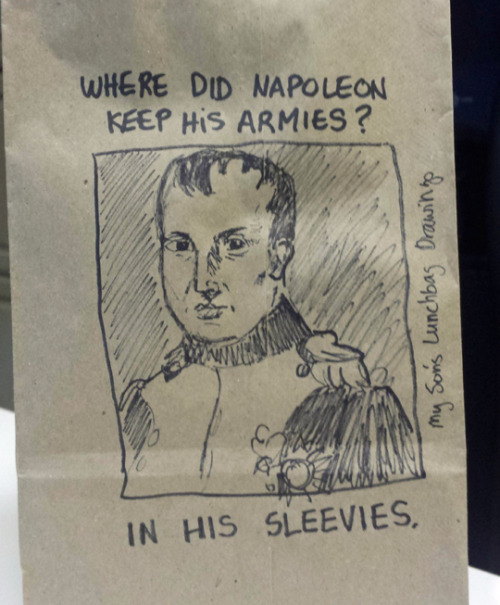
"My son’s lunchbag drawing today." -Eaudemoose


"My son’s lunchbag drawing today." -Eaudemoose

17 Nov 12:28

Science Can Bring About Cruelty

17 Nov 12:27

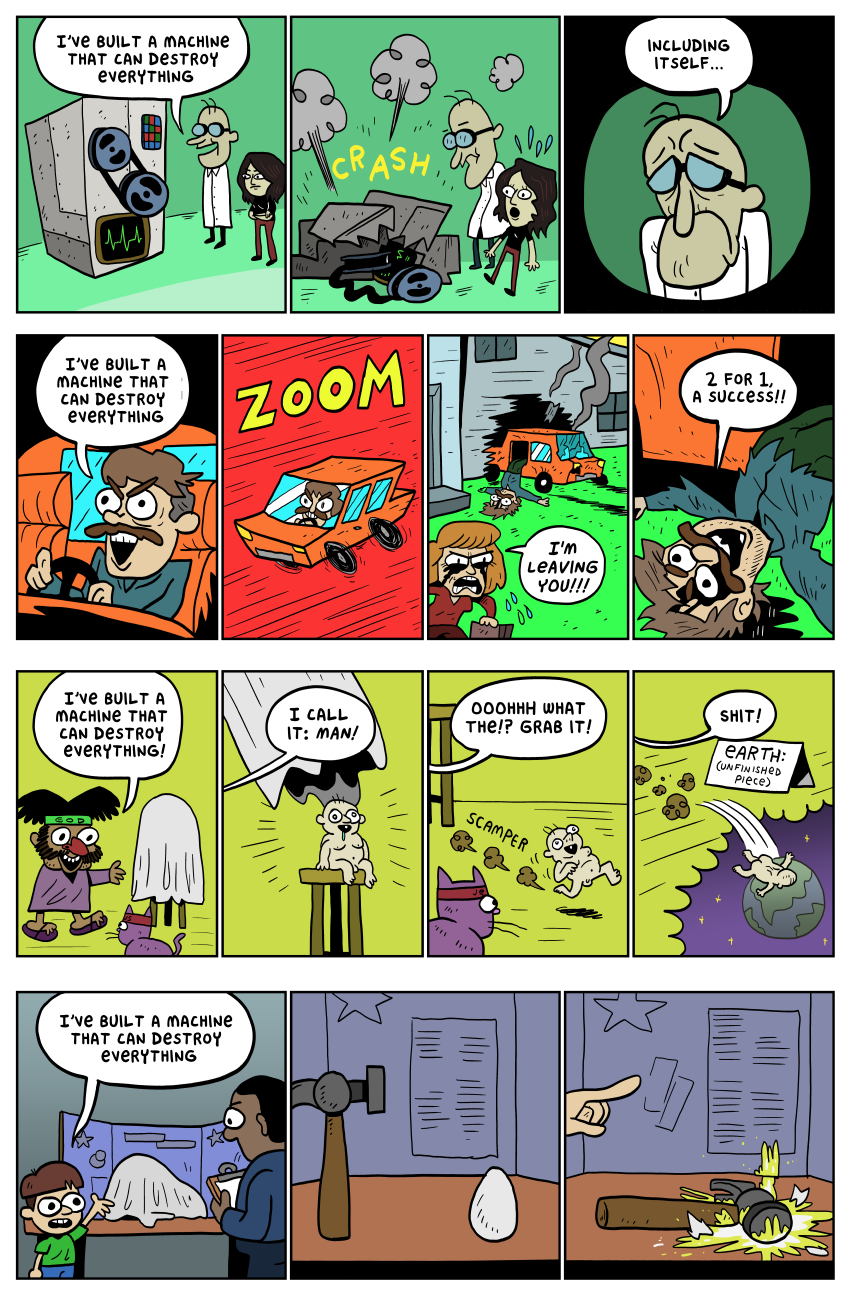
A Machine that can Destroy Everything


Sorry for the tardy comic!!! Gotta work on my biz and get my crap together.


PATREON! + BACK!  
17 Nov 12:27

Photo


17 Nov 12:05

Photo


17 Nov 12:03

vietnamesemodel: yes

17 Nov 12:01

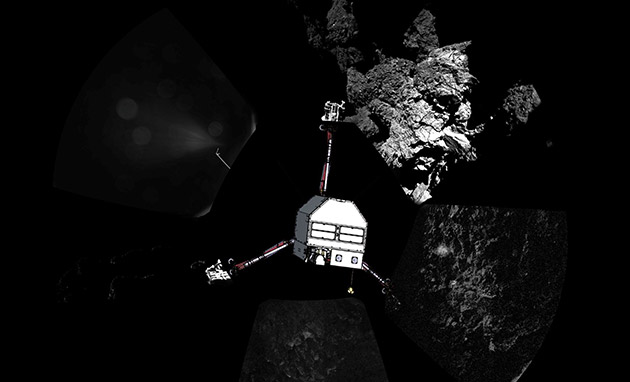
Sweet dreams, Philae: ESA's lander goes to sleep in the absence of sunlight

by Mariella Moon
ESA's comet lander Philae has ran out of batteries and gone to sleep at 7:30PM on November 14th, 2014. It was supposed to harness solar energy to continue its operations, but it unfortunately bounced twice during touchdown and settled in the shade....

17 Nov 12:00

blazepress: Fireworks designed for daytime.


blazepress:

Fireworks designed for daytime.

17 Nov 11:59

Anésia # 191


- Dona Anésia sabe como ninguém cortar um barato.
17 Nov 11:58

Photo


17 Nov 11:38

Can't win

17 Nov 11:32

23-09-2014

by Laerte

17 Nov 11:00

Comic for November 17, 2014

17 Nov 09:58

‘Butterfly child’ dreams of the Northern Lights (with video) | Ottawa Citizen

Adam Victor Brandizzi

Trigger warning: história triste.

Nothing, but nothing, is easy in the life of 14-year-old Jonathan Pitre — save for the sleep that descends on him each evening in a cloud of methadone.

Jonathan suffers from one of the most painful conditions known to medicine, Epidermolysis bullosa (EB), a rare genetic disease that causes the skin to endlessly blister, shear and scar. In severe cases such as Jonathan’s, it hurts to walk, eat and bathe.

His skin is so sensitive that his body must be wrapped in gauze to protect it from the mildest friction. Even the brush of a bed sheet can cause another burn-like blister. Wounds now cover most of his body; more blisters plague his mouth and throat.

Russell, Ont., 5:40 a.m.: Tina wakens Jonathan to get him ready for school before she has to leave for work at 7 a.m. Gibson, the family's Boston Terrier, gets in on the action as well, waking up his pal with a lick. Like many other 14-year-old boys, Jonathan Pitre loves sports, dreams of a future as a coach and has a crush on a cute girl at school.  But unlike most boys his age, Jonathan suffers from Epidermolysis Bullosa (EB) - a rare disease defined by severe blistering and shearing of the skin that leaves Jonathan in constant pain - the likes of which most would find intolerable.

Russell, Ont., 5:40 a.m.: Tina wakens Jonathan to get him ready for school before she has to leave for work at 7 a.m. Gibson, the family’s Boston Terrier, gets in on the action as well, waking up his pal with a lick. Like many other 14-year-old boys, Jonathan Pitre loves sports, dreams of a future as a coach and has a crush on a cute girl at school. But unlike most boys his age, Jonathan suffers from Epidermolysis Bullosa (EB) – a rare disease defined by severe blistering and shearing of the skin that leaves Jonathan in constant pain – the likes of which most would find intolerable.

Julie Oliver / Ottawa Citizen

For years, Jonathan managed with Advil and imagination; he conjured dragons and demigods to help him fight through each day’s pain. But none of them is magical enough now that his EB has worsened: In the past four months, his wounds have become bigger, deeper and slower to heal.

Russell teenager Jonathan Pitre. "I see myself as a warrior," he says. "I want everyone to know what this is so we can fight it... and beat it." Jonathan suffers from Epidermolysis Bullosa (EB) - a rare disease defined by severe blistering and shearing of the skin that leaves Jonathan in constant pain.

Russell teenager Jonathan Pitre. “I see myself as a warrior,” he says. “I want everyone to know what this is so we can fight it… and beat it.”

Julie Oliver / Ottawa Citizen

The pain has become so hard to manage that Jonathan has advanced through Advil and Tylenol, to morphine, and now methadone.

Although the powerful opioid allows him to sleep, it has complicated his introduction to high school. The Grade 9 student at Embrun’s Catholic secondary school is trying to find a dosage that will reduce his pain but still allow him to concentrate.

“I kind of have to deal with more pain to be less tired, or more tired to have less pain,” Jonathan says of his balancing act.

Each evening, he fights to stay awake long enough to endure his bath ritual: being unwrapped; bathing in warm water, Javex and salt (the mixture attacks bacteria that can lead to infection); lancing new blisters with a pin; then being re-wrapped up to the neck in gauze. The process takes three to four hours. Jonathan will often nod with sleep as his mother, Tina Boileau, wraps his shoulders and arms.

“As soon as it’s done, I grab him and put him to bed,” Boileau says.

Even amidst the painful and tiring task of washing and re-dressing all of his wounds - which takes four hours and must be done every other day - Tina and Jonathan laugh often and heartily.

Even amidst the painful and tiring task of washing and re-dressing all of his wounds – which takes four hours and must be done every other day – Tina and Jonathan laugh often and heartily.

Julie Oliver / Ottawa Citizen

Jonathan has never known a day without pain, and for a time, he wondered about the purpose of that suffering. Then, two years ago, he went to a gathering of EB patients in Toronto sponsored by DEBRA Canada, a charity devoted to supporting those with the disease. It was the first time he had met others with EB — and it was a revelation.

“Before that, I felt alone.”

In Toronto, he found a community of fellow “warriors:” legions of EB patients enlisted in the battle against pain, depression and social isolation. They were the only young people he’s met who could understand what he faces each hour of every day.

“I think it was the turning point in my life,” he says. “Before that, I didn’t really have a meaning in my life. I didn’t know what I was here for, really … I came to understand that my role in life was to help people with EB.”

Jonathan is now an EB ambassador, one of two young people who have stepped forward to educate Canadians about the disease.

DEBRA Canada is raising money for a wish campaign so that Jonathan and his fellow ambassador, Toronto’s Deanna Molinaro, can fulfil one of their dreams.

Molinaro, 22, wants to modify her truck so that she can drive. Jonathan’s dream is to travel to Alaska to see the Northern Lights. Why the Northern Lights?

“It will bring me closer to what’s up there, you know, all the EB patients. I just feel all those lights brings me closer to them.”

Through Facebook, the teenager has come to understand the hard facts of life for EB patients: some of those whom he befriended in Toronto have since died.

Those with Dystrophic EB — Jonathan’s EB — suffer high rates of squamous cell carcinoma, an aggressive form of skin cancer.

People with Dystrophic EB are missing key structural proteins that connect their two upper layers of skin. The layers do not have the “glue” to move in concert. It means the skin can literally fall apart.

Young people with the disease — it afflicts about 2,500 in Canada — are often known as “butterfly children” because of their perfect fragility.

In his Embrun high school, Jonathan avoids the cafeteria because the jostling of other teenagers can tan him with blisters. His teaching assistant, Nathalie, guides him carefully through the hallways. Between classes, he often retreats to a small office set aside for him to rest.

Jonathan is helped into school by his teacher's aid, Nathalie Courillon-Chevalier. He arrives to school early and gets to classes a couple of minutes late to avoid all the traffic in the hallways. His skin is so sensitive, often the slightest of touches in the wrong place can hit a wound and cause excruciating pain.

Jonathan is helped into school by his teacher’s aid, Nathalie Courillon-Chevalier. He arrives to school early and gets to classes a couple of minutes late to avoid all the traffic in the hallways. His skin is so sensitive, often the slightest of touches in the wrong place can hit a wound and cause excruciating pain.

Julie Oliver / Ottawa Citizen

The highlight of his day usually comes on his return home, when his dogs, Molly and Gibson, greet him at the door. Boileau worried about bringing Gibson, a Boston Terrier into the house, but the puppy somehow understands that Jonathan is unique.

“He will never try to jump on me, bite me or scratch me,” says Jonathan. “Let’s say we all come in the house, one by one. Even if I was in the middle of the pack, he would be excited to see me, but he’d just lick my hand, and as soon as I got out of the way, he would jump on the next person and the next person.”

Gibson will regularly lead Jonathan down the stairs and pause a few steps in front, waiting for him to catch up. He’ll keep Jonathan company during his long baths. He’ll lick at Jonathan’s wounds and pin back his ears when he senses a particularly bad blister.

“My dog has some kind of power: I can feel him and he can feel me,” explains Jonathan. “We have a special bond.”

6.45 a.m.: Some play time with Gibson before mom leaves for work and his stepfather , Donny, gets him onto the school bus.  "He's my best friend - my only real friend," says Jonathan. "We have an unbelievable bond. He knows when I'm down and cheers me up."

6.45 a.m.: Some play time with Gibson before mom leaves for work and his stepfather, Donny, gets him onto the school bus. “He’s my best friend – my only real friend,” says Jonathan. “We have an unbelievable bond. He knows when I’m down and cheers me up.”

Julie Oliver / Ottawa Citizen

The dog is also a card. When Jonathan is in pain and crying, Gibson will often put on the slapstick: slamming his head into the wall or falling off a chair. He’ll pant and whine as Jonathan does his homework, waiting impatiently for attention.

“It’s not just that he’s my best friend,” says Jonathan. “I think I’m his best friend.”

Bookmarked at brandizzi Delicious' sharing tag and expanded by Delicious sharing tag expander.
17 Nov 09:55

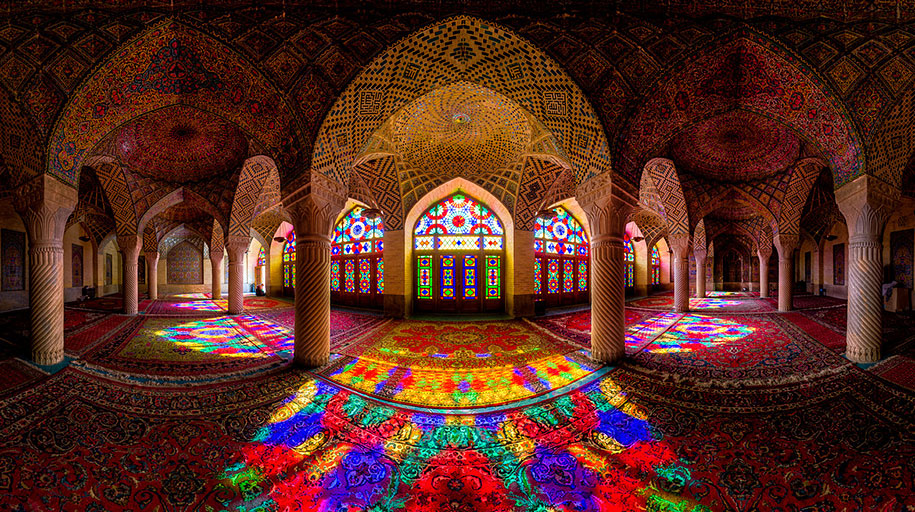
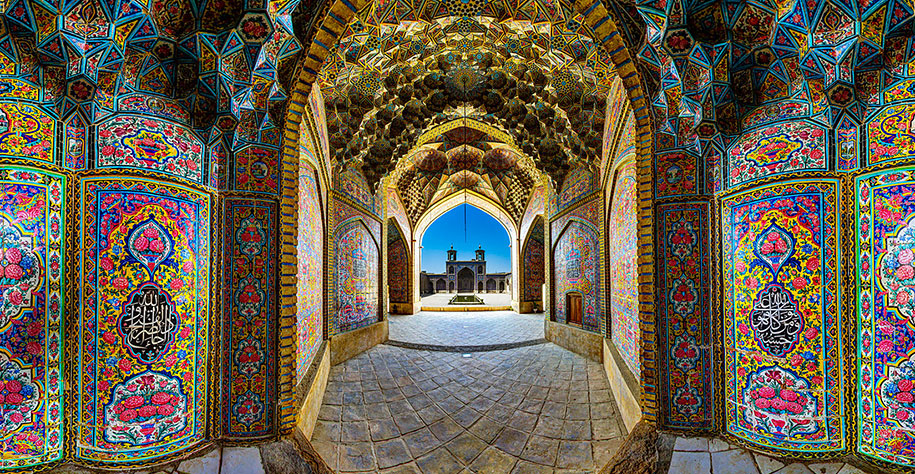
Stunning Mosque In Iran Becomes A Magnificent Kaleidoscope When The Sun Rises

The exterior of the Nasir al-Mulk Mosque in Shiraz, Iran, while decorative, hints only vaguely at the colorful splendour held within. When you step inside, especially if it’s early in the morning, the mosque truly becomes a vivid and glorious kaleidoscope.

The Nasir al-Mulk Mosque is heavily decorated with stained glass – something very rare in mosque architecture. It was built during the Qājār era by the order of Mirza Hasan Ali Nasir al Molk in 1888. The mosque is famous for its extensive usage of stained glass and the divine feast of colours that it casts with the help of the morning sun. The mosque is often referred to as the “Pink Mosque” due to the dominance of this colour in the intricate and colorful tiles decorating its arches and niches.

If you ever have a chance, go visit this majestic, one-of-a-kind mosque and don’t miss the earliest bus – you won’t regret it!

(via)

Image credits: Mohammad Reza Domiri Ganji

Image credits: Dav Wong

Image credits: Amin Abedini

Image credits: Marinela T. Gondii

Image credits: Lucie Debelkova

Image credits: Amin Abedini

Image credits: my2200

Image credits: Amin Abedini

Image credits: Abbas Arabzadeh

Image credits: my2200

Image credits: Amin Abedini

Image credits: Dav Wong

Bookmarked at brandizzi Delicious' sharing tag and expanded by Delicious sharing tag expander.
17 Nov 09:55

Você sabia que existe uma passagem volta ao mundo?

É isso mesmo que você entendeu. A passagem volta ao mundo permite que você faça a volta no globo com um único bilhete, fazendo várias paradas pelo caminho. Pra quem sempre sonhou em fazer uma volta ao mundo ela pode ser uma boa solução e sai bem mais em conta do que você imagina.

O que é a passagem?

A passagem é chamada de RTW (Round the World) e pode ser composta por 16 trechos, saindo e retornando ao mesmo ponto, fazendo a volta completa do globo. Atualmente existem 3 alianças que oferecem esse tipo de passagem e é claro que algumas regras devem ser seguidas.

Divulgação

ViraVolta, Volta ao Mundo, Viagem longo prazo, Passagem volta ao mundo

Conheça as principais regras:

  • O viajante precisa fazer a volta no globo em um único sentido
  • A viagem deve durar de 10 dias a 1 ano
  • O número de trecho voados deve ser entre 3 e 16
  • Existe um número limite de trechos a serem voados em cada zona territorial da aliança
  • Você pode desembarcar em um país e embarcar em um país diferente no próximo vôo. Isso se chama deslocamento terrestre, mas conta como trecho ou milha voados
  • Voos com conexão também contam como trecho voado ou para contagem de milhas
  • É possível alterar a data dos vôos sem nenhuma taxa
  • É possível alterar trechos da passagem conforme taxas estipulada pela aliança

Quanto custa?

É claro que isso vai depender muito do seu roteiro, do número de trechos e da aliança aérea pesquisada. Se o seu roteiro passa por aeroportos mais populares ou se ele usar poucos trechos, vai sair mais em conta. É possível encontrar uma passagem RTW de 16 trechos por 5 mil dólares (=12.800 reais). Parece caro? Se você considerar que que um vôo de ida e volta para a Tailândia custa cerca de 4 mil reais já não parece tão caro assim. Se você dividir esse custo da RTW por 16 trechos, cada trecho custaria 800 reais.

ONDE PESQUISAR?

Atualmente 3 alianças aéreas oferecem essa passagem: One World, Star Alliance e Sky Team. No site dessas empresas é possível fazer simulações das passagens de volta ao mundo.

Para saber mais detalhes sobre essa passagem clique aqui.

O Projeto ViraVolta é um site especializado em viagens de longo prazo e passa todas as dicas para quem deseja realizar o sonho de viajar o mundo. Se você tem medo ou acha impossível, não desanime. Conheça as nossas dicas e quem sabe podemos te inspirar.

Conheça o projeto e fique conectado:

projetoviravolta.com
facebook.com/projetoviravolta
pinterest.com/viravolta/
youtube.com/user/projetoviravolta
twitter.com/_ViraVolta

Rede Catraca

Bookmarked at brandizzi Delicious' sharing tag and expanded by Delicious sharing tag expander.
17 Nov 09:54

just-art: Digital Artworks by Jie He

17 Nov 09:54

fer1972: The Single Stroke Artworks of Kazuhiko Okushita...


fer1972:

The Single Stroke Artworks of Kazuhiko Okushita (Artist on tumblr)

16 Nov 15:21

Source Follow Ultrafacts for more facts


Source

Follow Ultrafacts for more facts